Talk to an Expert

Top 10 Blockchain Consulting Companies of 2025

Many businesses recognize the potential of blockchain, but they struggle with where to begin, which technology to choose, or how to implement it without wasting time and budget.

Confusion, stalled projects, or worse, costly mistakes that could’ve been avoided with the right expert on board. Blockchain consulting companies are specifically designed for this purpose. They simplify the chaos, offer tailored strategies, and walk you through every step from ideation to launch.

The global market for blockchain technology was expected to be worth USD 18.3 billion in 2024 and is expected to increase at a compound annual growth rate (CAGR) of 53.6% from 2025 to 2034. 

In this blog, we’ll cover the top 10 blockchain consulting companies of 2025, based on their experience, innovation, and proven results.

What is Blockchain Consulting? 

Blockchain consulting is a professional service that helps businesses understand, plan, and implement blockchain technology into their operations. It involves guiding companies on how to utilize blockchain to enhance efficiency, security, and transparency in various sectors, including supply chain, finance, healthcare, and others. 

Blockchain consultants assess a company’s needs, recommend suitable blockchain solutions, and often assist in designing smart contracts, selecting the right platforms (like Ethereum or Hyperledger), and ensuring regulatory compliance. 

Whether a company is exploring tokenization, launching a crypto product, or simply improving data integrity, blockchain consulting provides the technical and strategic support to make it happen effectively.

Factors to Consider When Choosing a Blockchain Consulting Company

Choosing the right blockchain consulting company can make or break your project’s success. Here are the key factors you should consider before making a decision:

  • Industry Experience

Look for firms with proven experience in your sector—be it finance, healthcare, or real estate. Deep domain knowledge ensures they understand your challenges and can provide tailored blockchain solutions.

  • Technical Expertise

Ensure the company has a strong team of blockchain developers proficient in key platforms like Ethereum, Hyperledger, and Solana. Their skill set should match the complexity of your project.

  • Security and Compliance Focus

A good consulting firm prioritizes security best practices and ensures compliance with local and global regulations. This minimizes legal risks and protects your data and digital assets.

  • End-to-End Services

Prefer companies that offer end-to-end support—strategy, development, deployment, and post-launch maintenance. This ensures consistency and accountability throughout the project lifecycle.

  • Transparent Communication

Effective communication and regular updates are essential. Choose a company that clearly explains processes, timelines, and technical terms understandably.

Top 10 Blockchain Consulting Companies

1. SoluLab

SoluLab is a leading blockchain consulting company founded in 2014, based in the USA.. With expertise in blockchain, AI, and IoT, they specialize in building custom decentralized solutions for startups and enterprises.

Their services include smart contract development, DeFi platforms, and NFT marketplaces. SoluLab is known for its client-centric approach, agile development, and strong technical team, making it a trusted partner for blockchain transformation.


$25 – $49


50 – 249


2014


USA

Unicsoft

2. Unicsoft LP

Unicsoft is a blockchain consulting company with strong expertise in blockchain, AI, and digital transformation. They focus on delivering practical, scalable, and secure blockchain solutions tailored to business needs.

Their consulting approach ensures products are not only market-ready but also user-friendly and compliant. Startups and enterprises rely on Unicsoft for structured guidance, transparency, and faster go-to-market execution.


$50–99 / hr


50-249


1983


UK

Interexy

3. Interexy

Interexy is a blockchain consulting and development company founded in 2017. Known for its expertise in DeFi, NFT, and healthcare blockchain solutions. They offer end-to-end consulting—from idea validation to product launch—helping businesses adopt blockchain.

Clients benefit from their deep technical know-how, fast delivery, and tailored strategies that reduce risk and boost ROI. Interexy is especially favored by startups and enterprises looking for scalable and secure blockchain integration.


$51 – $100 / hr


51 – 250


2019


USA
NDlabs

4. ND Labs

Founded in 2020, ND Labs is a blockchain consulting company specializing in blockchain development, smart contracts, DeFi, and enterprise-grade solutions. They help businesses identify the best blockchain use cases and offer end-to-end support, from idea validation to full deployment.

Companies benefit from their strategic approach, fast execution, and focus on scalable, secure blockchain architectures across industries like finance, healthcare, and supply chain.


$25 – $50 / hr


10 – 50


2022


Poland

NADCAB Labs

5. NADCAB Labs

NADCAB Labs is a leading blockchain consulting and development company founded in 2017 and based in India. The company specializes in blockchain architecture, smart contract development, token creation, and custom DApps. Their consulting services help startups and enterprises choose the right blockchain protocols, build secure ecosystems, and ensure regulatory compliance.

NADCAB is known for its cost-effective, end-to-end blockchain solutions tailored to various industries like fintech, healthcare, and supply chain. Businesses benefit from their deep technical expertise and hands-on support that accelerates project delivery and reduces development risks.


$50 – $99 / hr


200


2017


Prayagraj, India

Blocsys Technologies

6. Blocsys Technologies

Blocsys Technologies is a blockchain consulting company founded in 2016. With a strong focus on Web3, DeFi, and NFT ecosystems, Blocsys helps startups and enterprises transform ideas into scalable blockchain solutions. Their team offers tailored guidance—from choosing the right blockchain architecture to full-cycle implementation.

They combine a hands-on approach, deep technical expertise, and ability to accelerate go-to-market time. Blocsys has earned a reputation for delivering secure, cost-effective, and future-ready blockchain solutions across industries.


$25 – $50 / hr


10 – 50


2021


India

Definme

7. Definme

Definme is a forward-thinking blockchain consulting firm founded in 2021. Known for its expertise in DeFi, tokenomics, and blockchain architecture, Definme helps startups and enterprises turn complex ideas into practical blockchain solutions. Their team offers end-to-end consulting—from ideation and whitepaper creation to sart contract development and ecosystem strategy.

Clients benefit from their deep market insights and hands-on approach, which accelerates product launches and ensures regulatory compliance. Definme is popular among early-stage Web3 ventures looking to build scalable, investor-ready blockchain products.


$50 – $99 / hr


10 – 49


2017


Dubai, UAE
RisingMax

8. RisingMax

RisingMax is a blockchain and Web3 consulting company based in Illinois, USA. They specialize in helping businesses integrate Web3 technologies through tailored strategies and structured implementation roadmaps.

Their consulting approach emphasizes market readiness, scalability, and user engagement. Startups and enterprises trust RisingMax for clear guidance, personalized strategies, and transparent execution that align blockchain adoption with business goals. By blending technical know-how with domain expertise, they enable clients to increase efficiency, sales, and brand recognition.


$20 – $50 / hr


50


2018


Illinois, USA
iTransition

9. iTransition

iTransition is a global software development and IT consulting company founded in 1998. With deep expertise in blockchain solutions, they help businesses across industries implement secure, scalable, and decentralized systems. iTransition offers consulting for blockchain strategy, architecture, and integration with legacy systems.

Their clients benefit from end-to-end support—right from ideation to deployment—ensuring reduced development risks. Known for their technical precision, iTransition empowers enterprises to adopt blockchain with confidence.


$51 – $99 / hr


3000+


1998


USA

webisoft

10. Webisoft

Webisoft is a Canada-based blockchain consulting and development company founded in 2016. They specialize in building custom blockchain solutions, smart contracts, DeFi platforms, and enterprise-grade dApps. Known for their strong technical team and product-thinking approach, Webisoft helps businesses turn complex ideas into scalable blockchain products.

Their consulting services offer end-to-end guidance—from ideation and strategy to implementation. They use agile methodology, industry expertise, and the ability to integrate blockchain with existing systems.


$51 – $100 / hr


11 – 50


2017


Canada, USA

Why Do You Need a Blockchain Consultant?

An in-depth understanding of blockchain is required to successfully use it for your company, which is not possible for everyone. Some of the major reasons why seeking expert assistance is important:

1. Expert guidance

A blockchain consultant brings deep industry knowledge to help you choose the right platforms, avoid pitfalls, and stay compliant, ensuring you don’t waste time or resources on the wrong tech.

2. Strategic Planning

They create a tailored roadmap that aligns blockchain integration with your business goals, helping you adopt the right use cases and avoid unnecessary development costs.

3. Maximizing ROI

 By optimizing processes and reducing inefficiencies, consultants help you get the most value from your blockchain investment, both in cost savings and long-term scalability.

4. Quick and Agile Implementation

Consultants accelerate deployment by leveraging proven frameworks and agile practices, enabling you to launch faster, test early, and adapt quickly to evolving business needs.

5. Market Evaluation 

Blockchain experts are quite good at analyzing the state of the market. They can offer insightful information that will help you in developing your strategic plan. In-depth market research and competition analysis will also be provided by them.

6. Regulatory & Compliance Guidance

Blockchain adoption often faces legal uncertainties. Consultants help navigate regulations, ensuring compliance with KYC, AML, GDPR, and regional laws.

7. Risk Management & Security

Blockchain solutions carry risks like smart contract bugs or cyberattacks. Consultants anticipate vulnerabilities and design robust security frameworks.

8. Skilled Group

Blockchain technologies are still in their initial stage, so having professionals on site is essential. Blockchain consulting companies employ highly qualified and experienced experts to make sure your company implements the technology and runs it smoothly. 

Conclusion

As blockchain continues to grow, having a trusted partner by your side ensures smoother integration and faster innovation. As per the above list, Solulab stood at first with its proven strategies. We at SoluLab, the top blockchain consulting company, guide startups and enterprises towards their goal in line with industry needs.

Our expert team recently implemented a crypto-based payment system using OBOT tokens for OBORTECH SmartHub. This boosted financial interactions and gave users seamless blockchain navigation with versatile payment options. This Increased engagement and adoption across the ecosystem. Let’s build your next blockchain success story together.

Connect with SoluLab today to discuss your vision and unlock limitless opportunities!

FAQs

1. What’s the difference between a blockchain developer and a blockchain consultant?

A consultant focuses on strategy, planning, and solution architecture helping businesses make the right decisions before development begins. A developer handles coding, smart contract creation, and technical execution based on the consultant’s roadmap.

2. What is the typical cost of hiring a blockchain consulting firm?

The cost varies based on project scope but typically ranges from $5,000 to $50,000+ for initial consulting, with full implementations potentially costing much more.

3. What services do blockchain consultants typically offer?

Blockchain consultants typically offer a wide range of services, including feasibility analysis, use case identification, platform selection (like Ethereum, Hyperledger, or Solana), smart contract development, tokenomics design, compliance guidance, and full-scale implementation planning.

4. How long does it take to implement a blockchain solution with a consulting company?

Implementation timelines depend on complexity but generally take 4 to 12 weeks, including planning, development, testing, and deployment phases.

5. Can blockchain consulting help us with tokenization or launching a crypto product?

Absolutely. Many blockchain consulting firms offer specialized guidance for tokenization strategies, whether you’re launching a utility token, stablecoin, security token, or digital asset-backed solution. Contact us for more information!
How Much Does It Cost To Create a Base Token?

Cost To Create a Base Token

Startups and entrepreneurs just starting would look up this question if they wanted to make their cryptocurrency tokens. Don’t worry if you fall into that category; we’ve shown you how much a token costs.

Based on the Ethereum and smart contract blockchain, Base is a layer-2 blockchain network developed by Coinbase. Its primary goal is to complete large transactions quickly and affordably. Recently, Base has gained popularity for producing tokens and meme coins with original ideas and amusing values.

Here is everything you need to know, including the detailed procedure for creating a Base Token, if you’re interested in creating a new token or currency on Base and are curious about the development cost. 

What’s a Base Token?

A cryptocurrency developed on the Base blockchain is called a Base token. The base can be used to generate any kind of cryptocurrency token for any usage. Nonetheless, the network is frequently utilized to create original meme coins.

Based on the L2 Ethereum network, the asset tokenization base is a rapidly expanding blockchain network. It is designed to make Ethereum token generation and transactions incredibly quick, easy, and economical. The Coinbase exchange introduced the Base blockchain. 

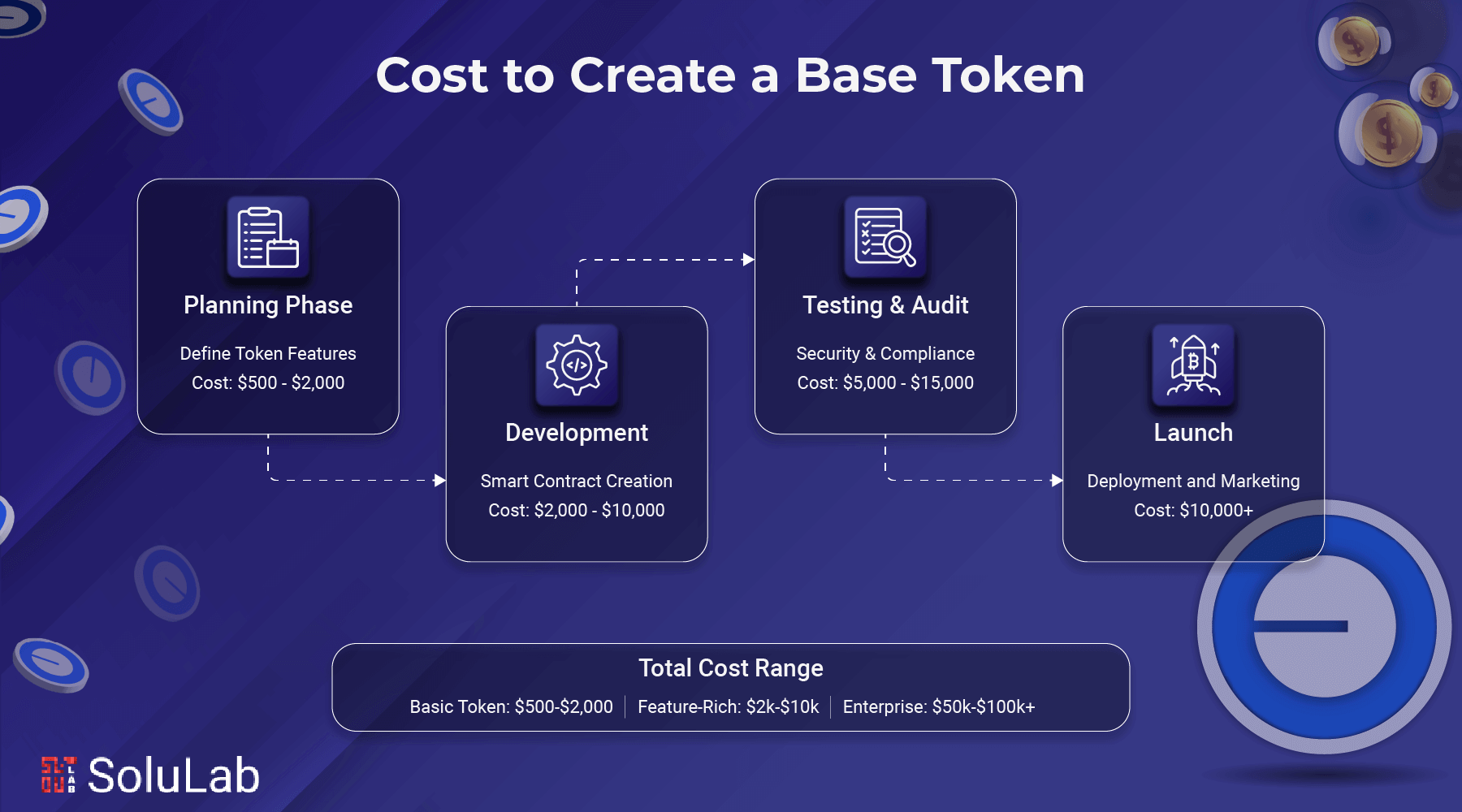
How Much Does It Cost To Create a Base Token?

The type and characteristics of the token, transaction fees, developer costs, and other variables can all affect how much it costs to create a base token.

If you want to create a role of tokens in crypto base token, you may either hire a Base token developer or do it yourself.

You can use a Base token creation tool to create your token if you’re looking for one with typical features. You don’t have to know how to code to produce a Base token.

ETH is used to generate a token-generating transaction when creating a token on BASE. Depending on the token platform or tool, the value of the token might be anything from $0.1 ETH to $2 ETH or more.

Creating a Base token can cost anywhere from $2k to $10k on average, depending on the features and complexity of the project. Some high-end, feature-rich meme coins can cost between $50,000 and $100,000 to develop. 

What You Need to Create a Token on Base?

Making a token on the Base blockchain platform is simple, as the above procedure illustrates. However, there are a few things you must do in advance:

1. Wallet Compatibility: Above all, you need a wallet that can handle Base blockchain transactions. MetaMask and Coinbase Wallet are popular choices because they are simple to set up and extensively utilized.

2. Money in Your Wallet: You will need a small quantity of Ethereum in your wallet to pay for the creation of your token. For most customers, Smithii’s Base Token Creator tool is an affordable choice because it costs 0.01 ETH.

3. Marketing Strategy: Although not required, a strong marketing strategy can greatly increase your token’s success. A carefully considered marketing plan will assist you in reaching your target audience and creating a community around your project, regardless of whether you use your token for governance, payments, or as a meme coin. 

How to Create a Base Token?

Creating A Base Token

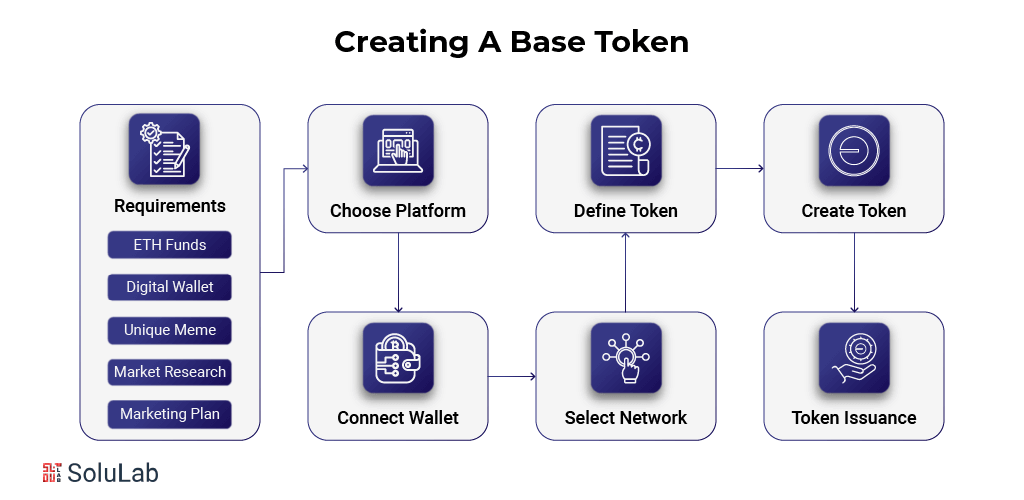
One needs to be familiar with the development process to comprehend the cost of creating a Base token. You’re probably creating a meme coin if you’re using Base. If so, you’ll need the following items to get going.

1. Prerequisites to Creating A Coinbase Base Token

  • To produce the token, a few dollars in Ethereum are needed.
  • A distinctive and captivating meme that could entice individuals to contribute to your cause.
  • A compatible Wallet: To generate a Base token, you must also have funds in a compatible digital wallet. When establishing a token, several sites request that you connect your wallet. Additionally, you need to make sure the wallet has enough money for the transaction.
  • A solid Marketing Plan: You’ll need robust token marketing, including influencer collaborations and partnerships, to get your new meme coin out there. When your token has already undergone basic branding, that is the ideal time to launch it. This can be handled by a token marketing company.
  • Knowledge of your Target Market and Audience: Before developing a Base token, you should research your target market to comprehend the issues and expectations of your consumers. 

Read Also: How Much Will Blockchain Development Cost in 2025?

2. Steps to creating a Coinbase Base token

Making a Base token is a rather easy process. Locating a platform or token generator is the first step. Remix IDE, Hardhat, Bitbond, Meme. Market and MyEtherWallet are a few choices. Each platform for creating Base tokens has advantages and disadvantages.

The method for creating tokens varies widely throughout the aforementioned token systems. The following are typical procedures for generating a Base token:

1. Connect Your Wallet: Link the platform and digital wallet together.

2. Select the Blockchain Network: If prompted, select “Base Chain” as the network you wish to use to construct your coin.

3. Define the Token’s features: Describe the properties of the token. Include details such as the token’s name, symbol, total supply, decimals, etc.

By adding the qualities you desire, you can personalize your token.

4. Create Token: After you have entered all the information, create an NFT  token. Verify the payment transaction using the wallet you have linked. In a few minutes, the token will be generated.

Tokens will be added to your associated wallet once the transaction is finished and issued. 

CTA1

What Are The Factors Affecting The Cost Of Developing Crypto Tokens?

A few key elements affect how much it costs to create a cryptocurrency token.

1. Selecting a Blockchain Network

The cost of creating a cryptocurrency token is mostly determined by the blockchain network element that is selected. Blockchains such as Ethereum, Tron, and Polygon are used to create cryptocurrency tokens. Therefore, the blockchain network can be chosen based on its characteristics, usefulness, and uniqueness. Several well-known blockchains that are typically utilized for the creation of cryptocurrency tokens include

2. Solana Polygon Waves Ethereum Hyperledger

In addition to these, creating a token on Solana many blockchain networks have special characteristics. Therefore, choosing the appropriate blockchain network is crucial for creating cryptocurrency tokens. Programming languages, scripts, and smart contracts are unique to each blockchain network.

3. Integrations of Features

Integrating key features is crucial after deciding on blockchain technology. There will be token standards for the cryptocurrency tokens, and each standard has unique characteristics. Given that Ethereum is a well-known blockchain network, some of the most widely used token standards include

  • One sort of fungible token is ERC20.
  • The token types ERC721 and ERC1155 are non-fungible and semi-fungible, respectively.
  • An improved fungible token standard is ERC777.

The ERC1400 standard was created specifically for security tokens.

Other well-known blockchains include Tron, BNB chain, Solana, Polygon, and others. The following are their token standards: 

  • BEP20 is a fungible token on the BNB blockchain.
  • The widely used non-fungible token standard for Tron is TRC721.

In the crypto realm, there are other additional token specifications. They can be selected based on the token’s use cases, business choice, etc.

Only when exponential characteristics are used do the crypto coins work as intended.

  • Token Supply: This refers to the total number of cryptocurrency tokens in the blockchain network.
  • Source of the Token: For increased security, a source code will be used during the token-generating procedure.
  • Decimal Value: This describes how divisible the cryptocurrency token is.
  • Supply Type: The development procedure specifies the crypto coins’ minimum and maximum supply ranges.
  • Minting: To expand the token supply, a certain set of tokens can be further minted, or manufactured.
  • Burning: To raise demand for a particular set of tokens, they might be burned.
  • Security Features: There are security features such as anti-phishing and anti-whale protection.

These are the essential elements that will be incorporated into the process of creating cryptocurrency tokens. For transactions, the features are combined into a single smart contract.  

How To Minimise the Cost of Creating a Cryptocurrency Token?

Minimise Cost of Creating Crypto Token

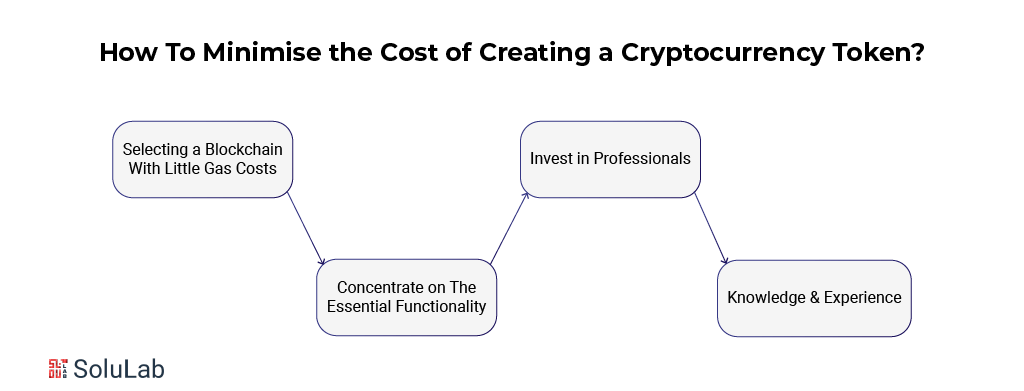
New businesses must be aware of the best practices to cut down on the needless expenses associated with developing a cryptocurrency token. We’ve done a thorough analysis and included some advice here.

1. Selecting a Blockchain With Little Gas Costs

Finding the best blockchain platform with the lowest gas fees to produce cryptocurrency tokens is crucial for the crypto business. Developing an Ethereum token, for example, will assist startups in supporting a range of dApps and other streams. It is widely utilized in the cryptocurrency industry and has safe smart contracts.

Similarly, every token has distinct traits and capabilities. Consult blockchain specialists and developers for advice based on your business needs.

2. Concentrate on The Essential Functionality

When making a cryptocurrency token, it’s a good idea to concentrate on the key features to minimize development costs. Start with a basic token and add more functionality as needed progressively. By using this method, you can avoid the initial costs associated with creating a complex token from the ground up.

3. Invest in Professionals.

Investing your valuable funds in a skilled team and developers is the finest advice for every firm. This is to guarantee that your hard-earned cash ends up at the appropriate location. Select a reputable cryptocurrency token development firm based on,

4. Knowledge & Experience

  • Customer endorsements
  • The caliber of the given goods
  • The team’s size
  • The range of industries the business has collaborated with
  • Adaptability
  • The price of the services
  • Client Testimonials

The stack of technologies implementation of Minimal Features

Aim for low-cost integration of possible features. Additionally, attempt to stay away from the crypto coins’ complicated characteristics. That could or might not lead to bugs or other technical problems.

You can lower the estimated cost of producing a cryptocurrency token by using these techniques. Put cost-effectiveness first, but never at the price of usefulness or security. Long-term success is more likely for a token that is well-designed, secure, and serves a specific function. Therefore, make an effort to choose Coinsclone or another top crypto token development business.  

CTA2

Conclusion

The construction of smart contracts, security audits, gas costs, marketing, and exchange listings are some of the expenses associated with creating a Base token. A completely customized, audited, and market-ready token may cost $10,000 or more, but a basic Base token can be purchased for as low as $500 to $2,000. The intricacy of your project, security requirements, and marketing initiatives all affect the ultimate cost.

To guarantee security, scalability, and success in the cryptocurrency market, it’s critical to carefully evaluate your budget and professional help while launching your Base token.

Token World a crypto launchpad platform wanted a secure and scalable platform for token sales while staying compliant and transparent. SoluLab a blockchain development company stepped in to create a tailored launchpad with features like submission forms, review systems, secure transactions, dashboards, multi-language support, and blockchain integration. This solution helped Token World simplify processes, meet regulations, build trust, and handle high traffic effectively, enabling smooth and successful token launches worldwide.

FAQS

1. What are the common use cases associated with creating a base token?

The following are some for developing a base token: Access tokens for utilities, Investment security tokens, Stablecoins for payments, and governance tokens for decision-making. 

2. What are the legal requirements for launching a base token?

Legal criteria for launching a cryptocurrency can vary depending on the country, location, and laws.

3. What are the programming languages used to create a crypto token?

Solidity, which is used for the NFT marketplace on Ethereum blockchain code, and Rust, which is used for Solana Blockchain, are popular programming languages for creating cryptocurrency tokens.

4. Do I need coding skills to create a Base Token?

Not necessarily. You can use token creation platforms with no-code options, but for advanced features, hiring a blockchain developer is recommended.

5. Do I need a developer to create a Base token?

Not necessarily. Some platforms offer no-code solutions, but for security and custom features, hiring a blockchain developer or using a development firm is recommended.

How to Develop a Token on Arbitrum?

Develop a Token on Arbitrum

Arbitrum is a Layer 2 scaling option for Ethereum. Making a token on it has some great benefits, like lower transaction fees along quicker processing times. Plus, it makes it easier to use on a larger scale. Arbitrum also works with optimistic rollups. This way of growing decentralized apps is safe and effective.

Creating a wrapped token on Arbitrum could lead to a lot of new possibilities in the NFTs, and other areas. Seems hard? You can use crypto token creation services to help you get through the complicated process of making a token. 

According to Dune’s figures, the daily average fees on Arbitrum went up by 97.8% this morning and are now $0.015 per transaction. Additionally, the average fees experienced a significant decline and currently remain at $0.007.

In this blog, we’ll help you understand what an Arbitrum token is, why it’s important, and how to create Arbitrum tokens as well. Let’s get started!
What are Arbitrum Tokens?

Arbitrum is a quick, private, and secure layer-2 platform for scalable smart contracts and cryptocurrencies. To increase the speed and effectiveness of Ethereum-based dApps, Arbitrum’s scaling approach makes use of Optimistic Rollups. 

By running their Solidity contracts through the Arbitrum translator, developers can use rollup technologies to speed up and enhance the effectiveness of transactions. Arbitrum and Ethereum are connected via a component called “EthBridge,” which permits the free exchange of messages and utility tokens. Developers only need to elaborate to construct and launch their dApps using Moralis Speedy Nodes.

Why Create a Token on Arbitrum?

As it is in its entire development stage, its ERC20 layer 2 standards, cheap fees, minimal congestion, and appealing timing make building a token in crypto at Arbitrum a high-value alternative when selecting which crypto ecosystem we would launch our token from.

Although Arbitrum’s blockchain generates tokens with multiple applications, we may especially highlight some of them:

  • Equity
  • Payment Currency
  • Exchanges
  • Meme Coin
  • Governance
  • Contract’s Execution

Here are 3 reasons why developers should choose Arbitrum:

1. EVM Equivalence

The Ethereum Virtual Machine (EVM) is the computer system that keeps the Ethereum blockchain in sync and makes smart contracts work. As a way to support the EVM, Arbitrum groups thousands of transactions into single blocks. This slows down the mainnet’s processing power and lowers gas fees.

To do this, Arbitrum must maintain full EVM parity. This ensures that blocks finished on Arbitrum are the same as those finished on Ethereum’s mainnet.

EVM equivalence means that computer languages like Solidity and Vyper can be used to write Arbitrum smart contracts without making any changes.

This gives Arbitrum a significant advantage over other platforms, like Solana, which is a non-EVM blockchain and needs developers to know domain-specific programming languages and tools.

Arbitrum has reached the EVM equivalent with the help of Arbitrum Nitro. When it came out, Nitro was a major improvement over Arbitrum Classic. It uses WebAssembly (WASM) for low-level instructions to achieve high EVM compatibility, scaling, and lower transaction fees.

Geth, which is the most popular Ethereum processing client, is also used by Nitro. Geth makes it even easier for Arbitrum to work with the EVM.

2. Censorship Resistance

To make it possible for Arbitrum to work, sequencers must accept transaction requests from users, carry them out, and post the necessary data to Ethereum. Transactions are sent to a sequencer’s main address. Once transactions are submitted to the Layer 2 protocol, they are processed immediately and the results are published to the Ethereum mainnet within minutes.

Arbitrum does, however, have rules for when a program does something bad. To begin, the sequencer can only delay Ethereum posting deals. It can suggest fake deals because real ones need a user’s signature.

Second, users can force a transaction to be carried out if the sequencer doesn’t do it by putting it in the Delayed Inbox, which is a “first come, first served” list. The sequencer can’t skip this transaction without putting all the transactions that come after it behind schedule. With these methods, Arbitrum is harder to censor. 

3. Consumer and Developer Ecosystem

Arbitrum’s ecosystem holds over 66% of the Ethereum market and a Total Value Locked (TVL) of $6.17 billion, making it the biggest L2 solution. This was confirmed on May 4, 2023. The number of live wallets and the cost of gas are also the lowest in the L2 ecosystem.

Because Arbitrum is the same as EVM, Ethereum builders can be used to develop apps that run on Arbitrum. Many popular protocols, such as Uniswap, The Graph, and Chainlink, also support Arbitrum because it has many cost and scale benefits.

Arbitron has also added new tools, like Stylus, that help developers make its processes bigger. A new programming environment and virtual machine called Stylus is built on WebAssembly and claims to offer an EVM+ paradigm.

On Arbitrum, written in Rust, C, and C++ will be able to be used by developers. This would make it easier for coders to use the EVM with other programs. 

How Much Does it Cost to Create a Token on Arbitrum?

To create a token on Arbitrum, you must first construct a smart contract, which is essentially a code that stays on the blockchain and serves as the foundation for a certain digital asset. There is a smart contract behind the token, and you need to know how to code to build it.

It costs a lot to have a developer make a smart contract—often over $200. That’s why online solutions make it easier for everyone to live together in the cryptocurrency ecosystem by letting anyone who doesn’t know how to code make their token for as little as 0.01 ETH.

The dApps we’ll be using are called, and they charge only 0.01 ETH to use. Its main job is to make smart contracts. 

Key Components of Arbitrum

Key Components of Arbitrum

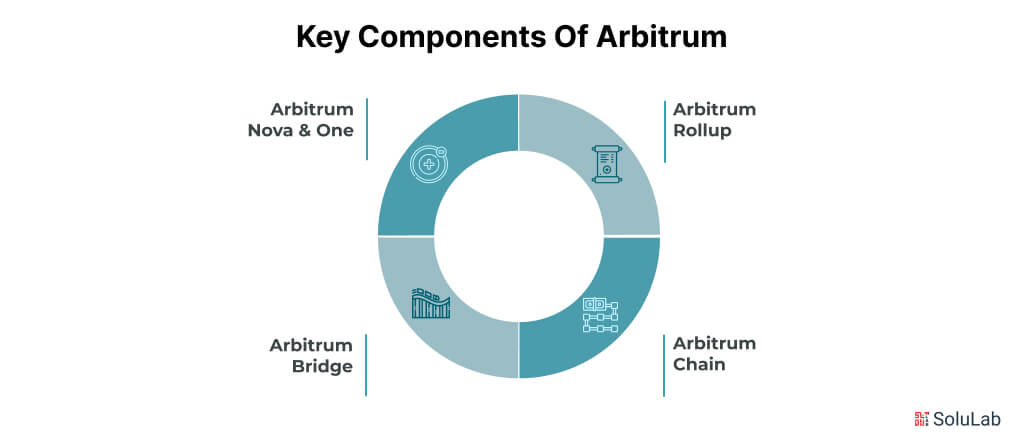
Here are some major key components of Arbitrum listed below:

Arbitrum is built based on tools and technologies that improve scalability, security, and usefulness.  Arbitrum is a powerful Layer 2 solution for Ethereum. Here are some of its key components mentioned below:

1. Arbitrum Rollup

Using second-layer scaling technology to execute transactions off-chain and compile the outcomes onto the Ethereum mainnet, the Arbitrum Rollup is the pillar of the Arbitrum ecosystem. This approach lowers transaction fees and greatly releases Ethereum’s burden. Using fraud proofs that guarantee any inaccurate transaction can be disputed and fixed, the Rollup technology is meant to maximize throughput without compromising security. See the Arbitrum Ecosystem Review for a comprehensive study.

2. Chain of Arbitrium

Operating alongside the Ethereum mainnet, the Arbitrum Chain uses the Ethereum Virtual Machine (EVM) to help create and run smart contracts. This guarantees a complete fit with the Ethereum ecosystem, enabling developers to make use of current tools and resources. The improved process helps the chain as well since it speeds up transactions and lowers problems usually present on the Ethereum network.

3. Bridge of Arbitrium

Facilitating the transfer of assets including ETH and ERC-20 tokens between the Ethereum mainnet and the Arbitrum Chain, the Arbitrum Bridge links the two networks. This flawless integration improves asset management’s flexibility and user experience. The bridge enables secure and efficient transfer of assets between systems, reducing delays and improving both liquidity and cross-system compatibility.

4. Arbitrum Novae and Arbitrum One

Arbitrum Nova is a public Any Trust chain; Arbitrum One is a public Roll-up chain. Both give alternatives for several use cases and unique scaling methods with differing trust assumptions. Arbitrum One is geared toward high quantities systems with a higher level of trustlessness, while Arbitrum Nova is geared toward applications that require lower expenses and can accept a semi-trusted configuration. 

Benefits of Creating Tokens on Arbitrum

Benefits of Creating Tokens on Arbitrum

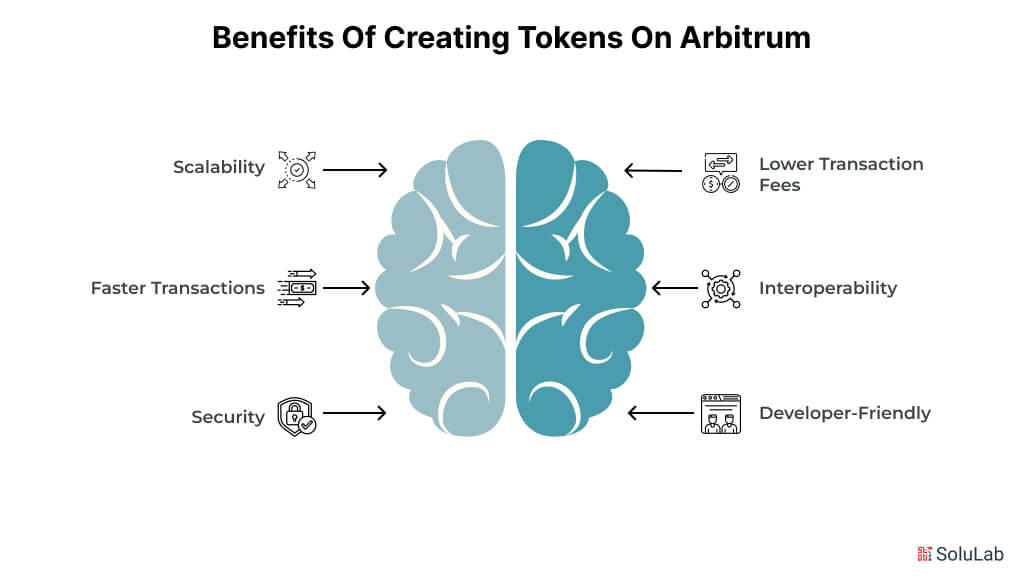
Arbitrum comes with numerous advantages that can boost how well your decentralized applications (dApps) perform and how enjoyable they are for users. Let’s break it down:

1. Scalability

Arbitrum uses Layer 2 scaling solutions, which means it can process way more transactions than Ethereum’s mainnet. This helps avoid network congestion, letting your app handle more users smoothly. The result? Happier users are more likely to stick around.

2. Lower Transaction Fees

One of Arbitrum’s biggest draws is its lower gas fees. By deploying tokens here, you’re saving users money, especially on smaller transactions. This affordability often leads to higher transaction volumes—great for driving business growth.

3. Faster Transactions

Speed matters. Transactions on Arbitrum are noticeably faster than on Ethereum’s mainnet. For apps that rely on real-time interactions, this is a game-changer. It keeps users engaged and makes their overall experience much better.

4. Interoperability

Arbitrum is Ethereum-compatible, meaning you can use the same tools and libraries you’re already familiar with. Migrating or launching tokens is straightforward, saving you time and cutting down on development costs.

5. Security

Because Arbitrum is built to inherit Ethereum’s security, you get the best of both worlds: high performance and strong protection. This reassurance helps build trust with your users, which is key to growing your project’s Security of Token Offerings.

6. Developer-Friendly

If you know your way around Ethereum, working on Arbitrum will feel second nature. The development environment is similar, which speeds up project timelines and reduces the learning curve, so you can launch your product faster.

How to Develop a Token on Arbitrum? A Step-by-Step Guide

Follow this step-by-step guide to create your token on Arbitrum:

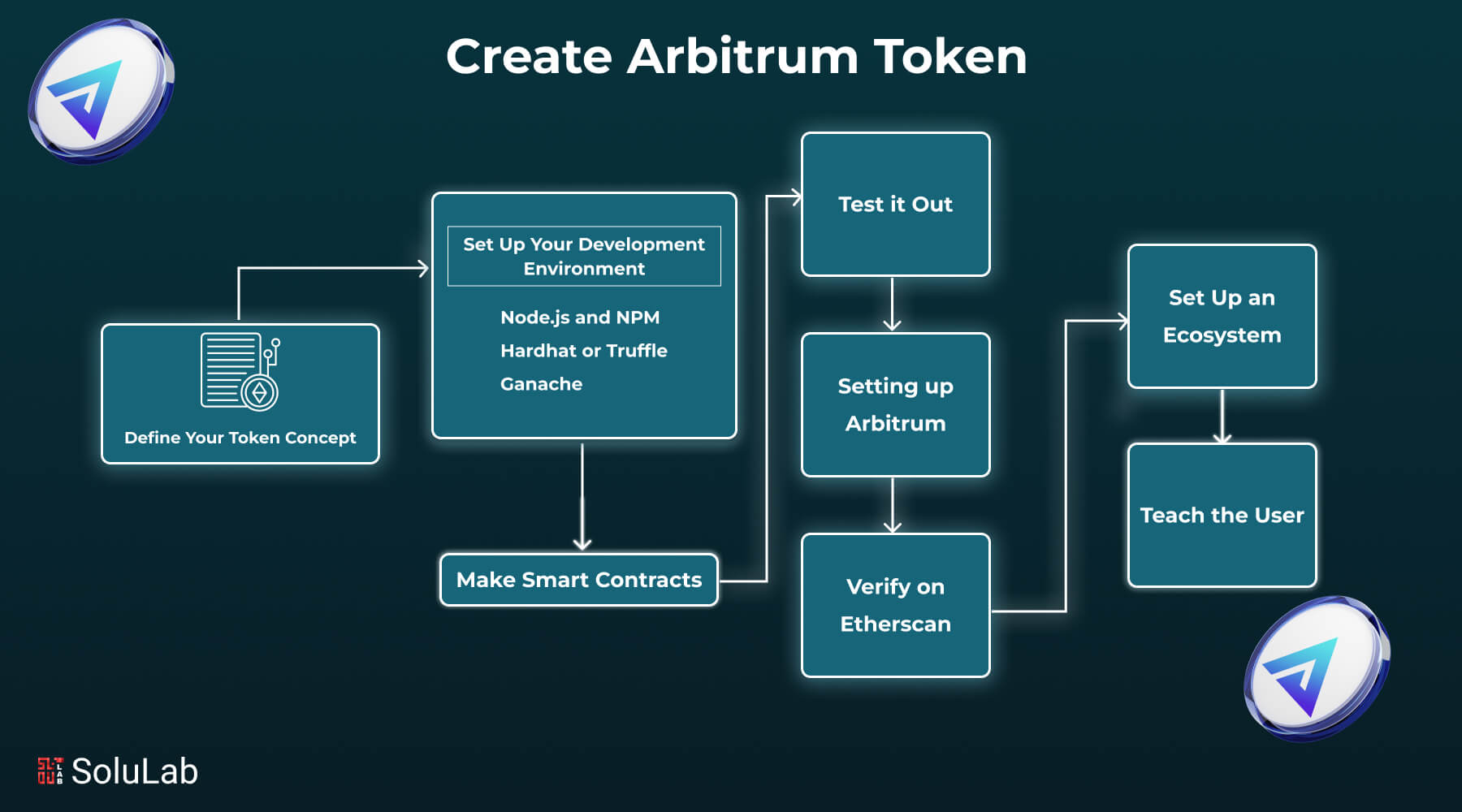
Step 1: Come up With an Idea for Your Token

First, you need to think about what your token is for before you get into the technical stuff. First, ask yourself these important questions:

  • What will your token do to help?
  • What kind of token will it be? Is it going to be an NFT, a real estate tokenization, or something else?
  • How many tokens will there be, and how will they be given out?

If you can answer these questions, you will save time and find it much easier to talk to crypto token makers. It also helps developers make sure that the ecosystem around your token fits exactly with your project’s goals and what your audience expects.

Step 2: Make Sure Your Development Environment is Ready

You’ll need to set up a reliable development setup before you can make a token on Arbitrum. This is what you need to use:

  • Node.js and NPM: Used to keep track of packages and tools.
  • Frameworks like Hardhat or Truffle: Let you build and run smart contracts.
  • Ganache: A local Ethereum blockchain that lets you test your contracts.

Don’t forget to set up a wallet that works with it either. You can keep track of transfers while working on your token with MetaMask or WalletConnect.

Step 3: Make Smart Contracts

This step is the most important part of making a token. Smart contract platforms tell your token how to work and handle everything from payments to creating new tokens and burning old ones. Hiring a token development business with a lot of experience can make this process easy. Here are some important features that smart contracts usually have:

  • Mint: To make fresh coins.
  • Burn: To get rid of tokens and lower the quantity.
  • Move: To move tokens from one person to another.
  • Give permission and moveFrom: So that one person can spend tokens for another user.

To avoid bugs or security problems in the future, it’s important to get these features right.

Step 4: Test it Out

It’s time to test your smart contracts fully once they are finished. Run unit tests and use tools to try out different situations. The goal is to find any security holes or mistakes in the logic so that your token works perfectly and doesn’t pose any surprising problems or security risks.

Step 5: Setting up Arbitrum

Once testing goes well, it’s time to put your token to use on the Arbitrum network. Frameworks like Hardhat and Truffle can help make release easier, no matter if you use the telnet or the mainnet. Still, it’s best to let experienced crypto token writers take care of this important step since it comes with its risks.

Step 6: Check Etherscan

Once your contract is live, check it on Arbitrum’s Etherscan. This step makes things more clear by letting people see the code for your contract and the details of the exchange. It also makes people trust your project, which makes them more likely to use your token.

Step 7: Set Up an Ecosystem

Putting your token to use is only the beginning. To make sure it works in the long run, you’ll need to build a healthy ecosystem. To do this, you need to form partnerships, connect your token to DeFi platforms, offer liquidity, and run marketing efforts to get the word out about your token. Use social media and platforms to stay involved in the community and build and keep a loyal user base.

Step 8: Teach the User

As a token maker, your work doesn’t end when the tokens are sent out. People will need to be taught how your token works. To explain how to buy, sell, and use your token, you should usually make a white paper, a list of frequently asked questions (FAQs), and guides. Working with a token development company with a lot of knowledge can help you put this together. You can build trust and keep your group involved by being open about risks and your project roadmap.

Prerequisites for Token Development on Arbitrum

Before starting the process of asset tokenization creation, token developers need to take a few important steps to get ready:

1. Needs for Technology

  • Knowledge of the basics of blockchain
  • Strong computer skills
  • Know how Ethereum and Layer 2 systems work
  • Knowing how to make smart contracts
  • Know about the guidelines for tokens (ERC-20, ERC-721, etc.)

2. Planning for the future

  • Make the use and value of tokens clear.
  • Figure out coin economics
  • Outline the framework of tokenomics
  • Figure out the target market and possible uses.
  • Write an in-depth white paper. 

Challenges of Creating Tokens on Arbitrum

Here are some challenges listed below you should be aware of before creating a token:

1. Setting up Everything

Setting up a development environment is essential to use smart contracts on Arbitrum, but it can be challenging for new developers. To get started, you need to configure tools like Remix, Hardhat, or Truffle and connect MetaMask to the Arbitrum network. This process can be daunting, especially for those unfamiliar with Ethereum development.

2. Security

While Arbitrum offers many benefits, it also comes with security challenges. Developers must be cautious when working with older versions of Solidity to avoid vulnerabilities like reentrancy attacks and overflow/underflow issues. Before deploying contracts on the mainnet, thorough testing on testnets like Arbitrum Goerli is essential. Staying updated on the latest security best practices and conducting meticulous audits of smart contracts are crucial steps to mitigate risks.

3. Governance and Risks of Upgrades

Smart contract updates and modifications are managed by the Arbitrum DAO and the Security Council. Although this governance model includes timelocks and delays to enhance safety, there are still malicious code changes if they are not properly reviewed. The Emergency Security Council can bypass these delays, adding complexity to the governance process. While this system provides a safety net, it demands transparency and trust within the community. 

4. Dependency on Ethereum

The Ethereum network plays a critical role in how Arbitrum functions. Although Arbitrum is a Layer 2 solution designed to enhance scalability, issues or congestion on the Ethereum and Smart contract mainnet can impact its performance and security. Consequently, while Arbitrum helps improve scalability, it remains tied to the limitations and challenges of the Ethereum network.

Token Development Company

Conclusion 

Using Arbitrum to make tokens has big benefits for both devs and users. Arbitrum is a Layer 2 scaling solution for Ethereum. Its optimistic roll-up technology combines the security of the Ethereum main net with better scalability, lower transaction fees, and faster processing times.

You can greatly improve your chances of success if you clearly explain the reason for your token, follow the rules, test it thoroughly, and build a community around it. Additionally, crypto token development services would be able to offer knowledge and help during the tough process of token creation.

SoluLab helped Token World, a crypto launchpad, simplify token sales and enhance blockchain projects’ transparency. With a focus on smart contract security, regulatory compliance, scalability, and community building, Token World sought expert solutions. We helped them by implementing secure smart contracts, ensuring compliance, and developing scalable infrastructure. 

Additionally, we designed tokenomics strategies to mitigate market volatility and community engagement, enabling Token World to token launches and provide a seamless experience for both investors and project creators. SoluLab, a Token development company, has a team of experts to help your business solve your business problems. Contact us today. 

FAQs

1. What is Arbitrum and how does it work?

An Arbitrum token maker is a piece of software that makes it easier to make tokens. It automatically writes smart contracts and places NFT token services on the Arbitrum network. By providing a guided interface, these platforms let you change things about tokens, like their name and the total supply. Once set up, the puts your coin on Arbitrum, which saves time and makes it less necessary to know a lot about technology.

2. How can I make an Arbitrum token if I don’t know how to code?

You don’t need to know how to code to use an Arbitrum token maker to make a token. These tools have easy-to-use interfaces that let you change the name, symbol, and amount of your token. The technical parts are taken care of by platforms like TokenMint or similar generators, which let you use Arbitrum to launch your token quickly and easily.

3. What will happen if I send my money to an exchange that doesn’t accept Arbitrum?

Your money can disappear or become untraceable. Before sending money, you should always make sure that the exchange you are sending it to is accepted by Arbitrum. If you make a mistake and make such a transaction, you should contact the exchange’s help team Solana Token Services.

4. Why do I need ETH to use the Arbitrum network?

On the Arbitrum network, too, you need ETH to pay for transaction fees, just like on Ethereum. It makes sure that transfers go through, smart contracts work as planned, and the network stays safe and useful.

5. Do I need to pay a tip or priority fee for my Arbitrum transactions?

No, Arbitrum transactions don’t require tips or priority fees. With lower gas fees than Ethereum, the network operates efficiently, ensuring quick and cost-effective transaction processing without the need for additional payments to prioritize them.

Use Cases of DePIN in 2025

Decentralized Physical Infrastructure Networks

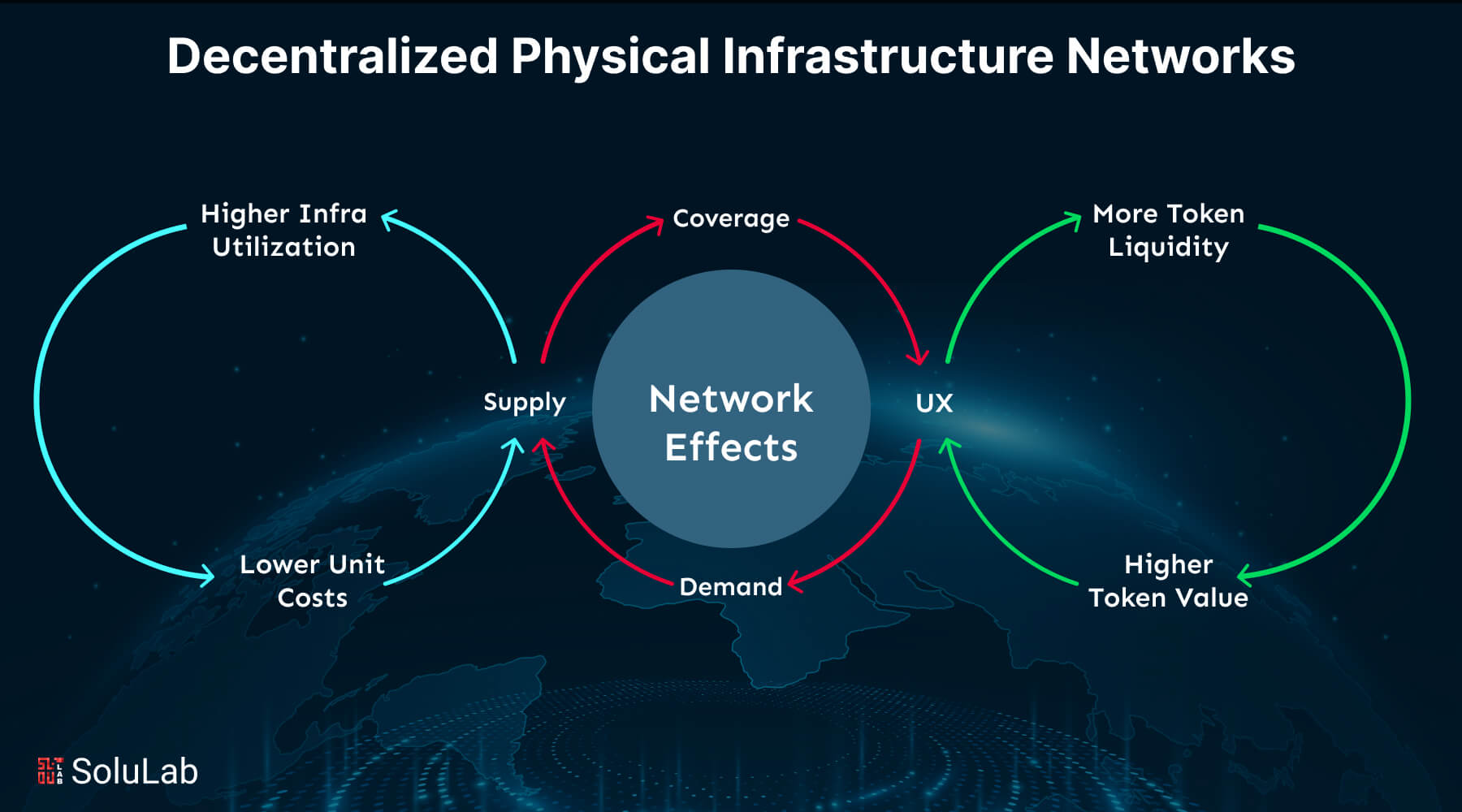
Decentralized Physical Infrastructure Networks, or DePINs, are gaining popularity among enterprises that recognize DePIN’s potential to handle actual hardware services in a decentralized manner.

DePIN integrates blockchain and artificial intelligence (AI), two transformative modern technologies. By combining these latest technologies, DePIN seeks to improve access to vital resources and systems, promoting equality and transparency for all. This innovative approach can transform a wide range of sectors and significantly impact our daily lives by changing how we interact with digital and physical objects. Over 650 projects were developing these DePIN solutions last year, according to Messari’s“The DePIN Sector Map” publication. 

This explains why DePIN’s market value reaches $25 billion. So, if you want to learn more about DePIN, how it works, and why it is essential, this blog is worth reading!

In this blog, we will discuss DePIN (decentralized physical infrastructure network) and the use cases of decentralized physical infrastructure networks. So, without any further ado, let’s get started!

What is DePIN?

DePIN, an abbreviation for Decentralized Physical Infrastructure Networks, is a novel concept for developing and managing physical infrastructure using decentralized technologies. It blends blockchain technology alongside physical assets in order to create a more effective, transparent, and secure approach to infrastructure development, operation, and maintenance.

Traditionally, huge organizations or centralized entities take care of physical infrastructure such as data centers, telecommunications networks, and energy grids. These systems may suffer from inefficiencies, excessive costs, and a lack of transparency. DePIN shifts this paradigm by enabling individuals and organizations to contribute resources, which allows people and organizations to give resources to a decentralized network, such as processing power, storage space, or even renewable energy. In exchange, players are rewarded with tokens or other types of incentives, resulting in a more collaborative and efficient method.

DePIN’s major characteristic is its capacity to assure trust and transparency. Blockchain technology records all transactions and activity inside the network in a tamper-proof ledger. This not only guarantees that resources are used properly, but also enables the seamless connection of scattered assets over a worldwide network.

As the world shifts toward digital transformation, DePIN has an opportunity to redefine the way we think about and engage with physical infrastructure. By decentralizing crucial system management, it provides a viable alternative to traditional methods that may be sluggish, expensive, and prone to central points of failure. DePIN improves infrastructure resilience, flexibility, and accessibility to a greater spectrum of people, resulting in a more inclusive and sustainable future.

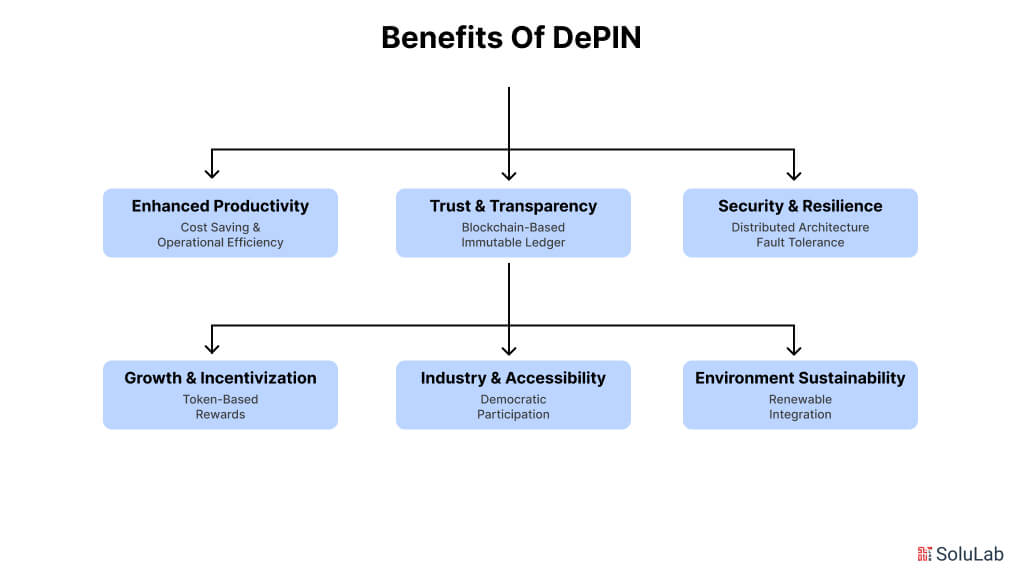
Benefits of DePIN

Benefits of DePIN

The many benefits of Decentralized Physical Infrastructure Networks (DePIN) transform the way we design and maintain infrastructure. Besides only making systems more effective, decentralized physical infrastructure can also promote innovation, improve accessibility, and promote long-term sustainability. Here are some of the top benefits of DePIN:

1. Enhanced Productivity and Cost Savings

DePIN’s ability to streamline infrastructure operations is among its primary benefits. Multiple levels of management are frequently used in traditional centralized systems, which can result in inefficiencies and increased expenses. DePIN, on the other hand, eliminates needless middlemen and lowers operational overhead by enabling direct communication among participants. Both suppliers and customers benefit from more affordable solutions as a result.

2. Trust and Transparency

DePIN makes use of blockchain technology to guarantee that every activity and transaction within the network is documented in a safe, unchangeable ledger. Since every action made within the network can be confirmed by all members, this transparency increases participant trust. Additionally, it removes the possibility of fraud or resource abuse, increasing the dependability and accountability of decentralized infrastructure.

3. Security and Resilience

Decentralized physical infrastructure also has the important advantage of being less susceptible to single points of failure. Cyberattacks, natural catastrophes, and other disturbances that could impact significant swaths of the infrastructure are common threats to centralized systems. By distributing resources and operations among numerous participants, DePIN’s decentralized architecture, on the other hand, produces a more resilient system that is more difficult to hack or disable.

4. Growth and Incentivization

DePIN gives people and organizations the chance to get involved in infrastructure development and upkeep in ways that were previously impossible with conventional procedures. It promotes broad participation and creativity by giving participants tokens or other rewards. In addition to encouraging community-driven solutions, this guarantees that infrastructure develops to satisfy the many demands of its users.

5. Inclusivity and Accessibility

No matter their size or location, participants can contribute resources to decentralized infrastructure. This makes it possible for smaller actors to join and profit from the network, democratizing access to vital infrastructure. Anyone with the required resources can participate in DePIN’s more inclusive model, whether they are giving storage capacity, processing power, or renewable energy.

6. Sustainability of the Environment

Another significant advantage is the integration of renewable energy sources into decentralized infrastructure networks. To run more sustainably, many DePIN projects seek to use resources like hydroelectric, solar, or wind power. In addition to lessening infrastructure’s negative environmental effects, this emphasis on sustainability promotes the wider use of green technologies.

Related: Why are Startups, Businesses, and Governments Looking for DePIN Development?

How Does the DePIN Network Work?

Many components work together to create a cooperative, blockchain-based physical infrastructure, which is what makes a Decentralized Physical Infrastructure Network (DePIN) successful and effective. These contributions, which vary from human users to technological elements, are all essential to the smooth and successful operation of the network.

1. Participants and Providers of Resources

Participants—individuals, companies, and organizations that provide resources—are the backbone of every DePIN network. Depending on the particular DePIN use cases, these resources might vary greatly and could include physical assets like infrastructure gear or renewable energy sources, as well as processing power, storage capacity, and bandwidth. Anyone may engage in a decentralized system, allowing for a more diversified ecosystem where the network as a whole is shaped by a range of inputs.

Participants may provide extra energy from solar panels, empty data center storage space, or idle computer resources, for instance, in blockchain-based physical infrastructure initiatives. DePIN networks can build bigger, more effective systems without depending on conventional centralized authority by combining these contributions.

2. The Use of Blockchain Technology

Blockchain technology, which guarantees security, transparency, and immutability, is the foundation of any DePIN network. Blockchain is the distributed ledger that keeps track of every activity and transaction that takes place on the network. It fosters confidence among participants by guaranteeing that each activity, trade, and contribution is authenticated and unchangeable. The blockchain’s decentralized structure also eliminates the need for a central authority, enabling the network to function independently by established standards.

Blockchain not only protects transactions but also makes asset tokenization easier. In return for their efforts, members of a DePIN network might get tokens or other digital rewards. The network becomes more dynamic and sustainable as a result of the incentives provided by this token-based economy.

3. Physical Assets and Infrastructure

The actual assets are essential to a DePIN network’s operation, even though blockchain technology is also quite important. These can include energy grids, sensor networks, data storage facilities, and telecommunications infrastructure. Underutilized or dispersed physical infrastructure that can be decentralized and improved for increased efficiency is what DePIN networks rely on to function well.

For example, persons or companies with solar panels can provide extra energy to the network in DePIN use cases linked to energy grids, and people with extra hard drives can donate space for distributed storage systems in data storage networks. The secret is in the way these tangible assets are linked together and controlled by blockchain protocols, which enable resource sharing and coordination in real-time.

4. Automation and Smart Contracts

Another essential component of the DePIN network is smart contracts, which are self-executing agreements encoded in the blockchain. These contracts eliminate the need for manual intervention by automatically executing and enforcing provisions when specific conditions are satisfied. They guarantee that donors receive just and timely payment for their contributions, which builds confidence and promotes further involvement.

In a decentralized energy network, for instance, a smart contract may automatically move tokens to a user’s wallet each time they supply the grid with more solar energy. The network becomes more efficient as a result of this smooth automation, which simplifies the procedure and lowers transaction friction.

Use Cases for DePIN in 2025

DePIN Use Cases

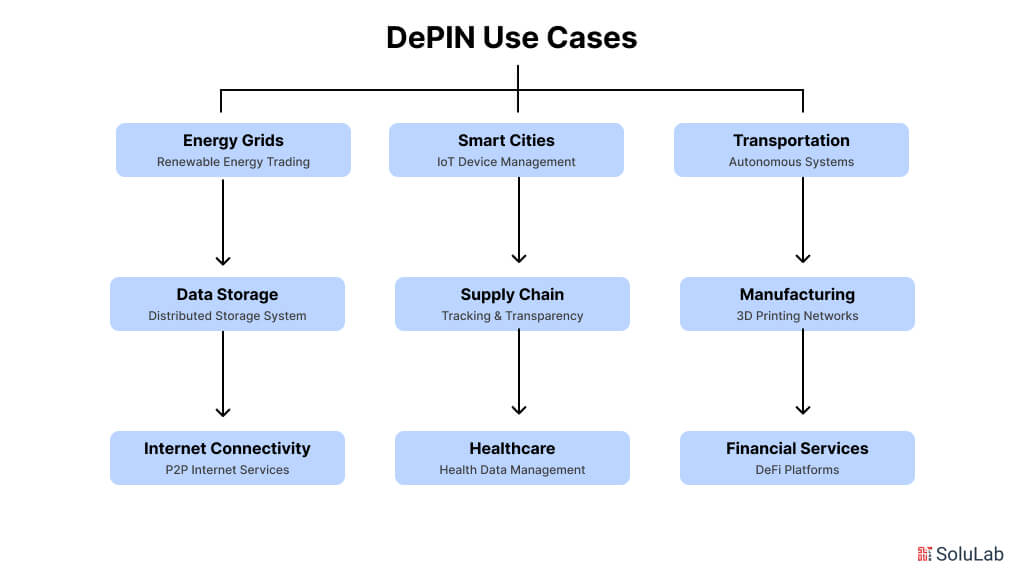
The power of decentralized physical infrastructure networks (DePIN) to transform businesses and alter conventional systems is becoming more and more apparent as they develop. DePIN use cases are anticipated to significantly grow by 2025 in a number of industries, including telecommunications and energy, providing cutting-edge solutions that promote inclusivity, sustainability, and efficiency. Here are a few of the most important DePIN use cases that will be relevant in 2025.

  • Decentralized Energy Grids

The energy industry is expected to be one of the most significant DePIN application examples. Decentralized energy systems will make it possible for residences and commercial buildings to pool excess energy produced by renewable resources like wind turbines and solar panels by 2025. Blockchain-based systems will enable participants to purchase and sell energy effectively, boosting the usage of sustainable energy and decreasing reliance on conventional centralized networks.

  • Decentralized Data Storage

Use cases for decentralized networks in the form of distributed storage systems will be driven by the increasing demand for safe, scalable, and easily available data storage. Participants can establish an international storage network by providing unused storage space from devices like SSDs or hard disks. This concept lowers costs, gives customers more control over their data, and lessens the need for central cloud providers.

  • Peer-to-Peer Internet Connectivity

Decentralized networks will improve internet access worldwide by 2025, especially in underprivileged areas. By providing peer-to-peer services, anyone with extra bandwidth will be able to support a worldwide decentralized network use case. By giving low-income or distant areas access to dependable and reasonably priced internet, this solution will lessen the digital divide.

  • Smart Cities Infrastructure

Decentralized systems will be essential to the creation of smart cities. Managing IoT devices, such as sensors for trash management, pollution monitoring, and traffic control, is one use case for DePIN in smart cities. Utilizing decentralized networks, these gadgets will exchange information and communicate, enhancing urban living’s sustainability and efficiency.

  • Decentralized Telecommunications Networks

Top DePIN use cases will also flourish in the telecommunications infrastructure sector. Underutilized network hardware, including routers or signal towers, might be donated by people and companies by 2025 to increase global connectivity. A more robust, economical, and adaptable telecommunications system will be made possible by this example of DePIN applications.

  • Supply Chain Monitoring and Transparency

Supply chains will use blockchain technology to track and validate transactions, giving customers and companies real-time visibility into the origin and path of commodities. By ensuring that items are supplied lawfully and ethically, this use case for decentralized networks will increase transparency, lower fraud, and foster more sustainable behaviors.

  • Decentralized Management of Health Data

Another industry that will be transformed by DePIN in 2025 is healthcare. Patients may have more control over their medical records if health data management is decentralized. Applications for DePINs include enhancing privacy, accessibility, and interoperability while safely storing and exchanging health data across a decentralized network.

  • Self-Driving Cars and Transportation Systems

The evolution of autonomous transportation networks will be significantly influenced by decentralized infrastructure. Through a decentralized system, vehicles will interact with the infrastructure around them and with each other, enabling safer, more effective transportation as well as real-time traffic control and route optimization. The shift to autonomous vehicles and intelligent transportation systems will heavily rely on this DePIN use case.

  • 3D Printing and Distributed Manufacturing

One of DePIN’s most popular applications in the manufacturing sector will be the decentralized 3D printing of items. By using 3D printers, people and companies may participate in a distributed manufacturing network, which eliminates the need for massive, centralized factories by creating goods or parts as needed.

  • Decentralized Financial Services (DeFi)

Platforms for decentralized finance (DeFi) will keep growing in their capacity to offer financial services in 2025. Without depending on conventional banks, anyone can lend, borrow, or exchange assets using instances of DePIN apps. Users will have easier access to financial tools as a result, especially in areas with weak banking infrastructure.

Thus, DePIN will have a wide range of applications in 2025 that will affect every facet of contemporary life. The prospective uses of decentralized infrastructure in fields like energy distribution, healthcare, and transportation will not only improve current systems but also give rise to whole new paradigms for resource sharing and teamwork. A more equitable, environmentally friendly, and secure future where physical infrastructure is more easily available and effectively controlled by a worldwide network of contributors is what the top DePIN use cases offer.

Challenges in the Usage of DePIN

While decentralized physical infrastructure networks (DePIN) provide various benefits, their broad acceptance and deployment present some obstacles that must be solved. These challenges span technological, regulatory, and operational dimensions, all of which can have an impact on DePIN systems’ effectiveness and scalability. The following are some of the major challenges that might impede the use of blockchain-based physical infrastructure.

1. Scalability and Network Efficiency: One of the most significant issues for DePIN networks is to make sure that they can grow efficiently. As the network expands, so does the number of participants and the volume of transactions, which can cause congestion and sluggish processing times. It is critical in blockchain-based physical infrastructure networks to ensure that the underlying blockchain can manage a huge number of transactions while maintaining speed and dependability. This problem becomes considerably more complicated when different forms of physical infrastructure—from energy grids to telecommunications—demand varying degrees of transaction speed and data storage.

2. Interoperability Between Networks: DePIN systems frequently rely on a broad set of devices and resources that must function flawlessly. Getting separate blockchain-based physical infrastructure networks to connect and exchange resources with one another is a huge difficulty. A decentralized energy grid, for example, may require connectivity to a decentralized data storage network or a telecommunications network. Without common protocols and procedures for interoperability, these networks may function in isolation, limiting the potential of DePIN applications and diminishing their overall efficacy.

3. Security and Privacy Concerns: While blockchain offers a high degree of security, DePIN systems’ decentralized structure introduces additional security vulnerabilities. Because these networks rely on a large number of players, each providing resources and information, vulnerabilities in one portion of the system have the potential to harm the entire network. Privacy is another issue, particularly when dealing with sensitive data. In areas such as healthcare and banking, protecting personal information while retaining transparency is a tricky balancing. To avoid these dangers, appropriate encryption methods and secure protocols must be implemented.

4. Regulatory and Legal Issues: DePIN networks, being relatively fresh, are not generally properly defined under existing legal and regulatory systems. This creates a substantial difficulty, particularly in areas with strong regulations such as energy, healthcare, and telecommunications. Governments and regulatory agencies are still figuring out how to categorize and govern decentralized infrastructure. Legal uncertainty may hinder adoption, as organizations may be hesitant to invest in or operate within a system that lacks clear legal guidance. Furthermore, questions of accountability, taxes, and intellectual property in decentralized contexts must be addressed to support the long-term growth of DePIN networks.

Read Blog: How DePIN Transforms Web3 Space

5. Adoption & Trust: To survive, every DePIN network requires widespread engagement and confidence from a varied range of stakeholders. Convincing individuals, organizations, and enterprises to donate resources to a decentralized network can be difficult, especially in industries traditionally dominated by centralized authority. Overcoming cynicism regarding the security, dependability, and utility of decentralized systems is a serious challenge. Furthermore, new users may struggle to use blockchain systems, which might provide a barrier to wider adoption.

6. Energy Consumption and Environmental Impact: Despite increased interest in employing blockchain-based physical infrastructure for decentralized energy grids and other systems, the environmental effect of blockchain technology is still a worry. Certain blockchains, particularly those based on proof-of-work consensus algorithms, require massive amounts of energy. This may negate the potential sustainability benefits of DePIN systems, particularly if they are used in energy-intensive industries. Discovering energy-efficient blockchain alternatives, such as proof-of-stake or hybrid models, will be critical in meeting this problem.

7. Maintenance and Reliability: DePIN’s decentralized structure implies that no central authority oversees the system’s maintenance and functioning. In classic centralized infrastructure arrangements, a single organization manages maintenance and system changes, resulting in seamless operations. However, in a DePIN system, maintenance responsibilities are split among several players, which might result in variable performance and dependability. Ensuring that the system stays robust and resilient in the face of resource restrictions or system failures is a significant problem.

8. Financial and Incentive Structures: Tokenization of resources is a key component of DePIN networks, in which players are paid for their efforts. However, developing equitable and sustainable funding mechanisms for these networks might be difficult. Token values vary, creating uncertainty for those who rely on the system for pay. Furthermore, because token-based incentive systems are complicated, new users may struggle to grasp and trust the network’s economic architecture.

Connect with Experts

Final Words

Finally, DePIN use cases in 2025 have the potential to change industries throughout the world by providing a more decentralized, effective, and sustainable approach to managing physical infrastructure. As industries such as energy, data storage, telecommunications, and healthcare experiment with decentralized models, the promise for increased accessibility, openness, and resilience becomes obvious. DePIN’s most popular use cases, such as decentralized energy grids, peer-to-peer internet access, and distributed manufacturing, are only the beginning of a more connected and collaborative future.

SoluLab helped Spherium Finance create an all-in-one decentralized finance platform that consolidates a wide range of DeFi products and services, making them easily accessible. With the launch of this platform, Spherium is now empowering users outside of core IT enthusiasts to achieve high positive returns on their DeFi investments. By integrating multi-asset, cross-chain swaps, and crypto financing solutions, the platform offers low-risk, high-reward investment management.

SoluLab specializes in designing blockchain-based physical infrastructure solutions that are suited to the specific requirements of each business. As a leading decentralized physical infrastructure and blockchain development company,  we can assist businesses in harnessing the potential of DePIN to create more efficient and scalable solutions. If you want to incorporate blockchain technology into your energy network, enhance data storage, or create a decentralized telecoms platform, SoluLab has the skills to make it happen. Want to transform your infrastructure with decentralized solutions? Contact SoluLab today to start building the future.

FAQs

1. What is DePIN and how does it work?

DePIN stands for Decentralized Physical Infrastructure Networks, where resources like energy, storage, and computing power are shared across a decentralized network rather than being controlled by a single organization. By using blockchain technology, DePIN ensures that transactions and contributions are secure, transparent, and efficient, allowing participants to contribute and earn rewards in a decentralized ecosystem.

2. How will DePIN impact the energy sector in 2025?

In the coming years, DePIN will impact the energy sector by allowing individuals and businesses with renewable energy sources, such as solar panels or wind turbines, to share excess energy through decentralized energy grids. This will make energy distribution more efficient, sustainable, and accessible, as participants can trade energy directly with each other, reducing reliance on traditional energy companies.

3. What are the benefits of decentralized data storage in DePIN?

Decentralized data storage through DePIN offers enhanced security and privacy by distributing data across multiple participants rather than relying on a single centralized provider. This approach reduces the risk of data breaches, offers greater control over personal data, and makes storage more affordable. Plus, it enables scalable solutions that can grow with the increasing demand for data.

4. How does DePIN contribute to smart cities?

DePIN will be instrumental in building smart cities by decentralizing the management of critical urban infrastructure, such as traffic systems, waste management, and pollution monitoring. IoT devices will be connected through decentralized networks, allowing real-time data sharing and decision-making. This will lead to more efficient, sustainable, and responsive urban environments, improving the quality of life for city residents.

5. What challenges might hinder the adoption of DePIN in 2025?

Although DePIN offers tremendous potential, challenges such as scalability, integration between different decentralized systems, regulatory uncertainties, and security concerns could slow its adoption. To fully realize the benefits of decentralized infrastructure, it will be essential to overcome issues related to interoperability, user trust, and the need for clear regulatory frameworks that can guide its development.


Top 5 Layer 3 Blockchain Solutions in 2026

Top Layer 3 Blockchain Solutions

Businesses across industries are facing challenges that existing Layer 1 and Layer 2 solutions struggle to address. From scalability, and high transaction fees to limited customization and poor interoperability, companies are increasingly constrained by the limitations of generalized blockchain infrastructure. 

Industries like gaming, finance, healthcare, and supply chain management find it difficult to deliver seamless user experiences, meet regulatory requirements, and innovate in competitive markets. Financial services lead in blockchain adoption, representing 38% of the market, whereas sectors such as healthcare and retail are quickly advancing, propelled by the demand for secure data exchange and effective digital systems.

Designed to tackle pain points like inefficient cross-chain operations, lack of vertical-specific tools, and escalating development costs, these application-specific platforms unlock new possibilities for scalability, interoperability, and tailored performance.

In this blog, we’ll explore the top Layer 3 blockchain, its features, and how it works to help businesses overcome their most critical challenges.

What are Layer 3 Blockchain solutions? 

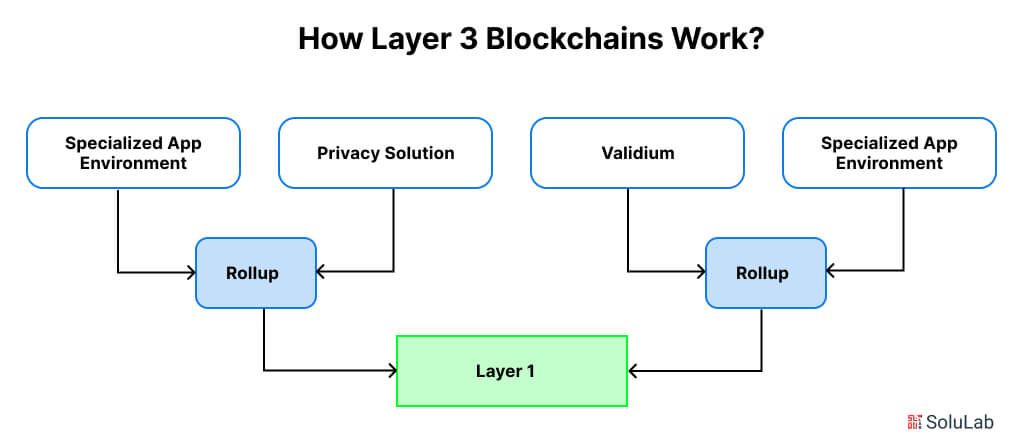
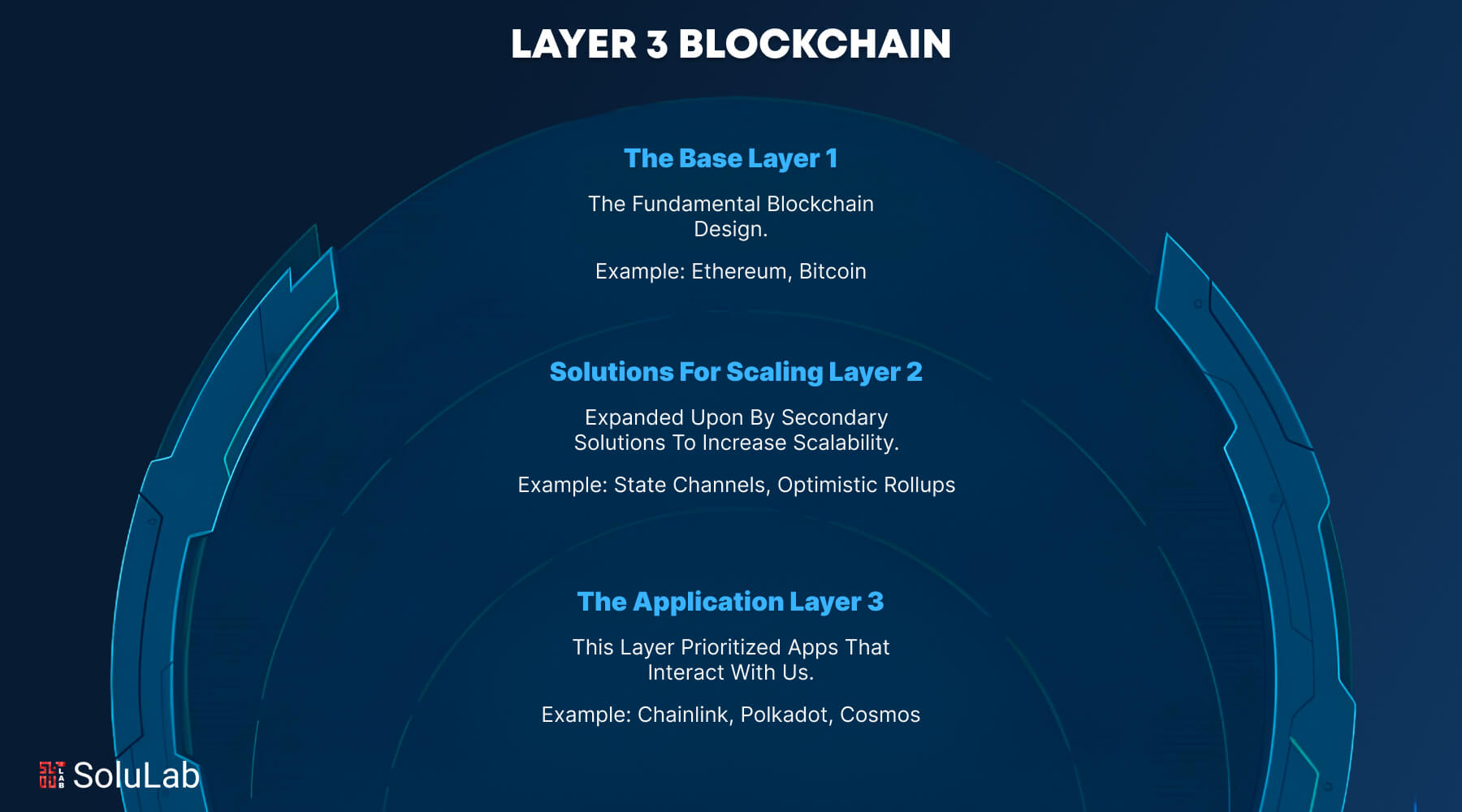
Understanding What are Blockchain Layers? is crucial to know how modern blockchain networks function. Layer 3 blockchains build on existing Layer 1 (like Bitcoin or Ethereum) and Layer 2 (scalability solutions like Lightning Network). These networks are all about making blockchains faster, more interoperable, and tailored for specific uses like decentralized apps (DApps).

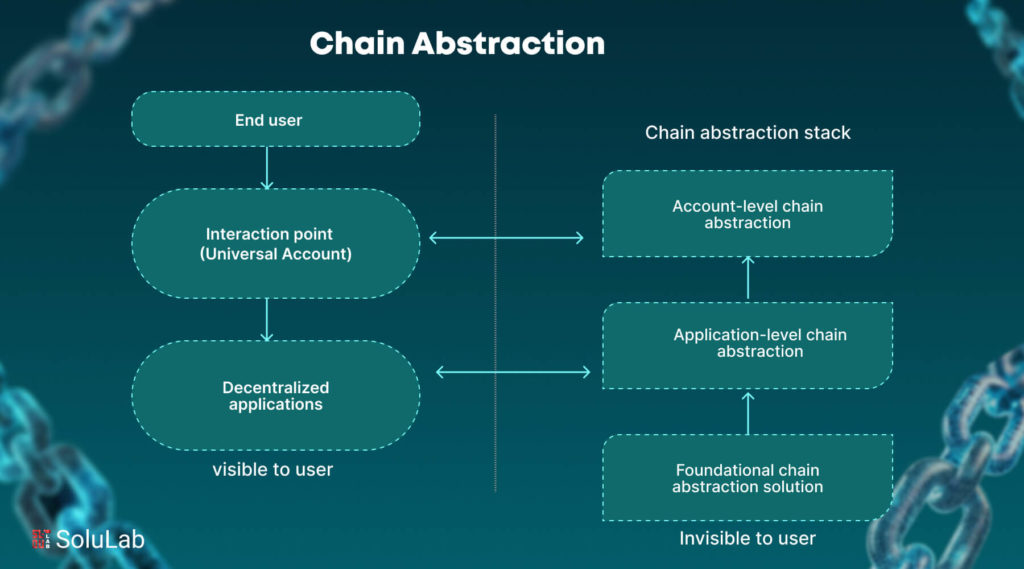
The goal behind Layer 3 is to create a secure and scalable blockchain that overcomes the limitations of the earlier two layers through chain abstraction. It connects multiple blockchains and lets them communicate. While Layer 2 focuses on scaling a single blockchain, Layer 3 connects the dots across multiple chains, ensuring they work together smoothly.

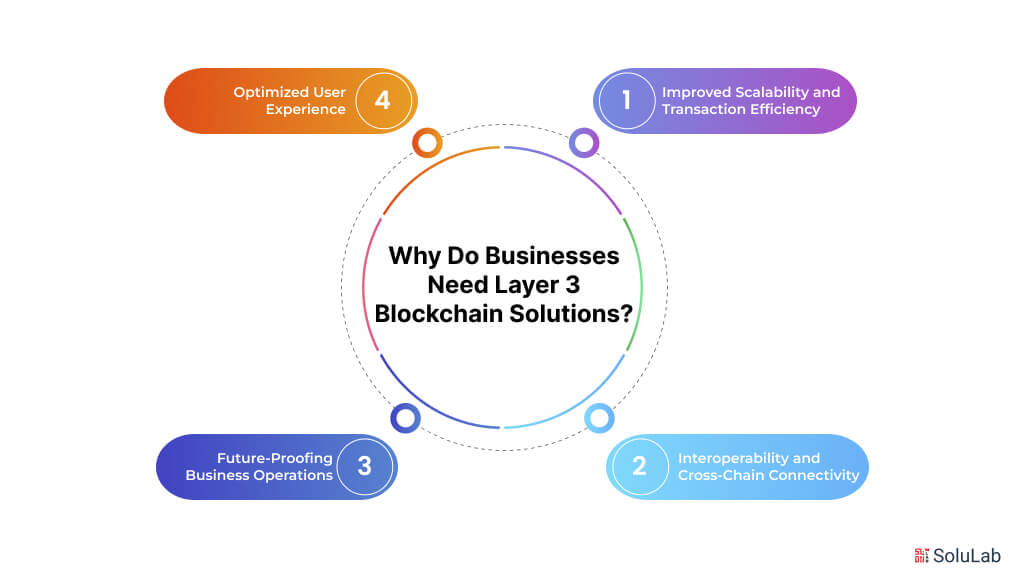
Why do Businesses Need Layer 3 Blockchain Solutions?

Why do Businesses need Layer 3 Blockchain Solutions

To stay ahead of the competitive market and see your business grow layer 3 blockchain solutions are mast. Below we’ve listed some reasons why you should go for layer 3 blockchain solutions:  

1. Improved Scalability and Transaction Efficiency

Layer 3 solution resolves scalability issues that occur as businesses expand their business operations. Among the top Decentralized Layer 3 Networks, these solutions handle tasks by shifting data processing and computations off the main blockchain or onto a dedicated Layer 3, making transactions faster while keeping security intact. Here’s why businesses need blockchain solutions:

  • Decreased congestion on Layer 1 blockchains by offloading complex application logic.
  • Quick processing of high-volume transactions, is important for DeFi, e-commerce, and gaming for improved scalability.

This layer 3 blockchain scalability solution enhances the practical applications of blockchain technology for companies handling extensive operations, such as decentralized exchanges or supply chain management in enterprises.

2. Interoperability and Cross-Chain Connectivity

Most businesses now operate in environments that involve multiple blockchains, which requires smooth interactions between different blockchain systems. Layer 3 solution aims for coordination to support cross-chain data sharing and asset transfer.

  • Simplify transactions across different blockchain platforms plus, break down operational barriers.
  • Improved collaboration within the ecosystem, businesses can connect with customers and partners across multiple chains.

3. Future-Proofing Business Operations

Layer 3 solution is the first step towards Web 3 Dream, where applications and services operate across decentralized platforms. Plus, it enables businesses to remain competitive. Businesses that take advantage of layer 3 protocols position make themselves ahead of their competitors. Here are some advantages they will get:

  • Keeping pace with the latest technological advancements.
  • Maintaining flexibility to adjust to market needs and blockchain innovations.

4. Optimized User Experience

Layer 3 focuses on user-friendly interfaces and streamlined interactions. This improves the accessibility of blockchain systems for businesses and customers. It makes complex processes intuitive and easy to navigate.

  • Higher adoption rates among non-technical users are associated with simplified user interfaces.
  • Simplifying the onboarding procedures for partners, clients, and staff.

Top Layer 3 Blockchain Solutions 

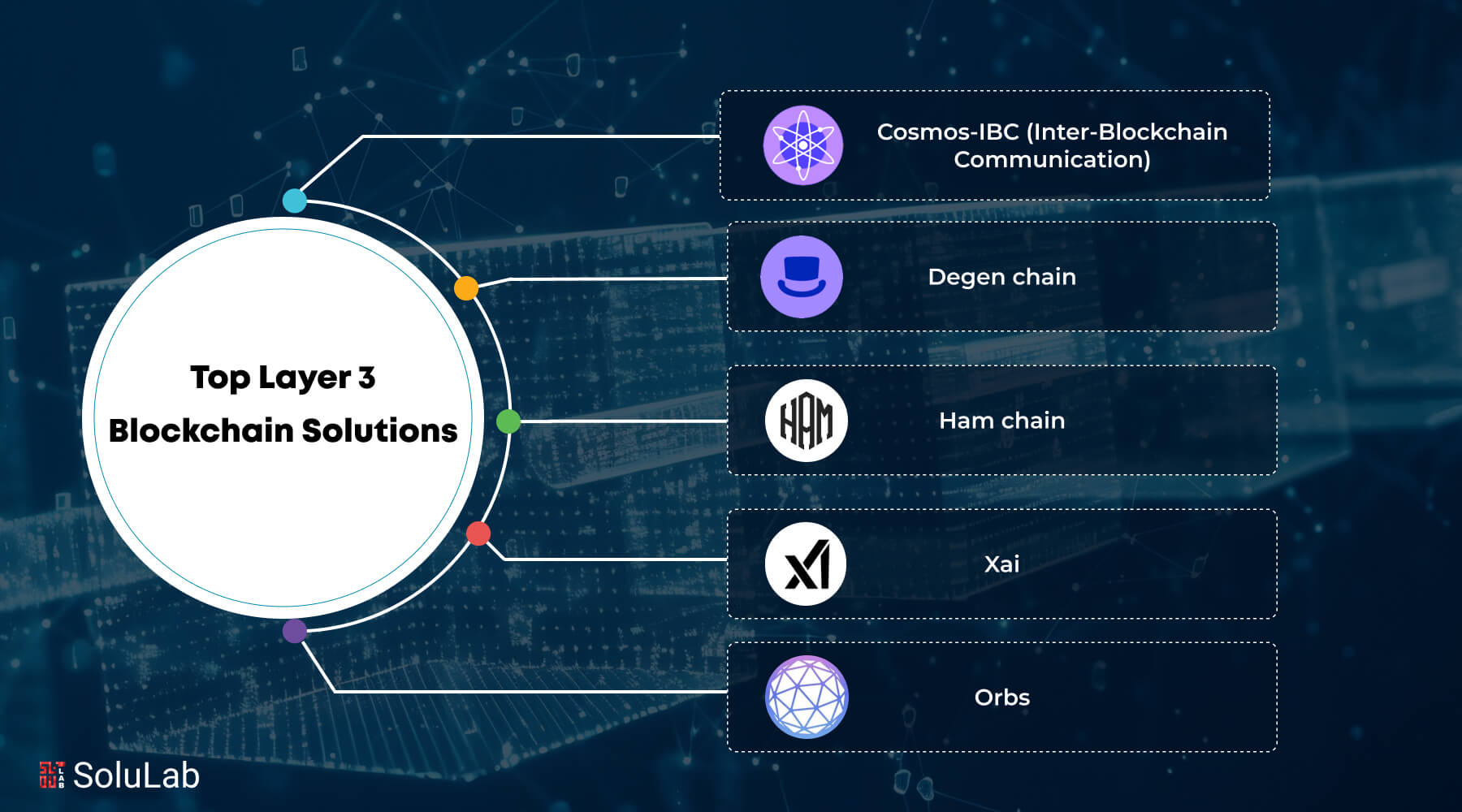
Here are the top layer 3 blockchain solutions you should know to grow your business:

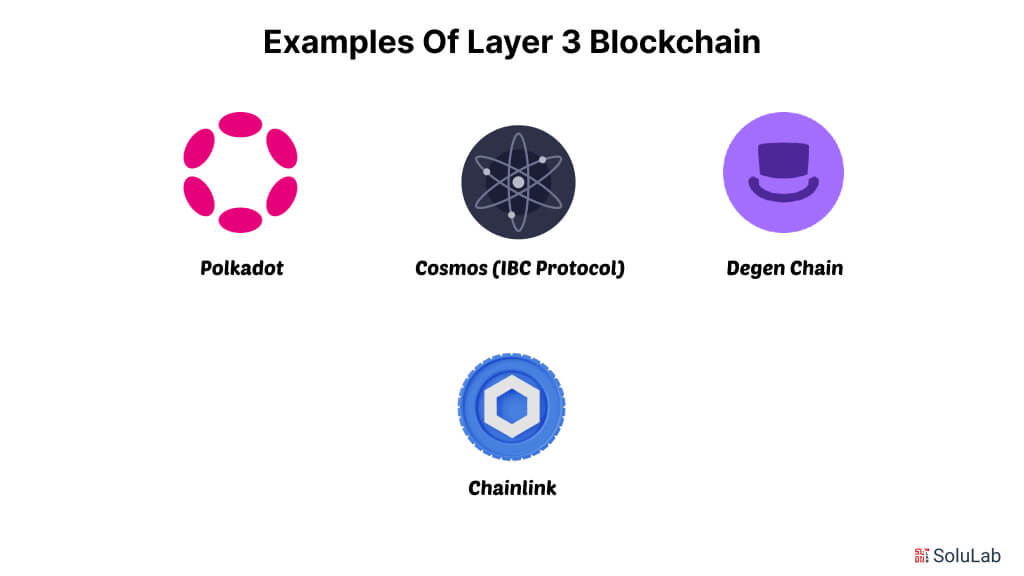
1. Cosmos-IBC (Inter-Blockchain Communication)

The inter-blockchain communication protocol is an open-source protocol to manage the authentication and transport of data between blockchains. IBC allows various chains to communicate with each other to exchange data, messages, and tokens. Cosmos-IBC is moving toward layer 3 solutions by including rollups and scaling technologies, despite its historical alignment with layer 2 networks.

Cosmic IBC’s scalability and IBC protocol give foundational support for applications that use Layer 3 protocols for enhanced functionality. It combines blockchains across ecosystems like Polkdot and Avalanche while focusing on interconnectivity in the blockchain ecosystem.Cosmoc-IBCs TAO (Transport, Authentication, and Ordering) framework provides secured and ordered packet transfer while setting the groundwork for interoperable blockchain-based applications. 

2. Degen Chain

Degen Chain provides layer 3 capabilities to improve the performance of layer 1 and layer 2 infrastructures while serving the gaming and decentralized financial communities. For specialized markets like GameFi and NFTs, it increases transaction speed, lowers costs, and accommodates application-specific chains. 

With a gaming ecosystem, Degen Chain integrates smart contract features. It is well-suited for developing platforms like metaverse games and NFT marketplaces that demand high throughput and low latency. Degen Chain, a Layer 3 blockchain project, offers customized solutions for gaming projects that require scalable frameworks and improved user interaction.

3. Ham Chain

Hamchain is designed to augment existing blockchains. It is a developing layer 3 blockchain network that concentrates on privacy and scalability. Ham chain provides off-chain computation and improved privacy layers for enterprise-grade applications. Ham Chain, offers enhanced data privacy and transaction scalability. It also integrates with Layer 1 and Layer 2 blockchains

It focuses on enterprise use cases needing regulatory compliance and secured transaction environments. Ham Chain is appropriate for the financial services and healthcare industries that value data security while utilizing blockchain technology because of its private transactions and interoperability.

4. Xai

Xai is a Layer 3 blockchain platform designed for optimizing user experience via advanced scalability and interoperability.  Xai’s Layer 3 architecture helps complex use cases such as DeFi, decentralized gaming, and supply chain management.

It links the space between blockchain ecosystems, improves capacity, and reduces costs for dApps. Xai focuses on providing tools for developers to combine blockchain functionalities, into mainstream applications without the complexities of Layer 1 or 2 development.

5. Orbs

Orbs is a Layer 3 blockchain platform customized to enterprise solutions. It functions on top of existing blockchains to improve scalability and governance while lowering complications for application developers. Orbs utilizes a hybrid architecture that blends permissioned and decentralized frameworks.

Orbs boosts Layer 1 and 2 functionality by offering decentralized consensus for enterprise applications. Its rare “virtual chain” technology enables the customization of blockchain parameters for specific use cases. Orbs offers scalability and cross-chain operability for DeFi protocols and supply-chain solutions. Moreover, it allows companies to adopt blockchain strategies without compromising performance. 

Read Also: Blockchain Interoperability’s Impact Enterprise Adoption

Benefits of Layer 3 Blockchain Solutions

Here are some benefits of layer 3 blockchain solutions:

  • Reduced Costs: Layer 3 blockchains can cut the fees on each transaction and make the cost per user and developer interaction with dApps more cost-effective.
  • Enhanced Scalability: Layer 3 scaling solutions can decentralize the transaction load from Layer 1 and Layer 2 networks, Layer 3 solutions offer deep scalability as a means of building complex and high-performance dApps.
  • ‍Enhanced User Experience: Layer 3 solutions are faster and cheaper. It defines a more user-friendly environment that creates broader adoption for decentralized applications.
  • Customization: Layer 3 protocols are precise to developers, they can be optimized for applications as needed.
  • Improved Interoperability: Layer 3 solutions let interaction between numerous blockchain networks, enabling dApps to get resources and functionalities from one blockchain network to another.  

How Layer 3 Blockchains Work?

How Layer 3 Blockchains Work

Layer-3 blockchains utilize off-chain computation and novel consent methods to obtain scalability and interoperability for decentralized applications.

Layer-3 blockchains incorporate advanced smart contract functionality while utilizing the transactional and security capabilities of L1s and L2s. While Layer 1 vs. Layer 2 solutions each have their distinct advantages – L1s providing the foundational security and L2s offering scalability – Layer 3 takes things further by enabling intricate off-chain computation and settlement while preserving the security and high speed of the blockchain. Plus, it happens all because of layer-2 scaling solutions like state channels and sidechains.

Layer 3 improves interoperability by enabling communication between various blockchains through protocols like inter-blockchain communication (IBC).  Inter-blockchain communication (IBC) provides sleek communication between different DApps, containing DeFi and the non-fungible tokens (NFTs) developed on different blockchains. 

Through the use of smart contracts, virtual machine environments which are unique within L3 architecture offer the foundation for the execution of numerous DApps. These environments let developers create DApps with refined features that allow the blockchain to execute arbitrary code.

Validium is a tool, used in Layer-3 blockchains to make things faster and cheaper. It uses zero-knowledge proofs to check transactions off the main chain. While it’s great for speeding things up and cutting costs, it relies on validators to keep data safe, so it’s not as secure as Layer-1 blockchains.

Rollups are another smart feature of Layer-3s. They group a bunch of transactions into one neat package, process them off-chain, and then send the results back to Layer 1. This makes things faster and more scalable without losing security.

Layer-3 systems use creative methods like Proof of Stake (PoS) or Delegated Proof of Stake to run. These methods help the network manage more work, use less energy, and stay decentralized and secure. Together, these features make Layer-3 blockchains powerful and efficient.

Future Challenges and the Success of Layer-3 Blockchains

As a growing blockchain development company and blockchain consulting company, you should understand major challenge businesses are facing is the smooth integration and compatibility with layer 1 and layer 2 blockchain architectures. As new technologies and innovations continue to develop, the challenges they bring are also becoming more complex.

Additionally, there is more complexity in developing and overseeing the layer 3 structure. It’s getting difficult to preserve security and decentralize while managing a higher volume of transactions and a growing user base. Layer 3 solutions play a crucial role in maintaining stability and durability by striking a balance between decentralization and performance.

Implementing cross-border regulations for Layer 3 blockchains faces a few challenges. It requires close collaboration with regulators and stakeholders to develop clear and adaptable frameworks that balance compliance with the need for innovation.

The future of Layer 3 solutions will depend on how effectively they address scalability and interoperability issues while delivering tangible improvements to industries and decentralized systems. 

Equally, it is important to educate users and developers about the strengths and limitations of Layer 3 technology. Building awareness and understanding will be the key to adopting and encouraging new applications in DeFi and other sectors.

Blockchain Development Services

Conclusion

Layer 3 solutions are essential as they surpass the limitations of Layer 1 and Layer 2 while providing improvements in the dApps’ performance. Using layer 3 solutions can take ahead of the competition. It helps you decentralized apps that will be faster, more scalable, and easier for users to use in the future, allowing for widespread usage of the technology across a range of industries.   

Layer 3 solutions are essential for maintaining competitiveness in the blockchain market. As businesses hire blockchain developers to build innovative solutions, they recognize that regardless of their industry – whether gaming, finance, healthcare, or supply chain management – Layer 3 solutions are crucial. By tackling industry-specific issues and providing optimized scalability, interoperability, and user experiences, Layer 3 solutions are realizing their full potential.

SoluLab partnered with NovaPay Nexus to develop a cryptocurrency payment platform that enables self-hosted, fee-free digital currency transactions. Our team created a system supporting multiple stores, custom apps, and security features, for businesses to build their cryptocurrency ecosystems.

Are you prepared to investigate Layer 3 Blockchain options for your company? Get in touch with SoluLab today and let us assist you in creating excellent dApps that will differentiate you from the crowded blockchain market. 

FAQs

1. Are Layer 3 solutions scalable?

Yes, Layer 3 solutions are designed to be scalable by focusing on specific applications. It reduces network congestion and improves performance. They complement Layer 2 by targeting niche use cases while providing efficiency.

2. How secure are Layer 3 blockchain solutions?

Layer 3 solutions inherit security from Layer 1 and Layer 2 but can vary depending on implementation. Ensuring robust coding practices and audits is key to maintaining security.

3. What industries will benefit the most from Layer 3 blockchains?

Gaming, supply chain, and finance are prime beneficiaries. Layer 3 offers tailored solutions, enabling faster transactions and better scalability for specific industry needs.

4. What challenges do Layer 3 solutions face?

Challenges include interoperability, standardization, and ensuring user adoption. Maintaining a balance between scalability, security, and decentralization is also complex.

5. What are some top Layer 3 solutions expected in 2026?

Expected solutions include gaming-specific chains, decentralized identity platforms, and supply chain networks leveraging Layer 3 for efficiency and customization.


What is Layer 3 Blockchain? The Next Evolution in Decentralization

Layer 3 Blockchains

With the advent of blockchain platforms, there has risen another purely new type of software design. Layer 1s such as Ethereum or Bitcoin laid the starting point concerning security models, consensus methods, and procedures. The primary objectives of Layer 2 blockchains like state channels, Plasm, and optimistic rollups are to scale these base chains, increase the throughput, and lower fees. 

Layer 3 brings about an additional aspect of decentralized applications: the ability to build highly specialized blockchains that might be appropriate best for a particular industry, or application, or with specific corporate needs in mind. Think of it as an approach of “you choose your adventure,” with regards to blockchain technology, allowing programmers to build blockchains that are tailored to the application of their choice. 

This guide will keep you aware of What is Layer 3 in Blockchain, what services it offers, the benefits of using Layer 3 blockchain,n and how is it helping your business.

What Does Layer 3 Mean in Blockchain?

The layer called the application layer or Layer 3 facilitates between blockchain technology and client layers. Layer 1 is the original blockchain and layer 2 is a scaling solution, as its basis on top of which it is built. It is Layer 3 because it is intended to develop user-oriented programs and protocols that should allow the usage of blockchain ideas in everyday life, though Layer 1 Blockchains and Layer 2 exist to provide such things as scalability, security, and decentralization. This layer is particularly important to convey the value of blockchain technology to a general population because it interfaces with end users through usable interfaces and useful functionality. 

The application of layer 3 blockchain has rapidly risen due to other developments such as smart contracts, and agreements that can be automatically executed without requiring third-party endorsement. There are more than 4,000 dApps currently in use on blockchains by 2023 across different industries such as gaming, healthcare, financiers, and supply chain. It is at layer 3 that this divide is bridged between utility, blockchain innovation, consumer-oriented solutions, and complex blockchain architecture. 

Components of Layer 3 of Blockchain

How Layer 3 Blockchain work solve some of the challenges of end-users, who may use the blockchain to add practical applications so that adoption becomes a reality, the layer builds on the security and management of Layer 1 and Layer 2 blockchain solutions. The third layer is more focused on creating easy-to-use apps. Here are the essential components of Layer 3 Blockchain:

Decentralized Apps (dApps)

In blockchain architecture, dApps refer to software programs developed on the principles of transparent decentralized platforms. Some of these applications include and they make up the Layer 3 of the foundation of the blockchain. For instance, the trading of decentralized cryptocurrencies as captured by Dapps like PancakeSwap and Uniswap has revolutionized trading in the financial sector. The trading volume of these platforms in 2022 was above $2 trillion proving the growing popularity and popularity of these platforms.

Defi Platforms or Decentralized Finance Platforms

Layer 3 is incomplete without the decentralized financial markets known as Defi which comprises lending, borrowing, and interest-earning services. Through decentralized finance, majors like Aave and Compound remove factors like middlemen and allow users to make financial transactions directly with smart contracts. Defi platform has expanded exponentially; in 2023, the aggregated value for Defi was approximately $ 50 million, relatively close to $ 1 billion in the year 2019. This shows how adopted the industry has been and how it can change normal financial practices. 

Blockchain-Based Services

Another blockchain service for which Layer 3 is implemented includes the blockchain gaming platforms and NFT marketplaces. This is particularly the case for new forms of trading, such as NFT on platforms like OpenSea as well as for the play-to-earn models based on gaming platforms like Axie Infinity. Grand View Research stated that the global NFT market only reached $20.44 billion in 2020, and could grow at approximately 33.9%, within the timeframe between 2023 and 2030.

CTA1

Services of Layer 3 Blockchain

Layer 3 is the transition from complex blockchain and implementing integrated and easily navigable services. Services of Layer 3 Blockchain gives some solutions and tools that are useful for using blockchain technology in practical applications by users and enterprises.

Layer 3 provides industry-specific software solutions to firms in sectors including, but not limited to, gaming, healthcare, supply chain, and financial services section. For instance, through the removal of intermediaries in lending, borrowing,g or payment, the great decentralized finance platforms help companies to do the following. Smart contracts can also be employed for the management of procedures in businesses and this serves to reduce the operating cost and at the same time, reduce cases of errors. They also increase accountability and transparency, so companies can reduce instances of fraud and be sure that their products are genuine. 

Layer 3 uses chain abstraction to give the customer applications for interaction with people and makes the upper level of blockchain technology applicable in the real world. Direct communication of people, non-hierarchical markets, and social networks that do not belong to one company use decentralized applications such as Binance or Ethereum smart chain. Furthermore, Layer 3 facilitates the trading of virtual commodities, collectibles, and digital art through NFT markets like OpenSea. With portals like Axie Infinity launching play-to-earn models, which allow players to make money by playing blockchain-based games, the gaming sector has also exploded. 

Additionally, key Features of Layer 3 Blockchain are data management services and identity, providing consumers more authority over their personal information while maintaining security and privacy via decentralized frameworks. These technologies help firms increase consumer compliance and trust. Layer 3 blockchain, converts the technological promise of blockchain into practical uses, promoting a decentralized, user-focused digital economy that benefits both individuals and enterprises. 

Related: Business Lens on Blockchain Stack: From Layer 0 to Layer 3

Examples of Layer 3 Blockchain

Examples of Layer 3 Blockchain

Here are some significant Layer 3 Blockchains including their primary functions and benefits:

  • Polkadot

Polka Dot’s multi-chain architecture, which includes a relay chain and para chains, promotes interoperability and scalability. Its layer 3 design facilitates cross-chain communication and transfer of assets which results in a more efficient dApp functionality. The network’s governance and security are driven by its native token DOT. Parallel Finance, Moonbeam, and Acala are among the most well-known Polkadot chains.

  • Cosmos (IBC Protocol)

Cosmos Inter-blockchain communication (IBC) protocol facilitates smooth connectivity between related blockchains. IBC facilitates the secure movement of currencies and data between networks, allowing decentralized applications (dApps) to use a variety of blockchain features. This supports the cosmos concept of the “Internet of Blockchains”. Injective, Osmosis, and Axcelar Network are the key initiatives that use IBC. 

  • Degen Chain

Dege chain, which is built on the base blockchain, focuses on quick gaming and payment transactions. Its layer 3 architecture offers affordable, rapid connectivity processing, making it appropriate for certain applications. With quick adoption, including a $100 million transaction volume immediately after the launch, it supports developing an ecosystem of tokens such as Degen Pepe (DPEPE) and Degen Swap (DSWAP)

  • Chainlink

Chainlink which is often known as a decentralized oracle network, demonstrates Layer 3 characteristics by connecting smart contracts to real-world data. It improves dApps for Defi, insurance, and gaming by supplying safe, tamper-proof external data. Blockchain networks like Plygon, Ethereum, and Avalanche use Chainlink to enhance their capabilities. Link, the native token promotes security and reliability on the network.

How is Layer 3 Different From Layer 1 and 2?

Features The Base Layer 1 Solutions for Scaling Layer 2  The Application Layer 3
Meaning The fundamental blockchain design. Expanded upon by secondary solutions to increase scalability. This layer prioritized apps that interact with us.
Goals Offers transaction validity, security, and decentralization. Increases layer 1 blockchain’s efficiency and scalability. Provide users with user-friendly protocols and apps.
Cost of Transactions Usually greater due to the network congestion Decreased expenses with the removal of transactions off the main chain. The support layers 1 and 2 determine the cost efficiency of layer 3.
Speed of Transactions Restricted eg Ethereum 30 TPS, Bitcoin 7 TPS. Significantly greater as a result of off-chain transaction processing.  With an emphasis on smooth user contracts, speed varies depending on the application.
Use Case Focus Building a decentralized and safe infrastructure. Increasing efficiency and scalability for wider blockchain applications. Practical use cases such as blockchain gaming, NFT trading, and DeFi.
Key Features Systems for consensus, security, and decentralization. Faster transactions, scalability, and lower expenses. dApps, blockchain interoperability, and smart contracts. 

Real-World Use Cases of Layer 3 Blockchain

Layer 3 Blockchain Use cases

Several use cases of Layer 3 Blockchain, if you hire blockchain developers, illustrate their adaptability and possible influence on the blockchain sector:

1. Gaming

 Layer 3 blockchains are capable of grounding highly complicated but necessary gaming structures and interactions, which require seamless and fast functionality. Xai Network is an optimized gaming blockchain designed on Arbitrum Layer 2 solution with Layer 3 solutions in mind. Its objective is to offer the developers elements that make the creation of games with lots of active players and fights possible.

2. Finance

For the leading blockchain consulting companies, Layer 3 solutions in decentralized finance reduce transaction time and provide more efficient processing of financial goods. At the moment, dYdX Immutable X, and all other DeFi rely on StarkWare’s Layer 3 scaling solutions to enhance transaction velocities and to make DeFi as fast and available as it is.

3. Supply Chain Management

Supply chain processes’ reliability increases when confirming operations with Layer 3 Blockchain architecture, through which the effectiveness of the respective raises. For instance, VeChain utilizes Layer 3 solutions for the provision of integrated supply chain solutions. Thanks to their technology, their items may be traced from the point of origin down to the end consumer.

4. Healthcare

These systems can with relative ease and more confidentiality handle health-sensitive data, which will in turn enhance information confidentiality and at the same time enhance the rate at which information can be accessed. For instance, it uses Layer 3 blockchain to share and protect health record data in MediBloc shares. For patients and other healthcare professionals, it has increased value as a result of the availability of data and security.

5. Social Media

Thus, Layer 3 technologies being free from the limitations of traditional networks, may serve as the basis for autonomous social networking applications that ensure secure communication. Minds is a decentralized social media that provides its users with a private, freedom-of-speech environment and operates on a Layer 3 blockchain solution.

Advantages of Layer 3 Blockchain

The application layer or Layer 3 blockchain is essential for many advantages to provide users with and here are the following advantages of Layer 3 Blockchain that you can know more about with a blockchain consulting company:

Improved User Experience

Improving the accessibility of blockchain technology is another goal of Layer 3 Emerging Technologies Inc., As one of the easier types of blockchain apps for the average user, decentralized finance (DeFi) and decentralized apps (dApps) have interfaces that obscure the underlying fundamentals of blockchain technology. Some examples include Uniswap and Aave in particular: these platforms ensure people receive well-functioning monetary value exchange and can interact with blockchains even when they have no programming experience.

Diverse Application Development 

DADL 3 allows the development of different types of applications utilizing blockchain technology, including art and gaming, and the financial industry. Though blockchain games like Axie Infinity have structures that empower players economically through play to earn models, programs like NFT markets such as OpenSea empower artists through sales of their art. This is because blockchain technology can interconnect with several sectors in different industries such as supply chain, healthcare, and entertainment business.

1. Scalability Through Integration of Layer 2

Layer 3 leverages Layer 2 scaling solutions to give integrated experiences and Layer 1 blockchains like, Ethereum and Bitcoin face a problem of transaction charges and speed. Layer 3 applications can scale higher transaction rates and lower fares through integration with Layer 2 solutions including the Lightning Network or Optimism Rollups. 

2. Interoperability Between Blockchains 

This can then be narrowed down to the interoperation between different blockchains. Layer 3 brings in Interoperability defi protocol, which is defined as the means that allows multiple blockchains to interact. This feature enables applications to access several networks all of which enhance usage as well as options for the users. For instance, one DeFi application developed on Ethereum can swiftly interact with data or services of Binance Smart Chain. Interoperability breaks limitations, eliminates siloes, and helps the blockchain industry to develop into a unified network.

3. Additional Security and Confidentiality for Users

Layer 3 apps provide functions like being able to have our documents stored securely and have true self-ownership of identity but built on Layer 1 security chains. This will put users in a much better position to control the personal data in question. These Layer 3 apps offer smart contract integration with automated as well as tamper-proof agreement execution which enhances reliability and certainty.

4. Business Management Cost-Effective Measures

Layer 3 blockchain allows businesses to integrate blockchain technology into their operations at a lesser amount of money. Applicants may delete costs and middlemen through decentralized structures and smart contract solutions that use procedures. It is particularly beneficial for industries of supply chain management where the imperative understanding of efficiency and transparency is critical.

5. Promoting the Use of Bitcoin

Layer 3 is the reason why blockchain technology is so well adopted today. Layer 3 eliminates the technological issues associated with prior layers by incorporating practical use cases that solve practical problem areas. Layer 3 gives blockchain a global adoption front door across decentralized finance systems that provide financial access and capacities, and blockchain gaming that creates new economic opportunities.

Why Does Your Business Need Layer 3 Blockchain?

The third layer provides specific solutions for enterprises and possesses the Layer 2 technologies’ scalability factors. Layer 3 makes for easy processing without a pile of network traffic or costly charges per transaction in sectors that experience large transaction turnover such as the tail or financial services sector. It can also ensure that the establishment of your technology infrastructure will hold capacity to accommodate the growth of your company. Layer 3 blockchain allows you to meet the fast, secure, and transparent services demanded by today’s consumers. Contrary to that, Layer 3 blockchain empowers firms to offer unique and accessible digital interactions such as NFT commercialization through the marketplace or DeFi transactions via P2P financing.

In contrast to Layer 1 and Layer 2, which concentrate on infrastructure Layer 3 incorporates blockchain capabilities straight into regular business processes. For instance, a logistics company can employ blockchain-based supply chain tracking to improve operational transparency and efficiency. By facilitating decentralized ecosystems, Layer 3 blockchain opens up new revenue streams. For instance, NFT markets enable companies to make money from digital collectibles, while blockchain-based games allow gaming companies to profit from the play-to-earn economy.

The worldwide transition towards decentralization is unavoidable and organizations using Layer 3 blockchain beforehand will gain a competitive advantage. Implementing Layer 3 solutions puts your company at the vanguard of innovation, prepared for adaptation to decentralized systems for settlements, verification of identity, and management of digital assets. Layer 3 supports long-term business objectives by turning blockchain technology realistic, scalable, and customer-focused. Layer 3 provides the capabilities that are in a way quite necessary for improving performance efficiency, offering major services, and expanding into new markets.  

CTA2

How Can SoluLab Help Your Business With Blockchain Solutions?

Layer 3 blockchain is the next step in the growth of decentralized technology, with an emphasis on practical uses that meet the demands of businesses and consumers alike. By building on Layer 2’s scalability and Layer 1’s security, Layer 3 blockchain allows sectors to capitalize on blockchain’s disruptive potential without sacrificing scalability, cost-effectiveness, and efficiency. Layer 3 blockchain helps businesses prosper in an increasingly digital world by allowing frictionless transactions, boosting supply chain transparency, and unleashing fresh revenue streams with the help of decentralized systems. Adopting layer 3 is much simpler than keeping competitive today, it is about preparing your firm for a more decentralized future. 

We at Blockchain development company, SoluLab pride ourselves on helping organizations fully harness Layer 3 blockchain technology through our great Blockchain as a Service (BaaS) solutions. Having gained vast experience in the design and implementation of complex blockchain applications in the enterprise, we assist in achieving corporate objectives as with OBORTECH’s Smart Hub. This innovative system does not only include the powerful BaaS functionalities, but also the IoT system fully integrated with the BaaS platform; It offers unsurpassed clarity, accountability, and real-time data control and communication. It makes it easy for firms in different sectors of the economy to implement, develop as well as sustain blockchain solutions due to a team of professionals backing us. Here is your reliable blockchain innovation partner, a friendly interface, powerful analytical features, and compatibility with AWS, GCP, and Azure.

Are you ready to change the way you operate with blockchain? Contact SoluLab today and get customized solutions according to your business and needs.

FAQs

1. What exactly is Layer 3?

Layer 3’s primary function includes routing and forwarding, other than that it also works on addressing, congestion control, error handling, and packet sequencing including certain protocols. 

2. Solana comes under which layer?

Solana is the premier smart contract blockchain that prioritizes high efficiency and low transaction costs. Solana is a Layer 1 blockchain and is also a part of the smart contract platforms.

3. What are the five layers of blockchain?

Blockchain is primarily made of five layers which are hardware infrastructure, data, network, consensus, and application. Each of these layers comprises a distinct functionality of its own. 

4. How is Layer 2 different from Layer 1?

Layer 2 happens to be an overlay network that sits on top of Layer 1 and improves scalability and functionalities. Layer 3 runs real-world apps and performs tasks. 

5. Can SoluLab help your business by incorporating Layer 3 for your operations? 

SoluLab can incorporate Layer 3 blockchain and improve interoperability, scalability, and flexibility for enterprises. These abstractions streamline application-specific capabilities, allowing for seamless integration. 


Top 10 Telegram Game Development Companies in 2025

Telegram has grown beyond just a messaging app, evolving into a dynamic business, communication, and entertainment platform. The introduction of gaming bots and mini-apps has sparked an interest in Telegram game development, providing users with immersive games accessible directly within the app. With an audience of over 700 million active users, businesses are leveraging the potential of Telegram games to engage audiences and create lasting experiences.

The appeal of Telegram game development lies in its accessibility and versatility. Unlike traditional mobile games, Telegram games can be played instantly within the app, requiring no additional downloads or installations. This convenience and Telegram’s strong focus on privacy and security have contributed to the platform’s growing popularity. Research indicates that Telegram’s user base increased by 175 million from 2021 to 2022, demonstrating its rapid expansion and widespread appeal.

In this blog, we will look at the top Telegram game development companies in 2024 that are setting new standards in this innovative field. So, let’s get started!

What Are Telegram Games?

Telegram games are interactive games designed to be played directly within the Telegram app, using Telegram gaming bots and mini-apps to create a seamless, in-chat gaming experience. Unlike traditional mobile games, Telegram games do not require players to download or install additional apps. Instead, they are accessible directly in Telegram, making them incredibly convenient and quick to start. These games leverage Telegram’s bot API to enable real-time interaction, multiplayer functionality, and automated responses, creating engaging gameplay right in the chat interface.

The types of games on Telegram range from simple, casual experiences like trivia, quizzes, and puzzles to more complex setups such as play-to-earn and crypto games, where users can earn rewards or trade digital assets like NFTs. The platform supports various game types and functionalities, including crypto and blockchain integrations, making it possible for brands to offer incentives, build loyalty, and even create entire in-game economies within the Telegram environment. This versatility has contributed to Telegram’s growing popularity as a gaming platform, appealing to both casual players and dedicated gaming communities.

These games also serve as powerful tools for brands looking to drive engagement. By integrating games into their Telegram channels or groups, businesses can create memorable experiences that resonate with users. This interactive approach not only entertains but also builds community and boosts brand recognition. Telegram games have become particularly popular among brands in sectors such as education, e-commerce, finance, and entertainment, where engagement and loyalty are critical.

Criteria for Choosing the Best Telegram Game Development Companies

Selecting the right company for Telegram game development is essential for creating engaging, reliable, and impactful games that align with your brand goals. Here are the key criteria to consider when choosing the best Telegram game development company:

1. Experience and Expertise: Look for companies with proven experience in Telegram game development and a portfolio showcasing their work with Telegram bots, mini-apps, and gaming interfaces. Companies that understand Telegram’s unique API and its potential for real-time interactions are better positioned to deliver seamless, high-quality games.

2. Game Diversity: The best companies offer a range of game types, including play-to-earn games, quizzes, multiplayer options, and even NFT-based experiences. This versatility ensures they can customize a solution that meets your specific audience needs and engagement goals.

3. Blockchain and Crypto Integration: If your game involves crypto rewards or NFTs, ensure the company has expertise in blockchain technology and has successfully implemented crypto elements in past projects. Blockchain-savvy developers can help you create secure, transparent games that meet industry standards.

4. Client Reviews and Testimonials: Check client reviews, testimonials, and case studies to gauge the company’s reliability, quality of work, and client satisfaction. Positive feedback from previous clients is often a strong indicator of a company’s ability to deliver successful projects.

5. Focus on User Experience: A good Telegram game should be easy to play, visually appealing, and optimized for all devices. Companies that prioritize user experience and intuitive design help create games that not only look great but also keep users engaged.

6. Development Process and Communication: Opt for companies that follow a clear, structured development process and maintain open communication. Transparency in timelines, milestones, and project updates is crucial for smooth project execution and alignment with your expectations.

7. Post-Launch Support and Maintenance: The best companies provide post-launch support, offering maintenance, updates, and improvements to ensure the game continues to run smoothly and remains engaging. This is especially important if your game involves ongoing updates or new content releases.

8. Innovation and Customization: Leading Telegram game developers bring creativity and flexibility to the table, providing customized solutions that set your game apart. Choose a company that is willing to innovate and create unique game elements tailored to your brand’s vision.

By considering these criteria, you can confidently choose a Telegram game development company that aligns with your goals, delivering a game that not only engages users but also enhances your brand presence on Telegram.

Interested? Here are the top 10 Telegram game development companies to look out for in 2025:

1. SoluLab

SoluLab is a prominent name in Telegram game development, known for its advanced solutions in interactive game bots and blockchain integration. Being one of the top 10 Telegram game development companies, it excels in creating custom games for Telegram that cater to various brand needs, from simple quiz-based games to sophisticated play-to-earn models that incorporate cryptocurrency rewards. Their expertise in NFT and crypto-integrated games allows brands to offer unique in-game assets, driving both engagement and monetization.

The SoluLab team is skilled in HTML5, Node.js, and blockchain technologies, delivering seamless, responsive games optimized for the Telegram platform. With a diverse portfolio that includes clients like TapGoods and Investech, SoluLab has successfully built games that go beyond entertainment, fostering community engagement and brand loyalty. Their comprehensive, end-to-end game development services—from ideation to post-launch support—make them a top choice in the industry.


$25-$49


101-249


2014


Los Angeles, CA, USA

2. Rikkeisoft

Rikkeisoft offers a range of Telegram mini-apps and interactive games designed to boost engagement for brands across different sectors. They specialize in gamified quizzes, loyalty programs, and interactive games that promote user participation. Rikkeisoft’s development team works closely with clients to create tailored games that align with brand objectives, making them suitable for businesses looking to increase customer interaction through Telegram.

In addition to game development, Rikkeisoft among the top telegram game development companies also provides solutions for bot integration and real-time interaction, creating smooth, engaging experiences for users. Their work has seen strong traction in the e-commerce, education, and retail sectors, where brands are increasingly turning to Telegram games as an innovative engagement tool. With their expertise, Rikkeisoft has become a go-to option for brands seeking to add interactive elements to their Telegram channels.


$25-$49


501-1000


2012


Vietnam

cubix

3. Cubix

Cubix is known for delivering visually captivating and interactive games for the Telegram gaming platform, specializing in arcade games, puzzle challenges, and real-time multiplayer options. Its experience in user-centric design ensures that the games are appealing and provide engaging mechanics that encourage repeat play as one of the top 10 Telegram mini app development companies. Cubix’s games are optimized for various devices, allowing users to enjoy a seamless experience across mobile and desktop.

Their client portfolio spans media, retail, and entertainment sectors, demonstrating their ability to adapt to different industry needs. Cubix focuses on crafting games that are both visually appealing and highly interactive, which has earned them a reputation as one of the best Telegram game development companies for brands looking to engage and entertain a diverse audience.


$50-$99


50-249


2008


USA

innowise

4. Innowise Group

Innowise Group provides Telegram game development services with a focus on creating custom, interactive games that enhance user engagement. Their offerings range from simple, casual games to complex experiences that incorporate crypto rewards and real-time multiplayer features. Innowise’s team has extensive experience with Telegram’s API and backend development, enabling them to create games that are both technically sound and engaging.

Their expertise spans multiple industries, including finance, technology, and gaming. By delivering games that integrate blockchain technology, Innowise enables brands to provide unique in-game assets and experiences that resonate with users. This combination of customization and technical proficiency has established Innowise as a trusted provider in the Telegram gaming industry.


$50-$99


1001-5000


2007


Minsk, Belarus

5. GameAnax

GameAnax is a Texas-based game development company known for creating dynamic, interactive experiences on platforms like Telegram. They specialize in high-quality game solutions, including racing, sports, and simulation games, as well as blockchain-based games featuring NFTs and crypto mechanics. GameAnax focuses on blending entertainment with brand engagement, allowing companies to connect with users through immersive, gamified experiences.

Their team has developed customized gaming solutions for sectors such as automotive, education, and retail, showcasing a knack for tailoring experiences to different markets. With a strong emphasis on innovation and user engagement, GameAnax has become a go-to partner for businesses looking to use gamification to drive brand loyalty.


$30-$60


11-50


2009


India

oxagile

6. Oxagile

Oxagile develops high-quality Telegram mini-apps and educational games that drive user participation and engagement. They focus on creating interactive experiences, such as trivia and quiz-based games, that are both informative and enjoyable. With a strong background in bot integration, Oxagile’s games are designed to run smoothly within the Telegram platform, making them accessible and engaging.

Their expertise in user experience design has made them popular among clients in the education, corporate training, and social networking sectors. Oxagile’s focus on creating engaging, user-friendly games positions them as a top choice for brands looking to integrate games for Telegram into their engagement strategies.


$50-$75


251-500


2005


New York, USA

juegostudios

7. Juego Studios

Juego Studios offers extensive experience in Telegram game development, with expertise in creating visually appealing, interactive games. They focus on game types such as play-to-earn, tap-to-earn, and real-time multiplayer, making them a versatile choice for brands interested in the Telegram gaming space. Juego Studios’ games are recognized for their high-quality graphics and engaging mechanics that captivate users.

Their experience with both mobile game development and blockchain integration enables them to offer comprehensive game solutions for Telegram. Juego Studios has worked with a variety of clients in gaming and entertainment, delivering immersive experiences that keep users engaged and entertained.


$25-$49


51-250


2011


India

8. Zco Corporation

Zco Corporation is a well-established Telegram game development company with extensive experience in building interactive games and mini-apps. Their game solutions include arcade games, trivia, and multiplayer options that cater to Telegram’s large user base. Zco’s technical capabilities and commitment to quality ensure that its games provide a smooth and enjoyable user experience across various devices.

Their diverse client base spans industries such as healthcare, e-commerce, and social media, highlighting their ability to adapt to different market needs. Zco Corporation’s focus on creating technically robust and engaging games makes it a reliable choice for brands looking to enter the Telegram gaming space.


$75-$150


101-250


1989


USA

maticz

9. Maticz

Maticz specializes in Telegram crypto games and blockchain-based game development, catering to brands interested in incorporating digital assets into their games. They offer game solutions that feature crypto rewards, NFTs, and token-based gameplay, allowing brands to engage users through blockchain technology. Maticz’s deep understanding of digital assets makes them a top choice for companies seeking to create unique, crypto-integrated experiences.

Their client base includes companies in the finance and technology sectors, where blockchain applications are highly valued. Maticz’s expertise in tokenization and NFT development enables them to deliver Telegram games that offer additional value and attract users interested in digital assets, making them an ideal partner for crypto-focused businesses.


$50-$99


50-249


2020


India

hyperlink-infosystem

10. Hyperlink InfoSystem

Hyperlink InfoSystem is a globally recognized IT and game development company that has expanded its expertise to include Telegram game development. With a strong background in app development and an impressive portfolio, Hyperlink InfoSystem creates Telegram games that are visually engaging and optimized for smooth user experiences. Their team specializes in building interactive games that leverage Telegram’s unique bot capabilities, delivering fun and dynamic gameplay within the app.

Hyperlink InfoSystem offers a variety of game types, from casual puzzle games to advanced crypto-integrated experiences, allowing brands to engage users with rewarding and interactive content. Known for their attention to detail and client-focused approach, they work closely with businesses across different sectors, including finance, entertainment, and e-commerce. With its expertise in integrating blockchain elements, Hyperlink InfoSystem is an excellent choice for companies looking to create Telegram games with crypto rewards, NFTs, and in-game assets.


$25-$50


251-500


2011


India

Key Benefits of Developing Games on Telegram

Developing games on Telegram offers unique advantages, transforming a messaging app into a platform for brand engagement, community building, and interactive experiences. Here are some of the top benefits:

1. Instant Accessibility for Users

Telegram games are accessible directly within the app, eliminating the need for downloads or installations. Users can start playing with just a click, making these games convenient and ideal for on-the-go interaction. This accessibility boosts engagement and allows brands to reach users who might not otherwise interact with standalone mobile games.

2. Wide Audience Reach

With over 700 million active users globally (source: Statista), Telegram provides a vast potential audience for game developers. By launching a game on Telegram, brands can engage a diverse, international user base without the barriers of other app marketplaces.

3. Cost-Effective Development

Compared to traditional mobile or console games, Telegram games are generally quicker and more cost-effective to develop. The simpler game mechanics and Telegram’s powerful bot API allow developers to create interactive experiences without requiring extensive resources, making it a practical choice for brands with smaller budgets.

4. Increased User Engagement and Retention

Games on Telegram encourage daily interaction through gamified features like leaderboards, rewards, and achievements. These elements keep players coming back and can build a strong community around the game, leading to higher engagement rates and brand loyalty. For example, trivia games or quizzes can turn casual users into loyal followers who return regularly.

5. Crypto and NFT Integration

Telegram supports blockchain technology, allowing developers to integrate crypto rewards and NFTs games. This feature enables play-to-earn models, where users can earn digital assets or tokens while they play. Crypto and NFT integration adds a unique layer of value for players and provides brands with an innovative way to monetize games.

6. Enhanced Brand Engagement and Community Building

Brands can use Telegram games to engage their followers, introduce products, or build a community around shared interests. By incorporating brand elements and themes into games, businesses can create memorable experiences that drive brand awareness and foster a sense of community among users.

7. Seamless Bot Integration for Real-Time Interaction

Telegram’s bot API enables real-time interactivity, making it easy to incorporate bots for in-game support, player updates, or scorekeeping. This feature enhances the gameplay experience and provides users with immediate feedback, adding a dynamic element to the game.

8. Security and Privacy

Telegram is known for its robust security features, which benefit games as well. The platform’s commitment to privacy and data security builds user trust, encouraging players to interact with the games confidently and engage without concerns over privacy risks.

9. Efficient Marketing and User Acquisition

Games on Telegram are inherently shareable. Users can easily invite friends to play, which promotes organic growth and helps brands reach new audiences without heavy marketing costs. This social aspect amplifies word-of-mouth and encourages users to become brand ambassadors within their networks.

Developing games on Telegram not only provides a cost-effective platform for engagement but also opens up possibilities for innovative features like crypto integration, real-time interaction, and global reach. For brands, Telegram games offer a unique and effective way to captivate audiences, strengthen brand loyalty, and build interactive communities.

The Bottom Line

In 2024, Telegram has proven itself to be an ideal platform for innovative and interactive games, offering brands a unique way to connect with a global audience. By choosing one of the best Telegram game development companies, businesses can transform simple ideas into engaging games that not only entertain but also build community and loyalty. The companies highlighted here have demonstrated expertise in creating a range of games, from casual quizzes to crypto-integrated play-to-earn experiences.

Whether you’re looking to enhance brand engagement or interactively introduce a new product, the top 10 Telegram mini-app development companies on this list offer the skills and creativity needed to bring your vision to life. With Telegram’s growing popularity and versatile API, these companies can help you create an experience that stands out and keeps users coming back.

FAQs

1. What types of games can be developed on Telegram?

Telegram supports a wide range of games, from simple trivia and quizzes to more complex options like play-to-earn games, NFT-based games, and real-time multiplayer experiences. Developers can also create casual games, puzzles, and interactive storytelling games, thanks to Telegram’s bot API and ability to integrate blockchain technology for crypto rewards and digital assets.

2. Why should I choose a Telegram game over a traditional mobile game?

Telegram games offer unique advantages, such as instant accessibility within the app, lower development costs, and a built-in audience of over 700 million users. Since no downloads are required, games can be played with a single click, leading to higher engagement rates. For brands, Telegram games also provide a powerful way to build community, as they can be shared within groups and channels.

3. What is the typical cost of developing a game on Telegram?

The cost of developing a Telegram game varies depending on the complexity, features, and type of game. Simple games, such as quizzes or trivia, may cost less, while more complex games with real-time interaction, crypto rewards, or NFT integration can be more expensive. On average, hourly rates for top Telegram game developers range from $25 to $150, depending on the company and project requirements.

4. Can Telegram games support crypto and blockchain features?

Yes, many Telegram games incorporate blockchain features, such as cryptocurrency rewards, NFTs, and tokenized assets. These elements allow for play-to-earn models where players can earn digital assets or unique in-game items, adding an extra layer of engagement and value. Some of the best Telegram game development companies specialize in crypto-integrated games, making it possible to offer players a unique experience.

5. How do I choose the right Telegram game development company?

When selecting a company, consider factors such as their experience with Telegram game development, client reviews, technical expertise, and past projects. Look for companies that offer end-to-end services, are skilled in bot integration, and can handle any custom features you may want, such as crypto rewards or multiplayer options.

How to Build a dApp on Avalanche Blockchain?

Build a dApp on Avalanche Blockchain

Within the Avalanche platform, developers can create and launch decentralized applications known as dApps, enabling them to leverage the Blockchain’s capabilities to unlock their earning potential. The platform has experienced significant growth, with statistics indicating that 20,952,045 transactions were processed, and this number continues to increase. As a result, more investors have adopted Avalanche Blockchain Dapp development to improve users’ financial experiences.

Avalanche stands out as a unique platform, often referred to as “Blockchains of Blockchains.” Unlike traditional Blockchain networks like Solana or Ethereum, which operate as single chains, Avalanche consists of three interconnected blockchains, each handling specific use cases. This interoperable, open-source, and scalable platform allows for seamless business Blockchain deployments and dApp development.

What is Avalanche?

Avalanche, a blockchain protocol, stands out in the realm of DeFi dApps and corporate blockchain deployments by prioritizing their needs. It sets itself apart as a scalable, interoperable, and open-source solution. Rather than being a single blockchain like Ethereum or Solana, Avalanche is aptly dubbed the “blockchain of blockchains.” Its unique architecture consists of three distinct blockchains, each with its specialized function, delivering a robust and adaptable platform.

The Avalanche ecosystem comprises three interconnected blockchains:

1. Exchange (X) Chain: Responsible for asset creation, management, and transaction processing.

2. Platform (P) Chain: Handles subnet creation, validator coordination, and network governance.

3. Contract (C) Chain: An instance of the Ethereum Virtual Machine (EVM), allowing for seamless integration and execution of smart contracts.

This insight focuses on the Contract (C) Chain, which is crucial for smart contract development on the Avalanche network and particularly relevant for developers building dApps on Avalanche. This chain is fundamental for building and deploying applications on the Avalanche blockchain.

Transaction Data

The Architecture Of Avalanche Blockchain

The Avalanche Blockchain stands out as a unique platform, facilitating smooth deployments of business-focused blockchain solutions and the development of decentralized applications. This exploration will delve into “The Architecture of Avalanche Blockchain.” Understanding this framework is crucial for building robust applications and deploying them effectively on the Avalanche blockchain.

  • Avalanche Network

At the core of the Avalanche ecosystem, the Avalanche Network stands as a central hub, guiding and securing its operations. It serves as the backbone, ensuring seamless functioning and compatibility among all components within the Avalanche platform. Developing decentralized applications on Avalanche (Avalanche dApp development) is essential for harnessing these components to create a scalable, secure, and decentralized platform for building and deploying applications. 

  • Subnets

Avalanche subnets are distinct blockchains designed for specific applications. Developers can leverage the Subnet Builder to craft and personalize these subnets. Among the available options are contract chains, and specialized subnets optimized for executing smart contracts. These contract chains excel in providing quick transactions and security, positioning them as optimal choices for constructing decentralized applications (dApps) and diverse blockchain development solutions.

  • Validator Nodes

In the Avalanche Network, validators are responsible for maintaining transaction validity, preserving network integrity, and facilitating consensus through proof of stake (PoS). They contribute to network security by staking AVAX tokens, earning rewards for their efforts. As part of their role, validators verify transactions before adding them to the blockchain. Factors influencing the selection of validators include the amount of staked AVAX, performance metrics, and uptime duration.

What is the Avalanche Contract (C) Chain?

The C-Chain acts as an Ethereum Virtual Machine (EVM) replica, enabling developers to effortlessly create smart contracts. Avalanche emphasizes that the C-Chain excels by providing superior throughput, increased speeds, rapid transaction confirmation time, and lower fees. This difference occurs from the C-Chain utilizing a Proof-of-Stake (PoS) consensus mechanism based on the Snowman Consensus Protocol, unlike Ethereum’s Proof-of-Work (PoW) consensus mechanism. Importantly, since the C-Chain runs the EVM, developers have unfettered access to the comprehensive Ethereum developer toolset.

Key Features of Avalanche Contract Chain 

Features of Avalanche Contract Chain

Within the Avalanche blockchain ecosystem, the C-Chain stands as an outstanding platform designed specifically for businesses. It provides the tools and infrastructure necessary for enterprises to construct and launch decentralized applications (dApps) that surpass conventional limitations. The C-Chain’s distinctive characteristics address the stringent demands of contemporary organizations seeking to leverage blockchain technology’s potential within their operations.

  • EVM Compatibility

The C-Chain’s seamless compatibility with the Ethereum Virtual Machine (EVM) gives developers access to a vast array of opportunities. Solidity, the predominant smart contract programming language, is natively supported on the C-Chain, enabling developers to utilize their existing knowledge and tools. This compatibility eliminates the requirement for additional learning or separate development environments, reducing the learning curve significantly. As a result, migrating existing Avalanche smart contract dApps from Ethereum to Avalanche becomes effortless, ensuring a smooth transition.

Within the C-Chain, developers have the advantage of utilizing the widely recognized Solidity programming language and its associated development tools. This seamless integration not only facilitates quick dApp creation and deployment but also provides developers with access to an extensive range of existing Ethereum resources. This includes comprehensive tutorials, detailed documentation, and a supportive community, all of which contribute to an accelerated and efficient development process.

  • High Throughput

With the Snowman Consensus Protocol, Avalanche’s C-Chain can process up to 4,500 transactions per second (TPS), upgrading enterprise applications’ ability to handle large transaction volumes efficiently. 

The C-Chain’s high throughput is ideal for use cases requiring real-time tracking like supply chain management. It can also meet the demanding requirements of payment processing systems, ensuring seamless and instant transactions.

  • Low Latency

On the C-Chain, transaction finality is accomplished in seconds, offering real-time performance that is important for enterprise applications. The C-Chain’s low latency is especially advantageous for industries like financial services and decentralized exchanges, where time-sensitive decisions are made. It ensures that transactions are processed and executed rapidly, minimizing delays and enhancing operational efficiency.

Furthermore, the C-Chain’s low latency enables businesses to develop dApps that provide real-time updates, instant settlements, and seamless user experiences. This can revolutionize industries that require fast and reliable transactions, allowing for streamlined operations, improved decision-making, and enhanced customer satisfaction.

  • Low Transaction Costs

Compared to Ethereum’s fluctuating and potentially exorbitant gas fees, the C-Chain provides considerably lower transaction costs. This cost-effectiveness enables businesses to operate their dApps on Avalanche more affordably, minimizing operational expenses and promoting long-term sustainability.

Moreover, the C-Chain’s low fees open up new opportunities for micro-transactions and micro-services. These small or frequent payments would be impractical on networks with high fees.

  • Interoperability

The C-Chain facilitates seamless asset transfer between Avalanche and Ethereum, enabling developers to access the benefits of both blockchain ecosystems. This interoperability allows for the creation of innovative decentralized applications (dApps) with enhanced functionalities.

For example, dApps developed on the C-Chain can take advantage of the substantial liquidity of Ethereum’s decentralized finance (DeFi) ecosystem while simultaneously taking advantage of Avalanche’s scalability and cost-effectiveness. This facilitates the development of sophisticated dApps that combine the strengths of both platforms, unlocking new possibilities for decentralized applications.

  • Subnets for Customization

Within the C-Chain’s remarkable features lies the ability for businesses to create and operate customized blockchain networks known as subnets. These subnets are independent and sovereign blockchain networks designed to cater to specific requirements related to governance, compliance, and performance.

The flexibility offered by subnets allows businesses to craft and deploy decentralized applications (dApps) that seamlessly align with their unique requirements. For instance, a financial institution might leverage a subnet to ensure regulatory compliance, while a supply chain consortium could utilize a subnet to securely exchange sensitive data among its members.

Steps to Build dApps on Avalanche Blockchain

Avalanche Blockchain offers several compelling features that make it an attractive platform for enterprise dApp development. These include EVM compatibility, high throughput, low latency, low transaction costs, interoperability, and customizable subnets. To build dApps on Avalanche, follow these steps:

Step 1: Set Up Your Development Environment

  • Download and Install Avalanche Node Software:

To deploy decentralized applications (dApps) on Avalanche, start by visiting the official Avalanche website. On the downloads page, choose the appropriate installer for your operating system: Windows, macOS, or Linux. For Windows users, download the AvalancheGo executable file. After downloading, follow the setup process to complete the installation. For macOS and Linux users, download the provided installation scripts. To finish the installation process, adhere to the on-screen instructions.

  • Verify Installation:

To verify the successful installation of avalanche-go, launch your terminal or command prompt and input the command “avalanche-go“. Upon successful installation, a list of accessible commands and options will be displayed.

  • Generate a Wallet Address:

To interact with the Avalanche network securely, you’ll need a wallet address. You can use the official Avalanche Wallet or any other compatible wallet to create a wallet. Follow the instructions provided by the wallet provider to set up your wallet and generate a unique wallet address.

  • Purchase AVAX Tokens:

AVAX tokens are the native cryptocurrency of Avalanche and are used to pay transaction fees and stakes for validator nodes. To purchase AVAX tokens, you can use cryptocurrency exchanges such as Binance, Kraken, or Coinbase. Create an account on one of these exchanges and follow the instructions to buy AVAX tokens using your preferred payment method.

dApp Services

Step 2: Establish a Subnet to Enhance Your Dapp’s Functionality

  • Define Subnet Parameters:

Name: Choose a unique name for your subnet. The name should be descriptive of your Dapp’s functionality and easily identifiable; Purpose: Specify the purpose of your subnet. This could include the specific use case or application your Dapp will serve.; Rules: Define the permissions and restrictions for validators on your subnet. These rules determine who can participate as a validator and the actions they can perform.

  • Stake AVAX:

Determine the minimum amount of AVAX required to create your subnet. This amount depends on the subnet’s configuration and the number of validators you plan to have. Stake the required amount of AVAX to the subnet creation contract. This AVAX will be used to secure the subnet and reward validators for their participation.

  • Select Validators:

Choose validators to secure and operate your subnet. Validators are responsible for validating transactions, maintaining the subnet’s security, and ensuring its smooth functioning. You can either run your own validator nodes or delegate your stake to existing validators. Running your own nodes provides greater control and flexibility while delegating your stake allows you to participate in the subnet without managing infrastructure.

  • Receive Subnet ID:

Once your subnet is created, you will receive a unique subnet ID. This ID identifies your subnet on the Avalanche network and is used to distinguish it from other subnets. The subnet ID is essential for configuring your Dapp to interact with the subnet and for managing its resources.

Step 3: Develop Your Dapp

  • Choose a Programming Language:

Avalanche supports various programming languages, including Solidity, Go, Rust, and Python. Research each language’s strengths and weaknesses to determine which one aligns best with your Dapp’s requirements. Consider factors like the language’s popularity, tool support, and the availability of resources and developers. If you’re familiar with Solidity, you can leverage its widespread adoption and large community. If you prefer a language known for its performance, Rust might be a suitable choice. For beginners, Python and Go are appealing alternatives due to their simplicity, straightforwardness, and ease of use.

  • Create Smart Contracts:

Smart contracts are the foundational elements of your Dapp, defining its logic and rules. Use a text editor or an integrated development environment (IDE) to write your smart contracts. Familiarize yourself with the syntax and semantics of the chosen programming language. Clearly define the functions, variables, and data structures used in your smart contracts. Test your smart contracts thoroughly to ensure they behave as expected under various conditions.

  • Deploy Smart Contracts:

Use the Avalanche SDK to deploy your smart contracts to a subnet. Avalanche DeFi dApp developers can benefit from a subnet, which is a private network within the Avalanche network, providing a dedicated environment for your Dapp. Follow the documentation and tutorials provided by Ava Labs to set up and manage your subnet. Use the Avalanche CLI or web interface to interact with your smart contracts and perform transactions.

  • Develop a User Interface:

The user interface is the part of your Dapp that users interact with. Choose a front-end framework that suits your needs and preferences. Popular options include React, Angular, and Vue.js, known for their rich features and ease of use. Avalanche dApp development services can assist in creating a user-friendly and intuitive interface that aligns with your Dapp’s functionality. Incorporate interactive elements, such as buttons, forms, and charts, to enhance the user experience. Implement responsive design principles to ensure your Dapp works well on different devices and screen sizes.

Step 4: Testing and Debugging

  • Leverage Avalanche’s Testnets for Risk-Free Testing:

Utilize Avalanche’s test networks to test your Dapp without jeopardizing real funds. These testnets offer a simulated environment with AVAX tokens dedicated to testing purposes. Avalanche offers multiple testnets, each with its unique features and benefits. Select the testnet that best aligns with your testing requirements. Take advantage of Avalanche’s vibrant community of developers and contributors who often share tips, resources, and insights related to testing on the testnets.

  • Identify and Resolve Smart Contract Issues:

Employ debugging tools and techniques to identify and rectify any problems within your smart contracts. Avalanche blockchain dApps benefit from tools such as the Avalanche CLI and the Avalanche Web3 Console to assist in this process. Understand the concept of gas optimization and how it can impact the performance and cost of your smart contracts. 

  • Measure Performance and Scalability:

Evaluate your Dapp’s performance and scalability to ensure it meets your expectations. Use tools like Avalanche Bench and Apache JMeter to measure these aspects under varying loads. Understand the relationship between transaction volume, block size, and network congestion. Identify bottlenecks in your Dapp’s architecture and implement optimizations to improve performance. Consider the impact of smart contract complexity on scalability. Optimize your smart contracts for efficiency to handle increased transaction volume without compromising security.

Step 5: Deploy to the Mainnet

  • Prepare Your Dapp for Mainnet Deployment:

Ensure your smart contracts are audited by a reputable security firm to identify and fix any vulnerabilities. Avalanche dApp marketplace developers should implement gas optimization techniques, such as batching transactions and using efficient algorithms, to minimize transaction fees. Update your Dapp’s documentation and user interface to reflect the transition to the mainnet. Include clear instructions on how users can interact with your Dapp on the mainnet. Test your Dapp extensively on a staging environment that closely resembles the mainnet. This will help identify and resolve any potential issues before deploying to the mainnet.

  • Transfer Assets to the Mainnet:

Choose a reputable bridge or cross-chain solution that is secure and has a proven track record. Carefully review the bridge’s documentation and follow the instructions to transfer your smart contracts and assets from the testnet to the mainnet. Double-check that all assets and contract addresses are correct before initiating the transfer. Consider using a multi-sig wallet for added security. Monitor the transfer process closely and ensure that all assets are successfully transferred to the mainnet.

  • Update Dapp Configuration:

Update your Dapp’s configuration files to point to the mainnet nodes and smart contract addresses. Ensure that your Dapp connects to the correct endpoints and networks. Test your Dapp thoroughly on the mainnet to verify that it functions as expected. Pay special attention to gas costs and transaction speeds. Monitor your Dapp’s performance and usage metrics to identify any areas for improvement.

  • Market Your Dapp:

Develop a comprehensive marketing strategy that targets your ideal users and aligns with your overall business goals. Create high-quality content, such as blog posts, tutorials, videos, and infographics, to educate potential users about the benefits and features of your Dapp. Utilize social media platforms, online forums, and developer communities to build a community around your Dapp and engage with potential users. To increase the visibility and trustworthiness of your Dapp, partner with influencers and thought leaders in the blockchain community. Additionally, attend industry conferences and events to establish connections with potential users and partners, expanding your network within the blockchain ecosystem.

  • Monitor and Maintain Your Dapp:

Continuously monitor your Dapp’s performance and security using analytics tools and monitoring services. Implement robust security measures, such as access control, encryption, and regular security audits, to protect your Dapp from attacks. How to build dApps on Avalanche involves not only development but also ensuring that you respond to any issues or vulnerabilities reported by users or security researchers. Regularly update your Dapp to incorporate new features, fix bugs, and address security vulnerabilities. Maintain open communication with your community to keep users informed about updates and improvements. Consider establishing a support channel where users can ask questions and report issues.

Blockchain Development Solutions

Conclusion

Building a decentralized application (dApp) on the Avalanche blockchain opens up numerous opportunities for developers, providing them with a scalable, efficient, and highly secure platform to create solutions. By leveraging the Avalanche network’s low fees, high throughput, and customizable subnets, developers can ensure that their dApp meets the needs of a modern, decentralized economy. The process, though technical, is made easier with the support of blockchain development companies that provide expert guidance throughout each phase of development. Additionally, utilizing DePIN Blockchain as a Service further simplifies infrastructure management, allowing creators to focus on innovation without worrying about the backend setup.

We recently published a case study on OBORTECH, where SoluLab helped the company integrate a Blockchain as a Service platform for its SmartHub. OBORTECH’s SmartHub, which seamlessly integrates blockchain with IoT devices, provides real-time data collection and interaction, ensuring transparency and data security for supply chain management. SoluLab developed key features like a staking platform for OBOT tokens and a cryptocurrency payment gateway, both of which enhanced user engagement and streamlined financial transactions. These solutions demonstrate how partnering with an experienced company like SoluLab can enable businesses to overcome complex blockchain challenges, including interoperability and scalability, while also simplifying user interfaces for non-technical users.

SoluLab, one of the leading blockchain development companies, specializes in providing Blockchain as a Service and custom dApp solutions for various industries. Whether you’re looking to launch a dApp on the Avalanche blockchain or explore DePIN Blockchain as a Service, SoluLab can help you accelerate your project’s success. If you’re ready to scale your blockchain solution, Hire a Blockchain Developer from SoluLab and start building the future today.

FAQs

1. What are the key steps to build dApps on Avalanche?

To build dApps on Avalanche, developers follow steps like setting up a development environment, coding the smart contracts using Solidity, deploying them on the Avalanche C-Chain, and creating a user interface that interacts with the smart contracts.

2. Why is Avalanche a good choice for dApp development?

Avalanche dApp development offers high throughput, low transaction fees, and customizable subnets. These features make it ideal for building scalable and fast decentralized applications.

3. How can I deploy dApps on Avalanche?

Developers can deploy dApps on Avalanche using the C-Chain, which supports Ethereum-compatible smart contracts. Tools like Remix and Avalanche’s APIs simplify the deployment process for developers.

4. What services do Avalanche dApp development companies offer?

Avalanche dApp development services include smart contract development, UI/UX design, integration with DeFi protocols, security audits, and dApp deployment on Avalanche’s blockchain network.

5. What industries can benefit from Avalanche blockchain dApps?

Avalanche blockchain dApps are used across finance, supply chain, gaming, and healthcare industries, especially due to the network’s speed, scalability, and low costs.

6. What are Avalanche DeFi dApps, and why are they popular?

Avalanche DeFi dApps are decentralized applications in the finance sector that enable lending, borrowing, staking, and trading without intermediaries. They are popular because of Avalanche’s low fees and high speed, making financial transactions faster and cheaper.

7. How does the Avalanche dApp marketplace function?

The Avalanche dApp marketplace allows developers and users to interact with various dApps built on the network. It acts as a hub for decentralized applications across various sectors like DeFi, NFTs, and more.

Top 10 Meme Coin Development Companies in 2025

The world of cryptocurrencies has been swept up by meme coins, which have gone from being internet jokes to legitimate tools for investing. What started with Dogecoin has since exploded into a myriad of coins, each with its own unique community, use cases, and viral potential. In this rapidly expanding market, meme coins represent not just humor, but an opportunity for real financial growth.

The rise of meme coins has led to an increased demand for meme coin developers, prompting businesses and individuals to seek out professional development companies to bring their ideas to life. However, launching a successful meme coin requires more than just creating a token; it involves a combination of blockchain technology, security, marketing, and community management. This blog dives into the top meme coin development companies that can help you navigate this evolving space and ensure your meme coin’s success. By the end of this blog, you will have a detailed list of meme coin development companies, making it easier to choose the best partner for your project.

What is a Meme Coin?

Meme coins are cryptocurrencies that often begin as internet jokes or trends but evolve into significant digital assets. Unlike other cryptocurrencies, which are typically launched to solve specific financial or technical problems, meme coins are born from social and cultural phenomena. They rely heavily on their community, branding, and viral potential to drive value.

Dogecoin, the first meme coin, was created as a joke in 2013, featuring the Shiba Inu dog from the popular “Doge” meme. Despite its humble beginnings, Dogecoin grew into a massive global phenomenon, with a market cap that at one point surpassed $90 billion. Following Dogecoin’s success, many other meme coins, such as Shiba Inu, SafeMoon, and Baby Doge Coin, have emerged, each leveraging their unique meme or internet culture following.

While meme coins may start as fun projects, their development requires serious technical expertise, secure blockchain infrastructures, and community-building strategies to ensure they remain relevant in a highly competitive and speculative market.

Why Choose a Professional Meme Coin Development Company?

Creating a meme coin isn’t as simple as putting together a fun name and launching it into the market. With thousands of meme coins already in circulation, ensuring your project stands out requires a professional approach. A reliable meme coin development company offers a wealth of technical and strategic expertise, helping you navigate the complexities of blockchain technology, tokenomics, and security.

Professional meme coin developers bring several advantages:

1. Technical Expertise: From smart contract creation to blockchain integration, development companies ensure that your meme coin functions flawlessly.

2. Security Protocols: In the world of cryptocurrency, security is crucial. An experienced meme coin development company will implement smart contract audits, encryption, and vulnerability assessments to ensure your token is secure from hacks or exploits.

3. Post-Launch Support: Professional developers often provide post-launch support, ensuring your meme coin runs smoothly and is scalable for future growth.

4. Marketing and Community Management: A successful meme coin thrives on community backing. Leading meme coin development companies help build and grow your community through viral marketing campaigns and strategic outreach.

By working with experts in meme coin development, you minimize the risk of project failure and ensure that your token is launched with the right tools for long-term success.

Factors to Consider When Choosing the Best Meme Coin Development Company

With numerous meme coin development companies available, finding the right one can be a challenge. When choosing a meme coin development company, keep the following important elements in mind:

1. Technical Expertise

The first thing to look for in a meme coin developer is their technical expertise in blockchain and crypto development. Experienced developers will have a thorough understanding of smart contract programming, tokenomics, and decentralized applications (dApps). A deep portfolio of projects, particularly in token creation and blockchain integration, is a good indicator of their technical prowess.

2. Customization Options

Every meme coin has its unique identity. The best meme coin development companies offer fully customizable solutions that allow you to differentiate your token from others. Whether it’s customized smart contracts, tokenomics, or branding, your chosen developer should be able to tailor their services to your specific needs.

3. Security

Security is a critical concern when developing any cryptocurrency, especially meme coins, which often experience high trading volumes. Look for meme coin development companies that provide comprehensive security services, such as smart contract audits, multi-signature wallets, and robust encryption protocols.

4. Experience in Crypto Marketing

Meme coins rely heavily on viral marketing. Top meme coin development companies should also offer marketing and community-building services, including social media campaigns, influencer outreach, and community management on platforms like Discord, Telegram, and Twitter.

5. Post-Launch Support

After your meme coin goes live, you will need continued support to ensure scalability, security updates, and community engagement. Choose a meme coin development company that provides ongoing maintenance, technical support, and feature upgrades.

6. Regulatory Compliance

With increasing scrutiny from global regulators, cryptocurrency projects need to comply with local and international laws. The best meme coin development companies are well-versed in crypto regulations and can guide your project to remain compliant across different jurisdictions.

Top 10 Meme Coin Development Companies to Look Out in 2025

You may locate the perfect partner for your project by using the following list of meme coin development companies:

1. SoluLab

Among the blockchain industry’s most well-known meme coin development companies is SoluLab. With a team of highly skilled blockchain developers, they provide end-to-end solutions for meme coin development, from ideation to launch and beyond. Their expertise in smart contract development, tokenomics, and security ensures that your meme coin project is built on a solid foundation. SoluLab has successfully developed various meme coins and tokens across multiple blockchains, including Ethereum, Binance Smart Chain, and Polygon, making them a versatile partner for your crypto needs.

What sets SoluLab apart is its emphasis on post-launch support and community-building services. Meme coins thrive on active community engagement, and SoluLab helps in crafting marketing strategies that include social media outreach, influencer partnerships, and community management on platforms like Discord and Telegram. Their ongoing support ensures that your meme coin not only launches successfully but also continues to grow and gain traction in the competitive crypto space. This makes SoluLab one of the top meme coin development companies on the market.


$25-$49


50-249


2014


Los Angeles, CA, USA


Morpheus, NovaPay Nexus

Suffescom Solutions

2. Suffescom Solutions Inc

Suffescom Solutions is a well-recognized name in the blockchain and crypto development space, offering end-to-end support for building high-performing meme coin projects. The company delivers a complete suite of services, including token creation, smart contract development, rigorous security audits, and liquidity setup. With deep expertise across leading blockchain networks such as Ethereum, Binance Smart Chain, Polygon, and Solana, Suffescom ensures that every meme coin is built with scalability, security, and long-term sustainability in mind.

In addition to technical development, Suffescom Solutions places strong emphasis on helping meme coin projects gain traction in the market. Their marketing team specializes in community building, social media engagement, and strategic promotional campaigns that boost visibility and help the project go viral. They also assist with influencer partnerships, content planning, and community management, ensuring your meme coin maintains hype and engages users effectively. This combination of strong technical capability and high-impact marketing makes Suffescom Solutions a highly reliable choice for meme coin development.


$25-$49


250-999


2013


California, United States

BlockchainAppFactory

3. Blockchain App Factory

Blockchain App Factory has carved out a strong reputation in the blockchain development sector, offering top-tier services for meme coin projects. They provide a complete suite of services, including token creation, exchange listing, and liquidity solutions. Their expertise in blockchain development ensures that your meme coin is not only secure but also scalable for future growth. Blockchain App Factory has successfully developed a range of meme coins and tokens, allowing them to offer unique insights into tokenomics and community management strategies.

One of the standout features of Blockchain App Factory is its emphasis on user experience. They offer wallet integration, user-friendly interfaces, and robust security features to ensure that your meme coin is accessible to a wide audience. Additionally, their marketing services are designed to help meme coins achieve viral success, with campaigns that leverage social media, influencers, and community engagement. With their comprehensive offerings, Blockchain App Factory ranks among the top meme coin development companies worldwide.


$50-$99


251-500


2010


India

maticz

4. Maticz Technologies

Maticz Technologies is a fast-growing blockchain development company specializing in meme coin development. Their team of experts provides a wide range of services, from token creation and smart contract development to exchange listing and liquidity management. Maticz is known for its quick turnaround times without compromising the quality and security of the tokens it develops. They have a proven track record of launching successful meme coins, making them a top choice for businesses looking to enter the meme coin space.

In addition to their technical capabilities, Maticz Technologies offers excellent post-launch support. They provide ongoing technical assistance, security audits, and scalability solutions, ensuring that your meme coin remains competitive in the market. Their marketing team helps drive community engagement through social media campaigns, influencer partnerships, and viral marketing strategies. This holistic approach makes Maticz one of the best meme coin development companies in the industry.


$25-$50


51-100


2020


India

prolitus

5. Prolitus

Prolitus is a well-established name in the blockchain industry, offering comprehensive meme coin development services. They provide end-to-end solutions, including token creation, smart contract development, and liquidity management. Prolitus places a strong emphasis on security, conducting thorough audits to ensure that the tokens they develop are safe from vulnerabilities and hacks. Their experience in decentralized finance (DeFi) and blockchain technology gives them a unique advantage in developing scalable and secure meme coins.

Prolitus also excels in marketing and community management. They understand that meme coins rely heavily on their community for success, and they provide strategies to engage and grow your audience. With a focus on long-term sustainability, Prolitus offers post-launch services such as community engagement and exchange listings, making them a reliable partner for your meme coin project. This places them among the top 10 meme coin development companies.


$50-$100


101-250


2004


New York

HashCash-Consultants

6. HashCash Consultants

HashCash Consultants is a global leader in blockchain technology and cryptocurrency development, offering specialized services for meme coin projects. They have a robust portfolio of blockchain solutions, and their expertise extends to creating custom meme coins tailored to your project’s specific needs. HashCash Consultants provides a wide range of services, including token creation, smart contract audits, and liquidity management, ensuring that your meme coin is built on a secure and scalable platform.

In addition to technical development, HashCash Consultants also offers marketing services that focus on viral success. Their team helps develop strategies for community engagement, social media outreach, and influencer partnerships, all of which are critical to the success of a meme coin. With their global presence and experience in decentralized technologies, HashCash Consultants is a solid choice for those looking to develop and launch a meme coin, making them a top player on the meme coin development companies list in the USA.


$50-$100


101-250


2015


California, USA

oodles

7. Oodles Blockchain

Oodles Blockchain is a well-known name in the blockchain development industry, specializing in custom meme coin development. They offer a full range of services, from tokenomics design and smart contract development to liquidity management and exchange listing. Oodles Blockchain is particularly noted for its flexibility, allowing you to choose the blockchain platform that best suits your needs, whether it’s Ethereum, Binance Smart Chain, or Polygon. Their developers focus on creating secure, scalable, and innovative meme coins that capture the essence of Internet culture.

Oodles Blockchain also provides extensive marketing and community-building services, which are essential for meme coin success. Their marketing team develops campaigns designed to go viral, leveraging social media trends, influencers, and community engagement to boost the visibility of your meme coin. With a strong track record of successful meme coin launches, Oodles Blockchain is one of the top meme coin development companies in the industry.


$25-$49


101-250


2009


India

Inoru

8. Inoru

Inoru is a versatile blockchain development company that has gained popularity for its meme coin development services. They provide a range of blockchain solutions, including token creation, smart contract development, and exchange listing. Inoru’s team of developers ensures that each meme coin is built with security and scalability in mind, offering innovative solutions that align with your project’s goals. They are proficient in working with various blockchain technologies, including Ethereum, Binance Smart Chain, and Solana, making them a flexible choice for your meme coin project.

What makes Inoru stand out is its emphasis on marketing and branding. Meme coins rely heavily on viral marketing and community engagement, and Inoru helps you craft strategies to build a loyal and active community. Their marketing services include social media management, influencer outreach, and community-building initiatives, ensuring your meme coin reaches a broad audience. This comprehensive approach makes Inoru one of the market’s top meme coin development companies.


$50-$75


101-250


2006


Tokya, Japan

developcoins

9. Developcoins

Developcoins is a well-established blockchain development company that offers specialized services for meme coin development. With a team of experienced blockchain developers, Developcoins provides end-to-end services, from token creation to smart contract audits and exchange listing. They are known for their attention to detail and strong security measures, ensuring that your meme coin is built on a solid and secure foundation. Developcoins has successfully launched several meme coins, making them a trusted name in the industry.

In addition to their technical services, Developcoins also offers marketing and community-building strategies to help your meme coin gain traction in the market. They provide social media management, influencer partnerships, and viral marketing campaigns, all of which are essential for a successful meme coin launch. With their expertise and comprehensive service offerings, Developcoins is one of the best meme coin development companies in the industry.


$75-$100


51-100


2018


United Kingdom

turnkeytown

10. Turnkey Town

Turnkeytown is a leading provider of blockchain and cryptocurrency development services, with a particular focus on meme coin development. They offer a full suite of services, including token creation, smart contract development, and liquidity management. Turnkeytown has a proven track record of developing successful meme coins, ensuring that your project is built on a secure and scalable platform. Their team of developers is well-versed in various blockchain technologies, including Ethereum, Binance Smart Chain, and Solana.

Turnkeytown also provides marketing and community management services, which are crucial for Meme Coin’s success. They help you create viral marketing campaigns, engage with influencers, and build a strong community around your meme coin. With a focus on long-term sustainability, Turnkeytown offers post-launch support to ensure your coin continues to thrive in the market. This makes them one of the top meme coin development companies available.


$25-$50


51-100


2005


India

Common Challenges in Meme Coin Development and How to Overcome Them?

Meme coin development presents a unique set of challenges that go beyond technical issues. These coins often rely heavily on internet culture and community engagement, making it difficult to maintain long-term success. Developers must tackle hurdles like ensuring sustainability, security, and compliance, all while navigating the volatile nature of meme-driven markets. Below are some of the most common challenges in meme coin development and ways to overcome them.

  • Maintaining Long-Term Value

One of the biggest challenges with meme coins is sustaining their value beyond the initial hype. Meme coins often experience a surge in popularity thanks to viral marketing or influencer endorsements, but that excitement can fade quickly. Without a clear utility or long-term strategy, the coin’s value can plummet once the hype dies down.

Solutions:

1. Build a strong and engaged community to foster loyalty and interest.

2. Introduce features that give the coin real-world utility, such as staking or exclusive NFTs.

3. Continuously innovate and update the project to keep it relevant and exciting.

  • Security and Compliance

Ensuring the security of the meme coin and adhering to regulatory requirements is crucial. With the rise of meme coins, the risk of hacks and scams also increases, making it essential to implement robust security measures and comply with relevant laws.

Solutions:

1. Conduct thorough smart contract audits to identify and fix vulnerabilities.

2. Implement strong security protocols and regular updates to protect against threats.

3. Stay up to date on regulatory developments and maintain compliance to prevent legal complications.

  • Building and Retaining a Community

A meme coin’s success heavily depends on the strength and engagement of its community. Building a community is challenging, and retaining their interest over time requires consistent effort and innovative strategies.

Solutions:

1. Engage with the community through regular updates, AMAs (Ask Me Anything), and social media interactions.

2. Organize events, contests, and giveaways to keep the community active and invested.

3. Provide transparency about the project’s progress and plans to build trust.

  • Effective Marketing and Visibility

Marketing a meme coin to ensure it gains the necessary visibility can be challenging, especially in a saturated market. Effective marketing strategies are essential to stand out and attract potential investors and users.

Solutions:

1. Leverage social media platforms and influencers to boost visibility and reach.

2. Create viral marketing campaigns that resonate with the target audience.

3. Utilize PR and media outreach to gain coverage in relevant publications and websites.

By addressing these common challenges with well-thought-out strategies, meme coin developers can significantly increase the chances of their projects achieving long-term success and stability.

Conclusion

Meme coin development is an exciting yet challenging endeavor that requires a combination of technical expertise, strategic marketing, and community engagement. While meme coins can skyrocket in value due to viral trends and internet culture, sustaining that success demands thoughtful planning, security measures, and continuous innovation. By addressing challenges like long-term value retention, security concerns, and effective marketing strategies, meme coin developers can ensure their project stands the test of time. Choosing the right development company is crucial to navigating these hurdles and launching a successful meme coin.

At SoluLab, as a meme coin development company, we specialize in providing comprehensive meme coin development services that cover everything from token creation to marketing and community-building strategies. With our expert team of developers and blockchain specialists, we ensure your meme coin is built on a secure and scalable platform. Our tailored marketing services help your coin stand out in a crowded market, driving engagement and increasing visibility. If you’re ready to take the next step in meme coin development, contact us today to bring your vision to life!

FAQs

1. What is a meme coin?

A meme coin is a type of cryptocurrency that is often created as a joke or for entertainment purposes, typically inspired by internet memes and pop culture. While some meme coins gain popularity and value through viral marketing and community engagement, they often lack substantial utility compared to traditional cryptocurrencies. Examples include Dogecoin and Shiba Inu.

2. How do I choose the best meme coin development company?

When selecting a meme coin development company, consider their experience in blockchain technology, past projects, and client testimonials. Look for a company that offers a comprehensive range of services, including token creation, smart contract development, marketing, and community management. It’s also essential to evaluate their understanding of the meme culture and the ability to create a coin that resonates with your target audience.

3. What are the common challenges in meme coin development?

Common challenges include maintaining long-term value, ensuring security and compliance, building and retaining a community, and executing effective marketing strategies. Developers must navigate these issues to create a successful meme coin that can thrive in a competitive market.

4. Can meme coins have real-world utility?

Yes, meme coins can incorporate real-world utility to enhance their value and longevity. Features such as staking, exclusive NFTs, or partnerships with businesses can provide practical benefits to users. A meme coin that offers real-world use cases can help attract a more extensive and loyal community.

5. How can SoluLab assist with meme coin development?

SoluLab provides complete meme coin development services, like as token generation, smart contract development, and marketing tactics. Our team of experts ensures that your meme coin is secure, scalable, and resonates with the target audience. We focus on building strong communities and providing ongoing support to help your project succeed.

Guide to Chain Abstraction: Unlock Blockchain Innovation

Chain Abstraction

A key idea in Web3’s development is chain abstraction, which aims to connect users with decetrnalized apps (dApps) easier. As blockchain technology spreads by 2030 technology will be worth $3.1 trillion, with 10% and 20% of the world’s economic infrastructure. users frequently encounter challenges, such as juggling multiple wallets, accessing different networks, and paying gas fees. Creating a smooth experience similar to typical web applications is essential because this fragmentation may discourage widespread adoption. 

Chain abstraction can help with many issues by offering an integration layer that makes transactions between various blockchains more efficient. This strategy not only improves user experience but also promotes interoperability across various blockchain ecosystems. Blockchain Abstraction makes it possible for consumers to interact with dApps similarly how to they already use traditional apps by abstracting away the underlying complexity. We will examine how chain abstraction can transform the decentralized environment and make it more approachable and user-friendly for all as we dig deeper into what it means. 

What is Chain Abstraction?

It is important to understand what is chain abstractions before getting into it. By addressing the fragmented characteristics of many blockchains (liquidity, user experience, etc.) It is a proposal to make integrating with them easier. It facilitates the easy access of cross-chain applications by consumers and the development of such applications by developers. 

Chain abstraction makes Web3 more accessible by improving the user experience overall and removing obstacles to widespread adoption by removing away technical concerns. Abstraction in Blockchain eliminates the hassle of handling numerous gas tokens, wallets, and accounts as well by combining several blockchains under a single interface. Although several initiatives take different approaches to chain abstraction, they resolve the issues of fragmented ecosystems by facilitating smooth communication and interoperability. Additionally, chain abstraction improves developer efficiency by offering a uniform development environment across chains. 

What is the Role of Multi-Chain in Abstraction?

In blockchain ecosystems, cross-chain abstraction is essential to the abstract notion. The complexity of communicating across these platforms rises dramatically as the amount of blockchains keeps expanding, each with distinct protocols and features. This problem is solved by multi-chain abstraction, which offers a stable framework that improves interoperability and streamlines user interactions. Here is your Multi-chain Abstraction Guide :

1. User Experience Simplified 

Simplifying the user experience is one of the multi-chain abstraction’s main purposes. Users may manage assets and complete transactions without having to learn the nuances of each blockchain by using one interface that combines features from several blockchains. For example,  users can manage Bitcoin assets and Ethereum-based NFTs from a single platform, removing the need for various interfaces. 

2. Improved Interoperability

Chain Interoperability explained across several blockchain networks is also improved by multi-chain abstraction. It facilitates smooth communication and transactions, removing the need for manual bridging or handling several transaction formats for tasks like asset exchanges between blockchains. These interactions are made possible by technologies like cross-chain bridges which guarantee that users may take advantage of various blockchains. 

3. Simplified Development

Multi-chain abstraction has several benefits from a development standpoint. Without being constrained by the limitations of a single ecosystem, developers can produce decentralized apps (dApps) that leverage several blockchains. This adaptability enables the greatest characteristics of several platforms to be utilized, resulting in increased performance and cost-effectiveness. 

CTA1

What is the Aim of Chain Abstraction?

This is your ultimate Guide to Blockchain Abstraction. The goal of chain abstraction is to address the fragmented Web3 user experience caused by the growth of public blockchains such as L2s and even L3s. This fragmentation hinders Web3’s adoption because it demands strongly sophisticated and active users in liquidity spread across multiple blockchains, and dApps within an increasing number of ecosystems. It also causes many user experience issues for users, including costly and lengthy cross-chain operations, the need to hold multiple gas tokens, etc. To put it simply, within a chain-abstracted world, top blockchain development companies connect to dApp and sign an operation that may span many blockchain networks using a single interface. 

To formulate a more elaborative definition two points can be deduced from this which are as follows: 

  • It is more beneficial to think about chain abstraction more as a group objective when opposed to a particular service or technology. Therefore, chain abstraction can be viewed as a kind of vision, flow, or user experience that exists in some domains. 
  • Any element that contributes to achieving the type of user experience that chain abstraction can generally refer to can be seen as enabling or powering chain abstraction. 

How Does Chain Abstraction Work?

Fundamentally chain abstraction is a sophisticated fusion of communication protocols, smart contracts, and middleware that allows for smooth communication with several different blockchains via a single interface. Here are the points that explain how chain abstraction works:

1. The Abstraction Layer

The Abstraction Layers in Blockchain is a distinct blockchain or layered solution that is placed on top of the other background that it seeks to abstract. The smart contracts that serve as the bridge between the underlying blockchain and the user’s dApp are stored at this layer. 

These smart contracts can comprehend unique transaction formats and protocols of every linked blockchain. By translating user requests into a language that the target blockchain can comprehend, they serve as translators. 

2. Protocols for Messaging

The abstraction layer requires a strong communication channel to communicate with the underlying blockchains. Message protocols are used in this situation. Between the many blockchains and the abstraction layer, these protocols allow for safe and dependable message transfer. Several widely used communication protocols in chain abstraction are as follows: 

  • LayerZero is an omnichain integration protocol that makes asset transfers and cross-chain messaging possible. 
  • A wormhole is a kind of message-passing mechanism used to link different blockchains. 

These protocols provide accurate relaying and execution of transactions started on the abstraction layer that resides on the target blockchains, as well as communication of the outcomes.  

Related: What is Cross-Chain Compatibility? 

3. Middleware 

As it offers extra features and services that improve the system as a whole, middleware is essential to chain abstraction. It may consist of the following: 

  • Relayers are outside of the chain services that keep an eye for fresh transactions at the abstraction layer and forward them to to relevant blockchain. 
  • Validators guarantee the system’s security and integrity and confirm the legitimacy of transactions. 
  • Oracles provide smart contracts access to real-world data so that they can communicate with outside sources. 

The abstraction layer, messaging protocols, and middleware components collaborate to establish a smooth and effective cross-chain communication channel. 

4. The Process

  • User Interaction: Using a dApp based on the chain abstraction layer, the user requests a token transfer. 
  • Request Translation: After receiving the request, the abstraction layer’s smart contract converts into the format that the destination blockchain needs. 
  • Messay Relay: The relayer network receives the translated message and forwards it to the relevant blockchain. 
  • Transaction Execution: After receiving the message, the token transfer is carried out on the target blockchain. 
  • Confirmation Relay: The transaction confirmation is sent back to the abstraction layer via the relayer network. 
  • UI Update: To indicate an effective token transfer, the abstraction layer modifies the dApp’s user interface. 

Major Benefits of Chain Abstraction 

Benefits of Chain Abstraction

When these various services are combined, a seamless user experience is produced, enabling consumers to utilize blockchain-based apps without being aware that blockchain is being utilized. Here are the major chain abstraction benefits you must know before getting into it: 

  • Improved User Interface

Chain abstraction facilitates user interaction with dApps and digital asset management by concealing the intricacies of various blockchains. This is comparable to how individuals can browse without being concerned about the supporting protocols. 

  • Increased Liquidity

Chain abstraction aids in the procedure of separate liquidity pools within certain blockchains. A wider variety of liquidity choices are available to users and developers, which improves the overall effectiveness of financial apps and makes it simpler to locate competitive prices. 

  • Simplified Development  

Without being constrained by the constraints of a single blockchain, developers are free to design dApps. They can maximize performance and cost-effectiveness by utilizing the advantages of several blockchains such as Ethereum’s smart contract and Polygon’s lower transaction fees in a single application. 

  • Interoperability

By enabling smooth transactions and integration between blockchain networks, chain abstraction improves their interoperability. This feature, which encourages a more flexible and integrated blockchain environment, is essential to the development of the decentralized system. 

Related: Multichain Tokenization Platform for Web3 Projects

Limitations and Challenges in Chain Abstraction

Although chain abstraction has several advantages there are a few challenges associated with it as well: 

1. Risk of Centralization

Gathering several blockchains in one window can cause the problem of having an area of weakness. It is pivotal to ensure a secure and decentralized network and to reduce the overall risks inherent to centralized protocols.

2. Security Issues

There are always security features that are exclusive to every blockchain. A major concern that arises is to ensure that protocols embraced and abide by the various links of chain abstraction do not get compromised. For instance, defects in one blockchain can cause an impact on the chain abstraction system, and if not well managed.

3. Interoperability 

This is because different blockchains use different standard smart contract language and consensus algorithms. Thus, to achieve valid chain abstraction it is necessary to create a robust and flexible chain, capable of handling these fluctuations.

4. Performance Overheads

Having a single interface and managing cross-chain transactions brings performance overheads along with it. This procedure, of course, has to be optimized to ensure that they are fully effective and do not slow down the processes.

CTA2

Real-World Services Use Cases of Chain Abstraction 

Here are the major real-time use cases of chain abstraction to help you better understand them:

  • Multi-Chain Asset Management

To provide customers hassle-free experience, chain abstraction is currently being adopted by applications such as asset managers and multi-chain wallets. The general usability of the decentralized ecosystem is facilitated due to the possibilities to manage, trade, and stake assets across several blockchains through a single interface.

  • Decentralized Finance (DeFi)

Chain abstraction can greatly improve Defi Development which gives consumers the possibility to use financial services and liquidity in several blockchains. Solutions to problems related to finances coupled with more attractive interest rates are often the effects of it.

  • Gaming and NFTs

 The cross-game and cross-platform portability of digital assets is made possible through chain abstraction in the gaming and NFT spaces. Enabling integrated digital assets allows cross-platform use to enhance usability and perceived value by the user. The gaming NFT industry is expected to develop between 2024 to 2032 with a CAGR of more than 60% mainly due to the growth of adoption of blockchain technology. 

How Are  Multi-Chain Interactions Better Than Single Chain?

ASPECTS MULTI-CHAIN SINGLE-CHAIN
Scalability High scalability by handling transactions concurrently, several chains can ease congestion. Congestion is likely to occur when transaction volumes are larger due to limited scalability.  
Performance Enhanced efficiency as a result of cross-chain parallel processing.   Performance time often gets slowed down when the network is crowded.  
Customization Extremely adaptable, enables the development of customized chains for certain use cases or legal requirements.  No room for customization and a one-size-fits-all strategy. 
Risk Mitigation Enhances resilience, and better availability are ensured by the ability of other chains to continue operating even in the event of chain failure.   Susceptible to systematic failures, problems throughout the chain have the potential to stop all activities. 
Complexity Less complicated development but less adaptability to changing requirements.  Cross-chain communication necessitates more sophisticated development, but it also provides more flexibility and chances for creativity. 
User Experience  User may result in longer wait times during bust times and increased transaction fees.  Reduced fees and quicker transactions as a result of the spread load improve the user experience. 

How is SoluLab Developing Ease Within Chain Abstraction Operations?

SoluLab as a blockchain development company has the ability can be demonstrated by NovaPay Nexus, which shows that multi-chain interactions are transforming the blockchain environment by offering increased flexibility and efficiency. Businesses can function with several currencies according to their unique demands thanks to this platform’s ability to enable users to create and administer many stores, each featuring its wallets and settings.  Without the need for technical knowledge or dependence on outside services, NovaPay Nexus also makes it easier to create a variety of applications for any store, including crowdfunding tools, payment buttons, and point-of-sale systems. 

To sum up, NovaPay Nexus serves as a Cross Chain Multi-Asset Management Platform and simplifies chain abstraction framework activities, improving user experience and process efficiency within the blockchain ecosystem. Investigating platforms like NovaPay Nexus Nexus may be a modern context for companies wishing to adopt these developments in terms of operational effectiveness. 

Contact SoluLab as your Blockchain consulting company today to indulge in modern developments of Blockchain-as-a-Service and you can read more developments offered by SoluLab. 

FAQs

1. What are the major differences between Multi-Chain and cross-chain?

Multi-chain vs. cross-chain is a wide concept in terms of similarities and differences. When several blockchain networks are utilized along with their distinct features under a multi-chain, on the other hand, cross-chain enhances scalability and utility by facilitating the transfer of assets between several blockchain networks. 

2. What are the main blockchain use cases? 

Accurate asset testing, improved software, service licensing, and transparency regarding the origin of consumer goods from sourcing to consumption can all be made possible with the utilization of blockchain technology. 

3. What does Layer 1 and Layer 2 stand for?

Updates such as altering block sizes, consensus procedures, and sharing the division of the database into several actions are included in Layer 1. Side chains, roll-ups, and parallel blockchains along with off-chain transactions processing come under layer 2. 

4. What role does the abstraction layer play in chain abstraction?

The abstraction layer creates a framework that makes it simple to integrate many services to offer a more transparent and comprehensive business analytics query interface. Also, have the ability to mask the difficulties associated with blockchain networks.

5. Can SoluLab transform blockchain experiences using chain abstraction? 

Chain abstraction is one of the ways using which SoluLab can transform blockchain technology experiences. It improves user experiences, lowers development costs, and increases interoperability by streamlining interactions across various blockchains.