New AI models drop every few months. Keeping track is exhausting. Google, OpenAI, Anthropic, Meta, they all keep shipping, one release stepping on the last, and you’re left squinting at a wall of names trying to figure out which one you actually need.
Maybe you write code. Maybe you run marketing, or research, or you’re just curious what all the fuss is about. Either way, picking the right model can feel like hunting for one specific needle in a very large digital haystack.
This piece cuts through it. Below are the 10 most popular AI models in 2026, the ones actually pulling ahead across industries right now. Writing copy, shipping code, generating images, running enterprise automation, each model has a lane it owns. We’ll go model by model: what it’s good at, what it ships with, and when you’d reach for it. No jargon soup. Let’s get into it.
How to Select the Best AI Model?
For context on how big this space has gotten: the global AI market sat at roughly $391 billion in 2025, and it’s expected to grow fivefold over the next five years.
So how do you actually choose? Here’s a straightforward way to think it through, especially when you’re stuck deciding between GPT, Claude, Gemini, and the rest before you commit to any custom AI model development.
1. Define Your Use Case
Start with the job you need done. That decides almost everything else.
- Content Generation: Reach for a strong LLM like GPT-4 or Claude.
- Image creation/editing: Go with image models like DALL·E or Midjourney for image creation.
- Data analysis/code: GPT-4.5 (Code Interpreter) or Code Llama handle this well.
- Conversational AI or chatbots: Weigh how each one holds up in live back-and-forth (think GPT-4-turbo, Gemini Pro).
2. Check Model Accuracy & Performance
Care about the technical side? Then benchmarks like MMLU and HumanEval are worth a look.
For general users:
- GPT-4: Best all-around at understanding language and reasoning through a problem.
- Claude 3 Opus: A standout for summaries and holding onto long context.
- Gemini 1.5 Pro: Strong on code, strong across languages.
- Mistral: A solid open-source pick if you plan to self-host.
Read Also: AI-Driven Operating Model
3. Consider Pricing
Fine paying a monthly subscription?
- GPT-4 through ChatGPT Plus runs $20 a month.
- Claude Pro and Gemini Advanced land in about the same range.
Building an app and need API access instead?
- Compare cost per token across OpenAI, Anthropic, and Google.
- If you’re in India, check whether the provider does INR billing or at least takes international cards.
4. Match with Your Specific Needs
- Working with long documents, like feeding it whole PDFs? Claude 3 Opus or Gemini 1.5 Pro can hold up to 1M tokens.
- Need the model to actually use tools, code, browse, images creation? GPT-4-turbo with tools is your best bet.
- Set on open-source or self-hosting? Look at LLaMA, Mistral, or Falcon.
Read Our Blog Post: AI-First Legacy Modernization
10 Best AI Models To Watch Out for in 2026
Here are the top models worth knowing right now, ChatGPT and plenty beyond it. We’ll take them one at a time.
1. GPT-5
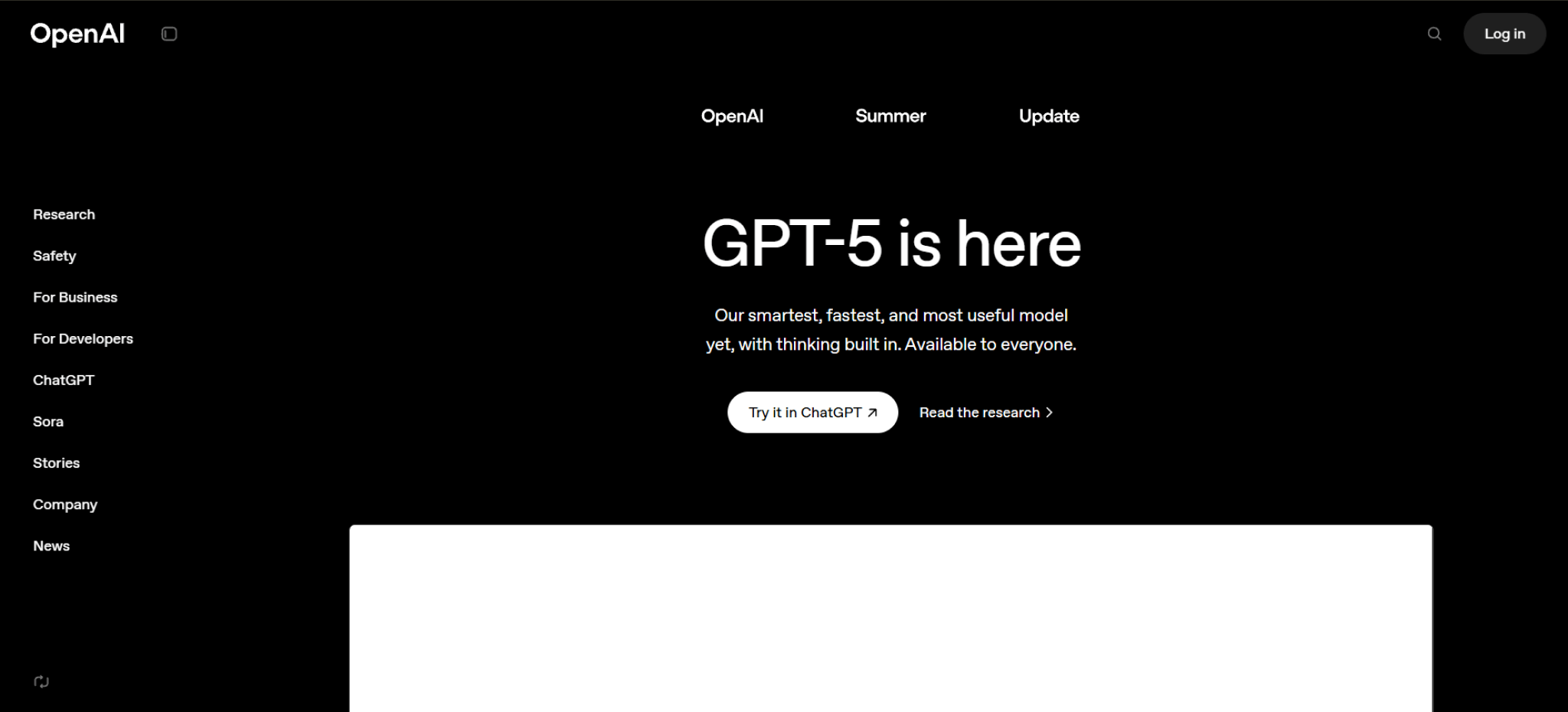
GPT-5 is OpenAI’s most advanced multimodal model, out in 2025. It handles text, audio, images, and even video inside one model, so it can reason in real time, read visuals, and talk across more than 60 languages. The whole design points at one thing: context-rich, human-like exchanges. And it’s fast. Answers come back quick and accurate.
Those multimodal chops mean GPT-5 can take in and produce text, audio, images, and video across a lot of different jobs. Add the wider language coverage and the sharper reasoning, and you get a model that works just as well for a solo user as it does inside a large enterprise stack.
2. Gemini 2 Pro
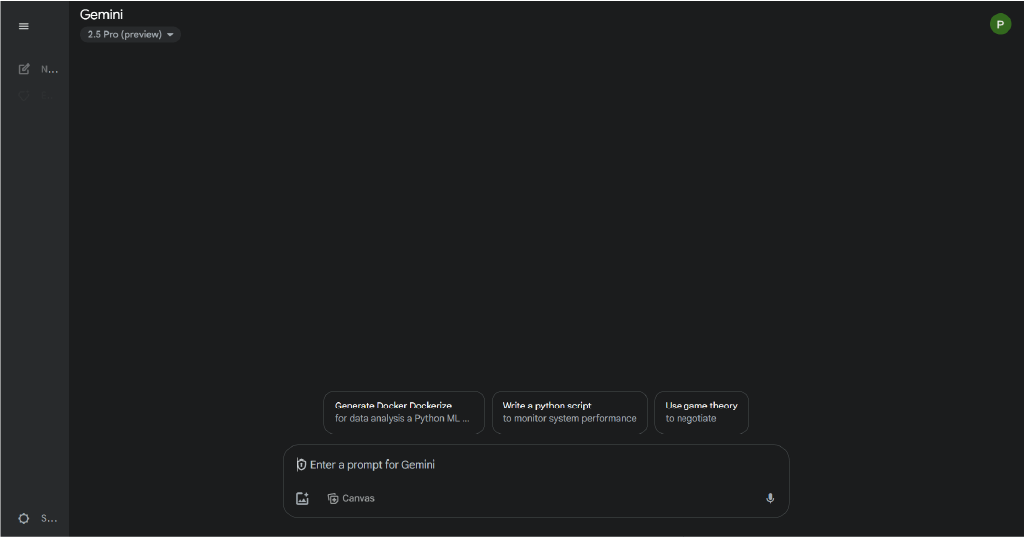
Gemini 2.5 Pro is Google’s flagship as of 2026, built for the messy, complex tasks that span more than one domain. Reasoning, coding, reading across text and images, it’s good at all three, which is why developers, researchers, and businesses keep reaching for it. That combination has quietly reset what people expect from a top-tier model on both performance and reliability.
The coding side is where it really shows. Developers use it to transform, edit, and build visually rich web apps, tighten up their workflows, and hunt down bugs, and it holds its own on sophisticated code generation. On top of that, it blends text, code, images, and other media together, which makes the whole thing feel richer to use.
3. Claude 3.7 Sonnet
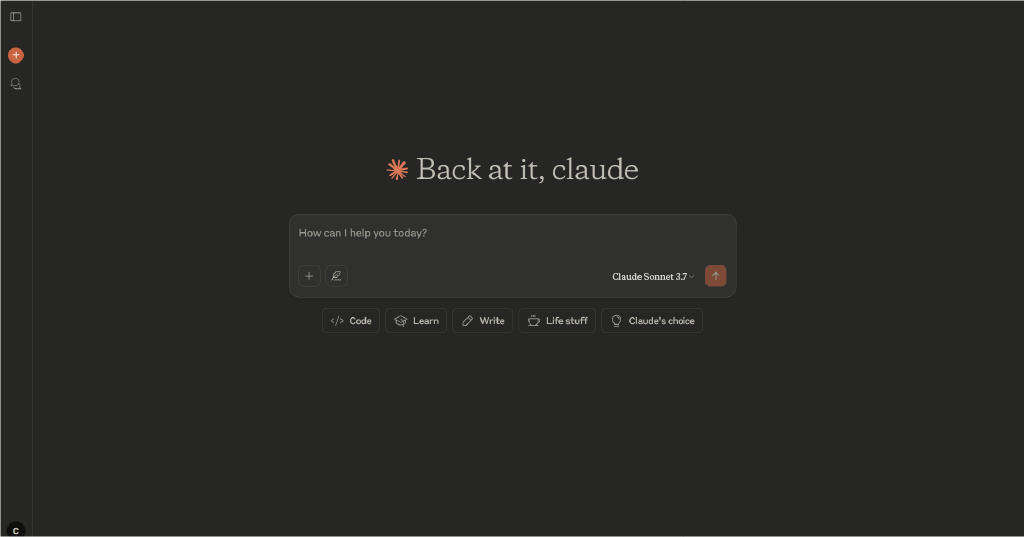
Claude 3.5 Sonnet comes from Anthropic, and it’s an AI model that holds up across a lot of ground: natural language work, coding, reading visuals. It sits as the mid-tier option in the Claude 3.5 series, which is really the point of it, you get solid performance without paying top-tier prices. And with a 200,000-token context window, it can carry long conversations and chew through complicated tasks without losing the thread.
Anthropic’s newest model pushes hard on reasoning and coding, clearly ahead of its predecessor, Claude 3 Opus. The visual processing got better too. It can read charts and graphs, and even pull text out of blurry, low-quality images, which turns out to matter a lot for fields like retail and logistics.
4. DeepSeek-R1
DeepSeek-R1 is a custom model from the Chinese startup DeepSeek, and it made its name on two things: sharp reasoning and a cost-efficient build. It launched in 2025 and drew a lot of attention fast. It performs in the same league as OpenAI’s GPT-4, but was built at a fraction of the cost. Microsoft CEO Satya Nadella went as far as calling DeepSeek-R1 the first model to genuinely come close to what OpenAI ships.
Where does it shine? Reasoning, mostly, the logical, multi-step kind of problem where you have to hold several pieces at once. It also handles multiple languages, so it travels well for global communication and content. And it’s open-source and friendly to developers, which makes it a natural fit if you want to fine-tune it or wire it into your own applications.
5. OpenAI o1
Earlier models raced to answer. OpenAI O1 does the opposite, it slows down and reasons step by step, which is exactly why it’s so good at hard problems in math, science, and programming. That “chain-of-thought” style mimics how a person actually works through something tangled, and it pays off when the challenge is genuinely intricate.
The o1 model leans on that same chain-of-thought approach, breaking a problem into pieces so the answer comes out more accurate. OpenAI also tightened the safety side, better alignment, more resistance to being misused. Put together, that makes o1 both capable and safe enough for enterprise-level work.
6. OpenAI o3-mini
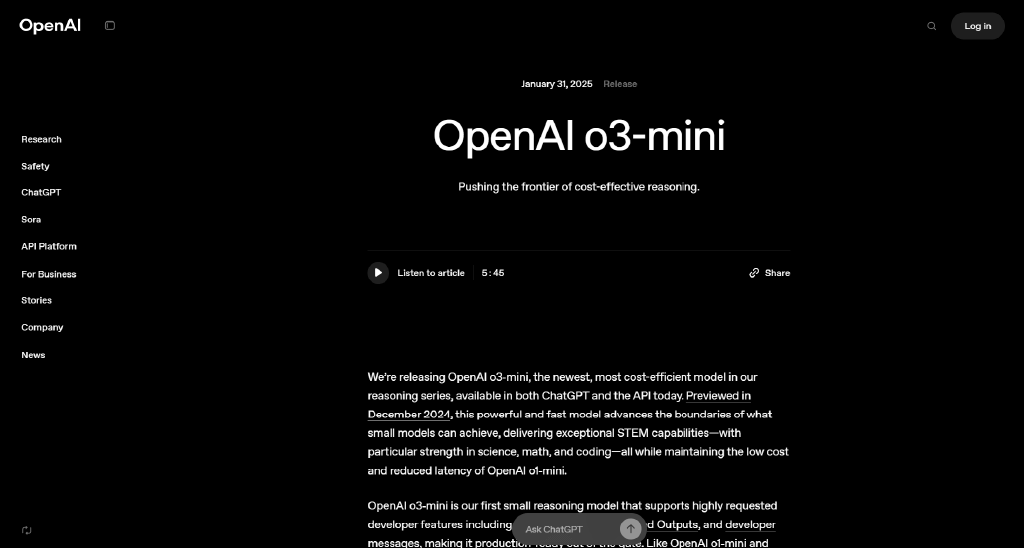
OpenAI o3-mini is small but punches above its size. It arrived in early 2025, built for jobs that lean on real reasoning, especially in science, technology, engineering, and math. It’s leaner and cheaper to run than what came before it, answers come back faster, and the accuracy holds up, which makes it a reliable pick whether you’re an individual poking at it or a developer who needs it for genuinely hard problem-solving.
One nice touch: you can dial the reasoning up or down, low, medium, or high, trading speed for depth depending on the task. It also ships with the kind of tooling developers actually want, function calling, structured outputs, responses, and developer messages, so dropping it into a project isn’t a fight. And it moves quickly, roughly 24% faster than o1-mini. Accuracy on math, coding, and science climbed too.
7. Meta AI (Llama Series)
Meta’s LLaMA line, short for Large Language Model Meta AI, is an open-source family aimed squarely at researchers and developers. The newest one, LLaMA 3 (2025), performs strongly and has become a favorite among people who want to build or fine-tune without getting locked into a closed API. These models are tuned for efficiency, which means they run fine both in the cloud and right on a device.
Meta AI is a natural fit if you want to self-host or fine-tune. It goes toe to toe with GPT-level models while staying light on resources, and it stretches across a lot of jobs, from summarizing text to running chatbots.
8. Google Gemini

Google Gemini is a multimodal model out of Google DeepMind, built to read and produce content in whatever form you throw at it, text, images, audio, video. As of 2026, the newest version, Gemini 1.5 Pro, has taken real steps forward on long-context understanding, multimodal work, and raw efficiency, which puts it right up against GPT-4 and Claude 3.
Gemini 1.5 Pro stretches the context window out to a full 1 million tokens, so it can swallow big inputs like entire books, whole codebases, or long stretches of media. It’s comfortable across text, images, audio, and video. And because it ties straight into Google’s own suite, Gmail, Docs, Android, Drive, it slots neatly into tools people already live in every day.
9. BERT
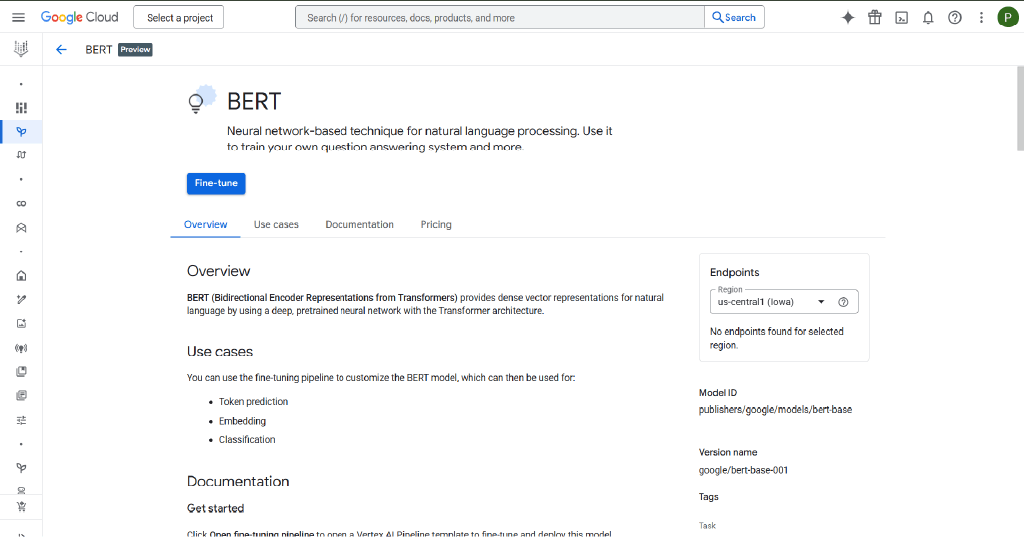
BERT came out of Google and changed how machines read human language. It’s old by AI standards, released back in 2018, yet it’s still very much in play in 2026, because so many modern systems are built on the architecture it introduced. BERT is great at question answering, sentiment analysis, and language inference, and the trick behind that is reading a word’s context in both directions at once, left and right. That’s why teams still grab it as a base to fine-tune for specific work in healthcare, legal, and finance.
The bidirectional reading is the core of it, and it’s what lets the model understand language more deeply than earlier approaches. It arrives pre-trained on enormous piles of text and bends easily to a specific NLP task once you fine-tune it. Being open-source, it spread everywhere, and that wide adoption feeds a strong community that keeps improving it and putting it to work in the real world.
10. PaLM 2
PaLM 2 (Pathways Language Model 2) is Google’s advanced language model, launched in 2023 and still in use in 2026 for multilingual work, reasoning, and code generation. Gemini has since taken its place, but PaLM 2 is still a dependable option for anyone on Google’s older AI services, Bard before Gemini, and the Workspace AI tools. It’s light, fast, and dialed in for summarization, translation, and Q&A. It covers over 100 languages, which makes it a fit for global content, multilingual workflows, and use cases powered by AI writing assistant software, like the ones featured on Spotsaas.
The multilingual reach is the headline here, over 100 languages, which is a real gift for global teams. It’s sharp on logic, reasoning, and math, and it holds its accuracy under pressure. And since it’s built to plug into Google Workspace, Docs, Gmail, and the rest, it fits right into the tools those teams already use.
Conclusion
By 2026, AI models are more powerful and easier to get your hands on than ever. Big language models like GPT-4 and Claude 3 sit at one end, specialized tools like Midjourney and BERT at the other, and every one of them earns its keep for a specific job, writing content, generating code, or reading language at depth. More businesses are teaming up with fine-tuning AI development companies to shape these models around their own use cases, which is what pulls better performance and real relevance out of them.
In the end, the right custom model comes down to three things: what you’re using it for, how much performance you need, and what you can spend. Keep an eye on what’s shipping and you’ll stay ahead of people who don’t. Developer, business owner, creative, whatever you are, there’s a model out there built to make your work faster and sharper.
AI-Build partnered with SoluLab to rethink CAD product development with generative AI and ML models. SoluLab built a scalable architecture, automated design generation using GANs and CNNs, and layered in real-time error detection. What came out of it: higher productivity, less manual grind, and intelligent, customizable designs with tighter quality control.
SoluLab, an AI development company can help you land on the right AI model for what your business actually needs. Reach out and let’s talk it through.
FAQs
Shipra Garg is a tech-focused content strategist and copywriter specializing in Web3, blockchain, and artificial intelligence. She has worked with startups and enterprise teams to craft high-conversion content that bridges deep tech with business impact. Her work translates complex innovations into clear, credible, and engaging narratives that drive growth and build trust in emerging tech markets.