


Web3 talks a lot about decentralization. Yet a big chunk of the plumbing underneath it (compute, storage, communication) still sits with centralized corporations. That creates the usual headaches: trust problems, higher bills, lag. Blockchains and dApps keep growing, but many of them quietly lean on the exact kind of traditional systems Web3 was supposed to replace. And centralized servers can go down, censor, or decide who gets in.
DePIN (Decentralized Physical Infrastructure Networks) is chipping away at that. With blockchain and token incentives, ordinary users can build and run infrastructure themselves: wireless networks, storage, even energy.
Below, we look at how DePIN is pushing decentralization into its next phase, and why we think Web3’s future depends on it.
What is DePIN in Web3?
DePIN, short for Decentralized Physical Infrastructure Networks, is a Web3 model that uses blockchain and token rewards to build and run real-world infrastructure. No single corporation holds the keys. Communities, businesses, and individuals chip in resources such as storage, connectivity, or energy, and they get paid for doing so.
Messari also estimates the DePIN market could be worth roughly $2.2 trillion today, with room to reach $3.5 trillion by 2028. So how does it actually work? Simply put:
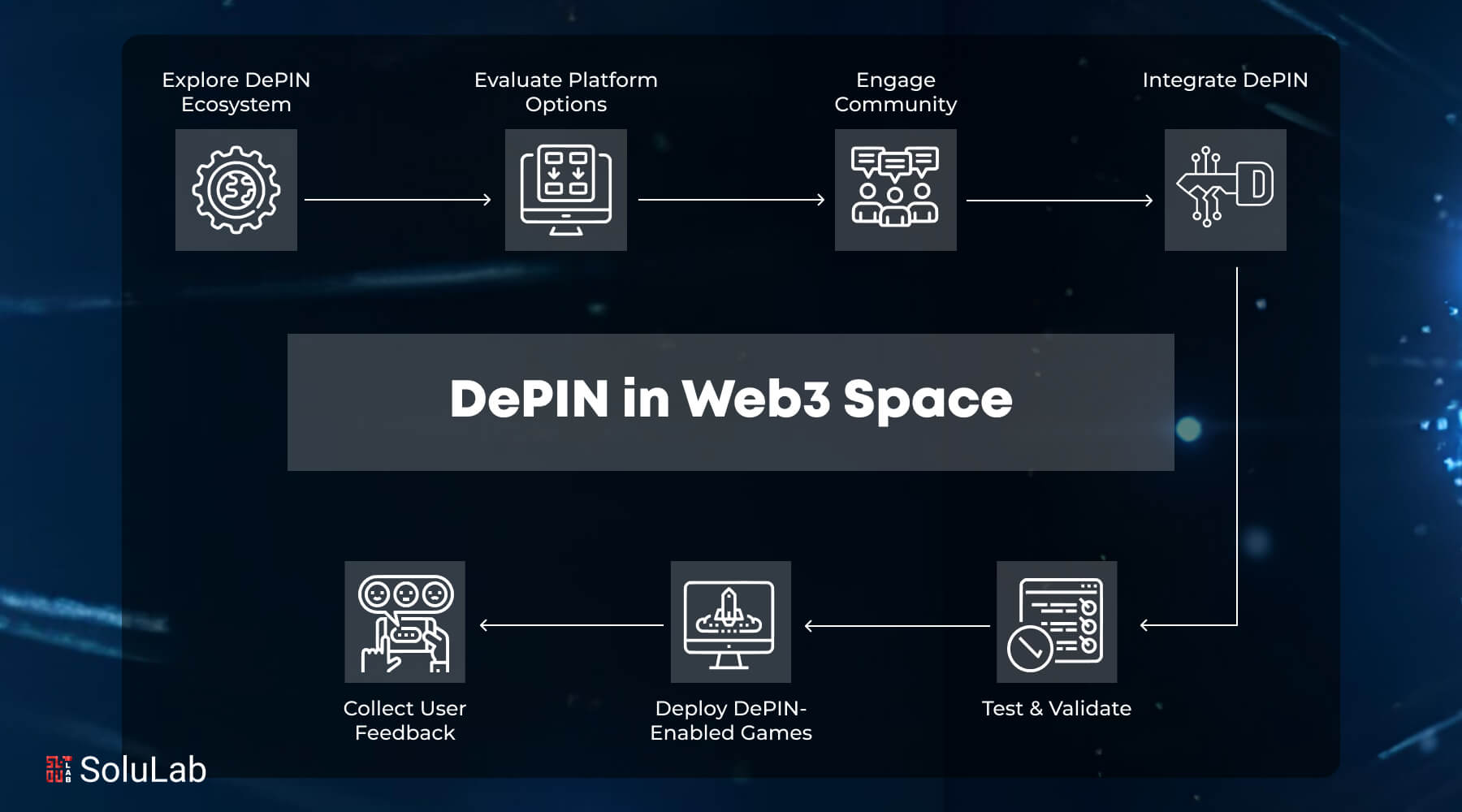
- People contribute physical resources (a WiFi router, spare storage, a few solar panels).
- They hook those devices up to a blockchain-powered network.
For that, they collect crypto tokens in proportion to the value they add to the network.
Why DePIN is Important for Blockchain and Web3?
Web3 has mostly lived on screens. DePIN is one of the few things tying it to physical hardware, which is exactly why it matters for where Web3 goes next. A few reasons:
- Enhancing Decentralized Ownership Infrastructure: With DePIN, you don’t need a government or a big company sitting in the middle. Individuals can own a piece of the infrastructure and have a say in how it’s governed. That lines up neatly with Web3’s founding idea: put control in people’s hands instead of routing everything through a central authority.
- Linking the Digital and Physical Worlds: DePIN connects blockchain technology to physical assets like power grids, transport networks, and IoT devices. Because of that link, Web3 apps can actually run on real-world infrastructure. Think renewable energy marketplaces. Or decentralized smart cities.
- Developing Novel Economic Frameworks: Through the tokenization of physical infrastructure, DePIN opens up economic models where you get rewarded for what you contribute. Those token incentives keep people showing up, and people showing up is what keeps a decentralized network maintained.
- Resilience and Scalability: DePIN networks are harder to knock over than conventional centralized setups. There’s no single point of failure to hit. Spread the load across many operators and the system gets both sturdier and bigger. As Web3 grows, it will need infrastructure that flexes and performs, and DePIN is well placed to supply it.
- The Trustless and Transparent Ecosystem Vision of Web3: DePIN borrows blockchain’s strengths directly: immutability, security, transparency. Because the infrastructure is verifiable and auditable, participants can trust it, and they can deal with each other without a middleman taking a cut.
How DePIN in Web3 Benefits Enterprises?

Efficient isn’t enough anymore. Enterprises want infrastructure that can bend when the market shifts under them, sometimes within a quarter. DePIN in Web3 offers a decentralized model that cuts costs, speeds things up, and opens new routes to growth, with transparency and security built in rather than bolted on. Here’s where businesses actually see the value:
a. Cost Optimization
Shared, community-run infrastructure means you aren’t paying for all of it yourself. Capital spend drops. So do operating costs. You also sidestep vendor lock-in and a lot of overhead, which makes the whole setup cheaper to run.
b. Scalability
A DePIN network grows on its own as new participants plug in. For an enterprise, that means expanding without writing a huge check up front. Demand goes up, capacity follows.
c. Security & Transparency
An immutable ledger keeps data handling secure, transactions visible, and every stakeholder accountable. The practical upshot for an enterprise? Less risk, and more confidence in how operations are running.
d. Real-World Value Creation
IoT networks, renewable energy, logistics, decentralized storage: in each of these, DePIN ties digital incentives straight to physical hardware. Enterprises can use that link to run leaner and to build service models that simply weren’t possible before.
e. Flexibility & Innovation
DePIN gives enterprises room to test decentralized business models, whether that’s launching tokenized services, setting up peer-to-peer systems, or opening new revenue lines. The nice part is that you can experiment without tearing up the systems you already rely on.
Top 5 Use Cases of DePIN in Web3 for Enterprises
DePIN (Decentralized Physical Infrastructure Networks) is reshaping whole industries by combining blockchain with real-world assets. These are the five use cases we see doing the most work right now.
- Telecommunications Infrastructure: DePIN makes community-built telecom networks possible, with users supplying the bandwidth and the coverage. That cuts reliance on costly centralized carriers. In underserved areas, it can be the difference between patchy, expensive internet and connectivity people can actually afford.
- Energy Generation and Distribution: Communities can use DePIN to set up their own solar and renewable grids. Households generate power, store it, and sell the surplus to neighbors. It’s cheaper, more sustainable, and it loosens the grip of traditional energy monopolies.
- Data Storage and Computing Power: Got spare disk space or idle compute? DePIN lets people rent it out. The result is an affordable, scalable alternative to the big cloud providers, with more redundancy, stronger security, and users keeping control of their own data.
- Decentralized Healthcare: Healthcare networks can use DePIN to store patient records securely and share them between providers. Privacy holds up. Duplicate records shrink. And patients in remote or under-resourced areas get easier access to their own care history.
- Web3 Gaming Infrastructure: DePIN underpins decentralized gaming networks where players pool GPU power, storage, and servers. This makes Web3 gaming run smoother and cost less, and the infrastructure ends up fairer because players own part of it.
Real World Examples of Web3 DePIN

This isn’t all theory. Several DePIN projects are already live and getting real use. A few worth knowing:
1. Helium:
Helium is a decentralized wireless network. Individuals set up LoRaWAN hotspots so IoT devices have something to connect to, and they earn HNT tokens for the coverage they provide. What you get is a low-power, wide-area network built by its own community.
2. Filecoin:
Filecoin is a decentralized storage network. Participants rent out unused disk space so others can store data securely. Miners get paid in FIL tokens. Storage stays distributed, and there’s less dependence on centralized cloud providers.
3. Golem:
Golem is a decentralized computing network. People lend out idle processing power for jobs like rendering or running simulations, and contributors earn GNT tokens. It’s distributed computation at a lower price, with no centralized cloud service in the loop.
4. Render Network:
Render Network takes GPU rendering for digital content and decentralizes it. Users offer their GPUs to crunch graphics, animation, and AI workloads, then earn RNDR tokens in return. Compared with a traditional centralized render farm, it scales more easily and usually costs less.
The Future of DePIN in Web3
Decentralized Physical Infrastructure Networks (DePIN) are changing who builds real-world infrastructure, who owns it, and who runs it. Blockchain plus community incentives brings a kind of transparency and efficiency that physical systems have rarely had. Here’s where we expect it to head.
- Community-Owned Infrastructure: Control moves away from large corporations and toward everyday people. Anyone can plug in a router, a solar panel, or a sensor and get rewarded for it. Coverage widens, costs fall, and because the community owns and governs the network, trust comes more easily.
- Token Incentives Drive Growth: DePIN projects pay users in crypto tokens for adding to and maintaining physical infrastructure. That creates a network that can keep itself going. Growth comes from real usage and people taking part, not just from corporate money.
- Solving Infrastructure Gaps in Markets: Rural connectivity. Energy distribution. Data sharing. DePIN can tackle all three. Local users put up low-cost infrastructure and earn from it, which in underserved areas often makes the decentralized route more practical than waiting on a centralized provider.
- Integration with IoT and AI: As Web3 matures, expect DePIN to lean harder on IoT and AI technologies. The payoff is smarter networks that react faster, in logistics, in transport, in urban planning, with real-time data that’s easier to reach, safer, and controlled by the people it’s about.
Conclusion
DePIN is already changing how industries work and where decentralized apps are going. Because it runs on blockchain, it slots in comfortably alongside decentralized finance and the other Web3 sectors still finding their feet.
As more sectors move toward decentralized models, DePIN Blockchain as a Service looks set to drive real breakthroughs in efficiency, access, and sustainability. Our bet: it becomes a core layer of decentralized infrastructure, not a side experiment.
SoluLab, a DePIN development company, can help you build scalable, decentralized infrastructure designed around your use case, whether that’s Web3 gaming, IoT, or something else entirely.
FAQs
Bhavya is driving growth through data-backed demand generation for AI and Web3 solutions. With 9+ years in digital marketing, he has spearheaded initiatives that led to a 40% increase in qualified inbound leads. Bhavya shares insights on marketing ROI and scaling a digital presence via AI workflows. He is open to connecting with startups and enterprise teams to help them overcome their challenges.


![How to Build a Web3 DAO Platform for Decentralized Governance? [2026 Guide]](https://www.solulab.com/wp-content/uploads/2026/06/Develop-a-Secure-DAO-Platform-for-Web3-Communities.webp)