Talk to an Expert

Enhancing Financial Security in Virtual Gaming Environments

Financial Security in Virtual Gaming

As the popularity of online gaming continues to rise, ensuring the security of financial transactions becomes increasingly important. Players need to trust that their personal and financial information is protected when engaging in virtual gaming environments. This article explores the measures taken to enhance financial security and maintain trust in the industry.

The Significance of Secure Payment Gateways

Secure payment gateways are essential in the online gaming industry, acting as the backbone of financial transactions. These systems ensure that players’ financial data is encrypted and protected from unauthorized access. By using advanced encryption technologies, payment gateways safeguard sensitive information, such as credit card details, during transactions. This level of security is crucial for maintaining player trust and preventing fraud.

In the context of online sweepstakes casinos, secure payment gateways play a pivotal role. They not only facilitate smooth transactions but also help in building a safe gaming environment. Players can engage in gaming activities with confidence, knowing that their financial information is secure. This trust is vital for the growth and sustainability of online gaming platforms.

Modern payment gateways also incorporate sophisticated fraud detection systems that can identify suspicious patterns and unusual transaction behaviors in real-time. These systems utilize artificial intelligence and machine learning algorithms to analyze multiple data points, including transaction history, location data and device information. This multi-layered approach to security helps prevent fraudulent activities before they can impact players’ accounts, creating a more secure gaming environment for all participants.

The integration of tokenization technology represents another significant advancement in payment gateway security. This process replaces sensitive card data with unique identification symbols, maintaining the security of payment information while allowing for seamless transactions. Tokenization not only reduces the risk of data breaches but also simplifies compliance requirements for gaming platforms, as they no longer need to store actual card numbers in their systems. This technology has become particularly valuable for players who make regular deposits, as it provides a secure way to save payment information for future use.

The emergence of mobile payment solutions has further revolutionized secure payment gateways in online gaming. These platforms must now accommodate various mobile wallet services while maintaining rigorous security standards. Advanced API integration allows for a seamless connection with multiple payment providers, offering players greater flexibility without compromising security. Additionally, the implementation of device fingerprinting technology helps identify and authenticate mobile devices, adding another layer of protection for transactions made through smartphones and tablets.

Technological Advancements in Payment Security

The evolution of payment technology has significantly enhanced security measures in virtual gaming platforms. Innovations such as biometric authentication and blockchain technology have introduced new layers of security. Biometric authentication, for instance, uses unique biological traits like fingerprints or facial recognition to verify a player’s identity, reducing the risk of unauthorized access.

Blockchain technology, on the other hand, offers a decentralized approach to transaction verification, ensuring transparency and reducing the likelihood of fraud. These technological advancements not only enhance security but also improve the overall user experience by providing fast and reliable transaction processing. As a player, staying informed about these technologies can help you choose platforms that prioritize your security.

Two-factor authentication (2FA) has emerged as another crucial security enhancement in online gaming platforms. This additional security layer requires players to verify their identity through multiple methods, typically combining something they know (like a password) with something they have (such as a mobile device for receiving verification codes). The implementation of 2FA has significantly reduced unauthorized access attempts and account takeovers, making it an essential feature for any serious gaming platform.

Advanced encryption protocols, particularly the implementation of quantum-resistant cryptography, are becoming increasingly important as computing power continues to evolve. This forward-thinking approach to security ensures that encrypted data remains protected even against future technological threats, including quantum computers. Gaming platforms that invest in these cutting-edge security measures demonstrate their commitment to long-term data protection, giving players confidence that their financial information will remain secure even as technology advances.

The integration of artificial intelligence-driven behavioral analytics has emerged as a game-changing security feature. These systems can learn and adapt to individual player patterns, from typical deposit amounts to preferred gaming times and device usage. When unusual patterns are detected, such as sudden large transactions or logins from unfamiliar locations, the system can automatically trigger additional verification steps or temporarily freeze accounts. This proactive approach to security helps prevent unauthorized access and fraudulent transactions before they occur while maintaining a smooth experience for legitimate players.

Best Practices for Maintaining Security in Online Gaming

To maintain a secure environment in online gaming, operators must adhere to industry best practices. This includes implementing robust encryption methods and complying with regulatory standards such as the Payment Card Industry Data Security Standard (PCI DSS). These measures ensure that financial transactions are conducted securely, protecting both players and operators from potential threats.

Players also have a role to play in maintaining security. By choosing reputable gaming platforms and using secure payment methods, players can minimize the risk of fraud. Additionally, staying informed about the latest security practices and technologies can help players make informed decisions about where to play. This proactive approach contributes to a safer and more enjoyable gaming experience.

Regular security audits and penetration testing have become standard practices for maintaining robust security systems. These assessments help identify potential vulnerabilities before they can be exploited by malicious actors. Gaming platforms that conduct frequent security evaluations can quickly adapt to emerging threats and implement necessary updates to their security protocols. This ongoing commitment to security testing demonstrates a platform’s dedication to protecting its users’ financial interests.

The implementation of real-time monitoring systems has become a crucial component of security best practices. These systems utilize advanced analytics to track transaction patterns and user behavior, enabling immediate detection of suspicious activities. When unusual patterns are detected, automated systems can temporarily suspend transactions and alert security teams for investigation. This proactive approach to security helps prevent fraudulent activities before they can cause significant damage, while machine learning algorithms continuously improve detection accuracy based on new data and emerging threat patterns.

The implementation of automated backup systems and disaster recovery protocols has become essential for maintaining security in online gaming environments. These systems ensure that financial transaction data and player account information are regularly backed up and can be quickly restored in case of system failures or cyber attacks. Gaming platforms now employ redundant server architectures and geographically distributed data centers to maintain service continuity and protect against data loss. This infrastructure investment demonstrates a commitment to maintaining the integrity of financial transactions and protecting player assets even in worst-case scenarios.

Keeping An Eye Out For Potential Scams

Scammers are always on the lookout for unsuspecting victims and the virtual gaming world is no exception. It’s essential for users to be vigilant and recognize red flags that might indicate a scam. Be wary of unsolicited messages claiming you’ve won a prize or offering free coins in exchange for personal information. These are often phishing attempts designed to steal your data. It’s crucial to verify the authenticity of any communication by contacting the gaming platform directly through official channels. Think of scammers as digital pickpockets; staying alert and cautious can help you avoid falling prey to their tricks. By maintaining a healthy dose of skepticism and double-checking any suspicious offers, users can better protect themselves from potential scams.

The Role of Regulatory Compliance in Enhancing Security

Regulatory compliance is a cornerstone of financial security in the online gaming industry. Adhering to established standards and regulations ensures that gaming platforms operate within a framework that prioritizes player safety. Compliance with regulations such as PCI DSS demonstrates a commitment to protecting sensitive information and maintaining the integrity of financial transactions.

For players, understanding the importance of regulatory compliance can help in identifying trustworthy platforms. Reputable gaming sites will often display certifications or badges indicating their adherence to industry standards. By choosing platforms that comply with regulations, players can enjoy a secure gaming experience, knowing that their financial information is protected.

International regulatory cooperation has become increasingly important in maintaining security across borders. As online gaming platforms often operate globally, coordination between regulatory bodies in different jurisdictions helps ensure consistent security standards and effective enforcement of protective measures. This international collaboration has led to the development of unified security protocols and shared databases of known security threats, creating a more robust and standardized approach to player protection across different regions and platforms.

Other Security Protocols

The evolution of data privacy regulations, such as GDPR and similar frameworks, has significantly impacted security protocols in online gaming. Gaming platforms must now implement sophisticated data management systems that not only protect player information but also provide transparency about how data is collected, stored and used. This includes maintaining detailed audit trails of data access, implementing strict data retention policies, and providing players with tools to control their personal information. These requirements have led to the development of more robust security infrastructures that benefit both operators and players by establishing clear guidelines for data protection and privacy rights.

The implementation of Know Your Customer (KYC) and Anti-Money Laundering (AML) protocols has become increasingly important in regulatory compliance. These measures require gaming platforms to verify the identity of their users and monitor transactions for suspicious activities. While some players might view these requirements as cumbersome, they play a vital role in preventing financial crimes and ensuring the legitimacy of gaming operations. Platforms that maintain strict KYC and AML policies demonstrate their commitment to operating within legal frameworks and protecting their users.

Conclusion

In the ever-evolving world of virtual gaming, financial security remains a top priority for both users and platforms. Secure payment gateways, technological advancements and regulatory compliance all play critical roles in enhancing security measures. Users, too, must remain vigilant and adopt best practices to protect themselves from potential scams and threats. As gaming environments continue to innovate, the collaboration between users and platforms in maintaining security will be pivotal in creating a safe and enjoyable experience for all. By staying informed and proactive, users can confidently navigate the virtual gaming world, knowing that their financial and personal information is well-protected.

A Brief Guide on 7 Layers of the Metaverse

Seven Layers of Metaverse

With the merging of physical and digital worlds, the metaverse is testing the limits of our technological abilities. In the metaverse’s virtual reality (VR), things from human identity, personality, and reputation to assets, emotions, and history may be interacted with, manipulated, and experienced in completely new ways. As a consequence, end users get a very magical experience! The metaverse is poised to join the mainstream, attracting the interest of investors worldwide, with clear potential for early adopters.

With the metaverse gaining popularity as a revenue-generating possibility among investors, there is a clear need to comprehend this virtual world down to its fundamental levels of construction. According to prominent author and entrepreneur Jon Radoff, who has written extensively on Web3 and related issues, the metaverse consists of 7 layers. These seven layers of the metaverse illustrate the various stages of the market’s value chain. 

This guide walks you through each of the seven layers of the metaverse, deepening your comprehension and allowing you to realize its full potential. However, before we get too deep, let us define the metaverse.

What is Metaverse?

The metaverse is a virtual environment that reflects a new frontier, bringing together VR, augmented reality (AR), mixed reality (MR), gaming, social interaction, and commerce to develop encounters that connect the dots between the real and digital worlds. That is why many people see the metaverse development and related Web3 technologies like blockchain, NFTs, cryptocurrencies, and decentralized processing as the beginning of a new internet. What does the metaverse currently offer for its users? Access to commercial prospects, deep social and personal virtual experiences, and solutions to various physical restrictions.

Seven Layers of Metaverse

Seven Layers of Metaverse

In recent years, the concept of the Metaverse has captured the imagination of tech enthusiasts and futurists alike. Often depicted in science fiction novels and movies, the Metaverse represents a collective virtual space where users can interact, create, and explore in immersive digital environments. As technology advances, the vision of the Metaverse is gradually becoming a tangible reality. Let’s delve into the seven layers that comprise this fascinating digital universe.

1. Experience

Contrary to popular belief, the metaverse is more than just a 3D representation of the real world for us to passively observe. It will instead be an accurate depiction of spatial dimensions and distances, involving the dematerialization of actual things enabled by photorealistic visual components.

The limits that materiality imposes may no longer exist within the metaverse as it dematerializes physical space. The metaverse’s VR can give experiences unavailable in the actual world.

This is one of the primary reasons why many well-known businesses are investing in large interactive live events or MILEs. These events, offered on platforms like Roblox and Decentraland, provide an example of how things that happen in the metaverse could express interaction. Failed to obtain a front-row seat to a concert? In the metaverse, all tickets will provide a front-row experience.

The metaverse revolves around experiences. The hype it has generated and the money it has garnered are all a result of the lifelike experiences it is ready to provide. A genuine metaverse, with its holistic and real-time nature, has the potential to revolutionize a variety of human activities, from gaming and social interactions to retail, theater, and eSports.

2. Discovery

This layer discusses the actual discoveries that arise from a constant “push and pull” of information. It is this information “push and pull” that introduces people to new experiences. Whereas “pull” is an inbound system in which users actively seek information and experiences, “push” is more outbound and entails procedures that tell users about the opportunities that await them in the Metaverse. The discovery layer is the most profitable for enterprises. Here are some examples of how inbound and outbound discoveries occur.

Inbound:

  • Community-driven content
  • Real-time presence
  • Search engines

Outbound:

  • Display advertising
  • Notifications
  • Emails and social media

Community-generated material will be a significant inbound source for finding metaverse experiences. It is, in fact, one of the most affordable options for people eager to learn about the metaverse.

If someone is interested in anything, they will spread the word. They discuss the notion, their experiences, and any relevant events in which they have participated. Because such information is easily shared, it may soon become a marketing asset. Such community-driven material can also assist in disseminating awareness of the metaverse’s principles, enabling technology, and experiences.

Real-time presence is another effective facilitator of incoming discovery. Exploration of experiences in the metaverse will not come just from content, but also from understanding what other individuals interested in the metaverse are doing at the moment. After all, the metaverse is primarily about human connections and shared experiences.

When you connect to Steam, Battle.net, Xbox, or PlayStation, you may view what games your friends are presently playing. These gaming systems have cleverly utilized real-time presence to increase in-game involvement. Nongaming systems like Clubhouse have also utilized the power and adaptability of real-time presence, permitting users to pick whatever room they wish to join according to their friends’ location.

In the metaverse, real-time involvement will be crucial in improving users’ interactive experiences, therefore increasing their comprehension of this virtual reality.

The metaverse has the potential to digitize social institutions and establish a decentralized identity environment, shifting power away from a few monolithic entities and toward social groupings, enabling the frictionless flow of knowledge and experiences.

The most efficient outbound discovery channels include display advertising, alerts, emails, and social media. Metaverse developers can also help people find new experiences by placing relevant information in front of them through outbound techniques.

3. Creator Economy

The metaverse aims to build a complete 3D environment with interconnected virtual regions that reflect reality. These environments, driven by AR, VR, and other related technologies, will be particularly created to attract guests capable of doing almost anything within them. The virtual world has enormous opportunities for economic growth. As the concept of the metaverse becomes more widely accepted, the number of organizations constructing metaverse areas is almost expected to increase significantly.

Content creators will play an important part in shaping this new environment. They have been finding excellent success on social media platforms and are still going to be a significant driver of development in the metaverse virtual world. Experts predict the metaverse will transform the creative economy into a multibillion-dollar business. And who makes up the creator economy? Independent creatives who create digital material, such as photographs and videos, as well as digital commodities including e-books, webinars, art, and blog entries.

It is only logical for this group of innovators to strive for opportunities in the metaverse as it evolves. They will establish their own metaverse environments in which their fans may connect, hang out, and communicate with them. As technology progresses, creators will be able to easily transition their followers to the metaverse. However, in order to fully utilize the metaverse, builders must prioritize skill development.

Creators will be able to transform the metaverse into a revenue-generating potential through

  • Selling commercial items, NFTs, and IRL things.
  • Showing and selling NFT collections.
  • Working with and promoting brands.
  • Influencing purchasing behavior by having their avatars wear virtual fashion goods and accessories such as trainers or clothing.
  • Hosting parties and get-togethers for their fans to improve relationships and increase purchases.

The metaverse development will provide a potential new market for the creative economy. The finest thing is that it benefits everyone involved: artists, users, and the metaverse.

4. Spatial Computing

Our lives have already been made easier by spatial computing thanks to ride-hailing applications and virtual assistants. Enabling customers to try on clothing in virtual changing rooms, has improved shopping convenience and added pleasure to the fashion process. With the current state of spatial computing, you may work, shop, and interact with others as an avatar in a rich, three-dimensional virtual environment that replicates the actual one.

AR, VR, and MR are all combined in spatial computing to realize the concept of the “metaverse.” The idea of a three-dimensional, simultaneous virtual environment that interacts with the actual world and never turns down can come true with spatial computing. You can play a game against the backdrop of your near real-world surroundings, for example, if it makes use of spatial computing. The game’s characters will be able to communicate with the real-world things in your environment, such as a sofa in your living room, in addition to just detecting them. In essence, spatial computing enables simultaneous, real-time interaction with the virtual and physical worlds.

With time, spatial computing has developed into a significant technological field that gives us access to and control over 3D areas for more immersive experiences.

Hardware and specialized software are needed for spatial computing to function as intended. Only the necessary software components will be covered in this section; the hardware will be covered in the “human interface” layer which is covered later in the article. The following is a list of many features of the software layer that underpins the metaverse:

  • Unity and Unreal Engine for displaying geometry and animation.
  • Using object recognition and geographic mapping, one may map and analyze both the physical and digital worlds.
  • recognition of gestures and voices.
  • Internet of Things to integrate device data.
  • biometrics of humans for identity reasons.
  • UIs of the future generation built to handle simultaneous information streams and processing.

CTA1

5. Decentralization

Roundhill Investments projects that the metaverse market will expand at a 13.1% compound annual growth rate in the upcoming years. As more people have access to the metaverse, this growth will only quicken.

According to Epic Games CEO Tim Sweeney, the metaverse is a “multi-trillion-dollar sector of the world economy” that, like the internet as it exists today, is not owned by any one company.

But at the moment, all the hype around the metaverse is coming from the largest IT giants that are joining the market. It is obvious that large enterprises will be crucial to the metaverse’s continued growth and development. This begs the question, will they bring about the same problems with data protection and privacy that already beset the internet?

Let’s use Facebook as an example. The company’s business strategy is centered on user data, which it collects and utilizes to allow outside parties to display customized advertisements to its consumers.

Imagine the whole metaverse under the authority of a single company or organization. The ruling authority would have limitless options in this scenario to examine user activity within the metaverse and use the information that results as required. Then, by providing access to this data, the authority might create the metaverse’s functionality in a way that helps companies and advertising.

Regular users would find it challenging to confirm who had gained access to the data and under what circumstances if it were kept in a central location. This may result in security problems, which would annoy users. A centralized metaverse may face privacy and data protection concerns. Blockchain technology presents a novel approach to address these issues. Because of the blockchain’s intrinsic security and decentralization, countless blockchain-based apps, or dApps, are being developed and deployed across sectors.

Using a decentralized blockchain network, financial goods may be made available through decentralized finance, or DeFi. DeFi wallets, like MetaMask and Trust Wallet, are accessible to everyone without the need to use banks or brokerages. It is not necessary to have a social security number, government-issued ID, or documentation proving your nationality in order to use a DeFi wallet. By guaranteeing anonymity, this also improves privacy.

Blockchain technology is already being used by a number of decentralized metaverse initiatives to offer user-owned experiences that are resistant to censorship and guarantee interoperability. The most commonly recognized instance of a decentralized metaverse is probably Decentraland. The Ethereum blockchain powers this decentralized virtual environment, which is governed by a Decentralized Autonomous Organization (DAO) that is subject to popular voting to make changes to its policies.

People and businesses are already snatching up property in these dispersed metaverse realities.

Transparency and traceability in transaction and interaction processes are essential for the metaverse to reach its full potential. Crypto assets and blockchain technology both provide a way to solve this issue. In the meantime, NFTs will guarantee that there are no disagreements about who owns what in the metaverse. While the metaverse is undoubtedly amazing in and of itself, blockchain, crypto assets, and NFTs will undoubtedly be crucial in allowing this technology to realize its full potential.

6. Human Interface

The technology or gadgets that will allow users to feel the genuine enchantment of the metaverse are discussed at the human interface layer.

Technology is gradually drawing us nearer to our gadgets. Donna Haraway, a distinguished technology and science studies professor, emphasized the reality of the dwindling gaps between people and technology in her 1985 article “A Cyborg Manifesto.” The term “cyborg” was used by the author to describe a person with superhuman physical powers made possible by internal mechanical components. Today, everything she dreamed about in 1985 is beginning to come true. As technology develops more compact, intelligent, and portable, it will likely become more integrated into our bodies and cause us to become semi-cyborgs. 

Are we going to become total robots? Despite the fact that we do not yet know the answer, we have strong reason to think that we do thanks to smartwatches and smart eyewear. That being said, an immersive, lifelike metaverse experience depends on people and robots becoming closer. We will soon be able to experience the metaverse in the same way that we perceive the physical world, thanks to advancements in spatial computing and appropriate interface design.

7. Infrastructure

This layer deals with the technology infrastructure needed to build an interoperable and fully working metaverse.

The metaverse is powered by five technological clusters:

  • The network and processing capacity includes GPU servers, edge computing, real-time network transmission, and virtual scene fitting, as well as spatial positioning algorithms.
  • Artificial Intelligence
  • Technologies used in video games, such as 3D game engines like Unity and Unreal Engine, to create animations, audio, and visuals
  • Display innovations like AR, VR, MR, ER, and XR provide for both an immersive audiovisual experience and the ability to modify the experience over time to accommodate users’ evolving tastes and preferences.
  • Blockchain technology. It will ensure value ownership and circulation with the use of settlement metaverse platforms, smart contracts, and decentralized value transfer methods. 

In terms of hardware, the metaverse is supported by robust computers, semiconductors, network devices, communication components, sophisticated, high-resolution cameras, powerful display systems, accurate freedom optical systems, and mixed reality equipment.

CTA2

Final Words

Since digital behemoths like Google, Apple, Facebook, and Microsoft have made it clear that they are obsessed with the metaverse and are willing to spend a lot of money to make it a reality, the metaverse has gained a lot of attention from both ordinary people and interested investors. Everyone is interested in learning about the metaverse, including its definition, location, and powers. However, because the metaverse does not yet exist in its whole, real form, understanding it might be difficult. Knowing the seven layers of the metaverse is an excellent method to get a better knowledge of it. Every layer is an essential component of the metaverse and cannot function independently of the other six levels. 

The understanding of how the layers interact and complement each other to form the vast network of three-dimensional environments that is the metaverse is another significant advantage of breaking the metaverse down into layers.

Experienced in creating immersive metaverse environments, SoluLab is a metaverse development company with highly qualified metaverse developers onboard. For further information on metaverse development, hire metaverse developers from SoluLab today!

FAQs

1. What is the significance of exploring the layers of the Metaverse?

Exploring the layers of the Metaverse provides insights into the complex ecosystem of virtual environments and technologies shaping the future of the metaverse. By understanding each layer, users can grasp the interconnectedness and potential of the Metaverse to revolutionize various aspects of our lives.

2. How do the layers of the Metaverse interact with each other?

The layers of the Metaverse are interconnected, with each layer building upon the other to create a cohesive and immersive digital experience. For example, the infrastructure layer provides the foundation for the platform layer, which in turn enables the creation of virtual experiences within the experience layer, and so forth.

3. What are some real-world applications of the Metaverse layers?

The layers of the Metaverse have numerous real-world applications across industries such as gaming, entertainment, education, healthcare, and remote work. For instance, spatial computing technologies enable virtual training simulations in healthcare, while the creator economy layer facilitates the monetization of digital art and music.

4. How can individuals and businesses get involved in the development of the Metaverse?

Individuals and businesses can participate in the development of the Metaverse by leveraging their skills and resources to create virtual experiences, develop innovative technologies, and contribute to open-source projects. They can also collaborate with industry partners, invest in Metaverse-focused startups, and stay informed about emerging trends and opportunities.

5. What are some challenges and considerations associated with the Metaverse layers?

While the Metaverse holds immense potential, it also presents various challenges and considerations, such as privacy concerns, digital rights management, interoperability issues, and the need for inclusive design. Addressing these challenges requires collaboration, innovation, and a commitment to ethical and responsible development practices.

6. How does SoluLab contribute to the development of the Metaverse?

SoluLab- a metaverse development company plays a vital role in advancing the Metaverse by providing innovative development solutions and expertise. Through its comprehensive suite of services, SoluLab helps companies and organizations build immersive virtual environments, develop innovative spatial computing applications, integrate decentralized technologies, and optimize infrastructure for seamless Metaverse experiences with its metaverse development services. With its deep understanding of emerging technologies and industry trends, SoluLab collaborates closely with clients to bring their Metaverse visions to life, ensuring scalability, security, and user engagement every step of the way.

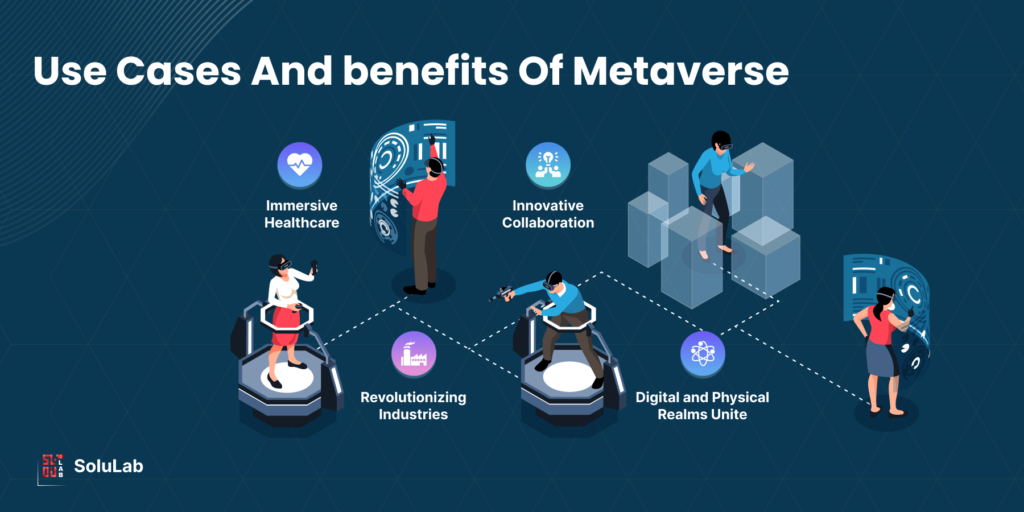
Metaverse Use Cases and Benefits

Use Cases and Benefits of Metaverse

The Metaverse, a convergence of physical and digital realities, has the potential to revolutionize many industries. This exploration will examine a variety of Metaverse use cases across industries, highlighting the ways in which virtual and physical realms can be mutually beneficial.

One of the most promising Metaverse use cases is in the healthcare industry. Virtual reality (VR) and augmented reality (AR) can be used to create immersive experiences that can help patients with a variety of conditions. For example, VR can be used to create realistic simulations of surgical procedures, which can help surgeons to practice and improve their skills. AR can be used to provide patients with real-time information about their condition, which can help them to better understand their treatment and make informed decisions.

The Metaverse can also be used to improve education. VR and AR can be used to create immersive learning experiences that can make it easier for students to understand complex concepts. For example, VR can be used to create simulations of historical events or natural disasters, which can help students to develop a better understanding of the world around them. AR can be used to provide students with real-time information about their surroundings, which can help them to learn more effectively.

The Metaverse has the potential to transform the way we work. VR and AR can be used to create collaborative workspaces that allow people to work together from anywhere in the world. This can improve productivity and reduce travel costs. VR can also be used to create simulations of real-world environments, which can help employees to learn new skills and improve their performance.

The Metaverse can also be used to create new forms of entertainment. VR and AR can be used to create immersive experiences that can transport users to new worlds. This can make for more engaging and immersive entertainment experiences.

The Metaverse is still in its early stages of development, but it has the potential to revolutionize many industries. By merging physical and digital realities, the Metaverse can create new opportunities for businesses and consumers alike.

Related: Guide on 7 Layers of the Metaverse

Understanding Metaverse Use Cases

In the expansive landscape of the Metaverse, use cases are manifold. From education and entertainment to commerce and beyond, the Metaverse offers a myriad of applications. Its versatility lies in its ability to bridge geographical gaps, foster collaboration, and create immersive experiences for users.

For example, in the education sector, the Metaverse can be used to create virtual classrooms that allow students from all over the world to learn together. This can be a great way to reduce barriers to education and provide students with access to a wider range of learning opportunities. Additionally, the Metaverse can be used to create interactive simulations and games that can help students learn in a more engaging way.

In the entertainment sector, the Metaverse can be used to create immersive virtual worlds where users can interact with each other and explore new environments. This can be a great way to escape from the real world and have fun with friends. Additionally, the Metaverse can be used to create new forms of entertainment, such as concerts and sporting events, that can be enjoyed by people all over the world.

In the commerce sector, the Metaverse can be used to create virtual stores where users can shop for products and services. This can be a great way for businesses to reach new customers and expand their reach. Additionally, the Metaverse can be used to create new forms of customer engagement, such as virtual product demos and customer service.

These are just a few examples of the many ways that the Metaverse can be used. As the technology continues to develop, we can expect to see even more innovative and creative applications for the Metaverse in the years to come.

Metaverse Development Services

Benefits of the Metaverse

The benefits of the Metaverse extend beyond virtual realms. Enhanced collaboration, connectivity, and economic opportunities define the Metaverse’s positive impact. Users experience a new dimension of interconnectedness, ushering in an era where physical and virtual realities converge seamlessly.

  • Enhanced collaboration: The Metaverse allows people from all over the world to collaborate in real time, regardless of their physical location. This can be a game-changer for businesses, as it allows teams to work together more efficiently and effectively. For example, a team of designers could collaborate on a new product design, or a team of engineers could collaborate on a new software development project.
  • Connectivity: The Metaverse also provides a new way for people to connect with each other. For example, people can attend virtual concerts, sporting events, or even parties. This can be a great way for people to stay connected with friends and family who live far away.
  • Economic opportunities: The Metaverse also creates new economic opportunities. For example, businesses can sell virtual goods and services, or they can charge users for access to their virtual worlds. This can be a lucrative business, as the Metaverse is expected to grow to a multi-trillion dollar market in the coming years.

The Metaverse is still in its early stages of development, but it has the potential to revolutionize the way we live, work, and play. By providing new ways for people to collaborate, connect, and create, the Metaverse has the potential to make the world a more interconnected and prosperous place.

Healthcare Metaverse Use Cases

Use Cases of Healthcare Metaverse

In healthcare, the Metaverse emerges as a catalyst for change. From Healthcare Metaverse Use Cases like virtual medical consultations to training simulations and therapeutic interventions, the Metaverse is redefining patient care. This section delves into the tangible impacts, offering insights into improved accessibility, skill development for medical professionals, and innovative mental health treatments within the virtual realm.

1. Virtual Medical Consultations

Virtual consultations redefine healthcare accessibility by providing patients with real-time interaction with healthcare providers, eliminating geographical constraints, and enhancing healthcare delivery. This can be especially beneficial for patients who live in rural areas or who have difficulty traveling to see a doctor. Virtual consultations can also be more convenient for patients who work full-time or have other commitments that make it difficult to schedule appointments.

In addition to improving accessibility, virtual consultations can also help to reduce costs for patients. By eliminating the need for travel, patients can save money on gas, parking, and other transportation costs. Additionally, virtual consultations can often be completed more quickly than in-person appointments, which can save patients time and money.

Virtual consultations can also provide a more comfortable and convenient experience for patients. Patients can feel more relaxed and at ease in their own homes, and they can access the care they need without having to leave their homes. This can be especially beneficial for patients who are feeling ill or who have mobility issues.

Overall, virtual consultations offer a number of benefits for patients, including improved accessibility, reduced costs, and a more comfortable and convenient experience. As virtual healthcare continues to evolve, it is likely that virtual consultations will become an increasingly common way for patients to access healthcare.

2. Medical Training Simulations

In the Metaverse, medical professionals can immerse themselves in realistic training simulations that not only enhance their skills, but also provide a risk-free environment for honing expertise. For example, a surgeon can practice a complex procedure on a virtual patient, without the risk of harming a real person. This can help to improve surgeons’ confidence and skills, and ultimately lead to better patient outcomes.

In addition to surgical training, the Metaverse can also be used for other types of medical training, such as practicing patient communication, diagnosing diseases, and prescribing medications. This can help to improve the overall quality of care that patients receive.

The Metaverse is still in its early stages of development, but it has the potential to revolutionize medical training. By providing a safe and realistic environment for practicing, the Metaverse can help to improve the skills of medical professionals and ultimately lead to better patient outcomes.

3. Therapeutic Interventions

Virtual reality Metaverse is becoming a powerful tool in mental health treatment. Immersive therapy sessions in the Metaverse offer therapeutic interventions, providing new avenues for mental health support.

Industrial Metaverse Use Cases

Industries are undergoing a profound transformation through Industrial Metaverse Use Cases. Virtual prototyping, remote maintenance, and training simulations for industrial workers reshape how industries operate and innovate. As we navigate through these applications, witness the Metaverse as a catalyst for efficiency, collaboration, and groundbreaking advancements in manufacturing and beyond.

1. Virtual Prototyping in Manufacturing

Manufacturers leverage the Metaverse for accelerated product development. Virtual prototyping becomes a cost-effective and efficient means of testing and refining products.

The Metaverse is a virtual world where people can interact with each other and with digital objects. It is still in its early stages of development, but it has the potential to revolutionize the way we design, manufacture, and sell products.

One of the most significant ways that the Metaverse can be used to accelerate product development is through virtual prototyping. Virtual prototyping allows manufacturers to create digital models of their products that can be used to test and refine designs before they are ever built. This can save manufacturers a significant amount of time and money, as it eliminates the need to create physical prototypes.

In addition to saving time and money, virtual prototyping can also help manufacturers to improve the quality of their products. By being able to test and refine designs in a virtual environment, manufacturers can identify and correct potential problems before they occur. This can lead to products that are safer, more reliable, and more efficient.

The Metaverse is still a new technology, but it has the potential to revolutionize the way we design, manufacture, and sell products. By leveraging the Metaverse, manufacturers can accelerate product development, improve product quality, and reduce costs.

Related: Generative AI in the Metaverse

2. Remote Maintenance and Repairs

Field technicians can benefit from virtual assistance in the Metaverse in a number of ways. For example, virtual assistants can provide real-time guidance and support to technicians who are working on complex or unfamiliar tasks. This can help to reduce the risk of errors and improve the efficiency of the maintenance and repair process. Additionally, virtual assistants can be used to monitor the performance of equipment and identify potential problems before they become serious. This can help to prevent downtime and keep operations running smoothly.

Here are some specific examples of how virtual assistance can be used to improve field maintenance and repairs:

  • A virtual assistant can provide step-by-step instructions to a technician who is working on a complex repair. The assistant can also provide real-time feedback to the technician, helping them to avoid mistakes.
  • A virtual assistant can monitor the performance of equipment and identify potential problems. The assistant can then alert the technician to the problem so that it can be addressed before it becomes serious.
  • A virtual assistant can provide remote support to technicians who are working in remote locations. This can help to reduce the need for technicians to travel to the site of the problem, which can save time and money.

Overall, virtual assistance can be a valuable tool for field technicians. It can help to improve safety, efficiency, and productivity.

3. Training Simulations for Industrial Workers

Industrial workers are increasingly using virtual environments to enhance their skills. Safety training and emergency response simulations are two common uses for virtual environments. These simulations can help workers prepare for real-world scenarios by providing them with a safe and controlled environment in which to practice their skills.

For example, a worker who is training for a job in a hazardous environment may use a virtual environment to practice responding to a hazardous materials spill. The worker can learn how to identify the hazardous materials, how to safely contain the spill, and how to evacuate the area. This type of training can help workers to stay safe in the event of a real-world hazardous materials spill.

Another common use for virtual environments is emergency response simulations. These simulations can help workers to prepare for a variety of emergencies, such as fires, floods, and earthquakes. Workers can learn how to respond to the emergency, how to evacuate the area, and how to provide first aid. This type of training can help workers to save lives in the event of a real-world emergency.

Virtual environments are a valuable tool for industrial workers. They can help workers to learn new skills, prepare for emergencies, and stay safe in the workplace.

Metaverse Use Cases in Healthcare

The intersection of the Metaverse and healthcare is a testament to innovation. Metaverse Use Cases in Healthcare redefine how patients access medical services, how professionals hone their skills, and how therapeutic interventions are conducted. Join us in uncovering a world where the Metaverse becomes a dynamic space for better health outcomes, bridging the gap between virtual and physical realities.

1. Digital Health Records in a Virtual Environment

The Metaverse hosts secure and accessible health records, streamlining healthcare systems and providing a comprehensive digital platform for managing patient data. This integration allows patients to access their health records from anywhere, at any time, and gives healthcare providers a single, centralized view of patient data. The Metaverse also offers a number of other benefits for the healthcare industry, including:

  • Improved patient care: By providing patients with access to their health records, the Metaverse can help to improve patient care by enabling patients to be more involved in their own care and to make informed decisions about their health.
  • Reduced costs: By streamlining healthcare systems, the Metaverse can help to reduce costs by eliminating the need for duplicate records and by making it easier for healthcare providers to communicate with each other.
  • Increased efficiency: By providing a single, centralized view of patient data, the Metaverse can help to improve efficiency by reducing the time that healthcare providers spend searching for patient information.

The Metaverse is still in its early stages of development, but it has the potential to revolutionize the healthcare industry. By providing secure and accessible health records, the Metaverse can help to improve patient care, reduce costs, and increase efficiency.

2. Patient Education and Engagement

Patients enter interactive learning platforms within the Metaverse. Health awareness campaigns gain momentum as patients engage in virtual spaces for education. These virtual spaces provide a safe and engaging environment for patients to learn about their conditions and treatments. They can also connect with other patients and share their experiences. This can help to reduce feelings of isolation and loneliness, and can also provide patients with a sense of community.

In addition to providing educational resources, virtual spaces can also be used to deliver healthcare services. For example, patients can meet with their doctors or therapists in a virtual setting. This can be helpful for patients who live in rural areas or who have difficulty traveling to a doctor’s office. Virtual spaces can also be used to conduct clinical trials and research. This can help to improve the quality of healthcare and make it more accessible to patients.

The Metaverse is still in its early stages of development, but it has the potential to revolutionize healthcare. By providing patients with a safe, engaging, and accessible environment for learning and healthcare, the Metaverse can help to improve the quality of life for patients around the world.

3. Global Collaborations in Medical Research

The Metaverse is a virtual world where people can interact with each other and with digital objects. It has the potential to revolutionize medical research by making it possible for researchers from all over the world to collaborate in real time. Virtual laboratories and shared research spaces can be created in the Metaverse, where researchers can access the same data and tools, regardless of their location. This can greatly accelerate the pace of medical research and lead to new breakthroughs in the treatment of diseases.

For example, a team of researchers from the United States, Europe, and Asia could collaborate on a new drug development project in the Metaverse. They could share data, access the same research tools, and hold virtual meetings to discuss their progress. This would be much more difficult to do in the real world, where travel and communication can be expensive and time-consuming.

The Metaverse also has the potential to make medical research more accessible to people in developing countries. With virtual laboratories and shared research spaces, researchers in these countries can access the same resources as their counterparts in developed countries. This could help to level the playing field and lead to better healthcare outcomes for everyone.

The Metaverse is still in its early stages of metaverse development, but it has the potential to revolutionize medical research. By making it possible for researchers from all over the world to collaborate in real time, the Metaverse can accelerate the pace of medical research and lead to new breakthroughs in the treatment of diseases.

Metaverse Use Cases in Manufacturing

Metaverse Use Cases in Manufacturing

Manufacturing sees a paradigm shift through Metaverse Use Cases in Manufacturing. From supply chain optimization to collaborative design and engineering, the Metaverse becomes a catalyst for efficiency and innovation. This section explores how manufacturers navigate the digital realm to streamline processes, reduce downtime, and unlock new possibilities in the manufacturing landscape.

1. Supply Chain Management in a Virtual World

Manufacturers are optimizing supply chain management within the Metaverse, a digital world where users can interact with each other and with virtual objects. Enhanced visibility and transparency are redefining how supply chains operate in the digital realm.

In the Metaverse, manufacturers can track their products in real time, from the point of origin to the point of sale. This level of visibility allows manufacturers to identify and address potential problems early on, which can help to improve efficiency and reduce costs.

Additionally, the Metaverse can be used to create virtual simulations of supply chains. These simulations can be used to test different scenarios and to identify potential risks. This information can then be used to make better decisions about how to manage the supply chain.

The Metaverse is still in its early stages of development, but it has the potential to revolutionize supply chain management. By providing enhanced visibility and transparency, the Metaverse can help manufacturers to improve efficiency, reduce costs, and mitigate risk.

2. Collaborative Design and Engineering

Global teams collaborate seamlessly in the Metaverse for design and engineering.

With the Metaverse, global teams can collaborate in real time on product development projects, regardless of their physical location. This allows for more efficient and innovative product development, as teams can work together more closely and share ideas more easily.

For example, a team of engineers in the United States could work with a team of designers in Europe to design a new product. Using the Metaverse, the engineers and designers can see each other’s work in real time and make changes as needed. This would not be possible if the teams were working in different physical locations, as it would take too long to send files back and forth and make changes.

The Metaverse also allows for more immersive collaboration. Teams can use virtual reality (VR) headsets to experience the product they are designing in a realistic way. This can help them to identify potential problems and make improvements to the design. Overall, the Metaverse has the potential to revolutionize product development by making it more efficient, innovative, and immersive.

Related: Top Metaverse Development Companies in 2024

3. The Future of the Metaverse

As technology advances, the Metaverse will evolve, shaping the future of virtual realities. Predictions suggest a profound impact on industries and society, marking an era where the boundaries between physical and digital fade away.

The Metaverse is a concept of a persistent, immersive, and shared virtual world that is accessible through different devices. It is often compared to the internet, but it is more than just a collection of websites. The Metaverse is a place where people can interact with each other, create content, and experience new things.

The Metaverse is still in its early stages of development, but it has the potential to revolutionize many industries. For example, the Metaverse could be used for education, healthcare, retail, and entertainment. In education, the Metaverse could provide students with a more immersive and interactive learning experience. In healthcare, the Metaverse could be used to provide patients with remote care and to train medical professionals. In retail, the Metaverse could be used to create virtual stores and to allow customers to try on clothes and furniture before they buy them. In entertainment, the Metaverse could be used to create new forms of gaming, social media, and entertainment.

The Metaverse will also have a profound impact on society. As the Metaverse becomes more popular, people will spend more time in virtual worlds. This could lead to a decline in face-to-face interaction and a rise in social isolation. However, the Metaverse could also be used to connect people from different cultures and backgrounds. It could also be used to promote social change and to educate people about important issues.

The Metaverse is still a new concept, but it has the potential to change the world in many ways. As the Metaverse evolves, it will be interesting to see how it impacts industries and society.

Hire Metaverse Developers

Conclusion

In concluding our exploration of Metaverse Use Cases, it’s evident that we stand at the threshold of a transformative era. The seamless integration of physical and virtual worlds has unlocked an array of applications across industries, bringing forth benefits that resonate globally.

The Benefits of Metaverse are far-reaching, extending from enhanced collaboration and immersive experiences to economic opportunities. The Metaverse serves as a conduit for connectivity, reshaping how individuals, industries, and technologies interact.

In the realm of Healthcare Metaverse Use Cases, the virtualization of medical consultations, training simulations, and therapeutic interventions has ushered in a new frontier. Patients experience improved accessibility, medical professionals refine their skills, and mental health treatments become more immersive.

Similarly, in Industrial Metaverse Use Cases, the applications are transformative. From virtual prototyping and remote maintenance to training simulations for industrial workers, the Metaverse is redefining how industries operate and innovate.

In the healthcare sector, the integration of digital health records, patient education platforms, and global collaborations in medical research within the Metaverse showcases the potential to revolutionize the healthcare landscape. Simultaneously, in manufacturing, supply chain optimization and collaborative design and engineering are paving the way for unprecedented efficiency.

As we look ahead, the Metaverse’s trajectory is marked by continuous evolution and technological advancements. The collaboration between industries, individuals, and technology is paramount, and here, SoluLab emerges as a key player in shaping this future. As a leading Metaverse Development Company, SoluLab is at the forefront of driving innovation within the Metaverse. Their expertise in blockchain and technology solutions positions them as pioneers, facilitating businesses and industries to navigate the dynamic landscape of the Metaverse with precision and foresight.

In conclusion, the Metaverse is not just a technological evolution; it’s a paradigm shift that holds the promise of reshaping our reality. The diverse use cases we’ve explored only scratch the surface of its potential. As we pioneer tomorrow with the Metaverse, embracing the collaboration between physical and virtual realities, we set the stage for a future where the possibilities are boundless, and SoluLab stands as a guide in this exciting journey of technological evolution.

FAQs

1. What exactly is the Metaverse, and how does it differ from virtual reality?

The Metaverse is a collective virtual shared space, merging augmented reality and virtual reality. It differs from virtual reality in that it encompasses interconnected virtual and physical realities, creating a more immersive and interactive experience.

2. How are industries leveraging the Metaverse, and what benefits does it offer in terms of collaboration and innovation?

Industries are leveraging the Metaverse for diverse applications, from collaborative design and training simulations to supply chain optimization. The benefits include enhanced collaboration, efficiency, and innovative solutions.

3. Can you elaborate on the healthcare Metaverse use cases and how they are transforming patient care?

Healthcare Metaverse use cases include virtual medical consultations, training simulations, and therapeutic interventions. These applications enhance accessibility, medical training, and mental health treatments, transforming patient care delivery.

4. How is the Metaverse contributing to the advancement of global medical research and collaboration?

The Metaverse facilitates global collaborations in medical research through virtual laboratories and shared research spaces. This accelerates knowledge exchange, collaboration, and advancements in medical research on a global scale.

5. In what ways is SoluLab involved in shaping the Metaverse, and how can businesses benefit from their expertise?

SoluLab is a key player in shaping the Metaverse, providing expertise in blockchain technology solutions. Businesses can benefit from their guidance to navigate the dynamic Metaverse landscape, fostering innovation and precision in their operations.

6. Are there specific challenges associated with Metaverse adoption in industries, and how can these challenges be addressed?

Challenges in Metaverse adoption include technological integration and potential security concerns. Addressing these challenges involves careful planning, robust cybersecurity measures, and ongoing collaboration between technology providers and industries.

7. What predictions can be made about the future of the Metaverse, especially in terms of technological advancements and societal impact?

The future of the Metaverse holds exciting possibilities with continuous technological advancements. Predictions include more immersive experiences, widespread adoption across industries, and a profound impact on how society interacts with digital and physical realities.


Developing Games for the Metaverse: A Guide for Developers

Developing Games for the Metaverse: A Guide for Developers

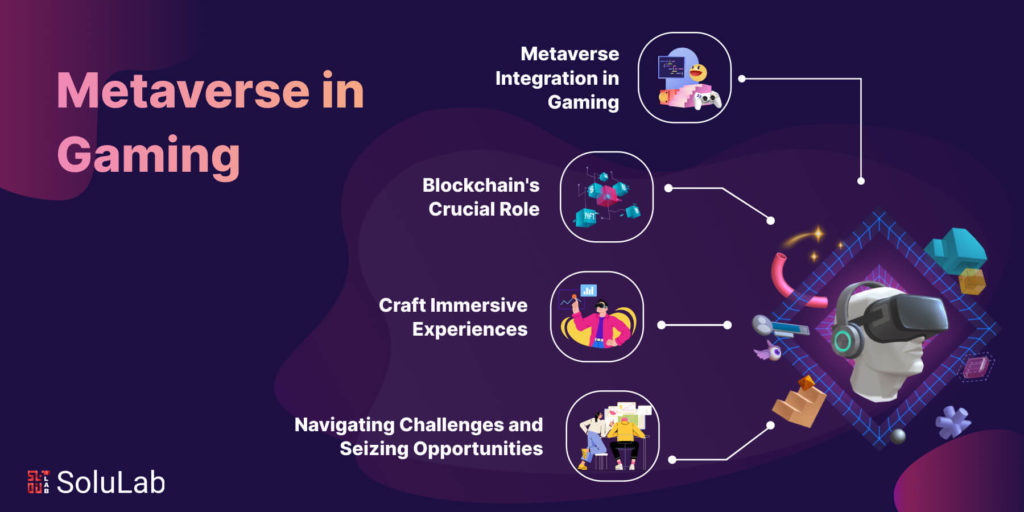
Welcome to the fascinating frontier where the virtual and real worlds collide, changing the gaming industry as we know it. With this blog, we encourage you to explore the Metaverse, a dynamic, networked virtual environment fundamentally changing the gaming industry. We will help you explore Metaverse gaming in detail and see how this significant idea goes beyond traditional boundaries to provide users with a distinctive experience interacting with virtual worlds. 

Understanding the importance of layer 1 technology has been made easier with this blog which guarantees security and decentralized in this vast virtual environment. Through the use of layer 1 technologies, developers can construct safe virtual economies that give users ownership of assets, empowering them beyond just making games. Join us as we walk you through interesting instances and explore all you need to know about developing games for the metaverse.

Embark on a transformative journey where virtual landscapes converge with reality, and gaming transcends conventional limits. In this exploration of Metaverse Gaming, we delve into the foundation of blockchain, the nuances of game development, and the challenges and opportunities that define this dynamic space. From case studies illuminating success stories to glimpses into the future of gaming, join us in deciphering the Metaverse’s intricacies and unlocking a realm of limitless possibilities.

  • The Metaverse and Its Impact on Gaming

The Metaverse is a revolutionary concept that has permeated the gaming industry, offering an expansive, interconnected virtual space where gaming experiences transcend traditional boundaries. The integration of the Metaverse in gaming marks a paradigm shift, redefining how players engage with virtual environments. It’s not merely an evolution but a groundbreaking leap into a dynamic and shared virtual universe.

The significance of the Metaverse in gaming cannot be overstated. It introduces a novel way for developers to craft immersive experiences that seamlessly blend reality with the virtual realm. Metaverse Gaming goes beyond conventional gameplay, enabling players to navigate through interconnected game worlds, fostering a sense of continuity and shared experiences. As developers embark on creating games for the Metaverse, they enter a realm where creativity knows no bounds, and the virtual world becomes a canvas for infinite possibilities.

  • Significance of Layer 1 in the Blockchain Ecosystem

In the Metaverse, the integration of Layer 1 blockchain technology plays a pivotal role, ensuring decentralization and security at its core. The Metaverse in gaming relies on the robustness of Layer 1, as it provides the foundational structure for the creation of secure virtual economies and the protection of in-game assets. Developers leveraging Layer 1 solutions are not just building games; they are architects of a secure and transparent Metaverse where player autonomy and asset ownership are paramount.

  • Overview of the Top 10 Layer 1 Blockchains in 2025

In the fast-evolving landscape of Layer 1 blockchains, developers have a myriad of options to anchor their Metaverse projects securely and efficiently. Ethereum 2.0, Binance Smart Chain, Solana, and others constitute the forefront of this technological wave. Understanding the nuances of these blockchains becomes essential as developers navigate the Metaverse landscape, making informed choices that shape the future of gaming in this interconnected virtual universe.

Understanding the Metaverse in Gaming

Dive into the heart of Metaverse Gaming as we define this interconnected virtual space within the gaming landscape. Explore seamless transitions between game worlds, the evolution from virtual and augmented reality, and the key components shaping the Metaverse experience. Gain insights into crafting gaming narratives that align with the principles of this dynamic and shared virtual universe.

  • Defining the Metaverse in the Gaming Context

In the gaming context, the Metaverse is a collective and interconnected virtual space that transcends individual game worlds. Metaverse in gaming is an environment where players seamlessly transition between diverse virtual landscapes, fostering a sense of continuity and shared experiences. Developers crafting games for the Metaverse must embrace this definition, ensuring their creations align with the overarching principles of this dynamic and interconnected virtual universe.

  • Evolution from Virtual Reality and Augmented Reality

The evolution from virtual reality (VR) metaverse and augmented reality (AR) has been instrumental in shaping the Metaverse in gaming. Virtual reality immerses players entirely in computer-generated environments, while augmented reality overlays digital content onto the real world. Metaverse in gaming ingeniously integrates these technologies, allowing developers to craft gaming experiences that seamlessly blend virtual and real-world elements.

  • Key Components of the Metaverse in Gaming

The Metaverse in gaming is a multifaceted construct with interconnected game worlds, seamless transitions between VR and AR, and a robust infrastructure supporting a massive, persistent virtual universe. Developers need to comprehend and leverage these key components, creating Metaverse gaming experiences that captivate players and offer a sense of continuity across diverse virtual landscapes.

The Role of Blockchain in the Metaverse

Role of Blockchain in the Metaverse

Uncover the pivotal role of blockchain technology in shaping the Metaverse. From ensuring decentralization and security to tokenizing in-game assets and deploying smart contracts, this section unveils how blockchain becomes the bedrock of player autonomy, transparent virtual economies, and the seamless integration of Metaverse in gaming.

  • Decentralization and Security

Decentralization and security form the bedrock of the Metaverse gaming experience. The Metaverse in gaming thrives on blockchain’s capability to ensure that no central authority governs virtual worlds. This decentralized approach empowers players with autonomy and ownership over their in-game assets. Security features embedded in blockchain technology are instrumental in safeguarding these assets, preventing fraud, and contributing to the overall integrity of the gaming environment.

  • Tokenization of In-Game Assets

Tokenization is a transformative concept within the Metaverse gaming space. It redefines in-game assets by transforming them into unique, tradable tokens on the blockchain. This innovative approach not only adds real-world value to virtual items but also enables players to truly own and trade their in-game assets. Developers leveraging tokenization contribute to the creation of a player-driven economy within the Metaverse.

  • Smart Contracts for Virtual Economies

Smart contracts play a pivotal role in shaping virtual economies within the Metaverse. By automating transactions and agreements, smart contracts introduce dynamic economic interactions. Whether facilitating in-game purchases, managing asset exchanges, or implementing decentralized governance, smart contracts contribute to the creation of a player-centric, decentralized virtual economy.

CTA1

Building Games for the Metaverse

Delve into the art and science of crafting Metaverse games. Discover design principles emphasizing interoperability and user-generated content. Navigate through technical considerations such as blockchain integration, scalability, and optimal performance, ensuring that your creations align with the immersive and interconnected nature of the Metaverse.

Design Principles for Metaverse Games

Designing games for the Metaverse demands a holistic approach grounded in key principles. Interoperability, the seamless transition between different game worlds, becomes paramount. Developers must prioritize designing transitions that allow players to explore different realms effortlessly. User-Generated Content (UGC) is another fundamental principle, empowering players to actively contribute to the evolving virtual universe. This inclusion transforms players from mere participants to active contributors, shaping the Metaverse gaming experience collaboratively.

  • Interoperability

Interoperability ensures fluid movement between diverse virtual landscapes. Creating a cohesive Metaverse experience involves prioritizing design for seamless transitions, allowing players to explore different realms without friction. Developers must craft interconnected narratives, enabling a continuous and immersive journey for players navigating through different game worlds.

  • User-Generated Content (UGC)

User-Generated Content (UGC) fosters a sense of community and creativity within the Metaverse. Allowing players to contribute their content, whether designing virtual spaces, creating in-game assets, or shaping narratives, transforms them into active contributors. Developers must implement systems that facilitate and reward UGC, elevating the Metaverse experience by allowing players to leave their indelible mark on the virtual universe.

Technical Considerations

Technical considerations in Metaverse game development span various aspects, from integrating VR and AR technologies to ensuring scalability and optimal performance.

  • Integration with Blockchain

The integration of blockchain technology demands meticulous consideration. Developers must choose an appropriate blockchain platform, such as Ethereum, Binance Smart Chain, or specialized blockchains for gaming. Compatibility, scalability, and security are critical factors for successful blockchain integration within the Metaverse.

  • Scalability and Performance

Scalability is a paramount concern in the Metaverse, where the virtual world must accommodate a potentially massive player base. Ensuring optimal performance guarantees a seamless and immersive experience, regardless of the player’s hardware capabilities. Developers must implement efficient server architectures, leverage content delivery networks, and employ optimization techniques to meet the demands of a dynamic and evolving Metaverse.

Challenges and Opportunities

Challenges and Opportunities

Explore the hurdles and possibilities within the Metaverse gaming landscape. From technical challenges in VR and AR integration to innovative monetization strategies, grasp the multifaceted nature of developing games that captivate players in this ever-evolving virtual frontier.

  • Technical Challenges

Metaverse game developers encounter technical challenges that demand innovative solutions. The seamless integration of VR and AR, especially across different devices, poses complexity. Real-time rendering and synchronization require meticulous attention to detail. Developers must innovate and overcome these challenges to deliver a Metaverse gaming experience that is not only immersive but also accessible to a diverse audience.

  • Player Engagement and Monetization

Player engagement is both a challenge and an opportunity within the Metaverse. Developers must craft narratives and gameplay mechanics that captivate players, encouraging prolonged interaction. Monetization strategies within the Metaverse can include innovative approaches like NFT-based in-game assets, subscription models, and virtual goods transactions. The evolving landscape provides a canvas for developers to explore novel ways of engaging players and generating revenue.

  • Legal and Ethical Considerations

As the Metaverse evolves, legal and ethical considerations take center stage. Developers must address issues related to intellectual property, user privacy, and fair competition within the virtual economy. Crafting a framework that aligns with legal standards while fostering a vibrant virtual ecosystem is a delicate balancing act. Developers need to navigate these considerations to ensure a sustainable and ethically sound Metaverse gaming environment.

Case Studies

Embark on a journey through successful Metaverse game examples. From Decentraland’s decentralized virtual world to Cryptovoxels’ emphasis on user-generated content and The Sandbox’s pioneering use of NFTs, these case studies illuminate diverse approaches to Metaverse game development, offering valuable insights for aspiring creators.

  • Successful Metaverse Game Examples

Exploring successful Metaverse games provides invaluable insights for developers venturing into this dynamic space. Games like Decentraland, Cryptovoxels, and The Sandbox serve as prime examples of Metaverse Gaming done right. Decentraland, a blockchain-based virtual world, allows users to buy, develop, and sell parcels of land, creating a decentralized and player-driven ecosystem. Cryptovoxels, with its emphasis on user-generated content and virtual reality compatibility, showcases the potential for immersive experiences within the Metaverse. The Sandbox takes a unique approach by enabling players to create, own, and monetize their gaming experiences through the use of non-fungible tokens (NFTs). These case studies illuminate different facets of Metaverse game development, offering lessons in community engagement, economic models, and the seamless integration of blockchain technologies.

  • Lessons Learned from Early Adopters

Early adopters of Metaverse game development provide a wealth of experiences that can guide developers on their journey. Understanding the challenges they faced, the strategies that proved successful, and the features that resonated with players is instrumental in making informed decisions. Lessons from early adopters range from the importance of fostering a vibrant community to the potential of embracing innovative monetization models. Learning from those who pioneered the Metaverse lays a solid foundation for developers to navigate challenges and innovate in this burgeoning space.

The Future of Metaverse Gaming

Future of Metaverse Gaming

Peer into the horizon of Metaverse gaming. Anticipate technological advancements, potential impacts on the gaming industry, and predictions that shape the future of player interaction, creativity, and economic opportunities within this burgeoning virtual universe.

  • Technological Advancements

The future of Metaverse gaming holds the promise of groundbreaking technological advancements. The evolution of virtual and augmented reality hardware will contribute to more immersive and realistic experiences. Additionally, the integration of artificial intelligence into gameplay experiences is anticipated to create dynamic and personalized scenarios, enhancing player engagement. The continued convergence of emerging technologies like the Internet of Things (IoT) may further blur the lines between the physical and virtual worlds, elevating Metaverse gaming to unprecedented heights.

  • Potential Impact on the Gaming Industry

The Metaverse is poised to reshape the gaming industry fundamentally. Its impact extends beyond individual game titles, influencing player behavior, economic models, and the overall gaming ecosystem. Metaverse gaming introduces a new dimension of player interaction, fostering a sense of community and creativity. Developers stand to gain new revenue streams through innovative in-game asset monetization, subscription models, and the creation of virtual goods markets. The potential impact is not confined to a single genre or platform; it permeates the entire gaming industry, heralding a more democratized and interconnected gaming landscape.

  • Predictions and Speculations

While predicting the future is inherently uncertain, industry experts and analysts offer insights and speculations into the trajectory of Metaverse gaming. Predictions may encompass the widespread adoption of blockchain-based virtual economies, increased convergence of physical and virtual worlds, and the emergence of entirely new genres of Metaverse games. As technological advancements continue to unfold, the Metaverse is anticipated to become an integral part of the gaming experience, redefining how players interact with virtual worlds.

Recommendations for Developers

Equip yourself with essential tools and skillsets for Metaverse game development . Whether you’re a seasoned developer or an aspiring visionary, discover the technological toolkit and expertise needed to navigate this dynamic space successfully. Unleash your potential as a creator in the Metaverse gaming revolution.

  • Tools and Platforms for Metaverse Development

Equipping developers with the right tools and platforms is essential for success in Metaverse game development. Game engines compatible with virtual and augmented reality, blockchain development frameworks, and collaboration tools form the foundational toolkit for developers venturing into this space. Staying abreast of advancements in these tools ensures that developers have the resources needed to bring their Metaverse visions to life.

  • Skillsets Needed for Metaverse Game Development

Developing games for the Metaverse requires a unique set of skills beyond traditional game development expertise. Familiarity with virtual and augmented reality technologies, blockchain integration, and the nuances of creating interconnected virtual worlds is crucial. Collaboration and adaptability are key skills, as developers navigate the evolving landscape of Metaverse gaming. Acquiring and honing these skills positions developers to innovate and thrive in this dynamic and transformative space.

CTA2

Conclusion

In conclusion, the journey through “Developing Games for the Metaverse: A Guide for Developers” has unveiled the dynamic landscape where gaming intersects with the Metaverse. From the foundational role of blockchain to the intricacies of crafting immersive experiences, developers are equipped with insights that transcend traditional gaming boundaries.

As the Metaverse continues its evolution, it becomes evident that it’s not merely a technological frontier but a cultural and economic shift within the gaming industry. The Metaverse in gaming is not a distant future—it’s a present reality shaping how gamers connect, create, and engage with virtual worlds.

In this vibrant ecosystem, SoluLab emerges as a key partner for developers and businesses seeking to pioneer Metaverse Gaming experiences. SoluLab’s expertise in blockchain, virtual reality, and augmented reality positions them as leaders in crafting innovative solutions. Whether you’re embarking on Metaverse game development or exploring blockchain integration, SoluLab’s commitment to excellence and cutting-edge technology makes them the ideal collaborator for navigating the evolving Metaverse landscape. With SoluLab as your guide, the journey into Metaverse Gaming becomes not just a technological endeavor but a transformative adventure in the ever-expanding universe of virtual experiences.

FAQs

1. How can metaverse virtual simulation be developed? 

First, decide on a metaverse platform, you have to choose a metaverse platform before starting with the creation of a metaverse space or app. Next, create the metaspace and construct an interaction layer. Create a layer of interoperability. 

2. How is money made in metaverse games? 

You can earn money even when you are playing games in Metaverse. Trillium (TLM), a native token, is used in the economy that video games such as Alien Worlds have established. In the game, mining, trading NFTs, and staking can all earn you money. 

3. Is it free to play metaverse? 

You can easily download and experience Multiverse, a social metaverse app for free. There exists an incredible community of individuals, and destinations such as outlets, galleries, and districts to explore. 

4. Who was behind the creation of Metaverse?

In 1922, the term metaverse was first used by American science fiction author Neal Stephenson in his book Snow Crash, imagines a bleak future in which wealthy people escape into another, linked three-dimensional reality. 

5. How does SoluLab aid in the creation of Metaverse games?

With experience in virtual reality, augmented reality, and blockchain, SoluLab is a top partner for companies and developers operating in the metaverse. Our dedication to technology makes us your perfect collaborator for creating creative solutions in the development of the metaverse. 


Navigating the Challenges of Building Metaverse Game Worlds

Navigating the Challenges of Building Metaverse Game Worlds

A concept of Metaverse development that once seemed confined to the realms of science fiction has rapidly become a central focus in the world of technology and Entertainment. In this blog, we will delve into the exciting and dynamic realm of Metaverse Game Worlds, exploring the multifaceted challenges developers face as they strive to create these immersive digital universes.

What Do You Mean by Metaverse?

The term “metaverse” encompasses a vast, interconnected digital universe, often realized as a collective space where users can interact, socialize, work, and play. It’s a fusion of multiple virtual environments and experiences, brought together into a cohesive whole. This interconnected nature differentiates the metaverse from individual, isolated virtual worlds. Top metaverse platforms, such as Meta’s Horizon Workrooms, Decentraland, and Roblox, aim to provide users with a persistent, shared experience, where boundaries blur between the virtual and real worlds.

The Rise of Metaverse Game Worlds

Rise of Metaverse Game Worlds

The meteoric rise of metaverse game worlds is an undeniable testament to the ever-evolving landscape of technology and the boundless creativity of developers. This phenomenon is driven by several key factors that have converged to create a perfect storm of innovation and excitement in the world of digital entertainment.

  • Technological Advancements: The rapid progression of technology, particularly in areas such as graphics rendering, network infrastructure, and processing power, has paved the way for metaverse game worlds to flourish. High-quality, immersive experiences that were once the stuff of science fiction have now become attainable, thanks to state-of-the-art hardware and software innovations.
  • Internet Connectivity: With the widespread availability of high-speed internet, metaverse game worlds can seamlessly connect players from all corners of the globe. This interconnectedness fosters shared experiences, making it possible for users to collaborate, compete, or simply socialize within these virtual realms. The idea of a massive, shared digital universe has transitioned from a futuristic concept to a tangible reality.
  • Social Interaction: Metaverse game worlds aren’t solely about gameplay. They place a strong emphasis on social interaction and community building. Users can meet, communicate, and forge friendships with others in ways that mimic real-world interactions. This blend of gaming and social experiences has proven immensely appealing to a broad demographic of players.
  • Open-Ended Experiences: Unlike traditional video games with fixed storylines and objectives, metaverse games offer open-ended experiences. Users can explore, create, and shape their own adventures, making each visit to the metaverse a unique and personalized journey. This freedom of choice is a hallmark of metaverse game worlds, giving players agency and creativity.
  • Multifaceted Virtual Worlds: Metaverse games go beyond conventional gaming by creating rich, multifaceted virtual worlds. These worlds are often persistent, evolving spaces that can host a wide range of activities, from virtual concerts and business meetings to art exhibitions and educational events. The metaverse has transcended the boundaries of traditional gaming to become a dynamic, all-encompassing digital environment.
  •  Economic Opportunities: Metaverse game worlds offer economic opportunities to both developers and users. The virtual economies that emerge within these spaces allow for the creation, sale, and trade of virtual assets and currencies. Real-world businesses and entrepreneurs are increasingly looking to invest in or leverage the metaverse for a variety of purposes, from marketing to commerce.

In brief, the rise of metaverse game worlds represents a convergence of technology, social interaction, and open-ended experiences. These digital realms have captured the imagination of developers and players alike, providing a canvas for creativity that goes far beyond traditional gaming. As we explore the challenges faced in building metaverse game worlds, it’s essential to recognize the incredible potential and excitement that underpin this transformative phenomenon.

The Importance of Addressing Challenges

Building metaverse game worlds is not without its set of unique challenges. These challenges span technical, social, legal, and ethical dimensions, and addressing them is vital for the long-term success and sustainability of metaverse development. The sheer scale and complexity of metaverse game worlds necessitate a deep understanding of the issues at hand and a proactive approach to mitigating potential pitfalls. As top metaverse platforms continue to gain traction and investment, understanding these challenges is essential for anyone looking to make their mark in the metaverse development landscape. In the following sections, we will explore these challenges in-depth and discuss strategies for navigating the intricate journey of metaverse game world creation.

Technical Challenges in the Metaverse Game World

Technical Challenges in the Metaverse Game World

In the dynamic realm of metaverse game worlds, the creation and maintenance of these expansive digital environments bring forth a host of technical challenges that developers must confront. These challenges are instrumental in ensuring that metaverse game worlds deliver seamless, immersive, and enjoyable experiences to their users. Let’s delve into these technical hurdles and explore the keywords you’ve provided.

Scalability and Performance

  •  Server Infrastructure: The backbone of a metaverse game world lies in its server infrastructure. This component is responsible for handling the influx of users, data, and interactions. In the context of metaverse game development companies, investing in a scalable and robust server infrastructure is imperative. The Virtual Reality Metaverse is particularly relevant here, as VR experiences demand low-latency, high-performance servers to maintain immersion.
  • Network Bandwidth: As metaverse game worlds continue to expand, the demand for network bandwidth grows exponentially. Efficient and real-time data exchange is critical to facilitate seamless interactions. Augmented reality (AR) and Virtual Reality (VR) experiences within the metaverse are especially reliant on a well-optimized network infrastructure. In a VR context, Augmented reality comes into play as it highlights the need for efficient data transfer in AR environments.

Graphics and Rendering

  • Realism vs. Efficiency: The visual quality of a metaverse game world is often a double-edged sword. Striking a balance between delivering realistic graphics and ensuring efficient rendering is a perpetual challenge. Developers must employ strategies like Metaverse AI Integration to dynamically adjust rendering quality based on the user’s hardware capabilities, ensuring a smooth experience.
  • VR and AR Integration: Metaverse game worlds aim to provide support for both Virtual Reality (VR) and Augmented Reality (AR) experiences. This integration introduces complexity to graphics and rendering, as it involves specialized techniques to maintain immersion and interact with the real world. Ensuring a consistent user experience across different devices and platforms is a key challenge, where Virtual Reality Metaverse is relevant due to the importance of optimizing VR experiences.

CTA1

Content Creation and Management

  • Procedural Generation: Populating expansive metaverse environments with diverse and engaging content is no small task. Many metaverse game development companies turn to procedural generation, which utilizes algorithms to create content dynamically. This approach reduces the burden of manual content creation. The challenge here lies in maintaining a balance between variety and quality. The use of Metaverse AI Integration can aid in the optimization of procedural generation by adapting content generation to user preferences and capabilities.
  •  User-Generated Content: Allowing users to contribute their own creations to the metaverse is a fundamental aspect of many metaverse game worlds. However, managing user-generated content, ensuring it complies with community guidelines, and moderating it for inappropriate material is a significant challenge. The Metaverse AI Integration can be applied in this context to highlight the use of AI-powered automation for content moderation and filtering, as this technology plays a crucial role in maintaining a safe and enjoyable metaverse environment.

These technical challenges represent the intricate web of considerations that metaverse game developers navigate in their quest to provide users with immersive and compelling digital experiences. As technology evolves, so too will the strategies and solutions used to address these challenges and bring metaverse game worlds to new levels of creativity and interactivity.

User Engagement and Social Challenges

In the metaverse gaming landscape, creating and maintaining a thriving community is paramount. User engagement and social interaction are at the heart of these virtual worlds, making it essential to overcome the unique challenges they present.

Community Building

  • Building a Positive Community: One of the cornerstones of successful metaverse development lies in building a positive and inclusive community. Metaverse development companies prioritize fostering an environment where users feel welcomed, respected, and valued. Encouraging positive interactions, mutual support, and collaboration are key aspects of community building. The metaverse aims to be a space where users can connect, learn, and have fun, so maintaining a friendly atmosphere is vital.
  • Moderation and Safety: With vast numbers of users from diverse backgrounds, moderation and safety become critical components of a metaverse gaming community. Metaverse development companies need to establish robust moderation systems to address inappropriate behavior and content. The safety and well-being of users must be a top priority to ensure a positive experience for all participants. This challenge is closely linked to the “Metaverse gaming landscape,” as the landscape encompasses various platforms and communities, each with its unique moderation needs.

Monetization

  • In-Game Purchases: Monetizing metaverse game worlds is a crucial aspect of their sustainability and growth. In-game purchases, which can include virtual goods, skins, or even access to exclusive experiences, are common ways for metaverse development companies to generate revenue. However, balancing monetization with user satisfaction is a delicate challenge. Striking the right equilibrium ensures that users feel that their investments enhance their experience rather than detract from it.
  • Virtual Economies: Many metaverse game worlds feature complex virtual economies where users can trade, buy, and sell virtual assets or currencies. These economies often resemble real-world financial systems, and they introduce unique challenges related to supply, demand, inflation, and market manipulation. Managing these virtual economies and ensuring fairness and stability can be intricate tasks for metaverse development companies. As the metaverse gaming landscape continues to evolve, addressing user engagement and social challenges is paramount for creating an environment where users can connect, collaborate, and enjoy their digital experiences. The effective management of community dynamics and monetization strategies is pivotal for building metaverse communities that are not only engaging but also sustainable over the long term.

Legal and Ethical Considerations

The development of metaverse game worlds introduces a myriad of legal and ethical considerations that developers and users must navigate. Ensuring compliance with intellectual property laws and safeguarding user privacy and data security are paramount in the metaverse landscape.

Intellectual Property

  • Copyright and Trademark Issues: Metaverse development companies must be acutely aware of the potential copyright and trademark issues that can arise when creating virtual worlds. Incorporating real-world brands, music, or other copyrighted materials in a metaverse game world may lead to legal disputes if proper permissions and licenses are not obtained. Protecting the intellectual property rights of both creators and copyright holders is essential.
  •  Licensing and Fair Use: Licensing plays a critical role in metaverse development, allowing creators to obtain the necessary rights to use certain content. Understanding licensing agreements and adhering to fair use principles is crucial in metaverse game development. It’s imperative to respect intellectual property while promoting creativity and innovation within the metaverse.
    Privacy and Data SecurityPrivacy and Data Security
  • Data Collection and User Privacy: Metaverse development companies often collect a substantial amount of user data to enhance the user experience and support various metaverse use cases and benefits. However, respecting user privacy and complying with data protection regulations are paramount. Transparent data collection practices, robust data security measures, and user consent mechanisms should be in place to safeguard user information and instill trust.
  •  Cybersecurity Concerns: With metaverse game worlds growing in complexity and popularity, they become attractive targets for cyber threats and malicious actors. Protecting the metaverse against data breaches, hacking attempts, and other cybersecurity concerns is a constant challenge. Metaverse development companies must invest in robust security measures and continuously adapt to emerging threats.

As the metaverse continues to expand and intertwine with various metaverse use cases and benefits, addressing these legal and ethical considerations is essential. Developers and users must collaborate to ensure that metaverse game worlds can thrive within a framework that respects intellectual property rights and upholds user privacy and data security, fostering a trustworthy and enjoyable metaverse experience.

The Role of AI and Automation

Role of AI and Automation

In the realm of metaverse development, the integration of AI (Artificial Intelligence) and automation plays a pivotal role in shaping the user experience, enhancing efficiency, and addressing key challenges. Here, we delve into the multifaceted ways in which AI and automation are revolutionizing the metaverse landscape, highlighting their significance in three critical areas.

  • AI-driven NPCs and Storytelling

AI-driven Non-Playable Characters (NPCs) are the backbone of immersive metaverse game worlds. These intelligent entities are instrumental in shaping the user experience, driving storylines, and fostering engaging interactions. AI-driven NPCs can adapt to user behavior, create dynamic and personalized narratives, and provide users with a sense of agency within the metaverse. The Metaverse AI Integration emphasizes the integral role of AI in creating lifelike, interactive NPCs and crafting captivating narratives that transcend traditional gaming experiences.

  • Moderation and Content Filtering

Maintaining a safe and enjoyable metaverse environment hinges on effective moderation and content filtering. AI-powered systems have become instrumental in automating these processes. Metaverse development companies employ AI algorithms to scan, identify, and filter out inappropriate content, ensuring that user-generated content complies with community guidelines. This not only promotes a welcoming and secure metaverse community but also reduces the administrative burden on moderators. The keywords “Metaverse AI Integration” underscore the importance of AI in content moderation and filtering, which is essential for building a responsible and user-friendly metaverse.

  • Analytics and Player Behavior Prediction

AI-driven analytics and player behavior prediction are transformative tools in metaverse development. AI can process vast amounts of data to discern player preferences, habits, and trends. This information is instrumental in optimizing the user experience, from tailoring in-game content to predicting and preventing adverse behaviors. AI can forecast potential issues such as harassment or cheating, allowing metaverse development companies to address them proactively. The Metaverse AI Integration emphasizes the integral role of AI in analyzing player behavior, predicting trends, and enhancing the overall metaverse experience.

In metaverse development, AI and automation are catalysts for innovation, enriching the metaverse landscape by delivering personalized, secure, and dynamic experiences. As the metaverse continues to evolve, the seamless integration of AI-driven NPCs, advanced moderation and content filtering, and predictive analytics will be instrumental in creating immersive, user-centric metaverse game worlds that are both enjoyable and responsible.

Strategies for Overcoming Challenges of Building Metaverse Game World

The metaverse gaming industry presents a unique landscape filled with a multitude of intricate challenges. To effectively navigate these challenges and ensure the continued success and growth of metaverse game worlds, metaverse development companies and stakeholders must adopt strategic approaches that encompass collaboration, transparency, and innovation. Let’s delve deeper into these strategies that underscore their importance in addressing the pressing challenges within the metaverse gaming industry.

  • Cross-Industry Collaboration

Collaboration across diverse industries is a cornerstone strategy in addressing challenges within the metaverse gaming industry. Given the multifaceted nature of the metaverse, these cross-industry partnerships are crucial for finding holistic solutions. Metaverse development companies must engage with technology experts to harness innovations that can resolve technical challenges such as server infrastructure, graphics rendering, and network efficiency. Furthermore, collaboration with the entertainment industry can lead to unique content collaborations, offering immersive experiences that promote user engagement and community growth. Legal experts, on the other hand, provide essential guidance on navigating complex legal and ethical matters, particularly when it comes to intellectual property and data privacy concerns. The challenges in metaverse gaming underscore the importance of these multidisciplinary collaborations in addressing the unique and evolving issues faced by the metaverse gaming industry.

  • Transparency and User Education

Transparency is a cornerstone of trust within the metaverse gaming industry. It encompasses clear and open communication about data usage, privacy policies, and community guidelines. Metaverse development companies must provide transparency regarding how user data is collected, stored, and utilized to build user trust and confidence. These practices address concerns related to privacy and data security, promoting a safer and more trustworthy metaverse environment. Simultaneously, user education plays a pivotal role, empowering users to make informed decisions about their participation in the metaverse. An educated user base is more likely to engage responsibly, adhere to community guidelines, and understand the potential risks and benefits of metaverse gaming. The challenges in metaverse gaming emphasize the significance of these strategies in fostering a responsible and trustworthy metaverse gaming community.

  • Continuous Innovation and Adaptation

In the metaverse gaming industry, continuous innovation and adaptation are the pillars of resilience. Challenges within this dynamic landscape are ever-evolving, spanning cybersecurity, content moderation, and the rapid emergence of new technologies. Metaverse development companies must remain at the forefront of industry advancements to address challenges proactively. Innovation can involve embracing Metaverse AI Integration, which optimizes content moderation, enhances user experiences, and streamlines in-game experiences. Continuous adaptation ensures that metaverse game worlds remain agile, responsive to user needs, and capable of embracing emerging trends and technologies. The challenges in metaverse gaming emphasize the necessity of this strategy for metaverse development companies to thrive in a rapidly changing and competitive industry.

By actively implementing these strategies, metaverse development companies can effectively tackle the diverse challenges present within the metaverse gaming industry. Cross-industry collaboration, transparency, and user education, coupled with a commitment to continuous innovation and adaptation, create a holistic approach that empowers the metaverse gaming community to overcome challenges, build trust, and seize new opportunities in this exciting and evolving landscape.

CTA2

Final Words

In conclusion, the journey of building metaverse game worlds is marked by boundless opportunities and complex challenges. As the metaverse rapidly gains prominence in the gaming and technology spheres, it becomes clear that developers and stakeholders must approach this frontier with a strategic mindset, embracing multidisciplinary collaboration, transparency, and continuous innovation. The metaverse’s rise as a dynamic digital universe, brimming with interactive possibilities, transcends conventional gaming experiences, emphasizing the paramount importance of addressing technical, social, legal, and ethical intricacies.

Metaverse development companies and creators stand at the forefront of a digital renaissance, where AI and automation play pivotal roles in enhancing immersion, moderating content, and predicting player behavior. By embracing the evolution of technology, fostering cross-industry collaboration, and prioritizing the well-being and engagement of users, the metaverse can continue to flourish as an ever-evolving digital realm. In navigating the myriad challenges and harnessing the full potential of metaverse game worlds, we embark on an exhilarating journey, poised to define the future of interactive digital experiences, where creativity and community thrive in unison.

SoluLab, as a Metaverse game development company, plays a pivotal role in shaping the metaverse by providing innovative solutions that power immersive digital experiences. With a profound understanding of the metaverse’s complexities, SoluLab leverages its expertise in software development, artificial intelligence, and blockchain technologies to create cutting-edge applications and platforms. Their commitment to metaverse development extends to designing scalable, secure, and user-friendly environments that seamlessly integrate AI, automation, and data analytics, contributing to the seamless operation and enjoyment of metaverse game worlds. SoluLab’s contributions encompass the development of AI-driven NPCs, advanced content moderation, and predictive analytics that enhance user engagement and safety. With a holistic approach to metaverse development, SoluLab empowers businesses and creators to embark on the exciting journey of building dynamic and inclusive metaverse game worlds that redefine digital interaction and entertainment.

FAQs

1. What is the metaverse, and how does it differ from traditional gaming?

The metaverse is a vast interconnected digital universe that transcends traditional gaming. It combines elements of gaming, social interaction, and shared experiences, creating immersive, open-ended virtual worlds where users can explore, interact, and create content.

2. What role does AI play in metaverse game worlds?

AI is instrumental in metaverse development, driving AI-driven NPCs, enhancing content moderation and filtering, and predicting player behavior. It contributes to immersive storytelling, content quality control, and player engagement, making metaverse experiences more dynamic and user-centric.

3. How are metaverse development companies addressing challenges in user engagement and safety?

Metaverse development companies focus on community building, promoting positive interactions, and investing in robust moderation systems. They also employ AI-driven content filtering to ensure a safe and welcoming environment for users, fostering trust and user satisfaction.

4. What is the significance of cross-industry collaboration in metaverse development?

Cross-industry collaboration is essential to address the multifaceted challenges in metaverse gaming. It leverages expertise from technology, entertainment, and legal domains to find comprehensive solutions, ensuring the metaverse’s growth and sustainability.

5. How can users contribute to the metaverse’s growth and development?

Users can actively participate in metaverse game worlds by creating and sharing content, engaging in communities, and providing valuable feedback to developers. By adhering to community guidelines and respecting intellectual property, users contribute to the positive and vibrant metaverse ecosystem.

Navigating the Metaverse: A Guide to the Web3 Revolution

Navigating the Metaverse: Your Guide to the Web3 Revolution

Metaverse has emerged as the epicenter of innovation, offering a convergence of Metaverse development, Augmented Reality (AR), and Metaverse AI Integration. This comprehensive guide delves into the top metaverse platforms and Web3 development, unveiling the intricacies of Web3 technology and the myriad of Web3 use cases that are shaping our tomorrow.

The concept of the Metaverse has ignited the imagination of people worldwide, and its implications are profoundly transformative. In this Introduction, we will define the Metaverse and explore its intersection with the emerging Web3 technology.

The Metaverse, in its essence, is a virtual, interconnected universe comprising multiple digital spaces and environments. It is not limited to one platform but is an expansive, collective virtual reality that combines real-world and digital experiences. In the Metaverse, individuals are represented by digital avatars, and they can interact, socialize, work, and play within this shared digital space.

What are the key components of the Metaverse?

key components of the Metaverse

  • Virtual Reality (VR)

The Metaverse often incorporates VR technology, enabling users to immerse themselves fully in the digital environment.

  • Augmented Reality (AR)

AR enhances the real world with digital information and objects, bridging the gap between the physical and digital realms.

  • Metaverse AI Integration

AI technologies are integrated into the Metaverse to create dynamic and responsive virtual environments. These AI-driven systems adapt to user behavior, enhancing the overall experience.

What is the Role of Augmented Reality and Virtual Reality in the Metaverse?

Role of Augmented Reality and Virtual Reality in the Metaverse

As the metaverse continues to evolve and shape the digital landscape, it’s imperative to understand the crucial role that augmented reality (AR) and virtual reality (VR) play within this emerging realm. The metaverse represents a convergence of the physical and digital worlds, and the incorporation of AR and VR technologies is pivotal in achieving this vision.

  • Metaverse Development and Integration

Metaverse development, as a whole, encompasses the creation of virtual spaces, interconnected ecosystems, and digital experiences. 

AR and VR are integral components of this development, enhancing the immersion and interactivity offered by metaverse platforms. The integration of AR and VR technologies in the metaverse is essential for creating rich, engaging, and dynamic virtual environments.

  • Metaverse AI Integration

Metaverse AI, another critical element, leverages artificial intelligence to facilitate interaction, personalization, and automation within the metaverse. 

AR and VR, when combined with AI, enable more natural and intuitive user experiences. This synergy opens the door to various applications, from virtual assistants guiding users through metaverse experiences to personalized content recommendations.

CTA1

  • Metaverse Use Cases and Benefits

AR and VR bring tangible benefits to the metaverse in terms of user engagement and practical applications. They can be utilized across various sectors, including education, entertainment, healthcare, and more. 

For instance, in education, AR and VR can create immersive learning environments, making complex subjects more accessible and interactive. In healthcare, they enable remote surgeries and medical training in a risk-free virtual environment. These use cases underscore the metaverse’s potential to revolutionize traditional industries.

  • Virtual Reality Metaverse

Virtual Reality Metaverse is a pivotal component of the metaverse, creating fully immersive experiences for users. Top metaverse platforms often prioritize VR integration to offer users an almost tangible sense of presence within the digital world. 

This level of immersion opens up opportunities for social interaction, entertainment, and even remote work, transforming the way people connect and collaborate.

  • Future Based on the Metaverse

The future of the internet and digital experiences is heavily reliant on the metaverse, where AR and VR technologies will continue to be at the forefront. 

As metaverse development progresses, we can expect to see even more sophisticated applications of AR and VR, leading to a more seamless blending of the physical and digital realms. Web3 technology and Web3.0 developer Leads the Way in Shaping the Metaverse?

The concept of the Metaverse has captured the imagination of tech enthusiasts, entrepreneurs, and investors alike. As the digital realm continues to evolve, the Metaverse is becoming more tangible, offering countless opportunities for innovation and engagement. 

  • Selecting the Right Development Partners

Partnering with the right metaverse development companies is essential to harness the full potential of AR and VR within the metaverse. 

These companies are equipped to provide the expertise and tools required for effective AR and VR integration. Similarly, in the realm of Web3 development, choosing the top Web3 development companies is vital for keeping pace with the ever-evolving technology landscape.

Who Leads the Way in Shaping the Metaverse?

The concept of the Metaverse has captured the imagination of tech enthusiasts, entrepreneurs, and investors alike. As the digital realm continues to evolve, the Metaverse is becoming more tangible, offering countless opportunities for innovation and engagement. But who are the leading players in the field of Metaverse development, and how are they shaping this virtual world of tomorrow?

In this ever-expanding universe of possibilities, Metaverse development companies are at the forefront, pushing the boundaries of what is possible in this interconnected digital space. These visionary organizations are pioneers, driving the evolution of Metaverse technology and its seamless integration into our daily lives.

Metaverse development services play a crucial role in bringing the Metaverse to life. These services encompass a range of activities, from designing immersive digital environments to developing Metaverse-compatible applications and platforms. With the integration of augmented reality and advanced Metaverse AI, the possibilities are virtually limitless. What can we expect from these services, and how will they shape the Metaverse landscape?

The Metaverse development field is in high demand, and this demand extends to skilled professionals who can bring these virtual worlds to life. One notable player in this space is SoluLab, a company renowned for its expertise in Metaverse development. Hiring dedicated developers for Metaverse projects is becoming increasingly essential, as companies and entrepreneurs seek to harness the potential of this digital frontier.

These developers possess a deep understanding of Metaverse technology, including Web3 development and integration of Augmented Reality (AR) and Metaverse AI. With an eye on top web3 platforms and the future implications of the Metaverse, they are vital to bringing innovative ideas to fruition.

As we navigate the exciting realms of Metaverse development, one thing is clear: the Metaverse is no longer science fiction but a dynamic and ever-evolving digital frontier with real-world applications, promising a future rich in interconnected experiences and opportunities.

How is the Integration of AI Shaping the Future of Digital Realities Within the Metaverse?

AI Shaping the Future of Digital Realities Within the Metaverse

The Metaverse, a rapidly emerging digital realm where individuals can immerse themselves in augmented and virtual realities, is evolving at an unprecedented pace. Its development has been a confluence of Metaverse development, augmented reality, Web3 technology, and the integration of artificial intelligence (AI). This integration of AI is pivotal, as it significantly influences the future of digital realities within the Metaverse.

A. Metaverse AI and its Significance

In the ever-evolving landscape of the Metaverse, the integration of artificial intelligence (AI) holds a pivotal role. The Metaverse, a virtual universe interconnected with the real world, relies on advanced technologies to provide immersive experiences. AI integration into the Metaverse is significant for several reasons:

  • Enhanced User Experiences

Metaverse AI can adapt and personalize interactions, making the user experience more engaging and relevant. It can recognize user preferences, anticipate needs, and create a tailored environment.

  • Realism and Immersion

AI can contribute to the realism of virtual environments by simulating natural behavior and interactions. This enhances the immersion factor, blurring the lines between the digital and real worlds.

  • Dynamic Content Generation

AI can generate content dynamically, reducing the burden on content creators and ensuring that the Metaverse remains vibrant and continuously evolving.

  • Safety and Moderation

AI algorithms can help monitor and maintain a safe and respectful virtual environment by detecting and mitigating harmful or inappropriate behavior.

B. Potential Use Cases

Metaverse AI integration brings forth a multitude of potential use cases, ranging from entertainment to education and beyond:

  • Entertainment and Gaming

In virtual worlds, AI can create non-player characters (NPCs) with advanced behavior and personalities, making games more lifelike and challenging.

  • Education and Training

AI-driven virtual tutors and educational assistants can provide personalized learning experiences, adapting to individual learning styles and pacing.

  • Virtual Commerce

AI can assist users in shopping, recommending products, and creating virtual shopping experiences that mimic real-world retail.

  • Healthcare and Telemedicine

The Metaverse can be used for telehealth services, with AI helping diagnose and provide medical information to users.

  • Social Interactions

Metaverse AI can enhance social interactions by creating realistic avatars and facilitating natural language communication.

C. AI Integration in Top Metaverse Platforms

Leading Metaverse platforms are actively exploring AI integration to stay competitive and innovative. Several top Metaverse development companies are investing in AI technologies to power their platforms:

  • Virtual Reality Metaverse

Platforms like Oculus from Meta (formerly Facebook) are integrating AI to create realistic avatars and enhance user interactions.

  • Decentraland

This blockchain-based Metaverse leverages AI for content curation and moderation, ensuring a safe and enjoyable user experience.

  • Roblox

This popular gaming platform employs AI for game creation and scripting, allowing users to create their virtual experiences with ease.

  • Minecraft

Microsoft’s Minecraft Metaverse explores AI integration for world-building, making it easier for users to design and populate virtual environments.

  • OpenAI and Web3

OpenAI’s advancements in AI technology have broader implications for the Metaverse, as their AI models can be integrated into various platforms to enhance user interactions and content generation.

What are the Metaverse Use Cases and Benefits?

Use Cases and Benefits of Metaverse

The Metaverse is rapidly evolving into a versatile digital realm with a multitude of use cases and benefits, transforming the way we interact with the virtual world. From education and training to business and marketing, and even healthcare and telemedicine, the Metaverse is poised to revolutionize various sectors. Here, we explore some of the key use cases and benefits, while also shedding light on how Metaverse development, Augmented Reality (AR), and Metaverse AI integration play crucial roles in shaping this futuristic landscape.

  • Metaverse in Education and Training

The Metaverse holds immense potential in the field of education and training, offering an interactive and immersive learning environment. Incorporating augmented reality and virtual reality technologies, educators can create dynamic simulations and interactive lessons, making complex concepts more engaging and easier to grasp. 

Metaverse AI integration enables personalized learning experiences, tailoring content to individual student needs. This not only enhances understanding but also allows for continuous assessment and feedback.

  • Business and Marketing Opportunities

Businesses are recognizing the Metaverse as a new frontier for customer engagement and marketing. Brands can create immersive and interactive experiences within the Metaverse, enabling customers to interact with products, services, and advertisements more engagingly. 

Top Metaverse platforms are becoming sought-after spaces for virtual events, product launches, and customer interaction, all while tracking user engagement in real-time. Web3 development trends and technology enable secure transactions and data management within these virtual environments, ensuring a seamless experience for users and businesses.

  • Healthcare and Telemedicine in the Metaverse

The Metaverse has the potential to revolutionize healthcare and telemedicine. Patients can access virtual clinics, consult with doctors, and even undergo medical procedures within this digital space. Augmented reality can aid in remote diagnoses, while Metaverse AI integration can assist in patient monitoring and treatment adherence. 

The virtual reality Metaverse allows for realistic medical training simulations, enhancing the skills of healthcare professionals. This not only improves the quality of care but also extends healthcare services to remote or underserved areas.

Metaverse development companies and top Web3 development companies are at the forefront of building the infrastructure needed for these applications. They provide the tools and platforms that enable Metaverse experiences to thrive. Hiring dedicated developers with expertise in Web3 technology ensures the seamless integration of these technologies into Metaverse projects.

CTA2

Conclusion

In conclusion, the Metaverse is not just a digital trend; it’s a revolution that will shape the future of the internet. As we step into the era of Web3, the Metaverse’s impact will be profound, affecting all aspects of our lives. To thrive in this new digital landscape, it’s crucial to embrace Metaverse development, Augmented Reality, and Metaverse AI integration. By doing so, we can unlock the limitless potential of the Metaverse and embark on an exciting journey that promises to redefine our online existence.

Augmented reality and Metaverse AI integration are the cornerstones of this revolution. These elements will unlock unprecedented possibilities, creating immersive and interactive experiences that seamlessly blend the virtual and real worlds. From entertainment and education to business and social interactions, the Metaverse promises to touch every aspect of our lives.

SoluLab, a leading player in this space, stands as a testament to the possibilities that the Metaverse holds. Their expertise in Metaverse development, Web3 technology, and Metaverse AI integration makes them a valuable partner for those seeking to navigate this uncharted territory. The future belongs to those who are ready to embrace the Metaverse, and with the right guidance, there are no limits to what we can achieve in this brave new digital world. In the rapidly evolving landscape of the Metaverse, SoluLab emerges as a leading force, equipped with expertise in Metaverse development, Web3 technology, and Metaverse AI integration. Partner with us to unlock the limitless potential of the Metaverse. Hire metaverse developers to embark on this exciting journey into the future of the digital world.

FAQs

1. What is the Metaverse, and how is it related to Web3 technology?

The Metaverse is a virtual, interconnected world where digital and physical realities merge. It’s closely linked to Web3 technology, which emphasizes decentralization and blockchain integration to create a more immersive online experience.

2. What is the Metaverse development process, and what are its key components?

Metaverse development involves creating the infrastructure, content, and platforms that enable users to interact in the digital realm. Key components include augmented reality, Metaverse AI integration, and virtual reality Metaverse environments.

3. Can you explain the concept of Augmented Reality in the Metaverse?

Augmented reality in the Metaverse refers to the integration of digital information and objects into the real world, enhancing the user’s perception of reality within the virtual space.

4. What are the top Metaverse platforms for development?

Top Metaverse platforms include virtual worlds like Decentraland, The Sandbox, and platforms that support blockchain integration such as Ethereum and Binance Smart Chain.

5. How does Metaverse AI play a role in the development of the Metaverse?

Metaverse AI enhances user experiences by providing personalized content, interactions, and virtual assistance, making the digital environment more dynamic and responsive.

6. What are the most prominent use cases and benefits of the Metaverse?

Metaverse use cases include virtual conferences, gaming, social interactions, education, and e-commerce. Benefits encompass improved accessibility, global connectivity, and new revenue opportunities.

The Impact of the Metaverse on Education and Learning

The Impact of the Metaverse on Education and Learning

The digital age has ushered in a wave of technological innovations that are transforming the way we live, work, and interact with the world around us. One of the most exciting and potentially revolutionary concepts to emerge in recent years is the Metaverse. A term that was once confined to the realms of science fiction and virtual gaming has now become a tangible and increasingly significant part of our digital reality.

The Metaverse, often described as a virtual, interconnected universe, has the power to change not only how we socialize and entertain ourselves but also how we educate and learn. In this blog, we will embark on an exploration of the Metaverse learning’s profound impact on education and learning.

So, let’s get started!

Understanding the Metaverse

Before we delve into its implications for education, it’s essential to grasp what the Metaverse is. In essence, the Metaverse is a digital universe, an expansive, interconnected realm where users can interact with each other and computer-generated environments. It blurs the lines between the physical and digital worlds, offering diverse experiences that can include social interactions, gaming, commerce, and, intriguingly, education.

Imagine a world where students can explore ancient civilizations in a virtual history class, collaborate on scientific experiments with peers from across the globe, or even conduct job interviews in a completely immersive virtual environment. This is the promise of the Metaverse in Education.

The Current Educational Landscape

To appreciate the potential impact of the Metaverse development, it’s essential to consider the current state of education. Traditional education methods have evolved over the centuries but remain largely classroom-centered, with students and teachers physically present. The internet and online learning platforms have brought about significant changes, offering flexibility and access to a wealth of resources.

However, challenges persist. Some students face barriers to access, and the one-size-fits-all approach to education doesn’t cater to individual learning styles. This is where the Metaverse comes into play, offering innovative solutions to these longstanding issues.

CTA1

The Potential of the Metaverse in Education

The concept of the Metaverse, a virtual, interconnected universe, has taken the world by storm, capturing the imagination of innovators and educators alike. Beyond its applications in gaming and entertainment, the Metaverse holds immense potential for the realm of education. In this section, we will delve deeper into the possibilities it offers and how it might reshape the way we teach and learn.

  • Immersive and Interactive Learning: The Metaverse provides an unprecedented level of immersion. Students can virtually step into historical events, explore complex scientific concepts, or even practice language skills in virtual environments. This immersive learning can make educational content more engaging and memorable.
  • Accessibility and Inclusivity: The Metaverse has the potential to bridge the digital divide. With the right infrastructure, students from all backgrounds can access the same high-quality educational experiences, creating a more inclusive learning environment.

Read Our Blog: Is Metaverse the Future of Digital Connection?

  • Personalized Learning Journeys: In the Metaverse, learning can be tailored to the individual. Smart algorithms can adapt content and experiences to match each student’s pace and preferences, making education more effective and enjoyable.
  • Collaboration and Social Learning: Just as in the physical world, students can collaborate and learn from one another. The Metaverse enables social interactions and group projects, enhancing the social aspects of learning.

The potential is vast, and as the technology matures, we are likely to see even more innovative applications in education.

How Does the Metaverse in Education Differ from the Internet and Virtual Reality?

How Does the Metaverse in Education Differ from the Internet and Virtual Reality?

The integration of the Metaverse into education represents a significant departure from both the traditional Internet and virtual reality (VR). The Metaverse creates interactive and immersive environments where students can engage with one another and computer-generated worlds. It goes beyond the traditional internet by offering real-time interactions, socialization, and a sense of presence, similar to in-person experiences. In education, this translates to dynamic, 3D learning spaces and experiences that closely resemble real-world interactions, with the involvement of Metaverse development companies providing cutting-edge technological advancements. While there are similarities, there are also crucial differences that set the Metaverse apart. Let’s explore these distinctions:

Interactive and Immersive Environments

  • Metaverse: The Metaverse creates interactive and immersive environments where students can engage with one another and computer-generated worlds. It goes beyond the traditional internet by offering real-time interactions, socialization, and a sense of presence, similar to in-person experiences. In education, this translates to dynamic, 3D learning spaces and experiences that closely resemble real-world interactions.
  • Internet: The traditional internet primarily offers static web pages and resources. While it supports e-learning platforms, communication tools, and content sharing, the experience is generally two-dimensional and lacks the depth and immersion that the Metaverse provides.
  • Virtual Reality (VR): VR, on the other hand, is immersive but often isolating. It transports users to entirely virtual environments, but these are usually solitary experiences, making collaborative learning and social interaction more challenging.

Real-time Collaboration

  • Metaverse: The Metaverse enables real-time collaboration and communication within a virtual space. In educational settings, this means students and teachers can interact with each other, engage in discussions, and participate in group activities just as they would in a physical classroom.
  • Internet: While the Internet offers communication tools like email, chat, and video conferencing, these are typically separate from the learning content and often asynchronous. They lack the seamless integration and real-time interactivity that the Metaverse provides.
  • Virtual Reality (VR): VR experiences often lack real-time collaboration features, making them less suitable for synchronous group learning, discussions, and teamwork.

Read Also: Top 15 Metaverse Startups

Multi-sensory Learning

  • Metaverse: The Metaverse offers multi-sensory learning experiences by allowing students to engage with content through sight, sound, and sometimes touch. This enhances the retention and understanding of complex subjects.
  • Internet: The Internet primarily relies on text, images, and videos, offering a limited range of sensory input compared to the Metaverse.
  • Virtual Reality (VR): VR provides immersive sensory experiences, primarily focusing on sight and sound. However, it may lack the same depth of interactivity and the social aspects found in the Virtual Reality Metaverse.

Versatility and Integration

  • Metaverse: The Metaverse is versatile, as it integrates various technologies, including AR and VR, to provide a broad range of educational experiences. It supports diverse learning styles and can cater to a wide array of subjects and disciplines.
  • Internet: The Internet relies on external tools and platforms for specific learning needs, making it less seamless for educators and learners.
  • Virtual Reality (VR): VR is specialized for immersive experiences but may not have the same versatility for a wide range of educational applications as the Metaverse.

In brief, the Metaverse in education stands out by offering interactive, immersive, and real-time learning experiences with an emphasis on collaboration and multi-sensory engagement. While the traditional internet and VR have their respective strengths, the Metaverse combines elements of both to create a transformative educational environment that provides students with a truly unique and holistic learning experience.

Benefits of the Metaverse in Education

Benefits of the Metaverse in Education

Technology has played a vital role in reshaping education, from virtual cloud-based classrooms and webinars to self-paced learning environments, microlearning applications, and now, with the integration of AR and VR, the introduction of immersive learning experiences. In this section, we’ll focus on the Metaverse’s impact on education and explore its key benefits in the educational sector.

  • Flexible Learning with Interactive Curricula

Explaining concepts interactively in a virtual environment simplifies understanding. For instance, comprehending the solar ecosystem becomes much easier when one can virtually traverse the galaxy, witnessing planet placements and orbits. 

Similarly, understanding rocket launches can be made more accessible by virtually experiencing the process from a space launch station. A virtual 3D classroom setup allows students to observe every detail, from pre-launch preparations to final assembly and technical aspects. Professions demanding practical skills, such as medical surgeries and astrophysics experiments, can be effectively practiced when education converges with the Metaverse.

  • Gamified Learning for Engagement

Gamification keeps learners motivated and engaged. The Metaverse in education can support focused learning by rewarding learners with badges and recognition for completing tasks.

For example, students can explore various geographical areas within the Metaverse to understand their features and environments. They can then create avatars based on the culture of their chosen location and even design the area according to their preferences.

Check Our Blog Post: Metaverse AI: Integrating Artificial Intelligence into Virtual Worlds

  • Interactive Teaching Methods

Effective teaching is essential to making learning interesting. The Metaverse offers numerous opportunities for educators to experiment and engage their students. Realistic social interactions in immersive scenarios enhance collaboration and problem-solving skills. 

Avatars can be used to explain concepts through role-playing techniques, bringing real-life situations into the educational experience. Creating different scenarios within the Metaverse facilitates hands-on, realistic learning experiences.

  • Easy and Rapid Information Discovery

The Metaverse, when used in education, widens access to knowledge. Courses, once created, can be accessed by multiple learners, saving time and resources.

Personalized search results and advanced social collaboration tools enable individualized learning paths that are easily comprehensible and accessible.

Application of Metaverse Technology in Education

Application of Metaverse Technology in Education

As the Metaverse continues to evolve, it’s making its presence felt in the field of education. With various top Metaverse platforms gaining traction, the possibilities for enhancing the learning experience are growing rapidly. Let’s explore some of the most promising use cases of the Metaverse technology in education.

  • Virtual Classrooms

Metaverse platforms offer an immersive alternative to traditional classrooms. Students and teachers can interact within a virtual environment, attending classes as avatars. This concept brings a new level of engagement, enabling students to explore and interact with the subject matter. Leading platforms such as “Metaverse” and “Decentraland” are increasingly used to create virtual classrooms and lecture halls.

  • Field Trips and Experiential Learning

The Metaverse opens up new horizons for experiential learning. Students can take virtual field trips to historical sites, explore ecosystems, or even journey to outer space. Platforms like “Roblox” and “Minecraft” provide tools for educators to create immersive, educational experiences.

  • Career and Technical Training

Metaverse technology can be particularly beneficial for technical and vocational training. Simulated environments, resembling real-world workplaces, enable students to gain practical experience. For example, medical students can practice surgeries, and aviation students can learn to operate aircraft. Platforms like “Second Life” and “Sansar” have been used to create such training simulations.

Read Also: How Will Metaverse Change the World? A New Era of Connectivity and Innovation!

  • Language Learning

Learning a new language becomes more engaging and effective in the Metaverse. Students can interact with native speakers in virtual environments, participate in role-playing scenarios, and practice language skills in realistic settings. “AltspaceVR” and “VRChat” are platforms that facilitate language exchange and practice.

  • Collaborative Projects

Metaverse platforms foster collaboration among students and educators, no matter where they are located. Group projects, workshops, and discussions become more dynamic and interactive. “High Fidelity” and “Engage” are platforms that promote collaborative learning experiences.

  • Customized Learning Paths

One of the most significant advantages of Metaverse technology is the ability to provide personalized learning experiences. Advanced AI algorithms can tailor educational content and experiences to individual preferences and learning styles. Leading platforms, such as “Facebook Horizon” and “Rec Room,” use Artificial Intelligence (AI) to adapt content to each learner’s unique needs.

  • Gamified Education

Gamification is an effective way to keep students engaged and motivated. The Metaverse supports the integration of gamification elements, offering rewards, badges, and competitive elements to encourage active learning. “VRChat” and “Mozilla Hubs” enable the gamification of educational content.

Incorporating Metaverse technology in education is a game-changer, offering a wide array of opportunities for creating immersive, engaging, and personalized learning experiences. As the Metaverse continues to expand and innovate, we can expect even more creative applications that revolutionize the way we teach and learn. These top Metaverse platforms, each with its unique features and capabilities, are at the forefront of this educational transformation.

Features of Metaverse in Education

Features of Metaverse in Education

We have been emphasizing that Metaverse learning represents a distinct world offering experiences similar to the real world. However, there are key differences when comparing it to conventional classroom settings and remote learning. Let’s delve into these distinctions.

Learner’s Time and Location

  • Traditional learning necessitates both teacher and learner to be physically present at the same time and location. Remote learning provides flexibility in learning from different places, but it doesn’t grant the same flexibility regarding time for learners and teachers.
  • In contrast, the Metaverse offers complete flexibility. Learners can engage from anywhere, at any time, using smart wearable devices and robust internet connectivity. This empowers teachers to innovate teaching methods for both synchronous and asynchronous learning.

Learner Identity

  • Conventional and screen-based classrooms can only identify learners based on their real identities, limiting the scope for creative expression.
  • The Metaverse allows individuals to create avatars, representing themselves in imaginative, immersive ways, irrespective of background, race, or appearance.

Read Our Blog: Metaverse NFT – Foundation Of Next Blockchain Revolution!

Interaction Among Learners

  • In a traditional classroom, learners interact with teachers and peers in person, which can be challenging in remote or screen-based learning, leading to social isolation and limitations in collaboration.
  • The Metaverse overcomes these limitations by enabling learner avatars to interact with teacher and peer avatars, facilitating real-time feedback, socialization, expert assistance in concept comprehension, personalized support, and more.

Learning Scenarios

  • Conventional learning environments provide limited practical learning opportunities, such as labs and role-playing.
  • Screen-based learning primarily supports theoretical learning methods, lacking the engagement of hands-on experiences.
  • In contrast, the Metaverse can create realistic scenarios, allowing learners to actively participate in real-world situations, and providing practical and safe learning environments.

Learning Resources and Activities

  • Conventional and screen-based learning often rely on static learning materials like textbooks, images, videos, and similar resources.
  • The Metaverse equips learners with dynamic learning scenarios, offering the resources required to create and learn through hands-on activities and participation.

Check Our Blog Post: Metaverse Use Cases and Benefits

Learning Assessment

  • Conventional and screen-based learning frequently rely on summative assessments in the form of tests and scores, making real-time, impactful feedback a challenge.
  • The Metaverse in education facilitates both formative and summative assessments through learning analytics, providing comprehensive assessments and immediate feedback, thus contributing to more effective learner growth.

Future Trends and Developments of Metaverse in Education

Future Trends and Developments of Metaverse in Education

As the Metaverse continues to gain prominence in education, it’s essential to look ahead at the future-based developments that promise to reshape the landscape further. Let’s explore the potential trends, with a focus on the integration of augmented reality (AR) and the evolution of virtual reality and augmented reality in education.

  • Enhanced Personalization

Future Metaverse applications in education will prioritize even greater personalization. Advanced AI algorithms will adapt content to the specific needs, preferences, and learning styles of individual students, providing tailored educational experiences.

  • Immersive Learning Ecosystems

The Metaverse will increasingly become an immersive learning ecosystem. It will encompass a wide range of educational content, resources, and activities, enabling students to explore, interact, and learn in virtual environments.

  • Integration of Augmented Reality (AR)

AR technology will play a pivotal role in the Metaverse’s educational future. AR devices will seamlessly blend digital content with the real world, enabling students to access information, engage in interactive learning, and gain real-time insights through smart glasses or augmented reality applications.

  • Expanded Accessibility

The Metaverse will bridge geographical and socioeconomic gaps in education. It will provide access to high-quality educational experiences, connecting students and educators worldwide. The use of low-cost devices and platforms will make the Metaverse accessible to a broader audience.

Read Our Blog: Tech Stack of a Metaverse Developer

  • Gamification and Engagement

Gamification will continue to be a significant trend, making learning more engaging and interactive. Virtual badges, achievements, and competitive elements will motivate students to remain focused and complete educational tasks in the Metaverse.

  • Enhanced Social Interaction

Future Metaverse platforms will focus on further enhancing social interaction in virtual spaces. Students will collaborate, communicate, and learn with peers from diverse backgrounds, fostering cross-cultural interactions and global perspectives.

  • Integration with Traditional Education

The future of the Metaverse in education will involve greater integration with traditional educational institutions. Universities, schools, and training centers will incorporate Metaverse technologies into their curricula, offering blended learning experiences.

Read Also: Web 3 vs Metaverse: What’s The Difference

  • Learning Analytics and Real-time Feedback

Advanced learning analytics tools will provide in-depth insights into student progress. Educators can track student performance, identify areas for improvement, and provide real-time feedback to enhance the learning experience.

  • Seamless AR and VR Integration

The lines between virtual reality (VR) and augmented reality (AR) will blur as they converge into Mixed Reality (MR). This integration will allow for more seamless transitions between fully immersive virtual environments (VR) and augmented real-world experiences (AR).

  • Lifelong Learning and Professional Development

Metaverse technology will extend beyond K-12 and higher education, offering a platform for lifelong learning and continuous professional development. Professionals in various fields can engage in immersive training and skill development experiences.

Thus, the future based on Metaverse in Education is bright and dynamic. It will offer unparalleled personalization, immersive learning environments, and seamless integration of Augmented Reality (AR) and VR technologies. These trends will not only transform how we teach and learn but also open up new horizons for education in the digital age. As the Metaverse evolves, educators, students, and institutions must adapt to harness its full potential for the betterment of education worldwide.

CTA2

Conclusion

The Metaverse is on the verge of revolutionizing education and learning, offering a rich tapestry of opportunities for students and educators alike. As we’ve explored throughout this blog, the Metaverse provides immersive, interactive, and personalized learning experiences that surpass what the traditional internet and virtual reality can offer. The potential for bridging geographical divides, enhancing collaboration, and providing multi-sensory education is a tantalizing prospect. However, it’s not without its challenges. Privacy concerns, equitable access, and integration with traditional education systems must be carefully addressed as we journey into this new frontier. As we step into the Metaverse’s educational realm, the key to its success lies in collaboration, innovation, and the dedication of Metaverse development companies to shape the future of education.

SoluLab, a leading Metaverse development company, plays a pivotal role in crafting the future of the Metaverse. With expertise in a multitude of technologies, SoluLab is also a renowned Metaverse game development company that can bring your immersive experiences to life. We offer the capability to hire Metaverse developers who are dedicated to shaping your vision, ensuring that your Metaverse projects are built to the highest standards. Our comprehensive range of Metaverse development services encompasses design, development, and deployment, making them a one-stop solution for all your Metaverse needs. SoluLab is committed to pushing the boundaries of innovation in the Metaverse and continues to lead the way in creating transformative educational experiences.

FAQs

1. What is the Metaverse, and how can it benefit education?

The Metaverse is a virtual, interconnected universe that offers immersive, interactive learning experiences. It benefits education by providing personalized, multi-sensory, and real-time collaborative learning, transcending traditional Internet and VR limitations. SoluLab, a leading Metaverse Development Company, helps in realizing the potential of the Metaverse for education by offering innovative solutions and experiences.

2. What are the challenges of integrating the Metaverse into education?

Challenges include privacy concerns, equitable access, and the integration of the Metaverse with traditional education systems. SoluLab, as an experienced Metaverse Development Company, addresses these challenges by developing secure and accessible solutions that seamlessly blend with existing educational structures.

3. How can I hire dedicated Metaverse developers for my educational project?

SoluLab offers the opportunity to hire Metaverse developers who are experts in Metaverse development. They can work on your educational project, ensuring that it meets your unique requirements and delivers the desired learning experiences.

4. Can the Metaverse be used for creating educational games?

Yes, the Metaverse is an ideal platform for creating immersive educational games. SoluLab, a Metaverse game development company, specializes in designing and developing educational games that engage students and enhance learning.

5. What services does SoluLab offer for Metaverse development in education?

SoluLab provides a wide range of Metaverse development services, including design, development, and deployment. We create customized Metaverse solutions for educational institutions, ensuring that students and educators can make the most of this innovative technology.

Is Metaverse the Future of Digital Connection?


Is Metaverse the Future of Digital Connection?

In the fast-paced world of technology and interconnectedness, a new frontier has emerged, promising to revolutionize the way we connect and interact in the digital realm. This groundbreaking concept, known as the Metaverse, is capturing the imaginations of tech enthusiasts and visionaries alike. As we journey further into the digital age, it’s becoming increasingly clear that the Metaverse development is the future of digital connection. In this blog, we’ll delve into what the Metaverse is, how it’s shaping our digital landscape, and why it holds the key to a more immersive, interconnected world.

So, without any further ado, let’s get started!

The Emergence of the Metaverse

The concept of the Metaverse isn’t a recent development; it has been simmering in the world of technology and science fiction for several decades. However, what sets the present moment apart is the remarkable emergence of the Metaverse development into the mainstream consciousness and the substantial investments being made to make it a reality.

Historical Context and Development

The idea of a Metaverse has its roots in science fiction, notably in Neal Stephenson’s 1992 novel “Snow Crash.” In this futuristic vision, Stephenson introduced the concept of a virtual reality-based, shared digital universe. While Stephenson’s Metaverse was fictional, it planted a seed in the minds of technologists and futurists.

Over the years, this concept evolved alongside advances in technology. It was popularized in movies like “The Matrix” and “Ready Player One,” fueling the imagination of creators and technophiles. Still, it remained largely theoretical until recent years.

Read Our Blog: 10 Real-World Use Cases of the Metaverse in 2023

Major Tech Companies Investing in the Metaverse

Today, we’re witnessing a significant transformation. Major technology companies, including Facebook (now Meta), Microsoft, Google, and others, have made substantial commitments to bring the Metaverse to life. Meta’s CEO, Mark Zuckerberg, has been particularly vocal about his vision for the Metaverse, stating that it will be the successor to the internet as we know it.

These tech giants are investing billions in developing the necessary infrastructure, hardware, software, and platforms to enable the Metaverse development companies. They are collaborating with experts in virtual reality, augmented reality, and artificial intelligence to turn this ambitious concept into a concrete reality.

How the Metaverse Has Gained Prominence?

Several factors have contributed to the Metaverse’s rapid emergence and growing prominence. First and foremost is the exponential growth in computational power, making it possible to render complex and immersive virtual environments in real time. High-speed internet connectivity has become more widespread, allowing for seamless interactions in these digital realms.

The COVID-19 pandemic accelerated the need for remote work, remote learning, and virtual gatherings, highlighting the limitations of traditional digital communication. The Metaverse, with its potential for more immersive, personal, and dynamic interactions, became an appealing solution.

In brief, the Metaverse AI integration has emerged from the realm of science fiction and theoretical discussions into a tangible focus on technological development. The convergence of powerful computing, advanced networking, and the changing landscape of digital communication has propelled the Metaverse into the mainstream, where it is reshaping the way we envision the future of digital connection.

What the Metaverse Offers?

What the Metaverse Offers?

The Metaverse is more than just a buzzword; it represents a transformative shift in the way we connect and interact in the digital world. It offers a wealth of possibilities that go far beyond our current understanding of digital communication. Let’s explore what the Metaverse has in store for us.

  • Immersive Experiences and Digital Interactions

At its core, the Metaverse promises immersive experiences. Imagine putting on a virtual reality headset and stepping into a lifelike digital world where you can interact with others as if they were physically present. Whether it’s attending a concert, exploring a museum, or simply hanging out with friends, the Metaverse allows you to do it in a way that feels almost as real as the physical world.

This immersion extends beyond visual experiences. It encompasses other senses, such as touch and sound, through haptic feedback devices and advanced audio systems. As technology continues to advance, the sensory richness of the Metaverse will become even more compelling.

  • Beyond Virtual Reality: Exploring Augmented Reality

While virtual reality is a significant component of the Metaverse, augmented reality plays an equally vital role. Augmented reality enhances the physical world with digital overlays, adding a layer of interactivity and information to our surroundings. This means that the Metaverse doesn’t just exist in a virtual space; it can seamlessly integrate with the real world.

For instance, you might use AR glasses to see real-time information about the people you meet or the places you visit. Augmented reality empowers users to navigate and interact with both the digital and physical realms, blurring the lines between them.

Read Also: How Will Metaverse Change the World? A New Era of Connectivity and Innovation!

  • Integration of Gaming, Social Media, and More

The Metaverse is not limited to a single application or platform. It is a vast interconnected network of spaces and experiences, spanning everything from gaming and social media to e-commerce and education. This integration means that you can seamlessly transition between various activities within the Metaverse.

For instance, you might start your day with a virtual workout, attend a virtual meeting with colleagues, and then relax by joining friends in a virtual world for gaming or socializing. The Metaverse enables a diverse range of activities and interests, making it a versatile platform for both work and play.

  • Boundless Creative and Collaborative Opportunities

One of the most exciting aspects of the Metaverse is the creative freedom it offers. Users can create, design, and personalize their digital spaces and avatars, fostering a sense of ownership and identity. Whether you’re an artist, developer, educator, or entrepreneur, the Metaverse provides a canvas for innovation.

Collaboration takes on a new dimension in the Metaverse as well. Teams can work together in virtual environments that mimic physical offices, making remote work more engaging and productive. The Metaverse encourages creative problem-solving and collaboration in ways that extend beyond the limitations of traditional video conferencing or chat applications.

Digital Connection Reinvented

The Metaverse Artificial Intelligence is not merely a technological concept; it’s a profound shift in how we connect and communicate in the digital realm. In this section, we’ll explore how the Metaverse is reinventing digital connections, offering us experiences that go beyond the limits of traditional online interaction.

  • Virtual Social Interactions in the Metaverse

One of the most significant transformations the Metaverse offers is in the realm of social interaction. In traditional online communication, interactions often feel distant, lacking the nuance of in-person conversation. The Metaverse seeks to change that by creating immersive digital environments that mimic real-world social interactions.

Imagine attending a virtual social gathering with friends or family who live far away. In the Virtual Reality Metaverse, you can share the same virtual space, interact with one another’s avatars, and even replicate the physical gestures and expressions that make face-to-face interactions so meaningful. This level of immersion can bring loved ones closer, even when they’re physically separated.

Moreover, social interactions in the Metaverse aren’t constrained by geographic borders. You can connect with people from all around the world, breaking down the barriers of distance and making global connections easier and more meaningful than ever before.

CTA1

  • Transforming Remote Work and Education

The Metaverse has the potential to revolutionize the way we work and learn. Remote work and online education have become increasingly prevalent, but they often lack the collaboration and engagement found in physical settings. The Metaverse, with its virtual office spaces and interactive classrooms, can change this.

For remote work, employees can meet in a virtual office that mimics a physical workspace, making meetings and collaborations more personal and engaging. Colleagues can gather around a virtual whiteboard to brainstorm, just as they would in a traditional conference room.

In education, students can attend classes in a virtual environment that replicates the dynamics of a real classroom. Educators can use interactive tools and simulations to make learning more engaging. The Metaverse can bridge the gap between the convenience of online learning and the immersive experiences of in-person education.

  • Enhanced Communication and Personalization

The Metaverse is designed to enhance communication. In addition to voice and text, it offers rich visual and sensory cues that mimic face-to-face conversations. Avatars can express emotions, and users can use spatial audio to have more natural conversations.

Moreover, the Metaverse fosters personalization. Users can customize their avatars, surroundings, and experiences to reflect their individuality. This personal touch adds a layer of richness to digital interactions, making them more meaningful and authentic.

In the Metaverse, your digital presence is an extension of your identity, giving you the freedom to express yourself as you choose. Whether you’re meeting friends, colleagues, or strangers, you can tailor your digital presence to create the connection you desire.

Read Our Blog Post: Top 15 Metaverse Startups to Watch out in 2023

  • Experiencing Global Events and Spaces Virtually

The Metaverse allows us to experience global events and spaces in a new way. From attending virtual concerts to exploring iconic landmarks from your living room, the Metaverse opens up a world of experiences that were previously inaccessible.

For instance, you can attend a live concert by your favorite artist, sharing the experience with friends who may be thousands of miles away. Museums and art galleries can be explored in detail, with interactive exhibits and the ability to learn about art and history in an engaging way.

In essence, the Metaverse breaks down the barriers to experiencing the world’s wonders, no matter where you are located. It allows for shared experiences and exploration that are as close to being there in person as technology can currently offer.

Potential Benefits of the Metaverse Technology

Potential Benefits of the Metaverse Technology

The Metaverse is more than just a digital playground; it holds the potential to offer numerous advantages that can reshape the way we live, work, and connect. In this section, we’ll explore some of the potential benefits that the Metaverse brings to the table.

  • Improved Access and Inclusivity

One of the most promising aspects of the Metaverse is its ability to enhance access and inclusivity. In traditional digital communication, barriers can exist due to factors like geographical distance, physical disabilities, or socioeconomic limitations. The Metaverse, by its very nature, seeks to break down these barriers.

For individuals with physical disabilities, the top Metaverse platforms provide a level playing field. Virtual environments can be designed to be accessible to all, and avatars can represent people in a way that transcends physical limitations. This inclusivity promotes diversity and equal participation in digital spaces.

Additionally, the Metaverse has the potential to bridge the digital divide by making advanced technology and experiences more accessible to a broader range of people. As technology becomes more affordable and user-friendly, more individuals from diverse backgrounds can participate in the Metaverse.

  • Breaking Down Geographical and Cultural Barriers

Geographical and cultural barriers that often limit our interactions can be overcome in the Metaverse. In this digital realm, you can connect with people from different parts of the world without the need for travel. The physical distance between individuals becomes irrelevant, allowing for global collaboration, friendships, and connections to flourish.

Moreover, the Metaverse is a platform for cross-cultural interactions and understanding. It offers an opportunity for individuals to engage with different cultures, languages, and perspectives, promoting global tolerance and empathy. As more people share experiences within the Metaverse, it has the potential to foster a more interconnected and culturally diverse world.

  • New Opportunities for Businesses and Creators

The business world stands to gain significantly from the Metaverse. It provides a new frontier for commerce, marketing, and customer engagement. Businesses can set up virtual storefronts and immersive shopping experiences, creating innovative ways to connect with customers.

Entrepreneurs and content creators can thrive in the Metaverse. Artists, musicians, game developers, and other creatives can reach global audiences without the need for physical distribution. Virtual events, exhibitions, and performances open up new revenue streams and allow creators to interact directly with their fans.

Furthermore, the Metaverse offers unique marketing and branding opportunities. Companies can create engaging and interactive campaigns within the Metaverse, creating a more immersive and memorable brand experience. It’s a new way for businesses to connect with their audience and remain relevant in a rapidly evolving digital landscape.

Read Also: Metaverse Vs Virtual Reality

  • Opportunities for Education and Training

The Metaverse development has vast potential in the field of education and training. It offers a platform for immersive learning experiences that can benefit students, professionals, and organizations.

For students, the Metaverse can provide interactive and engaging virtual classrooms, making learning more enjoyable and effective. Students can explore historical landmarks, engage in scientific simulations, and connect with educators and peers from around the world.

In the corporate world, the Metaverse can be used for employee training, virtual meetings, and collaboration. It offers a dynamic and cost-effective way to provide professional development and enhance team productivity. The Metaverse can simulate real-world scenarios and offer practical training that is often challenging to achieve in a physical setting.

In essence, the Metaverse development has the potential to bring about a wide range of benefits, including improved access and inclusivity, the breaking down of geographical and cultural barriers, new opportunities for businesses and creators, and innovative solutions for education and training. As it continues to evolve, the Metaverse may become a catalyst for positive changes in various aspects of our lives.

The Future of Metaverse in the Digital World

The Future of Metaverse in the Digital World

As we stand on the cusp of the Metaverse’s integration into our lives, it’s crucial to consider how we can navigate this uncharted territory with responsibility and thoughtfulness. Here’s how individuals, businesses, and society as a whole can play their part in shaping the future based on Metaverse.

How Individuals Can Embrace the Metaverse

Embracing the Metaverse as an individual means approaching it with both curiosity and caution. Here are some key considerations:

  • Digital Citizenship: Learn and practice good digital citizenship. Respect others’ digital spaces, just as you would in the physical world.
  • Privacy Awareness: Be vigilant about your digital privacy. Understand the data you’re sharing and who has access to it.
  • Setting Boundaries: In the immersive world of the Metaverse, it’s important to set boundaries to prevent digital burnout and addiction. Balance your online and offline life.
  • Lifelong Learning: Continuously educate yourself about the Metaverse’s developments and its ethical implications.

Business Opportunities and Ethical Considerations

For businesses, the Metaverse presents a wealth of opportunities, but they should navigate with ethical responsibility:

  • Inclusivity: Ensure your Metaverse initiatives are accessible and inclusive to all potential users, including those with disabilities.
  • Data Ethics: Establish transparent data collection and usage policies, respecting user privacy and consent.
  • Authentic Engagement: Create genuine and immersive experiences in the Metaverse that align with your brand’s values, avoiding exploitative or harmful practices.
  • Ethical Marketing: Engage in responsible marketing practices within the Metaverse, adhering to established ethical guidelines.

Society’s Role in Shaping the Metaverse

As society adapts to the Metaverse, several factors should guide our collective approach:

  • Regulation and Oversight: Policymakers and governments should develop regulatory frameworks that protect users’ rights and ensure a fair and ethical Metaverse.
  • Education and Digital Literacy: Promote digital literacy programs to empower individuals to navigate the Metaverse safely and responsibly.
  • Ethical Design: Encourage the development of the Metaverse to align with ethical standards and respect for diverse cultures and values.
  • Global Collaboration: Foster international cooperation in shaping the Metaverse, addressing its cross-border implications.

Thus, the Metaverse is a digital frontier that offers incredible potential for connection and innovation. However, its responsible and ethical development is essential to ensure it benefits everyone. By taking a collective approach and considering the ethical and societal implications, we can collectively shape a Metaverse that enhances our lives and brings us closer while respecting the values that matter most.

CTA2

Final Words

In conclusion, the Metaverse is not just a technological concept but a profound shift in the way we connect and interact in the digital realm. It offers a transformative vision of a world where geographical distances matter less, inclusivity and accessibility are paramount, and creativity knows no bounds. From immersive social interactions that bridge physical gaps to reimagining the way we work and learn, the Metaverse has the potential to revolutionize our digital lives. As it continues to evolve, it becomes increasingly important for individuals, businesses, and society as a whole to navigate this uncharted territory with a balance of curiosity and caution, emphasizing ethical considerations and digital responsibility.

The journey into the Metaverse is an exciting one, filled with possibilities and opportunities for growth and connection. While challenges and concerns undoubtedly accompany this evolution, the potential benefits of the Metaverse are too significant to ignore. It’s up to all of us to shape the Metaverse responsibly and ensure that it becomes a force for positive change in our ever-connected, digital world. As we step into this new era, let’s remain vigilant, empathetic, and forward-thinking, working together to unlock the full potential of the Metaverse as the future of digital connection.

SoluLab, a Metaverse development company, with extensive experience in technology and digital innovation, is well-equipped to contribute significantly to the development of Metaverse technology. Whether it’s designing immersive Metaverse experiences, crafting secure and privacy-centric platforms, or aiding businesses in seizing the abundant opportunities in this evolving digital landscape, SoluLab is ready to provide creative and pragmatic Metaverse development services. With a forward-thinking approach and a strong commitment to responsible development, SoluLab can be your trusted partner to hire Metaverse developers for your business and in navigating the Metaverse’s potential. Contact us today to explore how we can assist you in embracing the future of digital connection.

FAQs

1. What is the Metaverse, and how does it differ from virtual reality (VR)?

The Metaverse is a collective virtual shared space that encompasses various digital environments, including VR. While VR focuses on immersive experiences in a virtual world, the Metaverse is a broader concept that includes augmented reality, social media integration, and online gaming, creating a more interconnected digital universe.

2. How can the Metaverse enhance remote work and education?

The Metaverse can create virtual office spaces for remote work, mimicking physical offices for more engaging meetings and collaboration. In education, it offers immersive virtual classrooms and practical training, making learning more enjoyable and effective.

3. What ethical concerns are associated with the Metaverse?

Ethical concerns include issues related to privacy and data security, digital addiction, and economic disparities in accessing the Metaverse. Ensuring responsible use, data protection and equitable access are key considerations.

4. How can businesses benefit from the Metaverse?

Businesses can benefit from the Metaverse development through innovative marketing and branding opportunities, virtual storefronts, and unique customer engagement experiences. It also opens up new revenue streams and global outreach for creators and entrepreneurs.

5. How can SoluLab assist in harnessing the potential of the Metaverse for my business or project?

SoluLab, with its extensive experience and forward-thinking approach, can provide a range of services tailored to your specific needs. From developing immersive Metaverse experiences to creating secure and privacy-conscious platforms, we can be your trusted partner in navigating the Metaverse’s vast potential and to hire dedicated developers. Our expertise can help you seize the opportunities presented by this emerging digital landscape, whether it’s for interactive marketing campaigns, virtual storefronts, or innovative customer engagement. To explore how SoluLab can assist you in shaping your Metaverse journey, contact SoluLab today for a consultation.

How Will Metaverse Change the World? A New Era of Connectivity and Innovation!

How Will Metaverse Change the World? A New Era of Connectivity and Innovation!How Will Metaverse Change the World? A New Era of Connectivity and Innovation!

The metaverse, once confined to the realms of science fiction and video games, is now a burgeoning digital landscape that has the potential to reshape our world in profound ways. It promises to create a new era of connectivity and innovation, bridging the gap between the physical and digital realms.

Imagine a universe where reality and virtuality coalesce seamlessly, where individuals from disparate corners of the globe can gather in a shared digital space, and where the boundaries between the physical and the digital blur into insignificance. This is the promise of the metaverse for business, a multifaceted digital realm where augmented reality (AR) and virtual reality (VR) converge, creating a communal landscape where individuals and businesses can interact, collaborate, and innovate in ways hitherto unimaginable.

The metaverse is not merely a technological leap; it is a paradigm shift, a transformative force with the potential to reshape industries, societies, and human interaction itself. In this blog post, we embark on a journey to unravel the profound ways in which the metaverse is set to change the world as we know it.

Read Our Blog Post: 10 Real-World Use Cases of the Metaverse in 2023

Breaking Down the Metaverse

Let’s start by unraveling the metaverse, breaking it down into simpler parts to understand what it really is.

Imagine the metaverse as a giant digital playground. It’s a place where technology combines the real world with make-believe in a super cool way. When you put on special glasses or use certain gadgets, you can step into this digital playground and feel like you’re in a different world, even though you’re still in your own room.

This digital playground isn’t just about having fun, though. It’s a space where you can meet and hang out with people from all over the world, just like meeting friends at a park. But here, you can do it from your computer or a special device. You can chat, play games, or even work together as if you were all in the same place, even if you’re actually miles apart.

So, in simple terms, the metaverse is like a magical digital world where you can play, chat, and work with others, and it’s all made possible by some very clever technology!

The Metaverse Mechanics

The Metaverse Mechanics

To fully grasp the transformative potential of the metaverse solutions, it’s essential to delve into its mechanics—the intricate inner workings that make this digital wonderland possible. At its core, the metaverse is a blend of augmented reality (AR) and virtual reality (VR) technologies, creating a unique space where the digital and physical realms converge seamlessly.

AR and VR: The Building Blocks

The metaverse draws its strength from the symbiotic relationship between AR and VR. These two technologies, while distinct, work together to craft the immersive experiences that define the metaverse.

  • Augmented Reality (AR): AR enhances our real-world environment by overlaying digital information or objects onto it. This technology can be experienced through devices like smartphones or AR glasses. In the metaverse technology, AR provides a bridge between the physical and digital worlds, enriching our surroundings with interactive elements and information.
  • Virtual Reality (VR): VR, on the other hand, transports users entirely into a digital realm. With VR headsets, users are immersed in a computer-generated environment, shutting out the physical world. Metaverse technology employs VR to create entirely new, digital spaces where users can interact with each other and digital objects, just as they would in the physical world.

Read Also: Everything You Need to Know About Metaverse NFT Marketplace Development

Creating the Illusion of Presence

The magic of the metaverse development lies in its ability to make users feel present in a digital environment. This sensation, known as “presence,” is achieved through a combination of advanced technologies:

  • Sensory Engagement: VR headsets immerse users by providing a 3D visual experience and surround sound, effectively replacing their real-world sensory inputs with digital ones.
  • Interactivity: The metaverse allows users to interact with the environment and with each other. This interactivity creates a sense of agency and engagement, reinforcing the feeling of being truly “there.”
  • Haptic Feedback: Some metaverse solutions experiences incorporate haptic feedback devices that simulate touch sensations, enhancing immersion by enabling users to “feel” virtual objects.

CTA1

Connecting the Digital Dots

To create a cohesive metaverse experience, a vast digital landscape is necessary. This landscape is composed of interconnected virtual spaces or worlds, akin to various rooms in a massive digital mansion.

  • Metaverse Platforms: Companies and developers are building metaverse platforms, which serve as the foundation for these interconnected virtual spaces. Examples include the “metaverse within the metaverse” in popular video games like Fortnite or dedicated metaverse platforms like Facebook’s Horizon Workrooms.
  • User Avatars: In the metaverse, users typically represent themselves with digital avatars. These avatars can range from lifelike representations to fantastical creations, allowing for self-expression and personalization.

Understanding these metaverse mechanics helps us appreciate the technology’s potential to create a new realm where the boundaries between the tangible and the virtual dissolve. As we explore the transformative power of the metaverse, we’ll see how these mechanics enable the creation of unique and innovative experiences that promise to change the world as we know it.

Read Also: Top 10 Metaverse Development Companies in 2023

How Will Metaverse Change the World?

How Will Metaverse Change the World?

The Metaverse developers have the potential to bring about profound changes to our world across various aspects of life. While it’s impossible to predict the future with certainty, here are some ways in which the metaverse could change the world:

1. Enhance Education

The metaverse holds tremendous potential to revolutionize education. In a traditional classroom, students are limited by physical space and resources. However, within the metaverse, education takes on a new dimension. Students can immerse themselves in interactive, three-dimensional learning experiences that make subjects come alive.

Virtual classrooms are not limited by geographical boundaries. Students from different parts of the world can participate in shared virtual learning spaces, fostering cross-cultural exchanges and global collaboration. This has the potential to break down educational disparities and provide all students with access to high-quality educational experiences.

Read Our Blog: Metaverse AI: Integrating Artificial Intelligence into Virtual Worlds

Furthermore, metaverse technology can accommodate various educational needs, including special education and personalized learning. Virtual environments can be tailored to individual students’ preferences, offering a level of flexibility and adaptability that traditional education systems struggle to provide.

In short, the metaverse has the power to transform education by making it more immersive, interactive, and accessible to a global audience. It can transcend the limitations of physical classrooms and offer innovative learning experiences that cater to the needs of diverse students.

2. Reduce Crime Rates

The potential for the metaverse development company to reduce crime rates lies in its ability to serve as a training ground for law enforcement agencies and offer new avenues for crime prevention.

Law enforcement agencies can use the metaverse development guide to create realistic training scenarios for police officers, detectives, and first responders. These simulations can range from active shooter situations to cybercrime investigations. By practicing in these virtual environments, law enforcement personnel can hone their skills and make better decisions in high-pressure situations.

Additionally, the metaverse services can be employed for crime scene reconstruction. Investigators can recreate crime scenes in virtual space, allowing for a more detailed analysis of evidence and potential scenarios. This can lead to more accurate and efficient investigations.

Moreover, the metaverse can serve as a platform for rehabilitation and reintegration programs for offenders. Virtual environments can offer controlled spaces where individuals can learn new skills, access educational resources, and receive counseling. These programs aim to reduce recidivism rates by addressing the root causes of criminal behavior.

3. Travel and Connection Through the Metaverse

The metaverse promises to redefine the way we travel and connect with others, transcending the limitations of physical space and distance. In this immersive digital realm, users can traverse the globe, attend events, and establish connections in ways previously unimaginable.

Virtual travel in the metaverse technology has the potential to foster cross-cultural understanding. Users can engage with locals, explore cultural landmarks, and partake in virtual events and festivals. This not only broadens horizons but also reduces the carbon footprint associated with physical travel, contributing to sustainable tourism practices.

Moreover, the metaverse facilitates global connectivity on a scale previously unmatched. Users from diverse backgrounds and geographical locations can come together in shared digital spaces, breaking down barriers to communication and collaboration. Whether it’s attending a virtual conference with industry experts, participating in a global art exhibition, or simply socializing with friends from different continents, the metaverse enables connections that transcend physical borders.

This newfound connectivity has profound implications for business, education, and social interactions. It opens doors to global collaborations, cross-cultural exchanges, and diverse perspectives, enhancing creativity and innovation.

Read Our Blog Post: Tech Stack of a Metaverse Developer

4. Reshape the Global Economics and Business

The metaverse development is poised to have a profound impact on the global economy, ushering in a new era of economic activity and innovation. This digital frontier represents a convergence of technology, commerce, and human interaction, offering opportunities for businesses and individuals alike.

One of the most significant ways the metaverse will reshape the global economy is through the creation of virtual economies. Within these virtual realms, users can buy, sell, and trade digital assets, including virtual real estate, unique collectibles, and virtual currencies. These digital economies have already begun to emerge in the gaming industry, where virtual goods and assets are bought and sold for real-world currency. As the metaverse expands, these economies will diversify and extend beyond gaming, creating new opportunities for entrepreneurship and investment.

Furthermore, the metaverse will foster the development of new industries and job opportunities. Virtual architects, designers, content creators, and developers will be in high demand as the metaverse continues to expand. This shift in employment opportunities could have far-reaching implications for the global job market, with individuals from various backgrounds finding opportunities in this digital landscape.

Thus, the metaverse is set to reshape the global economy by creating virtual economies, enabling businesses to thrive in digital storefronts, and opening new avenues for job creation. As this transformation unfolds, it will be essential to strike a balance between fostering innovation and addressing the regulatory and ethical considerations that come with this new economic frontier.

5. Revolutionize Online Shopping 

The metaverse is set to revolutionize online shopping, presenting consumers with a completely immersive and novel approach to browsing and buying products and services. This evolution in e-commerce promises to revolutionize the way we shop, bridging the gap between physical and digital retail experiences.

In the metaverse technology, traditional e-commerce websites give way to virtual malls, boutiques, and showrooms. Shoppers can create personalized avatars, representing themselves in these digital spaces. These avatars can try on digital clothing, and accessories, and even test out virtual versions of products, providing an interactive and personalized shopping experience.

One of the key advantages of metaverse-based online shopping is the ability to inspect products in 3D. Shoppers can view products from all angles, zoom in to examine fine details, and even interact with them before making a purchase decision. This level of engagement enhances the online shopping experience and reduces uncertainties about the product’s appearance or functionality.

Read Also: 5 Ways To Develop A Metaverse Digital Real Estate

Moreover, the metaverse enables a social aspect of shopping. Friends and family can join you in virtual shopping trips, offering advice and opinions just as they would during a physical shopping excursion. These shared shopping experiences add a layer of interactivity and connection to the process, making it more enjoyable and sociable.

6. The Demise of the 2D Internet

The metaverse promises to reshape the internet as we know it, marking the gradual transition from a predominantly 2D online environment to a multidimensional, immersive digital realm. This transformation holds the potential to redefine how we navigate and interact with digital information, content, and services.

Traditional internet experiences are rooted in two-dimensional web pages and applications. Users navigate through static pages and interact with text, images, and videos. While this format has served us well for decades, the metaverse introduces a paradigm shift.

Within the metaverse, web pages and apps are replaced by immersive, three-dimensional virtual spaces. Instead of clicking links, users traverse digital landscapes, exploring virtual environments that represent websites, businesses, and digital services. These immersive spaces offer richer and more interactive content, allowing users to engage with information and media in a more dynamic and intuitive manner.

This shift brings a new level of interactivity to online experiences. Users can explore virtual representations of physical locations, such as art galleries or educational institutions as if they were physically present. Information is no longer static; it can be presented in 3D, making data visualization, educational content, and product presentations more engaging and informative.

Read Our Blog: Top 15 Metaverse Startups to Watch out in 2023

7. The Evolution of Work in a Digital Era

The digital age is ushering in a profound transformation in the way we work, and the metaverse is at the forefront of this evolution. As businesses and employees adapt to this new digital landscape, the future of work is undergoing a radical shift, marked by remote collaboration, innovative technologies, and global connectivity.

One of the most notable changes in the future of work is the evolution of remote collaboration. 

The metaverse is redefining traditional office spaces by offering virtual workplaces where teams can meet and interact seamlessly. These digital workspaces replicate the physical office experience, enabling colleagues to collaborate, brainstorm, and share ideas in real-time, irrespective of their geographical locations. This transition to virtual collaboration brings about greater flexibility and the potential for more diverse, globally distributed teams.

Meetings and conferences are also evolving in this digital era. Instead of conventional video calls, professionals may gather in immersive virtual spaces. Whether it’s a digital boardroom, a virtual summit on a tropical island, or a high-tech space station, these virtual meetings enhance engagement and make long-distance collaboration more dynamic and effective.

Moreover, the metaverse is blurring the boundaries between professional and personal life. Virtual workspaces can be customized to cater to individual preferences, promoting a comfortable and productive work environment. Employees can seamlessly transition between work-related tasks and personal activities within the metaverse, offering a new level of work-life balance.

Read Our Blog Post: Metaverse Use Cases and Benefits

8. Impact on Mental Well-Being

As we navigate the digital era, characterized by the rise of technologies like the metaverse, the effects on mental health are coming to the forefront. While technology offers numerous benefits, it also presents challenges and potential implications for our well-being.

One of the key considerations regarding the impact of the digital era on mental health is the potential for increased screen time and digital addiction. As we immerse ourselves in virtual environments, whether for work, socializing, or entertainment, the line between the digital and physical worlds can blur. Prolonged screen time may lead to issues such as digital eye strain, disrupted sleep patterns, and a sense of detachment from reality.

The metaverse, with its immersive experiences and persistent virtual presence, could exacerbate these challenges. Users may find themselves spending extended periods in digital spaces, potentially leading to feelings of isolation, anxiety, or depression. It is essential to strike a balance between the digital and physical worlds to maintain mental well-being.

Moreover, the metaverse introduces new dynamics in social interactions. While it offers opportunities for connection, it also raises concerns about the authenticity of these interactions. Social media and virtual environments may lead to social comparison, self-esteem issues, and a heightened sense of online identity, which can impact mental health negatively. The digital era, including the metaverse, presents both opportunities and challenges for mental health. Awareness, proactive measures, and ethical considerations are essential in ensuring that technology enhances rather than detracts from our well-being in this evolving digital landscape.

CTA2

Conclusion

In conclusion, the metaverse technology is heralding a new era of connectivity and innovation that promises to reshape our world in profound ways. It represents a digital frontier where the boundaries between the physical and digital realms blur, fostering connections, collaborations, and experiences that were once unimaginable. From enhancing education and redefining work to revolutionizing industries like entertainment and e-commerce, the metaverse is a transformative force with vast potential.

As we step into this digital wonderland, it is essential to navigate its opportunities and challenges with a thoughtful and ethical approach. Safeguarding privacy, addressing digital inequalities, and promoting responsible digital citizenship will be paramount. The metaverse is not just about technology; it’s about how we choose to harness it to create a better, more connected world. With the right balance of innovation and responsibility, the metaverse has the potential to change the world in ways that benefit us all, ushering in an era where the digital and physical coexist harmoniously.

As the metaverse continues to evolve, businesses and individuals will seek trusted partners to navigate this transformative landscape. SoluLab, recognized as the best metaverse development company, offers its expertise in cutting-edge technologies and can be your reliable partner. With a proven track record of innovation and a deep understanding of emerging digital trends, SoluLab is well-equipped to assist businesses in harnessing the power of the metaverse. Whether it’s developing immersive metaverse experiences, ensuring data security and privacy, or creating bespoke virtual solutions, SoluLab’s commitment to excellence makes it a valuable resource in this new era of connectivity and innovation. Feel free to reach out to SoluLab for expert guidance. When you’re ready to take action and hire top metaverse developers, you’ll unlock the full potential of the metaverse, shaping a brighter, more connected future.

FAQs

1. What is the Metaverse?

The Metaverse is a collective virtual shared space that encompasses augmented and virtual reality environments. It’s a digital universe where users can interact with each other, digital objects, and computer-generated environments. It offers a multidimensional, immersive experience that goes beyond the traditional internet.

2. How will the Metaverse impact education?

The Metaverse has the potential to revolutionize education by offering immersive and interactive learning experiences. Students can explore historical events, conduct experiments, and collaborate with classmates worldwide in virtual classrooms, making education more engaging and accessible.

3. What are the implications of the Metaverse on mental health?

Spending significant time in virtual environments may have mental health implications, including digital addiction, isolation, and blurred lines between virtual and real worlds. It’s crucial to practice digital wellness and strike a balance between digital and physical life.

4. How will the Metaverse change the way we work?

The Metaverse is reshaping the future of work by enabling remote collaboration in virtual offices and redefining meetings with immersive digital experiences. It offers greater flexibility in work environments but also raises questions about data security and privacy.

5. What role does SoluLab play in the Metaverse?

SoluLab is a technology partner well-equipped to assist businesses in navigating the metaverse. With expertise in emerging digital trends, SoluLab can help develop immersive metaverse experiences, ensure data security, and create custom virtual solutions, enabling businesses to harness the power of this transformative digital landscape.

10 Real-World Use Cases of the Metaverse in 2025

Internet technology is always evolving and providing consumers with amazing options. We have all seen the power of digital progress, from utilizing static webpages to interacting with Web 2 experiences. The next step in this progression is the Metaverse. The original Metaverse idea, which Neal Stephenson conceived in 1992, has been updated with the help of IT specialists from all across the world. The phrase was first used by him in a science-fiction book, and it is now commonplace in modern technology.

The idea of the Metaverse technology has been around for more than ten years, but it has recently gained popularity due to announcements of similar initiatives from major corporations like Facebook and Microsoft. As more individuals become aware of this permanent shared virtual world’s intriguing possibilities, the excitement surrounding it intensifies. The metaverse platforms gained popularity amid the recent epidemic when individuals tended to avoid face-to-face connection, businesses embraced remote working rules, and digital communication methods were widely used. People were interested in learning more about the Metaverse and its uses as a result of its emergence.

Both controlled and decentralized metaverses may be created by businesses. But now that other businesses are already reaping the rewards of blockchain technology, there is a greater need for a blockchain-based Metaverse. Blockchain technology is also required for Metaverse development, as the web’s future is decentralized. As a result, blockchain use cases such as NFTs and cryptocurrencies will have a greater influence than they do now. For a more in-depth assessment of Metaverse’s value, this blog will look at the top 10 real-world use cases of the Metaverse in 2025.

Read Our Blog: Building Worlds Beyond Reality: A Guide to Metaverse Development

What is Metaverse Technology?

Metaverse technology represents a groundbreaking evolution in the way we interact with digital spaces and one another. Essentially, it’s a collective virtual shared universe that encompasses multiple interconnected virtual and augmented reality environments. In 2025, the Metaverse is rapidly moving from a science fiction concept to a tangible reality with profound real-world use cases.

One of the most prominent applications of the Metaverse development is in the realm of remote work and collaboration. As businesses continue to adapt to hybrid and remote work models, the Metaverse provides a platform for immersive and dynamic virtual meetings, conferences, and collaboration spaces. Instead of flat video calls, employees can gather in 3D virtual environments, enhancing communication and fostering a stronger sense of presence.

Furthermore, the Metaverse is transforming education by offering immersive and interactive learning experiences. Instructors can conduct classes in virtual classrooms, museums, or historical simulations, making learning engaging and accessible to a global audience. Students can explore historical events, conduct virtual experiments, and interact with classmates and teachers as if they were physically present. Overall, the Metaverse is poised to revolutionize the way we work, learn, socialize, and entertain ourselves in 2025 and beyond.

Why Does Metaverse Matter in 2025?

In 2025, the Metaverse stands at the crossroads of our digital future, poised to redefine our relationship with technology and the virtual world. It represents the culmination of years of technological advancements, merging augmented and virtual reality, blockchain, artificial intelligence, and social connectivity into a cohesive digital tapestry. The significance of the Metaverse in 2025 cannot be overstated, as it represents a seismic shift in how we perceive, interact with, and leverage the digital landscape.

Read Our Blog: Tech Stack of a Metaverse Developer

Metaverse services offer an immersive, interconnected, and experiential realm where the boundaries between the physical and the digital blur. It’s a space where individuals can traverse a myriad of virtual environments, socialize, work, learn, and entertain themselves in ways that were once confined to the realm of science fiction. In this section, we’ll explore why the Metaverse matters in 2025 and how its transformation can impact our lives and society at large!

  • Digital Evolution: In 2025, the Metaverse marks a significant leap in our digital evolution. It represents a convergence of augmented and virtual reality, blockchain technology, and social connectivity, creating a seamless and immersive online environment. This evolution opens up new possibilities for human-computer interaction and digital experiences.
  • Reshaping the Workplace: As remote and hybrid work models become the norm, the Metaverse is redefining the workplace. It provides a platform for more engaging and productive remote collaboration, offering virtual office spaces, interactive meetings, and training environments that transcend the limitations of traditional video conferencing.
  • Educational Innovation: The Metaverse is revolutionizing education. It offers immersive learning experiences that appeal to students of all ages. Whether exploring historical events, conducting virtual science experiments, or attending virtual classes, the Metaverse is making education more accessible, engaging, and adaptable to individual needs.
  • Entertainment Hub: 2025 sees the Metaverse as an entertainment hub like no other. It blurs the lines between gaming, social media, and digital events. Users can attend concerts, explore virtual theme parks, or participate in interactive storytelling experiences, making entertainment more interactive and social.
  • Economic Opportunities: The Metaverse is creating an entirely new digital economy. Virtual real estate, digital assets, and Metaverse-based businesses are booming. Entrepreneurs, content creators, and investors are exploring this landscape, offering economic opportunities that extend beyond traditional online commerce.

The Top 10 Real-World Use Cases of the Metaverse in 2025

The concept of the Metaverse is all-encompassing, with its reach extending to numerous industries, including education, gaming, tourism, healthcare, and more. So, let’s delve into some essential Metaverse use cases that have widespread relevance across various sectors in 2025:

  • Gaming

Gaming is at the forefront of Metaverse examples in 2025. The Metaverse offers gamers an unprecedented level of immersion and interaction. Players can seamlessly traverse interconnected virtual worlds, share experiences with friends, and even monetize their in-game achievements. 

Read Also:  Metaverse NFT Marketplace Development

Game developers are leveraging the Metaverse to create expansive and persistent virtual realms that provide players with endless adventures and social interactions. This enhances not only the gaming experience but also opens up new revenue streams through virtual item sales and in-game advertising. As the Metaverse continues to evolve, gaming is set to become even more dynamic, social, and profitable.

  • Travel and Tourism

In 2025, the travel and tourism industry is undergoing a Metaverse-driven revolution. Travelers can now explore virtual replicas of destinations before making bookings, providing a more informed and engaging trip-planning process. Virtual tourism experiences enable individuals to visit exotic locations, historical sites, or cultural events from the comfort of their homes, making travel accessible to those with physical limitations or budget constraints. 

Virtual travel agents and concierge services have emerged, offering personalized recommendations and immersive travel experiences, reshaping the way we explore the world in the digital age. The Metaverse is transforming the very essence of travel, making it more inclusive, informative, and enjoyable.

  • Private Digital Space

Private digital spaces are becoming increasingly important in 2025, as individuals seek secure and personalized environments within the Metaverse development services. These spaces offer users a sanctuary where they can control access to their data, engage in confidential conversations, and host private gatherings. 

From secure virtual boardrooms for sensitive corporate discussions to private VR chat rooms for personal interactions, the Metaverse empowers users to curate their digital surroundings in a way that prioritizes privacy and security. This development ensures that users can enjoy the benefits of the Metaverse while safeguarding their personal and sensitive information.

CTA1

  • Real Estate

The real estate industry is undergoing a transformative shift in 2025 thanks to the Metaverse. Virtual property tours and immersive 3D property showcases are now standard practices, allowing potential buyers and renters to explore properties from anywhere in the world. 

Real estate developers are also investing in virtual real estate within the Metaverse, creating digital properties that can be bought, sold, and developed. This not only expands investment opportunities but also blurs the line between physical and virtual property ownership. The Metaverse is redefining the way we buy, sell, and experience real estate, making it a dynamic and innovative sector to watch.

Read Our Blog Post: Metaverse NFT – Foundation Of Next Blockchain Revolution!

  • Industry and Manufacturing

In the realm of industry and manufacturing, the Metaverse is streamlining operations and enhancing efficiency. Manufacturers are using virtual simulations and digital twins within the Metaverse to optimize production processes, reduce waste, and identify potential issues before they occur in the physical world. 

Additionally, remote monitoring and maintenance of industrial equipment have become more accessible through Metaverse-powered interfaces, reducing downtime and improving overall productivity. The Metaverse ecosystem is revolutionizing how industries operate, making them more agile, cost-effective, and environmentally sustainable.

  • Banking and Finance

The banking and finance sector in 2025 is leveraging the Metaverse applications to provide innovative financial services. Virtual banks and blockchain-powered financial platforms are enabling secure and efficient digital transactions within the Metaverse. Users can manage their digital assets, conduct cross-border transactions, and explore investment opportunities within a seamless virtual financial ecosystem. 

The Metaverse also enhances financial education through immersive simulations, enabling users to make informed investment decisions. As the Metaverse continues to evolve, it promises to democratize access to financial services and redefine the way we interact with money.

  • Healthcare

In the field of healthcare, the best Metaverse experiences are revolutionizing patient care and medical training. Telemedicine has reached new heights, with doctors and patients meeting in virtual clinics for consultations, diagnosis, and treatment. Medical practitioners are also using the Metaverse for training and simulation, allowing healthcare professionals to practice surgical procedures and emergency responses in a risk-free environment. 

Furthermore, patient data management and privacy are enhanced through secure virtual healthcare records. The Metaverse applications in business are making healthcare more accessible, efficient, and safe, transforming the way we receive and deliver medical services.

  • Social Media

Social media platforms have embraced the Metaverse in 2025 to provide users with immersive and interactive experiences. Users can create personalized avatars, socialize in virtual spaces, and attend virtual events and concerts. The Metaverse projects blur the lines between different social media networks, allowing users to seamlessly connect with friends and followers across various platforms. 

It also introduces new monetization opportunities for content creators, who can host virtual meet-and-greets, sell virtual merchandise, and engage with their audiences in innovative ways. The Metaverse is redefining social media as a dynamic and immersive space for both personal connections and professional engagement.

  • Remote Working

Remote working has been transformed by the Metaverse development in 2025. Virtual offices, meeting spaces, and collaborative environments are now the norm. Instead of conventional video calls, employees can meet in 3D virtual spaces, enhancing communication and fostering a stronger sense of presence. 

The Metaverse also enables employees to create customizable digital workstations and collaborate on projects in real-time, regardless of their physical location. This evolution has not only made remote work more engaging but has also improved productivity and work-life balance.

  • Education and Learning

Education is experiencing a profound transformation in 2025, thanks to the Metaverse technology. Virtual classrooms, immersive historical simulations, and interactive learning experiences are now commonplace. Students can explore diverse subjects through virtual field trips, conduct science experiments in digital laboratories, and engage with peers and instructors in lifelike virtual environments. 

This approach not only enhances learning engagement but also makes education more accessible to a global audience, regardless of geographical limitations. The Metaverse is reshaping the future of education by providing students and educators with powerful tools for interactive and personalized learning experiences.

Benefits of Metaverse Technology

Benefits of Metaverse Technology

In recent years, the concept of the Metaverse has gained significant traction, and it’s not just confined to the realm of science fiction anymore. The Metaverse is fast becoming a tangible reality with profound implications for a wide range of industries and aspects of our lives. In this section, we’ll explore the myriad of Metaverse benefits and why it’s generating so much excitement.

  • Collaboration Without Borders

One of the standout advantages of the Metaverse is its ability to facilitate collaboration among individuals or teams, regardless of where they are in the world. This is a game-changer for remote work and global partnerships. Virtual offices and meeting spaces within the Metaverse allow colleagues to collaborate seamlessly, bridging geographical gaps and making remote work more efficient than ever before.

Read Our Blog: Top 15 Metaverse Startups to Watch out in 2025

  • Innovative Learning Environments

Education is undergoing a radical transformation thanks to the Metaverse. It offers educators and learners alike immersive and interactive learning experiences. Whether it’s exploring historical events, conducting virtual science experiments, or attending classes in lifelike virtual environments, the Metaverse is making education more engaging and accessible.

  • Revolutionized Entertainment

Entertainment is another domain that’s seeing a profound shift thanks to the Metaverse. It blurs the lines between gaming, social media, and digital events, offering users novel and interactive experiences. Whether you’re attending virtual concerts, exploring digital theme parks, or participating in interactive storytelling experiences, the Metaverse promises entertainment like you’ve never experienced before.

  • New Economic Opportunities

The Metaverse is not just reshaping how we interact; it’s also fostering a thriving digital economy. It’s creating job opportunities and enabling digital entrepreneurship. Virtual real estate, digital assets, and Metaverse-focused businesses are booming, offering exciting prospects for those looking to innovate in this space.

  • Improved Healthcare

In the healthcare sector, the Metaverse is enhancing telemedicine, medical training, and patient data management. It’s making healthcare services more accessible and efficient, allowing doctors and patients to connect in virtual clinics, medical professionals to practice procedures in risk-free digital environments, and ensuring secure management of patient data.

  • Enhanced Social Media Engagement

Social media is undergoing a metamorphosis within the Metaverse. It’s redefining the way we socialize by offering immersive virtual spaces for users to interact, attend events, and engage with content creators in entirely new ways. Social media is becoming a more dynamic and immersive space for both personal connections and professional engagement.

Read Also: Top 10 Metaverse Development Companies in 2025

  • Optimized Remote Work

With remote work becoming increasingly prevalent, the Metaverse is stepping in to optimize the experience. Virtual offices, collaborative environments, and 3D virtual spaces for meetings make remote work more engaging and productive. It’s not just about video calls; it’s about creating a virtual workspace that feels like a physical one, boosting productivity and work-life balance.

  • Personalized Learning

In education, the Metaverse is enabling personalized learning experiences. It caters to individual student needs and preferences, allowing learners to explore subjects through virtual field trips, conduct science experiments in digital laboratories, and engage with peers and instructors in lifelike virtual environments.

  • Privacy and Security

Within the Metaverse, private digital spaces offer users control over their data and online interactions. This heightened level of privacy and security ensures that individuals can enjoy the benefits of the Metaverse while safeguarding their personal and sensitive information.

The Future of Metaverse Technology

The Future of Metaverse Technology

As we journey further into the digital age, the Metaverse applications are poised to play an increasingly integral role in our lives. Its current capabilities offer a mere glimpse into the boundless potential of this emerging technology. Here, we’ll peer into the crystal ball and explore what the future holds for the Metaverse.

1. Hyper-Realistic Virtual Environments

Imagine stepping into a virtual world that is indistinguishable from reality. While we’re not quite there yet, advancements in hardware, software, and sensory technologies are rapidly pushing the boundaries of what’s possible. In the not-so-distant future, the Metaverse could provide hyper-realistic virtual environments that engage all our senses—sight, sound, touch, taste, and smell. This immersive experience would revolutionize not only gaming and entertainment but also areas like virtual tourism and training simulations.

2. Blockchain Integration

Blockchain technology is set to become an even more integral part of the Metaverse. Decentralized ledgers offer unparalleled security and transparency, making them ideal for managing digital assets, virtual property, and in-game currencies. Expect to see an increased convergence of blockchain and the Metaverse, enabling users to truly own and trade digital assets within virtual spaces, from rare virtual collectibles to virtual real estate.

Read Our Blog Post: A Future Based On Metaverse – A Solulab Take

3. AI-Driven Personalization

Artificial intelligence will play a pivotal role in shaping the Metaverse of the future. AI-driven personalization will ensure that virtual experiences are tailored to each user’s preferences and needs. Whether it’s curating content, adapting learning materials, or creating unique gaming challenges, AI will make the Metaverse an incredibly individualized space.

4. Cross-Platform Integration

The silos between different virtual worlds and platforms will continue to crumble. Interoperability will become the norm, allowing users to seamlessly transition between various Metaverse spaces. Think about traveling from a virtual work meeting to a virtual concert and then to a virtual classroom—all within the same overarching Metaverse. This seamless integration will make the Metaverse a more cohesive and comprehensive digital universe.

5. Expanded Real-World Applications

Beyond entertainment and work, the Metaverse will extend its influence into other real-world applications. From urban planning and architecture to healthcare simulations and disaster preparedness drills, the Metaverse will be an indispensable tool for training, testing, and experiencing real-world scenarios in a safe and controlled digital environment.

6. Ethical and Regulatory Challenges

As the Metaverse matures, it will inevitably face ethical and regulatory challenges. Issues like data privacy, digital ownership rights, and virtual identity protection will come to the forefront. Policymakers, businesses, and users will need to navigate these complex issues to ensure the responsible and ethical development of the Metaverse.

In closing, the future of Metaverse technology is a thrilling frontier filled with possibilities. It’s a realm where reality and imagination intersect, where we redefine how we interact with the digital world and each other. As we continue this journey, it’s crucial to approach the development and adoption of Metaverse technology with foresight, responsibility, and a commitment to creating a digital landscape that benefits us all. The Metaverse is not just the future—it’s a canvas on which we can paint the dreams and innovations of tomorrow.

CTA2

Conclusion

In the ever-evolving landscape of technology, the Metaverse stands as a testament to human innovation and imagination. In this blog, we’ve delved into ten real-world Metaverse use cases and applications in 2025, witnessing the profound impact it has across various industries. From transforming remote work and revolutionizing education to reshaping how we entertain, socialize, and engage with the digital world, the Metaverse has become an indispensable part of our lives.

As we navigate this digital frontier, it’s clear that the Metaverse is not just a fleeting trend—it’s a seismic shift in how we interact with technology and each other. The benefits are undeniable, from enhanced digital experiences to new economic opportunities and improved healthcare. However, it’s crucial to tread carefully, addressing ethical, privacy, and regulatory challenges along the way. The Metaverse is not just a destination; it’s a journey, and in the years to come, we can expect its use cases and applications to continue evolving, unlocking new possibilities and reshaping our reality in ways we’re only beginning to fathom.

In the fast-paced digital landscape of 2025, businesses are seeking innovative ways to leverage the Metaverse and redefine their online presence. That’s where SoluLab, a leading Metaverse development company, steps in as your trusted partner. With a team of top Metaverse developers, SoluLab brings unparalleled expertise and a proven track record in creating immersive and impactful Metaverse services for businesses.

The Metaverse is not just a buzzword; it’s a game-changer for companies looking to engage customers, optimize operations, and stay ahead in the digital race. SoluLab understands this, and our commitment to excellence shines through our comprehensive suite of Metaverse solutions. Whether you need to hire top Metaverse developers to build immersive virtual experiences, integrate Metaverse capabilities into your existing platforms, or develop custom Metaverse applications, SoluLab’s team has the skills and vision to turn your ideas into reality.

We don’t just stop at development; we offer end-to-end Metaverse services, including consulting, strategy, design, and maintenance. Our deep industry knowledge and technical prowess ensure that your Metaverse initiatives align with your business objectives and deliver tangible results. So, if you’re looking to unlock the immense potential of the Metaverse for your business, look no further than SoluLab. We are not just a service provider; we are your trusted partner on your Metaverse journey.

FAQs

1. What exactly is the Metaverse?

The Metaverse is a collective virtual shared space, merging augmented and virtual reality, where users can interact with each other and digital objects in real time. It’s a convergence of various technologies to create a comprehensive digital universe.

2. How does the Metaverse benefit businesses?

The Metaverse benefits businesses by offering immersive marketing, enhanced collaboration, new revenue streams, and innovative customer engagement. It can transform the way companies operate and interact with customers.

3. Is the Metaverse only for gaming and entertainment?

While gaming and entertainment are prominent Metaverse use cases, they extend far beyond that. The Metaverse has applications in education, healthcare, remote work, social media, and numerous other industries.

4. What are the privacy and security concerns in the Metaverse?

As with any digital environment, privacy and security are paramount concerns. The Metaverse must address issues related to data privacy, identity protection, and cybersecurity as it continues to evolve.

5. How can businesses get started with Metaverse development?

Businesses can begin by partnering with Metaverse development companies like SoluLab, which offer a range of services, including consulting, development, and maintenance. Collaborating with experienced experts can help navigate the complexities of Metaverse development.

6. What’s the future of the Metaverse?

The future of the Metaverse holds exciting possibilities, including hyper-realistic virtual environments, increased blockchain integration, AI-driven personalization, and expanded real-world applications. It’s a rapidly evolving landscape with limitless potential for innovation and growth.