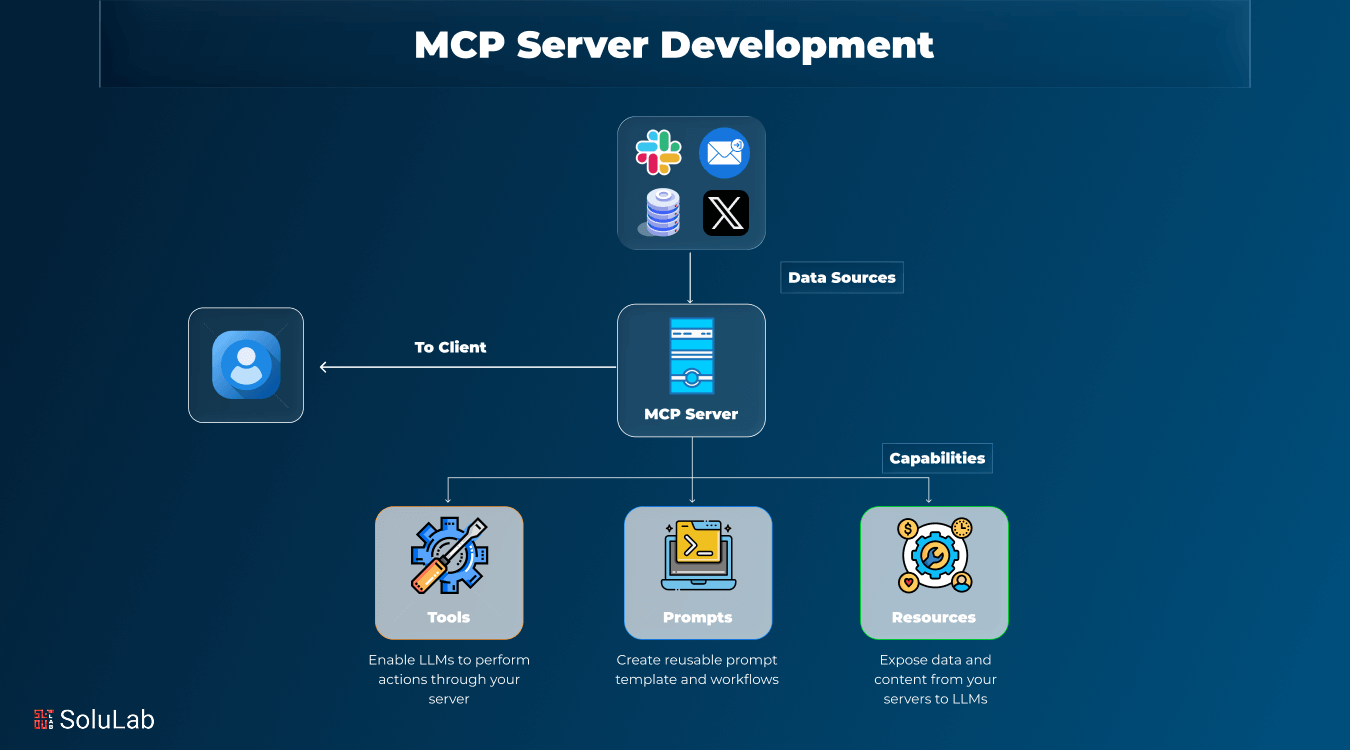
AI moves quickly. The pressure on your systems to keep up, stay connected, and scale without falling over moves just as fast. Which is why budget is shifting toward MCP server technology right now, not next year.
A growing share of 80% of enterprise AI systems now run on agent-based models, and agents need two things that older stacks never promised: a way to collaborate, and a memory they hold in common. MCP servers are how teams are getting both.
The shift worth watching is Model Context Protocol (MCP). It gives AI agents a common way to pass information around, stay in sync, and stop re-learning the same facts on every platform they touch.
Building something complicated? Scaling large language models and feeling the cracks? Then keep reading.
Why Are More Companies Adopting MCP So Fast?
Maybe you typed “Why is MCP important for AI systems?” into a search bar last week. Or “What does an MCP server actually do?” You have plenty of company.
Those are fair questions for anyone shipping AI at any real size. MCP development is picking up speed for one plain reason: today’s AI agents do not operate solo. They need to:
- Work together in teams
- Remember past conversations
- Share context in real-time
And here is the snag. Traditional APIs were never designed for any of it. They are slow, rigid, and they forget everything the moment a request closes.
Model Context Protocol fills that gap. It hands developers and businesses one agreed way to pass information between agents, apps, and tools. Picture a shared memory layer sitting underneath everything, so your AI systems can actually talk instead of shouting past each other.
Product teams, CTOs, and enterprise leads are landing on the same conclusion: context is critical. Strip it out and your agents give thin answers, and your users feel it on the very first reply. Add MCP development and the whole thing gets faster, sharper, and far easier to grow.
How Does MCP Server Development Work?
New to this? Treat a Model Context Protocol (MCP) server as the central memory hub for your AI system. In the usual setup, every agent or model sits in its own silo. It forgets what happened yesterday and shares nothing with the tool running beside it. MCP architecture breaks that pattern.
Your MCP server becomes the shared brain of your AI stack. Different agents, models, and tools can compare notes, pull up past context, and coordinate live, the way a team that has worked together for years does.
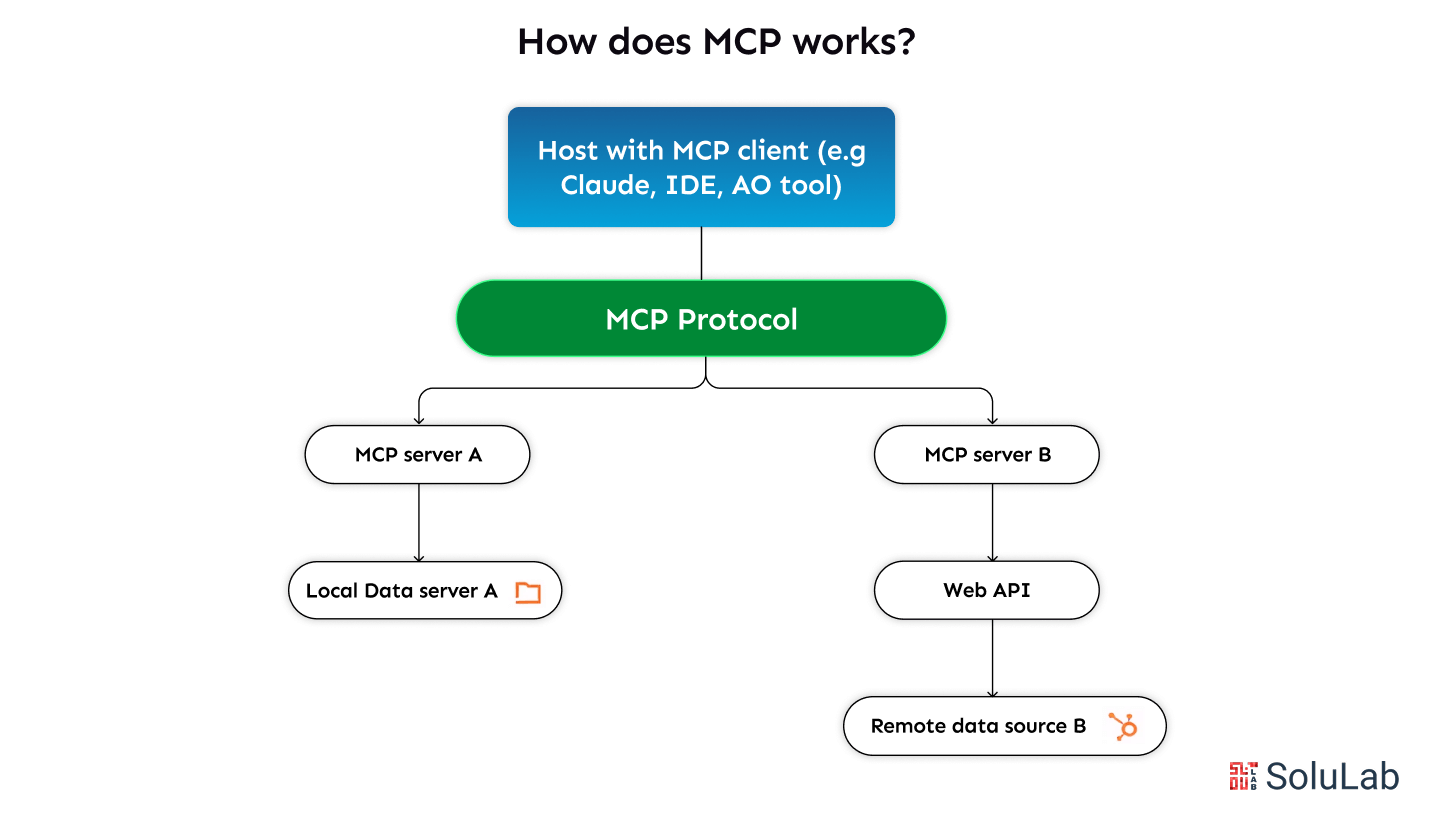
Here’s a simple breakdown of how it works:
1. Someone sends a message or a request through an app, a chatbot, or a platform.
2. Rather than starting cold, the AI agent calls the MCP server and pulls what already exists: prior interactions, stored memory, whatever data matters for that user or that case.
3. The MCP server handles the request, searches its stored context, and sends the relevant pieces back to the AI model or agent.
4. The agent writes its answer on top of that memory. Sharper, more relevant, and nobody gets asked their account number for the third time.
That swap is the whole point of MCP server development. Disconnected one-off API calls go out; a memory system that makes your artificial intelligence better the longer it runs comes in.
What’s Actually Inside An MCP Server Setup?
When our MCP developers build one of these for a client, four pieces show up almost every time:
1. Context Vector Store: Structured memory lives here, so agents can pull past data back in an instant. It pairs naturally with approaches like RAG (Retrieval-Augmented Generation).
2. Identity Layer: Sessions get tracked here. Every agent knows exactly who is on the other end, no matter which platform or tool the conversation started in.
3. Access Controls: Permission layers, encryption, and role-based access. This is the part that stops memory from leaking somewhere it should never go.
4. Replay & Logging System: Your team can replay conversations and study how agents behaved over weeks, not minutes. Tuning responses without this is guesswork, and auditors will ask for it anyway.
Put those four together and you get AI agents that hold on to what was said earlier. Across apps. Across sessions. Across devices.
Why this matters for your business?
Customer-facing chatbot, multi-agent internal tool, AI-powered SaaS product: whichever one you are building, MCP application development buys you smarter automation, personalization with some depth behind it, and response times your users will actually notice.
For example, think about a seasoned sales rep who remembers every customer and every conversation, and can pick up a thread halfway through without asking anyone to repeat themselves. Now imagine your agents behaving that way. That is what MCP server development gets you.
Still unsure how to develop an MCP server? Nobody expects you to have that answer already. It is the part we handle.
We design and deploy MCP architecture for startups and enterprises alike, matched to the stack they already run and the growth they are planning for. Wiring in AI agents, standing up a Build Private LLM system, tightening a Chain Abstraction setup: we have run each of those before.
What Are The Real Benefits Of MCP Server Development?
MCP server development goes after the problems that make AI systems frustrating to run today. Four reasons companies keep choosing it:
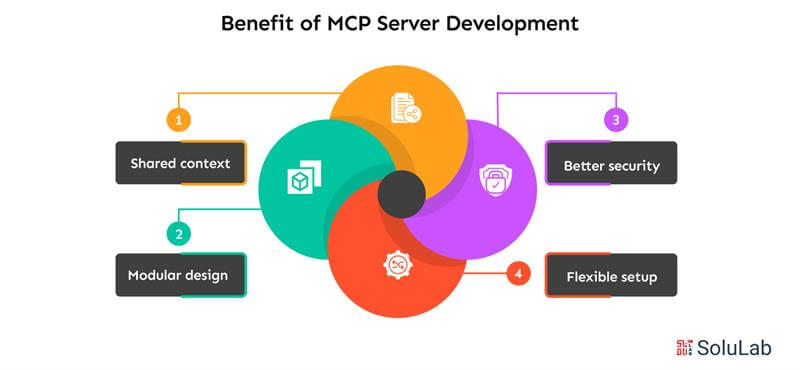
- Shared context: Agents recall earlier interactions instead of looping back over the same ground.
- Modular design: Swap in an agent, retire a model, add an AI tool. Nothing downstream snaps.
- Better security: Your AI’s memory stays private, rather than sitting exposed behind a basic public API.
- Flexible setup: Any LLM, any API, any AI framework. No teardown and rebuild required.
The one that matters most? Interoperability. Open-source models, enterprise-grade tools, a mixed bag of agents from three different vendors. MCP gets them cooperating.
And if you are planning to build a private LLM, this setup keeps your AI memory protected, quick to retrieve, and firmly under your control. That last part is usually the dealbreaker in enterprise environments.
What Makes MCP Better Than Regular APIs?
Most traditional APIs were built for Create, Read, Update, Delete. Plumbing work. They were never meant to help a system remember, reason, or coordinate with a peer. So they store no memory, they connect multiple agents badly, and they buckle once large models like LLMs enter the picture.
Hence the move toward MCP server development and away from old-style API systems. Side by side, the difference looks like this:
| Feature | Traditional API | MCP Server |
| Context Sharing | No | Yes |
| Agent Collaboration | Limited | Built-in |
| Scaling with LLMs | Manual | Automatic |
| Modularity | Low | High |
| Memory Replay | Not Supported | Yes, Built-in |
Building an MCP server does not mean throwing your APIs away. It means giving them a memory. MCP layers context on top, so agents can hand work to each other, carry information forward, and decide with the full picture in view.
Less repeated logic. Agents that do more per call. And a path to scaling your AI systems quickly, with fewer things breaking on the way up.
If AI is about to spread across your teams, your products, or your client base, MCP is the upgrade your stack has been waiting on.
Where Is MCP Being Used in Real-World Projects?
MCP application development has already landed in industries that lean hard on automated systems. It gets agents cooperating, keeps memory in one shared place, and shortens the gap between a question and a good answer.
Four places it is working right now:
1. Smart Home Systems
MCP coordinates multiple AI agents running across a house full of connected devices.
- Coordinate lights, appliances, and voice assistants
- Maintain shared memory across devices
- Improve response time and user experience
2. Customer Support Platforms
AI-powered chatbots get considerably sharper with MCP, because they hold on to earlier conversations and answer from them.
- Context-aware replies
- Reduced user frustration
- Faster ticket resolution
3. Enterprise Automation Workflows
For teams building heavier tooling, MCP plus Agentic RAG is where agent coordination and memory sharing stop being a research project.
- Automates repetitive tasks
- Links data across departments
- Supports real-time decision-making
4. Financial Dashboards & Reporting
With model context protocol in place, AI systems gather insights from a spread of tools and shape reports around whoever is reading them.
- Live syncing across financial agents
- Faster access to relevant data
- Personalized dashboards for teams
One client of ours paired Agentic RAG with an MCP server to run a multi-agent productivity system. API lag dropped by 42%.
Another, recognized as a Top AI development company, pushed MCP architecture into its internal tools so agents could hand off work and switch context without the usual stall. Building on AI agents, LLMs, or RAG pipelines? MCP server development of this kind is a genuine edge: quicker systems, agents that remember, customers who stop repeating themselves.
Can MCP Systems Scale Securely and Meet Enterprise Standards?
Yes, provided the design is right from day one. We build and deploy MCP architecture on enterprise-grade security practices:
- OAuth and Role-Based Access Control to manage user permissions
- Encrypted data sharing between agents and servers
- Session isolation so each AI agent works safely and independently
Running a mix of cloud services, on-prem boxes, and separate chains? We bring in Chain Abstraction so your MCP deployment stays portable and plays nicely with whatever else you own.
Compliance is part of the build, not a later scramble. Our MCP development covers HIPAA, SOC 2, and GDPR, so what you end up with holds up in an audit as well as under load.
Why Are Leading Companies Moving to MCP?
The reason is clear:
- You need faster, more efficient workflows
- You need AI agents that remember past tasks
- You need to scale quickly without rebuilding your tech stack
MCP server development answers all three. Clients of ours in fintech, healthcare, and SaaS report the same pattern afterward: systems that run roughly twice as fast, maintenance that stops eating sprints, and agents that finally cooperate.
Still holding old APIs together with patchwork integrations? That gap widens every quarter. Competitors who moved to Model Context Protocol are shipping smarter systems while you are debugging glue code.
How We Help Businesses Build with MCP Server Development?
Our MCP development team has done this enough times to know where projects stall. We take an idea and turn it into infrastructure that can carry real AI load. With a proven record as a leading name for AI development in the USA, we keep the heavy lifting on our side of the table.
Here’s what we offer:
- Strategy & Consulting: We work out which MCP architecture actually fits your goals and your use cases.
- Custom MCP Server Development: Secure, fast MCP servers built around the stack you already run.
- Integration That Holds: Your LLMs, RAG pipelines, and AI agents, wired into one system that behaves like one system.
Wondering how to develop an MCP server? We walk it with you, from the first planning session through full deployment, until your AI system can grow, coordinate, and hold its own.

Conclusion
Running AI systems today, or planning to soon? Put MCP server development on the roadmap. This is not a trend chasing a hashtag. It is a working answer to shared memory, agent-to-agent communication, and AI operations that do not fall apart at scale.
Good prompts stopped being enough a while ago. What businesses need now are agents that cooperate, hold on to what they did last time, and return results before the user gives up. MCP development is how that happens.
The future of AI solutions will not be built by models working alone. It will be built on agents that share context, pass work between them, and grow alongside whatever you ship next. Talk to us when you are ready to start.
FAQs
Shipra Garg is a tech-focused content strategist and copywriter specializing in Web3, blockchain, and artificial intelligence. She has worked with startups and enterprise teams to craft high-conversion content that bridges deep tech with business impact. Her work translates complex innovations into clear, credible, and engaging narratives that drive growth and build trust in emerging tech markets.