Key Takeaways
- A multichain tokenization platform issues, manages and settles tokenized assets natively across several blockchains from one control layer. It acts as a web3 lifecycle platform, covering minting, compliance, cross-chain issuance, settlement, upgrades and retirement. This guide compares single-chain vs multi-chain architecture and explains token standards, stablecoins and payment rails.
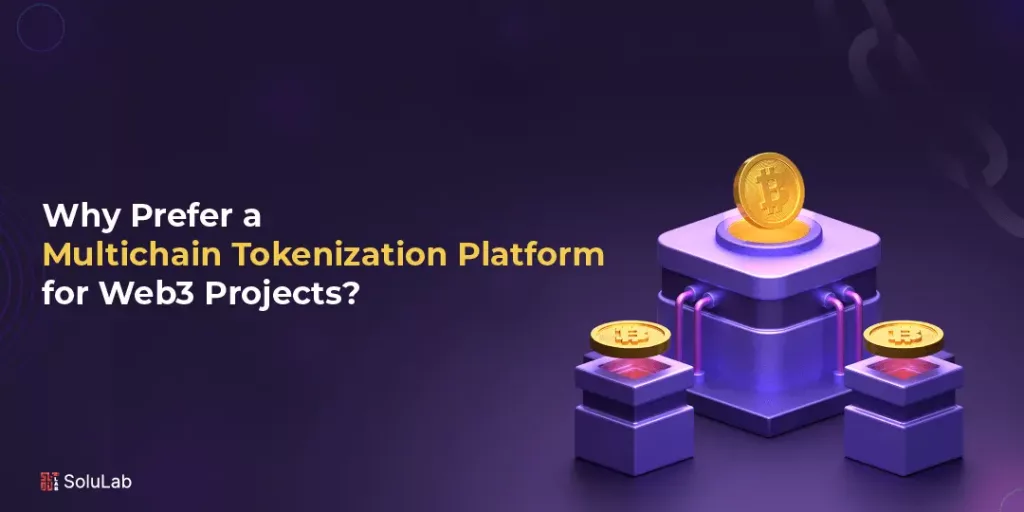
Very few serious blockchain projects live on one chain anymore. Teams want deeper liquidity, users who hang out on other networks, and room to grow without a rebuild in two years, so more of them are picking multichain tokenization platforms. The idea is simple enough: a digital asset that works on several networks at once, which opens up use cases a walled-off chain could never support.
The stats speak for themselves. Over 35% of active Web3 developers contribute to multichain projects, and that tells you the whole industry is pulling hard toward interoperability.
The pull is strongest where money moves. Stablecoins and payment rails now live on many chains at once, which is why multi-chain stablecoin solutions and a multi-chain payment gateway keep showing up in platform requirements. We cover both below.
Below, we walk through how multichain tokens are put together, why they’re turning into basic plumbing for Web3 work, and what makes the approach so good at producing digital economies that bend instead of break. Let’s get started.
What are Multichain Tokenization Platforms?
It is quite similar to the concept of creating a digital token that isn’t limited on one blockchain, but instead moves freely across many. That’s the promise of a multichain tokenization platform. Flexibility is part of it, sure, but the bigger win is knocking down the invisible fences between networks.
Single-chain setups have one big weakness: isolation. Your token and your app inherit every feature and every flaw of that one environment, whether you like it or not. Multichain platforms let you reach other communities and pick the strengths of each network for the job at hand. Less dependency. More reach. And the model is a growing part of the wider move toward blockchain tokenization, where assets are meant to move and change across systems rather than sit still.
Cross-Chain Functionality
Under the hood, it comes down to a handful of methods:
- Token wrapping locks the original asset on one chain and issues a copy on another. Wrapped Bitcoin (WBTC) is the classic case: BTC gets locked so a stand-in can be used in Ethereum-based DeFi.
- Burn and mint models keep the books balanced during a transfer. The token is burned on the origin chain and minted on the destination chain, so total supply never drifts.
- Dynamic liquidity routing sends tokens down whichever cross-chain path is cheapest and quickest at that moment.
Those three processes sit at the heart of multichain asset tokenization. They’re why a token keeps its value and its behavior no matter which chain it lands on.
Cross-Chain Issuance and Settlement: How a Token Is Born and Settled on Many Chains
Issuance is where a token is created and registered. Settlement is where ownership changes hands and the books close. On a single chain, both happen in one place and one block. Across chains, they become separate steps that must agree with each other, and that is where most multichain projects get hurt.
There are three common ways to issue across chains:
| Issuance model | How it works | Best for | Main trade-off |
| Lock and mint (wrapped) | Original asset is locked on the home chain, a wrapped version is minted elsewhere | Assets that already exist on one chain | Wrapped copies depend on the lock being safe |
| Burn and mint (native) | Token is burned on the source chain and minted on the destination, supply stays constant | New tokens and stablecoins built multichain from day one | Needs a trusted messaging layer between chains |
| Parallel native issuance | Token is deployed on each chain with a shared supply cap and a controller | Regulated or permissioned assets | More contracts to govern and audit |
A typical cross-chain issuance and settlement flow looks like this:
- The issuer mints the token on a home chain and registers it with the platform.
- The platform deploys matching token contracts on the target chains.
- A holder asks to move tokens, and the source contract locks or burns them.
- A messaging protocol carries a verified message to the destination chain.
- The destination contract mints or releases the same amount after verification.
- The platform reconciles supply across every chain and logs the result.
- Final settlement is confirmed only after both chains reach finality.
The step teams underestimate is the last one. Chains finalize at different speeds, so a transfer that looks complete on one network can still be reversible on another. A good platform tracks finality per chain and does not release settlement early. For the bridge side of this story, see our guide to cross-chain bridge platform solutions.
The Infrastructure Enabling Multichain Interoperability
To support seamless operation across chains, several foundational technologies work together:
- Cross-chain bridges serve as links that enable secure asset and data transfer between blockchains.
- Interoperability protocols, such as LayerZero and IBC, ensure that chains can communicate reliably, maintaining transactional accuracy across different environments.
- Smart contracts play a vital role by executing logic that allows one blockchain to trigger functions or responses on another.
When people argue about multi-chain vs. cross-chain, multichain usually comes out ahead on scalability, because the token runs natively on several networks instead of just being shuttled between them. The tradeoff is operational: more chains mean more contracts, more monitoring and a wider security surface, which is why the control layer matters so much.
Key Features of Multichain Tokenization Platforms
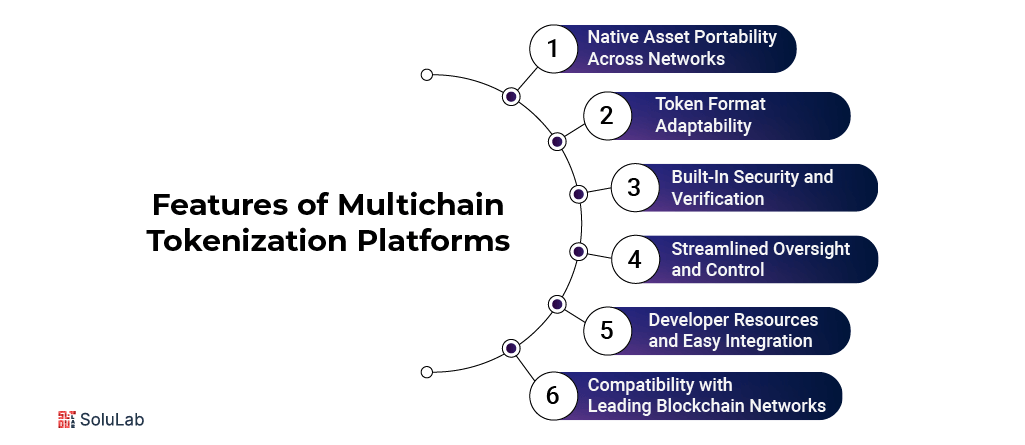
Multichain tokenization platforms are changing how digital assets are created and managed across blockchain ecosystems. This shift empowers projects to operate at a broader scale, unlocking utility and access that would otherwise be out of reach.
- Native Asset Portability Across Networks
One of the most practical features is the ability to manage tokens across different chains without depending on manual swaps or third-party bridges. Assets created using these platforms can be moved across networks without losing their identity or functionality. This seamless movement encourages broader adoption and improves the user experience significantly.
- Token Format Adaptability
These platforms don’t restrict developers to a single technical format. They make it possible to issue tokens compatible with various blockchain standards such as ERC-20, BEP-20, and more. This versatility gives teams the freedom to build tokens that align with each chain’s technical requirements and community expectations.
- Built-In Security and Verification
When assets move between blockchains, the risk of fraud or error increases. That’s why these platforms place a strong focus on verification. They include built-in mechanisms to validate each action, ensuring tokens aren’t duplicated and transactions reflect true ownership. This level of safety builds trust in both the platform and the assets it manages.
- Streamlined Oversight and Control
Project owners often deal with multiple dashboards when managing tokens on different networks. Multichain platforms eliminate this hassle by providing a unified interface where developers can track movement, check supply levels, and monitor activity all from one place. It makes asset oversight much simpler and helps prevent critical errors.
- Developer Resources and Easy Integration
Teams working on token creation and deployment often look for tools that speed up development. A well-designed multichain tokenization platform development suite includes everything from prebuilt code templates to detailed documentation and support. These resources reduce friction for builders and help projects go live faster.
- Compatibility with Leading Blockchain Networks
Support for multiple blockchains expands reach. These platforms typically allow token deployment on Ethereum, Polygon, Solana, BNB Chain, and newer networks as they emerge. This level of reach gives projects the freedom to engage different communities and optimize for cost, speed, or decentralization, depending on what matters most to them.
- Multi-Chain Payment and Stablecoin Support
Payments are where multichain pays off fastest. The platform can accept and settle stablecoins on several networks through one integration, so merchants do not rebuild their checkout for every chain. Details in the stablecoin and payment gateway section below.
Read Also: Entertainment Tokenization in Media & Film
How Does it Differ From Single-Chain Tokenization?
Unlike single-chain tokenization, which keeps digital assets locked within one blockchain, multichain tokenization allows tokens to operate across several networks simultaneously. This not only expands utility but also improves accessibility, flexibility, and ecosystem reach. Projects using multichain tokens can tap into different blockchain communities without duplicating effort or compromising user experience.
Compared to single-chain models, which are often limited by the performance and fees of one platform, multichain asset tokenization supports a more fluid, scalable approach. Many top blockchain platforms are already moving in this direction, helping creators and businesses build tokenized ecosystems that are future-ready and interoperable. Here are some of the key differences:
| Aspect | Single-Chain Tokenization | Multichain Tokenization |
| Blockchain Scope | Tokens are restricted to one blockchain network. | Tokens can operate across multiple blockchain ecosystems. |
| Flexibility | Limited adaptability due to reliance on one network’s features. | Greater flexibility to use the best tools and functions from different chains. |
| User Reach | Access is limited to the user base of one chain. | Wider access across different communities and user groups. |
| Scalability | Bound by the scalability and transaction limits of a single platform. | Easier to scale using parallel networks with different performance strengths. |
| Risk Mitigation | Heavily dependent on the health of one chain. | Reduces dependency by distributing asset presence across chains. |
| Ecosystem Integration | Less adaptable when integrating with diverse DeFi, NFT, or dApp ecosystems. | Seamless integration with varied ecosystems supporting multichain tokens. |
| Development Strategy | Requires redeployment on new chains to expand. | Simplifies expansion using multichain asset tokenization methods. |
| Platform Examples | Runs on one chain like Ethereum or BNB Chain. | Often supported by top blockchain platforms like Polkadot, Avalanche, and Cosmos. |
| Issuance and Settlement | One ledger, one finality, one place to reconcile. | Issuance on several chains, settlement depends on cross-chain messaging and per-chain finality. |
| Security Surface | One set of contracts and one chain’s risks. | More contracts and a messaging layer to secure and audit. |
| Operational Load | One dashboard, one team skill set. | Needs a unified control layer to avoid juggling many dashboards. |
Single-Chain vs Multi-Chain Architecture: What Actually Changes
In a single-chain architecture, one chain handles issuance, compliance checks, transfers and settlement. It is simple, cheap to build and easy to audit. In a multi-chain architecture, those jobs split into layers:
- Issuance layer: token contracts on each chain, tied to one supply record.
- Messaging layer: the protocol that carries verified instructions between chains.
- Compliance layer: KYC, access rules and transfer limits enforced the same way everywhere.
- Liquidity and settlement layer: routing, stablecoin settlement and reconciliation.
- Control layer: one dashboard and API for supply, permissions and monitoring.
Multichain is not always the right call. If your users, regulator and liquidity all sit on one network, single-chain is cheaper and safer. Go multichain when your users are fragmented across networks, when fees or throughput on one chain hurt your product, or when you need to plug into DeFi and payments on several networks.
Benefits of Multichain Tokenization for Web3 Projects
Going multichain frees a Web3 project from the ceiling of a single blockchain. Growth, efficiency and engagement all get more room. With a dependable multichain tokenization platform, developers can build tokens that work in several environments, reach more people and carry less operational risk, and the development and integration work gets lighter along the way. The main benefits:
1. Wider User Reach
You meet users where they already are, across different blockchain communities, instead of betting everything on one network’s crowd.
2. Improved Interoperability
Tokens can work directly with DeFi protocols, NFT marketplaces, and dApps on Ethereum, BNB Chain, Solana, Avalanche and more. The token simply does more.
3. Enhanced Scalability and Resilience
Spread the load and no single network carries all of it. If one chain gets congested or goes down, the project keeps running on the others.
4. Optimized Transaction Costs
Push certain activity, say minting NFTs or microtransactions, onto cheaper chains. Gas bills drop, and users stop wincing at fees.
5. Greater Liquidity and Exchange Access
A multichain token can be listed and traded on more exchanges. Users get more choice, and more tokens change hands across platforms.
6. Developer-Friendly Infrastructure
A solid multichain tokenization platform ships with APIs, SDKs and prebuilt smart contracts. Cross-chain deployment gets simpler, you save development time, and there’s less that can go wrong.
Multi-Chain Stablecoin Solutions and Payment Gateways
Tokenized assets only become useful when they can be bought, sold and settled. In practice, that settlement happens in stablecoins, and those stablecoins now sit on many chains. That is why multi-chain stablecoin solutions have become a core part of any serious tokenization stack.
How multi-chain stablecoin solutions work. A stablecoin can reach several chains in two ways. Bridged versions are wrapped copies, which are quick to launch but carry bridge risk. Natively issued versions use burn and mint, so supply stays in one ledger and each chain holds a first-class token. For new products, native issuance is usually the safer base. If you are planning one, see our stablecoin development company page and the guide on stablecoin remittance platforms.
What a multi-chain payment gateway adds. A multi-chain payment gateway lets a merchant or platform accept payment on any supported network through one integration. It detects the chain a customer paid on, routes the funds, optionally converts to a preferred stablecoin or fiat, and settles to one account. The core pieces are:
- Wallet and chain detection for the customer’s payment
- Smart contracts that confirm payment and trigger orders
- Liquidity routing and auto-conversion into the settlement asset
- Compliance checks (KYC, AML, sanctions screening) at the gateway
- Reconciliation and reporting across every chain in one ledger
If you want a payment layer built around your tokenized assets, our crypto payment gateway development company team can scope it with you. For the business side, read how to use stablecoins for B2B payments.
A note on regulation. Stablecoin rules are tightening in major markets, including the EU’s MiCA framework and the US GENIUS Act. A platform should let issuers set reserve, reporting and access rules per chain.
Who Can Use the Multichain Tokenization Platform?
Pretty much anyone who wants to create, run or grow digital assets on more than one blockchain. By offering chain abstraction, these platforms take care of the messy background work and give users a clean way to build for several networks at once. Creators, developers, businesses and communities all have something to gain.
- Web3 Startups: A young blockchain company can launch a token that works on several chains from day one, reach more people and stay out of any single network’s lock-in.
- DeFi Protocol Developers: Teams building decentralized finance solutions can design tokens that talk to lending pools, DEXs and liquidity hubs on different chains, with no copy-pasted codebases.
- NFT Artists and Collectible Platforms: Artists and platforms can mint NFTs that work on several blockchain marketplaces. Buyers get more options, and gas fees and platform limits bite less.
- Enterprises Exploring Tokenized Assets: Companies that want to tokenize ownership of real-world assets like real estate, inventory or intellectual property gain from multichain deployment that is secure and compliant.
- DAOs With Growing Communities: A decentralized community can hand out governance tokens and run treasuries across chains without much fuss, which makes taking part more open and more flexible.
- Cross-Border Payment Solutions: Anyone in international finance or remittances can issue interoperable stablecoins and digital assets that work smoothly across regions and blockchain setups.
- Token Launchpads and Crypto Incubators: Launchpads can give new projects ready-made multichain deployment tools, so launching a token is simpler and getting to market takes less time.
Essential Components for Building Effective Tokenization Platforms

Want a multichain tokenization platform that performs and keeps scaling? Then shortcuts are off the table. You need a dependable core plus the right blend of protocols, frameworks and dev tools. Here’s what goes into it:
1. Asset Tokenization Engines
Think of the tokenization engine as the front door between physical or legal assets and the on-chain world. It’s what turns property, patents, art or contracts, tangible or not, into tokens people can trade.
Minting is only the start. A modern engine handles the whole life of the asset, including:
- Creating and registering tokens on different blockchain networks
- Building in governance features like dividend sharing or voting rights
- Real-time oversight, audits and proof that the asset backing is really there
2. Smart Contract Frameworks
If the engine gives a token its shape, smart contracts decide what it does. They’re the rulebooks that automate how the token behaves across apps, wallets, users and chains.
A good smart contract framework usually gives you:
- A modular layout, so an update or a new feature doesn’t mean starting from scratch
- Multichain compatibility out of the box, so contracts interact smoothly across networks
- Tight security, with testing, audits and permission systems already wired in
3. Compliance-First Infrastructure
Regulation isn’t a nice-to-have. It’s part of the build. A platform has to be designed from the first line of code to respect financial and legal rules in every country it touches.
What a regulation-ready platform needs:
- KYC and AML checks that make onboarding quicker
- Access rules by region, to keep restricted jurisdictions out
- Continuous auditing that flags suspicious or unusual activity
4. Token Lifecycle Management
A token’s story doesn’t end at launch. There are ongoing operations, upgrades and, sometimes, retirement. Lifecycle tools let a platform handle all of that carefully without painting itself into a corner.
Those tools cover:
- Minting and issuance workflows across multiple chains
- Clean migrations when tokens need to move to newer networks or standards
- Burn and freeze controls for managing assets or enforcing regulation
- Upgrade paths so a token can change over time without losing value or continuity
Read Also: What is Cross-Chain Compatibility?
5. Developer and User Experience
Brilliant tech that nobody can use goes nowhere. In practice, this is where a lot of platforms stall. The backend can be as sophisticated as it likes, but the front end has to stay simple for developers and for end users.
The pieces that matter:
- SDKs that let developers drop token features into tools and products they already have
- Clear APIs that hide the gnarly blockchain logic and make integration straightforward
- Dashboards that let non-technical people, asset managers or IP holders for instance, tokenize, manage and track assets without a headache
Get all of these pieces working together and you have the base of solid multichain tokenization platform development. The technology is only half of it. The other half is trust, usability and staying power for tokenized assets living on many chains.
Real-World Use Cases of Multichain Tokenization
Multichain tokenization is not just a technical breakthrough, it’s already reshaping how businesses, creators, and institutions operate in the digital world. Here are some of the real-world use cases of multichain tokenization:
1. Fractional Real Estate Ownership
Real estate developers are tokenizing high-value properties and distributing fractional ownership across chains. This approach improves liquidity, allows smaller investors to participate, and enables seamless global trading.
2. Tokenized Financial Instruments
Banks and fintech firms are issuing digital bonds, securities, and equity tokens using blockchain-as-a-service platforms. These assets are managed across compliant networks, reducing intermediaries and enabling faster settlements.
3. Cross-Chain NFT Marketplaces
Digital artists and game studios are launching NFTs that live on multiple chains, letting users trade them on different platforms without friction. This widens the collector base and increases long-term token utility.
4. Decentralized Identity and Records
Governments and enterprises are building digital ID systems and registries that use multichain in blockchain structures. These allow identity credentials to be verified and stored across secure, sovereign networks.
5. Supply Chain Transparency
Manufacturers are tokenizing inventory and logistics data to track goods in real time. Multichain setups allow parties across different chains, like Ethereum for compliance and Avalanche for speed, to access unified records.
6. Loyalty and Rewards Programs
Brands are issuing multichain-compatible loyalty tokens that can be used across ecosystems. Customers can earn, redeem, and trade these rewards on various networks without being tied to a single platform.
7. Tokenized Carbon Credits
Environmental projects are creating carbon offset tokens that can be verified and traded across blockchains. This supports transparency, traceability, and easier integration with global ESG reporting systems.
8. Cross-Border Payments and Stablecoin Settlement
Payment firms and marketplaces settle invoices in stablecoins that live on several chains. A multi-chain payment gateway accepts funds on whichever network the payer uses and settles to one account, which cuts transfer time and manual reconciliation.
Future Trends in Multi-Chain Tokenization
Multichain tokenization platforms are moving into a new stretch of innovation. User demand is pushing them, regulatory complexity is pushing them, and new technology is pulling them along. The shifts ahead will change how digital assets get created, governed and traded across networks. Here’s what we expect:
Universal Interoperability Protocols
Building a custom bridge for every pair of chains doesn’t scale. Future platforms will lean on standardized interoperability protocols instead, so assets can hop between chains with little effort and integration stops needing a bespoke fix every single time.
Automated Compliance Engines
Regulators are asking for more, not less. Expect platforms to add compliance layers that update themselves in real time, keeping projects in line with local law by adjusting KYC (Know Your Customer), access rights and reporting as the rules shift. Keeping up legally becomes far less of a grind.
Bridging Traditional and Decentralized Finance
The gap between traditional finance and Web3 keeps shrinking. Tokenized platforms will hook into banking systems, custody services and investment infrastructure more and more, so institutions get what blockchain does well while keeping regulatory oversight and the familiarity their users expect.
AI-Powered Platform Optimization
Artificial intelligence is about to take on a central job in running and improving multichain platforms. Spotting compliance red flags on its own, balancing liquidity between chains, anticipating market moves: AI will automate decisions that used to need a person watching.
None of this is guesswork. It’s already happening. Many of the top blockchain development companies are testing these ideas to make tokenization smarter, safer and easier to scale. As the tech matures, expect multichain tokenization to get more capable, more focused on the people using it, and better suited to a global financial system.

The Final Words
Multichain tokenization stopped being a someday idea a while ago. It’s changing how digital assets are made, run and traded right now. Tokens that work across blockchains mean more flexibility, wider access and a user experience that feels connected instead of fragmented.
SoluLab has spent real time on this shift, working with clients who want tokenized products people can actually use. As a trusted asset tokenization development company, we helped build Borrowland, a decentralized crypto lending and borrowing platform. Borrowland was designed to make managing digital assets simpler and more rewarding: users lend, borrow, swap and earn interest in a secure, transparent, blockchain-powered environment.
FAQs
Shipra Garg is a tech-focused content strategist and copywriter specializing in Web3, blockchain, and artificial intelligence. She has worked with startups and enterprise teams to craft high-conversion content that bridges deep tech with business impact. Her work translates complex innovations into clear, credible, and engaging narratives that drive growth and build trust in emerging tech markets.