Drowning in email, customer questions, and the same five tasks you did yesterday? You’re not alone. Most businesses are being asked to do more with less: less time, tighter budgets, and competitors who seem to move faster every quarter. AI assistants for business are one of the few tools that actually change that math. They don’t just keep a company afloat. Used well, they let it pull ahead. Media, finance, healthcare, retail: in each of these, AI assistants are lifting productivity, making customers happier, and quietly absorbing the grunt work nobody wants.
One survey by Teneo and the US Chamber of Commerce put numbers on it: 40% of small businesses use generative tools like chatbots and image generators to speed up work and trim costs, and 98% already run some kind of AI-enabled software.
Automation is only half the story, though. Tools like an AI business coaching assistant now help leaders think more clearly, keep goals on track, and spot problems before they land on the desk. Below, we walk through how companies in very different industries are getting real value from AI assistants. And yes, we’ll make the case for why yours should be next.
What Is The Role Of AI Assistants In Business?
Short answer? They take the busywork off your plate. Artificial intelligence (AI) assistants improve customer service, internal processes, and day-to-day productivity. Email triage, meeting scheduling, reminders: this is exactly the kind of repetitive manual work where AI in business gives employees hours back every week.
Chatbots and similar AI business assistants answer common questions on the spot, at any hour, which cuts wait times and overhead at once. For sales and marketing teams, AI personal assistants for business can follow customer behavior, dig through client data, suggest products that actually fit, and push conversion rates up. That last part is usually what gets the budget approved.
Benefits of AI Assistants in Diverse Business Sectors
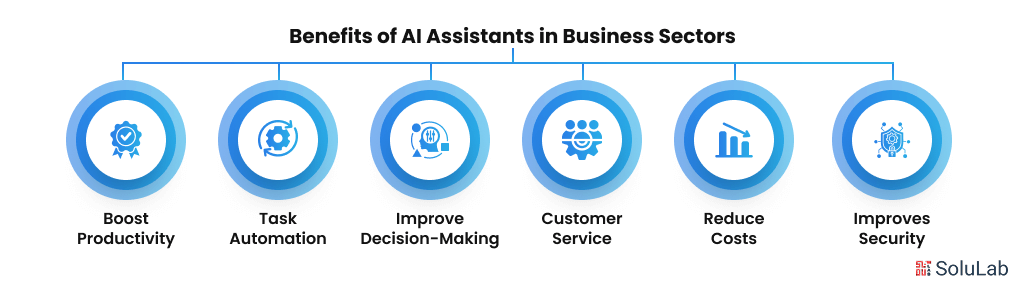
Business AI assistants now show up in almost every department, from the front desk to finance. So what do they actually change? Here’s what we see most often:
1. Boost Productivity
Routine questions, calendar juggling, sorting files into the right folder. An AI assistant handles all of it, so your people spend their day on work that needs a human brain. The whole team simply moves faster.
2. Task Automation
Data entry. Follow-up emails. meeting transcription. AI assistants take on these repetitive jobs and do them accurately, which means fewer typos in the CRM and more time for the creative, strategic thinking you actually hired people for.
3. Improve Decision-Making
AI tools chew through huge piles of data fast and surface insights while they still matter. You spot trends earlier. You predict outcomes with more confidence, and you weigh risk on evidence instead of gut feel.
4. Customer Service
Customers don’t keep office hours, and neither do AI assistants. Through chatbots and voice support they answer around the clock, respond instantly, and give every caller the same consistent experience. Shorter queues, happier customers. Simple as that.
5. Reduce Costs
Less manual work and fewer human mistakes both show up on the balance sheet. With AI assistants, companies get more done with the same headcount, especially in support, analytics, and admin, where the repetitive load is heaviest.
6. Improves Security
AI systems keep watch for odd behavior and possible threats as they happen. They flag fraud, lock down who can reach which data, and help you stay compliant. Your security team gets an extra set of eyes that never blinks.
Top AI Assistant Use Cases And Examples
Artificial intelligence (AI) assistants plug into the systems you already run without much fuss. Once they’re in, they help with decisions and flexibility across all sorts of tasks, roles, and departments, and they make the whole operation more efficient.
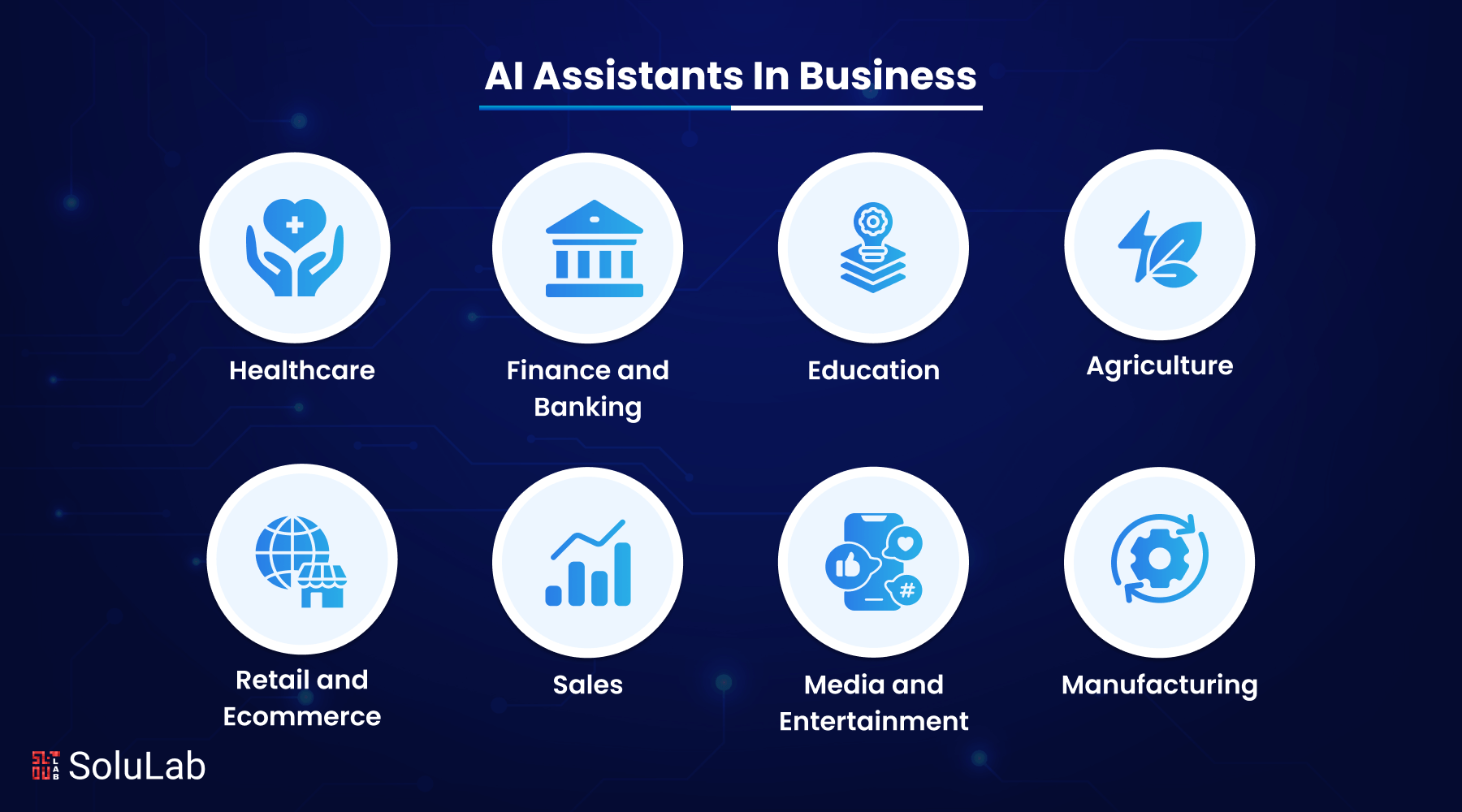
The list of uses is long. Hundreds long. Sales, HR, IT, engineering, finance: the best AI assistants for businesses find work in every one of them. Here are the industries where it’s clearest.
Finance and Banking
In banking, AI assistants simplify workflows, answer customers, process transactions, catch fraud, and help with financial planning. The payoff is faster service, fewer human slips, and banking that feels built around each customer.
Real-World Example:
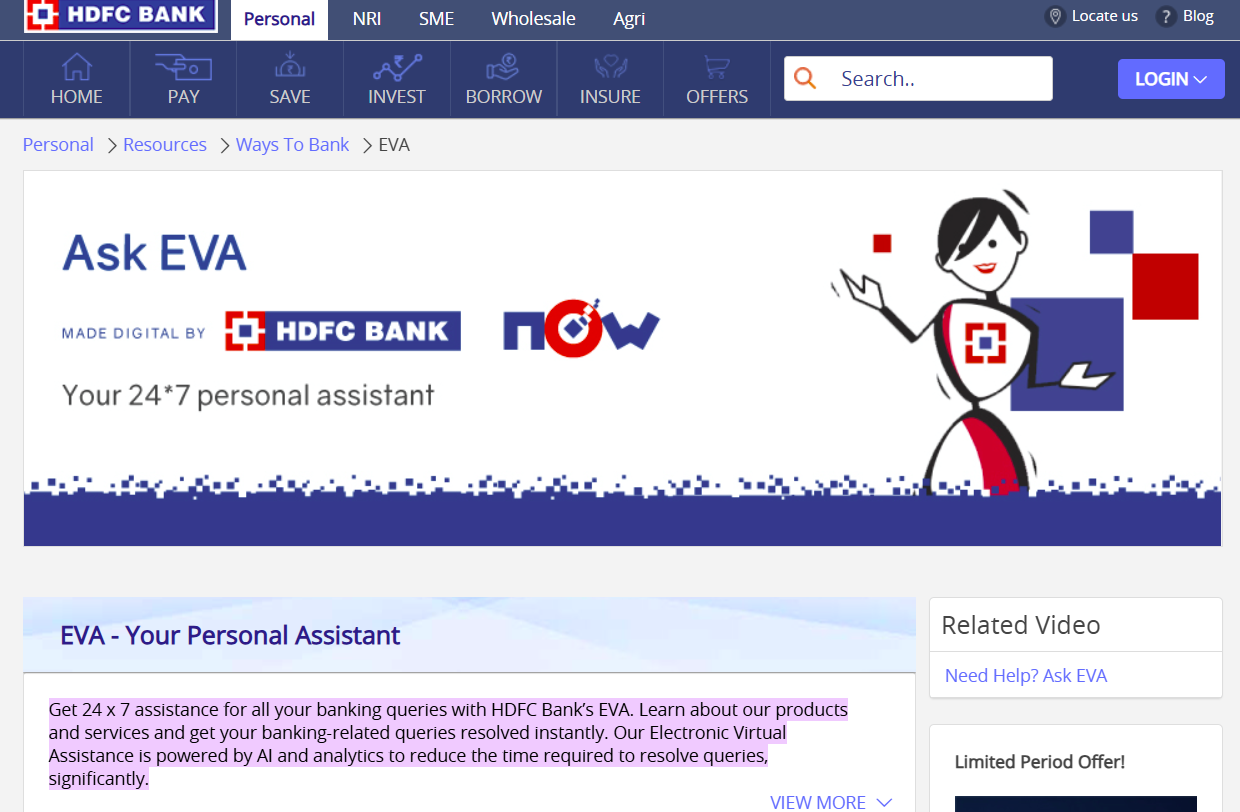
HDFC Bank runs an AI chatbot called Eva. It answers customer queries quickly, which means less time on hold and more satisfied users.
Healthcare
Healthcare is shifting as AI assistants move into everyday practice. They help doctors give better care, and they help hospitals run more smoothly. Some book appointments. Others track a patient’s vital signs, send medication reminders, or even support diagnosis based on the patient’s records. The result is less admin for medical staff and quicker responses for patients, which, in a hospital, is not a small thing.
Real-World Example:
Apollo Hospitals in India brought in AI tools such as IBM Watson to help doctors diagnose cancer sooner. The system reads patient reports alongside research material, so doctors can plan treatment faster and with more accuracy.
Manufacturing
On the factory floor, an AI assistant can keep inventory in check, monitor the health of the equipment, and tune production processes. It also tightens supply chain coordination and makes sure maintenance happens before something breaks, not after. Less downtime. Lower costs. Better output.
Real-World Example:
General Electric uses AI-based assistants to predict equipment failures on its assembly lines. That kind of predictive maintenance stops frequent breakdowns and keeps the machines more productive overall.
Education
In education, AI assistants personalize learning, take admin chores off staff, and give instructors a better handle on the classroom. Students can study on their own and get feedback right away. That alone makes learning easier, and a lot more efficient.
Real-World Example:
Take Duolingo. The language platform uses AI assistants to shape each lesson around the learner’s progress and mistakes. Because the content adapts, learners stay interested and move ahead faster.
Agriculture
Farming might seem like an odd fit. It isn’t. AI assistants help monitor crop health, run irrigation schedules, and forecast weather. By crunching large data sets from sensors and drones, they help farmers make better calls, grow bigger yields, and waste fewer resources. The end result is farming that is both more sustainable and more profitable.
John Deere uses AI-powered assistants in its smart tractors to guide planting and harvesting. The systems gather live data on soil and crop conditions, so farmers can act at the right moment and get more out of the land without walking the fields for constant manual checks.
Retail and Ecommerce
Retail and ecommerce are changing in two places at once: how brands talk to customers, and how they run the back office. AI assistants personalize shopping by reading customer data, recommending products, and automating customer service. Behind the scenes they help with inventory, order tracking, and returns. Everything moves faster.
Real-world example:
H&M uses AI assistants to predict fashion trends, keep stock at the right level, and serve personalized recommendations to online shoppers. Better experience for the customer, more sales for the brand.
Media & Entertainment
For content creators, AI assistants can automate video edits, schedule social posts, draft scripts, and break down how viewers engage. That saves hours, gives creativity room to breathe, and lets you tailor content to each audience.
Real-World Example:
Netflix uses AI assistants to study how people watch and recommend content to each of them, which keeps viewers around and pushes watch time up.
Sales
Ask any sales rep where their week goes and you’ll hear the same answer: chasing, not closing. AI assistants change that. They automate lead generation, qualify prospects, send follow-up emails, and even suggest the best time to reach a customer. Reps get more leads, more personal outreach, and more time to actually close deals.
Real-World Example:
HubSpot’s AI-powered sales assistant automates follow-ups, tracks how emails perform, and helps reps write sharper pitches. The outcome is higher engagement and better conversion rates.
Read More: Voice-Activated AI App Development
Future Trends in AI Assistants
AI assistants get a little smarter, and a little easier to use, every day. Here’s where that’s heading, and why the next generation should feel more helpful, safer, and more human.
- Over-Personalization: Assistants will learn your routines, tastes, and habits in far more detail. Expect suggestions you never asked for but actually want, like a nudge to take a break at the hour you usually fade, or your favorite meal ordered before you think of it.
- Autonomous AI Agents: Tomorrow’s AI won’t wait to be told. Autonomous agents will book appointments, reply to emails, and handle other simple jobs on their own, without someone looking over their shoulder, and that frees up real time and energy
- Governance and a Focus on Ethical AI: The more capable AI gets, the harder companies will have to work to earn trust. Clear rules and sensible use will become the norm, so that AI does the right thing, doesn’t hurt people, and doesn’t spread misleading information.
- Increased Fraud Detection and Protection: AI helpers will get better at keeping your data safe and spotting online scams. If something looks off, a fake email or an unauthorized login, they’ll alert you right away so your personal information stays protected.
- Multimodal and integrated AI systems: Text, voice, images, even video: future AI will understand all of it. Snap a photo and ask a question about it. Mix formats freely. The answers you get back will be smarter and more useful because the assistant sees the full picture.
Conclusion
AI assistants stopped being science fiction a while ago. Today, every industry needs them. From media to finance, businesses are putting these tools to work automating functions, improving customer service, and making better decisions. Maybe it’s a business assistant AI running schedules and keeping things organized. Maybe it’s an AI assistant for business owners that feeds real-time insights straight to the top. Either way, the impact is plain to see.
These tools are also speeding up AI-assisted development, letting teams and solo builders ship new ideas faster and run leaner. And the technology keeps moving. AI assistants will only get more capable and more tailored from here, which makes them less of a nice-to-have and more of a baseline for any business that wants to stay competitive over the next few years.
SoluLab, an AI development company in the USA, helps businesses in every industry bring AI into their day-to-day work and grow on top of it. Have a process in mind that eats too many hours? Contact us today to talk it through.
FAQs
Shipra Garg is a tech-focused content strategist and copywriter specializing in Web3, blockchain, and artificial intelligence. She has worked with startups and enterprise teams to craft high-conversion content that bridges deep tech with business impact. Her work translates complex innovations into clear, credible, and engaging narratives that drive growth and build trust in emerging tech markets.