




Last updated: August 2026

Real Estate Tokenization Development Company

Real estate tokenization turns ownership of a property into digital tokens on a blockchain, so investors can buy a fraction, earn rental income, and trade their share. SoluLab builds real estate tokenization platforms for developers, property owners, REITs, and asset managers. Share your property and target market for an architecture plan and estimate.

  • 99.9% Asset Traceability
  • Instant Ownership Verification
  • Borderless Capital Access
View Portfolio

Our Real Estate Tokenization Development Services

We build end-to-end platforms that let property owners, developers, REITs, and asset managers tokenize, manage, and trade real estate. Each service below can be bought on its own or as part of a full build.

Tokenization Consulting & Strategy

Our experts provide real estate tokenization consultation, compliance layers, crypto asset structuring, and investor frameworks before you commit to a build.

Custom Tokenization Platform Development

You can customize real estate tokenization platforms featuring smart contract rails, fractional ownership engines, rental distribution logic, and institutional investment accessibility with our experts' help.

AI-Powered Tokenization Solutions

With our AI-powered real estate tokenization services, you can integrate predictive analytics, investor behavior tracking, automate compliance updates, and portfolio risk layers.

Smart Contract Development

We engineer crypto-backed real estate token development solutions powered by Solidity contracts, automated settlements, rental and dividend payouts, and programmable ownership.

Fractional Ownership Platform Development

Our technology unlocks tokenized real estate assets through fractional investment corridors, liquidity protocols, secondary marketplaces, and blockchain-secured technology.

Cross-Border Tokenization Solutions

We streamline cross-border real estate tokenization through multi-chain interoperability, crypto payments, digital identity verification, and compliance architecture.

Real Estate Fund Tokenization

Our experts orchestrate real estate fund tokenization models supporting digital securities issuance, LP governance, automated distributions, and institutional liquidity participation.

Tokenized Marketplace Development

We shape tokenized real estate platforms equipped with wallet integrations, DeFi liquidity mechanisms, NFT-backed ownership validation, and secondary trading engines.

White Label Tokenization Platform Development

Our white-label real estate tokenization company expertise accelerates branded blockchain deployment through investor dashboards, compliance modules, and scalable crypto infrastructure.

Our Real Estate Tokenization Success Stories Backed by Real Results

We have delivered real estate tokenization platform development solutions across hospitality, commercial, industrial, and digital infrastructure areas requiring secure investor participation layers. Explore the platforms that are reshaping how real estate assets are owned, traded, and managed in the real world:

GenAI in Tokenized RWAs

A GenAI-powered Tokenized RWA Investment Platform

Our SoluLab experts engineered a GenAI RWA tokenized platform that converts assets…real estate, private credit, and funds into compliant digital fractions. This delivers liquidity insights, anomaly detection, and intelligent investor recommendations.

  • 2.1x Growth in Active Investors
  • 35% Faster Secondary Settlement
  • GenAI-Powered Liquidity & Risk Intelligence
View Case Study
GenAI in Tokenized RWAs
AI-Powered Real Estate Tokenization

A Blockchain-Powered Platform for Fractional Property Ownership

For a Dubai-based firm managing residential and commercial properties, SoluLab built a tokenization platform with fractional ownership, automated compliance, AI-assisted investor onboarding, and a secondary market, using ERC-3643 tokens on Ethereum and Polygon.

  • 5x Faster Fundraising
  • 40% Lower Transaction Costs
  • 3x Investor Reach
View Case Study
NFTY
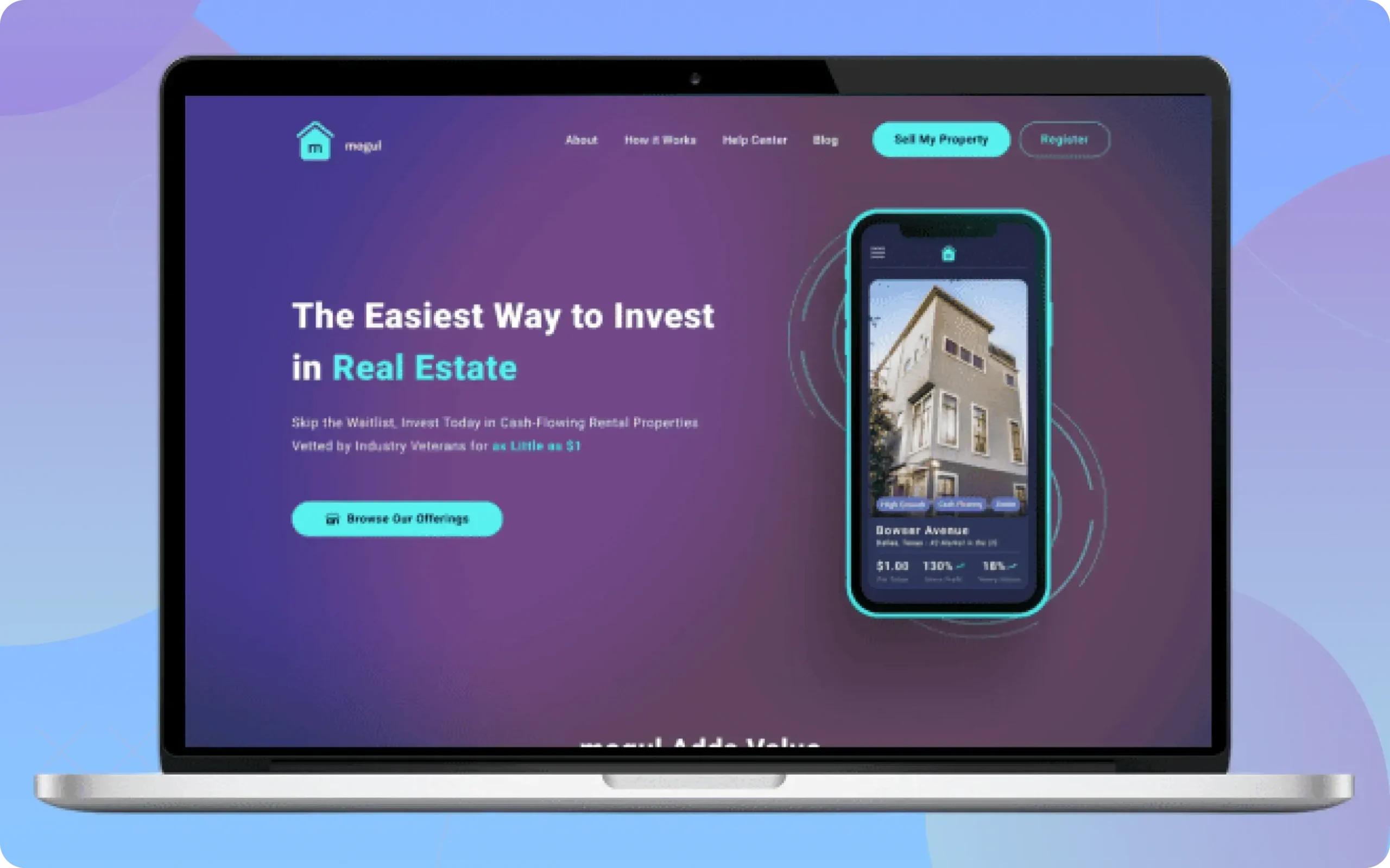
Mogul

A Polygon & Solidity-Based Real Estate Tokenization Platform

SoluLab built Mogul, a semi-centralized real estate tokenization platform that lets global investors buy, trade, and earn from fractional property ownership with peer-to-peer transfers, auto-compounding rental yields, and on-chain voting for property decisions.

  • Fractional Ownership From Just $1
  • Auto-Compounding Rental Yield Engine
  • Smart Contract-Governed Dividends & Voting
View Case Study
NFTY
AI CTA Background

Stay Ahead of the CLARITY Act With Compliance-Ready Real Estate Tokenization Solutions

Future-proof your tokenized real estate assets through SoluLab’s digital securities architecture, transparent ownership frameworks, and regulatory-first blockchain infrastructure.

Automated Compliance
Transparent Asset Records
Reduced Administrative Overhead
Request a Live Demo

Real Estate Tokenization, By The Numbers

$3.1B–$4.7B

Today's real estate tokenization platform market (2025–2026)

$4 Trillion

Deloitte's tokenized real estate market forecast for the year 2035

8.5%

Projected market penetration of private real estate funds by 2035

Which Properties Can You Tokenize, and Who Uses These Platforms?

Real estate tokenization works for any property with clear legal title and a reason to bring in more investors: income to share, capital to raise, or a stake to sell. Our clients use it to raise capital faster, reach investors in more countries, and reduce operational costs such as transfer-agent and reconciliation work.

Property types

Residential

apartment blocks, rental portfolios, villas, student housing, and senior living.

Commercial buildings

offices, mixed-use developments, and retail centres.

Hospitality

hotels, resorts, and serviced apartments, with income shared from operations.

Industrial and logistics

warehouses, logistics hubs, and manufacturing parks.

Land and development

undeveloped land and projects under construction, funded in stages.

Infrastructure and energy

data centres, solar parks, and other income-producing infrastructure.

Who uses real estate tokenization platforms

Developers

raising construction capital from a wider investor base.

Property owners and family offices

selling minority stakes without selling the whole asset.

REITs and asset managers

offering tokenized fund units and faster investor reporting.

Banks and lenders

tokenizing real estate loans and debt.

Proptech platforms

launching fractional investment apps under their own brand.

Core Features Inside Our Real Estate Tokenization Platform Solutions

Our real estate tokenization platform architecture introduces blockchain-backed operational intelligence, investor onboarding rails, and programmable ownership systems into modern real estate tokenization platforms.

Investor Onboarding Portals

Multi-Signature Custody

Dividend Distribution Engines

Asset Performance Dashboards

Multi-Chain Interoperability

Liquidity Management Engines

Compliance Monitoring Systems

NFT Ownership Certificates

Fiat Crypto Gateways

API Integration Frameworks

AI Risk Detection Layers

Digital Securities Management

Real Estate Tokenization Designed for Evolving Global Regulations

Our experts align real estate tokenization Platforms with digital securities standards, investor accreditation workflows, compliance automation, MiCA frameworks, and emerging digital asset regulations shaping tomorrow's capital markets. This is what we look for in structuring compliance-first real estate tokenization platforms:

Token Classification Strategy

Our tokenization experts help businesses evaluate utility, asset-backed, and security token structures before issuance. This minimizes regulatory uncertainty while creating stronger foundations for fundraising, investor participation, and long-term asset circulation.

Compliance Automation Infrastructure

We integrate transaction monitoring, audit trails, investor verification workflows, reporting systems, and compliance automation layers directly into real estate tokenization platforms from day one.

Investor Participation Governance

expert development includes design accreditation, onboarding, KYC, AML, and verification frameworks that strengthen investor confidence while supporting compliant ownership participation globally.

Institutional Digital Securities Readiness

Through ERC-3643, ERC-1400, ownership restrictions, and transfer governance models, our implementation strategy prepares tokenized ecosystems for institution-focused digital asset participation.

Cross-Border Compliance Navigation

Our legal specialists evaluate regulatory requirements across leading tokenization jurisdictions, including the United States, the UAE, the European Union, Singapore, Switzerland, and Hong Kong.

Fundraising Architecture Advisory

Our tokenization expertise aligns digital ownership structures, distribution rights, governance controls, and capital formation strategies around long-term fundraising objectives, irrespective of the asset type.

CTA Background

Launch Your White Label Real Estate Tokenization Platform in Just 14 Days

Book Free Call

How Much Does Real Estate Tokenization Platform Development Cost?

A real estate tokenization platform starts at about $15,000 for a white label or basic build and $30,000 or more for an advanced custom platform. Here's how the options compare:

White Label

$15,000

Best for

Launching one property or fund fast

Typical scope

Pre-built issuer and investor portals, KYC/AML, distributions, your branding

Delivery

About 14 days pre-configured; 4 to 8 weeks customized

Not included

Legal structuring, SPV setup, smart contract audit, KYC fees, custody fees

Custom: Basic

$15,000

Best for

A single property with a simple token

Typical scope

Token contracts, issuance, investor onboarding

Delivery

6 to 8 weeks

Not included

Same

Custom: MVP

$20,000

Best for

Several properties, first investors, secondary market

Typical scope

Basic plus distributions, payments, and secondary market

Delivery

8 to 12 weeks

Not included

Same

Custom: Advanced

$30,000+

Best for

Portfolios, multiple countries, institutional investors

Typical scope

MVP plus multi-chain, custody integrations, AI analytics, custom modules

Delivery

3 to 6 months

Not included

Same

Why Choose SoluLab Over Other Real Estate Tokenization Development Companies?

Real estate tokenization requires more than blockchain expertise. It demands a deep understanding of digital securities, investor onboarding, compliance frameworks, smart contract automation, and property investment workflows. At SoluLab, we combine all these capabilities to help businesses launch secure, scalable, and regulation-ready tokenization ecosystems.

  • Compliance is designed in, not bolted on. We classify the token against the target jurisdiction's securities framework.
  • Multi-chain by default, not by request. Platforms ship on Ethereum, Polygon, Solana, Avalanche, or Hyperledger Fabric depending on settlement-speed and gas-cost requirements.
  • AI-driven investor and risk intelligence built on the platform, not bolted on as a dashboard.
  • Cross-border settlement infrastructure from day one. Stablecoin and fiat-to-crypto settlement rails, multi-currency support, and jurisdiction-aware KYC are part of the base platform.
  • A long-term technical partner, not a handoff-and-disappear vendor.

Our Blockchain Tech Stack to Secure Your Real Estate Tokenization Platform

We align multi-chain blockchain frameworks, crypto security infrastructure, and scalable backend technologies across real estate tokenization development services, handling complex digital ownership circulation.

How We Build Your Real Estate Tokenization Platform?

Through institution-focused blockchain workflows, we strengthen real estate tokenization platform development and serve the rapidly expanding $4 trillion digital asset market.

Discovery & Compliance Mapping

Blockchain Architecture Planning

Seamless UI/UX Design

Smart Contract Engineering

Platform Integration Layers

Security Audits & Deployment

Meet Your Architect

Rajat Lala

"Blockchain and tokenization practice lead. 11+ years building asset-backed and RWA infrastructure."

Rajat Lala · Founder, SoluLab · View full profile

What our clients say

We partnered with SoluLab for our real estate tokenization development after struggling to find a team that understood both property law and blockchain architecture. From the first discovery call, their approach was structured and transparent, with clear milestones and consistent demos. They translated a complex commercial property portfolio into a fully functional, compliant digital asset platform without a single delay.

Finding the right real estate tokenization company was critical for us, and SoluLab proved to be exactly what we needed. Their team combined deep technical expertise with a genuine understanding of investor onboarding and regulatory nuances specific to property assets. Every development sprint came with detailed walkthroughs, and their responsiveness made the entire process feel like working with an in-house team rather than an external vendor.

SoluLab built our real estate tokenization platform from the ground up, and the results have exceeded expectations. As one of the more established real estate tokenization development companies in the space, they brought a level of process discipline we hadn't experienced with previous vendors. Smart contract development, investor dashboards, and compliance workflows were all delivered on schedule, and their team stayed engaged well past launch to ensure a smooth rollout.

1 / 3
FAQ

Helpful resource to grow your business

Real estate tokenization is the process of turning ownership of a property, or of the company that holds it, into digital tokens on a blockchain. Each token is a fractional share, so investors can buy a small piece of a building, receive their share of rental income, and sell it to other approved investors, with every transfer recorded on a tamper-proof ledger.

The property is valued and usually placed in a special purpose vehicle (SPV). Smart contracts then issue tokens representing shares in that SPV. Investors pass KYC/AML checks, buy tokens with fiat or stablecoins, and hold them in a wallet. Rental income is paid out automatically to token holders, and approved investors can trade their tokens on a secondary market, with ownership updated on-chain.

Yes, in most major markets, provided it's structured correctly. Tokens that give holders a share of property income or ownership are usually treated as securities, so they must be offered under an exemption or license, such as Regulation D or S in the U.S. Rules differ by country, and the title deed itself usually stays with the SPV. Always confirm your structure with legal counsel.

At SoluLab, a white label real estate tokenization platform starts at about $15,000. Custom builds start at about $15,000 for a basic version, $20,000 for an MVP, and $30,000 or more for an advanced multi-property, multi-country platform. Legal structuring, SPV setup, smart contract audits, KYC checks, and custody are priced separately.

A pre-configured white label platform can go live in about 14 days, or 4 to 8 weeks with customization. A custom MVP usually takes 8 to 12 weeks, and an advanced platform 3 to 6 months. Legal structuring, SPV setup, and the smart contract audit often take longer than the software, so start them in parallel.

A special purpose vehicle (SPV) is a company or trust set up to own a single property or portfolio. Investors receive tokens that represent shares in the SPV rather than the deed itself, which keeps the structure compatible with existing property law. The SPV collects rent, pays costs, and distributes income to token holders through smart contracts.

Yes. Office towers, retail centres, warehouses, and hotels can all be held in an SPV and split into digital tokens, each representing a fixed share of the building and its income. This lets owners raise capital or sell a minority stake without selling the whole asset, and lets investors buy into commercial property with much smaller amounts.

For rental property, the most common model is an equity token in an SPV that pays rental income to holders pro rata, often monthly or quarterly. Real estate funds use fund-unit tokens across a portfolio. Debt tokens suit lenders and developers who want fixed interest instead of ownership. The right choice depends on your investors and how you want to raise capital.

Most regulated real estate tokens use permissioned standards. ERC-3643 links every transfer to on-chain investor eligibility and was used on SoluLab's Dubai real estate platform. ERC-1400 supports restrictions for securities. ERC-20 can work for simpler structures, and ERC-721 is sometimes used to represent a whole property, with fractional tokens issued against it.

Yes. Approved investors can sell tokens on the platform's own marketplace or a licensed trading venue, and settlement takes minutes rather than the weeks a property sale needs. Smart contracts check each trade against transfer rules, such as investor eligibility, country limits, and lock-up periods, so only compliant trades go through. Liquidity depends on demand for that property.

The main risks are legal, not technical: the token is only as strong as the SPV, title, and offering structure behind it. Secondary market liquidity can be thin for single properties. Valuations and rental data come from off-chain sources that must be audited. Smart contracts need independent audits, and regulations still differ widely between countries.

Look for live real estate platforms with published results, not demos. Ask which token standard they use, how they handle KYC/AML and transfer rules, how rental distributions work, and which custodians they integrate. Check whether you'll own the platform and code, and confirm they work alongside your legal counsel rather than offering legal opinions themselves.

Articles

Latest Insights from Experts