Talk to an Expert

A Detailed Comparison of Large Language Models

Large Language Models

Large Language Models (LLMs) have resulted in substantial improvements within the field of Natural Language Processing (NLP), allowing for the development and deployment of a wide range of applications that had been believed to be difficult or impossible to produce using traditional approaches. These powerful deep learning models, trained on enormous datasets, have a detailed comprehension of human language and can produce coherent, context-aware prose that matches human ability. From conversational artificial intelligence assistants and automated content production to sentiment analysis and language translation, LLMs have grown as the driving force underlying a plethora of innovative NLP solutions.

Choosing the correct LLM, however, might be difficult with so many options available, like GPT, LLaMa, Flan-UL2, Bard, and Bloom.

These models are excellent in language prediction, making them useful for tasks such as content creation and creative writing. Choosing between them, for example, whether to utilize ChatGPT for article refining or Notion AI for processing, can be difficult. In this blog, we hope to simplify the process by having a comparison of all LLMs and assisting you in selecting the best one to improve your career and daily life. Whether you’re a writer, developer, marketer, or anyone else looking for AI-powered help, this guide will serve as your compass as you navigate this constantly shifting technology.

What are Large Language Models?
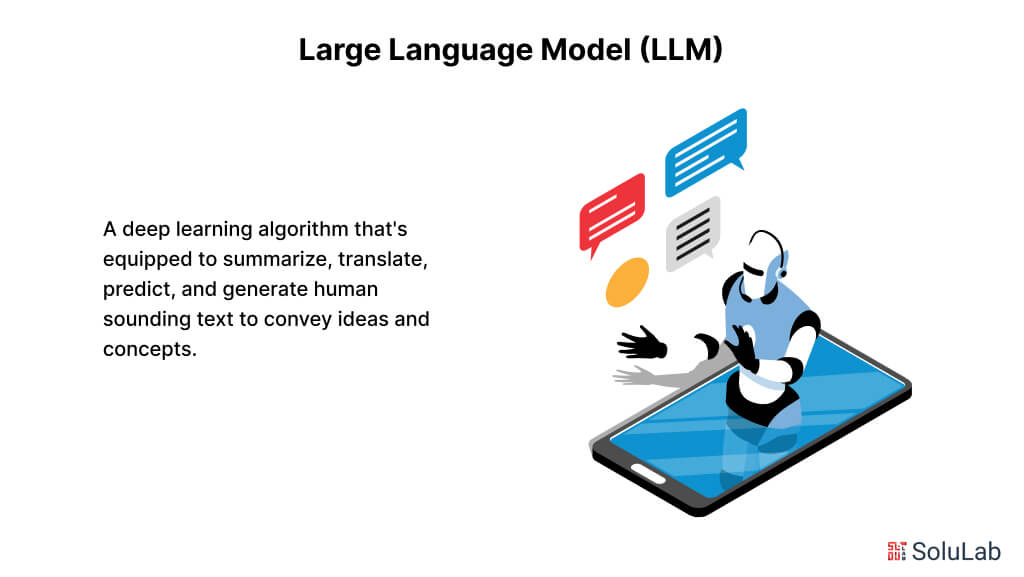
Large Language Models (LLMs)

So, you must be wondering what is LLM exactly. LLM meaning represents a category of foundational models that undergo training on extensive datasets. These models possess the capability to understand and generate natural language, enabling them to perform a wide range of tasks.

LLMs acquire these abilities through rigorous self-supervised and semi-supervised learning processes, in which they internalize statistical patterns from vast text datasets. A primary use case for LLMs is text generation, a form of generative AI where the models predict subsequent tokens or words based on the given input.

LLMs operate similarly to neural networks; by March 2024, the most advanced models will have a transformer-based design that solely uses decoders. Some of the latest versions also incorporate alternative architectures, such as recurrent neural networks or Mamba, a state space model. While numerous approaches have been tested for natural language processing tasks, LLM AI learning exclusively relies on deep learning techniques. These models are particularly adept at capturing complex relationships between entities within the text and can generate content by utilizing the semantic and syntactic subtleties of language. Additionally, they can be enhanced through techniques like Retrieval Augmented Generation (RAG) to improve performance on specific tasks.

Read Also: How to Create an Open-Source AI Model like Llama?

How Do LLMs Work?

LLMs function using sophisticated deep learning methods, mainly utilizing transformer architectures like the Generative Pre-trained Transformer (GPT). Transformers are particularly effective for managing sequential data such as text input, as they can adeptly capture long-range dependencies and context within the data. LLM models are composed of multiple layers of neural networks, each with adjustable parameters optimized throughout the training process.

During training, LLM models learn to predict the next word in a sentence by analyzing the context provided by the preceding words. This prediction process involves assigning probability scores to tokenized words, which are portions of text segmented into smaller sequences of characters. These tokens are then converted into embeddings, numerical representations that encode contextual information about the text.

To ensure both accuracy and robustness, LLM models are trained on extensive text corpora, often consisting of billions of pages of data. This vast training corpus enables the model to learn grammar, semantics, and conceptual relationships through zero-shot and self-supervised learning methods. By processing large volumes of text data, LLM models become skilled at understanding and generating language patterns.

Once training is complete, LLM models can autonomously generate text by predicting the next word or sequence of words based on the input provided. The model leverages the patterns and knowledge acquired during training to produce coherent and contextually appropriate language. This ability allows LLM models to perform various tasks related to conversational AI and content generation.

The performance of LLM models can be further enhanced through various techniques such as prompt engineering, fine-tuning, and reinforcement learning with human feedback. These approaches help to refine the model’s outputs and address issues like biases or inaccuracies that may emerge from training on large, unstructured datasets. Continuous optimization of the model’s parameters and training processes allows LLM models to achieve higher accuracy and reliability.

Rigorous validation procedures are crucial to ensure that LLM models are ready for enterprise-level applications without introducing risks like liability or reputational harm. These processes include thorough testing, validation against diverse datasets, and adherence to ethical guidelines. LLM models may be successfully implemented in real-world settings, covering a range of language-related activities with high precision and effectiveness, by eliminating possible biases and guaranteeing resilient performance. In the comparison of Large Language Models, methods like LLMOPs play a key role in operationalizing these models for practical applications.

Key Technical Features of Large Language Models (LLMs)
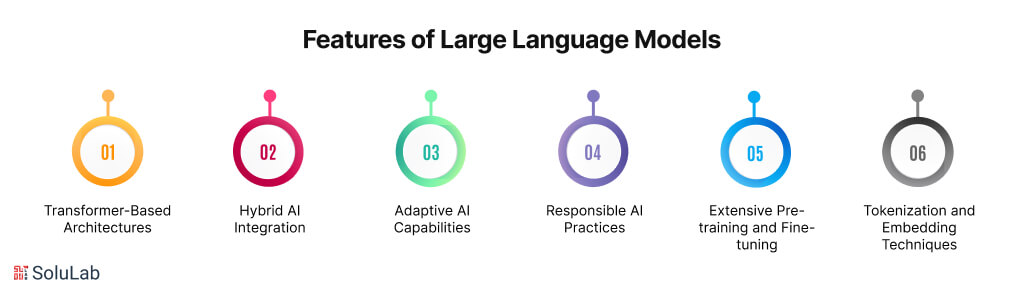
Features of Large Language Models

Large Language Models (LLMs) are at the forefront of AI innovation, boasting a range of technical features that make them powerful tools for natural language processing. Here are some of the key technical features that define LLM development:

1. Transformer-Based Architectures

LLMs primarily utilize transformer architectures, known for their ability to handle sequential data efficiently. These architectures allow LLMs to capture long-range dependencies and context within text, making them highly effective in understanding and generating human language.

2. Hybrid AI Integration

LLMs often incorporate hybrid AI approaches, combining traditional rule-based systems with advanced deep learning models. This integration enhances the models’ versatility, enabling them to perform a broader range of tasks with improved accuracy. Hybrid AI also allows LLMs to benefit from the strengths of both symbolic and neural approaches, resulting in more robust and adaptable systems.

3. Adaptive AI Capabilities

One of the standout features of modern LLMs is their adaptive AI capabilities. LLMs can dynamically adjust their responses based on new data and context, allowing them to provide more relevant and accurate outputs. This adaptability is crucial in applications where the environment or user inputs are constantly changing, ensuring that the LLM remains effective over time.

4. Responsible AI Practices

LLM development increasingly emphasizes responsible AI practices. This includes building models with mechanisms to minimize biases, ensure fairness, and maintain transparency. Responsible AI also involves implementing ethical guidelines and validation processes to prevent harmful outputs and ensure that LLMs are aligned with societal values and norms.

5. Extensive Pre-training and Fine-tuning

LLMs undergo extensive pre-training on large-scale datasets, followed by fine-tuning on specific tasks. This two-phase training process enables LLMs to generalize well across different domains while also being specialized for particular applications. Fine-tuning allows for the customization of LLMs, tailoring them to meet specific industry requirements or user needs.

6. Tokenization and Embedding Techniques

LLMs utilize advanced tokenization and embedding techniques to process text data. Tokenization breaks down text into smaller units, which are then transformed into embeddings—numerical representations that encode semantic and contextual information. These techniques are fundamental to how LLMs understand and generate language, ensuring that the models capture the nuances of human communication.

These key technical features make LLMs powerful and flexible tools, capable of addressing a wide range of natural language processing challenges. Whether it’s through hybrid AI, adaptive AI, or responsible AI practices, LLM development continues to push the boundaries of what AI can achieve in understanding and generating human language.
CTA1

Detailed Insights into Top LLMs

Large Language Models (LLMs) have evolved rapidly, leading to a diverse landscape of powerful models. Below is a detailed analysis of some of the most prominent LLMs, highlighting their features and applications.

1. GPT-4o

An improved version of GPT-4, known as GPT-4o, aims to provide better performance while using less processing power. It maintains the same architecture as GPT-4 but is streamlined for faster processing, making it more suitable for applications where speed and efficiency are critical. NLP vs. LLM discussions often highlight GPT-4o’s efficiency in NLP tasks compared to traditional models, offering high accuracy without the need for extensive resources.

2. GPT-4

GPT-4 is one of the most advanced LLMs developed by OpenAI, known for its extensive capabilities in natural language understanding and generation. GPT-4 builds on the success of its predecessors with even larger datasets and more sophisticated training techniques. It excels in generating human-like text, answering questions, translating languages, and more. The comparison of LLM vs. generative AI is evident in GPT-4’s ability to create coherent, contextually relevant content across various domains, showcasing the power of generative AI.

3. Gemini

Gemini is an advanced LLM designed for versatility and performance across diverse NLP tasks. It integrates advanced transformer architectures with hybrid AI approaches, enabling it to handle complex language processing tasks with precision. Gemini LLM stands out for its adaptability, making it suitable for applications ranging from conversational AI to specialized industry use cases. Its hybrid AI capabilities allow it to combine rule-based logic with deep learning, enhancing its overall performance.

4. Gemini 1.5 Pro

Gemini 1.5 Pro is an enhanced version of the Gemini LLM, offering superior processing power and advanced features tailored for enterprise-level applications. It includes improvements in context awareness, real-time adaptability, and multi-modal processing, making it a top choice for businesses requiring robust language processing solutions. LLM vs. LAM comparisons often highlight the Gemini 1.5 Pro’s scalability and complexity, surpassing traditional language models in handling large-scale, multi-domain tasks.

5. PaLM 2

PaLM 2 (Pathways Language Model) is an advanced LLM developed by Google, designed to handle multi-modal inputs and outputs. It excels in tasks that require understanding and generating language across different formats, such as text, images, and even video. LLM vs. generative AI comparisons often place PaLM 2 in the context of its multi-modal capabilities, which extend beyond traditional text-based generative AI, making it a versatile tool for various applications.

6. Llama 2

Llama 2 is the next iteration in the Llama series, building on the foundation of its predecessor with enhancements in scalability and performance. It is optimized for efficient training and inference, making it suitable for applications where resource constraints are a concern. LLM vs. LAM discussions frequently highlight Llama 2’s ability to handle larger datasets and more complex tasks compared to earlier, smaller language models.

7. Llama 3.1

Llama 3.1 pushes the boundaries of what is possible with LLMs, offering even greater scalability and adaptability than Llama 2. It is designed for high-performance NLP tasks and excels in environments where accuracy and speed are paramount. Llama 3.1’s architecture allows it to process massive datasets with minimal latency, making it a leading choice for enterprise applications.

8. Vicuna

Vicuna is an open-source LLM known for its community-driven development and emphasis on transparency and accessibility. It offers a balance between performance and openness, allowing researchers and developers to explore and adapt its architecture for various applications. LLM vs. generative AI comparisons often highlight Vicuna’s flexibility in generating language, thanks to its open-source nature, which encourages innovation and customization.

Read Blog: RAG vs LLM Fine-Tuning – What’s the Difference?

9. Claude 2

Claude 2 is an LLM developed by Anthropic, designed with a focus on safety and alignment. It incorporates advanced techniques for responsible AI, ensuring that its outputs are both accurate and ethical. Claude 2 excels in conversational AI tasks, providing coherent and context-aware responses. NLP vs. LLM comparisons often emphasize Claude 2’s advancements in alignment, making it a safer choice for applications involving sensitive or complex topics.

10. Claude 3.5 Sonnet

Claude 3.5 Sonnet is an upgrade from Claude 2, offering enhanced processing power and more sophisticated alignment techniques. It is particularly effective in maintaining context over extended conversations, making it ideal for long-form dialogue and customer support applications. LLM vs. LAM discussions frequently underscore Claude 3.5 Sonnet’s ability to handle complex conversational flows better than traditional language models.

11. Falcon

Falcon is a high-performance LLM designed for speed and efficiency. It is optimized for real-time applications where latency is a critical factor, such as voice assistants and interactive AI systems. LLM vs. generative AI comparisons often highlight Falcon’s ability to generate content rapidly without sacrificing accuracy, making it a top choice for applications requiring quick, reliable responses.

12. MPT (Multi-Path Transformer)

MPT is an advanced LLM that utilizes a multi-path transformer architecture to enhance its processing capabilities. This architecture allows MPT to handle multiple input paths simultaneously, improving its ability to manage complex tasks that require parallel processing. NLP vs. LLM comparisons often focus on MPT’s efficiency in handling diverse data streams, making it a versatile tool for complex language processing tasks.

13. Mixtral 8x7B

Mixtral 8x7B is part of the Mixtral series, known for its balanced performance across a range of NLP tasks. With 7 billion parameters, it offers a strong combination of speed and accuracy, making it suitable for mid-sized applications that require efficient language processing. LLM vs. LAM comparisons often highlight Mixtral 8x7B’s ability to outperform smaller language models while remaining resource-efficient.

14. Mixtral 8x22B

Mixtral 8x22B is a larger and more powerful version of the Mixtral series, with 22 billion parameters. It is designed for high-demand applications where large-scale data processing and high accuracy are essential. LLM vs. generative AI discussions often emphasize Mixtral 8x22B’s capacity to generate more sophisticated and nuanced language, making it ideal for advanced NLP tasks.

15. Grok

Grok is an LLM focused on deep understanding and reasoning. It is designed to excel in tasks that require comprehension of complex concepts and the ability to generate insightful responses. LLM vs. generative AI comparisons often position Grok as a model that goes beyond surface-level text generation, offering deeper analysis and context-aware content creation. If you’re building with Grok, you can start quickly using a Grok API gateway with code examples for common use cases.

16. StableLM

StableLM is an open-access LLM developed by Stability AI, known for its robustness and stability across a variety of applications. It is particularly well-suited for research and development, offering a stable platform for experimentation with LLM capabilities. NLP vs. LLM comparisons often highlight StableLM’s reliability in maintaining performance across different tasks, making it a valuable tool for researchers and developers.

17. BLOOM (BigScience Large Open-Science Open-access Multilingual Language Model)

BLOOM is a multilingual LLM developed by the BigScience project, designed to support a wide range of languages and cultural contexts. It is open-access and developed with a strong focus on inclusivity and global accessibility. LLM vs. generative AI comparisons often emphasize BLOOM’s ability to generate text across multiple languages, making it a unique and valuable resource in global AI technology.
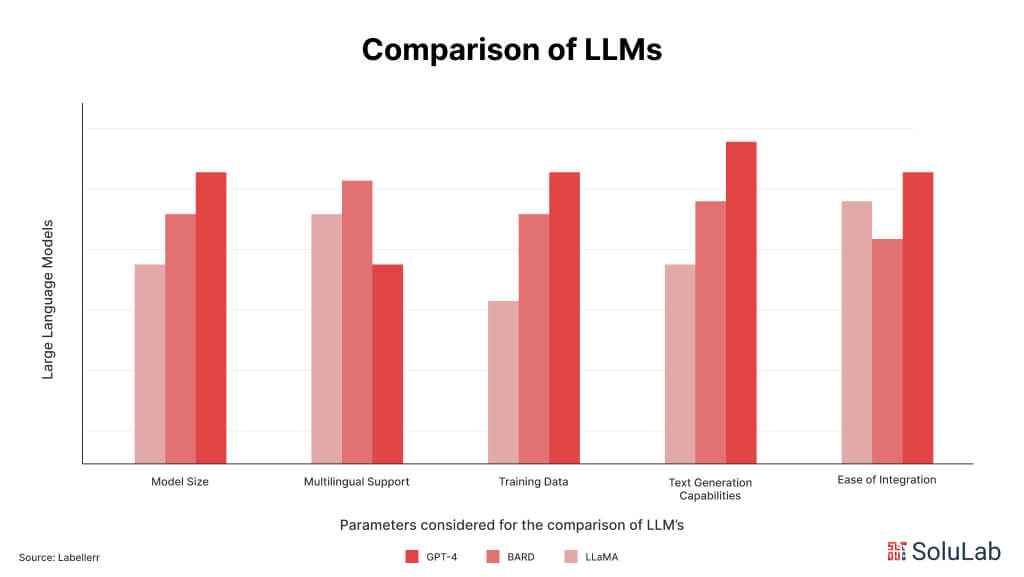
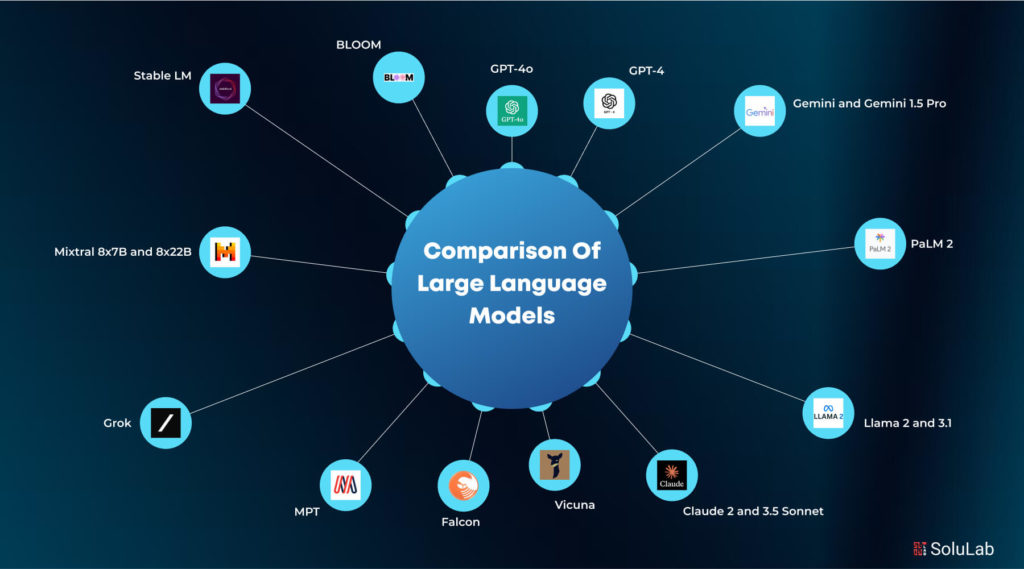
Comparison Of llms

LLMs and Their Applications and Use Cases

Large Language Models (LLMs) have transformed the AI industry, powering a wide array of applications across industries. By leveraging advanced natural language processing (NLP) capabilities, these models enable businesses to automate tasks, enhance customer experiences, and gain insights from vast amounts of data. Below, we explore the several leading LLM use cases and applications.

GPT-4 and GPT-4o

  • Applications: GPT-4 and its optimized variant, GPT-4o, are at the forefront of AI-powered content creation, code generation, and conversational AI. They are used in developing chatbots, virtual assistants, and AI agents that can perform complex tasks, such as drafting documents, summarizing content, and generating creative ideas.
  • Use Cases: In the legal industry, GPT-4 can assist with contract analysis by generating summaries and identifying potential risks. In healthcare, it supports diagnostic assistance by providing detailed explanations of medical conditions based on patient records.

Gemini and Gemini 1.5 Pro

  • Applications: The Gemini models excel in multilingual translation, sentiment analysis, and personalized content generation. They are particularly useful in global marketing campaigns, where accurate language translation and culturally relevant content are crucial.
  • Use Cases: E-commerce companies utilize Gemini for personalized product recommendations based on customer preferences and behavior. In social media, these models analyze user sentiments to optimize content strategies.

PaLM 2

  • Applications: PaLM 2 is designed for tasks requiring high-level reasoning and contextual understanding, such as complex question-answering, scientific research, and technical documentation.
  • Use Cases: In education, PaLM 2 aids in creating intelligent tutoring systems that provide personalized learning experiences. In finance, it helps analyze market trends and generate investment strategies based on large datasets.

Llama 2 and Llama 3.1

  • Applications: Llama models are known for their efficiency in knowledge extraction, data synthesis, and domain-specific language modeling. They are used in industries requiring rapid processing of specialized information, such as legal, healthcare, and academic research.
  • Use Cases: Law firms use Llama 2 for legal research, automating the extraction of relevant case law and statutes. Llama 3.1 is employed in scientific research for summarizing complex research papers and generating hypotheses.

Vicuna

  • Applications: Vicuna specializes in creative writing, storytelling, and generating dialogue in interactive applications like video games and virtual reality experiences.
  • Use Cases: Game developers use Vicuna to create dynamic, interactive dialogues for NPCs (non-playable characters) in RPGs (role-playing games). In marketing, it is used to generate engaging copy for brand storytelling.

Claude 2 and Claude 3.5

  • Applications: Claude models are designed for high-stakes decision-making processes, ethical AI, and scenarios requiring deep contextual understanding and empathy, such as mental health support and conflict resolution.
  • Use Cases: In customer service, Claude 2 enhances AI agents’ ability to handle complex queries and resolve issues empathetically. Claude 3.5 is used in teletherapy platforms to provide emotionally intelligent responses during counseling sessions.

Falcon

  • Applications: Falcon is tailored for high-speed data processing and real-time decision-making, making it ideal for financial trading, supply chain optimization, and autonomous systems.
  • Use Cases: In finance, Falcon is used to develop high-frequency trading algorithms that make split-second decisions based on market data. In logistics, it optimizes delivery routes in real time to reduce costs and improve efficiency.

MPT (Multi-Purpose Transformer)

  • Applications: MPT is a versatile LLM that adapts to various tasks, including natural language understanding, text classification, and anomaly detection.
  • Use Cases: In cybersecurity, MPT detects and responds to unusual patterns in network traffic, preventing potential breaches. In customer support, it classifies and prioritizes incoming queries, improving response times.

Mixtral 7×8 B and Mixtral 8X22B

  • Applications: The Mixtral models are engineered for large-scale data analysis and model integration, supporting applications in AI-driven decision-making, predictive analytics, and automated reporting.
  • Use Cases: Manufacturing companies use Mixtral models to predict equipment failures and schedule maintenance proactively. In retail, these models analyze consumer trends to forecast demand and optimize inventory management.

Grok

  • Applications: Grok focuses on enhancing AI-powered insights in business intelligence, predictive analytics, and customer relationship management (CRM).
  • Use Cases: In CRM, Grok helps businesses predict customer needs and personalize interactions, improving retention rates. It also aids in market research by identifying emerging trends from unstructured data sources.

Stable LM

  • Applications: Stable LM is optimized for stability and reliability in mission-critical applications, such as healthcare diagnostics, legal analysis, and automated content moderation.
  • Use Cases: In healthcare, Stable LM supports AI-driven diagnostic tools that ensure consistent and accurate analysis of medical data. In legal tech, it is used to maintain consistency in legal document drafting and review processes.

BLOOM

  • Applications: BLOOM is designed for biodiversity research, environmental monitoring, and sustainability efforts, leveraging its capabilities in processing scientific texts and large datasets.
  • Use Cases: Environmental agencies use BLOOM to monitor climate data and predict ecological impacts. In agriculture, it helps in optimizing crop management by analyzing weather patterns and soil conditions.

These many LLM applications and use cases promote effectiveness and inventiveness in a variety of sectors. From enhancing AI agents to powering complex decision-making processes, the potential of these models continues to expand, paving the way for new AI use cases and transformative applications.

How SoluLab Can Help Transform Your Business Through LLMs?

At SoluLab, as an LLM development company, we specialize in leveraging Large Language Models (LLMs) to drive innovation and efficiency across industries. Our expertise in LLM development and integration enables businesses to harness the power of AI for various applications, from automating routine tasks to enhancing customer engagement. By collaborating with SoluLab, you can unlock the potential of LLMs to streamline operations, gain actionable insights, and build intelligent systems tailored to your specific needs. Our services have been developed to be safe, scalable, and compatible with your company’s goals.

Recently, we launched a project named InfuseNet that empowers your team to design intricate business logic effortlessly. With its intuitive drag-and-drop Flow interface, InfuseNet allows you to seamlessly link multiple LLMs, templates, and media models with extraction tools, simplifying the creation of robust intelligent applications. In just minutes, you can craft a personalized ChatGPT-like app using proprietary data, register, establish a knowledge base, and integrate it into workflows for heightened operational efficiency. InfuseNet streamlines data import from databases, cloud storage, and APIs, preparing it for fine-tuning with LLMs, while ensuring data confidentiality in self-hosted deployments. Seamlessly interface with services like MySQL, Google Cloud, and CRMs to create secure, high-performance AI solutions that drive your business forward. Ready to transform your business with advanced LLM solutions? Contact us today to get started on your AI journey!

FAQs

1. What are Large Language Models (LLMs) and why do we need them?

Large Language Models (LLMs) are advanced AI systems designed to understand, generate, and interpret human language. They are essential in many applications, including content production, translation, chatbots, etc. Their ability to process large datasets and generate coherent, context-aware text makes them invaluable for automating tasks, enhancing customer experiences, and driving innovation across industries.

2. How do LLMs like GPT-4, PaLM 2, and Llama 2 differ from each other?

LLMs differ in their architecture, training data, and specific use cases. For example, GPT-4 is known for its versatility in content creation and conversational AI, while PaLM 2 excels in complex reasoning and contextual understanding. Llama 2 is optimized for domain-specific tasks, making it ideal for industries like legal and healthcare. The differences in design and capabilities make each LLM suitable for distinct applications.

3. Which industries benefit the most from using Large Language Models?

Industries such as finance, healthcare, e-commerce, and customer service benefit significantly from LLMs. In finance, LLMs help in analyzing market trends and generating investment strategies. Healthcare uses LLMs for diagnostic assistance and personalized patient care. E-commerce leverages LLMs for product recommendations and sentiment analysis, while customer service improves response accuracy and speed through AI-powered agents.

4. What aspects of an LLM should firms take into account?

When choosing an LLM, businesses should consider factors such as the specific use case, the model’s ability to handle the required language or domain, scalability, integration capabilities, and data privacy. It’s also important to assess the LLM’s performance in terms of accuracy, speed, and its ability to be fine-tuned to meet industry-specific needs.

5. How does fine-tuning improve the performance of LLMs?

Fine-tuning an LLM involves adjusting the model’s parameters using specific datasets relevant to a particular task or industry. This process enhances the model’s accuracy and relevance, allowing it to generate more precise and contextually appropriate responses. Fine-tuning is essential for businesses looking to customize LLMs to their unique requirements, ensuring that the AI delivers optimal performance in real-world applications.

What Are Small Language Models? Learn the Key Differences

Small Language Models (SLMs)

You must have heard a lot about Large Language Models (LLMs) and the magic they work, but you may need to be made aware of what is a small language model. With the establishment of AI Agents in the industry LLMs’ progress seems to level off which has shifted the focus of developers on small language models.  SLMs are packed in small sizes but are large vision models and can work over the phone as well, faster, more cheaply, and requiring less data and processing power for training. It is at this juncture that opportunities for innovative applications can be opened—the case of chatbots that give instant replies to your questions or AI assistants that continue to make your daily life easier.

But what exactly are small LLM models and how are they rewriting the rules of the game? We will further delve into the universe of features, benefits, and practical applications in the following blog post. We are going to break open the code on these little titans, one byte at a time, presenting to you how they are going to influence the future of AI and how to create a small language model.

What are Small Language Models?

You can spend a lot of time and energy learning every word and regulation in a huge textbook. As such, small language models could be effective language learners. These AI wizards do the inverse of this by using a more cunning approach: They just concentrate on the essential concepts so that they are ready to explain.

SLMs have fewer parameters than larger LLMs, much like a smaller grammar and vocabulary notebook. They are agile in this respect! AI small language models could even run on their phones, train faster, and eat less energy.

Now, imagine a virtual assistant that checks off your to-do list without you bleeding through all your battery life or pocket translation. These are examples of small language models working. Although they may not be memorizing every detail with a hold of basics, they achieve surprisingly complex tasks, hence making this an ideal tool for a future full of intelligent products and accessible artificial intelligence.

What Do Small in Small Language Models Indicate?

In the AI small language model, “small” refers to much more than physical dimensions. It encompasses some vital elements that set them apart from their rather imposing rivals: Large Language Models. The following contributes to what makes the SLM model  both “small” and powerful:

  • Accessibility and Affordability: More people and enterprises can access small language models because they are more efficient, hence making them a much more viable option for many more applications. This is because of lower development costs and the ability to run on less highly specified hardware. In this way, AI democratizes to the degree that it becomes possible for small businesses or even independent users to avail themselves of the power of language processing.
  • Data Diet: The best small language models require less data for training, just like students do not need to learn everything to be proficient. They are perfect in situations where large vision model data may be restricted; they are perfect at learning from smaller datasets. This also increases their adaptability to particular tasks or domains in which well-targeted training on a well-chosen dataset may produce outstanding outcomes.
  • Sleek design: Imagine a meta LLM as a multistory, complex building; now think of SLMs as even simpler than bungalows with fewer layers and connections. However, it makes use of almost all principles of deep learning learned from LLMs, including transformers and self-attention processes. Moreover, because of this simplification, can train the model faster and more effectively.
  • Fewer Parameters: Imagine you are a student learning a language. LLMs memorize each word and every rule, just like carrying huge textbooks. In contrast, a small LLM model looks only at the core concepts. This would then imply fewer parameters—precise numbers that instruct or govern how the model comprehends and generates replies. While it is well known that LLMs have billions of parameters, the small models are normally reckoned to have less than 100 million, and occasionally even as little as 10 million.

Contact Us

Why are Small Language Models Required?

Large Language Models are the rage in artificial intelligence. Their powers in generating text, translating languages, and writing other forms of creative content are remarkable and extremely well-documented. Small Language Models come in as a new class of AI models that are subtly sweeping the waves. Although SLMs are not as powerful as other models in their leading categories, the type comes with a set of very special benefits that make them of value to a huge array of applications. To understand more deeply the role of SLMs within the dynamic field of AI, read on:

1. Low-Resource Effectiveness

If you build private LLMs they will become your data hoarders; training them requires huge amounts of data and a lot of processing power. This can be quite a barrier to many companies and individuals who don’t have the means to use such models. SLMs come to the rescue in this regard. Enabling them to learn with small llm datasets and run on less powerful hardware due to their small size and focus on core functionality makes them good at learning. This will result in more cost-effective AI solutions, thereby opening up possibilities for integrating intelligent features, even where resources are limited.

2. Faster Deployment and Training for Faster Development

Everything today is all about speed. Depending on the model’s complexity, training an LLM might take weeks or months. This, in turn, could reduce the pace of development cycles for apps that should, otherwise be developed and deployed at a much faster rate. Such cases call for the best small language models. They can be trained much faster compared to LLM use cases due to their slimmed architecture and focus on key features. This means developers can get AI-powered features up and running more quickly, accelerating time to market and time to innovation.

3. Taking Intelligence to New Heights

AI is not only going to reside in the cloud but at the periphery of everyday devices, we use because they are so large and resource-intensive, LLMs are not very suitable for running on wearables or even smartphones. That is where small language models shine: because they are small in size and less resource-intensive, they become perfect on-device applications of artificial intelligence. This allows a whole new level of interesting possibilities. Imagine a virtual assistant that can answer your questions without an internet connection or a language translator that’s not only real-time but works right from your phone. It’s that sort of future technology—intelligence baked right into our devices—that SLMs are making possible.

Examples of Small Language Models

AI small large language models are among the most significant breakthroughs in AI. With small footprints, the range of applications of SLMs is immense. These models exhibit both prowess and efficiency. Some of the examples of small language models are as follows:

  • DistilBERT: This is a distilled version of one of the most popular large vs small language models, BERT, created by Google AI. The important characteristics are thus retained while the size is decreased in tasks like text categorization and sentiment analysis. The application developers can additionally prosper by integrating such characteristics into those specific applications without the simultaneous expenditure on computing power. DistilBERT is the favored one when one has a scarcity of resources because its training time is less while it is compared to BERT. This is a distilled version of BERT (Bidirectional Encoder Representations from Transformers) that retains 95% of BERT’s performance while being 40% smaller and 60% faster. DistilBERT has around 66 million parameters.
  • Microsoft Phi-2: Phi-2 is a versatile small language model known for being efficient and well-capable with handling several applications. It can incorporate text production, summarization, and some question-answering tasks. This Microsoft project focused on building an appraisal engine to realize low-resource language processing; this comes in handy for applications with several hard linguistic demands. This means that Phi-2 may work fine even if trained on a small subset of data in some specific language.
  • MobileBERT by Google AI: This is a distilled version of BERT that targets running on cell phones and other devices that have constrained computing power. In particular, it was designed to work on mobile devices. It is, therefore, possible for developers to implement question-answering and text-summary features on mobile applications without affecting the user experience. This will now be possible with intelligent features on the move because MobileBERT is efficient in doing so.
  • Gemma 2b: Google Gemma 2b is a 9B and 27B strong, very effective SLM making an entry into the market. Compared with open-source models available, Gemma 2b is top-of-class performance and was also designed with some safety enhancements in mind. More will be able to use it since these small language models will run on a desktop or laptop computer directly used for development. With a context length of 8192 tokens, Gemma models are suitable for deployment in resource-limited environments like laptops, desktops, or cloud infrastructures.

How Small Language Models Work?

How Small Language Models Works

Now that you are aware of what is a small language model, know about how it works. The phases of Small Language Models’ creation can be decomposed as follows:

1. Data Collection

  • The very first step to developing an SLM is to generate and collect a large dataset containing textual information. This data may be obtained from various places like source code repositories, online forums, books, new articles, etc.
  • The data is pre-processed to ensure it is quality and consistent. This may involve cleaning the content of such extraneous information as formatting codes or punctuation.

 2. Architectural Model

  • Deep learning architecture, normally a neural network, is what forms the backbone for an SLM. This network shall process the data through the layers of artificial neurons interconnected with each other.
  • SLMs are simpler models with fewer layers and parameters, which makes them learn faster and more efficiently.

Read Blog: AI in Architecture: Transforming Design & Construction

3. Training the Model

  • Training is a process where the prepared text data is fed into the SLM. During its training process, the model learns the relationships and patterns in the data.
  • The methodology the model uses is what might be called “statistical language modeling.” It guesses the next word in a sequence based on that which has come before.
  • The model sees how good it is at these predictions as it keeps training. This feedback makes it easier for it to adjust its internal parameters and improve its accuracy over time.

4. Tuning (Optional)

  • Although they can initially be trained to acquire broad language competence, SLMs can later be fine-tuned for specialized tasks.
  • Fine-tuning is when a previously trained model is trained on a domain-specific dataset—in other words, data from an area like health care or finance. Because it focuses on this domain-specific knowledge, the SLM has a chance to master that particular domain.

5. Using the model

  • This way, the SLM is functional after it has been trained or calibrated. In interacting with it, users can input text into the model, such as a question, a sentence that has to be translated, or a passage of text that has to be summarized.
  • The SLM evaluates such input against its learned experience and returns an appropriate response.

Benefits of Small Language Models 

Although small language models look pretty tiny compared to their bigger counterparts, they have many advantages. Here are the reasons that make SLMs increasingly popular in the AI space:

1. Efficiency 

Small Language Models are much more efficient when it comes to computational resources and memory usage than large models. They do not require much processing power, storage, or energy to run which makes them a more suitable choice for deployment on devices that are resources-constrained like smartphones. 

2. Speed 

With the small size and simple designs, small large language models can perform tasks at a much faster pace than large language models. This speed is specifically beneficial in applications where real-time responses are essential like chatbots.

3. Privacy

It is easier to train small language models than large vision models and deploy them locally on devices, which reduces the need to send sensitive data to remote servers. This approach not only enhances privacy by keeping users’ data under control but also minimizes the risk of unauthorized access and data breaches.

4. Customization

These small models are more prone to customization for specific domains and use cases than LLMs. Their smaller size makes it possible to fine-tune fast for specific data and enables the creation of tailored models for the needs of individual industries and uses.

Use Cases of Small Language Models

Here is a breakdown of some notable small language model use cases:

1. Mobile Apps

Models like MobileBert assist developers with integrating natural language processing features like text summarization and answering questions directly from mobile apps. This also allows more efficient real-time interactions without compromising user experiences.

2. ChatBot

SLM models are used to power virtual assistants by providing quick and accurate responses to user queries. Their efficiency and speed make them suitable for handling tasks like customer support to enhance user engagement. 

Check Out Our Blog: AI use cases and Applications in Key Industries

3. Code Generation

Small Language Models can help developers generate code snippets that are based on natural language descriptions. This ability to streamline the coding process allows programmers to rapidly prototype features and automate repetitive tasks to increase productivity. 

4. Sentiment Analysis

The small LLM model is effective for the analysis of sentiments on social media monitoring customer feedback. They can quickly analyze text data to determine public sentiments, aiding businesses in making informed decisions on user opinions. 

5. Customer Service Automation

The small LLM models are effective for automating customer service interactions, which enables businesses to handle inquiries and support requests without human intervention. By giving accurate results and outcomes these models also improve response time for customer satisfaction.  

LLM vs SLM: Key Differences 

The field of Artificial Intelligence is dominated by two popular language models: Large Language Models and Small Language Models. While they are both concerned with language processing, they do so differently:

  • Computational Requirements

Champions of the resource! Since SLMs are smaller, they run and require less data and less processing power. Thereby, it makes them quite perfect for resource-constrained settings. On the other hand, LLMs are very famished for data and processing power; large-scale training datasets and costly hardware are frequently called for.

  • Dimension Count

Model Size and Training Speed: Because SLMs have fewer parameters to tune, model size is smaller, and train times are faster. Because of their size, LLMs need more substantial amounts of data and greater processing power, translating to longer training times.

  • Real-World Applications

Observe what is being done! SLMs’ efficiency makes them excellent at on-device AI. Consider AI-powered chatbots that could answer simple queries or real-time translation on your phone. Because they are narrow in their scope of knowledge, LLMs excel at tasks such as generating new forms of text or complex analysis, which typically is handled in the cloud.

  • Performance Trade-Off

While SLMs are fast and efficient, they may not offer the same level of accuracy or degree of fine-grained understanding achieved by LLMs. Although resource-intensive, LLMs can still provide very good performance due to their broad coverage.

LLM Development Company

Conclusion

SLMs and LLMs each occupy a special niche in this very exciting area of language models. ExPEC both these models should become more sophisticated as AI grows further in the future. SLMs may continue to become more efficient, leading to seamless on-device AI experiences and even more deeply integrated into our daily lives. On the other hand, LLMs would keep pushing beyond the limits posed in language generation and comprehension with improved training methodologies, finding new applications across a wide array of domains has been made possible with LLM Development Company.

The choice between SLM vs LLM lies in the specific needs of the project. SLMs provide results that work in activities that need on-device processing and are power-efficient. If the crucial aspects are depth analysis and complexity, then it would be recommended to approach with LLMs.

At SoluLab, we are dedicated to helping enterprises tap into the power of artificial intelligence. Whether you need SLMs to enhance your processes or want to benefit from LLMs for a myriad of cutting-edge applications, our experts are here to help you choose the most appropriate language model for your needs. Contact now and discover more about how AI can revolutionize your business!

FAQs

1. SMLs or LLMs: which one is more accurate?

Due to their complex architecture and greater knowledge base, LLMs are usually more accurate. Conversely, an SML with sufficient training may be more effective and turn out results comparable for some jobs.

2. Can I run an SML on my phone?

SMLs are indeed perfect for on-device processing because they are small and less resource-intensive. Indeed, they would be very suitable for text summary functions on smartphones, simple chatbots, and language translation.

3. What are some real-world applications of SML?

SLMs already find their place in several applications: from text summarization functions on smartphones to basic question-answering chatbots, and on-device language translation.

4. Is the bigger model always better?

Well, not necessarily! Where LLMs master the complex tasks, at times their resource requirements might become a barrier. SLMs are suited to a large number of use cases that need on-device processing or faster development cycles—strik­ing a balance between efficiency and capability.

5. How can I take advantage of SoluLab to get the most out of language models?

SoluLab is your one-stop marketplace for all AI needs! Whether it is an efficient SML or a powerful LLM, our experts are there to guide you through the world of language models, evaluate your requirements, and advise you accordingly on the best course of action. We even develop and implement to ensure you can harness the full potential of AI for your business. Discuss your AI journey with SoluLab now.

Large Language Models Use Cases and Applications

Use Cases And Applications of LLM

In the Internet era, large language models (LLMs) are fast rising to the top of the most anticipated technological advancements.

As more people explore generative artificial intelligence (AI) tools like ChatGPT, Google Bard, and Bing Chat, analysts predict that the generative AI industry will reach a value of $1.3 trillion by 2032.

The use cases for LLMs in the industry have yet to be established, as the technology is still in its early stages.

On the surface, LLMs are applicable in every situation where a company wants to extract insights from an input text or dataset or analyze, process, summarize, rewrite, edit, or transcribe. Several LLM use cases seem promising, and acceptance of them is growing.

This extensive blog will include some real-world instances of LLM applications as well as an in-depth look at the fascinating world of Large Language Model use cases and applications and how these linguistic superheroes are changing industries.

So, let’s get started!

7 Exceptional Large Language Model Use Cases You Should Be Aware Of

7 Exceptional Large Language Model Use Cases

Applications for large language models in a variety of sectors are common large language model (LLM) use cases, demonstrating its adaptability and potential to improve productivity and decision-making. Let’s investigate seven distinct applications of large language models (LLM).

1. Customer Experience and Support

Large language models allow businesses to use chatbots to provide individualized customer service, use virtual assistants to automate customer care, and use sentiment analysis to obtain insightful data. By strengthening client connections and enhancing customer experiences, these applications improve customer service and support.

The following three customer care and support domains are where LLMs have shown to be quite helpful:

  • Chatbots for Tailored Customer Experiences

Think of a AI-powered chatbot as your virtual best friend rather than just a robot! These chatbots, which are powered by LLMs, may converse with you in a human-like manner and assist you with troubleshooting and product information alike. With the help of LLM-powered chatbots, businesses can provide effective and customized customer support. These chatbots are capable of carrying on natural language discussions, comprehending client inquiries, and responding appropriately. Chatbots may answer a variety of consumer questions, offer product details, solve problems, and even help with transactions when they are used in conjunction with LLMs. LLM-powered chatbots’ capacity to decipher and evaluate user communications facilitates the delivery of timely and precise answers, which raises customer happiness.

  • Virtual Assistance For Digital Customer Service

When you can have a virtual assistant, who needs a real one? LLM-powered virtual assistants revolutionize customer service by automating repetitive chores and offering real-time support. Virtual assistants powered by LLM may answer routine client questions, direct customers via self-service choices, and provide immediate assistance. These helpers may help with purchase monitoring or account administration, comprehend complicated inquiries, and offer tailored advice. Virtual assistants use LLMs to speed up reaction times, cut down on client wait times, and improve customer service in general.

  • Sentiment Analysis to Comprehend Customer Input

By enabling sentiment analysis, LLMs help businesses learn from client feedback. Customer reviews, social media posts, and other textual data may be analyzed by LLMs to ascertain the emotions that consumers have toward particular goods, services, or brand experiences. It’s similar to having a mind reader, except this one can also forecast how well-liked your products will be in the future. Sentiment analysis use cases for large language models assist businesses in determining areas for improvement, understanding consumer satisfaction levels, and quickly resolving issues. Businesses may increase their comprehension of consumer sentiment, tailor their offerings accordingly, and make data-driven choices that boost customer service by using LLMs for sentiment analysis.

2. Social Media

In the social media sector, LLMs are revolutionizing the procedures involved in generating and creating content. LLMs improve processes for content production in a number of ways, including automated article writing, the development of blog and social media posts, and the generation of product descriptions. Businesses may increase the efficiency with which they create personalized, high-quality content, engage their audience, convert leads, and maintain a competitive edge by utilizing these methods.

The following three social media platform content production and generating categories are where LLM use cases have shown to be extremely helpful:

  • Automatic Writing of Articles

Because LLMs automate certain portions of composing articles, the journalistic industry is undergoing a change. These days, journalists may use LLMs to discuss ideas, create drafts with a few keystrokes, and even select intriguing, original headlines. With the help of these algorithms, which examine enormous volumes of data, spot trends, and provide pertinent information recommendations, authors may produce material more quickly without sacrificing accuracy or quality.

  • Writing for Blogs and Social Media Posts

Content Creators may easily create captivating blog articles and social media material with the help of LLMs. Professionals in marketing and content creation may swiftly produce blog pieces, social media updates, and marketing messages by utilizing the language production capabilities of LLMs. Are you in need of an incredible blog article or tweet that will make the people who follow you wonder? These models will support you in producing interesting, viral content that will pique viewers’ interest and leave them wanting more! By being able to comprehend the intended material’s context, style, and tone, these models help organizations create engaging content that is specifically tailored to their target audience.

  • Creating Product Descriptions

When creating product descriptions, e-commerce systems find great use in LLMs. These Large Language Model use cases may automatically generate engaging and instructive descriptions by analyzing market trends, customer feedback, and product attributes. Business time and resources are saved since LLMs guarantee consistent quality and increase the effectiveness of creating descriptions for a wide variety of products.

AI Development Solutions

3. E-Commerce and Retail

By offering real-time translation capabilities, enabling effective document translation for international firms, and assisting with the customization of software and websites, LLMs are revolutionizing the e-commerce and retail sectors. These companies may overcome language hurdles, increase their worldwide reach, and provide a localized experience for customers from a variety of backgrounds by utilizing these LLMs. Around the world, LLMs are removing boundaries like language and fostering greater human connection.

The following three Large Language Model use cases and applications have shown to be very beneficial for all kinds of businesses:

  • Tools for Real-time Translation

Imagine being able to communicate with people from various linguistic backgrounds without having to take a crash course in every language by having a global translator at your disposal! Language barrier-breaking real-time translation technologies are powered by LLMs. These tools enable efficient communication between people who speak various languages by instantaneously translating text or speech between languages. Businesses that employ LLMs may give users instantaneous translation capabilities, enhancing cross-cultural communication and fostering international cooperation.

  • Translation of Documents for International Businesses

The translation of documentation for international firms is being revolutionized by LLMs. Companies may automatically employ LLMs to translate documents quickly and precisely, unlike traditional translation services. LLMs are capable of analyzing source texts, such as technical manuals, marketing materials, or contracts, and producing accurate translations that save money and time while maintaining localized and consistent content.

  • Localization of Websites and Software

When it comes to localizing websites and software for foreign markets, that’s where the use cases for large language models are essential. Businesses may translate menus, user interfaces, and other textual components to make their goods and services more culturally and linguistically appropriate by utilizing these models. LLMs contribute to the creation of a more captivating and user-friendly consumer experience by ensuring that the translated material is correct linguistically and culturally. They make sure that your material appeals to people all throughout the world.

4. Finance

In the financial services sector, LLMs have found a wide range of applications that are revolutionizing the way financial organizations function and engage with their clientele. These linguists are revolutionizing consumer experiences, investment choices, and security protocols. Financial organizations can evaluate credit risks more quickly than ever, keep one step ahead of fraudsters, and analyze market patterns like seasoned traders with the help of LLMs.

The following three financial services domains demonstrate the great utility of LLMs:

  • Fraud Identification and Prevention

LLMs operate similarly to undercover agents spotting financial scammers. Large amounts of financial data, including transactional data, customer records, and historical trends, may be analyzed by LLMs in fraud detection systems. LLMs may stop financial fraud by detecting abnormalities, spotting fraudulent trends, and sending out real-time alerts by utilizing natural language processing and machine learning algorithms. These models assist financial organizations in reducing losses and proactively safeguarding their clients.

  • Analysis and Trading of Financial News

When evaluating market data and financial news to make investing decisions, LLMs are crucial. To extract pertinent data and sentiment, these programs may comb through vast volumes of news articles, reports on markets, and social media data. Traders, analysts, and asset managers may make better investing decisions with the assistance of LLMs, which provide insights into investor moods, market trends, and corporate performance.

  • Assessment of Credit Risk and Loan Underwriting

LLMs are lending superheroes, assisting banks in evaluating credit risks more quickly than a bullet. Large amounts of consumer data, such as bank account records, credit histories, and loan applications, may be analyzed by these models. They analyze client information, go into credit reports, and provide insightful analysis to help make better loan choices. Financial companies may reduce risk and give their consumers quick, equitable access to financial services by automating and improving loan underwriting with LLMs.

5. Marketing and Advertising

Through the provision of content classification, targeted advertising, and enhanced search engine results, LLMs increase tailored suggestions and targeting. Businesses may provide more individualized experiences, improve user engagement, and maximize their marketing campaigns by utilizing these capabilities. With the help of LLMs, businesses may provide consumers with personalized information and suggestions, giving them the impression that they have a personal genie coming to their aid!

The following three categories of marketing and advertising are where large language models use cases and applications have shown to be extremely helpful:

  • Content Classification for Personalized Suggestions

Businesses may classify material and offer tailored suggestions depending on customer preferences thanks to LLMs. LLMs are your virtual taste buds; via examining user activity, interaction trends, and content attributes, they may find commonalities and offer suggestions that suit personal tastes. This improves customer happiness, user experience, and user engagement by providing pertinent and interesting material.

  • Personalized Marketing and Promotion

In focused marketing and advertising initiatives, LLM use cases are essential. By examining user data, demographics, and behavior, these models are able to generate tailored advertising messages that resonate well with particular target populations. By providing tailored advertisements, promotions, and deals, LLMs help businesses maximize their marketing efforts, which raises conversion rates and increases return on investment (ROI).

  • Enhancing Results from Search Engines

No more leafing through page after page of unimportant details! By comprehending user queries and delivering more precise and pertinent search results, LLMs contribute to the improvement of search engine results. By examining the semantics, purpose, and context of search queries, LLMs can provide more precise search results, reducing users’ time and supplying the required data. This improves customer pleasure and the search experience. To further optimize visibility and performance tracking, many marketers and SEO analysts combine LLMs with tools like residential proxies. These proxies help simulate real user behavior across locations, enabling accurate SERP tracking, ad verification, and geo-targeted content monitoring. Alongside VPNs and crawler bots, residential proxy providers offer reliable infrastructure for data-driven marketing strategies.

6. Cyber Law

In order to handle the intricate legal issues related to cyberspace, LLMs have proven to be invaluable instruments in the field of cyber law. With the use of these models, attorneys may investigate the intricate legal terrain of cyberspace, guarantee adherence to privacy laws, and handle legal issues resulting from cyber events. Through their insights, counsel, and assistance in efficiently addressing cyber-related legal challenges, LLMs strengthen the discipline of cyber law.

These are the three extremely successful LLM model use cases under cyber law:

  • Privacy Policy Analysis and Compliance

Legal liaison managers, or LLMs, are racing through policies like a bullet train! To find any possible holes, these models may examine terms of service, privacy policies, and data protection laws. Legal Litigation Managers (LLMs) provide support to legal professionals in evaluating compliance needs, creating privacy frameworks, and guaranteeing conformity to privacy rules and regulations, including the California Consumer Privacy Act (CCPA) and the General Data Protection Regulation (GDPR).

  • Case Analysis and Legal Research

When it comes to cyber law, LLMs are useful for case analysis and legal research. These models can provide important insights into cybercrime, digital rights, and new legal concerns by processing and analyzing pertinent laws, case law, and legal precedents. Legal language models (LLMs) are useful in the identification of pertinent instances, legal research, and preparation of legal arguments in the realms of cybersecurity, online privacy, and the protection of intellectual property rights.

  • Response to Cybersecurity Incidents

By examining vast volumes of data about malware assaults, network intrusions, and security breaches, LLMs assist in cybersecurity incident response. Legal practitioners can benefit from these models by using them to promote regulatory compliance, recognize potential legal ramifications, and comprehend the nature and consequences of cyber events. Risks are reduced, suitable answers are developed, and efficient communication between the technical and legal teams is facilitated by LLMs.

7. Healthcare

By assisting in medical diagnosis, facilitating literature reviews and study analysis, and providing tailored therapy recommendations, LLMs are revolutionizing biomedicine and healthcare. These models guarantee the provision of tailored care, promote scientific progress and improve the precision and effectiveness of medical decision-making.

The following three healthcare domains demonstrate the great utility of LLMs:

  • Help with Medical Diagnosis

By evaluating patient symptoms, medical histories, and clinical data, LLMs assist medical experts in making diagnoses. They act as a medical professional’s sidekick, sans the lab coat. In order to assist in decision-making, these models can propose possible diagnoses, offer possible courses of therapy, and present pertinent research articles. Healthcare professionals can benefit greatly from LLMs as they aid in timely and correct diagnosis, particularly in difficult or uncommon instances.

  • Review of Literature and Research Analysis

In biology, LLMs are frequently used for research analysis and literature reviews. Large volumes of scientific material may be processed and analyzed using these models, which aids researchers in finding pertinent data, seeing trends, and producing insightful conclusions. LLMs expedite the research process, making it easier to find novel therapies, technological breakthroughs, and relationships among biological ideas.

  • Analysis of Patient Data for Personalized Care

Personalized therapy suggestions can be supported by the analysis of patient data made possible by LLMs. LLMs may assist in finding patterns and connections in genetic data, medical reports, and electronic health records, which can result in more individualized treatment regimens and better patient results. LLMs enable medical professionals to perform precision medicine and tailor treatment plans to the unique needs of each patient.

Use Cases for the Large Language Model (LLM) Model

Use Cases for the LLM Model

The following intriguing LLM project ideas will help you comprehend these models’ operation even more:

1. Classifying Texts in Multiple Classes

You will learn how to use the pre-trained BERT model to create a multi-class text classification framework in this LLM project. After loading the necessary libraries and datasets, you will prepare the textual data using several NLP approaches, such as Sentence Segmentation, word tokenization, Text Lemmatization, Stop-word elimination, etc.. You will learn about the LSTM model’s design and how it handles sequence-to-sequence learning by working on this project. You will get extensive knowledge of the BERT Base and Large models, as well as the architecture of the BERT model and how pre-training is carried out.

2. Build an SBERT-based Search Relevancy Algorithm

To maximize search relevancy for news items, you will learn how to develop and implement an accurate and reliable search algorithm on AWS employing the Sentence-BERT (SBERT) model and the ANNOY exact closest neighbor library in this one-of-a-kind and creative LLM project. The preprocessed news articles will be used to train the SBERT model and provide semantically relevant embedded sentences once the dataset has been preprocessed. Furthermore, the ANNOY library will be utilized for indexing the SBERT embeddings, facilitating efficient and rapid approximation of nearest-neighbor searches. You may facilitate users’ ability to search and locate pertinent news items by utilizing Docker containers to set up the project on AWS and make it available as a Flask API.

3. The Detector of Fake News

A big language model, like GPT-2 or GPT-3, can be used to construct a false news detector that can identify news stories as real or fraudulent. To begin, gather tagged news article datasets from sources such as Kaggle Fake News Challenge and FakeNewsNet. Next, you’ll use Python and NLP packages like NLTK and spaCy to preprocess the text data. Using features from the LLM, you will train a machine learning model (such as Naive Bayes or SVM) on the preprocessed data. The LLM has to be adjusted using a variety of transfer learning strategies in order to identify false news. For testing and assessment purposes, you may also use web scraping applications such as BeautifulSoup or Scrapy to get real-time news data.

4. Autonomous Text Synthesizer

One of the key components of developing an automatic text summarizer is using a broad language model, like BART or T5. Preprocessing the text data, which includes news stories and scholarly publications (e.g., PubMed), will be your first step. Tokenize, clean, and prepare the text using Python and NLP tools such as spaCy and NLTK. You will apply strategies such as sentence rating according to relevance or significance for extractive summarization. On a summarization assignment, you have to fine-tune the LLM using methods like transformer model fine-tuning or pre-training. To evaluate the caliber of the summaries produced by the LLM, you will also use assessment metrics like BLEU (Bilingual Evaluation Understudy) and ROUGE (Recall-Oriented Understudy for Gisting Evaluation).

ML Services

Conclusion

In conclusion, the myriad applications of large language models (LLMs) underscore their transformative potential across various industries. From enhancing customer service and automating repetitive tasks to driving innovation in healthcare and education, LLMs have emerged as indispensable tools for businesses seeking to stay ahead in an increasingly digitized world. However, as we embrace the opportunities presented by LLMs, it is crucial to remain mindful of ethical considerations, including biases and data privacy concerns, to ensure responsible and equitable deployment.

At SoluLab, we understand the power of LLMs and are committed to leveraging our expertise as an LLM Development Company to help businesses harness their full potential. Our team of skilled developers and data scientists specializes in crafting tailored AI solutions that align with our client’s unique objectives and challenges. Whether it’s building custom LLM applications, implementing robust data governance frameworks, or providing ongoing support and maintenance, SoluLab is dedicated to empowering organizations to thrive in the age of AI. Contact us today to learn about large language models and drive meaningful business outcomes.

FAQs

1. What are large language models (LLMs) and how do they differ from traditional language processing algorithms?

Large language models (LLMs) are advanced artificial intelligence (AI) models capable of understanding and generating human-like text. Unlike traditional language processing algorithms, LLMs leverage deep learning techniques and vast amounts of data to develop a nuanced understanding of language patterns, enabling them to generate contextually relevant responses and perform complex language-related tasks with remarkable accuracy.

2. What are some practical applications of large language models in business and industry?

Large language models (LLMs) find applications across various industries, including customer service automation, content generation, sentiment analysis, and document summarization. Businesses leverage LLMs to automate repetitive tasks, enhance customer interactions through chatbots, generate personalized content at scale, analyze customer feedback for sentiment insights, and summarize lengthy documents for improved efficiency.

3. How do ethical considerations come into play when deploying large language models?

Ethical considerations are paramount when deploying large language models (LLMs) due to concerns regarding biases, data privacy, and potential misuse. Organizations must ensure that LLMs are trained on diverse and representative datasets to mitigate biases, implement robust data governance practices to safeguard user privacy, and establish clear guidelines for responsible AI usage to prevent unintended consequences or harmful outcomes.

4. What challenges might businesses face when implementing large language models, and how can they overcome them?

Businesses may encounter challenges such as data scarcity, model complexity, and integration issues when implementing large language models (LLMs). To overcome these challenges, organizations can collaborate with experienced AI consulting partners like SoluLab, who offer expertise in data acquisition and preprocessing, model optimization, and seamless integration with existing systems, ensuring a smooth and successful deployment.

5. How can SoluLab assist businesses in harnessing the power of large language models?

SoluLab, as an AI Development Company, offers comprehensive solutions to help businesses harness the power of large language models (LLMs). From designing and developing custom LLM applications to providing ongoing support and maintenance, SoluLab’s team of skilled AI developers and data scientists leverages their expertise to tailor AI solutions that align with client’s specific objectives and challenges, empowering businesses to unlock the full potential of LLM technology.