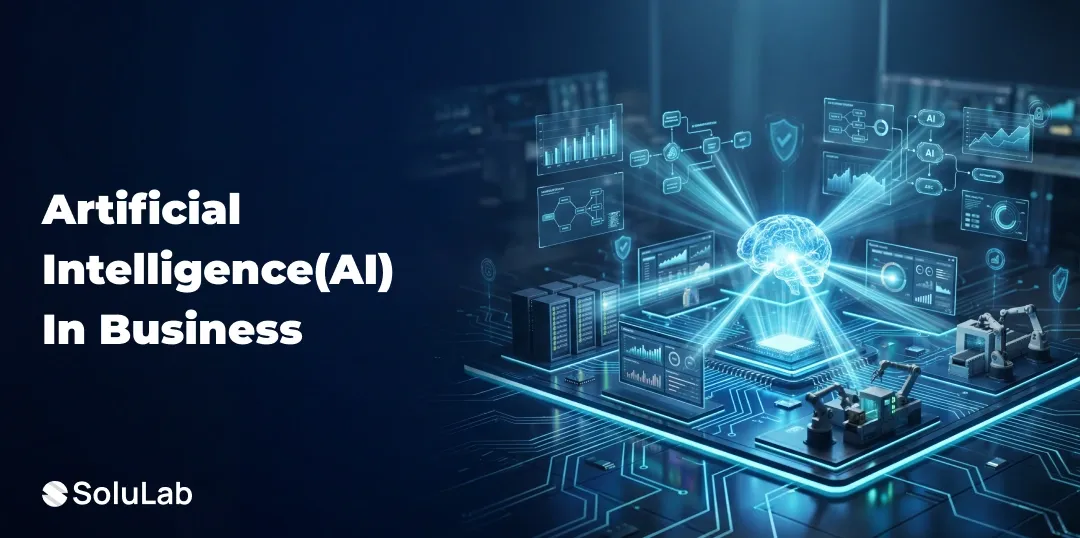
Data keeps piling up, costs keep rising, and customers expect more than they used to. Most traditional systems just can’t keep pace with real-time decisions, tight processes, and experiences that feel personal.
Competition doesn’t wait, and companies need faster ways to automate operations, make sense of complex data, and get more done. That’s exactly where AI is proving itself.
In 2026, AI is reshaping how organizations run supply chains, customer service, marketing, and strategic planning. Predictive analytics, intelligent automation, workflows that used to eat up hours now run themselves, and insights that used to take weeks show up in minutes.
Key Takeaways
- The Problem: Manual workflows, slow decisions, data scattered across systems, and costs that keep climbing. Traditional tools just can’t handle the data volumes or the real-time demands modern business runs on.
- The Solution: AI-driven systems take over repetitive tasks, chew through large datasets, and surface predictive insights. That means better efficiency, sharper customer experiences, lower costs, and faster strategic calls.
- How SoluLab Helps: SoluLab builds AI into its own development workflows, not just its products. That lets us build enterprise AI and LLM solutions faster, cut development costs, and deliver systems that actually scale for modern businesses.
The Current State of AI Adoption
Large enterprises and Fortune 500 companies are adopting AI to improve efficiency, sharpen decision-making, and push innovation forward. According to Mckinesy, 78% of organizations now use AI in at least one business function, up sharply from 55% the year before.
65% of companies now report regular use of generative AI tools, and enterprise deployment keeps accelerating. Among large corporations, adoption runs even higher: around 92% of Fortune 500 companies reportedly use OpenAI technologies in some capacity.
Analysts also expect over 80% of enterprises to deploy generative AI applications or APIs by 2026. AI isn’t a side project anymore, it’s becoming core enterprise infrastructure.
Why AI in Businesses Is Becoming a Competitive Necessity?
AI has moved past the experimental phase. It’s a strategic requirement now, and companies that build it into core workflows are pulling ahead on speed, efficiency, and data-driven decisions.
- Smarter Decision-Making: AI can chew through massive datasets in seconds, spotting patterns, forecasting demand, and sharpening strategy. That means better planning accuracy and stronger business operations overall.
- Operational Efficiency: AI takes over repetitive tasks, data entry, customer queries, workflow management, freeing teams to focus on strategic work while cutting operational costs and human error.
- Enhanced Customer Experience: AI-powered analytics and personalization engines help businesses understand customer behavior, serve up recommendations that actually fit, and answer support questions faster through chatbots and virtual assistants.
- Faster Innovation Cycles: AI tools let organizations read market trends, test product ideas quickly, and build new digital services, so businesses adapt faster when demand shifts.
- Competitive Market Advantage: Early adopters gain a real edge, better productivity, lower costs, smarter services. At this point, adopting AI isn’t optional if you want to stay competitive.
Read Our Blog Post: AI for small businesses
Key Technologies Driving AI Adoption
Here’s what’s actually driving AI adoption under the hood:
- Machine Learning (ML): ML lets systems analyze large datasets, spot patterns, and make predictions that sharpen decision-making and operational efficiency.
- Generative AI & Large Language Models (LLMs): These power applications like AI copilots, chatbots, automated content generation, and enterprise knowledge assistants.
- Natural Language Processing (NLP): Lets machines understand, interpret, and respond to human language, showing up in chatbots, AI agent development services, voice assistants, and customer support systems.
- Computer Vision: Analyzes images through AI-powered cameras and video for use cases like quality inspection, security monitoring, medical imaging, and retail analytics.
- AI Agents and Autonomous Systems: Systems that perform tasks, make decisions, and run workflows on their own across enterprise software.
- Cloud AI Infrastructure: Cloud platforms bring scalable computing power and AI tools together, making advanced AI deployment a lot easier for enterprises.

Real World Examples of AI in Business
AI is already reshaping how companies operate. Across industries, organizations are using it to automate workflows, personalize services, analyze data, and run more efficiently.
1. Amazon – AI for Personalized Recommendations
Amazon uses AI and machine learning to analyze customer behavior and recommend products, a system that meaningfully improves user experience and drives a large share of its e-commerce sales.
2. Netflix – AI for Content Personalization
Netflix uses AI models to analyze viewing behavior and recommend shows tailored to individual users, which boosts engagement and retention across its streaming platform.
3. Tesla – AI for Autonomous Driving
Tesla uses AI-powered computer vision and neural networks for autonomous driving features, processing real-time road data to help with navigation, object detection, and driver safety.
4. JPMorgan Chase – AI for Financial Analysis
JPMorgan uses AI systems such as COIN to review legal documents and analyze financial data, cutting manual processing time and sharpening accuracy in financial operations.
5. Walmart – AI for Supply Chain Optimization
Walmart applies AI and predictive analytics to forecast demand, fine-tune inventory levels, and run its global retail supply chain more efficiently.
Benefits Of AI in Business
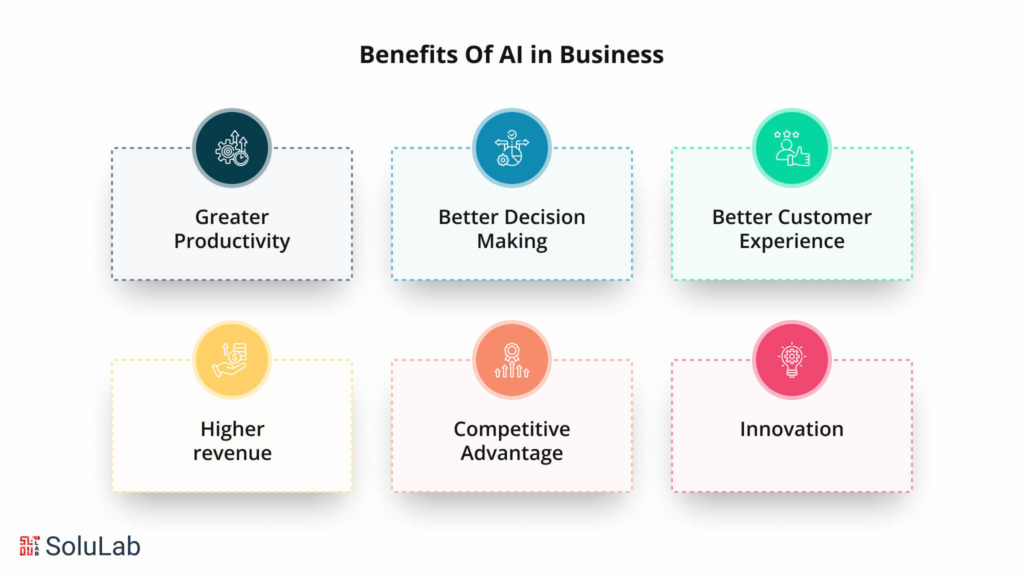
AI brings real benefits of AI in business, no matter the industry. Here are the ones that matter most:
1. Greater Productivity: AI takes the mundane tasks off people’s plates so they can focus on what actually matters. That saves money and increases output. Take AI for business analytics , for example: automation eases supply chain processes, while chatbots handle the common customer queries.
2. Better Decision Making: AI digs through huge amounts of data to catch trends and patterns human eyes would miss. That’s what lets an organization reduce risk and act on opportunities through data-driven decisions instead of guesswork. AI in Sports boosts performance this way, surfacing insights and analysis that give teams a real edge.
3. Better Customer Experience: AI applications in business help companies deliver personalized experiences. By analyzing consumer data, businesses can offer customized advice, sharpen customer service, and build stronger relationships along the way.
4. Higher revenue: AI in business management opens up higher revenue by spotting untapped markets, optimizing pricing, and squeezing more out of sales effectiveness. recommendation systems powered by AI, for instance, drives sales up simply by recommending products customers actually want.
5. Competitive Advantage: Early adopters get the most out of AI in business. Businesses can put AI to work for innovation and operational efficiency, setting themselves apart from rivals and growing their market share.
6. Innovation: AI in business intelligence gives innovation a real boost, companies use it to test new ideas, develop new products, and explore new areas. It’s already being applied to generate new material designs and creative content.
Read Also: How to Create an AI-Powered App like Doppl?
Use Cases of AI in Business
AI is helping businesses automate complex tasks, dig through massive datasets, and deliver better customer experiences. Companies across industries now lean on it to run more efficiently, cut costs, and make smarter decisions.
1. Customer Support Automation
AI-powered chatbots and virtual assistants handle routine customer queries, respond instantly, and run 24/7. That cuts the support workload while improving response time and overall satisfaction.
2. Predictive Analytics for Decision-Making
Businesses use AI to analyze historical and real-time data, forecasting demand, spotting trends, and getting ahead of risks. Leaders use these insights to make faster, data-driven strategic calls.
3. Marketing Personalization
AI analyzes customer behavior, preferences, and purchasing patterns to deliver product recommendations and campaigns that actually target the right people. That drives engagement, lifts conversions, and strengthens customer relationships.
4. Supply Chain Optimization
AI in supply chain systems forecasts demand, monitors inventory, and optimizes logistics routes. That reduces operational costs, prevents stock shortages, and improves efficiency across the whole chain.
5. Fraud Detection and Risk Management
Financial institutions use AI in business operations to catch unusual transaction patterns and potential fraud. AI models watch activity around the clock, helping companies prevent losses and tighten security.
Read More: How Can AI Help Businesses Cut Costs?
What Future Does AI in Business Holds?
AI is moving past simple automation into genuine decision-making systems. In the coming years, it’ll keep reshaping how businesses operate, innovate, and compete.
- Hyperautomation Across Business Processes: AI paired with robotic process automation will run complex workflows across finance, HR, and supply chains, letting organizations cut operational costs and improve efficiency.
- AI-Powered Decision Intelligence: Future business systems will lean on AI-driven analytics to support strategic decisions, chewing through massive datasets, predicting trends, flagging risks, and recommending the best moves for leaders.
- Enterprise AI Copilots for Employees: Businesses will deploy AI copilots to help employees with research, coding, documentation, and analytics, speeding up teams and boosting productivity across knowledge-based roles.
- Autonomous AI Agents Managing Workflows: AI agents will take on more tasks, customer interactions, data analysis, system monitoring, letting organizations run operations with barely any manual intervention.
- AI + IoT for Smart Business Operations: Pairing AI with IoT devices enables real-time asset monitoring, predictive maintenance, and operational optimization in industries like manufacturing, logistics, and healthcare.
How SoluLab Helps Companies Build Enterprise AI Systems?
Enterprises are adopting AI to automate operations, sharpen decision-making, and get real data-driven insights. SoluLab helps businesses design, build, and deploy scalable AI systems built around actual enterprise challenges.
SoluLab’s expert AI engineers use AI in their own workflows to work smarter and move faster. Here’s where we can help:
- AI Strategy and Use Case Identification
- Custom AI and Machine Learning Development
- Enterprise LLM and Generative AI Solutions
- AI Integration with Existing Systems
- Scalable AI Infrastructure and Deployment
UpdateIA, for instance, is an enterprise-grade Generative AI platform built by SoluLab to unify and automate business operations through 14+ specialized AI agents. A central “Jarvis” brain powers it, sharpening HR, CRM, finance, and support functions. Here’s what it delivered:
- 80% reduction in manual workflows
- 40% enterprise connectors are integrated
- 3x faster task execution

Conclusion
AI is changing how large enterprise AI solutions operate. From automating repetitive workflows to enabling smarter, data-driven decisions, it’s helping companies run more efficiently, cut costs, and deliver better customer experiences.
As machine learning and generative AI keep evolving, businesses that adopt early gain a real competitive advantage. But getting implementation right takes the right strategy, infrastructure, and technical expertise.
If your organization is planning to bring AI into its operations, SoluLab, an AI development company, can help you design, build, and deploy AI solutions that actually scale.
FAQs
Shipra Garg is a tech-focused content strategist and copywriter specializing in Web3, blockchain, and artificial intelligence. She has worked with startups and enterprise teams to craft high-conversion content that bridges deep tech with business impact. Her work translates complex innovations into clear, credible, and engaging narratives that drive growth and build trust in emerging tech markets.