Talk to an Expert

Top 5 Enterprise Blockchain Platforms to Consider [2026]

Enterprises are under immense pressure to stay competitive, efficient, and transparent. But with rising data, slow transactions, and outdated legacy systems, many businesses are facing troubles in scaling their operations securely.

The enterprise blockchain market is expected to reach USD 145.9 billion by 2030, growing at a CAGR of 47.4% from 2024 to 2030.

This lack of trust, especially in sectors like finance, supply chain, and healthcare, is costing companies not just money but credibility. And while everyone’s talking about blockchain, the real challenge is figuring out which platforms are enterprise-ready, scalable, and future-proof in 2026.

In this blog, we’ll explore the top 5 enterprise blockchain platforms, the criteria to select the best platform, and more. Let’s get started!

How Blockchain Is Transforming Enterprises? 

Here’s how blockchain is impacting enterprises across industries:

1. Trust Without Middlemen: Blockchain enables secure, verifiable transactions without intermediaries. That means faster processes and fewer costs. 

2. Supply Chain Transparency: Every step can be tracked from farm to fork. Enterprises can now trace product origins, reduce fraud, and ensure compliance. This is perfect for FMCG, pharma, and agriculture.

3. Smart Contracts: No more manual checks. Smart contracts automate tasks when conditions are met. Great for legal, finance, and logistics.

4. Better Payments & Settlements: Faster cross-border payments with reduced transaction fees. Especially useful for export-import businesses in India.

5. Audit & Compliance Made Easy: Audits become simpler since every change is recorded. Blockchain makes financial data tamper-proof and regulator-friendly.

Criteria for Selecting the Top Enterprise Blockchain Platforms

With the proliferation of blockchain platforms catering to enterprise needs, it’s essential to establish a set of criteria to evaluate and select the most suitable options. Each platform comes with its strengths and weaknesses, making the selection process a nuanced task. Here are the key criteria to consider when selecting the top enterprise blockchain platforms of 2026:

  • Scalability and Performance: Scalability is crucial for enterprise applications that demand high transaction throughput. Platforms must demonstrate the ability to handle a large number of transactions per second while maintaining low latency. Considerations include the platform’s consensus mechanism, sharding techniques, and approaches to optimizing network performance as the user base expands.
  • Security and Data Privacy: Enterprises handle sensitive data, and security is paramount. Blockchain platforms must employ robust encryption, hashing, and access control mechanisms to safeguard data from unauthorized access. Privacy features, such as zero-knowledge proofs and private transactions, allow enterprises to share information selectively while preserving confidentiality.
  • Interoperability and Integration: In an ecosystem with multiple blockchain networks and existing IT infrastructure, interoperability is essential. Platforms should support seamless integration with legacy systems and other blockchain networks. Standards like cross-chain communication protocols enhance interoperability and facilitate data exchange between different platforms.
  • Smart Contract Capabilities: Smart contracts automate business processes, but their complexity varies between platforms. Evaluate the programming languages supported, the ease of writing and deploying smart contracts, and the platform’s support for oracles (external data sources).
  • Community and Support: A vibrant and active community indicates a platform’s vitality and ongoing development. Robust community support ensures quick issue resolution and a wealth of resources for developers. Platform documentation, developer tools, and user-friendly interfaces contribute to a positive user experience.

Top 5 Enterprise Blockchain Platforms

Ethereum

1. Ethereum

Ethereum, founded in 2015, is one of the most widely adopted blockchain platforms, known for its smart contract functionality, decentralized applications (dApps), and a robust developer community.

While originally public, Ethereum also offers enterprise-grade solutions through frameworks like the Enterprise Ethereum Alliance (EEA). It’s ideal for businesses looking to build transparent and automated systems.
2. R3 Corda

R3 Corda, launched in 2016, is a blockchain platform designed for regulated industries like finance, healthcare, and supply chain. Unlike public blockchains, Corda focuses on privacy, scalability, and interoperability by enabling only the involved parties to access transaction data.

It supports smart contracts and offers robust identity management, making it ideal for enterprise use cases. Its unique architecture ensures compliance and efficiency for complex workflows.

3. Hyperledger Fabric

Hyperledger Fabric, launched in 2015 by the Linux Foundation, is a modular and permissioned blockchain platform designed for enterprise use. It supports pluggable consensus mechanisms, private channels for confidential transactions, and chaincode (smart contracts) written in general-purpose programming languages like Go and Java.

Its architecture is ideal for businesses needing secure, scalable, and customizable solutions across sectors like supply chain, finance, and healthcare.

4. Hedera Hashgraph

Hedera Hashgraph, founded in 2018, is a high-performance public distributed ledger designed for enterprises. Unlike traditional blockchains, it uses a unique hashgraph consensus algorithm, making it faster and more energy-efficient.

Key features include fair transaction ordering, low fees, and high throughput, making it ideal for use cases like supply chain, identity management, and payments. Its governing council includes global giants like Google and IBM, ensuring robust governance.
IBM Blockchain

5. IBM Blockchain

IBM Blockchain (launched in 2017) is a robust enterprise-ready platform built on Hyperledger Fabric, designed to help businesses securely share data and streamline workflows. Known for its modular architecture, it supports permissioned networks, ensuring high privacy and scalability.

It also integrates with existing systems, making it ideal for sectors like supply chain, finance, and healthcare. IBM offers tools, templates, and support to help enterprises build and scale blockchain solutions efficiently.
Enterprise Blockchain Development Company

Conclusion

In 2026, enterprise blockchain platforms will no longer be optional — they’re a strategic necessity. Whether it’s improving operations, security, or transparency. Platforms like Hyperledger Fabric, Ethereum Enterprise, and others are redefining how businesses function. 

Each offers unique features tailored to different enterprise needs, from smart contracts to permissioned networks. As businesses continue to grow, choosing the right blockchain platform and hiring a blockchain developer can provide a competitive edge in the market. The key is to align technology with business goals.

Token World, a crypto launchpad platform, partnered with SoluLab to enhance smart contract security, scalability, and regulatory compliance. We built robust tokenomics, investor dashboards, and multilingual support. Our blockchain integration and community strategies empowered Token World to deliver secure, user-friendly token launches and drive global investor engagement.

SoluLab, a blockchain development company, can help you pick the best platform as per your business requirements.

FAQs

1. How is enterprise blockchain different from public blockchain?

Enterprise blockchains are usually permissioned, meaning only authorized participants can access or validate transactions, ensuring privacy and control. Public blockchains like Bitcoin and Ethereum are open to everyone, and transactions are fully transparent.

2. Is it expensive to build on an enterprise blockchain platform?

Costs vary depending on the platform, complexity of the solution, development time, and compliance needs. While some platforms are open-source and free to use, enterprise-level support or custom integrations can increase expenses. However, the long-term ROI often outweighs the initial investment.

3. Can enterprise blockchains support AI and IoT integrations?

Yes, many modern enterprise blockchain platforms support integration with AI, IoT, and cloud computing. This allows for powerful use cases like predictive maintenance, smart manufacturing, automated logistics, and real-time asset tracking with secure data layers.

4. Which industries are adopting enterprise blockchain platforms the most?

Major industries using enterprise blockchain solutions include finance and banking, supply chain and logistics, healthcare, insurance, government, energy, and real estate. These sectors benefit from enhanced transparency, data integrity, and automation.

5. How long does it take to build an enterprise blockchain solution with SoluLab?

Timelines vary based on complexity, but SoluLab typically delivers MVPs within a few weeks and full-scale enterprise-grade platforms in a few months. Their agile development process ensures fast iterations and transparent progress tracking.
What Are the Business Benefits of Blockchain-as-a-Service?

Blockchain-as-a-Service (BaaS)

Building a blockchain solution from scratch can be a massive headache—high costs, complex infrastructure, and the need for a specialized tech team. For many businesses, these hurdles make blockchain feel out of reach. 

Blockchain is no longer solely connected to Bitcoin and cryptocurrencies. Companies are now seeing how it might lower operating expenses and improve equity. 

The global BaaS market was valued at approximately USD 4.3 billion in 2024 and is projected to reach USD 68 billion by 2030, growing at a CAGR of 58%.

Blockchain is generating major advances in efficiency and accountability across a wide range of sectors, from simplifying government operations to changing contract enforcement. In this blog, we’ll explore what blockchain as a service is, use cases, and more. 

What is Blockchain-as-a-Service?

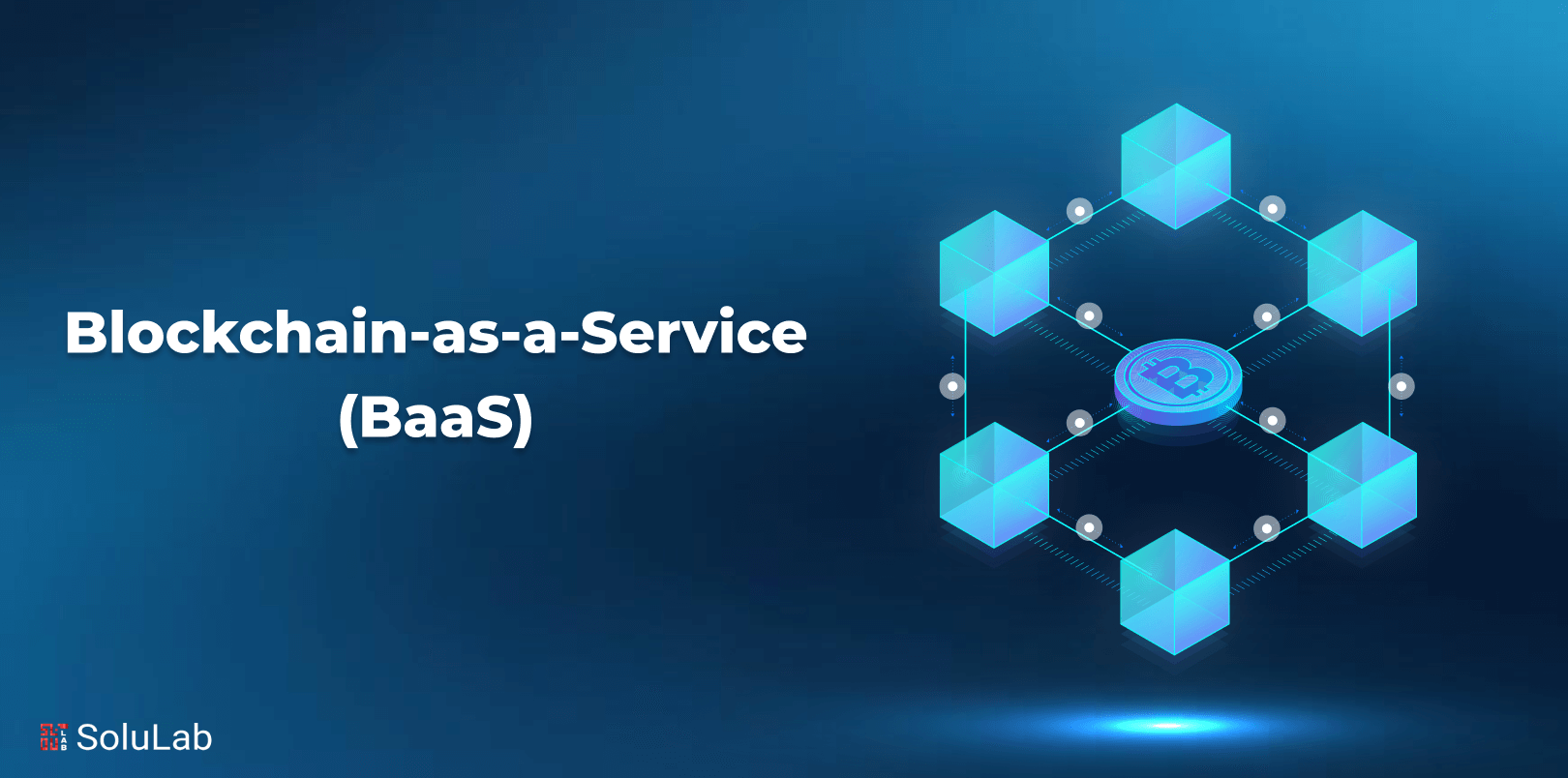
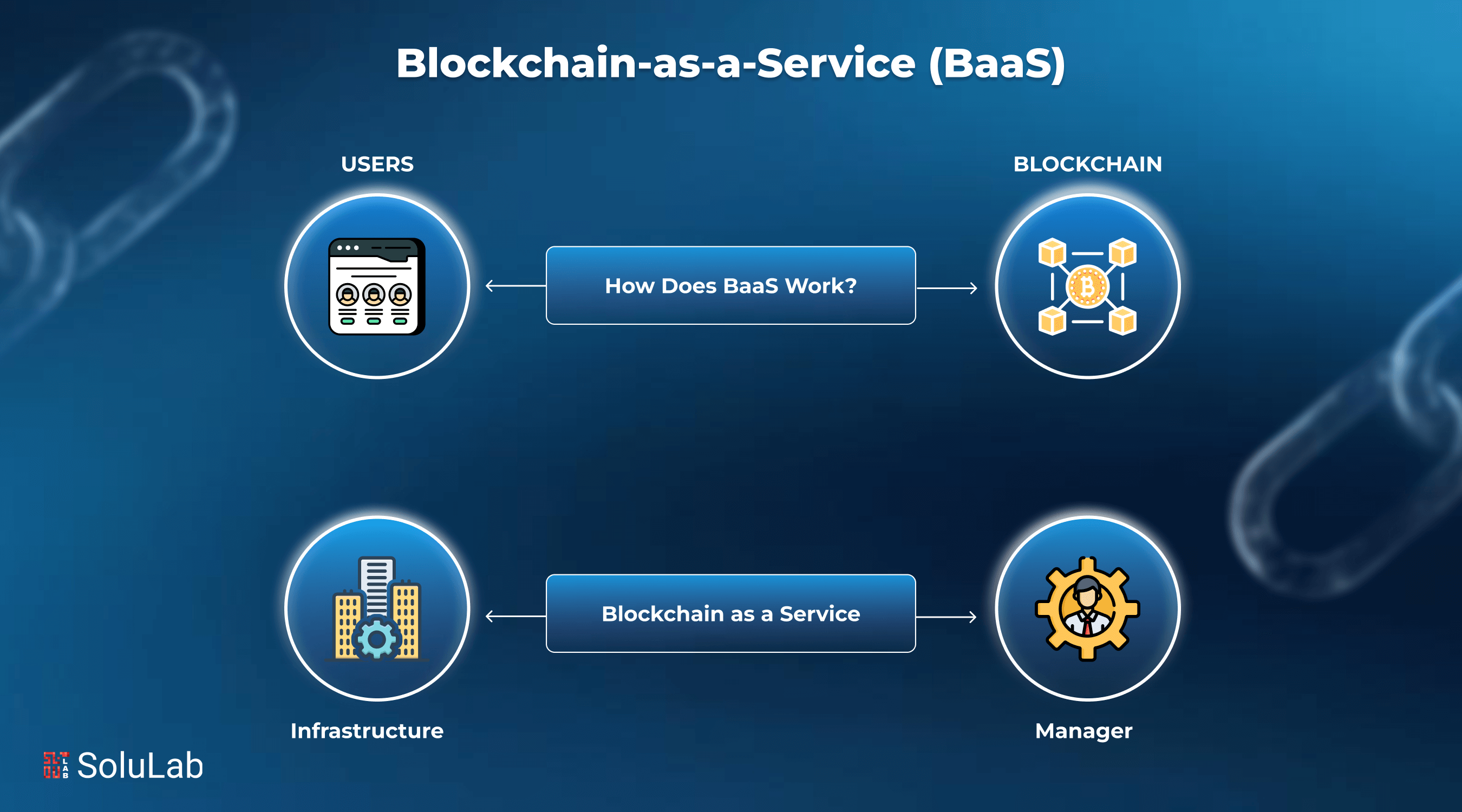
Blockchain-as-a-Service (BaaS) refers to third-party providers who create and manage cloud-based networks for companies developing blockchain applications. This service is a recent addition to the rapidly growing blockchain technology field. 

While blockchain is most commonly associated with cryptocurrency transactions, its use has expanded to secure various types of transactions. As a result, there is a rising demand for hosting services to support these applications.

How Does the Business Model for Blockchain-as-a-Service Work?

The method via which third parties set up, host, and manage a Blockchain network on account of enterprises is referred to as the blockchain-as-a-service business model. In exchange for payments, the service provider provides the services for setting up blockchain technology and infrastructure.

Blockchain-as-a-service for businesses functions much like a web hosting company in many aspects. It gives clients access to cloud-based tools for creating and hosting smart contracts and Blockchain applications within the provider-managed ecosystem.

In conventional businesses, the BaaS integration offers assistance for resource allocation, bandwidth control, data security features, and hosting needs. The ability of businesses to focus on their core competencies rather than the intricacies of Blockchain operations is the largest effect of BaaS on a company.

Blockchain Development Services

How Organizations are Being Shaped by Blockchain-as-a-Service?

BaaS is transforming businesses with a modern touch. Here’s a breakdown of how the business model for Blockchain-as-a-Service (BaaS) works:

1. Third-Party Provider Management: BaaS providers offer infrastructure for businesses to create and manage their blockchain applications on cloud-based networks. These services handle the technical aspects, including network setup, smart contract creation, and blockchain hosting.

2. Subscription-Based Pricing: Many BaaS platforms charge businesses on a subscription basis, where users pay a recurring fee for accessing blockchain infrastructure and services. Pricing models may include tiered levels based on features, scalability, or usage volume.

3. Transaction Fees: Some BaaS providers charge fees based on the number of transactions processed on their blockchain networks. This can be structured as a pay-per-use or pay-per-transaction model, where costs increase with higher usage.

4. Smart Contract and App Development: BaaS providers often offer additional services like smart contract creation, testing, and deployment. Businesses may pay extra for blockchain integration services or custom app development.

5. Security and Compliance Services: Providers ensure that businesses using their blockchain networks comply with legal and regulatory requirements. Businesses may incur additional costs for security features like encryption, identity management, and auditing.

6. Scalability and Flexibility: BaaS providers offer scalable solutions to accommodate growing businesses. This flexibility allows companies to scale blockchain applications as their business needs evolve without significant upfront infrastructure investment.

7. Partnerships with Enterprises: BaaS providers often partner with large enterprises, offering customized solutions to help them integrate blockchain technology into their existing business operations (e.g., supply chain management, finance).

Read Also: Blockchain in Water Management

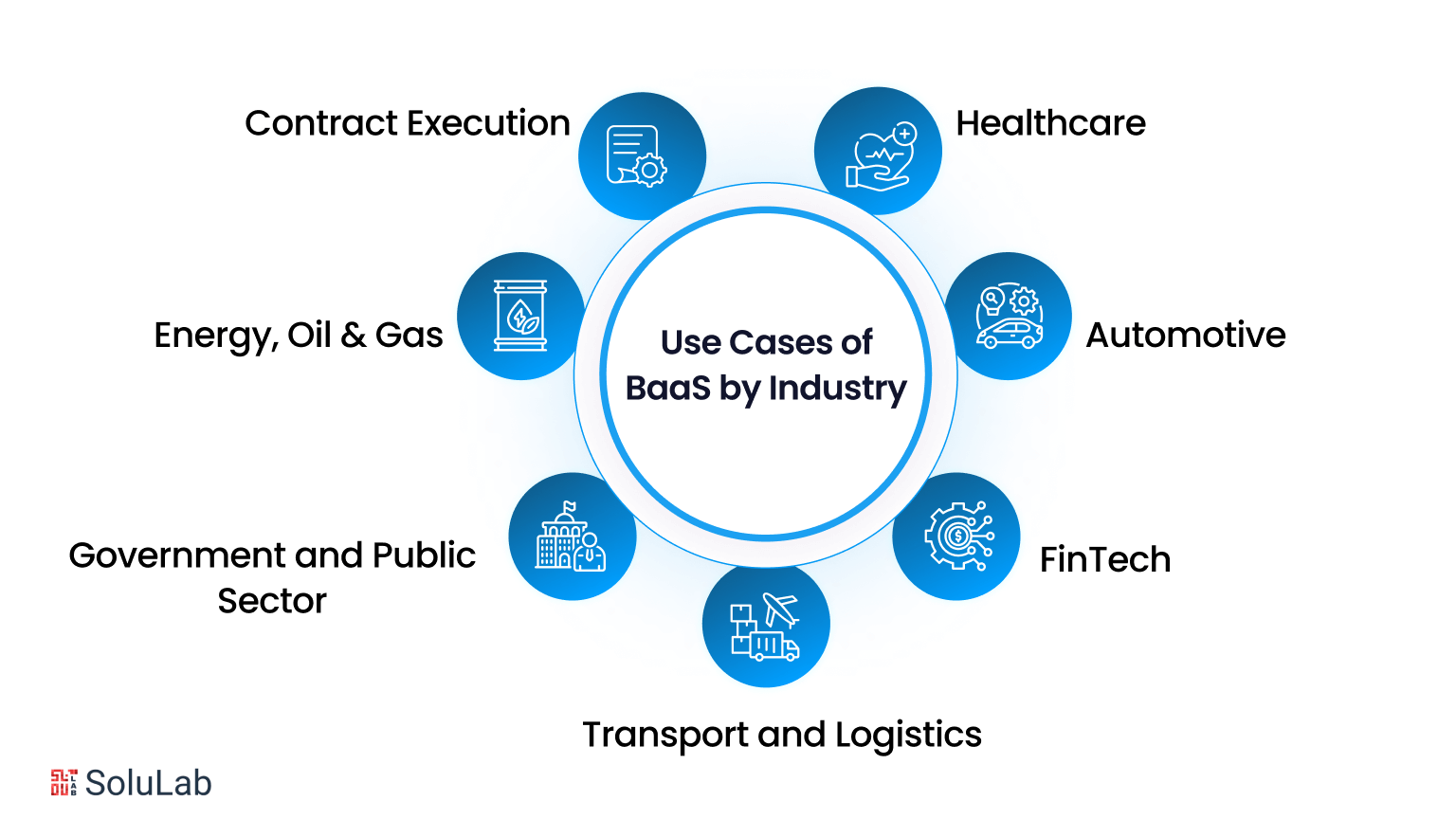
Use Cases of Blockchain-as-a-Service by Industry

Use Cases of BaaS by Industry

Since Blockchain, as previously said, is a data management platform, data-keeping will be at the core of any solution within its domain. The use examples that follow demonstrate how various firms employ blockchain technology for transparency and immunity.

1. Healthcare

Because blockchain maintains a universal and transparent version of patient medical data, it has significantly altered the healthcare industry. Thanks to well-organized and updated data, blockchain technology has facilitated the provision of immediate treatment to individual patients by a number of medical specialists.

Additionally, blockchain helps verify the legitimacy of pharmaceuticals. This implies that the source of any medicine or chemical may be determined. Manufacturers that have been recalling certain ingredients for prescription medications have greatly benefited from this. 

2. Automotive

Handling supply chains and avoiding fake components is the automotive industry’s greatest problem. Here, the blockchain platform as a service comes to the rescue by providing transported automobile parts with end-to-end accessible data. This makes it easier for car companies to locate and distinguish between real and bogus spare parts.

Furthermore, the efficient flow within the sector has been disrupted by Blockchain services in the production and supply chain. Essential components are always available, and companies may achieve maximum output with the fewest possible obstacles.

3. FinTech

Every average banking consumer now feels at ease thanks to blockchain technology in FinTech, since it has simplified several financial procedures, such as the KYC and AML verification processes. 

In addition to enhancing transparency and immutability to avert conflicts. Customers may now use smart cards thanks to blockchain services. These smartcards facilitate quicker financial payments without requiring central authority certification.

4. Transport and Logistics

Identity verification is critical to the logistics and transportation industries, respectively, for both people and products. Passengers may complete the full procedure quickly and easily with only one identity token. In a similar vein, freight movement, verification effectiveness, and fault tolerance.

Blockchain platform-as-a-service offers different sectors and data silos a failsafe method. 

5. Government and Public Sector

Blockchain’s transparency and immutability can greatly improve government processes. Blockchain applications for public operations are changing the way governments operate by providing answers for safe identity management, transparent voting procedures, and effective public records management.

6. Energy, Oil & Gas

To improve energy trade and efficiency, SaaS-based blockchain applications are being used. Blockchain platform Vakt automates transaction settlement and optimizes documentation. Blockchain technology is popular for peer-to-peer energy trade. Users can swap excess renewable energy with neighbors via Powerledger, enhancing energy efficiency and lowering expenses.

7. Contract Execution 

Under the Blockchain’s smart contracts service, a dedicated platform facilitates the execution of contracts, ensuring heightened levels of transparency. The decentralized architecture ensures that all involved parties possess equal access to pertinent information, fostering a fair and equitable environment for contract execution.

Furthermore, this distributed ledger technology not only enhances transparency but also streamlines the contract execution process, reducing the need for intermediaries and associated costs. With automated enforcement of contractual terms and conditions, smart contracts offer efficiency and reliability, thereby revolutionizing traditional contract management practices. This innovative approach not only mitigates disputes but also enhances trust among parties, paving the way for more efficient and secure transactions across various industries.

Read Blog: How Blockchain Is Revolutionizing the Fintech Industry?

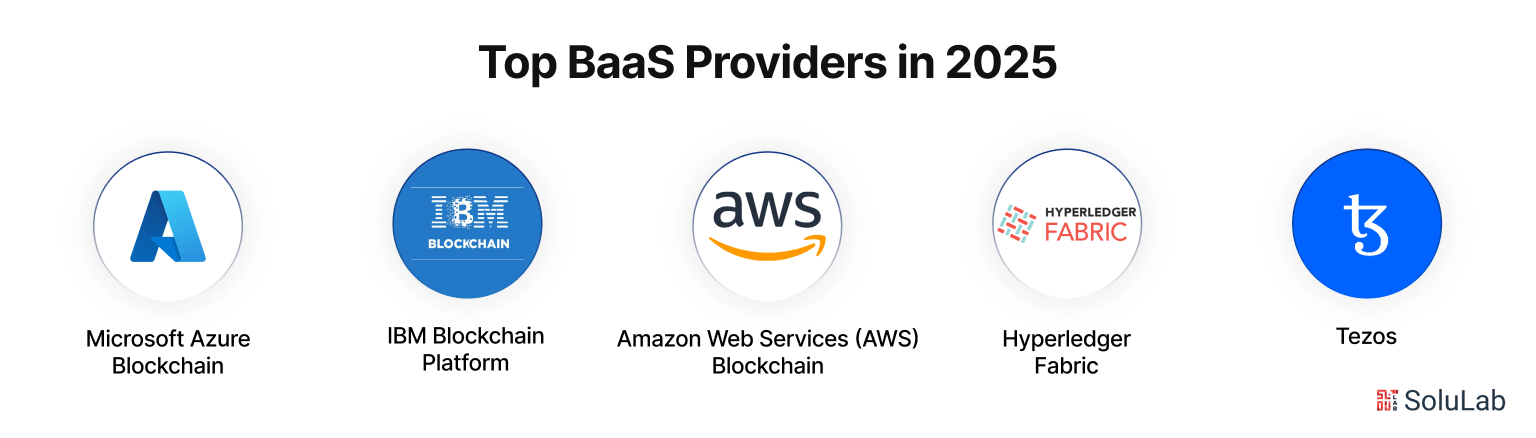
Top Blockchain-as-a-Service (BaaS) Providers in 2025

Top BaaS Providers in 2025

Blockchain-as-a-Service (BaaS) is establishing itself as a game changer for organizations that are interested in utilizing the potential of blockchain technology without the hassles of infrastructure administration. Here, we look at the top BaaS providers who are leading the way in enabling smooth blockchain connectivity for organizations across several sectors.

1. Microsoft Azure Blockchain

  • Overview: Microsoft Azure Blockchain offers a robust suite of services tailored to simplify blockchain development and deployment. With Azure Blockchain Service and Azure Blockchain Workbench, users gain access to tools for building, governing, and deploying blockchain networks effortlessly.
  • Key Features: Seamless integration with Azure services, support for Ethereum and Hyperledger Fabric, built-in governance, and monitoring tools, scalability, and high availability.
  • Market Presence: Widely recognized and trusted by enterprises globally, particularly prevalent in finance, healthcare, and supply chain sectors.

2. IBM Blockchain Platform

  • Overview: The IBM Blockchain Platform provides a comprehensive set of tools and services designed to accelerate blockchain adoption across industries. Offering support for multiple frameworks and deployment options, IBM empowers enterprises to build, operate, and scale blockchain networks with ease.
  • Key Features: Flexible deployment options (cloud, on-premises, hybrid), advanced analytics and insights, integration with IBM Cloud services, and industry-specific solutions for supply chain, finance, and healthcare.
  • Market Presence: Highly regarded by enterprises seeking enterprise-grade blockchain solutions, prevalent in regulated industries where security and compliance are paramount.

3. Amazon Web Services (AWS) Blockchain

  • Overview: AWS Blockchain offers a suite of managed blockchain services that enable users to create and manage blockchain networks effortlessly. With services like Amazon Managed Blockchain and Amazon Quantum Ledger Database (QLDB), users can leverage the scalability, security, and reliability of AWS for their blockchain applications.
  • Key Features: Fully managed blockchain infrastructure, support for popular frameworks like Hyperledger Fabric and Ethereum, integration with other AWS services, and a pay-as-you-go pricing model.
  • Market Presence: Highly adopted across various industries, including finance, gaming, and logistics, AWS Blockchain stands out for its reliability, scalability, and ease of use.

Read Our Blog: Top Blockchain Development Companies in 2025

4. Hyperledger Fabric

Overview: Hyperledger Fabric, an open-source blockchain framework hosted by the Linux Foundation, is designed for enterprise use. It focuses on providing a modular and flexible architecture, enabling businesses to create blockchain solutions for various industries like finance, supply chain, and healthcare.

Key Features: Permissioned blockchain architecture for enhanced security, Modular design allowing businesses to plug in their preferred components, and supports smart contracts, known as “chaincode,” written in general-purpose programming languages.

Market Presence: Hyperledger Fabric is widely adopted by enterprises, particularly in industries requiring secure and scalable blockchain solutions, such as IBM’s Food Trust Network, Walmart’s supply chain initiatives, and more.

5. Tezos

Overview: Tezos is a self-amending blockchain platform that supports smart contracts and decentralized applications (dApps). It is known for its focus on security, scalability, and ease of use, making it a strong choice for businesses looking to implement blockchain solutions.

Key Features: Self-amending protocol, allowing upgrades without hard forks, formal verification for smart contract security and on-chain governance, allowing stakeholders to vote on changes.

Market Presence: Tezos has gained significant traction in the decentralized finance (DeFi) space and among enterprises exploring blockchain applications, including partnerships with major brands like McLaren and the Swiss financial sector.

Hire Blockchain Developers

Final Words

Blockchain technology is changing industries worldwide by providing innovative solutions to enduring problems. Businesses looking to stay competitive can benefit from its efficient, transparent, and safe features. 

The numerous applications of blockchain technology present new opportunities for development and success across industries like advertising, real estate, supply chain management, and banking. With the help of blockchain consulting services, business executives can fully leverage distributed ledger technology to drive innovation and streamline operations by understanding and applying its use cases effectively.
OBORTECH partnered with SoluLab to improve its SmartHub platform by integrating blockchain as a service (BaaS), like a secure staking system, crypto payment gateway, and smart contracts. Overcoming multi-cloud interoperability and UI challenges, the solution enabled OBOT token transactions, improved user engagement, and delivered a scalable, IoT-integrated blockchain ecosystem across the supply chain and finance industries.

SoluLab, a blockchain development company, has a team of experts ready to discuss all your business queries and deliver innovative solutions. Contact us today to discuss further!

FAQs

1. What is Blockchain-as-a-Service (BaaS), and how does it differ from traditional blockchain deployment?

Blockchain-as-a-Service (BaaS) is a cloud-based service model that allows businesses to utilize blockchain technology without the need for extensive in-house infrastructure and expertise. Unlike traditional blockchain deployment, where organizations have to build and maintain their own blockchain networks, BaaS platforms offer pre-built infrastructure and tools for faster and easier deployment.

2. What are the key benefits of using Blockchain-as-a-Service for businesses?

Some key benefits of using Blockchain-as-a-Service include enhanced security, increased transparency, streamlined operations, cost savings, and scalability. By leveraging BaaS, businesses can mitigate security risks, improve trust among stakeholders, automate processes through smart contracts, reduce operational expenses, and quickly scale their operations as needed.

3. Which industries can benefit the most from Blockchain-as-a-Service solutions?

Industries such as finance, healthcare, supply chain, real estate, and logistics stand to benefit the most from Blockchain-as-a-Service solutions. These sectors often deal with sensitive data, complex transactions, and regulatory compliance requirements, making the transparency, security, and efficiency offered by BaaS platforms particularly valuable.

4. Can BaaS help reduce business costs?

Yes! BaaS helps reduce business costs by eliminating the need to build and maintain a full banking or blockchain infrastructure. Since you don’t have to manage the network, you save on infrastructure, talent, and ongoing maintenance. This leads to faster innovation and significant cost savings.

5. How can SoluLab assist businesses in leveraging Blockchain-as-a-Service?

SoluLab, a leading blockchain development company, helps businesses investigate, implement, and optimize Blockchain-as-a-Service solutions. SoluLab’s experienced team can help businesses at every stage of their blockchain journey with custom blockchain applications, integrating BaaS platforms into existing systems, or more.


Unveiling Tokenization: Transforming Fine Art and Luxury Goods

Tokenization

In the ever-evolving landscape of finance and technology, the concept of tokenization has emerged as a revolutionary force, poised to reshape industries ranging from real estate to fine art and luxury goods. This paradigm shift is propelled by the integration of blockchain technology, offering a secure and transparent way to digitize assets. In this exploration, we delve into the intricate world of asset tokenization, focusing on its application in the realms of fine art and luxury goods.

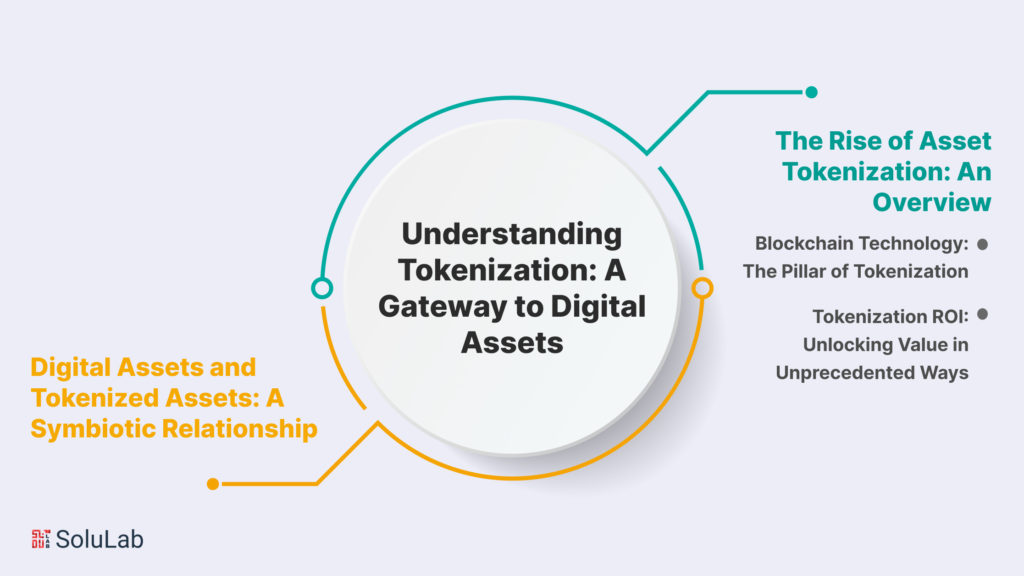
Understanding Tokenization: A Gateway to Digital Assets

Understanding Tokenization: A Gateway to Digital Assets

Tokenization, at its core, is the process of converting the value of an asset into a token on a blockchain. These digital representations, known as tokens, can represent a variety of assets, ranging from real estate to intellectual property. The utilization of blockchain technology ensures that each token is secure, transparent, and immutable, thereby revolutionizing the way we perceive and interact with traditional assets.

Digital Assets and Tokenized Assets: A Symbiotic Relationship

The term ‘digital assets’ encompasses a wide array of intangible assets, from cryptocurrencies to digital art. In the context of tokenization, these digital assets find a new dimension. Tokenized assets, as the name suggests, are traditional assets that have been converted into digital tokens. The synergy between digital assets and tokenized assets creates a fluid and efficient means of managing and transferring value.

The Rise of Asset Tokenization: An Overview

  • Blockchain Technology: The Pillar of Tokenization

Central to the concept of asset tokenization is blockchain technology. The decentralized and distributed nature of blockchain ensures that transactions are secure, transparent, and tamper-proof. This foundational technology has paved the way for the tokenization of a myriad of assets, bringing about a paradigm shift in the way we perceive and interact with value.

  • Tokenization ROI: Unlocking Value in Unprecedented Ways

One of the key drivers of the adoption of asset tokenization is the potential Return on Investment (ROI). By fractionalizing ownership and allowing for easier transfer of assets, tokenization unlocks liquidity and widens the pool of potential investors. This democratization of access to traditionally illiquid assets has the potential to yield substantial returns, making tokenization an attractive prospect for both investors and asset owners.

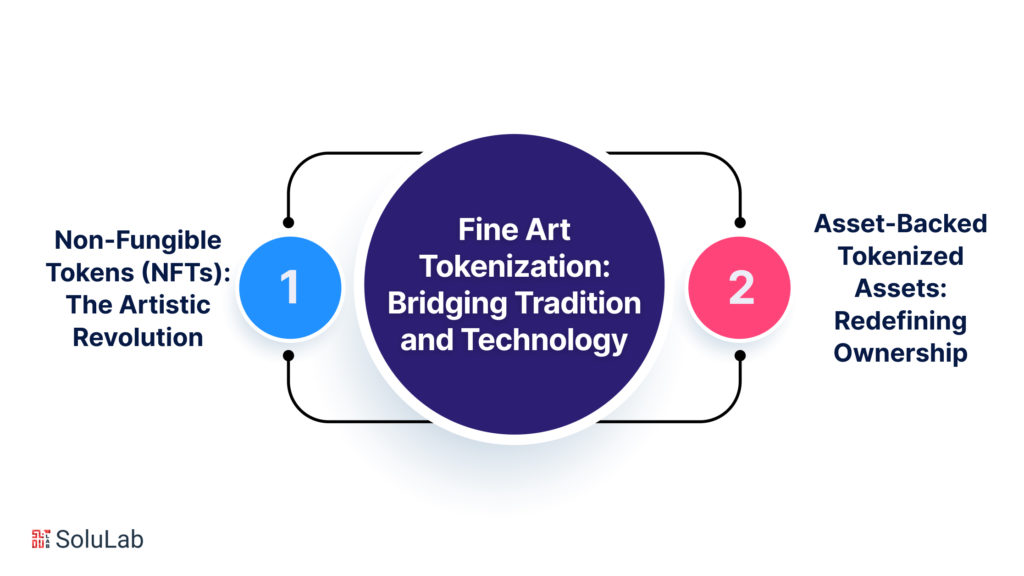
Fine Art Tokenization: Bridging Tradition and Technology

Fine Art Tokenization: Bridging Tradition and Technology

Fine art has long been regarded as a store of value and a symbol of cultural richness. However, the art market has faced challenges, such as illiquidity and the exclusivity of ownership. Enter fine art tokenization, a technological solution poised to redefine the art market by breaking down these barriers.

  • Non-Fungible Tokens (NFTs): The Artistic Revolution

Non-Fungible Tokens (NFTs) have taken the art world by storm, providing a unique and secure way to represent ownership of digital or physical assets. In the context of fine art, NFTs serve as digital certificates of authenticity, ensuring the provenance and uniqueness of a piece. This integration of technology not only enhances the transparency of the art market but also opens up new avenues for artists to monetize their work.

  • Asset-Backed Tokenized Assets: Redefining Ownership

One of the most intriguing aspects of fine art tokenization is the concept of asset-backed tokens. These tokens are backed by the intrinsic value of a physical asset, such as a painting or sculpture. This linkage between the digital and physical worlds provides investors with a tangible connection to the art, as they hold a share in the actual asset. This innovation not only makes fine art more accessible to a broader audience but also offers a novel way for collectors to diversify their portfolios.

Fine Art NFTs: The Industry Disruptors 

While the traditional fine arts market predominantly operated offline, the online art market has experienced a substantial surge in recent years, with sales on NFT marketplace platforms reaching an impressive $2.6 billion. This figure stands apart from the $65 billion turnover of the global fine art market, indicating a growing demand for distinctive and original artworks created by renowned artists.

The advent of fine art NFTs has introduced a novel avenue for artists to earn royalties from their creations. By democratizing the fine art landscape, artists can now receive royalties with each transfer of ownership of their NFTs. The artist determines and designates the percentage at the time of minting the NFTs, providing them with a continuous stream of income.

The impact of fine art NFTs extends beyond individual earnings, bringing about a transformation in the global art market. The emergence of the NFT art market has given rise to a parallel market, offering opportunities for artists, collectors, and sellers. Moreover, artists and art enthusiasts can now participate in the democratization of fine art through specialized platforms without being burdened by the substantial transaction and service fees typically associated with traditional auction houses.

Luxury Goods in the Digital Age: Tokenization’s Touch of Elegance

The world of luxury goods, whether it be high-end fashion, watches, or jewelry, is characterized by exclusivity and craftsmanship. Tokenization brings a touch of modernity to this traditional sector, offering new avenues for ownership and investment.

  • Asset Tokenization Platforms: Paving the Way for Luxury

Specialized platforms dedicated to the tokenization of luxury goods have emerged, providing a secure and transparent environment for both sellers and buyers. These platforms leverage blockchain technology to ensure the authenticity of products, combat counterfeiting, and facilitate seamless transactions. Through asset tokenization, ownership of a luxury item becomes fluid, allowing for fractional ownership and trade in a global marketplace.

  • Investing in Tokenized Assets: A Paradigm Shift for Luxury Investors

The allure of luxury goods has extended beyond the confines of the traditional buyer, thanks to tokenization. Investors can now diversify their portfolios by gaining exposure to the luxury market without the need for exorbitant capital. This democratization of luxury ownership not only benefits investors but also contributes to the growth of the luxury industry by expanding its customer base.

  • Asset Tokenization Platforms: Enablers of Change

The success of asset tokenization relies heavily on the platforms that facilitate the creation, management, and exchange of tokens. These platforms utilize blockchain technology to ensure the security and transparency of transactions. The robustness of the underlying blockchain is crucial in maintaining the integrity of tokenized assets and providing a seamless user experience.

  • Asset Tokenization Development Companies: Architects of the Future

Numerous companies have emerged as key players in the development of asset tokenization solutions. These companies provide the technological infrastructure and expertise necessary for the successful implementation of tokenization across various industries. Their role extends beyond the technical aspects, as they actively contribute to shaping the regulatory landscape and fostering trust in the tokenization ecosystem.

  • Asset Tokenization Development Solutions: Tailoring Tokenization to Needs

The diversity of assets that can be tokenized demands flexible and customizable solutions. Asset tokenization development solutions offer a range of tools and frameworks to cater to the unique requirements of different industries. From regulatory compliance to smart contract development, these solutions pave the way for a seamless integration of tokenization into existing business models.

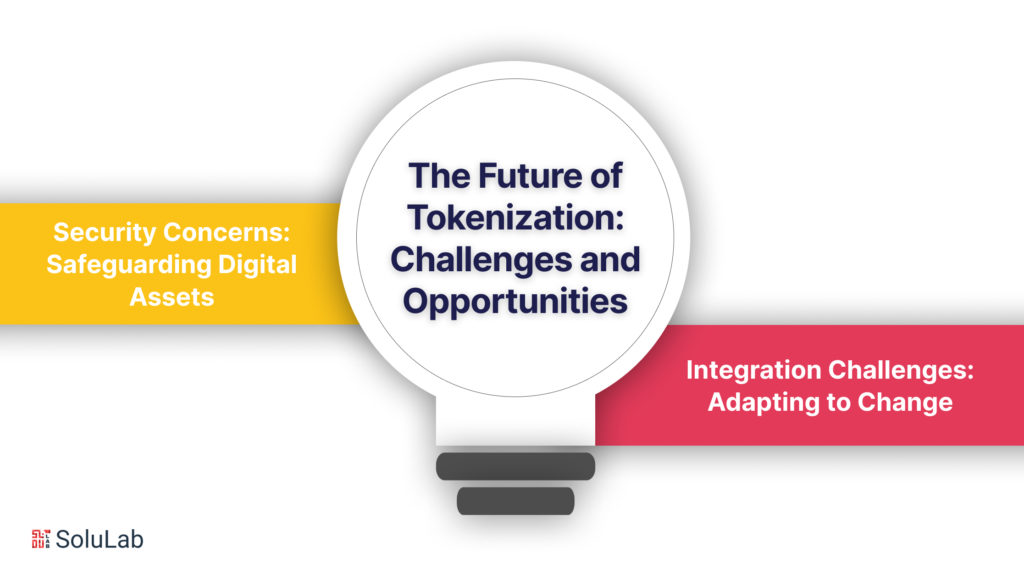
The Future of Tokenization: Challenges and Opportunities

The Future of Tokenization: Challenges and Opportunities

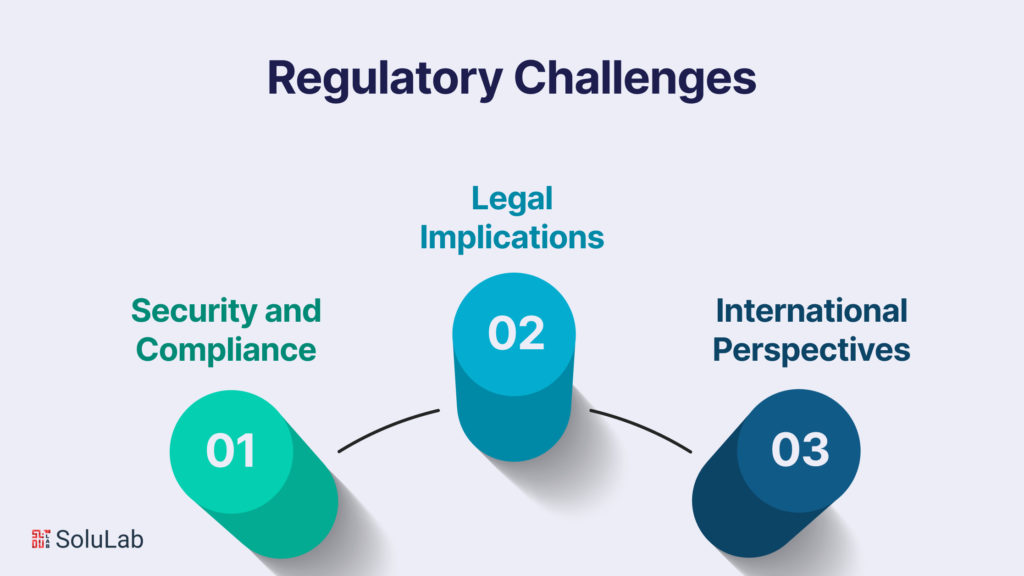
The rapid growth of tokenization has outpaced regulatory frameworks in many jurisdictions. As the industry matures, regulatory bodies are grappling with the need to strike a balance between fostering innovation and protecting investors. A clear and harmonized regulatory landscape is essential for the sustained growth of tokenization across industries.

  • Security Concerns: Safeguarding Digital Assets

While blockchain technology provides a robust security framework, the digital landscape is not immune to threats. Hacking attempts, fraud, and other malicious activities pose risks to tokenized assets. The development of advanced security measures and proactive strategies to counter potential threats is imperative for maintaining trust in the tokenization ecosystem.

  • Integration Challenges: Adapting to Change

The integration of tokenization into traditional industries comes with its own set of challenges. Legacy systems, cultural resistance, and the need for educational initiatives are hurdles that must be overcome for tokenization to realize its full potential. Industry-wide collaboration and a commitment to change are essential components of a successful transition.

Asset tokenization development services

Conclusion

In conclusion, the beauty of tokenization lies in its transformative power, unlocking new possibilities for the worlds of fine art and luxury goods. As blockchain technology continues to mature and regulatory frameworks evolve, the tokenization of assets will likely become more commonplace. This paradigm shift not only benefits investors and asset owners but also contributes to the democratization of traditionally exclusive markets. 

As we stand at the intersection of tradition and technology, the journey of asset tokenization promises to be a captivating one, reshaping industries and redefining the very nature of ownership.

In the domain of Generative AI development services, SoluLab stands out as an exceptional company that seamlessly integrates innovation, expertise, and a client-centric approach. With an impressive portfolio of successful Generative AI projects and a team of seasoned professionals, SoluLab serves as a beacon of excellence in the field. 

For those in search of a reliable partner to navigate the dynamic realm of AI innovation, SoluLab stands as a trustworthy name, shaping a future where technology opens up new realms of possibilities. Reach out to SoluLab today to embark on your Generative AI journey towards innovation and success.

FAQs

1. What is asset tokenization, and how does it work?

Asset tokenization is the process of converting the value of a physical or financial asset into digital tokens on a blockchain. These tokens, representing ownership or a share of the asset, can be traded on a decentralized and transparent platform. The process involves creating a unique token for each portion of the asset, enabling fractional ownership and facilitating efficient transfer and trading.
2. How does blockchain ensure the security of tokenized assets?

Blockchain technology ensures the security of tokenized assets through its decentralized and tamper-resistant nature. Each transaction is recorded in a transparent and immutable ledger across a network of nodes. This eliminates the risk of fraud or unauthorized alterations, providing a secure environment for the creation, transfer, and management of tokenized assets.

3. What role do Non-Fungible Tokens (NFTs) play in fine art tokenization?

NFTs play a crucial role in fine art tokenization by serving as unique and indivisible digital certificates of authenticity. They are used to represent ownership and provenance of digital or physical artworks. The uniqueness of each NFT ensures the originality and scarcity of the associated artwork, making them highly valuable in the digital art market.

4. How does asset tokenization benefit investors?

Asset tokenization benefits investors by unlocking liquidity in traditionally illiquid assets. Investors can gain exposure to a diverse range of assets with smaller capital outlays, as tokenization allows for fractional ownership. Additionally, the ease of transfer and trading on blockchain platforms enhances market efficiency, potentially leading to higher returns and portfolio diversification.

5. What challenges does the tokenization industry face, particularly in the realm of regulation?

The tokenization industry faces challenges in terms of regulatory uncertainty and divergence across jurisdictions. As the industry evolves, regulatory bodies are working to establish frameworks that balance innovation and investor protection. A clear and harmonized regulatory landscape is crucial for fostering trust and ensuring the responsible growth of the tokenization ecosystem.

6. How can individuals and businesses get involved in tokenized assets?

Individuals and businesses can get involved in tokenized assets by engaging with specialized platforms that facilitate the creation, trade, and management of tokenized assets. It’s essential to conduct thorough research, choose reputable platforms, and understand the legal and regulatory considerations. Additionally, seeking advice from professionals in the field can help navigate the process of investing or participating in the tokenization of assets.

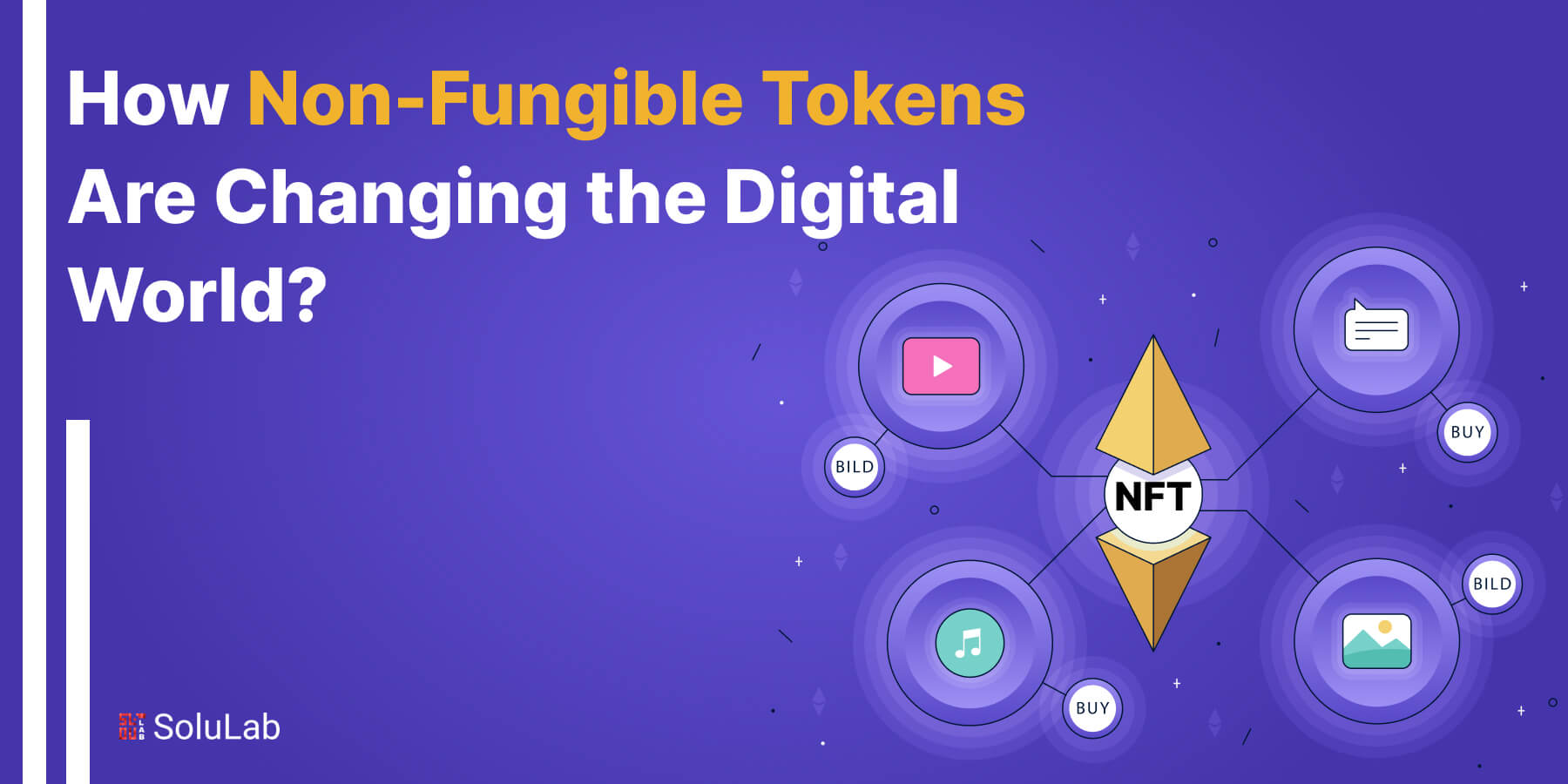
How Non-Fungible Tokens Are Changing the Digital World?

How Non-Fungible Tokens Are Changing the Digital World?

In recent years, the digital landscape has witnessed a transformation that has left the world in awe. A new wave of innovation and disruption has swept through the realms of art, entertainment, real estate, and more, reshaping the way we perceive and interact with the digital world. Non-Fungible Tokens (NFTs), heralded as the future of digital ownership and representation, have played an instrumental role in this paradigm shift. NFTs have transcended the boundaries of traditional digital assets and have introduced a concept that is poised to redefine the very essence of ownership, authenticity, and value in the virtual realm. This phenomenon is not merely a passing trend but a substantial force that is rewriting the rules of the digital world. In this blog, we will explore how Non-Fungible Tokens are leaving an indelible mark on the digital landscape, ushering in a new era of possibilities and reshaping the way we perceive, create, and trade in the digital space.

Understanding NFTs

The advent of Non-Fungible Tokens (NFTs) has brought about a transformative shift in the digital world. To grasp the full extent of their impact on the digital realm, it is essential to delve into the fundamentals of NFTs, understanding what makes them unique, how they are created, and the implications for ownership and authenticity.

A. What Makes an NFT Unique?

NFTs derive their uniqueness from their cryptographic properties and the underlying blockchain technology. Unlike traditional digital assets, NFTs are indivisible, irreplaceable, and cannot be exchanged on a one-to-one basis. Each NFT is a distinct entity with a specific digital signature, making it impossible to forge or replicate. This uniqueness is at the core of NFTs’ value proposition in the digital world.

The impact of NFTs on the digital world is profound in the way they confer ownership and authenticity to digital content. Artists, creators, and even individuals can mint NFTs to represent digital art, music, videos, and virtual assets, establishing a sense of ownership that was previously elusive in the digital realm.

B. How are NFTs Created?

The process of creating NFTs is a testament to the revolutionary power of blockchain technology. NFTs are generated through a process called minting, which involves registering a digital asset on a blockchain. This process creates a unique token associated with the asset, effectively transforming it into an NFT.

The ownership and provenance of NFTs are stored securely on the blockchain, providing a transparent and immutable record of transactions. As a result, the creation and transfer of NFTs are not only secure but also entirely transparent, enhancing trust and authenticity in the digital world.

C. Ownership and Authenticity in the Digital Realm

The impact of NFTs on the digital world extends to the concepts of ownership and authenticity. Prior to NFTs, establishing ownership and proving the authenticity of digital assets were significant challenges. NFTs provide a solution to these issues by allowing creators and buyers to assert ownership with confidence.

Ownership of NFTs is cryptographically verified and recorded on the blockchain, eliminating doubts about the legitimacy of ownership claims. This has profound implications for artists, creators, and collectors, who can now monetize their digital works with a sense of security that was previously unattainable.

In essence, NFT in the digital world has transformed by introducing a novel, secure, and transparent method of asserting ownership and authenticity for a wide range of digital assets. This newfound assurance has opened up exciting possibilities for creators, collectors, and investors, reshaping the way we interact with and perceive the value of digital content.

CTA1

NFTs in Art and Creativity

The world of art and creativity has been profoundly impacted by the emergence of Non-Fungible Tokens (NFTs). Here, we explore how NFTs have revolutionized this space, serving as a game-changer for digital artists while also making significant waves in traditional art markets.

A. NFTs as a Game-Changer for Digital Artists

Digital artists, who have long grappled with the challenge of proving ownership and authenticity of their creations, have found a lifeline in NFTs. NFTs provide a groundbreaking solution, enabling artists to mint their digital works as unique tokens on blockchain platforms.

This development has been nothing short of revolutionary. Digital artists can now attach a sense of rarity and ownership to their creations, allowing them to sell their art directly to a global audience. With NFTs, artists have the potential to earn royalties every time their work is sold or traded on NFT marketplaces.

The impact of NFTs on the digital world in the realm of art is immense. It has democratized the art world, breaking down traditional barriers to entry and recognition for digital artists. Through NFTs, artists can gain more control over their work and financial opportunities they may have struggled to find in the past.

B. Impact on Traditional Art Markets

The emergence of NFTs has not only transformed the digital art landscape but also made waves in traditional art markets. This disruption stems from the growth of NFT marketplaces and the way they have reshaped the dynamics of buying and selling art.

NFT marketplaces, such as OpenSea, Rarible, and SuperRare, have become the platforms of choice for trading NFT art. NFT marketplace development and features have made it easier for artists to mint NFTs, connect with collectors, and secure the value of their digital creations. As NFT marketplaces have matured, they have provided a seamless bridge between digital and traditional art markets, enhancing accessibility and liquidity for art buyers and sellers.

The art world has had to adapt to this evolving landscape. Traditional art institutions and galleries are increasingly exploring partnerships with NFT marketplaces to connect with a broader, tech-savvy audience. As a result, the impact of NFTs on the digital world is not confined solely to the digital realm but extends its influence to the broader art industry.

In brief, NFTs have ushered in a new era of possibilities for artists and collectors alike. They have democratized the art world, providing digital artists with opportunities and control, while also disrupting traditional art markets and opening doors for collaboration and innovation. The NFT marketplace development services have played a pivotal role in these transformations, reshaping how we perceive and engage with art in the digital age.

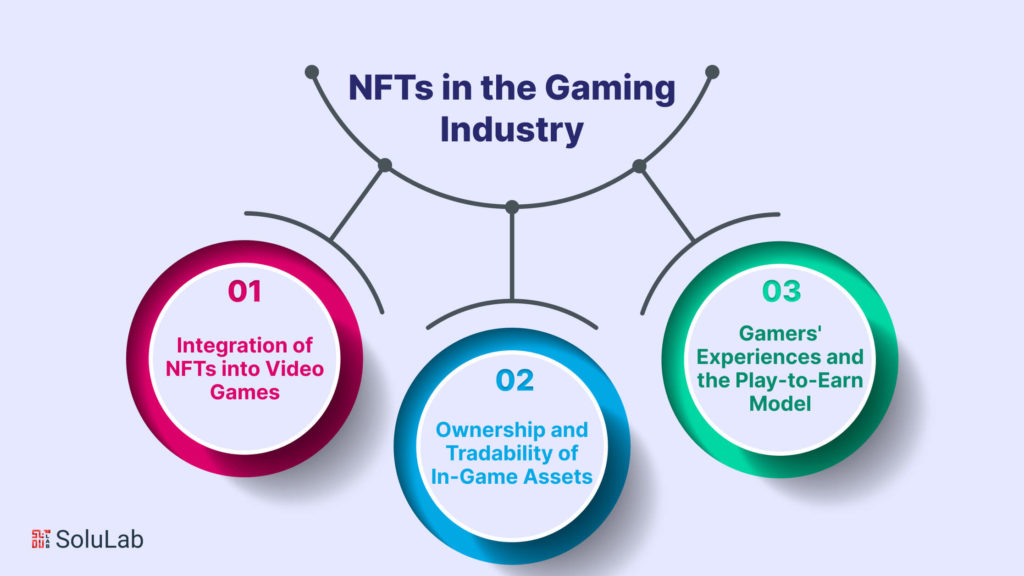
NFTs in the Gaming Industry

NFTs in the Gaming Industry

The gaming industry has been significantly impacted by the introduction of Non-Fungible Tokens (NFTs), leading to novel experiences and economic opportunities for both players and developers. Here, we explore the integration of NFTs into video games, ownership and tradability of in-game assets, and how NFTs have given rise to the “play-to-earn” model.

A. Integration of NFTs into Video Games

Traditionally, in-game assets like skins, weapons, and character outfits were owned by the game developers, limiting players’ control over their investments. With the advent of NFTs, these assets can now be tokenized and owned by players as verifiable digital possessions. Game developers are leveraging blockchain technology to create unique NFTs representing these in-game items.

This integration allows players to buy, sell, and trade their assets in a decentralized marketplace. These assets can be used across multiple games that support the same standards, providing players with a sense of ownership and control over their digital collections.

B. Ownership and Tradability of In-Game Assets

NFTs enable true ownership of in-game assets. Players have the freedom to trade, sell, or even lend their digital items, giving them a stake in the gaming ecosystem beyond their gameplay skills. This has led to a thriving secondary market for in-game assets, where players can monetize their investments by selling rare or sought-after items to other players.

Moreover, ownership of in-game assets becomes truly provable through the blockchain, reducing the risk of fraud or counterfeit items. The transparent and immutable nature of the blockchain ensures that the asset’s history and authenticity can be easily verified, making it a safe and trustworthy environment for players and collectors.

C. Gamers’ Experiences and the Play-to-Earn Model

NFTs pioneered the notion of “play-to-earn” in the gaming industry. Traditionally, gamers spent countless hours playing without direct financial gains. With NFTs, they can now accumulate valuable in-game assets that have real-world value. This shift has attracted a new audience of players who see gaming as a way to generate income.

In play-to-earn games, players can earn NFTs through gameplay, and these NFTs can be sold on marketplaces for cryptocurrencies or exchanged for other digital or real-world assets. This model has the potential to empower players, particularly in regions with limited economic opportunities, to earn a living by engaging in their favorite pastimes.

However, the play-to-earn model also comes with challenges, including concerns about the balance between gameplay and income generation, the potential for pay-to-win scenarios, and the need for regulations to protect players from exploitation.

In short, the integration of NFTs into the gaming industry has brought about a paradigm shift in the way players perceive and interact with in-game assets. The ownership, tradability, and play-to-earn model are transforming the gaming experience, opening new doors for both gamers and developers. As NFTs continue to evolve, they are likely to shape the future of gaming in ways that we have yet to fully explore.

NFTs in Real Estate and Virtual Land

The innovation of Non-Fungible Tokens (NFTs) extends beyond the realms of digital collectibles and gaming, venturing into the world of real estate and virtual land. This development brings forth the tokenization of real-world assets, virtual land ownership within metaverse platforms, and its potential impact on the real estate industry.

A. Tokenization of Real-World Assets

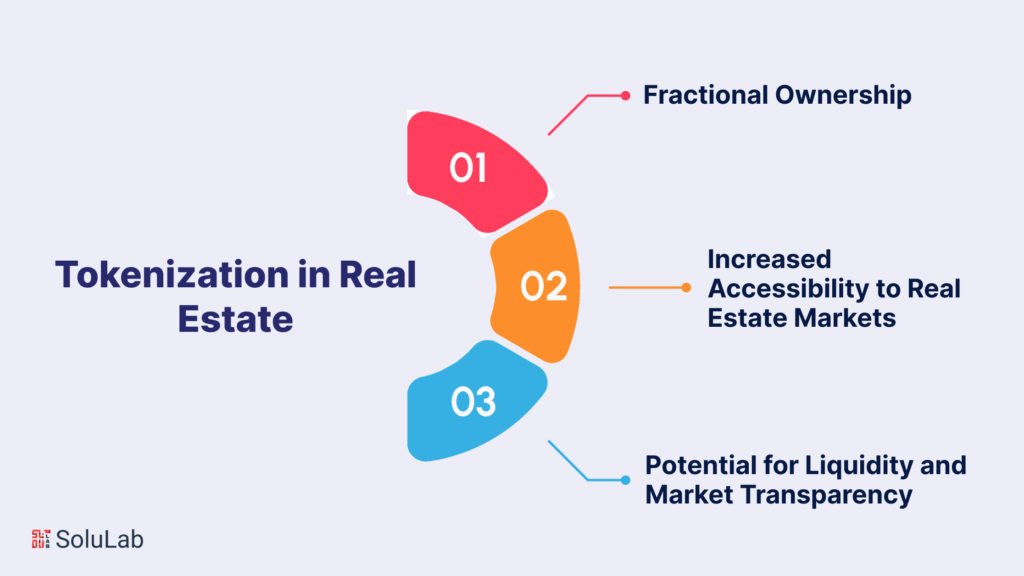
NFTs have paved the way for the tokenization of real-world assets, such as real estate properties. Tokenization involves breaking down physical assets into digital tokens, making them easily tradable and divisible. Through NFTs, individuals can hold digital ownership rights to specific portions or properties within the real estate market.

This tokenization opens up a range of possibilities, from enabling fractional ownership where multiple investors can hold shares in a single property to simplifying the process of buying and selling real estate. NFTs offer transparency and security by recording ownership and transaction history on a blockchain, reducing the need for intermediaries and enhancing trust in real estate transactions.

Real estate NFTs are often listed on NFT marketplaces, facilitating easy trade and providing a global platform for investors and buyers. Businesses and developers looking to engage in real estate tokenization can hire top NFT developers to create customized NFT marketplace development services that cater to their specific needs.

B. Virtual Land Ownership in Metaverse Platforms

Metaverse platforms, immersive virtual environments where people interact and socialize in digital spaces, have seen a surge in virtual land ownership through NFTs. Within metaverse worlds, parcels of virtual land are represented as NFTs, allowing users to purchase, develop, and trade virtual real estate.

Virtual land in metaverses serves various purposes, from creating digital businesses and virtual storefronts to hosting events and social gatherings. Some popular metaverse platforms include Decentraland, The Sandbox, and Somnium Space, where virtual land ownership has become a fundamental aspect of the user experience.

This development has encouraged businesses and entrepreneurs to invest in virtual land, further boosting the metaverse’s growth. Virtual landowners can develop their properties to generate revenue or simply hold them as digital assets with the potential for appreciation.

C. The Potential Impact on the Real Estate Industry

The integration of NFTs in real estate and virtual land ownership has the potential to disrupt the traditional real estate industry. Here are some of the potential impacts:

  • Accessibility: Real estate tokenization can lower the barriers to entry, making it possible for a broader range of investors to participate in real estate markets.
  • Efficiency: NFTs can streamline the buying and selling process by reducing paperwork and the involvement of intermediaries.
  • Globalization: NFTs enable cross-border investments, allowing investors to diversify their portfolios across different countries.
  • Liquidity: Fractional ownership and NFT-based real estate can increase liquidity, making it easier for investors to exit their positions.
  • Metaverse Integration: As virtual land ownership becomes more popular, the metaverse may emerge as a new dimension for real estate transactions and business opportunities.

In brief, NFTs have brought real estate into the digital age, offering new avenues for investment and diversification. The tokenization of real-world assets and virtual land ownership within metaverse platforms have the potential to revolutionize the real estate industry and redefine how we interact with both physical and digital properties. Businesses looking to leverage this trend can explore the services of top NFT developers to create their own NFT marketplace development solutions.

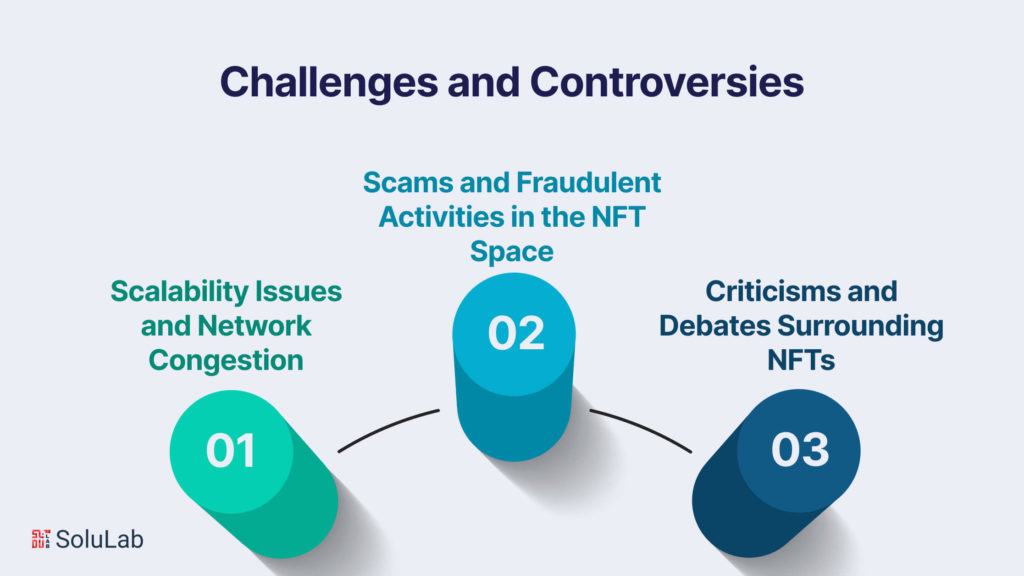
Challenges and Controversies

Challenges and Controversies

While Non-Fungible Tokens (NFTs) have gained significant attention and adoption, they are not without their share of challenges and controversies. In this section, we’ll explore some of the key issues that have emerged.

A. Scalability Issues and Network Congestion

One of the primary concerns associated with NFTs is the scalability of blockchain networks, particularly Ethereum. As NFTs gained popularity, they led to network congestion and increased transaction fees. The limited capacity of Ethereum and other blockchains has resulted in slow transaction times and high gas costs, making it less accessible for creators and collectors. These scalability issues have prompted discussions about the need for blockchain upgrades and the exploration of Layer 2 solutions to improve the overall NFT ecosystem.

Developers and blockchain communities are actively working on addressing these scalability challenges, but until a scalable solution is widely implemented, network congestion remains a significant hurdle for NFT enthusiasts.

B. Scams and Fraudulent Activities in the NFT Space

The rapid growth of the NFT market has attracted the attention of scammers and fraudsters. There have been instances of fake NFT listings, counterfeit art, and even fraudulent NFT marketplaces. These activities undermine trust in the NFT ecosystem and can lead to financial losses for unsuspecting buyers and creators.

It’s crucial for participants in the NFT space to exercise caution, conduct due diligence, and be aware of the risks associated with fake NFTs and deceptive practices. Emerging NFT marketplaces and services must implement rigorous verification and authentication processes to reduce the prevalence of scams.

C. Criticisms and Debates Surrounding NFTs

NFTs have sparked various criticisms and debates within the digital, artistic, and environmental communities. Some common criticisms include:

  • Environmental Concerns: The energy consumption associated with blockchain networks, particularly in the case of proof-of-work chains like Ethereum, has raised concerns about the carbon footprint of NFTs. These concerns have led to discussions about transitioning to more eco-friendly blockchain technologies.
  • Speculative Bubbles: Some argue that the NFT market has seen speculative bubbles, with overinflated prices for digital assets that may not hold long-term value. The concern is that this speculative behavior could lead to a market crash.
  • Exclusivity and Elitism: NFTs are seen by some as a means for wealthy individuals and celebrities to profit from their digital assets, leaving little room for emerging artists and creators. The question of whether NFTs are democratizing or exacerbating inequalities is a topic of ongoing debate.
  • Lack of Regulation: The lack of regulatory oversight in the NFT space has raised questions about consumer protection, copyright infringement, and legal challenges in case of disputes.

In response to these criticisms, the NFT community and industry are actively engaged in discussions about how to address these issues. This includes exploring more energy-efficient blockchain alternatives, promoting inclusivity supporting emerging artists, and advocating for responsible and ethical practices in the NFT space.

In conclusion, while NFTs have opened up new opportunities and possibilities, they are not immune to challenges and controversies. Addressing scalability, fraudulent activities, and criticisms are essential steps for the NFT ecosystem to mature and establish itself as a sustainable and responsible part of the digital world.

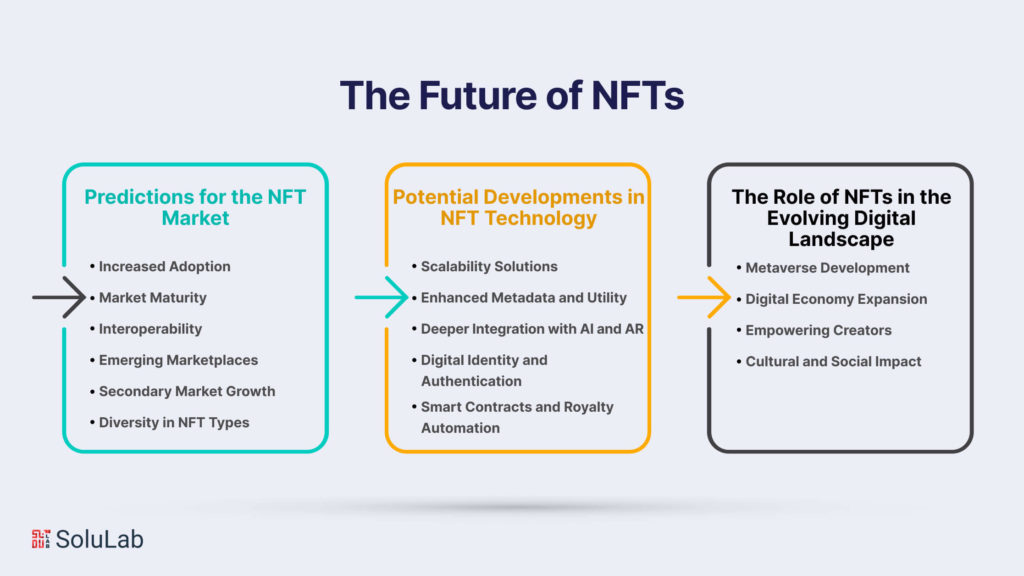
The Future of NFTs

Future of NFTs

As Non-Fungible Tokens (NFTs) continue to reshape various industries and capture the imagination of creators and collectors, it’s essential to consider what the future holds for this innovative technology. In this section, we’ll explore predictions for the NFT market, potential developments in NFT technology, and the evolving role of NFTs in the digital landscape.

A. Predictions for the NFT Market

The NFT market has shown remarkable growth, and its trajectory is likely to continue in the coming years. Here are some predictions for the NFT market:

  • Increased Adoption: NFTs are expected to see broader adoption in industries beyond art and gaming. Sectors like fashion, education, and healthcare may incorporate NFTs for provenance, authentication, and unique experiences.
  • Market Maturity: As the NFT market matures, we can anticipate increased regulation and standardization to address challenges related to fraud, copyright issues, and environmental concerns. This regulatory clarity may help build trust among users.
  • Interoperability: The development of cross-chain NFT solutions may promote interoperability between different blockchain ecosystems, making it easier for users to access and trade NFTs across multiple platforms.
  • Emerging Marketplaces: NFT marketplaces will continue to evolve, offering features such as social interactions, virtual exhibitions, and new ways to showcase and trade digital assets.
  • Secondary Market Growth: The secondary market for NFTs is expected to grow as collectors and investors seek opportunities for trading, flipping, and investing in digital assets. High-value NFTs may appreciate over time.
  • Diversity in NFT Types: New forms of NFTs, such as time-based NFTs, multi-chain NFTs, and NFTs representing real-world assets, will likely emerge, expanding the diversity of the market.

B. Potential Developments in NFT Technology

NFT technology is not static; it continues to evolve and expand its capabilities. Some potential developments include:

  • Scalability Solutions: Scalability issues will drive the development of Layer 2 solutions and the transition to more energy-efficient blockchains, reducing environmental concerns.
  • Enhanced Metadata and Utility: NFTs may become more programmable and dynamic, with metadata that can be updated, and NFTs can carry additional utility beyond ownership, such as granting access to exclusive content or experiences.
  • Deeper Integration with AI and AR: NFTs may be used in conjunction with artificial intelligence (AI) and augmented reality (AR) technologies, creating interactive and adaptive digital experiences.
  • Digital Identity and Authentication: NFTs may play a role in digital identity verification, helping to secure online interactions and protect users’ data and assets.
  • Smart Contracts and Royalty Automation: Smart contracts linked to NFTs will enable automated royalty payments to creators whenever their NFTs are resold, enhancing the fairness of the digital art market.

C. The Role of NFTs in the Evolving Digital Landscape

NFTs are poised to play an integral role in the ongoing transformation of the digital landscape:

  • Metaverse Development: NFTs will become foundational to metaverse environments, enabling users to own, create, and trade digital assets within these immersive virtual worlds.
  • Digital Economy Expansion: NFTs will extend beyond collectibles and art, infiltrating the digital economy as integral components in e-commerce, virtual real estate, and decentralized finance (DeFi) systems.
  • Empowering Creators: NFTs will empower creators and artists by providing more direct access to their audiences, bypassing intermediaries, and granting them greater control over their work and intellectual property.
  • Cultural and Social Impact: NFTs will continue to influence and shape cultural trends, art movements, and the ways we connect and interact in digital spaces.

In conclusion, the future of NFTs appears bright, with the potential for broader adoption, technological advancements, and a growing role in shaping the evolving digital landscape. As NFTs continue to mature, they will bring new opportunities and challenges, ultimately redefining how we perceive and interact with the digital world.

CTA2

Conclusion

In conclusion, the rise of Non-Fungible Tokens (NFTs) has ushered in a transformative era, reshaping how we interact with digital assets and the broader digital world. The impact of NFTs goes well beyond the creative and collectible realms, reaching into areas such as real estate, digital identity, and the metaverse. The emergence of NFT marketplace platforms and white-label NFT marketplace solutions has laid the foundation for a vibrant ecosystem where creators and collectors can connect, exchange, and create value in entirely new ways. These innovations have provided opportunities for entrepreneurs to explore and develop niche marketplaces tailored to specific industries and niches.

As we journey forward, the enduring significance of NFTs in the digital realm becomes more evident. The potential for NFTs to disrupt, innovate, and influence various facets of our digital lives is substantial. This is a world where the boundaries of ownership, creativity, and entrepreneurship are being redefined. It’s a world where opportunities for innovation are boundless, and where the role of NFTs in shaping the future of the digital landscape remains central. The NFT ecosystem continues to evolve, promising a future where the possibilities are as diverse as the digital assets themselves.

SoluLab, a leading blockchain and software development company, plays a pivotal role in the dynamic world of Non-Fungible Tokens (NFTs). As NFTs continue to transform the digital landscape, SoluLab has been at the forefront of innovation, offering NFT marketplace development solutions and white-label NFT marketplace services that empower businesses and entrepreneurs to explore the vast potential of this groundbreaking technology. With a strong commitment to blockchain technology, SoluLab is enabling clients to create custom NFT marketplaces that cater to specific industries and niches, ensuring they stay ahead in the rapidly evolving NFT ecosystem. Their expertise and dedication contribute to the enduring significance of NFTs, driving the digital realm toward a future that is more inclusive, innovative, and interconnected.

FAQs

1. What exactly is an NFT?

An NFT, or Non-Fungible Token, is a digital asset representing ownership or proof of authenticity of a unique item or piece of content, stored on a blockchain. Unlike cryptocurrencies like Bitcoin or Ethereum, NFTs are indivisible and each one has its own distinct value.

2. How can I create my own NFT?

To create your own NFT, you can use various NFT marketplaces like OpenSea, Rarible, or Mintable. You’ll need a digital wallet, connect it to a compatible marketplace, and then follow the platform-specific steps to mint your NFT. You’ll typically need to upload your digital content, set metadata, and determine any royalties for future resales.

3. Are NFTs environmentally friendly?

NFTs on certain blockchains, like Ethereum, have faced criticism for their environmental impact due to energy-intensive proof-of-work consensus mechanisms. However, the industry is actively exploring more eco-friendly solutions through the adoption of proof-of-stake blockchains and Layer 2 scaling solutions to mitigate these concerns.

4. How can NFTs be used in the real estate industry?

NFTs have the potential to revolutionize real estate by enabling the tokenization of property, making it easier to buy, sell, and trade real estate assets. They also offer fractional ownership opportunities, which can lower barriers to entry for real estate investment and make property ownership more accessible to a wider audience.

5. What are white label NFT marketplace solutions?

White label NFT marketplace solutions are customizable platforms provided by companies like SoluLab that allow businesses to create their own NFT marketplaces. They offer a pre-built infrastructure with the flexibility to be tailored to specific needs, industries, and branding, facilitating entrepreneurs and businesses in launching their NFT trading platforms more efficiently.

Defi : The Influensive Trend in Blockchain- A Complete Guide

Defi The Influensive Trend in Blockchain- A Complete Guide

Decentralized Finance, often referred to as DeFi, has emerged as one of the most influential trends in the blockchain space. This revolutionary concept leverages blockchain technology to create a decentralized financial ecosystem that operates without traditional intermediaries like banks. In this comprehensive guide, we will delve into the world of DeFi, exploring its platforms, protocols, development companies, lending platforms, trading platforms, and how it all ties into the broader blockchain landscape.

What is DeFi?

Decentralized Finance, commonly known as DeFi, is a revolutionary movement within the blockchain ecosystem protocols that seeks to recreate traditional financial systems using blockchain technology. Unlike traditional finance, which relies on centralized intermediaries like banks and financial institutions, DeFi operates on decentralized platforms and smart contracts. 

It encompasses a wide range of financial services and applications, including lending, borrowing, trading, asset management, and more, all built on blockchain networks. DeFi platforms, protocols, and development companies play a pivotal role in enabling this ecosystem, while blockchain technology provides the foundation for its transparency and security. 

Furthermore, DeFi is closely intertwined with blockchain trends, as it leverages blockchain’s potential to disrupt traditional finance and expand into other industries beyond the financial sector. This transformative trend is redefining the way we think about and interact with financial services, offering users greater control and accessibility to their financial assets and transactions.

How Does DeFi Work?

DeFi applications are built on blockchain technology, which is a distributed ledger system that records transactions in a secure and transparent manner. Blockchain technology allows DeFi applications to operate without the need for a central intermediary.  Top DeFi protocols use smart contracts to automate transactions and interactions between users. 

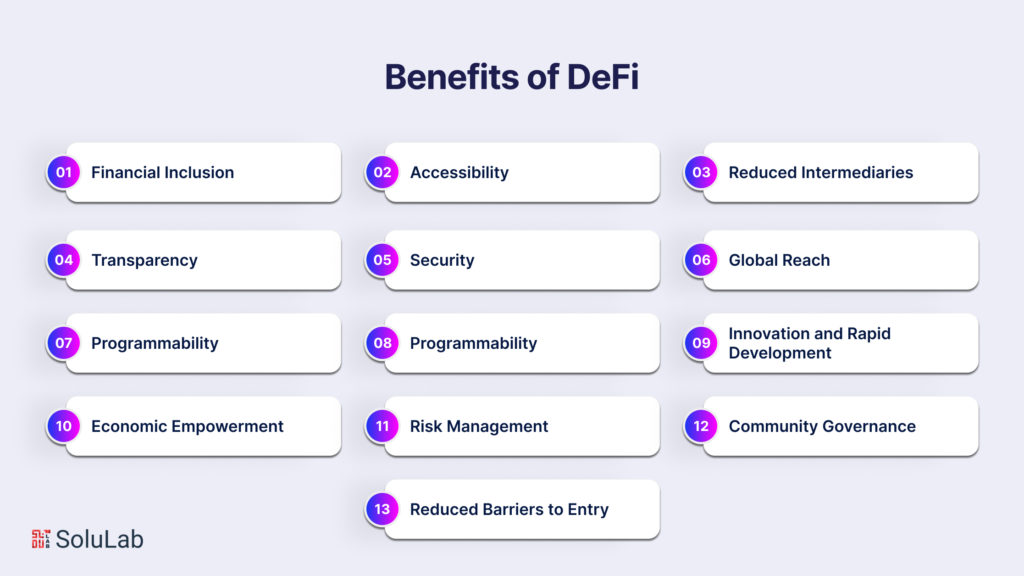
Benefits of DeFi

Benefits of DeFi

Decentralized Finance (DeFi) is transforming the financial landscape in numerous ways, offering a wide array of benefits to users, developers, and the global economy. 

  • Financial Inclusion

DeFi opens up financial services to anyone with internet access, enabling global financial inclusion. This is especially significant in regions with limited access to traditional banking. According to the World Bank, around 1.7 billion adults worldwide remain unbanked. DeFi can bridge this gap and empower individuals to access and manage their finances.
  • Accessibility

Unlike traditional financial markets with set trading hours, DeFi operates 24/7, allowing users to trade, lend, and borrow at their convenience. This accessibility provides flexibility and empowers users to make real-time financial decisions.

  • Reduced Intermediaries

Traditional financial systems rely on intermediaries like banks, brokers, and clearinghouses, which charge fees for their services. DeFi minimizes or eliminates these intermediaries, reducing costs for users. Smart contracts execute transactions automatically, bypassing the need for intermediaries and their associated fees.

  • Transparency

DeFi leverages blockchain technology to ensure transparent and immutable record-keeping. Every transaction is recorded on a public ledger, providing users with complete transparency. This transparency enhances trust, as users can independently verify all transactions.

  • Security

DeFi benefits from the security features of blockchain technology. Smart contracts, once deployed, are immutable, reducing the risk of tampering or fraud. The security of blockchain has contributed to a significant decrease in successful attacks on DeFi platforms.

  • Global Reach

Cross-border payments are a significant part of the global economy. DeFi enables seamless cross-border transactions, allowing users to send and receive funds globally without the delays and high fees associated with traditional cross-border banking services.

CTA1

  • Programmability

DeFi platforms are highly programmable, allowing developers to create customized financial solutions. This programmability has led to the development of a diverse range of applications, including yield farming, decentralized exchanges, automated trading bots, and more. Users can participate in these innovative financial services.

  • Yield Opportunities

DeFi platforms like Compound and Aave offer users the opportunity to earn interest on their assets. Users can participate in lending or liquidity provision, often earning yields that surpass traditional savings account rates by a significant margin. This opens up new avenues for passive income and wealth creation.

  • Innovation and Rapid Development

DeFi is characterized by its rapid pace of innovation. New projects, tokens, and protocols continually emerge, offering new financial products and services. The open-source nature of DeFi fosters competition and innovation, driving the development of cutting-edge solutions.

  • Economic Empowerment

DeFi can empower individuals to take control of their finances. Users are not reliant on centralized institutions; they have custody of their assets and can engage in financial activities autonomously. This increased agency can lead to greater financial empowerment and self-reliance.

  • Risk Management

DeFi platforms often allow users to set their own risk parameters. For example, users can choose the level of collateral required for loans, mitigating risk to some extent. Additionally, DeFi insurance projects offer coverage against smart contract vulnerabilities and hacks, further enhancing risk management.

  • Community Governance

Many DeFi projects employ decentralized governance mechanisms. Token holders have a say in protocol upgrades and decision-making. This approach promotes a more democratic and community-driven ecosystem.

  • Reduced Barriers to Entry

In traditional finance, launching financial products and services can be highly regulated and costly. DeFi reduces these barriers to entry for entrepreneurs and developers, making it easier to create and launch financial innovations.

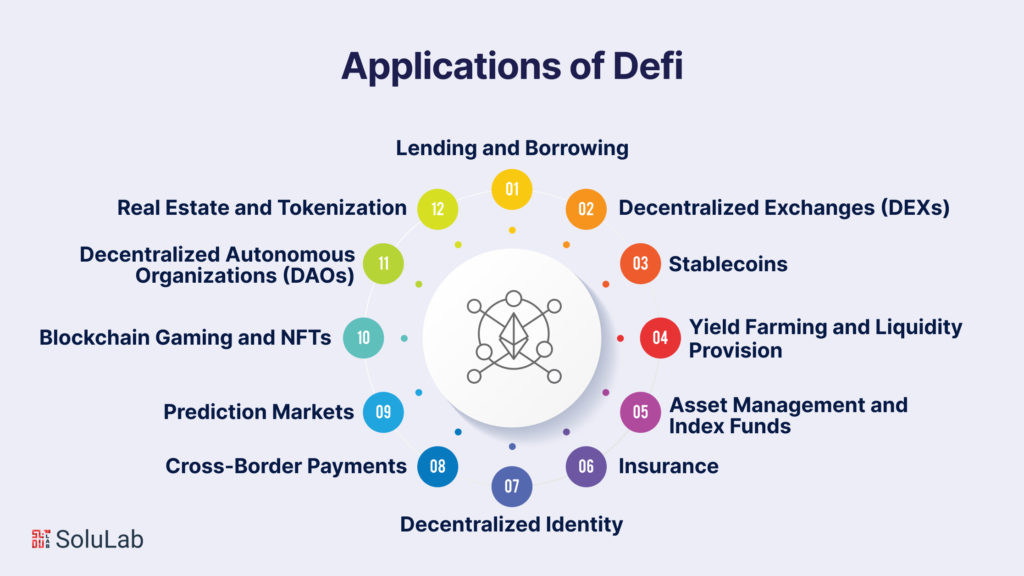
Applications of Defi

Applications of Defi

Decentralized Finance (DeFi) has a wide range of applications that are transforming the traditional financial landscape. These applications leverage blockchain technology to provide innovative and decentralized solutions to various financial services. Here are some key applications of DeFi:

  • Lending and Borrowing

DeFi lending platforms allow users to lend their crypto assets to earn interest, while borrowers can use their crypto holdings as collateral to secure loans. These platforms often offer more attractive interest rates than traditional banks.

Examples: Compound Finance, Aave, MakerDAO

  • Decentralized Exchanges (DEXs)

DEXs enable users to trade cryptocurrencies directly without the need for a centralized intermediary. They provide liquidity and allow for trustless and transparent trading.

Examples: Uniswap, SushiSwap, Balancer

  • Stablecoins

Stablecoins are digital currencies crafted with the intention of preserving a fixed value, frequently linked to a traditional currency such as the US dollar. They serve as a stable medium of exchange and a store of value within the volatile crypto market.

Examples: USDC, USDT, DAI

  • Yield Farming and Liquidity Provision

Yield farming encompasses the act of supplying liquidity to DeFi protocols in return for incentives. Users can earn tokens and interest by locking up their assets in liquidity pools.

Examples: Yearn.finance, Curve Finance, Balancer

  • Asset Management and Index Funds

DeFi allows users to create, manage, and invest in tokenized portfolios, enabling automated trading and diversification of assets.

Examples: Set Protocol, PieDAO

  • Insurance

DeFi insurance platforms provide coverage against smart contract vulnerabilities and hacks in the DeFi ecosystem, offering protection to users.

Examples: Nexus Mutual, Cover Protocol

  • Decentralized Identity

DeFi can be used to establish decentralized identity systems, giving users more control over their personal information.

Examples: uPort, SelfKey

  • Cross-Border Payments

DeFi facilitates cost-effective and rapid cross-border transactions, reducing the fees and delays associated with traditional international transfers.

Examples: Stablecoin-based remittance services

  • Prediction Markets

DeFi prediction markets enable users to create and participate in markets for predicting real-world events, offering a decentralized way to speculate on outcomes.

Examples: Augur, Gnosis

  • Blockchain Gaming and NFTs

DeFi and blockchain technology are integrated into the gaming industry, allowing players to buy, sell, and trade in-game assets and NFTs.

Examples: Axie Infinity, Decentraland

  • Decentralized Autonomous Organizations (DAOs)

DAOs are organizations governed by smart contracts and token holders, enabling decentralized decision-making and governance.

Examples: Yearn Governance, Compound Governance

  • Real Estate and Tokenization

DeFi can be used to tokenize real estate assets, making it easier for users to invest in properties and participate in real estate markets.

Examples: RealT, Propy

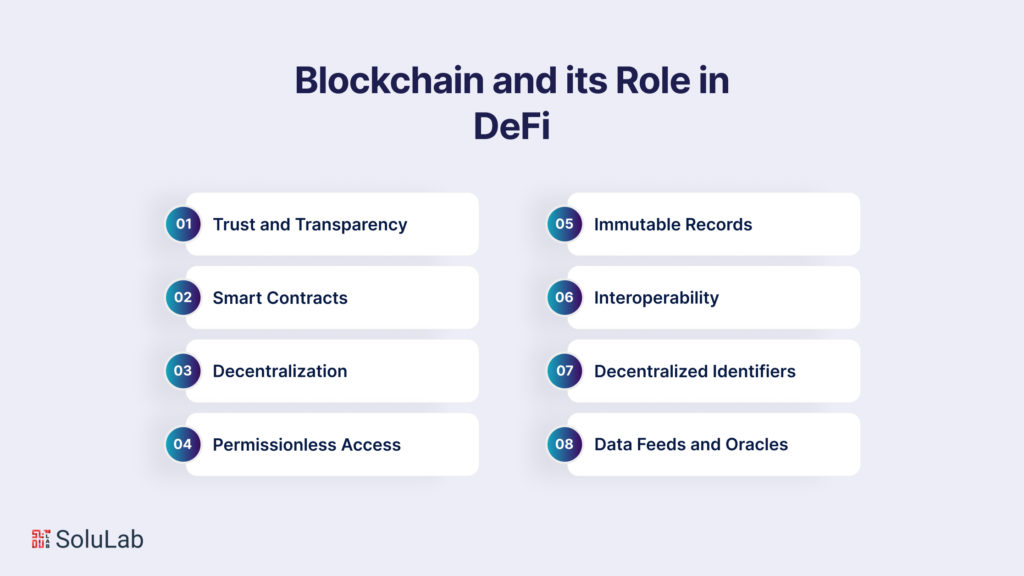
Blockchain and its Role in DeFi

Blockchain and its Role in DeFi

Blockchain technology plays a pivotal role in the success and functionality of Decentralized Finance (DeFi). It underpins the entire DeFi ecosystem, providing the infrastructure and key features necessary for its operation. Here’s how blockchain contributes to DeFi:

  • Trust and Transparency

Blockchain is a decentralized and distributed ledger technology. It records transactions in a secure and transparent manner across a network of nodes. This transparency ensures that all DeFi transactions are publicly verifiable, and participants can audit the transaction history. Users can trust that the information on the blockchain is accurate and tamper-proof.

  • Smart Contracts

DeFi relies heavily on smart contracts to automate and execute financial agreements without the need for intermediaries. These contracts are immutable and executed according to predefined rules, enhancing the security and reliability of financial transactions.

  • Decentralization

Blockchain networks, such as Ethereum, are decentralized, meaning there is no central authority or intermediary controlling the system. DeFi applications leverage this decentralization, eliminating the need for trusted third parties like banks. Users retain control of their assets and transactions, reducing counterparty risk.

  • Permissionless Access

DeFi platforms built on blockchain technology are generally permissionless, meaning anyone with an internet connection and the required assets can access and use these services. This inclusivity opens financial services to a global audience without regard for geographical location, background, or identity.

  • Immutable Records

Once a transaction has been added to a blockchain, it becomes immutable, i.e. it cannot be altered or deleted. This immutability enhances the security of financial transactions, making it difficult for fraudulent or unauthorized changes to occur.

  • Interoperability

Blockchain networks and protocols are often designed to be interoperable, allowing DeFi platforms to communicate and interact seamlessly. This interoperability enables various DeFi applications to work together and create a more interconnected financial ecosystem.

  • Decentralized Identifiers

Blockchain can provide a foundation for decentralized identity solutions, allowing users to control and manage their personal data and identity. This is particularly important in DeFi, where privacy and identity verification are essential.

  • Data Feeds and Oracles

To provide real-world data to smart contracts, DeFi projects often rely on oracles. These oracles are external data sources that feed information from the real world into the blockchain. They play a critical role in enabling smart contracts to respond to real-world events and conditions.

CTA2

Conclusion

Decentralized Finance (DeFi) is reshaping the financial landscape, offering a more inclusive and transparent way of managing assets and accessing financial services. As blockchain technology continues to advance, we can expect even greater innovation and adoption in both the DeFi space and across various industries. 

Bear in mind that the DeFi arena is ever-changing, and new entrants may come into play. Hence, it’s crucial to engage in comprehensive research and due diligence when deciding on a DeFi development company. With the right team and a forward-looking vision, your DeFi project has the potential to become a game-changing force in the financial realm.

If you’re still in search of the ideal DeFi development company, get in touch with Solulab without delay. Solulab boasts extensive experience in DeFi development services, a strong technical acumen, and a commitment to fostering innovation, making them an excellent option for businesses and entrepreneurs looking to embark on DeFi endeavors or enhance their existing DeFi solutions.

FAQs

1. What is DeFi, and how does it differ from traditional finance?

DeFi, short for Decentralized Finance, is a blockchain-based financial ecosystem that offers decentralized alternatives to traditional financial services like lending, borrowing, and trading. Unlike traditional finance, DeFi operates on blockchain technology, removing the need for intermediaries, providing transparency, and enabling users to have full control over their assets.

2. How do I get started with DeFi?

To start with DeFi, you need a crypto wallet, usually compatible with the Ethereum blockchain, as many DeFi projects are built on Ethereum. You can fund your wallet with cryptocurrencies, connect to a DeFi platform, and then explore and use various DeFi applications, such as lending, borrowing, or trading.

3. Are DeFi platforms safe and secure?

DeFi platforms prioritize security, but they are not immune to risks. Users should conduct thorough research, use reputable platforms, and follow best practices such as enabling two-factor authentication and using hardware wallets. Additionally, smart contract vulnerabilities and exploits have occurred, so it’s crucial to assess the risk before participating.

4. What is yield farming in DeFi?

Yield farming is a DeFi strategy where users provide liquidity to decentralized exchanges or lending platforms in exchange for rewards or interest. It involves staking assets in liquidity pools and earning tokens or a percentage of transaction fees. Yield farming can offer attractive returns but carries risks and should be approached with caution.

5. Can I earn passive income with DeFi?

Yes, DeFi offers opportunities for passive income. Staking assets in DeFi platforms, providing liquidity to DEXs, or participating in yield farming can all generate passive income. However, these strategies come with varying degrees of risk, so it’s essential to research and understand the potential rewards and risks associated with each method.

The Role of DeFi in Blockchain Game Development

The Role of Decentralized Finance (DeFi) in Blockchain Game Development

Decentralized Finance, commonly referred to as DeFi, represents a transformative paradigm within the blockchain space. DeFi encompasses a suite of financial services and applications that are built on public blockchain networks, enabling trustless and decentralized transactions without relying on traditional financial intermediaries. In the context of DeFi in the blockchain game industry, it signifies the integration of these financial services into the development and operation of blockchain-based games.

Blockchain game development is a dynamic sector that leverages blockchain technology to create innovative gaming experiences. This approach harnesses the transparency, security, and immutability of blockchain networks to facilitate the creation, trade, and ownership of in-game assets, such as Non-Fungible Tokens (NFTs). Blockchain games often utilize cryptocurrencies and smart contracts to underpin in-game economies, enabling unique ownership and provably scarce digital assets.

The role of DeFi in blockchain game development is of paramount importance, with several compelling facets. DeFi in blockchain games introduces a new dimension of financial services, including lending, borrowing, trading, and yield farming, into virtual gaming environments. This integration significantly enhances the economic ecosystem within these games, allowing players to interact with in-game assets in novel ways.

What is the Role of DeFi in Enhancing the Blockchain Game Ecosystem?

Role of DeFi in Blockchain Game Ecosystem

A. Empowering Blockchain Games through DeFi Integration

The role of DeFi in the blockchain game development process cannot be overstated. It comprises the creation of the infrastructure, protocols, and smart contracts that underpin the financial mechanisms within the game. Here’s how DeFi enhances the blockchain game ecosystem:

  • Cryptocurrency-Based In-Game Economies

DeFi allows for the creation of cryptocurrency-based in-game economies, where in-game assets and tokens hold real-world value. This shift from centralized in-game currencies to decentralized cryptocurrencies enables players to trade, invest, and own digital assets with true ownership and scarcity.

  • Smart Contracts for Asset Trading

DeFi development services enable the implementation of smart contracts that govern the trading of in-game assets. This enhances security and trust among players by ensuring that asset transactions occur automatically and transparently, without the need for intermediaries.

Read Blog: Top 25 Blockchain-Based Gaming Companies

  • Governance Tokens

DeFi also brings governance tokens into play, granting players a say in the direction and development of the game. This empowers the gaming community to have a direct influence on the game’s evolution, fostering a sense of ownership and engagement.

B. Enhancing the Blockchain Game Ecosystem

DeFi’s role in blockchain games extends beyond individual game mechanics. It fundamentally enhances the entire ecosystem in several ways:

  • Player Engagement

The integration of DeFi elements increases player engagement by offering unique opportunities for financial growth and decision-making. Gamers are no longer passive consumers but active participants in shaping the game world.

CTA1

  • Monetization Strategies

DeFi opens up new monetization strategies for both players and developers. Gamers can earn rewards by participating in the game, while developers can create innovative revenue streams through decentralized financial systems.

  • Transparency and Security

DeFi’s decentralized nature ensures transparency and security within the game ecosystem. Players can trust that the rules of the game are enforced by smart contracts, and asset ownership is immutable.

  • Cross-Game Economies

DeFi has the potential to enable cross-game economies, where assets earned in one game can be used in another. This interconnected ecosystem can significantly enrich the overall gaming experience.

What is the Interplay Between Decentralized Finance and Blockchain Games?

The interplay between decentralized finance (DeFi) and blockchain games represents a groundbreaking fusion of two innovative domains, significantly reshaping the landscape of blockchain game development. This interplay is at the forefront of revolutionizing in-game economies, digital asset ownership, and fostering player engagement in the blockchain gaming universe.

A. Utilizing DeFi in In-Game Economies

  • Cryptocurrency Integration

DeFi in blockchain games brings cryptocurrency integration to the forefront. Game developers are increasingly leveraging cryptocurrencies as in-game currencies, thereby providing players with a more versatile and decentralized means of transactions. This integration has significant implications for cross-border transactions, making in-game economies more inclusive and accessible.

  • Smart Contracts and Tokenization

Smart contracts, integral to DeFi, enable the automation of in-game processes, such as reward distribution, asset trading, and governance. Tokenization of in-game assets using these smart contracts ensures that players have full control over their digital possessions. This tokenization of assets through DeFi protocols makes assets more liquid, enabling players to trade, sell, or rent them in a decentralized manner.

B. DeFi for Digital Asset Ownership

  • NFTs (Non-Fungible Tokens) and DeFi

Non-fungible tokens (NFTs) have emerged as a powerful tool in blockchain game development. These unique digital assets are inherently tied to the principles of DeFi, ensuring that players have true ownership of their in-game items. Players can trade NFTs on decentralized marketplaces, establishing a secure and transparent environment for digital asset ownership.

  • Decentralized Exchanges (DEX) for In-Game Assets

Decentralized exchanges (DEXs) play a pivotal role in the DeFi-driven digital asset ownership ecosystem. These platforms facilitate the trading of in-game assets, NFTs, and other digital items without the need for intermediaries. Players can exchange assets directly with one another, thus reducing fees and increasing the accessibility of in-game assets.

C. Community Engagement Through DeFi

  • Governance Tokens for Players

DeFi principles extend to the governance of blockchain games, giving players a say in the game’s development and direction. By holding governance tokens, players can participate in decision-making processes, propose changes, and vote on crucial matters, thus enhancing community engagement and fostering a sense of ownership.

  • DeFi-Driven Player Incentives

DeFi models in blockchain games often introduce play-to-earn mechanisms. Players can earn tokens through in-game activities, which can then be utilized for various purposes within the game or traded on external DeFi platforms. These incentives encourage active gameplay, as players are rewarded for their participation and contributions to the game ecosystem.

What are the Benefits of Incorporating DeFi in Blockchain Game Development?

Benefits of Incorporating DeFi in Blockchain Game Development

Incorporating DeFi (Decentralized Finance) into blockchain game development offers a myriad of benefits that revolutionize the gaming experience. This innovative fusion of blockchain technology and financial services not only enhances gameplay but also empowers gamers in new and exciting ways.

A. Enhanced Security and Transparency

  • Trustless Transactions

DeFi, when integrated into blockchain games, brings a high level of trustlessness to transactions. In traditional gaming ecosystems, players often need to trust centralized intermediaries to handle in-game assets, which can be risky. 

However, with DeFi, smart contracts govern transactions, eliminating the need to rely on any central authority. This ensures that the exchange of assets is carried out without the risk of fraud or manipulation, providing players with a secure and transparent environment.

Read Blog Post: Play-to-Earn Games: Revolutionizing the Gaming Industry with Blockchain

  • Immutable Ownership Records

DeFi-based blockchain games leverage blockchain’s inherent immutability to create irrefutable ownership records. This means that players have complete control and ownership of their in-game assets, which are recorded on the blockchain. 

These records cannot be altered or deleted, enhancing player confidence in the integrity of their digital possessions. This feature also provides a solid foundation for a secondary market for in-game assets, typically in the form of NFTs (Non-Fungible Tokens), where ownership history is crucial.

B. Lower Transaction Costs

  • Eliminating Intermediaries

One of the primary advantages of incorporating DeFi in blockchain games is the reduction of transaction costs. In traditional gaming environments, intermediaries like banks or payment processors often charge fees for transferring funds or assets. 

DeFi systems bypass these intermediaries, enabling players to perform peer-to-peer transactions without the need for costly middlemen. This cost reduction makes microtransactions more feasible, even for small in-game purchases, ultimately enhancing the overall gaming experience.

Know More: 10 Best Defi Exchanges 2023

  • Microtransactions and Fractional Ownership

DeFi’s elimination of intermediaries facilitates microtransactions, allowing players to make small, frequent purchases within the game. This is particularly beneficial for in-game items, upgrades, or accessories that may only cost a few cents. 

Additionally, DeFi allows for fractional ownership, enabling players to invest in high-value in-game assets collaboratively. This opens up new opportunities for gamers to access rare and valuable items without the need to purchase them outright, further diversifying the in-game economy.

C. Play-to-Earn Mechanisms

  • Rewarding Player Activity

The integration of DeFi introduces innovative play-to-earn mechanisms that reward players for their in-game activity. 

These rewards often come in the form of cryptocurrency or tokens that have real-world value. As players achieve milestones or engage in specific in-game activities, they can earn these rewards, creating an enticing incentive to spend more time in the game.

D. Earning Opportunities for Gamers

Beyond mere entertainment, blockchain games that incorporate DeFi derivatives provide real earning opportunities for players. Gamers can sell or trade their in-game assets and cryptocurrencies on decentralized exchanges, converting their virtual achievements into tangible financial gain. This model not only fosters player engagement but also transforms gaming from a pastime into a potential source of income, appealing to a broader audience.

Incorporating DeFi into blockchain game development thus goes beyond improving gameplay; it creates an ecosystem where trust, transparency, cost-efficiency, and financial empowerment combine to redefine the gaming industry. As this fusion continues to evolve, players can look forward to more immersive, rewarding, and economically inclusive gaming experiences.

What are some key challenges and considerations of integrating Decentralized Finance (DeFi) into blockchain games?

Challenges in merging DeFi with blockchain games

Incorporating Decentralized Finance (DeFi) into the realm of blockchain gaming presents a multitude of opportunities and innovative possibilities. However, as with any emerging technology, there are inherent challenges and considerations that developers, players, and industry stakeholders must address in order to fully unlock the potential of DeFi in blockchain games. These considerations are crucial for navigating the path toward a seamless integration of decentralized finance in gaming.

A. Regulatory Compliance

The marriage of DeFi and blockchain games raises complex regulatory questions that necessitate careful consideration:

  • Navigating Legal and Regulatory Frameworks

The global regulatory landscape surrounding both blockchain and DeFi is still evolving. Developers and gaming companies must be diligent in understanding and adhering to the legal requirements in their respective regions and the regions where their players reside.

Check This Blog: The Role of Decentralized Exchanges (DEXs) in DeFi

  • DeFi and AML/KYC Concerns

Ensuring that the in-game transactions comply with Anti-Money Laundering (AML) and Know Your Customer (KYC) regulations can be challenging in decentralized environments. Maintaining a balance between privacy and security is a delicate task.

B. Scalability and Network Congestion

Blockchain networks, particularly Ethereum, which is commonly used for DeFi applications and blockchain games, have faced issues with scalability and network congestion:

  • Ethereum’s Scaling Challenges

Ethereum, a prominent platform for DeFi and blockchain games, has experienced network congestion and high transaction fees during peak usage. Developers need to explore Layer 2 solutions and alternative blockchains to mitigate these issues.

  • Solutions and Alternatives

The industry must continually seek and adopt scalable solutions to ensure seamless gaming experiences for players. This may involve transitioning to Layer 2 scaling solutions or exploring interoperability with other blockchains.

Read Also: Top 10 Defi Lending Platforms in 2023

C. User Education and Adoption

DeFi in blockchain games demands a certain level of understanding from the gaming community:

  • Bridging the Knowledge Gap

For many players, DeFi may be a new and complex concept. Game developers must invest in educating their user base, ensuring that players understand how to utilize DeFi features within the game.

  • Improving User Experience

The user interface and experience must be intuitive and user-friendly. Players should feel comfortable navigating the DeFi features without encountering barriers due to unfamiliarity.

The intersection of decentralized finance and blockchain games represents a promising frontier in the gaming industry, but these challenges and considerations cannot be overlooked. Industry stakeholders, from developers to regulatory authorities, must work together to address these issues effectively, ensuring that the potential of DeFi in the blockchain gaming ecosystem is fully realized.

How are emerging technologies like Layer 2 solutions and cross-chain integration shaping the future of decentralized finance (DeFi)?

The future of decentralized finance (DeFi) in blockchain game development promises to be a dynamic and transformative landscape, with emerging technologies playing a pivotal role. This article explores the upcoming trends and prospects in this exciting fusion of the gaming and financial sectors.

A. Emerging Technologies and Their Role in DeFi for Games

  • Layer 2 Solutions

As DeFi in blockchain games continues to gain momentum, scalability and cost-efficiency have become critical issues. Layer 2 solutions offer a promising way to address these challenges. By utilizing sidechains or off-chain scaling solutions, blockchain game developers can significantly enhance the performance of their platforms. Layer 2 solutions facilitate faster transaction processing and reduce network congestion, making DeFi applications in games more accessible and enjoyable for users.

These solutions not only enable seamless in-game asset transfers but also provide an ideal environment for implementing microtransactions, enabling players to participate in various in-game financial activities. Blockchain game development services can leverage Layer 2 solutions to create fluid and immersive gaming experiences while maintaining the security and decentralization of DeFi.

  • Cross-Chain Integration

The gaming industry is increasingly diverse, with various blockchain networks and ecosystems hosting different games. Cross-chain integration, which allows assets and data to move seamlessly between different blockchains, is a promising trend for DeFi NFT games. This approach promotes interoperability and the exchange of in-game assets between players from different platforms.

DeFi development companies can leverage cross-chain technologies to enhance the liquidity and utility of in-game assets. For example, a player’s NFT earned in one game can be seamlessly used in another, and decentralized exchanges can facilitate cross-chain asset swaps. The integration of multiple blockchains paves the way for a more connected and vibrant gaming ecosystem.

B. DeFi in Metaverse Development

  • Expanding Beyond Individual Games

The metaverse, a collective virtual shared space, is fast becoming the next frontier for DeFi in the gaming industry. Metaverse development aims to unify various blockchain games, social experiences, and virtual worlds into a cohesive digital universe. This expansion beyond individual games provides opportunities for DeFi to flourish on a grand scale.

Players can move their assets and financial activities seamlessly between different virtual realms within the metaverse, creating a unified virtual economy. DeFi development solutions that focus on metaverse integration are expected to enable a new level of player engagement and financial interactivity, as players traverse these interconnected virtual landscapes.

  • Virtual Economies and DeFi Ecosystems

The convergence of virtual economies with DeFi ecosystems is a powerful trend in metaverse development. In-game assets, currencies, and tokens can serve as valuable assets in the broader DeFi landscape, providing liquidity, yield farming opportunities, and decentralized finance services beyond the gaming world.

DeFi development services are likely to play a pivotal role in designing and maintaining these virtual economies. Users can invest, trade, and participate in decentralized financial activities while navigating the metaverse. DeFi protocols and governance structures within virtual worlds will create a new layer of financial interactivity, offering players more opportunities for growth and participation in decentralized finance.

CTA2

Conclusion

In conclusion, the fusion of Decentralized Finance (DeFi) and blockchain game development is a pioneering synergy that has unlocked boundless possibilities within the gaming industry. As blockchain technology continues to redefine the landscape of interactive entertainment, DeFi has emerged as an indispensable cornerstone, offering unprecedented transparency, security, and accessibility. 

Companies like SoluLab, with their expertise in blockchain game development services and DeFi development solutions, stand at the forefront of this revolution, empowering developers and gamers alike. The Role of DeFi in blockchain game development cannot be understated, as it not only enriches the player experience but also brings new financial opportunities to the forefront.

As the blockchain game industry continues to evolve, SoluLab’s commitment to advancing decentralized finance in blockchain game development service underscores its pivotal role in shaping the future of this dynamic and transformative ecosystem. Contact SoluLab to explore the possibilities.

FAQs

1. What is the Role of DeFi in Blockchain Game Development?

Decentralized Finance (DeFi) plays a pivotal role in blockchain game development by offering a new dimension of in-game economics. DeFi solutions enable the creation of decentralized assets, tokens, and marketplaces, providing players with true ownership and control over their in-game assets. This opens up possibilities for dynamic and player-driven economies in blockchain games.

2. How Does DeFi Impact the In-Game Economy of Blockchain Games?

DeFi in blockchain games disrupts the traditional gaming economy by allowing players to trade, lend, and borrow in-game assets in a trustless and transparent manner. It empowers players to make meaningful economic decisions, thereby making the in-game economy more vibrant and player-centric.

3. What Are the Benefits of Incorporating DeFi in Blockchain Game Development?

The integration of DeFi in blockchain game development offers benefits such as increased player engagement, real asset ownership, and the potential for players to earn real-world value from their in-game activities. It also reduces the risk of fraudulent in-game item sales and enhances the overall gaming experience.

4. How Does DeFi Influence the Monetization Strategy of Blockchain Games?

DeFi can revolutionize the monetization strategies of blockchain games by enabling new revenue streams, such as transaction fees from in-game asset trading, token sales, and DeFi-related activities. It offers developers innovative ways to generate income and sustain their game ecosystems.

5. How Can DeFi Development Services Enhance the Blockchain Game?

DeFi development services can enhance your blockchain game by providing solutions for creating decentralized tokens, building in-game marketplaces, and enabling DeFi functionalities like yield farming and staking. These services can make your game more interactive, engaging, and profitable for both developers and players.

6. What Risks Should you be aware of when Integrating DeFi in the Blockchain Game?

While DeFi brings numerous advantages, it also comes with risks, including smart contract vulnerabilities and potential regulatory challenges. It’s crucial to work with experienced DeFi developers and legal experts to ensure compliance and security when implementing DeFi in your blockchain game.

Tokenization Trends: How Digital Assets Are Transforming Industries

Tokenization Trends: How Digital Assets Are Transforming Industries

As we navigate through the forthcoming sections, we will uncover the profound impact of asset tokenization on traditional financial markets, where assets are being digitized and made available to a wider audience. We’ll also explore how tokenization is empowering decentralized finance (DeFi) and non-fungible tokens (NFTs) as innovative instruments for investment and wealth management. Beyond finance, we’ll venture into real estate, supply chain management, art, and gaming to illustrate the far-reaching influence of tokenization.

What Exactly is Tokenization?

Tokenization is the process of converting tangible or intangible assets into digital tokens or representations, typically utilizing blockchain technology. These tokens can represent ownership, value, or access rights to the underlying asset. In essence, tokenization transforms physical or traditional assets into a format that can be easily traded, managed, and transferred in the digital realm. It provides a secure and transparent means of recording ownership, enabling fractional ownership, enhancing liquidity, and reducing the barriers to entry for a broader range of investors and participants in various industries.

Importance of Digital Assets

Digital assets, in the context of tokenization, are the driving force behind the transformation of industries. These assets, represented as tokens on blockchain networks, offer several crucial advantages. First, they enable increased accessibility and inclusivity, allowing a wider range of individuals to invest in assets that were previously out of reach. Secondly, digital assets enhance transparency and traceability, reducing the risk of fraud and ensuring that ownership records are accurate and immutable. They also facilitate fractional ownership, meaning that multiple stakeholders can own a portion of an asset, making it easier to pool resources and invest collaboratively.

Read Our Blog: What is Asset Tokenization?

Furthermore, the digitization of assets enhances liquidity, as tokens can be traded more easily and swiftly than their physical counterparts. This liquidity can unlock capital and provide more significant opportunities for investment. Finally, the importance of tokenization and digital assets lies in their potential to disrupt traditional industries, offering new avenues for innovation and revenue generation.

Tokenization in Finance

Tokenization in Finance

In the financial sector, the importance of tokenization is making a significant impact by transforming the way traditional assets are bought, sold, and managed. This section delves into the key facets of tokenization in finance, from the digitization of traditional assets to the rise of decentralized finance (DeFi) tokens and the emergence of non-fungible tokens (NFTs).

Tokenization of Traditional Assets

  • Real Estate: The tokenization of real estate assets is revolutionizing property investment. By converting physical properties into digital tokens, real estate can be divided into fractional ownership, making it more accessible to a broader range of investors. This democratization of real estate investment is opening doors for smaller investors to participate in high-value properties and presents opportunities for diversification and reduced barriers to entry.
  • Stocks and Bonds: Traditional financial instruments like stocks and bonds are being tokenized, enabling them to be traded with greater ease and efficiency on blockchain platforms. This digitization process not only enhances the liquidity of these assets but also streamlines the settlement process, reducing intermediaries and costs in traditional financial markets.

Decentralized Finance (DeFi) Tokens

Decentralized Finance, or DeFi, is a burgeoning ecosystem of financial applications built on blockchain technology. DeFi tokens are at the heart of this movement, representing a wide range of financial assets and services, from cryptocurrencies to lending, borrowing, and decentralized finance exchanges. DeFi tokens are decentralized, and autonomous, and offer increased accessibility, enabling users to bypass traditional financial institutions and engage in peer-to-peer financial activities.

CTA1

Tokenization of NFTs

Non-Fungible Tokens (NFTs) have taken the art and entertainment worlds by storm. These digital tokens represent ownership of unique, non-interchangeable digital or physical assets, such as digital art, collectibles, and even real estate. The tokenization of NFTs has introduced a novel paradigm for artists, collectors, and creators, revolutionizing the way we value and exchange art and digital collectibles.

Impact on Investment and Liquidity

The impact of tokenization in finance goes beyond digitization. It has the potential to redefine investment strategies and enhance liquidity in various ways. Tokenization enables fractional ownership, allowing a single asset to have multiple owners, making it easier for individuals to invest in high-value assets. This, in turn, can unlock new sources of capital, broaden investment portfolios, and democratize investment opportunities.

Read Also: Guide to Tokenization ERC3643

Furthermore, the digitization of assets enhances liquidity by facilitating easy and efficient trading on digital platforms. Tokens can be bought, sold, and transferred with reduced friction, leading to faster settlements and potentially greater market efficiency. This transformation in liquidity has the potential to alter the dynamics of financial markets, making them more accessible, transparent, and cost-effective for all participants.

In the ever-evolving landscape of finance, the trend of tokenization is paving the way for a more inclusive and efficient financial ecosystem, changing the way we invest and interact with traditional financial assets.

Tokenization in Real Estate

Tokenization in Real Estate

Tokenization is ushering in a new era for the real estate industry, offering innovative solutions that enhance investment opportunities, accessibility, and transparency. This section explores the impact of tokenization on real estate, including fractional ownership, increased market accessibility, and the potential for improved liquidity and transparency.

Fractional Ownership

One of the most compelling aspects of tokenization in real estate is fractional ownership. Traditional real estate investment often requires substantial capital, making it inaccessible to many. With tokenization, properties can be divided into smaller, more affordable fractions, and these fractions are represented by digital tokens. Investors can now purchase fractions of real estate tokenization assets, thereby reducing barriers to entry and enabling a broader demographic to participate in property investment. This democratization of real estate investment is reshaping the industry and opening up new opportunities for investors, especially in high-value urban properties.

Increased Accessibility to Real Estate Markets

Tokenization is transforming the way individuals access real estate markets. Instead of navigating complex and often region-specific real estate procedures, investors can now access a global array of properties via tokenized platforms. This increased accessibility allows for diversification across different properties, locations, and real estate asset types. As a result, investors can tailor their portfolios to suit their preferences and risk tolerance. Real estate markets, traditionally known for their illiquidity, are now becoming more dynamic and open to a broader range of participants.

Potential for Liquidity and Market Transparency

Tokenization has the potential to significantly impact the liquidity and transparency of real estate markets. Traditional real estate transactions are often lengthy and involve numerous intermediaries, leading to slow settlements. Tokenization streamlines these processes by providing a digital platform for real estate trading. Digital tokens representing property assets can be swiftly bought, sold, and transferred, enhancing liquidity and making the market more dynamic.

Moreover, the use of blockchain technology and smart contracts can increase transparency in property transactions. Ownership records, property histories, and transaction details can be recorded securely and immutably on the blockchain, reducing the risk of fraud and disputes. This technology can also provide a new level of trust and confidence in the market, which is essential for both individual and institutional investors.

NFT Digital Asset are also entering the real estate arena, where unique digital properties are being tokenized and sold as non-fungible tokens. Tokenization development companies play a pivotal role in enabling these innovations, providing the technology and infrastructure to digitize real estate assets and create opportunities for fractional ownership and liquidity in this traditionally rigid market. As tokenization continues to gain momentum, it is redefining how we engage with real estate and presenting a promising future for both investors and the industry as a whole.

Tokenization in Art and Collectibles

Tokenization is not limited to traditional assets; it is also reshaping the art and collectibles market, providing new avenues for ownership, provenance verification, and opportunities for artists and collectors. In this section, we will explore how Non-Fungible Tokens (NFTs) and digital art are at the forefront of this transformation, and how blockchain technology is revolutionizing the art and collectibles world.

NFTs and Digital Art

Non-Fungible Tokens (NFTs) have catapulted digital art into the spotlight. These tokens represent unique, non-interchangeable digital or physical assets, making them ideal for the art world. NFTs have enabled artists to tokenize their digital creations, turning them into scarce digital assets that can be bought and sold. Top asset tokenization platforms have sprung up to facilitate these transactions, providing artists with a platform to showcase and sell their work directly to a global audience. The use of blockchain technology ensures the rarity and provenance of each piece, adding a layer of trust to the art market.

Provenance and Ownership Verification

Blockchain technology applications are particularly relevant for the art and collectibles market. Each tokenized artwork is linked to a blockchain, which serves as an immutable ledger of ownership. This ensures that the provenance of an artwork is transparent and indisputable, reducing the risk of art fraud and counterfeit pieces. Collectors and buyers can trace the history of the artwork from its creation to the current owner. The digital signature of each piece is secured using blockchain’s cryptographic techniques, enhancing trust and confidence in the authenticity of art and collectibles.

New Opportunities for Artists and Collectors

Tokenization has introduced exciting opportunities for both artists and collectors. Artists can now reach a global audience directly through digital platforms, bypassing the traditional art market’s gatekeepers. This allows emerging artists to gain recognition and establish themselves in the art world. Additionally, artists can receive royalties from secondary sales of their work due to blockchain’s smart contract capabilities.

For collectors, the tokenization of art offers fractional ownership opportunities. This means that individuals can co-own high-value artworks or collectibles, reducing the financial barriers to entry. Tokenized art can be traded easily on various online marketplaces, promoting liquidity in the art market and providing collectors with the flexibility to diversify their art portfolios.

In the art and collectibles market, blockchain technology application is fundamentally changing the way art is created, bought, and sold. It provides new opportunities for artists to showcase their work, for collectors to diversify their holdings, and ensure the provenance and ownership verification of artworks. As the art and collectibles tokenization trend continues to evolve, it has the potential to reshape the dynamics of the art world and offer fresh perspectives on the value and ownership of creative works.

Regulatory Challenges

Regulatory Challenges

While tokenization presents exciting opportunities and transformations across various industries, it is not without its regulatory challenges. As the adoption of tokenization technology and digital assets continues to gain momentum, governments and regulatory bodies are tasked with addressing a range of complex issues. In this section, we will explore the regulatory challenges associated with tokenization.

Security and Compliance

Ensuring the security of digital assets and compliance with existing and evolving regulatory frameworks is a critical concern. As digital assets are often borderless, it can be challenging for regulators to monitor and enforce compliance. Additionally, the security of digital asset platforms and exchanges is paramount, as breaches can lead to significant financial losses. Striking the right balance between innovation and the protection of investors and consumers is an ongoing challenge that regulators face.

Legal Implications

The legal landscape for tokenization is evolving and can be ambiguous in some jurisdictions. Determining the legal status of digital tokens, whether they are considered securities, commodities, or something entirely different, can vary from one country to another. This lack of international standardization creates a complex environment for businesses and investors alike. Clear and consistent legal frameworks are essential to foster innovation while mitigating risks associated with regulatory uncertainty.

Read Our Blog Post: Importance Of Tokenization Of Assets

International Perspectives

Tokenization often transcends borders, and the lack of international harmonization in regulations poses a challenge. Conflicting regulations and varying compliance requirements across different countries can hinder the growth of tokenization. Collaborative efforts on an international scale are needed to create a cohesive and globally recognized regulatory framework.

In navigating these regulatory challenges, industry participants, including businesses, investors, and regulatory bodies, must work together to develop solutions that strike a balance between fostering innovation and protecting stakeholders. The continued development and implementation of clear, adaptable regulations will be crucial in harnessing the full potential of tokenization while mitigating risks and ensuring a secure and transparent digital asset ecosystem. As tokenization matures, regulatory frameworks will likely evolve, bringing greater clarity and stability to this transformative technology.

Future Potential of Digital Assets

Future Potential of Digital Assets

As tokenization trends continue to reshape industries, it’s essential to examine the future potential of this transformative technology. This section explores the anticipated growth of the tokenization market and the potential for tokenization to extend beyond its current applications.

Growth of the Tokenization Market

The tokenization market is poised for substantial growth in the coming years. With the increasing recognition of digital assets and blockchain technology, the adoption of tokenization is set to expand across various industries, from finance and real estate to supply chain management and art. The growth of the tokenization market is being driven by the desire for increased liquidity, enhanced transparency, and improved accessibility to assets. As more businesses and individuals recognize the benefits of tokenization, investment in this technology is expected to surge.

Blockchain asset tokenization guides are emerging as invaluable resources, providing a framework for businesses and individuals looking to tokenize their assets. These guides offer insights into the best practices and regulatory considerations when tokenizing assets, ensuring a smooth and compliant tokenization process. Furthermore, top asset tokenization platforms are continually improving their offerings, making it easier for businesses and individuals to participate in the tokenization trend.

Potential for Tokenization Beyond Current Applications

While tokenization has already disrupted numerous sectors, its potential reaches beyond its current applications. The ability to represent ownership, value, and rights through digital tokens is a versatile concept that can be adapted to various assets and industries. As technology evolves, we can expect to see tokenization in areas we might not have envisioned yet.

For instance, tokenization could find its way into intellectual property rights, allowing artists, authors, and content creators to tokenize their work, ensuring they receive fair compensation and credit for their creations. Additionally, tokenization could be applied to supply chain management for pharmaceuticals, luxury goods, and even agricultural products, enhancing traceability, quality control, and trust among consumers.

Read Also: Tokenization in Natural Language Processing

The future of tokenization is undoubtedly filled with innovative possibilities. As blockchain technology matures and becomes more mainstream, we can anticipate a broadening of tokenization applications, with new sectors and asset classes embracing the benefits of this digital revolution. Tokenization’s transformative potential is far-reaching, and its growth and diversification are poised to redefine the way we interact with assets in the digital age.

CTA2

Conclusion

In the rapidly evolving landscape of digital assets and blockchain technology, tokenization is emerging as a formidable force reshaping industries and economies. From its transformative impact in finance, real estate, supply chains, art, and gaming, to the promise of creating new avenues for investment and innovation, tokenization represents a paradigm shift in the way we perceive and interact with assets. The power of blockchain, coupled with the creativity of individuals and businesses, has paved the way for fractional ownership, increased accessibility, and enhanced transparency in a wide array of sectors. As top asset tokenization platforms and blockchain asset tokenization guides continue to mature, they are empowering users to navigate this dynamic landscape with confidence.

The future of tokenization holds great promise, both in terms of market growth and in its potential to venture into uncharted territories. As regulatory challenges are addressed and legal frameworks solidify, tokenization is expected to continue its upward trajectory. Its potential is not limited to what we currently observe; it extends into new industries and unexplored applications, promising to redefine how we interact with assets and, in the process, usher in a more inclusive, transparent, and efficient digital economy. In this era of transformation, tokenization represents a powerful and unstoppable force, one that will undoubtedly play a pivotal role in shaping the future of industries and investment.

SoluLab, as an Asset Tokenization Development Company, with its expertise in blockchain technology and deep understanding of tokenization, is well-positioned to provide invaluable assistance to businesses and individuals looking to harness the power of digital assets. Their experience in developing blockchain-based solutions and top asset tokenization platforms enables them to guide clients through the complex process of tokenization with confidence. SoluLab’s blockchain asset tokenization guides offer a roadmap to navigate the intricacies of this transformative technology, ensuring compliance with evolving regulatory frameworks while achieving efficient and secure tokenization. With a track record of delivering innovative blockchain solutions, hire dedicated developers from SoluLab as it is a trusted partner in the journey toward embracing the full potential of tokenization and blockchain technology.

FAQs

1. What is tokenization, and how does it work in the context of digital assets?

Tokenization involves converting tangible or intangible assets into digital tokens using blockchain technology. These tokens represent ownership or rights to the underlying asset. It’s a way to make assets more accessible and tradable in digital form.

2. How is tokenization changing the real estate market, and what are the benefits for investors?

Tokenization in real estate allows for fractional ownership, making it more accessible to investors. It also increases liquidity and transparency in the market, enabling investors to diversify their portfolios and invest in high-value properties.

3. What are some regulatory challenges associated with tokenization, and how can they be addressed?

Regulatory challenges include security, compliance, and legal uncertainties. To address these issues, businesses and regulators need to collaborate in developing clear and adaptable regulatory frameworks to balance innovation and investor protection.

4. How are Non-Fungible Tokens (NFTs) transforming the art and collectibles market?

NFTs have brought digital art into the spotlight, enabling artists to tokenize their work. They provide a new way to verify ownership and provenance while offering opportunities for artists to reach a global audience directly.

5. What is the future potential of tokenization, and where might we see its application beyond current use cases?

The future potential of tokenization is immense, with anticipated growth in the tokenization market. It’s expected to expand into areas like intellectual property rights, supply chain management, and beyond, thanks to the versatility of blockchain technology and the power of digital tokens.

Guide to Tokenization of Carbon Credits in 2026

Understanding The Carbon Credit Tokenization

By 2030, tokenized assets are predicted to have a $16 trillion worldwide market capitalization. Real-world asset tokenization has the potential to transform several sectors, including carbon credits, real estate, equities, and the arts. With the invention, the potential applications of blockchain technology in several industries have advanced significantly.   

Creative ways to support environmental sustainability are emerging as the globe struggles with the pressing issues of climate change. One of the most promising of these is the tokenization of carbon credits, which uses blockchain technology to make the carbon market more open, effective, and accessible. This blog explores everything you need to know about carbon credit tokenization including how it works, its advantages, fundamentals, and use cases.

What are Carbon Credits?

Before we talk about tokenizing, let’s have a better knowledge of what are carbon credits. Permits known as carbon offsets or carbon credits allow companies to release a specific quantity of greenhouse gases, or carbon dioxide. One ton of carbon dioxide (CO2) is equal to one carbon credit. As per the report provided by Ecosystem’s marketplace annual report, the voluntary carbon credit market reached a valuation of over $2 billion by 2022.

By giving businesses financial incentives to decrease their carbon footprint, the carbon credit system seeks to lower greenhouse gas (GHG) emissions. Businesses are given a fixed quantity of credits under this system, which gradually diminishes, and they are free to sell any extra credits to third parties. The cap-and-trade concept which was effectively employed to reduce sulfur pollution in the 1990s, is the foundation of this system. The framework’s worldwide applicability was further strengthened in November 2021 when negotiations decided to create an offset trading market for global credit carbons at the Glasgow COP26 climate summit. 

What is the Role of Banks in Carbon Credit Tokenization?

Banks have a big part to play in the new market for tokenizing carbon credits, and moving quickly, they can become disruptive forces when it comes to virtual asset markets. Here are the major features of banks in carbon credit tokenization:

  • Technology and Market Leadership 

Leading this modern technology businesses set an example for others to look up to and depict a dedicated environment leading towards enhanced responsibilities 

  • Increasing Consumer Demand 

Early adoption of carbon credit tokenization by banks would enable them to meet this demand and draw in a new market of customers who are economically aware. 

  • Dedication to Addressing Climate Change

By actively participating in the creation of carbon credit tokenization methods, banks may show their dedication to addressing climate change in line with international imperatives. 

  • Tokenized Securities for New Income Source

Banks can develop new tokenized securities, such as green bonds or structured products linked to the tokenized carbon credits, and gain from improved branding and reputation, particularly if concerns about climate change gain traction.

Read Blog: What Makes Germany a Natural Fit for Carbon Credit Tokenization?

Top 5 Use Cases of Carbon Credit Tokenization

The potential of tokenized credit carbons in practical applications is being demonstrated by these top 5 real-world use cases of carbon credit tokenization:

  • Verra

Leading worldwide carbon standard organization Verra has been at the forefront of the tokenization of carbon credits. Verra is streamlining its Verified Carbon Standard (VCS) credits by collaborating with blockchain platforms. To make it simpler for companies and individuals to trade carbon credits and offer their emissions, this effort seeks to improve the carbon market’s transparency, accessibility, and liquidity. 

  • Flow Carbon 

A platform for buying and retiring carbon credits is provided by Flow Carbon to both individuals and organizations. Additionally, its platform offers tools for monitoring and validating the effects of such credits, and initiatives. Through easily accessible and traceable carbon credit exchanges, Flow Carbon is dedicated to advancing climate action. 

  • Moss

Moss works to protect Brazilian rainforests, especially the Amazon. Moss has made it possible for people and organizations to contribute to the conservation of the rainforest by tokenizing carbon credits that are produced from the maintenance of this important environment. They immediately support the preservation of the most important environmental resources in the world by using Moss tokens. 

  • Klima DAO

The decentralized autonomous organization (DAO) dedicated to climate action is Klima DAO. By minting Klima tokens and buying carbon credits, Klima DAO establishes a direct connection between the cryptocurrency community and the carbon market. This strategy combines the realms of blockchain technology and environmental sustainability by encouraging people and businesses to invest in carbon credits along with promoting climate-positive initiatives. 

  • Celo

Celo’s mobile-first blockchain infrastructure is being used to investigate the possibility of tokenizing carbon credits. Celo hopes to increase accessibility and inclusivity of climate action by including carbon credit tokenization within its platforms, particularly for people and communities in countries that are developing who might not otherwise have access to carbon trading. 

Tokenized Carbon Credits: A New Asset Class for Climate Action

Tokenized carbon credits represent verified greenhouse gas reductions on the blockchain. Each token denotes one metric ton of carbon dioxide avoided or removed from the atmosphere.

These credits are created by bridging existing credits from carbon registries into crypto tokens. Rigorous verification ensures the environmental integrity of each tokenized credit.

For organizations, tokenized credits offer a blockchain-based tool to offset residual emissions and meet sustainability goals. They also allow individuals to compensate for their personal carbon footprints.

Trading these tokens unlocks liquidity, transparency and standardization in carbon markets plagued by fragmented trading and data inconsistencies.

On blockchain platforms, tokenized credits become a fluid digital asset class enabling seamless transactions. This gives corporations, governments and individuals equal access to carbon as an investable commodity.

CTA1

Tokenizing Carbon Credit: The Process 

Carbon credit tokenization converts real-world carbon credits into digital tokens using blockchain technology. This unlocks new potential for carbon markets. The tokenization process involves:

  • Verifying the carbon reductions of projects like renewable energy or reforestation. Audits rigorously quantify the emissions avoided.
  • Recording the verified impacts on a blockchain. This immutable ledger in blockchain provides permanent transparency.
  • Issuing tokens representing carbon credits via smart contracts. These automate minting and transferring the tokens.

Once tokenized, the credits become digital assets that can be freely bought, sold, and traded. Participants across the carbon markets can purchase the tokens to offset emissions or trade them on decentralized exchanges.

In this way, tokenization provides open access to carbon markets for a wider range of stakeholders. It allows more individuals and organizations to engage in sustainable practices and contribute to reducing global greenhouse gas emissions.

The automation and transparency of blockchain technology also streamlines carbon credit transactions. This democratizes participation and enhances efficiency in mitigating climate change.

Benefits of Tokenized Carbon Credits

Benefits of Tokenized Carbon Credits

Tokenization unlocks several key benefits:

  • Increased Accessibility

Carbon markets become more accessible as tokenization removes geographical restrictions. Anyone across the world can purchase, trade, and retire tokenized carbon credits through digital platforms.

  • Fractional Ownership

Each credit can be split into smaller tokenized units, allowing individuals with limited budgets to offset their footprint.

  • Enhanced Liquidity

Tokens can be seamlessly traded on decentralized exchanges, eliminating intermediaries and reducing costs.

Read Also: Top 10 Asset Tokenization Development Companies

  • Transparency

The blockchain provides an immutable record of a credit’s origins and ownership history, preventing double-counting or other fraud.

  • Automation

Smart contracts automate credit issuance, payments, transfers, and retirement, streamlining the process.

  • Price Discovery

Tokenization provides transparent pricing data, increasing market efficiency and competition.

The Future of Tokenized Carbon Markets

By harnessing blockchain technology, tokenized carbon markets have the potential to engage a broader range of stakeholders in emissions reduction. Individuals can measure and offset their personal footprints, while companies large and small can more efficiently manage their climate impact.

Standardization and mainstream adoption of tokenized credits could significantly scale voluntary carbon markets. This would catalyze progress on global emissions goals, ultimately accelerating the worldwide transition to a low-carbon economy.

Check Our Blog Post: The Ultimate Guide To Creating a Carbon Credit Marketplace

Launching an Impactful Carbon Credit Tokenization Project

Launching an Impactful Carbon Credit Tokenization Project

Tokenizing carbon credits can drive transparency and efficiency in carbon markets. But executing an effective project requires strategic planning across many fronts. Here is a step-by-step guide:

1. Source Credible Carbon Credits

First, determine where your carbon credits will originate. If you run a company with internal offsets, tokenize those. If operating a market platform, carefully select reputable partner projects. Start small and local before expanding globally.

2. Map the Credit Lifecycle

Plan how credits will be generated, verified, listed, purchased, tokenized, and retired. Select standard-setters to ensure credibility. Outline how data flows through each stage.

3. Develop a Sustainable Business Model

Consider transaction fees, subscriptions, commissions, and consulting services. Combine approaches to generate revenues sustainably. Provide ongoing value to users.

4. Design the Tokenization Framework

Choose the optimal blockchain, token standard, minting approach, and accepted currencies. Prioritize security and energy efficiency.

Read Our Blog Post: A Guide to Asset Tokenization

5. Create an Informative Platform

Develop a user-friendly site and compelling content that educates audiences on your vision. Integrate marketing to attract early adopters.

6. Implement Robust Smart Contracts

Work with experienced developers to program airtight smart contracts. Conduct meticulous auditing to identify vulnerabilities.

7. Build a Functional Marketplace

Allow seamless credit listings, purchases, payments, and transfers. Make registering and transacting intuitive for users.

8. Launch and Continuously Improve

Deploy after rigorous testing. Get user feedback. Regularly add features and upgrades to increase value. With proper planning, carbon credit tokenization can enable transparent and democratized climate action. By following best practices, your project can empower markets to drive impact.

CTA2

Conclusion

In conclusion, the concept of carbon credit tokenization presents a promising pathway toward a more sustainable and environmentally conscious future. As we grapple with the pressing issues of climate change and the urgent need to reduce greenhouse gas emissions, this innovative approach allows us to harness the power of blockchain technology to efficiently trade and track carbon credits. By tokenizing these credits, we unlock the potential for a more transparent and accessible carbon market, making it easier for businesses and individuals to contribute to global efforts in reducing carbon footprints. It is a significant step forward in the fight against climate change, offering a scalable solution that can help us achieve our collective environmental goals.

With blockchain emerging as a game-changer for carbon markets, SoluLab brings unmatched experience in tokenizing climate solutions. Having delivered sustainability applications on major protocols like Ethereum and Polygon, SoluLab provides comprehensive services from designing high-impact programs to developing robust smart contracts for transparent credit issuance. Their full-stack developers help seamlessly integrate tokenized credits into DeFi ecosystems for enhanced liquidity. For any organization pursuing tokenized carbon markets, SoluLab is the partner of choice to architect end-to-end technical solutions that unlock the vast potential of blockchain for planetary impact. Contact SoluLab today to explore how we can help your organization leverage blockchain for sustainable success.

FAQs

1. What is carbon credit tokenization, and how does it work?

Carbon credit tokenization is a process of representing and trading carbon credits using blockchain technology. It involves converting carbon credits, which are essentially certificates representing a reduction in greenhouse gas emissions, into digital tokens. These tokens are then recorded on a blockchain, creating a transparent and immutable ledger of carbon credit transactions. This technology allows for the efficient and secure trading of carbon credits, making it easier for businesses and individuals to buy, sell, and transfer these credits.

2. What are the benefits of using carbon credit tokens?

Carbon credit tokenization offers several key benefits. It enhances transparency by providing a tamper-proof record of carbon credit transactions, making it easier to verify the legitimacy of credits. It also increases accessibility, allowing a wider range of participants to engage in carbon credit trading. Additionally, it improves efficiency by reducing administrative costs associated with traditional carbon credit markets. Ultimately, this technology encourages greater participation in the fight against climate change by simplifying the process of offsetting emissions.

3. Are carbon credit tokens a viable solution for combating climate change?

Carbon credit tokenization is a promising tool in the fight against climate change. By streamlining the carbon credit market and making it more accessible, it can encourage businesses and individuals to offset their carbon emissions more effectively. While it’s not a standalone solution, it is a valuable component of broader efforts to reduce greenhouse gas emissions and transition to a more sustainable future.

4. How can I get involved in carbon credit tokenization as an individual or a business?

Individuals and businesses interested in carbon credit tokenization can start by researching blockchain platforms and organizations that facilitate carbon credit token trading. You can also reach out to accredited carbon credit project developers to purchase or invest in carbon credits. Engaging with carbon offset initiatives and seeking out platforms that support carbon credit tokenization is a great way to get started and contribute to environmental sustainability.

5. What challenges and regulatory concerns exist in the world of carbon credit tokenization?

Carbon credit tokenization faces challenges related to the credibility of carbon credit projects, potential issues with double counting of emissions reductions, and the need for comprehensive regulatory frameworks. To address these concerns, it’s essential for governments, organizations, and the blockchain community to work collaboratively in setting industry standards and ensuring that carbon credit tokenization adheres to best practices in the field. This ongoing effort is crucial to maintain the integrity of carbon credit markets and achieve meaningful environmental impact.


Exploring the Impact of Web 3.0 on the Digital Landscape

The Rise of Web 3.0: Exploring its Impact on the Digital Landscape

The internet has gone through a remarkable transformation from the very start. From the static web pages of the early days to the dynamic and interactive Web 2.0, the digital landscape has continually evolved. Now, we find ourselves at the dawn of a new era with the rise of Web 3.0, a paradigm shift in the way we interact with and understand the internet. In this article, we’ll explore the concept of Web 3.0 technology, its rise, projects, applications, and its profound impact on the digital ecosystem.

Read Our Blog Post: Top 10 Web3 Use Cases

Understanding Web 3.0 Technology

Before diving into the specifics of Web 3.0, it’s essential to understand the context and evolution of the Web. The term “Web 1.0” finds its roots in the initial days of the Internet when web pages were static and served as mere databases of information. This was followed by “Web 2.0,” which introduced a more interactive and dynamic web experience, characterized by social media, user-generated content, and the rise of platforms like Facebook, YouTube, and Twitter.

Web 3.0 represents the next step in this evolution, promising a web that is decentralized, intelligent, and capable of providing richer, more immersive experiences. It’s often referred to as the “semantic web” because it aims to make data and information not just accessible but also understandable to machines.

Key Technologies of Web 3.0

Key Technologies of Web 3.0

Web 3.0 integrates several key technologies and tools that are instrumental in realizing its vision. These technologies include:

  • Blockchain

Blockchain technology is at the core of Web 3.0’s decentralization. It provides a transparent and secure way to record transactions and manage data without relying on centralized intermediaries. Smart contracts, built on blockchain platforms like Ethereum, enable trustless, automated agreements and transactions.

  •  Semantic Web Technologies

Semantic web technologies, such as Resource Description Framework (RDF) and Web Ontology Language (OWL), enable the creation of structured data that computers can understand and process. This semantic data forms the basis for more intelligent and context-aware applications.

  •  Distributed Ledger Technologies (DLTs)

In addition to blockchain, other distributed ledger technologies play a role in Web 3.0. Directed Acyclic Graphs (DAGs) and Holochain, for example, provide alternative approaches to creating decentralized networks and applications.

CTA1

  • Machine Learning and AI

Web 3.0 leverages machine learning and artificial intelligence to make sense of the vast amount of data generated on the internet. These technologies enable content recommendation, user behavior analysis, and predictive analytics to enhance the user experience.

  • Decentralized Identity

Web 3.0 introduces the idea of decentralized identity, where people have control over their digital identities. Decentralized identity systems, often based on blockchain, enable users to manage and verify their identity without relying on centralized authorities.

Key Concepts of Web 3.0

Key Concepts of Web 3.0

Web 3.0 integrates several key concepts and technologies that set it apart from its predecessors:

  • Decentralization

One of the fundamental tenets of Web 3.0 is decentralization. Traditional web systems rely on central servers and intermediaries, but Web 3.0 leverages blockchain and distributed ledger technologies to create a more peer-to-peer and trustless ecosystem. This decentralization reduces the control of a few powerful entities and promotes a fairer, more open digital landscape.

  • Semantic Web

Web 3.0 technologies focus on making data and information machine-understandable. This involves the use of semantic markup, ontologies, and linked data to enable better context and meaning extraction from content. This enables more intelligent search engines, recommendation systems, and data analysis.

  • Interoperability

Web 3.0 development trends emphasizes interoperability between various applications and platforms. This is achieved through open standards and protocols that allow different systems to seamlessly communicate and share data. As a result, users can have a unified experience across the web.

  • Personalization

Web 3.0 aims to provide highly personalized experiences for users. By leveraging artificial intelligence and machine learning, it can understand user preferences and behaviors to deliver content, services, and recommendations tailored to individual needs.

The Rise of Web 3.0

The concept of Web 3.0 has been in development for over a decade, and during this time, various projects have laid the groundwork for its emergence. Some early projects that contributed to the rise of Web 3.0 include:

  • Ethereum: Ethereum, a blockchain platform, introduced smart contracts and decentralized applications (DApps). It played a significant role in popularizing the idea of decentralization and programmable money, which are central to the Web 3.0 vision.
  • IPFS (InterPlanetary File System): IPFS is a distributed file system designed to create a more resilient and efficient web. It enables content to be stored and distributed in a decentralized manner, reducing reliance on centralized servers.
  • Solid Project: The Solid project, led by Tim Berners-Lee, the inventor of the World Wide Web, aims to give individuals more control over their data. It enables users to store their data in “pods” and choose how and with whom to share it.

The Growth of Web 3.0 Applications

Web 3.0 technologies have led to the development of a wide range of applications that offer innovative solutions in various industries. These applications leverage decentralization, data intelligence, and interoperability to enhance user experiences. Some examples of Web 3.0 applications include

The growth of Web 3.0 applications has indeed been a transformative force in the digital landscape. Leveraging decentralized technologies and semantic understanding, Web 3.0 applications are reshaping various industries, most notably in decentralized finance (DeFi). As of September 2021, the total value locked in DeFi protocols had surpassed $100 billion, showcasing the rapid adoption and substantial investment in these applications. 

Non-Fungible Tokens (NFTs) have also witnessed explosive growth, with notable sales, such as Beeple’s “Everydays: The First 5000 Days” artwork selling for a staggering $69.3 million in March 2021. These unique digital assets have opened new revenue streams for creators, artists, and game developers. The rise of Web 3.0 social networks, focusing on decentralized identity, data ownership, privacy, and security, is gaining traction as users increasingly seek control over their personal data. 

Projects like Mastodon and Solid Social have garnered substantial interest as they represent a move away from centralized social media platforms. Furthermore, the integration of Web 3.0 technologies with the Internet of Things (IoT) promises enhanced security and interoperability, with global IoT spending projected to reach $1.1 trillion by 2023. In healthcare and education, Web 3.0 applications are poised to streamline processes and improve patient care and personalized learning experiences. 

In brief, the Web 3.0 paradigm is redefining the digital landscape by empowering individuals, enhancing security, and fostering innovation, and its impact is becoming increasingly tangible with each passing day.

Web 3.0 in Healthcare

Web 3.0 in Healthcare

In the healthcare sector, Web 3.0 technologies promise transformative changes. Electronic Health Records (EHRs) can be securely stored and shared among healthcare providers and patients. Smart contracts can automate insurance claims and streamline healthcare payments. Additionally, personalized health recommendations based on user data become more accurate with machine learning and semantic web technologies.

The integration of Web 3.0 technology in healthcare represents a significant leap forward in the digital transformation of the medical industry. With its focus on decentralization, semantic understanding, and data interoperability, Web 3.0 promises to revolutionize patient care, data management, and the entire healthcare ecosystem.

  • Decentralized Electronic Health Records (EHRs)

Web 3.0 brings decentralization to electronic health records (EHRs), ensuring that patients have control over their health data. In a decentralized healthcare system, patients can securely access, manage, and share their medical records using blockchain technology. This eliminates the need for centralized data repositories and mitigates the risks associated with data breaches and unauthorized access. Decentralized EHRs also facilitate seamless sharing of health information among healthcare providers, leading to more comprehensive and efficient patient care.

Read Our Blog: Top 10 Web3 Development Companies

  • Smart Contracts for Healthcare Transactions

Smart contracts, a cornerstone of Web 3.0, are revolutionizing healthcare transactions. They enable automated and secure processes in areas like insurance claims and medical billing. For instance, when an insurance claim is submitted, a smart contract can automatically verify the claim’s validity, process payments, and update the patient’s medical records. This reduces administrative overhead, minimizes errors, and accelerates the payment process, benefiting both patients and healthcare providers.

  • Personalized Health Recommendations

Web 3.0’s semantic web capabilities, combined with machine learning and artificial intelligence, empower healthcare providers to offer highly personalized recommendations and treatment plans. By analyzing a patient’s medical history, genetic information, lifestyle, and preferences, these systems can provide tailored guidance for preventive care, medication management, and lifestyle improvements. The result is a more patient-centric approach to healthcare that can lead to better outcomes and reduced costs.

  • Decentralized Clinical Trials

Web 3.0 technology is disrupting the traditional clinical trial process. Decentralized clinical trials leverage blockchain and smart contracts to enhance the transparency and integrity of trial data. Patients can securely contribute their health data and monitor the progress of clinical trials while maintaining control over their information. This innovation increases patient engagement, accelerates trial recruitment, and minimizes data manipulation risks.

Read Also: Top 25 Blockchain-Based Gaming Companies

  • Data Security and Privacy

In an era of increasing data breaches and privacy concerns, Web 3.0’s emphasis on security and data ownership is particularly relevant in healthcare. With decentralized identity solutions and encrypted communication, patients can have greater control over their personal health information. Blockchain ensures that medical data is tamper-proof, while semantic web technologies enable secure sharing and interoperability without compromising patient privacy.

  • Pharmaceutical Supply Chain Management

Web 3.0 technology also enhances the pharmaceutical supply chain, ensuring the authenticity and transparency of medications from production to consumption. Blockchain-based solutions can track and verify the origins of pharmaceutical products, reducing the risk of counterfeit drugs and enhancing drug safety.

  • Global Adoption and Investment

The adoption of Web 3.0 in healthcare is gaining momentum globally. By 2023, it is estimated that the global healthcare blockchain market will reach $1.6 billion. This significant investment reflects the industry’s recognition of the potential of decentralized technologies to streamline operations, improve data security, and enhance patient care.

Read Our Press Release: SoluLab Bridging the Gap Between Technology And Innovation

The Web 3.0 Ecosystem

The Web 3.0 ecosystem is a dynamic and rapidly evolving landscape. It encompasses a variety of stakeholders, technologies, and services, all working together to bring the vision of Web 3.0 to life. 

The Web 3.0 ecosystem represents a dynamic and rapidly evolving landscape that encompasses a wide range of stakeholders, technologies, and services, all working together to bring the vision of a decentralized and intelligent internet to life. Within this ecosystem, various elements collaborate to enable a new era of digital innovation and user empowerment.

Some key elements of this ecosystem include:

  • Web 3.0 Development Companies

Numerous companies specialize in Web 3.0 development. They offer expertise in blockchain, smart contract development, decentralized applications, and other technologies crucial to the Web 3.0 vision. These companies play a pivotal role in building the infrastructure and applications needed for the decentralized web.

  • Web 3.0 Platforms

Web 3.0 platforms provide the foundation for developing and deploying decentralized applications. Ethereum, Polkadot, and Cardano are among the prominent blockchain platforms that support the creation of DApps, while other platforms focus on specific niches or innovative features.

  • Web 3.0 Development Agencies

Web 3.0 development agencies offer a wide range of services, including consulting, application development, and smart contract creation. They help businesses and organizations navigate the complexities of Web 3.0 and bring their ideas to fruition.

  • Web 3.0 Development Services

These services encompass everything from blockchain development to data integration, semantic web implementation, and decentralized identity solutions. They are essential for building the infrastructure and applications that make Web 3.0 a reality.

Read Our Blog Post: Top Blockchain Technology Companies

  • Web 3.0 Development Solutions

Web 3.0 development solutions consist of software and tools that simplify the creation of decentralized applications. These include development frameworks, libraries, and development environments that enable developers to work efficiently in the Web 3.0 landscape.

The benefits of this ecosystem are becoming increasingly evident, as it fosters a more inclusive, secure, and personalized digital experience. Web 3.0 holds the potential to democratize access to digital assets, enhance data privacy and security, and open up new frontiers of innovation and collaboration. It empowers individuals and businesses to participate in the decentralized digital landscape, paving the way for a more open, intelligent, and interconnected internet. As the ecosystem continues to expand and mature, its influence will undoubtedly reshape the digital world, providing new opportunities and capabilities for a wide range of stakeholders.

CTA2

Conclusion

In conclusion, the Web 3.0 ecosystem represents a pivotal moment in the evolution of the internet, marked by a shift towards decentralization, semantic understanding, and user-centric experiences. It offers a promising vision of a digital world where individuals have greater control over their data, transactions are trustless and automated, and personalization is at the forefront of online interactions. The adoption of Web 3.0 technologies, from blockchain to smart contracts and the semantic web, continues to gain momentum across various industries, including finance, art, healthcare, and education. As this ecosystem evolves and matures, it holds the potential to reshape the digital landscape, offering a more inclusive, secure, and intelligent internet experience for users and businesses alike.

The ongoing growth and development within the Web 3.0 ecosystem underscore the increasing recognition of the importance of decentralization, interoperability, and data security in the digital age. It not only empowers individuals but also fuels innovation, collaboration, and the creation of transformative applications and services that promise to redefine the way we interact with the digital world. As we navigate this decentralized digital frontier, it becomes clear that Web 3.0 is not just a technological evolution; it represents a fundamental shift in the way we approach the internet, and its potential for positive change is both exciting and transformative.

SoluLab, a prominent web3 development company, empowers enterprises to tap into the potential of Web3 with their premium development offerings. They utilize cutting-edge technologies to craft distinctive and advantageous solutions, drawing upon their proficiency in blockchain, smart contracts, and decentralized finance protocols. 

SoluLab’s comprehensive Web3 Development Services equip clients to spearhead the creation of innovative decentralized applications, positioning them at the forefront of the constantly evolving Web3 landscape. Businesses now have the opportunity to enlist the services of SoluLab’s top-tier web3 developers to embark on a journey of constructing state-of-the-art solutions that propel growth and success. Get in touch with SoluLab today to explore their engagement models for recruiting freelance web3 developers or securing web3 development services.

FAQs

1. What is Web 3.0, and how does it differ from the previous web iterations (Web 1.0 and Web 2.0)?

Web 3.0 represents the next phase of the internet characterized by decentralization, semantic understanding, and data interoperability. It differs from Web 1.0, which was a static and informational web, and Web 2.0, which introduced interactivity and user-generated content. Web 3.0 integrates blockchain, smart contracts, and AI for a more intelligent, decentralized, and personalized digital experience.

2. What are some key technologies powering the Web 3.0 ecosystem?

Web 3.0 leverages technologies such as blockchain, smart contracts, semantic web technologies, artificial intelligence (AI), and decentralized identity solutions. These technologies enable decentralized applications, secure data management, and personalized user experiences.

3. How is Web 3.0 impacting the financial sector?

Web 3.0 is revolutionizing finance through Decentralized Finance (DeFi). DeFi platforms use blockchain and smart contracts to provide financial services without intermediaries, such as decentralized exchanges, lending and borrowing, and stablecoins. These innovations offer greater accessibility and transparency in the financial world.

4. What role do Non-Fungible Tokens (NFTs) play in the Web 3.0 ecosystem?

NFTs are new age digital assets representing ownership of digital or physical assets. They find applications in art, gaming, collectibles, and more. NFTs enable creators to monetize their work and provide a sense of true ownership in the digital realm.

5. How does Web 3.0 improve data security and privacy in healthcare?

Web 3.0 introduces decentralized electronic health records (EHRs) that give patients control over their health data. Blockchain ensures secure and tamper-proof data storage, while semantic web technologies enable secure sharing and interoperability without compromising patient privacy.

6. What is the significance of smart contracts in Web 3.0?

Smart contracts as the name suggests are self-executing agreements with the terms directly written into code. They automate various processes, reducing the need for intermediaries and improving efficiency. In Web 3.0, smart contracts are used in various sectors, from finance to healthcare, to facilitate trustless transactions.

7. How is Web 3.0 fostering innovation and collaboration within its ecosystem?

Web 3.0 encourages collaboration among development companies, platforms, agencies, services, and solutions. These entities work together to create a more inclusive, secure, and personalized digital experience. This collaborative approach drives innovation and the development of decentralized applications across various industries.


Blockchain Technology as a Platform for Digitization

Blockchain Technology as a Platform for Digitization

Blockchain technology has emerged as a groundbreaking innovation, reshaping the way we manage digital transactions and data. In this introduction, we’ll explore the fundamentals of blockchain technology, its inner workings, and its far-reaching applications in the modern digital landscape.

At its core, a blockchain is a decentralized and distributed digital ledger. It comprises a chain of blocks, with each block containing a record of multiple transactions. This technology is characterized by its transparency, security, and immutability. Unlike centralized databases, blockchain operates on a network of computers (nodes), enabling every participant to view and validate transactions. Once data is recorded in a block and added to the chain, it becomes exceedingly challenging to alter, ensuring the integrity of the information.

In the digital age, blockchain technology has emerged as a game-changer, offering transparency, security, and efficiency in various domains. From blockchain platforms to development services and consulting, the blockchain ecosystem continues to expand, presenting abundant opportunities for businesses and developers alike. Blockchain technology has given rise to a plethora of companies specializing in various aspects of this revolutionary tech. These companies range from blockchain platform developers to blockchain development service providers. 

How Does Blockchain Work?

How Does Blockchain Work?

Blockchain technology has garnered significant attention for its potential to revolutionize various industries, from finance to supply chain management. Understanding how blockchain works is essential to grasp its transformative power. This article delves into the key components of blockchain, cryptography’s role, decentralization, and consensus mechanisms.

Key Components of Blockchain

At its core, a blockchain is a distributed and immutable ledger in blockchain that records transactions across a network of computers. Its key components include:

  • Blocks

These are containers that store data about transactions. Each block contains a group of transactions and has a unique identifier called a “hash.”

  • Chain

Blocks are linked together in chronological order, forming a chain. The previous block’s hash is included in each subsequent block, creating a secure connection.

  • Decentralization

Blockchain operates on a decentralized network of computers (nodes). Each node has a copy of the entire blockchain, ensuring redundancy and security.

Cryptography in Blockchain

Blockchain relies heavily on cryptographic techniques to secure data and ensure privacy. Key cryptographic aspects include:

Read Our Blog: Top Blockchain Technology Companies in 2024

  • Public and Private Keys

Users have a pair of cryptographic keys—a public key for identification and a private key for digital signatures. Transactions are signed with the private key and verified with the public key.

  • Hash Functions

Transactions and blocks are transformed into fixed-length alphanumeric strings using cryptographic hash functions. Even minor changes in data result in significantly different hash values, enhancing security.

Decentralization and Distributed Ledger

Decentralization is a fundamental principle of blockchain technology. Unlike traditional centralized systems, blockchain operates on a distributed ledger:

  • Network Consensus

Transactions are validated through a consensus mechanism, typically requiring a majority of nodes to agree on their validity.

  • Immutable Ledger

Once a block is added to the blockchain, it becomes virtually impossible to alter past transactions due to cryptographic integrity and the consensus mechanism.

Read Also: Top 10 Blockchain Development Companies in 2024

Consensus Mechanisms (e.g., Proof of Work, Proof of Stake)

Consensus mechanisms are pivotal to blockchain’s functionality. They ensure agreement among network participants regarding transaction validity. Two prominent mechanisms are:

  • Proof of Work (PoW)

PoW requires miners to solve complex mathematical puzzles to add new blocks to the chain. This process demands significant computational power and energy but is highly secure.

  • Proof of Stake (PoS)

PoS relies on validators who are chosen to create new blocks based on the number of coins they hold and are willing to “stake” as collateral. PoS is more energy-efficient than PoW.

What are the Fundamental Components and Characteristics of a Blockchain Network?

What are the Fundamental Components and Characteristics of a Blockchain Network

Blockchain technology is at the forefront of digital innovation, offering a secure and transparent way to record transactions and data. To comprehend blockchain fully, it’s essential to delve into the intricacies of its network. In this discussion, we will explore the various facets of a blockchain network, including nodes and participants, peer-to-peer communication, the role of miners/validators, and the distinction between public and private blockchains.

Nodes and Participants

  • At the core of a blockchain network are its nodes and participants. Nodes are individual computers or devices connected to the network. They play a crucial role in maintaining the decentralized nature of the blockchain. 
  • Participants can be individuals, organizations, or entities that engage with the blockchain by creating, validating, or storing transactions. These participants collectively form the network’s ecosystem.

Read Our Blog Post: Best Companies to Hire Blockchain Developers in 2024

Peer-to-Peer Communication

  • Blockchain operates on a peer-to-peer (P2P) network, where nodes communicate directly with each other without the need for intermediaries. This decentralized structure enhances security and eliminates single points of failure. 
  • When a participant initiates a transaction or updates the blockchain, the information is broadcast to all nodes in the network. This ensures that all nodes have a consistent and up-to-date copy of the blockchain.

The Role of Miners/Validators

  • In public blockchain networks, miners or validators play a critical role in maintaining the integrity of the blockchain. Miners validate transactions by solving complex mathematical puzzles through a process known as consensus (e.g., Proof of Work or Proof of Stake).
  • Once a transaction is verified, it is added to a new block, which is then appended to the existing blockchain. Miners are incentivized with rewards, such as cryptocurrencies, for their computational efforts.

Public vs. Private Blockchains

Blockchain networks can be categorized as either public or private, each with distinct characteristics:

  • Public Blockchains

These are open and permissionless networks accessible to anyone. They are decentralized, transparent, and often used for cryptocurrencies like Bitcoin and Ethereum. Public blockchains are maintained by a global network of miners.

Read Also: What Are The Benefits of Hiring a Blockchain Developer?

  • Private Blockchains

In contrast, private blockchains are restricted to specific participants or organizations. They are permissions, meaning that only authorized entities can validate transactions and access the blockchain. Private blockchains are commonly used for enterprise applications, supply chain management, and consortiums.

Understanding the blockchain network’s structure, participants, and communication mechanisms is crucial for grasping how blockchain technology works. It forms the foundation for various applications, including secure digital transactions, supply chain traceability, and even the creation of decentralized applications (DApps). As blockchain technology continues to evolve, it opens up new avenues for innovation, leading to exciting developments and trends in the field. 

Companies and developers are actively engaged in blockchain development, offering services and solutions to harness the full potential of this transformative technology. Blockchain consulting services can assist businesses in navigating the complexities of blockchain adoption and integration, ensuring they remain at the forefront of digital transformation.

What are the Applications of Blockchain Technology?

What are the Applications of Blockchain Technology?

Blockchain technology, often referred to as the backbone of cryptocurrencies like Bitcoin and Ethereum, is a revolutionary innovation that has found applications far beyond the realm of digital currencies. It is a distributed ledger system that provides transparency, security, and immutability to transactions. Let’s explore various applications of blockchain technology:

  • Cryptocurrencies (e.g., Bitcoin, Ethereum)

Blockchain’s most well-known application is in the creation and management of cryptocurrencies. It serves as a decentralized ledger that records all transactions. Users can conduct peer-to-peer transactions without the need for intermediaries like banks.

  • Supply Chain Management

Blockchain technology is transforming supply chain management by providing end-to-end visibility and transparency. It allows tracking of products from their origin through every touchpoint in the supply chain. This reduces fraud, ensures the authenticity of products, and enhances efficiency.

Read Our Blog: What Are The Top 10 Companies To Hire Blockchain Developers from

  • Smart Contracts

Smart contracts are self-executing contracts with the terms of the agreement directly written into code. They automatically execute when predefined conditions are met. Blockchain’s security and trustworthiness make it an ideal platform for deploying smart contracts, which find applications in legal agreements, insurance, and more.

  • Identity Verification

Blockchain can be used for secure and tamper-proof identity verification. Individuals can have control over their data and selectively share it with trusted entities, reducing the risk of identity theft and fraud.

  • Healthcare and Medical Records

Blockchain ensures the integrity and confidentiality of medical records. It enables patients to grant access to their medical data securely, streamlining the sharing of information among healthcare providers while maintaining privacy.

  • Voting Systems

Blockchain-based voting systems offer secure and transparent elections. Each vote is recorded as a transaction, making it nearly impossible to tamper with results. This application enhances trust in the democratic process.

Read Also: Investing in Blockchain Development: A Strategic Guide for Businesses

  • Intellectual Property Rights

Blockchain can be used to prove ownership and protect intellectual property rights. Artists, writers, and creators can timestamp their work on the blockchain, providing undeniable proof of creation and ownership.

As blockchain technology continues to evolve, it opens up new possibilities across various industries. Companies and organizations are exploring innovative ways to leverage blockchain for increased efficiency, security, and transparency in their operations. The trends in blockchain point to a future where blockchain’s impact will be even more significant, ushering in a new era of digital transformation.

What are the Latest Trends in Blockchain Technology?

What are the Latest Trends in Blockchain Technology?

Blockchain technology, initially introduced as the underlying technology for cryptocurrencies, has evolved significantly in recent years. Today, it extends far beyond digital currencies, with various trends shaping its trajectory.

NFTs (Non-Fungible Tokens)

  • Non-Fungible Tokens, or NFTs, have taken the digital art and collectibles world by storm. NFTs are unique digital assets that represent ownership of digital or physical items. They utilize blockchain technology to establish ownership and provenance, making them highly valuable in the world of art, music, gaming, and even virtual real estate.
  • NFTs have introduced a new paradigm for ownership and authenticity verification, challenging traditional copyright and intellectual property norms. Artists, musicians, and creators are leveraging NFTs to monetize their digital works directly, eliminating intermediaries.

DeFi (Decentralized Finance)

  • Decentralized Finance, or DeFi, is revolutionizing the traditional financial sector. Built on blockchain networks, DeFi applications provide open and permissionless access to financial services like lending, borrowing, trading, and yield farming. DeFi platforms eliminate intermediaries like banks, enabling users to have more control over their assets.
  • The DeFi trend has seen exponential growth, attracting both users and developers. However, it also comes with challenges, such as security vulnerabilities and regulatory concerns, that need to be addressed for long-term sustainability.

Central Bank Digital Currencies (CBDCs)

  • Central Bank Digital Currencies are digital versions of fiat currencies issued by central banks. These CBDCs aim to combine the advantages of blockchain technology with the stability of traditional currencies. Governments and central banks worldwide are exploring the potential of CBDCs to modernize payment systems, enhance financial inclusion, and combat illicit activities.
  • CBDCs represent a significant shift in the financial landscape and could impact the adoption and use of cryptocurrencies like Bitcoin and stablecoins.

Read Our Blog Post: Top 20 Supply Chain Startups That Are Using Blockchain Technology

Sustainability and Green Blockchain

  • Sustainability is a growing concern in the blockchain space. The energy-intensive nature of some blockchain networks, particularly Proof of Work (PoW), has raised environmental concerns. As a result, there’s a growing trend towards developing and adopting more eco-friendly consensus mechanisms, such as Proof of Stake (PoS).
  • Green blockchain initiatives aim to reduce the carbon footprint of blockchain technology while maintaining its security and decentralization benefits. These efforts align with broader global sustainability goals.

Interoperability Solutions

  • Interoperability is a critical challenge in the blockchain industry. Different blockchain networks often operate in isolation, limiting the flow of assets and data between them. Interoperability solutions seek to bridge these gaps, enabling seamless communication and value transfer between disparate blockchain networks.
  • Projects and protocols dedicated to interoperability, like Polkadot and Cosmos, are gaining traction. They facilitate cross-chain communication and the creation of interconnected blockchain ecosystems.

How is SoluLab Pioneering the Digital Revolution Through its Blockchain Development Expertise?

Blockchain technology, often referred to as the backbone of cryptocurrencies like Bitcoin, has transcended its initial purpose. It is now a transformative force driving innovation across various industries. In this era of digitalization, understanding how blockchain works, its applications, and leveraging it effectively are paramount. SoluLab, a leader in blockchain development and consulting, is at the forefront of this revolution.

At its core, a blockchain is a decentralized and immutable digital ledger that records transactions across a network of computers. It operates on a peer-to-peer basis, utilizing complex cryptography to secure data. Each “block” in the chain contains a set of transactions, and they are linked in chronological order, ensuring transparency and security.

Blockchain Development with SoluLab

  • Blockchain Platforms

SoluLab leverages leading blockchain platforms like Ethereum and Hyperledger to create scalable and secure solutions. These platforms provide the foundation for building decentralized applications (DApps) and enterprise-grade blockchain networks.

  • Role of Blockchain Development Companies

SoluLab plays a pivotal role in guiding organizations through their blockchain journey. They offer consultation, development, and implementation services to ensure seamless integration into existing systems.

  • Blockchain Development Services

SoluLab offers end-to-end blockchain development services, including smart contract development, decentralized application development, blockchain consulting, and blockchain integration into existing systems.

In conclusion, blockchain technology is reshaping industries, and SoluLab is your trusted partner in harnessing its power. With their expertise in blockchain development and consulting services, they pave the way for organizations to unlock the full potential of this transformative technology.

Conclusion

In conclusion, SoluLab stands as a beacon of innovation and expertise in the realm of blockchain technology. As we’ve explored the intricacies of what blockchain is and how it works, it becomes evident that this revolutionary technology has become the cornerstone of digital transformation. SoluLab’s commitment to excellence and its status among leading blockchain companies are testament to its prowess in developing blockchain solutions.

With an in-depth understanding of blockchain technology, SoluLab not only explains the nuances of this groundbreaking technology but also empowers businesses with cutting-edge blockchain development services. In a landscape where blockchain trends continue to evolve, SoluLab remains at the forefront, ready to adapt and harness blockchain’s potential to drive digital transformation.

For those seeking to harness the power of blockchain, SoluLab is the go-to blockchain development company. The ability to hire top blockchain developers and access comprehensive blockchain consulting services sets SoluLab apart. In an era where blockchain is more than just a buzzword, SoluLab paves the way for businesses to unlock the full spectrum of opportunities presented by blockchain technology, ushering in a new era of innovation and efficiency.

FAQs

1. What is a Blockchain?

A blockchain is a distributed and decentralized digital ledger technology that securely records transactions across multiple computers. It consists of a chain of blocks, each containing a batch of transactions, and is designed to be transparent, immutable, and resistant to tampering.

2. How Does Blockchain Work?

Blockchain works through a network of nodes (computers) that validate and record transactions into blocks. Once verified, these blocks are linked in chronological order, forming a chain. Consensus algorithms ensure agreement among nodes, and cryptographic techniques secure the data.

3. What Are Some Applications for Blockchain Technology?

Blockchain technology has diverse applications, including cryptocurrency transactions (e.g., Bitcoin), supply chain management, identity verification, voting systems, healthcare record management, and smart contracts in various industries.

4. What Are the Key Trends in Blockchain Technology?

Current trends in blockchain technology include the rise of decentralized finance (DeFi) platforms, non-fungible tokens (NFTs), central bank digital currencies (CBDCs), and sustainability efforts to reduce blockchain’s energy consumption.

5. How Can I Develop Blockchain Solutions?

To develop blockchain solutions, you can either hire top blockchain developers or engage with blockchain development companies. It involves designing and implementing smart contracts, choosing the right blockchain platform, and ensuring security and scalability.