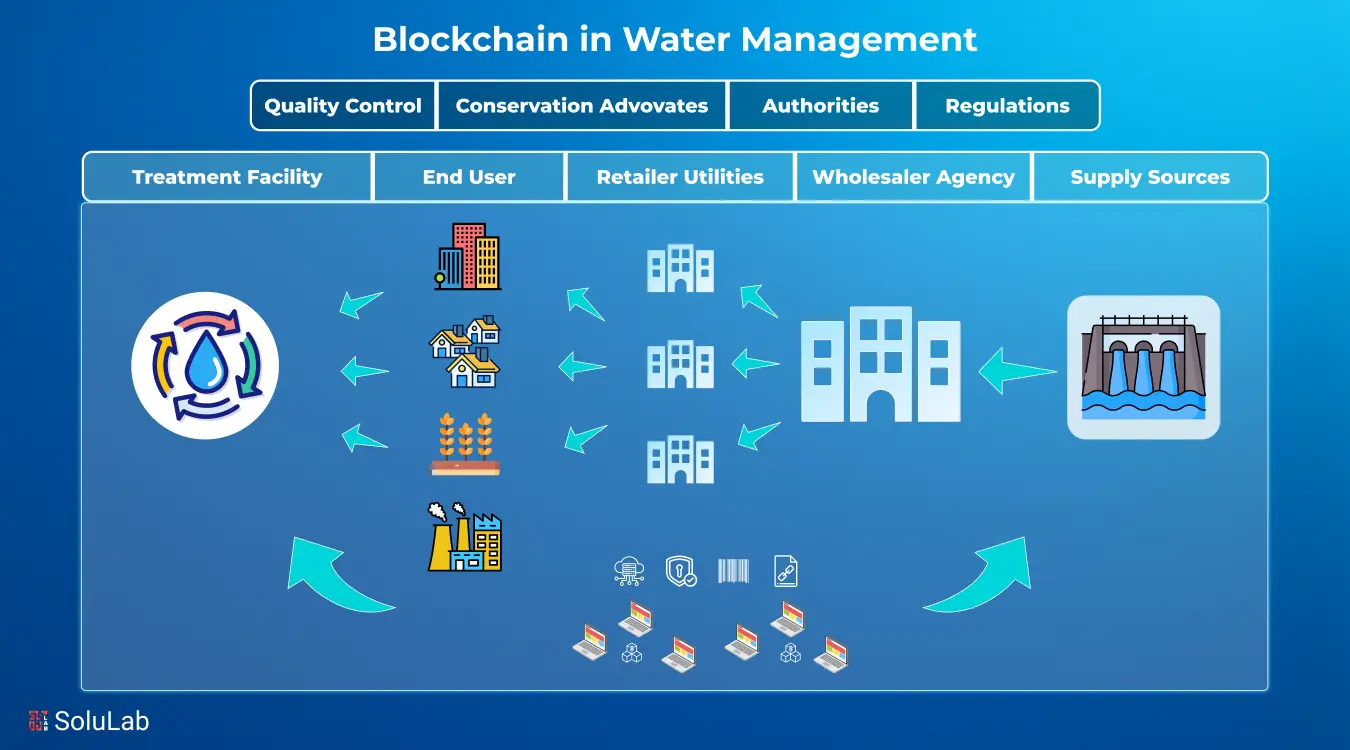
Water scarcity keeps growing as a global problem, with roughly two-thirds of the world’s population projected to face water-stressed conditions by 2025. That alone should be enough to push for creative, sustainable ways to manage water supplies. One real option: bringing blockchain technology into water management systems to sharpen transparency, efficiency, and accountability in how water gets used and distributed.
According to World Bank reports, water utilities worldwide waste more than 40% of treated water through leakage and inefficiency, roughly 45 million cubic meters a day. That’s enough to fill 45,000 Olympic swimming pools, or supply nearly 200 million people daily.
This blog looks at how blockchain in water management can offer a transparent, efficient way to track, distribute, and conserve one of the planet’s most vital resources. Let’s get into it.
Challenges in Traditional Water Supply Systems
Urbanization, climate change, and population growth are straining water delivery systems that, in many cases, were built decades ago. They simply weren’t designed for the precision, openness, and flexibility modern society now expects. Here are a few of the biggest challenges with conventional water supply systems:
1. Aging Infrastructure: Most urban areas still run on outdated systems prone to leaks and ruptures, which adds up to significant water loss. In some regions, as much as 30-40% of treated water never reaches end customers because of leakage.
2. Absence of Transparency: There’s no solid way to monitor water usage, identify who’s using it, or pinpoint where waste is happening. Without tamper-proof records or decentralized verification, holding anyone accountable for misuse or theft becomes nearly impossible.
3. Inadequate Data Management: Most traditional approaches are still manual, relying on scheduled meter readings and rough estimates. That makes demand forecasting, spotting usage patterns, and optimizing distribution a lot harder than it needs to be.
4. Delayed Emergency Response: Current systems are slow to react to pipe breaks or contamination. A delay in catching the problem, or alerting the right people, can mean extended outages or a real public health risk.
5. High Operational Expenses: Labor-intensive work, paper-based processes, and too little automation all drive up costs for water utilities, which in turn makes it harder to invest in real long-term improvements.
6. Environmental Vulnerability: Traditional systems weren’t built to handle unpredictable weather, prolonged droughts, or flooding. They lack the adaptability to keep up with climate disasters that are hitting more often and harder.
7. Resistance to Innovation: A lot of utilities run into bureaucratic and financial walls when trying to adopt newer technology. Outdated infrastructure limits how far they can go with IoT devices, AI-driven analytics, or blockchain-as-a-service systems.
How Blockchain Works For Smart Water Management?
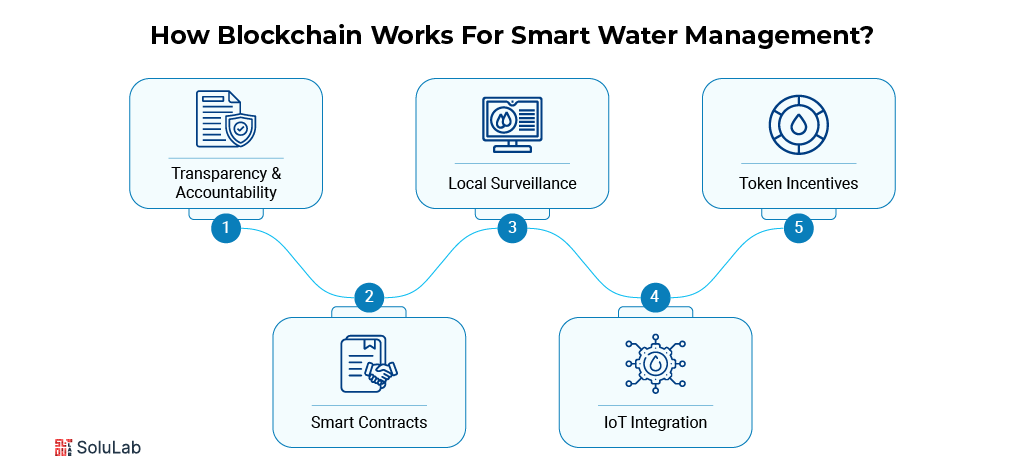
Water is essential, but managing it well is genuinely hard in a lot of the world. Outdated systems, poor data visibility, and eroded stakeholder trust have made the need for smarter solutions urgent. Blockchain is emerging as a real tool for improving water tracking, distribution, and valuation, helping businesses, individuals, and municipalities get more out of every drop.
Transparency and Accountability
One of blockchain’s biggest strengths is storing data permanently, openly, and without the ability to alter it. That builds a shared, trustworthy record of water usage and who’s using it, right inside the water system itself. Real-time consumption data from homes, businesses, or municipalities can be made visible to everyone. Beyond discouraging fraud and overuse, that visibility builds trust in places where resources have historically been mismanaged or poorly documented.
Smart Contracts for Water Utilization and Billing
Picture a system where water bills get calculated automatically from actual usage and paid instantly, no paperwork, no delays. That’s what smart contracts make possible. Rules like limiting use during a drought, or adjusting prices based on demand, get built directly into these digital contracts. Once the conditions are met, the contract executes on its own. No manual intervention needed, and allocation and invoicing stay fair.
Reliable Local Surveillance
In a lot of areas, monitoring water quality and usage still depends on periodic checks. Blockchain lets every sensor reading, water pressure, pollution, flow, get logged and stored securely the moment it happens. That data can’t be changed or deleted without consensus, so local communities and regulators can actually rely on it.
Immediate Insights With IoT Devices
The integration ofIoT and blockchain is changing how we understand water systems. Sensors spread across a city, on pipelines, tanks, or filtration facilities, send continuous updates. That data can catch leaks, track reservoir levels, and flag problems fast. It gives local governments and engineers a real method for managing water in real time, an approach that’s picking up steam in smart water management markets globally. At treatment plants, pairing IoT telemetry with cutting-edge MBBR systems allows continuous tracking of biofilm health, aeration efficiency, and effluent quality, with blockchain locking in tamper-proof performance and compliance records.
Token Systems That Incentivize
Blockchain also brings in the idea of token incentives. Communities or households that save water, fix leaks, or report problems can earn digital tokens as a kind of credit. Those tokens can go toward discounts on water bills, access to public services, or get traded in local markets. It’s a small but real nudge toward more conscious usage, while keeping a clear record of every contribution.
A number of pilot projects are already running on well-known blockchain platforms, like Ethereum and Hyperledger, to put these ideas into practice at scale. As cities look to modernize their infrastructure, blockchain could end up as the foundation for sustainable water management.

Real-Life Use Cases of Blockchain in Water Management
Blockchain might still sound futuristic to some, but a number of forward-thinking communities and organizations have already put it to work solving real water management problems. These aren’t theoretical exercises. They show exactly how decentralized systems can fix long-standing inefficiencies in how we use and govern water.
1. Water Ledger Pilot in Northern Australia
In Far North Queensland, Australia, the Water Ledger platform was piloted to streamline water rights trading. Civic Ledger built it in partnership with the Cooperative Research Centre for Developing Northern Australia (CRCNA), aiming squarely at inefficiencies in Australia’s water markets.
Key Outcomes:
- Reduced Trade Times: The pilot reduced water trade approval times from several weeks down to mere days, a real jump in market efficiency.
- Enhanced Transparency: Recording trades on a blockchain gave every participant access to real-time data, building trust and accountability.
- Smart Contracts: Smart contracts automated compliance with trading rules, cutting down manual intervention and errors.
This project is a solid example of what blockchain can do for water trading, and a working model for modernizing resource management systems.
2. Ahmedabad’s Smart Water Management Initiatives
In Ahmedabad, India, the Ahmedabad Urban Development Authority (AUDA) has started integrating advanced technologies into water management. It’s not exclusively blockchain-based yet, but these initiatives are laying the groundwork for decentralized technologies down the line.
Key Developments:
- Smart Metering: Installing smart meters and advanced metering infrastructure (AMI) to track water usage accurately.
- IoT Integration: Rolling out IoT devices for real-time data on water flow and quality, enabling proactive maintenance and leak detection.
- Data Analytics: Using data analytics for informed decisions and more efficient water distribution.
These efforts show a real commitment to smart water solutions, strengthening both resource management and service delivery.
Benefits for Governments, Utilities, and End Users
Modern water systems are under more pressure than ever. As cities grow and weather patterns turn less predictable, managing water fairly and efficiently has become a serious challenge. Whether you’re a policymaker, a utility provider, or just someone paying a water bill every month, this affects you. Used thoughtfully, blockchain offers a genuinely different kind of solution, one built on transparency, automation, and shared responsibility.
1. For Governments: Smarter Regulation and Public Trust
Governments often get stuck between two hard demands: enforcing policies that protect resources, and holding onto public confidence. What makes that even harder is the lack of real-time, verified data. Records tend to be scattered across departments, and manual reporting leaves plenty of room for mistakes, or manipulation.
This is where blockchain technology in water management earns its keep. It creates one tamper-proof source of truth for water data: who’s using it, how much is available, and where it’s getting lost. With that kind of visibility, enforcing rules fairly, stopping illegal use, and planning infrastructure around actual need, not outdated guesswork, all get a lot easier. And when people can see the data and understand the decisions behind it, trust in public systems grows.
2. For Utilities: Cost Control and Operational Clarity
For water utilities, every undetected leak, every billing mistake, every delayed repair costs real time and money. Much of that happens because systems are reactive. Utilities often don’t know there’s a problem until it’s already too late.
Blockchain lets utilities shift from reactive to proactive. By tying in smart meters and connected devices, they can track usage, pressure, and even water quality as it happens. That data can feed straight into smart contracts that handle billing, catch anomalies, and flag issues before they turn into expensive repairs.
Working with a blockchain consulting company helps utilities build these systems without starting from zero. Instead of ripping everything out, blockchain becomes a secure layer over existing processes, cutting inefficiencies and simplifying compliance reporting.
3. For End Users: Fair Billing and Empowered Participation
On the consumer side, people mostly want two things: fair pricing and reliable service. Too often, though, billing disputes drag on unresolved, water overuse goes unnoticed, and the average person feels like there’s nothing they can do about it.
Blockchain shifts that dynamic. When water usage gets tracked in real time and records are publicly verifiable, billing becomes simpler and clearer. Users can catch leaks early, track their own patterns, and adjust habits accordingly.
Some cities are going further, experimenting with water reward systems. Report a leak, use a low-flow device, or stay under a certain limit, and users earn digital tokens or credits. With blockchain for smart water management, those rewards go out instantly, no paperwork, no waiting on approval. That turns people into active partners in conservation instead of passive consumers.
Future Vision for a Decentralized Water Ecosystem
Picture a world where every drop of water can be traced, monitored, and valued in real time, no hidden leaks, no bureaucratic delays, no murky ownership. That’s the direction decentralized water ecosystems are heading. Unlike traditional centralized systems that rely on one authority to manage supply, billing, and quality control, decentralized models let communities, local authorities, and even individuals co-manage water as a shared resource.
This vision runs on trust, transparency, and shared accountability. With a decentralized system, rural farmers could access verified water trading networks straight from their phones. Blockchain sits at the center of this shift in water management, enabling peer-to-peer water exchange, tamper-proof quality records, and smart contracts that enforce conservation rules or automate subsidies. No middlemen. No ambiguity. Just clean, clear information flowing as freely as the water itself.
In a decentralized water ecosystem, decisions don’t just trickle down from the top. They bubble up from every household, every farm, every utility, all working in sync. That adds up to a more resilient, responsive, and equitable water future for people and the planet alike.

Conclusion
Water is one of the most vital resources we have, and how we manage it will shape our cities, communities, and industries going forward. From streamlining billing to enabling real-time quality monitoring, blockchain offers a more honest, efficient, and transparent way to manage water.
At SoluLab, we’re proud to back forward-thinking projects turning this vision into reality. As a trusted blockchain development company, we’ve helped platforms like Morpheus.Network bridge the gap between legacy logistics operations and decentralized innovation. Morpheus.Network uses blockchain, IoT, and secure SaaS tools to simplify complex supply chains, proof that with the right integration, old systems can evolve instead of being torn out entirely.
If you’re exploring what blockchain could do for your approach to water management or logistics, let’s talk. Whether you need a custom solution, expert guidance, or a strategic partner to build something future-ready, SoluLab is here to help.
FAQs
Shipra Garg is a tech-focused content strategist and copywriter specializing in Web3, blockchain, and artificial intelligence. She has worked with startups and enterprise teams to craft high-conversion content that bridges deep tech with business impact. Her work translates complex innovations into clear, credible, and engaging narratives that drive growth and build trust in emerging tech markets.