Talk to an Expert

What Are SPVs in Asset Tokenization and Why Do They Matter?

SPVs in Asset Tokenization

Ever wondered how someone invests in a $20 million real estate deal with just a few hundred dollars? That’s the magic of Special Purpose Vehicles (SPVs) in asset tokenization.

SPVs have emerged as critical tools in the world of asset tokenization. As businesses adopt blockchain and decentralized finance, SPVs help structure investments, mitigate risks, and ensure regulatory compliance. They act as legally separate entities, often used to represent ownership of tokenized real-world assets like real estate or fine art. 

This blog examines the role of SPVs in asset tokenization, their significance, and the benefits they offer to businesses and investors.

What Is a Special Purpose Vehicle (SPV)?

A Special Purpose Vehicle is a legal entity created by a parent company to isolate financial risk. It is also called a Special Purpose Entity (SPE). SPVs improve liquidity, create access for smaller investors, and allow fractional ownership of high-value assets. When combined with smart contracts and blockchain, SPVs reduce manual intervention and increase transparency. 

  • SPVs operate independently and maintain their own balance sheets.
  • They protect the parent company from financial exposure or bankruptcy.
  • SPVs can hold assets, issue debt, and participate in risk-heavy ventures.

Key Functions of SPVs 

  • Separate Risk Without Impacting the Parent Company 

SPVs act like protective shells around risky investments. If something goes wrong inside the SPV, the parent company isn’t dragged down financially or legally. This helps companies take bold steps without risking everything.

  • Make Debt More Attractive and Manageable

 When companies package their debt into an SPV, it becomes easier to manage and more appealing to investors. The SPV handles repayments, while the parent enjoys a cleaner balance sheet and better credit terms.

  • Pool Investor Capital for Targeted Projects 

SPVs allow companies to gather funds from multiple investors and direct them toward a specific purpose. Those include launching a startup or building a property, without mixing it with the company’s other finances.

  • Ensure Legal Protection in Case of Bankruptcy 

Since SPVs are legally separate, even if the parent company faces bankruptcy, the SPV and its assets are usually protected. This legal wall keeps investor funds safer and better managed.

  • Simplify Complex Investments into Structured Deals

SPVs break down big, complicated investments, like real estate or infrastructure, into smaller, digestible units. This structured approach makes it easier to tokenize assets and invite participation from a wider pool of investors.

  • Help in Complying with Global Financial Regulations 

Creating an SPV helps businesses follow strict rules in different countries. Whether it’s for taxation, securities compliance, or KYC, the SPV ensures the investment stays legally sound and transparent.

  • Enable Smart Contract Integration and Tokenization

SPVs work well with blockchain-based systems. They act as the legal wrapper around smart contracts. These automate things like dividend payments, ownership transfers, and investor eligibility without manual oversight.

Read Blog: Daos in Real Estate Tokenization

Common Legal Forms of SPVs:

Structure Type Description
LLC Limited Liability Company offering flexible rules
Limited Partnership Often used in private equity and real estate
Trust Common in financial structuring and estate use
Corporation Standard setup for many large-scale SPVs

Role of SPVs in Asset Tokenization

The modern digital economy’s changes are pushing businesses to seek capital raises, and that’s where SPVs in tokenization come into play. With a clear legal entity, companies could issue digital tokens under their ownership. This move makes it easier for investors while lowering the traditional barriers. This also opens wide doors for innovative businesses and investors under a secure framework. Tokens issued through SPV can be traded on blockchain platforms that aid in increasing liquidity. 

For example, take real estate, developers use SPVs in the tokenization of large investments. This helps in breaking them into small units, which makes retail investors take part. This move’s main focus is to bring capital without overloading the main company’s balance sheet. Finally, SPVs in asset tokenization blend the traditional finance system with modern technology to provide reliable and scalable capital.

Significance of SPVs in Real-World Asset Tokenization

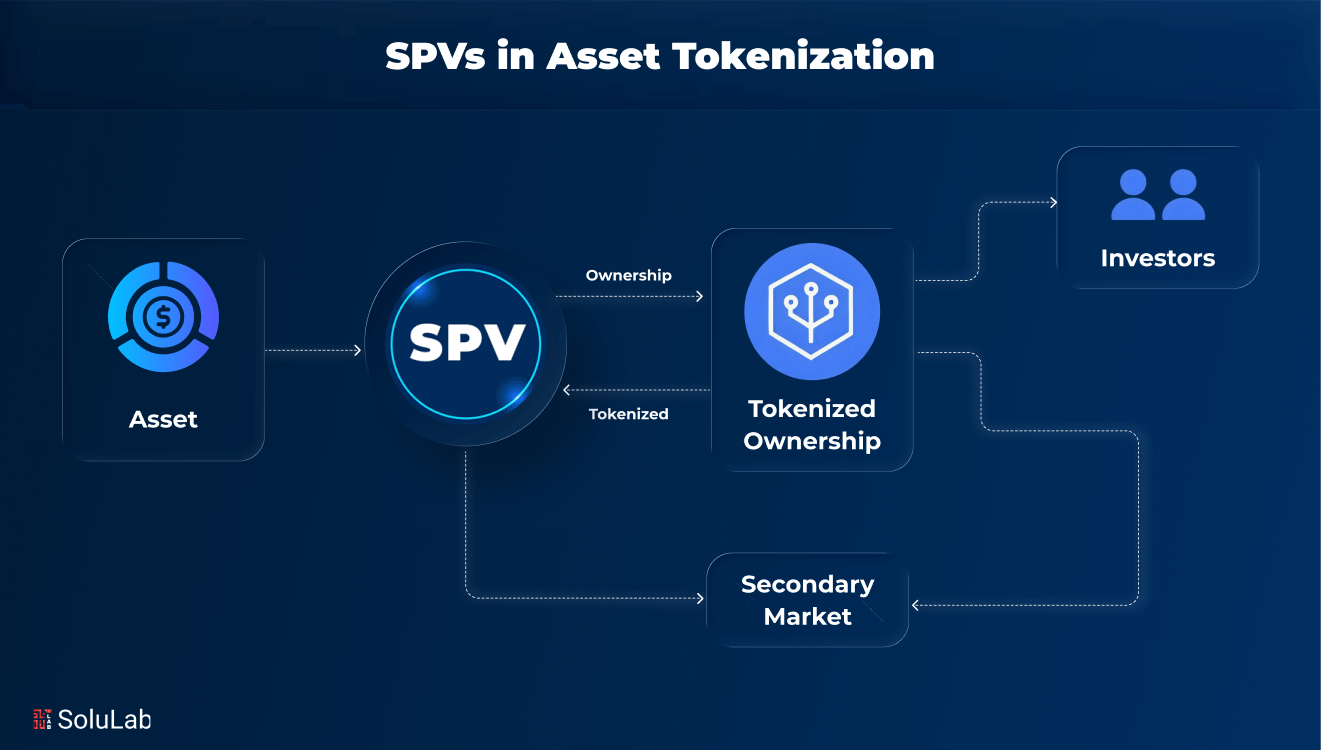
SPVs play a vital role by acting as separate legal entities for asset tokenization. Their primary role includes:

  • Issuing digital tokens backed by physical or financial assets.
  • Recording asset ownership transparently on the blockchain.
  • Ensuring asset rights are clear and legally protected.

For Investors:

  • Small investors can access premium assets at lower costs.
  • They gain higher liquidity and diversified investment options.
  • They benefit from clear legal rights and a transparent structure.

For Business:

  • Access to capital without issuing new stock.
  • Reduced dilution of existing shareholders’ equity.
  • Structured compliance and global investor access.

Benefits of SPVs in Tokenization

SPVs offer clear legal, operational, and technological benefits. Below are the key advantages:
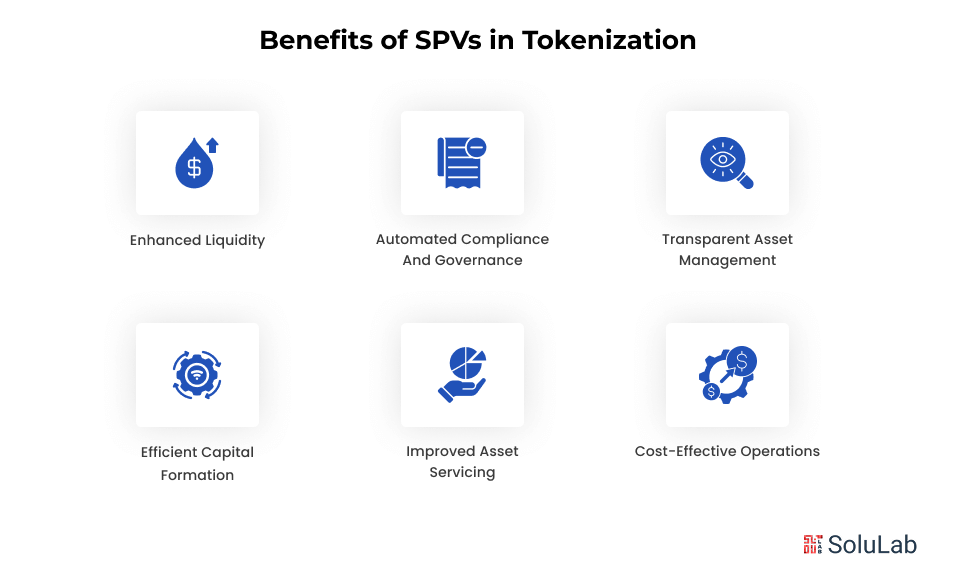
Benefits of SPVs in Tokenization

  • Enhanced Liquidity

Tokenized SPVs break down large assets into smaller digital tokens that can be traded on blockchain platforms. This allows investors to enter with much smaller capital, making high-value assets like real estate or art more accessible and liquid. With lower investment barriers, broader participation becomes possible, even for retail investors.

  • Automated Compliance and Governance

Smart contracts built into the SPV structure help enforce all legal and regulatory rules automatically. These contracts verify investor eligibility, apply transfer restrictions, and manage compliance without manual paperwork. It reduces the risk of human error while saving time and money on regulatory processes.

  • Transparent Asset Management

Every transaction and ownership update is recorded on the blockchain in real time. This transparency allows investors to monitor their holdings, income distributions, and governance rights from a secure dashboard. Asset managers can also access detailed performance data for better oversight and control.

  • Efficient Capital Formation

Raising capital becomes faster and cheaper with tokenized SPVs. Smart contracts eliminate the need for intermediaries like brokers or underwriters, cutting fundraising costs significantly. Global investors can participate more easily, while token offerings ensure regulatory compliance from the start.

  • Improved Asset Servicing

Dividends, interest, and other financial benefits are distributed automatically using smart contracts. There’s no need for manual processing or reconciliation. Investors receive their payments accurately and on time, with all activities logged transparently on-chain.

  • Cost-Effective Operations

Tokenized SPVs minimize administrative overhead by digitizing operations. Legal and accounting costs drop with the use of blockchain-based reporting tools. Digital documentation streamlines the overall process, making the structure efficient for both issuers and investors.

Real-World Case Studies of SPV Application

1. Harbor’s $20 Million Tokenized Student Housing Project (2023)

In 2023, Harbor took a major step in real estate innovation by using an SPV to tokenize a student housing project valued at $20 million. This move allowed small and retail investors, who usually can’t afford such large investments, to purchase fractional shares through digital tokens.

By structuring the offering via an SPV, Harbor ensured the investment complied with U.S. securities regulations while also boosting liquidity. Investors could easily trade their shares on a blockchain-based platform, making entry and exit from the investment more flexible. This example highlights how SPV-backed tokenization can break traditional real estate barriers and offer regulated, digital investment opportunities to a wider audience.

2. CitaDAO’s Tokenization of Industrial Units in Singapore

CitaDAO, a Web3 real estate platform, successfully tokenized two industrial properties worth over $1.2 million in Singapore using an SPV structure. Investors could purchase tokens representing fractional ownership, with one key feature being the ability to redeem the actual property deed with a 30% ownership stake.

Built on the Ethereum blockchain, this model enabled secure secondary trading while ensuring investor transparency and asset traceability. The SPV model provided legal separation and compliance, while blockchain ensured every transaction and ownership transfer was clearly logged. CitaDAO’s project is solid proof of how asset tokenization, when combined with SPVs, opens up previously illiquid real estate to smaller, tech-savvy investors globally.
Real-World Case Studies of SPV Applicationinternal

Step-by-Step Guide: Creating a Tokenized SPV

The following are some crucial steps while creating a Tokenized SPV:

1. Strategic Planning and Market Analysis: Define goals, capital needed, and investor types, and research demand for tokenized versions of your asset.

2. Form the Legal Structure: Establish an SPV (LLC or Limited Partnership) and ensure full legal documentation and regulatory compliance.

3. Smart Contract and Blockchain Setup: Develop smart contracts for issuing and managing tokens and choose suitable standards like ERC-20 or ERC-3643.

4. Design Token Economics: Structure token utilities, rights, and distribution mechanisms, and include rules for dividends, governance, and trading limits.

5. Launch the Offering: Onboard investors via KYC and AML checks, issue tokens, and manage compliance with smart contract tools.

Legal Models: Bearer vs. Registry-Based Ownership

Two ownership models affect how tokenized assets function:

Ownership Model Bearer Ownership Registry-Based Ownership
Definition Ownership is tied to possession, like holding physical cash or crypto private keys. Ownership is recorded in legal registries such as property or vehicle records.
Control Whoever holds the asset (or key) controls it. Only the person listed in the registry has legal control.
Risk Losing access (e.g., private key) means losing ownership permanently. Ownership can be restored or updated through legal means.
Example Cryptocurrencies, bearer bonds. Real estate titles, car ownership, and shareholding records.
Transfer Process Simple, transfer possession. Requires legal steps and approval to update official ownership records.
Legal Recognition Not always recognized by law in case of disputes. Strong legal backing and enforceability in most jurisdictions.
Use in Tokenization Common in permissionless tokens and decentralized finance. Used in regulated assets requiring formal legal ownership records.

Blockchain integrates both models, but legal adaptation is ongoing. Token ownership often reflects contractual rights over actual possession.

Addressing Regulatory and Jurisdictional Complexity

Tokenizing digital assets brings challenges like regulations, security, and licensing, which businesses must handle carefully. Each country has its own rules and monetary teams to clarify tax, assets, and token exchange regulations. Trading tokenized assets triggers income tax and capital gains. These are mainly dependent on location and investors’ interest. 

Privacy tools like Zero Knowledge (ZK) proof technology are used to protect user data. However, businesses must comply with KYC and AML regulations. Jurisdictions such as Luxembourg and Ireland are robust towards asset-backed tokens. This makes them global investor-friendly countries. 
Asset Tokenization Development Services

Final Thoughts: The Future of Tokenized SPVs

SPVs will continue to drive asset tokenization. Their role in risk reduction, legal clarity, and investor access is unmatched. Businesses can raise capital quickly and globally, along with transparent, regulated, and liquid asset options. Legal teams must adapt to new standards and jurisdictions. Collaboration between technologists, lawyers, regulators, and investors is key. 

With proper planning and compliance, SPVs can unlock the full potential of tokenized real-world assets. SoluLab is one of the best asset tokenization development company. If you are ready to build the project, our expert team is here to assist you in every step. 

Contact us today to make your goal a reality!

FAQs

1. Why do companies use SPVs for tokenization? 

Companies use SPVs to raise money without affecting their main business. It creates a safe, separate setup that attracts investors, offers legal protection, and makes the whole process more organized and trustworthy for everyone involved.

2. How does an SPV make real estate investing easier? 

SPVs break down big property projects into small, affordable tokens. This way, regular people can invest in real estate with less money and enjoy benefits that were previously limited to big investors or large institutions.

3. Are tokenized SPVs regulated by law? 

Yes, tokenized SPVs must follow the rules set by financial authorities. These include investor checks, trading limits, and tax laws, so investors can trust that everything is handled in a legal and proper way.

4. What does blockchain do in SPV-based tokenization? 

Blockchain helps record and track every transaction clearly and securely. It also automates many legal steps, reduces paperwork, and ensures both investors and businesses stay updated with real-time information.

5. Do token holders actually own the real asset? 

Not directly. Token holders own rights through the SPV that represents the asset, not the asset itself. It’s like holding a legal agreement backed by the asset, which still gives control and value but not physical ownership.
 

How Is Tokenization in Finance Making Investing Smarter and Faster?

Tokenization in Finance

The financial world is changing fast. One of the biggest changes happening right now is tokenization in finance. This means turning real things like property, stocks, or money into digital tokens that live on a blockchain. These tokens represent ownership or rights to a physical or financial asset. 

According to Boston Consulting Group, tokenized investment could be worth $16 trillion by 2030. That’s about 10% of the global economy. Why? Because tokenization in financial services solves a lot of the problems that traditional finance has like slow processes, high fees, and limited access.

To make this possible, companies often partner with an asset tokenization development company to build scalable systems backed by blockchain technology. These platforms are at the heart of enabling tokenization of assets safely and efficiently.

Traditional Finance vs. Tokenized Finance

In traditional finance, buying or selling assets can be slow and expensive. You need to go through banks, brokers, and clearinghouses. It can take days to complete a transaction. Also, only a few people often get access to high-value investments.

But tokenized financial assets are changing that.

With tokenization in finance:

  • You get real-time settlements.
  • Assets become liquid, even if they were hard to trade before
  • You can own just a fraction of a large asset (this is called fractional ownership).
  • People from anywhere in the world can invest, no matter their location.

Thanks to blockchain technology, this is now possible. It removes the middlemen, adds transparency, and makes the process much faster.

As a result, we are seeing the rise of new solutions in banking, fintech, and investing, many backed by real world asset tokenization strategies and even powered by AI agents in asset tokenization for added automation and intelligence.

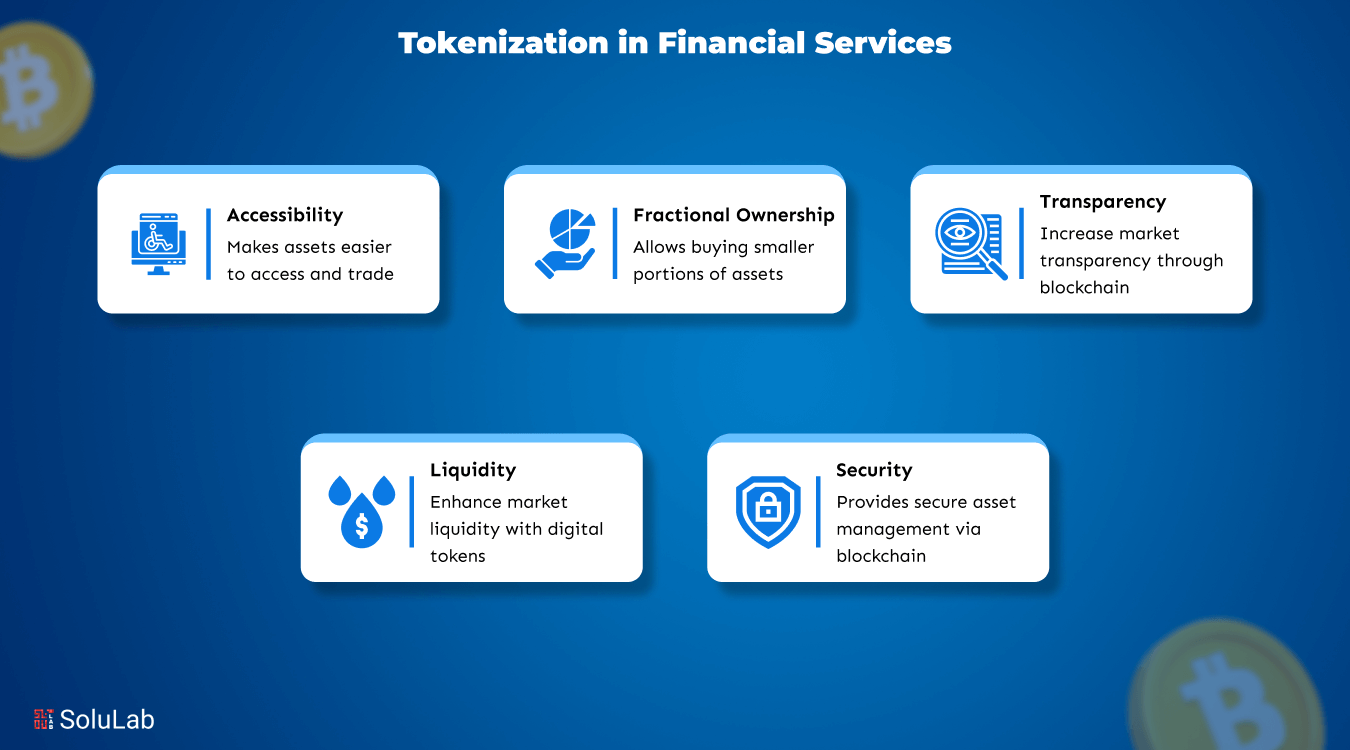
Key Benefits of Tokenization in Finance

More and more companies are choosing finance tokenization because it offers major improvements over traditional finance. Here’s why:

Key Benefits of Tokenization in Finance

1. Efficiency

With tokenization, smart contracts can automatically handle tasks like transfers, payments, and recordkeeping. This reduces paperwork, lowers errors, and saves time. Businesses working with an asset tokenization development company can quickly set up secure and efficient systems.

2. Security

All transactions are stored on a blockchain, making them tamper-proof. That means no one can change or delete the data, which greatly reduces fraud.

3. Liquidity

Many high-value assets, like real estate or fine art, are hard to sell quickly. But tokenization of assets makes it possible to divide these into smaller parts (tokens) and sell them easily to more investors. This opens up new ways to raise money and trade faster.

4. Transparency

Since every transaction is recorded on the blockchain, both businesses and investors get full visibility into what’s happening. This builds trust and makes compliance easier.

5. Accessibility

Traditionally, investing in assets like real estate or private equity required large amounts of money. With tokenized investment, even small investors can own a fraction of valuable assets. This makes investing more inclusive.

The growing use of tokenization in finance​  shows how powerful this shift is. Companies are modernizing their operations and using platforms like an asset tokenization platform to handle everything from real estate to bonds.

Read Also: RWA Tokenization In Traditional Banking

Technology Behind Tokenization of Assets

The core technology behind tokenization in finance is blockchain. It is a secure, digital ledger that records every detail about an asset, who owns it, where it came from, and every transaction it’s ever gone through. This makes it reliable, transparent, and tamper-proof.

To make this system work smoothly, a few important tech pieces come together:

  • Smart contract development helps automate things like compliance checks, payments, or transfers, so there’s less need for middlemen.
  • Blockchain-as-a-Service lets companies launch their own blockchain apps quickly, without building everything from scratch.
  • Protocol layers, like Layer 1, Layer 2, and Layer 3 blockchain, help improve speed, reduce costs, and make different blockchain systems work together.

Companies that want to create secure and scalable solutions often partner with a blockchain consulting company. If you’re looking to build a reliable solution, it’s smart to work with an asset tokenization development company that already has experience in this space.

Types of Assets Being Tokenized in Financial Services

Now let’s talk about what can be tokenized. Actually, a lot of things!

This is where asset tokenization becomes powerful. You can create digital versions of real-world assets that are easier to buy, sell, and invest in.

Here are some examples:

1. Real estate tokenization: Instead of buying an entire property, investors can buy small shares. This makes investing more affordable and opens up real estate markets to global investors.

2. Equities and Bonds: Tokenization lets you add automation, like instant dividend payouts and faster settlement.

3. Private Equity: Startups and private companies can raise funds more easily and give investors a way to trade their shares.

4. Commodities like Gold or Oil: Storing gold can be expensive. But with gold tokenization, you can own it digitally without worrying about logistics.

5. Collectibles and NFTs: These are gaining popularity, too. Tokenization lets you prove ownership of rare or valuable items online.

Each of these categories improves transparency, reduces costs, and increases investor access. More importantly, they help create more liquid markets using tokenized financial assets.

Read Also: White-Label Tokenization Vs. Custom Blockchain

How Tokenization Enables Fractional Ownership and Global Access?

In the past, investing in big assets like commercial real estate or venture capital was only possible for wealthy individuals. But now, finance tokens have changed that. Investors can put in as little as $10 to own a part of these valuable assets.

This is called fractional ownership, and it offers some important benefits:

  • It opens investment opportunities to everyone, not just the rich.
  • It lowers the risk of putting all your money in one place.
  • It makes it easier to buy and sell shares in assets through secondary markets.

Many asset tokenization platform providers are creating the technology to make fractional ownership simple and accessible worldwide.

Some platforms also use AI agents in asset tokenization to help manage these digital assets better, improving customer service and automation.

Real-World Use Cases of Financial Tokenization

Tokenization is no longer just an idea; it’s actively changing how finance works. Both big companies and startups are using tokenization in financial services to improve asset management.

Some examples:

These examples highlight how real world asset tokenization and tokenization of assets are becoming mainstream. They prove that asset tokenization development companies are building real, working platforms that bring liquidity and transparency to traditional finance.

Best Platforms for Investing in Tokenized Assets

If you want to invest in tokenized investment​, you don’t need to be a tech expert or a wealthy investor anymore. Several platforms now make it easy to access real world asset tokenization, including things like real estate, stocks, bonds, and even private equity.

These platforms are designed to lower the entry barrier, increase transparency, and offer more liquidity, allowing everyday investors to benefit from tokenization in finance. Here are some of the best platforms to consider:

Best Platforms for Investing in Tokenized Assets

1. Token World

Token World is a secure and scalable crypto launchpad platform that simplifies the tokenization of assets, helping blockchain startups raise capital while giving investors access to vetted, high-potential projects. With built-in smart contract security, regulatory compliance support, and multilingual capabilities, it enables real world asset tokenization across sectors like real estate, DeFi, and healthcare. By integrating an AI agent in asset tokenization and leveraging advanced blockchain infrastructure, Token World offers a seamless, transparent, and investor-friendly Web3 experience.

2. RealT

RealT is a leading asset tokenization platform that focuses on tokenization of real estate. It allows users to buy fractional shares of rental properties. This is a perfect example of real world asset tokenization, where physical properties are converted into digital tokens for global investors.

3. tZERO

tZERO is well-known for offering tokenized financial assets like digital stocks. It’s one of the first platforms to follow U.S. SEC guidelines, making it ideal for investors looking for regulated and compliant solutions in tokenization in financial services.

4. Securitize

Securitize works with institutions to help them tokenize bonds, funds, and equity. As an asset tokenization development company, it offers secure infrastructure and helps businesses benefit from the tokenization of assets with ease.

Read Also: AI Tokenization For Asset Ownership

Compliance, Standards & Security in Tokenized Finance

When we talk about tokenization in finance, one thing is clear: trust matters. That trust is built on strong rules, secure systems, and clear global standards. Tokenization doesn’t remove compliance; it helps automate it.

1. Token Standards

In tokenized financial assets, standards are the foundation. Whether you’re dealing with finance tokens or NFTs, most digital assets follow well-known protocols like ERC-20, ERC-721, and ERC-1400. These standards:

  • Make sure tokens work across systems
  • Help protect investors
  • Allow easy integration with wallets and exchanges

They are especially important for companies offering asset tokenization platform services or building tools for the tokenization of assets.

2. Regulatory Considerations

Even though tokenized investment​ is digital, it must follow real-world laws. Many countries, like Singapore and the UAE, are leading with clear rules for digital assets. The space is getting more mature, especially around things like:

  • Security Token Offerings
  • The difference between ICO vs. STO
  • Rules for who can invest and how tokens are traded

Following these regulations isn’t optional; it’s essential. That’s why many companies work with a blockchain consulting company to stay compliant.

3. Security & Privacy in Tokenized Systems

Keeping data safe is just as important as compliance. That’s where modern blockchain features shine:

  • Role-based access: Control who sees or moves digital assets
  • Zero-knowledge proofs: Protect private details without revealing them
  • End-to-end encryption: Make sure every transaction is secure

Working with experts ensures these tools are built the right way from day one. We offer reliable smart contract development to keep everything secure and automated.

Read Also: Why Dubai, London & New York Lead in Real Estate Tokenization?

The Future of Tokenization in Finance

Tokenization is no longer just an idea; it’s becoming the backbone of finance.

  • Decentralized finance tokens will help assets move freely across different blockchains
  • An AI agent for finance tools will handle tasks like risk scoring and KYC
  • New layers of trust will emerge in the Decentralized Web3 Ecosystem 
  • Real-time asset tokenization development company services will bring assets online in days, not months

The shift is fast and real. Major institutions are already joining in, using real-world asset tokenization to unlock new markets, reduce costs, and grow faster.

With Tokenization in asset management, people and companies can trade 24/7, send money globally in minutes, and invest with less money upfront. Whether it’s decentralized finance tokens​, real estate tokenization, or gold tokenization this isn’t just a trend. It’s changing how the world handles money and investments.

Asset Tokenization Development Company

Conclusion

The rise of tokenization in financial services is reshaping how we store, trade, and grow assets. Whether you’re managing real estate, gold, or stocks, tokenization of assets offers more security, faster transactions, and global reach. It also brings transparency and automation through smart contracts, while keeping your business fully compliant.

If you’re a business looking to get started, partner with an expert Tokenization Platform Development Company like SoluLab. We’ve built plug-and-play platforms like Token World to help businesses tokenize assets in just a few days. 

Whether you are a well-established business or a startup, we can help you grow your business with technical support. Contact us today!

FAQs

1. What is tokenization in finance?

It means converting assets like stocks or property into digital tokens stored securely on blockchain networks.

2. Are tokenized assets secure?

Yes. With encryption, smart contracts, and strong compliance, digital tokens are often safer than traditional systems.

3. What types of assets can be tokenized?

Everything from real estate, bonds, and company shares to gold and NFTs.

4. How does tokenization benefit investors?

It offers easy access, liquidity, transparency, and the ability to buy small portions of large assets (fractional ownership).

5. How can my company get started?

Partner with a Tokenization Platform Development Company like SoluLab. Our experts help launch secure, regulation-ready platforms fast.