By 2026, the RWA market has pushed past $24 and $27 Billion. What changed? Pilots stopped being pilots. Institutions started running this in production.
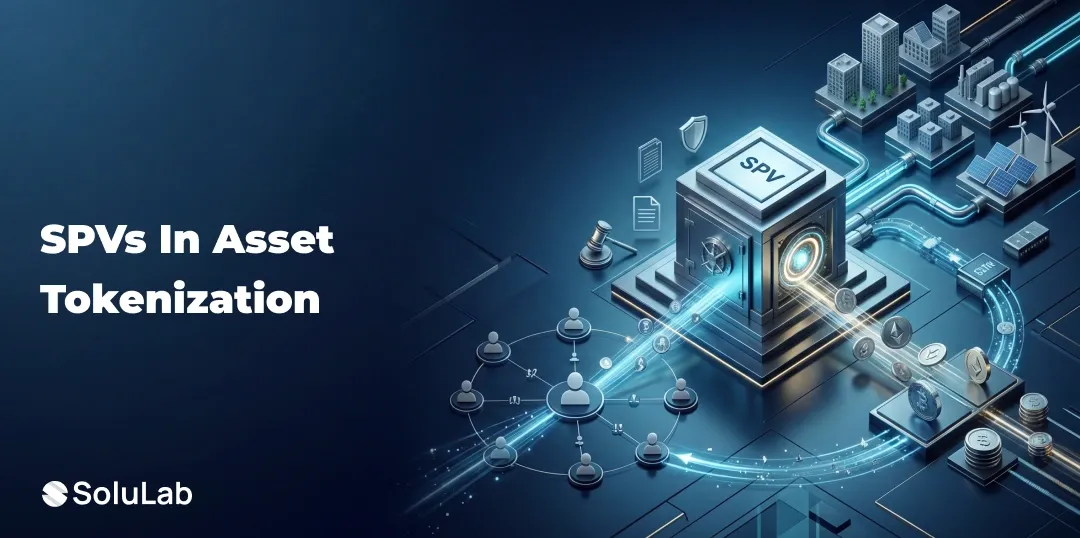
- Sitting at the center of that scale is the Special Purpose Vehicle (SPV), the legal bridge that connects a physical asset to on-chain liquidity.
- After the January 2026 SEC Joint Staff Statement, the SPV stopped being just a risk isolator. For tokenized securities, it is now the compliance wrapper you are required to have.
Companies moving into blockchain and decentralized finance use SPVs to shape the investment, park the risk somewhere contained, and stay on the right side of regulators. Legally, the SPV is its own entity. In practice it is how you represent ownership of tokenized real-world assets such as real estate or fine art.
This blog walks through what SPVs actually do in asset tokenization, why they matter, and what businesses and investors get out of them.
Key Takeaways
- The SPV structure gives you “ring-fencing,” which keeps on-chain assets out of reach of the parent company’s liabilities.
- Tokenized SPVs built on ERC-3643 cut administrative overhead by up to 40%, thanks to automated KYC/AML oracles and T+0 atomic settlement.
- The serious projects put Registry-Based Ownership first, so a token transfer on-chain counts as a real change in title.
What Is a Special Purpose Vehicle (SPV)?
A Special Purpose Vehicle is a legal entity a parent company sets up to wall off financial risk. Some people call it a Special Purpose Entity (SPE). Same thing. SPVs improve liquidity, open the door to smaller investors, and make fractional ownership of expensive assets workable. Pair one with smart contracts and a blockchain, and a lot of the manual back-and-forth disappears while the record gets easier to audit.
- An SPV runs on its own and keeps its own balance sheet.
- It shields the parent from financial exposure or bankruptcy.
- It can hold assets, issue debt, and take on the risk-heavy ventures nobody wants on the main books.
- Under the 2026 SEC Taxonomy for Tokenized Securities, SPVs get sorted by how they relate to the issuer.
- The big institutions now lean toward ‘Issuer-Sponsored’ models, where the SPV keeps the master securityholder file on-chain itself.
That is what makes a token transfer on the blockchain a legal transfer of ownership, which is exactly what the ‘Substance Over Form’ requirement is asking for
What are the Key Functions of SPVs That Can Change Your Growth Aspects
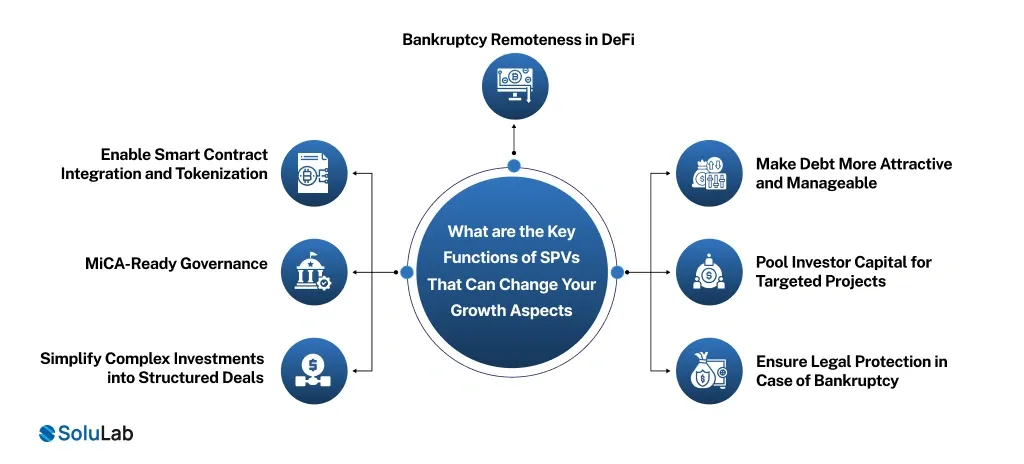
- Bankruptcy Remoteness in DeFi
Say the parent company’s digital treasury gets compromised. The on-chain RWA sitting inside the SPV stays legally separate, and token holders keep their claim on it.
- Make Debt More Attractive and Manageable
Package debt into an SPV and it gets easier to handle, plus more appealing to the people buying it. Repayments run through the SPV. The parent walks away with a cleaner balance sheet and better credit terms.
- Pool Investor Capital for Targeted Projects
Money from many investors, pointed at one thing. Launching a startup, putting up a building, whatever the target is, the capital stays separate from the company’s other finances instead of getting blended in.
- Ensure Legal Protection in Case of Bankruptcy
Because the SPV is legally its own thing, a parent company going under usually does not drag the SPV’s assets down with it. That wall is what keeps investor money safer and better managed.
- Simplify Complex Investments into Structured Deals
Big, messy investments like real estate or infrastructure get chopped into units a normal person can actually buy. Structured that way, it is far easier to tokenize assets and pull in a much wider pool of investors.
- MiCA-Ready Governance
In 2026 the SPV is the ‘Asset-Referenced Token’ (ART) issuer under EU MiCA rules. That means it holds the mandatory reserve assets and carries the whitepaper transparency any cross-border offering demands.
- Enable Smart Contract Integration and Tokenization
SPVs sit comfortably alongside blockchain systems. Think of the SPV as the legal shell wrapped around the smart contracts. Those contracts then handle dividend payments, ownership transfers, and investor eligibility checks on their own, with nobody approving each step by hand.

Common Legal Forms of SPVs:
| Feature | Delaware LLC | Singapore VCC | Luxembourg RAIF |
| Best For | Single Property | Asset Managers | Institutional Funds |
| Setup Speed | Fast (1-2 weeks) | Moderate (4-8 weeks) | Fast (via AIFM) |
| 2026 Compliance | SEC / Reg D | MAS Guidelines | MiCA / AIFMD |
| Scalability | Low (Per Asset) | High (Umbrella) | Very High (Global) |
Role of SPVs in Asset Tokenization
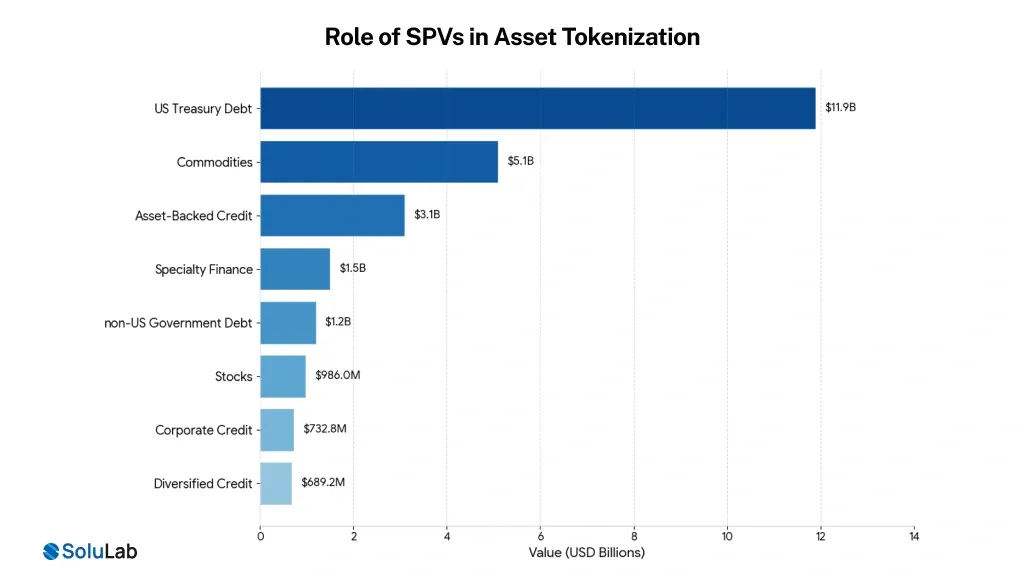
The January 2026 SEC Joint Staff Statement frames the SPV as the “Issuer-Sponsored” bridge: move the token on-chain, and ownership is legally final.
- Bankruptcy Remoteness: Keeps $30B+ in RWA (Real-World Assets) clear of parent company liabilities. For 2026 institutional-grade security, this is not optional.
- On-Chain Master File: Manual registries give way to ERC-3643 or ERC-1400 standards, and administrative overhead drops by up to 40% once compliance oracles run automatically.
- Cross-Border Liquidity: VCC (Singapore) or RAIF (Luxembourg) structures open up global capital without giving up T+0 settlement.
Look at BlackRock. The tokens were not issued straight off its main corporate balance sheet. They run through a Special Purpose Vehicle (SPV) structure managed by Securitize, a leading tokenization platform.
- The fund is set up as a Delaware Statutory Trust, one of the standard SPV forms. That keeps the fund’s U.S. Treasuries, cash, and repo agreements walled off from everything else BlackRock does.
Significance of SPVs in Real-World Asset Tokenization
The SPV carries the weight here because it is a separate legal entity. Three jobs sit at the core:
- Issuing digital tokens backed by a physical or financial asset.
- Writing asset ownership onto the blockchain where anyone can check it.
- Keeping asset rights clear and legally defensible.
For Investors:
- Premium assets stop being out of reach for small investors.
- More liquidity, and more ways to spread a portfolio around.
- Legal rights you can point to, inside a structure you can see.
For Business:
- Capital raised without printing new stock.
- Existing shareholders keep more of their equity.
- Compliance that has a shape to it, plus reach into global investors.
Benefits of SPVs in Tokenization
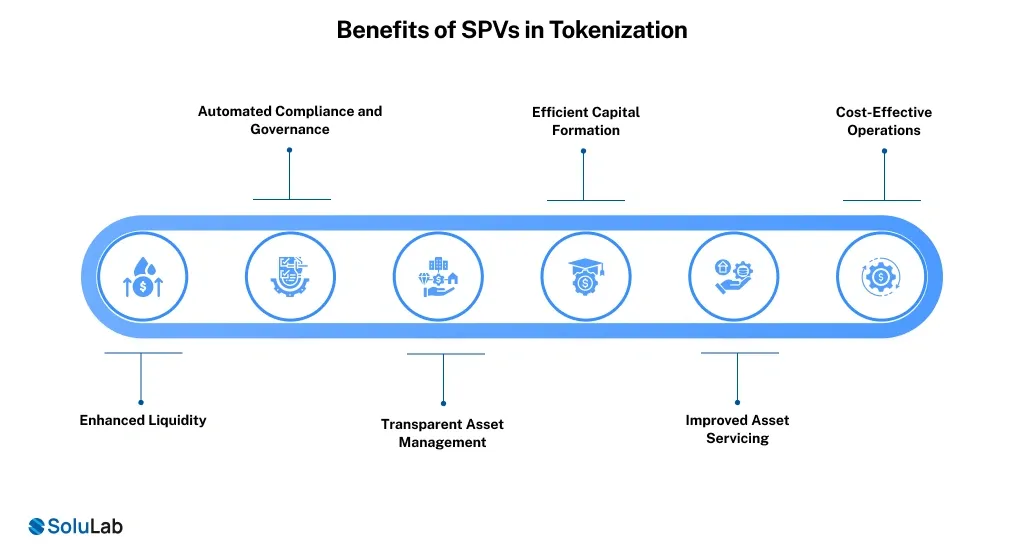
The wins split into three buckets: legal, operational, technological. Here is what each one buys you.
- Enhanced Liquidity
A tokenized SPV splits one large asset into many small digital tokens, tradable on blockchain platforms. Suddenly the entry ticket is small. Real estate and art, the kind of holdings that used to sit still for years, start behaving like something you can buy into and sell out of. Lower the barrier and retail money shows up too.
- Automated Compliance and Governance
Smart contracts baked into the SPV enforce the legal and regulatory rules for you. They check whether an investor is eligible, apply transfer restrictions, and keep compliance running without a paper trail anyone has to sign. Fewer human mistakes, and a much smaller regulatory bill at the end of the quarter.
- Transparent Asset Management
Every transaction and ownership change lands on the blockchain as it happens. An investor can open a secure dashboard and see holdings, income distributions, and governance rights without filing a request. Asset managers get the performance data underneath it, which makes oversight a lot less of a guessing game.
- Efficient Capital Formation
Raising money through a tokenized SPV is faster and cheaper. Smart contracts cut brokers and underwriters out of the chain, and fundraising costs fall hard as a result. Investors abroad can join without the usual friction, and the offering is built to satisfy regulators from day one.
- Improved Asset Servicing
Dividends, interest, whatever is owed: smart contracts push it out automatically. No manual processing. No reconciliation spreadsheet. Payments arrive accurate and on schedule, and every step of it is logged on-chain.
- Cost-Effective Operations
Digitize the operations and the administrative overhead shrinks. Legal and accounting bills come down once reporting runs on blockchain tooling. Documentation goes digital, the process gets tighter, and both the issuer and the investor feel it.
Read more: Top RWA Tokenization Questions Answered for Enterprises Ask in 2026
Real-World Case Studies of SPV Application
The early projects proved the tech worked. Then 2025 and 2026 brought in the world’s largest asset managers, who use SPV structures to keep the legal safety of the old system while taking the speed of the new one.
1. BlackRock’s BUIDL Fund: The $2 Billion Institutional Benchmark (2025-2026)
BlackRock’s BUIDL Fund was the moment RWA (Real-World Assets) stopped being a side experiment. It crossed $2.3 Billion in AUM by early 2026.
- The SPV Structure: A Delaware Statutory Trust wraps the fund and acts as the bankruptcy-remote SPV.
- The U.S. Treasuries and cash underneath stay legally apart from BlackRock’s corporate balance sheet.
- Practical Impact: Securitize manages it, and the SPV settles instantly, around the clock, on Ethereum.
- For an MNC, that turns “idle cash” into a yield-bearing digital asset you can post as on-chain collateral for another institutional trade the same minute.
2. Franklin Templeton’s FOBXX: Multi-Chain Scaling (2025-2026)
Franklin Templeton’s OnChain U.S. Government Money Fund (FOBXX) passed $860 Million in net assets by March 2026.
- The SPV Structure: A proprietary blockchain-integrated recordkeeping system sits underneath a regulated mutual fund, and every share shows up as a BENJI token.
- Strategic Expansion: Late 2025 into early 2026, they stretched the SPV onto Solana and Avalanche. Institutional investors pick the chain they want to work on; the SPV keeps the legal compliance identical across all of them.
3. Goldman Sachs’ GS DAP™: The Digital Bond Evolution
In early 2026, Goldman Sachs started spinning its GS DAP™ platform out into an independent, industry-owned entity.
- The Case: The European Investment Bank (EIB) used the platform to issue a €100 Million digital bond.
- The SPV Role: “Private-by-design” smart contracts inside an SPV framework run the bond’s whole lifecycle. Issuance through interest payments, with settlement compressed from T+5 to T+0, under 60 seconds.
Three different firms, same conclusion: put an SPV around tokenized assets and real estate that nobody could trade suddenly opens up to smaller, tech-comfortable investors anywhere in the world.
Read more – Tangible Gold – Case Study
Step-by-Step Guide: Creating a Tokenized SPV
Building a Tokenized SPV comes down to five steps that you skip at your own cost:
1. Strategic Planning and Market Analysis: Pin down your goals, how much capital you need, and who the investors are. Then check whether anyone actually wants a tokenized version of your asset.
2. Form the Legal Structure: Stand up the SPV as an LLC or a Limited Partnership, with the documentation complete and the regulatory side signed off.
3. Smart Contract and Blockchain Setup: Develop smart contracts to issue and manage the tokens, and pick a standard that fits, ERC-20 or ERC-3643.
4. Design Token Economics: Decide what the token does, what rights it carries, and how it gets distributed. Write the rules for dividends, governance, and trading limits into it.
5. Launch the Offering: Run investors through KYC and AML, issue the tokens, and let the smart contract tooling carry the compliance load from there.
Legal Models: Bearer vs. Registry-Based Ownership
Bearer or Registry-Based? That used to be an engineering preference. It is a regulatory requirement now.
Through 2026, institutional RWA (Real-World Asset) projects have shifted almost entirely to Registry-Based models, because that is what lines up with the SEC 2026 Taxonomy and EU MiCA.
Strategic Jurisdictions & Structure Types (2026)
Jurisdiction shopping now turns on one question: “Legal Finality.” Does an on-chain token transfer actually bind off-chain? That is the test the institutional players apply.
| Structure Type | 2026 Strategic Use Case | Best Jurisdiction | Why it Leads in 2026 |
| VCC (Variable Capital Co) | Umbrella structures for multiple RWA sub-funds. | Singapore | Allows segregated “cells” for different assets under one legal entity. |
| RAIF / SICAV | MiCA-compliant institutional fund tokenization. | Luxembourg | The “Gold Standard” for cross-border EU institutional marketing. |
| Electronic Securities | Using the eWpG framework for automated debt. | Germany | Eliminates the need for physical certificates for tokenized bonds. |
| Statutory Trust | SEC-compliant “Digital Custodial Receipt” models. | USA (Delaware) | Used by giants like BlackRock for bankruptcy-remote RWA. |
The Shift: Bearer vs. Registry-Based Ownership
Bearer has not vanished. It just got pushed into permissionless DeFi, while Registry-Based models run the $30 Billion RWA market.
| Feature | Bearer Ownership (2021-2024 Style) | Registry-Based (2026 Standard) |
| Legal Definition | Ownership is tied to private key possession. | Ownership is tied to an On-Chain Master File. |
| Regulatory Fit | High risk; difficult to satisfy AML/KYC. | MiCA & SEC Compliant; identity is baked-in. |
| Asset Recovery | Lost keys = Lost assets permanently. | Governance Recovery via Smart Contract admin. |
| Market Use | Cryptocurrencies (BTC, ETH). | Real Estate, Treasuries, Private Equity. |
Blockchain can carry either model. The law is still catching up to both. In practice, what a token gives you is usually a contractual right, not possession of the thing itself.
Read more: Tokenized Agentic Payment System
2026 SPV Regulatory Landscape: Implementing “Compliance by Design”
“Regulation by enforcement” is over. 2026 is the Guidance-First Era, and the RWA platforms getting traction read the January 2026 SEC Taxonomy and EU MiCA as a build spec rather than a wall to climb. That reframe is where institutional trust comes from.
Practical Security Implementations for 2026:
- Identity-Native Tokens (ERC-3643): Older models bolted compliance on afterward. The 2026 standard puts KYC/AML inside the token itself, so only “Authorized Participants” can hold or move the asset and jurisdictional rules apply in real time.
- Programmable Privacy (ZK-Proofs): GDPR and institutional privacy both want the same thing, so leading SPVs now use Zero-Knowledge Proofs. An investor proves they are “Accredited” or “Tax-Compliant” and reveals nothing about their identity or net worth on a public ledger.
Atomic Settlement (T+0): Regulators in 2026 treat the blockchain as the “Master Securityholder File.” Two days of settlement risk simply go away, and an SPV can push dividends or run a buyback in under a minute

Final Thoughts: The Future of Tokenized SPVs
SPVs are going to keep carrying asset tokenization forward. Nothing else does risk reduction, legal clarity, and investor access at the same time. For a business, that means capital raised quickly and across borders, with assets that stay transparent, regulated, and tradable.
- Legal teams have to get fluent in the new standards and jurisdictions to support 60% growth.
- Technologists, lawyers, regulators, investors: none of them can pull this off alone.
- Plan the structure properly and stay compliant, and tokenized real-world assets finally deliver what they have been promising.
SoluLab is one of the best asset tokenization development company. If you are ready to build, our team will stay with you through every step of it.
Contact us today to make your goal a reality!
FAQs
Deepika is a content writer who blends storytelling with strategic thinking. She explores topics across digital innovation, emerging tech, and the evolving blockchain industry. She enjoys breaking down complex ideas into simple, engaging narratives in the growing global markets.