Key Takeaways
- Custom blockchain builds face regulatory misalignment, increasing audit failure risk by 70%, which can be solved using compliance-ready white-label platforms.
- Enterprises lose market share due to 9–12 month development cycles, solved by deploying white-label tokenization platforms within 1–4weeks.
- Rising development costs above $800K strain ROI timelines, reduced through white-label solutions requiring $15K–$30K with minimal infrastructure overhead.
With the SEC’s January 28, 2026, Joint Staff Statement and MiCA enforcement across Europe, businesses operating on non-standardized blockchain infrastructures are facing increasing compliance exposure. For many businesses, that’s simply too much time and money to lock away while competitors are already going live.
This is where the debate of White-label Tokenization preference enters the charts.
With MiCA now fully operational, businesses using non-standardized custom code face up to 70% higher risk of failing compliance audits compared to those using battle-tested White-label Tokenization Solutions. However, is it correct to say every industry grows with white-label services, or does custom blockchain infrastructure start from scratch? What actually changed in the enterprise’s view?
What is a White-Label Tokenization Platform?
A white-label tokenization platform is a pre-built, customizable blockchain solution that enables businesses to launch tokenized services under their own brand without having to build blockchain infrastructure from scratch.
Unlike custom blockchain solutions, white-label platforms come equipped with:
- Smart contract development for automation
- RWA tokenization to digitize real-world assets like real estate, equities, and commodities
- Multi-chain compatibility for seamless interoperability
- Integrated blockchain solutions such as wallets, payment gateways, and compliance modules
In short, a white-label blockchain solution offers speed, cost efficiency, scalability, and compliance, making it the go-to option for businesses entering the blockchain ecosystem.

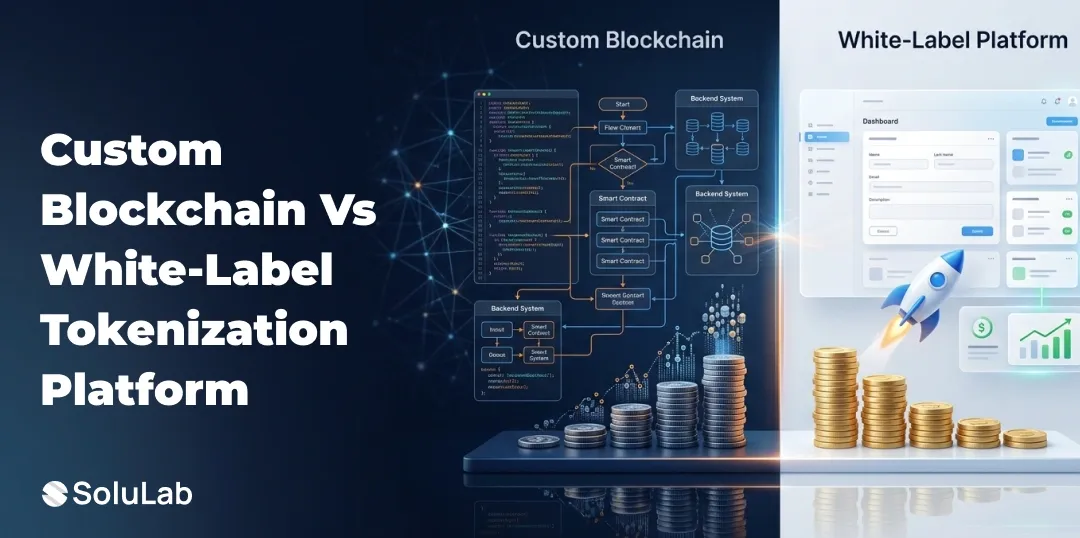
Custom Blockchain Solutions v/s White-Label Blockchain Solutions
Businesses are leaning toward white-label tokenization platform development. It provides the perfect balance of speed, cost-effectiveness, and scalability, without compromising on quality or compliance.
Key Note: In 2026, delayed launches now directly translate into lost market share in a tokenized economy where RWA TVL has already crossed $24B.
| Aspect | Custom Blockchain Solutions | White-Label Solutions |
| Development Time | 9-12+ months | 1-4 weeks |
| Cost | $800,000 – $2M+ | $15,000 – $30,000 |
| Maintenance | Requires a dedicated in-house team | Managed by the provider |
| Flexibility | Fully customized | Pre-built but customizable |
| Scalability | Depends on the architecture | Designed to scale |
| Compliance | Must be integrated manually | Comes with compliance-ready modules |
The primary advantage of a white-label tokenization platform over a custom blockchain is RegTech integration.
Custom builds often fail to account for:
- Travel Rule enforcement
- DORA (Digital Operational Resilience Act)
- Real-time audit trails
- Cross-border compliance syncing
Top-tier White-label Tokenization Platforms now come with these baked in, reducing regulatory exposure significantly.
Read Blog: Tokenization of Real Estate in Australia
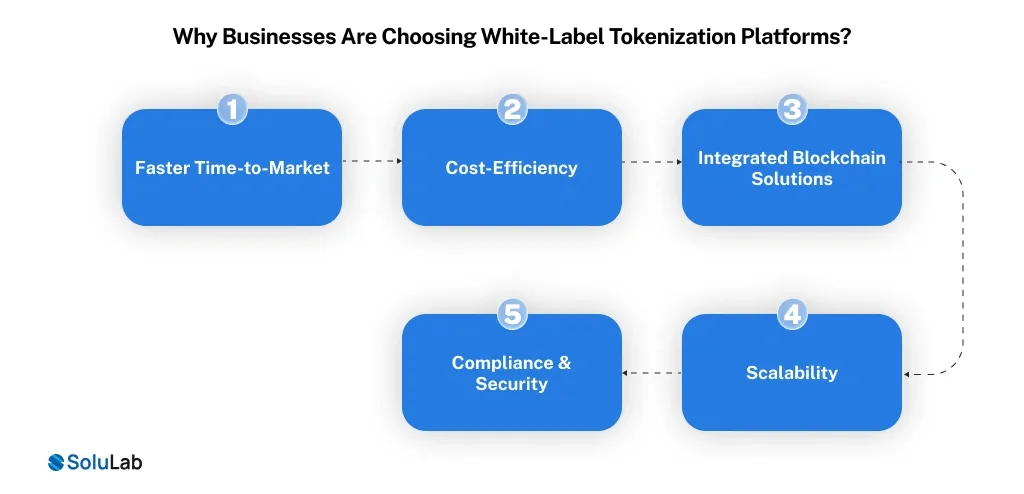
Why Businesses Are Choosing White-Label Tokenization Platforms?
A major shift in 2026 is the SEC’s “Two-Tier Taxonomy,” which mandates strict alignment between on-chain records and master securityholder files. Most custom blockchain implementations struggle to maintain this synchronization, creating audit risks.
At this point, you need secure, scalable, and compliant tokenization platforms that can launch quickly, and that’s exactly why white-label tokenization platforms are becoming the go-to choice.
1. Faster Time-to-Market
Time is money in today’s competitive era. Custom blockchain development services can take months or even years, whereas white-label blockchain solutions are ready to deploy in weeks.
This allows businesses to:
- Capitalize on emerging market opportunities
- Beat competitors to launch
- Reduce time lost in technical development
2. Cost-Efficiency
Building a blockchain platform from scratch requires a significant investment, including developers, security audits, testing, and maintenance. White-label tokenization platforms are pre-built and tested, drastically reducing costs.
Instead of spending millions, businesses only invest in customization and branding.
3. Integrated Blockchain Solutions
White-label platforms come with end-to-end blockchain integration, including:
- Secure wallets
- Smart contracts
- Token issuance modules
- RWA tokenization capabilities
- KYC/AML compliance
This eliminates the need to purchase multiple third-party solutions, saving both money and effort.
4. Scalability
A major drawback of custom blockchain solutions is that they often struggle to scale when user demand increases. White-label blockchain solutions are designed to handle high transaction volumes, making them future-ready.
5. Compliance & Security
White-label providers ensure compliance with global regulations such as GDPR, FATF, and SEC standards. They also integrate multi-layered security protocols like encryption, multi-signature wallets, and fraud detection.
This gives businesses confidence to operate securely and legally in the tokenized economy.
Beyond core infrastructure, modern platforms are now evolving with AI-driven automation layers that manage transaction monitoring, detect anomalies, and generate real-time behavioral insights.
Must Have Features of White-Label Tokenization Platforms
For a white-label tokenization platform for businesses to remain viable in today’s Internet Capital Market, it must support high-speed execution layers such as Solana Token Extensions (LMM) or similar performance-driven frameworks.
This ensures:
- Institutional-grade transaction throughput
- Real-time settlement capability
- Scalability for high-volume RWA markets
Let’s see what other features a white label must have:
1. Smart Contract Development
Smart contracts are self-executing agreements coded into blockchain. White-label solutions come with pre-built, customizable smart contracts that automate transactions, reduce human error, and cut operational costs.
2. RWA Tokenization
One of the hottest trends in blockchain is RWA tokenization (Real-World Asset tokenization). With white-label platforms, businesses can digitize assets like:
- Real estate
- Precious metals like Gold, Silver
- Commodities
- Bonds and Securities
This makes illiquid assets tradeable and accessible, meanwhile unlocking new investment opportunities for the users.
3. Multi-Chain Compatibility
The platform allows users to operate seamlessly across multiple blockchain networks like Ethereum, Polygon, Binance Smart Chain, and more. Businesses are no longer locked into a single blockchain.
4. Customizable UI/UX
They give businesses the flexibility to personalize the look and feel of their platform. From logos and color themes to tailored user journeys, companies can create a branded experience for investors while leveraging the platform’s robust blockchain infrastructure.
5. Integrated Wallets
These allow users to store, send, and receive digital tokens seamlessly within the platform. These wallets can be custodial or non-custodial, depending on the business model, and often include multi-signature support, encryption, and compatibility with popular external wallets.
6. Analytics & Reporting
Advanced analytics dashboards provide businesses with real-time insights into token transactions, user engagement, and revenue performance. With detailed reporting tools, enterprises can monitor compliance, evaluate market trends, and make data-driven decisions to improve investor experience and optimize returns.
7. Fractional Ownership
Fractional ownership allows large, high-value assets to be divided into smaller digital units. This lowers the investment barrier for retail investors, expands the potential investor base, and increases liquidity for traditionally illiquid markets.
Read Also: 9 Key Features of Next‑Gen Tokenization Platforms for 2030
How Businesses Benefit from White-Label Tokenization Platforms?
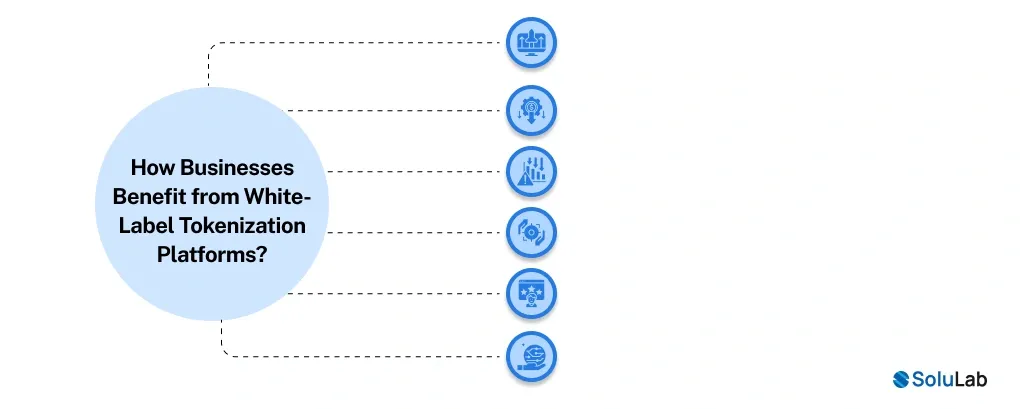
- Quick Deployment: Pre-built infrastructure allows businesses to launch their platforms within weeks, gaining a competitive advantage.
- Reduced Development Costs: Only pay for customization instead of full-scale development, saving both time and money.
- Lower Risk: Pre-tested systems minimize bugs, vulnerabilities, and security risks.
- Focus on Core Business: Leave blockchain complexities to the platform provider while concentrating on marketing, growth, and customer engagement.
- Enhanced Customer Experience: Smooth, secure, and transparent transactions improve user trust and engagement.
- Future-Ready Technology: White-label platforms are designed to scale and adapt to technological advancements and market trends.
Read Also: Tokenization Platform Development Checklist for Enterprises
Real-World Applications of White-Label Tokenization Platforms
White-label tokenization platforms are not just a trend; they are powering real innovation across industries by making assets more liquid, accessible, and globally tradable. Here are some of the most impactful use cases:
1. Real Estate Tokenization: Convert properties into fractional digital tokens, allowing multiple investors to own shares of high-value assets while enabling developers to raise capital faster.
2. Equity & Security Tokens: Businesses can tokenize shares or debt instruments, giving investors secure, transparent, and compliant access to equity markets.
3. Commodities & Precious Metals: Gold, silver, oil, and other tangible assets can be tokenized, offering investors a more efficient way to trade traditionally illiquid commodities.
4. NFTs & Digital Collectibles: From art and music to gaming assets, tokenization enables creators and brands to monetize digital ownership with transparency and authenticity.
5. Supply Chain & Trade Finance: Tokenization helps track goods, verify authenticity, and provide investors with access to trade financing opportunities.
6. Crowdfunding & Investment Platforms: Startups can raise capital by issuing tokens, giving global investors fractional stakes while maintaining compliance with securities regulations.
7. Healthcare & Intellectual Property: Patents, medical research data, and IP rights can be tokenized, creating new opportunities for funding and secure rights management.
8. Green Energy & Carbon Credits: Renewable energy projects and carbon credits can be tokenized, allowing businesses and individuals to invest in sustainability initiatives.
All in all, tokenization is breaking down barriers in sectors once limited by geography, regulation, or capital requirements. With white-label platforms, businesses can tap into these opportunities without reinventing the wheel, launching quickly, and scaling.
Conclusion
In an era where the SEC has moved away from treating tokenization as a “special category” and into standard securities enforcement, your choice of a tokenization platform development company becomes your first line of defense.
Custom blockchain builds are no longer just expensive; they are increasingly non-compliant, slower to market, and harder to scale under evolving regulatory frameworks.
SoluLab doesn’t just deliver infrastructure. We provide a market-ready tokenization ecosystem aligned with the January 2026 Joint Staff Statement and MiCA passporting requirements, ensuring your platform is built not just to launch, but to sustain, scale, and comply.
FAQs
Deepika is a content writer who blends storytelling with strategic thinking. She explores topics across digital innovation, emerging tech, and the evolving blockchain industry. She enjoys breaking down complex ideas into simple, engaging narratives in the growing global markets.