Gold has long been one of the most trusted precious metals of value in global finance. However, traditional gold ownership (Physical and ETFs) comes with challenges such as storage costs, limited liquidity, and restricted accessibility for retail investors.
- In 2026, the gold market is undergoing a digital transformation, and the gold cost climbed above $5,120 per ounce in February 2026. Therefore, buying a lump sum is getting difficult.
- Through Gold tokenization services, enterprises can enable 1:1 backing, fractional ownership, global trading access, and real-time verification of gold reserves.
For financial institutions, bullion dealers, and asset managers, this adoption represents a new opportunity to offer liquid, digital gold investment products.
Key Takeaways
- Gold tokenization is the vital bridge between physical precious metals and the 24/7 digital economy, eliminating traditional settlement delays.
- Enterprises can monetize gold through automated issuance, high-margin redemption protocols, and integration into the broader tokenized commodity ecosystem.
- Leveraging a specialized gold tokenization development company ensures that your infrastructure follows regulatory standards (like MiCA) and is secured by real-time PoR.
What is Gold Tokenization?
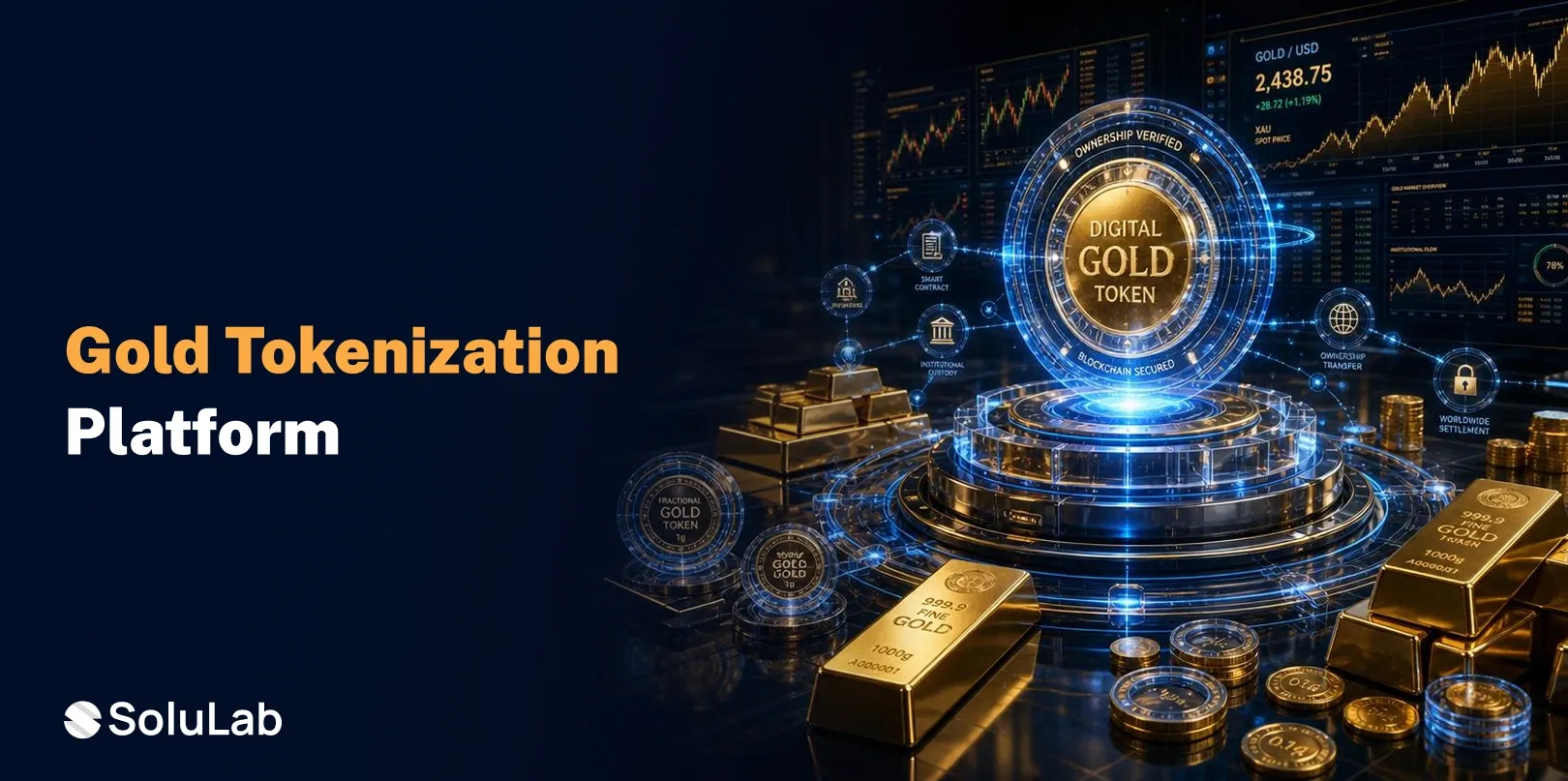
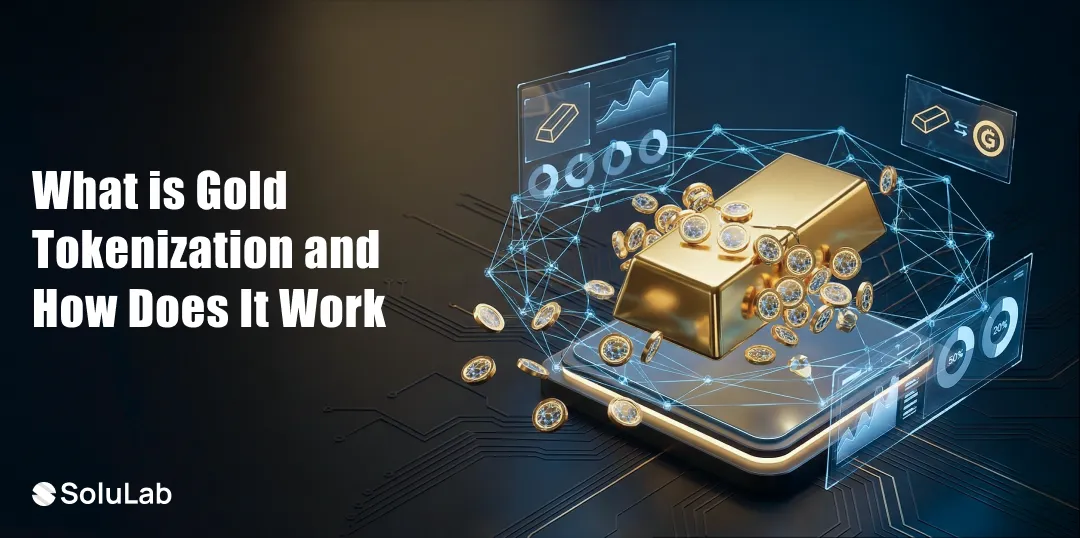
Gold tokenization is the process of converting physical metal reserves into blockchain-based gold tokens, where each token represents ownership of a specific quantity of gold stored in a secure vault.
These tokens allow investors to hold and trade gold digitally while maintaining full backing from real gold reserves.
Each token typically represents:
- 1 gram of gold
- 1 ounce of gold
- fractional portions of a gold bar
The blockchain records ownership, ensuring transparency and eliminating the need for intermediaries.
1. Why Institutions are Migrating to Tokenized Gold
Through tokenized gold investment, investors can:
- Buy fractional amounts of gold
- Trade gold tokens globally 24/7
- Verify gold reserves through blockchain proof-of-reserves systems
This approach modernizes gold ownership by combining the stability of physical gold with the efficiency of digital assets. The benefits of gold tokenization puts customers in a secure environment.
How Gold Tokenization Works and What Enterprises Must Focus on in 2026
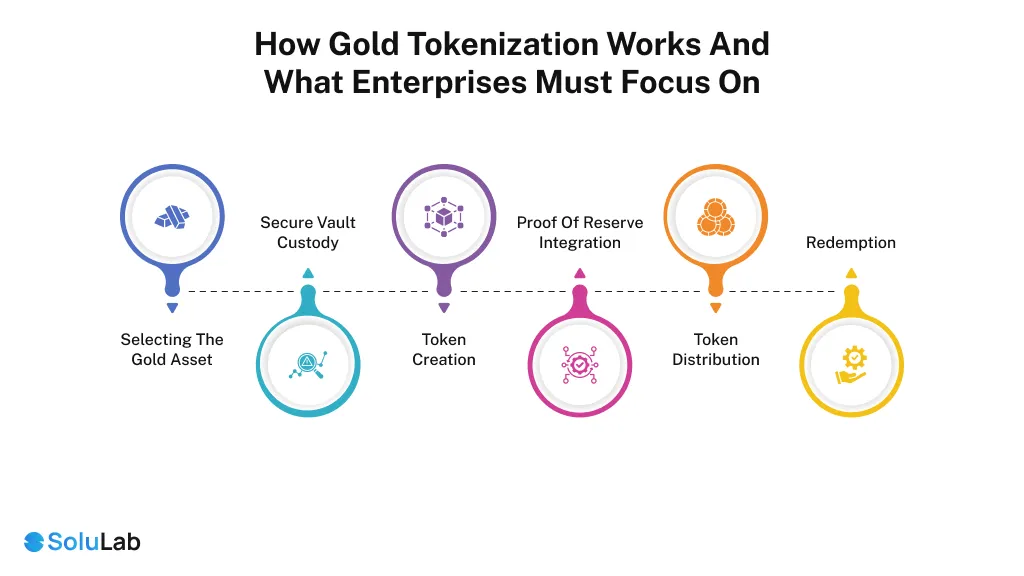
Gold tokenization follows a structured process combining asset custody, blockchain infrastructure, and regulatory compliance.
1. Selecting the Gold Asset
The process begins by identifying the physical gold reserves to be tokenized. These can include gold bars, coins, or bullion stored in certified vaults.
2. Secure Vault Custody
The physical gold must be stored in insured vault facilities managed by trusted custodians. Independent audits verify the gold reserves before tokens are issued.
3. Token Creation
Blockchain-based smart contracts are deployed to create tokens representing ownership of the stored gold.
These tokens are often built using standards such as:
- ERC-20 tokens for fungible assets
- ERC-3643 for regulated tokenized securities
4. Proof of Reserve Integration
To ensure transparency, tokenized gold platforms integrate proof-of-reserve systems using blockchain oracles.
These systems verify that the number of tokens in circulation always matches the amount of gold held in custody.
5. Token Distribution
Once minted, tokens are distributed through exchanges, investment platforms, or institutional trading systems.
Investors can then buy, sell, or trade tokenized gold globally.
6. Redemption
Token holders can redeem their digital tokens for physical gold or fiat value, depending on the platform’s redemption policies.
Institutional Architecture of Gold Tokenization Platforms
For enterprises launching a tokenized gold platform, strong infrastructure is essential. Modern gold tokenization development services typically include:
Proof-of-Reserve Verification: Blockchain oracle systems verify the amount of gold stored in vaults, ensuring transparency for investors.
Vault Integration: Secure APIs connect vault custody systems with blockchain token supply.
Smart Contract Infrastructure: Smart contracts automate token issuance, transfers, and redemption.
Price Oracle Integration: Market price feeds ensure that tokenized gold reflects real-time gold prices.
DeFi Compatibility: Tokenized gold can be integrated into decentralized finance platforms for lending, staking, and collateral use.
This architecture enables secure, scalable gold tokenization platforms for institutional markets.
Read More: Top RWA Tokenization Questions Answered for Enterprises Ask in 2026
Revenue Models for Gold Token Issuers
For businesses launching tokenized gold platforms, several revenue streams are possible.
1. Operational Revenue Streams
These revenues are generated directly from user activity and platform services.
- Issuance & Redemption Fees
Platforms charge a percentage when investors mint new gold tokens or redeem them for physical bullion.
Typical range: 0.5% – 1.5% per transaction
- Trading Fees
Tokenized gold platforms can earn revenue from transaction fees whenever users trade gold tokens on exchanges or within the platform ecosystem.
- Physical Handling & Logistics Fees
If investors request physical delivery of their gold from vault storage, platforms may charge for insured transportation, verification, and logistics.
- White-Label Infrastructure Licensing
A gold tokenization platform can license its infrastructure to other bullion dealers or financial institutions through a Platform-as-a-Service (PaaS) model.
2. Asset-Based Revenue Streams
These revenue models are generated from the gold reserves managed by the platform.
- Custody & Storage Fees (AUM Fees)
Platforms charge an annual fee for vault storage, insurance, and auditing of gold reserves.
Typical range: 0.25% – 0.75% annually
- Lending & Interest Spreads
Gold reserves can be used as collateral within lending protocols or institutional liquidity pools, generating interest spreads.
- Yield on Reserve Assets
Some platforms allocate treasury reserves into low-risk financial instruments such as tokenized government bonds, sharing yield with investors while retaining a portion of the returns.
- Institutional Liquidity & Repo Markets
Tokenized gold can serve as high-quality collateral (HQLA) in institutional repo markets, creating additional revenue opportunities for large-scale tokenization gold platforms.
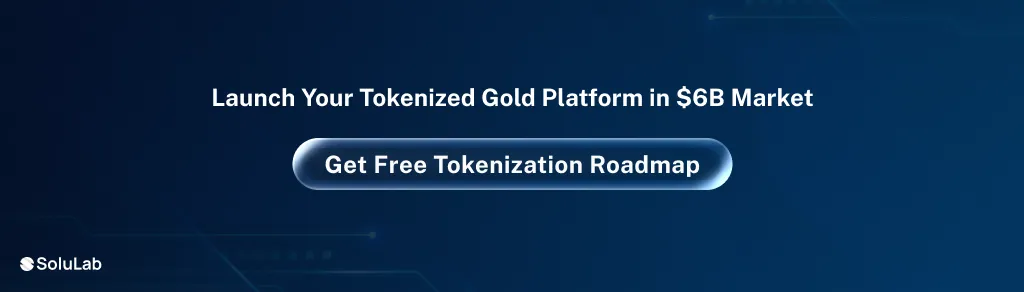
How can SoluLab Help Enterprises In Building Gold Tokenization Platform?
Launching a gold tokenization platform is not about what others do; it’s about how you can use technology. Therefore, SoluLab’s 10+ years of expertise offer you better deals to enhance your vision.
Step 1: Opportunity & Feasibility Analysis
Before development begins, SoluLab evaluates whether tokenizing gold aligns with your business model.
- Market opportunity assessment
- Tokenization feasibility study
- Revenue model planning
Step 2: Asset Digitization Strategy
We design how physical gold will be converted into digital assets while maintaining trust and transparency.
- Token structure design
- Fractional ownership planning
- Asset verification workflow
Step 3: Platform Architecture Planning
SoluLab designs the infrastructure required to support secure gold token issuance and trading.
- Blockchain network selection
- Token standards and infrastructure design
- Integration architecture planning
Read more: Gold Tokenization Platform Development Case Study- Tangible Gold
Step 4: Compliance Framework for Gold Tokenization
Gold token development requires strong regulatory compliance. Modern gold tokenization platforms must support:
- KYC/AML verification for investors
- jurisdiction-based trading restrictions
- tax reporting systems
- regulatory frameworks such as MiCA in the EU
Professional gold tokenization development services help enterprises integrate these requirements directly into their platforms.
Step 5: Technology Stack for Gold Tokenization Platforms
A typical gold asset tokenization development platform may include:
- Blockchain networks such as Ethereum, Polygon, or Avalanche
- Smart contract frameworks for token issuance
- Cross-chain interoperability protocols
- Institutional custody integrations
- Price oracles for real-time gold market data
These technologies enable scalable and secure gold tokenization platforms for global markets.
Step 6: Launch & Ecosystem Expansion
After launch, SoluLab helps scale the platform within broader digital asset ecosystems.
- Performance monitoring
- ecosystem integrations
- future asset tokenization expansion
| Feature | Traditional Bullion Trading | SoluLab Gold Tokenization |
| Settlement Time | T+2 to T+5 days | Instant (Atomic settlement) |
| Trading Hours | Banking hours only | 24/7/365 global trading |
| Minimum Entry | High (full bars or coins) | $10 entry through fractional ownership |
| Audit Frequency | Annual or quarterly audits | Real-time verification with on-chain Proof of Reserves |
| Operational Costs | High due to logistics and storage | Lower costs through smart contract automation |
Contact us today to avail the latest deals and expert tokenization advice.
FAQs
Deepika is a content writer who blends storytelling with strategic thinking. She explores topics across digital innovation, emerging tech, and the evolving blockchain industry. She enjoys breaking down complex ideas into simple, engaging narratives in the growing global markets.