Talk to an Expert

Top 10 Asset Tokenization Companies in Australia in 2026

As the world moves toward digital finance, Australia is becoming a strong player in asset tokenization. Businesses in real estate, finance, energy, and more are using blockchain to turn physical assets into digital tokens. This shift is opening new doors for fractional ownership, faster transactions, and global investments.

In this blog, we’ll explore the top 10 asset tokenization companies in Australia that are helping businesses tokenize real-world assets. Whether you’re a startup, enterprise, or investor, partnering with the right asset tokenization development company can speed up your growth and reduce costs.

Why Is Australia a Growing Leader in Asset Tokenization?

Australia is quickly becoming a key market for real world asset tokenization because of its friendly financial regulations, strong fintech growth, and increasing use of blockchain technology. With tokenized assets expected to reach over $3.5 billion AUD by 2026, the country is attracting global interest.

Many forward-thinking businesses are now working with top RWA tokenization companies to tokenize assets like real estate, energy, and commodities. Both local and global asset tokenization development companies are building solutions that help turn physical assets into digital tokens, making them easier to buy, sell, and manage.

This opens up new opportunities for businesses to raise capital, increase liquidity, and serve global markets more efficiently using secure tokenization platforms.

How We Ranked These Asset Tokenization Companies?

To find the Top Tokenization Companies in Australia, we focused on what really matters for businesses looking to invest in or build with tokenized assets. Our goal was to identify trustworthy, experienced, and B2B-ready providers.

1. Company Background & Global Presence

We looked at when the company started, where it operates from, and whether it has a strong international footprint. Companies with years of experience and global clients are more likely to deliver secure and scalable solutions.

2. Specialization in Blockchain & Tokenization

Not every tech company understands real world asset tokenization. We prioritized firms that focus heavily on blockchain, smart contracts, and building tokenization platforms. These are the real experts in this space.

3. Experience in Regulated Sectors

Tokenization is most useful in finance, real estate, energy, and supply chains. We only included companies that have real experience working in these regulated industries. This ensures they understand compliance, risk, and enterprise needs.

4. Innovation in Platforms

We evaluated how advanced and user-friendly their Asset Tokenization Platforms in Australia are. The best firms build tools that are scalable, customizable, and ready for real business adoption.

5. Real Business Results

We looked for real case studies showing how these companies helped businesses tokenize real estate, commodities, securities, and more. These RWA tokenization companies with working examples offer much more trust than those without.

We also checked if they were featured in top industry rankings, client case studies, and press mentions. This method ensures you’re only seeing companies that are reliable, proven, and B2B-ready.

Top 10 Asset Tokenization Companies in Australia (2026)

solulab

1. SoluLab

SoluLab is a leading asset tokenization development company offering powerful solutions in blockchain, smart contracts, and AI agent integration. They help enterprises build scalable tokenization platforms for real estate, energy, and finance. Known for using explainable AI and supporting regulated industries, they are one of the most experienced real world asset tokenization company teams globally.


$25 – $49/ hr


200 – 249


2014


Australia
DigitalX

2. DigitalX

DigitalX is a publicly listed blockchain development company based in Australia. They focus on launching and managing tokenized investment funds like DxART, which is designed for real estate. Their services help institutions move into the world of digital finance by offering secure and compliant solutions. As a blockchain development company, they combine traditional investment experience with modern blockchain tools.


$70 – $90/ hr


11-50


2014


Perth
BRIKbc

3. BRIKbc

BRIKbc makes it easier for users to invest in real estate by breaking properties into fractional digital tokens. As a growing real world asset tokenization company, they aim to make blue-chip property investment available to more people. They’ve partnered with DigiShares, a leading tech provider, to offer secure, compliant tokenized real estate platforms. BRIKbc is focused on user-friendly design and real-world value for investors.


$50-$70/ hr


5 – 10


2020


Sydney
Zerocap

4. Zerocap

Zerocap delivers institution-grade digital asset services like secure custody, tokenized bonds, and real estate. They’ve partnered with the ASX (Australian Securities Exchange) on tokenization trials, making them one of the most experienced players in the space. Zerocap is known for bringing real blockchain use cases to industries such as finance, insurance, and capital markets. They are also active in cross-border asset flows.


$80-$100/ hr


11-50


2017


Melbourne

Chronobank

5. Chronobank

Chronobank builds blockchain solutions for HR and payroll automation. Their platform tokenizes labor hours using LH Tokens, making it easier for companies to pay and track freelance or shift-based work. They’ve also launched AUDT, a fiat-backed stablecoin, that supports enterprise payments. Their tools align with DeFi development and are useful for businesses looking to automate processes with blockchain.


$60-$80/ hr


11-50


2016


Sydney

Power Ledger

6. Power Ledger

Power Ledger is a global leader in energy tokenization. Their platform lets users buy and sell solar energy peer-to-peer, using smart contracts on blockchain. This creates a more transparent and efficient energy market. They’re also exploring the use of AI agents in finance to automate trading and pricing in renewable energy sectors. Power Ledger is a standout in combining blockchain, energy, and automation.


$70-$90/ hr


51-100


2016


Perth
DigiShares

7. DigiShares

DigiShares offers white-label tools for building custom tokenization platforms. Their technology supports use cases like real estate tokenization, digital shares, and cross-border asset management. DigiShares works with several top companies, including BRIKbc, and is known for their compliance-first approach. As a top tokenization platform development company, they help firms enter the market faster and safer with fully tested systems.


$80 – $100/ hr


10-49


2017


Australia

Securitize

8. Securitize

Securitize is a leading RWA tokenization company focused on issuing security tokens for regulated markets. Their tools help Australian businesses build legal, scalable platforms for digital asset investment. They specialize in compliance, investor onboarding, and reporting. With global experience, Securitize helps businesses meet strict financial rules while exploring the benefits of blockchain tokenization.


$80 – $100/ hr


51-100


2017


Australia

Tokeny

9. Tokeny

Tokeny provides financial asset tokenization tools to banks and fintech companies. Their technology supports compliance, investor identity verification, and multi-asset support. Known for strong partnerships across APAC, they power many Asset Tokenization Platforms in Australia. Tokeny is trusted by large institutions for building secure, flexible blockchain-based investment systems.


$80-$100/ hr


51-100


2018


Luxembourg

Suffescom Solutions

10. Suffescom Solutions

Suffescom Solutions specializes in tokenization services across gaming assets, virtual real estate, and NFTs. They develop Web3-based platforms using smart contracts and blockchain technology, supporting businesses entering decentralized markets. With expertise in combining AR/VR with blockchain, they enable real-time ownership validation and build scalable digital economies for businesses entering the tokenized asset space.


$25-$49/ hr


250-999


2013


California, USA

Blockchain Development Company in Canada

How SoluLab Helps Enterprises with Tokenized Asset Solutions?

SoluLab is a trusted asset tokenization development company that helps businesses turn real-world assets into secure digital tokens. We offer complete, ready-to-deploy solutions for enterprises looking to enter the tokenization space.

Here’s what we deliver:

  • Smart contract architecture for safe and automated transactions
  • Custom blockchain development (Layer 1, 2, and 3) for scalable systems
  • Cross-chain tokenization platforms for better asset mobility
  • AI agent integration to automate processes and make systems smarter

Whether you’re a fund manager, a real estate developer, or a fintech company, SoluLab can help you build and launch a custom tokenization platform that’s compliant, secure, and built for growth. We combine our expertise in RWA tokenization, blockchain development, and real world asset tokenization to deliver business-ready solutions.

Conclusion

The Top Tokenization Companies in Australia are creating the foundation for a new era of finance. These firms are not just experimenting; they are actively transforming how assets are owned, traded, and managed using blockchain.

Whether it’s real estate, gold, or other real-world assets, businesses are choosing to work with a real-world asset tokenization company in Australia to unlock liquidity and transparency.

If your company is looking to enter the token economy, this is the right time to partner with SoluLab, a leading asset tokenization company in Australia, to grab the best-in-class tokenization solutions.

FAQs

1. What is asset tokenization in simple terms?

Asset tokenization means turning ownership of something real, like a house, land, or gold, into a digital token on the blockchain.

2. How do tokenized assets benefit businesses?

They allow partial ownership, make it easier to raise funds, increase asset liquidity, and reduce paperwork or middlemen.

3. What types of assets are being tokenized in Australia?

Real estate, gold, renewable energy, and even agricultural land. Many companies now use Asset Tokenization Platforms in Australia to manage these digital assets efficiently.

4. Why should I work with a real world asset tokenization company?

A real-world asset tokenization company brings expertise, technology, and compliance to help you tokenize safely and effectively. They also ensure your solution is ready for investors and regulators.

5. Which industries benefit most from tokenization?

Industries like finance, property, mining, and renewable energy. Many are already using services from Real Estate Tokenization Development Companies and the gold Tokenization Company in Australia to digitize their physical assets.

6. How do Asset Tokenization Platforms in Australia help startups and enterprises?

These platforms provide ready-made infrastructure to tokenize assets like property or gold. They help you launch faster, ensure compliance, and support scalability without building everything from scratch.
How Does Copper Tokenization Benefit Modern Businesses?

Copper Tokenization Guide

For businesses in commodities, supply chain, logistics, and investment sectors, tokenized copper offers a better way to track ownership, simplify trading, and cut costs.

According to PwC, tokenized assets could grow into a $16 trillion market by 2030, and industrial metals like copper are expected to be a major part of that growth. As the demand for copper rises, especially in electric vehicles, green energy, and electronics, tokenization makes it easier for companies to access and manage copper in real time

What is Copper Tokenization and Why It Matters?

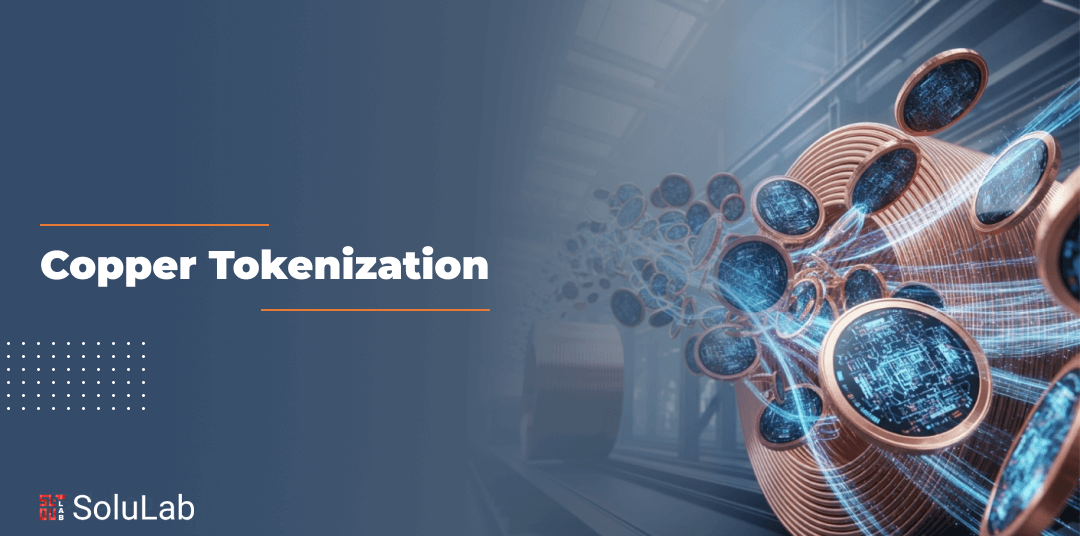
Copper tokenization means turning real copper into digital tokens using blockchain. Each token represents a real piece of physical copper held in a secure storage facility, like a vault or warehouse. These tokens can be bought, sold, or transferred easily online, just like digital assets.

Every copper token is fully backed by actual copper. This allows companies to trade copper digitally without needing to move the physical metal. It saves time, reduces cost, and makes transactions faster and more secure.

For businesses, this opens up major advantages. By using the tokenization of physical assets like copper, companies get:

  • Faster settlements
  • Lower transaction costs
  • Improved transparency and traceability
  • Access to global markets

When you work with a trusted token development company USA, your platform is built with top-level security, regulatory compliance, and flexible blockchain integration, essential for scaling in today’s digital economy.

Copper tokenization isn’t just about technology; it’s a smarter, more efficient way to manage and trade real-world assets. Whether you’re in commodities trading, manufacturing, or asset management, using advanced Cloud Management Software gives you a competitive edge in a global digital market.

Top Business Use Cases for Copper Tokenization

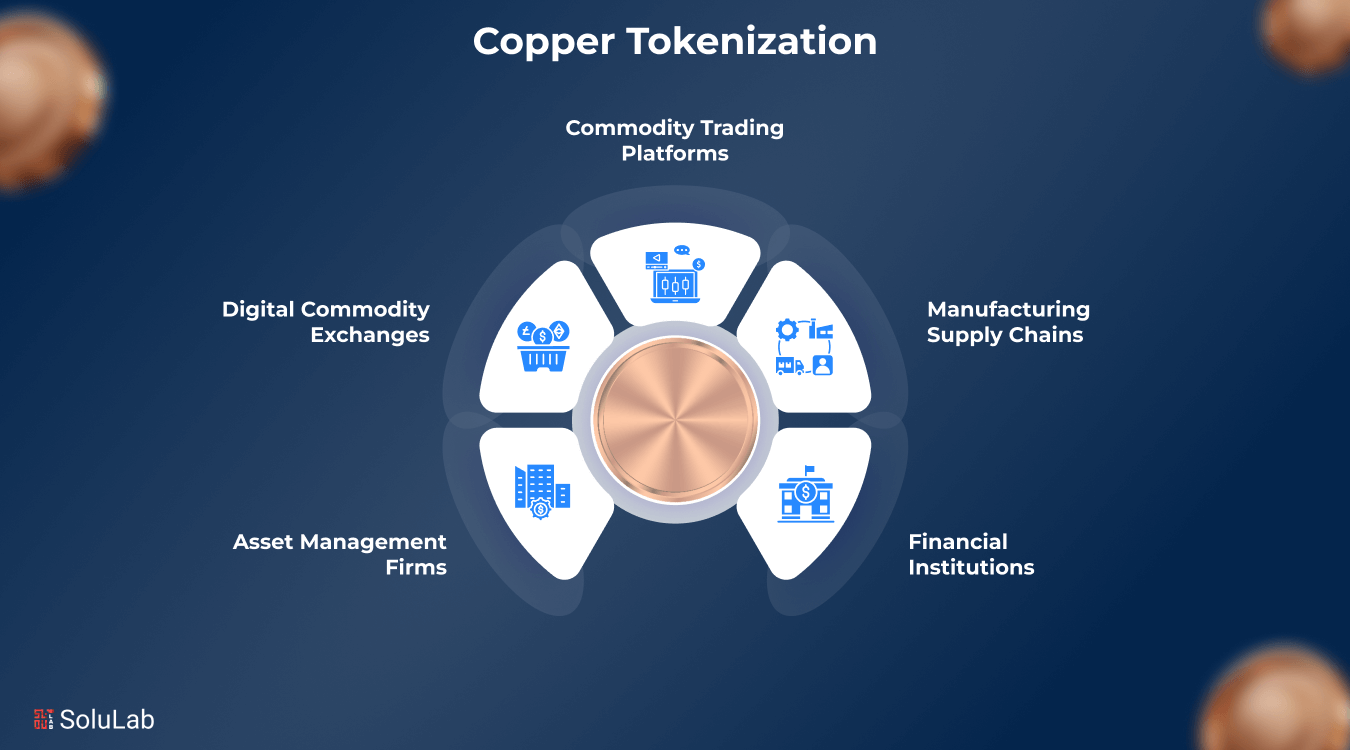
Many industries today are looking for smarter, faster, and more secure ways to work with physical commodities like copper. Copper tokenization helps solve these challenges by turning real copper into digital tokens that are easy to trade, track, and manage. Here are the most important ways businesses are using tokenized copper today:

1. Commodity Trading Platforms

Companies that trade raw materials can use copper tokens to get real-time access to global copper markets. Instead of waiting days or weeks for paperwork to settle trades, digital copper tokens can be bought, sold, or transferred instantly.

This speeds up transactions and reduces risk, especially when built on a secure copper tokenization platform powered by a trusted token development company USA.

2. Manufacturing Supply Chains

Manufacturers that rely on copper for production can use copper tokenization platforms to track where their copper is coming from, where it’s going, and how much they have at any time.

This gives businesses better control over their inventory, sourcing, and delivery timelines, improving efficiency and reducing losses. With support from a blockchain development company, the entire copper supply chain becomes visible and auditable on the blockchain.

3. Financial Institutions

Banks and finance companies are using the tokenization of physical assets to turn copper into financial products. Instead of holding tons of physical copper, they can offer fractional ownership in copper-backed tokens.

This lets investors buy small shares of real copper through regulated platforms built by a smart contract development company. It opens new investment options without the need for storage or transport.

4. Asset Management Firms

Firms that manage investments are using tokenized copper to build new types of portfolios.
By working with RWA tokenization companies and a reliable asset tokenization company in the USA, they can launch products that combine copper with other tokenized real-world assets like gold or real estate.

These products appeal to both traditional and digital investors, offering more choice, better liquidity, and faster settlement.

5. Digital Commodity Exchanges

New-age digital exchanges are using copper tokenization to list copper as a blockchain-based asset, just like cryptocurrencies. This allows 24/7 trading, automated compliance, and global access to copper investment.

Exchanges that partner with a tokenization platform development company can easily onboard more commodities, making them future-ready.

Read Also: Silver Tokenization Platform Development

How Copper Tokenization Works?

Copper tokenization is the process of turning real, physical copper into digital tokens on a blockchain. These tokens are secure, traceable, and easy to manage, ideal for businesses dealing with copper at scale.

Here’s how the process works step-by-step:

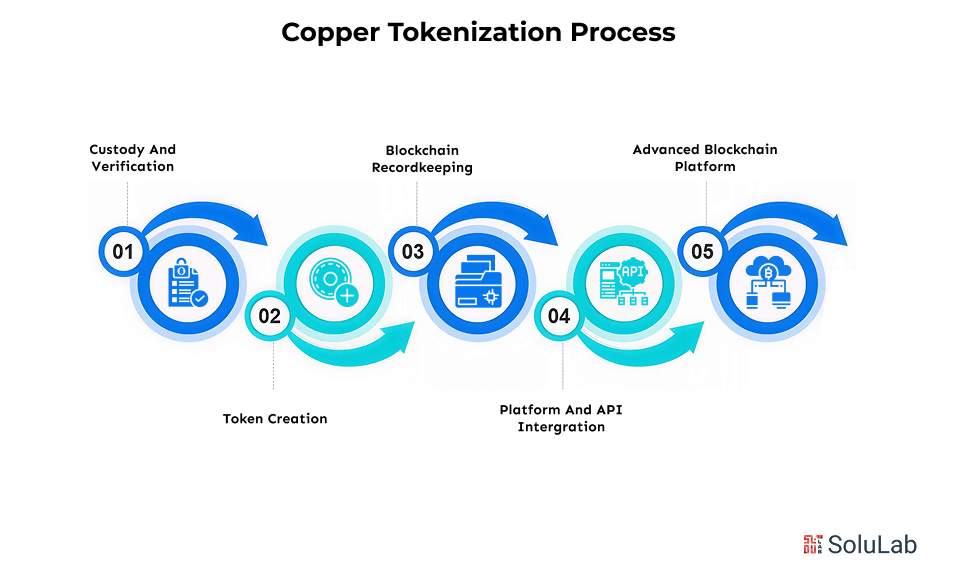
Copper Tokenization Process

1. Custody and Verification

The copper is stored safely in a secure, certified location, often by a third-party custodian. This ensures the metal backing of your copper tokens is real and verified.

2. Token Creation with Smart Contracts

A reliable token development company USA builds smart contracts to create copper tokens. These tokens are directly linked to the physical copper, making ownership easy to transfer digitally.

3. Blockchain Recordkeeping

Every transaction is stored on the blockchain. That means businesses get a transparent, tamper-proof log of who owns what, which is key for audits and regulatory compliance.

4. Platform and API Integration

A professional tokenization platform development company helps you set up dashboards and APIs to manage your tokens, users, and business workflows. This makes it easy for your internal teams or partners to interact with your tokenized assets.

5. Advanced Blockchain Integration

To build a complete enterprise solution, your platform can be connected with tools from a smart contract development company or a blockchain consulting company. This lets you add features like automated compliance, payments, or trading.

This setup allows B2B companies like manufacturers, commodity traders, or financial institutions to digitize copper ownership, reduce manual processes, and expand their global reach through secure blockchain systems. 

It’s a smart way to modernize how copper is tracked, traded, and invested in. So if you are looking to build a Copper Tokenization Platform. 

Read Also: Green Energy Tokenization

How to Build a Copper Tokenization Platform?

Creating a strong copper tokenization platform involves a few clear steps. Here’s a simple guide for businesses looking to digitize their copper assets and enter the world of tokenized commodities.

1. Secure Physical Copper and Custodian

First, make sure you have a reliable supply of physical copper. Store it with a trusted custodian or storage facility that can verify and audit your inventory. This is key to ensuring every token is backed by real-world copper.

2. Pick the Right Blockchain

Choose a blockchain that is secure, scalable, and commonly used in the industry. Most RWA tokenization companies prefer blockchains like Ethereum, Polygon, or Avalanche because they are well-tested and support smart contracts.

3. Develop Smart Contracts

Hire a professional smart contract development company to create smart contracts. These control how your copper tokens are minted, transferred, or destroyed. The contracts also include rules for compliance, ownership, and transaction tracking.

4. Build a User-Friendly Platform

Your clients will interact with your platform regularly, so design a dashboard that is easy to use. A reliable tokenization platform development company can help create a smooth, functional interface that includes dashboards, analytics, and role-based access for users.

5. Add Legal and Compliance Features

For global business, compliance is non-negotiable. Add KYC (Know Your Customer), AML (Anti-Money Laundering), and other legal checks. If you’re in the U.S., it’s important to partner with an asset tokenization company in USA that understands SEC regulations.

6. Ensure Real Asset Backing

Every tokenized copper token should represent a real, physical asset. Use blockchain or IoT systems to provide proof of ownership and verify that the copper is stored securely.

7. Integrate With Broader Financial Systems

To increase functionality, your platform should connect with systems like blockchain in trade finance. This allows businesses to use tokenized copper for lending, staking, or as collateral for loans.

Benefits of Copper Tokenization for Enterprises

Copper tokenization offers major advantages for businesses looking to modernize how they manage, trade, and invest in physical copper. Here are the key benefits for modern companies:

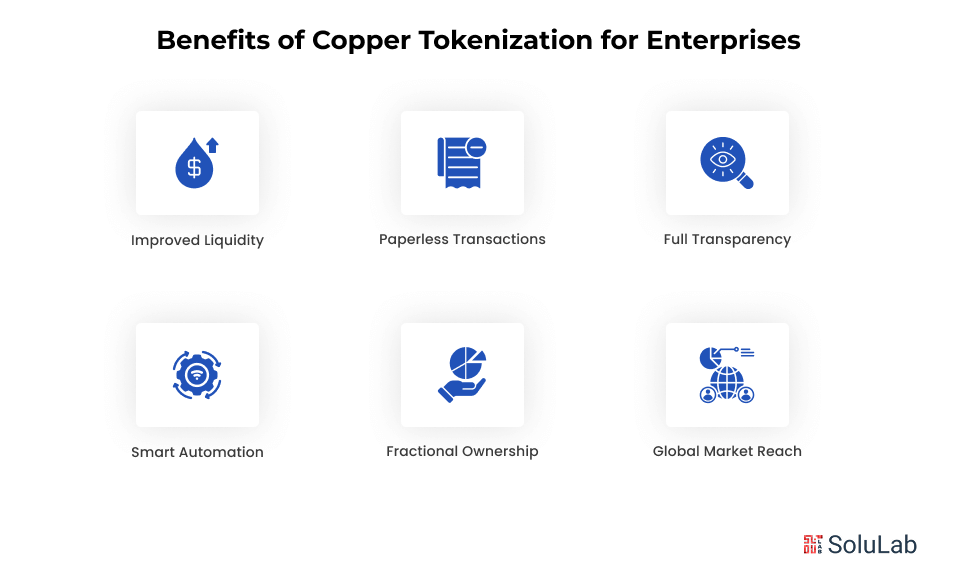
Benefits of Copper Tokenization for Enterprises

1. Improved Liquidity

By turning physical copper into tokens, companies can trade copper instantly and globally, without the need for delays or intermediaries. This makes it easier to access funds and improve cash flow.

2. Faster and Paperless Transactions

Using a secure copper tokenization platform, businesses can skip the paperwork. All ownership transfers and transactions happen digitally and in real time.

3. Full Transparency

All transactions are recorded on the blockchain, so businesses get clear, tamper-proof audit trails. This builds trust and makes regulatory reporting easier.

4. Smart Automation

With help from a smart contract development company, businesses can automate compliance and transaction rules. This reduces manual work and errors.

5. Fractional Ownership

Tokenized copper can be split into smaller units. This allows investors or trading firms to buy and sell just a portion of a copper asset, opening new investment models.

6. Global Market Reach

Working with a reliable copper tokenization company or asset tokenization company in the USA gives you access to global digital commodity markets without the limits of traditional systems.

These benefits make copper tokenization a smart choice for any enterprise looking to digitize their commodity operations. If you are already exploring gold tokenization development or considering entering other commodity markets, copper is a great place to start.

Asset Tokenization Company

Conclusion

Copper tokenization is more than just a new trend; it’s a smart way for businesses to modernize how they trade and manage copper. By turning physical copper into digital tokens, companies can make trading faster, safer, and easier to scale.

If you’re a business dealing with commodities, working with SoluLab, a trusted asset tokenization company in the USA, can help you build a complete copper tokenization system that fits today’s compliance rules and improves liquidity. As global markets shift to digital, businesses that start using copper tokenization platforms early will have a big advantage.

Have a unique business idea? Let’s connect!

FAQs

1. What is copper tokenization?

It’s the process of turning real copper into digital tokens on a blockchain. These tokens represent ownership of the physical copper.

2. Are copper tokens secure?

Yes. When created by a trusted token development company USA using smart contracts and safe storage, copper tokens are highly secure.

3. How can I start a copper tokenization business?

Team up with an experienced copper tokenization company or a professional blockchain development company that can build your platform, smart contracts, and compliance tools.

4. Can I tokenize other physical assets like gold or oil?

Yes. Many providers also offer gold tokenization development and similar services for other commodities.

5. What are the benefits of copper tokenization for enterprises?

It brings better liquidity, faster transactions, and easier compliance, all through a secure, blockchain-based system.

6. Do I need to be in the USA to build a copper tokenization platform?

No. But if you want to operate in the U.S., working with a certified asset tokenization company in USA ensures your platform follows local laws and regulations.


Top 10 Blockchains for RWA Tokenization Platform Development

Tokenizing real-world assets such as property titles, treasury notes, or equity shares on the blockchain has transitioned from theory to practice, fundamentally altering the methods of value storage and exchange. Investment companies and fintech startups are increasingly developing platforms that connect traditional finance with decentralized networks. However, at the foundation of every successful RWA project is a pivotal decision: selecting the appropriate blockchain. 

As of May 2025, tokenized U.S. Treasury goods have surpassed $1.28 billion in total value locked (TVL), propelled by platforms such as Ondo and Matrixdock. As DeFi protocols progressively include real-world assets into their yield plans, developers and corporations are evaluating the most appropriate blockchains for constructing and deploying their tokenization platforms.

In this blog, we will explore the top blockchains for RWA tokenization platform development, assessing each according to scalability, compliance support, ecosystem maturity, and acceptance rates.

Key Criteria for Choosing a Blockchain for RWA Tokenization

Choosing the right infrastructure is crucial when building RWA tokenization platform solutions, as it directly impacts regulatory readiness, scalability, and long-term trust. The blockchain you choose will determine not just technical performance, but also how well your platform can align with legal standards, scale with users, and support long-term innovation. Here are 6 key factors to consider when evaluating potential chains:

1. Regulatory Compliance and Identity Support: Tokenizing real-world assets often requires compliance with KYC/AML regulations. Look for blockchains that support permissioned tokens, verifiable credentials, and integration with compliance providers.

2. Customizable Smart Contracts: Flexibility in smart contract development allows you to create asset-specific logic, handle revenue sharing, and implement liquidation or governance mechanisms with precision.

3. Scalability and Fee Structure: A chain’s throughput and cost per transaction matter significantly when your platform processes high volumes of transfers or recurring events like interest payouts.

4. Tailored for RWA Tokenization Platform Solutions: Not all blockchains are equally suited for RWA needs. Choose one that supports standards like ERC-1400 or ERC-3643 and is built with financial asset representation, compliance layers, and access control in mind.

5. Interoperability and Ecosystem Access: Tokenized assets thrive in open ecosystems. Select a chain that offers solid bridge support, connects easily to custodians or oracles, and enables interaction with external systems.

6. Reliable and Secure Blockchain Technology: A stable and well-audited network is non-negotiable. Ensure the underlying blockchain technology has a proven track record in uptime, decentralization, and protection against attacks.

Read Also: White-Label Tokenization Vs. Custom Blockchain

Top Blockchains for RWA Tokenization to Look Out for in 2025

Discover the most reliable blockchains powering next-gen asset tokenization in 2025. From Ethereum to Hyperledger, here’s what’s shaping the future of on-chain RWAs.

1. Ethereum

Ethereum remains the go-to blockchain when it comes to tokenizing real-world assets, its well-established ecosystem, regulatory compatibility, and extensive developer tooling. Its smart contract capabilities offer a flexible base for projects aiming to tokenizing everything from real estate to U.S. Treasury bills. Ethereum accommodates to multiple RWA tokenization standards like ERC-3643 and ERC-1400, making it the preferred chain for projects.

What sets Ethereum apart is its reputation among RWA tokenization companies and its acceptance by institutional players. If you’re planning on building an RWA platform that needs strong community support, long-term reliability, and access to institutional DeFi, Ethereum is hard to beat.

Polygo

2. Polygon

Polygon offers the scalability and affordability that Ethereum struggles with, while still being compatible with the Ethereum Virtual Machine (EVM). This makes it ideal for projects that want Ethereum-grade security but without the high transaction costs. Polygon has gained serious traction among startups and mid-sized projects looking to offer real-world asset tokenization solutions without pricing out everyday users.

For top blockchain platforms that are both accessible and future-focused, Polygon checks many boxes. Its carbon-neutral commitment, developer-friendly infrastructure, and active ecosystem funding make it an attractive destination for RWA projects. Platforms like AQRU and Superstate are already building on or integrating with Polygon,

Avalanche

3. Avalanche

Avalanche is carving out a niche as a high-speed, low-latency blockchain that is well-suited for asset tokenization. Its Subnet architecture allows developers to create permissioned environments with specific compliance features—ideal for financial institutions or governments looking to bring assets on-chain securely.

Its growing support towards an RWA tokenization company comes from more than just tech. As more players seek real-world asset tokenization solutions with lower latency and stronger infrastructure control, Avalanche continues to rise as a viable alternative to legacy chains.

Stellar

4. Stellar

Stellar has always focused on financial inclusion, making it a natural fit for tokenizing fiat currencies, remittances, and trade finance instruments. Unlike general-purpose blockchains, Stellar was designed for value transfers and has built-in support for multi-currency transactions and KYC-compliant anchors.

Projects such as Franklin Templeton’s tokenized money market fund have launched on Stellar, showing its practical use in bringing traditional finance into Web3. For enterprises interested in blockchain-as-a-service options for digitizing financial assets across borders, Stellar offers a fast, compliant, and frictionless experience.

Tezos

5. Tezos

Tezos brings an edge to the RWA space with its on-chain governance and energy-efficient consensus model. Its ability to upgrade without hard forks ensures long-term stability, a crucial factor for tokenized assets that may exist on-chain for years. Tezos also supports formal verification for smart contracts, allowing mission-critical asset logic to be mathematically proven and highly secure.

As regulatory clarity increases, platforms with upgradable governance and formal verifiability are gaining interest among top blockchain development companies. It’s a strong pick for teams building an RWA platform that values both innovation and institutional-grade assurance.

Algorand

6. Algorand

Algorand is engineered with institutional-grade performance in mind, making it a favorite for enterprise use cases involving government bonds, commodities, and digitized gold. Its Pure Proof-of-Stake mechanism offers near-instant finality, making transactions predictable and ideal for financial applications. Built-in Layer 1 features like atomic swaps and standardized asset issuance reduce development time and technical risk.

Algorand has formed strong ties with governments and global institutions. For companies seeking blockchain tokenization solutions that are scalable, secure, and regulator-friendly, Algorand is often part of the shortlist.

Polkadot

7. Polkadot

Polkadot stands out for its interoperability-first architecture. With parachains, developers can build specialized environments tailored to asset classes, whether it’s real estate, carbon credits, or intellectual property. This makes Polkadot ideal for multi-asset ecosystems that require secure cross-chain functionality.

The chain is particularly appealing for RWA tokenization companies creating modular or jurisdiction-specific solutions. Teams can create fully customizable chains that interact seamlessly with Ethereum or other ecosystems. In 2025, as the demand for regulated, interoperable asset networks grows, Polkadot remains one of the most forward-looking options for blockchain platforms.

Binance Smart Chain (BSC)

8. Binance Smart Chain (BNB Chain)

BNB Chain offers speed, simplicity, and global reach, making it a solid contender in the tokenization space, especially for consumer-facing or retail-investor platforms. Its EVM compatibility allows for easy migration from Ethereum while offering cheaper gas fees and faster confirmations. BNB Chain has already been used for tokenized real estate, art, and crowdfunding projects that require affordability and scale.

With Binance’s global brand and access to large user bases, the network offers unmatched distribution potential for asset-backed tokens. For businesses seeking mass-market reach with fast deployment and liquidity access, BNB Chain presents a practical and cost-effective infrastructure layer.

Cosmos

9. Cosmos

Cosmos promotes a modular approach to blockchain development through its “Internet of Blockchains” vision. Each project can build its own independent chain while still connecting to others using the Inter-Blockchain Communication (IBC) protocol. For tokenized assets that may need to interact with custodians, DeFi platforms, and regulators, this flexibility is extremely valuable.

Cosmos enables developers to fine-tune for compliance and transaction speed while maintaining interoperability. It’s particularly well-suited for multi-jurisdictional RWA projects or hybrid financial models. Cosmos is gaining traction among those looking for frameworks that support both private and public asset blockchain use cases.

Hyperledger Fabric

10. Hyperledger Fabric

Hyperledger Fabric is a permissioned blockchain framework often chosen by enterprises and regulated entities that need more control over their infrastructure. Its modular architecture allows organizations to create private channels, enforce strict access permissions, and tailor consensus mechanisms to specific use cases. This is especially useful in sectors where data confidentiality and transaction transparency must coexist.

Fabric has been widely adopted across industries like supply chain, banking, and insurance, where operational complexity requires more than a simple public ledger. For many enterprise-level applications, Fabric offers a practical and proven foundation for long-term adoption.

How to Evaluate the Right Blockchain for Your RWA Project?

Selecting the right blockchain for a real-world asset tokenization project isn’t just a technical choice; it’s a strategic business decision. It impacts how your asset is governed, who can access it, how it moves, and how investors perceive its credibility. Before committing to a platform, ask yourself: Does the chain align with your long-term goals, user base, and asset class?

  • Nature of the Asset

Start by assessing what exactly you’re tokenizing: is it real estate, a treasury bill, or a private fund? Some blockchains are better suited to liquid assets, while others are optimized for illiquid, long-term holdings. Understanding the asset’s behavior will guide your choice.

  • Who Will Use the Platform?

Is your end user an institution, a retail investor, or a government entity? Each audience has its own expectations for speed, transparency, and control. The right blockchain should match the expectations of your core user base in terms of experience and trust.

  • Lifespan of the Tokenized Asset

Some tokenized assets may exist for decades, think land deeds or long-term bonds. Will the chain you choose still be around in 10 or 20 years? Stability and continuity are often overlooked but are vital for asset-backed platforms.

  • Data Transparency vs. Privacy

Certain blockchains expose every transaction publicly, while others offer selective disclosure. Depending on your asset class and region, this could make or break your compliance and investor trust.

  • Availability of Local Node Infrastructure

It’s one thing to have a fast chain; it’s another to ensure your region or industry can actually support it. Check for node access, latency, and availability of managed services that suit your geography or sector.

  • Exit Strategy and Upgradability

Can you modify or migrate your smart contracts without uprooting the whole system? Whether it’s upgrades, patching, or governance changes, your chain should offer a smooth pathway for growth or exit without disruption.

  • Custom RWA Tokenization Platform

Finally, ask yourself: Does this chain give me room to innovate? If you’re not just replicating existing models but trying to design something tailored to your market, you’ll need the flexibility, modularity, and independence to build a custom RWA tokenization platform that doesn’t force trade-offs.

Blockchain Development Company

Conclusion

As the tokenization of real-world assets continues to reshape how value is stored and transferred, the importance of choosing the right blockchain cannot be overstated. Each chain brings something unique to the table, be it regulatory alignment, transaction efficiency, or long-term scalability. Whether you’re tokenizing real estate, private equity, or government securities, the foundation you build on will define how well your platform performs under pressure.

As an experienced RWA tokenization platform development company, SoluLab has helped businesses bring complex tokenization ideas into reality. One of our standout projects, Token World, was built as a next-gen cryptocurrency launchpad that connects blockchain ventures with investors through a clean, accessible interface. It’s a strong example of how utility-driven design, paired with deep development expertise, can create real market impact.

From technical consulting to full-stack development, SoluLab is ready to support your journey with purpose-built solutions and deep domain expertise!

FAQs

1. What types of assets can be tokenized using blockchain?

Almost anything with real-world value can be tokenized, including real estate, precious metals, corporate bonds, art, intellectual property rights, and even commodities like oil or carbon credits. The goal is to represent ownership or rights to that asset digitally, making it easier to transfer, divide, and manage.

2. Is tokenizing real-world assets legally recognized in most countries?

Legal recognition varies widely. Some jurisdictions, like Switzerland, Singapore, and parts of the U.S., have introduced clearer frameworks to support asset tokenization. However, in many regions, the regulatory landscape is still evolving. It’s crucial to consult legal counsel when launching a tokenized asset project.

3. How does asset tokenization benefit investors?

For investors, tokenization lowers the barrier to entry. It allows fractional ownership, making high-value assets like commercial buildings or private equity accessible to smaller investors. It also improves liquidity, tokens can be traded more easily than traditional paper-based ownership records.

4. Do I need to build a custom blockchain to tokenize assets?

No, you don’t have to build a blockchain from scratch. Most projects use existing platforms like Ethereum, Polygon, or Tezos, which already support smart contract capabilities. What matters more is choosing a chain that aligns with your compliance needs and technical goals.
5. Can tokenized assets generate passive income?

Yes, many tokenized assets can be programmed to distribute income streams, like rental income, dividends, or interest, directly to token holders. This is especially attractive for investors seeking yield-generating opportunities in decentralized finance (DeFi) settings.

Top RWA tokenization Companies​ in 2026

Tokenization is the process of splitting actual assets into smaller pieces and using the blockchain to represent each piece as a distinct digital token. This method is already being used to trade various assets, including equities, bonds, commodities, fine art, and real estate.

Tokenization companies are opening up liquidity in formerly illiquid sectors by permitting fractional ownership, which increases the accessibility of high-value assets like real estate to a worldwide market.

Over the last two years, the Real-World Asset tokenization development industry has expanded by 80% and is still growing. It’s important to find out who the companies that supply tokenization infrastructure are, as they are expected to play a major role in this emerging sector

To help you comprehend this ecosystem, we will examine the top 10 leading tokenization companies that will be influencing the market in 2026. 

The Role of RWA Companies in Tokenization

Real-world asset (RWA) businesses form the backbone of the tokenization environment. These companies transition from the physical to the digital realm by tokenizing precious metals, masterpieces, and real estate. This transition allows businesses and investors to maximize their assets by leveraging blockchain technology to enhance productivity and security.

1. Development of Real-World Asset Tokenization: 

RWA companies are professionals at producing and implementing digital tokens that are representative of actual assets. They are in charge of creating tokenization for real-world assets

An owner of commercial real estate, for instance, might sign up with an RWA company to tokenize their assets, enabling fractional ownership and blockchain trade. 

2. Blockchain Integration

The smooth integration of tokenization systems with blockchain networks is essential for the success of tokenized assets. RWA firms provide the technical know-how to incorporate assets with superior blockchain systems, guaranteeing security, scalability, and dependability. 

These companies ensure that tokens from Ethereum, Binance Smart Chain, custom networks, and other platforms may be efficiently exchanged and managed.

3. Compliance Solutions: 

One of the biggest challenges in tokenizing is regulatory compliance, as tokenized assets typically fall under securities or commodities regulations. RWA companies provide end-to-end compliance solutions that address jurisdiction-specific requirements to manage this complexity. 

Tokenized assets will be more likely to meet the legal criteria for international transactions if Know Your Customer (KYC) and Anti-Money Laundering (AML) regulations are followed. 

Benefits of RWA Tokenization

By providing multifarious features that are unique in volatile markets, tokenization is changing asset ownership and investing. These consist of:

  • Enhanced Security: Tokenization enabled by blockchain technology increases security by encrypting each transaction and storing it in an immutable ledger. This secure documentation reduces the danger of fraud and boosts confidence.
  • Reduced Compliance Scope: By eliminating the need to maintain sensitive payment data tokenization, companies can assist companies in meeting the standards of the Payment Card Industry Data Security Standard (PCI DSS). 
  • Fraud Prevention: By exchanging tokens for sensitive data, such as card numbers, tokenization significantly decreases the risk of fraud and makes it more difficult for hackers to use stolen information.
  • Accessibility: Democratizing access to valuable assets, tokenization allows smaller investors to participate in marketplaces that were previously only accessible to wealthy individuals or organizations.
  • Efficiency: Employing smart contracts to automate transactions, tokenization reduces administrative expenses and settlement times. Platforms for tokenizing real estate are leading the industry.

Top RWA Tokenization Companies in 2026

solulab

1. SoluLab

SoluLab is a leading blockchain development company offering RWA tokenization solutions, helping businesses tokenize real-world assets such as real estate and commodities. Their company ensures secure, efficient, and scalable tokenization processes, empowering companies to integrate blockchain technology.

Its key features include tailored tokenization for various asset types, regulatory compliance, asset security, and large-scale tokenization for businesses of all sizes.


$25 – $49/ hr


50 – 249


2014


USA

MentTech

2. MentTech

At MentTech, we go beyond digitizing ownership our tokenization solutions unlock access, build trust, and create new investment opportunities in real-world assets. From real estate to security token offerings, we deliver secure, scalable, and compliant platforms.

We provide end-to-end RWA tokenization from strategy to development of equity, debt, and asset-backed tokens, with built-in compliance, investor portals, and KYC/AML integration. MentTech makes tokenization simple, secure, and ready for investment.


$30 – $50/ hr


50 – 249


2018


CA, USA

Tokeny Solutions

3. Tokeny Solutions

One of the leading companies in the RWA tokenization space is Tokeny Solutions. Tokeny is well-known for providing a stable, expandable platform that lets companies tokenize a variety of assets, including stocks, commodities, and real estate, all while guaranteeing complete adherence to international laws.

Key features include Tokeny infrastructure guarantees that tokenized assets meet worldwide regulatory standards, a key service offering. Tokeny lets enterprises create custom smart contracts, making tokenization flexible and adaptive, and works with powerful digital asset custody systems to protect tokenized assets.


NA


~40


2017


Luxembourg

Code Brew Labs

4. Code Brew Labs

Code Brew Labs is a leading real estate tokenization company that builds secure and efficient platforms using blockchain technology. They specialize in converting properties into blockchain-based digital assets, enabling fractional ownership and global trading. With over $4.5 billion in real estate digitized and compliance across 30+ jurisdictions, Code Brew Labs offers end-to-end solutions from strategy to deployment and support.

Key features include token creation aligned with specific property portfolios, platforms designed to meet global and regional regulatory standards, and automation of property transactions and ownership transfers.


$21 – $50/ hr


201 – 500


2013


India

Auroblocks

5. Auroblocks

Auroblocks is a blockchain technology studio with a focus on the tokenization of real-world assets (RWA). They provide turnkey solutions to digitize real estate, art, and private equity assets for compliance and increasing liquidity on their integrated platform. Its features are KYC/AML verification, investor accreditation, and a safe marketplace to exchange tokenized assets.

Here are some of the features of the company, including ensuring regulatory adherence with integrated KYC, AML, and investor verification processes, facilitating the transparent and regulated trading of tokenized real-world assets and managing the issuance and distribution of tokens, maintaining underlying assets, and ensuring compliance.


$25-$100/ hr


11 – 50


2018


Singapore

Blockchain App Factory

6. Blockchain App Factory

Blockchain App Factory is a leading RWA tokenization company known for building secure, customizable platforms that help businesses tokenize real-world assets like real estate, bonds, and commodities. Their end-to-end development services make them a top choice for enterprises entering the tokenized asset space.

Key features include support for multiple asset classes, regulatory compliance, and KYC integration with white label tokenization platforms.


$25/ hr


100 – 249


2017


India

Antier Solutions

7. Antier Solutions

Leading the way in RWA tokenization and blockchain development, Antier Solutions provides end-to-end services that assist companies in tokenizing assets such as commodities, private equity, and real estate. Its platform specializes in scalability, compliance requirements, and cross-chain interoperability.

Key features of the company include tokenization across different blockchains, giving investors a choice in ecosystems; tailor-made solutions for asset owners are excellent for organizations with complex assets or specific needs, and Antier ensures that tokenized assets meet all legal and regulatory requirements, reassuring investors and businesses.


$25 – $65 / hr


50 – 249


2010


India

ShamlaTech

8. ShamlaTech

Shamla Tech Solutions is a blockchain development firm specializing in Real-World Asset (RWA) tokenization. They offer customized solutions that enable businesses to automate tangible assets such as real estate, commodities, and intellectual property, improving liquidity, security, and global accessibility.

Key Features are fully customizable token development, regulatory-compliant smart contractsand secure wallet integration.


$50 – $99/ hr


150 – 250


2010


USA

BlockchainX

9. BlockchainX

BlockchainX is a top RWA tokenization firm providing end-to-end tokenization of real-world assets such as real estate, commodities, and art. With its stable infrastructure and regulatory compliance, BlockchainX enables firms to transform physical assets into easily tradable digital tokens.

Key Features of the company are support for multiple asset classes, smart contract-based automation, and regulatory-compliant token issuance.


$50/ hr


100 – 249


2017


India

Zeeve

10. Zeeve

Zeeve is a leading Web3 infrastructure provider specializing in Real-World Asset (RWA) tokenization. Their platform offers scalable, secure, and compliant solutions for enterprises aiming to digitize tangible assets like real estate, commodities, and private credit. With tools like Rollups-as-a-Service (RaaS) and support for standards such as ERC-3643, Zeeve simplifies the deployment of custom blockchains tailored for RWA projects.​

Key features include support for tokenization on 40+ blockchains, including Ethereum and Polygon; offers Rollups-as-a-Service for scalable and efficient blockchain deployments; and provides ISO 27001, SOC 2 Type II, and GDPR-compliant infrastructure.


NA


50 – 100


2021


USA

DePIN Development Company

Conclusion

The existence of RWA businesses has completely changed the handling and trading of real-world assets. Tokenization is changing many industries by improving asset management, raising transparency, and increasing liquidity due to technologies, including data tokenization companies, AI-driven solutions, and better token generation.

If you wish to investigate the potential of tokenization, these 10 leading RWA companies offer the know-how and resources to support you along this transition. These businesses are spearheading the adoption of asset tokenization, cryptocurrency trading, and real estate tokenization, positioning them for success in a market that is becoming more and more digital.

SoluLab, an asset tokenization development company, provides specialized solutions to sectors that want to tokenize their assets safely. Contact us today to discuss this further!

FAQs

1. What is RWA tokenization?

RWA tokenization refers to the process of converting real-world assets like real estate, commodities, or securities into digital tokens on a blockchain, enabling secure, transparent, and tradable assets.

2. Why is RWA tokenization important?

It improves liquidity, enhances transparency, reduces costs, and allows fractional ownership, making traditionally illiquid assets more accessible to a broader range of investors.

3. How does RWA tokenization benefit real estate investments?

Tokenization allows real estate properties to be divided into smaller, tradable units, making it easier for investors to buy and sell fractional ownership, improving liquidity.

4. Can tokenization apply to any real-world asset?

Yes, tokenization can apply to various assets, including real estate, commodities, stocks, and even intellectual property, allowing them to be traded digitally.

5. How do RWA tokenization platforms ensure security?

These platforms implement blockchain technology, ensuring secure transactions, encryption, and smart contracts that guarantee transparency and prevent fraud.