Gold, Silver, Diamonds, copper, and other metals are getting tokenized. The tokenized precious metals market crossed $1 billion in value, with silver-backed tokens contributing a fast-growing share. Along with Gold, Silver climbed above $84 per once, its highest level since April 2011, amid geopolitical tensions.
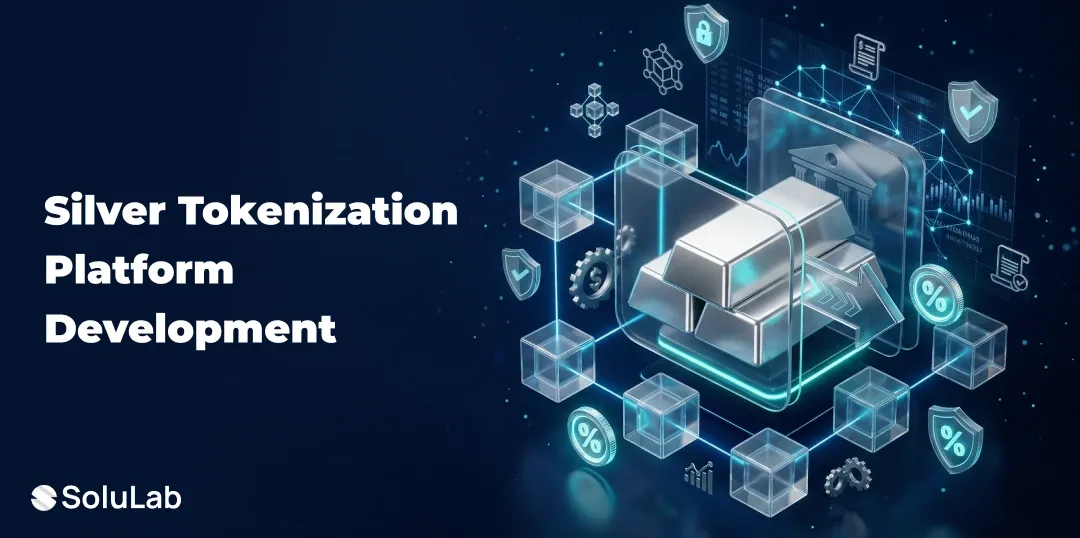
But the question now is not about growth, it’s about how to develop a silver tokenization platform. Yet, why do enterprises want to tokenize silver? Because this gives users fractional ownership, transparency, and security, unlike traditional silver buying and storing.
This is the silver opportunity for enterprises in the next generation to build a world-class silver tokenization service.
- Bridge institutional commodity trading with blockchain networks (Ethereum, Polygon, Solana).
- Bring traditional silver markets (ETFs and physical buying) into digital asset ecosystems.
- Create liquid global markets for tokenized precious metals.
Key Takeaways
- Silver tokenization platforms enable fractional ownership, global liquidity, and transparent trading of precious metal assets.
- Enterprises use silver tokenization platforms to connect physical commodities with blockchain-based financial ecosystems and investors.
- Partner with experienced RWA tokenization developers to launch secure, compliant silver-backed token platforms faster.
What is Silver Tokenization?
Buying gold, silver, and diamonds in shops is changing, but how? Tokenizing the real-world assets is the current market. Before we get into the development process, let’s know what silver tokenization is and how it works.
Silver tokenization- Turning physical silver into blockchain-based digital silver tokens. Where you can even own 1 gram of silver. This is stored securely in a licensed vault, which you can later sell even a 0.5 gram.
To say:
These tokens allow investors to:
- Buy fractional silver ownership
- Trade silver globally
- Verify asset backing on blockchain networks
Key Insights
- CoinLaw states that the overall RWA token market value (tokenized real-world assets) is $24 billion in 2025.
- The DamRev article notes that tokenization “significantly enhances liquidity” for silver, making buying, selling, and trading easier.
The tokenization of precious metals, particularly silver, democratizes investment and opens access to a once-exclusive market. Businesses and issuers use tokenized silver to raise funds, enhance transparency, and reach a global audience through regulated blockchain platforms.
Why Silver Tokenization Matters for Precious Metal Investments?
Silver is both an industrial and investment metal. Hence, it appeals to a diverse investor base. Tokenized precious metal systems simplify the buying, selling, and trading of silver while eliminating intermediaries.
- Direct ownership of silver-backed digital assets
- Transparent and verifiable transactions
- 24/7 trading through blockchain platforms
- Lower entry barriers for global investors
Silver’s industrial use in electronics, renewable energy, and healthcare makes its demand stable, providing a strong foundation for tokenized versions to gain traction.
Step-by-Step Process for Silver Tokenization Platform Development
Developing a silver-backed token platform involves integrating blockchain, legal, and financial infrastructure. Each stage ensures compliance, security, and investor confidence. Let’s check the roadmap in detail:
Asset Selection and Custody
Silver assets are stored in secure, regulated vaults managed by trusted custodians. Before token creation, each batch of silver undergoes documentation and third-party verification to ensure legitimacy.
Legal Structuring and Compliance
A regulatory framework defines how ownership is represented through digital tokens. Developers must integrate compliance protocols covering KYC/AML, jurisdictional licensing, and investor protection standards.
Token Creation
After verification, silver ownership data is converted into blockchain-based RWA tokens. Smart contracts automate ownership transfer, redemption, and revenue-sharing mechanisms.
Primary Offering and Investor Access
Companies launch the silver-backed token through an STO (Security Token Offering or private issuance. The process enables direct capital raising while maintaining compliance.
Secondary Market Trading
Once listed, tokens trade on licensed RWA exchanges or decentralized platforms. This step increases liquidity, allowing investors to buy or sell their holdings instantly.
Redemption & Liquidity Management
Investors can redeem tokens for physical silver or receive settlement in fiat/crypto. Vault integration and transparent audits maintain investor trust.
Read Also: 1,200% Jump in Silver Tokenization: What It Means for RWA Platforms
Pillars of Institutional Silver Tokenization
Developing a silver-backed platform in 2026 requires more than a minting function. It requires a “Trust Architecture” that bridges physical vaults with decentralized liquidity.
1. Proof of Reserve (PoR) & IoT Vault Integration
Forget annual PDF audits. To gain institutional trust, your platform must integrate Chainlink Proof of Reserve (PoR).
- How it works: Automated oracles ping the vault’s inventory management system daily. If the physical silver drops below the token supply, the smart contract automatically pauses minting.
- Smart-Vaults: We integrate IoT sensors within partner vaults (like Brinks or Malca-Amit) to provide real-time telemetry on asset movement.
2. Modular Compliance & The “GENIUS” Framework
Regulations have matured. A 2026 platform must be compliant with the US GENIUS Act and EU MiCA II standards.
- Programmable KYC: Instead of a one-time check, we build “Identity Oracles.” If an investor’s risk profile changes or their jurisdiction updates its laws, the token’s “Transfer” function automatically restricts or allows movement based on the updated metadata.
3. Atomic Settlement & T+0 Liquidity
Traditional silver trades take 2 days to settle (T+2). Our architecture utilizes Atomic Settlement, where the change of ownership and the payment happen simultaneously on-chain. This eliminates counterparty risk, the silver doesn’t move unless the payment is confirmed.
4. DeFi Composability: Silver as Collateral
The goal isn’t just to own silver; it’s to use it. We build tokens compatible with ERC-4626 (The Yield-Bearing Vault Standard).
- Lending: Users can deposit their silver tokens into a lending protocol (like Aave V4) to borrow stablecoins.
- Staking: Facilitate “Silver Liquidity Pools” where users earn trading fees by providing silver/stablecoin liquidity.
Read more – Crypto Exchange with Tokenization Features
Must-Have Features in Silver Tokenization Platform
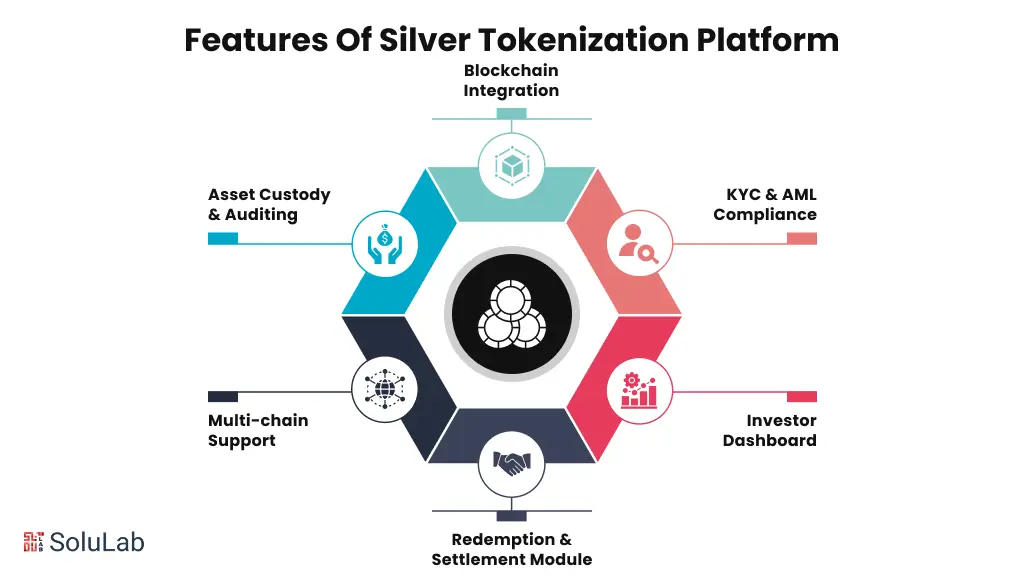
A successful silver asset tokenization platform requires secure architecture, transparency tools, and smooth investor experiences. Some of the key features that the platform should include are:
Blockchain Integration
Blockchain ensures real-time verification of ownership, audit trails, and traceability. Smart contracts automate the creation, transfer, and redemption of tokens.
KYC & AML Compliance
A built-in compliance module helps issuers verify investor identity and meet regulatory norms. Automated KYC ensures safe onboarding and transparent operations.
Asset Custody & Auditing
The platform must integrate with certified custodians and support real-time auditing. Custodial data links directly with token supply, ensuring every token represents actual silver.
Investor Dashboard
A user-friendly dashboard provides portfolio tracking, transaction history, and live metal valuation. It enhances transparency and user trust.
Multi-chain Support
Supporting multiple blockchains such as Ethereum, Polygon, or BNB Chain increases interoperability and flexibility for businesses targeting global investors.
Redemption & Settlement Module
This feature enables investors to redeem tokens for physical silver or equivalent fiat value. It guarantees asset convertibility and market confidence.
Read Also: Gemstone Tokenization
Investors & Issuers: Benefits of Silver Tokenization in Modern Finance
Tokenized precious metals redefine traditional investment by providing equal advantages for investors and issuers.
Benefits for Investors
- Fractional Ownership: Investors can own small quantities of silver without physical storage concerns.
- Liquidity: Tokenized silver can be traded across platforms, offering instant access and flexible exit options.
- Transparency: Blockchain ensures every transaction and ownership record remains verifiable.
- Lower Costs: The elimination of intermediaries reduces overall transaction expenses.
Benefits for Issuers
- Capital Raising: Issuers can attract global investors through regulated token sales.
- Operational Efficiency:Automated processes reduce manual verification and settlement delays.
- Regulatory Compliance:Built-in legal structuring maintains trust among institutional investors.
- Brand Credibility: Offering tokenized silver enhances corporate reputation as a tech-forward asset issuer.
Real-World Examples of Silver Tokenization
Real-world projects highlight how silver tokenization is evolving into a scalable financial solution.
tSILVER (tXAG)
tSILVER is a silver-backed token fully collateralized by 99.9% LBMA-accredited silver stored in insured vaults. Each token equals one gram of physical silver and can be redeemed upon request.
Other Precious Metal Tokenization Projects
Projects like Paxos Gold (PAXG) and Matrixdock’s XAUm paved the way for similar silver-based tokens. Companies developing gold tokenization platforms can replicate these proven models with enhanced automation, DeFi integration, and NFT-linked ownership tracking to create silver tokenization platforms.
Expanding to Other Commodities
Beyond silver, new initiatives now focus on diamond tokenization, copper tokenization, and other metals. A real-world asset tokenization development company can create multi-asset frameworks enabling investors to diversify across various commodities.
Silver Tokenization Future Trends & Outlook
The silver-backed token market is rapidly expanding, attracting both institutional and retail interest. Current market capitalization stands around $186 million, reflecting early-stage yet promising adoption.
- Integration with DeFi Platforms: Tokenized silver will serve as collateral for decentralized lending, staking, and yield generation.
- AI-Powered Auditing Tools: Automated verification ensures every token is fully backed by real assets.
- Multi-Metal Tokenization Models: Platforms will merge gold, silver, diamond, and copper tokenizationunder unified ecosystems.
- Stablecoin Pairing:Silver-backed tokens may soon be paired with stablecoins for instant swaps and settlement.
As regulations mature, businesses offering silver-backed token development services will benefit from early adoption, transparency frameworks, and scalable smart contract models.
Companies building such platforms today stand at the intersection of digital innovation and real-asset economics, a position that can redefine modern finance.
Conclusion
Now you might have understood the silver tokenization benefits and what it can offer in the future. So, if you are also planning on a silver tokenization platform development, then SoluLab is here to aid you.
We, at SoluLab, the top real-world asset tokenization development company, specialize in
- converting RWAs into digital tokens. Making them more accessible and secure for trading.
- Our industrial expertise in real estate, artwork, precious metals, and finance helps you to grow your tokenization platforms.
- Our AI+Blockchain+KYC integrations put you at the top in global markets.
With our 250+ developers and latest tech stack, we shape your Silver tokenization platform into a world class consumer friendly. Contact us today to get more details on RWA tokenization!
FAQs
Deepika is a content writer who blends storytelling with strategic thinking. She explores topics across digital innovation, emerging tech, and the evolving blockchain industry. She enjoys breaking down complex ideas into simple, engaging narratives in the growing global markets.