


Traditional copper trading faced a ‘liquidity gap’ caused by T+5 settlement cycles and high intermediary costs. As the global push for green energy and EVs drives copper demand to record highs, enterprises are moving beyond legacy systems.
According to PwC, tokenized assets could grow into a $16 trillion market by 2030, and industrial metals like copper are expected to be a major part of that growth.
Copper tokenization isn’t just a digital trend; it is a strategic shift to Programmable Commodities. This allows for 100% instant settlement, fractional ownership, and automated compliance.
Key Takeaways
- Success requires adhering to the SEC’s January 2026 “Issuer-Sponsored” taxonomy and EU MiCA standards for asset-backed tokens.
- Digital copper acts as high-velocity collateral, allowing businesses to unlock instant liquidity without selling their physical reserves.
- SoluLab utilizes Chainlink Proof of Reserve, ensuring every digital token matches physical tonnage in audited, secure vaults.
What is Copper Tokenization and Why It Matters?
Copper tokenization means turning real, physical copper into digital tokens using blockchain. Each token represents a verified weight of copper held in a secure, audited facility. This shift from physical to programmable assets allows enterprises to treat industrial metals as liquid capital.
By integrating the tokenization of physical assets, your business gains a competitive edge:
- Instant Settlement (T+0): Move value at the speed of data, bypassing the traditional 5-day commodity settlement lag.
- Multi-Asset Treasury: Much like our Silver Tokenization solutions, copper tokens allow manufacturers to maintain a diversified, liquid reserve of raw materials on their balance sheets.
- Unrivaled Traceability: Every token is a digital twin of a specific batch of copper, providing an immutable audit trail from the vault to the end-user.
1. The Surge of Digital Commodities: Copper, Gold, and Silver in 2026
The demand for “hard asset” tokenization has shifted from a trend to a treasury requirement.
- In 2025 alone, tokenized real-world assets (RWAs) grew by over 260%, reaching a market value of $24 billion by early 2026.
- While Gold Tokenization remains the dominant commodity. This accounts for roughly 70% of the $7 billion tokenized commodity niche; industrial metals like copper and silver are the fastest-growing frontier.
- Driven by the green energy transition and the 2025 copper supply tightening (with prices projected to average $12,075/mt in 2026).
Therefore, businesses are using copper tokens to hedge against price volatility and secure physical supply chains in real-time.

Top Business Use Cases for Copper Tokenization
Copper tokenization transitioned from pilot tests to a $6.5 billion institutional asset class. Driven by the J.P. Morgan Q1 2026 forecast of copper reaching $12,500/mt, enterprises are now using blockchain to solve the structural supply deficit of 330 kmt (thousand metric tons) expected this year.
Use Case 1: High-Velocity Commodity Trading
- Trading desks now use copper tokens to bypass the traditional T+5 settlement lag, achieving sub-second finality on networks like Solana. This allows for ‘Just-in-Time’ (JIT) liquidity management for large-scale industrial orders.
- In January 2026, Remora Markets reported that its Copper rStock (CPERr), a tokenized version of copper-linked equities, saw a surge in volume as traders sought on-chain exposure to the 2026 price rally.
Use Case 2: Manufacturing & AI Infrastructure Supply Chains
- With AI data centers projected to consume 400,000 metric tons of copper annually through 2026, manufacturers are using tokenization to secure ‘future supply’ via smart contracts. This eliminates the risk of physical supply disruptions seen at major sites like Grasberg in early 2026.
- Platforms built by a blockchain development company now integrate MiCA Title III standards, ensuring that metal-backed tokens in the EU are treated as Asset-Referenced Tokens (ARTs) with 1:1 audited reserves.
Use Case 3: Institutional Treasury & Neobanking
- Major banks are now treating tokenized metals as ‘Qualified Custodial Assets’ under the SEC’s January 2026 taxonomy. This allows institutions to offer copper-backed loans to corporate clients at lower interest rates than traditional unsecured credit.
- Following HSBC’s 2026 rollout of its Tokenized Deposit Service in the US and UAE, corporate treasurers can now move value between copper tokens and tokenized fiat 24/7, providing a level of capital mobility that legacy banking cannot match.
Building a Multi-Metal Digital Treasury
While Gold Tokenization remains the market leader (surpassing a $5.1 billion market cap in early 2026 via projects like PAX Gold and Tether Gold), the diversification into copper and silver is a strategic necessity for 2026.
- Gold & Silver: Used primarily for long-term wealth preservation and inflation hedging.
- Copper: Used as a ‘working asset’ for industrial operations and technology-linked growth.
- The 2026 Trend: In February 2026, Ondo Finance expanded its RWA suite to include the COPXon (Global X Copper Miners ETF Token), allowing investors to hold copper-miner equity alongside tokenized gold (IAUon) in a single, compliant DeFi wallet like MetaMask.
How Copper Tokenization Works?
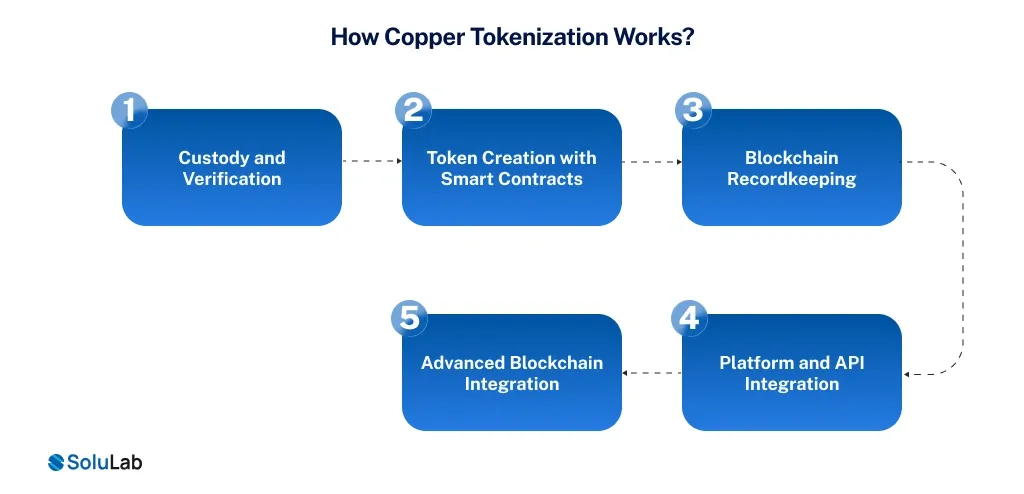
Copper tokenization is the process of turning real, physical copper into digital tokens on a blockchain. These tokens are secure, traceable, and easy to manage, ideal for businesses dealing with copper at scale.
Here’s how the process works step-by-step:
1. Custody and Verification
The copper is stored safely in a secure, certified location, often by a third-party custodian. This ensures the metal backing of your copper tokens is real and verified.
2. Token Creation with Smart Contracts
A reliable token development company USA builds smart contracts to create copper tokens. These tokens are directly linked to the physical copper, making ownership easy to transfer digitally.
3. Blockchain Recordkeeping
Every transaction is stored on the blockchain. That means businesses get a transparent, tamper-proof log of who owns what, which is key for audits and regulatory compliance.
4. Platform and API Integration
A professional tokenization platform development company helps you set up dashboards and APIs to manage your tokens, users, and business workflows. This makes it easy for your internal teams or partners to interact with your tokenized assets.
5. Advanced Blockchain Integration
To build a complete enterprise solution, your platform can be connected with tools from a smart contract development company or a blockchain consulting company. This lets you add features like automated compliance, payments, or trading.
This setup allows B2B companies like manufacturers, commodity traders, or financial institutions to digitize copper ownership, reduce manual processes, and expand their global reach through secure blockchain systems.
It’s a smart way to modernize how copper is tracked, traded, and invested in. So if you are looking to build a Copper Tokenization Platform.
Read Also: Top RWA Tokenization Questions Answered for Enterprises Ask in 2026
How to Build a Copper Tokenization Platform?
Creating a strong copper tokenization platform involves a few clear steps. Here’s a simple guide for businesses looking to digitize their copper assets and enter the world of tokenized commodities.
1. Secure Physical Copper and Custodian
First, make sure you have a reliable supply of physical copper. Store it with a trusted custodian or storage facility that can verify and audit your inventory. This is key to ensuring every token is backed by real-world copper.
2. Pick the Right Blockchain
Choose a blockchain that is secure, scalable, and commonly used in the industry. Most RWA tokenization companies prefer blockchains like Ethereum, Polygon, or Avalanche because they are well-tested and support smart contracts.
3. Develop Smart Contracts
Hire a professional smart contract development company to create smart contracts. These control how your copper tokens are minted, transferred, or destroyed. The contracts also include rules for compliance, ownership, and transaction tracking.
4. Build a User-Friendly Platform
Your clients will interact with your platform regularly, so design a dashboard that is easy to use. A reliable tokenization platform development company can help create a smooth, functional interface that includes dashboards, analytics, and role-based access for users.
5. Add Legal and Compliance Features
For global business, compliance is non-negotiable. Add KYC (Know Your Customer), AML (Anti-Money Laundering), and other legal checks. If you’re in the U.S., it’s important to partner with an asset tokenization company in USA that understands SEC regulations.
6. Ensure Real Asset Backing
Every tokenized copper token should represent a real, physical asset. Use blockchain or IoT systems to provide proof of ownership and verify that the copper is stored securely.
7. Integrate With Broader Financial Systems
To increase functionality, your platform should connect with systems like blockchain in trade finance. This allows businesses to use tokenized copper for lending, staking, or as collateral for loans.
Read Also: Gemstone Tokenization
Benefits of Copper Tokenization for Enterprises
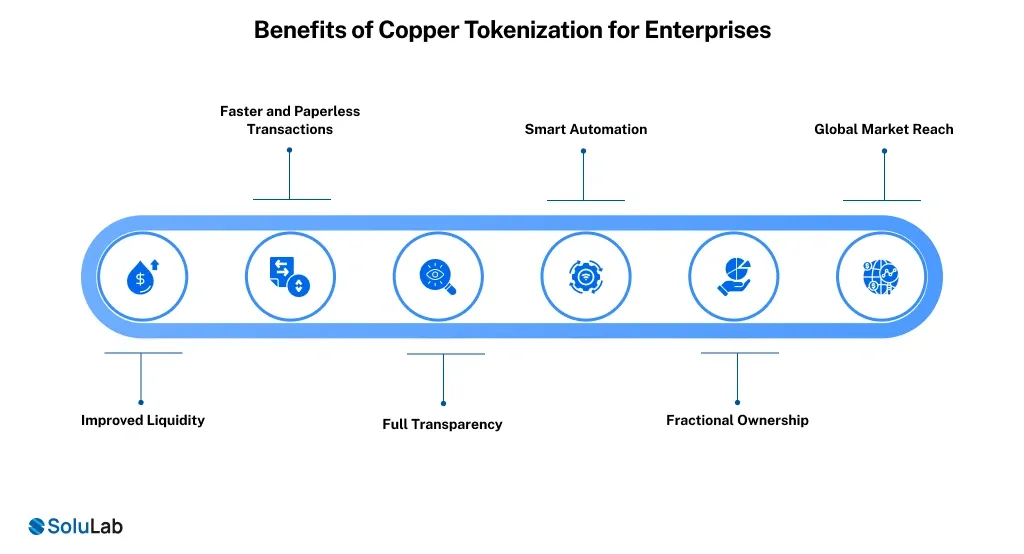
Copper tokenization offers major advantages for businesses looking to modernize how they manage, trade, and invest in physical copper. Here are the key benefits for modern companies:
1. Improved Liquidity
By turning physical copper into tokens, companies can trade copper instantly and globally, without the need for delays or intermediaries. This makes it easier to access funds and improve cash flow.
2. Faster and Paperless Transactions
Using a secure copper tokenization platform, businesses can skip the paperwork. All ownership transfers and transactions happen digitally and in real time.
3. Full Transparency
All transactions are recorded on the blockchain, so businesses get clear, tamper-proof audit trails. This builds trust and makes regulatory reporting easier.
4. Smart Automation
With help from a smart contract development company, businesses can automate compliance and transaction rules. This reduces manual work and errors.
5. Fractional Ownership
Tokenized copper can be split into smaller units. This allows investors or trading firms to buy and sell just a portion of a copper asset, opening new investment models.
6. Global Market Reach
Working with a reliable copper tokenization company or asset tokenization company in the USA gives you access to global digital commodity markets without the limits of traditional systems.
These benefits make copper tokenization a smart choice for any enterprise looking to digitize their commodity operations. If you are already exploring gold tokenization development or considering entering other commodity markets, copper is a great place to start.
Conclusion
Copper tokenization is more than just a new trend; it’s a smart way for businesses to modernize how they trade and manage copper. By turning physical copper into digital tokens, companies can make trading faster, safer, and easier to scale.
If you’re a business dealing with commodities, working with SoluLab, a trusted asset tokenization company in the USA, can help you build a complete copper tokenization system that fits today’s compliance rules and improves liquidity. As global markets shift to digital, businesses that start using copper tokenization platforms early will have a big advantage.
Have a service requirement? Contact us today!
FAQs
Deepika is a content writer who blends storytelling with strategic thinking. She explores topics across digital innovation, emerging tech, and the evolving blockchain industry. She enjoys breaking down complex ideas into simple, engaging narratives in the growing global markets.
![Top 10 Asset Tokenization Companies in the USA [2026 Edition]](https://www.solulab.com/wp-content/uploads/2025/10/Asset-Tokenization-Companies-in-USA.webp)
