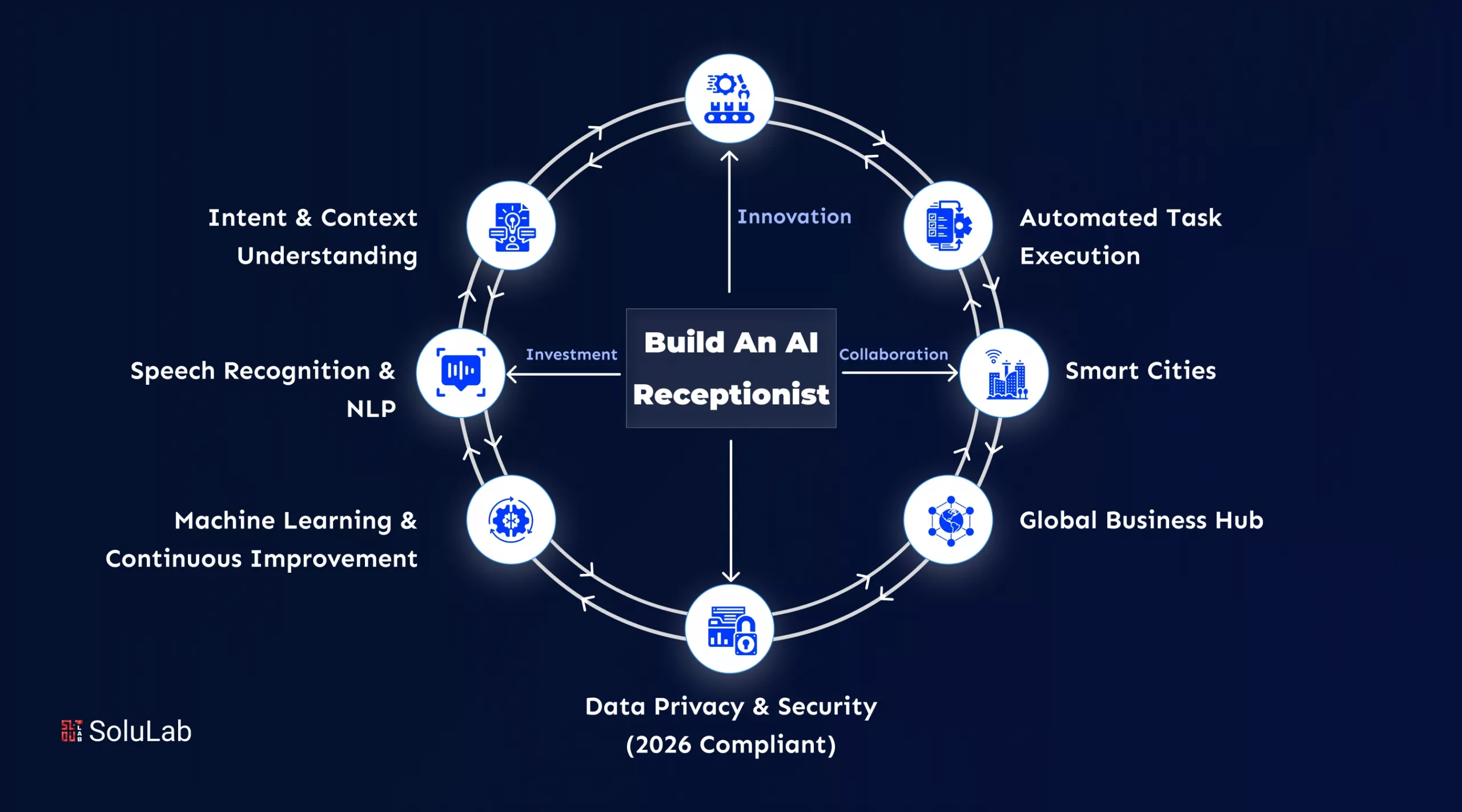
Talk to an Expert

How To Build An AI Receptionist For Any Business in 2026?

Build an AI Receptionist

The world is running after new technology, and customers are not ready to waste hours or days solving their problems. They want instant service anytime, anywhere. If you are a startup, then it will be difficult to hire more people to answer clients or generate leads. If you are an MNC, then answering multiple calls at a time requires greater manpower. This is where an AI receptionist can act as a modern solution. 

An AI receptionist helps people book appointments, answer FAQs, capture leads, and provide basic service to customers. It runs 24/7, works efficiently during peak hours, and keeps records in your CRM. From small to multi-national businesses using AI chatbots, receptionists to solve their customer problems and reduce expenses. In this blog, we will learn more about AI receptionists for business and how they help in multiple industries. 

Why Do Modern Businesses Need an AI Receptionist?

Let’s assume you have several customers who have queries and technical issues with your product. You can’t go to everyone and clear their problems. That’s where a 24/7 virtual receptionist for field service can step in – answering every call, capturing key details, and passing only the important issues to your team. Some might be just simple things. For at least basic checks and to know the severity of the issue, you need to know about the customer’s problem. 

To solve these AI receptionist development is a great choice. You know the market metrics show that in 2024 virtual receptionist projects hit $3.85 billion. And it’s expected that by 2033, it will grow to $9 billion. These AI receptionists increased efficiency across several industries. This is why you need an AI receptionist to assist your business. 

Core Capabilities of an AI Receptionist 

An AI-powered receptionist is more than just an automated answering system. It’s a smart, conversational assistant that takes over repetitive front-desk tasks and ensures every caller gets an instant, accurate response. Here’s what it can do:

  • Call Answering & Routing

Greets callers professionally, identifies their intent, and routes them to the right department, person, or voicemail, all without human intervention.

  • Appointment Scheduling

Checks calendar availability, books appointments, and sends confirmations in real time, ensuring seamless scheduling without double bookings.

  • FAQ Answering

Fetches accurate answers from your knowledge base or CRM to respond instantly to common questions about pricing, services, or timings.

  • Lead Capture & CRM Updating

Collects caller information, qualifies leads, and automatically updates your CRM with details of each interaction, saving your sales team valuable time.

  • Multi-Channel Handling

Manages conversations across multiple channels, phone, SMS, web chat, or even WhatsApp, ensuring consistent customer support everywhere.

  • Parallel Handling

Handles multiple calls or chats at once, ensuring no customer waits on hold, even during high-traffic hours or peak business seasons.

How an AI Receptionist Works?

An AI receptionist does many things, but from a business perspective, you need to know its workflow. So, that in the future, if any further AI integrations or updates are needed, you can understand the requirement and get it done. Let’s get to know it.
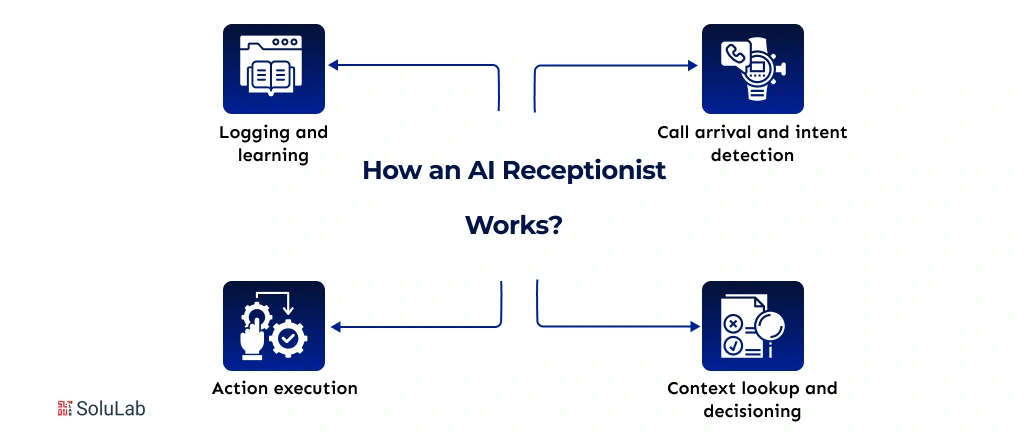
How an AI Receptionist Works

  • Call arrival and intent detection

First, speech-to-text captures the caller’s voice. Then, natural language understanding (NLU) detects intent, appointment, pricing question, or complaint.

  • Context lookup and decisioning

If the caller matched an existing contact, the system queries the CRM and personalizes responses. If not, the AI asks qualifying questions and records answers.

  • Action execution

Actions include booking a slot, sending a confirmation SMS or email, creating a lead in the CRM, or routing the call to a human with a summary of the interaction.

  • Logging and learning

Every call becomes training data. Transcripts feed ongoing optimization so the AI improves over time.

Technical bits: voice models (ASR/TTS), NLU engines, integration middleware (APIs, Zapier), and secure cloud hosting. Compliance layers manage call recording policies and data privacy (GDPR/CCPA).

Cost to Build or Deploy an AI Receptionist

AI receptionist development and deployment require an efficient team. So, before you approach AI development companies, check out the following steps. 

Step 1: Understanding the goal and planning the strategy

The first step is defining what the AI receptionist should achieve. For example, will it handle all calls, just schedule appointments, or manage multilingual customers? During this stage, teams outline workflows, map integrations, and create the voice persona.

Typical time: 1-2 weeks
Approx. cost: $1,000 to $2,000

Step 2: Developing, integrating, and testing

Once the plan is ready, developers begin connecting the system to your phone line, calendar, and CRM. This includes setting up voice recognition, scheduling automation, and conversation flows that reflect your brand. Testing ensures it handles real-world calls naturally.

Typical time: 3-6 weeks
Approx. cost: $5,000 to $8,000

Step 3: Deployment and optimization

After testing, the AI receptionist moves to live deployment. It’s monitored for a few weeks while teams refine greetings, fix routing issues, and adjust to caller behavior. Monthly updates and analytics reviews keep it accurate and consistent.

Typical time: 1-2 weeks
Approx. cost: $500 to $1,500 (initial setup), plus small recurring fees for hosting and maintenance.

Final Estimate and Timeline

  • For a small-to-medium business, a complete AI receptionist setup costs around $10,000 to $12,000 and takes about 6–8 weeks from planning to launch. 
  • Enterprise deployments or highly customized builds with multi-language and CRM automation can extend to $25,000–$40,000.

Hence, partnering with an experienced AI development company can cut the costs and also give you the best model.

Key Benefits of an AI Receptionist Across Different Industries

AI use cases across multiple industries are proving valuable, each gaining unique benefits based on workflows and customer interaction needs. Below are some of the most notable use cases and adoption results, showing how automation is delivering real impact without repeating earlier points: Benefits of an AI Receptionist Across Different Industries
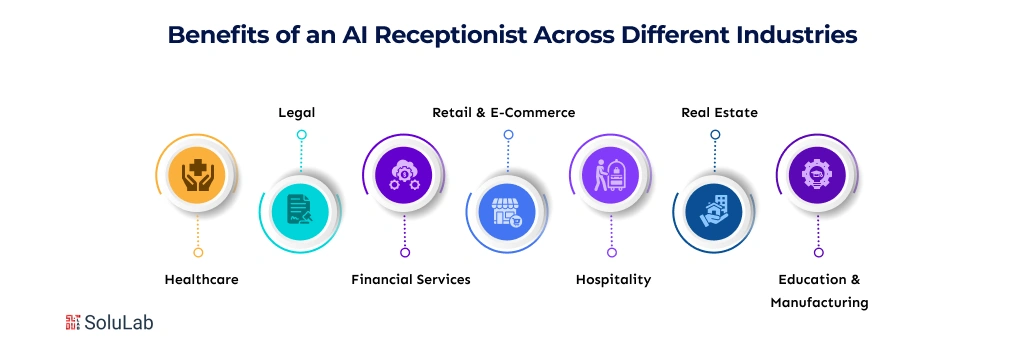
1. Healthcare: AI receptionists handle appointment scheduling, prescription refills, and insurance triage efficiently. Clinics and hospitals have reported up to a 30% boost in administrative efficiency, with nearly 70% of routine calls resolved by AI for healthcare when properly configured, eventually freeing staff for more critical tasks.

2. Legal: For law firms, AI assistants streamline client intake, appointment booking, and case-related follow-ups. With growing pressure to improve billable-hour productivity, AI adoption in legal firms reached 79% in 2024, making it one of the fastest-growing automation sectors.

3. Financial Services: Banks and financial institutions use AI receptionists for account inquiries, fraud alerts, and customer verification. Some markets have achieved up to 75% AI-driven automation across their customer operations, improving both security and response time.

4. Retail & E-Commerce: Retailers deploy AI receptionists for order tracking, returns, and stock availability queries. With the global retail AI market projected to hit multi-billion-dollar growth by 2026, customer support automation has become a key driver of faster resolutions and higher customer satisfaction.

5. Hospitality: Hotels and travel companies use AI receptionists for reservations, guest queries, and concierge requests. The industry is seeing over 30% annual growth in voice-AI applications, helping deliver faster responses and personalized guest experiences around the clock.

6. Real Estate: Property firms rely on AI receptionists to qualify leads, manage inquiries, and schedule viewings. This automation has cut down manual labor hours, reduced missed calls, and significantly improved response times for potential buyers and tenants.

7. Education & Manufacturing: Educational institutions and manufacturers use AI receptionists for admission queries, supplier communication, and delivery scheduling. Both sectors report notable time and cost savings, especially in managing repetitive administrative tasks.

Across all industries, the results are clear: fewer missed calls, faster booking rates, and measurable ROI, ultimately proving that AI receptionists are not just a trend but a long-term business enabler.

Remarkable AI Receptionists and Emerging Players in 2025

There are several AI receptionists that are performing remarkably well; however, the following three are taking the top places. Let’s check them out. 

1. Podium is a strong lead management and an “AI Employee” that guarantees round-the-clock engagement; good for SMBs focused on faster lead response and conversion.

2. ALICE Receptionist mixes AI with video avatars for lobby automation and kiosk-based guest check-in; ideal for hospitality and property management that want on-site automation.

3. My AI Front Desk simple, appointment-first AI phone receptionist offering quick setup and testing options; great for clinics and small practices wanting a fast pilot.

4. Welco.ai specializes in appointment-based service businesses with industry-specific optimization for dental practices, home services, and medical clinics. Built on proven voice AI technology, it prioritizes reliable service account integrations and offers same-day deployment; perfect for businesses losing revenue to missed calls who need an immediate solution.

Each platform targets different industrial goals and company requirements, so discuss your idea and requirements with any top AI consulting company and choose the best model for your business. 

The Future of AI Receptionists

As the technology emerges into new phases, the adoptions, integrations, and AI innovations come into the picture. The current model of AI receptionists might change into a more full-fledged form. Let’s some futuristic ideas that are swirling in AI growth.

  • Emotion-aware routing: Detect frustration and escalate to humans automatically.
  • Hyper-personalization: Pull real-time CRM cues to tailor responses per caller.
  • Agent ensemble: Multiple AI “staff” with different personas for sales, support, and billing.
  • Autonomous workflows: AI triggers multi-step automations (book → invoice → follow-up) without human handoff.

AI Development Company

Conclusion

Through his blog, you might have understood the need for an AI receptionist and why it’s getting popular. If you are also thinking of having an AI assistant, then set your goal or be ready to discuss your requirements with AI development companies like SoluLab. 

We, at SoluLab, help businesses to develop, integrate AI solutions, and maintain sustainable growth. Our expert team designed an AI-powered ChatGPT that provides users with seamless communication and enhanced engagement for travel recommendations.

If you are also looking for AI integration solutions, then contact us today and get started!

FAQs

1. How does an AI receptionist bring out-of-the-box innovation for businesses? 

An AI receptionist goes beyond basic call handling. It automates voice, chat, and lead capture while learning from interactions, offering creative, scalable solutions that redefine modern customer communication.

2. Can AI receptionists handle complex customer conversations? 

Yes, advanced AI receptionists use NLP and voice understanding to detect intent, manage multiple queries, and escalate complex cases to human agents while keeping context intact for seamless communication.

3. How much does it cost to build an AI receptionist for small businesses?

Typically, AI receptionist development costs between $10,000 – $12,000+ for small-to-medium businesses, covering strategy, integrations, and deployment. The ROI appears within months due to efficiency and 24/7 service coverage.

4. Which industries benefit most from AI receptionist adoption? 

Industries like healthcare, real estate, legal, retail, and hospitality gain the most. AI receptionists manage bookings, FAQs, and client intake, helping businesses save time, reduce costs, and enhance customer experience.

5. How can I get started with SoluLab’s AI development solutions?

It’s very simple to get in touch with us. Just click the link and give your details, and can discuss your business requirements with our SoluLab’s AI experts.
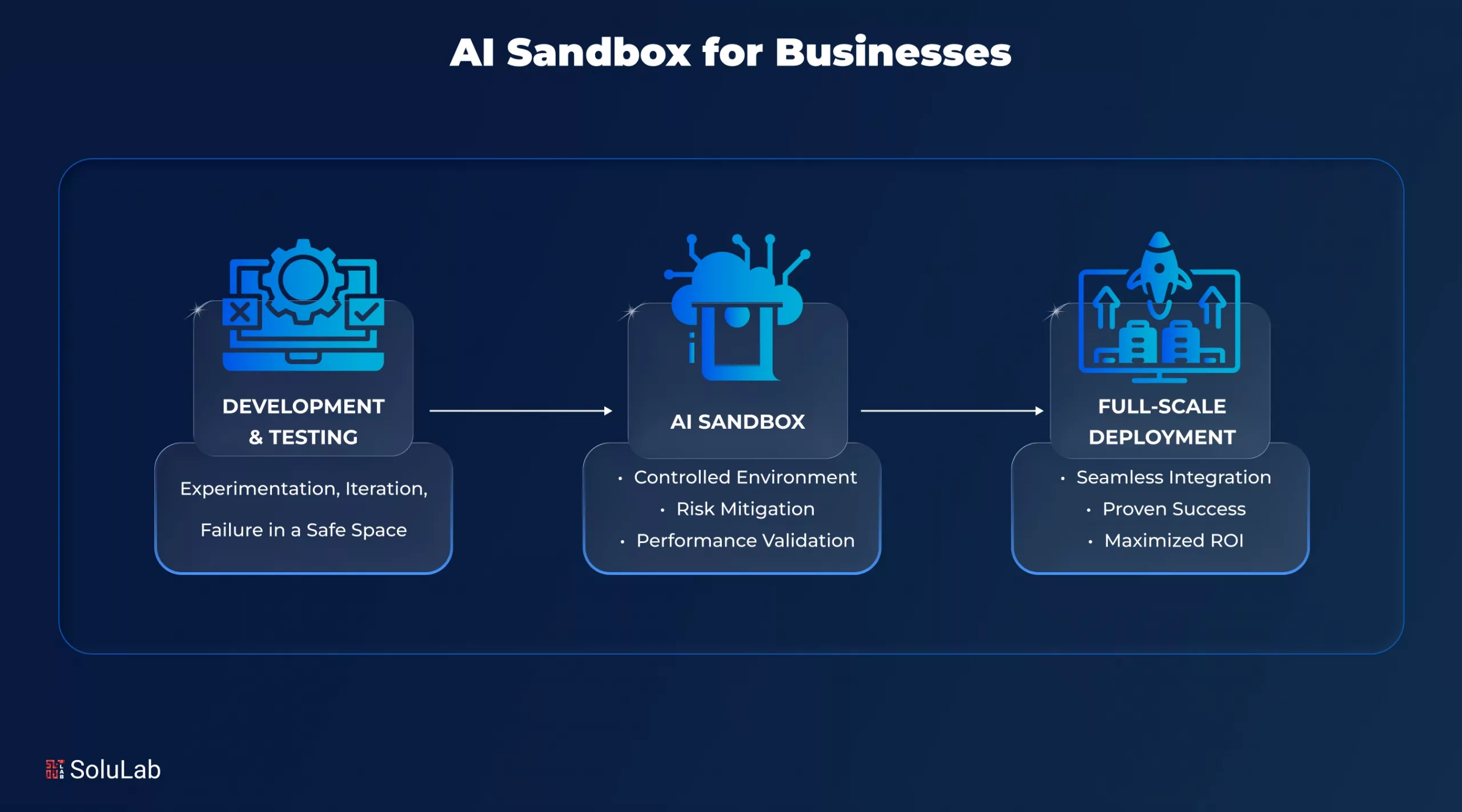
Why Should Businesses Use an AI Sandbox Before Full-Scale AI Deployment?

AI Sandbox for Businesses

What if you could test-drive AI before letting it take the wheel of your entire business? Implementing AI can revolutionize operations, customer experiences, and decision-making — but jumping straight into full-scale deployment can be risky. Errors, unexpected behaviors, or integration challenges can cost time, money, and even credibility.

In 2025, 66 AI and technology sandboxes are active worldwide, with 31 focused on AI innovation. 

Acting as a safe, controlled environment, an AI sandbox lets businesses experiment, validate, and fine-tune AI models before going live. In this blog, we’ll explore why using an AI sandbox is a smart move, how it minimizes risks, and how it ensures your AI deployment drives maximum impact from day one.

What Is an AI Sandbox?

An AI sandbox is a secure, isolated environment where businesses can test and validate AI models before they are deployed in real-world operations. It acts like a safe playground for AI, allowing enterprises to experiment without impacting live systems or risking sensitive data.

Unlike traditional testing setups, an AI sandbox lets businesses:

  • Experiment safely with AI algorithms: Try new models, tweak parameters, and see results without production risk.
  • Simulate real-world scenarios: Test how AI reacts to different data, customer behaviors, or operational challenges.
  • Catch risks and issues early: Identify potential errors, biases, or failures before they affect business outcomes.

Using enterprise AI sandbox platforms, your data scientists, developers, and business teams can collaborate seamlessly. These platforms help you protect sensitive data, track AI performance, and ensure models meet both business objectives and regulatory standards.

When combined with AI app development solutions, sandboxes streamline the entire testing workflow, making your AI models deployment-ready faster and more efficiently.

Key Benefits of Using an AI Sandbox Before Deployment

Implementing AI across your business can be transformative, but jumping straight into full-scale deployment comes with risks. An AI sandbox provides a controlled testing environment where models can be evaluated safely. Here’s why it’s invaluable:

1. AI Risk Management & Compliance Protection

An AI sandbox enables full AI risk assessment and ensures regulatory compliance. With EU AI Act penalties up to €35M or 7% of global turnover, sandbox testing protects against costly fines. Only 6% of regulated enterprises have an AI-native security strategy, making pre-deployment validation essential.

2. Cost Efficiency & ROI Protection

AI projects cost $80,000–$190,000 initially, with $5,000–$15,000 annual maintenance. Risk mitigation with AI sandboxes prevents production failures, delivering ROI over 9,000% and payback in 6–12 months. Sandboxes safeguard budgets for AI deployment solutions.

3. Failure Prevention

AI failures are high:

  • 42% of companies abandoned AI projects in 2025
  • Only 1 in 8 prototypes reach operations
  • 80% of pilots fail due to data, scalability, or alignment issues
  • AI sandbox solutions for businesses catch issues early, saving time and money.

4. Enhanced AI Readiness

A sandbox helps with AI readiness checks, ensuring teams, processes, and infrastructure are prepared. Proper testing improves accuracy by 27% and reduces performance degradation, enabling smoother deployment of AI-powered solutions.

What is the current Market Context & Investment Reality for the AI Sandbox?

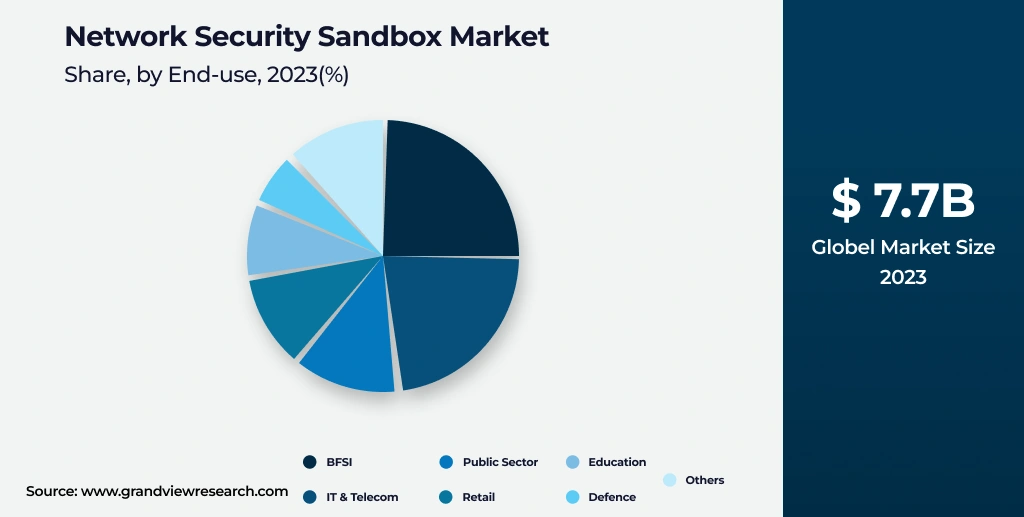
Network Security Sandbox Market

The AI sandbox market is growing fast, reflecting both the opportunities and risks of AI adoption. Consider these numbers:

  • Network security sandbox market: $11.1B in 2024 to $140.1B by 2030 (52.5% CAGR)
  • Cloud sandboxing market: $2.44B in 2024 to $7.75B by 2032 (15.5% CAGR)
  • Analytics sandbox market: $2.5B in 2023 to $10.1B by 2032 (16.8% CAGR)

Despite this growth, only 26% of companies have the right capabilities to scale AI-powered solutions, while a staggering 95% of generative AI pilots fail to deliver business value.

This is where AI sandbox solutions for businesses become critical. Sandboxes let you test AI in sandboxes, perform AI risk assessments, and refine models safely before full-scale deployment. 

They help businesses reduce failure risks, save costs, and ensure better ROI from AI development solutions.

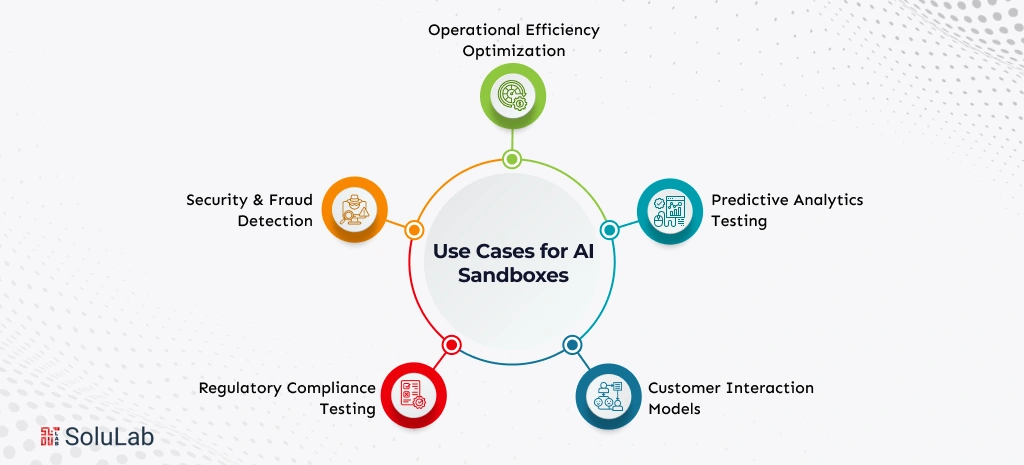
Common Use Cases for AI Sandboxes

Use Cases for AI Sandboxes

1. Predictive Analytics Testing

Use an AI sandbox to test and fine-tune forecasting models before deploying them in real business operations. This ensures more accurate predictions and reduces costly errors in decision-making.

2. Customer Interaction Models

Validate chatbots, recommendation engines, and other AI-powered customer tools in a safe environment. Testing in a sandbox prevents mistakes from affecting live users, enhancing customer experience and trust.

3. Regulatory Compliance Testing

Simulate scenarios to ensure your AI models comply with regulations like the EU AI Act. Sandboxes help identify compliance gaps before deployment, reducing the risk of fines up to €35 million.

4. Security & Fraud Detection

Stress-test AI security models and fraud detection systems safely. Sandboxes allow enterprises to identify vulnerabilities and improve model reliability without exposing real data.

5. Operational Efficiency Optimization

Test AI applications for logistics, HR, and manufacturing processes. Sandbox testing helps optimize performance, reduce bottlenecks, and improve overall operational efficiency.

Using testing AI in sandboxes in these areas allows businesses to reduce risk, save costs, and deploy AI faster. For modern organizations, these use cases translate directly into safer, smarter, and more profitable AI adoption.

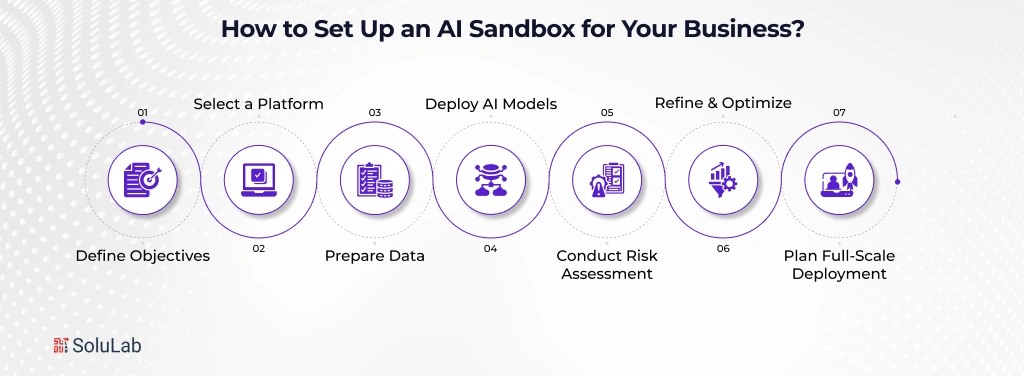
How to Set Up an AI Sandbox for Your Business?

Setting up an AI sandbox for your business doesn’t have to be complicated. By following these structured steps, companies can test safely, reduce risks, and ensure successful deployment. Here’s a practical guide:

Factors to Consider When Choosing a Crypto Development Company in UAE

1. Define Objectives

Start by identifying which AI models or business processes you want to test. Focus on high-impact areas such as AI-powered solutions, predictive analytics, or customer interaction models. Clear objectives ensure your sandbox tests are meaningful and directly tied to business goals.

2. Select a Platform

Choose an enterprise AI sandbox platform that fits your company’s size, security requirements, and regulatory needs. Platforms vary from cloud-based solutions to on-premise multi-GPU infrastructures, typically costing $20,000–$50,000 for setup and $2,000–$5,000 annually for operations. The right platform ensures smooth testing and data protection.

3. Prepare Data

Use anonymized or synthetic datasets to replicate real-world conditions without risking sensitive information. This approach supports AI risk assessment and helps prevent 80% of AI pilot failures caused by data issues.

4. Deploy AI Models

Implement your AI solutions using AI app development solutions. Whether it’s a recommendation engine, chatbot, or predictive model, deploying in a sandbox lets your team test functionality, accuracy, and reliability in a controlled environment.

5. Conduct Risk Assessment

Evaluate every AI model for potential failures, biases, or compliance gaps. With regulatory penalties reaching €35 million under the EU AI Act, this step is critical. Sandbox testing helps ensure AI risk management and prepares your business for safe production deployment.

6. Refine & Optimize

Use insights from sandbox tests to improve model performance. Adjust algorithms, improve accuracy, and ensure risk mitigation with AI sandboxes. On average, sandbox testing can boost model accuracy by 27% and prevent costly failures, delivering a potential ROI of 9,000%.

7. Plan Full-Scale Deployment

Once models are validated, transition to live operations using AI deployment services. A well-tested AI model ensures smoother integration, operational reliability, and faster business impact. Companies that skip this step risk production failures, wasted investment, and regulatory penalties.

How AI Sandbox Is Used In Businesses?

1. Harvard University – Academic AI Sandbox

Users: 50+ researchers and faculty

Challenge: Enable generative AI without risking IP/data leaks

Solution: Secure AI sandbox with GPT-3.5, GPT-4, Claude 2, PaLM 2; data isolated per user

Results:

  • 6-week pilot launch
  • Met strict data compliance standards
  • Informed university-wide AI strategy

2. Global Educational Publisher – GenAI Sandbox

Timeline: 60 days

Challenge: Explore AI ROI without major upfront investment

Solution: GenAI sandbox on client systems, tested GPT-3.5/4 on proprietary educational content

Results:

  • Identified automation for editorial workflows
  • Built confidence for AI investment
  • Established ongoing partnership for production solutions

3. UK FCA – Supercharged Sandbox

Launch: June 2025

Goal: Enable AI innovation across financial services firms

Solution: Partnership with NVIDIA, secure sandbox, direct FCA guidance

Impact:

  • Accelerated AI adoption
  • Leveling the competitive playing field for smaller firms
  • Faster AI experimentation and innovation

AI Development Company

Conclusion

With 95% of generative AI pilots failing and regulatory penalties reaching up to €35M, using an AI sandbox is no longer optional; it’s essential. A properly implemented sandbox safeguards billions in AI investments, ensures regulatory compliance, and empowers enterprises to confidently deploy AI-powered solutions.

At SoluLab, a leading AI development company, we help businesses design, implement, and optimize custom AI sandboxes, enabling safe experimentation, fine-tuning, and compliance assurance. By partnering with a Generative AI development company, organizations can transform their AI initiatives from risky pilots into reliable, scalable, and high-impact solutions.

Future-proof your AI deployments, test, learn, and scale safely with SoluLab’s AI sandbox solutions. Contact us now!

FAQs

1. Which AI sandbox solutions for businesses are best?

The best AI sandbox solutions for businesses provide secure environments, collaborative tools, and easy integration with enterprise AI sandbox platforms and AI deployment services. They make testing and validating AI fast, safe, and reliable.

2. How can AI risk management improve AI success?

AI risk management identifies potential model failures, compliance breaches, or operational disruptions early. By mitigating these risks in a sandbox, businesses increase the chances of successful AI deployment and protect investments.

3. How does an AI readiness check prepare businesses for deployment?

An AI readiness check assesses infrastructure, team skills, and processes. It ensures that AI initiatives are ready for full-scale deployment and reduces the likelihood of model failure, operational issues, or compliance risks.

4. What role do AI deployment services play with sandboxes?

AI deployment services help move validated AI models from the sandbox to production safely. They ensure scalable, compliant, and high-performing AI solutions, protecting both ROI and enterprise operations.

5. Is using an AI sandbox cost-effective?

Absolutely. Early testing prevents expensive mistakes, reduces trial-and-error costs, and speeds up deployment timelines, making AI initiatives more efficient and cost-effective.

6. How does SoluLab help businesses implement an AI sandbox?

SoluLab, a leading Generative AI development company, helps businesses design, implement, and optimize custom AI sandboxes. We provide end-to-end support, including safe experimentation, performance optimization, and compliance assurance, ensuring AI deployments are reliable and impactful.

10 Proven Ways Voice AI Agents Increase Conversions and Sales 

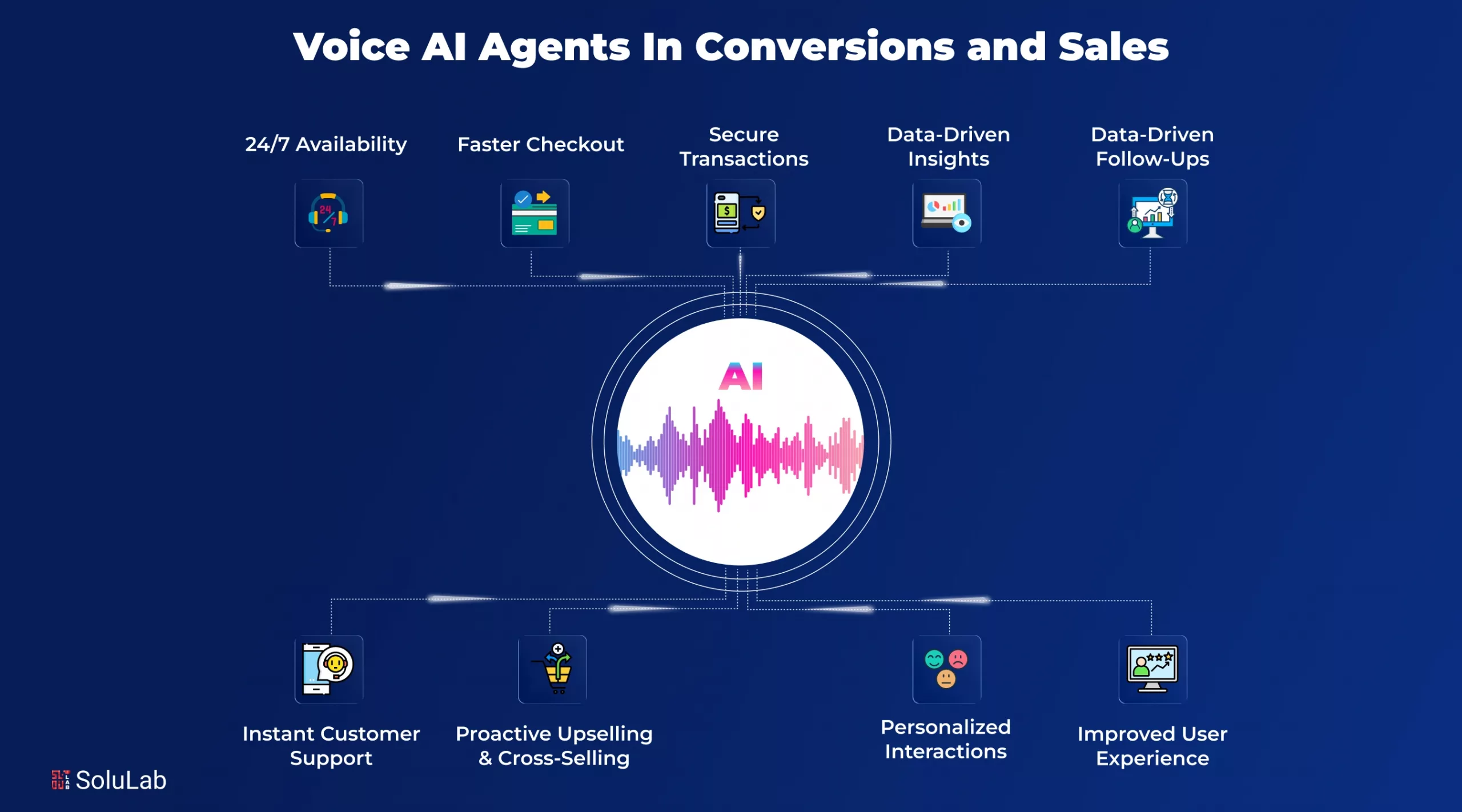
Voice AI Agents In Conversions and Sales

Have you ever wondered why some businesses convert visitors into loyal customers faster than others? The secret often lies in how they communicate. Today, Voice AI agents are transforming customer interactions into smart, engaging, and sales-driven conversations. These AI-powered assistants don’t just answer questions—they personalize experiences, recommend products, and guide customers toward quicker purchase decisions.

By 2030, AI will add $15.7 trillion to the global economy. Businesses that learn how to build a voice AI agent now will lead tomorrow’s market.

From retail to real estate, companies are leveraging Voice AI to boost conversions, enhance customer satisfaction, and increase revenue effortlessly. In this blog, we’ll explore 10 proven ways Voice AI agents can elevate your sales strategy and help your business turn every conversation into a conversion.

Why Voice AI Agents Matter for Modern Businesses?

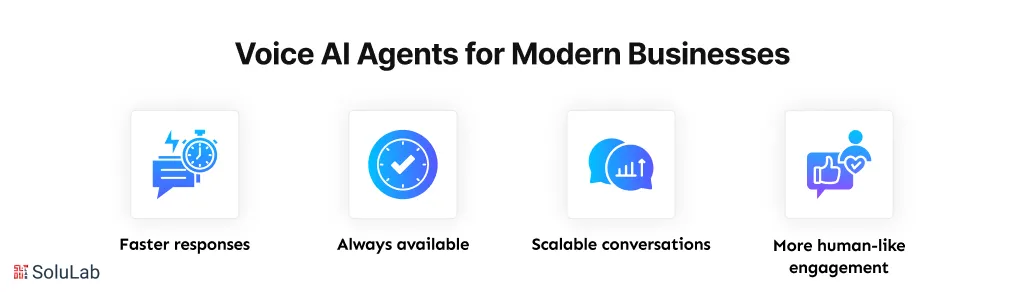
Voice AI Agents for Modern Businesses

Today’s buyers want instant answers, faster solutions, and consistent support. They don’t want to wait in long queues or repeat the same issue across multiple channels. This is where voice AI agents for customer service become a must-have, not just a nice-to-have.

1. Faster responses

Cutting wait times by even one minute can boost conversions by 10–15%. Voice AI agents reduce resolution times from 7:50 to 6:25 minutes, a 15% improvement. Faster support keeps customers happy and prevents lost deals.

2. Always available

Unlike human teams, AI sales agents and voice AI agents for business work 24/7. You capture leads at midnight, resolve weekend tickets, and serve global clients across time zones. Companies see 20–30% more leads simply by being always-on.

3. Scalable conversations

By 2025, 95% of interactions will involve AI. With voice AI agents, scaling from 100 to 10,000 calls needs no new hires. Enterprises report 30% lower operating costs while delivering consistent, high-quality responses.

4. More human-like engagement

While Conversational AI chatbots work well for text queries, they often feel robotic. Advanced voice AI agents use natural tone and context, building trust. Businesses report 23% higher conversion rates when using voice-driven automation versus chat alone.

10 Ways Voice AI Agents Increase Conversions and Sales

Voice AI agents are transforming how companies capture leads, engage prospects, and close deals faster. Here’s a detailed breakdown of how they deliver measurable results.

#1. 24/7 Lead Qualification

With voice AI agents for business, your sales team never misses a lead, even outside office hours. 

  • AI screens incoming inquiries in real-time, separating high-intent prospects from general queries.
  • Leads are automatically prioritized and routed to the right team member, reducing sales cycle time by up to 37%.
  • Businesses can capture opportunities outside normal working hours, ensuring international clients are served efficiently.

#2. Personalized Upsells

Advanced voice AI agents analyze real-time call data to recommend relevant products or services. 

  • AI uses historical data and real-time interaction insights to recommend additional products or services.
  • Personalized upsells can boost average order value by 15–25%.
  • Tailored recommendations improve customer satisfaction and trust.

#3. Reduced Operational Costs

Deploying voice AI agents for repetitive tasks saves money while improving efficiency.

  • Automating first-line support reduces human workload by up to 30%.
  • Human agents focus on high-value activities like negotiation and account management.
  • Reduces the need for hiring additional support staff as the business scales.

#4. Consistent Brand Experience

Unlike a generic Conversational AI chatbot, voice AI agents maintain tone, messaging, and professionalism across every interaction.

  • Uniform brand voice strengthens credibility.
  • Consistent experience reduces confusion and builds trust.
  • Ideal for enterprises managing multiple sales or support teams across regions.

#5. Multilingual Support

Voice AI agents for customer service easily handle multiple languages.

  • Instantly respond to international clients without extra hires.
  • 44% of global buyers prefer an AI-driven multilingual service.
  • Supports market expansion with minimal operational overhead.

CTA1

#6. Omni-Channel Engagement

Voice AI agents integrate with chat, SMS, email, and voice seamlessly.

  • Customers can switch channels without repeating themselves.
  • Improves lead conversion by providing a frictionless experience.
  • Enables unified tracking of customer interactions across all touchpoints.

#7. Data-Driven Insights

AI sales agents capture and analyze every conversation.

  • Transcripts feed predictive models for upsells, cross-sells, and churn prevention.
  • Companies report 20% higher cross-sell rates and 15% lower churn using AI insights.
  • Helps decision-makers plan campaigns with data-backed precision.

#8. Reduced Wait Times

AI sales agents manage high call volumes efficiently.

  • Reduces average wait time from 5 minutes to 30 seconds in service-heavy industries.
  • Fewer abandoned calls mean higher engagement and more conversions.
  • Frees human agents to handle complex queries that require personal attention.

#9. Proactive Outreach

Voice AI agents can initiate contact automatically.

  • Re-engage dormant leads before they go cold.
  • Schedule follow-ups and upsells based on client behavior and past interactions.
  • Companies report up to 22% additional revenue from automated outreach campaigns.

#10. Rapid Deployment

Partnering with an AI chatbot development company ensures fast and reliable implementation.

  • Integration with CRM, ERP, and marketing platforms can be live in 8–12 weeks.
  • High difficulty or complex automation projects are completed faster with expert guidance.
  • Shorter deployment means quicker ROI and faster competitive advantage.

Real World Examples: Businesses using AI Sales Agent 

1. Nordstrom

Nordstrom

Nordstrom integrated voice AI agents for business with their CRM to engage customers who abandoned carts or showed product interest.

Results:

  • 25% increase in sales from targeted customers
  • 30% higher customer satisfaction ratings
  • 50% more outbound calls handled
  • 20% higher response rates

By using AI that adapts to customer preferences, Nordstrom overcame concerns about robotic tone, boosting engagement and building brand trust.

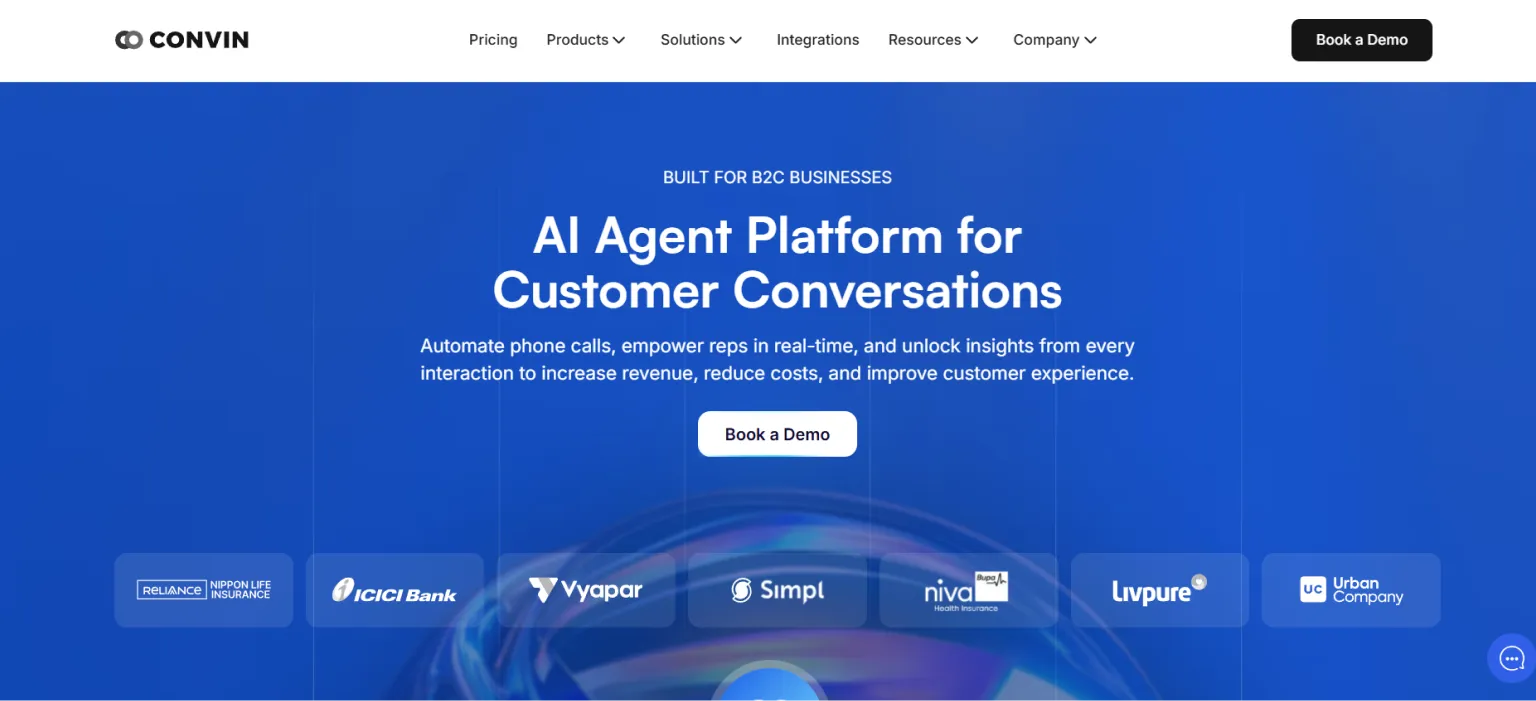
2. Convin

convin

Convin deployed AI sales agents and voice AI agents to automate calls and support for B2B clients.

Verified Results:

  • 10× increase in conversions through intelligent lead qualification
  • 60% reduction in operational costs by automating routine tasks
  • 4× ROI achieved during implementation
  • 90% less manpower needed for routine calls

This shows how top AI development companies can deliver measurable results for B2B sales and operations.

3. A1 Slovenia – Lumi AI Agent

A1

A1 Slovenia implemented Advanced voice AI agents via Boost.ai to handle mobile, internet, and TV customer interactions.

Documented Results:

  • 113-point NPS increase for interactions handled solely by Lumi
  • 35-point NPS boost for escalated queries compared to previous chatbots
  • 53.3% of customer interactions handled autonomously
  • 70% fewer escalations to human agents

By automating routine and complex queries, A1 Slovenia improved efficiency while maintaining compliance and delivering a better customer experience.

Future of Sales With Voice AI

The global voice commerce market is forecast to surge from USD 151.4 billion in 2025 to USD 421.7 billion by 2029, at a 29.2% CAGR. Businesses that start learning how to build a voice AI agent will stay ahead, capturing leads and boosting conversions before competitors catch up.

What the future of sales looks like with Voice AI:

  • Personalized, Real-Time Engagement: Voice AI agents will deliver customized recommendations and answers in real time, making customer interactions more human-like and effective.
  • Voice Search Optimization Becomes Standard: Companies optimizing for voice queries will appear more frequently in search results, connecting instantly with high-intent buyers ready to purchase.
  • Seamless Omnichannel Experience: From smart speakers to mobile apps, Voice AI will unify communication channels, ensuring consistent and convenient customer journeys.
  • Smarter Conversions: With mid-level strategies like voice search optimization and AI app development, business firms can automate product demos, schedule meetings, and qualify leads faster.

CTA2

Conclusion

For businesses, efficiency and personalization drive growth. Using voice AI agents helps companies:

  • Cut costs by automating routine tasks
  • Respond faster to customers and leads
  • Increase conversions through smarter engagement

Combining basic automation, multi-channel integrations, and predictive analytics, AI lead scoring builds a sales process that keeps improving. However, professional assistance is necessary to achieve the best results.

At SoluLab, a leading AI agent development company, we specialize in building custom Voice AI agents that empower businesses to connect with customers naturally and intelligently. Our solutions combine voice recognition, NLP, and AI-driven analytics to create agents that not only respond, but also convert. 

So, AI isn’t replacing teams, it’s boosting their impact and scaling your revenue. Do you need one? Contact us to get started now!

FAQs

1. How are Conversational AI chatbots different from voice AI agents?

Conversational AI chatbots mainly handle text-based queries. In contrast, voice AI agents enable natural, spoken interactions, creating richer customer experiences and higher engagement, which is especially effective for B2B sales.

2. What makes Advanced voice AI agents more effective than basic ones?

Advanced voice AI agents use AI and machine learning to understand context, predict user intent, and personalize interactions in real-time, improving both lead qualification and upsell opportunities.

3. Can Voice AI agents for customer service handle complex queries?

Yes, Voice AI agents for customer service manage routine queries autonomously and escalate complex issues to human agents. This reduces response time, maintains high satisfaction, and ensures scalable support for B2B clients.

4. How can AI sales agents drive revenue growth?

AI sales agents identify high-intent leads, engage them proactively, and personalize outreach campaigns. By automating repetitive tasks, they free sales teams to focus on closing high-value deals, increasing ROI.

5. How do I choose the right AI chatbot development company?

Look for an AI chatbot development company or provider of AI app development solutions that offers CRM integration, analytics dashboards, omnichannel support, and proven B2B deployment experience. This ensures faster ROI and scalable AI operations.

How Telegram Tap-to-Earn Bot Games Showcase the Future of AI & Blockchain Gaming?

Telegram Tap-to-Earn Bot Games

Tap-to-Earn (T2E) is quickly adopting AI and blockchain technology and making a new wave of innovation. Several entrepreneurs, developers, and investors are taking a keen interest in these games. These simple models are changing how players interact and monetize. Unlike many Web3 games, these bots offer instant access inside Telegram chats. 

TapSwap reached over 55 million users globally, with 18 million daily active users by late 2024.

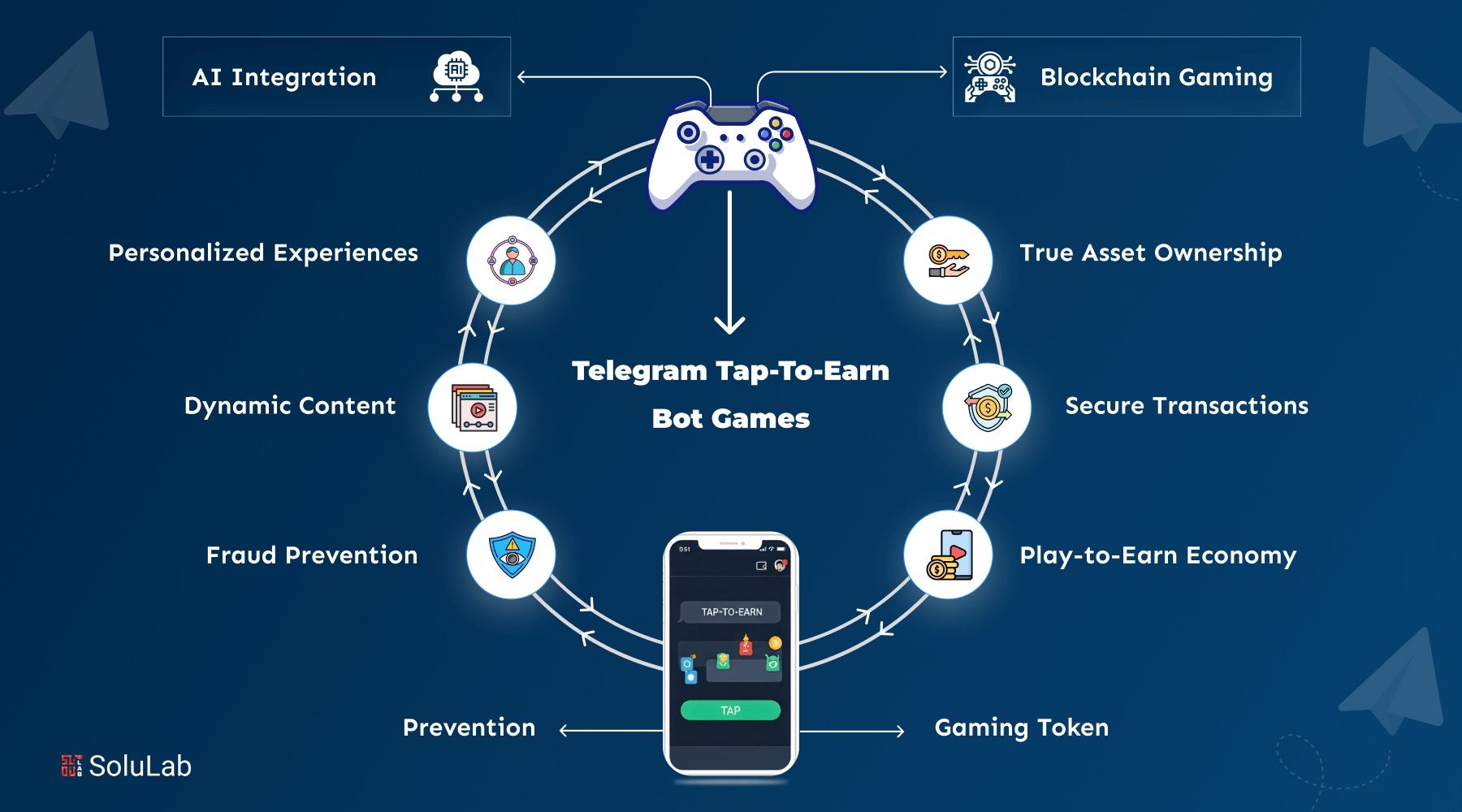
Through the integration of AI and blockchain, T2E and online gaming are raising the standards beyond entertainment. They showcase the future of scalable, secure, and rewarding gaming ecosystems that appeal to players while opening new opportunities for businesses and startups.

What is a Telegram Tap-to-Earn Bot Game?

A Telegram Tap-to-Earn bot game is a mini-application hosted directly within the Telegram platform. These games require no downloads, separate accounts, or complex onboarding. Players engage by tapping, completing micro-tasks, or interacting with automated challenges to earn in-game rewards.

Unlike conventional games, these bots combine gaming, earning, and social engagement in one ecosystem. The instant accessibility and freedom of choice make them attractive compared to traditional Web3 gaming

Telegram Tap-to-Earn vs. Other Game Models

Let’s check how these T2E games are different from Web3 games and what makes them viral among users. 

Feature Telegram Tap-to-Earn Bot Games Traditional Web3 Games
Access & Onboarding Launch instantly inside Telegram chats with no downloads or wallets needed. Instant play keeps users engaged. Require browser access, wallet extensions, and long onboarding, creating friction.
Wallet Integration Secure integration with Tonkeeper or MetaMask inside Telegram Mini Apps ensures seamless token earning. Wallet connections are often fragmented, making transactions slower and less intuitive.
Community Growth Games spread organically via group chats, leaderboards, and invites. Depend heavily on external marketing and paid campaigns for growth.
Development Costs Bots, APIs, and contracts reduce deployment costs and time. Full-scale Web3 infrastructure demands higher costs and longer timelines.
User Experience Combines gaming, earning, and social interaction within one platform. Experiences are fragmented across gaming, wallets, and social channels.

Blockchain Integration in Tap-to-Earn Games

Blockchain integration powers the core value of Telegram Tap-to-Earn games. It ensures security, ownership, and transparent economies.

1. Immutable Asset Ownership 

Blockchain records every purchase or transfer permanently. This transparency guarantees that player-owned assets remain secure and verifiable at all times. Players trust the ecosystem more.

2. Cross-Game Usability 

Items such as characters, weapons, or skins can be carried across games. This interoperability increases value for players and expands opportunities for developers.

3. Decentralized Transactions 

Every token movement occurs on decentralized networks. This reduces risks of fraud and makes transactions faster, fairer, and verifiable by all participants.

4. Reduced Cheating Risks 

Blockchain validation ensures fairness. Once assets and rules are coded into smart contracts, manipulation becomes almost impossible, reducing cheating and hacks.

The Role of AI in Tap-to-Earn Bot Games

Artificial intelligence transforms how players experience these games. AI makes personalization, fairness, and monetization smarter.

1. Dynamic Difficulty Adjustment 

AI tracks player actions in real time and adjusts challenges. Players remain engaged without becoming frustrated or bored. Balanced gameplay builds loyalty.

2. Personalized Rewards 

Machine learning identifies individual preferences and tailors rewards accordingly. Players receive offers aligned with their habits, which strengthens satisfaction.

3. Smart Monetization 

AI predicts which players prefer video ads, banners, or in-app purchases. Targeted recommendations increase conversions without disrupting gameplay.

4. Predictive Engagement Analytics 

AI analyzes player retention and churn risk. This data helps developers improve content, ensuring players return consistently over time.

Tokenomics, Micro-Economies and Monetization Models

Tokenomics forms the backbone of Tap-to-Earn games. A balanced economy ensures sustainability, growth, and value. Micro-economies within these games enable players to earn, trade, or stake tokens. 

AI enhances these models with tailored incentives, subscription suggestions, and revenue optimization. Monetization channels include in-game ads, cosmetic upgrades, and reward-based video ads. 

Blockchain ensures tokens retain value through scarcity mechanisms like burns. Together, these models create sustainable revenue for developers while rewarding players for engagement.

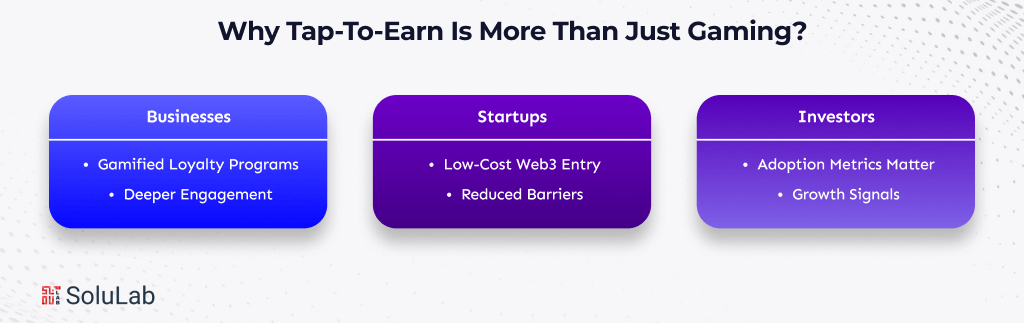
Why Tap-to-Earn Is More Than Just Gaming?

Tap-to-Earn represents more than entertainment. It is a proof-of-concept for scalable Web3 economies.

  • Businesses can adapt gamified customer loyalty programs using tokenized incentives. Customers engage deeper and return more often.
  • Startups find a low-cost entry point into Web3 through bots instead of heavy infrastructure investment. This reduces barriers to innovation.
  • Investors view user adoption metrics in Tap-to-Earn as signals of broader blockchain gaming potential. Strong engagement forecasts market growth.

This model provides a blueprint for integrating AI, blockchain, and social gaming into multiple sectors.

Why Tap-to-Earn Is More Than Just Gaming

How to Overcome AI and Blockchain Game Development Challenges?

AI and blockchain integration in games is not an easy task; there will be challenges. But every challenge has a solution. Let’s check some challenges you might face during AI and blockchain game development, and what the solutions are.

  • Scalability and Server Load Management

High traffic can overwhelm servers during rapid adoption. Cloud-based infrastructure, sharding, and load balancing distribute demand. Optimized engines and database tuning ensure smooth operations under heavy loads. Developers must scale efficiently to protect performance.

  • Botting and Cheating

Bots exploit games by tapping faster than humans. Timestamp checks, behavior analysis, and dynamic task changes counter these risks. Advanced cheat detection software and frequent audits reinforce trust and fairness within the ecosystem.

  • Designing Sustainable Tokenomics

Unbalanced supply or inflation can destroy token value. Developers must monitor token flow, introduce burns, and expand utility cases. Incentives for staking or participation prevent sell pressure and support a strong economic model.

  • Player Retention

Repetitive gameplay reduces engagement. Regular updates, meaningful rewards, and seasonal events keep players active. Building communities through leaderboards or group challenges strengthens long-term interest and loyalty within the game.

  • Designing an Engaging User Interface

Confusing UI designs drive churn. Responsive layouts, intuitive navigation, and consistent branding are critical. Testing and iteration ensure the interface adapts to player needs. Unique characters or interactive visuals enhance user satisfaction.

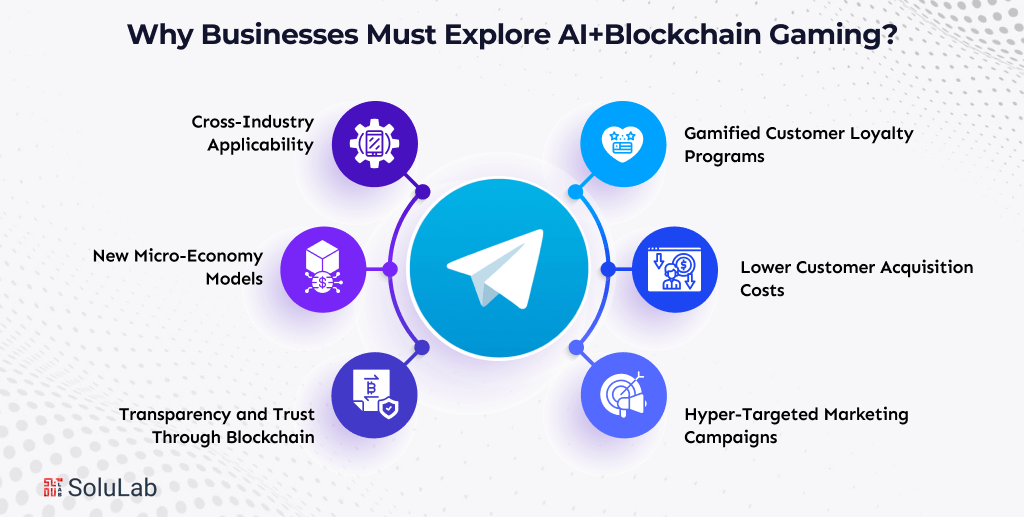
Why Businesses Should Care About AI+Blockchain Gaming?

As of now, you might have already understood the importance of AI and blockchain in the gaming industry. Here are some convincing reasons:

Why Businesses Must Explore AI+Blockchain Gaming

  • Gamified Customer Loyalty Programs

Businesses can design blockchain-based loyalty tokens that reward customer actions. A Deloitte survey found that gamified loyalty programs can increase engagement rates by up to 47%, improving retention.

  • Lower Customer Acquisition Costs

AI-driven personalization reduces marketing spend by targeting the right users. According to McKinsey, personalization can drive 40% more revenue growth while lowering acquisition costs.

  • Hyper-Targeted Marketing Campaigns

AI analyzes user behavior such as purchase history and activity patterns. This enables businesses to launch tailored campaigns that raise conversion rates by 10-15% compared to generic promotions.

  • Transparency and Trust Through Blockchain

Blockchain records are immutable, creating verifiable proof of ownership and transactions. PwC reports that 45% of consumers trust blockchain systems more than centralized databases for digital value.

  • New Micro-Economy Models

Businesses can tokenize in-game assets, loyalty points, or digital goods. These tokens can be exchanged, staked, or burned, creating sustainable value ecosystems that boost long-term engagement.

  • Cross-Industry Applicability

AI+Blockchain gaming models apply to multiple industries. Retail brands can tokenize rewards, financial firms can gamify investments, and entertainment companies can build fan economies around exclusive digital assets.

If you are thinking of developing a game that gives a wide virtual world experience with catchy rewards, consider consulting a third party. It is a good choice for AI and blockchain solutions and integration.

Future of AI & Blockchain Gaming Beyond Telegram

AI and blockchain integration in gaming is widening the innovative ideas and shaping the world’s technology. Not just games, from daily actions to global economics, AI, and beyond, blockchain solutions simplify complex actions. 

  • In the near future, gaming platforms will become cross-platform assets. These are usable in the virtual world, metaverse, and traditional gaming consoles. 
  • AI will expand personalization, analyzing behavior across networks to deliver unified experiences. 
  • Blockchain economies will underpin not just games but entire social and business ecosystems. 
  • Telegram Tap-to-Earn bots mark the first step in a broader transformation where AI, blockchain, and gaming converge to define future digital engagement.

Blockchain Development Company

Conclusion

AI and blockchain integration in games is a great innovative step. As discussed above, this brings several futuristic ideas and transformations in world economics and technology. So, if you are also thinking of building AI+blockchain games or want custom changes, then consult SoluLab. 

We, at Solulab, a top blockchain game development company, aid you in designing scalable, secure, and transparent solutions. Our expert team and enhanced technology applications help you in building a user-friendly ecosystem and craft your ideas into real-world applications. 

If you are also looking for AI and Blockchain solutions, contact us today to get started!

FAQs

1. What makes Telegram Tap-to-Earn bot games different from other Web3 games? 

Telegram Tap-to-Earn games run directly inside chats, require no downloads, and spread virally through communities, making them faster, cheaper, and more engaging than traditional Web3 models.

2. How does blockchain improve security and ownership in Tap-to-Earn games? 

Blockchain ensures every asset and transaction is transparent and permanent. This guarantees real ownership, reduces fraud, and builds stronger trust among players within the gaming ecosystem.

3. What role does AI play in enhancing Tap-to-Earn gameplay? 

AI personalizes player rewards, adjusts difficulty in real-time, and predicts engagement trends. These improvements keep players interested, reduce churn, and make gameplay rewarding without overwhelming users.

4. Why should businesses or startups consider SoluLab for AI+Blockchain game development? 

SoluLab offers tailored blockchain and AI development with proven expertise. The team builds secure, scalable, and user-friendly ecosystems, making it easier for startups and enterprises to launch innovative Web3 solutions.

5. Could Tap-to-Earn games influence industries beyond gaming? 

Yes. The tokenized incentives and AI-driven engagement models can be applied to loyalty programs, e-commerce, or even workplace training, proving that this concept can reshape multiple industries outside gaming.