Talk to an Expert

Artificial Intelligence, Blockchain, And The Future Of The World

Over the past 2–3 centuries, the world has seen staggering change, starting with the Industrial Revolution that saw the transition to machines, the advent of chemical manufacturing, the invention of the steam engine, and the development of machine tools and mechanized factory systems.

Soon after, we saw the invention of flight, changing how the world traveled. In our lifetime, we have seen the transformative effect the internet has had on humanity. Now, we are witnessing the rise of not one but two world-changing technologies, blockchain technology and artificial intelligence (AI).

Companies and institutions are only just realizing the potential of these technologies and have begun deploying them, resulting in the complete transformation of industries. At AIWORK, we firmly believe in the transformative capabilities of blockchain and AI. We are utilizing them in tandem to address the issue of inconsistent and incorrect metadata in the online video ecosystem.

Understanding Blockchain And AI

First, allow us to explain the basics behind blockchain and AI. A blockchain refers to a database or distributed ledger shared between nodes (computers) on a network. They are primarily known for their role when it comes to cryptocurrencies such as Bitcoin and Ethereum, enabling them to maintain a decentralized and secure record of transactions that have taken place on the network. Blockchain also ensures complete transparency, as all recorded transactions can be verified, ensuring that the data can be trusted without the involvement of any third party.

Unlike traditional centralized databases, which are managed by a single entity, blockchains are decentralized databases, with the data spread across multiple nodes on the network. Each computer holds an identical copy of the decentralized ledger, meaning any change to the data would require all the data on all nodes to be changed simultaneously. This feature essentially makes the blockchain tamper-proof.

On the other hand, AI refers to machines capable of mimicking human intelligence thanks to complex algorithms that have been programmed into the algorithm. These machines are capable of thinking like humans, mimicking their actions, learning problem solving, rationalizing, and taking actions that have the best chance of achieving a specific outcome. AI can also learn from the data it provides, getting smarter as it processes more data.

You  can also read : Web3 is not About Blockchain or Decentralization

AI, Blockchain, And The Future Of The World

Blockchain technology and AI are often credited with ushering in the fourth industrial revolution, with their implementation revolutionizing industries such as healthcare, finance, supply chain, and logistics. In the healthcare industry, blockchain and AI have enabled the secure storage of patient data. Healthcare professionals can access this data and study insights from the data thanks to patterns generated by AI that analyzes the patient data. Applying blockchain and AI helped the healthcare industry navigate the minefield that was the Covid-19 pandemic.

Blockchain and AI have also wholly reinvented the financial industry, making transactions significantly faster and more secure by enabling trust between the participating parties. Eliminating third parties in these transactions also ensures that transactions are cheaper. Meanwhile, using AI reduces the dependency on humans, further increasing efficiency. The same can be said of the supply chain and logistics industry, where blockchain technology and AI are traditionally transforming the industry by digitizing paper-based processes, making them far more streamlined and effective.

In the future, the integration of blockchain technology and AI could transform a host of industries. They could have wide-ranging applications in finance, smart cities, autonomous vehicles, manufacturing, agriculture, etc.

How AIWORK Is Bringing Blockchain And AI To Asia

In July, we announced a partnership with video content management and player platform IVS, bringing our blockchain-powered AI technology to IVS’s over 120 million users in South East Asia (SEA) on the latter’s premium publisher network. At AIWORK, we are bringing blockchain technology and AI together to create a revolutionary and powerful new platform. The collaboration with IVS will enable us to showcase our minimum viable product (MVP) to users on the IVS network.

South East Asia has an extensive user base of internet users, and IVS alone reaches a significant chunk of that population through its network. With a reach of over 120 million users and over 1.5 billion monthly page use, IVS was the perfect choice to bring AIWORK’s technology to Asia and the world.

Thanks to the partnership with IVS, we launched several advertising campaigns on the IVS network. IVS’ publisher network comprises some of the most prominent media companies in the South East Asia region, including Kompas, MNC, Kapanlagi, and others. The partnership allowed us to release our ads on IVS channels and also allowed us to be featured on prominent media company websites. As a result, AIWORK was featured prominently on the front page of CNN Indonesia as a pre-roll ad and displayed along with several stories on the website.

Our ad was featured on prominent websites such as Kompas and Hipwee, featuring as a companion banner ad on both.

You can also read : Buying Properties On Blockchain: 4 Startups Offering Convenient Services

Overwhelming Response

Our campaign on the IVS Network was a resounding success, allowing AIWORK to generate 10,71,429 impressions in total, out of which 50,743 were converted into clicks and navigated to the AIWORK website. 7,29,496 viewers viewed the ads in their entirety, and after running for a week, the campaign achieved a total reach of 7,54,039.

In Closing: The Future

The potential of AI and blockchain technology is limitless, and what we are seeing right now is but a fraction of their potential when used together. Both technologies hold power to transform industries, which we are already witnessing in fields such as healthcare, supply chain, finance, and several other industries.

In the case of AIWORK, we are utilizing blockchain technology, AI, and human experts to generate high-quality and consistent metadata and address the issues faced by the online video space through both technologies.

About AIWORK

AIWORK is a decentralized and open-source blockchain protocol and ecosystem. The protocol is built on a network of AI computing resources and a community of human experts, which generate normalized and enhanced data for video content. Human experts can help create, verify and validate AI datasets, helping improve AI efficiency.

Credit : Medium

Unveiling the iPhone 12 Pro That Helps You Detect People Around You

Image Source – Apple

Inclusivity  

We have long lived in a world with ableism. 

Ableism, as you might guess by the name, is when being “able-bodied” is considered the “natural”, the only “normal” state of existence. People are assumed to be without disabilities until they show otherwise. The consequences of such a mentality that assumes ability are vast, and have been affecting differently abled people since ages. One of them is how, for a long period of time, everything – from public spaces to textbooks – was made by default for people who didn’t have special needs. Not only was such an implementation of projects inaccessible by differently abled people, but also led them to believe that experiencing what others experience is off the table for them. 

Slowly and gradually, efforts were made to understand what differently abled people need – some of them by people with disabilities themselves. For instance, Louis Braille, who accidentally blinded himself at age three, grew up to create braille, a language for the blind, in 1829. Organised protests and widespread understanding also led to the creation of more inclusivity in public spaces. Many governments passed legislations that mandate ramps, wheelchairs, special handles, etc. in hospitals, schools, restrooms, etc. Similarly, technological methods were also adopted by makers of phones, laptops, televisions, etc. to make technology more accessible. 

In this blog, I will talk about some of the measures Apple has taken to make their iPhones more accessible to people across ability levels, including their latest and much talked about 12 Pro LiDAR. 

Apple’s History With Accessibility 

In a world where mostly everybody relies on smartphones, a much needed move was made by Apple in the year 2009, when they took the first step towards making the iPhone more accessible. The Voiceover Programme they created that year – that I will talk more about in the following paragraphs – made them the first smartphone company to launch such a feature, and was received with open arms by the differently abled community. They went on to launch numerous other features for the community. Here’s a list of options they have for different categories of needs: 

Hearing needs

-Apple created hearing aids based on bluetooth technology. Through these aids, people with hearing disabilities can stream whatever they’d like with good sound quality. They can also manage audio levels through their phone, adjusting sound volume for each ear differently depending on the hearing range. This option is available for regular earphones/AirPods as well.

-Subtitles or captions have also been made very easily available and can be turned on any time. 

-There are vibration alerts and alarms. 

-Further, when the setting is turned on, the iPhone can recognise common alarms like the fire alarm, the tsunami/flood warning alarm, a doorbell, etc. and give emergency alerts or notifications on the screen.

Motor Needs

-There’s an option of assistive touch for people who find the home button less manageable.

-In most iPhones, one can shake to undo. 

-The screen sensitivity and home button sensitivity is changeable. 

-A latest feature allows users to tap the back of their iPhone and choose from over 24 different actions. This list can be edited and users can create their own shortcuts.

Visual Needs 

In 2009 the iPhone 3GS was launched making an iPhone usable by blind people for the very first time in history. The addition was a voiceover programme, as mentioned above. 

-Voiceover developed into a built-in feature, pre installed in every iPhone. It provides screen-reading, or an option to read aloud everything that’s written on the screen. Its functions progressed to eventually allow sending out texts, typing and even opening apps by tapping on it twice. 

-There are prompts that respond to gestures for changing settings like the speaking rate of voiceover. 

-iPhones were made compatible with braille devices. 

-For low vision users, text enlargement was introduced. Now, the iPhone’s screen can be magnified upto 1500%

-The dark mode was introduced for users with light sensitivity problems.

Here’s an extract from a statement by Sandy Murillo – a journalist and blogger with visual impairment:  

‘Today, the iPhone not only helps me stay in touch with the world, it also gives me more independence. Apps like LookTell Money Reader and TapTapSee allow me to identify things without needing someone’s assistance. With the Bard Mobile and NFB NewsLine apps I can download books, newspapers and magazines in a matter of seconds to listen on my iPhone. The kNFBReader app quickly scans printed documents and reads them out loud to me. Thanks to Voiceover and the built-in accessibility of the camera, I can even take pictures! Finding last minute transportation has become easier thanks to apps like Lyft and Uber, and I can easily find my way to unfamiliar locations with the phone’s GPS.’ 

Here’s Sandy’s complete blog –  She writes content straight from the heart, has the lived experience of being specially abled and deserves to be heard!  

The new iPhone 12 Pro takes these visual aids to the next level with the introduction of LiDAR technology and people detection.

An Overview of the iPhone 12 Pro and its LiDAR Feature

The unexpected new feature the new iPhone Pro and 12 Pro Max have is the ability for blind users and users with low vision to – for all practical purposes – see other people coming. The feature went live on Thursday with the launch of iOS 14.2. 

Apple has christened this new feature ‘People Detection’. It happens with the use of a LiDAR sensor on the back of the iPhone. It’s the same type of depth sensor that is used in augmented reality apps and games, and as the eyes of self-driving cars. Apple has applied it to iPhones to simplify navigating the world around them for people with vision problems. 

Examples of this include helping people know when to move up in the checkout line at grocery stores, alerting them when people are walking close by on sidewalks in public spaces and letting them know when a seat is available on public transport. This feature will come especially handy in the current times. With the coronavirus pandemic requiring people to maintain social distance, they can safely keep a distance of upto 15 feet/5 meters with people, just like everybody else.

About the LiDAR Sensor  

LiDAR stands for Light Detection and Ranging. 

The LiDAR scanner is built into the camera array of the new iPhone. It is a minuscule dot at the back and uses Apple’s ARKit Occlusion feature to detect if someone is in the camera’s field of view. How far away they are is also something the sensor can estimate. 

The science behind this is – the sensor sends out a short burst of infrared (IR) or ultraviolet (UV) light that momentarily illuminates its target. It is then bounced back to the sensor in a certain amount of time. This time is used to calculate the distance – the speed of light is a known constant in air. 

In more advanced setups, radiations of different wavelengths are used. The resultant difference in return times are then used to make digital 3-D representations of targets. This has terrestrial and airborne applications and is usually the technology used in jets and even satellites. 

Settings and Prompting People Detection 

This real time sensing can happen in four possible methods and, as per convenience, users can employ them in any combination. 

  1. Users can know how close somebody is to them through an audible readout. There are numbers – 1, 2, 3 and so on – in terms of feet. In meters, the lowest unit is half a meter. These numbers are called out indicating the literal distance.
  2. Users can set up a threshold distance – for example, 2 meters/6 feet (the default setting) – beyond which a certain sound is emitted and within which, a distinctly different one is.
  3. A haptic alert can be set up. This works by varying the intensity and speed  of physical pulses with respect to the distance between the user and the person detected. The farther a person is, the softer and lower the generated pulse is. As the person comes closer to the user, vibrations get louder and more frequent. The buzz can be heard, or, in the case of users with hearing impairments, be felt through touch. 
  4. A visual readout of the screen is possible that indicated in text how far the closest person to the user is. For people with low vision, a dotted line even indicates position and direction.

This setting is contained in Apple’s magnifier app. The app can be launched either through the latest back tap option or by triple clicking the side button. Siri can also be used to launch it. 

The Future 

Even though the technology has only yet come to iPhone 12 Pro and 12 Pro Max, it is all set to launch for iPads and Apple Watches as well. Attempts are being made to extend this ‘People’ Detection to Object Detection as well. 

We hope Apple continues on its journey to make technology more inclusive for people across ability levels and that others also take inspiration from them!

Things You Need To About AutoML – And It’s Not What You Think

Can the machines we create outsmart us? Well, that is debatable, but today’s machines certainly can and do think for themselves, perform tasks without human intervention and even teach themselves. This branch of artificial intelligence is called machine learning. Heard this term often but don’t really know what it is all about? Well, read on to understand this increasingly popular new-age technology

We interact with it on a daily basis without realising we’re doing it. For example, every time we read an email and get a number of automatic response options. The machine we’re using analyses the content of the email in order to determine what the suggested response should be, in the same way as it warns us with a ‘you talk of an attachment in your email, but nothing is attached; send it anyway?’ dialogue box when we write an email to our bosses but forget attaching the content that had to be sent. Everytime an unlock is attempted on machines like our smartphones or laptops, our data is protected and the user is not prioritised – until passwords, facial recognition or voice recognition comes back positive. This is a preference the machine reverses immediately as soon as you login. All of these are subtle examples of machines acting of their own accord. 

The various methods employed for machines to self-learn look like this:

Trial and Error: This is a process in which a machine takes a number of routes, no matter how many attempts it takes, in order to come up with the fastest, most efficient way. This relies on self learning through analyses of time taken and rewards based on completion of tasks. The machine learns to optimise time and output and strike a balance between the two. 

Supervised Learning: This happens through the use of labelled data. The description of, say, the same picture across millions of computers all over the world that the said machine has access to leads the machine to come up with the most suitable description. It happens in a similar way with respect to different industries, when industrial products are concerned. 

Different descriptions help industries in optimising product quality and approachability.   

Unsupervised Learning: Instead of looking for unique data and forming a larger picture, this method focuses on looking for similarities in data and divides people into groups. Division of people into groups also divides public needs into groups, and then sectors can analyse which of those needs is being met and which of them they can work on providing. These categorisations enormously help industries in looking out for opportunities that they otherwise might have missed.

AutoML- A Revolution

The biggest transformation in how organizations, pan-purposes and sizes, approach machine learning and data management is shifting from traditional to autoML. 

The Need 

This new approach is a need of the hour since traditional ML solutions are –

  • Heavily time-consuming 
  • Resource-intensive, and
  • Require experts in several technical disciplines like domain knowledge, advanced mathematical functions and computer science. With a greater demand than supply of data scientists, hiring and retaining one for your company is a challenge. Further, the vulnerability to human bias and error is ever present as long as processes aren’t automated. 

AutoML simplifies the deployment of self-learning machines into daily applications. It is achieved by running systematic processes on raw data and selecting models that extract the most relevant information from the data. This can be seen as the elimination of noise from the signal. 

With a remarkable elimination of the need for expertise, AutoML democratizes machine learning thereby opening up an avenue of possibilities for a plethora of industries and companies. Companies with limited resources at their disposal can leverage ML and AI and enjoy their benefits without heavily investing in scientists. Large companies with high resources can divert the attention and expertise of their team of scientists and engineers to other, more complex problems. The industries that autoML has impacted are healthcare, financial markets, fintech banking, public sector, marketing, retail, sports and manufacturing.

The working

Here is a diagram depicting the detailed functioning of DataRobot:

As we can see, there are nine main steps to machine learning-

  • Identifying business problems and expected value
  • Collect data 
  • Label data 
  • Extract features 
  • Split dataset 
  • Determine model evaluation criteria 
  • Train models 
  • Analyse model outcomes 
  • Deploy model

The box indicated how all steps from 4-9 can be automated, while in the traditional method, it is only step 7. If we do the math on each arrow and its characteristics, it is clear how autoML replaces weeks and months with days at most. 

Hence, in a nutshell, autoML-

  • Preprocesses data
  • Provides feature engineering
  • Generates diverse algorithms
  • Selects suitable algorithms 
  • Trains and tunes the machine according to data requirements 
  • Does ensembling 
  • Participates in head-to-head model competitions
  • Provides human-friendly insights 
  • Simplifies deployment 
  • Monitors and manages the model

AutoML Tools 

Every technology needs tools to be functional. Ideal autoML tools are easy to use with a relatively low learning curve. The absence of complexity is essential to the democratization a responsible world should be aiming for. 

Ten main autoML tools are given below:

1. Auto Keras 

An open-source software library for autoML. It was developed by the ‘Data Lab’ at Texas A&M University and community contributors. This software library provides functions to search for the architecture and hyper-parameters of deep learning models automatically. 

2. H2OAutoML 

H2O is also an open-source platform, but it is also distributed and in-memory. It is a platform with linear scalability and includes a learning module. Driverless AI is H2O.ai’s flagship product and automates some of the most challenging and productive tasks in applied data science such as feature engineering, model tuning, model ensembling, and model deployment. 

3. SMAC 

SMAC or sequential model-based algorithm configuration is a versatile tool. It optimizes algorithm parameters and has proven to be very effective for hyper-parameter optimization, scaling to better dimensions and discrete input dimensions. These are just some examples of the many algorithms it simplifies. 

4. Auto-sklearn 

The supervised learning auto-sklearn provides is out-of-the-box. It is built around the scikit – learn machine learning library and automatically searches for the right algorithm for a new machine learning dataset, optimizing hyper-parameters.

5. Amazon Lex 

Amazon Lex provides advanced deep learning functionalities of automatic speech recognition or ASR. It helps convert speech to text and the natural language understanding or NLU enables users to build apps with highly engaging user experiences and lifelike conversational interactions. Amazon Lex is what makes Amazon Alexa available to all the developers allowing them to build natural language, and sophisticated conversational bots quickly and easily.

6.Auto-WEKA

Auto-WEKA considered and solved the problem of simultaneous selection of a learning algorithm and setting its hyper-parameters. It uses a fully automated approach, leverages recent innovations in Bayesian optimization or BOHB, and helps non-expert users in identifying ML algorithms more effectively. This happens alongside setting hyper-parameters appropriate to the particular applications.

7. Auto-PyTorch

Auto-PyTorch automates the right architecture and hyper-parameter settings. It uses multi-fidelity optimization alongside Bayesian optimization, or BOHB, to search for the best settings.

8.RoBO 

RoBO stands for Robust Bayesian Optimisation. It is a framework written in Python. The core is a modular framework. It allows an easy exchange and addition of components of Bayesian optimization such as different acquisition functions and regression models. The different regression models contained are Gaussian processes, Random Forests and Bayesian neural networks, amongst others. Expected improvement, probability of improvement, lower confidence bound and information gain are some of the acquisition functions built.

9.AutoFolio

AutoFolio’s main purpose is to optimize the performance of algorithm selection systems. It uses algorithmic configuration. It achieves the target by determining what the best selection approach and its hyper-parameters would be. 

Algorithm Selection or AS techniques have sufficiently improved the state-of-the-art in solving pressing AI concerns. They involve choosing an algorithm from a set of algorithms that would solve the given problem instance most effectively.

10. Flexfolio

Flexfolio is an open solver architecture that integrates several different techniques and approaches of portfolio-based algorithm selection. It is a modular architecture that provides a unique framework for comparing and combining existing selection systems in a single, united framework. 

Conclusion 

With people – including entrepreneurs and company owners – coming from diverse socio-economic backgrounds, it only makes sense that more inclusive technologies be developed and existing technologies be made more accessible. AutoML is just the way to do this. Small industries, companies with limited resources, entrepreneurs looking to experiment with technology – these are all groups that benefit from removing the need for experts. It is encouraging to see strides in this direction being taken. 

However, complacency is a vice and we must remember – there’s always scope for further growth and development. We have come a long way from where we were and now, it is time to take inspiration and explore the exciting possibility of another breakthrough in science. 

How Blockchain Is Redefining The Gaming World

We all have that one friend who cannot end the day without beating an opponent or two at Fifa or buying a new country’s team. Most of us have parents simply addicted to Solitaire or Candy Crush and, believe me when I tell you, people in your circles are getting quiz2win memberships as you read this, and the numbers are greater than you would expect. Then there’s PUBG, undoubtedly, and the multitudes of people having ‘chicken dinners’ during lectures or meetings as well as in all kinds of public transport. 

The examples above are my way of premising the following fact- gaming has become a part and parcel of our lives, whether we actively realise it or not. On a broad spectrum, it is, in fact, one of the integral industries of the world today. Here’s a visualisation of its staggering reach –  the overall gaming market was expected to grow to 159.3 billion USD in 2020. With the world facing a pandemic people are locked up in their homes with ample time to spare. As a consequence, a 9.3% increase in these numbers has been predicted. By the end of 2023, the figure is said to surpass 200 billion USD

With the industry being so large and dealing mainly with computer systems, it’s hardly of any surprise that it is also one of the first ones to adopt new technologies. Be it  motion sensors, augmented reality, virtual reality, artificial intelligence, machine learning – all of these have found some of the most unique and interesting uses by the gaming industry. Ones that have interested users and served as trailblazers in a world of innovation for enthusiasts. Another such technology rising through the ranks of popularity is blockchain and so is its integration with gaming. The rudimentary question this raises is – what is blockchain?

Understanding Blockchain

Blockchain is currently the most famous distributed ledger technology out there. A distributed ledger can be imagined as a record book that stores data. The word ‘distributive’ means it is distributed over systems rather than being consolidated on a single computer, and that is exactly how blockchain works. Once the authenticity of a transaction is established, it is put on a ‘block’ alongside other authenticated transactions. The block is given a ‘hash’ or a title, is time stamped and added to the ‘chain.’ Once this has happened, the information stored can never be altered; in other words, it is immutable. The time stamping ensures the order of the blocks cannot be manipulated. The rigorous encryption involved in generating the hash ensures the block’s data cannot be manipulated. Hence, it is very difficult to hack systems where blockchain is in action. Even if one system is hacked, the hacker would have to make the same exact manipulations on every single system using that blockchain – since every transaction is copied over every device- a task practically impossible to execute. This makes any attempted malicious activity quite easily trackable. 

For years, the central areas of focus for  anybody venturing into blockchain were finance, banking, logistics, food supply, pharmaceuticals, investment and the like. People are now beginning to see how blockchain and gaming converge and the new prospects their combination can give rise to. Well known companies are the flag-bearers of this change, for instance, Forte raised 100 million dollars in 2019 for blockchain gaming. In the following section, I am going to give you six possible reasons behind this investment, vis-a-vis, six of the many benefits blockchain has to offer to gaming.

1. Ownership of Game Assets

‘Your money is there and there’s nothing you can do about it,’ said Craig Russo, director of innovation at Polyient Games, when questioned about the biggest barriers to gamers making monetary investments in games. Polyient games is a rapidly developing company that invests in early-stage gaming. They have been interacting with blockchain gaming for years.

The problem Mr. Russo rightly identifies is how sometimes, you can buy all the swords, guns and outfits you’d like but when your VR bubble breaks, you might just realise it was all for nothing. This thought has resulted in widespread apprehension towards making gaming investments in the masses. 

How blockchain gaming completely changes the game is by making people 100% owners of every virtual asset they acquire. NFTs or non-fungible tokens broaden the appeal and growth of online gaming by giving users tools that allow keeping their purchases. Surprised as you may be, these assets sometimes have much higher real-world value as one would fathom so. Even if they don’t, migrating them to other games without having to buy them again is undeniably an added convenience with high appeal.

This system makes everything you acquire actually your own and your hobby can evidently become a place you derive rewards from. Talk about  incentivising users!

2. The Game’s Own Currency 

Whenever you get the option to ‘buy more coins’ in exchange for real money, it is an example of the game having its own currency. What motivates people to buy this cryptocurrency is how acquiring them over time is a more tedious process. Making this currency blockchain powered enhances security and transparency, cuts costs and saves time – all of these making the process more user friendly and attractive. What’s more, some of these have tie-ups with other companies. An example is the game ‘Age of Rust’. It uses Ethereum powered Enjin coins that can be exchanged at Uber and Postmates. Enjin coins have a wide spectrum of use. They come with software development kits (SDKs), wallets, game penguins and other virtual item management and payment gateway apps. 

Another example would be Cryptokitties developed by Axiom Zen. From its launch on the 28th of November to a week later, the 6th of December, players had spent 6.7 millions on it. The key was simple- an interesting and fun to follow game. 

3. Using Real Money to Play

There are five words to explain this utility – cryptocurrency jackpots in online casinos. To indulge in online card games and white, government approved online gambling, you don’t have to provide card details with blockchain gaming. This enhances security and discretion manifold. If one must gamble, it is much better to do it safely and traceably. 

4. Enhanced Security

This works on two levels. 

First, blockchain helps in making games unrigged and secure. Everything on blockchain is transparent. When rules aren’t made and implemented behind opaque doors, it is much easier for people to trust the game and lay their claims. For example, ‘Beyond the Void’ is an open-source, transparent distributed gaming server for a safer, fairer player experience.

With respect to assets, blockchain makes your ownership secure. Without decentralisation, details of assets are stored on centralised servers. This makes them highly prone to hacking and malpractice. With distributed ledgers, that possibility significantly goes down. Multiple algorithms are in place to see to this. Rigorous encryption, time stamping and copies on every device or decentralisation are some of the methods employed. Additional ones are systems like the Proof of Work (POW) agreement. It is a consensus algorithm that prevents suspicious, unsupported transactions from getting recorded and defrauding the users or the government. It is also impossible to stage a Distributed Denial of Service (DDoS) attack.

5. Interoperable Profiles 

There are hardly any activities we do always from the same place. In this case, the same place is the system/network in use. As we switch between games and networks, we have to start over- approach every transaction from square one, establish new addresses, etc. This leads to user reluctance and inertia. What blockchain does is give users public addresses. These addresses can be and are used for transactions across different blockchain networks. Purchasing coins, services, upgrades on different games is literally made as simple as logging in to Amazon and Flipkart using the same Facebook ID. 

Further, from the perspective of game developers, players who play one of the many games they create can use the same public address across all the rest without even switching between blockchain networks. User friendliness is taken to the next level and all of their projects can co-exist in a holistic environment progressing simultaneously and supporting each other. 

6. Increasing Gamer Control through Blockchain Enabled DApp(s) 

A DApp is a decentralised app. DApps have revolutionised the social media industry in the past and are slowly extending their impact to the gaming industry. Community gaming increases goodwill like nothing else and incentivises users by providing a safe environment where they have maximum control. The features that help in achieving this are- 

  1. Using smart contracts in the back-end 
  2. Utilising decentralised blockchain
  3. Enabling transactions through crypto-coins 
  4. Open-source coding 
  5. Autonomous running  
  6. Basing every modification on community consensus  

The benefits above are just the tip of the iceberg. There are numerous other opportunities blockchain gaming technology has to offer and we have every reason to assume the items on this list will keep getting numerous as utilities of blockchain get discovered. For now, bringing it to mainstream games and incorporating it even in single-player consoles from vendors like Microsoft and Sony is definitely a goal. Issues with scalability and readiness of game console companies to adopt the new system will have to be resolved. It will be an uphill battle, but surely one with a rewarding end! 

A beginner’s guide to Mini Applications

If you want to know about mini apps, it is essential to understand what such an app is and why it was created. In this blog, we will discuss mini-apps and some of the advantages. 

Creating an application is not an easy task 

  • Different knowledge of technology

It is tough to work on the applications when you don’t have a technical team. If you need a technical team, you can outsource it or get it in the house. Different recruiting agents have their plans. A developer needs to get details about different frameworks, like who will use an application, which devices would be able to run applications and much more. Different technologies are available, but it becomes difficult to choose the correct framework for application designing.

  • It involves high cost marketing

Different consumers do like to know if different people use the application or not. Is it famous or not. Such questions need to be answered; hence you need to spend substantial costs on marketing. Such would assist you in getting consumers and would allow them to download applications. Different big techies do spend huge costs on marketing. Marketing is what brings more customers. Hence you need to use different marketing strategies for marketing. With such strategies, your application would reach the crowd and get famous.

  • Expensive

Apps are costly to make and manage. It involves a large number of costs, along with iOS apps and Android apps. Also, it is required to manage and update regular application basis. For example, if you want to create an ecommerce application, it is essential to install a booking engine in an ecommerce website and get a process flow along with a payment gateway. It involves vast hidden and extra costs. Hence it becomes quite expensive to make applications.

Why are Mini Apps solutions?

Mini apps are just like applications, but they do have many applications under them. For example, in the right box mega apps in India, It does have different Mini Apps.

Different consumers do like to install an application, from which they can have access to different applications. It allows users to search for different applications using the search box and name of the application. Once the user gets the application, the user can use the add button to add a mini-application on the home screen.

Such mini-apps do come with different functionalities which you would like to have in applications. It does have a large number of applications such as messaging screen, management console. It does come with the built-in marketing features, and customers invite which are quite different.

How mini apps help to run businesses?

To solve any issue in businesses, it does require a mobile application. With a mini-application, you can do it yourself(DIY) app such as good box partner app. It would allow you to create your commerce ready mini-application.

Mini apps do come with a large number of features.

  • A messaging screen
  • A cost screen
  • A payment gateway.
  • No commissions.
  • Ability to give reward points to customers.

Why do users like mini applications?

Users do need to install only mini applications, and users can get more applications. Mini apps do come with different advantages. Such as WeChat is a mini application, which has integrated several programs in the ecosystem. Such allows users to use several advanced features such as task management, coupons, e-commerce and much more. 

Mini apps in iOS 14

iOS 14 brings a new way to interact with different applications. Such applications are known as app clips. It aims to allow you to use applications which are not available in your device. An app Clop is a mini-app which does come with limited functionalities. It was launched to save the storage in your device and give you a fast experience.

Wechat does allow users to build Mini applications which can run in the mini applications. Different technologies allow users to make such applications which work. It gives developers a rich platform for building various applications. 

Different applications in mini applications, gets easily loaded and are easy to use.

How mini applications work?

Different mini applications, can be used in mobile. Such mini applications allow users to make instant use of different applications. For example, in the wechat ecosystem, various applications can be integrated, and users can use it for a large variety of applications like ecommerce, games, productivity, and much more. It enhances the user experience with different features and APIs WeChat allows users to link to different mini-programs of any choice

Another great use of mini applications is APP clips. Different app clips in IOS 14 allows users to have access to different applications. Such brings lots of advantages in iOS devices for storage. Some of the features are. Such applications are part of the main application.

An app clip is a small part of any application because it gets developed in an Xcode project. It is short and swift to open. And it allows users to submit a review about the applications.

App clips streamline the work, such as it allows users to complete tasks efficiently. Also, it allows users to use Apple pay and sign in with the Apple.

How can you create an App Clip?

With the use of Xcode, users can add different app clip destinations in the apps Xcode project. It would allow users to share code and various assets in the app clip and app. Also, it would enable users to run, build and debug different app clops in the simulators in the device. You need to configure the web application to the system for verification of the authenticity of the app clip.

  • You can add an app clip target

Here you need to have another application which offers the same functionality as the app clip. So you can use the same Xcode for both applications. If you want to work on different projects, you can create a new iOS project in Xcode as you can add an app clip in the existing application. 

  • Once you mention the app and its destination you need to add associated domain entitlements

Users do need to launch app clips using the invocations which run using an innovation URL that redirects to the app clip. If in case users install the app to replace the app clip, a full app would be installed.  Associated domain Entitlement should be added to app clips and align with it you need to make changes in the server. Since it would allow devices to validate the app clop for any launch.

  • After you add an entitlement URL, you can further add code and assets

With such app clips, users can make use of the same frameworks used by full apps. You can add the same code for assets to the app clips target and it would work in the same way it works with another target application. It allows users to create different ounce files and assets. In order to ensure the maintainability of the project, full app and app clip should have the same code as much as possible.

  • Use of active compilation conditions in mini applications

If you share code between the app clip and the full clip, you will get some cases where you won’t be able to use code of your app in the app clip. During such issues, you can make use of the current compilation conditions in the settings. It would exclude all such code.

  • Make changes in the server and Xcode project

An app clip card would allow invocation of app clip. It would verify the app clip’s configuration and invocation URL. If verification is not done, it won’t show and app clip card and app clip won’t launch. To enable the system, it is crucial to verify the app clip. You can make changes in the web server and Xcode project.

Conclusion

With mini apps, the user does not need to download any full application, which saves the storage. Such mini apps were introduced in the new iOS 14, which allows users to use any application with installing it; such mini applications are known as app clips. Mini applications are quite strange and ambivalent applications in technology.  According to face value, it is considered to be quite a terrible choice since it has low capabilities and proprietary language. But it is advantageous since it converts different applications to another application and makes it a powerful tool. It is a great choice. You can easily make mini application for your device even if you dont have much information. And if you want to outsource your work, you can do.

Do you need assistance to run your business successfully in a pandemic situation and want to outsource?

In today’s time, the whole world is suffering, and it has become challenging for us to get back to our daily routine. But still many of us are trying to stick to our work by doing remote work. SoluLab is a group of developers, programmers, engineers, consultants, and many more. If you are looking to outsource work, you can hire from our time.

Our team will provide you with the best product, and 100% tested. Also, it will allow you to access high performed developers, multi-skilled and experienced resources at your convenience. Also, you can quickly scale up and down your resources according to your need.

Various big tech companies such as Google, Amazon, and many more have brought several policies regarding remote work and working hard to avoid the spread of the novel coronavirus. It could be an issue, such as a pandemic, event preparation of over urbanization, the news is getting flooded with several ways for remote work.

You might be a sole proprietor of some tech company or any employee who would be giving or had given a choice to everyone to work remotely. For any industry, employees are of utmost importance. And during times like this, several employees find it challenging to work from home.

To make all departments function correctly, we do need to have all hardware and software to assist them in working correctly and staying safe at home.  For building the best project, one needs to follow some preliminary goals.

  • Best quality services
  • Delivery on time with accuracy
  • Clients should be satisfied

Applications that you can use to run your business hassle free

Several IT experts have taken care of all the security measures and worked on privacy. If you want to run smooth communication with your clients, you can use the following tools.

  • Skype
  • Slack
  • Google Hangout 

For time management you may use

  • Hubstaff

For code development and management

  • Github

Project management

  • Jira

SoluLab would take care of everything when it comes to the safety of the team. In any case, your business would not suffer if you outsource projects to us.

What is it like to outsource IT projects?

Outsourcing is an agreement held between companies when a company hires another company to do projects and several activities. Outsourcing does occur in several IT teams, which work on tasks like web development, IT support, and social media management. Outsourcing makes companies earn revenue.

Being an entrepreneur, you need to consider several things before you choose an outsourcing agency or remote staff. Also, you need to build a strategy wisely before you make any call. 

Several factors are considered before outsourcing a project, and below section, we will discuss some of the factors.

  • It is essential to know if outsourcing a project would still benefit your business.
  • The outsourcing project would make some spare time for you to grow your business.
  • If outsourcing, staff can do your task with more efficiency as compared to other staff members.
  • Is it a rare project or nonrecurring work

What are the benefits of outsourcing any IT project?

It keeps a seamless workflow

Once you outsource a project to any other company or developer, then you will be surely benefited from it since they would be working round the clock with all your permanent employees.

It would upscale your work

If you are working with any experienced outsourcing agency, then your work would be leveraged, and it would upscale, revenue, profit, and work.

It would be time efficient

A huge amount of time would be saved, and several resources for advertising, hiring, inhouse staff, and interviewing won’t be needed since you will be outsourcing a project to an agency.

A diverse talent

In case you hire any outsource agency, then you would be enabled to get access to some of the best professionals who might not be located in your location.

It is really cost efficient to outsource a project

As you will outsource a project, you would need to hire fewer employees who will cut costs in production. Also, you can pay lower salaries to all remote workers, and several operational expenses and infrastructure would be saved

Do you need a big team

Are you looking for developers, as your project is large. You don’t need to worry, as SoluLab would provide you with the best solution. You can hire a developer or team. We should be happy to set up a team with you.

According to you, we will conduct all the interviews. And we will hire the best developer for you. You need to give us your requirement. Also, all the rights would be given to you to manage all resources. We will take care of all issues, like administrative, developer retention, and infrastructure. If you need us to assign a project manager, we will also do that. We make sure that there is no leak of information. Hence you will sign an NDA to make sure all your details  Are secure with us.

What are the several advantages of having an augmentation model?

Several advantages are there for augmentation. Some of the advantages are discussed below

  • Now hire while you work.
  • Access to a vast pool of talent
  • A cost-effective solution and a competitive edge.
  • It makes operations more efficient.
  • Lets you expand the business and work in a new environment.
  • You get access to several diversified opinions.
  • It leads to sustainable management

Summary

You must have understood how outsourcing works and is required, especially in situations like these. It is a wise decision to make your business more profitable. If you are looking to outsource any project or looking to hire developers, you can contact us from our website.

Step by Step Guide to Build a Native App with Flutter

Where the popularity of the Native Apps seems never-ending and at the same point developers praise the features of Flutter a lot. So, before we get into the real game of building the native app with the Flutter, let’s gather some basic information about both, before we jump into how to build a native app with flutter.

Native App

When an App is made by keeping a certain platform in mind is a native App. Among all the platforms, the most obvious ones are Android and iOS. In both cases, the development asks for different hardware and software. Undoubtedly, this type of Apps gives the most seamless experiences to its users.

Flutter Framework

Flutter is a framework launched by Google, which is used by the developers to create mobile Apps. It is suitable for both iOS and Android as a platform. The unique part about this framework is, the code once created can be deployed in subsequent iOS and Android App development.

Some of the Benefits of Flutter App Development

  • When it comes to fast development, Flutter is highly competitive with the one-time code approach. Every time, you develop, there is a requirement of making a few changes in the code and you are good to go. Also, it lets the flutter app developer enjoy the same code for both the Android and iOS platforms.
  • This framework leads to less testing as you can have the same App for two platforms. Due to this, quality assurance becomes easy and faster.
  • Some of the selected designs are put forward by Google with an amazing framework known as Flutter. These designs are enough to keep users intrigued and there is a helpful option to customize the widgets as per your choice.
  • This allows your Apps to look the same even on the mobile phone with old versions of Android or iOS.
  • It is a great framework for the MVP i.e. minimum viable product. So, you can flawlessly showcase the App developed with Flutter to your investors to get a good response.

Now, as if we are much clear about the meaning of both the terms. Let’s know about the development process of the same.

native app with flutter

Step by step Guide To Build A Native App With Flutter

Assume, the platform for the development is Android for the native App. The foremost thing is to have an Android Studio version 3.0+ before beginning. Once you get it, you can now install the Flutter plugin.

Steps to download the Flutter plugin are as follows-

  • Click and open Android Studio and get on the open plugin preferences. (For the macOS users, it will be Preferences > Plugins whereas, for the Windows & Linux, it is File>Settings> Plugins)
  • Browse through the repositories and click on the plugin to install.
  • Opt for a “yes” when the installation of the dart plugin begins.
  • After that, click to restart

Once your restarting process is over, you can create a new project in it. After that, you should choose a Flutter application and enter a path for your SDK. Initially, you need to make the base for the next projects and after that, you can run the code generated once.

Now, find the Hello World code in the Flutter

This step is important to create a basic application. For that, you need to open your Android Studio Toolbar and select the new option. Then, select new project and click next. You can also give a specific name. While you will navigate through Flutter App, and search for your desired domain, you can get many sample codes. But, considering your favorite and the easiest one is the key to the best code.

Make use of Flutter Doctor

There are many great features embedded in the Flutter framework, but one of the fantastic ones is the command known as “Flutter Doctor”. Trust us, you will be glad that it exists and lets you check the machine set up for the right development. This will allow the developer to make such a local development environment for a great of the end product. All the inspection of the tools present and the ones that need to be on-board is done with the help of this feature. It is advisable to proceed further by satisfying the commanding Flutter doctor.

Set up those editors

You choose any editor or IDE as per your preference while working on Flutter. After all, flexibility is the beauty of this framework of Google, invented in the year 2011. However, going for the lightweight editors is great, you can choose Sublime text for such a development. Also, you can simply stick to your favorite one, throughout the development.

Get the idea about the Pub Package Manager

You should get enlightened with as many aspects as you can while developing a native App for the first time with the Flutter. Similarly, you should be aware of the pub package manager, to keep up with the dart packages present in the Flutter project. When you will try to unfold the things, you will find out about the file that imports the dart dependencies in the project. Once you know them all, your job is to install all the dependencies and keep them in a locked file. After that, upgrading the dependencies is also required and is possible with the command- $ Flutter package upgrade. Getting the upgraded version and being well-versed with the pub package manager, will prove out to be great for your development.

Conclusion- What you need to learn to make a happy development

This is just a little bit of the overall development with Flutter, there is a lot more to learn and know. The development process is not at all easy and can be difficult to tackle initially. You need to dive into the oceans of programming to develop a hybrid and great featured App. Initiate by learning the Dart programming language that is crucial for such a development. Also, you need to get versed with different widgets and reactive approach towards coding.

Insights of Blockchain Technology in Drug Discovery

Blockchain has made a name for itself ever since its arrival. The era of blockchain has initiated itself and today blockchain is emerging as an important part of every major industry be it oil and gas industries, or the technical industries,  blockchain is establishing itself prominently in every field. Blockchain technology has introduced the new monitory exchange in the form of cryptocurrencies. Well as compare to the conventional payment method via credit cards, wire transfers, and other, cryptocurrencies like Bitcoin provides quicker and less expensive ways to accept the payment by the customers. These transactions that are occurring provides more power to the retailers as compared to the consumers. Can blockchain impact drug discovery process?

The technology allows to record digital events and no change can be made in the data recorded until that data reaches the recipient. This security of the data is the most significant advantage of this technology which is the main reason for the increasing immense popularity and widespread use of it by several organizations.

Blockchain insights in drug discovery

According to the reports, blockchain startups raised $1.4 billion in 2016 and the figure is consequently rising. Banks around the worlds are also using this technology and are saving whooping amount in the form of billions of dollars as the banks using this technology are able to save $8-$12 billion dollars annually.

With the increased use of technology, it has led to the establishment of several Blockchain development companies which aims to build blockchain. This company develops companies has which provide or give easy and secure records of transactions as security and transparency are the main motos of the technology.

Blockchain can reinvent drug discovery. It has evolved the pharma industry, as well as its features, are a perk for the pharma industry such as-

Management of the data

As we all know day by day a lot of data us being generated in the pharma field and thus it is being difficult to manage all these data records thus Blockchain technology will provide management of all these data by storing them and they can be accessed according to the desires and needs of the user.

Billing management

A lot of frauds occur worldwide with the U.S marking more than $30 million loss due to these frauds, thus use of blockchain system could help in minimizing these incidents, also reduction in admin costs for billing can be observed as there is elimination of the intermediates with use of blockchain and also increment in efficiency will be there.

Unrecognizable pharmaceutical scientist using blockchain technology for the supply chain management. Pharma IT concept for managing the drug distribution process via distributed virtual ledger system.                                  

Safety of the drugs

Drug safety starts with the initial step of how the drug is being manufactured. It is quite difficult to track down the active pharmaceutical ingredients so without knowing the active ingredients if a drug is being sold that it could be dangerous and could cause harm to the consumer and could be even fatal.
In recent years it has been seen that the death toll has raised a lot due to this issue and has been increasing. But with the help of blockchain in drug discovery, it is now possible to provide a basis for the complete traceability of the drug right from its manufacturing to its consumer it gives all the information and with the help of blockchain, it is also possible to know where the supply chain broke if any issue arises.

Inventory management

Despite putting a lot of efforts due to the lack of proper visibility it becomes quite difficult to prepare the inventories based upon the demand for the pharmaceuticals, but with the help of blockchain, the inventory level can be managed efficiently and then the demands can be met accordingly.
The flow of the products will become more efficient with the help of this and financial gains can also be obtained. The industry is rapidly growing, and it is expected that soon this technology will become a necessity for pharmaceutical organizations.

Public safety and awareness

A lot of safety issues come up with the pharma industry but with the help of blockchain, all these issues can be solved as it will improve the efficiency of delivering a safe and effective medicine to end consumer-patients. The movement of the products can be tracked with the help of blockchain. Thus blockchain provides a strong foundation of trustworthiness and safe practices for all the patients and community as a whole.

Clinical trial management

Blockchain is being used in the clinical trial management as well as large molecule medicines are being developed by several biotech companies which have raised the need for digital ledger so that various points can be identified and validated along the path to a final product for the market.

Along with this blockchain is also useful for the safety of the patients and to provide accurate results from the patient studies as it acts as a secure and decentralized ledger to maintain all the complex data.

Read More: How Blockchain Can Help Fight the Problem of Fake and Counterfeit Drugs?

Nevertheless, there is no doubt that blockchain has taken up the pharma industry by storm and the landscape of the industry is quite changed with its arrival in the market and certainly, the technology is going to progress more in the field and will be the key pillar of change in the pharma sector.


Is Blockchain The Solution, Beauty And Wellness Industry Looking For?

Blockchain technology is dominating every field whether it be industrial, health, banks the impact of technology has even touched the beauty and wellness industry. According to the report by Inkwood research, the figures depict that the Global Beauty and Personal care products market is expected to grow from $432.7 billion in the year 2016 to $750 billion by the year 2024.
The highest contribution in this market is expected by Europe with around $225 billion in the next 5 years.

However, it has been observed that the beauty industry is one of those industries which has yet to use the potential of digital technologies.
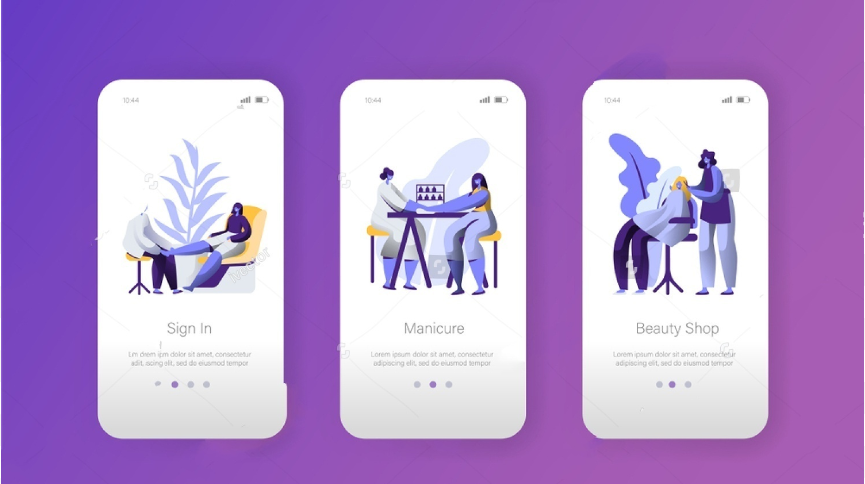
Even today most of the spas, salons and wellness centers are dependent upon the telephone and pen paper method for the bookings of the customer.
                             

The New Trend In The Beauty And Wellness Industry

There has been the introduction of JOLLY for online booking in the beauty industry. This has resulted in improving efficiency and faster payments in the beauty industry. It has been quite successful since it was launched in the year 2016, for revolutionizing the business of beauty industry in Europe resolved the problem of appointments, save the time of the users moreover a new form of payment method was introduced which is more convenient.

Now blockchain is being used to upgrade this platform so that more salient features can be added to the platform. JOLLY was introduced with the aim to change the traditional method in the beauty industry and provide much effective beauty booking system. With the introduction of blockchain, it will be led to effective interaction between the buyers and the sellers.

Also, with the help of this, the users can book their appointment anytime 24/7 and they can also find the best prices and check the availability of the sellers, also they can receive awards and the buyers can make the payment in form of native token of JOLLY which is JOY.

The blockchain will provide complete transparency and with the help of this, the seller will also be able to compare themselves with their competitors in terms of the services and the prices and will also be able to receive the feedback of the customers. JOLLY is one of those platforms which is working to popularise the use of cryptocurrencies. According to JOLLY women, makeup around the 70 % purchase of the household and are responsible for $20 trillion in yearly consumer spending. It has been depicted that this figure is going to rise up by 40% in the next 5 years. Therefore to make the use of cryptocurrencies widely applicable it is quite necessary to indulge more and more women into it and platform such as JOLLY are expecting to bring this change as they are introducing the women to the crypto world through their respective platforms.                                      

Several Blockchain Projects Solving The Hurdles of The Beauty And Wellness Industry

Companies from Korea and Japan, are introducing several projects and are making huge investments in this industry,  for the development of a business which involves cryptocurrency.

Beautybloc – This blockchain company was introduced so as to look after the problems related to the cosmetic surgery industry. Some non-specialist is tacked by problems such as the wrong advertisement, wrong treatment. It also looks after to restore the faith lost by the industry.

BeautyBloc is a South Korean based large-scale project. It comprises of various information such as the data of the customer, the content related to the treatment of the customer, also it consists the information about the specialist who is going to look after the treatment and other stakeholders. Thus, it plays a very important as with the help of this unauthorized treatment can be prevented and there are fewer chances of fraud in this case.                             

Blockchain Connects The Manufacturers And Consumers

There are several platforms such as Cosmochain with the help of which the users can get connected to the suppliers , manufacturers, distributors etc.  The platform uses blockchain technology for its functions and it receives a huge amount of investments too. The platform has its own virtual currency which is called CosmoCoin / COSM the payments are made in this form in the platform.

COSMEE is the application which is developed by the company and with the help of which rewards in the form of virtual currency and in the form of services can be granted.

RVH co. Ltd.

It is one of the major beauty companies in Japan.  The company has its subsidiary under the name “Minor Garage”.
The role of this is the mining of the virtual currency and blockchain related business. The company promoted the development and also run several projects such as the training of the blockchain engineers.

What the future holds

Thus, blockchain has knocked the doors of the beauty industry as well and has made beneficiary changes to it and soon it is expected that the worldwide beauty industry will soon be under the influence of this blockchain technology.


How To Generate More Users/Revenue for E-commerce Business Using Sweepstakes

Sweepstakes are an efficient marketing channel that helps develop your business, generate more leads, promote your brand, and increase sales.

Sweepstakes have several benefits compared to other marketing methods. In addition, it’s easy and inexpensive to run. Just one single promotion can result in getting new customers, increasing sales, increasing followers on social media like Twitter, Facebook, Pinterest, etc, and better brand exposure and awareness.

According to Hubspot, “approximately 33% of contest entrants agree to receive information from brands allowing you to remarket to those customers to land the sale”.

Below is the list of objectives that the implications of sweepstakes can achieve

Boost visitors on the website:

Sweepstakes can go viral easily. Therefore, you can design it to attract new potential customers to your store.

Generate referrals:

You can provide unique referral links to each participant to track who referred whom and reward them accordingly. And,  these friends will refer to other friends and in this way, the website will attract more visitors and will help increase awareness of the website.

Grow your email list:

Now you might be wondering, “How exactly does that help my business?” Often, e-commerce websites that run sweepstakes will ask entrants to share their details with the website.

For example: “Enter with your email address” or “Follow us on Instagram to win.” 

Increase awareness of your store:

If you have a new website, you can use sweepstakes to help make more potential customers aware of your website.

Providing Incentives:

Sweepstakes are viral. Customers talk about them all the time and share them with their friends and colleagues. However, you can encourage them to share it even more by providing incentives. Just by providing small incentives, you can increase a lot of potential customers  

Further, offer them additional entries by liking, tweeting, or inviting friends to sweepstakes. You could even offer them a guaranteed gift (a discount for instance) for inviting several friends,  to join in or post about the sweepstakes on social media.

Overview of case study

Case study 1: Unique Hotels Facebook campaign   

Unique Hotels is a small group lifestyle hotel located mainly in Tallinn, Estonia and Manor House just outside the city. Each is located in historical buildings and surroundings that have been updated to include modern conveniences. And, each has a different character and level of service.

Objectives:

  • By using social media campaign, create brand awareness and encouraging content to share between users.
  • Generate leads and bookings by attracting visitors to the Unique Hotels’ websites with special offers.
  • Increase the Unique Hotel’s probable customers with offers, campaigns, and engaging content.
  • Develop a new community channel for customer interaction, give updates, and generate news.

Solution:

  • Run month-long sweepstakes campaigns on Facebook.
  • The viral aspect of the campaign is more sharing,  the extra points, and greater the chances of winning in both the weekly and main prize (luxury all-inclusive weekend in Vihula Manor) draws.
  • To encourage sharing even further they incorporated three ways to collect additional points and increase one’s chances of winning – the initial ‘Like’, sharing badges with friends and subscribing to the Unique Hotels newsletter.

Results:

  • After the successful completion of  the campaign, the Unique Hotel fan base went from 414 to 12,349
  • User engagement (any clicks on any stories) went from 2,108 to 30,944
  • Traffic to all of the Unique Hotels websites for November and December was 115% of the previous two month’s figures (September and October).
  • The Unique Hotels mailing list skyrocketed from 600 subscribers, predominantly Estonian-speaking, at the beginning of the campaign, to approximately 3,000 Estonian, English, and Russian subscribers

Case Study 2: Noritz

Noritz manufactures tankless water heaters for both home and commercial use. They’re sold through various distribution channels that primarily include installers and dealers. They expressed a desire to establish a way to increase brand exposure and gain the ability to directly communicate with end users to help increase the probability of a dealer/installer sale.

To satisfy that need a 12-month (with monthly prizes) sweepstakes campaign was initiated to attract new prospects, increase brand awareness, grow the subscriber list, and drive traffic to the dealer locator tool. To drive traffic to the sweepstakes mini-site Google AdWords was used with geo-targeted pay-per-click ads.

Results:

  • 45% registration rate
  • 28% referral rate
  • Substantial increase in the subscriber list
  • High use of dealer locator tool

The result was pretty impressive considering only Google Adwords was used.