Talk to an Expert

Why You Need To Leverage Blockchain For Your Business Today

Leverage Blockchain in Your Business

The blockchain space is evolving into a revolutionary space by the day. In today’s dynamic business landscape, it’s become a critical part of business technology – so much so that IBM launched an entire division focused on blockchain and is continuing to invest heavily into the technology. Several other technology companies are also joining the bandwagon or actively exploring options. 

Blockchain technology has seen massive growth already; this growth is only limited by the amount of talent. With technology evolving incredibly fast, it’s important for businesses to keep up to the changes. There are multiple startups and enterprises looking to hire remote developers adept at blockchain, pitched as one of the leading cutting-edge technologies today. Better yet, the presence of the distributed ledger adds extra value to each project.

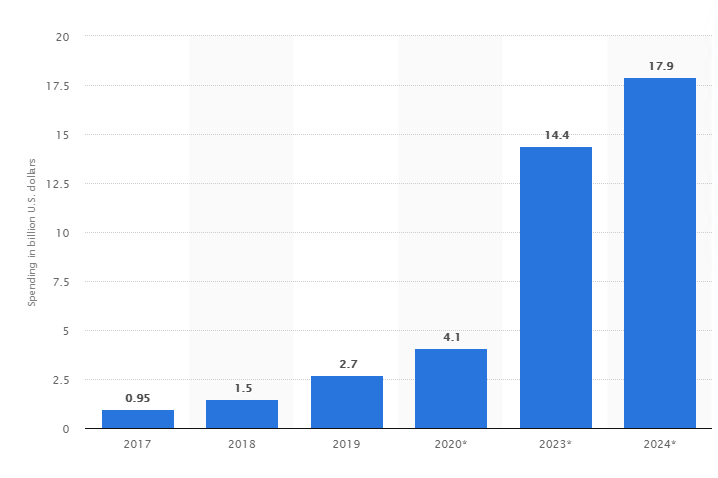
The world is going blockchain. The sheer size of the market isn’t shy of highlighting this. Its market size is projected to touch a staggering $16 billion by 2024, according to a report conducted by Global Market Insights, IBM, FedEx, British Airways, Microsoft, Nestle, Walmart – and these enterprises only sum up a few of the brands venturing into this space. 

Worldwide spending on blockchain solutions from 2017 to 2024

(in billion U.S. dollars)
Source: Statistica

Business At Play With Blockchain

One of the most important benefits of blockchain implementation is the total cost it takes to reach the market. It is significantly cheaper and much more effective to build using blockchain technology than any other platform. Fast incorporation with a number of cryptocurrencies allows it to be a site of choice for companies in all sectors. The use of this sophisticated technology has unbelievably expanded not just the realms of technology and finance, but has also driven changing business needs. In our blog, we look at why it matters.

1. Faster, accurate and more efficient processes

Negating the need for intermediaries is one of the key reasons why corporations implement blockchain technology, which not only eliminates costs but also makes the entire process quicker. It’s because by eliminating the inconvenience created by a middleman in a functioning system, you’ll certainly get things done quicker in the overall operating phase.

2. Better privacy and encryption for your business data

Blockchain technology prohibits even root users and administrators from tapping into personal or confidential information, thereby ensuring anonymity across the network. Moreover, it also keeps encryption keys that use the highest level of security. This mitigates the risk of hackers penetrating into the platform. By default, the technology is designed to reject all unwanted attempts to access data or even programmes that are within its network.

3. Cost-efficient for your business

We all love the ease of online transactions, but such fees will also limit income. In today’s market, there are various providers such as PayPal and Shopify, which carries costs ranging from 2.9 to 4.4 based on what they do, depending on the location of the purchase inside or outside the USA. Here’s where you have to pay attention to chargebacks or monthly prices. The greatest advantage of blockchain is the elimination of third parties. With blockchain, your business will be better positioned to reduce or avoid counterparty threats. 

The perks of leveraging blockchain technology for your business is hard to miss. The challenge arises when you’re looking to hire the right talent to drive a secure blockchain platform. No blockchain development is possible without utilising the skills of experts. Launching a blockchain product or service needs the highest security or expertise – without this, your business could face risks. One of the best ways to solve this is by hiring the right blockchain app development company. 

Hiring a blockchain consulting company to drive your business would help you use an open source and secure platform that can be modified to manage everything from quality assurance to financial transactions and smart contracts. Furthermore, It has transformed digital transactions through the use of tokenization of all physical assets. How do you know whether you’re hiring the right blockchain app development company? Hiring sought-after blockchain developers may be a daunting task for both established enterprises and start-ups. Here’s what you need to look out for.

1. How long have they been around? What projects have they worked on?

When you’re looking to hire blockchain app developers, it is important you look at the years of experience the developers have in building blockchain platforms. Details on their domain, founding team and senior management can help you make an informed decision. 

In addition to this, it always helps to ask for the achievements and awards they’ve won for their work in this field when hiring remote blockchain developers. Look out for any patents or licenses that they have which could highlight their product’s quality. 

One of the other major factors to check is the list of brands or the blockchain app development company’s portfolio. This will give you a picture of what products they have worked on and their performance while developing these platforms. Ask if they have built products for global enterprises or with start-ups as this will give you insights into how they can work with your product idea.

2. Learn more about their team of blockchain developers. What is the domain, skillset and tech stack?

Through this conversation, you will also learn more about the quality of their blockchain developers, where they are based out of, and how you can communicate with them.

You need to know if their remote blockchain developers understand programming languages like C, C++, Javascript, Node JS, Solidity, Java, Python and Go. A skilled blockchain developer understands the concepts of encryption, data security, decryption and data structures. Apart from the blockchain development process, it’s also important to know if the team is utilising tools that improve efficiency and deployment – be it JIRA, Slack, agile or scrum methods. 

While gathering this information, it’s also important to know if the remote blockchain developer can function or work according to your time zone.  More often than not, many blockchain developers may be based in different countries to compete with a market that’s driven by price pressure. If this triggers possibilities of quality concerns, you should discuss this with the company.

3. Understand the team’s development process and see if it fits your business needs. 

Different teams follow different development processes. When hiring a blockchain app development company, you need to ensure what development process is being followed by the team. This is important when it comes to understanding how your product is being designed, developed and implemented. 
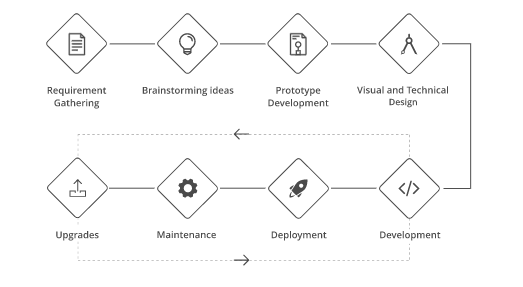
This also helps you gauge if they have the potential to develop and build a blockchain-based platform. If the team has worked across multiple technology stacks such as cloud, microservices, iOS, Web Apps, Android or mobile app development, they have ample experience to help you navigate blockchain development. 

4. Will they support your business with maintenance or service concerns after implementing the platform? 

If you’ve managed to hire a blockchain app development company that works as an end-to-end service provider, that’s your one stop shop. They will give you access to product consultation, design, development, maintenance, support and implementation.

Rising demand for blockchain services

With the industry facing explosive growth, it also highlights the appetite for remote blockchain jobs and hiring remote developers. If you’re looking for a secure blockchain platform, partnering with the right blockchain app development company is critical. If your company needs to get ahead of the blockchain disruption curve, hiring remote developers in the post COVID-19 world may be a challenge, while being a vital necessity. Here’s where we simplify that for you. 

Why SoluLab?

Our team of over 25+ experienced blockchain developers with more than 5 years of experience works across projects in the USA, Europe and  South Asia, and has proved the capability of developing secure apps that match your business goals. Till date, we have successfully completed more than 50 projects that span blockchain consulting, enterprise blockchain development and crypto-related blockchain development. 

If you’re looking to hire a blockchain development company, SoluLab’s team can amplify your business’s technology-driven processes by creating decentralized applications, allowing only authorized personnel to control operations, track real-time data security, development of cryptocurrencies, launch ICOs and HOT wallets. We also help you with training and support migration of your systems to integrate blockchain technology and instant data sharing. Better yet, we also help you implement smart contracts where all personnel can operate in a connected environment to monitor transactions real-time. 

Here’s a sketch of our technology stack:
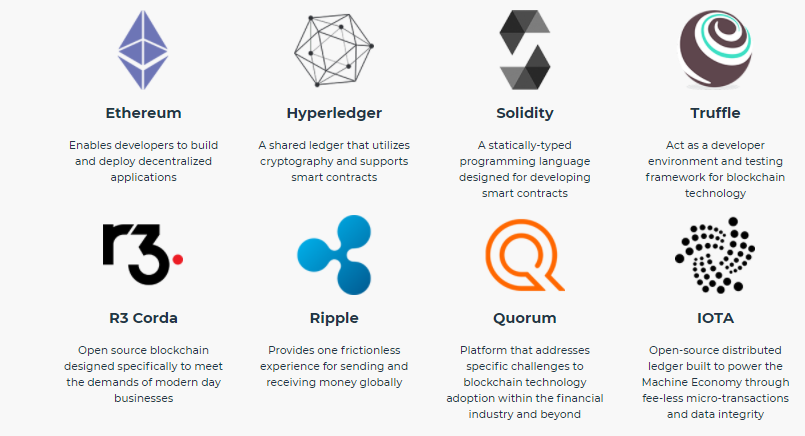
We have partnered with enterprises and hyper-growth startups to develop and design a blockchain readiness program, smart contract audits and more – with the first 15 days completely free, no strings attached. Get started today!


What is cryptocurrency exchange and what will be the role of Blockchain in it?

cryptocurrency exchange

Introduction to Cryptocurrency  

Cryptocurrency may be a kind of digital currency.  It utilizes cryptography for protection and anti-counterfeiting measures—public and personal keys for assigning cryptocurrency between individuals.

As a counter-culture movement that’s often compared to cypherpunks, cryptocurrency is an authorization currency. This suggests users must reach a consensus about cryptocurrency’s price. And use it as an exchange medium as it’s not tied to a specific country. It’s fee isn’t controlled by a financial institution.

Cryptocurrency Exchange

It’s a system operating on the groundwork of trading cryptocurrencies with other assets. Sort of a traditional financial exchange. Its core operation allows the buying and selling of those digital assets. 

A cryptocurrency exchange is additionally referred to as digital currency exchange (DCE).

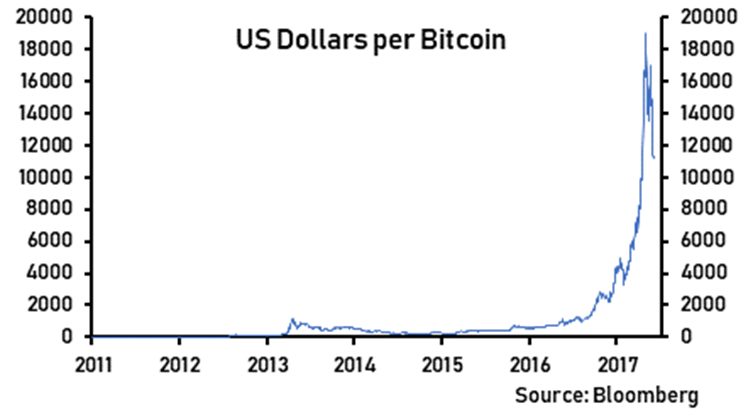
To apprehend cryptocurrency exchanges. These new sorts of exchanges are different from ordinary financial exchanges. Cryptocurrencies are unstable as useful and sourcing—cryptocurrencies like bitcoin related to the most vital disruptive events. Here, bitcoin value changed over a fast period of your time. Or where major exchanges went under, thanks to theft, fraud, or different problems.

Cryptocurrency exchanges need to integrate protections from many of these events. In other ways, cryptocurrency exchanges work a bit like ordinary exchanges. On many of those platforms, cryptocurrency buyers and sellers can make limit orders or market orders. The brokering process works like it would for any different, quite an asset. The cryptocurrency exchange benefits with the transaction and receives the fees. 

The difference is that the underlying asset—Bitcoin or another cryptocurrency that doesn’t have any national currency valuation properties.

Cryptocurrency wallets and wallet brokerages allow you to shop for and sell a little range of famous digital assets. You’ll then send it to a special exchange to exchange for other digital assets like altcoins. An instance of such an exchange is Kraken. It currently accepts funds within the sort of USD, JPY, CAD, and GBP. It also helps trades with Monero, Ripple, and Litecoin, also as Bitcoin and Ethereum.

What is the role of Blockchain in Cryptocurrency?

Blockchain is the technology that permits the existence of cryptocurrency (among different things). Bitcoin is the name of the best-known cryptocurrency. A cryptocurrency may be a medium of exchange, as the US dollar. But it is digital and makes use of encryption techniques to regulate the creation of monetary gadgets, also for verifying the transfer of funds.

A blockchain, a decentralized ledger of all transactions across a peer-to-peer network.  Potential applications can include fund transfers, settling trades, and lots of different issues.

A blockchain is actually a digital ledger of transactions. That’s duplicated and distributed across the whole community of computer systems on the blockchain. Each block within the chain contains a variety of transactions. Every time a replacement transaction occurs on the blockchain. A record of that transaction was added to each participant’s ledger. The decentralized database is managed by means of many participants understood as Distributed Ledger Technology (DLT).

Blockchain may be a sort of DLT. During which transactions record with an immutable cryptographic signature mentioned as a hash.

Cryptocurrency exchange fee comparison

How much does the exchange cost for converting your money?

And how does this fee compare to other comparable exchanges?

The average fee for Mastercard buys is about 4%. Bank transfer buying fees are usually 1-1.5%. Compare the rates of any exchange to different similar exchanges.

Cash fees are usually 1%, although there’s a 5-10% premium on a daily basis. This is often very true at ATMs, where there’s always a premium.

The cryptocurrency change market features a vast range. One can choose these markets as per their preference and requirements.

Keep some main factors in mind when choosing an exchange. Those factors are

Fees

US Dollar Deposits

History of Security

Customer Service

Number of Coins Available

The most trusted Bitcoin Exchanges Platforms are as follows:

Binance- Its lowest buying and selling fees. It has most coins, large volumes, and no KYC required for this. No fiat deposits. No margin. It also has regulatory risks.

Binance is one of the most important exchanges within the world by total daily volume. It’s, by the way, the most important of any exchange available to US investors. This is often quite dazzling as it launched several years later than most of its competitors in mid-2017. It began by a team out of Shanghai, led by its famous CEO Changpeng Zhao, or CZ. Currently, it moved its headquarters to Malta. There, finance and crypto regulations are much less stringent.

Binance may be a famous exchange because it’s easy to know, low fee structure. It’s one of the rock bottom costs for US investors. It offers the foremost cryptocurrencies to trade out of any major change with overflow 100. Suppose investors trade the utility of its own cryptocurrency, BNB. They’re going to receive a further fee discount.

Additionally, its massive daily volume ensures efficient markets. So, traders are usually able to buy and sell even rather obscure coins. It is also one of the only large exchanges. It does no longer need customers to provide their identity and other economic details. Most customers only need an email tackle to start trading.

Additionally, there is no margin trading. There is a mobile app. But it is not as consumer-friendly as some of its competitors.

Deposit is free.  The trading percentage is 0.1%. 

Coinbase- It is good for beginners, has a great history of security. FDIC insured.

Coinbase Pro is for Advanced Trading. But it has excessive fees; customer service is slow and no margin. Coinbase is the most successful crypto alternative in the US. It has a profitability and average volume. They were founded in 2014 by ex-Airbnb staff. Coinbase has its headquarters in San Francisco. It affords a website and mobile app to trade cryptocurrencies.

Its simplistic interface makes it an outstanding option for investors. For learning about the crypto ecosystem. It boasts Coinbase Pro, a more complex platform geared for sophisticated traders and institutions. The Coinbase Pro product provides lower fees and several more cryptocurrency buying and selling options. Coinbase has a transparent and reputable past with security. It has never had any essential security incidents and insures deposits of USD and cryptocurrencies.

Coinbase has some of the highest fees when trading in USD pairs. This is a sizable downside for investors that are looking to buy or promote in large volumes. Coinbase does not have that best track file when it comes to customer service. Many customers in the past have complained about response times. And also about getting locked out of bills without explanation. However, this has improved in the last two years. Serious traders disappointed that there is no margin trading and no savings card purchases allowed. 

Deposit at free (ACH) or $10 (wire transfer). Withdrawal is free (ACH or PayPal) and $25 (wire transfer). Trading (Coinbase) – 1.49% (US BANK ACCOUNT), 1.49% (COINBASE USD WALLET), 3.99% (CREDIT/DEBIT CARD). Trading (Coinbase Pro) – 0.05 to 0.025% (taker fee), 0.00 to 0.15% (maker fee). 

Kraken- It has margin trading. It is the oldest exchange in The US and can trade tether for USD. It has no mobile app and mistaken past maintenance.

Kraken is the oldest US-based crypto exchange with its headquarters in San Francisco. Its founder’s name is Jesse Powell. After witnessing the failures of the now-infamous Mt. Gox exchange, he started it with buying and selling first going live in 2013. Kraken is the third-largest for buying and selling the volume of all exchanges on this list.

Kraken has several unique advantages over its competitors. It is the only exchange for US investors that offers both fiat deposits and margin trading. Investors can hyperlink their bank account and trade in US Dollars. And it is very useful for frequent traders. Margin buying and selling allow investors to borrow money to place large trades. This leveraging enables savvy investors to magnify gains though it is very unstable. 

Kraken is one of the only exchanges in the world that enables investors to obtain Tether for US Dollars. 

Tether is the most abundant stable coin (i.e., a cryptocurrency secured to the dollar). Tether is popular with traders. 

As it allows them to comprehend their gains on only crypto exchanges. Kraken can be useful for traders who use several exchanges and favor an efficient way to cash out into US Dollars.

But, Kraken is the only necessary exchange for US investors that do not offer a cellular app—securing it less available and accessible. 

Over the past two years, Kraken has undergone long periods of blackouts where its site would be restrained for days at a time. 

However, there were no problems with lost funds or hacks. It was a serious problem for traders trying to trade during periods of intense market volatility.

Deposit is free or $5. Withdrawal is $5. Trading at 0.14% – 0.26 (under $100k).

Bitstamp- It is one of the most traditional exchanges in the world. FDIC insured and has excellent security antiquity. But it has high costs and limited coins.

Bitstamp is known as the oldest and most well-known crypto exchanges in the world. 

It has largely been centered on the European market.

 It was once originally based in Slovenia and later moved to Luxembourg. Moreover, it even has operations in London as well as New York.

It is still one of the greatest and best exchanges to use for European citizens due to its low fees. It provides US citizens access, even though its services are more limited, and fees are higher. For instance, it does allow savings card purchases for US citizens. Deposit and withdrawal fees are some of the highest in the market. Particularly for retail investors, who make smaller investments. Also, it solely offers a few of the most popular cryptocurrencies.

It can still be a great choice for some US investors. It has a stellar security record. This has been around longer than almost any different exchange in the world. It allows USD deposits, and all deposits are FDIC insured. Also, Bitstamp has an easy to use interface, and its trading charges are modest.

Deposit – 0.05% or $7.50. Withdrawal at 0.09% or $15. Trading percentage – 0.24% – 0.25% (under $100k). (For deposit and withdrawal, whichever is higher) 

Poloniex- Poloniex has lots of cryptocurrency, low fees, and margin trading.

Poloniex is US-based with its headquarters in Boston. It is very popular with experienced crypto traders as it affords more advanced features and a significant quantity of cryptocurrency assets to trade. Users trying to buy their first Bitcoin would now not be the optimal place to start.

Poloniex has very low fees. It is free to deposit, but they only take delivery of deposits of crypto. Investors cannot link a bank account or buy a credit scorecard. It trades over 65 different cryptocurrencies, which is the most for an exchange based out of the US. Despite the extensive amount of assets it offers. Poloniex experiences much lower volumes than its opponents on the list. For reference, it often has daily volumes that are ten times smaller than a leading trade like Binance.

Poloniex also offers investors features they can’t find in other places. They are the only exchange to provide margin trading besides Kraken. A vital difference is that it additionally allows users to take both sides in the margin trading. In different words, users can borrow assets. It also lends their own assets, income interest in the process. Because it offers risky trading offerings and obscure coins. Poloniex is best accommodated for skillful crypto investors.Poloniex is now occupied by Circle, and it is a subsidiary of Goldman Sachs.

Deposit is free. Withdrawal varies by assets. Trading percentage 0.08% – 0.20% (upto $1M)


How is blockchain changing the money transfer process?

The world is constantly changing and thriving to outperform itself with every innovation that comes into place. There can never be a saturation of new ideas. 

We are going to focus our attention on one such possibility that has already created a reputation in the finance sector and is grooving into other industries as well. Blockchain has changed the way people perceived transactions, technology, administration, database management, traceability, and the list could go on.

The main agenda here is the induction of Blockchain in the finance industry and what it promises in the near future. This has successfully been portrayed by the advent of Bitcoin that left people in awe, a concept introduced by Satoshi Nakamoto. Bitcoin created a lot of momentum in a considerably shorter period. Agreed, it faced a pitfall soon; we cannot deny the possibilities; it has opened the gates to, and if refined properly, can change the way we perceive our finances.

Let us dig a little deeper.

Considering the trend that has been seen in the financial industry, it is pretty evident that all the major upheavals have been an addition to the existing stack of finances controlled by banks and a central authority. Mobile banking, net banking, ATMs, and all the other innovations to facilitate the present banking system. A monotonous tradition has been developed. But with Blockchain, these barriers can be broken. Blockchain all together is an out of the box concept.

What is Blockchain?  

Blockchain is a distributed ledger where instead of centralized control, the power is shared by everyone who is a part of the blockchain. Now the records on a blockchain are practically immutable, which means that once a particular data is stored in the database, it cannot be deleted. This particular property ensures traceability. 

Being a distributed ledger, it eliminates the need for the middlemen. 

From a distance, it just seems like a minor insertion, but it can potentially make the transactions faster, safer, and cheaper. Right now, with the developments in blockchain, there are many loopholes, but they are constantly being modified to fill the gaps.

When you look at the traditional monetary system, we have physical currency or FIAT currency; cryptocurrency (developed with the help of Blockchain), on the other hand, is a digital currency. 

All the transactions that you make through FIAT currency are routed through banks and other financial institutions. They do seem secure, but there have been many cases when banks have defaulted on payments because of increasing NPA’s. To top that, banks lack transparency; therefore, the customers do not have a lot of information about how their funds are being used. The lack of lucidity often hinders customer trust and poses difficulty when it hits a crash. There have been several frauds in the financial industry owing to the current operations of banking. You do not have a lot of say about how your funds are allocated.

Of course, that is fine until your funds are safe, but it makes you question the system when these institutions face a catastrophic crash. Blockchain eliminates this discrepancy by increasing traceability and consequentially transparency.

Traditional banking systems bulk up the transaction fee up to 7%. This is mainly because of the numerous intermediaries involved that add up to the cost. 

These setbacks can be overcome with the help of Blockchain, but yes, it is not picture perfect.

What can cryptocurrency do to money transfers?

Blockchain is still a thriving concept but has a lot to offer on its plate, this can be developed, and these features can be benefited after we succeed deploying the concept to a larger audience and fixing the leaks.

  1. Speed
    Blockchain is a distributed ledger and hence, no longer needs heavy queues that usually involve bureaucratic approvals, which make the entire process too tiring, and yes, you got it right, SLOW. Blockchain operates on Smart Contracts, which is a contract written in the lines of code and auto operates according to the conditions mentioned in the contract. Every modification in the data is notified to the contributors of the blockchain. This means that the transactions and any change to the data are communicated in real-time. The conventional methods often take 2-3 days to complete an overseas money transfer, which can be achieved in minutes with Blockchain. It integrates global markets and facilitates global money transfer.
  2. Clearing and Settlement
    The money transfers accustomed to the traditional ways often adds up to 7% transaction cost overall and more for global money transfers. This is quintessential because of the middlemen involved in clearing and settling the transactions. Blockchain can reduce this cost by 127 times. Researchers drew this conclusion by closely studying 1800 transactions on the basis of their clearance time and cost, and with the help of reports published by World Banks. This is ubiquitously helpful when it comes to global transfers, which conventionally delays the clearing process and hence the settlement. With the speed that an ideal model of Blockchain provides and the costs it reduces can open up new opportunities for investments altogether.
  3. Fundraising
    If you are wondering what about the IPO facility that keeps you a helping hand when you have to raise funds from the public. You do not have to worry about that; Blockchain offers you an alternative to this, too, with something known as an ICO or Initial Coin Offering. ICO is very similar to an IPO, just instead of raising funds through FIAT, you get tokens, but also the process is much smoother and transparent. Once these have been issued, they can be traded on cryptocurrency exchanges where the market forces then decide the value of the token thereafter, just like a traditional stock market. However, the existing crypto exchanges are centralized, and the aim is to inflict decentralization to further develop and ease the exchange process
  4. Secure
    This one is obvious. Blockchain is a distributed ledger wherein every node gets notified with a mere interference with the data. Everything is approved by the users through Proof of Work, so you know there is nobody waving a wand and making things secure. You have full control over your funds. Your money transfers are transparent as you can verify their allocation in real-time. As a user, you feel more confident when, at every step, you are assured. Since the blockchain system uses hashing, it reduces the risk of manipulation by avoiding one single point of failure. It makes the system less prone to cyber-attacks, with a consensus network protecting the spirit of Blockchain as a decentralized platform.

Drawbacks

When we talk about the setbacks, these are just the ones that haven’t been dealt with yet.

This is complementary to new ideas and revelations, it’ll take time, but these will be fixed to make the current model better and possibly an ideal model

  1. A bit complicated
    When you’re lending or making a payment using your traditional currency, you do not have to know the technicalities of it because there aren’t any. But when it comes to Blockchain and cryptocurrency as it practically revolves around technology. This is just a temporary inconvenience that can be fought with little awareness and education about the concept. Just like the internet effect, initially, people thought it was too complicated to adapt, but now we can’t live without it.
  2. The fiat-Fiat mindset exists firmly.
    Since we all are set in the ways of traditional Fiat money transfers, it’ll be a long time when we get comfortable with cryptocurrency. The cryptocurrency transfer is swift, but since a majority of them prefer to convert it to, say dollars. Now since many institutions are not on board with the entire cryptocurrency, the conversion often becomes expensive and slow. This is persistent because there are;t outlets that accept cryptocurrency as a means of payment. This will develop with gradual uplift in the idea of cryptocurrency as a means of money transfers. This also causes a lot of trouble when it comes to overseas transfers; you have to pay a double-conversion fee, (for example, if you want to transfer euros from the US, you’ll be charged for dollar-bitcoin, then bitcoin-euro conversion)

This unnecessary cost is preferably avoided and is a lot harder to settle when it is routed through banks. 

Where does that leave the discussion?

These are just setbacks which have to be overcome to inhibit Blockchain in various sectors. Entrepreneurs today are starting to realize the importance of Blockchain and the benefits it offers in the global transfer industry. Another important discovery is the realization that traditional corporations are interested in applying blockchain technology to improve their services. Innovative startups and financial institutions are leveraging Blockchain for big wins; for example, the Circle Payment App manages blockchain in the backend process, and you can take a sigh of relief and deal exclusively with fiat currency. 

Big tech companies have already realized the plausible opportunities and changes that Blockchain offers and its astonishing results.

Blockchain does face some major disadvantages and needs a lot of modification to revolutionize the future. But researchers and blockchain developers are consistently working towards eliminating the loopholes in the current Blockchain model to make it more secure and handy.

What Are The Impacts of Blockchain In Mortgage Industry

Blockchain developers

The mortgage industry was brought to the world by Ginnie Mae to solve a major economic crisis. During the Great Economic Depression of the 1920s. During the world economic crisis of the 1920s, people weren’t able to fulfill even the interest requirements of the loans, which was nothing compared to the actual amount of the loan. This led to the formulation of a concept, aka mortgage. The mortgage system allows you to pay some part of your principal and interest over a fixed period to reduce the liability on the borrower and give certain assurance to the lender. The industry has grown to a great extent. People on a large scale take up loans on mortgages to finance big projects like home loans, education loans, etc. The mortgage industry in the US alone is a massive $11 trillion. But that is not it, the mortgage industry is far from the point of saturation but is inefficient in filling the gap.

The Problems associated with the present Mortgage Model

The traditional mortgage model lags in some important aspects, which, if eliminated, can bring substantial growth in the industry altogether. According to a report published by PwC (PricewaterhouseCoopers), on average, a mortgage application is 500 pages long, which becomes a time-consuming process and often leaves huge chances of human errors. The entire flow of the application consists of several parties like brokers, banks, attorneys, underwriters, agents, etc. Which, in turn, increases the cost and also often ends up accumulating a period of 45-60 days. These setbacks have an undue influence on the growth of the mortgage industry as it increases the resistance of people against it.

The Solution

How can the mortgage industry become more efficient? The answer is Blockchain. Blockchain is a decentralized network built on a distributed ledger and fueled by the concept of Smart Contracts. Inducing this in the financial system has already brought out astonishing results, and now it is time to take it up a notch. Blockchain, which took the form of Bitcoin in the initial years, has broadened its scope to almost all the sectors promising a brighter future for each one of them conditioned to the lawful and ethical use. Blockchain, as we know of it, is an immutable chain of blocks stored by hashing, making it harder to break down the system. Of course, it is possible, but then it stands on stronger ground than the existing system of networks.

Problems will it solve for the mortgage industry?

Innumerable problems can be solved with Blockchain as an intimate part of the system. When we talk about mortgages similarly, blockchain networks can build a more soothing and accurate model for it. The Blockchain network is essentially a network of nodes associated with it. So instead of the data stored with the only party, it is locally stored at every node. We are going to discuss some crucial issues that can be potentially solved with the help of blockchain.

Maintenance of Documents and Streamlined Bookkeeping

When applying for a mortgage, there’s a ton of paperwork that needs to be done, and more importantly, has to be checked and approved by all the intermediaries thereafter. Now obviously, the exchange of these articulate paperwork is done via emails or fax, which is bound to take a handful amount of time as it gets exchanged from one party to another. The next obstacle is the inconvenience in updating the documents as per the suggestion of the involved parties and thereafter, maintain a record of those updates and also the recipient and provider of the same. It also opens gates to human errors in addition to being cumbersome.

This can be replaced by inducing blockchain where every party can access the documents using a digital ID, and the changes thereafter will not only be updated automatically but also can be tracked without a hiccup. As blockchain is a distributed ledger, all the parties will have access to the documents when and where needed. In essence, instead of having the documents in the hands of a single party, all the parties have access to them. This eliminates the traditional handoff process. 

The added advantage here is that the changes get updated automatically and are easily traceable to enhance the reversibility of errors. They fill the loopholes that often are existential to the human bookkeeping process and make the process more streamlined and saves time.

Lower Costs

Whenever the application process of mortgage takes off, it often deals with a lot of intermediaries in the life of it. So say that every intermediary charges 1% on the amount of loan, and we assume there are six intermediaries involved, this means you are paying an up to 6% of your principal just to get the mortgage sanctioned. 6% of a huge amount is heavy. The middlemen involved couple is appointed for legal documentation, reaching out to prospective lenders, drawing up the paperwork, etc. 

These roles can be replaced with the help of Blockchain and thereby reducing the costs you incur on these services.

Blockchain can eliminate the roles of intermediaries by matching the borrowers and lenders and streamlining the process further with the induction of smart contracts. This saves your substantial costs and reduces your liability. According to a report by Moody, the consumers can save up to $1.7 billion of the consumers altogether. 

Smart Contracts

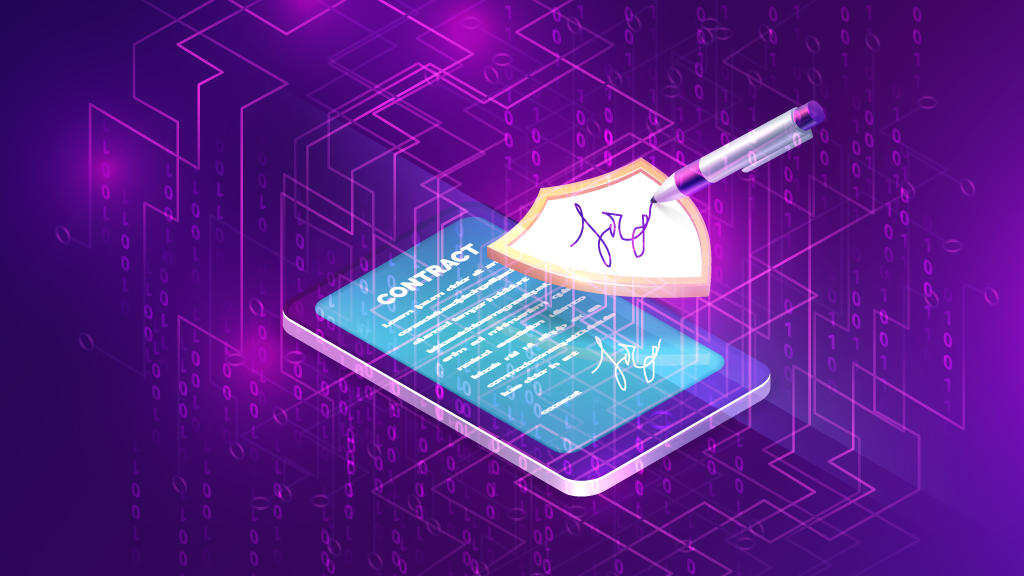
A smart Contract is a self-executed contract written in lines of codes. With the help of smart contracts, you can initiate the terms and conditions of an agreement into a code, meeting which the agreement will be executed after taking digital signatures from the involved parties to confirm the sanctioning of the mortgage. You can also write conditional codes in order to avoid further discrepancies; for example, you can initiate a refund of the payment if a certain condition is not met as prescribed in the agreement. 

If all the conditions prescribed in the smart contract are met, the mortgage can immediately go through, and the parties will be updated in real-time regarding the payments and repayments.

The execution of Smart Contracts can also be used in other ways to potentially reduce the timeframe of the sanction and further instalments. It also makes it easier to track the various aspects and changes in the smart contract.

The execution of the trades and approvals of paperwork over a smart contract makes the process more streamlined, makes the validation mechanism easier and recording perceptual, thereby excluding the costs incurred in it.

Saves Time

This one is pretty obvious. If we integrate all the points discussed above, we can confidently say that these applications of the blockchain process reduce the time of the entire process. As mentioned before, a normal application process takes about 45-60 days to get approved. This is primarily because of the many intermediaries involved in the process that ends up taking an enormous waiting period. 

However, blockchain induces the aforementioned characteristics into the network, which directs the borrowers and lenders that appropriately meet each other’s profile. The updates and payments are made on a real-time basis hence increasing the transparency even further. 

Also, with no middlemen involved, the transparency increases even further because the time frame reduces significantly, as there is no accumulated paperwork and reduced processing time.

More Secure

The first and foremost reason that makes the blockchain network more secure is the traceability that comes with it. Blockchain records are immutable; that is, if a piece of information is entered into the system once, it cannot be removed without deleting the entire blockchain, which is very rare. Therefore all the changes made into the data that you have provided are recorded with all the other required details. 

As a result of this phenomenal feature, you cannot forge records or enter fake details because you most likely do not have any access to the information which you plan to manipulate.

The gaps of human defaults are also filled, and even if a fraud takes place, it can easily be traced back to the origin, and the offender can be taken into charge.

Owing to this, Blockchain reduces the possibilities of frauds, which are very frequent in the mortgage industry. 

Conclusion

The world is constantly on the mode of change and moving progressively towards success, the blockchain in the mortgage industry is still in its infancy but is trending and spreading its arms to reach a potential height of success and change the innate flaws of the mortgage industry and driving it towards success to reach the areas where haven’t been discovered yet by the existing trends in the industry. However, it is indeed a milestone because it takes a lot of effort and time, and yes, an initiative to inflict the use of blockchain into the industry. The entire system of blockchain is very secure but still is not invincible and needs to address any security breach that may coexist with it

A lot of people are not aware of the possible outcomes that blockchain has and will bring to the modern world. And with that comes resistance to adapt newer and trendier methods to fulfil various needs. But like the internet became a necessity for people after facing various objections in the initial phase, this will too, but it needs time to prosper the mortgage industry. These new decentralized platforms are making it simpler for people to access loans for all purposes. Likewise, the time and cost savings realized by lenders will be significant.

Are smart contracts a viable future of the rapidly developing market?

Smart Contracts With Blockchain

What is a contract? 

An agreement two or more parties arrive at and agree to implement on a legally enforceable basis is called a contract. A contract defines the rights and duties of each involved party provided it fulfills a certain set of requirements. The exchanges that it monitors are mostly of goods, services, money, or the promise of any of those in the future. A simple example would be money kept in a bank at the promise of a certain interest rate or the provision of a certain service to a company with the promise of getting a salary at the end of the month, provided the work is finished satisfactorily. 

Coming to a contractual agreement is a little more complex than it sounds. Since contracts are legally enforceable, drafting it with precision becomes extremely important for it too- 1. even qualify as a contract, and 2. avoid conflict in the future. For the first part, it must contain four parts: an offer- a clearly stated offer with unambiguous metrics must be made, and acceptance- it must be officially accepted by the other party(s), an agreement- terms and conditions must be discussed and a consideration- a formal exchange must happen or be promised in the future. For the second part, a fallback mechanism needs to be put in place in case any of the involved parties fail to deliver. This leads to certain requirements. 

Cost- third party intervention, especially in case of a conflict, becomes extremely relevant in order to maintain fairness and ensure professional conduct. 

  • Introduction to smart contracts 

When a contract’s execution is not left in the hands of the people involved but upto computer code, it is a smart contract. Smart contracts are self-executing and do not require third-party intervention. All terms and conditions, details of the exchange, policy and time constraints are converted into sentences of computer language (such as Java and fed into the system. Once it has been validated, the contract executes itself without any further involvement by any party. Such processes are irreversible, traceable, and transparent. 

Perhaps the simplest example of a smart contract would be a vending machine. When a coin is put into the machine, provided its value is equal to or greater than the cost of the product, the product rolls out.

  • Role of blockchain 

Blockchain technology is currently the largest, most secure distributive ledger technology (DLT) available. A DLT can be looked at as a huge, computer-based record keeper/book which has the entire data copied over every single device in use. What this implies is that every bit of data stored on a blockchain is universally available to users without discrepancies and not centralized, exponentially increasing transparency. What blockchain brings with itself to DLT technology is unmatched security. There are multiple reasons behind it. 

Scams are difficult on blockchain because a hash (or the public key) is derived by performing complex and irreversible mathematical operations on the private key, which are nearly impossible to decode. In addition to this, every block on the chain is unanimously approved and for additional security, rigorously time stamped. Every programming happens and is visible in a particular order, and time details cannot be altered. These details become relevant with respect to smart contracts. 

Smart contracts are designed and carried out inside a distributed blockchain. Certain steps are involved from creation to execution. 

Most of the time, several sub-conditions are left upto customization by the user. For instance, some conditions may be introduced/verified, and the code would function, taking the particular line of code. 

  • Examples of smart contracts on the blockchain 

Here are some relatable examples of distributive ledger powered smart contracts. 

Blockchain developers write the contract in the form of computer code. They use a programming language to do so. While writing the script, developers implement the logic behind the contract, which enables its execution when respective commands are given by users. 

Once the code is uploaded to the blockchain, it is made available to all systems using the technology. This is done in such a way that for every identical input, the output is also identical. 

  1. Online shopping and supply chain: With nearly everything being on our phones these days and online shopping and ordering being the latest trends, a fast system to deal with these transactions is imperative, and blockchain smart contracts are exactly that. The process of registration of orders, the transmission of them to warehouses, and the initializing of the shipping process are no longer manual or fed step-but-step but largely automated. Verification through OTPs and passwords are all triggers that take the process from one stage to another. Once both parties ‘okay’ the transaction, the majority of intermediate steps are carried out automatically.
  2. Copyrighting and proof of ownership: It has now become much simpler for artists and content creators to put their content out there without facing a large magnitude of risk of losing their rights or relenting control to the bigger sharks. Distributive and irreversible records of blockchain provide a large level of objectivity, and claiming rights has become less complicated. In addition to this, the terms that each firm or creator can set are varied. This means some licenses can be pre-given to readers, whereas some other uses might be prohibited and, in some cases, even punishable. The process of spotting controversies and a portion of verification becomes computerized instead of manual.
  3. Insurance: The way smart contracts in insurance work is the conditions are verified on computers, and when they are met, the compensation or agreed upon payout is automatically processed. One sub-example of this would be flight delay insurance. Airlines often collaborate with blockchain to set up flight delay insurances where once a passenger is registered and the flight is shown to be delayed, payouts are automatically granted. This not only saves a massive amount of time and labor but also increases the goodwill of airlines and consumer trust.

Industries that are using Smart Contracts

  • Getting copyrights and patents: verification of the authenticity of claims is faster, more detailed, and more efficient when they are computerized, and that is about what happens when a claim is made on the blockchain. To check for explicit or implicit plagiarism is carried out. 
  • Protection of intellectual property: as discussed in the previous column. This comes into the act when an approved right is infringed upon. Verifications take place to determine the validity of the claim. 
  • Transfer of money or assets: cryptocurrency or even bank money can be transferred on a click without third party involvement, much like depositing or withdrawing money at an ATM. 
  • Theft protection: sale of non-existent, pre-sold, or unregistered products is not possible on the blockchain or smart contracts. Hence they have found a use in law enforcement and are used in catching thefts since some loophole is always left behind. 
  • Authentication: from the granting of diplomas to job certificates, many of these written contracts are generated via smart contracts. 
  • Insurance: also, as discussed in the previous column. Processing payouts is automated on the fulfillment of criteria. 

The Upside 

  • The level of objectivity smart contracts bring is unparalleled. Terms and conditions are not left upto interpretation, and, especially in cases of insurance, the customer is subjected through much less physical and mental trauma. This also makes it easier for content creators since the concrete proof is much more easily available. 
  • Time taken is minimized. Every procedure is not carried by people; machines are doing it by using a pre-fed algorithm. 
  • The absence of third party intervention minimizes human resource used. 
  • The traceability is high. Hence every action can be tracked and checked in case disputes arise. 

The Downside 

  • Since actions on the blockchain are irreversible; there is no room for error. Changes cannot be made post-facto and fallback mechanisms need to be completely separate. 
  • Contracts remain untampered only if the coding is perfect. Hence flawless programs are a prerequisite to dependency on smart contracts, which results in high dependency on programmers. Unlike traditional contracts where technological knowledge was not a prerequisite, only coders can make these contracts. 
  • Lawyers are not completely eliminated. After a point, coders working for large companies also need lawyers for legal input. 

Conclusion – Future of the sale of goods 

Smart contracts have not been here forever, which is why people are still suspicious about it, but if more information is spread and blockchain development becomes more and more bug-free and popular, people might abandon their stigma. Instead of writing and signifying long drawn contracts and doing procedures to participate in the investment or buying and selling market, buying, selling, and investing with a click is much more accessible. Ambiguity is much lesser, and security is much more. The coder dependency might be a little intimidating, but just like only a surgeon can perform surgeries, this is something that needs getting used to. With more and more programmers coming up in the industry, smart contracts can become more common and doable. The need for lawyers in a new industry can be seen as a new and upcoming prospect. Looking at the whole picture, factoring in the technology trend, and the fast pacing world, there is no doubt that smart contracts can become a viable future of marketing.

How can the Internet of Things benefit from Blockchain?

Introduction: Benefits of Blockchain for IoT

The Internet of Things does connect several individuals from different corners. It is a revolutionary technology that bridges the gap between the machines and individuals by collecting and sharing information using different devices. Such devices do include sophisticated chips, actuators, sensors, and much more. Such devices are connected to physical devices, which collect data and send it across the IoT network. It does have capabilities to share data from different locations.

With the use of different technologies, such as AI and ML, IoT becomes more revolutionary. Whatever data is collected using the Internet of Things, different AI and ML algorithms are used to analyze data. The Internet of Things does build a network that transmits sensitive data; hence the security of such data is necessary. With the use of technologies like Blockchain, it has become easy to secure the IoT network. 

Security in IoT devices

Security of the IOT network is a significant concern as it does heifers massive scale deployment. Different IoT devices do have lots of vulnerabilities, which makes it easy for hackers to perform DDoS attacks. In DDoS attacks, different computers are targeted and vast data request areas are made, which causes the denial of service attacks for users. Various DDoS attacks have generated lots of issues for industries and individuals. AN unsecured IoT network is much vulnerable to different attacks. 

Another main concern is Scalability. IoT networks grow and are controlled by centralized authorities that authenticate, connect, and authorize different nodes in the IoT network. Huge investments are needed to make such big servers to handle large information exchange. If the entire network goes down, the server is not available. 

Blockchain technology is a revolutionary technology or distributed ledger technology. Such technology has great usability to secure different IoT networks and solve different challenges related to security and scalability. Blockchain is a game-changer due to some unique features. Blockchain technology involves the use of distributed ledgers, where no central authority is there. All data validation and recording are done on different nodes of the network. Blockchain does not allow any user to delete or amend any data stored in the Blockchain. 

How Blockchain technology solves different challenges such as security and scalability

Different IoT networks are capable of processing different kinds of data transactions across different industries. It makes it difficult to find any data leakages if any cyber attack is done by cybercriminals. IoT generates a huge amount of data, and different stakeholders are available in the network. And due to a large number of stakeholders, different data is not clear. 

Blockchain. Technology would build an infrastructure for different devices, which can directly connect and transfer a piece of property like money or data. To enable different exchanges of information, IoT devices can be used and smart contracts would enable agreement between two different parties. Such features would enable the autonomous functioning of different smart contracts. 

Blockchain technology helps in different ways to make the IoT network more secure and scalable. 

  • A distributed ledger is a blockchain network that stores data in an immutable form. It means that data in the blockchain network is not edited. Hence it becomes difficult for different hackers to make changes in data stored in a blockchain. 
  • With the use of blockchain technology, the IoT network would have another layer of security. Hackers would be required to use different techniques to make the security layer vulnerable and access the network. Blockchain technology does build a robust level of encryption of data in the Internet of Things network which makes it very difficult to override the data.
  • Blockchain technology brings transparency and it allows only authorized users to access the network. It builds a reliable way of accessing different data in the IoT network.
  • Blockchain technology makes its network more scalable since it increases the processing of different transactions in the IoT network. Different IoT devices can be connected to the IoT network. It makes a distributed ledger technology that makes a viable solution. 
  • Blockchain technology allows different stakeholders to trust each other. Blockchain allows different industries to reduce fees by eliminating costs by eliminating the processes for different IoT gateways. 
  • Blockchain technology would make sure that IoT based devices are reliable. Different IoT networks do have a central gateway for communication. But with the use of Blockchain, it would make sure that no single source can control the device and gain all different information.

The Internet of things has rolled out different consumers as well as businesses. Different devices are great to use cases of the Internet of things. Blockchain technology is not only underlying technology for digital currencies. But Blockchain technology has different use cases along with digital currencies. 

Blockchain technology with IoT would lead to great devices that will share information without any involvement of centralized authority. Blockchain and IoT would make everything more secure, scalable, and useful for everyone. It would connect different devices securely and increase the scalability for sharing data.

Use of smart contracts in Internet things devices

Different smart contracts work like traditional contracts. Smart contracts are self-executable contracts that can be used by different stakeholders. Such contracts would automate that payment without any need for manual work. 

Blockchain technologies and the Internet of things

A very basic problem with different IoT devices is the security structure. IoT networks work based on a client-server model which is managed by a centralized authority. It does cause a single point of failure. Blockchain technology does address such a problem by making the whole network decentralized. While building IoT devices with the use of blockchain ledger, different challenges need to be considered.

Scalability

  • Networks need to be scalable, and it does allow users to handle massive amounts of data collected using large networks. It does have low transaction speeds lattices. With a great model, it would make it easier to make solutions with fewer difficulties and quickly.

Sensors

  • It does need to have sensors that could measure data correctly and according to need. It would make sure that the transaction executed is secure and correct. With Blockchain technology, it would be easy to ensure the integrity of different IoT devices, which cannot be altered using external interventions.

Network Security and confidentiality

  •  The security of the Internet of Things network is essential. And it can be done using Blockchain only. Blockchain technology would make sure to save the identities of users using the public key. Different industries would be able to make more private networks by sharing any details about the users.

Different Industries working in Blockchain and IoT, and its use cases

The Internet of Things is the technology behind different smart sensors. Such make devices more portable and interactive with different blockchain networks. Both Blockchain technology and the Internet of things has a large potential to create a marketplace of different services and devices. It gives different industries to create valuable information from the collected data. With a large number of blockchain protocols, IoT devices, and devices, it shows that blockchain technology has a great use case.

The Internet of Things is the technology behind different smart sensors. Such make devices more portable and interactive with different blockchain networks. Both Blockchain technology and the Internet of things has a large potential to create a marketplace of different services and devices. It gives different industries to create valuable information from the collected data. With a large number of blockchain protocols, IoT devices, and devices, it shows that blockchain technology has a great use case.

According to different statistics, the scope of blockchain technology and the Internet of things is huge. It is used in insurance and would be used in different industries. It builds a great model using telematics. 

Different Industries where both Blockchain and IoT can be used are the following

  • Blockchain and IoT can be used in the insurance industry. Such a use case would allow data analysis more easily and it would automate everything.
  • IoT and Blockchain are different security and manufacturing. Blockchain would make it easy to secure data and solve different security problems. IoT and Blockchain would solve different security challenges. 
  • Another main use case of IoT and Blockchain is in the building management and industry management. Blockchain technology would store all different transactions that occur between different machines. With the use of blockchain technology, energy sharing would be and decentralized. With IoT devices, it would be easy to sell renewable energy.

Some more scenarios where IoT and Blockchain can converge

Blockchain technology and the Internet of Things have great use cases. Blockchain technology can be used in different industries like the electricity industry to buy or sell energy using smart contracts. Smart contracts are autonomous contracts that automate different transactions.

Different security and control reasons lead to more efficiency in music systems. With the use of different technologies, like AI and mL, decision making can be more efficient and it would enable some new use cases. Several areas are available where Blockchain and pity can be used. 

Different use cases of IoT and Blockchain are smart contracts, network sharing, end-user authentication, network management, and supply chain. 

Conclusion

Blockchain technology and IoT both are revolutionary technology and have great potential, but due to different constraints, it lacks widespread adoption. Such concerns are caused due to technicality and security concerns. Different industries are using the combination of technologies to increase security and work with different scalable solutions.

What is Blockchain Technology? A Beginner’s Guide 2025

Guide to Blockchain Technology

According to a recent study published by CoinDesk, blockchain technology development will continue to expand rapidly in the years to come. Those who are interested in blockchain technology would also have a greater desire to learn about it.

Blockchain will also find its way and explore modern uses in practically every vertical and horizontal. Blockchain technology is the underlying framework behind cryptocurrencies like Bitcoin and Ethereum, but it’s much more than that. A decentralized, distributed ledger enables secure, transparent, and tamper-proof data storage and transactions. Imagine a digital book shared across multiple computers, updated in real-time, and validated by a network of nodes – that’s essentially what Blockchain is.

In this beginner’s guide, we’ll take you on how to understand blockchain technology, including its history, key components, and applications. We’ll explore the benefits and limitations of Blockchain, as well as its potential uses in various industries, from finance and healthcare to supply chain management and voting systems.

Whether you’re a tech enthusiast, a business owner, or simply curious about the future of technology, this blockchain guide will equip you with the knowledge you need to navigate the world of Blockchain. So, let’s get started!

What is Blockchain Technology?

Blockchain is a shared digital ledger that is shareable and irreversible. It uses a network of computers to keep transactions or data in several locations. Here, every confirmed transaction is added to a section known as a block, which uses cryptography to link with other blocks in order to construct a chain.

If that explanation left you perplexed, let’s take a more basic look at blockchain technology for beginners. In other words, a blockchain is a collection of connected blocks that contain records. Now, let’s understand what exactly the difference between a database and a blockchain in brief!

Database vs. Blockchain

A database gathers a lot of data and organizes it tabularly so that users may simply and concurrently change it. Larger databases also employ servers with strong computers to process and store large amounts of data. Since a database is often owned by a business or a person, access to it is controlled and managed by them.

Blockchain, on the other hand, gathers data in blocks or groups that have a certain amount of storage. A block forms a chain with other blocks when its capacity is reached. The new block is comprised of all the newly created records that come after the next newly added block.

A blockchain is not owned by a single party like a typical database is; rather, anybody with authorization can access it. This is the reason behind its other name, decentralized system, as the blockchain is not managed by a single center. Distributed Ledger Technology (DLT) is the term used to refer to blockchain technology. It is a distributed ledger of records that enables peer-to-peer data sharing and transaction execution without the need for a central authority.

An unidentified person named Satoshi Nakamoto created blockchain technology as a public record for Bitcoin transactions. It attempts to guarantee that no one can tamper with a digital document by timestamping it. It facilitates the resolution of double record problems and safe asset transactions without the need for a third-party middleman like a bank or government agency.

This internet-based technology consists of several components, including software applications, databases, networked computers or nodes, and more.

Blockchain Solutions

What Makes Up Blockchain’s Components?

The layers of the blockchain architecture include hardware, data, and networking components including nodes, applications, verification, and information distribution. Let’s examine a few of its elements for understanding blockchain technology basics.

1. Block

Blockchain, as previously said, is a collection of linked blocks that hold records or data. Additionally, the type of blockchain determines the data in each block. A blockchain used for banking, for instance, would comprise blocks with data like account numbers, account holders’ names, branch names, etc. A blockchain’s Genesis block is the first block, and every subsequent block hashed and encoded legitimate entries. A chain is formed by the cryptographic hashes of each block, which link to each other and to the preceding block in the same blockchain. Digital signatures are used in this iterative procedure to confirm the integrity of the earlier blocks.

2. Hashing

Similar to a fingerprint, a hash is specific to each block. It is a code that converts digital data into a lengthy string of characters and numbers by utilizing a mathematical formula. Each block and its contents are uniquely identified by this 64-digit hexadecimal number, and once a block is formed, any changes made to it will alter the hash. 

As a result, if an attacker modifies data in a block, the hash of that block is updated, but the previous block’s hash remains unchanged. As a result, all subsequent blocks become invalid and are traceable with ease.

Related: Hashgraph vs Blockchain- A Detailed Overview

3. Assets

Tangible and intangible assets are both possible. Intangible assets are non-physical things like intellectual property contracts, copyrights, patents, etc., whereas tangible assets are actual things like land, homes, machinery, etc. Curiously, money may be both material and immaterial.

4. Distributed Peer-to-Peer (P2P) Network

A distributed peer-to-peer (P2P) network without a central authority to regulate data facilitates every transaction on a blockchain. Anyone with access may join the blockchain, and each new machine added to the network becomes a node. As a result, if an attacker modifies data in a block, the hash of that block is updated, but the previous block’s hash remains unchanged. As a result, all subsequent blocks become invalid and are traceable with ease.

Different Blockchain Types

Blockchain Types

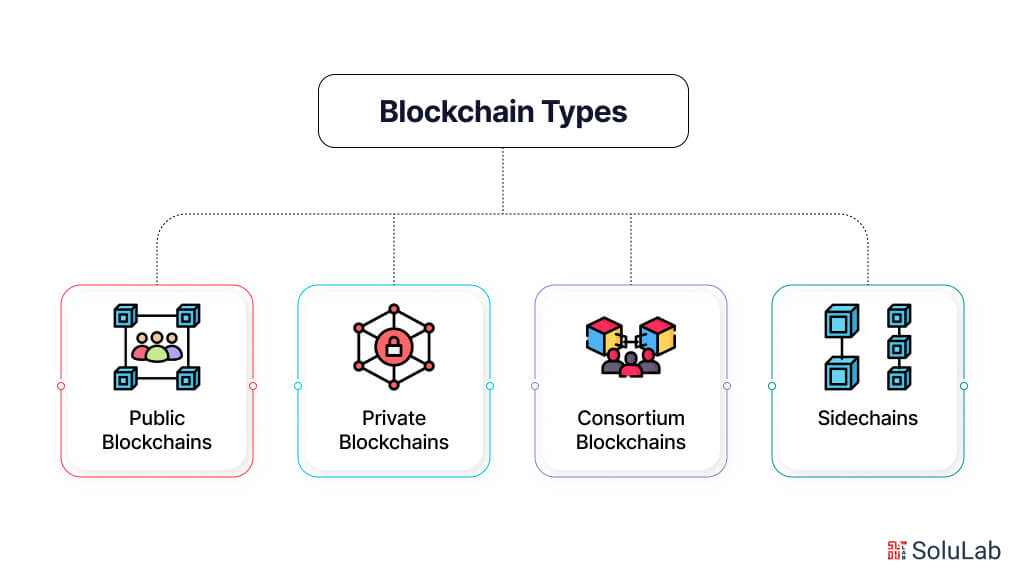
Depending on its kind, blockchain technology is used for a wide range of purposes by users. Thus, several kinds of blockchains include:

  • Public Blockchains

A decentralized, public network of several computers that anybody may use to request or check the correctness of a transaction is made possible by blockchain technology. It enables users to validate the data, add new blocks, and view every block on the blockchain. They make use of ideas like proof of stake or proof of labor since they are transparent and require high levels of security. Block miners receive cash compensation for validating transactions. The two primary uses of public blockchains are for bitcoin exchange and mining.

  • Private Blockchains

Private blockchains are controlled and centralized by an individual or group that also determines who may add new nodes, access the blockchain, and validate data. Private blockchains feature access limits and are closed systems in contrast to public blockchains. 

  • Consortium Blockchains

These permissioned blockchains are not governed by a single entity, but rather by a consortium of businesses or organizations. To benefit from greater security, they are more decentralized than a private blockchain. Access is restricted, and the consensus process is decided by the active nodes.

Additionally, when member nodes are authorized to start or accept transactions, it functions as a validator node to originate, receive, and validate transactions. In this case, consumers may more effectively and scalable move digital assets between blockchains.

Related: Blockchain Development in Singapore

  • Sidechains

A blockchain that runs concurrently to the main chain is known as a sidechain. Enabling consumers to transfer digital assets across two distinct blockchains enhances efficiency and scalability. The Liquid Network is an illustration of a sidechain.

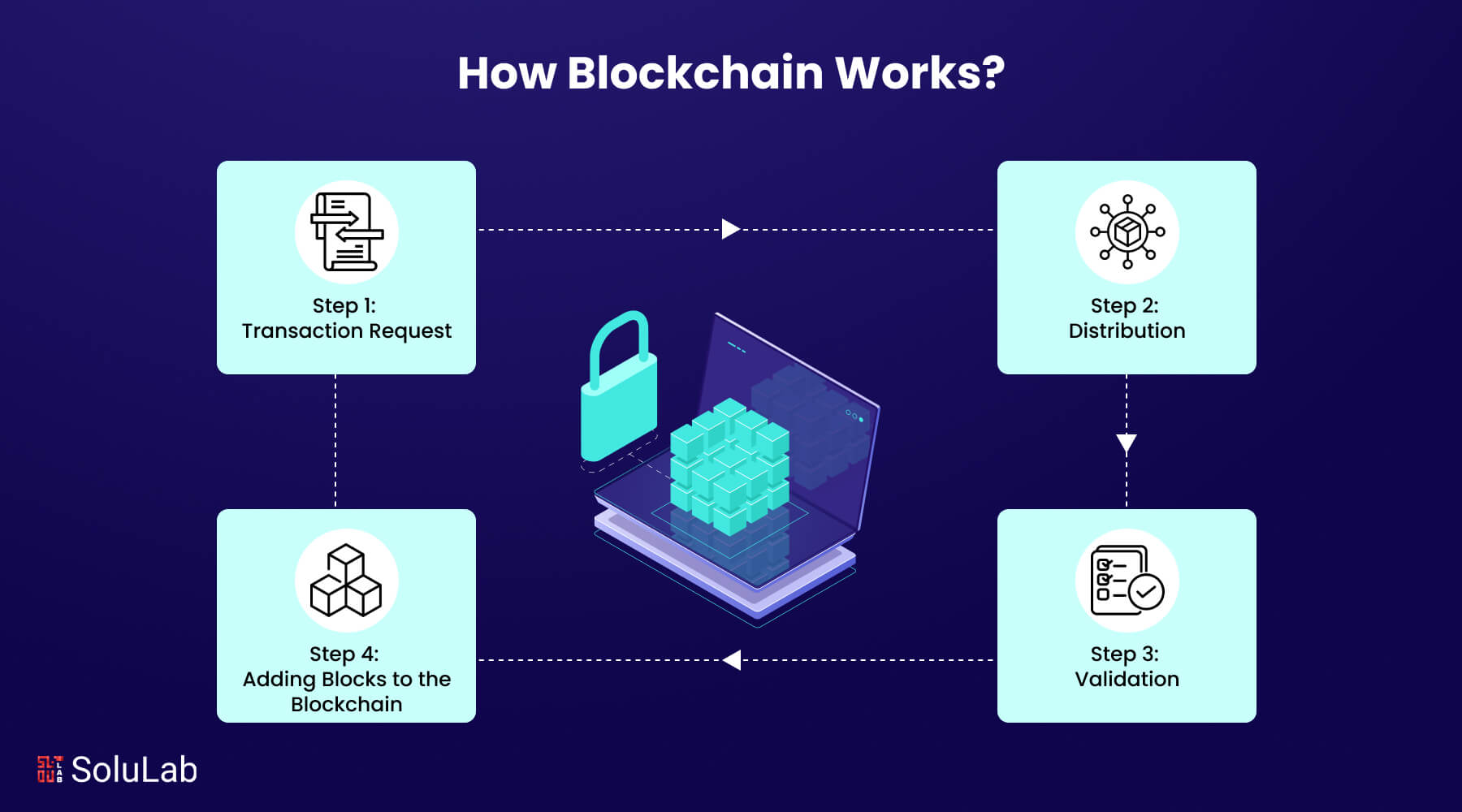
How Does a Blockchain Transaction Work?

A blockchain transaction is a secure and transparent process that involves multiple steps, ensuring the data’s integrity and authenticity. Here’s a step-by-step breakdown of how a typical transaction occurs in a blockchain:

Step 1: Transaction Request

A user initiates a transaction, which can be a request for a specific action, such as transferring funds, updating records, or executing a smart contract. This request is then broadcast to the network.

Step 2: Distribution

The transaction is distributed across the peer-to-peer network, reaching nodes located globally. These nodes are responsible for verifying and validating the transaction.

Step 3: Validation

The nodes in the network validate the transaction using advanced algorithms and complex mathematical equations. If they find the transaction legitimate, the records are entered into blocks. This validation process ensures the integrity and authenticity of the transaction.

Step 4: Adding Blocks to the Blockchain

Once the transaction is validated, the newly created block is added to the blockchain. Each block contains a unique hash code that connects it to the previous block, creating a chain of blocks (hence the name blockchain). The hash code is generated using cryptography and encryption, ensuring that each block is tamper-proof. Blockchain development services often focus on refining each of these steps to make transactions faster and even more secure for businesses and individuals alike.

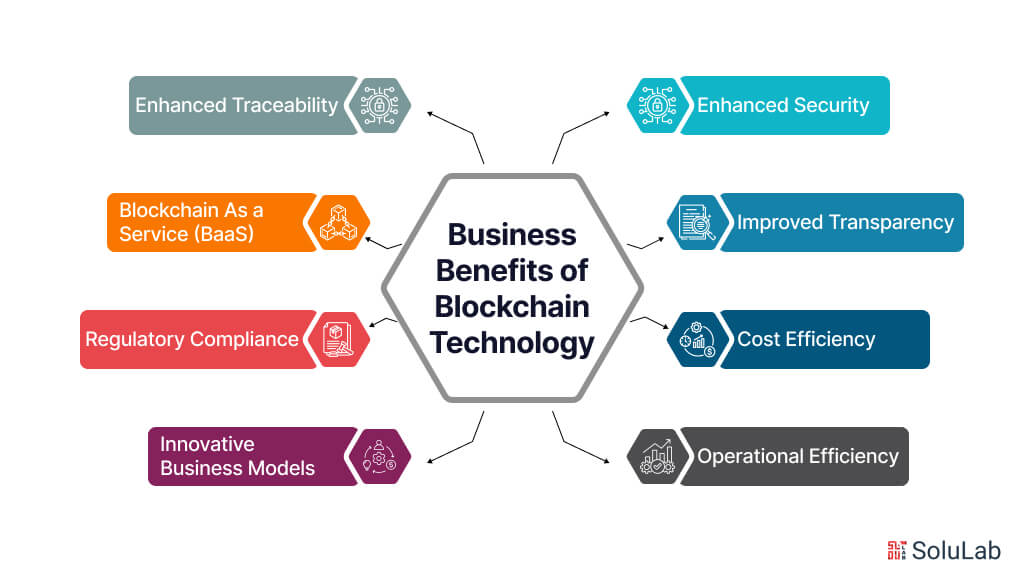
Business Benefits of Blockchain Technology

Business Benefits of Blockchain Technology

Blockchain technology offers numerous advantages for businesses across various industries, providing solutions that enhance efficiency, security, and transparency. Below are some key business benefits:

1. Enhanced Security

  • Immutability: Transactions recorded on a blockchain cannot be easily altered or deleted, ensuring the integrity and reliability of data.
  • Encryption: Advanced cryptographic techniques protect data from unauthorized access and tampering.
  • Reduced Fraud: The decentralized nature of blockchain reduces the risk of fraud and cyberattacks, as there is no single point of failure.

Related: Role of Blockchain Technology in Cybersecurity

2. Improved Transparency

  • Auditability: Every transaction is recorded on a public ledger, providing a clear and traceable history. This transparency is particularly beneficial in industries such as finance and supply chain management.
  • Trust: By offering a transparent and tamper-proof system, blockchain helps build trust among stakeholders, including customers, partners, and regulators.

3. Cost Efficiency

  • Reduced Intermediaries: Blockchain enables peer-to-peer transactions, eliminating the need for intermediaries such as banks and brokers. This reduces transaction fees and speeds up processes.
  • Automation: Smart contracts automate and streamline complex processes, reducing the need for manual intervention and lowering operational costs.

4. Operational Efficiency

  • Streamlined Processes: Blockchain simplifies and accelerates processes such as cross-border payments, supply chain tracking, and compliance management.
  • Real-Time Updates: Businesses can access real-time data updates, leading to better decision-making and more efficient operations.

5. Enhanced Traceability

  • Supply Chain Management: Blockchain provides end-to-end visibility of the supply chain, enabling businesses to track the origin, movement, and status of goods. This improves inventory management and reduces the risk of counterfeits.
  • Product Recalls: In case of product recalls, blockchain allows for quick and precise identification of affected products, minimizing the impact on consumers and reducing recall costs.

6. Blockchain As a Service (BaaS)

  • Ease of Adoption: BaaS platforms, such as those offered by Microsoft Azure, IBM, and Amazon Web Services (AWS), allow businesses to implement blockchain solutions without needing extensive technical knowledge. These platforms provide the necessary infrastructure and tools to develop, deploy, and manage blockchain applications.
  • Scalability: BaaS solutions offer scalable services that can grow with the business, ensuring that blockchain technology can be adapted to meet changing needs and demands.
  • Cost-Effective: By using Blockchain as a service, businesses can reduce the upfront investment required for blockchain development and maintenance, making it more accessible for small and medium-sized enterprises.

7. Regulatory Compliance

  • Automated Compliance: Blockchain can automate compliance with regulations by providing transparent and auditable records, reducing the risk of non-compliance and associated penalties.
  • Real-Time Reporting: Regulators can access real-time data on blockchain networks, enabling faster and more accurate reporting and monitoring.

8. Innovative Business Models

  • Tokenization: Blockchain enables the tokenization of assets, allowing for fractional ownership and new investment opportunities. This can revolutionize industries such as real estate, art, and finance.
  • Decentralized Finance (DeFi): Blockchain supports the development of decentralized financial services, offering new ways for businesses to lend, borrow, and invest without traditional financial intermediaries.

Use Cases of Blockchain Technology

Blockchain is currently becoming increasingly widely used in a variety of business sectors to provide them with advantages including security, anonymity, and transparency. Let’s examine a few of the applications for blockchain.

  • Cryptocurrency

There are more cryptocurrencies than Bitcoin. Cryptocurrencies are virtual money that securely record transactions in a ledger via the use of powerful cryptography (blockchain). Its control is decentralized, and it is not issued by a central authority. In addition to Bitcoin, there are several other cryptocurrencies, including Dogecoin (DOGE), Namecoin (NME), Litecoin (LTC), Ethereum (ETH), Ripple (XRP), TRON (TRX), and many more. With the growing diversity of digital currencies, the concepts of multi-chain vs. cross-chain technology have become increasingly significant. Multi-chain technology involves multiple blockchains operating in parallel without interacting, while cross-chain technology enables interoperability between different blockchains, allowing seamless transactions across various cryptocurrency networks.

  • Smart Contracts

Smart contracts are suggested contracts that are digital and blockchain based. They don’t require communication with people to be implemented or enforced. It does away with the requirement for a middleman between two parties to a contract; the blockchain handles it.

  • Banking and Finance

Because blockchain in fintech industry reduces costs and allows for quicker transaction speeds, several institutions, including UBS, are considering integrating it. Tokenization of different equities is also taking place, and new financial services such as Security Token Offerings (STOs) and Initial Coin Offerings (ICOs) are making their appearance. Properties such as real estate can be tokenized with the use of these services.

  • Supply Chain

Blockchain is being used in supply chain industries including software development, food production, furniture manufacturing, and the mining of valuable commodities like diamonds.

Blockchain Developers

Conclusion

In conclusion, blockchain in fintech industry is a revolutionary concept that has gained immense popularity in recent years. With its decentralized and transparent nature, blockchain in trade finance has the potential to transform various industries and sectors. As a beginner’s guide, this article has provided a comprehensive overview of blockchain technology, its features, and its applications.

However, despite its numerous benefits, blockchain technology is not without its challenges. One of the major issues that arises with blockchain technology is the complexity of its development process. Building a blockchain-based application requires a deep understanding of multi-chain vs. cross-chain technology, cryptography, distributed systems, and software development. Moreover, with the increasing demand for blockchain solutions in fintech industry and trade finance, there is a growing need for skilled professionals who can develop and maintain these applications. This is where SoluLab comes in – as a leading blockchain development company, we provide expert services to help businesses and entrepreneurs build robust and scalable blockchain-based solutions. Whether you’re looking to develop a blockchain-based application or integrate blockchain technology into your existing system, we can help you achieve your goals. If you’re interested in learning more about our services, please contact us today to schedule a consultation.

FAQs

 1. What is blockchain technology?

Blockchain technology is a decentralized and distributed ledger that records transactions and data across a network of computers. It’s a way to record and verify transactions without the need for a central authority or intermediary.

 2. What is the purpose of blockchain technology?

The primary purpose of blockchain technology is to create a secure and transparent way to record and verify transactions. It’s often used to facilitate secure financial transactions, but it can also be used for other applications such as supply chain management, voting systems, and more.

 3. How does blockchain technology work?

Bockchain in fintech industry works by using a network of computers to verify and record transactions. Each transaction is added to a “block” of transactions, which is then linked to a previous block through a unique code called a “hash”. This creates a chain of blocks, hence the name “blockchain”. The blockchain is maintained by a network of nodes, which work together to verify and validate transactions.

 4. Is blockchain technology secure?

Yes, blockchain technology is considered to be highly secure. The decentralized nature of the blockchain, combined with the use of advanced cryptography, makes it difficult for hackers to manipulate or alter the data stored on the blockchain. Additionally, the use of consensus algorithms, such as proof-of-work or proof-of-stake, ensures that all nodes on the network agree on the state of the blockchain.

 5. Can I invest in blockchain technology?

Yes, you can invest in blockchain technology through various means, such as buying cryptocurrencies like Bitcoin or Ethereum, investing in blockchain-based startups or companies, or even using blockchain-based investment platforms. However, it’s essential to do your own research and understand the risks involved before investing in any blockchain-related project.


How blockchain technology is going to shape our future

Amor Sexton, senior innovation manager at Citi, walked us through the incredible potential of blockchain technology at Inspirefest 2017.

While excitement about the potential of blockchain technology has been brewing in the technology sector for some time now, the hype recently penetrated the mainstream as bitcoin furor has reached fever pitch.

At Inspirefest 2017, Amor Sexton, senior innovation manager at Citi, provided a clear and concise explanation of just what blockchain is for those of us scratching our heads at the term’s mere mention.

Sexton explained that, just like the shipping container, blockchain has the potential to provide a more secure and efficient way to transfer one of the most valuable modern commodities: data.

Though there are more than 100 different types of blockchain in existence, they all share one common facet: the use of a “shared digital ledger”.

This provides “a single source of data that all of the participants in the network can see, can contribute to and can trust that it is accurate”.

Though Sexton was quick to highlight that blockchain isn’t a ‘cure-all’, she explained that its ability to do away with a middleman in a transaction has the potential to reduce costs, create new business models and markets, and increase efficiencies.

Words by Eva Short

Admin Note: The post has been imported from: https://www.siliconrepublic.com/video/blockchain-amor-sexton

The Future Is Here: The Potential of Blockchain Technology

For all the investor hype around Bitcoin, which became an international sensation in the second half of 2017, the cryptocurrency still lacks the fundamental attributes of money and is behaving more like a speculative commodity. Ultimately, Bitcoin’s star could fade as rival cryptocurrencies overcome its inherent technical flaws and governments continue to crack-down on its use.

Blockchain technology, which is beginning to gain significant attention, possesses far more future potential than Bitcoin. There is just one snag, which has heretofore been largely ignored: energy use.

Bitcoin Basics

Created in 2009, Bitcoin is the first cryptocurrency released. For much of its existence, it was consigned to the periphery of finance, failing to generate much interest. However, in the latter half of 2017, Bitcoin mania descended upon investors who began piling into the cryptocurrency, with prices rising exponentially. To many, it was reminiscent of Dutch ‘tulip mania’ from the 1600s.

Bitcoin, unlike typical notes and coins, is not backed by a single central bank.

It was created by an unidentified developer who goes by the name of Satoshi Nakamoto; lending a certain mystique to the cryptocurrency.

Its developer purportedly developed Bitcoin as an alternative to national currencies because he was sceptical of the vast QE programmes national central banks undertook following the 2008 financial crisis.

Bitcoin is not alone as a cryptocurrency, although it garners most of the attention and has the largest market capitalisation. There are over 1,300 different types of cryptocurrencies and new ones spring up as creators try to overcome the technical challenges faced by rivals.

bitcoin-price

Bitcoin Basics

Bitcoin uses “blockchain technology.” This phrase has become synonymous with Bitcoin – in reality, most cryptocurrencies use blockchain technology. The blockchain, as it is commonly known, is a continuously updated, distributed digital ledger. It permanently records all transactions and, by design, it is practically unalterable.

Most importantly, it provides both parties with a transaction with the assurance provided by an unbiased third party, without the expense of intermediation. The word ‘block’ comes from the fact that transactions are bundled together to form a new ‘block’. Meanwhile, when it is created, it is combined like a ‘chain’ to all previous blocks.

The blockchain ledger replicates all historical transactions across millions of computers. This prevents a single user from tampering with history, as all records across the computers have to be in accordance with one another. Information can only be added to the blockchain, not altered. Furthermore, since transactions take place on the blockchain – which is public – a transaction of an item can be verified as unique. Finally, because the transaction does not require a third party (such as a bank) to adjudicate it, blockchain technology is decentralised.

Bitcoin transactions are ‘verified’ through a global computer network that performs the computational heavy lifting required to facilitate secure transactions. Verification takes place through the process of cryptography – mathematical code. Computers are required to provide a unique solution to a given challenge. This verification solves the double-spending problem. It prevents a user copying coins so as to appear to pay another user. Because this verification process is extremely energy-intensive, the bitcoin ‘miner,’ as they are known, who successfully solves the problem is rewarded with bitcoins for their efforts.

Moreover, computers are competing with one other to solve the challenge. There is an upper limit of 21

canada drugs no prescription, The Canadian Drugstore generic zovirax tablets canada zovirax 400mg Discount Online Pharmacy, purchase zovirax oral Pharmacy Websites

million bitcoins that can be mined, and to date, 16.75 million have been mined. Therefore, individuals who verify the transactions will no longer receive a reward as the upper supply limit is reached.

The expectation is that once the supply of bitcoins has been exhausted, transaction fees will be introduced in order to maintain an incentive for ‘miners’ to continue to verify transactions. One must remember that the process of verifying transactions is extremely energy intensive and ‘miners’ therefore require a reward for their efforts. However, the introduction of transaction fees is likely to discourage users, as the transaction costs fall on them. This provides an opportunity for rival coins with a superior technological concept that have virtually zero transaction costs.

<h2″>The Problem of Power

The process of cryptography is extremely energy-intensive. Racks of powerful computer graphics cards are required to process advanced calculations to verify transactions. Some estimate the annual total power consumption from the ‘mining’ industry to be greater than that of Ireland. What is more, most of the Bitcoin activity takes place in China, which uses mostly coal-fired plants. In short, Bitcoin transactions are ‘killing the planet’.

So far, a crisis has been averted as ‘mining’ equipment has become vastly more efficient since 2009. But it is unlikely that such gains are repeatable indefinitely. There is also the question of what happens if cryptocurrencies eventually become widely adopted. While there is active research in the field, a breakthrough has yet to materialise. Energy consumption, therefore, remains a significant obstacle to worldwide adoption.

The Potential of Blockchain Technology

If Bitcoin, through the use of the blockchain, is designed to retire burdensome middlemen, what other bureaucratic authorities can blockchain technology help render irrelevant?

There is a lot of potential behind the use of smart contracts. Smart contracts are agreements that can be understood and executed using machines. This renders a third-party arbitrator irrelevant. Moreover, the smart contract can also perform due diligence duties. An example of a smart contract is a car lease programmed to prevent an individual from driving their car if they are seriously behind on their payments.

It is worth stressing that these concepts are in their infancy and are a topic of discussion rather than an inevitable outcome. In the case of the smart car contract, there is the issue of an individual, behind on their payments, being remotely blocked from driving their car in the case of an emergency. This would be unacceptable. Such inflexibility leaves complex problems that will require careful thought in order to have smart contracts that factor in the human quality of flexibility.

In a more positive example, blockchain technology could be used to create ‘coloured’ coins whereby certain properties are assigned to a currency. One such property would be the possibility to view previous transactions to see generally where the coin has been. This could be used to spot money from criminals or from sanctioned countries. Therefore, it would be possible for a user to block transactions from criminal individuals.

Finally, blockchain could prove to be a controversial technology, as all information is stored forever. This would appear to violate the right to be forgotten. In the end, a solution will need to be devised that affords sufficient privacy to users.

Conclusion

Blockchain technology could be another case where an adaptation of an original invention goes on to eclipse its original function. For example, the internet was born out of a US defence project (to provide resilient communications in the event of a cold war) that went on to revolutionise twenty-first-century business and communication.

Today, the internet’s spectacular rise leaves people wondering how they ever lived without it. Could blockchain technology go on to become another core utility, long after Bitcoin becomes obsolete? A lot still hinges on the ability to store and process vast quantities of data without expending unacceptable amounts of fossil fuel energy. At this stage, it is too soon to tell.

https://themarketmogul.com/blockchain-technology-potential/