Talk to an Expert

Play-to-Earn Games: Revolutionizing the Gaming Industry with Blockchain

Blockchain P2E Games

In the gaming world, a revolutionary concept has emerged – play-to-earn games. These virtual experiences have started to reshape how we view and participate in the gaming industry, thanks to the power of blockchain technology. In this blog, we will delve into the concept of play-to-earn games and how blockchain is playing a pivotal role in this transformation.

Play-to-Earn Games: A New Paradigm

Play-to-earn games, often abbreviated as P2E, represent a paradigm shift in the gaming industry. Unlike traditional video games, where players invest time and skill solely for entertainment, play-to-earn games allow participants to accumulate in-game assets that have real-world value. These assets can be traded, sold, or even used as collateral, creating economic opportunities for players.

The defining characteristics of play-to-earn games include decentralized ownership of assets, blockchain-based scarcity, and transparent, trustless ecosystems. Players in P2E games not only enjoy the immersive experience but also have the chance to earn a living through their gaming endeavors.

Read Blog Post: Top 25 Blockchain-Based Gaming Companies

Gaming has come a long way since the days of Pong and Space Invaders. In the early years, video games were perceived as pure entertainment, with no tangible value beyond the screen. Over time, competitive gaming, or esports, emerged, offering professional players the chance to earn money through tournaments and sponsorships.

However, the transformation truly began with the rise of virtual economies within video games. Games like World of Warcraft introduced the concept of virtual currencies and in-game trading. Players began to realize the potential for making a profit within these virtual worlds.

The term “play-to-earn” may have only recently gained prominence, but its roots trace back to the early 2010s. It was in this era that blockchain technology, primarily associated with cryptocurrencies like Bitcoin, was applied to gaming. Games like CryptoKitties and Decentraland pioneered the idea of blockchain-based assets and ownership.

One of the pioneering play-to-earn games, Axie Infinity, launched in 2018 and set the stage for this revolutionary concept. Axie Infinity allowed players to own, breed, and trade digital creatures called Axies, with the potential to earn real income in the form of cryptocurrency. The success of Axie Infinity paved the way for a new era in gaming, as more developers and players recognized the economic possibilities that play-to-earn offered.

Understanding Blockchain Technology

Blockchain technology, which underpins play-to-earn games, is a distributed ledger that records transactions across a network of computers. It’s designed to be transparent, immutable, secure, and decentralized. Each record, or block, is linked to the previous one, creating a chain of blocks.

Blockchain technology is the backbone of play-to-earn games, enabling them to function as they do. It ensures that in-game assets are truly owned by the players and not controlled by centralized game developers or publishers. The transparent nature of the blockchain also guarantees that all transactions and asset scarcity are publicly verifiable, enhancing trust within the ecosystem.

Benefits of Blockchain in Gaming
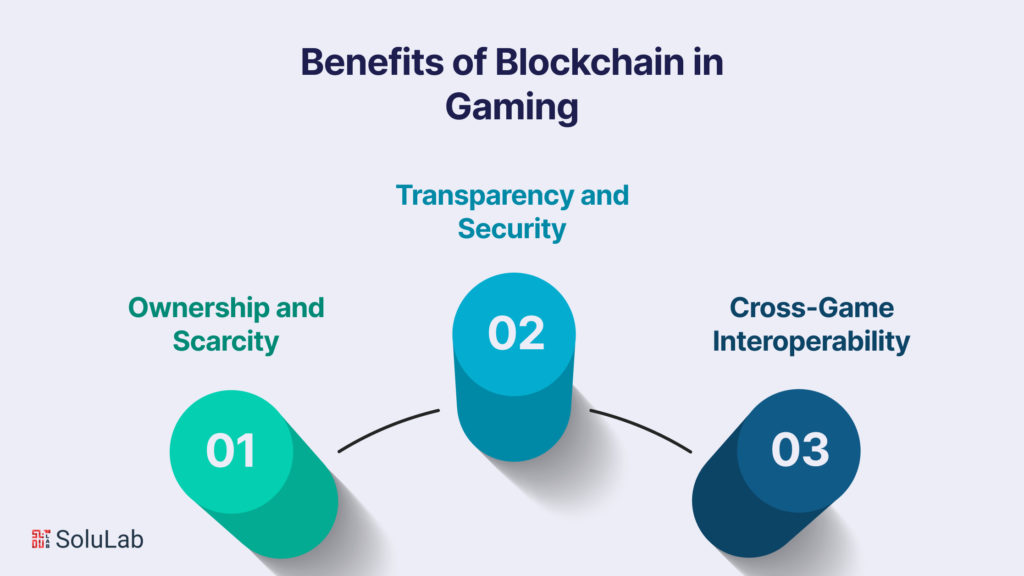
Benefits of Blockchain in Gaming

Blockchain technology offers a plethora of benefits in the context of gaming, which are driving the play-to-earn revolution:

  • Ownership and Scarcity

In traditional games, items and currency often exist solely within the game’s servers. Players may invest significant time and money into acquiring virtual assets, only to find them disappear when a game shuts down. In play-to-earn games, assets are recorded on the blockchain, granting players true ownership. This means they can buy, sell, trade, or even use these assets as collateral in decentralized finance (DeFi) applications.

Blockchain also introduces scarcity by limiting the supply of certain in-game assets, mimicking the scarcity of physical items. This scarcity enhances the value of these assets, as players understand that there is a finite number available, creating a sense of rarity and exclusivity.

CTA1

  • Transparency and Security

The blockchain ledger is transparent and secure, ensuring that all transactions are recorded and publicly accessible. This transparency minimizes fraudulent activities and cheating within games, fostering a fair and secure environment for players. Since blockchain transactions are immutable, they cannot be altered, providing a high level of security for player assets.

  • Cross-Game Interoperability

One of the most groundbreaking aspects of blockchain in gaming is cross-game interoperability. Players can use assets acquired in one blockchain-based game in another. For example, an armor set earned in one game can be used in another game developed by a different studio. This interoperability unlocks new possibilities for gamers and developers alike, as they can leverage a wide range of assets across different virtual worlds.

Notable Blockchain Gaming Projects
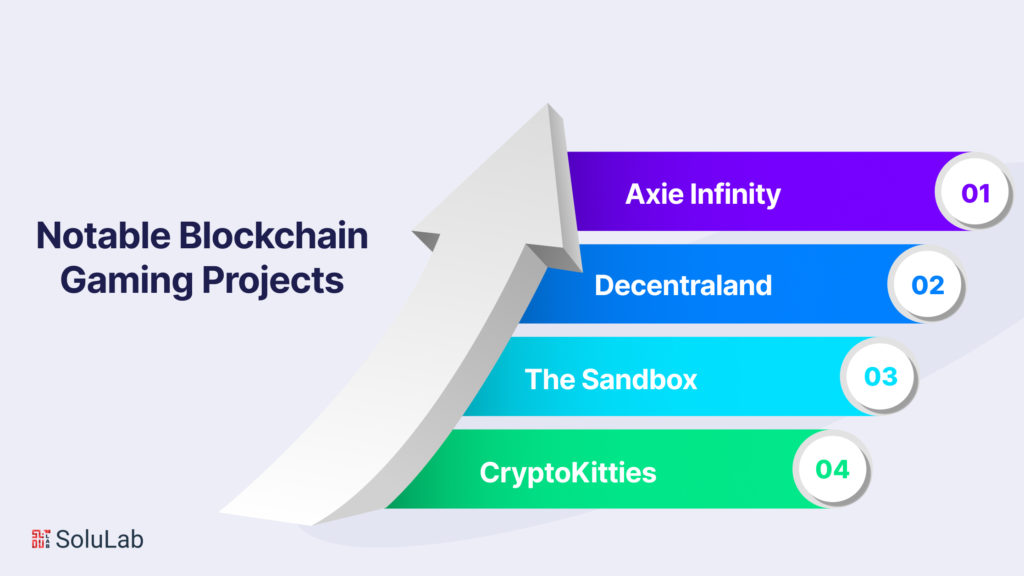
Notable Blockchain Gaming Projects

Several blockchain-based games and platforms have gained attention for their innovative use of blockchain technology. Here are a few notable examples:

  • Axie Infinity

As mentioned earlier, Axie Infinity is a blockchain-based game where players collect, breed, and battle fantasy creatures called Axies. These creatures are NFTs (non-fungible tokens) that can be bought and sold in a marketplace. Axie Infinity has seen remarkable growth, with players earning cryptocurrency for their in-game activities.

  • Decentraland

Decentraland is a virtual world built on the Ethereum blockchain, allowing players to buy, sell, and build on virtual land parcels. The ownership and transactions of these virtual properties are secured on the blockchain. Decentraland represents a metaverse, a concept that envisions interconnected virtual worlds.

  • The Sandbox

The Sandbox is a user-generated content platform that lets players create, own, and monetize their gaming experiences and assets. These user-generated assets are represented as NFTs on the blockchain, and creators can sell them in a marketplace.

  •  CryptoKitties

CryptoKitties, one of the earliest blockchain games, introduced the concept of collectible, breedable, and tradeable digital cats. Each CryptoKitty is an NFT, allowing players to own and trade these unique digital pets.

Economic and Social Impact

One of the most remarkable aspects of play-to-earn games is the economic empowerment they offer to players. Unlike traditional games, where players often invest time and money for purely entertainment purposes, play-to-earn games enable participants to monetize their gaming skills.

These games have the potential to transform the lives of players, especially in regions where traditional job opportunities may be limited. In countries with economic disparities, play-to-earn games have opened doors to financial independence. Players can earn a living wage by participating in these virtual worlds, making it possible to support themselves and their families through gaming.

For instance, in the Philippines, where the cost of living is high and job opportunities can be scarce, many players have turned to games like Axie Infinity to make a decent income. They earn cryptocurrency by breeding and battling Axies, which they can then convert into real-world money.

Check Out Our Blog: Top Blockchain Technology Companies in 2025

Redefining the Gaming Experience

Play-to-earn games offer a unique gaming experience that sets them apart from traditional titles. In these games, the player’s investment of time and skill translates into tangible rewards, creating a sense of accomplishment beyond the virtual realm.

Players not only immerse themselves in captivating gameplay but also have a vested interest in their in-game activities. Every move, every strategy, and every decision can affect their earnings. This dynamic makes the gaming experience more engaging, as players are directly linked to the outcomes of their in-game actions.

As a result, play-to-earn games often foster dedicated communities, with players supporting and learning from one another. The social aspects of gaming have never been more pronounced, as players share tips, strategies, and stories about their experiences.

Social and Cultural Implications

The rise of play-to-earn games has social and cultural implications that extend beyond gaming. These games have introduced a new way of earning income and have disrupted traditional notions of work and leisure.

Read Also: Top 10 Real World Applications of Blockchain Technology

In some cultures, the concept of making money through gaming has met with skepticism or misunderstanding. However, as these games gain traction and visibility, societal perceptions are evolving. The success stories of players who have achieved financial stability and success through play-to-earn games are changing the narrative, legitimizing gaming as a viable career.

Additionally, the communities within play-to-earn games have transcended geographical boundaries. Players from diverse backgrounds and locations come together, share experiences, and collaborate, demonstrating the unifying power of gaming. This inclusivity has the potential to foster greater understanding and global cooperation.

Challenges and Concerns
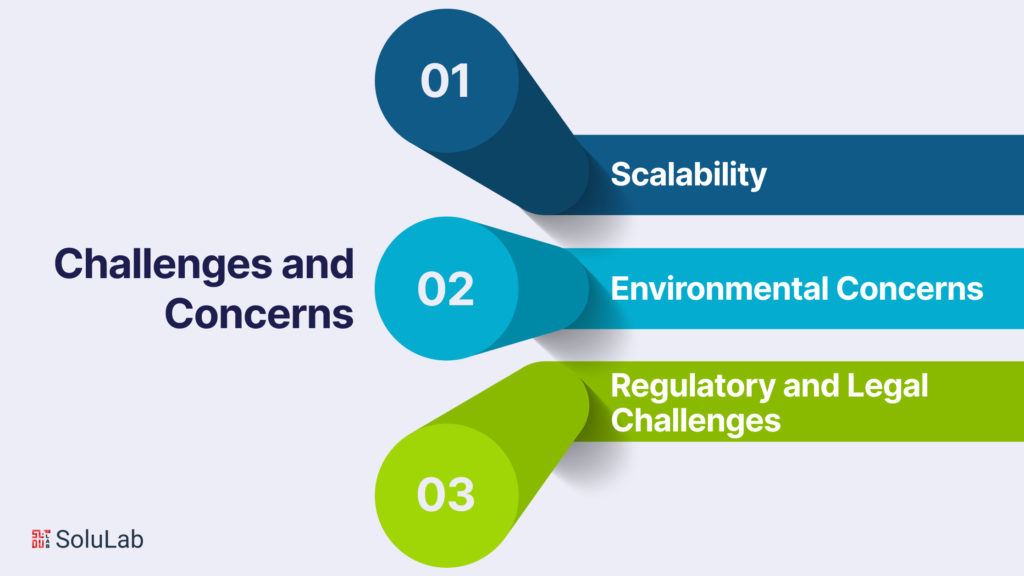
Challenges and Concerns

  • Scalability

The adoption of blockchain technology in gaming is not without its challenges. Scalability is one of the primary concerns. Many blockchain networks face limitations in terms of transaction speed and capacity. This can lead to slow or congested gameplay experiences in some blockchain-based games. Developers are actively working on solutions, such as layer-2 scaling solutions, to mitigate this issue and ensure seamless gameplay.

  • Environmental Concerns

Another concern is the environmental impact of blockchain networks. Most blockchain networks, including Bitcoin and Ethereum, rely on a proof-of-work (PoW) consensus mechanism that consumes a substantial amount of energy. This has led to concerns about the carbon footprint of blockchain technology. To address this, some projects are transitioning to more energy-efficient consensus mechanisms, like proof-of-stake (PoS).

  • Regulatory and Legal Challenges

The regulatory landscape for blockchain gaming is still evolving. Different countries have varying approaches to regulating cryptocurrencies and virtual assets, which can create legal uncertainties for developers and players. The industry is in the early stages of addressing these regulatory challenges, but it’s essential for the long-term success of play-to-earn games.

Play-to-Earn and the Future of Gaming

The growth of play-to-earn games has been nothing short of phenomenal. The success of games like Axie Infinity and the increasing popularity of metaverse concepts indicate a bright future for this gaming paradigm. The number of players and investors entering the space continues to rise, with NFTs from blockchain games frequently making headlines.

Market statistics reveal a steady upward trajectory, with the global blockchain gaming market estimated to reach significant values in the coming years. New players are eager to explore the potential of play-to-earn, and the competition among blockchain game developers is intensifying.

Technological Innovations

The rapid pace of technological innovation is another key driver of the play-to-earn revolution. Developers are continually pushing the boundaries of what’s possible, creating immersive virtual worlds and innovative gameplay experiences. The integration of augmented reality (AR) and virtual reality (VR) with blockchain gaming is on the horizon, promising even more immersive and engaging experiences.

Predictive algorithms and artificial intelligence are also being used to create more dynamic and responsive in-game environments, where the player’s choices have far-reaching consequences. These innovations are set to redefine how we engage with play-to-earn games.

Predictions and Speculations

While predicting the future of any industry is always challenging, several trends and possibilities are worth considering:

1. The Metaverse Revolution: The concept of the metaverse, an interconnected network of virtual worlds, could become a reality. The metaverse would offer limitless possibilities for players to explore, interact, and earn across different virtual landscapes.

2. Mainstream Adoption: As blockchain technology becomes more accessible and user-friendly, play-to-earn games may experience mainstream adoption. Traditional game developers may also integrate blockchain features into their titles.

3. Regulatory Clarity: Governments and regulatory bodies are expected to provide clearer guidelines for blockchain gaming, addressing legal concerns and ensuring a secure environment for players and investors.

4. Diverse Revenue Streams: Play-to-earn games might introduce new and diverse revenue streams, including NFT-based virtual real estate, streaming opportunities, and sponsored content within virtual worlds.

CTA2

Conclusion

In summary, play-to-earn games are transforming the gaming industry by offering players real-world value for their in-game achievements. The integration of blockchain technology ensures true ownership, scarcity, transparency, and security, unlocking opportunities for players and reshaping the gaming experience.

The play-to-earn revolution is dynamic and continually evolving. As technology advances and the community grows, we can expect even more innovation in the years to come.

SoluLab offers comprehensive blockchain game development services, enabling the creation of immersive gaming experiences using blockchain technology. Our expert blockchain developers specialize in decentralized application development across various blockchain protocols, including Ethereum, Polygon, Binance, Hyperledger, Solana, Polkadot, and more. Whether you’re looking to build blockchain-based games or decentralized applications, we provide the expertise you need. Contact SoluLab today to explore the endless possibilities of blockchain gaming.

FAQs

1. What are play-to-earn games, and how do they work?

Play-to-earn games are video games that allow players to earn real-world value through in-game activities. These games are often built on blockchain technology, which ensures true ownership of in-game assets. Players can collect, trade, or sell these assets, turning their gaming skills into financial opportunities.

2. What is the role of blockchain in play-to-earn games?

Blockchain technology underpins play-to-earn games by providing a transparent, secure, and decentralized infrastructure. It enables true ownership of in-game assets, scarcity through blockchain-based tokens, and trustless transactions. Blockchain ensures that players have full control of their virtual assets and the ability to monetize them.

3. Can you give examples of successful play-to-earn games?

Yes, there are notable play-to-earn games such as Axie Infinity, Decentraland, The Sandbox, and CryptoKitties. Axie Infinity, for instance, allows players to collect, breed, and battle fantasy creatures called Axies, which are tokenized on the blockchain. Players earn cryptocurrency by participating in these activities.

4. What challenges do play-to-earn games and blockchain technology face?

Play-to-earn games encounter challenges related to scalability, environmental concerns due to the energy consumption of blockchain networks, and regulatory and legal uncertainties. Developers are actively working on addressing these issues to ensure a sustainable and secure environment for players.

5. How can I get started with play-to-earn games and blockchain gaming?

To get started, you’ll need to set up a digital wallet compatible with the blockchain used by the game. Next, explore different play-to-earn games and choose one that interests you. Acquire the necessary in-game assets, learn the gameplay, and start earning. Keep in mind that, like any investment, it’s essential to do your research and understand the game’s mechanics before getting involved.

Investing in Blockchain Development: A Strategic Guide for Businesses

Investing in Blockchain Development: A Strategic Guide for Businesses

Blockchain technology is a decentralized and immutable digital ledger system that records transactions across a network of computers in a secure and transparent manner. It consists of a chain of blocks, each containing a set of transactions. What sets blockchain apart is its cryptographic security and consensus mechanism, which ensures that once information is recorded, it cannot be altered or deleted without the consensus of the network participants. This technology was originally created as the underlying framework for cryptocurrencies like Bitcoin, but its potential applications have since expanded far beyond digital currencies.

Each block in a blockchain contains a group of transactions, and these blocks are linked together in chronological order, forming a chain. The unique feature of blockchain is its cryptographic validation mechanism, which ensures that once data is added to the chain, it cannot be altered or tampered with without consensus from the majority of network participants. This inherent security makes blockchain technology a trustworthy and tamper-resistant solution for various applications.

Read Our Blog Post: Top Blockchain Technology Companies in 2023

What is the Importance of Blockchain for Businesses?

Importance of Blockchain for Businesses

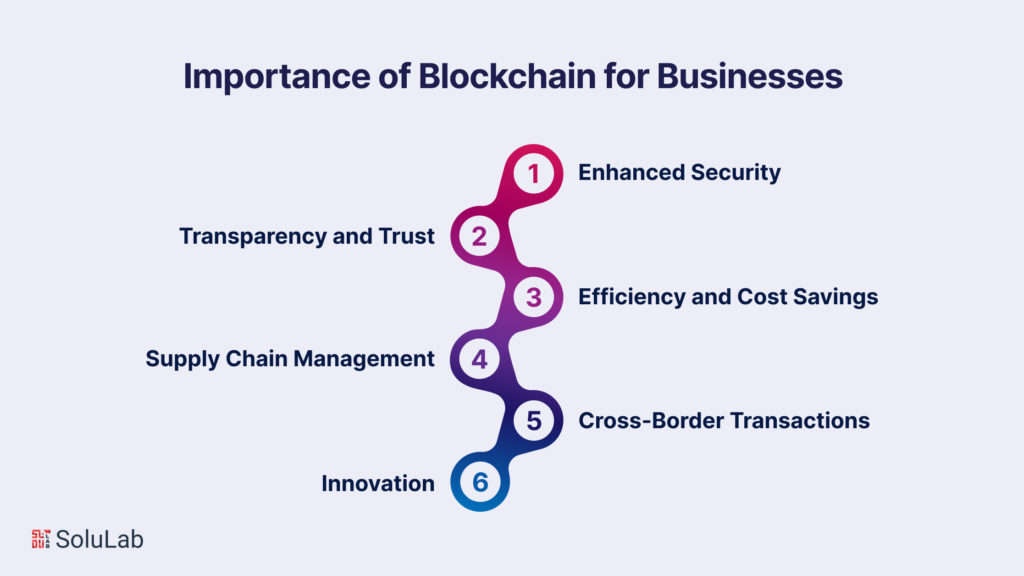
The importance of blockchain for businesses cannot be overstated, as it has the potential to transform traditional business operations, enhance security, and drive efficiency in a multitude of ways. Blockchain technology offers several key advantages:

  • Enhanced Security

Blockchain’s cryptographic nature makes it highly secure, reducing the risk of fraud and unauthorized access to data. This is especially critical in industries where data integrity is paramount, such as finance and healthcare.

  • Transparency and Trust

Blockchain’s transparent and immutable ledger fosters trust among participants. Businesses can verify the authenticity of transactions and data, reducing disputes and the need for intermediaries.

  • Efficiency and Cost Savings

Smart contracts, a feature of blockchain, automate contract execution and enforce terms without the need for intermediaries. This leads to reduced administrative costs and faster transaction processing times.

CTA1

  • Supply Chain Management

Blockchain enables end-to-end visibility in supply chains, reducing fraud, errors, and delays. Businesses can track products from origin to destination with greater accuracy.

Check Out the Blog Post: Top 10 Real World Applications of Blockchain Technology

  • Cross-Border Transactions

Blockchain facilitates cross-border transactions by eliminating the need for multiple intermediaries and reducing transaction fees. This is particularly beneficial for international trade.

  • Innovation

Blockchain is a catalyst for innovation, driving the development of new business models and revenue streams. Companies can explore blockchain applications that were previously unthinkable.

How does Blockchain work?

How does Blockchain work

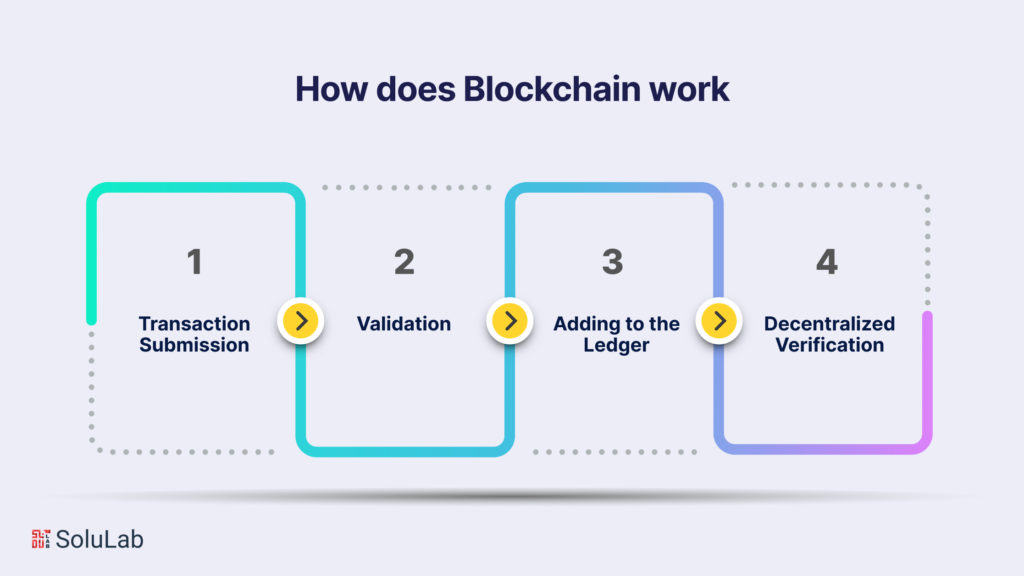
Understanding how blockchain operates is crucial for businesses looking to leverage this technology effectively:

  • Transaction Submission

Users initiate transactions by creating a request to add data to the blockchain. This data can represent various actions, such as transferring assets, verifying identities, or recording ownership changes.

  • Validation

Transactions are sent to the network’s nodes, where they undergo verification. In public blockchains, this verification is typically done through a consensus mechanism like PoW.

  • Adding to the Ledger

Once a transaction is validated, it is added to a new block. This block is then linked to the previous one, forming a continuous chain.

  • Decentralized Verification

Multiple nodes on the network must reach a consensus before a transaction is considered valid. This decentralized verification ensures trust and security.

What are the Types of Blockchains?

Types of Blockchains

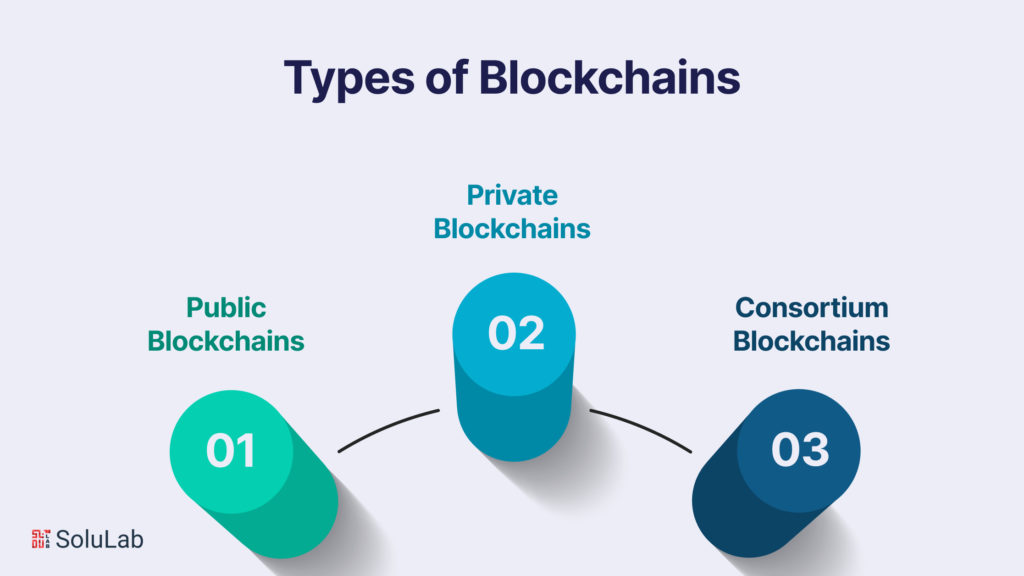
Blockchains come in various forms, each suitable for different business needs:

  • Public Blockchains

Public blockchains, like Bitcoin and Ethereum, are open to anyone and offer complete transparency. They are ideal for businesses looking to create blockchain-based applications with widespread accessibility.

  • Private Blockchains

Private blockchains are restricted to a specific group of participants, making them suitable for businesses that require control over access and data privacy. They are often used for internal processes and collaborations.

  • Consortium Blockchains

Consortium blockchains are a hybrid of public and private blockchains. They are governed by a group of organizations rather than a single entity. This type is beneficial for industries with multiple stakeholders, such as blockchain in supply chains.

How Can Businesses Leverage Blockchain Technology to Identify and Address Their Specific Needs?

In today’s fast-paced and ever-evolving business landscape, staying competitive requires constant innovation and the ability to leverage cutting-edge technologies. Blockchain technology has emerged as a transformative force, offering a wide array of applications for businesses across various industries. To embark on this journey, it’s crucial to start with the right blockchain business idea. In this guide, we’ll delve into the essential steps of blockchain business idea generation.

 Identifying Business Needs

  • Businesses must begin by identifying their specific needs and challenges. This introspective process involves examining existing inefficiencies, security concerns, or operational bottlenecks. 
  • For example, a company might struggle with supply chain transparency, financial fraud, or data privacy issues. Identifying these pain points is the first step in determining how blockchain can provide a solution.

Exploring Blockchain Applications

  • Once the business needs are clear, the next step is to explore the myriad blockchain applications available. Blockchain has proven its versatility, and it can be applied to various domains. 
  • Some popular blockchain use cases for businesses include supply chain management, smart contracts, identity verification, and decentralized finance (DeFi). Businesses should thoroughly research these applications to understand how they can address their specific challenges.

Assessing Market Demand

  • While blockchain technology holds immense potential, it’s essential to assess the market demand for your proposed blockchain solution. 
  • Market research is critical to determine whether there’s a demand for your idea. It involves analyzing your target audience, competitors, and potential partners. Understanding market trends, such as the increasing adoption of blockchain in various sectors, can help validate your business concept.

Formulating a Unique Blockchain Business Idea

  • To stand out in a competitive landscape, it’s crucial to formulate a unique blockchain business idea that aligns with your identified needs, blockchain applications, and market demand. This idea should address a specific pain point effectively and provide a clear value proposition.
  • For instance, if you’re in the logistics industry and have identified supply chain inefficiencies, your unique blockchain business idea could involve creating a blockchain-based platform that offers real-time visibility and traceability of goods. This solution could utilize smart contracts to automate and optimize processes, reducing costs and enhancing transparency

What are Some Key Emerging Trends and Innovations in Blockchain Technology?

Emerging Trends and Innovations in Blockchain Technology

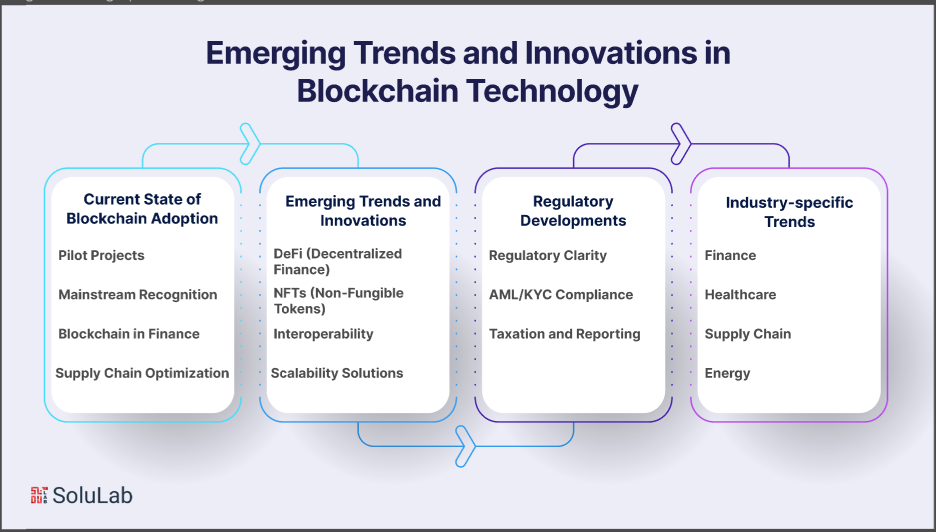
Current State of Blockchain Adoption

Blockchain technology has made significant strides in recent years, with a growing number of businesses recognizing its potential to revolutionize various industries. The current state of blockchain adoption reflects a dynamic landscape of innovation and transformation.

  • Pilot Projects

Many businesses have moved beyond the initial experimentation phase and are now actively implementing blockchain solutions. Pilot projects are being conducted across diverse sectors, from supply chain management to healthcare.

Read Also: Top 10 Blockchain Development Companies in 2023

  • Mainstream Recognition

Blockchain is no longer a niche concept. It has gained recognition and support from major tech companies, financial institutions, and governments worldwide, showcasing its mainstream appeal.

  • Blockchain in Finance

In the financial sector, blockchain is being used for cross-border payments, remittances, and even central bank digital currencies (CBDCs). This adoption has the potential to disrupt traditional banking systems.

  • Supply Chain Optimization

Blockchain’s traceability and transparency features are driving its adoption in supply chain management. Businesses are utilizing blockchain to track and authenticate the origin of products, improving trust and reducing fraud.

Emerging Trends and Innovations

The blockchain landscape is continuously evolving, with several emerging trends and innovations shaping the future of business applications.

  • DeFi (Decentralized Finance)

DeFi projects are growing rapidly, offering decentralized lending, borrowing, and trading platforms. These innovations challenge traditional financial intermediaries and offer greater financial inclusion.

  • NFTs (Non-Fungible Tokens)

NFTs have gained immense popularity, particularly in the art, entertainment, and gaming industries. These digital assets are revolutionizing ownership and provenance verification.

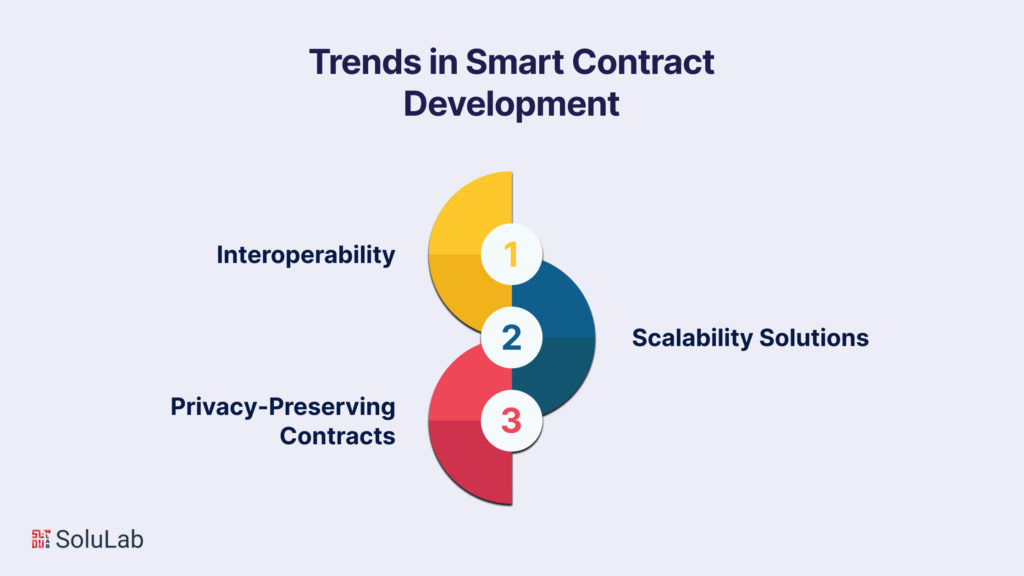
  • Interoperability

Cross-chain compatibility and interoperability solutions are emerging, allowing different blockchains to communicate and share data seamlessly. This will enhance the flexibility and utility of blockchain networks.

  • Scalability Solutions

The challenge of blockchain scalability is being addressed through various solutions, such as Layer 2 solutions and sharding, enabling faster and more cost-effective transactions.

Read Our Blog: Best Companies to Hire Blockchain Developers in 2023

Regulatory Developments

Blockchain technology has prompted regulatory bodies to respond with new frameworks and guidelines.

  • Regulatory Clarity

Governments are increasingly providing regulatory clarity, which is essential for businesses to navigate the blockchain space confidently. This includes defining the status of cryptocurrencies and tokens.

  • AML/KYC Compliance

Regulations regarding Anti-Money Laundering (AML) and Know Your Customer (KYC) procedures are being strengthened to mitigate risks associated with blockchain-based financial transactions.

  • Taxation and Reporting

Tax authorities are developing guidelines for cryptocurrency taxation, ensuring that businesses and individuals are compliant with tax obligations related to blockchain assets.

Industry-specific Trends

Blockchain’s impact is felt differently across various industries, each with its unique trends and opportunities.

  • Finance

In finance, blockchain is leading to the tokenization of assets, making it easier to trade and transfer ownership of real estate, stocks, and other assets.

Read Our Blog: Blockchain Security: Best Practices Every Developer Should Know

  • Healthcare

In healthcare, blockchain is improving data security and interoperability, facilitating the secure sharing of patient records among healthcare providers.

  • Supply Chain

The supply chain industry is witnessing blockchain adoption to enhance traceability and reduce fraud, addressing consumer demands for transparency.

  • Energy

Blockchain is being used to create decentralized energy grids, allowing peer-to-peer energy trading and optimizing resource allocation.

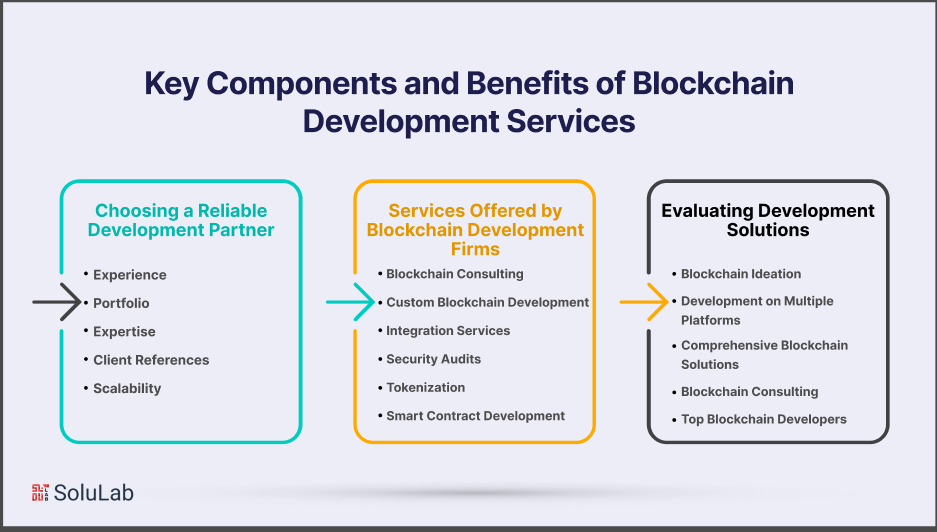
What are the Key Components and Benefits of Blockchain Development Services?

Key Components and Benefits of Blockchain Development Services

Blockchain development services play a pivotal role in enabling businesses to harness the power of blockchain technology for their growth and innovation. These services encompass a wide range of solutions tailored to meet the specific needs of businesses seeking to leverage blockchain’s potential. Let’s delve into the essential aspects of blockchain development services, their significance, and how to make the right choice for your business.

Choosing a Reliable Development Partner

Selecting the right development partner for your blockchain project is a critical decision that can significantly impact its success. When considering blockchain development services, businesses should look for reliability, expertise, and a track record of delivering high-quality solutions. Here are key factors to consider when choosing a development partner:

  • Experience

Evaluate the development partner’s experience in blockchain technology. Have they worked on similar projects or blockchain use cases relevant to your business idea?

  • Portfolio

Examine their portfolio to gauge the quality of their previous work. Look for successful implementations of blockchain applications with businesses.

  • Expertise

Assess the team’s expertise in various blockchain platforms and technologies. Are they well-versed in blockchain trends and best practices?

  • Client References

Request client references and testimonials to gain insights into the partner’s reputation and the satisfaction of past clients.

  • Scalability

Ensure that the development partner can accommodate your project’s scalability requirements as your blockchain application grows.

Services Offered by Blockchain Development Firms

Blockchain development firms offer a comprehensive range of services to cater to diverse business needs. These services typically include:

  • Blockchain Consulting

Identifying viable blockchain use cases for your business, helping define blockchain business strategies, and assessing the feasibility of blockchain adoption.

  • Custom Blockchain Development

Creating tailor-made blockchain solutions to meet specific business requirements, whether it’s developing decentralized applications (DApps), smart contracts, or private blockchains.

  • Integration Services

Integrating blockchain technology seamlessly with existing business systems and processes to ensure smooth operations.

  • Security Audits

Conducting security audits and implementing robust security measures to protect blockchain assets and data.

  • Tokenization

Developing and launching tokens for fundraising or asset management purposes, such as initial coin offerings (ICOs) or security token offerings (STOs).

  • Smart Contract Development

Designing and coding smart contracts to automate business processes, enforce agreements, and enhance transparency.

Evaluating Development Solutions

When considering SoluLab for blockchain development services, businesses benefit from a reputable and experienced partner. SoluLab offers a wide array of blockchain services, including:

  • Blockchain Ideation

Assisting businesses in identifying blockchain use cases and crafting innovative blockchain business ideas.

  • Development on Multiple Platforms

Expertise in developing various blockchain platforms, such as Ethereum, Hyperledger, and Corda.

  • Comprehensive Blockchain Solutions

Providing end-to-end solutions, from consulting and development to deployment and maintenance.

  • Blockchain Consulting

Offering strategic guidance and insights to help businesses align their blockchain strategy with their goals.

  • Top Blockchain Developers

Access to a talented team of blockchain developers who are proficient in the latest blockchain technologies and trends.

By collaborating with SoluLab, businesses can leverage their blockchain expertise and commitment to delivering reliable, scalable, and secure blockchain solutions.

Blockchain development services are indispensable for businesses looking to harness the potential of blockchain technology. Choosing a reliable development partner and assessing the services offered are crucial steps in ensuring the success of your blockchain project. SoluLab stands as a reputable option for businesses seeking blockchain development solutions that align with their objectives and aspirations.

CTA2

Conclusion

In conclusion, SoluLab’s comprehensive Blockchain Business Strategy Guide offers invaluable insights into the dynamic world of blockchain development for businesses. As the landscape of technology evolves, it’s evident that blockchain is more than just a buzzword; it’s a transformative force with numerous blockchain use cases that can revolutionize your business. From enhancing security to streamlining operations and fostering trust among stakeholders, the potential of blockchain technology is boundless.

By investing in blockchain development services from SoluLab, you are not only staying ahead of blockchain trends but also positioning your business to thrive in an increasingly digital and decentralized world. Our expert blockchain developers can tailor blockchain solutions to match your unique needs, whether you’re exploring blockchain applications with business processes, considering new blockchain business ideas, or seeking to optimize your existing operations through blockchain technology.

With SoluLab’s blockchain consulting services, you gain a trusted partner who can guide you through the intricacies of blockchain technology, helping you make informed decisions and seize opportunities in this rapidly evolving space. Our commitment to delivering top-notch blockchain development solutions ensures that your business stays at the forefront of innovation and maintains a competitive edge. SoluLab’s blockchain consulting services provide expert guidance in the ever-evolving blockchain landscape. Trust us to lead your way to innovation and success. Contact SoluLab today for a brighter future.

FAQs

1. What is Blockchain Development, and why should businesses consider it?

Blockchain development involves creating decentralized, secure, and transparent digital ledgers. Businesses should consider it to streamline operations, enhance security, and explore innovative opportunities like blockchain applications with business.

2. What are some blockchain use cases for businesses?

Blockchain has numerous applications in businesses, including supply chain management, smart contracts, identity verification, and tokenization of assets. These use cases can improve efficiency and reduce costs.

3. What are the latest blockchain trends businesses should be aware of?

Blockchain trends evolve rapidly. Stay updated on trends like DeFi (Decentralized Finance), NFTs (Non-Fungible Tokens), and interoperability solutions to make informed investment decisions.

4. How can blockchain development benefit my business strategy?

Blockchain development can offer competitive advantages by increasing transparency, reducing fraud, and enhancing trust among stakeholders. It can also open up new revenue streams with blockchain platforms and innovative solutions.

5. What should you look for in blockchain development services?

When seeking blockchain development services, consider their expertise, track record, and ability to align blockchain technology with your business goals. Look for providers offering comprehensive blockchain solutions.

Creating the Next Decentralized Application: A Step-by-Step Blockchain Development Guide

Creating the Next Decentralized Application: A Step-by-Step Blockchain Development Guide

The technological landscape has witnessed a paradigm shift in the way applications are developed and deployed, thanks to the rise of decentralized applications (DApps) and blockchain technology. This transformative fusion has paved the way for innovative solutions that challenge the conventional models of centralized systems. 

In this blog, we embark on a comprehensive exploration of decentralized applications and the underlying blockchain technology, delving into the key steps involved in the blockchain/dapp development processes and highlighting their potential to reshape the technological landscape across various sectors.

Understanding Decentralized Applications (DApps)

At its core, a decentralized application, commonly referred to as a DApp, is a software application that operates on a decentralized network, utilizing the principles of blockchain technology. Unlike traditional applications, which rely on a central authority to manage data and processes, DApps operate on a distributed network of computers, providing enhanced transparency, security, and autonomy. DApps are characterized by their open-source nature, cryptographic security, and peer-to-peer interactions, making them a formidable alternative to centralized counterparts.

Read Blog Post: Top 10 dApp Development Companies

DApps can encompass a wide array of functionalities, ranging from finance and supply chain management to social networking and gaming. What sets them apart is their ability to function autonomously, free from the control of any single entity. Users of DApps become participants in a collective network, contributing to consensus mechanisms that validate transactions and ensure the integrity of the application. This unique architecture not only empowers users but also reduces the risk of data breaches and censorship.

Understanding Blockchain Technology

Central to the development and operation of DApps is the revolutionary concept of blockchain technology. At its core, a blockchain is a distributed, immutable ledger that records transactions across a network of computers in chronological order. This ledger is secured through advanced cryptographic techniques, ensuring that once data is recorded, it cannot be altered or tampered with, bolstering the authenticity and integrity of the information.

The blockchain’s structure comprises a series of blocks, each containing a batch of transactions. These blocks are linked together in a chain, forming an unbroken record of historical transactions. Decentralization is achieved by the network of participants, often referred to as nodes, who maintain copies of the entire blockchain. To reach a consensus on the validity of transactions, various consensus mechanisms, such as Proof of Work (PoW) and Proof of Stake (PoS), are employed, ensuring a trustworthy and transparent environment.

Blockchain technology serves as the backbone of DApps, providing the infrastructure for secure and efficient transaction processing, data storage, and execution of smart contracts. Smart contracts, self-executing agreements with predefined conditions, automate processes within DApps, eliminating the need for intermediaries and streamlining operations.

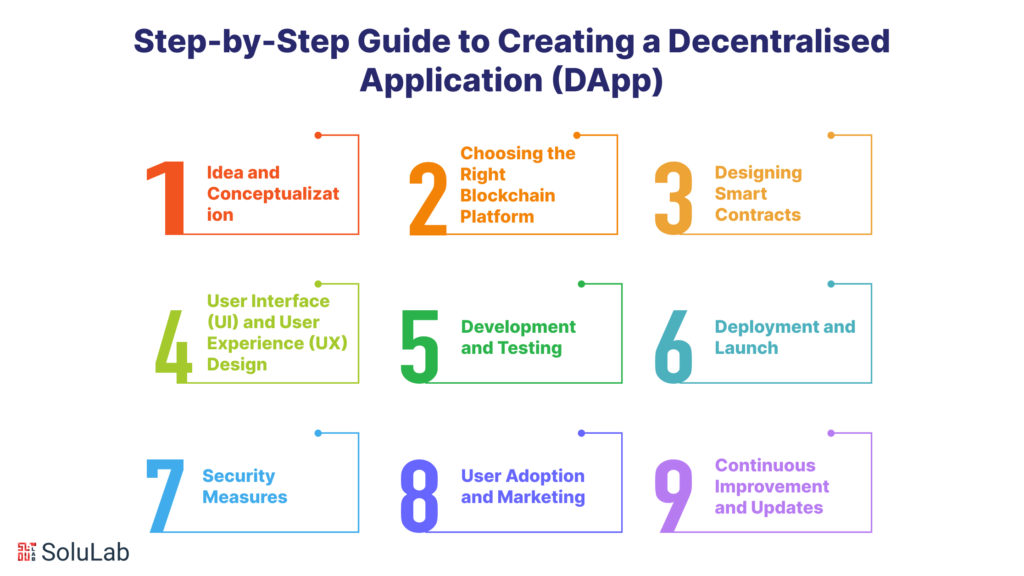
Step-by-Step Guide to Creating a Decentralized Application (DApp)

The process of creating a decentralized application involves a meticulous and multifaceted journey. Each step, from idea conceptualization to continuous improvement, plays a crucial role in shaping the success and impact of your DApp. By immersing yourself in the intricacies of each phase, collaborating with experts, and maintaining a user-centric approach, you can navigate the complexities of DApp development and contribute to the transformative potential of blockchain technology.

Step-by-Step Guide to Creating a Decentralized Application (DApp)

  •  Idea and Conceptualization

In the initial phase of developing a decentralized application (DApp), it’s crucial to lay a solid foundation through comprehensive idea conceptualization. This involves identifying a real-world challenge or inefficiency that can be effectively addressed through the unique capabilities of blockchain technology. Engage in thorough market research to pinpoint existing gaps and shortcomings in the target industry. By conducting a detailed analysis of current solutions and their limitations, you can craft a DApp concept that not only stands out but also delivers substantial value.

Outline the purpose and core functionalities of your DApp, aligning them with the identified problem. Consider creating a detailed project scope that encompasses various use cases and user personas. This scope will serve as a guiding document throughout the development process, ensuring that your DApp remains focused on its intended objectives.

  • Choosing the Right Blockchain Platform

Selecting the most suitable blockchain platform for your DApp is a pivotal decision that can significantly impact its success. Delve into a comprehensive assessment of various blockchain platforms, considering aspects such as consensus mechanisms, scalability, transaction speeds, interoperability, and developer community support.

Ethereum, for instance, is renowned for its robust smart contract capabilities, making it an ideal choice for complex decentralized applications. Conversely, Binance Smart Chain offers lower transaction fees, making it more suitable for applications that require frequent microtransactions. By thoroughly evaluating the pros and cons of each platform, you can make an informed decision that aligns with your DApp’s technical requirements and long-term vision.

CTA1

  • Designing Smart Contracts

Smart contracts are the backbone of any DApp, as they define the rules and logic governing interactions within the application. This step involves detailed planning and designing of these self-executing agreements, ensuring that they accurately reflect the intended functionalities of your DApp.

Detail the specific functions and interactions that each smart contract will facilitate. Consider outlining conditions that trigger these contracts, specifying the data they need to process and store. To expedite this process, leverage the capabilities of programming languages like Solidity (for Ethereum) that offer libraries and frameworks designed to simplify smart contract development. Thorough documentation of these contracts is essential to ensure transparency and effective collaboration among developers.

  • User Interface (UI) and User Experience (UX) Design

User experience (UX) design takes center stage as you embark on designing the user interface (UI) of your DApp. The goal here is to craft an intuitive and visually appealing interface that resonates with your target audience. This phase involves meticulous attention to detail to ensure seamless user interactions and navigation.

Lay out user flows and navigation paths that guide users through the various features of the DApp. Consider the placement of buttons, menus, and interactive elements to minimize user friction. Responsive design is paramount, ensuring that the DApp functions seamlessly across different devices and screen sizes. Collaborate with designers and UI/UX experts to create prototypes and wireframes that provide a tangible visualization of the DApp’s design and functionality.

Check Blog Post: Top Blockchain Technology Companies

  • Development and Testing

With a well-defined design in place, it’s time to roll up your sleeves and delve into the actual development of the DApp. This step encompasses both backend and frontend development, requiring proficiency in programming languages, frameworks, and development tools.

Write clean and efficient code for the backend, implementing the smart contract interactions and business logic. Simultaneously, I worked on the front end, bringing the design elements to life. Adhere to Software Development best practices, version control systems, and coding standards to ensure code quality, readability, and maintainability.

Testing plays a critical role in this phase. Set up testing environments, such as testes (sandbox environments), to simulate real-world interactions with the DApp. Perform rigorous testing, including unit tests that examine individual components, and integration tests that validate the interactions between different parts of the DApp. Security audits and vulnerability assessments are paramount to identify potential threats and weaknesses that could compromise the integrity of the DApp.

  • Deployment and Launch

The deployment of your DApp marks a significant milestone in the development process. Deploying smart contracts involves interacting with deployment tools provided by the chosen blockchain platform. This step requires meticulous attention to detail to ensure the accurate and secure uploading of your code onto the blockchain network.

Craft a comprehensive deployment plan that outlines the steps, tools, and configurations required for a successful deployment. After deployment, your DApp becomes accessible to users through their Crypto Wallets. Plan a comprehensive launch strategy that includes promotional activities, press releases, and user onboarding materials. Effectively communicate how users can access and interact with your DApp, providing them with a seamless entry point into the decentralized world you’ve created.

  • Security Measures

Security considerations are paramount in DApp development due to the sensitive nature of blockchain-based applications. Ensuring the integrity of your DApp involves a combination of proactive measures, audits, and continuous vigilance.

Conduct thorough code audits to identify vulnerabilities and potential attack vectors. Implement security best practices such as input validation, secure coding patterns, and access controls. As blockchain technology evolves, so do potential security threats. Stay updated on the latest security advisories and patches for your chosen blockchain platform, implementing updates promptly to mitigate risks.

Consider engaging third-party security auditing services to provide an independent assessment of your DApp’s security posture. This external review can offer valuable insights and help identify potential blind spots that may have been overlooked during development.

  • User Adoption and Marketing

The success of your DApp hinges on its adoption by users. Crafting a robust marketing strategy is essential to generate awareness, attract users, and foster engagement within the DApp’s ecosystem.

Utilize social media platforms, content creation, and influencer collaborations to spread the word about your DApp. Develop informative and engaging content that showcases the features and benefits of your DApp. Consider creating a dedicated website or landing page that serves as a central hub for information and user resources.

Community engagement is key in the blockchain space. Host webinars, Ask Me Anything (AMA) sessions, and online forums to interact with potential users, address their queries, and gather feedback. By actively participating in conversations and demonstrating your commitment to user satisfaction, you can build a loyal user base that becomes an integral part of your DApp’s growth journey.

Read Our Blog Post: 4 Big Problems to Solve in Crypto

  • Continuous Improvement and Updates

Even after the successful launch of your DApp, the journey is far from over. The landscape of blockchain technology is dynamic and ever-evolving, requiring constant vigilance and adaptation to remain competitive and relevant.

Monitor user engagement and gather feedback to identify areas for improvement. Regularly release updates that address bug fixes, enhance features, and incorporate user-requested changes. Stay informed about emerging trends and advancements in blockchain technology, considering how these developments can be integrated into your DApp’s roadmap.

Exploring partnerships and collaborations within the blockchain community can open up new avenues for growth and innovation. By staying proactive and receptive to user needs and technological advancements, you can position your DApp as a leading solution within its niche.

CTA2

Concluding Remarks

In conclusion, the amalgamation of decentralized applications and blockchain technology has ushered in a new era of innovation and disruption. DApps offer a novel approach to application development, leveraging blockchain’s inherent characteristics to provide trust, security, and empowerment to users. By embracing these advancements, industries stand to reshape their operations, unlocking unprecedented opportunities while addressing long-standing challenges.

SoluLab excels in decentralized application (DApp) development services, aligning seamlessly with the guide’s steps. Their strengths lie in ideation, blockchain selection, user-centric design, security, user engagement, and technological innovation. As pioneers in blockchain solutions, SoluLab exemplifies the transformative potential of DApps.

In the fast-paced world of blockchain development solutions, innovation knows no bounds. With dedication, creativity, and a commitment to the principles of decentralization, your dApp could be the next groundbreaking solution that changes the way we interact with the digital world. So, go forth, dream big, and build the future of decentralized applications! For expert guidance and support, contact SoluLab today.

FAQs

1. What is a DApp and how does it differ from a traditional app?

 A decentralized application (DApp) is a software application that operates on a decentralized network of computers, utilizing blockchain technology. Unlike traditional apps, DApps eliminate the need for intermediaries and offer greater transparency, security, and autonomy.

2. How does blockchain technology ensure the security of DApps?

Blockchain technology secures DApps through its decentralized and immutable ledger. Transactions are recorded in blocks, cryptographically linked to form a chain. This prevents unauthorized alterations, ensuring data integrity. Additionally, the consensus mechanism ensures that transactions are validated by a network of participants, reducing the risk of fraudulent activities.

3. What role do smart contracts play in DApps?

Smart contracts are self-executing agreements that automate processes within DApps. They facilitate, verify, or enforce the negotiation or performance of a contract, eliminating the need for intermediaries. Smart contracts enhance transparency, efficiency, and accuracy in various applications, from financial transactions to supply chain management.

4. How does the cost of developing a DApp compare to traditional application development?

The cost of developing a DApp can vary widely depending on factors like the complexity of the project, the blockchain platform chosen, and the desired features. While the initial investment in blockchain technology can be higher, DApps can lead to long-term cost savings by reducing intermediary fees and enhancing operational efficiency.

5. Can DApps be integrated with existing systems or applications?

Yes, DApps can be integrated with existing systems or applications through APIs (Application Programming Interfaces) or other interoperability solutions. This allows organizations to harness the benefits of blockchain technology without completely overhauling their infrastructure, making adoption more seamless and efficient.

Top 10 Real World Applications of Blockchain Technology

Top 10 Real World Applications of Blockchain Technology

In today’s rapidly evolving digital landscape, blockchain technology has emerged as a transformative force, reshaping the way we approach data management, security, and transparency. Originally conceived as the underlying technology for cryptocurrencies like Bitcoin, blockchain has evolved far beyond its initial application. This decentralized, immutable, and secure system has paved the way for a multitude of practical use cases across various industries. In this blog, we will delve into the top 10 real-world applications of blockchain technology, showcasing its versatility and potential to revolutionize the way we conduct business and secure information.

What is Blockchain Technology?

Before we dive into its applications, it’s crucial to grasp the fundamental concept of blockchain technology. At its core, a blockchain solution is a distributed ledger system that records transactions across a network of computers in a secure and immutable way. It operates within a blockchain ecosystem of protocols, networks, and platforms, providing a tamper-proof system for data management and exchange.

The blockchain network consists of nodes (computers) that validate and store transactions in a decentralized manner, ensuring no single entity has complete control. Transactions are grouped into blocks, and each new block is linked to the previous one, forming a chain of data blocks – hence the name “blockchain.” This architecture ensures data integrity, security, and transparency, making blockchain technology suitable for a wide range of applications.

Is Blockchain Safe to Use?

In a number of ways, blockchain technology allows decentralized security and trust. To begin, new blocks are constantly added in a chronological and linear order. They are always appended to the blockchain’s “end”.

Unless a significant part of the network agrees to do so, changing what is inside of a block after it has been appended to the end of the blockchain is extremely difficult. This is due to the fact that each block will include its own hash, as well as the hash of the prior one and the previously determined date.

A mathematical function converts digital information into a sequence of numbers and characters to generate hash codes. If that data is changed in any manner, the hash code will be changed as well. This makes blockchain development solutions safe to use.

Read Also: Top Blockchain Trends in 2025

How Does it Work?

Blockchain transactions are both anonymous and safe. Peer-to-peer transactions on the blockchain are immediate and transparent.

Trust is distributed from strong middlemen to a wide global network via blockchain. This worldwide network uses vast cooperation, coding, and encryption to create a public record of every transaction that occurs on the network.

A block is a piece of data or a transaction that is recorded in a blockchain. When a transaction or data storage is completed, the data block is added to the Blockchain as a permanent database. 

When a block is finished, a new block is created to hold fresh data. Every block is linked in a chain in chronological sequence, with each block having a connection to the previous block.

CTA2

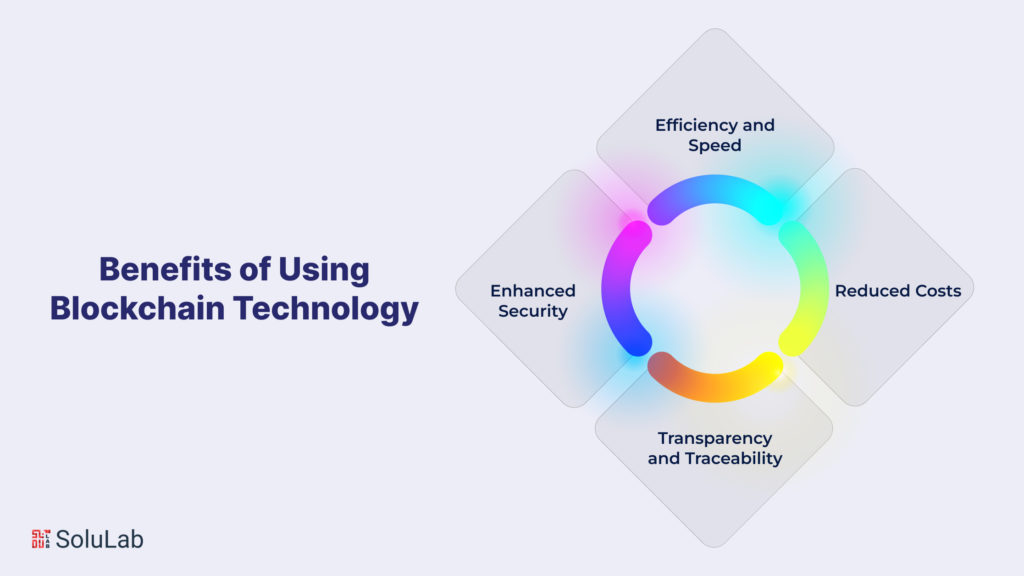
Benefits of Using Blockchain Technology

Blockchain technology has gained widespread recognition for its potential to revolutionize various industries. From financial services to supply chain management, the benefits of utilizing blockchain technology are numerous and far-reaching. In this section, we will explore some of the key benefits of incorporating blockchain into your business processes with a focus on the role of blockchain development services and blockchain developers.

Benefits of Using Blockchain Technology

1. Enhanced Security: One of the foremost benefits of blockchain technology is its exceptional security features. Data stored on a blockchain is cryptographically secured, making it highly resistant to hacking and fraud. Each block of data is linked to the previous one, creating an unbreakable chain. Blockchain development services ensure that robust security protocols are implemented to protect sensitive information.

2. Transparency and Traceability: Blockchain’s transparent and immutable nature allows for real-time tracking and auditing of transactions and data. This transparency is especially valuable in supply chain management, where it can be used to trace the origin and journey of products, ensuring authenticity and quality. Blockchain services can help businesses set up such systems efficiently.

3. Reduced Costs: Implementing blockchain technology can significantly reduce operational costs by eliminating intermediaries and streamlining processes. Smart contracts, for example, automate agreements and transactions, reducing the need for intermediaries like lawyers and brokers. Blockchain developers can customize smart contracts to fit specific business needs.

4. Efficiency and Speed: Blockchain technology enables faster and more efficient transactions, particularly in cross-border payments and remittances. Transactions that typically take days or weeks can be completed in minutes or even seconds. Blockchain development services play a crucial role in optimizing the performance of blockchain networks.

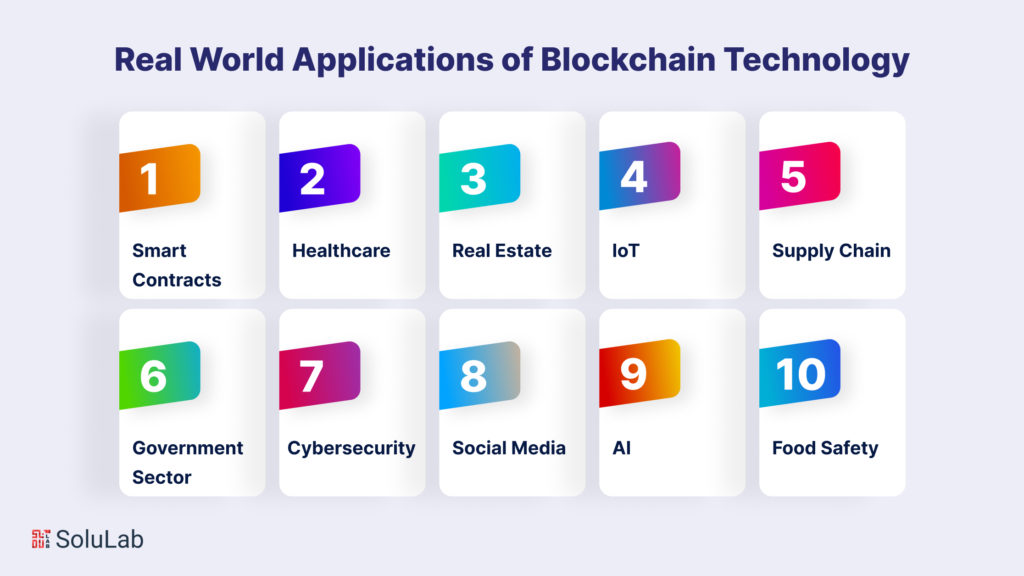
Top 10 Real-World Applications of Blockchain Technology

Blockchain technology, once primarily associated with cryptocurrencies, has evolved into a versatile solution with a wide range of real-world applications. The ability of blockchain platforms to provide security, transparency, and decentralization makes it a game-changer across various industries. In this article, we’ll explore the top 10 real-world applications of blockchain technology.

Real-World Applications of Blockchain Technology

  • Smart Contracts

Smart contracts are self-executing agreements with terms encoded in code. They automate and enforce contract execution, reducing the need for intermediaries in legal and financial transactions. Blockchain ensures their security and immutability, making them reliable tools for various applications, from insurance payouts to real estate transactions.

These contracts execute automatically when predefined conditions are met, minimizing the risk of disputes and fraud. Smart contracts enhance efficiency, reduce costs, and increase transparency in a wide range of industries.

  • Healthcare

Healthcare will be regarded as among the most competitive industries in the world, and blockchain technology is likely to be utilized or pushed by it. It may be viewed as the development of Blockchain Technology. The whole healthcare value chain can use blockchain, which is the supply chain’s potential business model.

Blockchain technology applications in healthcare will basically automate and change everything, from payments and health records to data collection and analytics, to the benefit of all parties involved, including patients and consumers as well as clinicians, administrators, and healthcare organizations.

  • Real Estate

Blockchain technology and applications have the ability to completely transform the real estate industry. Smart contracts are being developed by stakeholders to allow real estate agreements, escrows, and property documentation to be completed without the use of title firms or attorneys. In the future, a buyer may be able to purchase a property and finalize the transaction by simply clicking on a shopping cart on a website.

The blockchain solution will make sure that the buyer receives the title and that the seller is compensated in cryptocurrency. Money and transaction processing will undoubtedly alter, and that shift is already beginning. To prosper in the blockchain era, brokers will need to adjust their business models in order to comprehend smart transactions.

Read Also: Top 5 Enterprise Blockchain Platforms of 2025

  • IoT

Blockchain enables all Internet of Things devices to improve transparency and safety in their interconnected ecosystems. One significant example of blockchain implementation in IoT is around smart homes. Although IoT allows home security systems to be handled remotely from mobile devices, the typical centralized way to transmit data created by IoT devices fails security standards as well as data ownership. Blockchain has the ability to take smart homes to the next level by addressing security concerns and eliminating centralized infrastructure.

Telstra, an Australian telecommunications and media business, for example, offers smart home solutions. To ensure that data gathered by smart devices is not tampered with, the firm employs blockchain and biometric authentication—the blockchain stores sensitive user data such as fingerprints, voice recognition, and facial recognition. When data is recorded on the blockchain, it becomes unchangeable, and access is restricted to a small group of people.

  • Supply Chain

Companies are seeking methods that will not only streamline supply chain management but also figure out various business processes that comprise supply chains in an era where supply chains have grown increasingly complicated due to the developing demands of the consumer and other stakeholders. Many supply chain providers feel that blockchain technology may be used to successfully handle their problems because of its numerous and diverse uses.

The applications of blockchain in the supply chain vertical may improve a variety of operations, from streamlining supplier payments, cold chain tracking, and performing RFID-driven contract bids to gathering product status at the point of production and utilizing smart contracts for transferring excess power from solar panels. Ethereum will be used to tokenize the shipping sector in a future enterprise.

  • Government Sector

While blockchain applications are increasingly diminishing the requirement for centralized government organizations, the conflict between governments and cryptocurrencies is expected to reach a climax in the coming years. Governments, on the other hand, are aware of the potential that blockchains may unlock and are thus always on the lookout for ways to apply blockchain services to enhance and overhaul operational procedures. Many governments have used blockchains for a number of purposes.

Countries such as Venezuela and Russia are implementing their own national cryptocurrencies in order to increase transparency and reduce corruption. Furthermore, blockchains may be utilized to create immutable voting systems that eliminate forgeries and fraud as myths. Additionally, blockchains may be used to enhance identity management and tax administration.

  • Cybersecurity

As firms become increasingly reliant on the Internet and technologies to generate money and articulate business models, the opportunity for hackers to attack enterprises has grown enormously. The demand for effective cybersecurity solutions is at a record high in this state of amazement. What solution is more effective than blockchains’ decentralized structure? Blockchain development, with its distributed ledger technology, may fundamentally improve cyber protection.

 Based on the fundamental qualities of operating resilience, data encryption, auditability, transparency, and immutability, blockchain systems can prevent fraudulent actions and identify data tampering. Because blockchains are distributed, they do not allow for a single point of failure and hence provide better security than database-driven transactional systems.

  • Social Media

Not long ago, social media platforms absorbed humanity from all sides. However, due to various transgressions, such as personal data breaches and inadequate recompense for consumers, these platforms are losing appeal. The social media is losing its edge’ is not incorrect.

Blockchain enters the picture to transform the social media landscape. Technology improves social media systems to a whole new level. Blockchain technology, with its decentralized and distributed ledger structure, presents a system through which individuals may exert more control over the protection of personal information while possibly receiving monetary rewards for the viral material they select and share. Blockchain technology has the potential to elevate traditional social media to new heights. 

  • AI

AI built on top of blockchains is frequently referred to as an accounting technology disruptor and has the potential to be one of the most potent and hazardous inventions ever. Decentralized Autonomous Organizations (DAOs) might be created by decentralizing AI.

DAOs are businesses that can function independently and decentralizedly thanks to smart contracts, without a single entity controlling everything and making all the choices. When carried out properly, an AI DAO may eventually replace human design by learning from data to optimize itself far more effectively than was possible. Together, blockchains and AI, or what we may refer to as a “decentralized AI,” might open up new avenues for data security, data monetization, and intelligent algorithms.

  • Food Safety

Blockchain enables the tracking of food items from farm to table, ensuring food safety and traceability. In the event of contamination outbreaks, authorities can quickly identify affected products and minimize health risks. Consumers can also verify the authenticity of organic or locally sourced foods.

This technology builds trust in the food supply chain, reduces waste through better inventory management, and facilitates compliance with food safety regulations.

CTA1

Final Words

Blockchain technology is growing, from powering cryptocurrencies to impacting various real-world industries. From improving supply chain transparency to securing digital identities, blockchain’s decentralized, transparent, and immutable nature is transforming how businesses operate. These real-world applications of blockchain showcase its potential to drive innovation across finance, healthcare, logistics, real estate, and more. By leveraging blockchain, businesses can achieve higher levels of security, efficiency, and trust while reducing costs and complexity.

However, implementing blockchain solutions requires specialized expertise and a strategic approach. Partnering with an experienced Blockchain Consulting Company like SoluLab can help you unlock the full potential of this technology. SoluLab offers end-to-end blockchain development services, designed to your business needs. Whether you want to streamline processes, secure data, or introduce smart contracts, SoluLab has the technical expertise and industry experience to make it happen.

When you Hire Blockchain Developer from SoluLab, you gain access to a dedicated team of professionals skilled in building secure, scalable, and compliant blockchain applications. SoluLab helps businesses navigate the complexities of blockchain implementation, ensuring that their solution is robust and future-proof. From consultation and development to deployment and maintenance, SoluLab guides you at every step, ensuring a seamless transition to blockchain technology that drives growth and success.

If you’re ready to explore how blockchain can benefit your business, SoluLab is here to help you turn your ideas into reality.

FAQs

1. What is blockchain technology, and how does it work?

Blockchain is a decentralized digital ledger that records transactions across multiple computers securely and transparently. It works by organizing data into blocks, which are linked in a chain, making the information immutable and tamper-resistant.

2. What are the main benefits of using blockchain technology in real-world applications?

Blockchain technology offers benefits like enhanced security, transparency, decentralization, and immutability. It can reduce fraud, streamline processes, and provide a higher level of trust in transactions.

3. Which industries are currently adopting blockchain technology?

Blockchain is being adopted in industries such as finance, healthcare, logistics, real estate, supply chain management, government, and entertainment, among others. It is used to improve security, transparency, and efficiency in these sectors.

4. Can blockchain technology improve supply chain management?

Yes, blockchain can significantly improve supply chain management by providing real-time tracking, ensuring transparency, and reducing inefficiencies. It enables stakeholders to trace products and verify authenticity throughout the supply chain.

5. How can blockchain improve the security of digital identity systems?

Blockchain ensures that digital identity systems are more secure by creating decentralized, immutable records that cannot be tampered with. This prevents fraud, unauthorized access, and identity theft.

6. How can businesses get started with blockchain technology?

Businesses can start by consulting with a Blockchain Development Company to assess their needs, identify areas for blockchain implementation, and develop a custom blockchain solution. Hiring expert blockchain developers can help ensure a smooth adoption process and successful project execution.

Importance of Economic & Game Theory Audits in Smart Contracts

The Importance of Economic and Game Theory Audits in Smart Contracts

Blockchain technology has undoubtedly been a transformative force in the world of finance, commerce, and beyond. At the heart of this technological revolution lies the concept of “smart contracts.” These self-executing contracts, encoded within the blockchain, have rapidly gained prominence due to their potential to automate and streamline a wide array of processes. In this blog post, we delve into the world of smart contracts, exploring their definition, significance in the realm of blockchain technology, and the increasingly pivotal role of economic and game theory audits in ensuring their reliability and security.

A smart contract, in its simplest form, can be thought of as a computer program that automatically executes the terms of an agreement when predefined conditions are met. Unlike traditional contracts, which often rely on intermediaries and can be prone to human error or manipulation, smart contracts run on decentralized blockchain networks. They are written in code, containing a set of rules and conditions that, once triggered, initiate and enforce the contract’s terms without the need for a middleman.

Read Also: Ultimate Checklist For Smart Contract Audit

What is the Role of Economic and Game Theory Audits?

While smart contracts offer immense potential, they are not immune to vulnerabilities and flaws. This is where economic and game theory audits come into play. Economic audits focus on evaluating the economic incentives and fairness within smart contracts. They ensure that the rules and incentives embedded in the code align with the intended goals of the contract and its participants.

Game theory audits, on the other hand, analyze smart contracts from a strategic perspective. They examine the potential interactions and behaviors of participants within the contract, looking for equilibrium points and assessing the contract’s stability under various scenarios.

In an era where smart contracts are used in applications ranging from decentralized finance (DeFi) to supply chain management, economic and game theory audits serve as crucial tools for identifying and mitigating risks. They help developers and stakeholders understand the potential outcomes and challenges associated with a smart contract, ultimately enhancing its reliability and security.

In the sections that follow, we will delve deeper into the development and security aspects of smart contracts, explore the role of game theory in decentralized systems, and examine the importance of economic and game theory audits in greater detail. Through this exploration, we aim to shed light on the multifaceted world of smart contracts and the evolving strategies to ensure their integrity and functionality in the blockchain ecosystem.

CTA1

What are the Essential Steps in the Smart Contract Development Process?

Smart contracts, a pivotal component of blockchain technology, have revolutionized the way transactions are executed and automated. These self-executing contracts rely on predefined rules and conditions, eliminating the need for intermediaries and enhancing transparency. However, their implementation is not without challenges, making it crucial to emphasize the development process, security, and the importance of audits.

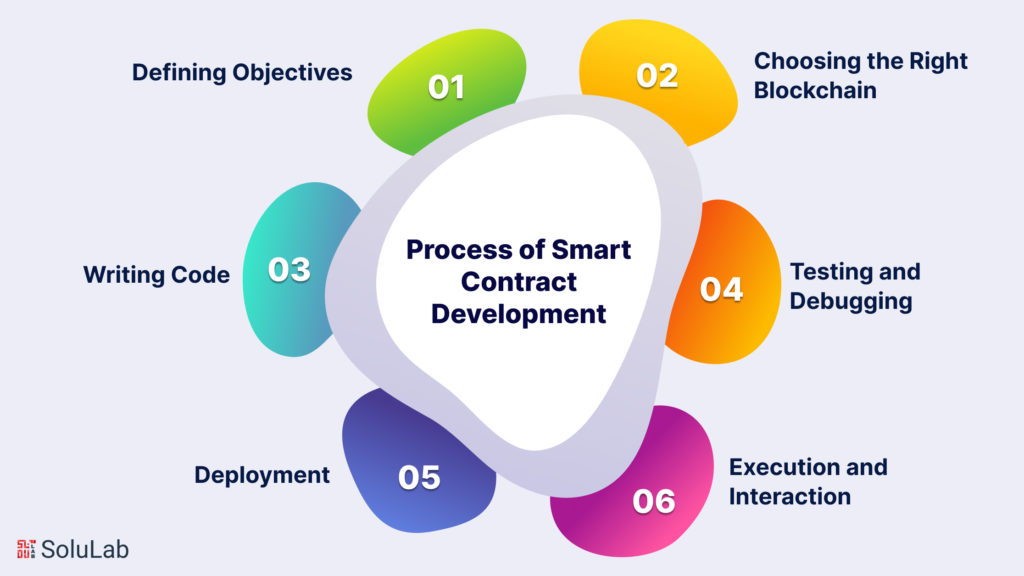
A. Smart Contract Development Process

Smart Contract Development Process

Smart contract development is a meticulous and structured process that involves several key steps:

  • Defining Objectives

Start by clearly defining the objectives and functions the smart contract needs to perform. This includes specifying the rules, conditions, and participants involved.

  • Choosing the Right Blockchain

Depending on your use case, select the appropriate blockchain platforms (e.g., Ethereum, Binance Smart Chain) for deploying your smart contract.

  • Writing Code

Skilled developers write the code that defines the smart contract’s logic. Solidity, a popular programming language, is commonly used for Ethereum-based contracts.

  • Testing and Debugging

Rigorous testing is essential to identify and rectify any vulnerabilities or bugs in the code. This includes simulating various scenarios to ensure the contract behaves as expected.
  • Deployment

Once thoroughly tested, the smart contract is deployed onto the chosen blockchain. Deployment typically incurs a gas fee, which varies depending on the blockchain.

  • Execution and Interaction

Users interact with the smart contract through transactions, triggering its predefined functions. These transactions are immutable and recorded on the blockchain.

B. Smart Contract Security Risks

Despite the benefits of smart contracts, they are susceptible to various security risks:

  • Code Vulnerabilities

Malicious actors can take advantage of errors or weaknesses in the programming. Common issues include reentrancy attacks, integer overflow/underflow, and unchecked external calls.

  • Oracles

Smart contracts frequently depend on other data sources known as oracles. Manipulating or compromising these oracles can lead to incorrect contract execution.

Read Our Blog: Top 10 Smart Contract Development Companies

  • Privacy Concerns

While transactions are transparent on the blockchain, the information contained within smart contracts can sometimes expose sensitive data.

  • Upgradeability

The ability to upgrade smart contracts can be a double-edged sword. While it allows for improvements, it also opens the door to potential misuse or unauthorized changes.

C. The Need for Smart Contract Audits

To mitigate these security risks, the need for smart contract audits becomes evident. Audits are a vital part of the smart contract development lifecycle, ensuring that the code is secure and functions as intended.
Smart Contract Security Audit

A smart contract security audit is a comprehensive examination of the contract’s code and functionality. This audit involves:

  • Identifying vulnerabilities and weaknesses in the code.
  • Ensure compliance with industry best practices and standards.
  • Verifying that the contract’s logic aligns with the intended functionality.
  • Analyzing potential attack vectors and recommending countermeasures.

Smart Contract Audit Services

Several specialized firms and individuals offer smart contract audit services. These auditors bring expertise in blockchain technology, smart contract development, and security best practices. Engaging audit services helps ensure that your smart contract is robust and resistant to exploitation.

D. Decentralized Applications and Their Reliance on Smart Contracts

Decentralized applications (dApps) heavily rely on smart contracts to execute their operations. These applications span various industries, from finance and supply chain to healthcare and gaming. The security and reliability of smart contracts are critical for the success and trustworthiness of dApps.

The profound impact of decentralized applications (dApps) on various industries underscores the critical role that smart contracts play in shaping the future of blockchain technology. As we’ve explored the significance of dApps and their reliance on smart contracts, it becomes evident that these self-executing contracts are the backbone of decentralized ecosystems.

SoluLab, with its expertise in blockchain technology and smart contract development services, stands at the forefront of this transformative landscape. SoluLab’s commitment to innovation, security, and best practices ensures that the smart contracts underpinning dApps are not only reliable but also resilient to the ever-evolving security challenges.

Can Game Theory Enhance Decentralized Systems through Economic Analysis in Blockchain?

Game theory, a branch of mathematics and economics, has found a compelling application in the realm of blockchain technology. It provides a systematic framework for analyzing and understanding strategic interactions among participants in decentralized systems. In this article, we explore the pivotal role of game theory in blockchain, particularly its relevance in the context of smart contracts.

A. Game Theory’s Role in Decentralized Systems

Decentralized systems, such as blockchain networks, are characterized by multiple actors making independent decisions. Game theory equips us with the tools to model and predict the outcomes of these decisions by considering the incentives and strategies of each participant. This is essential for ensuring the security, fairness, and efficiency of blockchain ecosystem protocols.

B. Game-Theoretic Models in Smart Contracts

  • Supply Chain Game

One of the prominent applications of game theory in blockchain is in supply chain management. Supply chains involve numerous stakeholders, each with distinct interests. Game theory allows us to model how these actors interact within the blockchain ecosystem to optimize their interests. For instance, suppliers, manufacturers, and distributors can use game theory to negotiate terms, ensure fair compensation, and reduce fraud through smart contracts.

  • Game-Theoretic Approaches to Smart Contracts

Smart contracts, self-executing contracts with the terms directly written into code, are integral to blockchain technology. Game theory aids in the design and evaluation of these contracts. By analyzing the potential strategies and payoffs of participants, game-theoretic models assist in creating robust smart contracts that align with the desired outcomes.

C. Theoretical Frameworks for Analyzing Smart Contracts

To comprehensively assess the security and reliability of smart contracts in blockchain systems, various theoretical frameworks and methodologies come into play. These frameworks facilitate economic and game theory audits, ensuring the integrity of decentralized applications. Some key aspects and related keywords include:

  • Smart Contract Development

Game theory can guide developers in constructing smart contracts that account for different participant strategies, ensuring that the contract behaves as expected in real-world scenarios.

  • Specialized Audit Services

There is a growing demand for specialized audit services that employ game theory to evaluate smart contracts. These services help blockchain projects maintain the highest standards of security and reliability.

What are the Economic and Game Theory Audits in Smart Contracts?

Smart contracts have revolutionized the way transactions and agreements are executed in blockchain technology. They automate processes, eliminate intermediaries, and enhance transparency. However, with the growing complexity of decentralized applications and their reliance on smart contracts, it has become essential to ensure their reliability, security, and fairness. Economic and game theory audits have emerged as powerful tools in achieving these objectives. In this article, we will delve into the significance of economic and game theory audits in the context of smart contracts, exploring how they evaluate economic incentives, ensure fairness, assess strategic interactions, and evaluate Nash equilibria.

A. Economic Audits in Smart Contracts

Economic audits in the context of smart contracts play a critical role in assessing and ensuring the financial aspects of these self-executing agreements. These audits involve a meticulous examination of the economic incentives, fairness, and equity within smart contracts.

  • Evaluating Economic Incentives

Smart contracts often involve various parties with differing economic interests. Economic audits help assess these incentives and ensure that they align with the desired outcomes of the contract. By scrutinizing the economic parameters embedded within smart contracts, auditors can identify potential misalignments or vulnerabilities.

Economic audits may involve analyzing factors such as token distribution, reward structures, and penalties. For instance, in decentralized finance (DeFi) applications, the economic audit would focus on yield farming mechanisms, liquidity provision incentives, and lending and borrowing protocols. Ensuring that these incentives are designed to encourage desired behaviors and discourage malicious actions is crucial for the contract’s long-term viability.

  • Ensuring Fairness and Equity

Fairness and equity are fundamental principles in smart contract development. Economic audits play a vital role in assessing whether the smart contract’s economic design treats all participants fairly and equitably. This involves evaluating the distribution of rewards and penalties to prevent any form of exploitation or discrimination.

Economic audits also examine potential vulnerabilities that could lead to unfair outcomes. For example, in decentralized applications that involve voting or governance, economic audits scrutinize the voting power distribution and mechanisms to prevent the concentration of power.

B. Game Theory Audits in Smart Contracts

Game theory, a field that explores strategic decision-making in competitive and cooperative scenarios, has found a significant application in the realm of smart contracts. In this context, game theory audits play a pivotal role in ensuring the security, fairness, and stability of these automated agreements.

  • Assessing Strategic Interactions

Game theory audits in smart contracts focus on modeling and analyzing strategic interactions among participants. Game theory provides a framework for understanding how rational actors make decisions in competitive or cooperative environments. In the context of smart contracts, auditors assess how participants may strategically behave to maximize their utility.

For example, in a decentralized exchange (DEX), game theory audits would consider how traders might strategically execute trades to gain an advantage. Auditors would assess factors like order book dynamics, slippage, and liquidity to ensure that the DEX is resistant to manipulation and operates fairly.

  • Evaluating Nash Equilibria

Nash equilibria represent stable points in a strategic interaction where no participant can improve their outcome by unilaterally changing their strategy. Game theory audits aim to identify and evaluate Nash equilibria in smart contracts. This helps ensure that the contract’s design leads to stable and predictable outcomes.

In applications like automated market makers (AMMs) in DeFi, game theory audits would examine how liquidity providers and traders interact. Auditors would analyze the potential for arbitrage opportunities and front-running and assess whether the AMM’s parameters are set to encourage stable equilibria.

C. The Intersection of Economic and Game Theory Audits

Economic and game theory audits often intersect, as they both contribute to the overall security and reliability of smart contracts. Economic audits ensure that economic incentives align with the contract’s objectives, while game theory audits assess how participants may strategically engage with the contract.

This intersection becomes particularly valuable in complex applications such as supply chain games. These applications involve economic considerations like fair distribution of rewards and strategic considerations like optimizing supply chain decisions. Auditors must analyze both economic and game-theoretic aspects to ensure the contract’s integrity.

Game theory stands as a pivotal element in fortifying the functionality and security of blockchain technology, particularly in the context of SoluLab’s solutions and services. By adeptly applying game-theoretic models and well-established theoretical frameworks, SoluLab empowers the development of intelligent, resilient smart contracts. This approach ensures that SoluLab’s blockchain systems remain steadfast in the presence of strategic interactions among participants, delivering unparalleled security and reliability.

What is the Future of Economic and Game Theory Audits?

As the blockchain ecosystem continues to evolve, the importance of economic and game theory audits in smart contracts becomes increasingly evident. These audits play a pivotal role in ensuring the security, fairness, and efficiency of decentralized applications. In this discussion, we explore the future of economic and game theory audits, focusing on emerging trends in smart contract development, ongoing improvements in audit services, and their potential impact on decentralized systems.

Emerging Trends in Smart Contract Development

Emerging Trends in Smart Contract Development

Smart contract development, an integral component of blockchain development, continues to evolve rapidly. As the blockchain landscape matures, emerging trends in smart contract development are reshaping how decentralized applications are built, deployed, and utilized. 
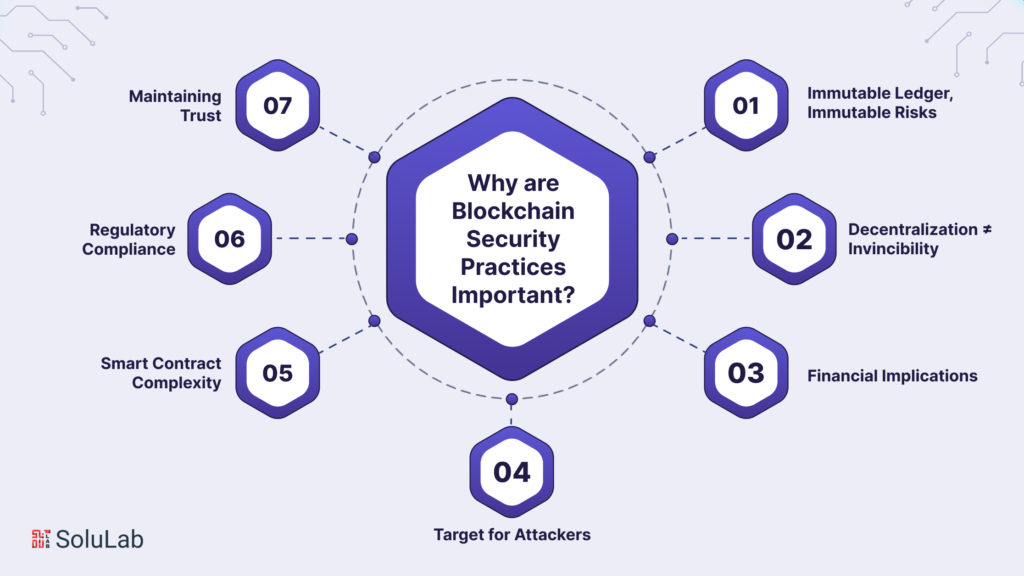
  • Interoperability

Smart contract development is no longer limited to a single blockchain platform. Emerging trends emphasize interoperability, allowing smart contracts to operate seamlessly across multiple blockchains. This requires audits to ensure that economic and game theoretic models remain consistent and secure in cross-chain environments.
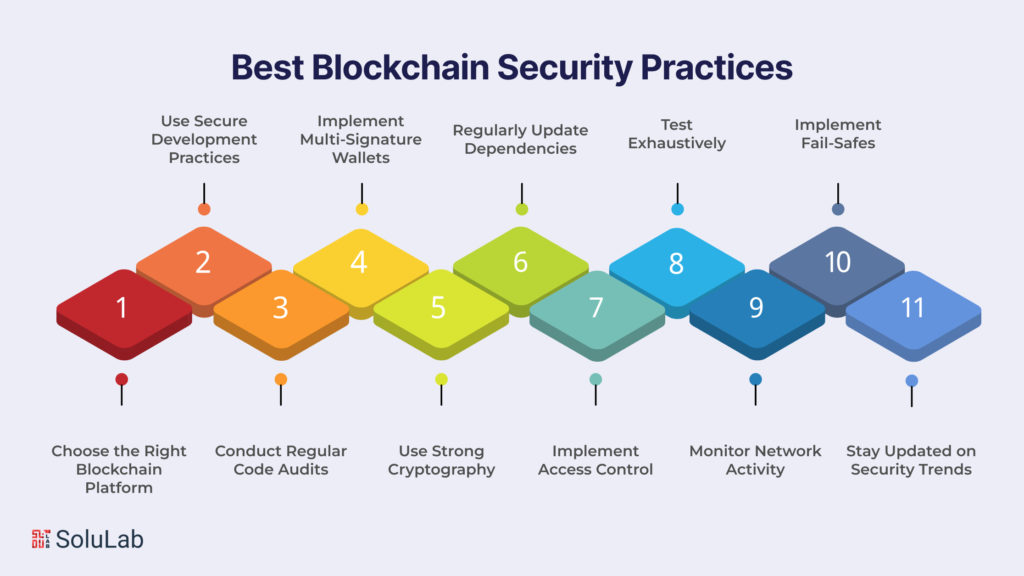
  • Scalability Solutions

With the rise of decentralized applications (dApps) and DeFi platforms, there’s an increasing demand for scalable smart contracts. Developers are exploring layer 2 solutions and sharding techniques, which introduce new complexities in auditing. Future audits will need to adapt to assess the game-theoretic implications of these scaling solutions.

  • Privacy-Preserving Contracts

Privacy is a growing concern in blockchain. Smart contracts that handle sensitive data or require privacy-preserving mechanisms will require audits that account for these unique requirements while preserving security and fairness.

Ongoing Improvements in Audit Services

Ongoing Improvements in Audit Services

The world of blockchain and smart contract technology is ever-evolving, and with it, the need for robust audit services continues to grow. In this section, we’ll explore the ongoing improvements in audit services, highlighting the dynamic nature of the field and the advancements that contribute to the security and reliability of decentralized systems.

  • Automated Auditing Tools

As smart contract development accelerates, automated auditing tools are becoming more sophisticated. These tools can help identify vulnerabilities in economic and game theoretic models more efficiently, reducing the likelihood of human error and improving the overall audit process.

  • Formal Verification

Formal verification techniques are gaining traction. These methods use mathematical proofs to rigorously verify the correctness of smart contracts. The future of audits will likely include a combination of formal verification and traditional auditing approaches to ensure the highest level of security.

  • Real-Time Monitoring

Continuous monitoring of smart contracts is becoming the norm. Auditors are developing real-time monitoring solutions that can detect and respond to anomalies or potential threats promptly. This proactive approach enhances the overall security of decentralized systems.

Potential Impact on Decentralized Systems

Potential Impact on Decentralized Systems

The potential impact on decentralized systems is a topic of great significance in the ever-evolving landscape of blockchain technology and smart contracts. As these systems continue to grow and adapt, it’s essential to explore the potential consequences, benefits, and challenges that may arise. 

  • Enhanced Security

Economic and game theory audits will continue to strengthen the security of smart contracts. This, in turn, will boost confidence in decentralized applications and blockchain technology as a whole, attracting more users and investments.

  • Fairness and Trust

Audits ensure that decentralized systems operate fairly and transparently. Users can trust that the rules encoded in smart contracts will be upheld, reducing the risk of disputes and fraud.

  • Mainstream Adoption

As economic and game theory audits become more refined, they will facilitate the integration of blockchain technology into various industries beyond finance, such as supply chain management, healthcare, and government. This broader adoption will drive innovation and economic growth.

Conclusion

In conclusion, the fusion of Economic and Game Theory Audits with Smart Contracts represents an indispensable facet of the blockchain and decentralized applications ecosystem, particularly for companies like SoluLab that offer Smart Contract development services. As the realm of decentralized systems and Smart Contracts continues to expand, the significance of Smart Contract Security Audits cannot be overstated.

Blockchain technology, with its promise of trust, transparency, and immutability, has revolutionized various industries, from finance to supply chain management. Smart Contracts are the backbone of these innovations, automating processes and ensuring the execution of agreements without intermediaries. However, they are not without vulnerabilities, and the Economic and Game Theory Audits provide a crucial layer of security.

Furthermore, SoluLab’s dedication to Smart Contract audit services ensures that businesses can harness the full potential of this transformative technology while maintaining the highest level of security. With the ever-evolving landscape of blockchain and decentralized applications, staying ahead in terms of Smart Contract security is paramount. Connect with SoluLab today to safeguard your blockchain endeavors.”

FAQs

1. What is a Smart Contract Security Audit, and why is it important for decentralized applications?

A Smart Contract Security Audit is a thorough review of the code and logic within a smart contract to identify vulnerabilities and potential security risks. It is crucial for decentralized applications (DApps) as it helps ensure the integrity and trustworthiness of these applications, making them less susceptible to exploitation and fraud.

2. How does SoluLab contribute to Smart Contract Development and Audits?

SoluLab offers comprehensive Smart Contract Development services, including auditing. We help businesses create and review smart contracts to ensure they are secure, reliable, and aligned with their objectives.

3. What is the significance of Economic and Game Theory Audits in Smart Contracts?

Economic and Game Theory Audits examine the incentives and behaviors of participants within a blockchain ecosystem. These audits help ensure that the smart contract’s game-theoretic model aligns with the desired outcomes and that participants are incentivized to act in a way that benefits the ecosystem as a whole.

4. Can you explain the role of Game Theory in Smart Contract Development?

Game theory is used to model and analyze strategic interactions between participants in a decentralized system. It helps in designing smart contracts that incentivize desirable behaviors and discourage malicious actions, ultimately improving the stability and reliability of the ecosystem.

5. Why is Blockchain Technology closely linked to Economic and Game Theory Audits?

Blockchain technology relies on decentralized systems and smart contracts, making it essential to have economic and game theory audits to ensure that these systems function as intended, with the right incentives for all participants.

6. Are there any real-world examples of Game Theory Audits in Smart Contracts?

One example is the “Supply Chain Game,” where smart contracts are used to optimize supply chain processes. Game theory audits help ensure that the incentives for suppliers, manufacturers, and distributors align, resulting in efficient and cost-effective supply chains


Top 20 Supply Chain Startups in 2025

The supply chain industry is changing rapidly, driven by advancements in technology, automation, and sustainability. In 2025, startups are at the forefront, introducing innovative solutions that boost efficiency, cut costs, and improve transparency. From AI-driven logistics to blockchain-based tracking, these companies are changing global supply chains.

With challenges like geopolitical tensions and changing consumer demands, businesses need smarter, more resilient supply chain solutions. Startups are addressing these needs by using artificial intelligence, IoT, and predictive analytics to optimize operations and reduce risks. The global supply chain management market is projected to reach $30.91 billion by 2026, nearly doubling from $15.85 billion in 2020. 

This blog highlights the top 20 supply chain startups of 2025 that are making a significant impact. Whether improving last-mile delivery, refining inventory management, or increasing supply chain visibility, these companies are shaping the future of logistics. Let’s explore the startups driving supply chain innovation in 2025!

Supply Chain Solutions with Blockchain Technology

Many blockchain technology companies and startup blockchain ventures are emerging that are leveraging blockchain to transform the supply chain industry. These supply chain blockchain startups are offering a variety of solutions, such as:

1. Traceability: Blockchain can be used to track the movement of goods from origin to destination, providing end-to-end visibility. This can help to improve efficiency, reduce fraud, and comply with regulations.

2. Transparency: Blockchain can create a shared ledger of information that is accessible to all parties involved in the supply chain. This can help to improve trust and collaboration and reduce the risk of disputes.

3. Efficiency: Blockchain can automate certain supply chain processes, such as payments and tracking. This can help to reduce costs and improve efficiency.

4. Risk Mitigation: Blockchain can help to mitigate risk by providing a secure and tamper-proof record of transactions. This can help to protect against fraud, theft, and other security threats.

The following are 10 of the top supply chain startups that are leveraging blockchain to transform the industry:

[/fusion_text][/fusion_builder_column][/fusion_builder_row][/fusion_builder_container]

1. Yojee

Yojee Limited (ASX: YOJ) is an innovative cloud-based Software as a Service (SaaS) logistics platform. It streamlines freight movements into a unified ecosystem, simplifying land transport management for all stakeholders.

By utilizing modern technologies like blockchain, Yojee ensures transparency, security, and efficiency throughout the supply chain. Notably, it addresses environmental concerns by reducing carbon emissions, contributing to a greener planet. Yojee’s platform revolutionizes logistics, enabling seamless coordination and optimization of freight operations. With its commitment to sustainability and harnessing the power of blockchain in supply chain management, Yojee stands as a frontrunner in transforming the logistics industry towards a more environmentally friendly and technologically advanced future.

2. Te-FooD

TE-FOOD offers a comprehensive traceability solution spanning the entire supply chain, encompassing logistics and food safety activities. Their platform facilitates transparent data management, ensuring the traceability of livestock and fresh food from production to consumption.

By providing cost-effective software and identification tools, TE-FOOD enhances transparency and accountability in the supply chain. From initial planning to ongoing maintenance, TE-FOOD is integrated throughout the entire process, enabling stakeholders to efficiently track and manage food products. With its holistic approach to traceability and commitment to transparency, TE-FOOD plays a crucial role in improving food safety standards and consumer confidence in the global food supply chain.

3. T-Mining

Headquartered in Antwerp, T-Mining specializes in enhancing the security and efficiency of maritime logistics processes, notably Secure Container Release. Leveraging decentralized technologies like blockchain, T-Mining pioneers the adoption of concepts such as Self-Sovereign Identity (SSI) and Commercial Privacy. Their solutions empower the industry with user-friendly tools, enabling firms to maintain control over their data while streamlining operations.

T-Mining’s innovative approach ensures heightened security measures while facilitating seamless data management within the maritime logistics sector. With a focus on ease of use and data sovereignty, T-Mining continues to drive advancements in maritime logistics, offering practical solutions that elevate security standards and operational efficiency for businesses operating in the global supply chain.

4. Suku

Suku is dedicated to expediting the adoption of true Web3 technology. Their mission involves establishing an interconnected ecosystem that unifies web3 communities, fosters distinct experiences and utility, and offers intuitive tools to facilitate user onboarding into Web3 seamlessly. SUKU enables users to actively participate and earn rewards across their platform and partner networks.

By using blockchain technology in supply chain management, Suku ensures transparency, traceability, and efficiency throughout the supply chain. Through their innovative approach, Suku aims to revolutionize the way businesses engage with Web3, empowering users to navigate the decentralized era with ease while driving the widespread adoption of blockchain solutions in supply chain management and beyond.

5. ZEGOFOOD

ZEGO makes measurably clean food with traceable transparency that meets most dietary needs and educates and inspires consumers to advocate for toxin transparency from all the brands they use. Every product they make has a QR code that links the consumer to its purity tests for over 500 toxins like glyphosate, heavy metals, and pesticides.

6. OriginTrail

OriginTrail is the first purpose-built protocol for supply chains based on blockchain technology. Blockchain technology has huge potential to decentralize trust in supply chains and bring enormous benefits. To unlock this potential, the OriginTrail protocol was designed to tackle the prime challenges limiting the exchange and integrity of data in product supply chains.

7. Peer Ledger

Peer Ledger employs advanced blockchain technology to empower companies in fostering collaboration and maintaining comprehensive situational awareness and data capabilities. With a focus on safeguarding human rights, enhancing environmental performance, and mitigating key risks like counterfeiting, conflict-financing, and safety concerns, Peer Ledger revolutionizes supply chain management.

By using blockchain technology in supply chain management, Peer Ledger offers a one-stop solution for companies seeking to enhance transparency and traceability throughout their supply chains. Through real-time data sharing and secure collaboration, Peer Ledger enables organizations to proactively address critical issues, drive sustainability initiatives, and protect their brand reputation. With Peer Ledger, companies can achieve greater resilience, efficiency, and ethical standards in their supply chain operations.

8. Blockhead Technologies

Blockhead Technologies offers highly customizable and interface-agnostic SaaS solutions for clients in the fuel and mining sectors. Their open architecture is designed for easy integration and scalability. Blockhead Technologies solutions are designed to provide secure, transparent, and comprehensive insight into your company data.

9. CargoCoin

CargoCoin is designed to be a smart contract & cryptocurrency platform, decentralizing global trade and transport. The eco-system will facilitate and optimize the interaction amongst traders, freight forwarders, ship owners, booking agents, and other parties involved in the international trade and transport of commodities and cargoes.

10. The CargoX

CargoCoin represents an innovative smart contract and cryptocurrency platform with the aim of decentralizing global trade and transport. This ecosystem serves to streamline and optimize interactions among various stakeholders including traders, freight forwarders, ship owners, booking agents, and other parties involved in international trade and transport of commodities and cargoes. With blockchain technology in supply chain management, CargoCoin revolutionizes traditional supply chain processes, offering transparent and efficient solutions.

Through smart contracts and cryptocurrency, CargoCoin facilitates secure and seamless transactions, eliminating the need for intermediaries and reducing costs. With its focus on enhancing collaboration and efficiency in global trade, CargoCoin paves the way for a more accessible, transparent, and inclusive international trade system.

11. Chronicled

Chronicled’s first industry revenue management solution, Contracts & Chargebacks, automatically settles chargeback claims between pharmaceutical manufacturers, distributors, and group purchasing organizations to ensure drug pricing accuracy for healthcare providers, pharmacies, and other dispensers. It enables automation, trust, and automatic settlement for transactions between companies in the Life Sciences industry.

12. WAVE BL

WAVE BL is a blockchain-based digital courier platform that mirrors the traditional process for transferring original paper documents ⁠— electronically. Our solution enables instant, encrypted, and authenticated transfer of Bills of Lading and other unique digital documents. WAVE BL’s mission is to create a paperless world.

13. Morpheus.Network

At Morpheus.Network, they are intensely focused on helping companies and Government organizations remove barriers to optimize and automate their global supply chain operations. Morpheus.Network uses blockchain technology to create a transparent, and efficient platform to streamline and automate the global supply chain.

14. Konexial

Konexial creates superb technology to improve the profitability of carriers through edge computing telematics, AI-powered video safety solutions, and Live Supply Chain visibility. It provides technology to the transportation industry through the PaaS (platform as a service) model featuring fleet management, video, and safety management, asset tracking, and fuel savings programs.

15. Grainchain

Grainchain automates the system of measuring the commodities coming into silos and storage facilities, providing accurate measurement, tracking, and accountability for soft commodities. IT systems such as SiloSys are increasing in popularity worldwide because they eliminate the manual processes of weighing and providing documentation for agricultural yield.

16. OpenPort

OpenPort is a pan-Asian start-up on a mission to make trucking, logistics, and supply chain startups more efficient in Emerging Markets through its OPEN, neutral, and AI-based platform. OpenPort’s open, neutral, and robust systems allow complete and easy integration with its clients’ ERP systems, providing visibility, reliability, availability of trucks, security, trust, higher cash flows, and stronger sales to its clients.

17. Akiri

Akiri is a cloud-based network designed to address today’s data liquidity challenges and facilitate the simple and secure movement of information between the diverse participants in the U.S. healthcare economy. the Silicon Valley-based business formation and commercialization enterprise whose founding investor and primary strategic partner is the American Medical Association (AMA).

18. BurstIQ

LifeGraph from BurstIQ takes the complexity out of managing sensitive human data freeing you to build trust through hyper-personalized health, work, and life digital experiences. Powered by an innovative Web 3.0-ready blockchain platform, LifeGraphs equips your business with trusted, secure, and intelligence-driven data ecosystems.

19. Guardtime

Guardtime is a team of over 150 cryptographers, developers, and security architects, with decades of experience defending networks from nation-state attacks. Their business model is to build partnerships with companies in every industry, build products, and go to market.

20. Shopping.io

Shopping.io online with crypto – simplified. Order from major hubs of commerce such as Amazon, Walmart, and eBay using your favorite cryptocurrency. No additional accounts are necessary! Become a token holder and save up to 10% off when you shop online! Enjoy token holder benefits such as free shipping, VIP access, token airdrops, and more!

Conclusion

AI-driven logistics and blockchain are changing how businesses operate, cut costs, and improve efficiency. As global supply chains become more complex, these startups offer innovative solutions that enhance resilience, sustainability, and agility.

From automation and real-time tracking to predictive analytics, these companies are shaping the future of supply chain management. Businesses that adopt these advancements will gain a competitive edge in the market.

Looking ahead, expect further breakthroughs in AI, IoT, and eco-friendly logistics, making supply chains smarter and more interconnected. If you’re seeking ways to optimize your supply chain, these startups provide solutions worth considering.  

Morpheus. Network, a blockchain-powered SaaS, enhances logistics with smart contracts, IoT, and automation. SoluLab integrated blockchain solutions to streamline digital documentation, improve security with ZK-rollups, and automate workflows. This improved efficiency, transparency, and compliance, positioning Morpheus.Network as a leader in decentralized supply chain innovation. SoluLab is a blockchain development company with a team of experts ready to assist you. If you’re looking to hire a blockchain expert, our skilled professionals can help bring your AI projects to life. Contact us today to discuss your requirements!

CTA2

FAQs

1. How does blockchain benefit supply chain companies?

Blockchain provides supply chain companies with enhanced transparency, traceability, and security. It ensures an immutable record of transactions, reduces fraud, and streamlines processes, fostering efficiency in the supply chain.

2. What makes these blockchain companies stand out in the supply chain industry?

These blockchain companies stand out due to their innovative approaches in logistics, food safety, cargo security, sustainability, and compliance. They leverage blockchain to address industry-specific challenges and bring transformative solutions to the table.

3. How does SoluLab contribute to blockchain solutions in the supply chain?

SoluLab is a key player contributing expertise and innovative blockchain solutions to the supply chain. The company focuses on enhancing the efficiency, transparency, and security of supply chain operations through its blockchain technologies.

4. Can blockchain really address the challenges of compliance in the supply chain?

Yes, blockchain technology significantly aids in compliance by providing an immutable and transparent ledger. Companies like Peer Ledger use blockchain to streamline compliance processes, ensuring adherence to regulations in a more efficient manner.

5. What role does blockchain play in ensuring food safety in the supply chain?

Blockchain, as demonstrated by ZEGOFOOD, plays a crucial role in ensuring food safety by providing a transparent and immutable record of the entire food supply chain. This enables consumers to trace the journey of their food products and ensures quality and safety.

6. How do these blockchain companies contribute to sustainability in the supply chain?

Companies like SUKU focus on sustainable supply chains by leveraging blockchain to promote responsible sourcing and fair trade. Blockchain’s transparency facilitates ethical business practices, contributing to a more sustainable global supply ecosystem.

7. What are the future prospects for the integration of blockchain in supply chain management?

The future of blockchain in supply chain management looks promising, with ongoing advancements in technology. These blockchain companies, including CargoCoin and The CargoX, indicate a shift towards a future where blockchain will continue to play a pivotal role in optimizing and securing global trade.


Top 10 Blockchain Ecosystem Protocols of 2026

In the era of blockchain technology, the development of strong ecosystem protocols is increasingly important. These protocols serve as the foundation for a variety of decentralized apps (dApps), providing developers and users with a safe, transparent, and fast way to connect with blockchain networks. In this blog, we look at the Top 10 Blockchain Ecosystem Protocols that are influencing the development of decentralized finance (DeFi), non-fungible tokens (NFTs), gaming, and more.

The significance of choosing the best crypto ecosystem cannot be emphasized, as blockchain technology continues to upend established markets and open the door for creative solutions. Every protocol has its own distinct collection of characteristics and capabilities, ranging from sustainability and governance to scalability and interoperability. Regardless of your level of experience with blockchain technology or your interest in decentralized platforms, this curated blockchain ecosystem list will provide you with valuable information on the top protocols propelling the subsequent stage of blockchain development and advancement.

So, without any further ado, let’s get started!

What is the Role of Blockchain Platforms and Protocols in Fostering Innovation?

Blockchain platforms and protocols play a dual role in fostering innovation within the blockchain ecosystem.

1. Enabling Diverse Applications

By offering a standardized infrastructure, these platforms and protocols empower developers to focus on creating innovative applications and services without having to reinvent the underlying blockchain technology. This encourages experimentation and creativity in various sectors, ranging from finance and supply chain to healthcare and gaming.

2. Cross-Platform Collaboration

Interoperability between different blockchains is vital for achieving the full potential of blockchain technology. Blockchain platforms and protocols that prioritize interoperability allow data and assets to move seamlessly between distinct blockchain networks. This opens doors for collaborative efforts and the creation of complex, decentralized ecosystems that span multiple platforms.

3. Efficiency and Scalability

Innovative blockchain protocols are continuously working to address scalability and efficiency challenges that have been associated with earlier blockchain versions. By implementing novel consensus mechanisms, sharding techniques, and off-chain solutions, these protocols are paving the way for blockchain systems that can handle a higher volume of transactions without compromising speed or security.

Why Do Top Blockchain Protocols Hold Immense Significance in the Year 2026?

In 2026, top blockchain protocols hold immense significance for the industry due to their transformative impact on various sectors. These protocols not only facilitate efficient and secure transactions but also enable the development of complex decentralized applications, fostering innovation in industries such as finance, supply chain, healthcare, and more. Top blockchain protocols provide:

  • Security: Leading protocols integrate advanced cryptographic techniques to ensure data integrity and protect against unauthorized access. This level of security is crucial for applications that deal with sensitive data or valuable digital assets.
  • Scalability: Many contemporary protocols focus on scalability solutions to address the bottleneck issues that early blockchain networks faced. By optimizing consensus mechanisms and introducing techniques like sharding and layer-2 solutions, these protocols aim to accommodate a high volume of transactions without sacrificing speed or security.
  • Interoperability: Recognizing the importance of collaboration between different blockchain networks, top protocols emphasize interoperability. They enable seamless data and asset transfer between diverse platforms, contributing to the development of cross-chain applications and services.
  • Decentralization: Blockchain protocols prioritize decentralization, ensuring that no single entity has excessive control over the network. This democratic nature enhances trust, transparency, and resilience in the ecosystem.

Top 10 Blockchain Ecosystem Protocols of 2026

1. Stellar

In the era of blockchain ecosystem protocols, Stellar has emerged as a formidable player, offering groundbreaking solutions that revolutionize cross-border transactions and financial services. Recognized as one of the best crypto ecosystems of 2026, Stellar’s significance is underscored by its remarkable features and substantial contributions to the field.

Stellar stands as an open-source blockchain protocol meticulously crafted to streamline cross-border transactions and asset issuance with unparalleled speed, security, and affordability. Rooted in the ethos of inclusivity and financial accessibility, Stellar seeks to bridge the gap between conventional financial frameworks and the realm of blockchain innovation. Its unique ability to facilitate instant transactions across various currencies and networks distinguishes it from traditional approaches, which often involve protracted processes and intermediary entities.

2. Ethereum

Ethereum has long been hailed in blockchain technology, primarily celebrated for its innovative smart contract capabilities. Now, with the transition to Ethereum 2.0, the platform has honed its focus on bolstering scalability and energy efficiency, effectively tackling previous scalability challenges. This upgrade positions Ethereum as a frontrunner in the crypto ecosystem list, poised to offer enhanced performance and sustainability, thus attracting both developers and users seeking advanced blockchain solutions.

Moreover, Ethereum’s ecosystem stands out for its versatility and support for a vast array of decentralized applications (dApps). Notably, Ethereum has emerged as a leader in the burgeoning non-fungible token (NFT) space, providing a robust infrastructure for the creation, exchange, and management of digital assets. This solid foundation cements Ethereum’s position as one of the top crypto ecosystems, offering unparalleled opportunities for innovation and development across various sectors. As Ethereum continues to evolve and innovate, its ecosystem remains a cornerstone of the blockchain industry, driving forward the adoption and integration of decentralized technologies.

3. Tezos

Tezos distinguishes itself with its modular architecture and unique self-amendment protocol, setting it apart from other contenders in the list of top blockchain ecosystem protocols. This innovative approach enables Tezos to implement protocol upgrades seamlessly, eliminating the need for contentious hard forks that can disrupt the network. Moreover, Tezos’s commitment to formal verification methods ensures the utmost security and accuracy of smart contracts, providing developers with a reliable and trustworthy platform to build upon.

Another key aspect that elevates Tezos within the blockchain ecosystems is its governance model. Tezos embraces a democratic approach to network upgrades and changes, empowering stakeholders to participate in decision-making processes. This inclusive governance structure fosters community engagement and consensus-building, further solidifying Tezos’s position as one of the top blockchain ecosystem protocols. Through its modular architecture, self-amendment protocol, and democratic governance model, Tezos continues to pave the way for innovation and advancement in the blockchain space, offering a robust foundation for developers and users alike.

4. Polkadot

A key player in the blockchain ecosystem, Polkadot stands out for its unique scalability and interoperability strategies. Founded on the premise of a heterogeneous multi-chain framework, Polkadot enables seamless communication and data sharing between diverse blockchains. This interoperability empowers developers to create specialized parachains tailored to specific use cases while maintaining compatibility with the broader Polkadot network, fostering a cohesive and interconnected ecosystem of decentralized applications (dApps).

Moreover, Polkadot’s innovative consensus mechanism, known as Nominated Proof-of-Stake (NPoS), ensures a secure and efficient network operation. Through NPoS, token holders can nominate validators to secure the network, enhancing decentralization and resilience against potential attacks. With its focus on interoperability, scalability, and robust security, Polkadot continues to shape the blockchain landscape, offering a platform that facilitates the development of scalable and interoperable decentralized applications across various industries.

5. Hedera Hashgraph

Hedera Hashgraph takes security to a new level with its innovative use of asynchronous Byzantine fault tolerance (aBFT). This means that it can maintain network integrity even in the presence of malicious actors or network partitions. By creating a system where consensus is reached based on the order of events, Hedera Hashgraph achieves an unprecedented level of fairness and tamper resistance, making it highly attractive for applications requiring the utmost security and trust.

Hedera Hashgraph’s design emphasizes interoperability, allowing it to seamlessly integrate with existing systems and platforms. This makes it an attractive option for businesses and developers looking to leverage blockchain technology without disrupting their current operations. Its ability to support smart contracts and decentralized applications (DApps) further extends its utility across diverse industries, including finance, supply chain, healthcare, and more.

6. Klaytn

Klaytn is a blockchain protocol that combines the strengths of both public and private blockchains, offering a hybrid design that optimizes for both transparency and scalability. Developed by Ground X, a subsidiary of South Korea’s internet giant Kakao, Klaytn aims to streamline blockchain adoption by providing an accessible platform for businesses and developers to create and deploy applications.

Klaytn is designed for high throughput and low latency, enabling it to handle a significant number of transactions per second. This scalability is a crucial factor for applications that require fast and efficient processing of data and transactions. Klaytn’s strategic partnerships with various real-world businesses have helped bridge the gap between traditional industries and the blockchain ecosystem. These partnerships provide practical use cases and foster innovation in sectors such as finance, gaming, and more.

7. Tron

Tron has made a significant mark in the entertainment sector by offering a decentralized ecosystem for content creators and consumers. Its blockchain-based infrastructure facilitates direct connections between content producers and their audiences, bypassing intermediaries and empowering creators with a fairer revenue distribution model.

Recognizing the scalability challenges faced by many blockchain protocols, Tron has invested in innovative solutions. Its delegated proof-of-stake (DPoS) consensus mechanism and dynamic bandwidth allocation allow for higher throughput and faster transactions, making it more practical for real-time applications like gaming and streaming. Tron’s support for smart contracts has enabled the creation of decentralized applications, expanding its utility beyond financial transactions. DApps built on Tron’s platform span domains such as finance, entertainment, and social networking, enhancing user experiences and driving broader adoption of blockchain technology.

8. Dogetti

Dogetti’s innovative decentralization strategy makes it stand out in the world of crypto ecosystems. In contrast to conventional distributed ledgers, Dogetti employs a multifaceted approach that prioritizes governance and decision-making in addition to data decentralization. This all-encompassing strategy fosters inclusion and transparency by creating a fully democratic blockchain environment in which users actively participate in protocol updates and modifications.

Dogetti’s Adaptive Proof-of-Cooperation (APoC) consensus mechanism is the heart of its invention and the main factor of its success. To match the demands of the network, APoC dynamically modifies the consensus process, improving scalability during periods of high transaction volume and bolstering security during crucial processes. Applauded for its capacity to achieve a nuanced equilibrium between robustness and speed, APoC confirms Dogetti’s position as a blockchain pioneer.

9. Cardano

Cardano’s journey began with a vision to address the limitations of existing blockchain protocols, particularly in terms of scalability, interoperability, and governance. This vision has translated into tangible achievements, propelling Cardano into the ranks of the top 10 blockchain ecosystem protocols of 2026.

Unlike many blockchain projects that emphasize speed to market, Cardano took a meticulous approach by involving a global network of researchers and experts. This rigorous academic input has led to peer-reviewed research and a solid foundation for technological advancements. Cardano utilizes the Ouroboros consensus algorithm, which is a proof-of-stake (PoS) protocol designed for scalability and security. Cardano has been designed to facilitate seamless communication between different blockchains. This feature enables the creation of multi-chain applications and opens avenues for collaborative development across blockchain networks.

10. EOS

In the top blockchain ecosystem protocols, EOS stands out as a dynamic and influential platform that continues to shape the landscape in 2026. EOS, short for “Enterprise Operating System,” has established itself as a prominent player in the blockchain space, offering a range of innovative features and capabilities that contribute to its status as a top 10 blockchain ecosystem protocol.

EOS is characterized by its commitment to scalability, speed, and usability, all of which are critical factors in driving the adoption of blockchain technology across industries. Its unique approach to consensus and governance has garnered attention and admiration from developers and businesses alike. One of the standout features of EOS is its Delegated Proof of Stake (DPoS) consensus mechanism. Unlike traditional Proof of Work (PoW) mechanisms that consume substantial energy, EOS’s DPoS enhances energy efficiency while maintaining security and decentralization. Through DPoS, EOS achieves remarkable transaction speeds, making it suitable for applications that require high throughput.

Conclusion

In the ever-evolving landscape of blockchain technology, the significance of robust blockchain ecosystem protocols cannot be overstated. As 2026 unfolds, it becomes evident that these protocols form the backbone of innovation, driving the development of groundbreaking blockchain platforms.

Solulab has positioned itself at the forefront of this transformative era, solidifying its reputation as a premier blockchain development company. With an array of top blockchain ecosystem protocols under its belt, Solulab continues to redefine the parameters of possibility. Their team of adept blockchain developers handpicked to harness the potential of these protocols, is a testament to their commitment to excellence.

In a realm where staying ahead of the curve is imperative, Solulab’s proficiency in crafting bespoke blockchain solutions sets them apart. Organizations seeking to harness the power of blockchain can confidently turn to Solulab to access cutting-edge blockchain development services. The option to hire blockchain developers through Solulab ensures a journey guided by expertise and innovation. For unparalleled blockchain solutions, contact SoluLab today.

FAQs

1. What are blockchain ecosystem protocols?

Blockchain ecosystem protocols refer to a set of rules, standards, and technologies governing the functioning and development of blockchain platforms. These protocols determine how transactions are verified, data is stored, and consensus is reached within a blockchain network.

2. How do blockchain ecosystem protocols contribute to blockchain development?

Blockchain ecosystem protocols provide a foundation for developers to build and deploy decentralized applications (DApps) on various top blockchain platforms. They offer predefined structures that developers can leverage to create innovative solutions while ensuring compatibility with the underlying blockchain technology.

3. Can you name some of the top blockchain ecosystem protocols in 2026?

Certainly! Some of the top blockchain ecosystem protocols of 2026 include Ethereum 2.0, Binance Smart Chain, Solana, Cardano, Polkadot, Avalanche, Tezos, Cosmos, Algorand, and Flow.

4. How can businesses benefit from these top blockchain ecosystem protocols?

Businesses can leverage these protocols to build decentralized applications, streamline processes, enhance transparency, and create new revenue streams. They can tap into the capabilities of these protocols to develop solutions that cater to their specific industry needs.

5. Are there specialized blockchain development services for these protocols?

Yes, many blockchain development companies offer specialized services tailored to each of these protocols. They provide expertise in developing DApps, smart contracts, and other solutions that utilize the unique features of the chosen protocol.

15 Blockchain Companies Shaping the Real Estate Industry

15 Blockchain Companies Shaping the Real Estate Industry

Properties for vacation rentals. parking areas even ideal residences They will all soon be bought on a blockchain. Indeed, the use of real estate crypto tokens to connect buyers, sellers, and investors as well as learn about properties is growing in popularity. But why is the real estate industry expected to benefit so significantly from blockchain? First and foremost, it fosters trust by enhancing transparency by utilizing distributed ledger technology (DLT). Trust is crucial in real estate, whether it be in a listing, an agent, or a website. Blockchain technology for real estate also streamlines contract procedures, saves time, and lowers expenses.

Blockchain in the Real Estate Industry

Blockchain is the leading technology in real estate since it has a built-in system of trust. Global real estate firms use blockchain in real estate through its ledger and smart contract features to transparently and effectively make renting, purchasing, investing, and even financing possible.

A unified database of leases and acquisitions is more important than ever because of the enormous daily rate of real estate crypto tokens. Blockchain is able to do that. Brokers and agents would be able to access the whole transaction history of a property if the traditional Multiple Listing Service database was upgraded to a blockchain-based one.

Blockchain is being embraced by the expanding property-sharing business in addition to assisting the traditional real estate industry. The 15 blockchain real estate tokenization companies listed below leverage the booming technology to expand their clientele.

CTA1

15 Blockchain Real Estate Companies Shaping the Real Estate Industry

1. SoluLab

One of the best blockchain development businesses with over 50 million active app users and a 97% customer success rate that rivals the competition. The Fortune 500 companies and high-growth startups SoluLab has collaborated with include Walt Disney, Goldman Sachs, Mercedez Benz, the University of Cambridge, Georgia Tech, and others.

SoluLab, led by management executives from Goldman Sachs & Citrix, aims to reduce costs by over 50% for the client with a faster hiring process than other market participants. Through cutting-edge technologies like the cloud, chatbots, blockchain, the internet of things, artificial intelligence, augmented and virtual reality, machine learning, and more, SoluLab’s award-winning enterprise software solutions offer full-spectrum, 360-degree services to startups, small businesses, and large corporations.

2. SafeWire

The expanding problem of wire fraud that real estate companies, agents, clients, and other industries confront as a result of hacker activity has a solution in SafeWire, which ClosingLock recently bought. The SafeWire platform uses a blockchain network to assure security for risky transactions from the time they are sent until the moment they are received & processed, decreasing the amount of money, clients, and time lost as a result of wire fraud.

3. Vairt

With the aid of Vairt, customers can create and diversify a worldwide real estate network and generate side income. When investing in fractional real estate, the robust platform provides several tools and resources to ensure the greatest results. This includes neighborhood and property insights, market overviews, real estate analysis, and long-term assistance, all of which operate on a blockchain network for the highest level of security.

4. RealT

Through a completely compliant, token-based blockchain network, the RealT fractional real estate investing platform enables investors from all over the world to invest in the American real estate market. With permissionless Ethereum & RealTokens, the platform enables investors to purchase tokenized real estate and preserve access to cash flows as well as low maintenance ownership. It provides landlords access to weekly rent payments through the xDai, Ethereum, or US-Dollar stablecoin.

5. PropertyClub

A real estate network called PropertyClub uses blockchain to improve how people advertise, look for, purchase, sell, & invest in properties. Via cryptocurrencies like Bitcoin or the company’s own PropertyClub Coin, the organization transacts real estate digitally using smart contracts.

6. ManageGo

For landlords, ManageGo uses blockchain technology. Property managers and owners may handle payments, fully conduct credit background checks, and manage maintenance tickets with the aid of ledger-backed software.

7. RealBlocks

RealBlocks leverages blockchain real estate companies to open up new real estate investment opportunities. Instead of purchasing complete portfolios or assets, investors can purchase fractional stakes on its platform. RealBlocks assists in lowering costs, accelerating procedures, and offering liquidity choices through tokenization that is implemented utilizing blockchain technology.

8. SMARTRealty

Smart real estate contracts are used by SMARTRealty to create and uphold agreements for the purchase and renting of real estate. The business’s smart contracts assist in setting rules that, if not followed, automatically dissolve a contract, whether it be for paying rent, establishing mortgages, or buying a home.

9. Propy Inc

Smart contracts are used by the real estate marketplace Propy to carry out property deals. Using a series of smart contracts, the company’s platform enables buyers, sellers, and agents to move the real estate market forward more quickly.

10. ShelterZoom

The entire real estate offer & acceptance process is managed by Docuwalk, the document management system provided by ShelterZoom, using blockchain technology. To provide an unchangeable financial record, the safe online platform logs each step taken to close a real estate deal.

11. StreetWire

Through an encrypted ledger that is under the control of the data supplier, StreetWire develops secure and trustworthy solutions for the real estate sector. Its platform makes real estate transactions speedier and more transparent.

12. CPROP

Building blockchain data applications with an emphasis on finding new opportunities, lowering risk, and discovering problems in the real estate sector are what CryptoProperties, also known as CPROP, do. The technology developed by CPROP is used in a variety of real estate fields, such as brokerage deals, investment management, property development, finance, and insurance.

13. The Crypto Realty Group

The Crypto Realty Group is a consultancy firm that collaborates with financial consulting and crypto escrow businesses to assist clients in purchasing and reselling local, national, and worldwide residential, and commercial using local real estate crypto tokens.

14. Blocksquare

While its white-label platform may be used to establish investment platforms, Blocksquare is among the real estate tokenization companies. Their protocol can be applied to digitize the value of real estate assets. The business claims that businesses of all sizes can benefit from its blockchain infrastructure.

15. RealtyBits

RealtyBits makes it easier to invest in real-world assets like real estate using blockchain technology. A user’s account can be created for free and validated in under a minute. Following their initial investment, RealtyBits offers a dashboard that enables them to keep an eye on their assets. One of the company’s investors is Coinbase.

How is Blockchain Technology Changing the Real Estate Industry?

More blockchain use in commercial real estate could have a favorable impact on the sector. Quite a few real estate companies employ blockchain because it is a relatively young technology. But when people become aware of its potential advantages, it can gain popularity. The following are possible uses of blockchain in real estate, particularly within the commercial real estate industry.

  • Faster, More Secure Transactions: Numerous characteristics of blockchain in real estate can result in speedier, more secure transactions. You don’t need to wait for financial institutions to file paperwork because every activity is recorded on a public ledger. Additionally, the use of blockchain in commercial real estate makes it impossible for records to be altered. Consumers currently depend on financial organizations to safeguard their private information, but blockchain in real estate could provide an additional layer of protection. Financial institutions are often targets for data breaches, but with blockchain, property records and ownership data would be less vulnerable to such attacks.
  • Smart Contracts: By minimizing paperwork and the stages required to purchase property, using blockchains in commercial real estate to expedite processes instantly creates chances to cut expenses. Smart contracts built on the blockchain are utilized in the process to help automate it. If/then statements that advance real estate blockchain projects at the proper point can be used in blocks of a ledger. For instance, the smart contract might stipulate that the buyer won’t get a formal price offer until the property has been thoroughly inspected and assessed by an expert.
  • Lower Costs: Another significant benefit of blockchain in real estate is the reduction of transaction costs. By minimizing paperwork and reducing the complexity of purchasing property, blockchain can lower expenses in commercial real estate deals. You can even purchase property tokens on some platforms that use blockchain in real estate, allowing investors to buy a portion of a property with cryptocurrencies, bypassing traditional brokers and their fees.
  • Asset Tokenization: Blockchain technology has the potential to revolutionize how real estate investments are crowdfunded. Currently, ownership of properties funded by crowdfunding is distributed among the investors. A real estate company, for instance, might offer 100 shares. Once fully funded, they use the investor’s funds to buy or construct an asset that will produce income.
  • Tracking Asset Ownership: The structure would be slightly changed by asset tokenization to provide investors & developers more flexibility. You could buy a token that is recorded in a public ledger rather than a portion of the real estate. You now have a fully transparent record of when and how much you spent on the token. You have evidence that you made an investment and the tokens are yours, in case your ownership is ever questioned.
  • Selling Your Real Estate Investment Tokens: Asset tokenization will also make it simpler for you to sell your investment to a third party. Investment agreements currently allow other owners to restrict you from selling your stake without their consent. Even if you are allowed to sell your share without permission, you will still need to complete a tonne of paperwork in order to transfer your ownership to another investor.

CTA2

Final Words

The real estate blockchain, tokenization, as well as cryptocurrency businesses, are all still in their infancy, as are the majority of other blockchain and tokenization integrations into the real world. Although the future seems promising, several obstacles must yet be overcome before the technology can be widely used. As was already said, tokenized real estate, which is arguably the most significant prospective utilization of real estate blockchain projects, is plagued by an extremely unliquid market, a near-total lack of asset trading between platforms, as well as a lack of institutional adoption.

Software wallets like Exodus Wallet and Trust Wallet impress with their user-friendly interfaces and elegant designs. These wallets prioritize security without sacrificing user convenience, making them popular choices for crypto enthusiasts of all levels.

Finally, it should be emphasized that the metaverse’s real estate market is booming. It’s difficult to say whether this is a short-lived trend or a wise investment, similar to real estate crypto tokens. Real-world & metaverse real estate have not yet been connected, but in the future, it’s conceivable that things will start to converge in manners we can only begin to fathom between the “meatspace” real world and the metaverse.

SoluLab, a prominent blockchain development company, specializes in empowering businesses of all sizes, from startups to enterprises, with secure and decentralized blockchain solutions. With a comprehensive range of blockchain development services, SoluLab meticulously assesses each organization’s potential for harnessing blockchain technology to bolster trust and transparency. The company’s expertise extends to the realm of real estate tokenization, offering a gateway to novel opportunities in development and investment. Whether one is a property owner aiming to raise capital through tokenization or an investor seeking portfolio diversification, SoluLab guides the way. As a leading advocate of real estate tokenization development services, SoluLab’s adept professionals are dedicated to delivering top-tier services, enabling clients to unlock the full value of their real estate assets. For a seamless transition into fractional ownership and heightened liquidity, connect with SoluLab today.

FAQs

1. What is the role of blockchain companies in the real estate industry?

Blockchain companies in the real estate industry play a pivotal role by leveraging blockchain technology to enhance transparency, security, and efficiency in property transactions. They provide solutions that streamline processes like property title verification, smart contracts, and secure data sharing among stakeholders.

2. How do blockchain companies simplify property ownership transfers?

Blockchain companies use smart contracts to automate and facilitate property ownership transfers. These self-executing contracts automatically process transactions once predefined conditions are met, reducing the need for intermediaries and expediting the transfer process.

3. What benefits do blockchain companies bring to real estate professionals?

Blockchain companies introduce efficiency gains for real estate professionals by reducing paperwork, minimizing the risk of errors, and expediting transactions. This enables professionals like agents, brokers, and lawyers to focus more on strategic tasks rather than administrative burdens.

4. What future trends can we expect from blockchain companies in real estate?

In the future, we can anticipate further integration of blockchain technology with artificial intelligence, enabling predictive analytics for property market trends. Additionally, increased regulatory support for blockchain-based property transactions and wider adoption of tokenization could reshape the way real estate is bought and sold.

5. What is SoluLab’s expertise in the blockchain industry?

SoluLab is a leading blockchain development company with extensive experience in creating cutting-edge solutions for various industries, including real estate. Their team of experts specializes in developing custom blockchain applications, smart contracts, decentralized apps (DApps), and more, providing innovative solutions that transform the real estate landscape.

6. How does SoluLab contribute to the real estate industry’s digital transformation?

SoluLab empowers the real estate sector by leveraging blockchain technology for enhanced transparency, security, and efficiency. Through their tailored solutions, they enable seamless property transactions, secure data sharing, and automated processes that streamline operations and improve customer experiences.

7. Can SoluLab assist in tokenizing real estate assets?

Absolutely! SoluLab excels in real estate tokenization development. They can create digital tokens backed by physical real estate assets, enabling fractional ownership, liquidity, and broader investment opportunities. This innovative approach enhances accessibility to real estate investments and opens doors for a wider range of investors.

Top 11 Blockchain Trends to Follow in 2026

Blockchain Trend 2026

2026 is becoming a major turning point for digital money and enterprise blockchain. Big businesses, banks, global payment networks, and even governments are no longer testing blockchain. They are now using it for real financial operations, tokenized assets, and on-chain finance. The change is fast and happening across every major industry.

The global blockchain market size is estimated at $33 billion in 2026 and expected to grow at a compound annual growth rate (CAGR) of over 43% to reach nearly $393 billion by 2030. Meanwhile, over 137 countries are exploring CBDC, with 49 currently in pilot or launch stages.

If you are a founder, investor, or decision-maker, these trends matter. They tell you where the market is moving, what customers will expect, and how companies will use blockchain solutions to cut costs, move money faster, and unlock new business models. This guide gives you a clear view of the biggest Blockchain Trends for 2026 and shows how they will impact global finance, technology, and business growth.

How the Blockchain World Will Change from 2026 to 2030?

Before we talk about specific blockchain technology trends, it helps to zoom out and understand the size and direction of the market you are building for.

Analyst reports place the global blockchain market in the mid-tens of billions of dollars. By 2030, many expect it to reach hundreds of billions, or even low trillions, depending on what is counted, like crypto assets, tokenization, DeFi, and core infrastructure, but a few signals matter more than the big headline number:

  • Institutional finance is moving fast. Tokenized Treasuries, tokenized funds, and regulated institutional DeFi pilots are no longer small tests. They are becoming part of real financial systems.
  • The number of countries testing or exploring CBDCs has now crossed into triple digits. These pilots are also shifting from small local tests to real cross-border payment corridors.
  • Real-world asset tokenization (RWA) has grown from an idea into a multi-billion-dollar segment. Many now project it to reach double-digit trillions by 2030.

For you, this means the blockchain projects you build in 2026 are not side projects. They should be connected to where global liquidity, regulation, and infrastructure are heading over the next 5–10 years.

11 Big Blockchain Trends That Will Change 2026

Here are the 11 most important blockchain trends you should watch in 2026. These trends matter if you are building real products, raising money, or upgrading your tech systems. In all, these blockchain future trends will shape how money, data, and digital ownership move in 2026 and the years ahead.

1. Real-World Asset (RWA) Tokenization

If you follow only one blockchain trend in 2026, let it be this one. Real-world asset tokenization is already moving tens of billions of dollars of real estate, private credit, Treasuries, and other assets on-chain. RWA platforms let you break a building, a fund, or invoices into digital units that trade 24/7 with instant settlement and built-in compliance. Here is why you should care:

  • You can unlock liquidity from assets that were stuck in files and manual paperwork.
  • You can offer smaller ticket sizes to more investors without changing your whole system.
  • You can test new revenue ideas like streaming yields or auto-rebalancing that old banking systems can’t support.

From a business point of view, if something on your balance sheet is big, slow, and hard to move, tokenization will enter that market in the next 3–5 years. For example 

  • By late 2025, BlackRock’s BUIDL alone crossed $500M in tokenized Treasuries, becoming the world’s largest on-chain fund. 
  • Franklin Templeton and Ondo Finance together manage billions in tokenized real estate and private credit. Even JPMorgan is running tokenized private credit pilots on-chain.

This is one of the clearest blockchain predictions for 2026, and it’s already live in real products.

2. AI x Blockchain Convergence  

AI x Blockchain Convergence

From 2023 to 2025, everyone was busy with AI, but in 2026, founders finally started asking, that How do I make my AI safer, more transparent, and easier to monetize. That is where AI with blockchain becomes one of the biggest blockchain trends for real businesses. Blockchain for AI helps with:

  • data provenance (proving where training data came from)
  • on-chain audit logs for AI models
  • clear royalty and attribution flows

AI for blockchain helps with smarter risk engines, better fraud detection, automated governance, and dynamic settings for on-chain systems.

For example, Projects like SingularityNET, Fetch.ai, and Ocean Protocol have already proven working AI × Blockchain models. Enterprises now integrate these systems for regulated AI deployments where audits and traceability are required.

If you run any AI product today, adding even a small on-chain layer for provenance or billing can move you closer to the latest blockchain development trends, instead of looking like another black-box AI tool with a Stripe payment link.

3. Central Bank Digital Currencies (CBDCs)

Central Bank Digital Currencies (CBDCs)

Central Bank Digital Currencies (CBDCs) are no longer ideas on paper. In 2026, many countries will have strong pilots or small-scale launches, and some will run CBDCs at a large scale. CBDCs matter for businesses because they change how you:

  • Settle cross-border payments
  • Handle compliance and reporting
  • Build your wallet, treasury, or payment systems

CBDCs sit at the middle of blockchain technology trends, digital identity, and regulated finance.  For example – 

  • China’s e-CNY surpassed $986B in transactions, making it the largest CBDC pilot in the world.
  • Countries like the Bahamas, Jamaica, and Nigeria have already launched retail CBDCs.
  • The EU Digital Euro pilot is underway with a 2027 launch window.

If you ignore CBDCs while building any payment, banking, or treasury product for 2026, it will be like ignoring mobile apps in 2010.

4. Institutional DeFi

Institutional DeFi didn’t die after the early hype; it simply grew up. Now, large banks, asset managers, and regulated companies are testing on-chain finance with KYC, verified identities, and permissioned pools. They are running pilots in tokenized repo, tokenized collateral, on-chain FX, and even digital syndicated loans.

For a founder, institutional DeFi is not about yield farms anymore. It is about:

  • Cutting back-office costs with faster, automated systems
  • Building new on-chain product lines with transparent and programmable rules
  • Opening access to new markets, new users, and new capital flows

This is where enterprise blockchain trends start to matter. For example – 

  • JPMorgan’s Onyx and MAS’s Project Guardian have run institutional pools with verified identities since 2023.
  • Aave Arc and Syndicate Protocol provide institutional lending rails.
  • BlackRock and Securitize are issuing tokenized funds accessible through DeFi.

If your industry begins settling transactions on public blockchains with permissioned layers, then the tech stack, vendors, and architecture you choose in 2026 will shape your business for years.

5. Layer-2 Scaling Solutions

You can’t talk about blockchain future trends without talking about scaling. Layer-2 networks (L2s) on Ethereum and Bitcoin are now handling most real transactions. These include rollups, optimistic systems, zero-knowledge L2s, and payment channels.

  • Fees drop from dollars to a few cents
  • Speed goes from a few transactions per second to thousands
  • You still keep the security of a major Layer-1 chain

If you are building in payments, gaming apps, micro-transactions, IoT systems, or AI-powered agents space, you will almost always use an L2 instead of an L1. Here are the Real adoption numbers:

  • Arbitrum: $15B+ TVL, largest L2 ecosystem
  • Optimism: Backed by Coinbase integrations
  • Base: Fastest-growing consumer L2
  • StarkNet: Enterprise-trusted zkRollup

This is one of the most important blockchain development trends for founders, architects, and CTOs today.

6. Blockchain-as-a-Service (BaaS)

Blockchain-as-a-Service (BaaS)

Most teams today don’t want to run their own nodes, build custom explorers, or manage security systems. They want simple tools, managed hosting, and ready-made blockchain infrastructure.

That’s why Blockchain-as-a-Service (BaaS) is becoming one of the most important blockchain industry trends. Big cloud companies and Web3 infra providers now offer hosted nodes, fast indexers, strong APIs, monitoring dashboards, testing tools, and full turnkey setups. 

With BaaS, businesses can build blockchain apps without worrying about servers, uptime, or heavy DevOps work. Here are a few enterprises like AWS, Azure, IBM, and Oracle that now dominate BaaS, and over 90% of enterprise blockchain deployments use BaaS to reduce cost and ship faster.

BaaS also helps with scaling, multi-chain support, security audits, RPC load balancing, and easy upgrades. Teams can focus on their product while the BaaS platform handles all the hard technical work in the background. For many companies, this means faster launches, fewer risks, better performance, and lower long-term costs.

7. Supply Chain & Provenance Systems

Supply chain and provenance tools were hyped early, but today they are becoming one of the strongest enterprise blockchain use cases. Real value is now clear in:

  • Lot-level tracking for food and pharma
  • Anti-counterfeit checks for luxury goods and key components
  • Carbon and ESG reporting linked to real product movement

It’s no longer about putting everything on a blockchain; it’s about adding just enough cryptographic proof in the right places so regulators, partners, and customers can trust what a company claims. For example – 

  • Walmart reduced traceability time from 7 DAYS to 2.2 SECONDS using blockchain.
  • De Beers tracks diamonds end-to-end to eliminate counterfeiting.

For many mid-market manufacturers, logistics teams, and retailers, this will be their first real step into blockchain development and supply chain blockchain systems in 2026.

8. Tokenized Securities & Treasury Bills

Tokenized Securities & Treasury Bills

In 2026, tokenized Treasuries quietly crossed several billion dollars in AUM. In 2026, this entire category will grow even more and expand into new asset classes. Today, you already see:

  • Tokenized government bonds
  • On-chain money market funds
  • Tokenized private credit and real estate portfolios

These tokenized assets are now used for yield products, treasury operations, and daily cash-management tools. The biggest shift is how tokenized securities bring faster settlements, better liquidity, transparent audits, and easy global access. Here are a few live examples:

  • BlackRock BUIDL & Franklin Templeton Utilize Securities and created $7.3B+ AUM
  • Ondo Finance is running corporate repo and credit products
  • JPMorgan is testing tokenized money market workflows

Banks, asset managers, and fintechs are now exploring on-chain versions of T-Bills, corporate bonds, repo markets, and credit products because tokenization cuts costs, reduces errors, and speeds up the entire workflow.

9. Zero-Knowledge Proofs (ZK-Tech)

Zero-Knowledge Proofs (ZK-Tech)

Zero-knowledge proofs are no longer just research. Today, ZK-tech is used in privacy Layer 2s, digital identity tools, and even compliance systems. ZK-tech is important because it lets you:

  • Prove something about your data, like age, KYC, or solvency, without sharing the data
  • Follow privacy rules while still giving partners or regulators verified proof
  • Build safer finance apps, health systems, public tools, and consumer products

As global rules around data get tighter, zero-knowledge proofs are becoming one of the most important blockchain innovations for businesses to understand. zkSync, Polygon ID, and Aztec Network are already used globally by banks, fintechs, and enterprises. 

CTA1

10. Cross-Chain Interoperability

Cross-Chain Interoperability

By 2026, no serious company can depend on only one blockchain. The market moves too fast, and users expect smoother, bigger networks. That’s why bridges, messaging layers, and interoperability protocols are becoming core parts of Web3, and Chainlink CCIP, LayerZero, Wormhole, and Cosmos IBCare are now the base layer for real products. For founders and teams, this means:

  • Build with multi-chain support from day one
  • Make the chain invisible to users
  • Plan for future liquidity, rules, and ecosystems, not just today’s trends

11. Green & Sustainable Blockchain 

Green & Sustainable Blockchain

This is one of the key blockchain technology trends that will decide if your app feels stuck on one chain or works smoothly across the full Web3 world. It’s a major factor in long-term product success and user trust.

Today, regulators, investors, and large companies want clear answers about energy use, carbon impact, and sustainability. This is pushing people to think in a more serious way about how blockchain platforms affect the environment.

You will see:

  • More chains sharing audited energy reports
  • More companies are asking for proof-of-stake or other low-energy systems
  • More use of on-chain carbon tracking and digital carbon offset tools

If you sell blockchain solutions to enterprises, staying aligned with these sustainability-focused blockchain trends will help you close deals faster. Big companies now ask clear questions about energy use, carbon footprint, and long-term environmental impact, and they are already using Ethereum, Polygon, Deso, and Solana to publish verified energy usage reports.

They prefer green blockchain systems that run on proof-of-stake, use low-power nodes, and offer real data on how much energy the network uses. You will also see more interest in on-chain carbon tracking, digital carbon credits, and blockchain-based offset tools. These help companies meet ESG targets and report their climate numbers with confidence. 

How Enterprises Will Actually Use Web3 in 2026?

2026 is the year Web3 becomes a real enterprise tool, not just a crypto space. Because companies will start using it only where it truly helps their business. Here’s what you’ll see:

  • Finance: RWA tokenization, DeFi payment rails, CBDCs, and on-chain KYC
  • Supply chain: provenance tracking, real-time compliance, and ESG reporting
  • Healthcare: secure data, medical record integrity, and drug tracking
  • Media & gaming: digital ownership, loyalty systems, and assets that work across platforms

Most people won’t even call it Web3. They’ll just feel the benefits like faster settlement, better rewards, and smoother digital experiences. But behind the scenes, these are real blockchain future trends finally being used in day-to-day business operations.

How SoluLab Can Build Any of These 11 Use Cases in Just 4 Weeks?

If you want to turn your idea into a real Web3 product, SoluLab can help you build any of these 11 use cases in only 4 weeks. Our team works with blockchain, smart contracts, CBDC solutions, tokenization platforms, DeFi apps, and enterprise blockchain development. We follow a fast, reliable, and transparent system:

1. Week 1 — Plan & Architect

We map your idea, pick the right tech, and prepare the full flow for your crypto, tokenization, or CBDC-based system.

2. Week 2 — Smart Contracts & Backend Development

We develop secure smart contracts, set up all backend logic, and integrate major chains like Ethereum, Polygon, BNB Chain, or a private blockchain.

3. Week 3 — Frontend & Dashboard

We design a clean UI and link your user dashboard to the on-chain with backend logic.

4. Week 4 – 5 — Test & Launch

We run audits, QA, security checks, and prepare your product for launch.

CTA2

Conclusion  

The real value of learning about blockchain development trends is using them to make smarter business decisions. The biggest opportunities now sit in real assets, compliance, and efficiency. As a founder or leader, your edge comes from choosing one or two clear bets and executing well. 

Let’s turn your 2026 blockchain vision into a real MVP. Book a discovery call and get feedback in days, not months. A strong blockchain development company like SoluLab, should guide you with solid business outcomes, not noise. 2026 can be the year you watch these trends or the year you build with them.

FAQs

1. How do I decide which blockchain use case is right for my startup or company?

Start by looking at your biggest pain points around data trust, asset liquidity, and operational delays. Then check if tokenization, supply chain tracking, or compliant DeFi systems can solve them. Working with a skilled blockchain development company helps you map your real needs to the right solution, ensuring measurable ROI without guesswork.

2. Why should I consider working with a blockchain development agency instead of building in-house?

Agencies bring deep expertise, faster execution, and tried-and-tested frameworks that prevent costly mistakes. They help you pick the right architecture, meet compliance standards, and scale safely. For founders focused on growth and product-market fit, a blockchain development agency makes adoption smoother without adding extra internal load.

3. What are the typical timelines and costs involved in building blockchain-based solutions like tokenization or DeFi?

Timelines depend on complexity, but an MVP usually takes 4–6 weeks, costing around $75K–$250K. Full enterprise builds for tokenization or institutional DeFi take 6–10 months and can cross $500K. A reliable agency will give clear estimates that match your goals, scope, and compliance needs.

4. How can I ensure compliance and security when integrating blockchain into my product?

You need to align your solution with rules like MiCA, OFAC, and strong KYC/AML checks. Security means smart contract audits, safe key management, and penetration testing. Agencies with regulated-industry experience build these controls into the product from day one, lowering risk and supporting innovation in areas like asset tokenization services or compliant DeFi.

5. What ongoing support do blockchain development agencies provide after product launch?

A good agency offers continuous monitoring, updates, smart contract improvements, and help adjusting to new regulations. They support scaling, infrastructure upgrades, and new feature rollouts. With ongoing partnership, your solution stays secure, compliant, and ready for future trends like RWA tokenization and advanced payment systems.


Blockchain Security: Best Practices Every Developer Should Know


Blockchain Security: Best Practices Every Developer Should Know

In the rapidly evolving landscape of technology, few innovations have captured the world’s attention and potential as profoundly as blockchain. This revolutionary technology has disrupted traditional models of trust, offering decentralized and tamper-proof solutions that span across industries. As blockchain applications become increasingly integrated into everyday processes, ensuring their security has become paramount. Developers, as the architects of these innovative solutions, bear the responsibility of safeguarding the integrity and resilience of blockchain networks.

Blockchain’s foundation in cryptographic principles and decentralized consensus mechanisms is inherently secure, but like any technology, it is not impervious to threats. The distributed and immutable nature of blockchain introduces unique challenges that require a deep understanding of its security landscape. This blog aims to provide developers, whether newcomers to the blockchain space or seasoned experts, with a comprehensive guide to the best practices that form the bedrock of blockchain security.

From the fundamental concepts of blockchain security to practical techniques for fortifying smart contracts and networks, this blog will delve into the multifaceted aspects of blockchain security. By grasping these principles and integrating them into their development workflows, developers can bolster their ability to architect blockchain solutions that not only harness the technology’s transformative potential but also stand resilient against a range of security risks.

Read Also: How Does the Blockchain Work?

In the sections that follow, we will explore key practices that encompass everything from secure development methodologies and cryptographic protocols to auditing processes and monitoring strategies. Whether you’re embarking on your first blockchain project or seeking to enhance the security of existing applications, the insights within this blog will empower you to navigate the intricate landscape of blockchain security with confidence.

Understanding the basics of Blockchain Security

Blockchain technology has brought about a paradigm shift in how we handle data, transactions, and trust in the digital realm. At its core, a blockchain is a decentralized and immutable digital ledger that records transactions in a secure and transparent manner. However, despite its inherent security features, developers must still be well-versed in the fundamental principles of blockchain security to build applications that withstand potential threats. Let’s delve into the basics of blockchain security and explore the key concepts every developer should understand.

Decentralization and Consensus Mechanisms:

One of the foundational pillars of blockchain security is decentralization. Unlike traditional centralized systems where a single entity controls the entire network, blockchain operates on a decentralized network of nodes, ensuring that no single point of failure exists. This distribution of power prevents malicious actors from easily manipulating the system.

To maintain consensus in a decentralized network, various consensus mechanisms are employed. The most common is Proof of Work (PoW), where nodes (often referred to as miners) compete to solve complex mathematical puzzles to validate transactions and add new blocks to the chain. This mechanism ensures that the majority of network participants agree on the state of the blockchain. Another mechanism, Proof of Stake (PoS), relies on validators who are chosen to create new blocks based on the amount of cryptocurrency they “stake” as collateral. Both PoW and PoS enhance the security of the blockchain by requiring significant computational resources or economic incentives to compromise the system.

Read Our Blog: Building Trust in a Digital World: The Power of Blockchain Development

Cryptographic Hash Functions:

Cryptographic hash functions are the building blocks of blockchain security. They take an input (data) and produce a fixed-size output (hash) that is unique to the input. A small change in the input will result in a completely different hash, making it virtually impossible to reverse-engineer the original data. This property ensures the immutability of the blockchain.

Hash functions are used to secure transactions and create the linkage between blocks in the chain. Each block contains a reference to the hash of the previous block, creating a cryptographic “chain” that is resistant to tampering. Any alteration to a block’s data would require changing the hash of not only that block but all subsequent blocks, which is practically unfeasible in a decentralized network.

CTA1

Public and Private Key Cryptography:

Public and private key cryptography underpins the security of blockchain transactions. Each participant in the network possesses a pair of cryptographic keys: a public key and a private key. The public key, which is derived from the private key, serves as an address that can receive funds. The private key, held only by the owner, is used to sign transactions and prove ownership.

When someone initiates a transaction, they sign it with their private key. Other participants can use the sender’s public key to verify the signature and ensure the transaction’s authenticity. This cryptographic mechanism guarantees the integrity of transactions and prevents unauthorized access.

Read Also: Blockchain Verification Process: Explained

Smart Contracts and Vulnerabilities:

Smart contracts, self-executing code deployed on the blockchain, are a powerful feature of blockchain technology. However, they also introduce their own security considerations. Vulnerabilities such as reentrancy attacks, integer overflow, and unauthorized access to functions can lead to serious security breaches.

Developers must rigorously audit and test their smart contracts to identify and mitigate vulnerabilities. Code reviews, static analysis tools, and external audits are essential steps in ensuring the security of smart contracts before deployment.

Why are blockchain security practices important?

Why are blockchain security practices important?

Blockchain technology has garnered significant attention for its potential to revolutionize industries, but its adoption also brings forth a critical responsibility: ensuring robust security practices. While blockchain offers inherent security features due to its decentralized and immutable nature, developers must implement a comprehensive set of security practices to fortify the technology against evolving threats. Let’s explore why blockchain security practices are of paramount importance in the modern digital landscape.

Read Our Blog: Why You Need To Leverage Blockchain For Your Business Today?

  • Immutable Ledger, Immutable Risks:

The immutability of blockchain, often touted as a core strength, presents a double-edged sword. Once data is recorded on the blockchain, it cannot be altered. While this is advantageous for maintaining data integrity, it also means that any vulnerabilities or breaches can have far-reaching and irreparable consequences. Proper security measures are crucial to prevent malicious actors from exploiting vulnerabilities and introducing unauthorized changes to the blockchain.

  • Decentralization ≠ Invincibility:

Decentralization is a key feature that sets blockchain apart from traditional centralized systems. However, it does not guarantee invincibility against security threats. While decentralization minimizes the risk of a single point of failure, it does not eliminate the possibility of attacks or vulnerabilities. Developing secure applications in a decentralized environment demands a different set of strategies and practices.

  • Financial Implications:

Many blockchain applications involve the management of valuable assets, whether they are cryptocurrencies, digital assets, or sensitive information. A breach in the security of a blockchain application can result in financial losses, reputation damage, and legal consequences. The potential impact of a security breach amplifies the need for developers to prioritize robust security practices.

  • The target for Attackers:

The distributed nature of blockchain networks makes them attractive targets for attackers seeking to exploit vulnerabilities. From DDoS attacks to 51% attacks (where an attacker gains control of the majority of mining power in PoW networks), malicious actors can disrupt operations, manipulate data, and even double-spend cryptocurrencies. Implementing security measures is essential to thwart these attacks and maintain the integrity of the network.

  • Smart Contract Complexity:

Smart contracts, while powerful, introduce complexity that can lead to unforeseen vulnerabilities. The infamous “DAO hack” in Ethereum, where an attacker exploited a vulnerability in a smart contract to drain funds, serves as a stark reminder of the risks associated with smart contract development. Security practices such as code audits, testing, and formal verification are crucial to prevent such incidents.

Read Our Blog Post: Top 10 Blockchain Development Companies in 2023

  • Regulatory Compliance:

As blockchain technology becomes more mainstream, regulatory requirements are becoming a significant consideration. Organizations that handle sensitive data or financial transactions on blockchain networks must adhere to relevant regulations. Proper security practices ensure compliance with data protection and financial regulations, avoiding legal and financial repercussions.

  • Maintaining Trust:

Blockchain’s promise of transparency and trust is only as strong as the security that underpins it. If security breaches become frequent, users and stakeholders may lose trust in the technology, hindering its adoption and potential. By implementing rigorous security practices, developers can help maintain the trust that is vital for the success of blockchain applications.

Best Blockchain Security Practices 

Best Blockchain Security Practices 

Before delving into best practices, it’s crucial to have a solid understanding of blockchain security fundamentals. This includes comprehending the decentralized nature of blockchain networks, consensus mechanisms (such as Proof of Work and Proof of Stake), cryptographic hashing, public and private keys, and the concept of smart contracts. A strong grasp of these concepts will lay the foundation for effective security practices.

Read Also: What are the Benefits of Using Digital Identity with Blockchain in the Future?

Choose the Right Blockchain Platform

Selecting the appropriate platform for blockchain security for your project is the first step toward ensuring security. Different blockchain platforms offer varying levels of security, consensus mechanisms, and smart contract capabilities. Ethereum, for instance, is a popular choice for decentralized applications, but there are other options like Binance Smart Chain, Cardano, and more. Choose a platform that aligns with your project’s requirements and security considerations.

Use Secure Development Practices

Secure coding practices are the cornerstone of blockchain security. Just like in traditional software development, following coding standards, avoiding vulnerabilities, and adhering to best practices like the OWASP Top Ten for web application security is essential. Blockchain-specific vulnerabilities, such as reentrancy attacks and timestamp dependence, should also be thoroughly understood and guarded against.

Conduct Regular Code Audits

Regular code audits by experienced blockchain security professionals are essential to identify and mitigate potential vulnerabilities. These audits involve a comprehensive review of the smart contracts and other code components to uncover vulnerabilities, backdoors, and logic errors that could compromise security.

Implement Multi-Signature Wallets

Multi-signature wallets require multiple private keys to authorize transactions, adding an extra layer of security. This prevents a single point of failure and unauthorized access to funds. Implement multi-signature wallets for important transactions or fund storage.

Use Strong Cryptography

Cryptography is the bedrock of blockchain security. Utilize strong cryptographic algorithms for key generation, encryption, and hashing. Regularly update your cryptographic libraries and algorithms to protect against emerging threats.

Regularly Update Dependencies

Blockchain applications often rely on third-party libraries and dependencies. These libraries can have vulnerabilities that hackers may exploit. Keep all dependencies up to date and monitor security announcements to address vulnerabilities promptly.

Read Our Blog Post: What Are The Benefits of Hiring a Blockchain Developer?

Implement Access Control

Access control mechanisms are crucial for restricting unauthorized access to your blockchain application. Utilize role-based access control (RBAC) and permissions to ensure that only authorized parties can interact with sensitive functions.

Test Exhaustively

Thoroughly test your smart contracts and blockchain applications before deployment. Utilize techniques like unit testing, integration testing, and end-to-end testing to uncover bugs and vulnerabilities. Implement continuous integration and continuous deployment (CI/CD) pipelines to automate testing processes.

Monitor Network Activity

Implement robust monitoring tools to track network activity and transactions. This will help detect unusual patterns, potential attacks, and unauthorized activities. Implement alerts to notify the development team of suspicious behavior.

Implement Fail-Safes

Incorporate fail-safe mechanisms to mitigate the impact of potential breaches. These mechanisms could include emergency pause features, circuit breakers, or upgradeability mechanisms that allow you to fix vulnerabilities without compromising the entire system.

Stay Updated on Security Trends

Blockchain security is a constantly evolving field. Stay informed about the latest security trends, vulnerabilities, and best practices. Participate in forums, attend conferences, and follow industry experts to ensure you’re up to date with the latest security developments.

CTA2

Conclusion

Blockchain technology holds immense promise for reshaping industries and enhancing security, but its potential can only be fully realized if security is prioritized throughout the development lifecycle. By adhering to these best practices, blockchain developers can create robust and secure applications that stand up to the evolving threat landscape. As the blockchain ecosystem continues to grow, a proactive approach to security is not just a choice – it’s an imperative.

From understanding the foundational concepts of decentralized networks and cryptographic principles to mastering the intricacies of smart contract vulnerabilities and monitoring strategies, these best practices serve as a comprehensive guide for developers at all stages of their blockchain journey. By adopting these practices, developers can rise to the challenge of not only crafting innovative solutions but also upholding the core tenets of security and trust that underpin the blockchain’s promise.

Read Also: Beginners’ Guide 101 to Outsourcing Blockchain Development

As technology continues to push the boundaries of what’s possible, the responsibility to protect and advance its potential falls squarely on the shoulders of developers. Secure coding practices, continuous audits, stringent testing, and staying attuned to emerging blockchain security solutions trends form a shield against threats that could undermine the very foundations of blockchain’s effectiveness. Furthermore, the importance of collaboration and knowledge-sharing among developers cannot be overstated, as a united effort is necessary to stay one step ahead of adversaries.

SoluLab is a leading blockchain development company that places the highest priority on blockchain security solutions. With a team of experts specializing in blockchain development services, they ensure the creation of cutting-edge applications that meet your unique needs.

From concept to deployment, their blockchain development solutions prioritize security at every step, safeguarding your data and transactions. Whether you require secure smart contracts or robust decentralized applications, their blockchain development services empower your business with the utmost security and efficiency. So, contact SoluLab now if you want to hire the best blockchain developers.

FAQs

1. Why is blockchain security so important for developers?

Blockchain security is of paramount importance because it ensures the integrity, trustworthiness, and functionality of blockchain applications. While blockchain offers inherent security features, it is not impervious to threats. Developers must implement best practices to safeguard against vulnerabilities, unauthorized access, and potential attacks that could compromise the entire system. Prioritizing security from the outset helps maintain user trust, prevents financial losses, and upholds the transformative potential of blockchain technology.

2. What are some common security vulnerabilities in blockchain applications?

Blockchain applications can be susceptible to various vulnerabilities, including smart contract flaws (reentrancy attacks, overflow vulnerabilities), insecure key management, insufficient validation of inputs, and susceptibility to distributed denial-of-service (DDoS) attacks. Addressing these vulnerabilities requires understanding blockchain-specific risks and implementing secure coding practices, regular audits, and continuous monitoring to mitigate potential threats.

3. How can developers ensure the security of smart contracts?

Developers can ensure the security of smart contracts by following a multi-faceted approach. First, conduct thorough code reviews and testing to identify vulnerabilities before deployment. Second, utilize static analysis tools to identify potential issues early in the development process. Third, consider external audits by security experts who specialize in blockchain to uncover hidden vulnerabilities. Finally, implement best practices such as limiting the use of external calls, using fail-safes like circuit breakers, and continuously updating smart contracts to address emerging threats.

4. What role does cryptography play in blockchain security?

Cryptography is a foundational element of blockchain security. It is used to secure transactions, create cryptographic hashes for data integrity, and manage public and private keys. Public key cryptography ensures that only authorized parties can sign transactions and access encrypted data. By leveraging strong cryptographic algorithms and keeping libraries up to date, developers can reinforce the confidentiality, authenticity, and non-repudiation aspects of blockchain transactions, contributing to a more secure ecosystem.