Talk to an Expert

The Future of Finance: Role of Blockchain Development in DeFi Ecosystem

The Future of Finance: Role of Blockchain Development in DeFi Ecosystem

The traditional financial system, despite its long-standing dominance, has shown glaring limitations that have prompted the search for a more inclusive, efficient, and transparent alternative. This archaic system, characterized by intermediaries, lengthy processing times, and restricted access, has left many individuals and businesses underserved, particularly in emerging economies. As technological innovation continues to reshape industries, the financial sector is no exception, giving rise to the phenomenon of Decentralized Finance (DeFi).

One of the primary limitations lies in the presence of intermediaries, which often result in cumbersome processes, increased transaction costs, and extended processing times. This not only contributes to inefficiencies but also excludes a significant portion of the global population from accessing financial services due to stringent requirements and geographical barriers. Furthermore, the lack of transparency within the traditional financial system has led to issues of hidden fees, unfair lending practices, and a general lack of accountability.

Read Also: Building Trust in a Digital World: The Power of Blockchain Development

At its core, DeFi represents a departure from the traditional financial system’s centralized control and intermediaries, replacing them with transparent, autonomous, and secure transactions enabled by blockchain. The crucial role played by Blockchain Development in shaping DeFi cannot be overstated, as it is the vehicle through which the principles of decentralization, automation, and security are realized.

What are the Core Principles of Decentralized Finance?

Decentralized Finance (DeFi) is a revolutionary concept that seeks to reshape the traditional financial landscape by leveraging blockchain technology and smart contracts to create an open, transparent, and permissionless financial ecosystem. At its core, DeFi envisions a world where financial services are accessible to anyone with an internet connection, eliminating the need for intermediaries and centralized authorities. This democratization of finance is underpinned by a set of core principles:

  • Decentralization

DeFi operates on decentralized networks like Ethereum, where transactions are validated by a distributed network of nodes rather than a central authority. This eliminates single points of failure and promotes censorship resistance.

  • Interoperability

DeFi aims to create a seamless environment where various applications and protocols can interact and complement each other, fostering a rich ecosystem of interconnected services.

  • Transparency

All transactions, agreements, and data on DeFi platforms are recorded on public blockchains, making them transparent and auditable by anyone. This transparency helps build trust among participants.

  • Accessibility

DeFi is designed to be accessible to a global audience, allowing individuals from all walks of life to engage in financial activities without the need for traditional banking infrastructure.

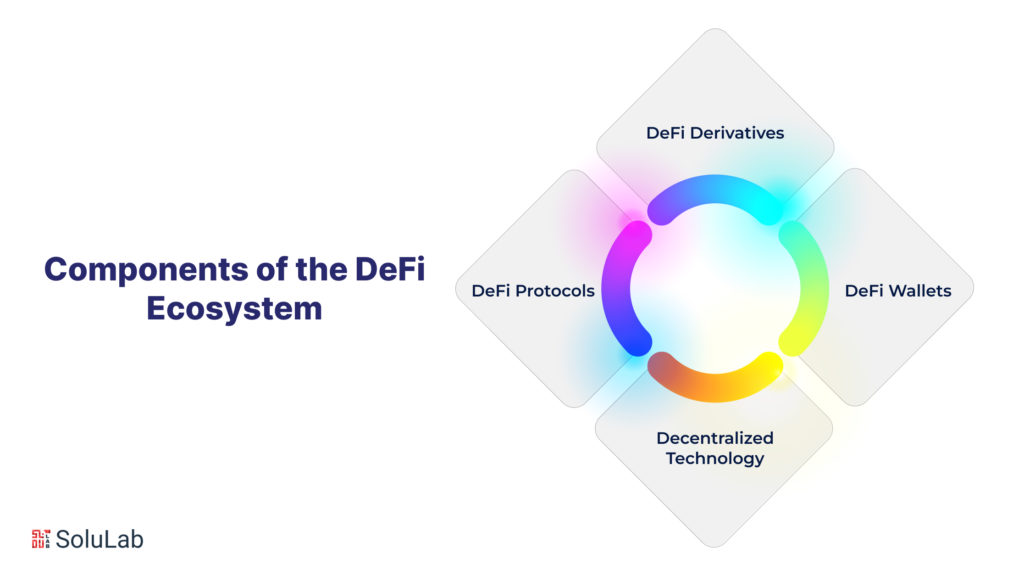
What are the Components of the DeFi Ecosystem?
What are the Components of the DeFi Ecosystem?

1. DeFi Protocols

DeFi protocols are the building blocks of the ecosystem, governing various financial activities through automated smart contracts. These protocols enable a wide range of functionalities, including decentralized exchanges (DEXs), lending and borrowing platforms, yield farming, and more. 

For instance, Uniswap and SushiSwap are popular DEX protocols that allow users to trade tokens directly without relying on centralized exchanges. Aave and Compound, on the other hand, facilitate lending and borrowing by allowing users to lend their assets and earn interest or borrow assets against collateral.

2. DeFi Derivatives

DeFi derivatives represent a realm of innovation within the ecosystem, offering ways to manage risk and speculate on various assets. Synthetic assets, for instance, allow users to gain exposure to traditional financial instruments like stocks, commodities, or indices without actually owning them. 

These assets are created through the use of smart contracts, which track the value of the underlying asset and replicate its price movements. This opens up new avenues for diversification and investment strategies within the DeFi ecosystem.

Read Our Blog: Top 10 Defi Lending Platforms in 2023

3. DeFi Wallets

DeFi wallets play a pivotal role in the ecosystem, serving as the gateway for users to interact with various DeFi protocols and applications. These wallets are often non-custodial, meaning users retain control over their private keys and funds. 

They enable users to seamlessly manage their assets, participate in liquidity provision, stake tokens for rewards, and execute transactions on DeFi platforms. By integrating with different protocols, DeFi wallets provide a unified and user-friendly interface for engaging with the ecosystem.

4. Decentralized Technology

Decentralized technology, primarily blockchain, forms the bedrock upon which the entire DeFi ecosystem is built. The immutability and transparency of blockchain enable secure and trustless transactions, while smart contracts automate the execution of agreements without the need for intermediaries. 

The adoption of decentralized technology allows DeFi to function seamlessly across borders, providing users with a level of control, security, and accessibility that traditional financial systems struggle to offer.

In the subsequent sections of this exploration, we will delve deeper into the evolution of DeFi protocols, the disruptive potential of DeFi derivatives, the role of DeFi wallets in enhancing user experience, and the challenges and prospects presented by decentralized technology within the DeFi landscape. As we unravel the intricate layers of the DeFi ecosystem, the transformative potential of blockchain technology becomes increasingly evident in reshaping the future of finance.
CTA1

How Does Blockchain Technology Play a Pivotal Role in Enabling the Functioning and Growth of the Decentralized Finance (DeFi) Ecosystem?

At the heart of the DeFi revolution lies the groundbreaking capabilities of blockchain technology. Blockchain serves as the foundational technology that underpins the entire DeFi ecosystem, providing the tools necessary to reshape traditional financial systems. One of the most significant contributions of blockchain to DeFi is its ability to eliminate intermediaries, promoting transparency, security, and efficiency in financial transactions.

By leveraging blockchain’s decentralized architecture, DeFi platforms can ensure that transactions are verified and recorded on a distributed ledger. This approach eliminates the need for traditional financial intermediaries, reducing costs and potential points of failure. Additionally, the immutability of blockchain ensures that once a transaction is recorded, it cannot be altered or tampered with, adding a layer of security and trust.

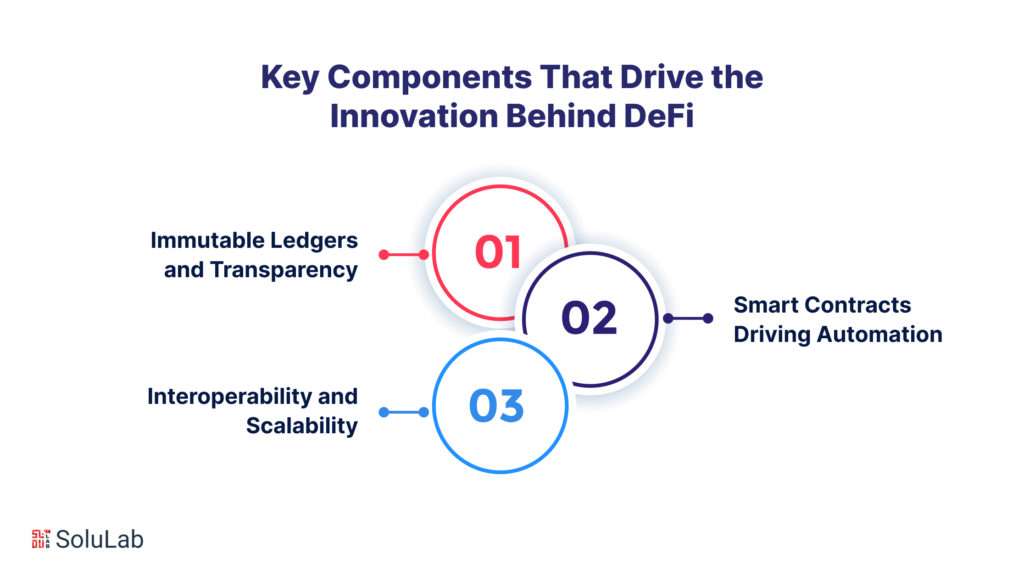
What are the Key Components That Drive the Innovation Behind DeFi?
What are the Key Components That Drive the Innovation Behind DeFi?

  • Immutable Ledgers and Transparency

At the core of blockchain’s value proposition is its ability to create immutable ledgers. Transactions are grouped into blocks, linked sequentially, and cryptographically sealed. This chain of blocks, or blockchain, forms a transparent and tamper-proof record of all transactions. In the context of DeFi, this transparency is crucial as it allows participants to independently verify transactions and activities, fostering trust within the ecosystem.

  • Smart Contracts Driving Automation

Smart contracts are self-executing contracts with code that automatically enforces the terms of an agreement. These contracts eliminate the need for intermediaries, as they execute actions based on predefined conditions being met. In DeFi, smart contracts enable various financial activities such as lending, borrowing, trading, and yield farming. This automation not only increases efficiency but also reduces the potential for human error and manipulation.

Read Also: 10 Best Defi Exchanges 2023

  • Interoperability and Scalability

Blockchain’s interoperability and scalability are essential for the expansion of DeFi. Interoperability allows different blockchain networks to communicate and share data, enabling users to access a wider range of services. Scalability, on the other hand, ensures that blockchain networks can handle a large number of transactions without congestion. As DeFi applications gain popularity, blockchain development focuses on enhancing these aspects to support the growing demand for efficient and seamless financial services.

In the subsequent sections of this exploration, we will delve deeper into the evolution of specific DeFi protocols, the innovative realm of DeFi derivatives, the significance of DeFi wallets, and the challenges and opportunities posed by decentralized blockchain technology. As we uncover the intricate layers of this transformative landscape, the indispensable role of blockchain development in shaping the future of finance becomes abundantly clear

Who are the Pioneers Of DeFi Protocols, and How Have They Transformed Decentralized Finance?

Top DeFi Protocols: A Closer Look at Pioneers

1. Uniswap

Uniswap stands as a trailblazer in the realm of decentralized exchanges (DEXs). By introducing an automated market maker (AMM) model, Uniswap enables users to trade tokens without relying on traditional order books. Instead, liquidity providers lock up assets in smart contracts, facilitating trading through algorithmic price adjustments. This innovation enhances liquidity and accessibility, paving the way for a new era of peer-to-peer token trading.

Read Our Blog Post: List of Top 10 Defi Savings Accounts

2. Compound

Compound has redefined the way individuals lend and borrow digital assets within the DeFi ecosystem. It introduced the concept of algorithmic interest rates, where lending and borrowing rates are dynamically determined based on supply and demand. This dynamic model ensures efficient capital allocation and has become a cornerstone of the DeFi lending landscape.

3. MakerDAO

MakerDAO has revolutionized stablecoins through its creation of DAI, a decentralized stablecoin pegged to the US Dollar. MakerDAO’s decentralized autonomous organization (DAO) governance model empowers users to participate in decision-making, ensuring the stability of DAI’s value. This fusion of stablecoins and governance exemplifies the democratic potential of blockchain technology in financial systems.

Advancements and Innovations in DeFi Protocols

  • Yield Farming and Liquidity Mining

Yield farming and liquidity mining represent groundbreaking mechanisms that incentivize users to contribute liquidity to DeFi platforms. Users can lock up their assets in liquidity pools, earning rewards in the form of additional tokens. These rewards act as a yield on their deposited assets, creating an ecosystem where users actively participate in protocol governance and growth while earning returns on their investments.

  • Flash Loans and Composability

Flash loans have introduced a new dimension to DeFi by allowing users to borrow assets without collateral as long as the loan is repaid within a single transaction block. This innovation has enabled complex financial operations, such as arbitrage and collateral swapping, within the DeFi ecosystem.  Composability, the ability of DeFi protocols to seamlessly interact with each other, further enhances the possibilities for creating intricate and efficient financial strategies.

Read Also: Top 10 Defi NFT Games to Look for in 2023

As we delve deeper into the innovative landscape of DeFi, it becomes evident that these protocols are not only redefining traditional financial paradigms but also pushing the boundaries of what is achievable in the digital realm. The subsequent sections will continue to explore the dynamic facets of DeFi, including the transformative potential of DeFi derivatives, the significance of DeFi wallets, and the role of decentralized technology in fostering this evolution.

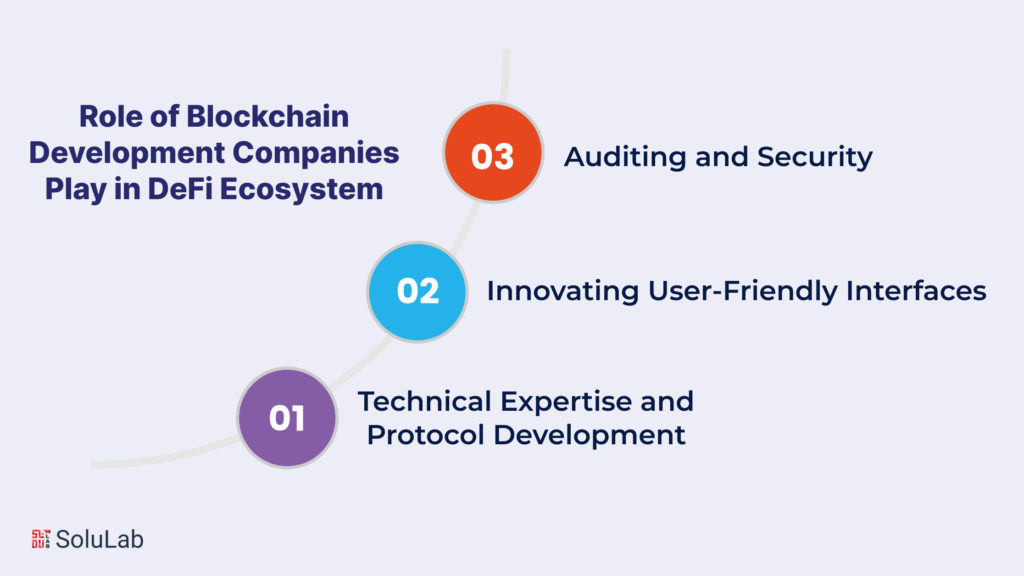
What Role Do Blockchain Development Companies Play in the DeFi Ecosystem?
What Role Do Blockchain Development Companies Play in the DeFi Ecosystem?

Blockchain Development Companies stand at the forefront of driving innovation within the DeFi ecosystem. These companies possess the technical expertise and experience necessary to build, deploy, and enhance the protocols, smart contracts, and platforms that constitute the DeFi landscape. Their role is multifaceted and crucial for the continued growth and success of DeFi.

Technical Expertise and Protocol Development

Blockchain Development Companies contribute their technical prowess to create the protocols that underpin various DeFi functionalities. These protocols, including decentralized exchanges, lending platforms, and yield farming mechanisms, rely on intricate smart contracts and innovative design. These companies ensure that these protocols are not only secure but also efficient, scalable, and user-friendly.

Innovating User-Friendly Interfaces

Usability is a critical aspect of DeFi adoption. Blockchain Development Companies design user interfaces that make it easier for individuals, regardless of technical expertise, to interact with DeFi platforms. By offering intuitive and user-friendly interfaces, they lower the entry barriers and encourage broader participation in the DeFi ecosystem.

Read Our Blog: What are the Benefits of Using Digital Identity with Blockchain in the Future?

Auditing and Security

The DeFi space demands a robust security framework due to the potential financial risks associated with smart contracts and protocol vulnerabilities. Blockchain Development Companies perform security audits to identify and rectify vulnerabilities in smart contracts, enhancing the overall safety of DeFi platforms and protecting users from potential risks.

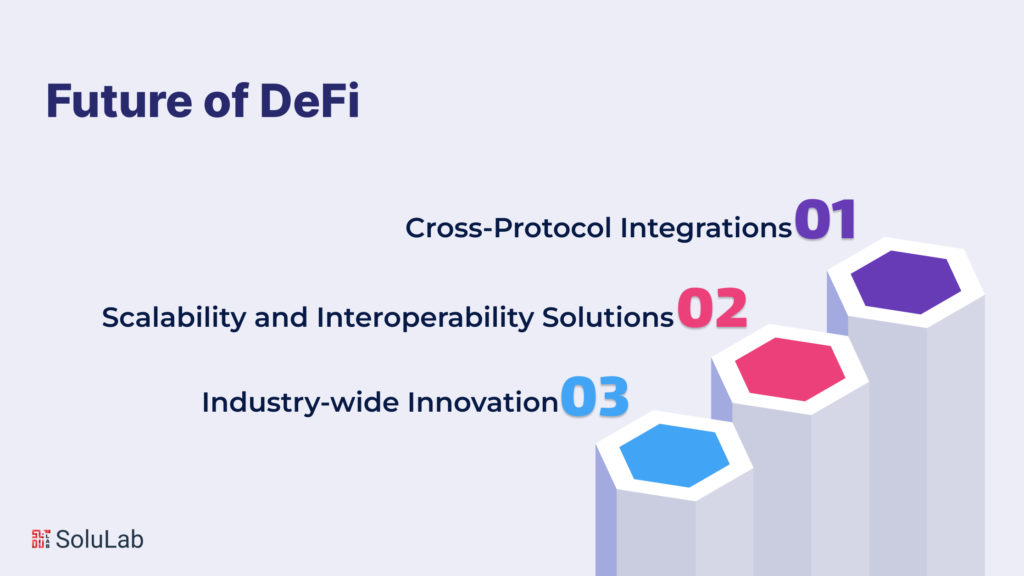
How Do Collaborations and Partnerships Shape the Future of DeFi?
How Do Collaborations and Partnerships Shape the Future of DeFi?

Collaborations and partnerships within the DeFi ecosystem are instrumental in driving innovation, expanding services, and fostering a more interconnected financial landscape.

  • Cross-Protocol Integrations

Blockchain Development Companies collaborate with other projects and protocols to create seamless integrations. These integrations enable protocols to interact and share data, creating a more holistic and interconnected DeFi ecosystem. For instance, a lending platform might collaborate with a decentralized exchange to provide users with convenient access to liquidity.

  • Scalability and Interoperability Solutions

Blockchain Development Companies play a pivotal role in developing solutions to address the scalability challenges faced by DeFi platforms. By working on layer 2 scaling solutions or cross-chain interoperability frameworks, these companies enable DeFi to accommodate a growing user base and diverse set of assets.

Read Also: DeFi Development – Use Cases, Challenges & Future

  • Industry-Wide Innovation

Collaboration within the DeFi ecosystem allows for the cross-pollination of ideas and expertise. This collaborative approach fosters industry-wide innovation, where projects learn from each other’s successes and failures, ultimately driving the evolution of DeFi to new heights.

As we explore the intersection of Blockchain Development Companies and the DeFi ecosystem, it becomes evident that these companies are not only the architects of DeFi’s infrastructure but also the catalysts for its growth and expansion. The subsequent sections will delve into the dynamic realm of DeFi derivatives, the innovative features of DeFi wallets, and the broader challenges and opportunities that lie ahead for this transformative financial landscape.

What are the Regulatory Challenges Faced by DeFi, and How Do They Impact its Growth and Adoption?

The rapid rise of Decentralized Finance (DeFi) has ignited a paradigm shift in the financial landscape, offering a decentralized and borderless alternative to traditional financial systems. However, as the DeFi ecosystem continues to expand, it encounters a complex web of regulatory challenges that have the potential to significantly influence its growth and adoption.

Uncertainty in Regulatory Frameworks

One of the key challenges faced by DeFi is the lack of clarity in existing regulatory frameworks. DeFi operates in a decentralized and cross-border manner, making it challenging for regulatory authorities to define the jurisdiction and establish rules that apply uniformly. The absence of clear guidelines leaves DeFi participants uncertain about the legality of their activities and exposes them to potential legal risks.

Conflict with Traditional Regulations

DeFi’s decentralized nature contradicts the traditional regulatory approach that relies on intermediaries for oversight. Concepts like pseudonymous transactions and smart contract automation, while central to DeFi’s innovation, may clash with traditional anti-money laundering (AML) and know-your-customer (KYC) regulations. This conflict between the DeFi ethos and traditional regulations can hinder adoption, particularly by institutions and risk-averse users.

Consumer Protection and Investor Risks

The decentralized nature of DeFi platforms can make it challenging to enforce consumer protection measures and address investor risks. Scams, hacks, and vulnerabilities can lead to significant financial losses for users. The absence of intermediaries means that users may have limited recourse in case of disputes or fraudulent activities.

Read Our Blog: 7 Best Defi Trading Platforms in 2023

Impact on Innovation and Development

Overly stringent regulations could stifle the innovative spirit of DeFi and deter developers from exploring new possibilities. Regulatory hurdles might lead to a fragmented ecosystem with projects either avoiding compliance or relocating to jurisdictions with more favorable regulatory environments. This could potentially limit the growth of the DeFi ecosystem and curtail the benefits it offers.

Fragmented International Approach

The global nature of DeFi exacerbates regulatory challenges, as different countries have varying approaches to blockchain and digital assets. A lack of harmonization in regulations can lead to confusion for global users and impede cross-border participation.

Impacts on Growth and Adoption

The regulatory challenges facing DeFi can significantly impact its growth trajectory and user adoption in several ways:

Read Also: 9 Best Defi Staking Platforms in 2023

  • Deterrence for Institutional Investors

Traditional financial institutions and institutional investors often prioritize regulatory compliance and legal certainty. Uncertainty surrounding DeFi’s regulatory status might discourage its entry into the ecosystem, limiting the influx of capital and expertise.

  • Reduced Retail User Participation

Regulatory concerns can discourage retail users from entering the DeFi space, especially those who are risk-averse or less familiar with the intricacies of blockchain technology. A lack of regulatory clarity may make potential users hesitant to engage with DeFi platforms.

  • Inhibited Innovation

Overly restrictive regulations might discourage developers from creating new and innovative DeFi protocols. This could limit the diversity of services offered within the ecosystem and hinder its overall development.

  • Geographical Fragmentation

Disparate regulatory approaches across jurisdictions can lead to fragmented services and platforms. Users might have limited access to certain DeFi services based on their geographical location, hampering the vision of a globally accessible financial ecosystem.
CTA2

Conclusion 

In the ever-evolving landscape of finance, the role of blockchain development in shaping the future cannot be overstated. As we’ve journeyed through the intricacies of the DeFi ecosystem and its reliance on blockchain technology, one name that stands out for its potential to drive transformative change is SoluLab.

SoluLab, a leading blockchain development company, showcases its prowess in blockchain development, placing it at the forefront of the DeFi revolution. With a deep understanding of the nuances of blockchain architecture, smart contracts, and decentralized applications, SoluLab, as a dedicated blockchain development company, is poised to shape the DeFi landscape in profound ways.

In a world where innovation and collaboration are paramount, SoluLab’s expertise becomes an invaluable asset. By crafting robust and secure protocols, they empower DeFi platforms to operate seamlessly while ensuring the safety of users’ assets. SoluLab’s contributions extend beyond just code; they are instrumental in creating user-friendly interfaces that break down barriers to entry, making DeFi accessible to a broader audience.

SoluLab, a leading deFi development company, places a strong emphasis on security and audit practices, bolstering the credibility of DeFi projects. In an arena where vulnerabilities carry significant repercussions, their meticulous approach and thorough testing effectively minimize potential hazards, cultivating an atmosphere of assurance and dependability. Furthermore, SoluLab’s commitment to innovation harmonizes seamlessly with the ever-changing realm of DeFi. As the landscape progresses, their proficiency equips them to adeptly craft and implement solutions tackling new obstacles, whether linked to scalability, interoperability, or regulatory adherence. To embark on a secure and forward-looking deFi journey, contact SoluLab today.

FAQs

1. What is the significance of blockchain development in the DeFi ecosystem?

Blockchain development plays a pivotal role in the DeFi ecosystem by enabling the creation of secure, transparent, and decentralized financial applications and protocols.

2. How does blockchain technology contribute to the growth of DeFi protocols?

Blockchain technology provides the underlying infrastructure for DeFi protocols, ensuring trustless transactions, immutability, and tamper-proof records, thereby fostering the growth of the DeFi ecosystem.

3. What is the role of a blockchain development company in the DeFi space?

A blockchain development company specializes in creating and optimizing the technology stack required for DeFi applications. They design, build, and maintain the decentralized architecture that powers DeFi protocols.

4. Can you explain the concept of DeFi derivatives and its relationship with blockchain development?

DeFi derivatives are financial contracts whose value is derived from an underlying asset. Blockchain development facilitates the creation and execution of smart contracts that enable the trading, settlement, and management of DeFi derivatives in a transparent and automated manner.

5. What are some of the top DeFi protocols that showcase the impact of blockchain development?

 Top deFi protocols like Aave, Compound, Uniswap, and MakerDAO exemplify the influence of blockchain development. These protocols utilize decentralized blockchain technology to offer lending, borrowing, decentralized exchanges, and stablecoin issuance.

6. How do decentralized blockchain technologies contribute to the security of DeFi ecosystems?

Decentralized blockchain technology enhances the security of DeFi ecosystems by eliminating single points of failure, reducing the risk of hacks, and ensuring that transactions and smart contracts are executed without the need for intermediaries.
7 Best Defi Trading Platforms in 2025

7 Best Defi Trading Platforms

Cryptocurrency has taken the financial world by storm, providing an alternative to traditional banking and finance systems. Among the numerous crypto platforms, Decentralized Finance (DeFi) platforms are garnering significant attention. These platforms leverage blockchain technology to provide decentralized versions of various financial services like loans, insurance, asset trading, and more. One such platform that stands out is Ethereum, the underlying top blockchain platform for a vast majority of DeFi protocols.

In this blog post, we will discuss some of the best DeFi development platforms expected to witness significant growth in 2024-2025. We will explore their unique features and capabilities and why they might be worth your investment. Let’s delve into the exciting realm of Top Defi Trading Platforms!

Introduction

As we plunge into the world of leading DeFi development platforms, it’s essential to comprehend what DeFi is and what it has to offer. DeFi, otherwise known as Decentralized Finance, is a comprehensive term for a multitude of financial applications built on cryptocurrency or blockchain technology. It takes advantage of decentralized networks and open-source software to create a vast array of financial services and products.

DeFi development platforms are revolutionizing the blockchain landscape, bringing new and exciting platforms to life on platforms like Ethereum. These platforms use the platform’s native token (ETH in Ethereum’s case) to power payments and facilitate value transfers. Some of the most well-known Ethereum-based DeFi platforms are MakerDAO, Aave, Synthetix, Compound, Curve Finance, Kyber Network, Uniswap, 0x Protocol, Balancer, and Chainlink. These platforms provide decentralized financial services such as lending, borrowing, and trading. Investors and enthusiasts alike are drawn to these platforms for their unique features and capabilities, such as Uniswap’s token exchanges and Nexus Mutual’s risk cover products. Decentralized Finance (DeFi) is a thriving space filled with diversity and innovation, making it a compelling opportunity for all.

The Importance and Risks of Investing in DeFi Crypto

Investing in Top Defi Trading Platforms is a way to take part in the future of finance. It offers benefits like financial inclusivity, eliminating intermediaries, reducing costs, enhancing security, and increasing transparency. Moreover, it provides greater control and ownership of assets to individuals as transactions are executed through smart contracts on public blockchains.

However, like any investment, it comes with risks. The Defi Trading space is still relatively new and evolving, which means there are potential pitfalls and uncertainties. It’s crucial to understand these risks and do thorough research before investing.

CTA 1

Top DeFi Trading Platforms for 2024-2025

1. Frax Finance

At Frax Finance, you’ll find a one-stop shop for all your Defi Trading needs! Our comprehensive development solution features a swapping protocol powered by AMM, a lending application, a token transfer protocol, and a variety of stablecoins. Supporting eight major blockchains, Frax has achieved a stunning US$830 million in Total Value Locked (TVL) since its launch. With a strong focus on stability, Frax Finance uses a unique algorithm to maintain the value of its stablecoins, making it an attractive option for investors seeking a reliable store of value within the DeFi space. Frax Finance is not only focused on stability but also emphasizes security and user experience. Our team of experienced developers and auditors work tirelessly to ensure that our protocols are robust and free from vulnerabilities. We understand the importance of protecting users’ funds and have implemented various security measures, including regular smart contract audits and bug bounty programs.

One of the key features of Frax Finance is its decentralized lending application. Through this application, users can borrow and lend assets without the need for a central authority. This opens up opportunities for individuals to access credit and earn interest on their holdings, all while maintaining full control over their funds. In addition to lending, Frax Finance offers a swapping protocol powered by an Automated Market Maker (AMM). This allows users to easily exchange one asset for another without relying on traditional order books or intermediaries. The AMM ensures liquidity for various trading pairs, allowing for seamless and efficient transactions.

2. Morpho

Morpho is an innovative, on-chain peer-to-peer lending DeFi development solution that guarantees unbeatable annual percentage yield rates for both borrowers and lenders via its secure and decentralized P2P matching platform. To further ensure top-notch security and decentralization, Morpho runs its smart contracts through the most reliable global cybersecurity firms for regular audits and vulnerability assessments. This ensures that our protocols remain robust and impervious to potential threats. With Morpho, borrowers can easily access credit without the need for intermediaries or traditional financial institutions. Our decentralized lending platform allows individuals to borrow assets directly from lenders, eliminating the cumbersome process of credit checks and paperwork. This opens up new opportunities for individuals who may not have had access to traditional banking services.

On the other hand, lenders can earn attractive interest rates by providing liquidity to the platform. Our P2P matching system efficiently matches borrowers with lenders, ensuring that funds are utilized effectively and generating high returns for lenders. The annual percentage yield rates offered through Morpho are unbeatable, making it an enticing option for those looking to maximize their earning potential. In addition to the lending platform, Morpho also offers a comprehensive suite of tools and features to enhance the overall user experience. Our user-friendly interface allows for seamless navigation and easy execution of transactions. Whether you’re a borrower or a lender, you’ll find our platform intuitive and efficient.

3. Nexus Mutual

Nexus Mutual is revolutionizing DeFi development insurance with its expansive coverage of investor risks, certified audits from top cybersecurity companies, and trustless Ethereum-based smart contracts. Boasting an impressive US$275 million in Total Value Locked (TVL), the platform is a top player in the crypto insurance space and continues to attract users with its robust features and commitment to security. One of the key aspects that set Nexus Mutual apart is its comprehensive coverage of investor risks. Unlike traditional insurance providers, Nexus Mutual focuses exclusively on covering risks associated with decentralized finance. This means that users can protect their investments against smart contract failures, hacks, and other unforeseen events specific to the DeFi ecosystem. By offering tailored coverage, Nexus Mutual ensures that users have the peace of mind they need to participate confidently in the rapidly growing DeFi space.

To further bolster user confidence, Nexus Mutual undergoes regular audits and vulnerability assessments conducted by trusted global cybersecurity firms. These audits help identify and address any potential vulnerabilities within the platform’s smart contracts, ensuring that user funds are safeguarded against malicious attacks. By prioritizing security and transparency, Nexus Mutual aims to create a trusted environment where users can confidently engage in DeFi activities. Operating on the Ethereum blockchain, Nexus Mutual leverages trustless smart contracts to automate and streamline the insurance process. Through the use of smart contracts, the platform eliminates the need for intermediaries, reducing bureaucracy and costs associated with traditional insurance providers. This decentralized approach not only enhances efficiency but also eliminates the risk of human error or manipulation, providing users with a truly transparent and reliable insurance experience.

4. ParaSpace

ParaSpace is an innovative decentralized lending protocol that brings liquidity to NFTs. Powered by the Ethereum network, the platform is looking to expand its capabilities to other EVM-compatible chains in the near future to cater to a wider range of users. With the rise of non-fungible tokens (NFTs) and their increasing popularity, ParaSpace aims to bridge the gap between the vibrant world of NFTs and the financial opportunities they bring. By leveraging decentralized finance principles, ParaSpace allows users to collateralize their NFT assets and borrow against them, unlocking liquidity without the need to sell their prized digital collectibles. This opens up a whole new realm of possibilities for NFT holders, enabling them to access funds for various purposes, such as purchasing additional NFTs, investing in other cryptocurrencies, or even funding real-world platforms.

ParaSpace stands out by offering a seamless user experience and a wide range of supported NFTs, including artwork, virtual land, and in-game items. The platform provides users with a user-friendly interface where they can easily connect their wallets, view their NFT holdings, and explore available borrowing options. To ensure the safety and security of user assets, ParaSpace implements robust measures such as smart contract audits and rigorous risk management protocols. By partnering with reputable auditing firms and conducting regular security assessments, ParaSpace strives to mitigate potential vulnerabilities and protect user funds from potential threats.

5. DeFi Saver

DeFi Saver is one of the Best Defi Trading Platforms. Take control of your Decentralized Finance investments with DeFi Saver – a comprehensive management solution for protocols like MakerDAO, Compound, and Aave. Easily manage your investments and create an automated strategy to protect against market volatility and optimize your returns. DeFi Saver offers a user-friendly interface that allows you to monitor and adjust your positions in real-time, ensuring that you can make informed decisions based on the latest market conditions. With features like automated debt repayment, collateral swapping, and liquidation protection, DeFi Saver simplifies the management of your DeFi portfolio, saving you time and maximizing your potential profits.. Additionally, DeFi Saver provides advanced risk management tools, such as stop-loss orders and portfolio diversification strategies, to help you mitigate potential losses and maximize your returns. With DeFi Saver, you can easily connect your wallets and seamlessly access multiple DeFi protocols from one platform. This eliminates the need for manual transactions and reduces the complexity of managing your investments across different platforms.

One of the standout features of DeFi Saver is its automated strategy creation. Using intelligent algorithms, you can set predefined rules and triggers to automatically rebalance your portfolio based on market conditions. Whether you want to take advantage of flash loan opportunities or protect your assets during market downturns, DeFi Saver’s automation capabilities allow you to optimize your returns without the need for constant monitoring. Furthermore, DeFi Saver offers a comprehensive dashboard that provides real-time insights into your portfolio performance, including detailed analytics and historical data. This allows you to track the success of your investment strategies and make data-driven decisions to improve your overall performance.

6. Gamma

Gamma is an ultra-useful DeFi development solution that works as an automated concentrated liquidity manager, deploying specialized non-custodial position manager contracts called Vaults for strategic liquidity pool management. Compatible with a range of blockchains and DEXs, Gamma makes liquidation simple and efficient for DeFi users. By leveraging advanced algorithms and smart contract technology, Gamma identifies optimal entry and exit points for liquidity provision, ensuring maximum returns while minimizing risk. One of the key advantages of Gamma is its ability to automatically rebalance liquidity across different pools based on market conditions. This dynamic approach allows users to capture lucrative opportunities and adapt to changing market trends seamlessly. With Gamma, you can be confident that your liquidity is always deployed in the most advantageous way, maximizing your potential profits.

In addition to its automated liquidity management features, Gamma also provides comprehensive risk management tools. Users can set customized risk parameters, such as maximum exposure limits and slippage thresholds, to protect their assets from unexpected market fluctuations. Furthermore, Gamma’s intelligent monitoring system constantly scans the market for potential risks and alerts users in real-time, allowing for quick decision-making and proactive risk mitigation. Gamma’s user-friendly interface makes it accessible to both experienced DeFi investors and newcomers to the space. The platform provides intuitive dashboards and analytics, giving users a clear view of their liquidity positions, performance metrics, and historical data. With this information at hand, users can make informed decisions and optimize their liquidity pool strategies.

7. Opyn

Opyn is revolutionizing the DeFi development space with its novel purpose – providing and executing investment strategies for crypto traders. Invest in Ethereum’s native currency Ether ($ETH), or the stablecoin USD Coin ($USDC), and enjoy the opportunity to earn strategically! Opyn’s platform leverages cutting-edge technology and advanced algorithms to identify and execute investment strategies that maximize profitability while minimizing risk. One of the key features of Opyn is its ability to analyze market data in real-time, allowing it to adapt quickly to changing market conditions. By constantly monitoring various indicators and signals, Opyn can identify lucrative investment opportunities and execute trades at optimal entry and exit points. This dynamic approach ensures that users can capture the most profitable moments in the market.

Opyn also provides a wide range of investment options to cater to different risk appetites and investment goals. Whether you’re an experienced trader looking for high-risk, high-reward opportunities or a conservative investor seeking stable returns, Opyn offers a diverse set of investment strategies to suit your needs. From short-term trading to long-term holdings, Opyn has you covered. In addition to its investment capabilities, Opyn prioritizes security to safeguard user funds. The platform utilizes state-of-the-art security measures, including multi-factor authentication, encryption protocols, and secure storage solutions, to protect against potential threats. With Opyn, you can have peace of mind knowing that your assets are well-protected.

Final Thoughts on Investing in DeFi Development Platforms

The world of DeFi trading platforms is evolving rapidly, with 2024 bringing forth some of the best options for traders and investors seeking decentralized financial solutions. These platforms offer enhanced security, transparency, and control, making them ideal for users looking to maximize their trading experiences. We recently published a case study on Token World, a crypto launchpad platform developed with SoluLab’s expertise. Token World needed to overcome challenges like smart contract security and scalability, and with SoluLab’s solutions, the platform successfully launched secure token sales and engaged investors through a seamless and reliable interface. 

SoluLab’s tailored blockchain services ensure that platforms like Token World can thrive in the ever-evolving decentralized finance landscape. As the demand for innovative and secure DeFi platforms grows, working with a trusted DeFi development company like SoluLab can help businesses build cutting-edge, scalable solutions. SoluLab offers expertise in blockchain development, smart contract security, and tokenization strategies, allowing businesses to hire DeFi developers who can bring their vision to life.

CTA2

FAQs

1. What are DeFi trading platforms?

DeFi trading platforms are decentralized exchanges built on blockchain technology that allows users to trade cryptocurrencies directly with each other without the need for intermediaries. These platforms offer secure, transparent, and autonomous financial transactions, making them a crucial component of the Decentralized Finance ecosystem.
2. How do DeFi trading platforms differ from traditional exchanges?

Unlike traditional exchanges, DeFi platforms operate on decentralized networks, meaning there’s no central authority controlling the exchange. This ensures more transparency, greater user control, and enhanced security. Many DeFi platforms also integrate with DeFi lending platforms, allowing users to lend and borrow assets directly.

3. What should I look for when choosing a DeFi trading platform?

When choosing a DeFi platform, consider factors like security, ease of use, supported tokens, liquidity, and integration with DeFi lending platforms. Additionally, look for platforms that offer robust blockchain development solutions to ensure long-term sustainability and growth.

4. Are DeFi trading platforms safe to use?

Most reputable DeFi trading platforms prioritize security by using smart contracts and blockchain technology to ensure safe transactions. However, it’s important to verify the platform’s security audits and smart contract protocols before investing. Using a trusted Blockchain development solutions provider can also ensure the platform adheres to the highest security standards.

5. How do DeFi lending platforms work?

DeFi lending platforms allow users to lend their cryptocurrencies to others in exchange for interest. These platforms operate on smart contracts, automating the lending and borrowing process while ensuring secure and transparent transactions without intermediaries.
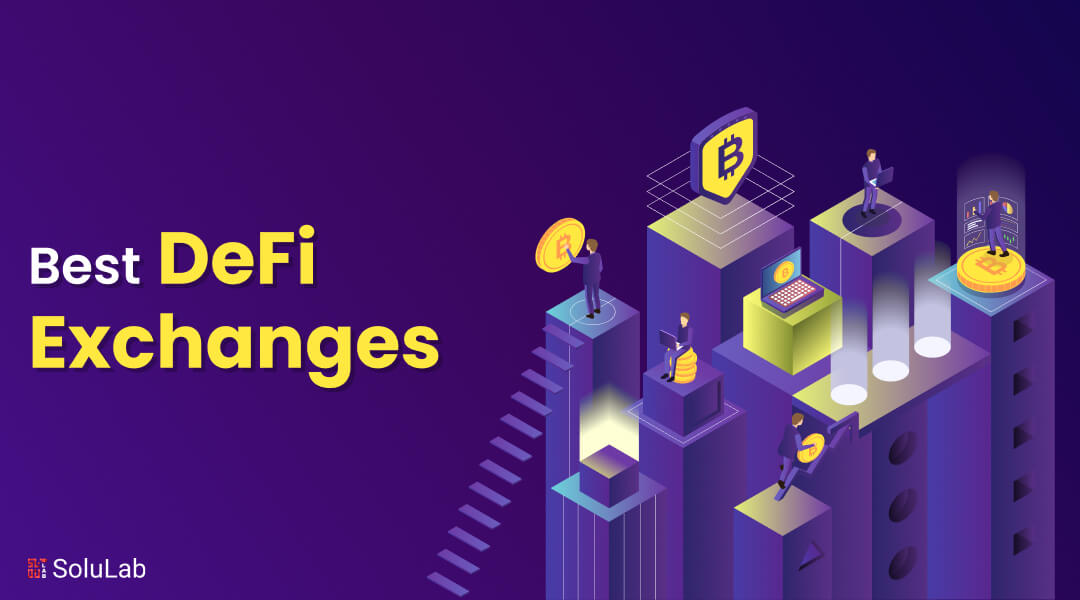
Top 10 DeFi Exchanges To Consider in 2026

Traditional centralized exchanges control your funds, impose hefty fees, and can freeze your assets without warning. Many traders face limited access to emerging tokens, geographic restrictions, and the constant risk of exchange hacks that have cost investors billions.

Every day you stick with centralized platforms, you’re paying unnecessary fees, missing out on early-stage DeFi opportunities, and risking your crypto. 

Decentralized exchanges (DEXs) put you back in control of your assets while offering lower fees, global accessibility, and access to thousands of tokens unavailable on traditional platforms. 

This guide reveals the top 10 DeFi exchanges to look for when planning yours in 2026, including key features, things to consider before selecting any platform. Let’s get started! 

What is DeFi Exchange?

A DeFi (Decentralized Finance) Exchange, also known as a DEX (Decentralized Exchange), is a platform where users can trade cryptocurrencies without a central intermediary, like a traditional exchange. DeFi exchanges use smart contracts on blockchains to automate trading and allow users to connect directly with each other, eliminating the need for a middleman.

Key Features of The Best DeFi Exchanges

Decentralized Finance (DeFi) exchanges are a type of cryptocurrency exchange that operate on blockchain technology and aim to provide users with more control, transparency, and autonomy over their financial transactions. Here are some key characteristics of DeFi exchanges:

  • Decentralization: DeFi exchanges are decentralized in nature, meaning they don’t rely on a single central authority to manage transactions or hold user funds. Instead, they utilize smart contracts on blockchain networks like Ethereum to automate trading and asset management.
  • Non-Custodial: In a DeFi exchange, users retain control of their private keys and funds. This eliminates the need to trust a third party with custody of assets, reducing counterparty risk associated with centralized exchanges.
  • Peer-to-Peer Trading: DeFi exchanges enable users to trade directly with one another without intermediaries. This creates a more direct and transparent trading process.
  • Automated Market Making: Many DeFi exchanges employ automated market maker (AMM) protocols. These protocols use liquidity pools, where users contribute their funds, enabling instant trades and price discovery without relying on traditional order books.
  • Access to Diverse Assets: DeFi exchanges typically support a wide range of tokens and assets, beyond the major cryptocurrencies. This enables users to trade a variety of tokens and engage in unique investment strategies.
  • Programmability: Smart contracts on DeFi exchanges can be programmed to execute various functions automatically, such as providing liquidity, distributing rewards, and executing complex trading strategies.

It’s important to note that while DeFi exchanges offer numerous advantages, they also come with certain risks, including smart contract vulnerabilities, liquidity risks, and regulatory uncertainties. As the DeFi space evolves, users should exercise caution, conduct thorough research, and stay informed about potential risks before participating in DeFi exchanges.

Things to Keep in Mind while Selecting a DeFi Exchange

By staying informed and adopting best security practices, you can enjoy the benefits of cryptocurrencies while ensuring the safety of your investments in this dynamic and exciting financial landscape. Some key factors to keep in mind include:

  • Security and Audits: Security is the cornerstone of any leading DeFi exchange. Look for platforms that prioritize security by conducting thorough smart contract audits performed by reputable third-party firms. These audits help identify vulnerabilities and ensure the platform’s integrity. Prioritize exchanges that have a history of proactive security measures and prompt response to potential threats.
  • User Interface and Experience: An intuitive and user-friendly interface is crucial for a smooth trading experience. A well-designed platform enhances your ability to navigate through the exchange, execute trades, and manage your portfolio effectively. Prioritize platforms that prioritize user experience and provide clear, concise, and user-friendly interfaces.
  • Supported Tokens and Pairs: The availability of a wide range of supported tokens and trading pairs is essential. A diverse selection allows you to engage in various trading strategies and seize emerging opportunities within the DeFi space. Ensure that the exchange supports the specific assets you’re interested in trading.
  • Liquidity and Trading Volume: High liquidity and trading volume are indicative of a healthy trading environment. These factors lead to tighter spreads, faster order execution, and a more seamless trading experience. Opt for exchanges with strong liquidity and active trading activity to minimize slippage and maximize your trading potential.
  • Fees and Costs: Understanding the fee structure is critical to managing your trading costs. Be aware of trading fees, withdrawal fees, and gas fees (transaction fees on blockchain networks). Compare fees across different exchanges to ensure that you’re getting competitive rates that align with your trading frequency and volume.
  • User-Friendly Interface: The wallet’s user interface should be intuitive and easy to navigate, especially for beginners. Complicated interfaces might lead to mistakes that could compromise the security of your funds.
  • Reputation and Reviews: Research the exchange’s reputation within the DeFi community. Seek out user reviews, testimonials, and feedback to gain insights into the experiences of other traders. Positive feedback indicates reliability, while negative feedback can highlight potential issues or challenges.
  • Customer Support: Quality customer support is vital for resolving issues and addressing inquiries promptly. Prioritize exchanges with responsive customer support channels that can provide assistance in a timely manner. This ensures that you have a reliable source of help whenever you encounter challenges.
  • Privacy and KYC: Decide whether you value privacy or are comfortable with Know Your Customer (KYC) verification. Some DeFi exchanges require identity verification, while others respect user privacy. Choose from the best DeFi exchanges that aligns with your preferences regarding the level of personal information you’re comfortable sharing.
  • Regulation and Legal Compliance: Research the exchange’s reputation within the DeFi trends. Understand the regulatory environment in which the exchange operates. Ensure that the platform complies with relevant laws and regulations, reducing potential legal risks for both the exchange and its users.

Here are the Top 10 DeFi Exchanges in 2026

1. Uniswap

One of the top decentralized exchanges (DEXs) based on the Ethereum network is Uniswap. Without using middlemen, it enables users to exchange ERC-20 tokens straight from their wallets. Continuous liquidity is guaranteed by Uniswap’s automated market-making (AMM) model, which makes use of reserves rather than order books. The DeFi community as a whole has accepted this idea.

Key features include a user interface that is easy to use and intuitive, as well as support for numerous tokens, low slippage, and high liquidity.

2. SushiSwap

SushiSwap is a popular decentralized exchange (DEX) that runs on multiple blockchains, offering users the ability to swap tokens, earn rewards, and participate in yield farming—all without a middleman.

Known for its community-driven approach, SushiSwap has evolved from a simple Uniswap fork into a full-fledged DeFi ecosystem with lending, staking, and cross-chain swaps. SushiSwap works across Ethereum, Arbitrum, Polygon, and more, and earns rewards by providing liquidity. Also, token holders vote on platform upgrades.

3. PancakeSwap

PancakeSwap is a decentralized exchange (DEX) built on the BNB Smart Chain. It allows users to swap BEP-20 tokens with low fees, making it ideal for retail traders and DeFi beginners. PancakeSwap uses an automated market maker (AMM) model and offers liquidity pools for earning passive income.

It supports yield farming, staking through Syrup Pools, lottery games, and even NFT trading. With its user-friendly interface, fast transactions, and low gas fees compared to Ethereum-based DEXs, PancakeSwap continues to be a go-to choice for DeFi enthusiasts in 2026.

4. Curve Finance

Curve Finance is a decentralized exchange (DEX) designed specifically for stablecoin trading and low-slippage swaps. Launched in 2020, Curve has become a go-to platform for users looking to trade stable assets with minimal fees and high efficiency. Its unique market-making algorithm focuses on providing deep liquidity for similar-priced tokens.

Some key features of Curve include its AMM model optimized for stablecoins, support for yield farming through Curve DAO, and integration with other DeFi protocols. Benefits include reduced impermanent loss, efficient stablecoin trades, and the opportunity to earn CRV tokens for liquidity provision.

5. Aave

Aave is a leading lending and borrowing decentralized finance (DeFi) platform that allows users to lend and borrow cryptocurrencies without intermediaries. Built on the Ethereum blockchain, Aave enables users to earn interest on deposits and borrow assets against collateral in a secure, transparent way.
The platform’s non-custodial nature ensures full control of funds, making it a popular choice for DeFi users. Aave stands out for its flexibility, innovation, and user-friendly experience.

6. Compound Finance

Compound Finance is a leading decentralized lending platform. Users can earn interest on their crypto assets or borrow against them without intermediaries. Built on Ethereum, it automates the process using smart contracts, making borrowing and lending seamless and secure. Compound has become a key player in the DeFi space thanks to its transparency, ease of use, and community governance.
Compound supports a wide range of tokens like ETH, USDC, and DAI, offering variable interest rates based on supply and demand. Users retain full control of their funds, with no lock-in periods. Its governance model empowers token holders (COMP) to propose and vote on protocol changes, ensuring decentralization and community involvement.

7. Balancer

Balancer is a decentralized exchange and automated portfolio manager built on Ethereum. Unlike traditional DEXs, it allows users to create self-balancing liquidity pools with up to 8 different tokens in custom ratios. Known for its flexibility, Balancer empowers both traders and liquidity providers with more control and efficiency.

It offers customizable AMM pools, low slippage trades, and supports multi-asset liquidity. Liquidity providers earn fees and can create smart pools with dynamic parameters. Balancer’s innovative model makes it ideal for advanced DeFi strategies and efficient capital deployment.

Maker DAO

8. Maker DAO

MakerDAO is the protocol behind DAI, a stablecoin pegged to the US dollar. Unlike traditional stablecoins, DAI is fully decentralized and collateralized by various assets deposited into the Maker Vaults. Users can generate DAI by locking up assets like ETH as collateral.

The protocol’s primary innovation lies in providing a stable and decentralized currency through DAI, which maintains its dollar peg without relying on centralized entities. The system operates through collateralized debt positions (CDPs) that enable users to obtain asset-backed loans by depositing cryptocurrency as collateral.

Yearn Finance

9. Yearn Finance

Yearn Finance is a decentralized finance protocol that operates as a yield optimizer, automatically moving funds around the DeFi ecosystem to generate high returns for users. The platform functions like crypto savings accounts in cyberspace, where users deposit their assets and Yearn puts them to work within the DeFi ecosystem, returning earned yield to depositors.

Yearn Finance’s flagship product is its Vaults system, which revolutionizes yield farming by offering automated, risk-adjusted returns. Yearn Vaults aim to automate the process of yield farming, reducing complexity into simple deposit or withdrawal transactions, functioning like passive investing for yield farming

10. Synthetix

Synthetix stands as the backbone for derivatives trading in DeFi, providing liquidity for permissionless derivatives like perpetual futures, options, and parimutuel markets across EVM chains. The platform allows anyone, anywhere, to gain on-chain exposure to a vast range of synthetic assets.

Synthetix offers exposure to a wide range of assets without leaving the blockchain. High liquidity and low slippage for trading Synths. Innovative platform with ongoing development.

Final Words

The DeFi exchange in 2026 continues to grow rapidly, offering traders unprecedented opportunities for decentralized trading. From established giants like Uniswap and PancakeSwap to innovative newcomers, these platforms provide enhanced liquidity, cross-chain compatibility, and user-friendly interfaces. 

As institutional adoption accelerates and traditional financial institutions recognize DeFi benefits, the sector is poised for significant growth. When selecting a DeFi exchange, prioritize security, liquidity depth, supported networks, and fee structures that align with your trading strategy. 

Contact SoluLab, a leading DeFi development company in the USA, to discuss your project requirements and grow your business.

CTA2

FAQs

1. How is a DeFi exchange different from a traditional centralized exchange (CEX)?

Unlike centralized exchanges (like Binance or Coinbase), DeFi exchanges operate without middlemen. Users retain control of their funds and trade directly through smart contracts. This eliminates the need to trust a third party with your assets.

2. Do I need a special wallet to use DeFi exchanges?

You’ll need a Web3-compatible wallet like MetaMask, Trust Wallet, or Coinbase Wallet. These wallets let you connect directly to DeFi exchanges and execute trades while maintaining control over your funds.

3. Can I earn passive income on DeFi exchanges?

Yes. Many DeFi platforms offer opportunities like liquidity provision, staking, or yield farming, allowing users to earn rewards or interest on their crypto holdings.

4. Are there any fees involved in using DeFi exchanges?

Yes. Users typically pay network (gas) fees for transactions, and some platforms may charge trading or liquidity provider fees. These fees vary by blockchain and platform.

5. How do I get started with SoluLab for DeFi exchange development?

Getting started with SoluLab is simple! Begin by reaching out through our contact form or scheduling a free consultation with our blockchain experts. We’ll discuss your project goals, technical requirements, and user needs to create a customized roadmap.

DeFi Development – Use Cases, Challenges & Future

DeFi Development - Use Cases, Challenges & Future

In recent years, the world of finance has witnessed a transformative wave with the rise of Decentralized Finance (DeFi). This paradigm shift has given birth to a new era of financial services, free from traditional intermediaries. DeFi Development is the process of building decentralized financial applications on blockchain networks. It involves a variety of technical and non-technical tasks, including:
    • Blockchain technology: DeFi applications are built on blockchain networks, which are decentralized, secure, and transparent. The most popular blockchains for DeFi development are Ethereum, Binance Smart Chain, and Solana.
    • Token creation: DeFi applications typically use tokens to represent assets, such as coins, bonds, and derivatives. Tokens are created through tokenization, which involves issuing a digital representation of an asset on the blockchain.
    • Use cases: DeFi applications offer a wide range of defi use cases, including:
      • Staking: Staking is locking up cryptocurrency tokens to earn rewards.
      • Lending and borrowing: DeFi lending and borrowing platforms allow users to lend and borrow cryptocurrencies without needing a centralized intermediary.
      • Trading: DeFi platforms allow users to trade cryptocurrencies and other digital assets.
      • Derivatives: DeFi derivatives platforms allow users to trade financial contracts, such as options and futures.
    • App development: DeFi applications are typically built as decentralized applications (dApps). dApps run on the blockchain and are not controlled by a single entity.
    • Key players in the industry: The DeFi industry is still in its early stages, but several key players are driving its growth. These include:
    • Blockchain protocols: Blockchain protocols such as Ethereum, Binance Smart Chain, and Solana provide the underlying infrastructure for DeFi applications.
    • DeFi projects: DeFi projects are the developers who build DeFi applications.
  • DeFi investors: DeFi investors are the individuals and institutions who invest in DeFi projects

DeFi Development is a rapidly growing field, and there are several opportunities for developers to get involved. If you are interested in learning more about DeFi Development, several resources are available online.

Understanding DeFi Development

At its core, DeFi Development leverages blockchain technology to create a trustless and transparent financial ecosystem. We delve into the significance of blockchain, the backbone that ensures secure, immutable, and decentralized transactions.

1. DeFi Blockchain Development

DeFi, short for Decentralized Finance, relies on blockchain technology to create a trustless and transparent financial ecosystem. Blockchain forms the backbone of DeFi, ensuring secure, immutable, and decentralized transactions.

DeFi applications are built on top of blockchains, which are distributed ledgers that record transactions in a secure and tamper-proof manner. This eliminates the need for a central authority, such as a bank or a government, to verify transactions. As a result, DeFi applications are more efficient, transparent, and secure than traditional financial services.

DeFi applications offer various financial services, including lending, borrowing, trading, and investing. These services are typically offered at lower fees than traditional financial services and are often available 24/7. DeFi applications are also more accessible than conventional financial services, as anyone with an internet connection can access them.

DeFi is still a relatively new field, but it has the potential to revolutionize the financial industry. DeFi applications offer several advantages over traditional financial services, including efficiency, transparency, security, and accessibility. As DeFi continues to develop, it is likely to play an increasingly important role in the financial system.

2. DeFi Token Development

Tokens are the essential building blocks of the DeFi ecosystem. They are used to represent value, facilitate transactions, and provide governance over decentralized applications (DApps). There are many different types of tokens used in DeFi, including:

  • Stablecoins: These are tokens that are pegged to a fiat currency, such as the US dollar, and are used to provide stability in the DeFi market.
  • Governance tokens: These tokens give holders a say in the decision-making process of a DApp.
  • Utility tokens: These tokens provide access to a DApp’s features or services.
  • Security tokens: These tokens represent ownership in a real-world asset, such as a company or a piece of real estate.

DeFi Token Development is the process of creating new tokens for use in the DeFi ecosystem. This process can be complex and requires a deep understanding of blockchain technology and smart contract development. However, DeFi Token Development is essential for the continued growth and development of the DeFi ecosystem.

Tokens play a crucial role in shaping the financial instruments that power DApps within the DeFi ecosystem. For example, stablecoins can be used to provide liquidity for trading pairs, governance tokens can be used to give users a say in the decision-making process of a DApp, and utility tokens can be used to provide access to a DApp’s features or services.

The DeFi ecosystem is constantly evolving, and new tokens are being created all the time. As the DeFi ecosystem continues to grow, DeFi Token Development will become an increasingly important role in the blockchain industry.

CTA2

Top DeFi Use Cases You Need to Know in 2025

The realm of decentralized finance offers a myriad of applications. Explore the transformative defi use cases, from decentralized exchanges (DEX) and lending platforms to innovative concepts like yield farming and decentralized autonomous organizations (DAOs). These examples illustrate the versatility and impact of DeFi on traditional financial services.

1. Decentralized Exchanges (DEX)

DeFi has facilitated the creation of decentralized exchanges (DEXs), which allow users to trade cryptocurrencies directly with each other, without the need for a centralized intermediary. This has revolutionized the way that users swap tokens, as it is now possible to do so quickly, easily, and securely.

Popular DEX platforms like Uniswap and SushiSwap have gained prominence in recent years, as they offer a variety of features that make them attractive to users. These features include:

  • Liquidity: DEXs typically have very high liquidity, which means that users can easily buy and sell tokens without having to worry about slippage. Slippage is the difference between the expected price of a trade and the actual price that is executed. When there is low liquidity, it can be difficult to buy or sell tokens at a price that is close to the market price. This can lead to losses for traders.
  • Low fees: DEXs typically charge much lower fees than centralized exchanges. This is because DEXs do not need to maintain a centralized infrastructure, which can be expensive.
  • Security: DEXs are often more secure than centralized exchanges, as they are not subject to the same risks of hacking or fraud. Centralized exchanges are a single point of failure, which means that if they are hacked, all of the user funds on the exchange are at risk. DEXs, on the other hand, are decentralized, which means that there is no single point of failure. If one node is hacked, the other nodes can continue to operate.

As a result of these advantages, DEXs are becoming increasingly popular, and are expected to continue to grow in the future. However, there are also some challenges that DEXs face, such as the lack of regulation and the complexity of the user interface. As DEXs continue to develop, they must address these challenges to reach a wider audience.

2. Lending and Borrowing

DeFi and blockchain use cases enable lending and borrowing protocols where users can lend their assets to earn interest or borrow assets by collateralizing their holdings. Platforms like Aave and Compound have become integral to this aspect of decentralized finance.

Lending and borrowing are two of the most fundamental financial activities, and DeFi has brought them to the blockchain in a way that is more transparent, efficient, and accessible than ever before.

With DeFi lending, users can deposit their assets into a lending pool and earn interest on their deposits. The interest rates are typically higher than what is offered by traditional banks, and the funds are often available to borrowers more quickly.

DeFi borrowing allows users to borrow assets against their cryptocurrency holdings. The assets used as collateral are typically locked up in a smart contract, and the borrower must repay the loan with interest. If the borrower fails to repay the loan, the collateral is liquidated and sold to repay the lender.

Aave and Compound are two of the most popular DeFi lending and borrowing platforms. Aave offers a variety of lending products, including fixed-rate loans, variable-rate loans, and flash loans. Compound is a lending protocol that uses an automated market maker (AMM) to set interest rates.

DeFi lending and borrowing is still a relatively new and evolving field, but it has the potential to revolutionize the way we think about finance. By providing a more transparent, efficient, and accessible way to lend and borrow money, DeFi is making financial services more available to everyone.

3. Asset Management 

The simple definition of asset management is the way an individual invests and holds their assets. Third parties that manage assets on behalf of other parties are most frequently referred to as asset managers in transitional finance. Both personal holdings and investments made by third parties on behalf are included in crypto asset management. 

Managing your cryptocurrency assets allows you to be a private bank for yourself. In legacy finance, you can theoretically keep the fiat money and valuable assets in a safe under your bed, but in reality, you can’t. It’s not very safe, to start. Second, the majority of financial services and goods, including stock trading, electronic payments, and borrowing and lending are no longer available to you. 

In crypto this is untrue. Without sacrificing any of the financial offerings and conveniences, you can keep complete control over your assets. It is simple and secure to use self-custodial wallets, such as the Bitcoin.com Wallet. Although you have the choice to self-custody your crypto assets, doing so will prevent middlemen from having the unjust gatekeeping advantage they have in traditional markets. 

4. Decentralized Autonomous Organizations (DAOs)

DeFi is a rapidly growing financial ecosystem that is built on blockchain technology. One of the most important aspects of DeFi is the decentralization of governance. This means that decisions about how the ecosystem operates are made by the community, rather than by a central authority.

DAOs, or decentralized autonomous organizations, are a key component of DeFi. DAOs are organizations that are governed by smart contracts, which are pieces of code that automate decision-making processes. This means that DAOs can operate without the need for a central authority, which makes them more efficient and secure.

One of the most well-known DAOs is MakerDAO. MakerDAO is a decentralized lending platform that allows users to borrow cryptocurrency against their Ethereum holdings. MakerDAO is governed by a DAO called the Maker Governance System (MGS). The MGS is responsible for making decisions about how MakerDAO operates, such as setting interest rates and determining the collateral that users can use to borrow cryptocurrency.

The MGS is made up of two components: the MakerDAO token (MKR) and the Maker voting system. MKR holders can vote on proposals that are submitted to the MGS. The proposals that receive the most votes are implemented. This means that the community has a direct say in how MakerDAO is governed.

Decentralized governance is a key feature of DeFi. DAOs like MakerDAO exemplify how decentralized governance can drive the development and direction of projects. By giving the community a voice in how the ecosystem operates, DAOs can help to ensure that DeFi remains a transparent and accountable financial system.

5. Tokenization 

The act of producing digital assets, or tokens, that are distributed and controlled via a blockchain network is referred to as tokenization. Value transfers are made safe and quick using this technology. Tokenization is a key component of decentralized finance (DeFi) and is primarily linked to the Ethereum blockchain. These tokens serve as the network’s engine, giving users access to a variety of financial opportunities. 

A variety of assets, like as money, real land, or even intellectual property can be represented by tokens. Tokenization makes financial markets more accessible and liquid by digitizing these assets. Traditional barriers to asset ownership and exchange are being broken down by the ease with which users can trade, store, and move these digital alternatives around the world. 

With the use of decentralized blockchain technology, token transactions are transparent and safe, which lowers the possibility of fraud. Tokenization also gives people more control over their assets, which empowers them. 

Read Also: DeFi Vs. CeFi

DeFi App Development

The user interface is crucial in the decentralized landscape. DeFi App Development focuses on creating intuitive interfaces for interacting with decentralized applications, enhancing user experiences, and making the adoption of decentralized financial services more accessible.

1. Smart Contracts and DeFi Apps

Smart contracts are the backbone of decentralized finance (DeFi) applications. They are self-executing pieces of code that can be used to automate financial transactions. Smart contracts are programmed to execute predefined rules without the need for intermediaries, which can help to reduce costs and increase efficiency.

DeFi app development focuses on creating user-friendly interfaces for interacting with smart contracts. These interfaces can be used to create a variety of DeFi applications, such as lending platforms, trading platforms, and derivatives platforms.

Here are some of the benefits of using smart contracts in DeFi applications:

  • Reduced costs: Smart contracts can help to reduce costs by automating financial transactions. This can be beneficial for both businesses and consumers. For example, a smart contract can be used to automate the loan origination process, which can save time and money for both the lender and the borrower.
  • Increased efficiency: Smart contracts can help to increase efficiency by automating financial transactions. This can save time and money, and it can also reduce the risk of human error. For example, a smart contract can be used to automatically execute a trade order, which can save the trader from having to manually enter the order.
  • Enhanced security: Smart contracts can help to enhance security by reducing the risk of fraud and human error. For example, a smart contract can be used to verify the authenticity of a financial transaction, which can help to protect both the buyer and the seller.

DeFi app development is a rapidly growing field. As the DeFi ecosystem continues to evolve, we can expect to see even more innovative and user-friendly DeFi applications being developed. These applications will have the potential to revolutionize the way we interact with the financial system.

In addition to the benefits listed above, smart contracts can also be used to create new financial products and services that were not previously possible. For example, smart contracts can be used to create decentralized exchanges (DEXs), which allow users to trade cryptocurrencies without the need for a centralized intermediary. Smart contracts can also be used to create lending platforms, insurance products, and other financial services.

The potential of smart contracts is vast, and DeFi app development is just beginning to scratch the surface. As the DeFi ecosystem continues to grow, we can expect to see even more innovative and groundbreaking applications being developed.

2. Wallet Integration

Seamless integration with cryptocurrency wallets is essential for DeFi applications. Wallets like MetaMask and Trust Wallet empower users to interact securely with decentralized financial services.

DeFi applications are built on blockchains, which are decentralized networks that allow users to transact directly with each other without the need for a central authority. This means that users have complete control over their funds and can access DeFi services from anywhere in the world. However, interacting with blockchains can be complex and technical, which is why cryptocurrency wallets are so important.

Wallets like MetaMask and Trust Wallet provide a user-friendly interface that allows users to store, send, and receive cryptocurrencies. They also provide access to DeFi applications, making it easy for users to participate in the decentralized financial ecosystem.

Seamless integration between DeFi applications and cryptocurrency wallets is essential for a good user experience. When users can easily connect their wallets to DeFi applications, they can start using these services right away. This is important for the growth of the DeFi ecosystem, as it makes it easier for new users to get started.

In addition to providing a user-friendly interface, cryptocurrency wallets also play an important role in security. They protect users’ private keys, which are used to sign transactions on the blockchain. If a user’s private key is compromised, their funds could be stolen. Cryptocurrency wallets use a variety of security features to protect users’ private keys, such as 2FA and encryption.

Seamless integration with cryptocurrency wallets is essential for DeFi applications. Wallets like MetaMask and Trust Wallet empower users to interact securely with decentralized financial services. They provide a user-friendly interface and a variety of security features to protect users’ funds.

3. User Experience (UX) Design

DeFi App Development prioritizes UX design to ensure that users, both experienced and novice, can navigate and utilize the applications effortlessly. Intuitive interfaces enhance user adoption and engagement.

DeFi apps are complex financial tools, and it is important to make them as user-friendly as possible. A well-designed UX will help users understand how to use the app, make informed decisions, and avoid mistakes.

Some of the key elements of a good UX design for DeFi apps include:

  • Clear and concise navigation: Users should be able to easily find the information and features they need.
  • Affordable learning curve: Users should be able to learn how to use the app quickly and easily.
  • Error prevention: The app should be designed to minimize the risk of users making mistakes.
  • Responsive design: The app should be compatible with a variety of devices and screen sizes.

By prioritizing UX design, DeFi app developers can create applications that are easy to use, secure, and effective. This can lead to increased user adoption and engagement, which can ultimately benefit the entire DeFi ecosystem.

Challenges in DeFi Development

While the potential of DeFi is vast, it’s not without challenges. Dive into the hurdles faced in Challenges in DeFi Development, including security concerns and scalability issues. Explore how the industry is actively addressing these challenges to ensure the robustness and scalability of decentralized finance.

1. Security Concerns

The decentralized nature of DeFi does not make it immune to security risks. Smart contract vulnerabilities, hacks, and exploits have posed significant challenges for DeFi developers. To protect users and ensure the integrity of the DeFi ecosystem, developers must prioritize robust security measures.

Some of the most common security risks associated with DeFi include:

  • Smart contract vulnerabilities: Smart contracts are pieces of code that automate the execution of financial transactions on the blockchain. If a smart contract is not properly written, it can be vulnerable to attack. For example, a hacker could exploit a vulnerability in a smart contract to drain funds from a DeFi protocol.
  • Hacks: DeFi protocols are often targeted by hackers who attempt to steal funds. These attacks can be carried out in a variety of ways, such as through phishing scams, malware, or exploiting vulnerabilities in smart contracts.
  • Exploits: DeFi protocols can also be exploited by malicious actors who use loopholes in the protocol to gain an unfair advantage. For example, a hacker could exploit a loophole in a lending protocol to borrow funds without repaying them.

To mitigate these risks, DeFi developers must take steps to ensure the security of their protocols. These steps may include:

  • Auditing smart contracts: Smart contracts should be audited by security experts to identify and fix any vulnerabilities.
  • Using secure coding practices: Developers should use secure coding practices to reduce the risk of vulnerabilities in their smart contracts.
  • Implementing security measures: DeFi protocols should implement security measures such as multi-signature wallets and transaction signing to protect users’ funds.

By prioritizing robust security measures, DeFi developers can help to protect users and ensure the integrity of the DeFi ecosystem.

2. Scalability

As DeFi gains traction, scalability becomes a hurdle. High gas fees and network congestion on blockchain networks like Ethereum underscore the need for scalable solutions to accommodate growing user demands. DeFi applications are built on blockchains, which are decentralized networks that maintain a shared ledger of transactions. This decentralization is a key advantage of DeFi, as it makes it more difficult for bad actors to manipulate the system. However, it also makes blockchains less scalable than traditional centralized systems.

When a large number of users attempt to interact with a DeFi application on a blockchain, the network can become congested. This can lead to high gas fees, which are the fees that users pay to execute transactions on the blockchain. In some cases, gas fees can be so high that they make it impractical to use DeFi applications.

There are several ways to address the scalability problem in DeFi. One approach is to use sidechains, which are separate blockchains that are linked to the main blockchain. Sidechains can process transactions more quickly and cheaply than the main blockchain, which can help to reduce congestion and lower gas fees.

Another approach to scalability is to use sharding, which is a technique for dividing a blockchain into smaller pieces. Sharding can help to improve the performance of blockchains by distributing the load across multiple shards. DeFi is still a relatively new field, and there is no single solution to the scalability problem. However, the development of scalable solutions is essential for the continued growth of DeFi.

The Future of DeFi Development

The Future of DeFi Development

What lies ahead for decentralized finance? Peer into The Future of DeFi Development, where cross-chain integration and regulatory considerations take center stage. Explore the evolving landscape and anticipate the technological advancements that will shape the future of financial services.

  • Cross-Chain Integration

The future of DeFi lies in interoperability. Cross-chain integration allows users to interact seamlessly with various blockchains, expanding the scope and accessibility of decentralized finance.

Currently, DeFi is limited by the fact that it is confined to a single blockchain. This means that users who want to access DeFi applications must use the same blockchain, which can be inconvenient and limiting. Cross-chain integration would allow users to access DeFi applications from any blockchain, making it much more accessible and user-friendly.

There are several ways to achieve cross-chain integration. One popular method is through the use of bridges. Bridges are essentially two-way channels that allow users to transfer assets between different blockchains. Another method of cross-chain integration is through the use of interoperability protocols. Interoperability protocols are designed to allow different blockchains to communicate with each other.

Cross-chain integration is essential for the future of DeFi. It will allow DeFi to reach a wider audience and provide users with more options and opportunities. As the DeFi ecosystem continues to grow, cross-chain integration will become increasingly important.

  • Regulation and Compliance

As the DeFi space matures, regulatory clarity becomes paramount. As DeFi protocols become more complex and interconnected, regulators will need to develop a clear understanding of how these protocols operate to effectively oversee them. This will require a delicate balance between decentralization and compliance. On the one hand, regulators will need to ensure that DeFi protocols are not used for illegal activities, such as money laundering or terrorist financing. On the other hand, they will need to avoid stifling innovation by imposing overly burdensome regulations.

One way to strike this balance is through the use of principles-based regulation. Principles-based regulation focuses on the objectives of regulation, rather than on specific rules and regulations. This allows regulators to adapt to the rapidly changing DeFi landscape and to address new risks as they emerge. Another way to balance decentralization and compliance is through the use of sandboxes. Sandboxes are experimental environments where new financial products and services can be tested without the full regulatory burden. This allows regulators to gain experience with new technologies and to identify potential risks before they become widespread.

The future landscape of DeFi development will be shaped by how regulators approach these issues. If regulators can strike a balance between decentralization and compliance, DeFi can continue to grow and innovate, while also mitigating the risks associated with these new technologies.

CTA2

Conclusion

In finance, DeFi Development has emerged as a powerful force, reshaping traditional paradigms and opening new frontiers of financial inclusion. This journey into the decentralized realm of blockchain and tokens has showcased the diverse defi use cases, ranging from decentralized exchanges and lending platforms to innovative concepts like yield farming and decentralized autonomous organizations (DAOs).

In addressing the challenges of security vulnerabilities and scalability, the path ahead for DeFi Development necessitates innovation and collaboration. Cross-chain integration and considerations for regulatory compliance are key facets that will define the future landscape of decentralized finance.

In this transformative journey, SoluLab stands as a beacon of expertise and innovation in the realm of DeFi Development. As a leading DeFi Development Company, SoluLab’s commitment to providing end-to-end solutions for blockchain, token creation, and decentralized application development has been instrumental in shaping the decentralized finance landscape. The evolution of DeFi continues, and with SoluLab at the forefront, the horizon looks promising for a more inclusive, accessible, and decentralized financial future. Explore the possibilities, navigate the challenges, and embrace the transformative potential of DeFi with SoluLab.

FAQs

1. What is DeFi and how does it leverage blockchain technology? 

Decentralized Finance (DeFi) refers to a financial ecosystem built on blockchain technology that eliminates intermediaries like banks. It allows users to conduct transactions, lend, borrow, and earn interest in a decentralized manner using smart contracts and cryptocurrencies.

2. What are some common challenges in DeFi development? 

Some of the key challenges in DeFi development include security vulnerabilities in smart contract development, scalability issues due to network congestion on blockchain technology, and regulatory uncertainty across different jurisdictions. These challenges pose risks to widespread adoption.

3. How does blockchain technology ensure security in DeFi? 

Blockchain technology ensures security in DeFi by providing a decentralized ledger that is immutable and transparent. All transactions are recorded on the blockchain, making them traceable and resistant to tampering, which helps in preventing fraud and increasing trust among users.

4. What is the future of DeFi yield farming? 

The future of DeFi yield farming looks promising as new platforms emerge, offering innovative rewards and incentives. However, as the market matures, platforms will likely focus more on sustainable returns and reducing risks associated with impermanent loss and market volatility.

5. How are DeFi platforms evolving through smart contract development? 

DeFi platforms continue to evolve through advanced smart contract development, which is enabling more complex and secure financial applications. As the technology improves, DeFi is expected to offer enhanced functionality such as insurance, derivatives, and decentralized exchanges (DEXs), making it a critical component of the future financial system.