Talk to an Expert

How DePIN in Web3 Helps Enterprises Build Smarter Infrastructure?

DePIN in Web3

Despite Web3’s claimed decentralization, centralized corporations still control a large portion of the infrastructure, including computation, storage, and communication. This leads to problems with trust, expenses, and delays. Even as dApps and blockchains grow, they rely on traditional systems that go against Web3’s core values. Centralized servers can fail, censor, or control access. 

DePIN (Decentralized Physical Infrastructure Networks) is changing that. It enables users to build and maintain infrastructure, such as wireless networks, storage, or energy, through blockchain and token incentives. 

In this blog, we’ll explore how DePIN is driving the next phase of decentralization and why it’s key to Web3’s future.

What is DePIN in Web3?

DePIN, short for Decentralized Physical Infrastructure Networks, is a Web3-powered model that uses blockchain and token incentives to build and manage real-world infrastructure. Instead of relying on centralized corporations, DePIN allows communities, businesses, and individuals to contribute resources—like storage, connectivity, or energy—and get rewarded for it.

Messari also anticipates that the DePIN market might be worth approximately $2.2 trillion currently, and that it could grow to $3.5 trillion by 2028. Here’s how it works: 

  • People contribute physical resources (like WiFi routers, storage space, or solar panels).
  • They connect these devices to a blockchain-powered network.

In return, they earn crypto tokens for providing value to the network.

Why DePIN is Important for Blockchain and Web3?

DePINs are crucial to the growth of Web3, as they bridge the gap between the digital and physical sectors. Here’s why it’s important:

  • Enhancing Decentralized Ownership Infrastructure: DePIN eliminates the need for centralized organizations like governments or businesses by enabling individuals to engage in infrastructure ownership and governance. The core principles of Web3, granting people more control rather than depending on centralized authorities, are in line with this decentralization.
  • Linking the Digital and Physical Worlds: DePIN connects blockchain technology to physical assets, including electricity grids, transportation networks, and Internet of Things devices. Web3 apps may run on real-world infrastructure due to this connectivity, enabling solutions like renewable energy marketplaces and decentralized smart cities, among others.
  • Developing Novel Economic Frameworks: Through the tokenization of physical infrastructure, DePIN presents novel economic models in which resource contributions are rewarded. By encouraging involvement and active participation, these tokenized incentives support the upkeep of decentralized networks.
  • Resilience and Scalability: DePIN networks are more secure than conventional centralized systems. By eliminating single points of failure, decentralization strengthens and expands the system. DePIN will assist in satisfying the need for adaptable and effective decentralized infrastructure as Web3 expands.
  • The Trustless and Transparent Ecosystem Vision of Web3: DePIN makes use of the immutability, security, and transparency of blockchain technology. By ensuring that decentralized infrastructure systems are secure, verifiable, and auditable, these characteristics foster participant trust and enable trustless interactions devoid of middlemen.

How DePIN in Web3 Benefits Enterprises?

Enterprises Benefits of DePIN in Web3

Enterprises today demand infrastructure that is not only efficient but also adaptable to fast-changing market needs. DePIN in Web3 introduces a decentralized model that lowers costs, increases agility, and unlocks new growth opportunities—all while ensuring transparency and security. Here’s how it creates real value for businesses:

a. Cost Optimization

By leveraging shared, community-driven infrastructure, enterprises can significantly reduce capital and operational expenses. This decentralized model eliminates vendor lock-ins and minimizes overheads, making infrastructure more cost-efficient.

b. Scalability

DePIN networks grow organically as more participants join, allowing enterprises to expand without heavy upfront investments. This ensures infrastructure can scale seamlessly to match increasing demand.

c. Security & Transparency

Blockchain’s immutable ledger ensures secure data management, transparent transactions, and accountability across stakeholders. Enterprises benefit from reduced risks and higher trust in operations.

d. Real-World Value Creation

From IoT networks and renewable energy to logistics and decentralized storage, DePIN directly connects digital incentives with physical infrastructure. Enterprises can leverage this to enhance efficiency and tap into entirely new service models.

e. Flexibility & Innovation

DePIN empowers enterprises to experiment with decentralized business models—whether launching tokenized services, building peer-to-peer systems, or unlocking new revenue streams—fueling innovation without disrupting existing systems.

CTA1

Top 5 Use Cases of DePIN in Web3 for Enterprises

DePIN (Decentralized Physical Infrastructure Networks) is changing industries by combining blockchain with real-world assets. Let’s explore the top 5 use cases driving innovation and efficiency globally.

  • Telecommunications Infrastructure: DePIN enables community-driven telecom networks where users contribute bandwidth and coverage. This reduces dependency on expensive centralized operators, making internet and mobile connectivity more affordable and accessible in underserved areas.
  • Energy Generation and Distribution: Through DePIN, communities can build decentralized solar and renewable grids. People generate, store, and trade surplus energy locally, ensuring sustainability, cost savings, and reduced reliance on traditional energy monopolies.
  • Data Storage and Computing Power: DePIN allows individuals to share unused storage and computing capacity. This creates affordable, scalable alternatives to centralized cloud providers, ensuring better security, redundancy, and user control over data.
  • Decentralized Healthcare: By leveraging DePIN, healthcare networks can securely store and share patient records across providers. It ensures privacy, reduces duplication, and improves accessibility for patients in remote or resource-limited areas.
  • Web3 Gaming Infrastructure: DePIN powers decentralized gaming ecosystems where users share GPU power, storage, and servers. This makes Web3 gaming smoother, reduces costs, and creates fairer, player-owned infrastructures for immersive online experiences.

Real World Examples of Web3 DePIN

Real World Examples of Web3 DePIN

Several DePIN projects are already making waves across various industries. Here are a few notable examples:

1. Helium:

Helium is a decentralized wireless network where individuals provide LoRaWAN hotspots, enabling IoT devices to connect. Users earn HNT tokens for contributing coverage, creating a community-driven, low-power, wide-area network.

2. Filecoin:

Filecoin is a decentralized storage network. Participants rent out unused storage space, allowing others to store data securely. Miners earn FIL tokens, promoting distributed storage and reducing reliance on centralized cloud providers.

3. Golem:

Golem is a decentralized computing network. Users share idle computing power for tasks like rendering or simulations. Contributors earn GNT tokens, enabling cost-effective, distributed computation without depending on centralized cloud services.

4. Render Network:

Render Network decentralizes GPU-powered rendering for digital content. Users contribute GPU resources to process graphics, animations, and AI workloads. They earn RNDR tokens, offering a scalable, cost-efficient alternative to traditional centralized rendering farms.

The Future of DePIN in Web3

Decentralized Physical Infrastructure Networks (DePIN) are reshaping how real-world infrastructure is built, owned, and operated by leveraging blockchain technology and community incentives, bringing a new level of transparency, efficiency, and decentralization to physical systems.

  • Community-Owned Infrastructure: DePIN shifts control from large corporations to everyday individuals. People can contribute devices such as routers, solar panels, or sensors, and receive rewards for their participation. This promotes wider coverage, reduces costs, and builds trust through community-driven ownership and governance.
  • Token Incentives Drive Growth: DePIN projects reward users with crypto tokens for contributing to and maintaining physical infrastructure. This token-based model fosters a self-sustaining ecosystem where growth is driven by real-world usage and community participation, rather than solely by corporate investment.
  • Solving Infrastructure Gaps in Markets: DePIN can solve rural connectivity, energy distribution, and data-sharing challenges. Local users can deploy low-cost infrastructure and earn rewards, making decentralized models more viable than traditional centralized solutions in underserved areas.
  • Integration with IoT and AI: As Web3 evolves, DePIN will increasingly integrate with IoT and AI technologies. This will enable smarter, more responsive networks—whether in logistics, transport, or urban planning making real-time data more accessible, secure, and user-controlled.

CTA2

Conclusion

DePIN is changing industries and influencing the direction of decentralized apps. It easily fits in with the expanding needs of decentralized finance and other developing Web3 industries by utilizing blockchain technology.

DePIN Blockchain as a Service is positioned to bring about breakthroughs as sectors keep adopting decentralized models, promoting effectiveness, accessibility, and sustainability across industries. DePIN is expected to establish itself as an essential part of the decentralized ecosystem.

SoluLab, a DePIN development company, can help you build scalable, decentralized infrastructure tailored for Web3 gaming, IoT, and beyond. 

FAQs

1. How does DePIN technology in Web3 benefit Web3 infrastructure projects?

DePIN technology Web3 enhances Web3 infrastructure projects by providing decentralized solutions that lower the costs associated with traditional infrastructure. This decentralized approach enables faster scalability, better security, and improved accessibility for developers building on Web3, reducing the need for expensive hardware and centralized control.

2. How do participants earn tokens in DePIN networks?

People who take part in DePin networks get tokens for giving up things like bandwidth, energy, or storage. These resources are turned into tokens, which means they can be traded or used on the network. People who contribute get tokens as payment. These tokens can be used to access network services or sold on secondary marketplaces. 

3. Can DePIN applications in Web3 be integrated into other industries besides gaming?

Yes, DePIN applications Web3 can be integrated into various industries, including decentralized finance (DeFi), healthcare, logistics, and cloud computing. The flexibility of the DePIN blockchain allows businesses to decentralize their physical infrastructure, improve operational efficiency, and reduce costs by distributing workloads across multiple nodes.

4. How does DePIN blockchain enhance security in Web3 infrastructure projects?

DePIN blockchain enhances the security of Web3 infrastructure projects by distributing data and resources across multiple nodes, reducing the risks of centralized failure or data breaches. The decentralized nature of DePIN ensures that no single point of failure exists, providing better resilience and reliability for the overall infrastructure.

5. What is the difference between DeFi and DePIN?

DePIN indicates decentralized physical infrastructure networks, and DeFi represents decentralized finance. DeFi concentrates on financial services like lending and trading using blockchain technology by eliminating middlemen. On the other hand, DePIN improves infrastructure security and efficiency in the real world by using blockchain technology to manage real systems like electrical grids and supply chains.
 

Decentralized Physical Infrastructure Networks (DePIN): 2025 Crypto Trend

DePIN

DePIN has become a topic of current interest because of the emergence of blockchain technology and the increased interest in decentralized solutions. Although it is still in its infancy, DePIN is anticipated to upend the current infrastructure paradigms in a variety of fields. 

DePIN is an example of the paradigm shift in which dApps employ tokens to encourage communities to construct and manage networks of physical infrastructure. Using the power of blockchain and decentralized principles, this novel method promises to completely transform how we think and manage physical infrastructure, from electricity grids to telecom. 

Understanding DePIN Concepts and Technology

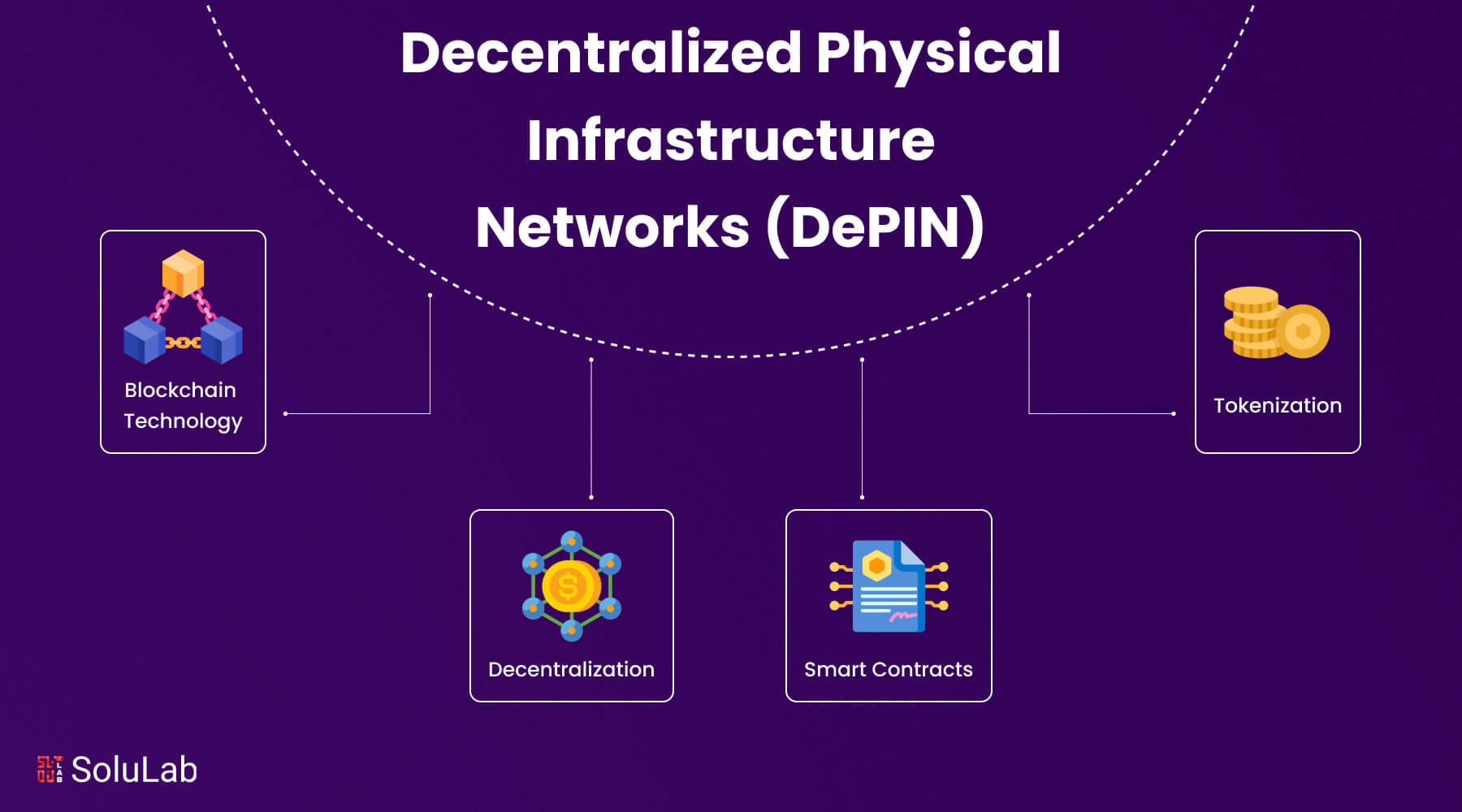
In the blockchain ecosystem, DePIN is an original idea that symbolizes a move away from centralized management and toward community-driven infrastructure development. Using smart contracts, tokens, and dApps, DePIN uses blockchain technology to encourage the development and upkeep of physical infrastructure. The concept of DePIN works on the fundamental tenet of decentralization, which holds that a network of participants shares accountability and benefits for constructing and maintaining infrastructure rather than being governed by a single entity. By removing any point of failure and promoting community ownership and engagement, this model creates a system that is more robust and effective. 

Technology Used By DePIN:

  • Smart Contracts: By automating the implementation of agreements and procedures, smart contracts are essential to DePIN. When certain circumstances are met, contracts that self-execute are programmed to initiate certain actions, including payments or service supply. This improves the network’s dependability and efficiency while lowering the need for middlemen. 
  • Blockchain Technology: Offers a safe, transparent, and unchangeable ledger for documenting transactions and activity, which is the foundation of DePIN. This promotes confidence among the participants by guaranteeing that every contribution and reward are traceable and opaque. 
  • Tokens: Tokens are a type of reward that encourages users to make contributions to the network. By offering the network resources, infrastructure, or services these virtual assets are easily accessible.

How Cryptocurrency DePINs Work?

Within DePINs, cryptocurrency is essential to community growth. To encourage providers of decentralized physical infrastructure to join their networks, these networks use cryptocurrency tokens as rewards. Due to the influx of investor funds, a DePIN’s token value rises, enabling service providers to offer competitive pricing. This increases demand for and acceptance of DePIN’s services, which raises the token price even further. More consumers, service providers, and investors are drawn to the network by this beneficial cycle.

DePIN network platforms, which do not include traditional financial institutions, are based on blockchain technology and offer financial services including trading, borrowing, and lending. Tokenization, the technique of recording property like land or buildings on a permanent record for decentralized ownership and trade through tokens, might be used in one way or another by these platforms to connect with real-world assets.

Types of DePINS

Types of DePINS

DePINs, or Device Personal Identification Numbers, can take various forms depending on the device and its purpose. Here are some common types:

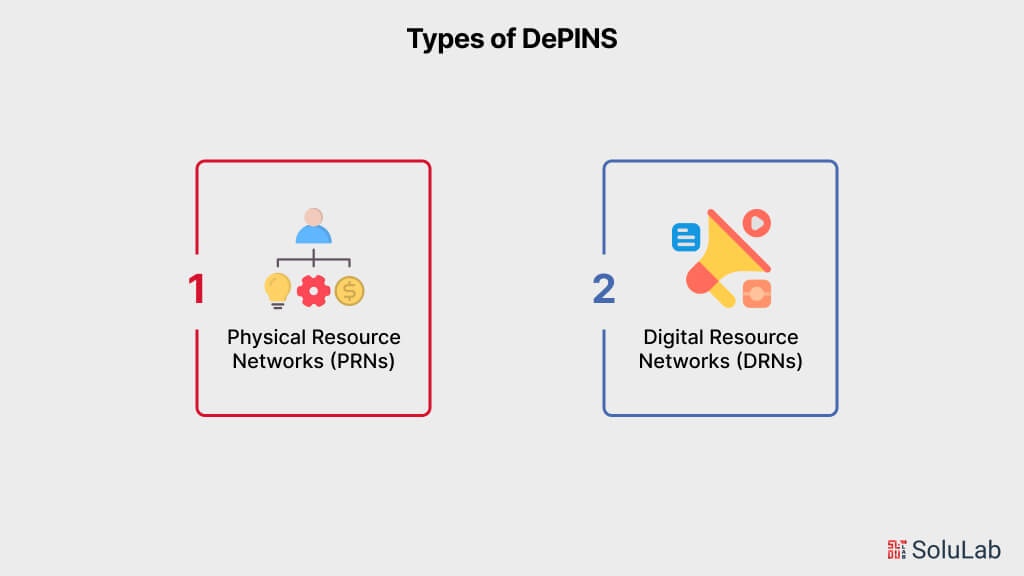
Physical Resource Networks (PRNs) and Digital Resource Networks (DRNs) are both frameworks used to manage and optimize resources, but they operate in different domains:

Physical Resource Networks (PRNs)

  • PRNs deal with tangible, physical resources such as raw materials, equipment, transportation, and facilities.
  • They focus on optimizing the flow of physical resources through supply chains, manufacturing processes, and distribution networks.
  • PRNs may involve logistics management, inventory control, production planning, and transportation optimization to ensure efficient utilization of physical resources.
  • Examples include traditional manufacturing industries, transportation and logistics companies, and supply chain management systems.

Digital Resource Networks (DRNs)

  • DRNs, on the other hand, deal with intangible, digital resources such as data, information, software, and digital services.
  • They focus on managing the flow of digital resources across digital platforms, networks, and systems.
  • DRNs involve processes such as data management, information sharing, digital collaboration, and software development.
  • Examples include digital platforms like social media networks, cloud computing services, digital marketplaces, and online collaboration tools.

While both PRNs and DRNs involve resource management and optimization, their focus and the nature of the resources they deal with differ significantly. PRNs are concerned with physical assets and logistics, whereas DRNs are concerned with digital assets and information flow in the digital world.

Related: Why are Startups, Businesses, and Governments Looking for DePIN Development?

Core Principles of Decentralized Physical Infrastructure Networks

Innovative infrastructure systems known as DePINs (Decentralized Public Infrastructure Networks) are reshaping traditional models of resource management. Embracing principles of decentralization, blockchain technology, tokenization, and smart contracts, DePINs represent how infrastructure is conceived, governed, and sustained. Let’s look into the core principles driving the evolution of DePINs:

  • Decentralization: Departing from centralized control structures, DePINs distribute authority across diverse stakeholders, fostering resilience and inclusivity. This approach empowers local communities, investors, and end-users, ensuring equitable decision-making and reducing dependency on singular entities.
  • Blockchain Technology: Central to DePINs is the integration of blockchain, a distributed ledger system renowned for its transparency and security. By leveraging blockchain, DePINs establish immutable records of transactions, enhancing trust and accountability among participants. This foundational technology underpins the integrity of collaborative endeavors within DePIN ecosystems.
  • Tokenization: Incentivizing participation lies at the heart of DePINs, often realized through token economies. Tokens, serving as digital assets, incentivize contributions to infrastructure projects and grant stakeholders access to network resources. Whether representing ownership stakes or facilitating service provision, tokens foster engagement and alignment of interests within DePIN ecosystems.
  • Smart Contracts: Automating governance and operational processes, smart contracts streamline interactions within DePIN networks. These self-executing agreements encode terms and conditions into executable code, facilitating seamless coordination and reducing reliance on intermediaries. Smart contracts optimize resource allocation and operational efficiency, driving the sustainable development of DePIN infrastructure.

CTA1

How Does DePIN Make Use of Blockchain Technology?

DePIN uses blockchain technology to guarantee the highest level of security and immutability for any data that is sent over its network. A more trustworthy and efficient network is produced by this configuration, which enables devices to communicate directly without depending on middlemen or centralized servers. The blockchain serves as a safe and open ledger to decentralized infrastructure networks, permanently documenting all network transactions and data transfers and promoting openness and trust.

DePIN applications in a number of industries like energy, supply chains, data storage, telecommunications, transportation, and real estate, utilize blockchain technology to decentralize authority across networks. Caldera and Eclipse are two examples of layer-two systems that are efficient and scalable, meeting the changing requirements of DePIN projects. 

The strategic alignment of DePIN initiatives with certain blockchains is essential to their successful deployment and future scaling. 

Use Cases of DePINs in Different Sectors

Use Cases of DePINs

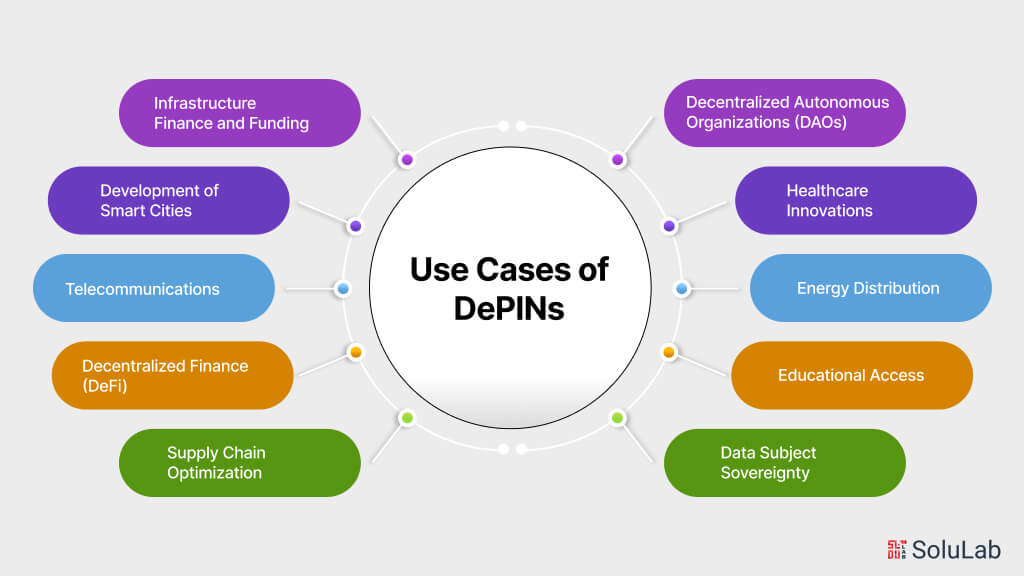
The top applications of decentralized physical infrastructure across a range of sectors are listed below.

1. Energy Distribution

Energy distribution companies employ Decentralized Physical Infrastructure Networks (DePINs), where participants provide energy grids to the network in exchange for tokens. Using an example, let’s examine how DePIN is used in the energy distribution industry. With the DePIN system, solar-powered households may sell their extra energy to nearby neighbors directly.

They receive tokens in exchange, which have real-world and virtual monetary worth. This decentralized method lowers transmission losses, does away with the need for centralized facilities and service providers, and effectively distributes energy. Additionally, offering immediate rewards in the form of tokens encourages more donors to provide extra services and assist in overall infrastructure growth.

2. Healthcare Innovations

Another area that stands to gain from utilizing decentralized physical infrastructure networks (DePINs) is the healthcare sector. In addition to enabling remote patient monitoring, telemedicine, record sharing, and other features, DePIN provides a decentralized healthcare infrastructure.

For example, everyone in the world can donate resources to a decentralized network of physical infrastructure for healthcare and receive benefits in the form of tokens. Additionally, users can utilize the same network for obtaining these facilities or services, including remote patient monitoring or telemedicine consultations. These networks enable people to safely keep sensitive data and communicate their medical history with physicians around the world. 

3. Decentralized Autonomous Organizations (DAOs)

DePINs are essential to the growth of decentralized autonomous organizations, or DAOs. The network gives users access to a number of vital physical and digital resources and services, including computer networks, communication systems, and data storage, which are necessary for the DAOs to operate smoothly and preserve their decentralized governance.

DePINs, for example, offer distributed computing resources that let DAOs do complicated tasks on their own. Additionally, donors provide decentralized data storage, which DAOs use to safely store data. In this way, DePIN infrastructures provide access to additional physical and digital resources that support DAO operations in a variety of sectors, including banking, government, entertainment, and more, in a safe, transparent, and efficient manner.

4. Educational Access

Through the support of decentralized educational initiatives, Decentralized Physical Infrastructure Networks, or DePINs, contribute to the transformation of the education sector. With these networks, students in impoverished places may access educational materials including e-books, online learning environments, and communication technologies that improve remote learning chances. 

Students may participate in virtual classroom discussions, access top-notch educational resources, and even work together with world-class professors by utilizing the DePIN infrastructure. In addition to supporting lifelong learning, DePIN in education transforms conventional educational methods and encourages information sharing. 

5. Data Subject Sovereignty

DePIN guarantees privacy and sovereignty by enabling people to be the owners of their personal information. An illustration of how patients safely save and manage their medical information on DeFi platforms will help you comprehend this.

Patients do not need to rely on centralized databases when they save their data on DePIN systems. They have complete control over their data and may authorize healthcare professionals to access it as needed. Furthermore, by giving their permission to be used for targeted advertising, studies, or medical research with full transparency and payment, people may monetize their health data through DePIN networks

6. Supply Chain Optimization

Transparent and decentralized supply chain networks are also made possible by decentralized physical infrastructure networks. These solutions enable supply chain and logistics managers to safely complete transactions, effectively manage logistics, and track delivery in real-time.

For instance, logistic businesses such as FedEx and DHL can use the real-time tracking services offered by the DePIN to follow the movement of a package in real-time. Furthermore, they may carry out safe transactions with the use of smart contracts in the DePIN infrastructure, which simultaneously lowers fraud and guarantees just compensation. 

7. Decentralized Finance (DeFi)

By enabling lending and borrowing through decentralized collateralized loans, DePIN networks also transform Decentralized Finance (DeFi). Without depending on centralized middlemen, users may get loans by holding digital assets from contributors in the DePIN, such as virtual real estate, Non-Fungible Tokens, and more.

For instance, a user can utilize NFTs, virtual property, or any other digital token as collateral to request loans from donors in the DePIN. The lending procedure is straightforward and automated because of smart contracts. Furthermore, the collateral security automatically passes to the lender (contributor) if the user fails on the loan arrangement. 

8. Infrastructure Finance and Funding

Tokenization and funding for infrastructure are also made possible by decentralized infrastructure solutions. Investors can contribute to projects and receive incentives based on the amount they provide.

For instance, a city plans to build a new bridge. To avoid relying solely on funding from the government or big investors, the bridge project’s creator has tokenized it. Tokens that reflect ownership of the bridge’s revenue stream are available for purchase by citizens. In addition, token holders earn dividends as a return on their investment when the bridge makes money. 

9. Telecommunications

Decentralized Physical Infrastructure Networks (DePINs) in telecommunications facilitate in the establishment of communication channels apart from conventional centralized service providers.

Let’s use an example to better grasp this. Let’s say there is no conventional telecommunications infrastructure in a rural community. Residents may now use peer-to-peer connections and DePIN infrastructure to access various communications services, such as sending messages and making calls, without depending on centralized suppliers. In this sense, DePIN improves self-sufficiency and connection in a rural community with little access to conventional telecommunications services.

10. Development of Smart Cities

By decentralizing the control of essential systems like electricity and water supplies, waste management, transportation, and more, DePIN also plays a critical part in the development of smart city infrastructure.

Take the example of a city managing its trash, water, electricity, and transportation systems via a DePIN network. It will make use of decentralized sensors that track real-time resource use. These sensors help cut down on waste and maximize resource allocation. Furthermore, smart contracts can automate the billing process. DePIN systems can quickly react to situations, such as natural disasters or war, without interfering with the city’s vital services and operations. This is another advantage of DePIN in the development of smart cities.  

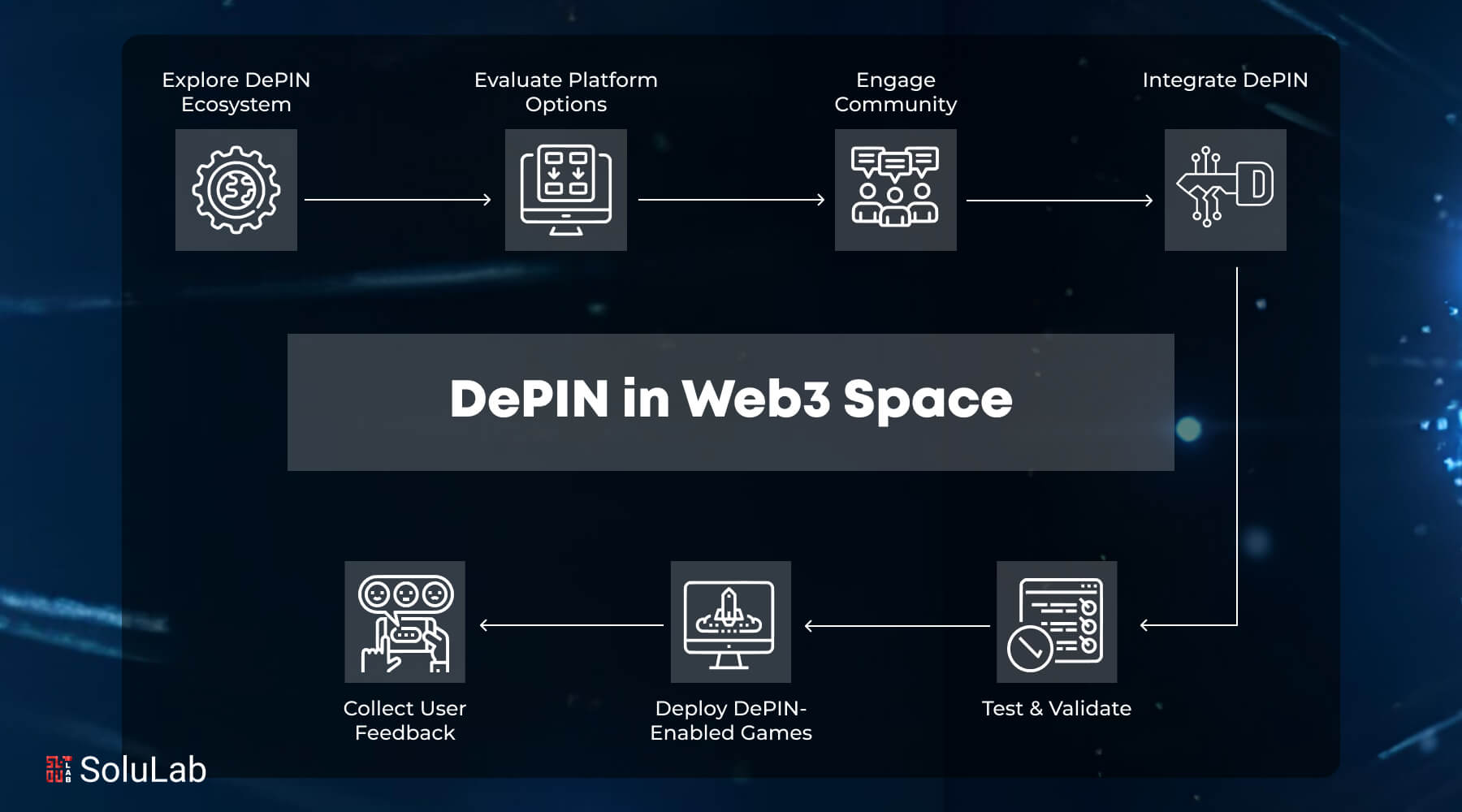
Related: DePIN in Web3 Space

The Future of Decentralized Physical Networks

Business executives now have a novel approach to enter the Web3 space: via DePINs. Consider pursuing the traditional route of becoming a power grid provider through the use of renewable energy sources. In this case, you normally look to a centralized, well-established organization for funding. This path necessitates large upfront expenditures for personnel, real estate, and infrastructure in addition to protracted bureaucratic procedures, all in exchange for giving up a sizable percentage of your earnings to your financier. With this old strategy, you are frequently left to start from scratch and receive minimal pay for your labor.

Discover the constantly changing domain of DePINs, where service delivery and infrastructure development are approached radically differently. You may bootstrap your project by asking interested people to join your network and contribute using blockchain technology and crowdsourcing. This strategy guarantees advantages to all parties engaged in addition to decentralizing ownership. The network’s service providers are in charge of setting up, deploying, and maintaining their gear. This lowers your overhead substantially.

In essence, you’re building an autonomous ecosystem—a utopian village—where everyone collaborates and is free from the centralized powerhouses’ tyranny. This concept’s fundamental strength can upend monopolies and alter the competitive environment in several industries. CTA2

How is SoluLab assisting with crypto trends?

Mainstream acceptance of the cryptocurrency industry and the ability to fit infrastructure into DePIN will predictably be a key trend in the industry in 2025. DePIN is designed to facilitate decentralized control of actual assets through blockchain technology, which, thereby, enhances their protection, productivity, and accountability. Besides people and communities, this innovative approach also holds new opportunities for companies to move to a more environmentally friendly setting as well.  

NovaPay Nexus development by SoluLab is a clear example of how technologies based on decentralization can change the scale of e-commerce. With the help of this platform, corporations can create and maintain several stores. Merchants might provide different currencies and wallets to satisfy their needs to enhance the customer experience and usability. Also, the NovaPay Nexus helps in the development of applications such as payment buttons as well as point-of-sale applications in a way that payment can be accepted easily without integrating with third parties or even getting technical support.

With SoluLab, bring the future into your company and reap the benefits of its strong functions for your business. Join us today to reshape your company’s payment processes’ evolution and risk management opportunities! Contact us today to know how you can benefit from these unique services. 

FAQs

1. What is Decentralized Infrastructure?

DePINs employ blockchain technology to build distributed systems, as opposed to conventional networks that are managed by a single organization. This implies that a small number of people can manage infrastructure.

2. Is decentralization beneficial or detrimental?

According to the conventional opinion, centralization is considered detrimental while decentralization is known as beneficial, but in reality, both are beneficial and essential only when they are balanced well. 

3. Which network is called a decentralized network?

A network design that has several authorities acting as a centralized point for participants is known as a decentralized network. Instead of depending on a single central server, this network divides workloads among multiple computers.

4. What makes decentralized a better choice?

An agile ecosystem is made possible by decentralization, which permits a dispread and independent approach to management and decision-making, this strategy can also encourage a collaborative and creative culture. 

5. Can SoluLab assist with Blockchain Development?

SoluLab is one of the leading blockchain development companies, our expertise lies in developing smart contracts, decentralized apps (dApps), and various blockchain solutions that help improve security and transparency for the involved organizations.