Talk to an Expert

How to Build a Generative AI Model Like GPT-5?

Build a GenerativeAI Model Like GPT-5

Artificial Intelligence, the world just can’t get enough of it. With next-gen models like GPT-5 setting new benchmarks, AI innovations are evolving every day to simplify human work and enhance efficiency. But building such advanced, data-driven Generative AI models requires much more than just algorithms; it demands a structured approach, robust infrastructure, and vast datasets.

In this blog, we’ll explore how to build your own Generative AI model, the key requirements behind it, and how these AI-powered applications are transforming the way businesses operate today.

Understanding the Basics of Generative AI Model Development

Generative AI model development goes far beyond writing code or training algorithms — it’s about teaching machines to create. From text and images to speech and data insights, Generative AI learns patterns from massive datasets to produce outputs that are human-like. The process starts with identifying a real-world problem, gathering high-quality training data, and choosing the right neural network architecture.

By understanding these foundational principles, developers can build scalable, creative, and business-ready Generative AI solutions that not only automate tasks but also innovate new ways of communication and productivity.

What Makes GPT-5 Different from Traditional AI Models?

GPT-5 represents the next leap in Generative AI evolution. Unlike traditional AI models designed for specific, rule-based tasks, GPT-5 is built to understand, learn, and create across multiple domains. It can generate human-like text, summarize complex information, translate languages, and even write code, all with remarkable context awareness.

Aspect Traditional AI Models Generative AI (GPT-5)
Purpose Designed for specific, rule-based tasks Learns to generate content across multiple domains
Learning Approach Uses predefined logic and limited datasets Trains on massive datasets with billions of parameters
Output Type Predictable, fixed responses Creative, context-aware, and human-like outputs
Adaptability Performs well in narrow use cases Adapts to diverse tasks such as writing, coding, and translation
Data Understanding Focuses on structured data analysis Understands patterns, tone, and context from unstructured data
Human Interaction Limited conversational ability Feels natural and human-like in conversations

Step-by-Step Process of Building a Generative AI Model

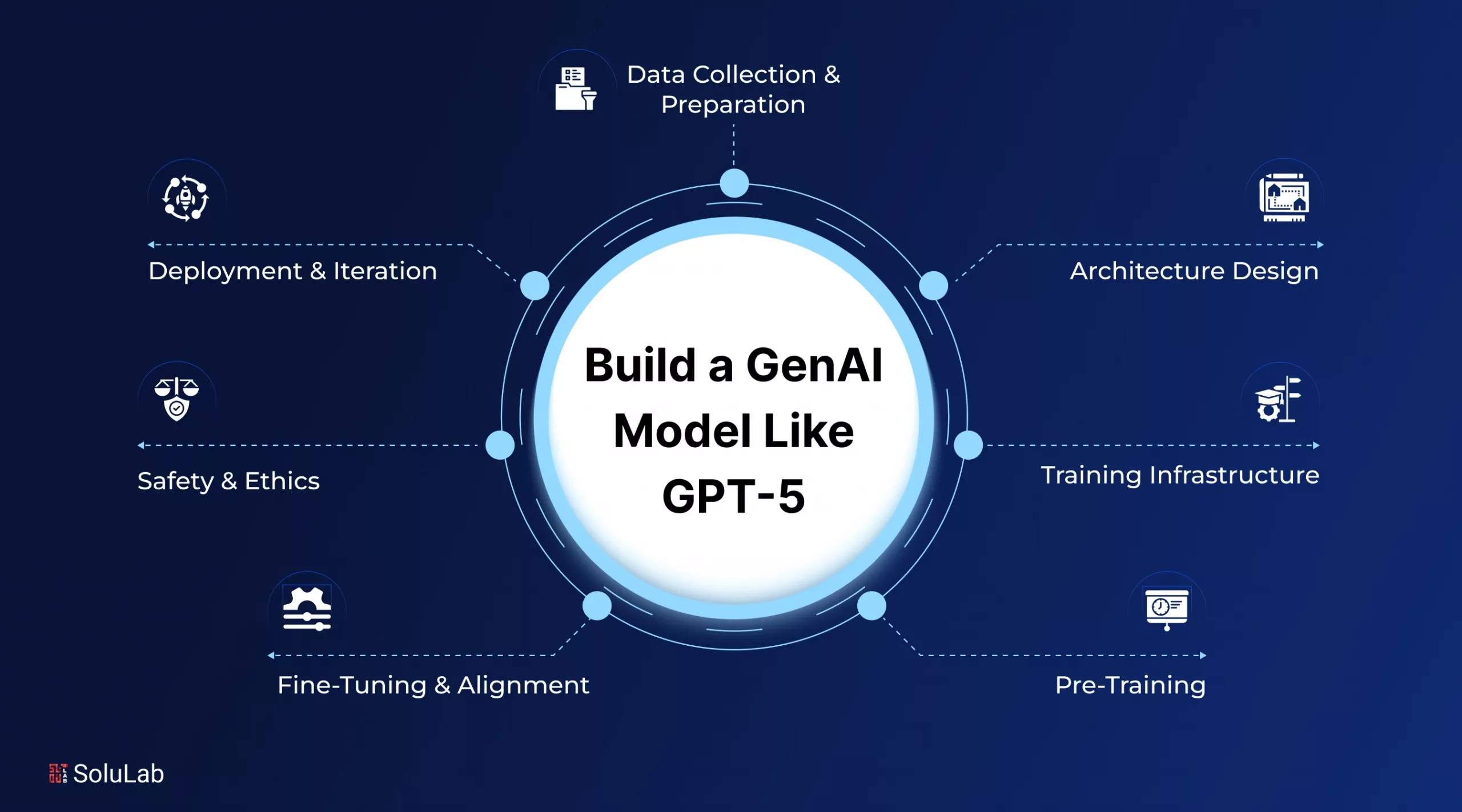
Building a generative AI model requires a structured approach. Each step ensures the model can create meaningful, realistic outputs and scale effectively in real-world applications.

Step 1: Identifying the Problem

Start by clarifying the type of generative AI you need. Are you generating text, images, audio, or code? Decide on the objective—writing human-like text, creating images from prompts, or generating music. A clear goal ensures the data collection and model design are focused on achieving the desired outputs.

Step 2: Collecting and Preparing Data

Gather large, diverse, and high-quality datasets related to your task. Clean the data to remove noise, duplicates, or inconsistencies. For text, perform tokenization and normalization; for images, consider resizing, cropping, or augmenting. Always split data into training, validation, and test sets. Good data is the foundation of realistic and creative generation.

Step 3: Choosing the Right Framework

Frameworks provide the structure for building generative AI. PyTorch and TensorFlow are widely used for deep learning, while Hugging Face and OpenAI libraries simplify working with pretrained generative models. Choose tools based on scalability, community support, and task complexity. The right framework speeds up experimentation and fine-tuning.

Step 4: Designing the Model Architecture

Decide on the model type for your generative task. Transformers like GPT, BERT, or diffusion models are popular for text and image generation. Define layers, attention mechanisms, and other hyperparameters. For simple tasks, smaller models may suffice; for complex tasks, larger architectures capture better context and creativity. A well-designed model architecture is key to generating coherent and high-quality outputs.

Step 5:  Training and Fine-Tuning

Training teaches the model to generate realistic outputs. Use algorithms like gradient descent and optimization techniques to adjust weights. Fine-tune pretrained models on your domain-specific data for better performance. Training large generative AI models often requires GPUs or cloud resources. Monitor for overfitting and adjust learning rates as needed.

Step 6: Testing and Evaluation

Evaluate your generative AI model using metrics suited to your task. For text, use BLEU, ROUGE, or human evaluation; for images, consider FID or IS scores. Testing ensures the model produces high-quality and meaningful outputs across unseen data. Iteratively refine the model based on results to achieve the best generative performance.

Why Should Businesses Invest in Generative AI Models Like GPT-5?

Generative AI, like GPT-5, is transforming the way businesses operate, innovate, and engage with customers. Here’s why investing in such AI models makes strategic sense:
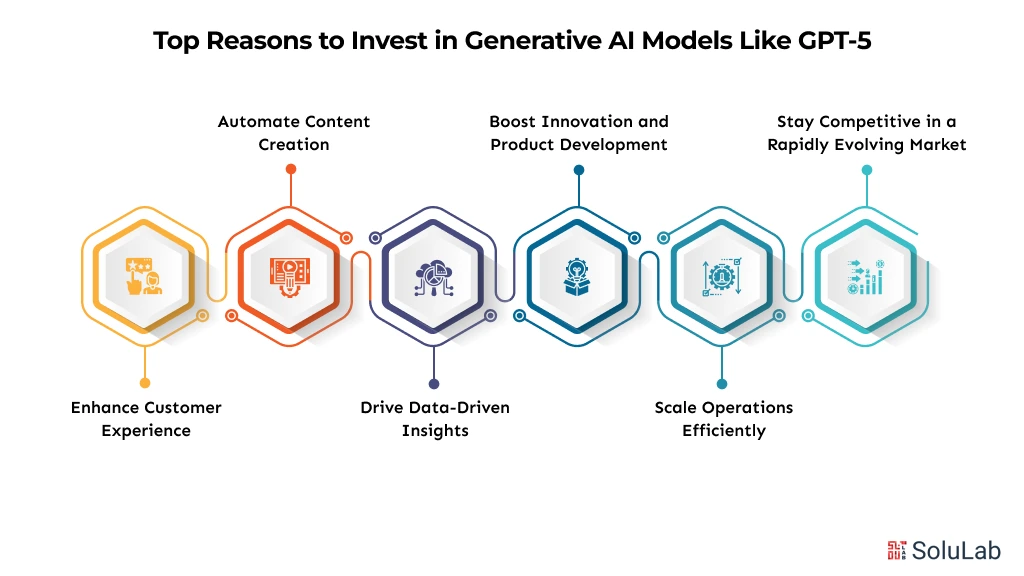
Top Reasons to Invest in Generative AI Models Like GPT-5

  • Enhance Customer Experience

GPT-5 can generate human-like responses, personalized recommendations, and conversational interactions at scale. Businesses can use it to power chatbots, virtual assistants, and support systems, providing faster, more accurate, and 24/7 customer service.

  • Automate Content Creation

From marketing copy and blogs to social media posts and product descriptions, GPT-5 can generate high-quality content quickly. This reduces dependency on manual writing, speeds up campaigns, and ensures consistent brand messaging.

  • Drive Data-Driven Insights

Generative AI can analyze large datasets and produce summaries, reports, and actionable insights. Businesses can make smarter decisions faster, spot trends, and forecast market behavior with improved accuracy.

  • Boost Innovation and Product Development

AI models like GPT-5 can assist in brainstorming ideas, designing prototypes, or generating code snippets. This accelerates R&D cycles, allowing companies to innovate without being limited by human bandwidth.

  • Scale Operations Efficiently

Generative AI can handle repetitive, time-consuming tasks such as drafting emails, generating documentation, or producing creative assets. This frees up human resources for high-value work and reduces operational costs.

  • Stay Competitive in a Rapidly Evolving Market

Early adopters of GPT-5 and other generative AI technologies gain a competitive edge by offering smarter services, faster turnaround, and personalized experiences. Businesses that leverage AI are better positioned to lead in their industry.

Future of AI Models and Generative AI

The future of AI is evolving rapidly, with generative AI at the forefront of innovation. Businesses and developers are witnessing transformative possibilities that extend beyond automation into creativity, problem-solving, and decision-making.

1. Smarter, Context-Aware Models

AI models will become more intelligent, understanding context, intent, and nuance in human communication. This will enable highly personalized interactions and precise predictions across industries.

2. Seamless Multi-Modal Capabilities

Future generative AI will integrate text, images, audio, and video, creating immersive and interactive experiences, from realistic virtual assistants to AI-generated media.

3. Democratization and Accessibility

Cloud-based AI platforms and open-source models will make advanced generative AI accessible to startups and businesses of all sizes, lowering barriers to adoption.

4. Ethical and Responsible AI Development

As AI grows more powerful, emphasis on fairness, transparency, and safety will shape development. Responsible AI practices will ensure models are reliable, unbiased, and aligned with human values.

Generative AI Development Company

Conclusion

Building a Generative AI model like GPT-5 might look complex, but with the correct development partner, this will enhance your growth. From identifying problems to deploying and monitoring, each step needs careful observation and a framework. 

SoluLab, a top Generative AI development company, specializes in developing advanced AI solutions tailored to your business needs. Whether you want to build a custom generative AI model like GPT-5, integrate AI into your applications, or optimize operations with intelligent automation, our team provides end-to-end support from model design and training to deployment and scaling. 

Partnering with SoluLab ensures your AI initiatives are efficient, innovative, and ready for the future!

FAQs

1. How long does it take to build a model like GPT-5?

Training from scratch can take months and significant computational resources. Using pretrained models and fine-tuning can reduce development time from weeks to a few months, depending on the dataset and task.

2. Can generative AI models be integrated into business applications?

Absolutely. Generative AI can power chatbots, virtual assistants, automated content creation, recommendation systems, and more. Proper integration ensures efficiency and scalability in real-world applications.

3. Can small businesses also use generative AI like GPT-5?

Yes. With pretrained models and cloud-based AI platforms, even small and medium businesses can implement generative AI for content creation, customer support, or automation without investing in massive infrastructure.

4. How often should a generative AI model be updated?

Regular updates are recommended to incorporate new data, improve performance, and adapt to changing business needs. Fine-tuning on fresh datasets ensures relevance and accuracy over time.

5. How can SoluLab help businesses stay ahead with generative AI?

SoluLab offers generative AI consulting, development, and deployment tailored to your industry. From building custom models to integrating them into your workflows, SoluLab ensures AI adoption is efficient, innovative, and aligned with business goals.


Top AI Development Companies in Saudi Arabia

Saudi Arabia is growing into a global center to attract AI companies in Saudi Arabia. The driving force behind this growth is the Kingdom’s Vision 2030 plan. By focusing on building a more diverse economy and promoting digital transformation, the country is seeing a fast increase in artificial intelligence companies in Saudi Arabia. These companies are reshaping sectors like healthcare and smart cities.

This piece takes a closer look at the top AI companies in Saudi Arabia to watch in 2026. It showcases their skills, their impact, and how they are shaping the technological development of the region.

The Importance of AI in Saudi Arabia

Saudi Arabia’s Vision 2030 plays a key role in changing the country’s economy and society by focusing on lowering its reliance on oil and building a knowledge-driven economy. Artificial intelligence, a major part of this vision, is causing a revolution in areas like healthcare, energy, infrastructure, and finance.

Here’s how AI development companies contribute to this shift:

  • Driving Vision 2030 Goals

AI plays a big part in Saudi Arabia’s plans to lead in global technology. Top AI companies in the kingdom are developing solutions for smart cities, renewable energy, and healthcare, aligning with national priorities. For instance, they use GenAI integration services to help build NEOM, a city designed with AI-powered infrastructure to be futuristic.

  • Empowering Local Businesses and Startups

Leading AI development companies in Saudi Arabia create custom solutions to help startups and businesses. These companies help local firms use AI to make operations smoother, connect with customers better, and make choices based on data. This helps small and medium enterprises that want to thrive in a tech-focused economy.

  • Fostering Global Competitiveness

By providing advanced and scalable AI services in Saudi Arabia, these firms enable local businesses to compete. Their knowledge in AI model development ensures they deliver solutions that align with world standards. At the same time, their focus on AI applications development addresses local challenges.

  • Supporting Economic Diversification

AI supports innovation in major industries such as oil and gas, where AI development companies in Saudi Arabia improve extraction techniques and lower operating expenses. In the medical field, artificial intelligence companies in Saudi Arabia improve care using predictive tools and robotic surgical systems.

How We Selected the Top AI Companies in Saudi Arabia?

To find the top AI companies in Saudi Arabia, we used strict criteria to build a list of the most creative and influential AI companies in the country:

1. Expertise in AI Technologies

The best AI companies in Saudi Arabia show strong knowledge in areas like machine learning, natural language processing, and computer vision. They provide services in building AI model development and AI integration services, making sure their solutions work well and are useful.

2. Industry-Specific Experience

They understand the unique challenges of sectors like healthcare, energy, and finance. For instance, Top AI companies like Mozn specialize in AI applications development for financial compliance, while SCAI focuses on smart city solutions.

3. Client Success Stories and Reputation

A reliable company often shows its strength through a solid track record, client reviews, and examples of completed AI projects. Leading firms like SoluLab and Golden Logic have earned trust by delivering effective, scalable AI systems.

4. Scalability and Ongoing Support

The Top AI companies in Saudi Arabia design solutions to expand with businesses as they evolve and keep offering help, like regular updates and maintenance. This approach secures consistent support for success over time.

5. Local Relevance and Cultural Alignment

Companies with a deep understanding of Saudi Arabia’s cultural, regulatory, and economic landscape can deliver solutions that align with local priorities and Vision 2030 objectives.

Top AI Development Companies in Saudi Arabia 2026

Below is a detailed overview of the Top AI companies in Saudi Arabia for 2026, including their key services, notable projects, and impact on the region’s AI ecosystem:

solulab

1. SoluLab

A leading AI development company in Saudi Arabia, SoluLab specializes in AI model development and AI integration services, creating custom solutions for businesses. Their focus on generative AI enables innovative tools like chatbots, predictive analytics, and automation.

Key Services: Custom AI model development, AI-powered automation, predictive analytics, and chatbot development.

Notable Projects/Clients: Served Gradient and Digital Quest, delivering scalable AI applications development.


$25 – $49/ hr


50 – 249


2014


USA

Mozn

2. Mozn

A pioneer in artificial intelligence companies in Saudi Arabia, Mozn focuses on AI integration services for finance and risk management. Their platforms, FOCAL and OSOS, leverage Arabic NLP to address regional challenges.

Key services: AI-powered risk and compliance, Arabic NLP, and custom AI solutions.

Notable Projects/Clients: Serves financial institutions in emerging markets.


$50 – $150/ hr


200-500


2017


Saudi Arabia

Deevo Analytics

3. Deevo Analytics

Deevo Analytics is a Riyadh-based AI company in Saudi Arabia, offering AI applications development and real-time analytics. Their expertise in NLP helps businesses transform unstructured data into actionable insights.

Key Services: Data analytics, AI-powered real-time analytics, and NLP solutions.

Notable Projects/Clients: Developed reporting tools for financial services and telecom clients.


$50-$100/ hr


2 – 10


2021


Saudi Arabia

Golden Logic

4. Golden Logic

Golden Logic is a top AI development company in Saudi Arabia, providing AI model development and AI integration services for banking, insurance, and government sectors. Their solutions include chatbots, VR/AR, and security consulting.

Key Services: Application development, AI, chatbot development, and VR/AR.

Notable Projects/Clients: Serves clients in Saudi Arabia, Bahrain, and beyond.


$100-$200/ hr


51-150


2017


Saudi Arabia

Tessafold

5. Tessafold

Tessafold supports Saudi businesses with AI services in Saudi Arabia through blockchain, cloud computing, and fintech solutions. Their work aligns with the kingdom’s smart economy initiatives.

Key services: AI and data science, Web3, and mobile app development.

Notable Projects/Clients: Integrates local payment systems like Mada and Tabby.


$50-$150/ hr


11-50


2017


Germany

SCAI

6. SCAI

Backed by the Public Investment Fund (PIF), SCAI is a national leader in Top AI companies, delivering solutions for smart cities, energy, and healthcare. Their work directly supports Vision 2030.

Key Services: AI for smart cities, energy, healthcare, and machine learning.

Notable Projects/Clients: Works on Vision 2030 initiatives like NEOM.


$150-$200/ hr


51-250


2021


Saudi Arabia

Optridev

7. Optridev

Optridev is a professional AI development company in Saudi Arabia services, focusing on innovative solutions for sectors like retail, construction, and security.

Key Services: AI development, AI consulting, blockchain development, mobile app development, web development.

Notable Projects/Clients: Optimizes processes with AI for businesses in Saudi Arabia.


$25 – $100/ hr


2-10


2022


UAE

Skyne3

8. Skyne3

Skyne3 is a Saudi-based company specializing in transformative technologies, including AI applications development and AR/VR development.

Key Services: AI, AR/VR development.

Notable Projects/Clients: Works with brands in Saudi Arabia on immersive training programs and virtual reality simulations.


$50 – $150/ hr


11-50


2023


Saudi Arabia

BuzzAR

9. BuzzAR

BuzzAR is a TravelTech AI company in Saudi Arabia offering an AI-powered travel companion (BAE) and fintech solutions.

Key Services: AI travel companion, fintech solutions, mixed reality innovations.

Notable Projects/Clients: Collaborates with the Saudi Tourism Authority to enhance tourism experiences.


$25-$70/ hr


10-15


2015


Saudi Arabia

Generative IT Lab

10. Genesis IT Lab

Genesis IT Lab is a research-oriented software development company specializing in AI development, blockchain, and cybersecurity solutions. They focus on innovative algorithms and cutting-edge technologies, with operations relevant to Saudi Arabia.

Key Services: Software development, blockchain applications, security audits, cybersecurity, and AI model development.

Notable Projects/Clients: Experience across various sectors, including computer vision and NLP projects like mask detection technology for public health.


$55-$150/ hr


51 – 100


2017


Singapore

AI Development Company in Saudi Arabia

Why Choose Top AI Development Companies in Saudi Arabia?

These companies thrive in:

  • Deep local knowledge and aligning with cultural needs
  • Creating innovative fixes for challenges unique to Saudi Arabia
  • Building a history of success in big industry sectors

If you run a startup or a bigger company, AI companies in Saudi Arabia provide custom AI solutions to help your business grow and work better.

Conclusion

These AI companies in Saudi Arabia play a big role in reshaping the kingdom’s economy. Vision 2030 and the rising need for artificial intelligence companies in Saudi Arabia drive this transformation. These leading AI development companies provide services like AI integration and AI application development to handle various business challenges.

When you need AI development in Saudi Arabia, working with these companies gives you access to advanced solutions. Check out their offerings to bring your business to the front line of the AI movement in Saudi Arabia.

SoluLab, a leading name for AI development company in Saudi Arabia, holds an edge with years of experience and expertise. The team is always up to date with the latest trends for AI solutions. One such solution is a recruitment platform that we built for a forward-thinking client who wanted to fast-track the process. If you also wish to grab AI-powered solutions, connect with the experts today!

FAQs

1. How can I pick the right AI company in Saudi Arabia?

Focus on finding firms in Saudi Arabia with experience in the AI field and proven success in building AI applications.

2. What services do AI firms in Saudi Arabia provide?

These companies deliver solutions like developing custom AI models, creating chatbots, offering predictive analytics, and implementing automation for industries like energy and healthcare.

3. How much does it cost to hire a leading AI development company in Saudi Arabia?

The cost depends on the complexity of the project. Hourly charges range from $25 to $150.

4. How much time is needed to create AI applications?

The timeline depends on the scale of the work. Basic projects can be done in weeks, but bigger ones like smart city systems might take several months.

5.  How to get started with SoluLab?

It’s quite easy! You just need to click on the contact us button and fill in the form. Our experts will plan a call with you for all the consultation and planning.

How to Create an Open-Source AI Model like Llama?

Create Open-Source AI Model like Llama

Have you ever felt like building your own AI model is only for big tech companies with massive teams and millions in funding?

Most beginners and even experienced developers get stuck thinking they need insane computing power, secret algorithms, or deep ML PhDs even to get started. But here’s the truth: you can build your open-source AI model even from scratch if you follow the right process and use the tools already available.

As of February 2025, DeepSeek had 61.81 million monthly active users, marking an 83.4% increase from the previous month. 

In this guide, I’ll break it all down into simple, actionable steps so you can go from idea to deployment without getting lost. Let’s dive in!

What is an Open-Source AI Model?

An open-source AI model is an artificial intelligence model that is accessible to anyone to view, use, modify, and share as well. The open-source AI model is a pretrained model on large datasets and can perform tasks like recognizing images, understanding the text, or making predictions. Here are some of its features:

  • Free access – No need to pay or get permission.
  • Customizable – You can tweak the model to suit your needs.
  • Transparent – You can see how it was built and trained.

Prerequisites Before Building Your Model

Prerequisites Before Building Your Model

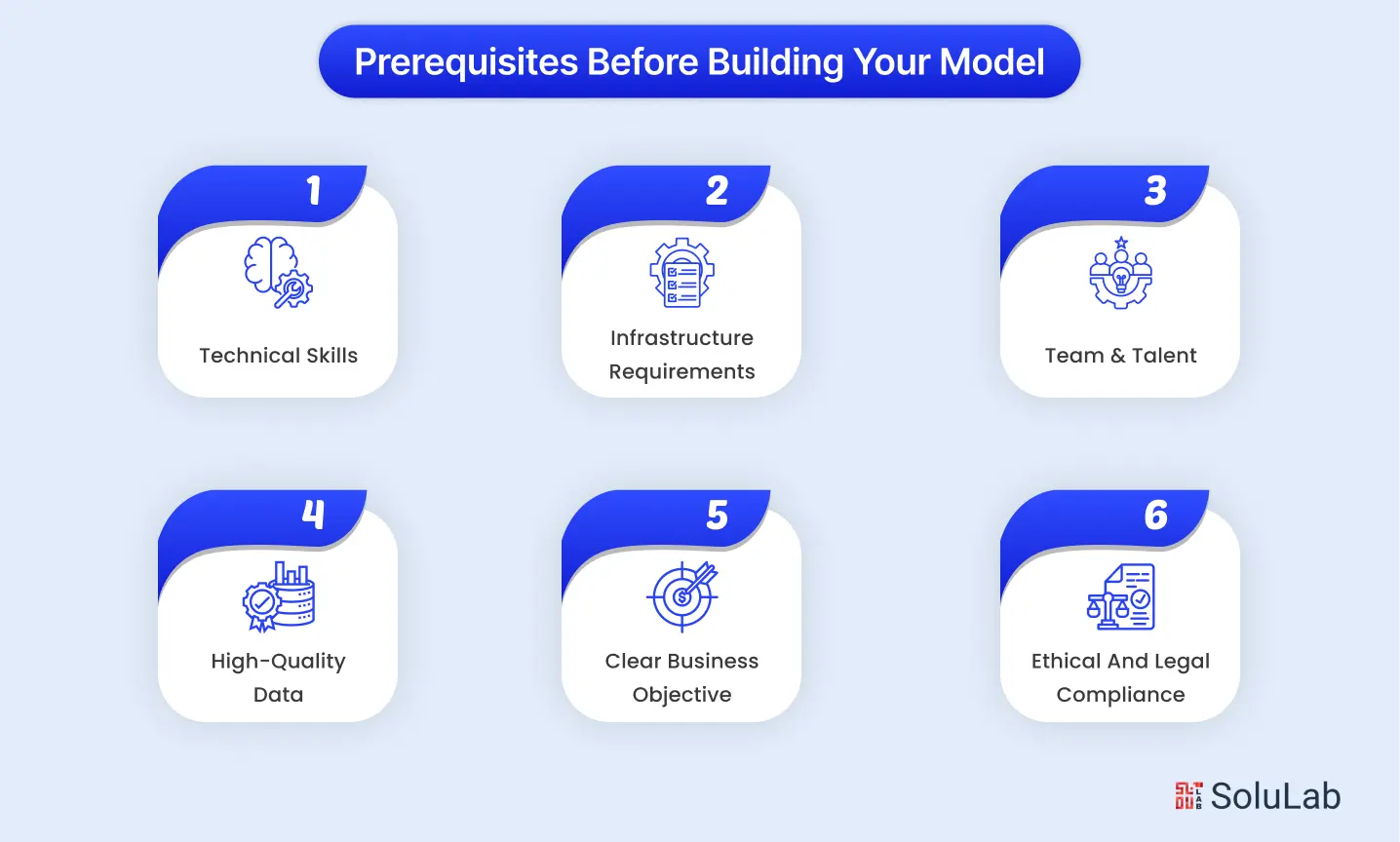
Before you begin developing your open-source AI model, you need to think about some things, such as team size, infrastructure needs, and technical expertise. Let’s take a closer look at each:

  • Technical Skills: To build your AI model open-source , you’ll need a strong grasp of Python, data structures, machine learning algorithms, and frameworks like TensorFlow or PyTorch. These are essential to developing, training, and fine-tuning AI models effectively.
  • Infrastructure Requirements: Next training AI models require high-performance hardware, like GPUs or TPUs, and cloud platforms (AWS, GCP, Azure) for scalability, speed, and storage. Without this, large models can take weeks to train.
  • Team & Talent: You can’t build it alone. AI model development is a team effort. You need data scientists, ML engineers, domain experts, and DevOps professionals. To ensure the model is accurate, scalable, and practical.
  • High-Quality Data: Your model is only as good as the data it learns from. You need large, clean, labeled datasets relevant to your use case to train accurate and unbiased models—source data from relevant sources. 
  • Clear Business Objective: Without a clear goal like automating support, detecting fraud, or personalizing recommendations, you risk building a model that’s technically good but commercially useless.
  • Ethical and Legal Compliance: Before training your model, consider privacy laws (like GDPR), data usage rights, and ethical AI principles to avoid legal trouble and ensure responsible deployment.

CTA1

Step-by-Step Guide to Building an Open-Source AI Model

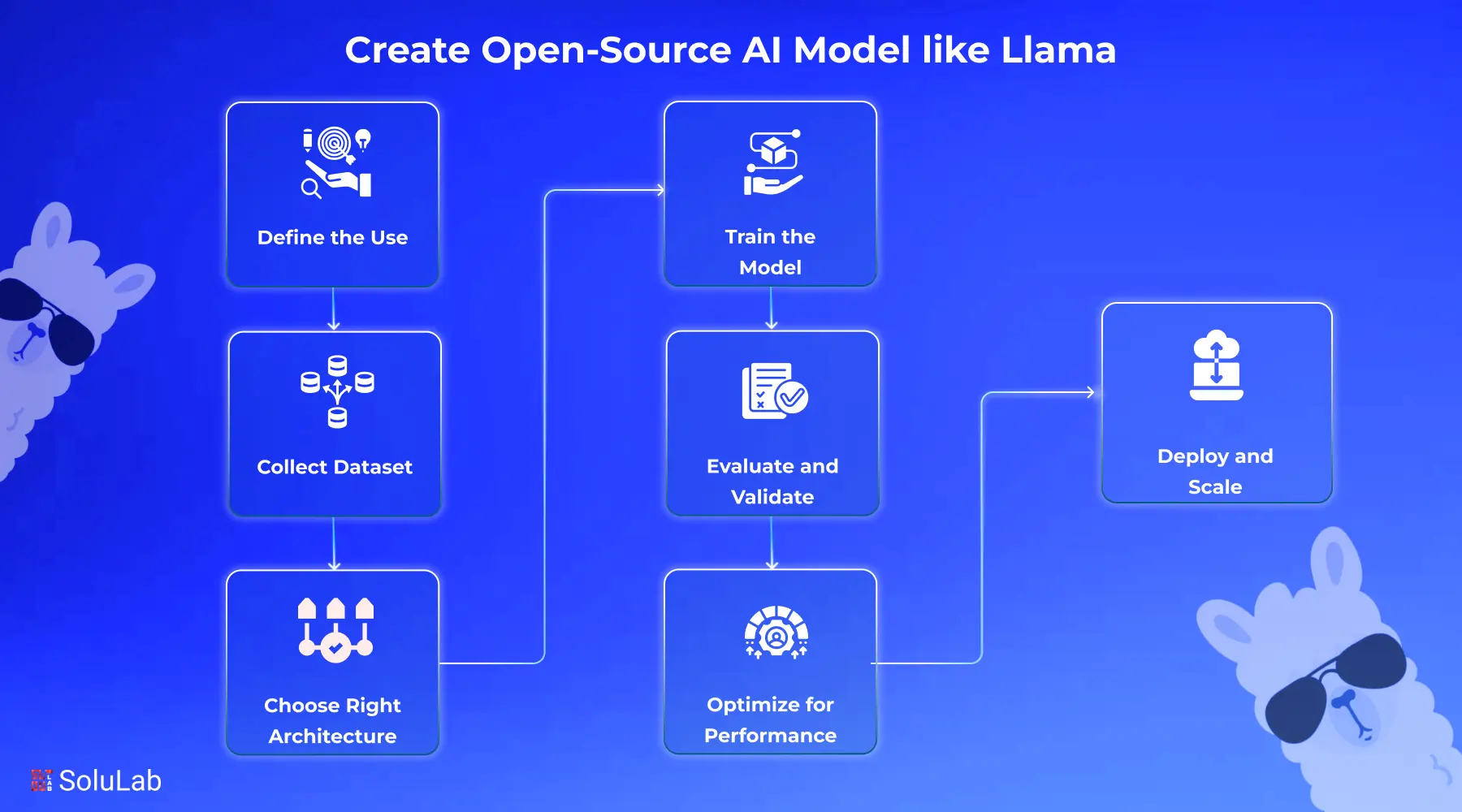
Here’s a step-by-step roadmap that walks you through the entire journey — from idea to real-world deployment.

  • Define the Use

Before diving into the tech, get clear on the “why.” What problem are you solving? Is it for text summarization, image recognition, or customer support chatbots? A well-defined use case acts like a compass—it guides all your next steps and ensures you’re not just building for the sake of building.

  • Collect and Clean the Dataset

Your AI is only as good as the data you feed it. So, gather a dataset that matches your use case—this could be text, images, audio, etc. Then clean it up! Remove duplicates, fix errors, and ensure it’s well-labeled. This step may sound boring, but it’s the secret sauce to a solid model.

  • Choose the Right Architecture

Now it’s time to pick your model type. Want to work with text? Try LSTM or Transformer. Working with images? CNNs are your friend. You can start with an existing open-source architecture and fine-tune it. Choose something that suits your project size, speed needs, and available computing power.

Read Also: Most Popular AI Models

  • Train the Model

Here’s where the fun begins! Feed your data into the model and let it learn. This step can take hours or even days, depending on complexity and hardware. Use frameworks like TensorFlow or PyTorch. And don’t forget to monitor progress—training is all about tweaking and testing.

  • Evaluate and Validate

Once trained, it’s test time. How accurate is your model? Use validation data to see how well it performs on unseen inputs. Look at metrics like accuracy, F1-score, or loss. This helps you catch overfitting and decide whether your model is actually solving the problem you defined in Step 1.

  • Optimize for Performance

You’ve got a working model—great! Now make it faster, lighter, and more efficient. Use techniques like pruning, quantization, or distillation. You can even reduce the model size so it runs better on low-resource devices. Optimization makes your AI practical, not just powerful.

  • Deploy and Scale

Time to launch! Choose how and where to deploy—cloud, on-premise, or edge devices. Use APIs or build user-friendly interfaces. Don’t forget to monitor the model in real time and gather feedback. If all goes well, scale it up to serve more users while maintaining speed and accuracy.

Related: Llama Vs. GPT

Future Trends in Open-Source AI

Here are some future trends you’ll see in the upcoming years, including the rise of open source multimodal AI models:

1. Start Making Smarter, Smaller Machines

Open-source AI is now focusing on developing models that can be run on devices we own. By using this strategy, AI depends less on massive cloud solutions and is both more accessible and saves power.

2. Increasing number of AI Agents

We are seeing more AI agents that can fulfill tasks without human direction. Microsoft is taking the lead in this trend by giving businesses the ability to make their own AI agents which makes both productivity and innovation simpler.

3. Open-Source AI Is Promoting Stronger Economic Growth

Open-source AI isn’t just about technology; it also boosts the economy. Without having to pay much to implement AI, small and medium enterprises are capable of coming up with innovations that help them in the market. The availability of AI to everyone is most noticeable in emerging markets.

4. AI models being owned by the public

The public is demanding that artificial intelligence models used in services such as education and healthcare should be publicly owned. As a result, the process is clear, responsibility is taken, and all have a fair opportunity, aligning AI growth more with supporting people than making profits.

5. Model Context Protocol (MCP) is now developed.

MCP is being adopted for using AI models on multiple platforms. AI engines can interact better, which improves the usage of systems and saves time. Standardizing all components is important for making AI applications that bring together multiple models.

6. Developers Are Top Innovators in Open-Source AI

Open-source AI is being fueled by a generation of younger developers who are focused on sharing and being transparent about their work. Recent data from Stack Overflow indicates that more and more new entrants to the field are getting involved in open-source development.

CTA2

Conclusion

Creating a DeepSeek AI model open-source, LLaMA AI model open source, or those on Hugging Face might sound overwhelming, but it’s doable if you follow the right steps. Start small, stay consistent, and focus on solving a real problem. 

With the right data, tools, and community support, you can build something that’s not just functional but impactful. Open source isn’t just about code, but also about collaboration, transparency, and innovation. 

Whether you’re a solo dev or a small team, the doors are wide open. So, go ahead and build the next big thing in open AI. AI-Build partnered with SoluLab to revolutionize CAD product development using generative AI and ML models. SoluLab developed a scalable architecture, automated design generation with GANs and CNNs, and added real-time error detection. The result: enhanced productivity, reduced manual work, and intelligent, customizable designs with improved quality control.

SoluLab, an AI development company, can help you in creating such models and can offer expert guidance. Contact us today to discuss further. 

FAQs

1. Which tools or frameworks should I use?

Popular ones include PyTorch, TensorFlow, Hugging Face Transformers, and LangChain for LLM-based workflows.

2. How long does training usually take?

For an AI models development company, building a small model might take a few hours, while a large one like LLaMA could take days or even weeks, depending on the hardware.

3. How do I make sure my model isn’t biased?

Use diverse, well-balanced datasets and continuously test your model on edge cases. Bias detection tools can also help.

 4. Where can I find datasets to train my model?

You can use public datasets from platforms like Kaggle, Hugging Face Datasets, Google Dataset Search, or government portals like data.gov.in.

5. How much data do I need?

It depends on the problem and model complexity. For small projects, a few thousand samples may work. For large models like open-source AI models like LLaMA, you need billions of tokens.


Top 10 Most Popular AI Models in 2025

Top AI Models

Struggling to keep up with all the new AI models popping up every few months?  With every tech giant, Google, OpenAI, Anthropic, and Meta, releasing new models one after another, it’s confusing which one to choose. 

Whether you’re a developer, marketer, researcher, or just AI-curious, choosing the right model for your needs can feel like searching for a needle in a digital haystack.

In this blog, you’ll discover the 10 most popular AI models in 2025—the ones that are leading the pack across industries. From content generation to code writing, from image creation to enterprise-grade automation, we break down each model’s strengths, features, and ideal use cases. So, if you want to stay ahead in the AI game without drowning in jargon, this guide is for you. Let’s get started!

How to Select the Best AI Model?

The global AI market is valued at approximately $391 billion in 2025 and is projected to increase fivefold over the next five years.

Here’s a simple guide to help you select the best custom AI model development, especially if you’re choosing between options like GPT, Claude, Gemini, etc. You can also test prompts from multiple providers using an All-in-One AI tool to find out which one gives the best results for your needs.

1. Define Your Use Case

  • Content Generation: Look for top AI LLM models like GPT-4 or Claude.
  • Image creation/editing: Use image-based models like DALL·E or Midjourney.
  • Data analysis/code:  Models like GPT-4.5 (Code Interpreter) or Code Llama work well.
  • Conversational AI or chatbots: Look at performance in real-time conversations (e.g., GPT-4-turbo, Gemini Pro).

2. Check Model Accuracy & Performance

Look at benchmarks like MMLU, HumanEval, etc., if you’re into technical details.

For general users:

  • GPT-4: Best overall language understanding and reasoning.
  • Claude 3 Opus: Great for summarization and long-context understanding.
  • Gemini 1.5 Pro: Strong with code and multilingual understanding.
  • Mistral: Great open-source options if self-hosting.

Read Also: How to Create an Open-Source AI Model like Llama?

3. Consider Pricing

Are you okay with subscriptions?

  • GPT-4 via ChatGPT Plus = $20/month.
  • Claude Pro and Gemini Advanced are similarly priced.

Need an API for apps?

  • Compare cost per token (OpenAI, Anthropic, Google).
  • Check if the provider offers INR billing or international card support for India-specific pricing.

4. Match with Your Specific Needs

  • Need long-context memory (e.g., analyzing PDFs): Claude 3 Opus or Gemini 1.5 Pro (can handle 1M tokens).
  • Need tool usage (code, browsing, images): GPT-4-turbo (with tools) is best.
  • Prefer open-source/self-hosting: Use models like LLaMA, Mistral, or Falcon.

10 Best AI Models To Watch Out for in 2025

Here’s a list of top AI models like ChatGPT and more. Let’s discuss each model one by one: 

1. GPT-5

GPT- 5

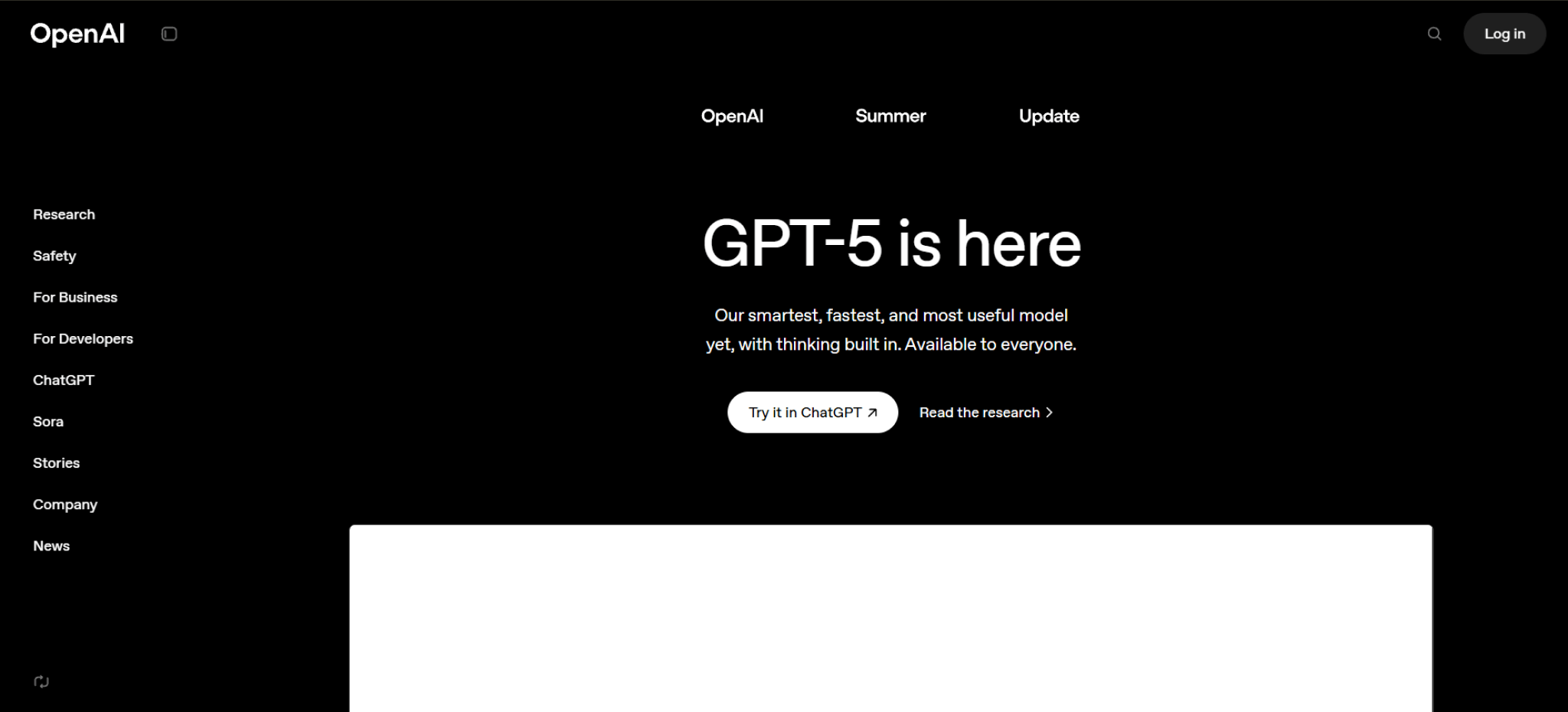
GPT-5 is OpenAI’s most advanced multimodal AI model, launched in 2025. It seamlessly integrates text, audio, image, and even video understanding within a single model, enabling real-time reasoning, visual interpretation, and multilingual communication across more than 60 languages. Designed to deliver context-rich, human-like interactions, GPT-5 responds with remarkable speed and accuracy.

With enhanced multimodal capabilities, GPT-5 can process and generate text, audio, images, and videos for a wide range of use cases. Its expanded language support and advanced reasoning abilities make GPT-5 a powerful, globally versatile AI for both personal and enterprise applications.

2. Gemini 2 Pro 

Gemini 2.5 Pro

Gemini 2.5 Pro is Google’s most advanced AI model as of 2025, designed to handle complex tasks across various domains. It excels in reasoning, coding, and multimodal understanding, making it a go to tool for developers, researchers, and businesses as well . With its enhanced capabilities, Gemini 2.5 Pro sets a new standard in AI performance and reliability.

It offers superior coding abilities, helping developers transform, edit, and build visually rich web apps while optimizing workflows and debugging software. The model also excels in generating sophisticated code. Additionally, its multimodal capabilities integrate text, code, images, and other media for a richer user experience.

3. Claude 3.7 Sonnet 

Claude 3.7 Sonnet

Claude 3.5 Sonnet, developed by Anthropic, is an AI model development that excels in various domains, including natural language processing applications, coding, and visual understanding. Positioned as a mid-tier model in the Claude 3.5 series, it offers a balance between performance and cost-effectiveness, making it suitable for a wide range of applications. With a 200,000-token context window, it can handle extensive conversations and complex tasks efficiently. 

Anthropic’s latest model excels in advanced reasoning and coding, significantly outperforming its predecessor, Claude 3 Opus. It features enhanced visual processing, allowing it to interpret charts, graphs, and even transcribe text from unclear images—making it ideal for industries like retail and logistics. 

4. DeepSeek-R1 

DeepSeek-R1

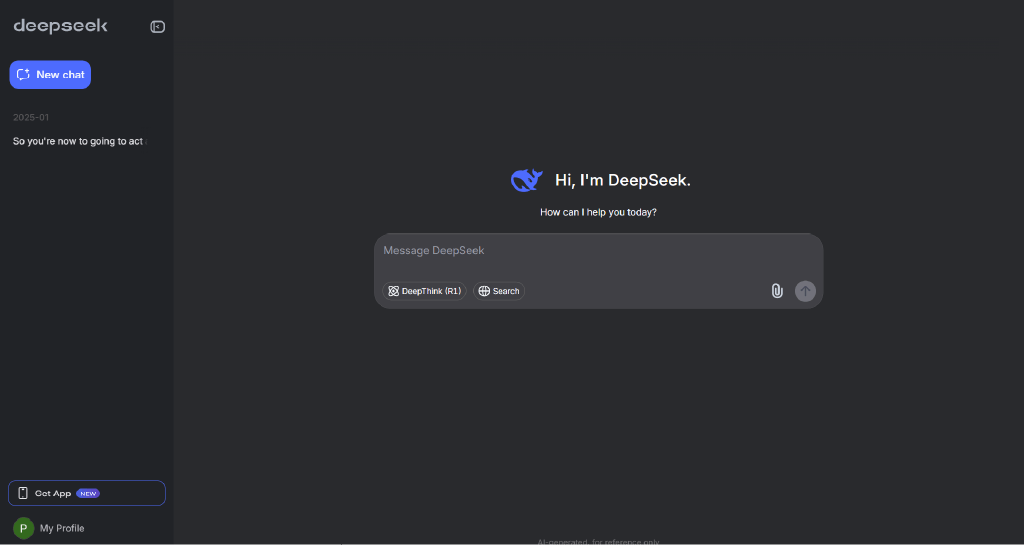
DeepSeek-R1 is a custom AI model developed by the Chinese startup DeepSeek, renowned for its advanced reasoning capabilities and cost-effective architecture. Launched in 2025, DeepSeek-R1 has garnered significant attention for its performance. Models like OpenAI’s GPT-4, while being developed at a fraction of the cost. Notably, Microsoft CEO Satya Nadella acknowledged DeepSeek-R1 as the first AI model to come close to OpenAI’s offerings.

DeepSeek- R1 offers strong reasoning abilities, especially in logical and multi-step problem solving, Multilingual support, making it useful for global communication and content, and Open-source and developer-friendly, ideal for custom fine-tuning and integration into applications

5. OpenAI o1 

OpenAI o1

Unlike its predecessors that prioritize rapid responses, OpenAI O1 shows deep, step-by-step reasoning, making it exceptionally adept at complex problem-solving tasks in mathematics, science, and programming. This “chain-of-thought” approach allows the model to simulate human-like analytical processes, enhancing its capability to tackle intricate challenges. 

The O1 model comes with advanced reasoning abilities, using a “chain-of-thought” approach to break down complex problems for improved accuracy. OpenAI has also enhanced its safety protocols, ensuring stronger alignment and resistance to misuse. These upgrades make O1 both powerful and secure for enterprise-level applications.

6. OpenAI o3-mini 

OpenAI o3-mini

OpenAI o3-mini is a compact yet powerful AI model introduced in early 2025, tailored for tasks requiring strong reasoning capabilities, particularly in science, technology, engineering, and mathematics (STEM) domains. Designed to be more efficient and cost-effective than its predecessors, o3-mini offers faster response times and improved accuracy, making it suitable for both individual users and developers seeking a reliable AI tool for complex problem-solving.

The platform offers adjustable reasoning levels, letting users choose between low, medium, or high reasoning to balance speed and depth. It includes developer-friendly tools like function calling, structured outputs, responses, and developer messages for easy integration. With enhanced performance, it delivers responses about 24% faster than O1-Mini. Accuracy in tasks such as math, coding, and science has also significantly improved.

7. Meta AI (Llama Series) 

Meta AI

The LLaMA (Large Language Model Meta AI) series by Meta is an open-source family of powerful AI models designed for researchers and developers. The latest, LLaMA 3 (2025), delivers high performance and is popular among those who want to build or fine-tune AI applications without relying on closed APIs. LLaMA models are optimized for efficiency, making them suitable for both cloud and on-device deployment.

Meta AI is ideal for developers looking to self-host or fine-tune models. It also competes with GPT-level models while being resource-efficient and supports diverse applications from summarization to chatbots.

8. Google Gemini 

Google Gemini

Google Gemini is a multimodal AI model developed by Google DeepMind, designed to process and generate content across various formats, including text, images, audio, and video. As of 2025, the latest iteration, Gemini 1.5 Pro, showcases significant advancements in long-context understanding, multimodal capabilities, and efficiency, positioning it as a formidable competitor to models like GPT-4 and Claude 3. 

Gemini 1.5 Pro offers an extended context window of up to 1 million tokens, making it capable of processing large datasets like books, codebases, or lengthy media content. It excels in multimodal processing, handling text, images, audio, and video. Additionally, it has deep integration with the Google ecosystem—Gmail, Docs, Android, and Drive. 

9. BERT 

BERT

BERT, developed by Google, is an NLP model that changed how machines understand human language. Though released in 2018, it remains highly relevant in 2025 due to its foundational architecture, which powers many modern AI systems. BERT excels at tasks like question answering, sentiment analysis, and language inference by understanding the context of words in both directions (left and right). It’s often used as a base for custom fine-tuned models in industries like healthcare, legal, and finance.

This model offers bidirectional context understanding, enabling deeper language comprehension. It is pre-trained on massive text corpora and can be easily fine-tuned for specific NLP tasks. Being open-source, it is widely adopted across industries. Additionally, it enjoys strong community support, driving continuous improvements and real-world applications.

10. PaLM 2 

PaLM 2

PaLM 2 (Pathways Language Model 2) is Google’s advanced language model launched in 2023 and still used in 2025 for multilingual tasks, reasoning, and code generation. Though it’s been succeeded by Gemini models, PaLM 2 remains a solid AI model for those using Google’s older AI services like Bard (pre-Gemini) and Workspace AI tools. It’s lightweight, fast, and optimized for tasks like summarization, translation, and Q&A. It supports over 100 languages, making it ideal for global content creation, multilingual workflows, and use cases powered by AI writing assistant software, such as those featured on Spotsaas.

This model stands out with its strong multilingual capabilities, supporting over 100 languages, making it ideal for global teams. It excels in solving logic, reasoning, and math problems with high accuracy. Additionally, it’s optimized for integration with Google Workspace, including Docs, Gmail, and other essential tools.

Conclusion

In 2025, AI models will have advanced and become more powerful and accessible than ever before. From advanced language models like GPT-4 and Claude 3 to specialized tools like Midjourney and BERT, each model serves a unique purpose, be it content creation, code generation, or deep language understanding. Businesses are now also partnering with fine-tuning AI development companies to customize these models for specific use cases, ensuring better performance and relevance.

Choosing the right custom AI model depends on your specific use case, performance needs, and budget. Staying updated with the latest innovations can give you a competitive edge. Whether you’re a developer, business owner, or creative, there’s an AI model out there designed to supercharge your work.

AI-Build partnered with SoluLab to revolutionize CAD product development using generative AI and ML models. SoluLab developed a scalable architecture, automated design generation with GANs and CNNs, and added real-time error detection. The result: enhanced productivity, reduced manual work, and intelligent, customizable designs with improved quality control.

SoluLab, an AI development company can help you pick the right AI model as per your business requirements. Contact us today to discuss further. 

FAQs

1. Are these AI models free to use?

Many models offer limited free versions, but full access usually requires a subscription or API payment.

2. Can I use these AI models for business automation?

Yes, models like GPT-4 and Gemini are commonly used for automating customer service emails, reports, and internal workflows.

3. Which AI model is best for handling large documents?

Claude 3 Opus and Gemini 1.5 Pro can process extremely long inputs—up to 1 million tokens.

4. Is BERT still relevant in 2025?

Yes, most popular AI models offer APIs (like OpenAI, Anthropic, Google Cloud) for integration, and you can also partner with a fine-tuning AI development company to customize these models for your specific business needs.

5. Can I integrate these models into my app or website?

Yes, most popular AI models offer APIs (like OpenAI, Anthropic, Google Cloud) for integration.