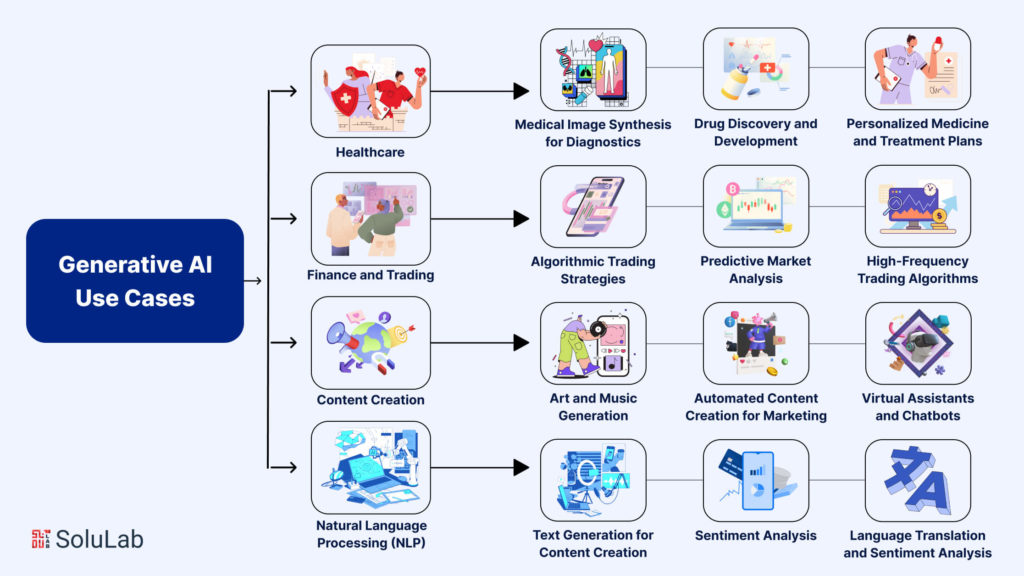
Business operations today transform beyond historical assumptions about generative AI which makes its future vision feasible now. AI systems are developing through unprecedented speed in their ability to create, automate, and make decisions during the approaching year 2025. The business sector implements generative AI because it delivers competitive advantages through customized marketing alongside AI-written content and new approaches in healthcare along with finance.
Computers will transform all aspects of the working pattern as well as content creation and human relationships through the evolution of multimodal AI technology live content production systems and AI-based creation methods. The real-world applications which will bring meaningful impact during 2025 remain to be determined. This blog explores the ten most transformational generative AI solutions that will reform sector operations while boosting operational efficiency and developing emerging business avenues. The list offers you a basic understanding of future AI technology which can help entrepreneurs along with tech enthusiasts and industry leaders in their roles. Let’s get started!
Overview of Generative AI
Generative AI operates on fundamental principles that distinguish it within the realm of artificial intelligence. Understanding these principles is paramount to comprehending their applications and potential.
-
Fundamental Principles
At its core, generative AI relies on principles rooted in machine learning. The algorithms are designed not only to analyze existing data but also to create entirely new datasets. This process involves understanding patterns, structures, and relationships within the data, enabling the model to generate content that mirrors the characteristics of the original dataset.
-
Role of Machine Learning Algorithms
Machine learning algorithms play a pivotal role in the functionality of generative AI. These algorithms, trained on vast datasets, learn to recognize patterns and generate new content based on the learned information. The iterative nature of machine learning ensures that the generative AI model continually improves its ability to create realistic and contextually relevant data.
-
Evolution Over the Years
The evolution of generative AI has been marked by continuous refinement and adaptation. Over the years, these models have become increasingly sophisticated, capable of generating high-quality content in various forms, including text, images, and even music. The evolution is not only in the complexity of generated content but also in the ethical considerations and safeguards implemented to ensure responsible use.
Process of Businesses To Use Generative AI?
Businesses can now build, automate, and customize like never before thanks to generative AI, which transforming every industry. Generative AI offers strong capabilities to improve customer experiences and expedite procedures from content creation to fostering creativity. However, how can any company regardless of size, use this effectively? Here are the major points to keep in mind during generative AI implementation:
1. Determine Use Cases
Finding particular use cases that complement corporate objectives is the first stage while putting generative AI into practice. This could involve using chatbots to improve customer service, automating the development of content, or using personalized content to optimize marketing campaigns.
2. Selecting Appropriate Technology
It’s crucial to choose the right generative AI tools, companies can select from a variety of models and platforms, including DALL-E for picture creation and creating OpenAI’s GPT for the next generation. These tools must be assessed according to their scalability, simplicity of integration, and capabilities.
3. Preparing Data
For training, generative AI models need a lot of high-quality data. To ensure that the AI model is learning efficiently, synthetic data may occasionally be created to supplement training datasets. This phase is essential for producing accurate and pertinent results.
4. Running Pilot Initiatives
Businesses should think about doing pilot projects to evaluate the efficacy of generative AI solutions before full-scale implementation. This enables businesses to evaluate the impact of technology, get input, and make the required modifications.
5. Keeping an Eye on and Improving
After generative AI is put into practice, ongoing observation is necessary to guarantee peak performance. To improve accuracy and relevance, businesses should examine the results, get user input, and make necessary model refinements.
6. Ethical Issues
Addressing ethical issues which include biases in AI results, data privacy, and misuse potential is another aspect of generative AI implementation. To reduce the risks, businesses should get policies and best practices.
How Does Generative AI Operate?
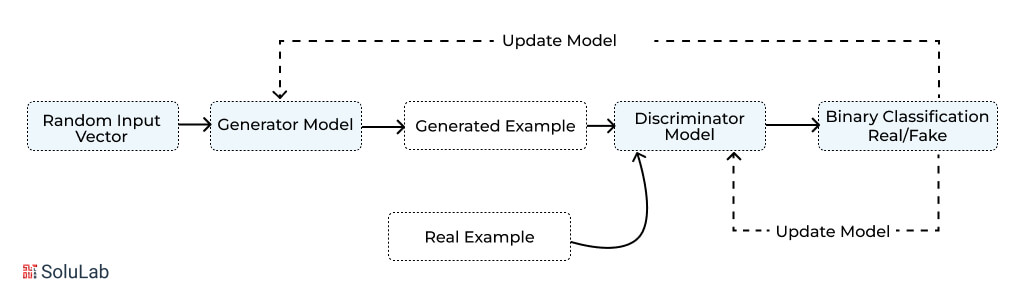
Variational Autoencoders (VAEs) and Generative Adversarial Networks (GANs) are two examples of deep learning models that are used in generative artificial intelligence, by discovering inherent features and relationships in large datasets, these models greatly enhance generative AI’s capacity to produce realistic results.
The generator and discriminator neural networks that make up a GAN, for example, compete with one another to generate outputs that are more and more realistic. The quality of the created material is continuously improved as the discriminator assesses the legitimacy of the fresh data produced by the generator.
Generative AI has greatly improved with the emergence of transformer-based models, especially LLMs such as GPT-4 and its generations because these models can comprehend and produce content that is similar to that of a person, and they can be used for a variety of applications.
Generative AI in the IT Industry
The IT industry stands at the forefront of embracing generative AI, leveraging its capabilities to streamline processes and innovate in software development.
-
Automated Code Generation
One of the standout use cases of generative AI in the IT industry is automated code generation. Developers often grapple with tight deadlines and complex coding tasks. Generative AI addresses this challenge by automating the code-writing process, significantly expediting software development. Whether it’s routine tasks, bug fixing, or optimization, generative AI demonstrates its prowess in creating functional and efficient code.
-
Use Cases in Software Development
Generative AI’s impact on software development extends beyond code generation. Template-based generation is a notable use case where developers define templates for specific functionalities, allowing the AI model to populate them with the required code. This not only ensures consistency across projects but also accelerates the development cycle. Additionally, generative AI contributes to bug fixing and optimization, enhancing the overall quality of software.
-
Template-based Generation
Within the spectrum of software development, template-based generation emerges as a powerful tool. Developers can define templates for recurring functionalities, allowing Generative AI use cases to populate these templates with the required code. This not only ensures consistency across projects but also accelerates the development cycle. The subheading elaborates on the efficiency and adaptability of template-based generation in diverse software development scenarios.
-
Bug Fixing and Optimization
Generative AI’s prowess extends beyond code creation to bug fixing and optimization. By analyzing existing codebases, AI algorithms can identify potential bugs and vulnerabilities. Additionally, these algorithms excel at optimizing code for improved performance and resource utilization. The subheading provides a closer look at how generative AI contributes to the detection and resolution of software bugs, ultimately fostering the development of higher-quality applications.
Healthcare
Generative AI’s impact on the healthcare industry is transformative, offering solutions from diagnostics to drug discovery and personalized treatment plans.
Medical Image Synthesis for Diagnostics
-
Synthetic MRI Image Generation
Generative AI finds critical application in medical imaging, particularly in the synthesis of Magnetic Resonance Imaging (MRI) images. Through synthetic MRI image generation, top AI models can produce high-quality images that aid in diagnosis and treatment planning. This use case enhances the efficiency of medical imaging processes, providing clearer insights into patient conditions.
-
CT Scan Image Synthesis
Computed Tomography (CT) scans play a crucial role in medical diagnostics. Generative AI use cases contribute to this domain by synthesizing CT scan images. The AI-generated images assist medical professionals in identifying anomalies and abnormalities with higher precision, ultimately improving diagnostic accuracy.
-
X-ray Image Enhancement
In X-ray diagnostics, image quality is paramount. Generative AI use cases is employed to enhance X-ray images, offering improved clarity and detail. This application ensures that medical practitioners can make more accurate assessments, leading to better-informed decisions about patient care.
Read Blog: Generative AI in Healthcare
Drug Discovery and Development
-
Molecular Structure Optimization
Generative AI accelerates the drug discovery process by optimizing molecular structures. AI algorithms analyze vast datasets related to chemical compounds, predict molecular configurations, and propose optimized structures for potential drugs. This use case significantly expedites the early stages of drug development.
-
Drug Interaction Prediction
Understanding how drugs interact with biological systems is crucial in drug development. Generative AI use cases models predict drug interactions by analyzing molecular data, contributing valuable insights into potential side effects and interactions with other medications.
-
Targeted Drug Delivery Systems
Generative AI plays a pivotal role in designing targeted drug delivery systems. By analyzing patient-specific data, AI models propose optimized drug delivery mechanisms. This ensures that medications reach their intended targets with precision, minimizing side effects and maximizing therapeutic outcomes.
Personalized Medicine and Treatment Plans
-
Genetic Data Analysis
Generative AI delves into the realm of personalized medicine through the analysis of genetic data. By interpreting genomic information, AI models identify genetic markers, enabling healthcare professionals to tailor treatment plans based on an individual’s genetic makeup.

-
Treatment Response Prediction
Generative AI enhances the predictive capabilities of treatment outcomes. By analyzing historical patient data, including responses to various treatments, AI models predict how an individual is likely to respond to specific therapeutic interventions. This empowers healthcare providers to optimize treatment strategies for better outcomes.
-
Patient-Specific Drug Formulation
Tailoring drug formulations to individual patient needs is a complex but crucial aspect of personalized medicine. Generative AI contributes by proposing patient-specific drug formulations, accounting for factors such as genetic predispositions and previous treatment responses.
Read Blog: Top 10 Applications of Natural Language Processing
Fashion Industry
Generative AI is transforming the fashion industry, revolutionizing the way designers, brands, and retailers create, market, and sell clothing and accessories.
Design Generation
- Algorithmic Fashion Design: Generative AI in fashion design introduces algorithmic design generation. AI models analyze patterns, styles, and trends, producing unique and innovative fashion designs.
- Style-specific Fashion Design: Generative AI excels in style-specific fashion design. Whether replicating the designs of famous fashion houses or creating new styles inspired by emerging trends, AI models can mimic and generate content that captures the essence of diverse fashion styles.
Automated Content Creation for Fashion
- AI-Generated Fashion Blog Posts: Content creation for fashion marketing purposes is streamlined through AI-generated blog posts. Generative AI algorithms analyze trends, fashion weeks, and designer collections to produce engaging and relevant blog content.
- Social Media Content Generation: The dynamic nature of social media demands a constant influx of fresh and engaging content. Generative AI rises to the challenge by automating social media content generation for fashion brands. From text-based posts to visually appealing graphics, AI models create content that resonates with target audiences.
- Ad Copywriting with AI: In the competitive landscape of fashion advertising, generative AI plays a crucial role in ad copywriting. AI-generated ad copies through advanced tools like an AI sentence generator are tailored to target demographics, incorporating persuasive language and marketing insights.
Fashion Analytics and Prediction
- Sentiment Analysis for Fashion Brands: Sentiment analysis is a top use case for generative AI in the fashion industry. By analyzing social media content, AI models can gauge consumer opinions, emotions, and attitudes toward fashion brands.
- Demand Prediction for Fashion Retail: Generative AI can predict demand for fashion products, enabling retailers to optimize inventory management, reduce stockouts, and improve customer satisfaction.
- Fashion Trend Forecasting: Generative AI can analyze historical data and current trends to forecast future fashion trends, helping designers and brands stay ahead of the curve.
Virtual Fashion Assistants
- Virtual Fashion Stylists: Generative AI-powered virtual fashion stylists can assist customers in selecting outfits, and providing personalized recommendations based on their preferences, body type, and lifestyle.
- Virtual Fashion Advisors: Generative AI-driven virtual fashion advisors can provide personalized advice on fashion choices, offering style tips, trend guidance, and product recommendations.
Entertainment Industry
Generative AI is transforming the entertainment industry, revolutionizing the way movies, TV shows, music, and video games are created, marketed, and consumed.
Film and Television
- AI-Generated Movie Scripts: Generative AI algorithms can analyze successful movie scripts and generate new, original scripts based on patterns and trends.
- Virtual Film Editors: AI-powered film editors can assist in the editing process, suggesting cuts and revisions to enhance the storytelling and pacing of a movie.
- Automated TV Show Summarization: Generative AI can analyze TV show episodes and generate concise summaries, making it easier for viewers to keep track of their favorite shows.
Music and Audio
- AI-Generated Music Tracks: Generative AI algorithms can analyze popular music tracks and generate new, original songs based on patterns and trends.
- Automated Music Mixes: AI-powered music mixers can create unique and engaging music playlists for users based on their listening habits and preferences.
- Virtual Audio Descriptions: Generative AI can generate audio descriptions for visually impaired individuals, providing a more immersive experience for movies and TV shows.
Gaming and Interactive Media
- AI-Generated Game Levels: Generative AI algorithms can analyze successful game levels and generate new, original levels based on patterns and trends.
- Virtual Game Developers: AI-powered game developers can assist in the creation of new games, suggesting levels, characters, and storylines.
- Automated Game Testing: Generative AI can analyze game code and identify bugs and errors, reducing the need for manual testing and improving overall game quality.
Marketing and Promotion
- AI-Generated Social Media Content: Generative AI algorithms can analyze successful social media campaigns and generate new, original content based on patterns and trends.
- Personalized Movie Trailers: AI-powered movie trailers can be customized to individual users based on their viewing habits and preferences.
- Virtual Influencer Marketing: Generative AI can create virtual influencers that can promote products or services to targeted audiences.
Finance and Trading
Generative AI is making substantial strides in the finance and trading industry, introducing innovative solutions and optimizing various processes.
-
Algorithmic Trading Strategies
Generative AI’s impact on the finance sector is prominent in the development of algorithmic trading strategies. AI models analyze historical market data, identify patterns, and create algorithms that can execute trades with precision. This use case enhances the efficiency of trading operations and provides a competitive edge in financial markets.
-
Predictive Market Analysis
Predictive market analysis is a top use case for generative AI in finance. By leveraging machine learning algorithms, AI models can analyze market trends, economic indicators, and historical data to make accurate predictions about future market movements. This empowers financial professionals to make informed decisions and optimize investment strategies.
-
High-Frequency Trading Algorithms
Gen AI use cases in it industry contributes to high-frequency trading by developing sophisticated algorithms capable of executing a large number of orders in fractions of a second. This use case leverages AI’s speed and precision to capitalize on market fluctuations and generate profits in a highly dynamic environment.
-
Risk Mitigation in Algorithmic Trading
Risk mitigation is a critical aspect of algorithmic trading, and generative AI plays a crucial role in developing strategies that minimize risks. AI models analyze market conditions, assess potential risks, and dynamically adjust trading parameters to protect investments and optimize returns.
-
Risk Assessment and Fraud Detection
In the realm of financial transactions, generative AI excels in risk assessment and fraud detection. Real-time fraud detection, anomaly detection, and identity theft prevention mechanisms are fortified by AI algorithms, ensuring the security and integrity of financial systems.
-
Real-time Fraud Detection
Real-time fraud detection is a top use case for generative AI in the financial sector. AI models analyze transaction data in real-time, identifying unusual patterns or behaviors that may indicate fraudulent activity. This proactive approach enhances security measures and protects both financial institutions and their clients.
-
Anomaly Detection in Financial Transactions
Generative AI’s ability to detect anomalies extends to financial transactions. By establishing baseline patterns from historical data, AI models can identify deviations that may signal potential issues, enabling timely intervention and preventing financial losses.
-
Identity Theft Prevention
Identity theft prevention is a critical application of generative AI in finance. AI algorithms analyze user behavior, transaction patterns, and account activities to detect signs of identity theft. This use case enhances security measures, safeguarding individuals and institutions from fraudulent activities.
-
AI in Cryptography
Generative AI contributes to the field of cryptography by developing advanced encryption algorithms. These algorithms play a crucial role in securing financial transactions, protecting sensitive information, and ensuring the confidentiality of data in the finance and trading industry.
-
Continuous Improvement in Security Measures
Generative AI’s role in continuous improvement extends to overall security measures in the finance and trading sector. By analyzing emerging threats, evolving attack vectors, and historical security incidents, AI models contribute to the development of proactive security strategies.
-
Manufacturing and Supply Chain
Generative AI brings innovation to manufacturing and supply chain processes, optimizing production, maintenance, and overall efficiency.
Read Blog: Generative AI in Supply Chain
-
Optimization of Production Processes
Generative AI’s impact on manufacturing is evident in the optimization of production processes. By analyzing historical production data, AI models can identify bottlenecks, streamline workflows, and optimize resource allocation. This use case enhances overall efficiency and reduces production costs.
-
Predictive Maintenance with AI
Predictive maintenance is a top use case for top use cases for generative AI in manufacturing. AI algorithms analyze equipment data, monitor performance metrics, and predict potential failures before they occur. This proactive approach minimizes downtime, extends equipment lifespan, and reduces maintenance costs.
-
Supply Chain Optimization
Generative AI contributes to supply chain optimization by analyzing vast amounts of data related to logistics, inventory, and demand forecasting. AI models can identify optimal supply chain routes, reduce transportation costs, and ensure timely delivery of goods. This use case is crucial for enhancing the overall resilience and efficiency of supply chain operations.
-
Quality Control Enhancement
Quality control is a critical aspect of manufacturing, and Gen AI use cases in it industry plays a pivotal role in enhancing this process. AI models can analyze product images, identify defects or irregularities, and ensure that only high-quality products reach the market. This use case contributes to brand reputation and customer satisfaction.
-
Demand Forecasting and Inventory Management
Generative AI contributes to demand forecasting by developing sophisticated models that analyze historical data, market trends, and external factors influencing demand. This enables manufacturers to anticipate market fluctuations, optimize production schedules, and maintain balanced inventory levels.
-
Dynamic Inventory Replenishment
Generative AI’s role in dynamic inventory replenishment is crucial for ensuring that stock levels align with demand. AI models continuously analyze real-time data, adjusting inventory levels based on changing market conditions, seasonal trends, and unexpected demand spikes. This use case prevents overstocking or stockouts, optimizing inventory management.
-
Seasonal Demand Forecasting
Seasonal demand forecasting is a specialized application of generative AI in the manufacturing and supply chain industry. By analyzing historical data related to seasonal trends, holidays, and market behavior, AI models can accurately predict fluctuations in demand. This enables manufacturers to plan production and adjust inventory to meet seasonal demands effectively.
Read Blog: Generative AI in Manufacturing
Gaming and Virtual Reality
Generative AI is reshaping the gaming and virtual reality landscape, introducing advancements in game content creation and immersive experiences.
-
AI-Generated Game Content
The gaming industry embraces generative AI for the creation of diverse and dynamic game content. AI algorithms analyze player behavior, preferences, and historical gaming data to generate personalized in-game experiences. This use case enhances player engagement and provides a more tailored gaming environment.
-
Procedural Game World Generation
Procedural game world generation is a standout use case for generative AI. By leveraging algorithms, AI models can create vast and diverse game worlds dynamically. This not only reduces the workload on game developers but also ensures that players encounter unique and unpredictable environments, enhancing the overall gaming experience.
-
AI-Enhanced Non-Player Characters (NPCs)
Generative AI contributes to the development of non-player characters (NPCs) in games. AI-driven NPCs exhibit more realistic behavior, adapt to player actions, and provide a more immersive gaming experience. This use case leverages AI to enhance the storytelling and interactive elements within games.
-
Storyline Evolution in Games
The evolution of storylines in games is a top use case for Gen AI use cases in it industry. AI algorithms analyze player choices, interactions, and preferences to dynamically adapt and evolve game narratives. This creates a personalized storytelling experience, where the plot responds to the player’s decisions, fostering a deeper sense of immersion.
-
Virtual Reality Applications
Generative AI plays a crucial role in the development of virtual reality (VR) applications. By creating realistic and dynamic VR environments, AI enhances the immersive experience for users. This use case extends to various VR applications, from gaming to training simulations, creating a more engaging and interactive virtual world.
-
Immersive Environments with AI
AI’s role in creating immersive environments is a key use case for generative AI. Through real-time analysis of user interactions and preferences, AI models adjust virtual environments to match user expectations. This not only enhances user satisfaction but also opens possibilities for creating hyper-realistic and captivating VR experiences.
-
AI in VR Gaming
In VR gaming, top use cases for generative AI significantly enhance the gaming experience. AI algorithms analyze user movements, reactions, and preferences to adapt to the VR environment in real-time. This ensures that VR gaming remains dynamic and responsive, creating a more realistic and enjoyable experience for players.
-
AI-Generated VR Content
Generative AI’s contribution extends to the generation of virtual reality content. From virtual landscapes to interactive elements, AI models can create VR content that is visually stunning and responsive to user actions. This use case showcases the potential of AI in shaping the future of virtual reality entertainment.
Autonomous Vehicles
Top use cases for generative AI are playing a transformative role in the development and advancement of autonomous vehicles, contributing to enhanced safety and efficiency.
-
AI in Self-Driving Car Technology
Generative AI’s influence on self-driving car technology is a paradigm shift in the automotive industry. AI algorithms analyze real-time sensor data, traffic patterns, and road conditions to make split-second decisions, steering autonomous vehicles safely through diverse environments. This use case is at the forefront of the drive towards fully autonomous transportation.
-
Real-time Object Recognition
Real-time object recognition is a critical use case for top use cases for generative AI in autonomous vehicles. AI models process vast amounts of sensor data to identify and classify objects in the vehicle’s surroundings. This capability is essential for ensuring the vehicle responds appropriately to various obstacles, pedestrians, and other vehicles on the road.
-
Adaptive Cruise Control Algorithms
Generative AI contributes to adaptive cruise control systems in autonomous vehicles. By continuously analyzing traffic conditions and the behavior of surrounding vehicles, AI algorithms optimize speed and maintain safe following distances. This use case enhances the overall efficiency and safety of autonomous driving.
-
Collision Avoidance Systems
Collision avoidance systems powered by Gen AI use cases in it industry are paramount for ensuring the safety of autonomous vehicles. AI models predict potential collisions by analyzing the movement patterns of nearby objects and taking preventive measures to avoid accidents. This use case is fundamental in building trust in the reliability of autonomous vehicle technology.
Read Blog: Generative AI in Automotive Industry
-
Simulation and Training Environments
Generative AI’s role in creating simulation and training environments is crucial for testing and refining autonomous vehicle systems. AI algorithms generate realistic virtual scenarios, allowing developers to simulate various driving conditions, test algorithms, and train AI models in a controlled environment. This accelerates the development and deployment of autonomous technologies.
-
Virtual Traffic Scenarios
AI-generated virtual traffic scenarios provide a diverse range of challenging situations for autonomous vehicles to navigate. This use case allows developers to test the robustness of AI algorithms in scenarios ranging from routine traffic to complex and unpredictable driving conditions. It ensures that autonomous vehicles are well-prepared for real-world challenges.
-
Adverse Weather Simulation
Generative AI’s application in simulating adverse weather conditions is vital for the reliability of autonomous vehicles. AI algorithms create virtual environments with simulated rain, snow, or fog, enabling developers to assess how autonomous systems perform in challenging weather scenarios. This use case contributes to the development of weather-resistant autonomous vehicles.
-
Pedestrian and Cyclist Interaction Simulation
Simulating interactions with pedestrians and cyclists is a top use case for generative AI in autonomous vehicle testing. AI-generated scenarios replicate diverse pedestrian and cyclist behaviors, helping developers fine-tune algorithms to ensure safe and intuitive interactions between autonomous vehicles and vulnerable road users.
Robotics
Generative AI is at the forefront of shaping the future of robotics, enhancing automation, decision-making, and collaboration between machines and humans.
-
AI-Driven Robotic Automation
Generative AI’s impact on robotic automation is profound. AI algorithms analyze data from sensors and cameras, allowing robots to adapt to dynamic environments, perform complex tasks, and collaborate seamlessly with human operators. This use case transforms industries by optimizing processes and increasing overall efficiency.
-
Learning-based Robotic Adaptation
Generative AI contributes to the adaptability of robots through learning-based models. By continuously analyzing data and learning from interactions, robots equipped with generative AI can adapt to changes in their environment, handle unexpected scenarios, and improve their performance over time. This use case is pivotal for the evolution of robotics.
-
Human-Robot Interaction Models
Generative AI enhances human-robot interaction by developing sophisticated models that allow robots to understand and respond to human cues. From recognizing facial expressions to interpreting gestures, AI-driven models enable robots to communicate effectively and collaborate with human counterparts. This use case is crucial for creating collaborative work environments.
-
AI-Enhanced Robotic Decision Making
Generative AI plays a significant role in enhancing the decision-making capabilities of robots. AI algorithms analyze data in real-time, allowing robots to make informed decisions based on the current state of their environment. This use case is particularly valuable in scenarios where quick and precise decision-making is essential.
-
Human-Robot Collaboration
The collaboration between humans and robots is a top use case for generative AI. AI-driven models facilitate seamless collaboration by enabling robots to understand human instructions, adapt to changing tasks, and work alongside humans in shared workspaces. This use case enhances productivity and efficiency in various industries.
-
Safe Human-Robot Interaction
Ensuring safe interaction between humans and robots is a critical application of generative AI. AI models analyze data from sensors to detect and prevent potential collisions, ensuring that robots operate safely in shared spaces with humans. This use case is fundamental for the widespread adoption of robotic technologies.
-
Shared Workspaces with Robots
Generative AI contributes to the development of shared workspaces where humans and robots collaborate on tasks. AI algorithms enable robots to understand the context of the workspace, adapt to human workflows, and contribute effectively to overall productivity. This use case transforms traditional work environments.
-
Collaborative Manufacturing Processes
In manufacturing, generative AI facilitates collaborative processes between robots and human operators. AI-driven models optimize task allocation, coordinate movements, and enhance overall efficiency in manufacturing workflows. This use case is instrumental in creating flexible and adaptive manufacturing systems.

Climate Science
Generative AI is making significant contributions to climate science, aiding in modeling, prediction, and analysis to address the challenges of climate change.
-
Climate Modeling and Simulation
Generative AI plays a crucial role in climate modeling and simulation. AI algorithms analyze vast datasets related to atmospheric conditions, ocean currents, and environmental factors to simulate and predict climate patterns. This use case enhances the accuracy of climate models and provides valuable insights into the Earth’s climate system.
-
Predicting Extreme Weather Events
Predicting extreme weather events is a top use case for generative AI in climate science. By analyzing historical weather data and identifying patterns, AI models can predict the likelihood and intensity of extreme weather events such as hurricanes, heat waves, and floods. This use case is essential for early warning systems and disaster preparedness.
-
Sea Level Rise Simulation
Generative AI contributes to simulating and predicting sea level rise. AI models analyze data related to ice melting, ocean temperatures, and atmospheric conditions to model the impact on sea levels. This use case provides valuable information for coastal planning, infrastructure development, and climate adaptation strategies.
-
Climate Impact on Biodiversity
Understanding the impact of climate change on biodiversity is a critical application of generative AI. AI algorithms analyze ecological data to model how changes in temperature, precipitation, and other climate factors affect plant and animal species. This use case aids conservation efforts and informs policies to protect biodiversity.
-
Environmental Monitoring
Generative AI is instrumental in environmental monitoring, providing real-time analysis of air and water quality, deforestation, and pollution levels. AI-driven monitoring systems enable researchers and policymakers to respond swiftly to environmental changes and implement measures to mitigate negative impacts.
-
Carbon Footprint Analysis
Analyzing and reducing carbon footprints is a top use case for Generative AI use cases. AI models can assess the carbon emissions of individuals, businesses, and industries by analyzing energy consumption, transportation patterns, and production processes. This use case supports efforts to achieve sustainability goals and combat climate change.
-
AI in Environmental Conservation
Generative AI contributes to environmental conservation efforts by analyzing data related to ecosystems, endangered species, and protected areas. AI algorithms aid in identifying conservation priorities, monitoring wildlife populations, and developing strategies to preserve natural habitats. This use case is pivotal for biodiversity conservation.
-
Monitoring Ecosystem Changes
Generative AI plays a vital role in monitoring changes in ecosystems. AI-driven models analyze satellite imagery, sensor data, and ecological indicators to track shifts in vegetation, land use, and biodiversity. This use case provides valuable information for understanding the health of ecosystems and implementing conservation measures.
Education
Generative AI is revolutionizing the field of education, offering personalized learning experiences, adaptive assessments, and innovative tools to enhance the teaching and learning process.
-
Personalized Learning Experiences
Generative AI is a game-changer in creating personalized learning experiences for students. AI algorithms analyze individual learning styles, preferences, and performance data to tailor educational content and activities. This top use case ensures that students receive customized learning materials that cater to their unique needs and enhance overall engagement.
-
Adaptive Learning Paths
Generative AI contributes to adaptive learning paths, allowing educational platforms to dynamically adjust the difficulty and pace of lessons based on individual student progress. This ensures that students receive challenges that match their skill levels, promoting continuous learning and preventing boredom or frustration.
-
Personalized Educational Content
AI-driven personalization extends to the creation of educational content. top use cases for generative AI analyze curriculum requirements, learning objectives, and student profiles to generate customized educational materials. This use case not only saves time for educators but also ensures that content aligns with the specific needs and interests of students.
-
AI-Driven Student Assessments
top use cases for generative AI enhance student assessments by providing AI-driven evaluations that go beyond traditional methods. By analyzing students’ responses, learning patterns, and areas of strength or weakness, AI algorithms generate comprehensive assessments that offer valuable insights into individual student performance.
-
Automated Grading and Feedback
Automated grading and feedback are top use cases for generative AI in education. AI models can assess assignments, quizzes, and exams quickly and accurately, providing instant feedback to students. This not only reduces the workload on educators but also enables timely feedback, fostering a more responsive and supportive learning environment.
-
AI-Enhanced Grading Systems
Generative AI contributes to the development of AI-enhanced grading systems that evaluate not only correctness but also the depth of understanding and creativity in student work. This use case goes beyond traditional grading methods, providing a more holistic assessment of students’ knowledge and skills.
-
Instant Feedback Mechanisms
Instant feedback mechanisms powered by generative AI ensure that students receive real-time insights into their performance. Whether through automated quizzes or interactive learning platforms, AI-generated feedback helps students understand concepts immediately, facilitating a faster and more effective learning process.
-
Reducing Teacher Workload with AI
Generative AI alleviates the burden on educators by automating routine tasks such as grading, data analysis, and content creation. By streamlining these processes, teachers can focus more on personalized instruction, mentoring, and fostering a positive learning environment.
-
Virtual Tutors and Educational Assistants
The integration of generative AI in virtual tutors and educational assistants enhances the support available to students. AI-driven virtual tutors can provide additional explanations, answer questions, and offer personalized guidance, supplementing the role of human educators.
-
AI-Powered Tutoring Systems
Generative AI is a cornerstone in the development of AI-powered tutoring systems that provide tailored assistance to students. These systems adapt to individual learning styles, offer explanations, and address misconceptions, ensuring that students receive targeted support in their academic journey.
-
Virtual Classroom Assistance
Generative AI extends its use cases to virtual classroom assistance, where AI-driven models facilitate interactions between students and educators. This includes managing discussions, providing additional resources, and fostering a collaborative online learning environment.
-
Personalized Study Plans
Generative AI contributes to the creation of personalized study plans based on individual student performance, goals, and learning styles. This use case ensures that students have a roadmap for their academic journey, helping them stay on track and achieve their educational objectives.
Cybersecurity
Generative AI is playing a crucial role in bolstering cybersecurity measures, providing advanced threat detection, behavioral analysis, and continuous improvement in security strategies.
-
Threat Detection and Prevention
Generative AI is at the forefront of threat detection and prevention in the realm of cybersecurity. AI algorithms analyze vast amounts of data, including network traffic, user behavior, and system activities, to identify potential security threats. This top use case ensures rapid identification and mitigation of cyber threats before they can cause harm.
-
Intrusion Detection Systems (IDS)
Intrusion Detection Systems (IDS) powered by generative AI enhance cybersecurity by monitoring network and system activities for suspicious behavior. AI models analyze patterns and anomalies, providing real-time alerts to security teams when potential intrusions are detected. This use case is critical for proactive threat response.
-
Behavioral Analysis for Threat Detection
Behavioral analysis is a top use case for generative AI in cybersecurity. By creating baseline behavior profiles, AI models can identify deviations or anomalies that may indicate malicious activity. This approach enhances the accuracy of threat detection by focusing on unusual patterns in user behavior or system activities.
-
Advanced Persistent Threat (APT) Detection
Generative AI contributes to detecting Advanced Persistent Threats (APTs), which are sophisticated and prolonged cyber-attacks. AI algorithms analyze historical data, network traffic, and threat intelligence to identify subtle and persistent threats that might evade traditional security measures.
-
Anomaly Detection in Network Security
Anomaly detection in network security is a critical use case for generative AI. By continuously analyzing network traffic patterns, AI models can identify unusual activities that may indicate a security threat. This proactive approach helps organizations detect and respond to potential breaches before significant damage occurs.
-
Behavior-based Anomaly Detection
Behavior-based anomaly detection, powered by Generative AI use cases, focuses on analyzing the behavior of users, devices, and systems. AI models create profiles of normal behavior and raise alerts when deviations occur. This use case enhances the accuracy of anomaly detection and minimizes false positives.
-
Network Traffic Pattern Analysis
Generative AI’s role in network traffic pattern analysis contributes to cybersecurity by identifying patterns indicative of potential threats. AI algorithms analyze the flow of data within a network, identifying irregularities and potential security breaches. This use case aids in securing critical infrastructure and sensitive information.
-
Identifying Insider Threats
Generative AI enhances cybersecurity by identifying insider threats—security risks that originate from within an organization. AI models analyze user behavior, access patterns, and data interactions to detect unusual activities that may indicate insider threats. This use case is crucial for preventing data breaches and protecting sensitive information.
-
Secure Systems through AI-Generated Encryption
Generative AI contributes to securing systems through the development of AI-generated encryption algorithms. These advanced encryption methods enhance the confidentiality of data by creating robust and dynamic encryption keys. This use case ensures secure communication and data storage in the face of evolving cyber threats.
-
Developing Robust Encryption Algorithms
Generative AI’s role in developing robust encryption algorithms goes beyond traditional methods. AI-driven models analyze encryption strategies, identify vulnerabilities, and generate innovative algorithms that enhance the security of data transmissions and storage. This use case is essential for staying ahead of cyber threats.

Agriculture
Generative AI is transforming agriculture by introducing precision farming techniques, optimizing resource utilization, and providing advanced solutions for pest and disease detection.
-
Precision Farming and Crop Management
Generative AI is revolutionizing agriculture through precision farming. AI-driven models analyze data from sensors, satellites, and drones to optimize crop management practices. This top use case enables farmers to make informed decisions regarding irrigation, fertilization, and pest control, leading to increased yields and resource efficiency.
-
Soil Quality Analysis
Generative AI contributes to soil quality analysis by processing data from soil sensors and satellite imagery. AI algorithms assess soil health, nutrient levels, and moisture content, providing farmers with insights to optimize soil conditions. This use case is crucial for sustainable agriculture and preserving soil fertility.
-
Automated Irrigation Systems
Generative AI enhances agriculture through the development of automated irrigation systems. AI models analyze weather patterns, soil moisture levels, and crop requirements to optimize irrigation schedules. This top use case ensures that crops receive the right amount of water, minimizing water wastage and maximizing agricultural productivity.
-
Crop Disease Prediction
AI-driven crop disease prediction is a significant use case in agriculture. Generative AI analyzes historical data, climate conditions, and plant health indicators to predict the likelihood of crop diseases. This early warning system allows farmers to implement preventive measures, reducing the impact of diseases on crops.
-
Pest and Disease Detection
Generative AI contributes to agriculture by providing advanced solutions for pest and disease detection. AI models analyze images of crops to identify signs of infestations or diseases. This top use case enables timely intervention, preventing the spread of pests and minimizing crop losses.
-
Automated Pest Recognition in Crops
Automated pest recognition is a top use case for Generative AI use cases in agriculture. AI algorithms analyze images captured by cameras or drones to identify and categorize pests affecting crops. This automated approach streamlines pest management strategies, allowing farmers to respond promptly to potential threats.
-
Early Disease Detection in Plants
Early disease detection in plants is a critical application of generative AI. AI models analyze plant images and sensor data to identify subtle signs of diseases before visible symptoms appear. This use case provides farmers with early alerts, allowing them to take preventive measures and protect crop health.
-
Precision Spraying for Pest Control
Generative AI optimizes pest control in agriculture through precision spraying. AI-driven systems analyze data on pest distribution, crop density, and environmental conditions to optimize the application of pesticides. This top use case minimizes the use of chemicals, reduces environmental impact, and improves the effectiveness of pest control measures.
-
Optimal Resource Utilization
AI-driven optimization of resource utilization is a top use case in agriculture. Generative AI analyzes data on soil quality, weather conditions, and crop requirements to optimize the use of resources such as water, fertilizers, and pesticides. This ensures efficient resource allocation, cost savings, and environmental sustainability.
-
AI in Agricultural Resource Management
Generative AI contributes to agricultural resource management by providing insights into the optimal use of resources. AI models analyze data on resource availability, demand, and environmental factors to recommend sustainable practices. This top use case supports farmers in making informed decisions for long-term resource efficiency.
-
Sustainable Farming Practices
Generative AI promotes sustainable farming practices by analyzing data on environmental impact, biodiversity, and resource usage. AI-driven models provide recommendations for sustainable agricultural practices that balance productivity with environmental conservation. This use case is essential for the future of agriculture in addressing global sustainability challenges.
-
Balancing Agricultural Productivity and Environmental Impact
Balancing agricultural productivity and environmental impact is a top use case for generative AI. AI algorithms analyze data on farming practices, land use, and environmental indicators to recommend strategies that maximize yields while minimizing negative impacts on ecosystems. This use case aligns with the growing importance of sustainable and eco-friendly agriculture.
Retail and E-commerce
Generative AI is reshaping the landscape of retail and e-commerce, offering personalized recommendations, improving inventory management, and enhancing the overall shopping experience.
-
AI-Powered Recommendation Systems
Generative AI is a cornerstone in the development of AI-powered recommendation systems in retail and e-commerce. By analyzing user behavior, purchase history, and preferences, AI algorithms generate personalized product recommendations. This top use case enhances customer satisfaction, increases conversion rates, and fosters customer loyalty.
-
Collaborative Filtering Algorithms
Collaborative filtering is a top use case for generative AI in recommendation systems. AI models analyze user interactions, identify patterns, and suggest products based on the preferences of similar users. This approach ensures that customers discover products aligned with their tastes and preferences.
-
Context-Aware Recommendations
Generative AI contributes to context-aware recommendations, considering factors such as location, time of day, and user context. AI algorithms adapt recommendations based on the user’s current situation, providing more relevant and timely suggestions. This use case enhances the personalization of the shopping experience.
-
Personalized Content Recommendations
Personalized content recommendations extend beyond products to include other forms of content such as articles, blogs, and videos. Generative AI analyzes user engagement data to suggest content that aligns with individual interests. This top use case creates a more engaging and tailored experience for users.
-
Virtual Try-On in Retail
Virtual try-on is a transformative use case for generative AI in the retail sector. AI-powered tools allow customers to virtually try on clothing, accessories, or even makeup before making a purchase. This enhances the online shopping experience by providing a realistic preview of products.
-
Augmented Reality (AR) Fitting Rooms
Generative AI contributes to the development of augmented reality (AR) fitting rooms. AI algorithms analyze body measurements and clothing preferences to create a virtual fitting experience. This top use case helps customers make informed decisions about clothing choices while shopping online.
-
Virtual Accessories Try-On
Virtual accessories try-on is a specific application of Generative AI in e-commerce. By leveraging AI models, customers can virtually try on accessories such as jewelry, eyewear, or handbags. This use case enhances the exploration of accessory options in an immersive online environment.
-
Style Matching with AI
Style matching with AI is a top use case for generative AI in the fashion industry. AI algorithms analyze fashion trends, user preferences, and historical data to suggest clothing items that match a user’s style. This personalized approach contributes to a more enjoyable and efficient shopping experience.
-
Inventory Management and Demand Forecasting
Generative AI optimizes inventory management and demand forecasting in retail. By analyzing historical sales data, market trends, and external factors, AI models provide accurate predictions of future demand. This top use case helps retailers optimize stock levels, reduce excess inventory, and minimize stockouts.
-
AI-Driven Inventory Optimization
AI-driven inventory optimization is a specific application of generative AI in retail supply chain management. AI algorithms continuously analyze data on sales, returns, and market dynamics to recommend optimal inventory levels. This use case ensures that retailers maintain a balanced stock without unnecessary excess.
-
Real-time Demand Forecasting
Real-time demand forecasting is crucial for dynamic retail environments. Generative AI analyzes real-time data, including social media trends and customer feedback, to adjust demand forecasts on the fly. This top use case enables retailers to respond swiftly to changing market conditions.
-
Balancing Supply and Demand with AI
Generative AI contributes to balancing supply and demand by analyzing data on production capabilities, lead times, and customer demand. AI-driven models provide recommendations to ensure that supply chains are aligned with fluctuating market demands. This use case enhances overall supply chain efficiency.
Conclusion
In conclusion, the landscape of generative AI has witnessed remarkable growth in 2025, with numerous applications transforming industries and daily life. The top 25 use cases showcased the versatility of generative AI across various domains, from healthcare and finance to creative arts and customer service. From personalized content creation to predictive maintenance, these use cases underscore the profound impact generative AI continues to have on shaping the future of technology and business.
SoluLab stands out as a key player in the realm of Generative AI, contributing significantly to advancing and implementing these transformative technologies. With SoluLab, as a generative AI development company, with advanced AI solutions, ShopSmart is transforming the retail industry and improving customer experiences through personalized suggestions and flawless inventory control. We’re making shopping more intelligent, effective, and customized for you by utilizing next-generation technology. Whether shopping in-person or online, our dedication to creativity guarantees a hassle-free experience. Discover the bounds of AI-powered shopping with ShopSmart now and help shape the future of retail.
FAQs
1. What are some key advancements in Generative AI models in 2025?
In 2025, Generative AI models have advanced significantly, showcasing improved capabilities in creativity, problem-solving, and data synthesis. These models have become more sophisticated, enabling applications in diverse fields such as content creation, design, and predictive analysis.
2. How is the Generative AI landscape evolving, and what industries does it impact the most?
The Generative AI landscape is evolving rapidly, with an increasing impact on industries like healthcare, finance, and manufacturing. Its transformative influence is evident in applications such as personalized healthcare recommendations, financial forecasting, and predictive maintenance in manufacturing processes.
3. What are some notable Generative AI tools available for businesses in 2025?
In 2025, businesses will have access to a range of powerful Generative AI tools. Notable examples include OpenAI’s GPT models, NVIDIA’s generative platforms, and Google’s AutoML, offering businesses diverse options for implementing Generative AI in their operations.
4. How is Generative AI revolutionizing manufacturing processes?
Generative AI in manufacturing is revolutionizing processes through predictive maintenance, quality control, and design optimization. By analyzing data and generating insights, it helps manufacturers improve efficiency, reduce downtime, and enhance overall product quality.
5. Can Generative AI tools be customized to fit specific manufacturing needs?
Yes, Generative AI tools can be customized to fit specific manufacturing needs. Tailored solutions allow manufacturers to address unique challenges, optimize production workflows, and integrate Generative AI seamlessly into their operations for maximum efficiency and innovation.