More flights. Tighter margins. Safety problems that get harder to untangle every year. That’s why aviation is moving quickly on AI in aerospace, and it isn’t a science-fiction bet anymore. Crash prevention, live analytics, smarter navigation: these are working tools producing results right now.
According to McKinsey, AI can help airlines cut flight delays by up to 30%, cut fuel usage by 12%, and bring maintenance costs down by up to 20%. Those numbers aren’t just engineering trivia. They show up on the profit line, in safety records, and in how a passenger feels walking off the plane.
Then there’s the crash of Air India Flight 171, which killed 241 people. A brutal reminder of what’s at stake every time a plane leaves the gate. Tragedies like that sharpen one question: could we have seen it coming? Predictive systems exist to answer yes, and that’s the job AI in aviation is being asked to do.
Here’s what we’ll cover: how AI is being built into aerospace, and what it’s actually changing for safety and security.
How Is AI Being Used to Improve Aviation Security?
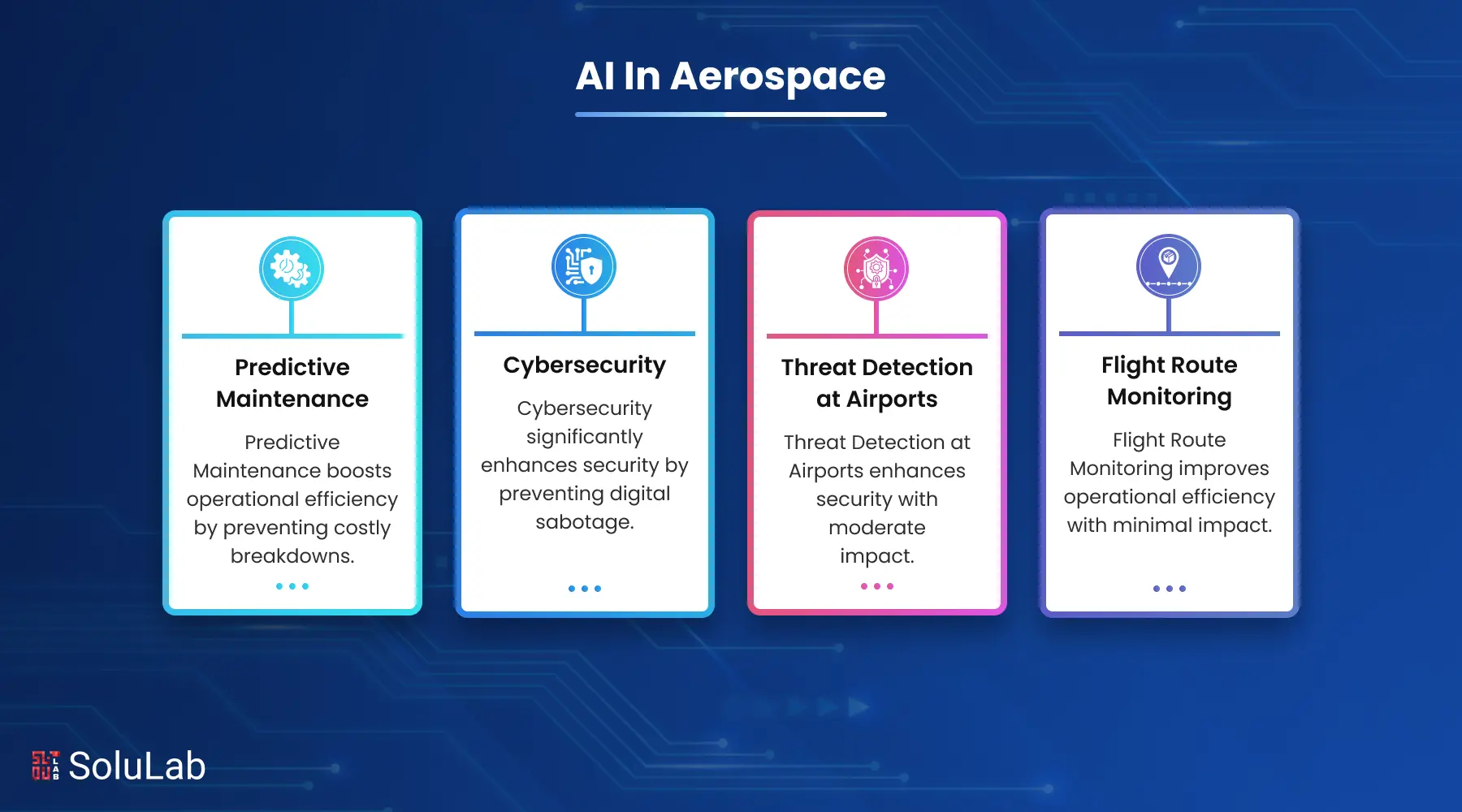
The short version: flying gets safer and more dependable. Inside the aircraft and across the terminal, AI is cutting risk, catching threats sooner, and guarding systems against cyberattacks. AI in aerospace and defense is already here. It’s changing how the industry runs today, not in some five-year roadmap.
Key Use Cases:
1. Predictive Maintenance
Catch the fault in an engine or part before it turns into a failure. That’s the whole idea.
- Reads sensor data to spot risk early
- Heads off expensive breakdowns
- Means fewer days with aircraft stuck on the ground
2. Cybersecurity
Aircraft and airport systems are targets. AI helps keep attackers out.
- Flags cyber threats as they happen
- Locks down flight systems and data
- Makes digital sabotage much harder
3. Threat Detection at Airports
Computer vision screens passengers and bags more quickly, and more accurately, than eyes alone.
- Picks out weapons and odd behavior
- Shortens the security line
- Cuts down on human mistakes
4. Flight Route Monitoring
Mid-flight, AI weighs the options and makes calls that keep the aircraft safer.
- Recommends safer routes
- Steers clear of dangerous airspace or bad weather
- Lowers the odds of an accident
None of this is hypothetical. These are AI-powered tools you can put to work now. Airline, defense contractor, aircraft manufacturer? Then AI in aviation stopped being a nice-to-have a while ago. It’s how you stay ahead.
What Types of AI Solutions Can Aviation Companies Use Today?
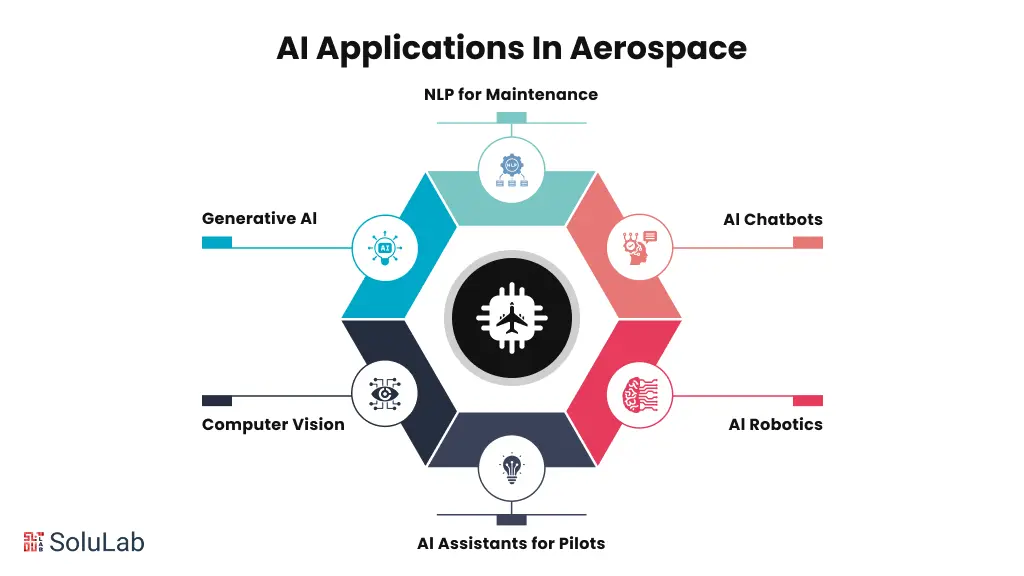
Run an aviation business and the right AI tools can make you safer, cheaper to operate, and faster on the ground. Where do you start? These AI applications in aerospace are the obvious first candidates:
Aircraft Inspection
Automated cameras running computer vision pick up cracks, dents, and wear on the airframe. The same technology drives facial recognition at the gate, so boarding moves faster and stays secure. Inspections take less time. Fewer things get missed.
NLP for Maintenance Reports
Natural Language Processing (NLP) works through maintenance logs and pilot write-ups looking for patterns. Recurring issues surface before they turn serious, and technicians spend less time digging. Troubleshooting speeds up. Surprise downtime drops.
AI Assistants for Pilots
When things get tense in the cockpit, a real-time AI assistant feeds the crew alerts and suggestions. Turbulence, a system warning, weather building ahead mid-flight: it helps with all of them. Pilots describe it as a second brain up front, and their decisions get sharper for it.
Customer Support
AI-powered chatbots take care of passenger questions, booking help, and status updates with no agent on the line. Queues shrink, customers are happier, and the support budget goes further. When a delay hits or it’s peak season, airlines lean on these bots to absorb the surge.
Hangar Safety
AI-driven robots do visual inspections and routine maintenance inside the hangar. Landing gear, fuel lines, cargo holds. Checks get quicker and more precise, and they rely less on someone crawling around with a flashlight.
Generative AI in Aerospace and Defense
Generative AI simulates aircraft designs, forecasts engine damage, and stress-tests safety. Prototyping parts takes less time, so engineers can try more ideas in the same window. That matters most on defense programs, where performance demands are high and deadlines don’t move.
One warning: none of this comes off the shelf ready to go. You’ll want a dependable AI development company to design, train, and maintain systems shaped around how you actually operate.
Can AI Prevent Airplane Crashes and Save Lives?
Yes. And it’s already happening. Safety teams, airline operators, and maintenance crews increasingly treat the advantages of AI in aviation as standard kit. AI stops crashes by catching problems early, coaching pilots in the moment, and tightening flight safety across the board.
Three ways it does that:
1. Predicts Mechanical Failures
Feed AI enough historical flight and engine data and it can tell you which parts are likely to fail, and roughly when. Crews fix the problem while it’s still a line item, not an emergency.
2. Supports Pilots with Alerts
It watches every flight system live and can tell pilots something’s wrong, sometimes before the standard warning goes off. Those extra seconds or minutes give the crew room to act.
3. Prevents Mid-Air Collisions
AI keeps track of routes and the traffic around them. When paths get too close, it adjusts, and the collision risk falls on every leg.
Since the Air India 171 crash, a number of experts have argued that AI in aerospace might have caught the hydraulic pressure problem sooner and averted the disaster [SOURCE NEEDED].
How Does AI Improve Aircraft Navigation and Flight Management?
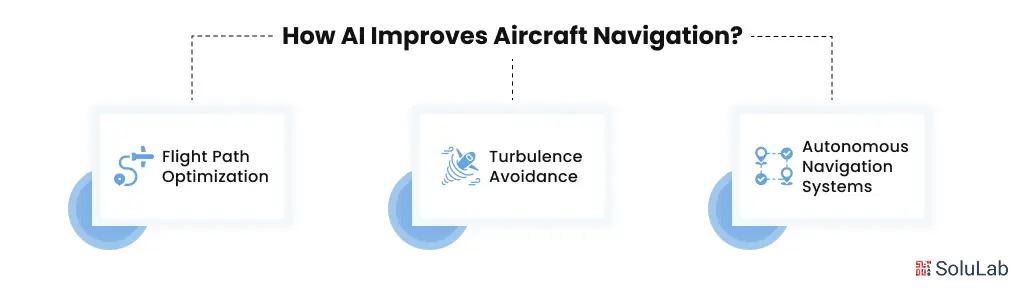
AI in the aviation industry doesn’t wait around for trouble. It forecasts, then reshapes the flight path before an issue ever shows up. Navigation used to be a fixed plan. Now it bends:
- Flight Path Optimization: AI works out the best routes and altitudes to burn less fuel and shave time off the trip. Airlines spend less and get more out of every aircraft.
- Turbulence Avoidance: It reads weather patterns as they form and warns pilots about rough air ahead, so the ride is smoother and safer.
- Autonomous Navigation Systems: AI-driven systems like these are laying the foundation for pilotless aircraft down the road, and they already make autopilot features safer and more dependable.
Plenty of the big AI aerospace companies in the USA are putting money into exactly these tools, chasing better safety and leaner operations.
Read Our Blog Post: Blockchain-Based Flight Data Systems for Aviation
What Role Does AI Play in Real-Time Aviation Analytics?
Aviation analytics used to be a post-mortem. Something went wrong, then you studied the data. Real-time AI flips that order, letting airlines and aerospace firms move before the problem lands. It chews through enormous streams from aircraft sensors, air traffic systems, and weather feeds, live. Decision-makers see trouble early and react fast.
Here’s where AI in aerospace engineering fits into real-time analytics:
1. Real-Time Alerts: The moment something slips, say an engine pressure drop or a temperature spike, AI sends a warning.
2. System Performance Reports: It keeps a running read on how every system is doing, so teams decide with better information.
3. Maintenance Forecasting: AI estimates when a part is likely to fail, so you swap it out before it causes a delay or a safety scare.
If you run a large aviation operation, real-time AI analytics isn’t optional anymore. It improves safety, trims costs, and keeps aircraft flying. Many AI aerospace companies in the USA are already spending on these tools so competitors don’t pull ahead.
What Is the Future of AI in Aerospace and Aviation Safety?
There’s a lot of room left for AI in the aerospace industry. Over the next ten years, expect big changes as operators bring in more AI-powered systems built to make flying safer, smarter, and cheaper to run.
The trends to watch:
1. Autonomous Flights
The pilot’s role shifts toward supervision. AI flies the routine parts and makes the everyday calls in real time.
2. Generative AI in aerospace and defense
Designing and simulating parts, running flight scenarios, predicting maintenance before anything breaks. Generative models will take on a growing share of that work.
3. Cybersecurity with AI
Every new connection between planes and airports is another door to guard. AI will stand watch over communication links and critical software.
4. AI Agents for Air Traffic Control
Controllers stay in charge. AI backs them up by forecasting congestion and flagging conflicts in the air before they develop.
Put together, these trends say one thing: AI in aerospace companies is already gearing up for what comes next.
How Can Our AI Development Company Support Aerospace Businesses?
SoluLab is a trusted AI development company in the USA, and we don’t stop at writing code. We build practical AI tools that fix real problems for aviation and aerospace teams.
What that looks like in practice:
1. Custom Predictive Maintenance Tools
We build AI that spots likely aircraft issues ahead of time, so you avoid delays and carry less risk.
2. Integration with Existing Aviation Systems
New AI features get wired into the software and hardware you already have. You upgrade without ripping everything out.
3. Complete Development
Airport security, flight navigation, and the pieces in between: we deliver full-stack AI application solutions built around how you operate.
Maybe you manage flights. Maybe inspections, or the passenger side. Either way, we help you put AI to work so you’re safer, spending less, and growing faster. Our specialists make it simple to hire AI developers and build custom AI systems, or fold them into the operations you already run, with quick, practical results.
Technology alone doesn’t fix anything. What we deliver is a way for your teams to work smarter, starting now. Contact us today!
FAQs
Shipra Garg is a tech-focused content strategist and copywriter specializing in Web3, blockchain, and artificial intelligence. She has worked with startups and enterprise teams to craft high-conversion content that bridges deep tech with business impact. Her work translates complex innovations into clear, credible, and engaging narratives that drive growth and build trust in emerging tech markets.