Talk to an Expert

How to Build an AI Agent System?

Build AI Agent System

The combination of work and technology is growing, driven by advancements in artificial intelligence. As businesses and organizations seek to harness the power of AI to increase productivity and efficiency, the development of AI agent systems has become a crucial focus. With the potential to automate a significant portion of tasks—indeed, two-thirds of jobs could be partially automated by AI—these systems are set to transform industries. However, rather than completely replacing human roles, many of these jobs will be complemented by AI, allowing human workers to focus on more complex and creative aspects of their work.

In recent years, the AI industry has witnessed explosive growth. The global AI market size, which was close to $208 billion in 2023, is projected to surge to nearly $2 trillion by 2030. This expansion reflects the increasing integration of AI technologies across various sectors. This shift highlights the importance of developing AI agent systems that can seamlessly work alongside human teams, optimizing performance and driving innovation.

In this blog, we will learn the process of building an AI agent system, exploring key considerations that can help you experience this technology to its fullest potential.

What is an AI Agent?

Artificial Intelligence (AI) agents are software systems programmed to execute tasks autonomously. They make decisions based on their programming and the data they ingest. AI agents can be as simple as repetitive task-performing programs or as sophisticated as machine learning systems that learn and adapt over time through the application of machine learning algorithms.

AI agents find applications in various sectors. In customer service, they manage chat interfaces, providing automated responses. In healthcare, they assist in patient management by scheduling appointments and reminding patients about medication intake. In finance, AI agents monitor markets, execute trades at optimal times, and maximize profits. 

In the corporate context, agents in AI are now considered the most reliable helping hand that businesses can use to perform mundane jobs that consume 62% of a workday. 

Artificial agents offer businesses a valuable opportunity to optimize their workforce by handling tasks such as customer inquiries, data analysis, and standardized actions, thereby freeing up human employees for more complex and creative tasks.

The effectiveness of AI agents depends on their design, the quality of accessible data, and the efficiency of employed algorithms. Their versatility and value make them indispensable in different industries, enhancing efficiency and aiding in sound decision-making. A Twitter user named Patrick Dougherty has defined AI agents like:

It is equally important to highlight that an AI agent is not:

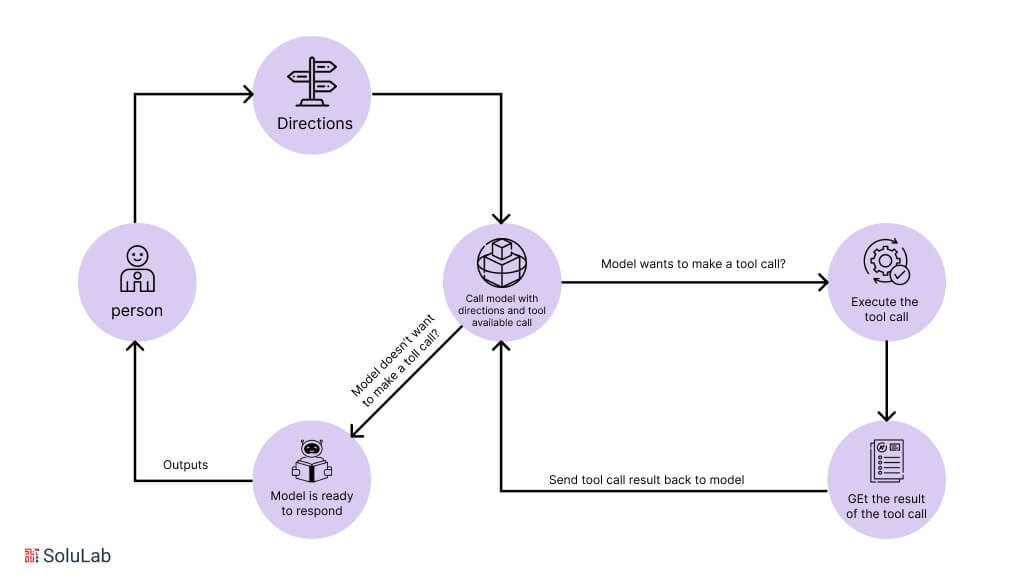
  • Scripted: Agents do not follow a pre-defined sequence of steps or tool calls. Instead, they are responsible for choosing the right tool call to make next.
  • Artificial General Intelligence (AGI): Agents are not AGI. An AGI would not need agents for specific types of work because it would be a single entity with access to all possible inputs, outputs, and tools. Current technology is far from reaching this level of intelligence.
  • Black Box: Agents should demonstrate their work in a manner similar to how a human would if delegated tasks. Transparency and accountability are crucial in understanding and evaluating agents’ actions.

Types Of AI Agents
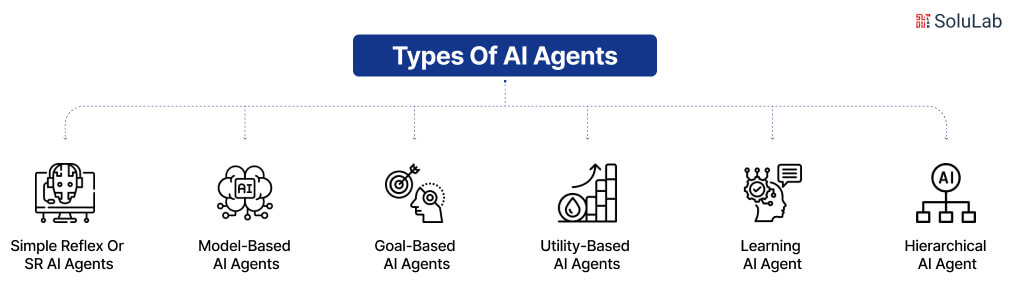
Types Of AI Agents

Artificial Intelligence (AI) agents have came up as game-changers in various industries, automating repetitive tasks, optimizing workforce efficiency, and enhancing decision-making. These software systems are designed to execute tasks autonomously based on their programming and data ingestion. AI agents can range from simple task-performing programs to sophisticated machine learning systems that learn and adapt over time.

1. Simple Reflex or SR AI Agents 

Artificial intelligence (AI) agents are computer programs that can perform tasks typically requiring human intelligence. AI agents are becoming increasingly prevalent in various industries, including business, healthcare, and finance. Among the different types of AI agents, Simple Reflex (SR) agents are some of the most common and widely used.

SR agents operate based on condition-action rules, which means they take a specific action when a certain condition is met. These rules are typically defined by human experts or derived from data. SR agents are relatively easy to develop and implement, making them accessible to businesses of all sizes.

An SR agent consists of several components:

  • Agents: These are the responsible AI entities for making decisions and taking actions.
  • Actuators: These are the components that allow the agent to interact with its environment, such as motors, wheels, or speakers.
  • Sensors: These are the components that allow the agent to perceive its environment, such as cameras, microphones, or temperature sensors.
  • Environment: This is the physical or virtual world in which the agent operates.

One of the key advantages of SR agents is their ability to discard historic precepts while making decisions. This means that they can make decisions based solely on the current situation, without being influenced by past events. This can be particularly useful in dynamic environments where the conditions can change rapidly.

Here are some examples of how SR agents are being used in businesses today:

  • Customer service chatbots: These chatbots can answer customer questions, provide product recommendations, and resolve complaints. They are typically trained on a large dataset of customer interactions.
  • Fraud detection systems: These systems can identify potentially fraudulent transactions by analyzing purchase patterns and other data. They are often used by banks and credit card companies.
  • Inventory management systems: These systems can track inventory levels and reorder products when necessary. They are used by businesses of all sizes to ensure they have the products their customers want in stock.

Read Also: AI Agent Development on Azure

2. Model-Based AI Agents

Model-based AI agents are a type of AI agent that is known for making quick, rules-driven decisions by incorporating a deeper understanding of the surroundings. These agents are able to do this because they maintain a model of the world in their memory, which they use to reason about the best course of action. One of the key advantages of model-based AI agents is that they are able to learn from their experiences. As they encounter new situations, they update their model of the world to reflect the new information. This allows them to make better decisions in the future, as they are able to take into account the lessons they have learned from the past.

Another advantage of model-based AI agents is that they are able to handle complex tasks. This is because they are able to use their model of the world to reason about the different ways that a task can be completed. This allows them to choose the best course of action, even when the task is complex or unfamiliar. However, One disadvantage is that they can be computationally expensive to run. This is because they need to maintain a model of the world in their memory, which can be a large and complex data structure. Another disadvantage is that model-based AI agents can be brittle. This means that they can make poor decisions if their model of the world is inaccurate.

Here are some specific examples of how model-based AI agents can be used:

  • Self-driving cars: Model-based AI agents can be used to help self-driving cars navigate their environment. The agents can use their model of the world to identify obstacles, such as other cars, pedestrians, and traffic signs. They can then use this information to make decisions about how to navigate around the obstacles safely.
  • Robotics: Model-based AI agents can be used to help robots perform complex tasks, such as assembling products or cleaning up a room. The agents can use their model of the world to understand the environment and the task that needs to be completed. They can then use this information to plan and execute a sequence of actions that will complete the task.
  • Healthcare: Model-based AI agents can be used to help doctors diagnose diseases and develop treatment plans. The agents can use their model of the human body to understand the symptoms of a disease and the different ways that it can be treated. They can then use this information to make recommendations about the best course of treatment for a patient.

3. Goal-Based AI Agents

Goal-based agents are a type of artificial intelligence (AI) that businesses can develop to meet specific objectives. These agents use decision-making algorithms to understand the best course of action based on the information they have learned from their surroundings. One of the best use cases for goal-based agents is to predict future trends. These agents can analyze large amounts of data to identify patterns and relationships that may indicate future events. This information can be used to make informed decisions about product development, marketing, and other business strategies.

Another use case for goal-based agents is to promote optimized resource allocation. These agents can help businesses identify the most efficient way to use their resources, such as time, money, and personnel. This can lead to significant cost savings and improved productivity.

Goal-based agents can also be used for automated designing. These agents can generate creative and innovative designs based on the input they receive. This can save businesses time and money by eliminating the need for human designers. Goal-based agents can be used for personalized marketing. These agents can track individual customer behavior and preferences to create targeted marketing campaigns. This can lead to increased sales and improved customer satisfaction.

Examples of Goal-based agents:

  • Virtual Personal Assistant: A virtual personal assistant, like Amazon’s Alexa or Google Assistant, is a goal-based agent that aims to assist users with their daily tasks. Its goals include; Answering user queries, Setting reminders and calendar events, Controlling smart home devices, Playing music or videos
  • Autonomous Vehicle: An autonomous vehicle, like Waymo or Tesla’s Autopilot, is a goal-based agent that aims to transport passengers safely and efficiently. Its goals include; Reaching the destination, Avoiding obstacles and collisions, Following traffic rules and regulations, Optimizing route planning
  • Customer Service Chatbot: A customer service chatbot, like those used in e-commerce or banking, is a goal-based agent that aims to resolve customer inquiries and issues. Its goals include; Answering customer questions, Resolving customer complaints, Providing product recommendations, Routing complex issues to human representatives

4. Utility-based AI Agents

Utility-based AI agents are highly sophisticated artificial intelligence agents capable of making decisions based on a specific value or utility function. They are designed to make the most advantageous choices for predefined tasks or utilities, such as resource allocation and strategic planning. Their unique ability to ensure optimal decision-making at each repeated step sets them apart from other AI agents. One of the key strengths of utility-based AI agents is their ability to handle a wide range of problems. They can be applied to various domains, including finance, healthcare, and manufacturing. In each of these domains, utility-based AI agents can provide valuable insights and recommendations to help humans make better decisions.

Another advantage of utility-based AI agents is that they offer an objective framework for decision-making. Unlike human decision-makers, utility-based AI agents are not influenced by personal biases or emotions. This objectivity can lead to more rational and consistent decisions. However, it’s important to note that utility-based AI agents are not without limitations. One of the main challenges with utility-based AI agents is that they require additional oversight. This is because utility-based AI agents can only make decisions based on the information they are given. If the information is incomplete or inaccurate, the agent’s decisions may not be optimal. Additionally, utility-based AI agents can be computationally expensive. This is because they often require a large amount of data and processing power to make decisions. This can make them impractical for use in real-time applications.

Here are examples of utility-based agents:

  • Recommendation System: A recommendation system, like Netflix or Amazon’s product recommendations, is a utility-based agent that aims to suggest items that maximize the user’s satisfaction. Its utility function includes; User preferences and ratings, Item attributes and features, and Contextual information (e.g., time of day, location).
  • Resource Allocation Agent: A resource allocation agent, like a cloud computing resource manager, is a utility-based agent that aims to allocate resources to maximize efficiency and minimize costs. Its utility function includes; Resource availability and demand, Task priorities and deadlines, and Cost and performance metrics.
  • Portfolio Optimization Agent: A portfolio optimization agent, like a financial investment manager, is a utility-based agent that aims to optimize investment portfolios to maximize returns and minimize risk. Its utility function includes; Asset prices and returns, Risk tolerance and constraints, Diversification, and portfolio metrics

CTA1

5. Learning AI Agent

In artificial intelligence (AI), learning AI agents have emerged as powerful tools for knowledge acquisition and feedback provision. Equipped with sensors that enable them to observe their surroundings, these agents employ advanced algorithms to analyze collected data and make informed decisions. The four fundamental components of a learning agent in AI are:

  • Learning: This component is responsible for acquiring new knowledge and updating the agent’s existing knowledge base. It enables the agent to continuously improve its performance over time.
  • Critic: The critic component evaluates the agent’s performance and provides feedback. This feedback helps the agent identify areas for improvement and refine its strategies.
  • Performance: The performance component is responsible for executing actions based on the knowledge acquired by the learning component and the feedback provided by the critic component.
  • Problem Generator: This component generates new problems or challenges for the agent to solve. This helps the agent develop a more robust and versatile knowledge base.

Learning artificial intelligence agents offer significant benefits to businesses. As they can evolve with time and effortlessly convert ideas into actions, they can be leveraged to gain valuable insights into customers’ past experiences and evaluate past performance. This information can be instrumental in making informed decisions and developing effective strategies. However, developing and maintaining learning AI agents can be a resource-intensive endeavor. It requires specialized expertise, advanced infrastructure, and significant investment. To mitigate these challenges, businesses can seek the assistance of AI agents consulting services. These services offer a range of expertise, from software development to deployment and maintenance, enabling businesses to optimize their AI agent development costs.

Here are examples of intelligent agents:

  • AlphaGo: A computer program that learned to play the game of Go at a world-class level by using a combination of machine learning and tree search algorithms. AlphaGo learned from a large dataset of human games and improved its performance through self-play and reinforcement learning.
  • Netflix Recommendation System: A learning agent that uses collaborative filtering and machine learning algorithms to recommend movies and TV shows to users based on their viewing history and preferences. The system learns from user behavior and adapts its recommendations over time.
  • Autonomous Vehicle: A self-driving car that uses a combination of sensors, mapping data, and machine learning algorithms to navigate roads and avoid obstacles. The vehicle learns from experience and adapts to new situations through reinforcement learning and deep learning techniques.

Read Also: How Businesses in Every Industry Are Benefiting from AI Agents?

6. Hierarchical AI Agent

Hierarchical agents in AI represent a sophisticated approach to creating intelligent systems capable of handling complex tasks and making informed decisions. These agents are not merely individual AI entities but rather a structured network of multiple AI agents working together in a hierarchical manner. At the core of hierarchical agents is the concept of a top-level AI agent. This agent serves as the central authority, overseeing the operations of other AI agents within the hierarchy. Its primary responsibility is to coordinate and manage the overall workflow, ensuring that all subtasks are executed efficiently and effectively. The lower-level AI agents, on the other hand, are specialized in specific tasks or domains. They operate under the guidance of the top-level agent, carrying out assigned tasks and reporting their progress. 

This division of labor allows hierarchical agents to handle complex problems by breaking them down into smaller, manageable subtasks. One of the key benefits of hierarchical agents is their ability to coordinate between different interlinked departments or modules within a system. Each department or module can be represented by an AI agent, and the top-level agent acts as a central hub for communication and coordination. This enables seamless information exchange and decision-making across various functional areas. Additionally, hierarchical agents are equipped with the ability to identify and address operational bottlenecks. By analyzing data and monitoring the performance of lower-level agents, the top-level agent can detect potential issues that could hinder the overall efficiency of the system. It can then take appropriate actions, such as reallocating tasks or adjusting resource allocation, to mitigate these bottlenecks.

  • Autonomous Robot: A robot that uses a hierarchical control system to perform tasks such as assembly, navigation, and manipulation. The hierarchy consists of; Low-level control: sensorimotor control, and motor control, Mid-level control: task planning, and motion planning, High-level control: goal planning, decision-making
  • Smart Home System: A smart home system that uses a hierarchical AI agent to control and optimize various subsystems such as; Low-level control: temperature control, lighting control, Mid-level control: energy management, security monitoring, High-level control: user preference learning, smart automation
  • Drones for Search and Rescue: A drone that uses a hierarchical artificial intelligence agent to perform search and rescue operations in disaster scenarios. The hierarchy consists of; Low-level control: sensor processing, flight control, Mid-level control: obstacle avoidance, path planning, High-level control: mission planning, decision-making

Forms of AI Agents 

In this section, we will discuss the three primary categories of AI agents:

  • Single AI Agent: Designed to handle specific task scenarios tailored to user needs.
  • Multi-AI Agents: Collaborate with other AI agents, making decisions and taking actions based on mutual communication.
  • Hybrid AI Agent: A high-end category that combines human and computer interaction for decision-making. These agents are capable of performing complex professional activities.

How Does An Agent Work?
Tool call

To create autonomous agents, it’s essential to imitate human cognitive functions and plan task execution strategically. LLM agents can break down complex and intricate tasks into smaller, more manageable parts during this phase. Additionally, these agents can reflect on themselves and learn from previous actions and errors, leading to improved future performance and outcomes.

Let’s start by defining an agent as a software program that carries out tasks on behalf of a user. The ability of Large Language Models (LLMs) to emulate human-like cognitive processes opens up new possibilities for tasks that were previously difficult or impossible.

At its core, an LLM-based agent is a program that combines ChatGPT with a text interface capable of executing tasks like document summarization.

The concept of “agent orchestration” introduces a higher level of complexity. For example, two specialized agents could work together on your code—one focusing on code generation and the other on code review. Alternatively, you could enhance an agent with a tool like an API that provides access to internet search. Or you could improve an agent’s intelligence and reliability by providing additional context through techniques like Retrieval Augmented Generation (RAG).

The most advanced agents are called “autonomous.” These are programs capable of handling sequential tasks, iterating, or pursuing objectives with minimal or no human intervention. Consider fraud detection—an autonomous agent can adapt its behavior to identify intricate and evolving patterns of fraud, significantly reducing false positives and ensuring legitimate transactions are not mistakenly flagged as fraudulent. It can also detect and prevent fraud in real time by determining the appropriate actions to take, thereby saving both time and resources.

The included diagram illustrates a basic framework of an autonomous agent that processes inputs from users or triggers from applications.

The autonomous agent consists of specialized agents that work together. The observer agent assesses incoming information, adds context, and stores it in memory or adds it to a task queue. A task to investigate potential fraud is created when a second transaction within a short time frame and across different continents occurs. The prioritization agent evaluates and ranks the task, and the execution agent carries out the tasks. The execution agent can access additional context and utilize tools to access external services and interact with the customer.

Read Also: x402 Protocol for Building Next-Gen AI Agents

Environments Where AI Agents Can Work Seamlessly 

Prior to hire AI developer and entrusting them with the task of constructing fully customized AI-powered agents, it’s crucial to gain an understanding of the operational environments in which these agents can excel.

1. AI agents can seamlessly operate in virtual environments that mimic real-world scenarios, making them ideal for training and testing tasks.

2. Equipped with sensors, microphones, lidar, and actuators, AI agents excel in physical settings like warehouses, hospitals, airports, and factories.

3. In the retail sector, AI agents can monitor sales, adjust product prices, personalize promotions, notify customers, and analyze customer purchasing patterns.

4. AI agents in the travel industry can assist with trip planning, suggest destinations, optimize itineraries based on budget, and interact with customers in virtual and text-based environments.

5. Advanced AI development techniques enable businesses to create AI agents that perform accurately in various in-game environments, including video games, casino games, and mobile games. They can design game rules, assess player performance, and create diverse game objectives.

6. Social media platforms, such as dating apps, online communities, Facebook, and Twitter, can utilize AI agents to interact and collaborate with humans and other agents.

The finance industry can use autonomous AI agents to analyze stock prices, customer transactions, market risks, and investments, and identify potential threats.

Related: AI Agent in Legal Document Management

How To Build An AI Agent System?

In artificial intelligence, agents are software entities designed to perceive their surroundings and make decisions and actions based on defined rules or algorithms. These agents encompass a spectrum of complexity, from simple reflex agents that respond to immediate inputs to goal-based agents that plan and act toward future outcomes. The most advanced, learning agents, possess the ability to adapt their behavior based on past experiences, akin to how humans learn from mistakes.

The power of agents lies in their capability to automate intricate tasks, make intelligent choices, and interact with their environment in a manner that mirrors human intelligence. The remarkable aspect is that anyone has the potential to create these agents. By harnessing AI agents, a world of possibilities unfolds, allowing for the development of systems that are not only efficient and effective but also capable of continuous learning, adaptation, and evolution.

While creating complex agents might require specialized knowledge, starting on the journey with simple agents provides an excellent opportunity to grasp and progress in this captivating field. The advent of Large Language Models (LLMs) has significantly propelled the development of autonomous agents, leading to the introduction of numerous technologies and frameworks based on this concept. Among these advancements, We hope you’ve gained a solid understanding of the capabilities and potential of artificial agents in AI. As you progress on your journey, it’s crucial to grasp the fundamentals of creating an AI agent tailored to your specific tasks and requirements. Here is a quick overview of building an AI agent:

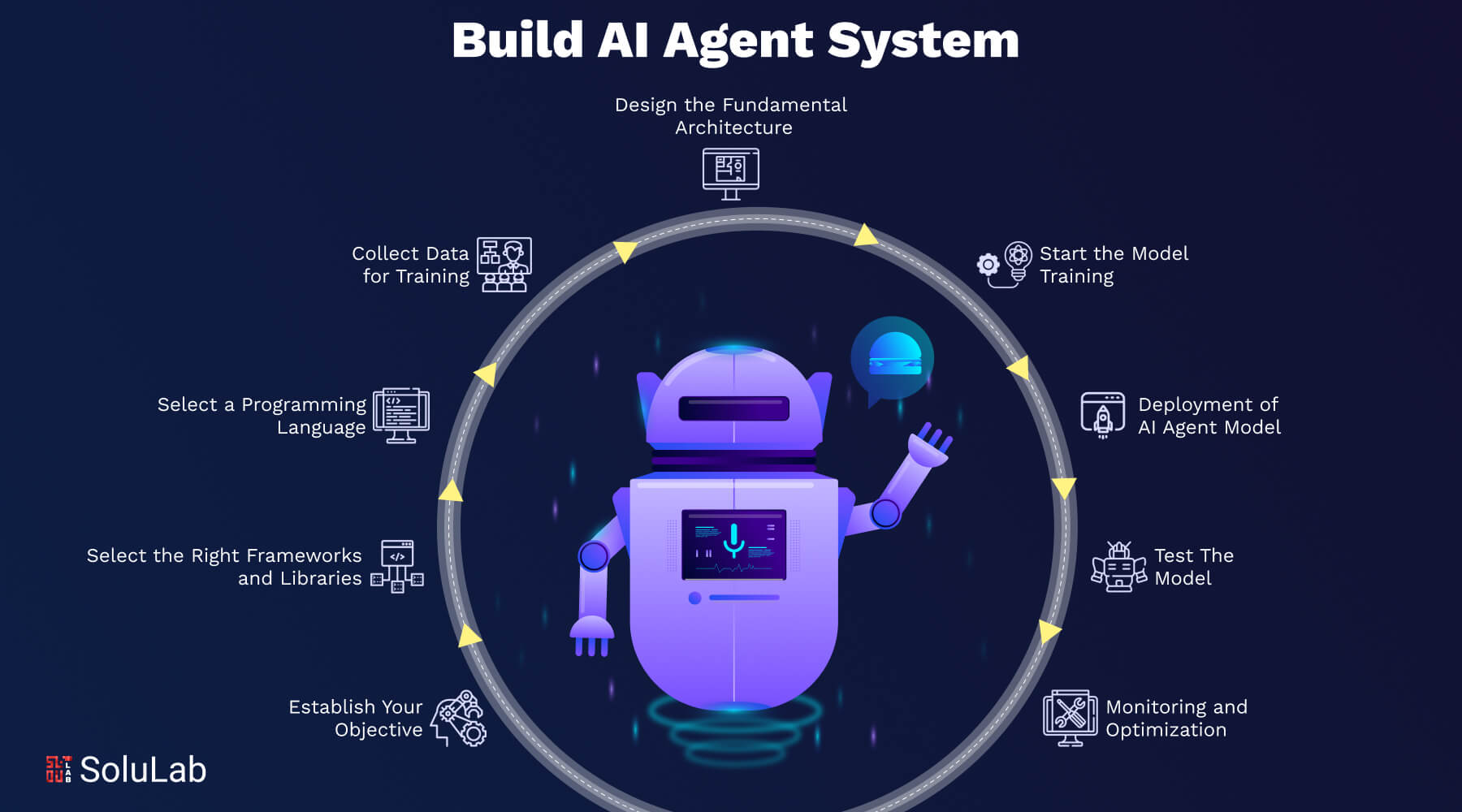
1. Establish Your Objective 

To commence the development of AI agents, it is crucial for businesses to have a clear understanding of the purpose and objectives behind their implementation. Before embarking on the journey, it is essential to determine the specific needs and requirements of the AI agent.

Consider the following questions:

a. What are the key tasks that you need the AI agent to perform? 

Do you need it to sort and categorize documents, handle customer queries, generate insights from data, or perform other specific functions? Identifying the core responsibilities of the AI agent will help guide the development process.

b. What is the desired outcome or goal of using an AI agent? 

Do you aim to enhance efficiency, improve customer satisfaction, automate repetitive tasks, or achieve other specific objectives? Clearly defining the desired outcome will help measure the success of the AI agent.

c. What data sources will the AI agent leverage? 

Identify the sources of data that the AI agent will use to learn and make decisions. This could include structured data from databases, unstructured data from emails and documents, or real-time data from sensors and IoT devices.

d. What level of autonomy is required? 

Determine the extent to which the AI agent should operate independently. Will it make decisions and take actions on its own, or will it require human oversight and approval?

e. What are the ethical considerations and regulatory requirements? 

Consider the ethical implications and regulatory requirements associated with the use of AI agents. Ensure that the AI agent is designed and developed in a responsible and compliant manner.

If you are having difficulty clarifying the purpose and objectives of the AI agent, it is advisable to seek the assistance of an AI consulting company. These services can provide valuable guidance and expertise, helping you define the scope, identify potential challenges, and develop a comprehensive strategy for the successful implementation of your AI agent.

2. Select the Right Frameworks and Libraries

Training a fundamental AI model to process data and make decisions is a complex task that requires careful consideration of the framework and libraries used. The right tools can streamline the development process, enable faster prototyping, and improve the overall efficiency of the AI model. One of the leading technologies for AI development is TensorFlow. TensorFlow is an open-source machine learning framework developed by Google Brain. It is widely used for a variety of AI tasks, including natural language processing, computer vision, and reinforcement learning. TensorFlow provides a comprehensive set of tools and features that make it easy to build and train AI models.

Another popular technology for AI development is PyTorch. PyTorch is an open-source machine learning framework developed by Facebook AI Research. PyTorch is known for its flexibility and ease of use. It is often used for research and prototyping AI models. PyTorch provides a dynamic computational graph that allows for easy experimentation and debugging. Keras is a high-level neural networks API, written in Python, that can run on top of TensorFlow or Theano. It is designed to make building and training deep learning models easier and faster. Keras provides a user-friendly interface and a wide range of features for building and evaluating neural networks. These tools and frameworks are essential for developing different types of AI agents, including reactive agents, goal-based agents, and learning agents, each suited for various AI applications.

3. Select a Programming Language

Programming languages play a vital role in the development of artificial intelligence (AI) agents. They provide the means to implement complex algorithms and leverage specialized libraries and frameworks that facilitate the creation of AI models. One of the most popular programming languages for AI development is Python. Python’s popularity can be attributed to several factors. Firstly, it is a high-level language, which means that it is easy to read and write, making it accessible to developers of all skill levels. Secondly, Python is highly versatile and can be used for a wide range of AI applications, including natural language processing, machine learning, and computer vision.

Python has a large and active community, which contributes to its extensive library of open-source tools and frameworks. This makes it easier for AI developers to find and use pre-built components, saving time and effort. Additionally, Python is compatible with popular AI libraries such as TensorFlow, PyTorch, and Keras, enabling seamless integration and collaboration with these frameworks. The simplicity and ease of use of Python make it an ideal choice for rapid prototyping and experimentation. This allows AI developers to quickly test and validate their ideas and iterate on them efficiently. Additionally, Python’s extensive documentation and tutorials make it easy for developers to learn and apply the language effectively. When exploring AI agents use cases, Python’s versatility becomes even more evident, as it supports various applications, from chatbots to autonomous systems, highlighting its crucial role in AI development.

4. Collect Data for Training 

In artificial intelligence (AI), your agents rely heavily on data for processing and analysis. The quality of this data plays a pivotal role in effectively training machine learning models, ultimately determining the accuracy and dependability of your AI agents. Therefore, collecting high-quality data is of paramount importance. There are various methods you can employ to gather suitable data. Crowdsourcing, for instance, involves obtaining data from a large group of people, often through online platforms. This approach can yield a diverse and extensive dataset but may come with challenges related to data consistency and reliability. Alternatively, you can utilize off-the-shelf datasets, which are readily available and often well-curated. However, it’s crucial to assess the quality and relevance of such datasets to your specific AI application. AI agents use cases highlight how these data-driven systems excel in tasks such as fraud detection, personalized recommendations, and autonomous vehicle navigation, all of which depend on high-quality data inputs.

Regardless of the data collection method, ensuring the data’s quality is paramount. Here are some key characteristics of high-quality data:

  • High Quality: The data should be accurate, complete, and consistent. This means it should be free from errors, missing values, and inconsistencies. High-quality data leads to more accurate and reliable AI models.
  • Unbiased: The data should not be biased towards any particular outcome or group. Unbiased data ensures that your AI models are fair and equitable.
  • Error-free and Well-cleaned: The data should be cleaned and processed to remove any errors or inconsistencies. This process involves identifying and correcting data entry mistakes, removing duplicate data points, and handling missing values. Clean and error-free data leads to more efficient and effective AI models.

Achieving high-quality data can be a tedious and highly skill-demanding task. If you lack the resources or expertise to handle this process effectively, consider outsourcing to professional data science services. These service providers specialize in collecting, cleaning, and preparing data for AI and machine learning applications.

5. Design the Fundamental Architecture 

Designing a powerful AI Agent Architecture involves key considerations such as scalability, modularity, performance optimization, openness for integration, resilience, security, privacy, and ethical considerations. Scalability enables handling increasing data and computational demands. Modularity allows for easy maintenance and updates. Performance optimization involves leveraging parallel processing and specialized hardware. Openness for integration ensures seamless communication between components. Resilience protects against failures and errors. Security safeguards against unauthorized access and data breaches. Privacy mechanisms protect sensitive data and user information. Ethical considerations ensure responsible and transparent AI operations. For better understanding, AI agents examples include autonomous drones, intelligent virtual assistants, and predictive analytics tools, all designed to operate efficiently within robust architectures that account for these considerations.

6. Start the Model Training

Once adequate data is collected and the basic architecture of the AI agent application is ready, the next crucial step is to train the model. This training process is where the AI agent learns to make decisions and perform tasks. AI developers engage in various activities during this stage to ensure the model’s effectiveness. One key task is data feeding, where the model is provided with labeled data from which to learn. The data should be carefully curated and preprocessed to ensure its quality and relevance. The AI agent’s environment is also created, which defines the context in which the model will operate. This environment can be simulated or real-world, depending on the application. Implementing the learning experience involves selecting appropriate algorithms and techniques to train the model. Common methods include supervised learning, unsupervised learning, and reinforcement learning. The model’s decision-making abilities are optimized by adjusting hyperparameters and fine-tuning the model’s architecture. For more clarity, AI agents examples can include virtual assistants, autonomous systems, and recommendation engines across industries like finance, healthcare, and retail.

To achieve perfection at this stage, several considerations are essential:

1. Model Selection: Choosing the right model architecture is crucial. Options such as random forests, neural networks, and decision trees have different strengths and weaknesses. Factors like data type, problem complexity, and desired accuracy influence the selection.

2. Model Validation: Once the model is trained, its performance is evaluated using validation data. This data is distinct from the training data and helps identify any overfitting or underfitting issues. The model’s accuracy, precision, recall, and other metrics are analyzed to assess its effectiveness.

3. Continuous Learning: Ensuring the model can learn continuously is vital for adapting to changing environments and improving performance over time. Techniques like transfer learning and online learning allow the model to incorporate new data and knowledge as they become available. This is especially important for AI agents in Healthcare, where evolving data and medical advancements require the system to adapt continuously to ensure accurate diagnosis and treatment plans.

7. Deployment of AI Agent Model 

After successfully training an AI model, the next step is to deploy it into production so that it can be used by end-users. There are several tools and platforms available for deploying AI models, including serverless platforms, Docker, WebAssembly, and Kubernetes. The choice of deployment ecosystem depends on factors such as the scale of the application, the required level of security, and the desired level of control. One of the key steps in deploying an AI model is containerization. Containerization involves packaging the model and its associated components into a container, which is a lightweight and portable execution environment. Containers make it easier to deploy and manage AI models across different environments, such as on-premises servers, cloud platforms, and edge devices. This is particularly beneficial for AI agents in supply chain applications, where real-time data processing and scalability are crucial for optimizing operations and improving efficiency.

In addition to containerization, AI developers need to perform several other tasks to prepare a model for deployment. These tasks include refining and optimizing the model to improve its performance and efficiency, creating APIs to facilitate communication between the model and other components of the application, and ensuring that the deployment environment is secure and compliant with privacy regulations. AI developers also need to set up the user interfaces and interaction mechanisms that will allow users to interact with the deployed model. This may involve creating web applications, mobile apps, or other interfaces that are tailored to the specific use case, including what are AI agents to help streamline user interaction.

CTA2

8. Test The Model 

To achieve optimal performance and decision-making capabilities in your AI agents, it’s imperative to ensure the functional model is flawless and operates as intended. This involves rigorous testing to identify and eliminate any bugs, errors, or inappropriate behaviors that could compromise the model’s integrity. One crucial step in this process is unit testing, where individual components of the model are tested in isolation to verify their functionality and adherence to specifications. This helps to pinpoint specific issues early on and enables prompt resolution. Additionally, integration testing is essential to assess how different components interact and work together as a cohesive system. This ensures that the model’s overall behavior aligns with its intended design and that there are no unintended consequences or conflicts arising from the integration of various components.

Conducting system testing is vital to evaluate the model’s performance under real-world conditions. This involves simulating user interactions and scenarios to assess how the model responds and makes decisions in different contexts. System testing helps to identify potential issues that may not be apparent during unit or integration testing. To ensure that the model meets user needs and expectations, user acceptance testing is crucial. This involves involving actual users or user representatives in the testing process to gather feedback on the model’s usability, functionality, and overall satisfaction. This step helps to validate that the model aligns with user requirements and that it delivers a positive user experience. you can build confidence in the functional model’s reliability, accuracy, and appropriateness, laying the foundation for successful AI agent performance and decision-making. 

9. Monitoring and Optimization 

After deploying your artificial intelligence (AI) agents, it is crucial to continuously monitor their performance to ensure they operate optimally. Regular observation allows you to identify any potential issues or areas for improvement and make necessary adjustments. One way to enhance the performance of your AI agents is by feeding them new data. This data can come from various sources such as sensors, user interactions, or external databases. By incorporating new data, you can help your agents learn and adapt to changing environments, making them more effective in their tasks. Additionally, creating extra user interaction points can provide valuable feedback for your AI agents. This feedback can help them understand user needs and preferences better, leading to more personalized and efficient interactions. For example, you could incorporate chatbots, voice assistants, or other interactive elements to facilitate communication between users and what are AI agents.

Regularly updating the underlying structure of your AI agents is essential. AI technology is constantly evolving, and new advancements can significantly impact your agents’ performance. By staying up-to-date with the latest developments, you can ensure that your agents leverage the most advanced techniques and algorithms. Scaling your AI agents according to your business needs is also crucial. As your business grows and changes, the demands on your AI agents may also evolve. By scaling your agents, you can ensure they have the resources to handle increased workloads and maintain optimal performance. Following these steps will help you establish a smooth AI agent development process and create fully customized AI agents tailored to your specific business requirements. These agents can support your operations on multiple fronts, enhancing efficiency, productivity, and customer satisfaction. By continually observing, updating, and scaling your AI agents, you can ensure that they remain effective and valuable assets to your organization.

Start Your AI Agent Development Journey With SoluLab

Building an AI agent application requires a strategic approach, from integrating the right AI models to ensuring data security and seamless workflows. Recently, we published a case study on InfuseNet, which uses AI for data-driven decision-making and operational efficiency. It utilizes advanced AI models like GPT-4 and FLAN, enabling real-time data processing from multiple sources while ensuring data security. Businesses can fine-tune AI models with their own data, driving innovation and process optimization. InfuseNet demonstrates how AI can transform industries.SoluLab is the perfect partner to help you kickstart your AI agent development journey.

With years of experience in AI and machine learning, SoluLab offers solutions that guide you through the entire AI agent development process, from ideation to deployment. AI Agent Development Company has a team of experts who utilize tools and platforms like Microsoft Azure, GPT models, and custom machine learning frameworks to design AI agents for your needs. You Should Hire AI Developers because SoluLab focuses on delivering scalable, secure, and efficient AI solutions that integrate seamlessly with your existing systems. SoluLab aligns AI agents with strategic objectives to provide a competitive advantage. With a client-centric approach and success across various industries, they harness the full potential of AI and automation for businesses.

FAQs

1. What is an AI agent system?

An AI agent system is a combination of algorithms and data-driven models that enable machines to perform tasks autonomously, making decisions based on the data they process.

2. How do AI agents work in different industries?

AI agents can be applied across various sectors, such as healthcare, retail, and manufacturing, to automate tasks, improve efficiency, and enhance decision-making.

3. How can AI agents improve business operations?

AI agents help businesses streamline operations, from optimizing supply chain processes to improving customer service interactions and automating HR tasks.

4. What are the benefits of using AI agents?

AI agents improve accuracy, reduce human error, and provide valuable insights in industries like healthcare, finance, retail, and manufacturing by analyzing large volumes of data in real time.

5. How can AI agents be used in customer service?

AI agents for customer service can handle repetitive tasks, answer common queries, and provide personalized recommendations, improving response times and customer satisfaction.

6. How do AI agents help in industries like sales and marketing?

AI agents in sales and marketing can analyze customer behavior, predict trends, and assist with lead generation, helping businesses create targeted campaigns and close deals more efficiently.

7. What is the future of AI agents in enterprises?

AI agents will continue to transform enterprises by automating processes in areas like finance, HR, and supply chain management, driving innovation and operational efficiency.

How Can AI Agents Enhance the Hospitality Industry?

AI Agents in Hospitality Industry

AI agents are emerging as critical technologies that reinvent the dynamics of operations and guest contact in the hospitality sector, which is undergoing a substantial digital transition. These agents, who are equipped with modern artificial intelligence capabilities, manage and optimize complicated operational activities, surpassing the expectations of traditional customer service jobs and creating a new benchmark for the sector.

From 2023 to 2031, the worldwide artificial intelligence in hospitality industry market is expected to expand by 12% yearly. The capacity of AI to improve visitor experiences, expedite processes, and effectively customize services to individual tastes is what is driving this expansion. Furthermore, it has been demonstrated that using AI significantly raises guest happiness, with post-adoption satisfaction levels jumping from an average of 2.5 to 8.7 and a corresponding improvement in revenue growth and operational efficiency. Streamlining processes is a top priority for 83% of hospitality companies, and AI is essential to reaching this level of efficiency.

The application of AI in hospitality industry is shown to be quite advantageous. These agents are designed to precisely answer questions from visitors and automate complex tasks like booking a hotel, handling maintenance, and providing individualized care. They are revolutionizing the provision of services, augmenting visitor contentment and greatly boosting operational efficacy.

In this blog, we will discuss the important role AI agents are playing in revolutionizing the hospitality industry. We will go over how they can completely change the way services are provided, how efficiently operations run, and how guests are treated, as well as the strategic decisions that must be made in order to maximize their potential and minimize hazards.

What are AI Agents?

An artificial intelligence (AI) agent, sometimes called an intelligent agent, is a very effective virtual assistant that uses AI to carry out activities on its own. They are able to take in information about their surroundings, process it using models and algorithms, come to conclusions, and act to accomplish certain objectives. They are made to function somewhat independently and adaptably to shifting circumstances. Through continual interactions and the use of cutting-edge technologies like Large Language Models (LLMs), artificial intelligence (AI) agents are able to continuously improve their abilities and become more proficient.

Working together is essential for autonomous AI systems. Several agents collaborate often, taking on different responsibilities akin to those of a specialist team. This collaborative approach improves the efficacy of problem-solving by having each agent apply its specialized knowledge to a shared goal, simplifying the approach to solving complex challenges.

AI in hotel industry agents serves as smart assistants interacting with visitors, doing duties, making suggestions, and improving the overall visitor experience. Through interactions, these agents are always learning and changing, which helps them perform better over time.

Basic Functions of an AI Agent

AI agents are designed to handle tasks ranging from simple to highly complex processes. Their skills allow them to play critical roles that have a substantial influence on productivity and strategic planning inside enterprises, including the AI hospitality industry.

  • Environmental Perception

AI agents are adept at continually examining and analyzing their operating settings. This continuous monitoring enables them to recognize and respond to changes quickly. Large Language Model (LLM) agents, in particular, are proficient in interpreting complex instructions, context, and objectives through their advanced language understanding capabilities. This allows them to operate independently or semi-autonomously, reacting constantly to human commands and environmental inputs.

  • Tool Utilization

AI agents in hospitality utilize various tools to enhance their decision-making and task execution. These tools include calculators, APIs, analytics tools, databases, and advanced search engines, which help gather and process information crucial for informed decision-making. The integration of diverse tools allows AI agents to extend their functionality and adaptability across different scenarios.

  • Decision Making

AI agents base their choices on detailed, data-driven insights. LLMs’ excellent language comprehension allows these agents to grasp complicated datasets and contextual subtleties. This capability enables them to execute tasks autonomously and align closely with strategic business objectives, ensuring every action is informed and purposeful.

  • Adaptive Learning

One of the most distinguishing qualities of AI agents is their capacity to learn from results and constantly improve their techniques. Adaptive learning is critical for increasing efficiency and effectiveness over time. LLM-powered AI agents utilize advanced reasoning techniques such as chain-of-thought and tree-of-thought reasoning, allowing them to draw logical connections and develop innovative solutions to complex problems. This superior learning process improves their problem-solving ability and strategic adaptability

  • Problem Resolution

AI agents excel at finding and resolving problems, frequently anticipating future difficulties before they worsen. This proactive approach to problem resolution is particularly enhanced by LLMs’ ability to manipulate text to generate specific outputs, such as reports, emails, or customized content. This skill addresses urgent problem-solving demands while also contributing to improved communication and information distribution.

  • Strategic Planning

The capacity of AI agents in hospitality to evaluate data and foresee trends is critical in strategic planning. They provide a substantial contribution to long-term company planning and resource allocation by giving insights that help shape future initiatives. This foresight helps firms to plan for future demands and allocate resources accordingly, resulting in improved preparation and strategic agility.

Types of AI Agents Used in Hospitality

Types of AI Agents Used in Hospitality

Integrating AI agents into the hotel business improves service delivery and efficiency in operations. While this article emphasizes mostly LLM-powered AI agents, such as conversational and task-oriented agents, it is necessary to quickly discuss the larger array of types of agent in AI and their significance to the hotel industry.

  • Conversational Agents: These are AI agents that manage visitor interactions using advanced natural language processing (NLP) technology. Conversational agents are critical in the hospitality business because they provide 24-hour customer support and answer questions about facilities, booking information, and local activities. They may manage several conversations at once, providing individualized replies that improve the user experience.
  • Task-oriented AI Agents: These agents in hospitality have the goal of performing certain, set tasks, including check-ins and check-outs, room service orders, and cleaning requests. By automating common operations, these agents allow up personnel to focus on more complicated guest demands, resulting in higher overall service quality and efficient operations.
  • Reactive Agents: Reactive agents, which have no recollection of previous contacts, are used in hospitality for jobs that demand instant action based on current information. For example, they may employ occupancy sensors to modify heating, ventilation, and air conditioning (HVAC) settings in real-time, as well as control lighting and energy consumption effectively.
  • Deliberative Agents: These possess symbolic thinking abilities and may plan and barter to attain their goals. Deliberative agents assist the hospitality industry in managing complicated scenarios such as planning major events, allocating conference resources, and optimizing personnel rosters according to predicted guest flows.
  • Hybrid Agents: Hybrid AI in hospitality combine the skills of reactive and deliberative agents, providing both operational robustness and planned flexibility. They can efficiently manage guest interactions and allocate resources across several departments, including front desk operations, maintenance, and cleaning.
  • Model-based Agents: These agents have a knowledge base that contains information about the dynamics of the environment they work in as well as regulations. This enables them to successfully forecast future situations by simulating various scenarios and consequences depending on potential actions. They come in especially handy in situations when all the information isn’t always available. These agents might be employed in the hotel industry to forecast visitor behavior or to best allocate resources during periods of high and low demand.
  • Goal-oriented Agents: These agents with a goal-oriented approach concentrate on accomplishing certain objectives and are capable of weighing the pros and drawbacks of several options to arrive at the best choice. Goal-oriented agents in the hotel industry may oversee marketing programs to boost occupancy rates or enhance dynamic pricing tactics to optimize earnings.
  • Utility-based agents: These agents in hospitality examine multiple states using a utility function to optimize outcomes such as guest happiness or operational cost savings. For example, they may manage dynamic pricing or tailor marketing efforts to different visitor categories in order to increase profitability.
  • Information Agents: In the hotel industry, information agents handle, manage, or compile data from many sources to aid decision-making. These agents improve market information by collecting and aggregating consumer comments, ratings, and preferences, allowing for greater service customization and guest experience design.
  • Learning Agents: These agents in hospitality increase their performance through experiences and interactions. They adjust their methods for individualized visitor encounters, inventory management, and advertising campaigns based on the results of their actions and changing guest preferences.
  • Knowledge-based Agents: These agents use a database of rules and organized data to make judgment calls and offer professional guidance. Knowledge-based agents in the hotel sector can assist in the analysis of customer data and market trends to provide individualized experiences or enhance operational plans.
  • Cognitive Agents: Endowed with sophisticated machine learning decision-making skills, cognitive agents decipher and evaluate intricate datasets within the hospitality industry. They are perfect for jobs that need in-depth research, such as forecasting market trends or seeing patterns in visitor behavior to help with strategic planning.

CTA1

AI Agents Use Cases in Hospitality

AI agents are revolutionizing hospitality operations by automating processes, improving guest experiences, and increasing operational efficiency. Here are some significant AI agent use cases in the hospitality industry:

  • Virtual Concierge and Guest Communication

AI-powered virtual agents may respond to visitor inquiries 24 hours a day, seven days a week via chatbots, voice assistants, messaging applications, and other platforms. They respond quickly and casually to questions about amenities, area attractions, food recommendations, and other topics. These agents can also deliver automated messages such as pre-arrival emails, reservation confirmations, and post-stay surveys.

  • Personalized Guest Experience

Using visitor data and natural language skills, automated AI agents may generate highly customized encounters based on guests’ preferences. These AI agents boost the visitor experience by curating room amenities and in-store activities, as well as giving contextual restaurant/experience suggestions.

  • Intelligent Revenue Management

Autonomous AI agents help with intelligent demand forecasting, price optimization, and flexible inventory allocation to optimize income. They examine historical data, competition rates, market trends, and other factors to offer optimal pricing and distribution methods.

  • Dynamic Pricing

Generative AI agents assist hotels and other hospitality firms in optimizing pricing strategies through the use of sophisticated algorithms. By evaluating market trends, demand patterns, and competition pricing, these agents may modify hotel rates in real-time to optimize income while remaining competitive.

  • Multilingual Customer Support

LLM-powered AI bots with multilingual language models may converse with visitors in their own language, overcoming cultural and linguistic divides. Hotels can now deliver cost-effective, seamless worldwide customer care.

  • Conversational Room Controls

AI agents use speech interfaces and contextual awareness to allow visitors to manage room settings such as temperature, lighting, and multimedia systems via natural conversations, enhancing comfort and convenience.

  • Predictive Operations and Maintenance

AI agents can forecast maintenance requirements, manage cleaning schedules based on occupancy, simplify supply chain operations, and more to help hotels run more smoothly.

  • Efficient Reservation Management

AI reservation managers simplify and enhance the booking process, including reservation logistics and payment processing. These agents are skilled in increasing rates of occupancy and changing reservations to meet visitor changes. By seamlessly communicating with existing hotel management systems, they make sure booking procedures are both quick and error-free.

  • Travel Planning

Conversational AI bots can serve as intelligent travel advisers, comprehending natural language questions and offering individualized trip-planning advice. By assessing preferences, finances, and travel goals, they may offer personalized itineraries, lodging alternatives, activities, and local experiences.

  • Enhanced Access Control and Security

AI agents use biometric and face recognition data to enable increased security measures in hospitality situations. By precisely confirming visitors’ identities, these technologies expedite check-in procedures and enhance security, guaranteeing a smooth and safe visitor experience. AI agents efficiently handle and make use of the information from these systems to maximize productivity and visitor security.

Benefits of AI Agents in Hospitality

Benefits of AI Agents in Hospitality

Integrating AI agents into the hospitality industry offers a multitude of advantages that enhance service delivery, operational efficiency, and overall guest satisfaction. Here are the key benefits of AI agents in hospitality:

  • Improved Guest Experience

AI agents, particularly conversational agents, provide 24/7 customer service, handling inquiries about amenities, booking details, and local attractions. Their ability to manage multiple interactions simultaneously ensures guests receive prompt, personalized responses, significantly enhancing their overall experience.

  • Increased Efficiency and Productivity

Task-oriented AI agents automate routine tasks such as check-ins, check-outs, room service orders, and housekeeping requests. This automation allows staff to focus on more complex and personalized guest needs, improving both service quality and operational efficiency.

  • Higher Revenue and Profitability

Goal-oriented and utility-based agents focus on achieving specific objectives, such as increasing occupancy rates or maximizing revenue through dynamic pricing strategies. Their ability to evaluate the consequences of different actions ensures optimal decision-making aligned with business goals, driving higher revenue and profitability.

  • Personalized Guest Interactions

Learning agents continuously improve their performance by learning from past interactions and outcomes. In hospitality, they adapt their strategies for personalized guest interactions, ensuring services evolve with guest preferences, leading to a more tailored and satisfying guest experience.

  • Smart Content Management

AI agents, especially those with natural language processing capabilities, excel in managing and generating content. They can handle guest communications, generate reports, and create customized content, making content management smarter and more efficient.

  • AI-Driven Advanced Data Analytics

Cognitive agents leverage advanced machine learning techniques to analyze complex datasets. They predict market trends, analyze guest behavior patterns, and support strategic planning, providing valuable insights that enhance long-term competitiveness and decision-making.

  • Reduced Guest Queries

By handling common inquiries and tasks efficiently, AI agents reduce the volume of guest queries that require human intervention. This ensures that guests receive timely responses and allows staff to focus on more complex issues, improving overall guest satisfaction.

  • Secure, Scalable, and Adaptable Solutions

AI agents offer secure, scalable, and adaptable solutions that can grow with the business. Their ability to handle increasing volumes of data and interactions ensures that hospitality businesses can scale their operations efficiently while maintaining high standards of service and security.

Future Trends for AI Agents in Hospitality

As AI technology continues to evolve, its impact on the hospitality industry is expected to grow, offering new possibilities for enhancing guest experiences, streamlining operations, and driving business success. Here are some of the future trends for AI agents in hospitality:

  • Advanced Personalization

AI agents will increasingly leverage big data and machine learning to deliver highly personalized guest experiences. By analyzing guest preferences, behavior patterns, and past interactions, AI agents can offer customized recommendations, personalized services, and tailored marketing efforts, enhancing guest satisfaction and loyalty.

  • Seamless Integration with IoT

The integration of AI agents with Internet of Things (IoT) devices will create smarter, more responsive environments in hotels and other hospitality settings. AI-driven systems will control room settings, such as lighting, temperature, and entertainment, based on guest preferences and real-time data, providing a seamless and comfortable stay.

  • Enhanced Customer Service with Multilingual Capabilities

AI agents will continue to improve their natural language processing capabilities, including multilingual support. This will enable them to effectively communicate with guests from diverse linguistic backgrounds, offering high-quality customer service and breaking down language barriers.

  • Virtual and Augmented Reality Experiences

The adoption of virtual reality (VR) and augmented reality (AR) technologies in conjunction with AI agents will enhance the guest experience by providing virtual tours, interactive maps, and immersive experiences. These technologies will help guests explore hotel facilities, local attractions, and event venues, enhancing their overall experience.

  • AI-Driven Marketing and Sales Strategies

AI agents will enable more sophisticated marketing and sales strategies by analyzing vast amounts of data to identify trends, predict customer behavior, and optimize pricing. This will allow hospitality businesses to implement dynamic pricing models, targeted promotions, and personalized marketing campaigns, driving revenue growth and profitability.

  • Contactless and Touchless Solutions

The demand for contactless and touchless solutions will continue to rise, driven by guest preferences for safety and convenience. AI agents will facilitate seamless check-ins and check-outs, mobile room keys, voice-activated controls, and automated concierge services, minimizing physical contact and enhancing the guest experience.

  • Sustainable and Eco-Friendly Practices

AI agents will contribute to sustainability efforts by optimizing energy use, reducing waste, and promoting eco-friendly practices. They will monitor and manage resources efficiently, recommend sustainable options to guests, and help hospitality businesses achieve their environmental goals.

  • Continuous Learning and Adaptation

Future AI agents will incorporate advanced learning algorithms that enable them to adapt to changing conditions and continuously improve their performance. This will ensure that AI-driven systems remain relevant and effective, providing ongoing value to both guests and hospitality businesses.

By staying ahead of these trends, hospitality businesses can leverage AI agents to enhance guest experiences, improve operational efficiency, and maintain a competitive edge in a rapidly evolving industry.

CTA2

Conclusion

The integration of AI agents in the hospitality industry offers transformative potential, significantly enhancing guest experiences and streamlining operations. From personalized guest interactions and advanced data analytics to predictive maintenance and seamless IoT integration, AI agents are reshaping the way hospitality businesses operate. These technological advancements not only improve customer satisfaction and loyalty but also drive operational efficiency and profitability, setting a new standard for service quality in the industry.

However, implementing AI solutions comes with its own set of challenges, including data privacy concerns, integration with existing systems, and the need for ongoing maintenance and updates. SoluLab, an AI Agent development company, can address these challenges by providing customized AI solutions tailored to the unique needs of hospitality businesses. Our expertise in AI and web3 technologies ensures that your systems are secure, scalable, and adaptable. When you hire AI developer from SoluLab, you can leverage innovative technology to enhance your services and stay ahead of industry trends. Contact us today to explore how we can help you transform your hospitality business with AI-driven solutions.

FAQs

1. What are the primary benefits of using AI agents in the hospitality industry?

AI agents enhance the hospitality industry by providing improved guest experiences, increasing operational efficiency, and boosting revenue and profitability. They offer personalized interactions, automate routine tasks, provide advanced data analytics, and enable predictive maintenance, all of which contribute to a more seamless and satisfying guest experience.

2. How do AI agents personalize guest experiences in hospitality?

AI agents analyze guest preferences, behavior patterns, and past interactions to deliver tailored services and recommendations. This includes personalized room settings, customized offers and promotions, and relevant suggestions for activities and amenities. By leveraging big data and machine learning, AI agents ensure that each guest receives a unique and memorable experience.

3. What challenges do hospitality businesses face when implementing AI agents?

Challenges include data privacy concerns, integration with existing systems, the need for continuous updates and maintenance, and ensuring that the AI solutions are scalable and adaptable. Overcoming these challenges requires specialized expertise in AI development and a thorough understanding of the hospitality industry’s specific needs.

4. How can SoluLab help hospitality businesses implement AI solutions effectively?

SoluLab, an AI development company, offers customized AI solutions tailored to the unique requirements of hospitality businesses. With expertise in AI and web3 technologies, SoluLab ensures secure, scalable, and adaptable systems. By hiring an AI developer from SoluLab, hospitality businesses can overcome implementation challenges and leverage advanced technology to enhance their services.

5. What is the future of AI agents in the hospitality industry?

The future of AI agents in hospitality includes advanced personalization, seamless integration with IoT devices, enhanced customer service with multilingual capabilities, predictive maintenance, and the adoption of virtual and augmented reality experiences. AI-driven marketing strategies and contactless solutions will also become more prevalent, driving further innovation and efficiency in the industry.


The Role of AI Agents in Supply Chain and Logistics

AI Agents in Supply Chain and Logistics

The global AI in supply chain market is projected to reach $41.23 billion by 2030, growing at a CAGR of 38.8% from 2023 to 2030. Managing an online retail firm necessitates real-time visibility of items from warehouse to consumer doorstep. This entails coordinating many communications between suppliers, warehouses, and delivery providers. However, manual methods frequently result in little visibility, regular disruptions, and inadequate data, all of which can put a strain on operations. Such inefficiencies are prevalent, and up to 60% of organizations suffer considerable revenue losses as a result.

With the introduction of AI agents, supply chain management, and logistics are revolutionizing in today’s world. Considering the multitude of features these intelligent systems provide, you may improve and optimize every part of your supply chain. Artificial intelligence (AI) agents drastically lower mistakes, speed up reaction times, and increase overall efficiency in a variety of tasks, from automating warehouse operations and forecasting demand to tracking inventory and routing.

In this blog, we will look into the role of AI agents in supply chain and logistics with various types of agents in AI, as well as the essential parts of these complex systems. We’ll explore their wide range of uses and the important advantages they provide to companies. We will also go over recommended practices and the process of creating AI agents for logistics. Lastly, to give you a complete picture of how artificial intelligence is affecting supply chain management and logistics, we will be looking at the upcoming trends that will direct this sector.

What are AI Agents?

AI agents are autonomous software systems that have the ability to sense their surroundings, decide what to do, and act to accomplish predetermined objectives. They represent a major breakthrough in artificial intelligence, combining AI capability with human-like decision-making and interaction abilities. Simple rule-based systems and sophisticated machine-learning models are two examples of AI agents. They are meant to function on their own, free from continual human direction or oversight.

These intelligent agents are capable of managing a wide range of jobs, including creative projects, process optimization, customer service, and making strategic choices. Artificial intelligence (AI) agents may boost productivity, enhance customer experiences, and propel corporate development and competitiveness in the digital age by reducing repetitive operations and utilizing data-driven insights. 

Functions of an AI Agent

As per the recent studies, AI-enabled supply chain management can reduce logistics costs by 15%, inventory levels by 20%, and service levels by 40%. AI agents are transforming how organizations engage with both digital and physical surroundings. Here are the main functions that define these intelligent agents:

  • Perception: AI agents detect changes in their surroundings, such as inventory variations, transit delays, or demand surges across areas.
  • Responsive Actions: Based on their observations, AI agents perform actions to alter their surroundings, such as improving planning routes for delivery fleets in accordance with traffic updates or dynamically modifying inventory levels in real-time demand signals.
  • Reasoning and Interpretation: AI systems analyze complicated information to generate valuable insights for supply chain operations. For example, they can use previous sales data and market trends to properly estimate demand.
  • Problem-Solving: AI agents are excellent at addressing problems in logistics environments. They can provide solutions like anticipating equipment breakdowns to save downtime, streamlining warehouse layouts for maximum efficiency, or figuring out the most economical shipping routes.
  • Inference and Learning: AI systems use data from the past and present to forecast future events. They also learn from each encounter to enhance their capabilities. This capacity is essential for forecasting inventory requirements, seeing seasonal variations in demand, and streamlining procurement tactics.

Read Also: AI Agents for Procurement

  • Action and Result Analysis: AI agents assist in strategic planning and decision-making by organizing activities based on a variety of situations and their effects. For example, they can model the consequences of various distribution techniques in order to minimize costs and maximize delivery times.

AI Services

Types of AI Agents

There are many different kinds of AI agents, and each has its own set of features and uses. The several types of agent in AI are as follows:

1. Simple Reflex Agents: These agents respond immediately to their immediate sensory input without building an internal representation of their surroundings. Instead, they operate according to condition-action principles. They work well in settings where the only thing influencing behavior is one’s current viewpoint. However, since they are unable to anticipate outcomes or make plans based on prior experiences, they suffer in complicated or unstructured contexts.

2. Model-based Reflex Agents: These agents keep a mental image of their surroundings. They can deal with partially visible surroundings thanks to this representation since it enables them to draw conclusions about missing data from their past knowledge and current impressions. They are more adaptive to shifting or unpredictable situations because they make decisions about what to do based on both their internal model of the world and their present observations.

3. Goal-based Agents: These agents evaluate the potential outcomes of their choices and base their choices on the likelihood that their goals will be met. They are suited for difficult decision-making activities because of their capacity to organize and select courses of action that will provide desired results.

4. Utility-based Agents: These agents use a utility function to assess the attractiveness of several potential outcomes. This function gives several states numerical values that represent their relative worth or preference. The agent attempts to maximize this utility function in order to get the best possible result in any given circumstance. This strategy is especially useful in situations when there are several viable courses of action or results because it enables the agent to decide on a course of action based on a defined value.

5. Learning Agents: Because of their expertise, these agents gradually become more effective, which is especially useful in dynamic contexts. They modify and develop their tactics, always honing their comprehension to maximize results.

6. Multi-Agent Systems (MAS): In MAS, a number of agents collaborate and work toward shared or separate objectives. MAS is used for complicated operations that need coordination, such as supply chain management, where multiple agents stand in for different supply chain components.

7. Hierarchical Agents: These agents are ones in which higher-level agents oversee and manage lower-level ones. Every level in the hierarchy has distinct functions and duties that support large-scale systems where actions must be managed at many levels and contribute to the ultimate objective.

What are AI Agents in Supply Chain and Logistics?

AI agents for logistics and supply chain are advanced software systems developed to streamline and optimize numerous processes in these businesses. These intelligent agents utilize machine learning, data analytics, and natural language processing to complete activities that formerly required human interaction. AI agents can use massive volumes of data to estimate demand, handle inventory, improve delivery routes, and boost decision-making processes. They considerably enhance productivity, cut costs, and boost accuracy in logistics and supply chain management, helping firms to react quickly to changing market conditions and client needs.

The following are the key capabilities of AI agents in logistics and supply chain.

  • Demand Forecasting: AI agents forecast future product demand based on past data and powerful algorithms. This enables firms to plan inventory levels, eliminate stockouts, and avoid overstock problems. Accurate demand forecasting allows businesses to optimize operations and assure timely delivery to consumers.
  • Inventory Management: AI agents can analyze real-time data to monitor inventory levels, track product movements, and forecast replenishment requirements. Artificial intelligence in logistics maintains ideal stock levels, lowers carrying costs, and reduces the likelihood of stockouts or surplus inventory. Automated inventory management enables more effective use of warehouse space and resources.
  • Route Optimization: AI agents use a variety of parameters including traffic patterns, weather conditions, and delivery schedules to identify the most effective delivery routes. This optimization decreases fuel usage, cuts transportation expenses, and assures on-time delivery. Efficient route planning helps to reduce the carbon footprint of logistical operations.
  • Supply Chain Visibility: AI agents, when linked to current supply chain management systems, may increase real-time visibility by analyzing data, identifying abnormalities, and recommending proactive ways to reduce risks and improve performance. Increased visibility allows for proactive issue solutions and improved decision-making.
  • Predictive Maintenance: AI agents use data from sensors and other monitoring devices to forecast equipment breakdowns before they happen. This enables prompt repair, reduces downtime, and extends the life of machines and vehicles. Predictive maintenance maintains the consistency and efficiency of logistical operations.

Related: Customer Service Automation: Benefits & Use Cases

  • Customer Service Automation: AI agents improve customer service by automating mundane activities like order tracking, questions, and returns. Agents AI increases customer satisfaction by giving prompt and accurate replies, allowing human operators to tackle more complicated situations. Improved customer service leads to higher customer loyalty and retention.

Applications of AI Agents in Logistics and Supply Chain Management

Application of AI Agents in Logistics and Supply Chain Management

AI agents play an important role in revolutionizing logistics and supply chain management via a variety of applications. Here are some prominent areas where supply chain AI is having a substantial impact:

1. Transportation and Delivery Optimization

Large Language Model (LLM) agents improve transportation and delivery optimization by assessing real-time data such as traffic patterns, weather conditions, and delivery schedules to suggest the most effective routes. These AI agents help with fleet management by assessing vehicle performance data, forecasting maintenance requirements, and modeling the incorporation of self-driving trucks into current delivery operations. LLM agents use these skills to reduce downtime, lower labor costs, and increase the overall effectiveness in transportation and delivery operations. In some cases, businesses may also collaborate with a fleet management software development company to create tailored systems that integrate AI capabilities into their existing vehicle tracking and dispatch workflows.

2. Quality Control and Assurance

AI agents may detect possible root causes of product defects, evaluate trends in defects, and suggest preventive actions to enhance quality control along the supply chain. These agents are trained on data from automated inspections using computer vision. In-depth reports that summarize inspection findings and provide remedial measures to enhance manufacturing procedures can also be produced by them. By analyzing real-time data from several supply chain stages, data analysis may assist spot trends and anomalies that point to problems with production, shipping, and warehousing quality. By enabling ongoing process improvement, this data-driven strategy upholds high standards of quality across the whole supply chain.

3. Sustainability and Environmental Effects

Through data analysis from logistical operations, AI agents may help businesses optimize resource utilization, decrease waste, and cut down on energy use. Additionally, they may track the carbon impact of supply chain operations and spot areas for development. Moreover, by evaluating supplier practices data, locating ethical and sustainable material suppliers, and suggesting substitutes, LLMs can assist sustainable sourcing.

4. Adaptive Supply Chain Network Decision-Making

When conditions change, autonomous AI agents are excellent at making adaptive decisions and dynamically modifying supply chains. They discover new suppliers, suggest other routes, or modify inventory allocations in response to unforeseen occurrences like supplier outages or delays in transit. Because of its agility, the supply chain as a whole is less vulnerable to interruptions and threats. AI agents make sure everything runs well by keeping an eye on consignments, inventory levels, and outside variables all the time.

5. Decentralized Process Management

By allowing effective data collection and analysis, delivering real-time event alerts, and fostering cooperative decision-making for suppliers, manufacturers, distributors, and retailers, AI agents may assist decentralized process management throughout supply chain activities. By exchanging real-time data on inventory levels, demand trends, production capacity, and transportation schedules, AI agents for supply chain improve teamwork. Throughout the supply chain, this decentralized design enhances decision-making, information flow, and resource use.

6. Dynamic Pricing

AI agents are essential to dynamic pricing strategies because they continually monitor inventory levels, rival prices, and market demand in real time. These agents are capable of analyzing enormous volumes of data to find patterns and trends that help determine the best prices. Businesses can react quickly to changes in the market thanks to this dynamic pricing modification, which keeps them competitive and maximizes income. For example, AI agents might raise pricing in times of high demand to take advantage of consumers’ desire to pay more, or they can lower prices in times of low demand to encourage sales and prevent surplus inventory. In addition to increasing profitability, this real-time price flexibility helps keep supply and demand in balance, enhancing overall market efficiency.

Benefits of AI Agents in Supply Chain and Logistics

Artificial Intelligence (AI) agents are revolutionizing the supply chain and logistics industry. Their ability to analyze data, optimize processes, and make intelligent decisions brings numerous benefits. Here are some key benefits of agents in AI in logistics and supply chain operations:

  • Improved Route Planning and Optimization

AI agents in logistics analyze real-time traffic data, weather conditions, and delivery schedules to determine the most efficient routes. This reduces fuel consumption, delivery times, and operational costs while improving customer satisfaction.

  • Automated Warehouse Operations

AI-driven robots and agents can handle tasks such as picking, packing, and sorting in warehouses. This automation increases efficiency, reduces errors, and lowers labor costs, leading to a more streamlined operation.

  • Enhanced Supplier Relationship Management

AI agents help in evaluating supplier performance based on criteria such as delivery times, quality, and cost. This facilitates better supplier selection, improved negotiations, and stronger relationships.

  • Risk Management and Mitigation

By analyzing various risk factors, AI agents can predict potential disruptions in the supply chain, such as geopolitical events, natural disasters, or supplier failures. This proactive approach enables companies to develop contingency plans and minimize impact.

  • Fraud Detection and Security

AI agents enhance security by monitoring transactions and supply chain activities for suspicious patterns and potential fraud. They can quickly identify and flag anomalies, reducing the risk of fraud and ensuring the integrity of operations.

  • Enhanced Collaboration and Communication

AI agents facilitate better communication and collaboration across the supply chain by integrating data from various sources and providing a unified view. This helps in synchronizing activities and improving coordination among partners and stakeholders.

  • Scalability

AI solutions are scalable, meaning they can grow with the business. As supply chain operations expand, AI agents can handle increased data volumes and complexity, ensuring continued efficiency and performance.

  • Labor Efficiency and Workforce Management

AI agents assist in workforce planning by predicting labor needs based on demand forecasts and operational requirements. This helps in optimizing labor allocation and improving workforce productivity.

  • Market Expansion and Penetration

By leveraging AI-driven insights, companies can identify new market opportunities and expansion strategies. This includes understanding regional demands, consumer behavior, and competitive landscapes to make informed decisions about entering new markets.

  • Humanitarian and Disaster Relief Logistics

In humanitarian efforts, AI agents can optimize logistics for faster and more efficient delivery of aid. They can predict needs based on disaster patterns, ensuring timely and effective responses in critical situations.

Use Cases of AI Agents in Supply Chain and Logistics

Use Cases of AI Agents in Supply Chain and Logistics

1. Sourcing of Raw Materials

Artificial intelligence algorithms are capable of evaluating variables including supplier dependability, price swings, quality requirements, and geographic closeness in order to choose the best raw material suppliers. Artificial Intelligence (AI) in the supply chain helps producers detect any interruptions, negotiate better prices, and guarantee a steady and economical supply of raw materials by continually monitoring market circumstances and supplier performance. This data-driven strategy cuts waste lowers production downtime, and improves the effectiveness of obtaining raw materials.

2. Increasing Responses to Cargo Theft

By enhancing supply chain security and incident reaction times, artificial intelligence greatly improves efforts to avoid cargo theft. Shippers may proactively manage and minimize risks by utilizing AI in this way. They may also respond quickly to suspected thefts, helping to prevent cargo losses and safeguard the supply chain. A great illustration of this use is Overhaul’s RiskGPT. Over time, AI-driven solutions like RiskGPT have become more and more adept at foiling theft attempts as a result of their constant learning and adaptation from fresh data. RiskGPT can scan and evaluate large volumes of data, including past theft trends, current location data, and real-time information from devices like GPS trackers when there is a possible danger of theft. Shippers may receive prompt, contextually appropriate advice on how to react to particular occurrences from it.

3. Real-time Traffic Updates and Re-Routing

One of the biggest challenges facing logistics organizations is traffic congestion. On the other hand, AI allows businesses to continually monitor real-time traffic conditions. Artificial intelligence systems intervene to reroute delivery in response to delays, guaranteeing on-time arrivals. AI is especially useful since it can account for weather, accidents, and road closures. AI can give logistics businesses precise, up-to-date information by taking into account these dynamic elements. This will enable them to make quick choices and improve their delivery routes, which will eventually reduce delays and increase efficiency.

4. Optimizing the Organization and Space Utilization in Warehouses

The layout of a warehouse and the efficient use of available space improve operational effectiveness. Logistics firms can examine data about product demand, inventory levels, and other factors to optimize warehouse architecture and increase space usage by utilizing AI-driven optimization. AI is capable of optimizing warehouse space by recommending the best way to use storage rooms. To make room for things with different sizes or storage needs, shelves, racks, or bins may need to be rearranged. By carefully planning every optimization, order picking and packing times are shortened, storage space is increased, and overall operational efficiency is raised.

5. Monitoring and Tracking Shipments

Effective cargo tracking and monitoring are essential to guaranteeing on-time and undamaged delivery. AI in logistics and supply chain enables businesses to track shipments in real-time and get warnings quickly when there are delays or issues. Furthermore, AI systems are skilled at analyzing shipping data, including travel durations and associated variables, to anticipate any issues and take proactive steps to address them. In order to optimize delivery routes and schedules and assist in decreasing delivery times, enhance efficiency, and boost customer happiness, it may evaluate data on delivery locations, traffic patterns, and other aspects. This logistic agent strategy improves dependability and client pleasure by guaranteeing shipments arrive on time and in ideal form.

6. Analysis of Yield Loss

Beyond just improving previously effective procedures, AI and logistics also entail evaluating underperforming operations in order to derive insightful knowledge. For example, via the analysis of production data and the identification of underlying variables impacting yield rates and product quality, AI-driven solutions allow businesses to maximize yields. These solutions make it easier to identify problems with the way products are made or how operations are run, which helps to streamline operations and cut costs.

Related: AI Use Cases and Applications in Key Industries

Future of AI in Supply Chain and Logistics

Artificial Intelligence (AI) has a bright future ahead of it in supply chain and logistics, and major industry changes are anticipated. The following are some developments and forecasts about the use of AI in supply chain and logistics going forward:

  • Increased Acceptance: As more businesses become aware of AI’s advantages in boosting customer satisfaction, cutting expenses, and increasing efficiency, supply chain adoption is predicted to rise sharply in the upcoming years.
  • Autonomous Vehicles: It is anticipated that the number of autonomous vehicles in logistics will rise, resulting in safer and more effective product transportation. Drones and self-driving trucks have the potential to decrease the requirement for human drivers while increasing delivery accuracy and speed.
  • Smooth Integration: Businesses will find it simpler to adopt and reap the benefits of AI solutions as the integration of AI technology with current systems becomes more streamlined and seamless.
  • Improved Safety and Security: Artificial intelligence (AI) technologies that use face recognition, biometric identification, and machine learning algorithms will improve supply chains’ and logistics’ safety and security protocols. This will lessen the likelihood of crimes like theft, fraud, and terrorism.
  • Sustainability: AI will help advance sustainability in the logistics and supply chain sectors. The environmental effect of the sector may be decreased with the aid of efficient energy use, minimized emissions, and optimized routes.

AI Developers

Final Words

In conclusion, the integration of AI agents in supply chain and logistics is revolutionizing the industry by enhancing efficiency, accuracy, and scalability. Supply chain AI is transforming traditional processes, enabling businesses to forecast demand, optimize routes, and manage inventory with unprecedented precision. The adoption of artificial intelligence in logistics is driving a new era of innovation, where data-driven decision-making leads to significant cost savings and improved customer satisfaction. As companies continue to embrace these technologies, the future of supply chain management looks promising and full of potential.

However, the journey to fully utilize artificial intelligence in logistics is not without its challenges. Issues such as data quality, integration with existing systems, and the need for skilled personnel can hinder progress. This is where SoluLab, as a leading AI agent development company, can make a difference. Our expertise in developing customized AI solutions ensures that these obstacles are effectively addressed, allowing businesses to harness the full power of supply chain AI. From improving data accuracy to seamless system integration, SoluLab provides end-to-end support to optimize your logistics operations. Ready to transform your supply chain with artificial intelligence? Contact us today to learn how we can help.

FAQs

1. How are AI agents used in supply chain and logistics?

AI agents are used in supply chain and logistics to enhance forecasting accuracy, optimize routing, manage inventory, and improve overall efficiency. They analyze vast amounts of data to provide insights that drive better decision-making, leading to cost savings and improved customer satisfaction.

2. What are the benefits of implementing AI in supply chain management?

Implementing AI in supply chain management offers several benefits, including increased efficiency, reduced operational costs, improved demand forecasting, optimized inventory levels, enhanced customer service, and better risk management. AI-driven solutions enable businesses to stay competitive and responsive to market changes.

3. What challenges might businesses face when integrating AI into their supply chains?

Businesses may face challenges such as poor data quality, difficulty integrating AI with existing systems, high implementation costs, and a lack of skilled personnel to manage AI technologies. These challenges can slow down the adoption of AI and limit its potential benefits.

4. How can SoluLab help overcome the challenges of implementing AI in supply chains?

SoluLab can help overcome these challenges by providing customized AI solutions tailored to your specific needs. Our expertise ensures high data accuracy, seamless system integration, and comprehensive support throughout the implementation process. We also offer training and support to help your team effectively manage AI technologies.

5. What is the future of AI in supply chain and logistics?

The future of AI in supply chain and logistics is bright, with continuous advancements leading to more sophisticated and efficient operations. AI will play a crucial role in enhancing predictive analytics, automating routine tasks, and enabling more responsive and agile supply chains. As technology evolves, businesses that embrace AI will gain a significant competitive edge.