Talk to an Expert

What Are Small Language Models? Learn the Key Differences

Small Language Models (SLMs)

You must have heard a lot about Large Language Models (LLMs) and the magic they work, but you may need to be made aware of what is a small language model. With the establishment of AI Agents in the industry LLMs’ progress seems to level off which has shifted the focus of developers on small language models.  SLMs are packed in small sizes but are large vision models and can work over the phone as well, faster, more cheaply, and requiring less data and processing power for training. It is at this juncture that opportunities for innovative applications can be opened—the case of chatbots that give instant replies to your questions or AI assistants that continue to make your daily life easier.

But what exactly are small LLM models and how are they rewriting the rules of the game? We will further delve into the universe of features, benefits, and practical applications in the following blog post. We are going to break open the code on these little titans, one byte at a time, presenting to you how they are going to influence the future of AI and how to create a small language model.

What are Small Language Models?

You can spend a lot of time and energy learning every word and regulation in a huge textbook. As such, small language models could be effective language learners. These AI wizards do the inverse of this by using a more cunning approach: They just concentrate on the essential concepts so that they are ready to explain.

SLMs have fewer parameters than larger LLMs, much like a smaller grammar and vocabulary notebook. They are agile in this respect! AI small language models could even run on their phones, train faster, and eat less energy.

Now, imagine a virtual assistant that checks off your to-do list without you bleeding through all your battery life or pocket translation. These are examples of small language models working. Although they may not be memorizing every detail with a hold of basics, they achieve surprisingly complex tasks, hence making this an ideal tool for a future full of intelligent products and accessible artificial intelligence.

What Do Small in Small Language Models Indicate?

In the AI small language model, “small” refers to much more than physical dimensions. It encompasses some vital elements that set them apart from their rather imposing rivals: Large Language Models. The following contributes to what makes the SLM model  both “small” and powerful:

  • Accessibility and Affordability: More people and enterprises can access small language models because they are more efficient, hence making them a much more viable option for many more applications. This is because of lower development costs and the ability to run on less highly specified hardware. In this way, AI democratizes to the degree that it becomes possible for small businesses or even independent users to avail themselves of the power of language processing.
  • Data Diet: The best small language models require less data for training, just like students do not need to learn everything to be proficient. They are perfect in situations where large vision model data may be restricted; they are perfect at learning from smaller datasets. This also increases their adaptability to particular tasks or domains in which well-targeted training on a well-chosen dataset may produce outstanding outcomes.
  • Sleek design: Imagine a meta LLM as a multistory, complex building; now think of SLMs as even simpler than bungalows with fewer layers and connections. However, it makes use of almost all principles of deep learning learned from LLMs, including transformers and self-attention processes. Moreover, because of this simplification, can train the model faster and more effectively.
  • Fewer Parameters: Imagine you are a student learning a language. LLMs memorize each word and every rule, just like carrying huge textbooks. In contrast, a small LLM model looks only at the core concepts. This would then imply fewer parameters—precise numbers that instruct or govern how the model comprehends and generates replies. While it is well known that LLMs have billions of parameters, the small models are normally reckoned to have less than 100 million, and occasionally even as little as 10 million.

Contact Us

Why are Small Language Models Required?

Large Language Models are the rage in artificial intelligence. Their powers in generating text, translating languages, and writing other forms of creative content are remarkable and extremely well-documented. Small Language Models come in as a new class of AI models that are subtly sweeping the waves. Although SLMs are not as powerful as other models in their leading categories, the type comes with a set of very special benefits that make them of value to a huge array of applications. To understand more deeply the role of SLMs within the dynamic field of AI, read on:

1. Low-Resource Effectiveness

If you build private LLMs they will become your data hoarders; training them requires huge amounts of data and a lot of processing power. This can be quite a barrier to many companies and individuals who don’t have the means to use such models. SLMs come to the rescue in this regard. Enabling them to learn with small llm datasets and run on less powerful hardware due to their small size and focus on core functionality makes them good at learning. This will result in more cost-effective AI solutions, thereby opening up possibilities for integrating intelligent features, even where resources are limited.

2. Faster Deployment and Training for Faster Development

Everything today is all about speed. Depending on the model’s complexity, training an LLM might take weeks or months. This, in turn, could reduce the pace of development cycles for apps that should, otherwise be developed and deployed at a much faster rate. Such cases call for the best small language models. They can be trained much faster compared to LLM use cases due to their slimmed architecture and focus on key features. This means developers can get AI-powered features up and running more quickly, accelerating time to market and time to innovation.

3. Taking Intelligence to New Heights

AI is not only going to reside in the cloud but at the periphery of everyday devices, we use because they are so large and resource-intensive, LLMs are not very suitable for running on wearables or even smartphones. That is where small language models shine: because they are small in size and less resource-intensive, they become perfect on-device applications of artificial intelligence. This allows a whole new level of interesting possibilities. Imagine a virtual assistant that can answer your questions without an internet connection or a language translator that’s not only real-time but works right from your phone. It’s that sort of future technology—intelligence baked right into our devices—that SLMs are making possible.

Examples of Small Language Models

AI small large language models are among the most significant breakthroughs in AI. With small footprints, the range of applications of SLMs is immense. These models exhibit both prowess and efficiency. Some of the examples of small language models are as follows:

  • DistilBERT: This is a distilled version of one of the most popular large vs small language models, BERT, created by Google AI. The important characteristics are thus retained while the size is decreased in tasks like text categorization and sentiment analysis. The application developers can additionally prosper by integrating such characteristics into those specific applications without the simultaneous expenditure on computing power. DistilBERT is the favored one when one has a scarcity of resources because its training time is less while it is compared to BERT. This is a distilled version of BERT (Bidirectional Encoder Representations from Transformers) that retains 95% of BERT’s performance while being 40% smaller and 60% faster. DistilBERT has around 66 million parameters.
  • Microsoft Phi-2: Phi-2 is a versatile small language model known for being efficient and well-capable with handling several applications. It can incorporate text production, summarization, and some question-answering tasks. This Microsoft project focused on building an appraisal engine to realize low-resource language processing; this comes in handy for applications with several hard linguistic demands. This means that Phi-2 may work fine even if trained on a small subset of data in some specific language.
  • MobileBERT by Google AI: This is a distilled version of BERT that targets running on cell phones and other devices that have constrained computing power. In particular, it was designed to work on mobile devices. It is, therefore, possible for developers to implement question-answering and text-summary features on mobile applications without affecting the user experience. This will now be possible with intelligent features on the move because MobileBERT is efficient in doing so.
  • Gemma 2b: Google Gemma 2b is a 9B and 27B strong, very effective SLM making an entry into the market. Compared with open-source models available, Gemma 2b is top-of-class performance and was also designed with some safety enhancements in mind. More will be able to use it since these small language models will run on a desktop or laptop computer directly used for development. With a context length of 8192 tokens, Gemma models are suitable for deployment in resource-limited environments like laptops, desktops, or cloud infrastructures.

How Small Language Models Work?
How Small Language Models Works

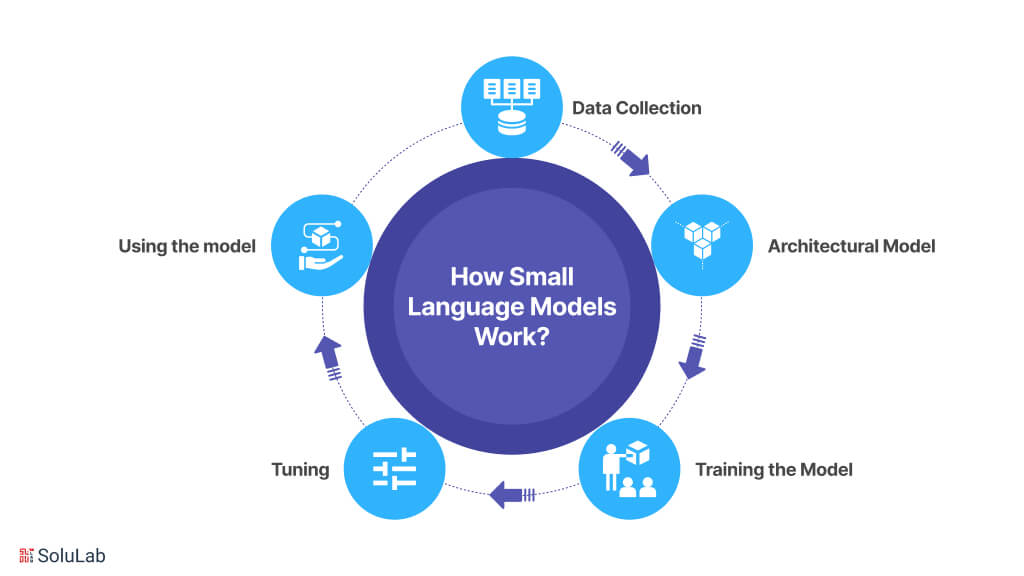
Now that you are aware of what is a small language model, know about how it works. The phases of Small Language Models’ creation can be decomposed as follows:

1. Data Collection

  • The very first step to developing an SLM is to generate and collect a large dataset containing textual information. This data may be obtained from various places like source code repositories, online forums, books, new articles, etc.
  • The data is pre-processed to ensure it is quality and consistent. This may involve cleaning the content of such extraneous information as formatting codes or punctuation.

 2. Architectural Model

  • Deep learning architecture, normally a neural network, is what forms the backbone for an SLM. This network shall process the data through the layers of artificial neurons interconnected with each other.
  • SLMs are simpler models with fewer layers and parameters, which makes them learn faster and more efficiently.

Read Blog: AI in Architecture: Transforming Design & Construction

3. Training the Model

  • Training is a process where the prepared text data is fed into the SLM. During its training process, the model learns the relationships and patterns in the data.
  • The methodology the model uses is what might be called “statistical language modeling.” It guesses the next word in a sequence based on that which has come before.
  • The model sees how good it is at these predictions as it keeps training. This feedback makes it easier for it to adjust its internal parameters and improve its accuracy over time.

4. Tuning (Optional)

  • Although they can initially be trained to acquire broad language competence, SLMs can later be fine-tuned for specialized tasks.
  • Fine-tuning is when a previously trained model is trained on a domain-specific dataset—in other words, data from an area like health care or finance. Because it focuses on this domain-specific knowledge, the SLM has a chance to master that particular domain.

5. Using the model

  • This way, the SLM is functional after it has been trained or calibrated. In interacting with it, users can input text into the model, such as a question, a sentence that has to be translated, or a passage of text that has to be summarized.
  • The SLM evaluates such input against its learned experience and returns an appropriate response.

Benefits of Small Language Models 

Although small language models look pretty tiny compared to their bigger counterparts, they have many advantages. Here are the reasons that make SLMs increasingly popular in the AI space:

1. Efficiency 

Small Language Models are much more efficient when it comes to computational resources and memory usage than large models. They do not require much processing power, storage, or energy to run which makes them a more suitable choice for deployment on devices that are resources-constrained like smartphones. 

2. Speed 

With the small size and simple designs, small large language models can perform tasks at a much faster pace than large language models. This speed is specifically beneficial in applications where real-time responses are essential like chatbots.

3. Privacy

It is easier to train small language models than large vision models and deploy them locally on devices, which reduces the need to send sensitive data to remote servers. This approach not only enhances privacy by keeping users’ data under control but also minimizes the risk of unauthorized access and data breaches.

4. Customization

These small models are more prone to customization for specific domains and use cases than LLMs. Their smaller size makes it possible to fine-tune fast for specific data and enables the creation of tailored models for the needs of individual industries and uses.

Use Cases of Small Language Models

Here is a breakdown of some notable small language model use cases:

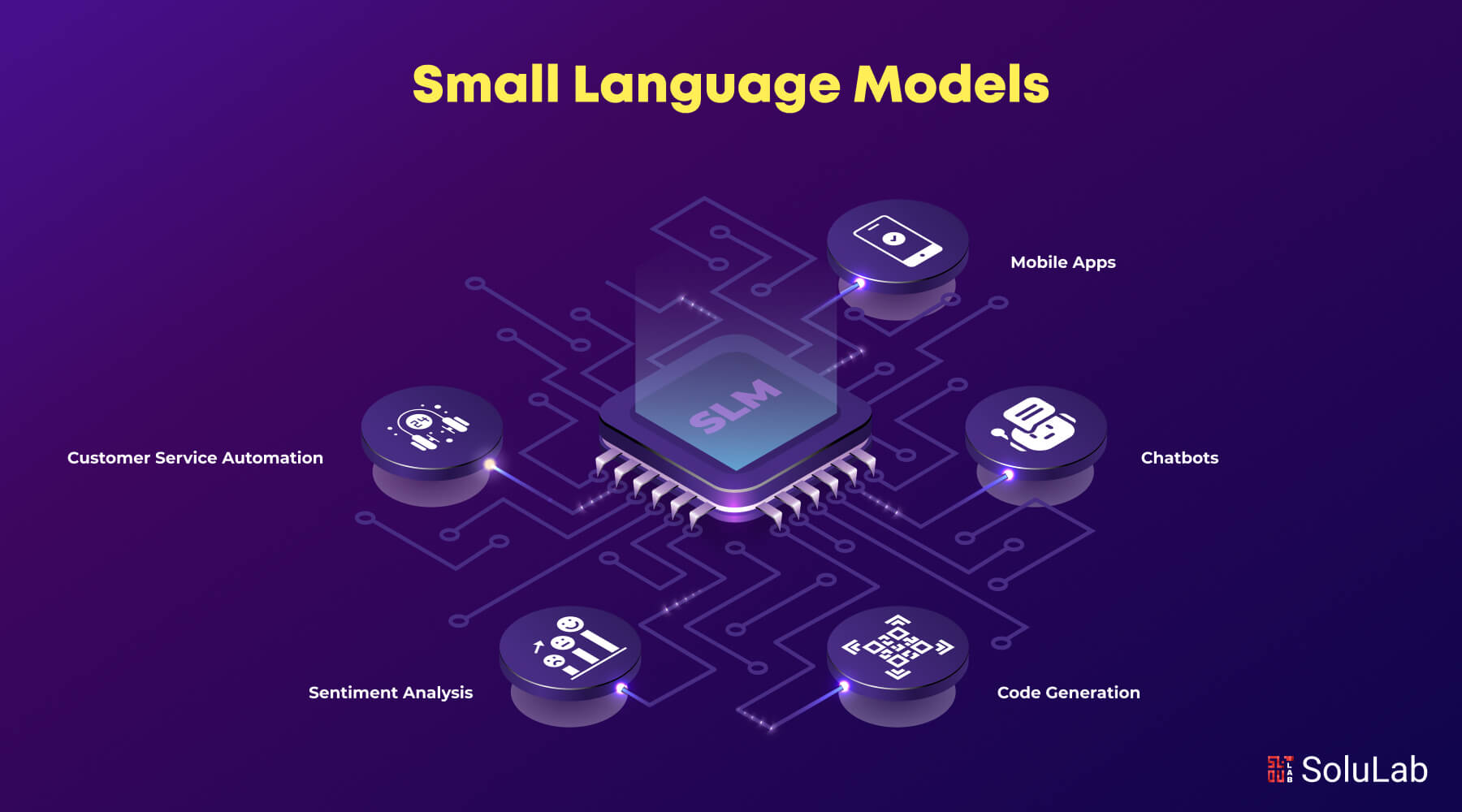
1. Mobile Apps

Models like MobileBert assist developers with integrating natural language processing features like text summarization and answering questions directly from mobile apps. This also allows more efficient real-time interactions without compromising user experiences.

2. ChatBot

SLM models are used to power virtual assistants by providing quick and accurate responses to user queries. Their efficiency and speed make them suitable for handling tasks like customer support to enhance user engagement. 

Check Out Our Blog: AI use cases and Applications in Key Industries

3. Code Generation

Small Language Models can help developers generate code snippets that are based on natural language descriptions. This ability to streamline the coding process allows programmers to rapidly prototype features and automate repetitive tasks to increase productivity. 

4. Sentiment Analysis

The small LLM model is effective for the analysis of sentiments on social media monitoring customer feedback. They can quickly analyze text data to determine public sentiments, aiding businesses in making informed decisions on user opinions. 

5. Customer Service Automation

The small LLM models are effective for automating customer service interactions, which enables businesses to handle inquiries and support requests without human intervention. By giving accurate results and outcomes these models also improve response time for customer satisfaction.  

LLM vs SLM: Key Differences 

The field of Artificial Intelligence is dominated by two popular language models: Large Language Models and Small Language Models. While they are both concerned with language processing, they do so differently:

  • Computational Requirements

Champions of the resource! Since SLMs are smaller, they run and require less data and less processing power. Thereby, it makes them quite perfect for resource-constrained settings. On the other hand, LLMs are very famished for data and processing power; large-scale training datasets and costly hardware are frequently called for.

  • Dimension Count

Model Size and Training Speed: Because SLMs have fewer parameters to tune, model size is smaller, and train times are faster. Because of their size, LLMs need more substantial amounts of data and greater processing power, translating to longer training times.

  • Real-World Applications

Observe what is being done! SLMs’ efficiency makes them excellent at on-device AI. Consider AI-powered chatbots that could answer simple queries or real-time translation on your phone. Because they are narrow in their scope of knowledge, LLMs excel at tasks such as generating new forms of text or complex analysis, which typically is handled in the cloud.

  • Performance Trade-Off

While SLMs are fast and efficient, they may not offer the same level of accuracy or degree of fine-grained understanding achieved by LLMs. Although resource-intensive, LLMs can still provide very good performance due to their broad coverage.

LLM Development Company

Conclusion

SLMs and LLMs each occupy a special niche in this very exciting area of language models. ExPEC both these models should become more sophisticated as AI grows further in the future. SLMs may continue to become more efficient, leading to seamless on-device AI experiences and even more deeply integrated into our daily lives. On the other hand, LLMs would keep pushing beyond the limits posed in language generation and comprehension with improved training methodologies, finding new applications across a wide array of domains has been made possible with LLM Development Company.

The choice between SLM vs LLM lies in the specific needs of the project. SLMs provide results that work in activities that need on-device processing and are power-efficient. If the crucial aspects are depth analysis and complexity, then it would be recommended to approach with LLMs.

At SoluLab, we are dedicated to helping enterprises tap into the power of artificial intelligence. Whether you need SLMs to enhance your processes or want to benefit from LLMs for a myriad of cutting-edge applications, our experts are here to help you choose the most appropriate language model for your needs. Contact now and discover more about how AI can revolutionize your business!

FAQs

1. SMLs or LLMs: which one is more accurate?

Due to their complex architecture and greater knowledge base, LLMs are usually more accurate. Conversely, an SML with sufficient training may be more effective and turn out results comparable for some jobs.

2. Can I run an SML on my phone?

SMLs are indeed perfect for on-device processing because they are small and less resource-intensive. Indeed, they would be very suitable for text summary functions on smartphones, simple chatbots, and language translation.

3. What are some real-world applications of SML?

SLMs already find their place in several applications: from text summarization functions on smartphones to basic question-answering chatbots, and on-device language translation.

4. Is the bigger model always better?

Well, not necessarily! Where LLMs master the complex tasks, at times their resource requirements might become a barrier. SLMs are suited to a large number of use cases that need on-device processing or faster development cycles—strik­ing a balance between efficiency and capability.

5. How can I take advantage of SoluLab to get the most out of language models?

SoluLab is your one-stop marketplace for all AI needs! Whether it is an efficient SML or a powerful LLM, our experts are there to guide you through the world of language models, evaluate your requirements, and advise you accordingly on the best course of action. We even develop and implement to ensure you can harness the full potential of AI for your business. Discuss your AI journey with SoluLab now.

Large Vision Models(LVMs): Examples, Use Cases & Challenges

Guide to Large Vision Models

In the era of rapid technological evolution, the transformative power of artificial intelligence (AI) has taken center stage, with large vision models emerging as pioneers in reshaping various industries. These advanced AI systems, meticulously designed for deciphering and interpreting visual data, are at the forefront of a paradigm shift, ushering in a new era of efficiency, precision, and innovation.

Our blog aims to delve into the realm of large vision models, providing a comprehensive exploration of their definition, significance, and the profound influence they exert across diverse sectors. As we embark on this journey, we’ll unravel the intricacies of these sophisticated neural networks, emphasizing their vast scale and intricate architectures.

From healthcare to manufacturing, finance to entertainment, large vision models have become indispensable assets, driving unprecedented advancements in decision-making, automation, and problem-solving. The intricate dance between technology and real-world applications is reshaping how we perceive and interact with the world around us.

Join us as we navigate through the multifaceted landscape of large vision models, uncovering their pivotal role in revolutionizing industries and gaining insights into the limitless possibilities they unlock. As we peer into the future, it becomes clear that the impact of these intelligent systems extends far beyond mere automation – they are catalysts for innovation, efficiency, and a future where the synergy between artificial intelligence and human ingenuity knows no bounds.

What are Large Vision Models?

Large vision models refer to advanced artificial intelligence (AI) systems specifically designed for processing and interpreting visual information. These models are typically based on deep learning architectures and are trained on vast datasets to acquire the ability to understand and analyze visual data. The term “large” emphasizes the substantial size and complexity of these models, often measured in terms of the number of parameters.

These models are a subset of the broader category of artificial neural networks and are specifically tailored to excel at tasks related to computer vision. Computer vision models involve the use of AI to enable machines to interpret and make decisions based on visual data, such as images and videos.

Use Cases Of Large Vision Models in Various Industries

Large vision models use cases for transformative change across a spectrum of industries, each reaping unique benefits from the advanced capabilities these models bring to the table.

  • Healthcare

Large vision models are revolutionizing healthcare by enhancing diagnostic accuracy through image analysis. From identifying anomalies in medical imaging to predicting disease progression, these models assist healthcare professionals in making informed decisions, leading to improved patient outcomes and personalized treatment plans.

Read Blog: AI Agents in Healthcare

  • Automotive

In the automotive sector, large vision models play a pivotal role in enabling autonomous vehicles. These models process vast amounts of visual data from sensors, ensuring precise navigation, object recognition, and real-time decision-making. This not only enhances road safety but also propels the automotive industry into the future of smart and self-driving vehicles.

  • Manufacturing

Large vision models are employed in manufacturing for quality control and optimization. They can swiftly detect defects in production lines, ensuring the delivery of high-quality products. Additionally, these models contribute to process efficiency by monitoring and analyzing visual data, leading to streamlined manufacturing processes.

Related: Generative AI in the Manufacturing

  • Retail

Retailers leverage large vision models, or computer vision in retail, for customer analytics, enabling personalized marketing strategies.These models analyze customer behavior, preferences, and demographics from visual data, facilitating targeted advertising and improving the overall shopping experience. Inventory management also benefits from these models, ensuring optimal stock levels and reducing losses.

  • Agriculture

Agriculture benefits from large vision models through precision farming. These models analyze visual data from drones and satellites to monitor crop health, predict yields, and identify potential issues like pests or diseases. This data-driven approach optimizes agricultural practices, improving crop yields and sustainability.

  • Entertainment

Large vision models are reshaping the entertainment industry by powering content recommendation systems. By analyzing user interactions with visual content, these models personalize recommendations, keeping audiences engaged. They also contribute to video and image editing automation, bringing efficiency to content creation processes.

CTA1

  • Security and Surveillance

Enhanced security and surveillance owe much to large vision models. These models excel in object detection and tracking, bolstering security measures in public spaces and critical infrastructure. Their ability to detect anomalies aids in proactive threat prevention, making them indispensable in safeguarding communities.

  • Finance

In the financial sector, large vision models are instrumental in fraud detection. They analyze patterns and anomalies in visual data, identifying suspicious activities and mitigating risks. Moreover, these models streamline document processing, automating tasks such as document verification and data extraction, and enhancing operational efficiency.

Read Also: AI in Finance

  • Education

The education sector utilizes large vision models for automated grading and assessment of visual content. These models analyze student responses, providing timely and objective feedback. Customized learning experiences are facilitated through adaptive learning platforms that tailor content based on individual student interactions, fostering a more personalized education journey.

In essence, the importance of large vision models in various industries lies in their capacity to elevate efficiency, accuracy, and innovation, thereby reshaping the way businesses operate and deliver value in an increasingly digital and interconnected world.

Examples of Large Vision Models (LVMs)

Examples of Large Vision Models (LVMs)

Explore a glimpse into the realm of Large Vision Models (LVMs) and their diverse capabilities:

  • CLIP (Contrastive Language-Image Pretraining): Developed by OpenAI, CLIP represents a groundbreaking vision-language model meticulously trained to comprehend images in tandem with natural language. This sophisticated model finds applications in image captioning, visual question answering, and image retrieval. 
  • Google’s Vision Transformer (ViT): Referred to as ViT, Google’s Vision Transformer is tailored for image classification, employing a unique Transformer-like architecture that operates on patches of the image. ViT has garnered acclaim for achieving state-of-the-art results across various image classification benchmarks.
  • LandingLens™: A revolutionary platform crafted by LandingAI, LandingLens™ democratizes computer vision models by empowering users without prior coding experience. This intuitive platform offers a user-friendly interface for tasks such as image labeling, model training, and seamless deployment to both cloud and edge devices.
  • SWIN Transformer: The SWIN Transformer presents a hierarchical design for visual recognition tasks. With success in image classification and object detection, SWIN utilizes hierarchical representations, showcasing its versatility in handling complex visual information.

These examples underscore the diverse applications of Large Image Models, showcasing their ability to bridge the gap between language and images, optimize image classification, and democratize computer vision projects for users across different expertise levels.

Related: AI Use Cases and Applications in Key Industries

Distinctive Features of Large Vision Models: Parameters and Scale

Large vision models in AI stand out in the realm of artificial intelligence (AI) due to their distinctive features, and among these, the sheer scale of parameters is a key distinguishing factor. As we delve into this aspect, it becomes evident that the size and complexity of these models contribute significantly to their effectiveness and versatility.

Parameters: The Driving Force Behind Large Vision Models

  • Unprecedented Scale: Large vision models are characterized by an immense number of parameters, surpassing the scale of their predecessors. These parameters are the internal variables that the model adjusts during training, enabling it to capture intricate patterns and nuances within visual data.
  • Deep Architectures: These models often adopt deep neural network architectures, comprising multiple layers of interconnected nodes. The depth of these architectures allows the model to learn hierarchical representations, from simple features to more abstract and complex concepts, enabling a nuanced understanding of visual information.
  • Learned Representations: The expansive parameter space allows large vision models to learn rich and diverse representations of visual data. This is especially crucial in tasks like image recognition, where the model can discern intricate details and subtle variations, leading to improved accuracy and robustness.
  • Transfer Learning Capabilities: Large vision models excel in transfer learning, a technique where a pre-trained model on a massive dataset can be fine-tuned for specific tasks with relatively smaller datasets. This adaptability makes them versatile across various applications, from medical image analysis to industrial quality control.

Scale: Beyond the Numbers

  • Massive Datasets: Large vision models in AI thrive on extensive training datasets that encompass a vast array of visual information. The scale of these datasets contributes to the model’s ability to generalize well to diverse scenarios, ensuring robust performance in real-world applications.
  • Computational Intensity: The training process for large vision models is computationally intensive, often requiring powerful hardware accelerators like GPUs (Graphics Processing Units) or TPUs (Tensor Processing Units). The scale of computation involved is a testament to the complexity of the models and the depth of the learning they undergo.
  • Real-Time Inference Challenges: While the training phase benefits from ample computational resources, the scale of these models poses challenges during real-time inference, especially in resource-constrained environments. Optimizing for deployment on edge devices becomes a critical consideration.
  • Interconnectedness of Parameters: The intricate web of parameters in Large Image Models contributes to their interconnectedness. This interconnected nature allows the model to grasp complex relationships within visual data, facilitating tasks such as object detection, segmentation, and image understanding.

In summary, the distinctive features of large vision models, particularly their scale and parameters, showcase the strides made in the field of AI. These models, characterized by their vast parameter space and computational demands, embody the pinnacle of current technological capabilities, enabling them to excel in understanding and interpreting visual information with unprecedented accuracy and depth.

Key Capabilities of Large Vision Models

Large vision models, distinguished by their expansive architectures and sophisticated training, possess a diverse set of capabilities that extend far beyond simple image analysis. Let’s explore the key functionalities that make these models integral components of AI advancements.

Image Recognition

Large vision models in AI excel in the realm of image recognition, demonstrating a remarkable ability to identify and classify objects within visual data. Through their extensive training on massive datasets, these models can recognize patterns, shapes, and features with a level of accuracy that transcends conventional image processing techniques.

  • Pattern Recognition: Large vision models can discern intricate patterns within images, enabling them to recognize objects with diverse shapes and structures.
  • Contextual Understanding: The models leverage their extensive training to understand the contextual significance of objects, enhancing their capacity to recognize and classify entities within complex scenes.

Object Detection

One of the standout capabilities of large vision models is their prowess in object detection. By breaking down images into constituent elements, these models can precisely locate and identify multiple objects within a given scene.

  • Bounding Box Prediction: Large vision models employ bounding boxes to precisely delineate the location of objects in an image, offering a detailed understanding of spatial relationships.
  • Multi-Object Recognition: The models can simultaneously detect and classify multiple objects within a single image, making them invaluable in scenarios where diverse elements coexist.

Image Captioning

Large vision models go beyond static image analysis by venturing into the realm of natural language understanding. Image captioning is a testament to their capacity to generate textual descriptions based on visual input.

  • Semantic Description: These models generate meaningful and contextually relevant descriptions, showcasing their understanding of the semantic content within images.
  • Multimodal Fusion: The integration of visual and textual information demonstrates the models’ ability to fuse different modalities, paving the way for more comprehensive and human-like interactions.

Visual Question Answering

The fusion of vision and language is a defining characteristic of large vision models, as evidenced by their capability to answer questions related to visual content.

  • Contextual Reasoning: Large vision models can infer answers by considering both the visual context and the textual question, showcasing their capacity for nuanced reasoning.
  • Multimodal Understanding: The integration of vision and language enables these models to provide informative and relevant answers to a wide array of visual queries.

Related: Large Language Models Use Cases and Applications

Customization and Accessibility

Large vision models contribute to democratizing large computer vision models by offering customization options and user-friendly interfaces, making AI more accessible to individuals with varying levels of expertise.

  • User-Friendly Interfaces: Platform like LandingLens™ provide intuitive interfaces that empower users, even those without coding experience, to create custom large computer vision models.
  • Accessible Training: Large vision models facilitate the training of custom models, allowing users to tailor AI solutions to specific needs and applications, thereby expanding the accessibility of AI technology.

In essence, the key capabilities of large vision models underscore their adaptability and multifaceted nature, positioning them as invaluable tools in solving complex problems across diverse domains in the ever-evolving landscape of AI.

Applications of Large Vision Models

Applications of Large Vision Models

Large vision models use cases have revolutionized the field of artificial intelligence, paving the way for a myriad of applications that span industries and domains. Their ability to comprehend and interpret visual information with remarkable accuracy has ushered in a new era of automation and innovation. Here, we delve into some of the key applications where these models are making a profound impact:

A. Image Classification

Image classification stands as one of the foundational applications of large vision models. These models, often based on Convolutional Neural Networks (CNNs), have demonstrated exceptional prowess in categorizing images across a vast spectrum. From identifying objects and scenes to recognizing complex patterns, image classification is employed in various sectors such as healthcare for medical image analysis, in manufacturing for quality control, and in e-commerce for visual search functionalities. Large vision models enable machines to emulate human-like visual perception, facilitating accurate and rapid decision-making based on visual input.

B. Object Detection

In the realm of object detection, large vision models showcase their versatility by precisely locating and delineating multiple objects within images or video streams. Applications of object detection are manifold and extend to fields like surveillance, where it enhances security through the identification of suspicious activities, and in autonomous vehicles, enabling them to navigate and interact with their surroundings. Retail industries leverage object detection for inventory management and the improvement of customer experiences through automated checkout processes.

C. Image Generation

The capability of large vision models in image generation has opened up creative possibilities in various domains. Generative AI models, such as Generative Adversarial Networks (GANs), leverage the knowledge acquired from extensive datasets to create new, realistic images. This application finds use in the creative arts, design, and entertainment industries. From generating artwork to producing synthetic visual content, large vision models contribute to the creation of novel and visually appealing material.

D. Transfer Learning

Transfer learning represents a paradigm shift in the application of large vision models, allowing the transfer of knowledge gained from one task to another. By leveraging pre-trained models, often trained on massive datasets, developers can adapt these models for specific applications with limited labeled data. This versatility makes transfer learning a powerful tool across domains, from healthcare and finance to natural language processing. Large vision models, acting as knowledge repositories, expedite the development of tailored solutions by capitalizing on their pre-existing understanding of visual data.

In each of these applications, large vision models showcase their transformative potential, fundamentally altering how machines perceive and interact with the visual world. As these models continue to evolve, their impact on industries and daily life is poised to deepen, driving advancements in automation, decision support systems, and creative endeavors.

Challenges in Developing Large-Vision Models

The development of large vision models in AI has undoubtedly propelled the capabilities of artificial intelligence, but this progress is not without its set of challenges. Navigating these hurdles is crucial to harnessing the full potential of these sophisticated systems.

A. Computational Resources

Building and training Large Language Models in AI demand substantial computational resources. The sheer scale and complexity of these models, often comprising millions or even billions of parameters, necessitate robust hardware accelerators like Graphics Processing Units (GPUs) or specialized Tensor Processing Units (TPUs). Access to such high-performance computing infrastructure poses a significant challenge, especially for smaller organizations or researchers with limited resources. The computational demands extend not only to training but also to the deployment and inference phases, requiring ongoing investments in infrastructure.

B. Data Privacy and Ethical Concerns

The utilization of large vision models in AI raises critical data privacy and ethical concerns. Training these models involves massive datasets that may contain sensitive information. Ensuring the responsible and ethical use of such data is paramount. The risk of unintentionally incorporating biases present in the training data adds an additional layer of complexity. Striking a balance between leveraging diverse datasets for model improvement and safeguarding individual privacy requires robust data governance frameworks, ethical guidelines, and transparent practices throughout the model development lifecycle.

C. Bias and Fairness Issues

Bias and fairness issues represent a persistent challenge in the development of large vision models in AI. These models learn from diverse datasets, and if these datasets are not carefully curated, they may perpetuate and even exacerbate existing biases present in the data. This can lead to discriminatory outcomes in the model’s predictions or decisions. Mitigating bias and ensuring fairness necessitate a proactive approach, involving thorough examination and curation of training data, continual monitoring of model outputs, and the implementation of fairness-aware algorithms. Addressing bias is not only an ethical imperative but also crucial for building trust in AI systems.

In addressing these challenges associated with large vision models in AI, the field stands to achieve not only technical advancements but also the development of responsible, ethical, and unbiased AI systems. As these models continue to evolve, a holistic approach that considers both technological and ethical dimensions will be essential to unlock their full potential for positive societal impact.

Future Trends in Large Vision Models

Future Trends in Large Vision Models

As we peer into the future, the trajectory of large vision models in AI holds promise for groundbreaking advancements, influencing not only the technical landscape but also reshaping the way industries operate.

A. Ongoing Research and Development

Ongoing research and developments in the realm of large vision models promise to push the boundaries of what’s achievable. Researchers are actively exploring novel architectures, optimization techniques, and training methodologies to enhance the efficiency and performance of these models. Continued efforts in addressing challenges such as model interpretability, reducing computational requirements, and developing more energy-efficient solutions are likely to drive the evolution of large vision models. The exploration of unsupervised and self-supervised learning methods is expected to broaden the applicability of these models across domains with limited labeled data.

B. Integration with Other AI Technologies

The integration of large vision models with other AI technologies is set to create synergies that amplify the overall capabilities of artificial intelligence. Collaborations between large vision models and natural language processing (NLP) models, for example, could lead to more comprehensive AI systems capable of understanding and generating both visual and textual information. Additionally, the fusion of large vision models with reinforcement learning techniques may pave the way for more advanced decision-making in dynamic and complex environments. The interdisciplinary integration of AI technologies holds the potential to create more versatile and context-aware systems.

C. Potential Impact on Various Industries

The potential impact of large vision models on various industries is poised to be transformative. In healthcare, these models may play a pivotal role in diagnostics, drug discovery, and personalized medicine, augmenting the capabilities of medical professionals. In manufacturing, large vision models could further enhance quality control processes, contributing to increased efficiency and reduced defects. The integration of these models in retail may revolutionize customer experiences through advanced recommendation systems and cashier-less checkout solutions. Moreover, the utilization of large vision models in autonomous vehicles could propel the development of safer and more reliable transportation systems.

The overarching theme is the democratization of AI capabilities across industries, empowering businesses and organizations to leverage large vision models for improved decision-making, automation, and innovation. The cross-pollination of ideas and technologies from ongoing research is likely to lead to solutions that are not only more powerful but also more accessible, driving a democratization of AI capabilities across industries. As large vision models continue to evolve, their seamless integration with other AI technologies and their positive impact on diverse sectors herald a future where AI becomes an integral part of our daily lives, making tasks smarter, more efficient, and increasingly tailored to individual needs.

CTA2

Conclusion

In conclusion, the trajectory of large vision models in artificial intelligence is nothing short of remarkable. From redefining image classification to influencing the ethical dimensions of AI, these models have become pivotal players in the technological landscape. As we embrace the ongoing research, anticipate interdisciplinary collaborations, and foresee the transformative impact on various industries, it becomes evident that large vision models are not just a tools; they represent a paradigm shift in how we approach and leverage artificial intelligence.

As we stand on the cusp of this AI revolution, organizations aiming to harness the potential of large vision models need a strategic partner that understands the nuances of this rapidly evolving field. SoluLab, a well-known LLM development company, with its expertise in great technologies, stands poised to assist businesses in navigating the complexities of large vision models. From conceptualizing and developing custom AI solutions to addressing ethical considerations and ensuring responsible AI deployment, SoluLab is committed to being at the forefront of this technological evolution. By combining innovative solutions with a client-centric approach, SoluLab empowers businesses to not only adopt large vision models seamlessly but also to stay ahead in the dynamic landscape of artificial intelligence.

FAQs

1. What distinguishes large vision models from traditional computer vision techniques?

Large vision models differ from traditional computer vision techniques in their scale and complexity. While traditional methods often rely on handcrafted features and algorithms, large vision models, such as deep neural networks, learn hierarchical representations directly from data, allowing them to capture intricate patterns and features.

2. How do large vision models handle bias in their predictions?

Addressing bias in large vision models is an ongoing challenge. To mitigate bias, careful curation of training data is essential, including the identification and removal of biased samples. Additionally, employing fairness-aware algorithms and conducting regular audits of model outputs can help identify and rectify biases, promoting more equitable predictions.

3. What are the computational requirements for training large vision models?

Training large vision models demands significant computational resources, often relying on high-performance hardware like GPUs or TPUs. The computational requirements can be a challenge for smaller organizations. Cloud-based solutions and distributed computing frameworks are commonly used to alleviate these challenges and make large-scale model training more accessible.

4. Can large vision models be applied to industries beyond healthcare and manufacturing?

Absolutely. Large vision models have versatile applications across various industries. From enhancing customer experiences in retail to optimizing logistics and decision-making in finance, the adaptability of these models allows them to play a transformative role in diverse sectors.

5. How can SoluLab assist businesses in adopting large vision models?

SoluLab is equipped to guide businesses through the adoption of large vision models. Our expertise encompasses custom AI solution development, addressing ethical considerations, and ensuring responsible AI deployment. With a client-centric approach, SoluLab empowers businesses to seamlessly integrate large vision models into their operations, staying at the forefront of AI advancements.

6. Are there any emerging trends in large vision models that businesses should watch for?

Yes, ongoing research is exploring novel architectures and integration with other AI technologies. Businesses should stay attentive to advancements in unsupervised learning, interdisciplinary collaborations, and applications in areas like natural language processing. SoluLab, with its commitment to staying ahead in technology, can help businesses leverage these emerging trends for strategic advantages.