Talk to an Expert

How Blockchain Is Transforming The Nursing Profession

In their list of 100 Best Jobs for 2019, US News ranks nursing seventh. Being a nurse pays well, and provides great opportunities for gaining highly advanced knowledge while also helping people in need a long the way.

Still, it doesn’t take away the fact that the industry is in dire need of more personnel. Becker’s Hospital Review reveals that 72% of chief nursing officers recognize that their organization is understaffed. To compensate for the shortage, nurses tend to work longer shifts, which then causes a whole host of other problems. Long hours in a high-stress environment results in faster burnout. It could cause nurses to quit their jobs, which exacerbates the understaffing issue. This doesn’t even take into consideration the danger of having highly fatigued nurses on the job. They might make errors that could affect patients.

Advancements in technology strive to find new solutions to these problems. Maryville University cited a study titled ‘The Future of Nursing’, which tackles the increasingly complex healthcare system. Incorporating new technologies like blockchain is a main component of this progression. The distributed ledger technology could be an opportunity for efficiency and accountability in the healthcare industry.

Here are some ways in which blockchain could improve the nursing profession both for healthcare providers and patients:

Patient Health Records

A team of researchers led by Ann Hendrich found that nurses dedicate a large portion of their time to patient documentation and other administrative work. This means less time spent on more pressing tasks like delivering medication and assisting doctors in procedures.

Their findings are in line with issues in aggregating and managing patient data that are highlighted on Health Tech Magazine. If patient data was pooled together in blockchain ledgers, nurses will have more time to spend on administering care. The secure chain of data blocks might also help in authenticating information in order to avoid identity fraud.

On the patient side, a blockchain application can help them access and manage their own health data. This makes patients accountable for the choices they make in relation to preventive and long-term health care. Here on SoluLab we have already talked about startups which are working on this idea. The Atlanta-based Patientory, for instance, aims to provide a secure platform where health data is stored and readily available for patients as well as nurses. The application also tracks other patient information such as doctor visits, medical bills and insurance.

Payments Process

Blockchain can make payments more efficient as well. Open Access Government suggests redesigning the way people pay for healthcare from “fee-for-service payments towards value-based reimbursement models that prioritize quality outcomes of the continuity of care.” It makes more sense for patients with chronic illnesses to lump together expenses related to their condition (medication, doctor’s fee, treatment, therapy) into one payment instead of paying for them on a service basis. A more efficient payment system will also help nurses who have to prepare paperwork for the billing department day in and day out. Blockchain can support these processes through creating new payment schemes.

Open Medical Research

Medical data is often restricted within a medical institution because of confidentiality. But for the nursing body of knowledge to grow, it needs to start moving towards improving open data for scientific purposes. Blockchain presents a channel where different teams can access information securely, even simultaneously.

A newly launched UK-based application seeks to aid in this process. Medichain is a platform that connects patients looking to sell anonymized versions of their data to various researchers and companies. While it currently operates by incentivizing data sharing for commercial purposes, it’s still a step in the right direction.

More extreme advocates of the integration of blockchain in nursing envision a “decentralized autonomous organization” (DAO) for the profession. Cyrus Maaghul of healthcare platform PointNurse explains that this DAO can be used not just for sharing research findings, but also for records regarding malpractice cases.

In a previous article, we discussed different business models for healthcare blockchain. Those models, alongside the points above, prove that there are a number of cases in which blockchain can be applied to the nursing industry.

Given all these cases, it might be easier to start with one issue in the healthcare system that blockchain could solve, and grow from there. This major transformation requires small steps with lots of learning in between.

Bio:
Jam Burton is a freelance writer with a specific interest in business and technology. When she is not writing, she often goes to tech conferences. She is currently working on a startup related to improving pharmacy services.

Quick Read: What is Interoperability Blockchain – The Next Revolution In Blockchain!
A Beginners Guide To Blockchain-based Wallet And How Do They Work

It’s not so long when we got introduced to cryptocurrencies like Bitcoin, Ethereum, and Ripple. They were the talk of the town even before the people had a proper knowledge about it. The concept of blockchain wallets is still not known by many of us. Both of them are linked and interdependent but different. It is important to understand both the terms to get started working with digital currencies and its investments.  

digital wallet


BLOCKCHAIN WALLETS

Most of us know that blockchain technology is an encrypted system that helps in protecting the information from the third party. In the same way, digital currencies need protection too just like our money in our accounts. Cryptocurrencies cannot make transactions like sell, buy, exchange through normal bank accounts, therefore, it needs blockchain wallets to go ahead with the transactions.

Blockchain wallet is just like a digital wallet, only the difference is that the transactions are made by buying/selling the cryptocurrencies and not with actual money in our banks or wallets. Just like digital wallets give access to make transactions using the money in our banks, the blockchain wallets help to make the transaction through cryptocurrency.  

In simple words, blockchain wallets are needed for making the transactions using cryptocurrencies. Blockchain wallets do not save the information of cryptocurrencies, they record and keep a track of all the transaction of cryptocurrencies like buying, sell, exchange.

HOW BLOCKCHAIN WALLETS WORK?

Blockchain wallets or Cryptocurrency wallets work on a system which stores private and public keys, this system enables the users to make safe and validated transactions while buying, selling, exchanging one or multiple cryptocurrencies.

As mentioned above, blockchain wallets do not save cryptocurrencies. So, the question arises that how are transactions made, and how are cryptocurrencies are sent?

Blockchain wallets save the private and public keys which help in the interaction and exchange of the cryptocurrencies. When one user sends the cryptocurrency, it has a public key assigned and to buy the cryptocurrency, both public and private key(assigned to a specific user) has to match. When both the keys matches, the amount is added from one user and gets deducted from another. Obviously, there is no actual exchange of money or coins are involved. The transaction is visible just in the wallets of the specific users/buyer/seller.

Read more -:  Bitcoins are an acceptable mode of payment….where?

TYPES OF WALLETS

Software Wallets:

Software wallets are the downloadable or accessible systems which can be used through various devices depending on the type for which each one is made for. The software can be used on laptops, desktops, mobile phones depending upon the type of wallet.

Software wallets are further divided into 3 categories:

  • Desktop:

FEATURE: Through desktops, the software could be downloaded or accessed online and can only be used through the device it is installed on and cannot be used on any other device. If a user is looking for stable and not so often used wallets, then this is the most suitable one.

DRAWBACK: Many times, a virus enters the desktop system which might be hazardous to the information and funds.

  • Online

FEATURE: These are available on the web browser and so, are available on all types of devices like desktop, laptop, and mobile phones.

DRAWBACK: The private keys are saved online while using the software online which makes the information prone to be released to the third party, leading the information to a risk.

  • Mobile

FEATURE: Mobile makes the wallet accessible anytime, anywhere and also makes the fund transfer easy with the help of QR codes.

DRAWBACK: If our phone gets into the wrong hand, information could be revealed.

No wallets or transactions could lead to problems if one is attentive in using wallets and making the transactions. Safety measures are a must while making fund transfer in every case.

Hardware Wallets:

Hardware wallets are accessed through an offline process. The information and currencies are saved in a hardware device like USB. To access these wallets and use them to make transactions, one has to connect to the internet and enter the pin. This is the safest form of wallets as all the information is saved offline and is not prone to any unsafe activities on the internet.

Paper Wallets:

Paper wallets are usually used along with the software wallets. Paper wallets are used by generating a pair of key(public or private) from a software application which is then gets printed onto a paper to make the transaction possible. The currency has to be transferred to public address on paper after which when funds are needed to be unlocked, the currency is transferred from paper to software wallet, the process generally known as sweeping. This can be done either by scanning the QR codes or by adding the keys manually.


Read more – How to use blockchain and cryptos to improve dental practice?

HOW TO GET A CRYPTO WALLET AND SECURE IT?

One of the most famous and easy place to acquire crypto wallets are the web browsers and app stores. Also, there are many online stores known for providing crypto wallets. Myetherwallet.com, IMtoken, Gnosis, MyTrezor, Crowdwiz are some of the famous and most used digital wallets.

Keeping a check on the walletes and securing them depends upon its type and service providers. It has been observed that offline wallets are comparatively more secure than online wallets. But it has also been increasingly implemented the ways to secure the online wallets. the most important part to secure each type of wallets are the keys, as if you lose it your coins are prone to be lost easily. Some precautions to be taken to keep your wallet scures are:

  • Software should be updated timely without any delays.
  • Additional keys should be added for unbreakable security passwords.
  • Wallet should be regularly updated.  

In the trend where cryptocurrencies are on a hype, it is important to understand about the wallets thoroughly. There are various crypto wallets used by people like coinbase, trezor, electrum etc. With these wallets getting too much into fashions there are various blockchain development companies bridging a way to successful digital currency transactions. It is a way of investing money in a platform and earning thereafter.    

No doubt, the blockchain-based wallets aka digital wallets are about to change customer’s online shopping experience forever!

Hire the Best Remote Blockchain Developers for Your Startup

Websites to Hire Remote Blockchain Developers

The number of jobs in the blockchain industry has increased significantly in recent years. Are you curious about the questions and data surrounding hiring remote blockchain developers? Well, then you are at the right place! Finding and hiring a qualified and experienced Blockchain development company is highly challenging because there are still relatively few blockchain developers worldwide. Additionally, there are a lot of phony remote blockchain developers and experts in blockchain technology. 

Did you know that around 300 million people around the world are constantly using blockchain and over 850 million people are using blockchain wallets? 

Businesses seeking for hiring freelance blockchain developers now need more support due to increased demand for professionals and limited supply. These obstacles include competition for top talent and higher remote blockchain developer prices. 

Hiring Freelance Blockchain Developers  

Hiring remote developers not only helps you save on your expenses but also gives you the opportunity to tap into a larger skill pool at lower costs. To simplify the process further, many businesses now opt for Entity-free hiring for global teams, which enables seamless onboarding of remote blockchain developers worldwide without establishing a foreign legal entity. However, you can hire the best remote blockchain developers from SoluLab for blockchain and developers. Here are some of the other websites: 

  • Codementor.io

Codementor.io is not a freelance marketplace, it is a community for developers. It has a money-back guarantee because of the dedicated and professional hiring consultants it has and the fast hiring process. This is not true because the platform charges for this type of work are reflected in the fees freelancers offer to employers. The website currently only showcases a list of around 50 blockchain professionals out of more than 250000 engineers.

  • Xbtfreelancer

At present, the scope of the freelance marketplace of Xbtfreelancer.com is solely based on the blockchain. They accept the Bitcoin payment method and they boast of extensive screening of their talent. However, it has an extremely large reserve of 61,818 independent contractors, it’s not only developers. There are no charges to list a project on the website. However, to maintain the Bitcoin network the site uses a 60¢ charge for every transaction that takes place.

  • Crypto Jobs

This is a simple website where the users have several types of hiring freelance blockchain developers opportunities such as contract, part-time, internship, remote, and on-site among others. Also, you might add some equity to your offers list, as equity is also among the options for benefits. You have the option to post your job for free or promote your job for $199. Furthermore, customers of the portal receive a weekly newsletter that features the most attractive job vacancies.

  • Cryptojobslist

The website displays jobs that are technology and blockchain-based, with openings in engineering, marketing, trading, sales, and design among others. Real job offers go straight to potential candidates thanks to the resource’s helpful Telegram bot In the chosen package, the job posting cost is $99 or $199.

  • BeinCrypto

One of the examples of a blockchain job aggregator is BeinCrypto. It only has paid options, with the option for posting job listings at $149, which is different from the mentioned above boards. It is always fresh though, with 20 new jobs advertised every day on average.

  • Coinality

Originally launched for the blockchain industry, Coinality is now listing full-time, part-time, and freelance positions. To ensure all the jobs posted on Coinality meet the test of being genuine jobs, all the submitted jobs are screened by reasonably judicious individuals.

CTA1

Hiring with Staff Augmentation

When tech firms need to move fast to meet the demand for goods and reduce technical debt, or when their projects have short planning horizons, they use staff augmentation techniques. Many blockchain consulting company oversees contractors and has direct communication with them, just like when they hire distant in-house engineers. 

However, a quicker and more adaptable method of filling talent gaps is hiring contract blockchain developers. Unlike with in-house staff, organizations can focus on integrating engineers into the team and have nothing to worry about savings for the retirement of benefits packages. Companies can use SoluLab blockchain use cases to find remote contracts with blockchain technology experience. 

Major Roles Played By Blockchain Developers

Major Roles Played By Blockchain Developers

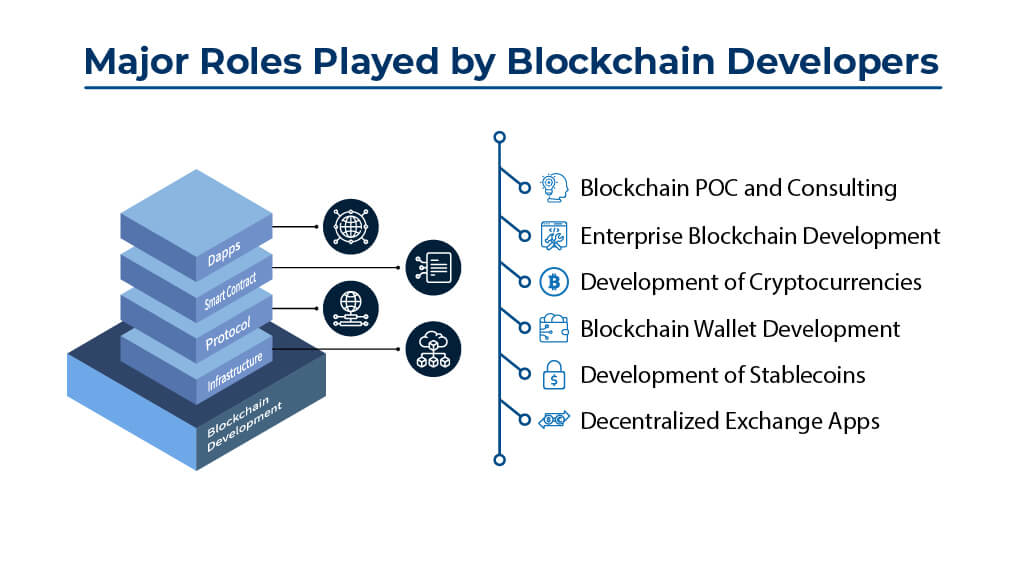
Smart contracts, stablecoins, blockchain wallet apps, and industry-specific dApps are just a few of the many blockchain applications that these blockchain developers and engineers are skilled at creating. Here are the major services offered by these Top blockchain development companies developers:

1. Blockchain POC and Consulting

Employ blockchain developers to handle anything from smart contract auditing to blockchain MVP development and integration with corporate operations. Before executing the proof of concept of your business use case, you can increase your productivity and operational effectiveness. 

2. Enterprise Blockchain Development

Developing enterprise blockchain development involves designing decentralized business applications, these developers are well-versed in the underlying, protocols, and features of a wide range of cryptocurrencies. With proper experience, they have the ability to create scalable, safe solutions for improving performance.  

3. Development of Cryptocurrencies

Blockchain developers are well-versed in the language and workings of cryptocurrencies, which allows them to design customized solutions for a wide range of virtual currencies that improve user experiences and satisfy certain business objectives. 

4. Blockchain Wallet Development

With hardware and non-custodial wallet solutions that put security, user accessibility, and smooth integration with multiple blockchain networks for peak performance first, by providing flexible and secure wallet development that guarantees the safe management of your cryptocurrency portfolio. 

5. Development of Stablecoins

Hiring blockchain developers to build stablecoins with the use of decentralized governance that is usually backed by assets, commodities, money, and cryptocurrency. They can also help you construct the best business plan. 

6. Decentralized Exchange Apps 

These blockchain developers can build reliable and impenetrable web-based or Android/iOS platforms to facilitate the safe and effective exchange in real-time of digital assets and currencies. 

How Much Does Hiring a Developer Cost?

The cost and price required to hire the best remote blockchain developers also depend on other factors, including; the level of difficulty, experience, and geographical location of the developer. Terms and conditions of what to expect when budgeting for this kind of service are outlined here.

Cost-Influencing Factors

  • Experience Level: Of course, more experienced coders expect to be paid more for their services.
  • Project Complexity: However, the creation of this kind of added value and function requires more effort and experience.
  • Location: Regionality greatly influences salary expectations and Service Provider hourly rates.
  • Hiring Model: Certainly, freelancers can offer their services at a cheaper price, but they can hardly be as reliable as members of staff or dedicated teams in development companies.
Cost Category  Description 
Hourly Rates – United States  $20-$80/hr (senior developers may cost high)
Europe $100-$150/hr
India $40-$50/hr may differ according to budget references as well
Project Costs 
Basic Blockchain Applications Starting from $5,000 additional charges may be applicable as per your needs and preferences. 
Difficult Projects  Ranger between $30,000-$1,30,000 also depends on the designs and specifications. 

Benefits of Hiring a Blockchain Developer

Benefits of Hiring a Blockchain Developer

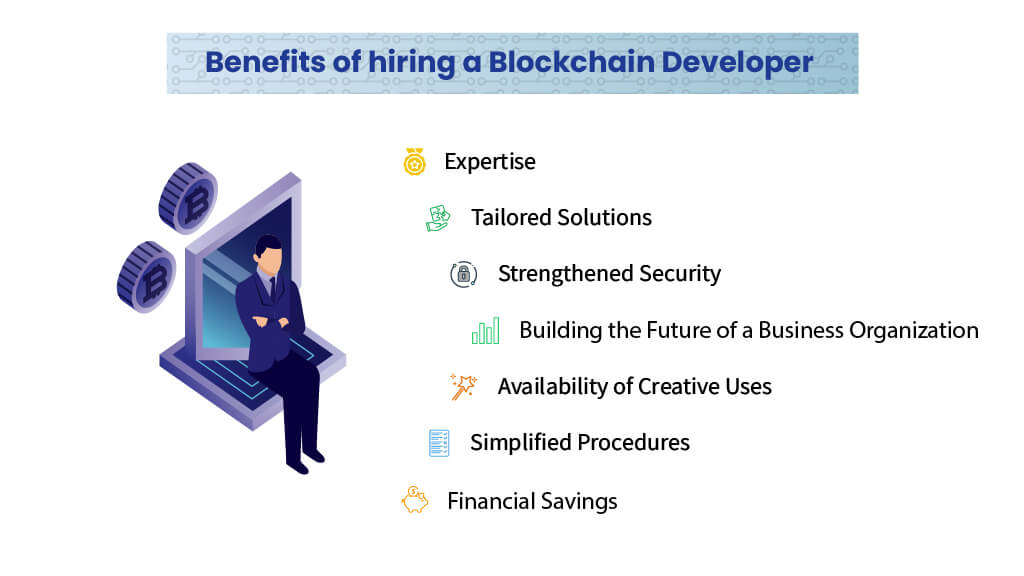
Companies that plan on embracing this innovation require the services of a blockchain developer. Here are a few main advantages of hiring freelance blockchain developers:

1. Expertise 

Blockchain Technology has become very important and one is very lucky to have this expertise of owning it. Blockchain developers are professionals who deal with blockchain systems and technology that include several programming languages and platforms. Due to that, they can design reliable blockchain solutions for private blockchain environments, smart contracts, or dApps taking into consideration your business needs.

2. Tailored Solutions

Having our blockchain developer means that we can come up with very specific solutions for particular issues, as each company is unique. Such developers can help you achieve the right technology by integrating and developing blockchain systems that are in line with your business model and functional objectives.

3. Strengthened Security

The benefits of general security that blockchain provides including transparency and immutability are not a secret. You can install modern-day security measures and encryptions that ensure personal details cannot be fraudulently accessed or stolen by hiring a blockchain developer. The risks associated with data management should therefore significantly reduced with this upped security.

4. Simplified Procedures

Implementation of blockchain can enhance a range of corporate operations through the elimination of middlemen and by automating transactions. A blockchain developer will identify areas that would benefit from blockchain integration leading to increased productivity and reduced operating costs.

5. Availability of Creative Uses

The application of blockchain is diverse and it cuts across different industries like supply chain, health, financial, and more. It is not just for cryptocurrencies: By hiring a blockchain developer, you have someone familiar with the newest trends in technology, and their applications and can transform the way you interact with customers while enhancing the processes within your company.

6. Building the Future of a Business Organization

The blockchain industry is most transforming in the present transitional shift of the digital world. You can make your company relevant and timely to the market or respond to new trends or technological advances, with the help of a qualified blockchain developer.

8. Financial Savings

Outsourcing blockchain development is likely cheaper than having an internal team do it for you. This one enables you to build resources based on the project needs and eliminates the need for recruiting others and then training them. This flexibility helps put into practice effective budget control, without compromising on quality or efficiency.

CTA2

The Final Word

One thing is sure as we close our inquiry into the practice of blockchain development, any initial reservations about cost or complexity are more than amply outweighed by the potential benefits of working with a qualified blockchain developer. No amount of overstatement could do justice to the revolutionary potential of blockchain technology, which can automate transactional flows and increase security through immutable ledgers.

Additionally, access to expert knowledge and expertise in this very innovative industry ensures that your company is agile and progressive. Being prepared with the latest innovations such as smart contracts and dApps keeps one running and stays competitive in markets that continue to shift.

Ultimately, blockchain development adoption is a strategic step in fortifying the long-term robustness of your organizational structure as well as its short-term efficiencies. While hiring the best talent may mean some upfront investments, those are negligible compared to the significant impacts that can now be achieved through enhanced cybersecurity, process automation, and unmatched scalability options.

FAQs

1. What is the price for hiring a blockchain developer?

There is no cost for creating blockchain applications, nevertheless, depending on the area and project, hiring a developer often costs between $5,000-$30,000. The location determines the hourly pricing for employing region developers. 

2. How to pick a blockchain development firm?

Examine the development company’s familiarity with blockchain platforms that are relevant to your project. Smartchain, Ethereum, binance, etc are the most commonly known platforms for blockchain development. 

3. Can blockchain developers be replaced by AI?

While blockchain can use artificial intelligence, blockchain and AI are not the same thing. In general, blockchain offers security, whereas artificial intelligence gives any tool, service, or method AI. 

4. Will blockchain continue to be relevant?

Progress has been anticipated in 2024 in the adoption of new laws, regulations, and policies about virtual assets of all kinds, which will drive an even broader use of blockchain in the future as well. 

5. How can you locate developers in blockchain?

Firstly, think about using well-known freelancing platforms such as Fiverr, Upwork, and Freelancer. These platforms make it easier for freelancers to get employment with terms that match their profile, knowledge, and abilities.