Talk to an Expert

How Net-Zero Tokenization Is Changing Global Climate Investment Strategies in 2026?

Net-Zero Tokenization

As of 2025, green asset tokenization is projected to reach $50 billion by year-end showing how fast climate-focused digital assets are scaling. Companies like Bluebird and Arx Veritas have already tokenized $32 billion worth of Emission Reduction Assets (ERAs), preventing 394 million tons of CO₂—equivalent to 105× Iceland’s annual emissions.

This shift is powered by Net-Zero tokenization, a model that brings transparency, liquidity, and verifiable climate impact to global sustainability markets. By converting renewable energy projects, carbon credits, and emission-reducing assets into on-chain tokens, organizations gain real-time traceability and unlock new financing pathways for climate action.

Let’s break down how tokenization for Net Zero is reshaping climate finance and accelerating global sustainability goals.

Key Takeaways

$50B+ market growth: Green asset tokenization is becoming a major financing vehicle for climate-aligned investments.

Verifiable climate impact: Blockchain ensures transparent measurement, reporting, and verification (MRV) for carbon and renewable energy assets.

Global liquidity for sustainability: Tokenization unlocks 24/7 markets, fractional investing, and cross-border climate funding.

The Main Purpose of Net Zero Tokenization

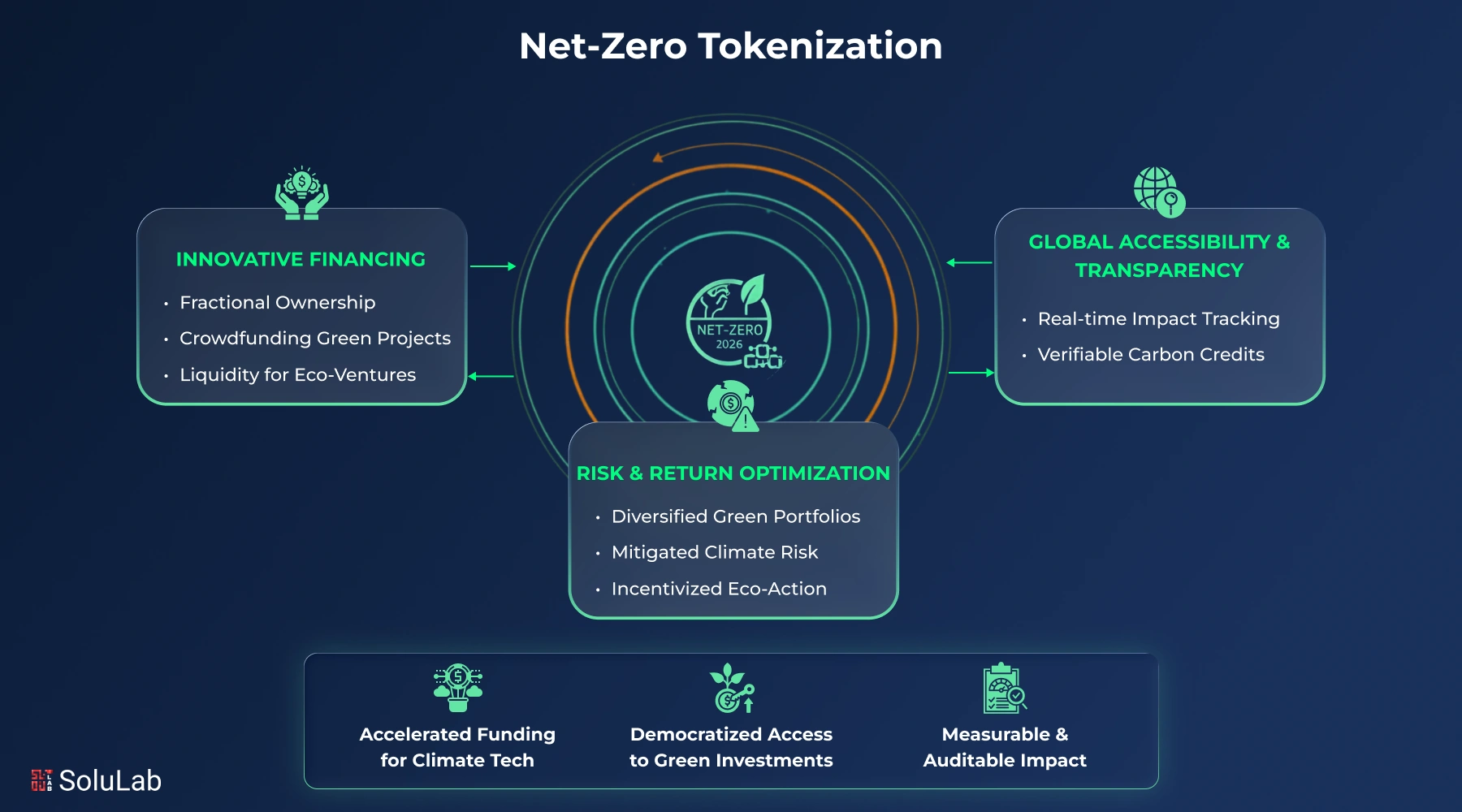
The main goal of tokenization for Net Zero is to make climate finance accessible, liquid, and transparent. This is to enhance the traditional funding channels through technology. People using traditional funding channels often face delays. Net-zero tokenization converts climate-focused real-world assets into blockchain tokens. Leading to digital representation of renewable energy, carbon credits, or green bonds. 

Key Objectives

  • Transparency: Blockchain ensures every asset’s impact is traceable, reducing risks of greenwashing.
  • Liquidity: Investors can buy, sell, and trade climate assets 24/7 instead of waiting years for returns.
  • Inclusivity: Fractional ownership opens the door for small and medium investors to participate in green projects.

In short, Net Zero tokenization democratizes access to climate investments, balancing sustainability goals with financial growth.

How Net-Zero Tokenization Actually Works?

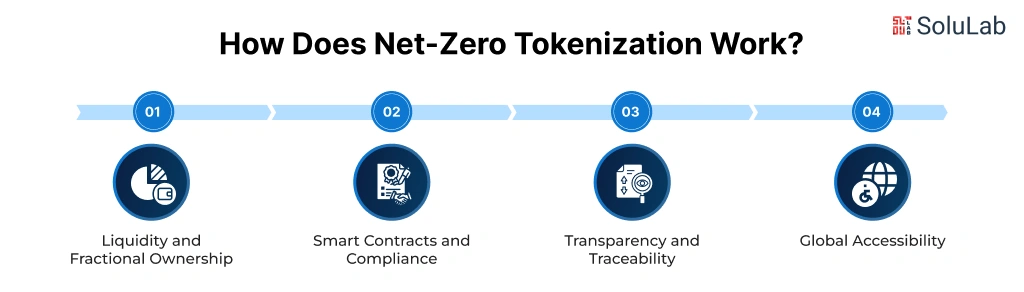
Tokenization, at its core, converts climate-focused real-world assets into blockchain tokens. These tokens represent verifiable ownership or stake in a project such as a solar farm or reforestation initiative. The process combines smart contracts development, IoT integration, and regulatory frameworks to ensure both trust and compliance.
How Does Net-Zero Tokenization Work

  • Liquidity and Fractional Ownership

Tokenized assets can be divided into smaller units, enabling wider participation. For instance, a $500 million wind farm project can now be broken into fractional tokens, letting smaller investors participate. Unlike traditional green bonds, these tokens can be traded in real time, ensuring liquidity.

  • Smart Contracts and Compliance

Smart contracts automate investments, compliance checks, and reporting. They align with standards like ISSB and TCFD, eliminating manual errors and delays. Moreover, administrative costs can be reduced by up to 90%, according to EY’s 2023 Blockchain Report.

  • Transparency and Traceability

Every tokenized transaction is recorded on blockchain ledgers. This traceability builds trust, simplifies ESG audits, and offers investors real-time insight into emission reductions.

  • Global Accessibility

Unlike traditional systems restricted by geography, tokenized ESG assets are globally accessible. A renewable energy firm in Asia can raise funds from investors in Europe or Africa seamlessly through an RWA tokenization platform development.

Why Global Net-Zero Goals Depend on Tokenization?

Achieving net-zero emissions by 2050 requires enormous capital. The International Energy Agency estimates $4-6 trillion in annual investments, reaching $125 trillion cumulatively. Current green bonds and loans, while essential, face liquidity constraints and high costs. Fragmented standards slow down reporting and verification, making global decarbonization harder.

Real-World Asset Tokenization as a Catalyst

Tokenization in ESG solves these hurdles by transforming assets into tradable, traceable tokens.

  • Liquidity: Tokenized ESG assets can trade freely, unlike rigid green bonds.
  • Accessibility: Fractional ownership lets community funds and individuals join high-value projects.
  • Automation: Smart contracts streamline compliance with global ESG reporting norms.

In 2025, over $32 billion worth of tokenized ERAs have prevented 394 million tons of CO₂, a clear sign that Tokenization for carbon credits is redefining climate finance.

Why Enterprises Are Betting on Net-Zero Tokenization?

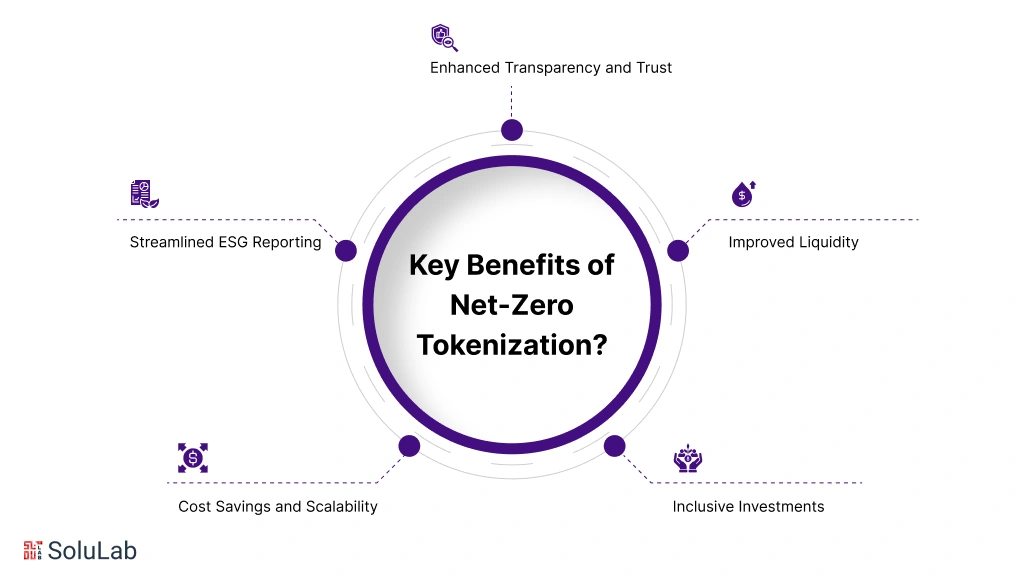
Corporations view Net-Zero tokenization not just as a sustainability move but as a strategic business advantage:
Key Benefits of Net-Zero Tokenization_

  • Enhanced Transparency and Trust

Immutable blockchain records make audits easier and improve investor confidence by 70%. It reduces greenwashing, a concern highlighted in the 2024 UNEP Emissions Gap Report.

  • Improved Liquidity

Tokenized green bonds and carbon credits offer flexible capital movement. Businesses can raise funds faster and investors can exit earlier, ensuring steady capital inflow.

  • Inclusive Investments

Fractional ownership allows small investors to fund clean energy grids or carbon removal systems. A tokenized solar grid in Nigeria, backed by small contributions, now powers rural clinics, proof of tokenized ESG assets driving equitable impact.

  • Cost Savings and Scalability

Smart contracts lower administrative costs while ensuring global scalability. A model proven successful in Colombia for hydroelectric projects can easily be replicated in Africa or Asia through asset tokenization services.

  • Streamlined ESG Reporting

Tokenized RECs and carbon credits offer verifiable data aligned with ISSB and TCFD disclosures. This real-time transparency simplifies global net-zero reporting.

Where RWA Tokenization Is Driving Real ESG Impact?

Environmental, Social, Governance (ESG) is used to evaluate a company’s sustainability. Now, people are eyeing climate finance as a part of it for the greater good. And tokenization is part of it. Let’s check how tokenization is shaping the ESG of companies. 

  • Scaling Renewable Energy

Green asset tokenization has already added over 700 megawatts of renewable capacity globally in 2025. In regions like Southeast Asia, tokenized renewables are helping reduce dependence on coal. IoT sensors track every kilowatt-hour, providing real-time verification for investors. Institutional investors are negotiating deals worth $500 million in tokenized renewables, signaling growing confidence in RWA tokenization development.

  • Carbon Credits and Emission Reduction Assets

Each tokenized carbon credit represents one ton of CO₂ avoided. Blockchain tracks its origin — whether from reforestation in Brazil or methane capture in mining zones. Tokenized ERAs worth $32 billion have prevented massive emissions while ensuring transparency and compliance with ISSB and TCFD frameworks.

Read Our Blog: How Tokenizing Solar Assets Is Reshaping Renewable Energy?

  • Green Bonds for Sustainable Infrastructure

Tokenized green bonds have raised over $1.2 billion for renewable infrastructure in 2025. For instance, EDF’s blockchain-enabled green bonds allowed real-time monitoring of energy projects. This method cut costs, improved liquidity, and enabled fractional participation.

  • Sustainable Agriculture and Regenerative Practices

Agriculture plays a major role in emission reduction. In 2025, tokenized farmland projects worth $300 million in Sub-Saharan Africa attracted investors by linking tokens to soil carbon capture and crop yield data. Tokenization in ESG thus promotes sustainable farming and supports food security.
Quote

The Future of Net-Zero Tokenization

The coming decade promises massive growth for tokenized green bonds and climate-focused real-world assets. Analysts forecast that tokenized RWA markets may reach $19 trillion by 2033, with ESG-focused assets leading the expansion.

Key trends changing the next phase include:

  • AI-Driven Forecasting: Advanced AI models are now predicting emission patterns, renewable generation output, and carbon market volatility with far greater accuracy, helping investors deploy capital into the highest-impact climate assets.
  • IoT-Enabled Tracking: Smart IoT solutions are enabling real-time monitoring of renewable energy production, carbon sequestration, and project-level performance by bringing unmatched transparency to blockchain-based ESG assets.
  • Cross-Chain Interoperability: Modern climate-finance platforms are enabling seamless movement of tokenized ESG assets across multiple blockchains, improving liquidity and accelerating institutional adoption.
  • Regulatory Maturity: Countries like Singapore, UAE, and the EU are finalizing robust tokenization and carbon-market frameworks, giving enterprises the compliance confidence needed to scale sustainable finance solutions.
  • Enterprise Adoption: Corporations, energy firms, and climate-tech startups are rapidly embracing blockchain in climate finance, positioning themselves at the forefront of a trillion-dollar sustainability transformation.
Net-Zero Tokenization CTA

Conclusion

Achieving climate goals is no longer limited to policy and pledges, tokenization is now turning sustainability into a scalable financial opportunity. If you are exploring Net-Zero tokenization, whether for carbon credits, renewable energy assets, or climate-positive infrastructure, SoluLab is your trusted partner.

As a leading asset tokenization company, we help organizations convert high-value assets, from carbon offsets and renewable projects to real estate, metals, and intellectual property, into secure, compliant digital tokens. Our experts map your business goals, define the right token model, design a future-ready architecture, and build a fully compliant tokenization ecosystem tailored to climate-finance needs, just like we did for Tangible.

If you’re ready to turn climate impact into transparent, verifiable, and investable value, connect with SoluLab today and start building the next wave of sustainable finance innovation!

FAQs

1. How can Net-Zero Tokenization turn sustainability into a revenue stream for enterprises?

By tokenizing ESG assets, businesses monetize carbon credits, renewable projects, and green bonds, unlocking new liquidity channels while aligning profitability with sustainability goals.

2. Why choose SoluLab for Net-Zero Tokenization development?

SoluLab designs scalable RWA tokenization platforms integrating smart contracts, IoT, and compliance frameworks, empowering enterprises to tokenize assets, enhance transparency, and achieve ESG reporting excellence.

3. How does tokenization improve transparency in ESG investments?

Every transaction is recorded on blockchain ledgers, creating immutable proof of ownership, reducing greenwashing, and enabling real-time auditing of carbon offsets and renewable project impacts.

4. What are the business benefits of adopting Net-Zero Tokenization?

It improves liquidity, automates compliance, lowers costs, and enhances investor confidence, helping enterprises efficiently fund sustainable initiatives and achieve measurable climate impact faster.

5. What’s next for Net-Zero Tokenization in global climate finance?

The future lies in AI-driven ESG analytics, IoT-based energy tracking, and cross-chain token interoperability, making climate finance faster, traceable, and globally inclusive.
Why is Solana’s RWA Tokenization Key to a $16 Trillion Crypto Market?

Solana RWA Tokenization for Crypto Market

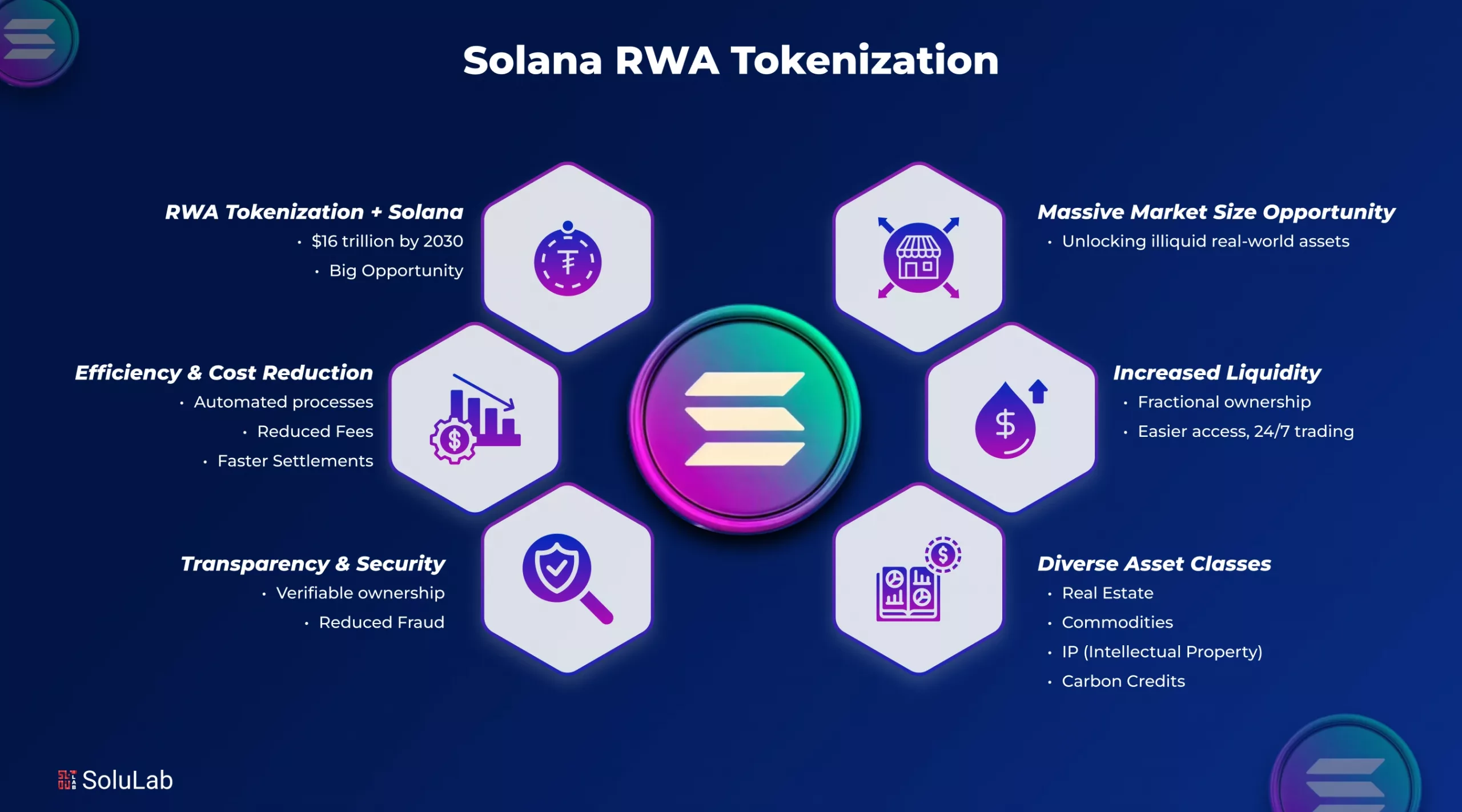
A few years ago, buying a fraction of a luxury hotel or trading carbon credits instantly across borders was unthinkable. Today, thanks to RWA tokenization, such opportunities are becoming mainstream — with the potential to reshape a $16 trillion market.

The real question is: which blockchain can carry this enormous load? Increasingly, all eyes are on Solana, whose combination of speed, affordability, and ecosystem growth makes it a natural hub for tokenizing the world’s assets. Here’s why Solana could be the key to unlocking this unprecedented financial revolution. Let’s dive in!

Solana’s Role in the Growing $16 Trillion RWA Opportunity

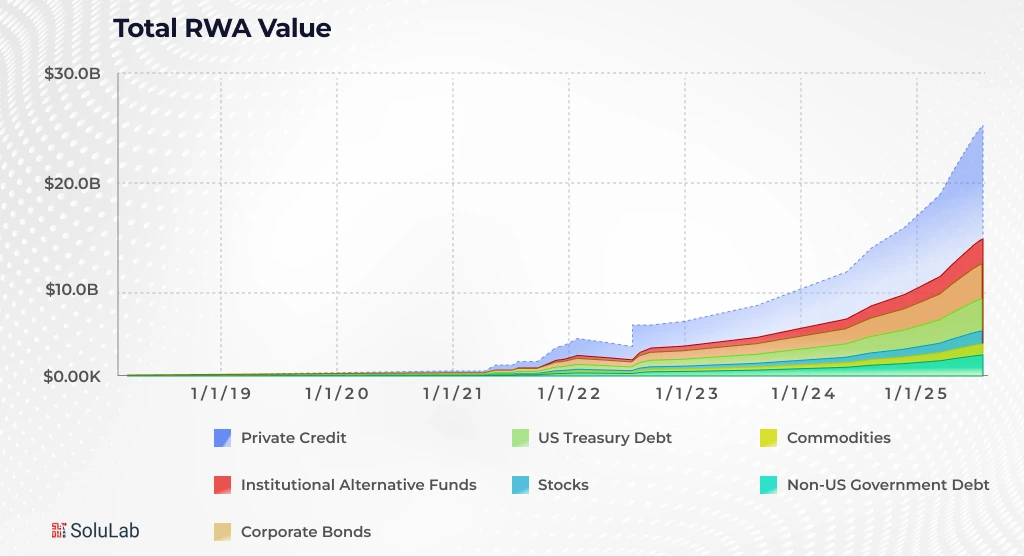
The real-world asset (RWA) tokenization market is witnessing explosive growth, expanding from $5 billion in 2022 to over $24 billion by mid-2025, a 380% surge in just three years. Leading financial analysts and institutions are bullish, like Boston Consulting Group (BCG), which projects the market could reach $16 trillion by 2030, while Standard Chartered forecasts it could climb as high as $30 trillion by 2034.

This rapid expansion is driven by the need for faster, more transparent, and secure ways to digitize real-world assets – including real estate, bonds, loans, and other high-value instruments. Businesses and institutions are increasingly looking for blockchain solutions that combine high throughput, low fees, and robust compliance, making Solana a standout choice.

Solana stands out as the top blockchain for RWA tokenization, thanks to high-speed transactions, low fees, and scalable architecture. For B2B leaders and institutional clients, adopting Solana for RWA tokenization is a strategic move to tap into a multi-trillion-dollar market while staying secure, compliant, and competitive.

Market Overview of RWA Tokenization 

1. Market Size and Growth

RWA tokenization is not just hype; it’s real adoption by institutions. The market is already worth over $24 billion and is expected to grow into the trillions in the next decade. 

Different forecasts show:

  • $16.1 trillion by 2030 – BCG & ADDX 
  • $30 trillion by 2034 – Standard Chartered
  • $18.9 trillion by 2033 – Ripple/BCG 
  • $3.5–$10 trillion by 2030 – 21.co 

This growth is driven by institutions chasing yield in a high-interest market. For example, tokenized U.S. Treasuries jumped from $1.2 billion to $6.9 billion in 12 months. Among all tokenized assets, private credit dominates, making up 61% of the market as of April 2025.

2. Leading Asset Classes

Not every asset is tokenized equally. The categories with the most adoption and liquidity include:

  • Tokenized Treasuries & Money Market Funds$7.4B, up 80% YTD
  • Private Credit – $14B+ in active loans, the largest non-stablecoin segment
  • Real Estate – Expected $1.5 trillion by 2025, Deloitte predicts $1T in private funds by 2035
  • Tokenized Equities – Fractional stock ownership now possible on Solana with projects like xStocks (55 SPL-based equities, including Apple & Tesla)

3. What Institutions Are Doing

Big players are proving this is serious business:

  • BlackRock launched its BUIDL USD Institutional Digital Liquidity Fund on Solana in March 2024. The fund grew from $500M to $1.7B in 7 months and now has $3B AUM.
  • Franklin Templeton’s FOBXX fund, live since 2021, added Solana in February 2025 and now manages $594M in tokenized U.S. government securities.

These are production-grade deployments, not tests. They validate Solana as a powerful blockchain for real-world asset tokenization.

Total RWA Value

Why is Solana the Ideal Platform for RWA Tokenization?

When enterprise teams consider real-world asset (RWA) tokenization, the stakes are high: speed, cost, compliance, and reliability determine whether a project scales successfully. Solana addresses all of these, making it the ideal blockchain for institutional-grade tokenization.

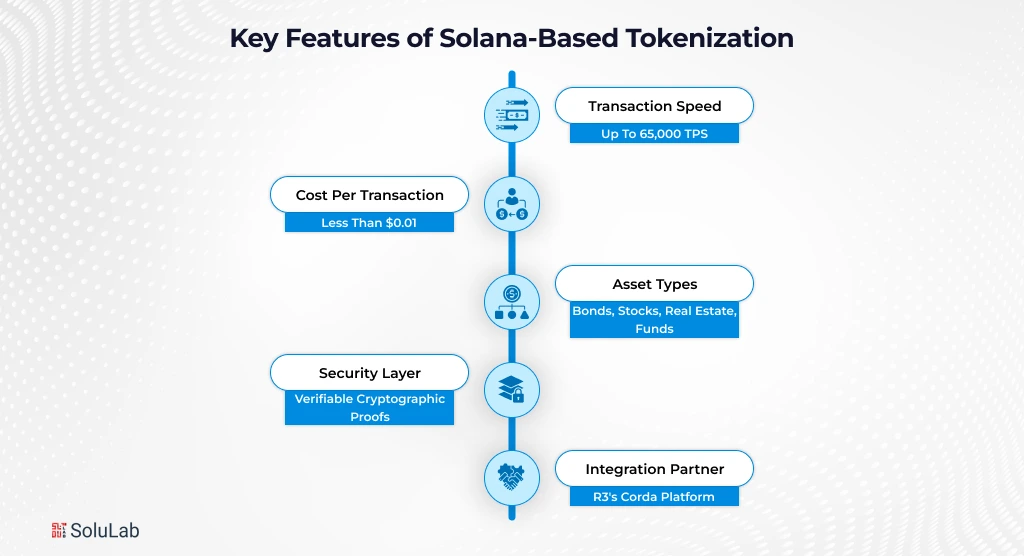
With 65,000+ transactions per second (TPS), sub-cent transaction fees ($0.00025), and 400ms block times, Solana enables real-time settlement for daily yield distributions, dividend payouts, and fractional ownership trades. Unlike Ethereum, Solana avoids network congestion and high gas fees, making micro-investments and fractional ownership practical for both institutional and retail participation.

Low costs also unlock liquidity. For example, a $1 million property can be divided into 10,000 tokens, each valued at $100, allowing both retail and institutional investors to participate together. This fractional ownership model drives a healthy, liquid market for tokenized assets.

The Solana ecosystem is fully integrated for enterprise RWA projects:

  • Issuance: Platforms like Securitize manage $2.8B+ in tokenized assets
  • Trading: Jupiter, Orca, and Phoenix provide liquidity and secondary markets
  • Oracles: Pyth Network delivers ultra-fast 400ms price feeds
  • Custody: Anchorage, Fireblocks, and Copper secure institutional assets
  • Compliance: Fractal and Civic provide on-chain KYC/AML integration

This end-to-end integration ensures that tokenized assets can instantly serve as collateral, liquidity, or tradable instruments across platforms, providing fast, secure, and cost-efficient solutions.

For regulated enterprises, Solana offers advanced compliance capabilities:

  • Token Extensions (Token-2022): Confidential transfers, transfer restrictions, and built-in compliance hooks
  • Solana Permissioned Environments (SPEs): Private, regulated subnets for institutional deployments
  • Native KYC Integration: Identity verification enforced on-chain without third-party tools

For B2B clients, financial institutions, and asset managers, Solana provides a scalable, compliant, and efficient infrastructure for launching and managing tokenized assets. Enterprises can confidently deploy institutional-grade RWA projects while maintaining regulatory compliance and operational efficiency.

Key Features a Solana RWA Tokenization Platform Needs

When building a Solana RWA platform, it’s not just about issuing tokens. Enterprises need a full-stack solution that is secure, scalable, and compliant. Here’s what your platform should have to succeed in the market.

Key Features of Solana-Based Tokenization

What technical features should a Solana RWA platform have?

  • High-speed processing – Use Solana’s 65,000+ TPS to handle large institutional trades without slowing down.
  • Fractional ownership for micro-investors – Let people invest from $1–$100 in tokenized real-world assets.
  • Automated smart contracts – Manage dividend payouts, interest accruals, and redemptions automatically.

How to make a Solana RWA platform compliant and secure?

  • KYC and AML integration – Real-time identity checks to follow global regulations like SEC and MiCA.
  • Audit trails and reporting – Automatically generate reports for compliance and transparency.
  • Institutional custody support – Use multi-sig wallets and cold storage to protect high-value assets.

What makes a Solana RWA platform user-friendly?

  • Wallet support – Platforms like Phantom and Backpack should natively show tokenized RWA assets.
  • Fiat on/off ramps – Easy conversion between USD (or other currencies) and tokenized assets.
  • Mobile-friendly interface – Essential for emerging market adoption in regions like LATAM, Africa, and Southeast Asia.

How to track and manage tokenized assets efficiently?

  • Real-time dashboards – Monitor asset performance, investor demographics, and yields.
  • Portfolio management tools – Let investors manage diversified RWA baskets easily.
  • API integrations with finance systems – Connect to Bloomberg, SWIFT, or other traditional platforms for smooth operations.

Business Benefits of RWA Tokenization for Enterprises

Many real-world assets, like real estate, private equity, and infrastructure, are illiquid. By using RWA tokenization on Solana, these assets become tradable 24/7, allowing enterprises to:

  • Recycle capital faster for new investments
  • Reach global investors without intermediaries
  • Reduce holding and management costs

This makes tokenization a powerful tool for businesses looking to maximize asset efficiency.

How Tokenization Reduces Operational Costs?

Manual processes in traditional finance are slow and expensive. Smart contracts on Solana can automate key operations, helping companies:

  • Cut operational costs by up to 70%
  • Eliminate brokers, clearinghouses, and paper-based settlements
  • Streamline asset issuance, trading, and custody

This allows businesses to focus on growth rather than routine processes.

How Tokenization Creates New Revenue Streams?

Tokenizing assets opens up multiple income opportunities:

  • Interest from fractional private credit loans
  • Platform fees from issuance, trading, and compliance services
  • Staking and collateralization: Use tokenized RWAs as decentralized finance (DeFi) collateral to earn additional yield

By diversifying revenue channels, enterprises can generate more consistent returns from their assets.

How Tokenization Improves Risk Management?

Using Solana-based RWA platforms helps enterprises manage risks better:

  • Immutable ownership records reduce fraud
  • Programmable compliance ensures regulatory rules are followed automatically
  • Real-time monitoring allows proactive risk mitigation

These features provide businesses with secure, transparent, and reliable operations.

How SoluLab Builds Solana RWA Platforms?

As a top RWA tokenization company, SoluLab provides end-to-end Solana blockchain development for enterprises looking to digitize real-world assets. Our solutions make tokenizing real estate, commodities, and private credit simple, secure, and fast.

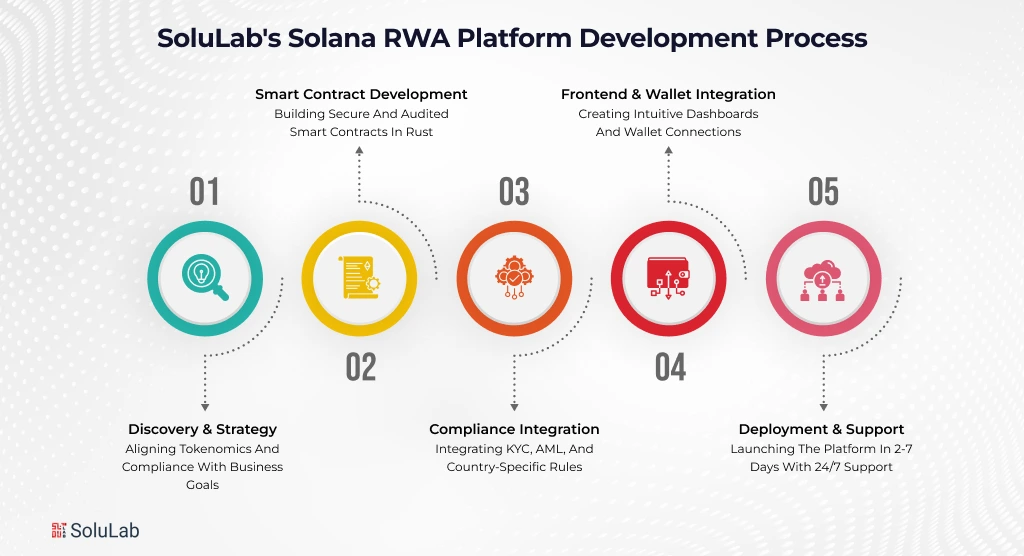
SoluLabs Solana RWA Platform Development Process

1. Discovery & Strategy – We align your tokenomics, compliance, and user experience with your business goals.

2. Smart Contract Development – Build secure contracts in Rust, fully audited for safety.

3. Compliance Integration – KYC, AML, and country-specific rules are built in for high-difficulty compliance needs.

4. Frontend & Wallet Integration – Intuitive dashboards and wallet connections for both retail and institutional investors.

5. Deployment & Support – Launch your platform in as little as 27 days, with 24/7 monitoring and maintenance.

Whether you want to tokenize real-world assets, digital securities, or private loans, SoluLab offers the asset tokenization services you need to succeed.

Solana Blockchain Development Company

Conclusion

Solana’s high-speed transactions, low costs, scalability, and robust ecosystem make it the ideal blockchain for RWA tokenization. Enterprises looking to digitize and trade real-world assets can leverage Solana’s capabilities to enhance liquidity, operational efficiency, and access to capital.

By partnering with experienced developers like SoluLab, enterprises can successfully navigate the complexities of RWA tokenization and capitalize on the opportunities presented by this burgeoning market. 

Contact us today to get started!

FAQs

1: Why work with an RWA tokenization development company?

A professional RWA tokenization development company like SoluLab helps enterprises design, build, and deploy secure tokenization platforms. They ensure compliance, integrate smart contracts, and provide operational support, reducing technical risks and accelerating go-to-market timelines.

2: How do I choose the right RWA tokenization company?

A trusted RWA tokenization company will provide end-to-end solutions: from smart contract development to compliance integration, custody solutions, and ongoing support. Look for companies with proven experience in Solana blockchain development and enterprise-grade security practices.

3: How fast can I launch a Solana RWA platform?

A Solana RWA platform can be launched quickly, depending on complexity. Basic tokenization setups can go live in 11 days, while full-featured platforms with KYC, custody, and trading features take 8–12 weeks.

4: Which assets are easiest to tokenize on Solana?

Tokenized Treasuries are the simplest due to regulatory clarity. Mid-difficulty assets include real estate and private credit, while high-difficulty assets include complex structured products. Tokenization allows enterprises to unlock liquidity and reach global investors efficiently.

5: How does Solana compare to Ethereum for RWA tokenization?

Solana processes 65,000+ TPS with fees under $0.01, whereas Ethereum handles ~15 TPS with fees of $10–$100+. For enterprises seeking fast, low-cost, and scalable RWA tokenization platforms, Solana provides a superior solution for tokenizing real-world assets at scale.

Top 15 Asset Tokenization Companies in the USA [2026]

The way businesses raise funds, trade assets, and ensure security is changing. Yet, many investors and companies still struggle with limited liquidity, complex compliance, and outdated financial systems. 

Real estate, art, stocks, or even commodities can be fractionally owned, securely traded, and instantly transferred. With asset tokenization, turning physical and digital assets into secure blockchain-based tokens is possible. 

According to Grand View Research, the U.S. tokenization market is projected to grow at ~20.4% CAGR to reach USD 4,032.2 million by 2030. 

In this blog, we’ll explore the top 15 asset tokenization companies that can help you grow your business. 

Why are Asset Tokenization Companies Needed?

Asset tokenization companies fill the gap between traditional assets and blockchain by providing secure, liquid, and accessible investment opportunities, which bring global asset ownership to be more transparent, efficient, and inclusive to all.

1. Global Accessibility: The significant impact of tokenized assets is that investors located anywhere in the world can be involved, and geographical limits do not restrict the investment options of small-sized investors.

2. Fractional Ownership: They disaggregate the costly assets into smaller portfolios, thus allowing more individuals to invest cheaply and diversify their portfolios with reduced risks.

3. Enhanced Transparency: Smart contracts and blockchain make transactions tamper-proof, traceable, and transparent, increasing investor confidence and lowering fraud.

4. Faster Settlements: Digital tokens can reduce the time used to settle by weeks, days, or minutes, making markets more efficient.

5. Lower Costs: Tokenization reduces fees linked to brokers, paperwork, and cross-border compliance, creating a more cost-effective investment process.

Why Is It the Right Time to Tap into the USA Tokenization Market?

With rising cybersecurity threats and supportive U.S. regulations, tokenization is no longer optional. Businesses now see it as the key to secure transactions and scalable growth. Here are some reasons why you should consider the US tokenization market:

1. Increasing Cybersecurity Issues: Rising cases of fraud and data breaches have compelled U.S. businesses to embrace the use of tokenization as a sure method of protecting sensitive payment and customer information.

2. Favourable Regulatory Environment: The adoption of tokenization is essential and beneficial to enterprises due to the strong compliance standards of the U.S., such as PCI DSS and GDPR-compliant practices.

3. Digital Payments: As contactless and mobile payments become more and more prevalent, tokenization will make the transactions in all industries smoother and safer.

4. Investor and Consumer Trust: A confidence in tokenized solutions will provide a build of customer loyalty and brand credibility because personal data will be safeguarded directly, and this translates into customer loyalty.

5. Adoption by Major Players: The major banks, fintechs, and retailers in the U.S. already implement tokenization, which shows that it is not only a trend but a standard that is gaining momentum.

6. Future-Ready Technology: Web3, blockchain, and AI-driven ecosystems rely on tokenization as a fundamental building block, and thus it is critical to the U.S financial and digital innovation of the future.

Top 15 Asset Tokenization Companies in USA to know before entering 2026

A curated list of the top 15 U.S. asset tokenization firms that are reshaping investment opportunities with blockchain-powered solutions.

solulab

1. SoluLab

SoluLab is a USA-based asset tokenization company with 10+ years of experience delivering asset tokenization solutions. Known for its enterprise-grade security, scalability, and compliance-first approach, SoluLab has successfully executed tokenization projects in real estate, healthcare, and finance.

With a strong team of blockchain experts, the company helps businesses transform traditional assets into secure, tradable digital tokens, making investment more transparent and accessible.


$25 – $49/ hr


200 – 249


2014

SmartBlocks

2. SmartBlocks

SmartBlocks is a U.S.-based asset tokenization firm (Carlsbad / California) known for fractionalizing. It offers end-to-end services including smart contract development, investor dashboards, legal structuring, and KYC/AML compliance.

They develop tools, investor dashboards, and smart contracts to assist clients in securely and legally managing digital assets. SmartBlocks provides clear, audit-ready solutions whether you require a complete platform or simply improved reporting.


$50/ hr


11-50


2020

Tokensoft

3. Tokensoft

Tokensoft provides white-label infrastructure for managing and issuing digital securities in a compliant manner. The company helps clients all over the world deal with the technical and regulatory challenges of asset tokenization.

Tokensoft’s platform, which is well-known for prioritizing security and scalability, can handle projects of all sizes, from small-scale offers to extensive institutional deployments.


NA


50 – 100


2017

R3 is a New York–based enterprise blockchain software firm with over 10 years of experience in distributed ledger technology. R3 provides the safe, private, and legal tokenization of assets for large banks and other organizations.

R3 focuses on interoperability, compliance, and enterprise-grade security, making it a trusted partner for banks, fintechs, and corporations worldwide.


NA


400+


2014

RedSwan

5. RedSwan

Founded in 2018, RedSwan CRE is a Houston-based firm specializing in tokenizing commercial real estate (CRE) assets. With over $10 billion in transactions, including a landmark $4 billion portfolio tokenization.

RedSwan operates as an SEC-registered investment Advisor and a FINRA/SIPC-member broker-dealer through its subsidiary, RedSwan Markets LLC, ensuring adherence to U.S. securities regulations.


$200/ hr


50-100


1991

Securitize

6. Securitize

Founded in 2017, Securitize is a leading platform specializing in the tokenization of real-world assets (RWAs). The company offers a comprehensive suite of services, including token issuance, investor onboarding, transfer agent services, fund administration, and secondary market trading.

Securitize’s proprietary Digital Securities (DS) Protocol ensures compliance with U.S. regulations, enabling trading of digital securities on public blockchains.


NA


200+


2017

Tokeny Solutions

7. Tokeny Solutions

Tokeny Solutions is a leading U.S.-based asset tokenization company with over 7 years of experience in the blockchain industry. As part of the Apex Group, Tokeny offers a comprehensive platform for securely issuing, managing, and transferring tokenized securities.

Their solutions cater to mid-cap companies, investment banks, funds, asset managers, and distributors, enabling them to dematerialize assets on the blockchain.


NA


50+


2017

Polymath

8. Polymath

Polymath is a leading U.S. based asset tokenization company, founded in 2017, with 7+ years of experience in blockchain solutions. It specializes in creating compliant security tokens, offering features like smart contract automation, regulatory integration, and secure token issuance.

Polymath simplifies the process of digitizing traditional assets, making it easier for businesses and investors to access tokenized securities while staying fully compliant with U.S. regulations.


NA


50+


2017

tZERO

9. tZERO

Founded in 2014, tZERO is an asset tokenization company that integrates blockchain with traditional finance to offer tokenization solutions for businesses and investors. As a subsidiary of Overstock.com, tZERO aims to access capital markets through an innovative and transparent marketplace.

Offers services from capital raising to secondary market trading, ensuring a tokenization process and prioritizing investor protection with robust security measures and adherence to regulatory standards.


NA


50-200


2014

10. RWA Labs

RWA Labs is an asset tokenization company, specializing in improving real-world assets into digital tokens on the blockchain. They offer end-to-end solutions for tokenizing assets like real estate, equipment, and shares, integrating traditional markets into decentralized finance (DeFi) ecosystems.

RWA Labs focuses on security, transparency, and scalability, ensuring that tokenized assets are compliant with global regulations. Provides a full suite of services from asset evaluation to token issuance and management.


$50/ hr


2-10


2024

11. Tokenize Pro

Tokenize Pro is a New York-based asset tokenization company specializing in customizable, compliance-ready tokenization systems. With years of experience in the industry, Tokenize Pro offers solutions for tokenizing various asset classes, including real estate, art, debt instruments, and equity shares.

Tokenize Pro’s services are designed to simplify complex tokenization processes, making them accessible to a broader range of businesses and investors.


$100/ hr


50-200


2017

12. BlockchainX

BlockchainX is an asset tokenization development company that assists businesses in converting physical assets like company shares, real estate, gold, and artwork into blockchain-based tokens.

These tokens represent ownership and can be easily bought, sold, or traded online, enhancing liquidity and opening up global investment opportunities. The company handles every aspect, from developing smart contracts to integrating wallets and ensuring legal compliance.


$50/ hr


100-249


2017

13. SolidBlock

Leading the way in real estate tokenization, SolidBlock provides a platform that uses blockchain technology to convert illiquid real estate assets into tradable digital securities. Their goal is to make real estate investing more accessible to a worldwide audience by making it cheaper.

Enables investors to own fractions of properties, lowering the entry barrier for real estate investment. Focuses on transparency and security to build trust among investors.


$50-$99/ hr


100-199


2018

14. PixelPlex

PixelPlex is an asset tokenization company known for its expertise in asset tokenization. With over 18 years of experience, they specialize in improving real-world assets such as real estate, art, and intellectual property into secure, tradable digital tokens.

PixelPlex offers end-to-end solutions, including asset digitization, STO development, and compliance management. Ensures all tokenization processes adhere to industry regulations to secure investor interests.


$70-$150/ hr


100+


2017

15. Nadcab Labs

Nadcab Labs is a blockchain development company specializing in asset tokenization. They convert physical assets like real estate, equities, and commodities into secure, blockchain-based tokens, enabling fractional ownership and global tradeability.

They offer solutions for real estate, equity, commodities, and intellectual property tokenization. Provides user-friendly interfaces for secure asset tracking and portfolio insights.


$50/ hr


700+


2017

Asset Tokenization Development Company

Conclusion

In real estate, as well as in the fields of private equity, tokenization is opening up new opportunities to businesses and investors. These companies are leading the way in terms of security, scalability, and compliance as adoption increases. 

This is the best time for entrepreneurs, investors, and enterprises to interact with tokenization leaders and understand how digital assets can improve tokenization for businesses and investors.

SoluLab, an asset tokenization development company in the USA, can help you build an asset tokenization platform from scratch and provide end-to-end support. Contact us today to discuss further. 

FAQs

1. How does a digital asset tokenization company help enterprises?

A digital asset tokenization company assists enterprises in creating, issuing, and managing tokenized assets while ensuring security and regulatory compliance.

2. What is a real-world asset tokenization platform development company?

A real-world asset tokenization platform development company builds blockchain-based platforms that help businesses tokenize assets securely and compliantly.

3. How secure is tokenization?

When done through compliant platforms, tokenization is highly secure, with encrypted smart contracts and strong investor protections.

4. What role does blockchain play in tokenization?

Blockchain ensures transparency, immutability, and security, making it the backbone technology for asset tokenization platforms.

5. Can small businesses benefit from asset tokenization?

Yes, tokenization enables startups and small businesses to raise funds efficiently by offering fractional ownership of their assets.