Talk to an Expert

Why Dollar-to-Stablecoin Swaps Are Becoming a Must-Have Feature in White-Label Neo Banking?

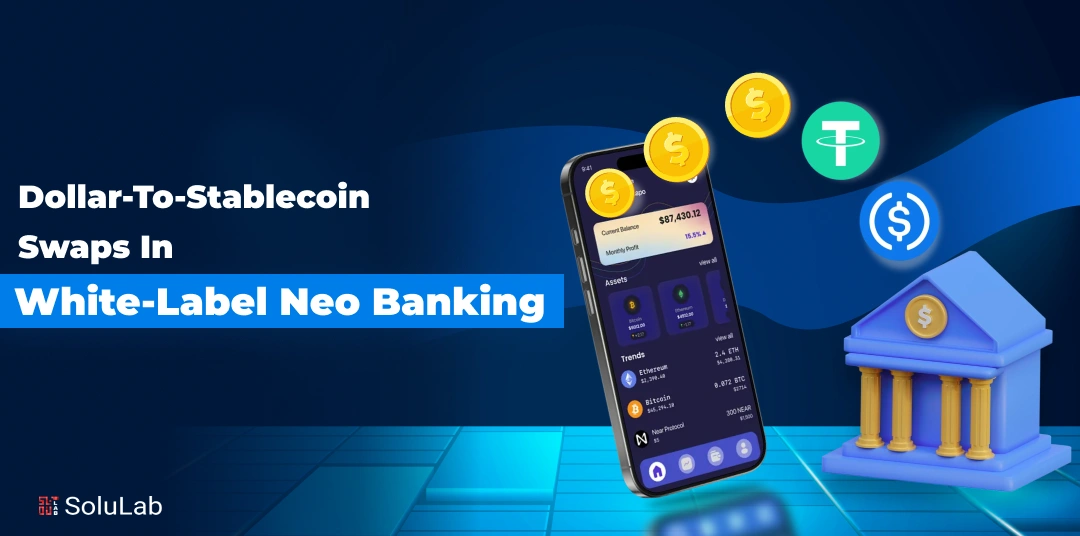
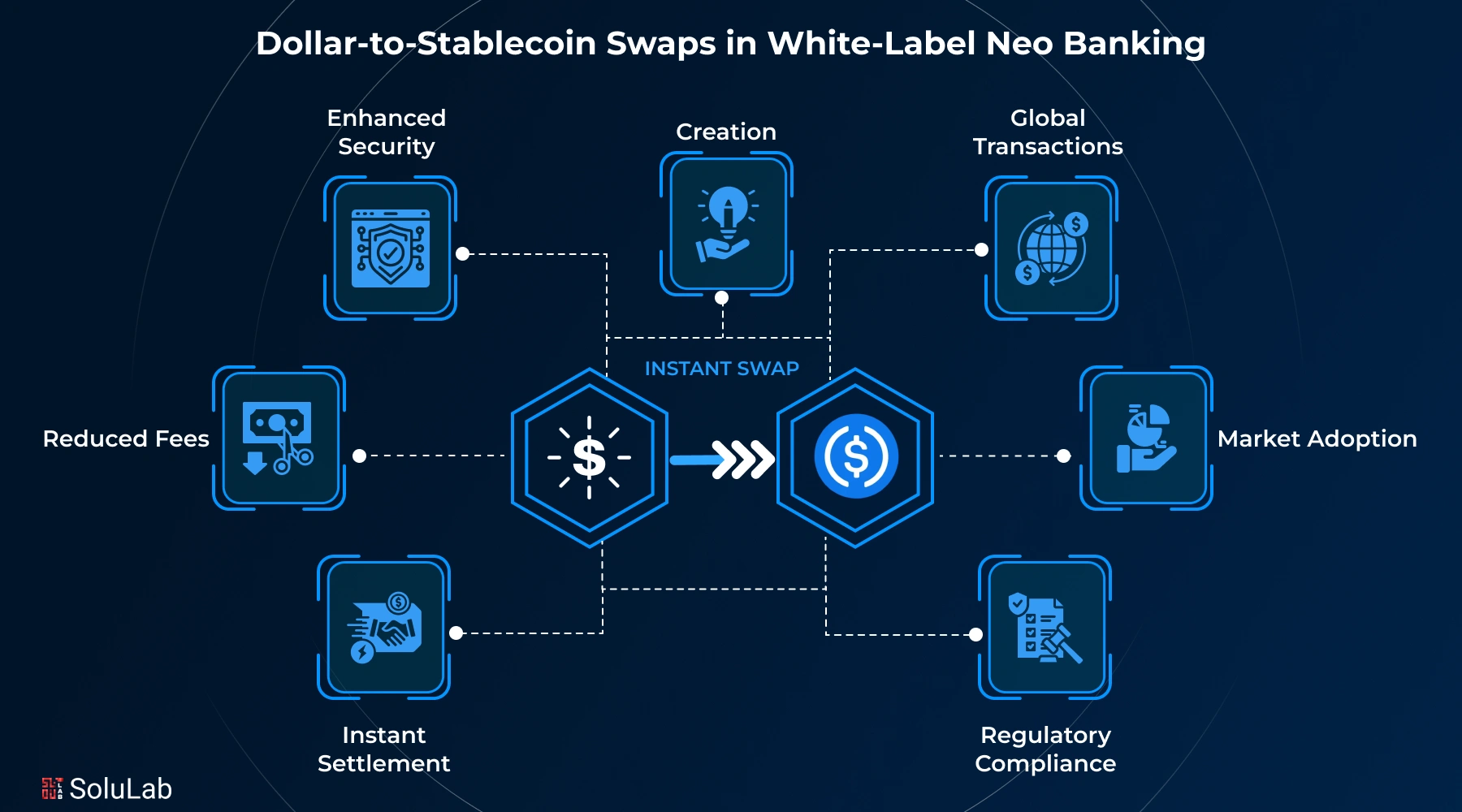
Dollar-to-Stablecoin Swaps in Neo Banking

Traditional neo banking platforms still rely heavily on fiat-only infrastructure. And when your users need to move money across borders, volatile FX rates, high remittance fees, and slow settlement times can ruin the experience. 

Businesses today expect faster, more cost-efficient global transactions, not complicated bank hops and hidden charges. This shift is already visible in emerging markets. A major trend report projects that stablecoin savings could grow from around USD 173 billion today to USD 1.22 trillion by 2028. 

That’s a clear sign that users are actively moving away from traditional bank deposits and into digital dollars that offer more accessibility, speed, and global utility.

If your platform doesn’t support these digital asset rails, users will simply switch to competitors that do. Without dollar-to-stablecoin swap capabilities, neo banks risk losing both customers and international payment revenue. In this blog, you’ll learn:

  • Why Stablecoins Matter in Neo Banking?
  • Benefits and importance of Dollar-to-Stablecoin Swaps
  • How to Integrate Dollar-to-Stablecoin Swaps and more. 

Let’s get started!

Why Stablecoins Matter in Neo Banking?

Stablecoins are important to neo banks because they provide the technological framework for offering faster, cheaper, and more internationally accessible financial services than traditional banking services. They enable neobanks to bypass legacy payment systems and offer features that appeal to a global consumer base.

Here are key reasons why stablecoins matter in neo banking:

  • Stability and Risk Reduction: Stablecoins are pegged to real-world assets like USD or INR, reducing volatility and protecting customer funds from crypto market swings. This boosts trust in digital banking.
  • Liquidity and Instant Transactions: They allow quick settlements anytime, anywhere, without depending on slow banking rails. Liquidity stays available 24/7, helping neo banks provide cross-border and domestic transfers.
  • Improved Customer Experience: Users enjoy faster onboarding, cheaper remittances, and transparent payments. For customers and businesses, it means fewer delays and more reliability than traditional banking.

Read Also: Stablecoin Rails for Crypto Exchanges

Importance of Dollar-to-Stablecoin Swaps in White-Label Neo Banking

US Dollar stablecoin swaps play a key role in white-label neo banking, helping fintech businesses enable global money movement, reduce currency risks, user trust, and get new revenue opportunities.

Stablecoins let users move money globally within minutes, avoiding high fees and delays. This increases customer satisfaction and makes the neo-bank more competitive in cross-border services.

1. Essential Feature for Global Banking: Businesses can instantly convert USD to digital assets and settle payments worldwide. This ensures smooth international transactions, especially for customers dealing across multiple countries with volatile exchange rates.

2. Revenue Opportunities for B2B Fintechs: Fintechs can earn fees on every swap conversion while offering value-added services like treasury management, making dollar-stablecoin rails a profitable revenue channel for B2B operations.

3. Compliance and Regulatory Alignment: Stablecoin swaps allow easy audit trails and transparency. When paired with KYC/AML controls, this helps fintechs meet regulatory standards and build trust with banks and enterprise partners.
CTA1

How to Integrate Dollar-to-Stablecoin Swaps in Your White-Label Neo Banking Platform?

Adding dollar-to-stablecoin swap capabilities to your white-label neo banking platform lets users move between fiat and digital assets instantly, enabling smoother cross-border payments, lower fees, and a modern finance experience.

1. Selecting liquidity providers

Choose reliable liquidity partners to ensure fast swaps with minimal slippage. Look for deep liquidity pools, compliance readiness, strong uptime, and competitive pricing to deliver trust and stable conversion experiences for your users.

2. Integrating fiat on/off-ramps

Work with regulated fiat on/off-ramp providers that support major currencies and local payment methods like UPI or bank transfers. This helps customers easily deposit dollars and convert them into stablecoins inside your platform.

3. API and wallet infrastructure setup

Implement secure APIs for real-time swap execution, wallet balances, and transaction management. Integrate self-custody or managed wallets with a smooth UX, syncing user accounts across both fiat and crypto systems without friction.

4. Security, KYC, AML, and risk monitoring

Ensure all swaps follow strict compliance rules. Add automated KYC verification, AML checks, fraud detection, and continuous monitoring tools to protect users, maintain regulatory trust, and avoid service disruptions.

5. Testing swap flow performance

Test the entire conversion flow from deposit to stablecoin delivery under different network loads. Optimize transaction speeds, failure handling, notifications, and user experience before going live in production.

Read Also: Stablecoin Development On Solana

Benefits of Dollar-to-Stablecoin Swaps in White-Label Neo Banking
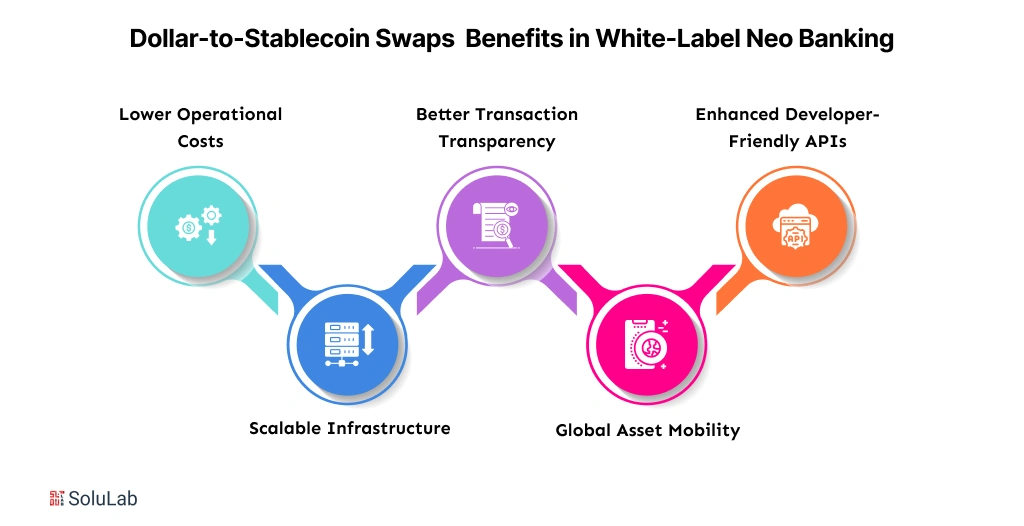
Dollar-to-Stablecoin Swaps Benefits in White-Label Neo Banking

Dollar-to-stablecoin swaps in white-label neo banking get faster, cheaper financial operations. They help businesses improve cross-border payments, reduce conversion risk, and build scalable global digital banking solutions.

  • Lower Operational Costs: Stablecoin-based conversions cut heavy bank fees, reduce FX markups, and remove intermediaries. This allows businesses to run leaner operations while offering competitive pricing to customers at scale.
  • Scalable Infrastructure: Blockchain rails handle high transaction volume without performance drops. As user demand grows, neo banks can scale globally without worrying about traditional banking system limits or high expansion costs.
  • Better Transaction Transparency: Every stablecoin transaction is recorded on-chain, enabling real-time tracking and auditability. This builds trust, simplifies compliance, and reduces fraud compared to opaque legacy banking processes.
  • Global Asset Mobility: Users can transfer value anywhere in the world instantly without relying on local banking networks. It’s ideal for remittances, SAAS payouts, and high-speed cross-border business payments.
  • Enhanced Developer-Friendly APIs: White-label providers offer plug-and-play APIs that simplify integration with fintech apps. Teams can quickly deploy digital wallets, payment gateways, and compliance modules with faster time-to-market.

Future of Stablecoin Swaps in Neo Banking

Stablecoin swaps will become the backbone of next-gen digital finance. Neo banks will use instant, low-cost settlement rails to improve payments, lending, and treasury management for businesses and consumers.

1. Tokenized Deposits: Banks will convert customer funds into on-chain tokenized deposits, enabling faster digital settlement, better liquidity, and swapping with stablecoins. This creates more secure, regulated, and efficient banking rails for global payments.

2. CBDC & Stablecoin Hybrid Banking Systems: Neo banks may combine CBDCs with private stablecoins to balance compliance and innovation. Users enjoy trusted government-backed money while still accessing speed, programmability, and 24/7 settlement benefits.

3. Real-time Programmable Payments: Smart contracts will automate recurring and conditional payments, payroll, EMIs, and vendor payouts without manual action. Stablecoin swaps enable instant settlement, removing delays from legacy banking networks.

4. AI-driven Treasury Management: AI solutions and algorithms will optimize liquidity, risk exposure, and yield strategies in real time. Stablecoin swaps enable instant asset rebalancing, boosting returns while maintaining stability and compliance. 

CTA2

Conclusion

Dollar-to-stablecoin swaps are becoming a core capability for modern banking. Businesses that build this feature into their platforms can offer real-time transfers, protect users from currency volatility, and get new revenue models in digital assets. 

For providers of neo banking solutions, this is no longer a “nice-to-have”; it’s a competitive advantage that boosts user retention and global reach. By adopting compliant, scalable, and secure integrations within white label BaaS platforms.

SoluLab, a stablecoin development company, can help you integrate secure dollar-to-stablecoin swaps into your white-label neo banking platform. Contact us for leading-edge solutions! 

FAQs

1. How does the US stablecoin bill support adoption?

The US stablecoin bill encourages clearer rules for issuing and managing stablecoins, helping banks operate confidently in the digital asset economy.

2. What is a US dollar-backed stablecoin?

A US dollar-backed stablecoin maintains a 1:1 reserve with the US dollar, ensuring stability and trust for users moving value digitally.

3. How do swaps fit within BaaS architecture?

Inside Banking-as-a-service (BaaS) solutions, swap modules can be added like plug-ins, giving fintechs powerful capabilities without owning full infrastructure.

4. How do swaps improve banking user experience?

They allow 24/7 conversions, instant settlements, and global access, enhancing convenience and retention for customers.

5. Can white-label platforms integrate these swaps smoothly?

Yes, via plug-and-play APIs and liquidity integrations, banks avoid heavy blockchain development and go live faster.
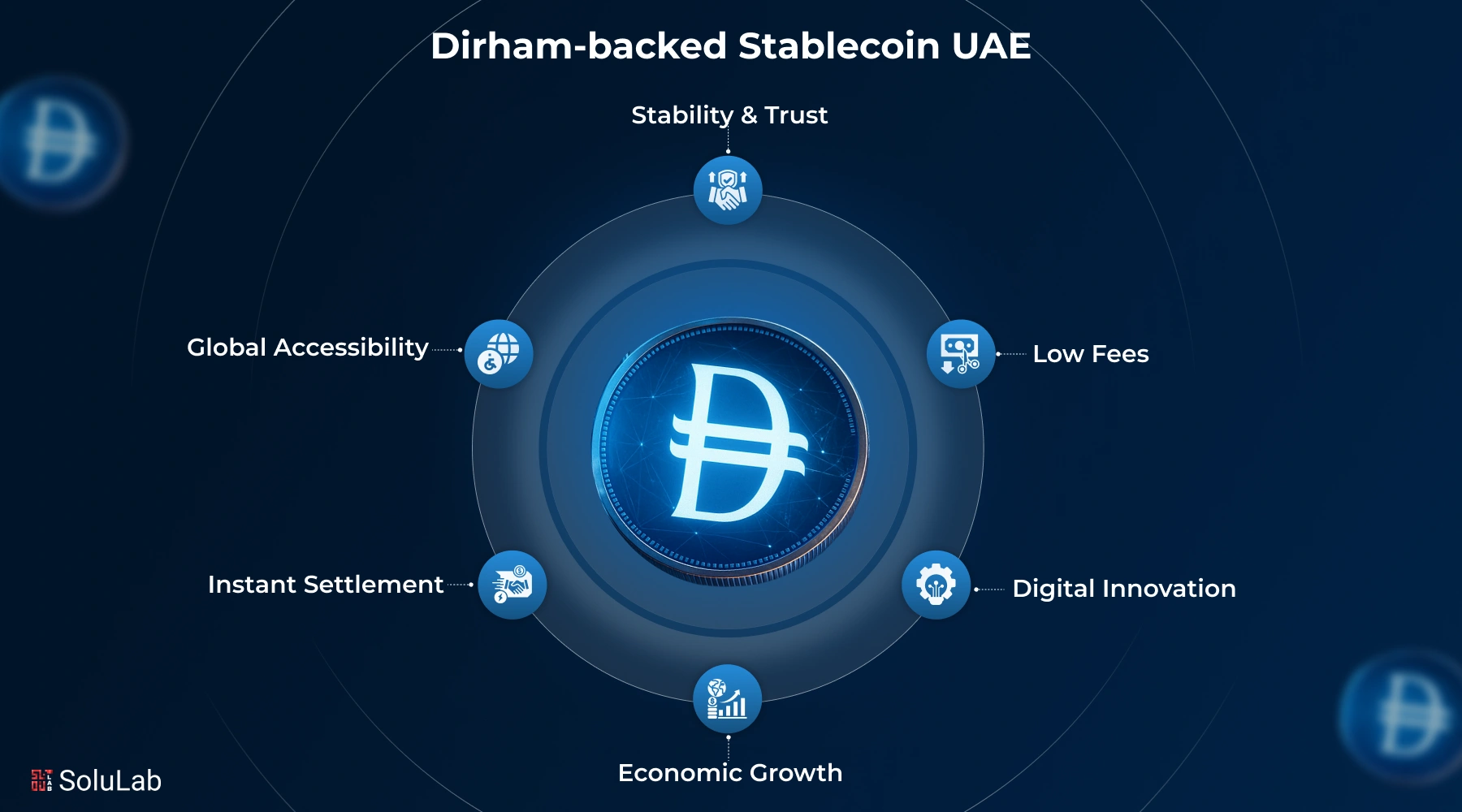
 

How Will UAE’s Dirham-Backed Stablecoin Transform Business Payments?

Dirham-backed Stablecoin

As we move towards 2026, the UAE is leading the charge in digital finance innovation with the launch of the Digital Dirham and the AE Coin stablecoin, creating a modern, complementary payments ecosystem. Global stablecoin adoption is accelerating, with the total market surpassing $300 billion in circulation and cross-border stablecoin transactions exceeding $50 billion by the end of 2025. 

These numbers highlight the growing role of stablecoins in international trade, remittances, and enterprise payments. Recent regulatory frameworks in the UAE and worldwide are providing clarity and trust, encouraging businesses to explore digital payments. This blog explains what the Dirham-backed stablecoin means for businesses, how it operates, and reduces cost.

Inside the UAE’s Dirham-Backed Stablecoin

The UAE model pairs a sovereign Central Bank Digital Currency (CBDC) with private stablecoin initiatives. The Digital Dirham will act as legal tender for retail and institutional payments. AE Coin represents a dirham-backed stablecoin issued by First Abu Dhabi Bank (FAB) with IHC and ADQ. The ADI blockchain will support AE Coin distribution and programmable settlement rails. 

Federal Decree-Law No. 54 of 2023 gives the Digital Dirham legal backing. Market momentum already exists, with Circle targeting a $47 billion remittance corridor. Regulatory clarity in ADGM and the Virtual Assets Regulatory Authority (VARA) supports rapid enterprise-grade token adoption. Businesses can choose between direct CBDC rails and regulated stablecoin rails.

Digital Dirham Stablecoin: From Compliance Burden to Competitive Edge

Dirham stablecoin is not just a digital asset for transfer; it has many strengths with the right regulations for user security. It can be moulded to many other purposes, let’s check them out. 

  • Built-In Compliance Through Smart Contracts

Compliance often requires significant time and resources. The Digital Dirham changes this by embedding KYC and AML checks directly into its infrastructure. Smart contracts enforce compliance automatically before any transaction is completed, reducing the need for manual verification and minimizing errors.

  • Real-Time Audit Trails for Transparency

Every transaction on the blockchain platforms leaves a permanent, tamper-proof record. Businesses gain immediate access to transaction data, making audits faster and easier. This level of transparency builds trust with regulators, reduces the risk of disputes, and lowers the overall cost of compliance.

  • Reducing Settlement Risks for Treasury Teams

Traditional payments often involve settlement delays, creating risks for treasury departments. With the Digital Dirham, transactions settle in real-time, allowing companies to manage liquidity more efficiently. Treasury teams can operate with smaller liquidity buffers, freeing up capital for growth.

  • Turning Compliance into a Business Advantage

Rather than treating compliance as a burden, businesses can position themselves as leaders in transparency and trustworthiness. Companies in sectors such as logistics, supply chain, and trade finance can use the Digital Dirham as a differentiator, attracting clients who value reliable and compliant partners.

How Does the Digital Dirham Stablecoin Differ from Existing Payment Systems?

Feature Digital Dirham Stablecoin Existing Payment Systems
Settlement Direct central bank settlement Relies on intermediaries like banks and card networks
Legal Status Official legal tender issued by the Central Bank Private or commercial payment networks
Programmability Supports smart contracts, escrow, and conditional payments Static fund transfers only
Fraud Prevention On-chain traceability enables real-time monitoring and fraud detection Limited transparency; higher fraud risk
Cross-Border Transfers Near-instant with CBDC interoperability Slow; multi-day settlement through correspondent banks
Cost Efficiency Lower fees due to fewer intermediaries Higher transaction costs and service charges
Transparency & Compliance Fully auditable blockchain records Opaque and fragmented transaction tracking

The Digital Dirham offers legal tender status and direct central bank settlement. Card networks and correspondent banking rely on intermediaries and delayed settlement. AE stablecoin will operate on a compliant blockchain with bank-grade reserves. Programmability allows conditional payments, automated FX conversions, and escrow features. Traceability on-chain will improve fraud detection compared with cash and legacy rails.

1. Direct Settlement vs. Intermediary Networks

Current payment systems often involve banks, clearinghouses, and other intermediaries, each adding costs and delays. The Digital Dirham enables direct settlement with central bank oversight, reducing transaction layers and cutting fees.

2. Programmability vs. Static Payments

While traditional payments merely transfer funds, the Digital Dirham is programmable. Businesses can set up conditions such as escrow payments, milestone-based disbursements, or automatic reconciliations. This flexibility streamlines complex financial processes.

3. Enhanced Fraud Prevention

Fraud remains a challenge with cash and legacy transfers. The Digital Dirham leverages blockchain layers for security and traceability. Every payment is encrypted and recorded, making fraud harder to execute and easier to detect.

4. Cross-Border Advantage

International transfers today can take days to settle. By using CBDC interoperability and corridor-specific stablecoins, the Digital Dirham promises near-instant cross-border payments. Global businesses can cut costs, reduce delays, and gain greater control over international cash flows.

How Can Businesses Leverage the Digital Dirham?

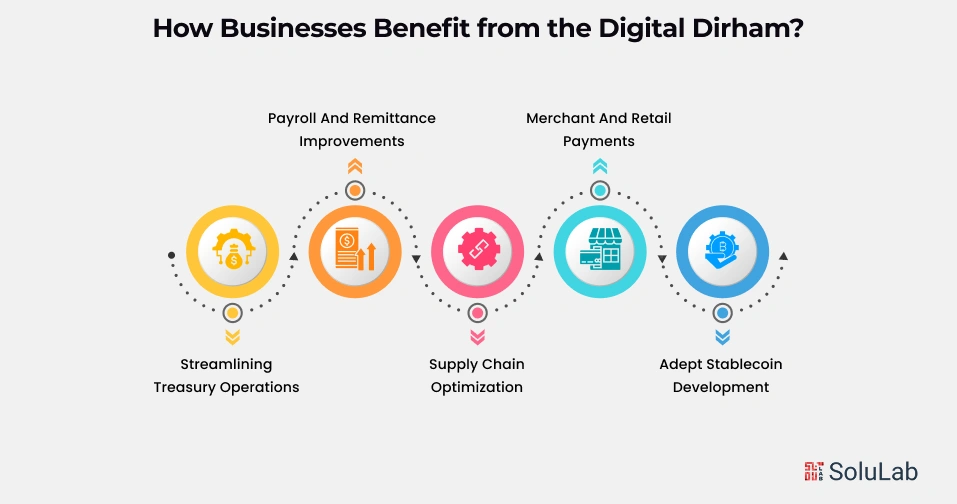
The UAE’s Dirham-backed stablecoin isn’t just a digital currency but a tool businesses can use to streamline operations, cut costs, and enhance security. Here’s how companies can make the most of it:

How Businesses Benefit from the Digital Dirham

  • Streamlining Treasury Operations

Enterprises can automate vendor payments with programmable Digital Dirham contracts. These payments can be timed to supplier agreements, reducing disputes, ensuring on-time delivery, and enhancing supplier relationships.

  • Payroll and Remittance Improvements

For companies with large expatriate workforces, the Digital Dirham offers a major advantage. Salaries can be paid directly in the stablecoin, with employees enjoying faster, cheaper stablecoin remittances. Businesses benefit from predictability and reduced administrative overhead in payroll management.

  • Supply Chain Optimization

Suppliers often face liquidity issues while waiting for payments. Businesses can tokenize invoices and settle them instantly using the Digital Dirham. This accelerates working capital cycles and reduces reliance on external financing.

  • Merchant and Retail Payments

Retailers and e-commerce players can integrate Digital Dirham payments into their platforms. Customers benefit from faster checkouts and lower fees, while merchants enjoy instant settlements and reduced chargeback risks.

  • Adept Stablecoin Development 

Adopting a CBDC requires technical expertise. Partnering with a company that creates stablecoins ensures seamless integration with existing systems, secure wallet management, and full compliance with all relevant regulations. These collaborations help businesses adopt the Digital Dirham faster while minimizing risks.

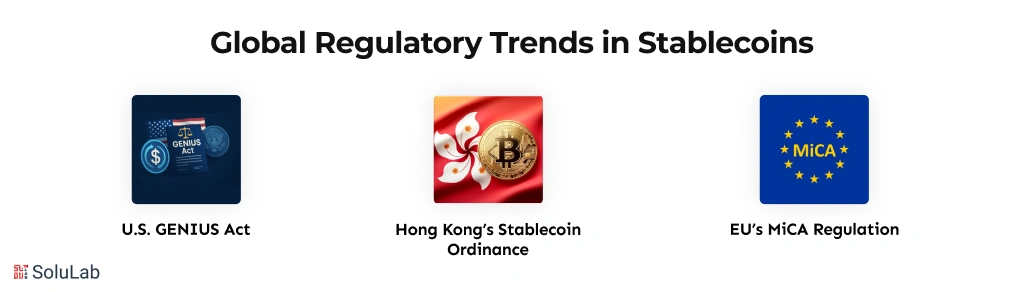
Other Global Regulatory Trends Boosting Trust in Stablecoins

The growth of stablecoins is no longer just about technology; it is about regulation. Global efforts are creating frameworks that build confidence, reduce risks, and encourage mainstream adoption. These moves directly support the credibility of the Dirham-backed stablecoin and strengthen its business case.

Global Regulatory Trends in Stablecoins

1. U.S. GENIUS Act (2025)

The GENIUS Act sets clear rules for payment stablecoins in the United States. It requires 1:1 reserve backing in cash or Treasuries, introduces licensing for issuers, and enforces disclosure of reserves. Importantly, it removes stablecoins from being treated as securities or commodities, placing oversight under banking regulators. This clarity makes RWA backed stablecoins safer and more attractive for both businesses and consumers.

2. Hong Kong’s Stablecoin Ordinance

Hong Kong implemented its Stablecoin Ordinance in August 2025, positioning itself as a leader in digital asset regulation. The law requires issuers of fiat-referenced stablecoins to obtain licenses from the Hong Kong Monetary Authority

It enforces strict reserve rules, redemption rights, custody standards, and regular audits. The law also criminalizes unlicensed promotion, ensuring that only regulated players can operate. These measures make stablecoins more trustworthy in one of the world’s leading financial hubs.

3. EU’s MiCA Regulation

The Markets in Crypto-Assets Regulation (MiCA) came into force in 2024 across the European Union. It sets common rules for crypto-asset issuers and service providers, including stablecoins. MiCA requires issuers of asset-referenced tokens and e-money tokens to maintain sufficient reserves, follow governance standards, and provide transparent disclosures. This regulation blends the European market, making stablecoins safer and more predictable for businesses operating across multiple EU countries.

The Future of Business With the Dirham-Backed Stablecoin

The near future will show wider commercial adoption of dirham-backed stablecoin for public use. Interoperability between the Digital Dirham and AE Coin will enable flexible settlement choice. New products will arise around tokenized assets and real-time treasury liquidity pools. 

Merchant checkout will evolve to accept programmable payments and instant settlement. DeFi protocols may integrate with regulated stablecoins under strict compliance guardrails. Global developments, including the US stablecoin bill, will influence cross-border rules. Boards and executives should prioritise pilots to avoid strategic and operational lag.

Stablecoin Development Company

Conclusion

With the above details, you might have understood the Dirham stablecoin growth and futuristic goals. This is not just about transferring; it’s a new era for innovatively simplifying things. If you are also looking for stablecoin development, then SoluLab is here to assist you. 

We, at SoluLab, the top stablecoin development company, built custom fiat-pegged and algorithmic tokens that safeguard your ecosystem from volatility. Our expert team also provides multiple services, like token and wallet integrations. 

For more information, contact us today!

FAQs

1. Could the Dirham-backed stablecoin change how loyalty programs work? 

Yes. Loyalty rewards can be issued as Dirham stablecoins, making them transferable, redeemable across multiple businesses, and programmable for offers. This transforms reward points into liquid assets that hold real, usable value.

2. How will a dirham-backed stablecoin in the UAE help businesses? 

It lowers settlement delays, reduces costs, and embeds compliance into transactions. Enterprises can manage liquidity better, automate payments, and benefit from faster, safer cross-border transactions under clear UAE regulatory frameworks.

3. What are the top use cases of stablecoins for enterprises? 

Stablecoins enable payroll efficiency, real-time supplier settlements, cheaper remittances, and treasury automation. They also support escrow payments, programmable contracts, and tokenized assets, helping businesses improve cash flow and reduce reliance on traditional banking delays.

4. How can businesses start using the Digital Dirham?

Companies can work with regulated financial institutions and blockchain service providers in the UAE to set up wallets, enable payment processing, and integrate programmable features into their systems.

5. Why choose SoluLab as a stablecoin development company? 

SoluLab creates fiat-pegged, algorithmic, and AI-powered stablecoins with a compliance-first design. We provide secure wallet integrations, system upgrades, and smooth enterprise adoption, ensuring businesses launch stablecoins quickly while staying fully aligned with regulatory standards.

How to Use Stablecoin Rails for Crypto Exchanges?

Integrate Stablecoin Rails for Crypto Exchange

Running a crypto exchange today means handling billions in trades every day. To stay competitive, you need stablecoin rails, the blockchain payment rails that let funds move instantly, 24/7, without banking delays.

For B2B founders, fintech teams, and developers, stablecoins in crypto-fintech systems give three big wins – seamless liquidity, lower volatility risk, and predictable, real-time settlements. Major exchanges now process $20–30 billion daily using these rails.

Adopting stablecoin rails for fintech helps your exchange cut fees, speed transactions, and scale globally, key advantages for attracting institutional partners and high-volume traders.

Why Do Crypto Exchanges Need Stablecoin Payment Rails?

Running a crypto exchange today is challenging. Market volatility, liquidity bottlenecks, and the pressure for instant cross-border settlements are constant hurdles. This is why stablecoin payment rails have become a must-have infrastructure for modern exchanges.

In 2023 alone, $10 trillion total on-chain transaction volume with stablecoins making up 60%, underlining their crucial role in financial operations.

By integrating rail stablecoin systems, exchanges can benefit from:

  • Stable trading pairs that reduce slippage and protect users from sudden market swings.
  • Automated settlements powered by smart contracts, ensuring faster, transparent, and error-free transactions.
  • Reduced dependency on traditional fiat gateways, cutting delays and operational costs.

With stablecoin payment rails, exchanges not only improve operational efficiency but also gain a competitive edge in the fast-evolving crypto ecosystem. 

For founders and infrastructure teams, this means faster settlements, lower costs, and a platform ready for global adoption.

Step-by-Step Guide to Integrating Stablecoin Rails into your Exchange

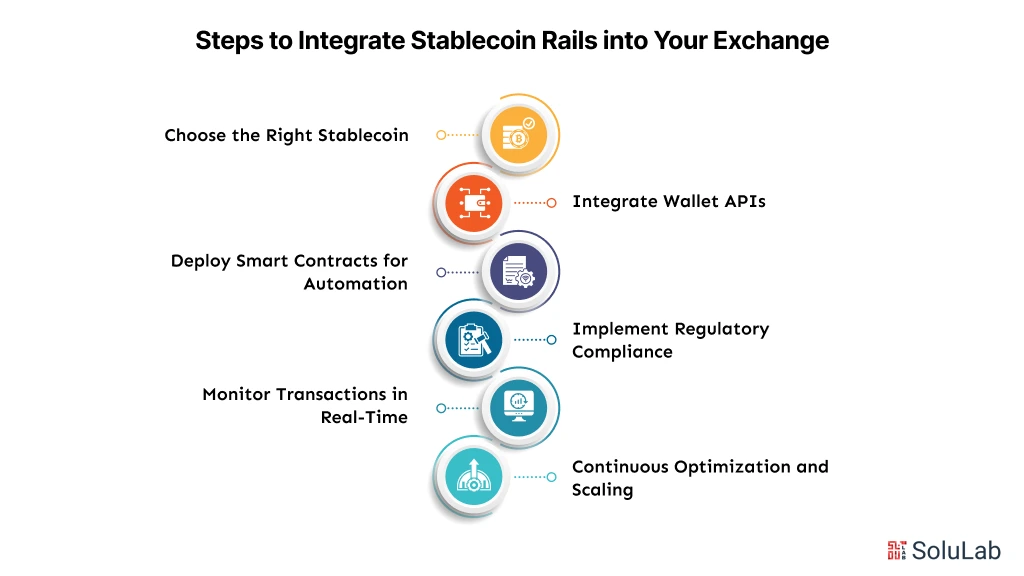
Integrating stablecoins rails for fintech into your crypto exchange or financial platform can significantly enhance liquidity, reduce transaction costs, and improve settlement speed. For B2B clients, understanding and implementing these steps ensures your infrastructure is competitive, secure, and scalable.

Steps to Integrate Stablecoin Rails into Your Exchange

1. Choose the Right Stablecoin

Start by evaluating types of stablecoins based on your business needs. Consider factors like liquidity, regulatory compliance, ecosystem compatibility, and transaction efficiency. Popular options include:

  • USDT: High liquidity, widely used in exchanges.
  • USDC: Institutional-grade transparency with regular audits.
  • DAI: Decentralized, crypto-backed stablecoin ideal for DeFi integration.

Selecting the right rail stablecoin ensures smooth cross-border transactions, reliable settlement, and compliance with stablecoin regulations. For B2B fintechs, this step reduces operational risks and ensures your platform can scale with institutional adoption.

2. Integrate Wallet APIs

To connect your platform to stablecoin payment rails, leverage professional wallet APIs. These tools simplify:

  • Secure custody of stablecoins.
  • Instant transactions across multiple networks.
  • Multi-currency support for different stablecoins in crypto-fintech systems.

Integration with stablecoin rails for fintech allows your users to move funds seamlessly between wallets, exchanges, and payment channels. This step is critical for operational efficiency and building trust with corporate clients.

3. Deploy Smart Contracts for Automation

Smart contracts are the backbone of stablecoin rails. Use them to automate critical functions such as:

  • Settlement of trades and transactions.
  • Margin calls and collateral management.
  • Liquidity provisioning for high-frequency trading.

With programmable stablecoin payment rails, these smart contracts ensure that transactions are transparent, auditable, and executed without manual intervention.

4. Implement Regulatory Compliance

Compliance is essential for B2B fintechs working with stablecoins in crypto-fintech systems. Ensure adherence to stablecoin regulations and frameworks such as the GENIUS Act stablecoin. Key actions include:

  • Verifying issuer reserves for each stablecoin.
  • Implementing AML/KYC procedures.
  • Maintaining audit trails for all transactions.

Being compliant not only protects your platform from legal risks but also increases trust among institutional clients looking to leverage your stablecoin rails infrastructure.

5. Monitor Transactions in Real-Time

Once your stablecoin rails are live, continuous monitoring is crucial. Use dashboards and analytic tools to:

  • Track how stablecoins work in real-time.
  • Identify unusual transactions or network congestion.
  • Prepare audit reports for regulatory authorities or clients.

Real-time monitoring ensures transparency and operational control, critical for B2B relationships and for demonstrating your platform’s reliability to investors or enterprise clients.

6. Continuous Optimization and Scaling

After integration, focus on optimization to maximize the benefits of stablecoin rails:

  • Adjust liquidity pools according to trading volume.
  • Deploy cross-chain bridges for broader network reach.
  • Upgrade smart contracts to support new types of stablecoins.

Continuous improvements enhance efficiency, reduce costs, and make your platform a go-to solution for B2B partners seeking robust crypto and fintech services.

Crypto Exchange Development Services

How Rail Stablecoin Systems Improve Crypto Exchange Liquidity Management? 

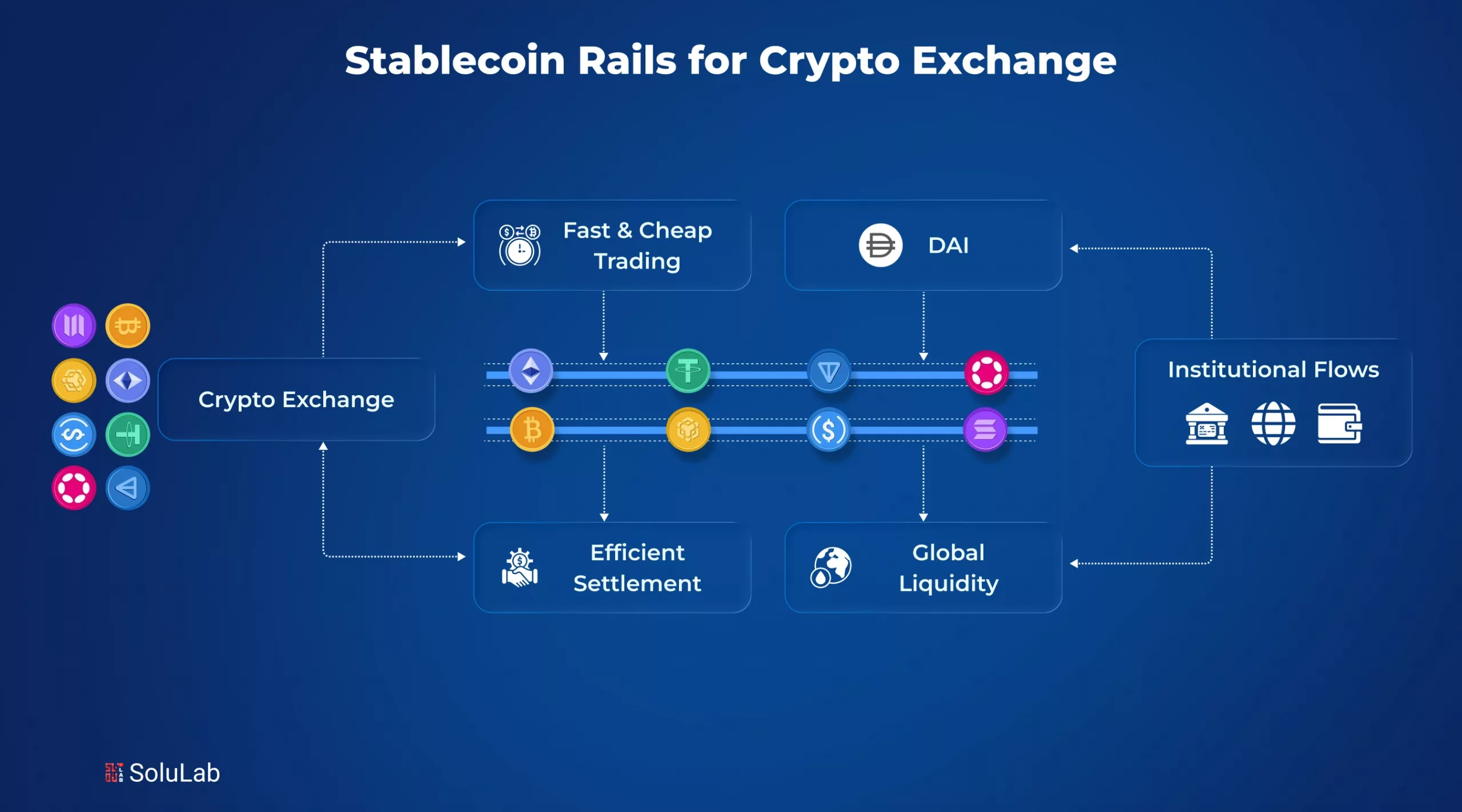
For any B2B crypto exchange, strong liquidity is the key to smooth trading and happy institutional clients. A rail stablecoin system provides the infrastructure that keeps funds moving quickly and predictably, even during high-volume trading.

Rail stablecoin networks let exchanges settle trades in real time with stable, dollar-pegged assets like USDC or USDT. This steady value cuts the risk of price swings and reduces slippage in high-frequency trading, where even small delays or price gaps can cost millions.

By adding stablecoin payment rails, exchanges can accept large institutional inflows without relying on slow banks. Funds arrive and clear within minutes, giving market makers and professional traders instant access to liquidity.

For B2B founders and fintech teams, using stablecoins in crypto-fintech systems means:

  • Faster settlements across multiple trading pairs
  • Lower transaction fees compared to traditional payment rails
  • 24/7 liquidity to handle global trading demand

Read Also: UAE’s Dirham-Backed Stablecoin

Optimizing Cross-Border Settlements with Stablecoin Rails for Crypto Exchanges

For B2B operators, using stablecoins rails for fintech means:

  • Lower costs: Cross-border transfers that can cost 2–5% through banks often drop to under 0.1% with stablecoins in crypto-fintech systems.
  • Instant settlements: Liquidity moves in real time, helping OTC desks close large trades without delays.
  • Stable value: Stablecoin use cases like margin trading stay protected from crypto price swings, because coins are pegged to fiat such as USD or EUR.

Top exchanges already process $20–30 billion daily through these rails. By integrating stablecoin payment rails with clear U.S. rules like the GENIUS Act stablecoin framework, a platform gains regulatory confidence and attracts institutional partners.

How Top Exchanges Use Stablecoin Rails?

1. Kraken With Circle

Kraken partnered with Circle to bring more USDC and the euro stablecoin EURC to its platform. This gives Kraken users deeper liquidity, lower conversion costs, and tighter stablecoin rails integration across trading and settlement. Through its work with OpenPayd, Kraken also supports stablecoin on/off ramps as part of a rails-agnostic payments system.

Takeaway for crypto exchanges: Integrating stablecoins in crypto-fintech systems with issuers like Circle can boost liquidity, cut conversion friction, and make stablecoin settlement rails a core part of operations.

Kraken & Circle

2. Binance

Binance Pay lets users make peer-to-peer and merchant payments using stablecoins with instant, fee-free transfers. Binance also added Circle’s USYC yield-bearing stablecoin, allowing institutional users to post collateral and speed up settlements.

Takeaway: Leading exchanges show that stablecoin payment rails are not just for trading. They drive payments, collateral management, and institutional flows, proving that stablecoin rails for fintech are now central to growth, not a side feature.

Binance Pay

What is the Future of Stablecoin Rails in Global Trading with Stablecoin Regulations?

The future of stablecoin rails for fintech is highly promising. Analysts project the global market could reach $3.7 trillion by 2030.

Clear stablecoin regulations, including the US stablecoin bill and GENIUS Act stablecoin, provide a secure path for adoption. Crypto exchanges and fintech platforms using these frameworks can scale confidently, diversify revenue streams, and stay competitive.

Many institutions are already exploring stablecoins in crypto-fintech systems for treasury management, cross-border settlements, and B2B payments, making this infrastructure critical for modern financial operations.

Read More: Dollar-to-Stablecoin Swaps In White-Label Neo Banking

Build Your Exchange with a #1 Stablecoin Development Company

Partnering with a crypto exchange development company ensures your exchange is fast, secure, and compliant. Key benefits for B2B platforms include:

  • Regulatory compliance: Align with the US stablecoin bill and the GENIUS Act stablecoin.
  • Multi-chain integration: Seamless transfers across Ethereum, Solana, and Layer-2 networks using stablecoins rails for fintech.
  • Advanced liquidity management: Deep liquidity via rail stablecoin infrastructure for trading, payments, and cross-border settlements.
  • Secure smart contracts: Audited, institutional-grade contracts for automated transactions.

SoluLab offers full B2B solutions, integrating stablecoin payment rails, stablecoins in crypto-fintech systems, and advanced stablecoin use cases.

Crypto Exchange Development Services

Conclusion

Stablecoins rails are no longer optional; they are foundational for modern crypto exchanges. By understanding how stablecoins work, navigating stablecoin regulations, and partnering with a stablecoin development company, B2B platforms can reduce operational costs, speed settlements, and scale globally.

With the right infrastructure, your exchange gains:

  • Faster transactions via stablecoin payment rails
  • Deep liquidity across markets using rail stablecoin mechanisms
  • Compliance and security that build trust with institutional users

Integrating stablecoins in crypto-fintech systems allows B2B exchanges to unlock new revenue streams, reduce volatility, and enable innovative stablecoin use cases, all while staying competitive in the global market.

Contact us to grab the best stablecoin solutions! 

FAQs

1. What are stablecoin rails?

Stablecoins rails are blockchain-based infrastructure that allows stablecoins to move quickly and securely between exchanges, wallets, and users. They act like payment highways for crypto, enabling real-time transfers without traditional banking delays. 

2. Why do crypto exchanges need stablecoins payment rails?

Crypto exchanges rely on stablecoins payment rails to provide low-volatility trading pairs, reduce transaction costs, and attract institutional users. By integrating stablecoins in crypto-fintech systems, exchanges can settle trades instantly, support cross-border transactions, and maintain liquidity 24/7.

3. How can stablecoins in crypto-fintech systems reduce fees?

Stablecoins in crypto-fintech systems cut fees by bypassing traditional banking intermediaries. Cross-border settlements that once cost 2–5% can now settle for just a fraction of a cent. Stablecoins payment rails also allow exchanges to automate settlements, minimize reconciliation errors, and speed up transactions. 

4. How does the US stablecoin bill impact operations?

The US stablecoin bill (GENIUS Act) mandates that all regulated stablecoins maintain 1:1 reserves, regular audits, and compliance with AML/KYC regulations. For exchanges, this provides legal clarity, reduces operational risk, and increases institutional confidence.

5. What is the GENIUS Act stablecoin and its role?

The GENIUS Act stablecoin legislation sets federal standards for stablecoin issuance, redemption, and reserve management. Its role is to ensure that stablecoins remain trustworthy and compliant for institutional adoption. 

6. How to choose a stablecoin development company for integration?

Choosing a stablecoin development company involves evaluating technical expertise, regulatory experience, and past integrations. SoluLab can be your best partner for all sorts of blockchain and stablecoin solutions, be it development ot integration. Get a custom quote today!