Talk to an Expert

Top 12 Generative AI Development Companies to Watch in 2026

As we are moving towards the end of 2025, choosing the right generative AI development firm is a lot like picking the perfect co-pilot for a high-speed race—some can navigate the twists with precision, others may slow you down despite their flashy tools. Generative AI is no longer a futuristic concept; it’s actively transforming industries, from creating realistic content and automating workflows to powering intelligent virtual assistants.

In a market crowded with talent and technology, only some companies are truly leading the charge and pushing the boundaries of innovation. This blog will introduce you to the top generative AI development companies to watch in 2026—the ones that can turn ambitious ideas into intelligent, real-world solutions.

Why Generative AI Development is Crucial for 2026?

Generative AI has moved far beyond its early days of creating images and text. In 2026, it will become a cornerstone technology for businesses across industries, enabling them to innovate faster, personalize customer experiences, and operate more efficiently.

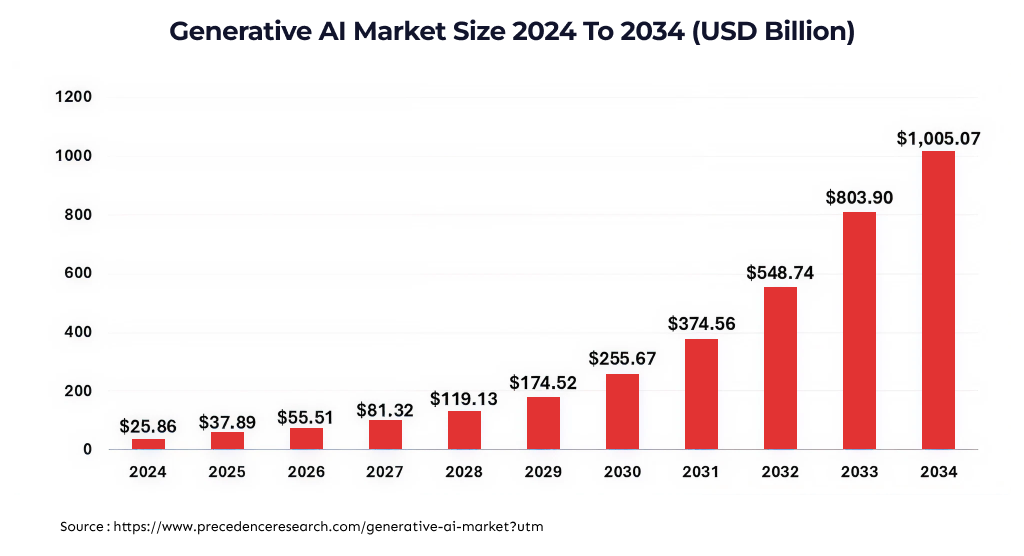
The global market size of generative AI was estimated at around USD 25.86 billion and is projected to grow at a CAGR of 44.20% by 2034, reaching around USD 1005.07 billion.

generative AI market size 2024 to 2034

Here’s why it’s more crucial than ever:

1. Driving Innovation Across Industries

Generative AI is empowering companies to design new products, services, and experiences at unprecedented speed.

2. Accelerating Content Creation and Automation

Content generation that once took days can now be completed in minutes. Businesses use generative AI to craft marketing campaigns, reports, and training materials.

3. Powering Hyper-Personalization

With advanced data analysis and multi-modal AI, companies can offer customized solutions in real time. From personalized recommendations in e-commerce to adaptive learning in education, generative AI delivers experiences that resonate with users.

How to Choose the Best Generative AI Development Company?

Picking the right AI partner from the top generative AI companies can be a tedious task. The wrong choice may waste your budget, while the right one can speed up the way to innovation. The major key factors to consider while choosing the perfect fit for a top generative AI development company:

1. Expertise: Look for a company with proven experience in generative AI, covering NLP, computer vision, or large language models. Their portfolio and case studies should showcase real-world problem-solving and innovative solutions.

2. Scalability: Ensure the company can build GenAI solutions that grow with your business. Scalable AI systems handle increasing data, users, and workloads without losing performance or efficiency.

3. Support: Reliable post-deployment support is crucial. The company should offer training, troubleshooting, and regular updates to ensure your AI solution runs smoothly and adapts to changes.

4. Customization: Every business is unique. Choose a firm that tailors AI models and workflows to fit your industry needs rather than pushing generic, one-size-fits-all solutions.

5. Client Feedback: Check testimonials, case studies, and third-party reviews. Honest client feedback reveals the company’s strengths, reliability, and ability to deliver on promises.

6. Ethical AI Practices: A top generative AI development company prioritizes fairness, transparency, and data privacy. Ethical AI ensures long-term trust and compliance with regulations, reducing risks for your business.

7. Range of Services

Generative AI goes far beyond text or image creation. The top companies on this list provide end-to-end GenAI services, including:

  • AI-powered chatbots and virtual assistants
  • Content generation and automation for marketing, training, and internal workflows
  • Predictive analytics and decision-making support
  • Enterprise-level AI integration with existing systems and processes

Top 12 Generative AI Development Companies To Partner With Before 2025 Ends

From startups to global tech giants, here are the top 12 generative AI development companies leading innovation, services, and scalable business impact.

1. SoluLab

Solulab is a leading name in the top 12 generative AI companies for development solutions, strong at delivering end-to-end generative AI services, especially model development, API integration, workflow automation, content generation, and custom applications with LLMs like GPT-4, DALL·E, etc. They also emphasize ethical/responsible AI use, offering consulting and strategy services to ensure compliance, high performance, and scalable integration.

They serve a wide variety of industries such as healthcare, finance, retail, manufacturing, and education. Besides generative AI model creation, Solulab offers supportive services like maintenance, optimization, AI readiness consulting, and deployment of proof-of-concepts.


$25-$49


50-249


2014


Los Angeles, CA, USA


Digital Quest, Gradient

2. Azilen Technologies

Azilen Technologies specializes in building custom generative AI solutions, including large language models (LLMs), multimodal AI systems, and AI agents. They focus on integrating AI into enterprise applications, enhancing customer experiences, and automating complex workflows. Their services encompass AI-powered workflow automation, NLP integrations, data synthesis, and augmentation, ensuring seamless integration into existing systems.

They have delivered impactful projects across various industries, such as AI-powered financial advisory copilots with voice-enabled 3D avatars and logistics bots that forecast demand and route loads efficiently.


$35/hr


250–499


2009


San Francisco, CA, USA

3. OrangeMantra

OrangeMantra is one of the best generative AI companies that offers comprehensive solutions, including custom model development, fine-tuning of LLMs like GPT-4, PaLM 2, and LLaMA, and integration into existing enterprise systems. Their services encompass knowledge embedding, retrieval-augmented generation (RAG), and AI copilots, all designed to enhance productivity and decision-making processes.

They also provide consulting services to help businesses understand and implement generative AI effectively. Their generative AI applications span various industries, delivering solutions such as automated business proposal generators, compliance benchmarking tools, and more.


$35/hr


A251–1000


2001


Gurugram, Haryana, India

4. Creole Studios

Creole Studios, another one of the top US-based generative AI companies, specializes in developing intelligent, automated solutions that transform and scale businesses efficiently. Their GenAI development services include advanced chatbot development, AI agent creation, dynamic content generation, and AI-driven interview systems. These GenAI solutions aim to enhance customer engagement, streamline operations, and improve decision-making processes.

Creole Studios emphasizes a business-first approach, ensuring that their AI solutions align with clients’ strategic objectives and deliver tangible outcomes. They have delivered impactful projects across various industries, such as developing AI-powered financial advisory copilots.


$25–$49/hr


50–99 employees


2015


Vestavia Hills, Alabama, USA

5. Azumo

Azumo is strong in creating intelligent, nearshore software development, especially for generative AI solutions, data engineering, cloud apps, and custom AI/ML systems. They emphasize generative AI development services like LLM fine-tuning, scalable pipelines, generative content (text, voice, vision, gaming), conversational agents, retrieval-augmented generation, and virtual characters.

They also offer flexible engagement models such as proof-of-concepts (POCs), MVP builds, dedicated teams, and staffing augmentation. Their focus on nearshore collaboration gives time-zone alignment, cost advantage, and a closer fit for global clients.


$25-49/hr


50-249


2016


San Francisco, CA, USA

6. A3Logics

A3Logics is one of the leading generative AI development firms that offers a comprehensive suite of generative AI services, including custom model development, fine-tuning of large language models (LLMs) like GPT-4, and integration into enterprise systems. Their expertise spans various applications such as AI-powered chatbots, voice assistants, document automation, and predictive analytics.

They emphasize delivering scalable, secure, and high-performance AI solutions tailored to meet specific business needs. Their high-tech generative AI solutions have been implemented across multiple industries, including healthcare, finance, retail, and logistics.


$55–$75/hr


201–500


2003


Carlsbad, California, USA


JABIIL, SITA, J2 Global

7. Inceptive

Inceptive specializes in delivering top generative AI solutions for enterprises, including AI chatbots, virtual assistants, and content generation platforms. They focus on developing custom LLMs, AI-based recommendation systems, and workflow automation tools. Their GenAI services are designed to seamlessly integrate AI into existing business processes, enhancing efficiency, accuracy, and customer engagement.

Inceptive has worked across industries such as e-commerce, healthcare, and finance, building AI tools that reduce operational costs and improve decision-making. Projects include intelligent customer support agents and AI-driven market analysis platforms.


$30–$50/hr


50-150


2016


Bangalore, India

8. Q3 Technologies

Q3 Technologies is a top generative AI development company that specializes in delivering the finest generative AI solutions, including AI-powered chatbots, intelligent automation, and predictive analytics. Their services encompass custom AI model development, integration into existing enterprise systems, and strategic consulting to ensure seamless adoption and scalability.

They emphasize responsible AI implementation, ensuring that solutions align with ethical standards and deliver tangible business value. Their generative AI applications span various industries, such as healthcare, banking, education, media & entertainment, e-commerce, and logistics.


$35–$50/hr


500–1000 employees


2003


India

9. Ailoitte

Ailoitte is a leading AI development company specializing in generative AI solutions. They offer services such as AI model fine-tuning, content generation (text, images, videos), and seamless integration into existing systems. Their focus is on delivering scalable and customizable AI solutions that enhance business operations and creativity.

Ailoitte caters to various industries, providing tailored AI strategies to meet specific business needs. Their generative AI applications include automating content creation, enhancing customer engagement through AI-driven interactions, and more.


Approximately $25/hr


100–249 employees


2017


USA

10. Iotric

Iotric is a global software development firm specializing in generative AI solutions. They offer services such as custom chatbot development, AI model fine-tuning, content generation, and browser extension development. Their focus is on delivering scalable and innovative GenAI solutions that enhance business operations and user experiences.

Iotric emphasizes seamless integration and deployment to ensure smooth adoption of AI technologies. Their generative AI applications span various industries, including e-commerce, healthcare, and education.


Approximately $10/hr


10-49


2018


Gurugram, Haryana, India

11. BairesDev

BairesDev is a leading nearshore technology solutions company, offering a comprehensive suite of generative development AI services. Their expertise encompasses custom large language model (LLM) development, AI-powered predictive analytics, conversational AI, and business process automation. They focus on delivering scalable and secure AI solutions tailored to meet specific business needs, ensuring seamless integration into existing systems.

Their team of over 4,000 professionals is adept at leveraging AI to drive digital transformation across various industries. Their generative AI applications span multiple sectors, including fintech, media, and enterprise solutions.


$45–$75/hr


4,000+


2009


San Francisco, California, USA

12. Code Brew Labs

Code Brew Labs is a global technology partner specializing in end-to-end Generative AI solutions. Their services encompass custom AI model development, fine-tuning of large language models (LLMs), AI-powered chatbots, and content generation tools. They emphasize delivering scalable and secure GenAI solutions tailored to meet specific business needs, ensuring seamless integration into existing systems.

Their expertise spans various industries, including healthcare, fintech, e-commerce, and education. By leveraging advanced AI technologies, Code Brew Labs helps businesses enhance operational efficiency, improve decision-making processes, and drive innovation.


$25–$50/hr


200+ employees


2013


San Diego, California, USA

CTA

The Industry-Wide Impact of Top Generative AI Developers

The best AI development companies worldwide are not just building intelligent models—they’re transforming entire industries. From healthcare to finance, their innovations are driving efficiency, boosting productivity, and unlocking new opportunities for businesses worldwide.

  • Healthcare: Generative AI is revolutionizing diagnostics, drug discovery, and patient engagement. AI-powered assistants, predictive models, and automated report generation streamline processes and improve treatment outcomes.
  • Finance & Banking: AI firms are enabling smarter risk assessment, fraud detection, and personalized banking experiences. Generative AI models help banks automate compliance reports and enhance decision-making with real-time insights.
  • Retail & E-Commerce: From personalized recommendations to AI-driven marketing campaigns, generative AI improves customer engagement and boosts sales. Chatbots and content generation tools help retailers scale operations efficiently.
  • Education & E-Learning: AI-driven tutoring, content generation, and interactive learning experiences are making education more personalized and accessible. Generative AI helps institutions provide tailored guidance to students globally.
  • Media, Entertainment & Gaming: Creative industries benefit from AI-generated content, including scripts, visuals, music, and game assets. This accelerates production cycles while enhancing creativity and audience engagement.
  • Manufacturing & Supply Chain: AI-driven predictive maintenance, quality control, and demand forecasting optimize production. Generative AI tools help manufacturers reduce downtime, improve efficiency, and manage complex logistics.

Conclusion

Generative AI is no longer just a tech trend, but a transformative force across industries. From healthcare to finance, retail, and creative sectors, top generative AI development companies in 2026 are enabling businesses to innovate faster, optimize operations, and deliver personalized experiences at scale. Partnering with the right AI developers ensures not only cutting-edge technology but also strategic guidance, seamless integration, and measurable results.

Whether you’re a startup aiming to leverage AI for growth or an enterprise seeking automation and intelligence, these 12 best generative AI development companies can turn your vision into reality, helping you stay ahead in an increasingly AI-driven world.

FAQs

1. How much does it cost to hire a generative AI development company?

Costs vary depending on project complexity, team size, and duration. Hourly rates typically range from $25 to $100/hr, while end-to-end solutions can be priced on a project basis.

2. Can generative AI be customized for specific business needs?

Absolutely. Top AI development companies provide tailored solutions, including industry-specific models, data-driven workflows, and AI applications aligned with business objectives.

3. How long does it take to implement a generative AI solution?

Simple AI applications may take a few weeks, while complex enterprise-scale AI systems with multiple integrations can take 3–6 months or longer.

4. Can generative AI integrate with existing software systems?

Absolutely. AI developers ensure seamless integration with CRMs, ERPs, e-commerce platforms, and other enterprise systems to maximize business efficiency.

5. How do businesses measure the ROI of generative AI?

ROI can be measured through efficiency gains, cost reduction, improved customer engagement, faster decision-making, higher revenue from AI-driven solutions, and reduced operational errors.

6. What is the future of generative AI in business?

Generative AI will continue expanding into real-time personalization, predictive analytics, autonomous operations, and creative automation, helping companies innovate faster and stay competitive.

Generative AI Project Ideas for Data Science Students

GenAI project ideas

Generative AI builds new content, writes code, automates tasks, and creates training data. These tools now support design, healthcare, writing, and more. That’s why students in data science courses should start learning how to use them. AI projects give students hands-on practice. They help connect machine learning theory with useful tools. Students in data science programs can build models that learn patterns and make outputs like text, code, or images.

This article shares project ideas that use generative tools. They are designed to match the skills of students. These ideas suit different levels of technical understanding. Next, let’s look at project ideas sorted by academic complexity.

The Learning Curve in Data Science Education

Data science students often feel pressure from every side. There’s complex maths, coding, machine learning assignments, and strict deadlines. Many tools are new, and each course expects fast results. At one point, I thought I’d rather ask professionals to write my assignment for me and use that time for other tasks. That feeling came from stress, not a lack of interest. In both undergrad and data science school, expectations grow fast. There’s theory to learn and code to write. Projects need reports, models, and analysis, all in one. It’s a lot to manage.

But stress can be managed with the right plan. Clear tasks, simple tools, and smart goals help. The next part shares project ideas that fit different learning levels.

Why Choose Generative AI for Student Projects?

These models learn patterns and create fresh outputs like text, code, music, or images. Students use them to mix creative work with technical skills. This makes them perfect for project-based learning.

Gen AI projects help students apply theory in new ways. They also match what’s taught in many data science courses. The use of such tools is growing in many areas. Real-World Uses of Generative AI:

Area Example Use
Healthcare Simulating patient data
Marketing Writing product descriptions
Content Creating blogs or visuals

Students should test new ideas. Build tools for daily life, study, or social use. Try fresh concepts that go beyond basic tasks. This helps build both coding and creative skills.

Project Idea 1: Text-to-Story Generator Using NLP

This project uses NLP to build a text-to-story generator. The goal is to train a model that writes short stories from user prompts. Students can start with a pretrained model GPT-2 or GPT-Neo. Then, fine-tune it on data from BookCorpus or Project Gutenberg.

Use the Hugging Face Transformers library for training and testing. Add tokenisation with the tokenizers package. For evaluation, check coherence, grammar, and originality using BLEU scores or human review.

This task tests core NLP skills. Students learn prompt engineering, model fine-tuning, and text generation. It also teaches data cleaning and performance tracking.

This is one of the most flexible generative AI project ideas. It mixes creativity with real model training. It works well for students who enjoy language and want to learn more about deep learning in NLP.

Project Idea 2: AI-Generated Art from Data Labels

This project links image generation with data labels. Students use DALL·E or Stable Diffusion to make visual outputs based on structured input. For example, turn emotion-labeled text into expressive images. Or use metadata like mood, setting, or object type to control output.

Start with PyTorch or TensorFlow. Try conditional GANs or diffusion models to link labels with image features. Pretrained weights help speed up training. Use small datasets to test before scaling up.

This task builds skills in both image generation and data handling. It also fits into areas like digital art, marketing, or product design. Students learn how to shape visuals using structured data.

These projects support creative thinking and technical skill. They show how text, labels, and code can work together. It’s a strong choice for students who want to explore visual AI tools.

Project Idea 3: Synthetic Dataset Creation for Predictive Modeling

It’s helpful when real data is hard to get or private. Students can apply this in healthcare, finance, or education. These fields often face limits on data sharing.

Use CTGAN or SDV to build tabular data. These models learn from patterns in real datasets and make new samples that follow the same rules. You can train a classifier on this synthetic data and test how well it performs on real data.

This helps students learn privacy-aware machine learning. They also improve skills in data preprocessing, model training, and evaluation.

Among the most useful generative AI projects, this one shows how to work with sensitive data. It connects technical skills with real-world limits, and supports responsible AI practice.

Project Idea 4: AI-Based Educational Content Generator

This project can help teachers prepare content faster. Students can use it to review lessons. Use models like T5 or the OpenAI API for text generation. Add question generation libraries for extra support.

The idea fits well with education tools or tutoring apps. It also supports data science for high school students. With clear design, the tool can turn science or maths texts into short tests or notes.

This can contribute to data science programs for high school students. It helps make technical content more readable and test-ready. Add filters for age level, subject, and quiz type.

Conclusion

We recommend starting with simple models and building from there. Pick a clear goal, use small datasets, and test results often. Choose projects that match personal interest and course focus. Generative ai project ideas should support learning, not replace it. Use them to build useful tools, test skills, and gain feedback. Focus on structure, clarity, and function.

Apply what you learn to real needs—study help, automation, or content. Keep track of results, document progress, and ask for reviews. Small steps lead to strong outcomes.


The Benefits of Generative AI in Creating Unique Game Assets

Generative AI in Game Assets

AI systems have evolved from simple scripts to complex mechanisms that are fundamentally changing the way games are developed and experienced. This technological evolution presents a wealth of opportunities to reform the gaming industry. The first games with AI components have already been released, and many developers want to use artificial intelligence in one way or another to create unique game assets. But how are they navigating these new waters and what does it mean for the future of our favorite games? Learn how artificial intelligence is transforming the gaming sector.

The Rise of Generative AI

It all started a few years ago with ChatGPT. It made it very easy to generate texts and even though the results were sometimes questionable, it became a hype. Amazon was flooded with AI-generated eBooks.

In the meantime, AI tools have become much better, and they’ve started to deliver very good results when creating graphics and videos.

This, of course, has not left the gaming world indifferent and many emotional discussions are taking place among industry players. So, what are the benefits of generative AI for the gaming community? Here are five ways AI technology is paving the way for new gameplay experiences.

1. Increasing Efficiency While Reducing Costs

Traditionally, developing game assets, such as graphics, animations, and soundscapes, requires extensive time and resources. One very important aspect is the cost or effort involved in creating illustrations and graphics for games.

Good illustrations cost three or four figures per graphic! The process can also take quite a long time. This is not financially viable, especially for small game makers, and AI has made it possible to implement projects that would otherwise not be possible for financial reasons. Now, many high-quality game assets and graphics can be realized with the help of AI. Reducing the budget of graphics and animations also allows developers to focus more on gameplay mechanics to deliver a more engaging experience to players.

But, of course, large publishers, who are less concerned with passion and more with making money, will see AI as an opportunity to be more profitable. That, at least, is to be feared. Whether the savings will actually be passed on to the buyers in the end is also questionable.

2. Inspiring Artists

Generative AI is a great tool to help develop ideas and serve as inspiration for artists. And that is not unusual. Artists often use other images as templates to help create their own. Sougwen Chung is a good example of this. The award-winning artist trained algorithms on her painting stroke data to create Spectral, a groundbreaking collaboration between human creativity and machine input. Her work pushes the boundaries of what’s possible when AI assists artistic expression.

AI can also be incredibly useful and time-saving when creating prototypes. With a basic understanding of AI-generated art, graphic designers can quickly develop and refine their concepts, which will allow them to experiment freely during the conceptual design phase of the project.

3. Personalizing Player Experiences

One of the significant advantages of AI is its ability to analyze player behavior and preferences. By processing vast amounts of data, AI can tailor game content to individual players, offering personalized themes, challenges, and rewards. This advantage is already actively used in the iGaming sector. When AI is integrated into an online casino platform, the player’s experience is customized and player satisfaction and loyalty increase, thanks to unique promotions, tournaments, and game recommendations tailored to their preferences.

4. Enhancing Visual Elements

Generative AI enables the creation of intricate and visually stunning game environments that captivate players. By leveraging AI algorithms, developers can theoretically generate infinite content. They design realistic textures, dynamic lighting, and complex animations that enhance the overall aesthetic of games.

5. Creating Dynamic Content

Have you ever wondered what it would be like to be in a game world that really reacts to you? In a world where characters don’t just follow set processes, but recognize your decisions, adapt, and act almost as if they had a will of their own? Artificial intelligence makes that possible. AI-supported tools help create interactive stories by adapting content dynamically. Games like Galaxies of Eden already use AI algorithms that dynamically create new tasks, environments, and game content. This means the player experience is automatically transformed without developers having to program every detail manually.

Challenges and Considerations

AI is no longer just an exciting feature, but an integral part of game development. But with the new possibilities come great challenges. A central issue is the protection of privacy. AI-supported games analyze gaming behavior to create tailored experiences. But where does meaningful personalization stop and problematic surveillance begin? Developers have a responsibility to make the use of AI transparent and to ensure the data protection of players.

The job market is also feeling the effects. Voice actors are particularly affected, as their voices are increasingly being replaced by AI-generated versions. This development raises questions: Is it right to replace people with technology? Or are there ways to use AI as a supplement rather than a replacement? Creative professions must adapt,  but industry must also find ways to protect and further integrate talent.

The gaming community itself plays an important role here. There need to be clear rules for the use of AI, an open dialogue between developers, players, and technology providers,  and above all, responsible decisions. Only when innovation and ethics are considered together can AI enrich gaming.

Embracing the Future of Gaming

The future of the gaming industry will be heavily influenced by artificial intelligence. NVIDIA CEO Jensen Huang says that AI is advancing at an incredible pace and will revolutionize the gaming industry within just a few years.

AI technologies are changing how games are developed and experienced. The algorithms are becoming better, more creative, and easier to use. This makes the development process more efficient and enables new gaming experiences. Companies must use AI to deliver unique and engaging gaming experiences that captivate and retain players while ensuring that they use AI responsibly.

Top 10 Generative AI Consulting Companies 2026

The global AI market, valued at $136.55 billion in 2022, is balanced for significant growth in the coming years. With a projected compound annual growth rate (CAGR) of 37.3% from 2023 to 2030, it’s anticipated to reach USD 1,811.8 billion by 2030.

In a world where artificial intelligence is changing industries, generative AI stands out as a unique tech. Generative AI is allowing businesses to create, optimize, and personalize content, products, and services like never before. As more companies recognize the power of generative AI, the demand for specialized consulting services has skyrocketed. In this blog, we’ll explore the top consulting companies that are at the forefront of generative AI, helping businesses unlock new opportunities.

How Did We Compile The List of Top Generative AI Consulting Companies?

We were able to identify and highlight the top Generative AI consulting companies by evaluating the following criteria:

1. Years of experience in the market

2. Client testimonials

3. Quality of delivered products and services

4. The size of the team

5. Industries the company serves

6. Flexibility

7. Reviews by customers and references by media and other companies

8. Their understanding of industries and markets

9. The technology stack used for development

What Are The Top Generative AI Consulting Companies?

To help you find the right fit, we have compiled a list of top Generative AI consulting companies based on factors such as experience, portfolio, and development capabilities.

SoluLab

1. SoluLab

SoluLab, a leading AI consulting company, heads our list of the top 10 generative AI consulting companies. As a decentralized development service provider, SoluLab excels in delivering solutions to businesses across diverse industries. Supported by a team of highly skilled AI consultants, SoluLab offers comprehensive services encompassing expertise in machine learning, natural language processing, and computer vision.

SoluLab has showcased its prowess through notable projects such as implementing AI-powered personalization algorithms for an e-commerce company, resulting in enhanced conversion rates and improved customer satisfaction. Their customer-centric approach and commitment to tangible business outcomes position SoluLab as a trusted AI consulting partner for 2026 and beyond. With expertise and dedication to innovation, SoluLab stands as the go-to choice for businesses seeking to harness the power of AI successfully.


$25-$49


50-249


2014


Los Angeles, CA, USA


Digital Quest, Gradient

BCG

2. Boston Consulting Group

Boston Consulting Group (BCG), a preeminent management consulting firm, offers a comprehensive suite of AI consultancy services that empower organizations to harness the transformative potential of artificial intelligence. As one of the top generative AI consulting companies, BCG’s AI repertoire extends far beyond mere strategy formulation. Their services encompass every aspect of AI implementation, from meticulously identifying high-impact use cases to providing unparalleled implementation support.

BCG’s AI consultants possess a deep understanding of the latest advancements in artificial intelligence, enabling them to tailor practical solutions. They work closely with clients to develop a comprehensive AI strategy that aligns with the organization’s overall business objectives. This strategy encompasses not only the identification of potential use cases but also the creation of a roadmap for implementation.


$50-$100/span>


5000-7000


1984


Wisconsin, USA

Hackett Group

3. The Hackett Group®

The Hackett Group® is a leading generative AI consulting company and an expert-driven advisory firm that drives business transformation through digital innovation. Harnessing advanced generative AI technology, it delivers comprehensive AI strategy development, guides full-scale AI implementation, and provides ongoing AI consultancy services to ensure long-term success. The Hackett Group’s expert AI consultants combine deep industry benchmarking insights with cutting-edge tools and data-driven methodologies to ensure each AI strategy aligns with business objectives and yields measurable results.

By integrating innovative generative AI solutions into core operations, The Hackett Group® helps organizations streamline processes, enhance productivity, and achieve sustainable growth and a lasting competitive advantage. With a focus on strategic guidance and execution, The Hackett Group® empowers enterprises to realize the full potential of AI-driven transformation.


$100-$150


1500+


1991


Florida, US

Capgemini

4. Capgemini

Capgemini, a globally recognized leader in consulting, technology services, and digital transformation, stands at the forefront of Artificial Intelligence (AI). Their extensive portfolio of AI services encompasses a diverse spectrum of areas, enabling clients across multiple industries to seamlessly integrate AI into their operations. As one of the leading generative AI consulting companies in the USA, Capgemini specializes in intelligent automation—a game-changing technology that improves business processes. By using intelligent automation solutions, organizations can automate repetitive and time-consuming tasks, allowing employees to focus on more strategic and value-added activities.


$100-$150


10001+


1967


France

Telstra-Purple

5. Telstra Purple

In 2016, the company forged a strategic alliance with Telstra, a leading telecommunications and technology provider. This collaboration further solidified their global standing and recognition as a top generative AI consulting company for their outstanding software development processes and highly skilled developers. Clients aimed to use Telstra’s extensive network infrastructure, cloud computing capabilities, and industry expertise to enhance the company’s service offerings and expand its reach into new markets.


$100-$120


1001-5000


1901


Australia

Deeper Insights

6. Deeper Insights

Deeper Insights™ (DI) is a trailblazing company that transforms the intricate world of digital transformation and product innovation into a tangible reality for businesses. As one of the top generative AI consulting companies, DI’s expertise is derived from an elite team of highly skilled Ph.D. Data Science and Machine Learning professionals spread across Europe and the UK, allow companies seeking to unlock the full potential of their data.


$05-$90


10-49


2015


NY, USA

Sirius

7. Sirius

Operating at the forefront of the IT industry for three decades, Sirius has solidified its reputation as a globally recognized top generative AI consulting company. Their commitment to excellence is presented by a team of certified sales and technical professionals who possess an unparalleled depth of knowledge, exceptional skills, and a dedication to client satisfaction. They collaborate seamlessly to deliver AI-driven solutions to address the unique business challenges faced by their clients. Sirius’s commitment to allowing businesses to succeed in the digital age is noticeable in its dedication to providing solutions that drive operational efficiency, improve productivity, and foster growth.


$25,000+


1001-5000


1980


San Antonio

fayrix

8. Fayrix

Fayrix is known as a software development solution. As one of the top 10 generative AI consulting companies, their uncompromising commitment to excellence has allowed them to build a seasoned and competent team of over 1500 skilled developers. With 12 years of experience in undertaking projects of any magnitude, Fayrix has consistently delivered exceptional results. To ensure their clients receive the highest quality of service, Fayrix has strategically placed its R&D centers in key Eastern European IT hubs.


$100-$150


1001-5000


2008


Israel

ExaWizards

9. ExaWizards

ExaWizards Inc., a renowned generative AI consulting company, stands as a beacon of innovation in the technology. Operating as an innovation creation entity, ExaWizards offers a complete suite of services that cater to the needs of businesses and organizations. Central to ExaWizards’ offerings is artificial intelligence consulting. With a team of seasoned AI experts, the company provides strategic guidance to clients seeking to harness the power of AI in their operations.


$50-$99


51-200


2016


Tokyo

7EDGE

10. 7EDGE

7Edge, a prominent AI consulting company, offers an array of services to assist clients in their quest for digital transformation. As one of the best generative AI consulting companies, 7Edge ensures the highest quality in AI-enabled product development. Their team of experts possesses extensive knowledge and experience in a range of industries, including manufacturing, banking, aviation, defense, and the military. This allows them to provide comprehensive solutions to the specific needs of each client.


$25-$49/hr


51-200


2010


Bengaluru, India

Generative AI Consulting Services

Conclusion

In artificial intelligence, choosing the right partner is crucial for harnessing the power of AI effectively. The top 10 generative AI consulting companies highlighted in this blog represent the pinnacle of innovation and expertise in the field. These top generative AI consulting companies are not only at the forefront of AI technology but also offer bespoke solutions to the unique needs of their clients.

Selecting a leading generative AI consulting company ensures that businesses benefit from technologies and strategic guidance that drive growth and efficiency. Whether you’re looking for the best generative AI consulting companies or top-tier generative AI consulting companies in the USA, the firms featured here are well-equipped to deliver exceptional results. By collaborating with these industry leaders, organizations can navigate the complexities of AI and unlock its full potential, positioning themselves for success in the digital age.

FAQs

1. What are the top 10 generative AI consulting companies?

The top 10 generative AI consulting companies are recognized for their exceptional expertise and creative solutions in the field of AI. These companies offer a range of services including AI strategy development, implementation, and support to help businesses leverage AI technologies effectively.

2. How do I choose the best generative AI consulting company?

When selecting a generative AI consulting company, consider factors such as their industry experience, range of services, client testimonials, and expertise in AI technologies. Look for companies with a proven track record of delivering successful AI projects and providing solutions to meet your specific needs.

3. What services do top generative AI consulting companies offer?

Top generative AI consulting companies typically offer services such as AI strategy development, data analysis, machine learning model creation, natural language processing, and AI system integration. They provide end-to-end solutions to help businesses implement and optimize AI technologies.

4. How can generative AI consulting companies in the USA benefit my business?

Generative AI consulting companies in the USA can provide valuable insights and expertise in implementing AI solutions that drive business growth. They offer strategies and technologies to help businesses improve efficiency, enhance decision-making, and stay competitive in the digital.

5. What makes a generative AI consulting company the best in the industry?

The best generative AI consulting companies are distinguished by their deep expertise in AI technologies, successful track record of delivering impactful solutions, and ability to customize their services to meet client-specific needs. They also stay at the forefront of technological advancements and offer comprehensive support throughout the AI implementation process.

6. How do generative AI consulting companies support digital transformation?

Generative AI consulting companies support digital transformation by providing AI-driven solutions that streamline business processes, enhance data analytics, and automate tasks. They help organizations integrate AI technologies into their operations, enabling them to adapt to changes and achieve strategic goals more efficiently.

7. What should I look for in a generative AI consulting company’s client portfolio?

When evaluating a generative AI consulting company’s client portfolio, look for a diverse range of projects and industries that demonstrate their ability to handle various challenges. Success stories and case studies showcasing their expertise and the impact of their solutions can provide valuable insights into their capabilities and reliability.

How Much Does it Cost to Build a Generative AI Solution in 2026?

Build Generative AI Solution - Cost Breakdown

Thinking of building your own generative AI solution in 2025? You’re not alone! 

With tools like ChatGPT, Midjourney, and custom AI copilots making headlines, businesses across industries are racing to explore what generative AI can do for them. 

But then the big question comes up: “How much is this going to cost?” accompanied with a few more- Is it a six-figure investment only tech giants can afford? Or can startups and mid-sized businesses also tap into the power of generative AI without draining their budget?

In this blog, we’ll walk you through everything you need to know, from development and infrastructure costs to team size, APIs, and more. Whether you’re budgeting for an AI-powered chatbot, a content generator, or a full-scale enterprise solution, we’ll help you understand where your money goes. 

Let’s get started!

Types of Generative AI Models

Types of Generative AI Models

There are several varieties of generative AI models, each with unique structures and uses. Here’s an overview of the key types:

1. Generative Adversarial Networks (GANs)

GANs are among the most prevalent types of generative AI models. They consist of two neural networks: the generator and the discriminator, which operate in opposition to one another. The generator is responsible for creating new data, while the discriminator evaluates the authenticity of this generated data by determining whether it resembles real data. Through this competitive process, the generator becomes increasingly proficient at producing realistic data. GANs are widely used in applications like video synthesis, image creation, and even the development of deepfakes.

2. Variational Autoencoders (VAEs)

VAEs are probabilistic models that encode input data into a latent space and then decode it to produce new data. They feature two neural networks: an encoder and a decoder. Unlike GANs, VAEs focus on learning the distribution of input data, enabling them to generate new samples by drawing from this distribution. VAEs are commonly used in fields requiring diverse and high-quality data, such as drug discovery and design.

3. Transformer Models

Transformers, such as GPT, represent a neural network architecture that has significantly influenced the field of natural language processing (NLP). These models use self-attention mechanisms to process and generate text sequences. Transformers are instrumental in creating advanced language models capable of generating human-like text, answering questions, and translating languages. They are integral to many generative AI applications and solutions.

4. Diffusion Models

Also known as denoising diffusion probabilistic models (DDPMs), diffusion models are generative models that map vectors in latent space using a two-step process during training. The first step, known as forward diffusion, involves gradually adding random noise to the training data. The second step, reverse diffusion, removes the noise to reconstruct data samples. By running reverse denoising starting from pure random noise, these models can generate entirely new data. Diffusion models play a crucial role in the development of innovative generative AI and automation solutions.

These diverse types of generative models are foundational to the development of Gen AI apps, driving innovation across various industries by automating content creation and enabling sophisticated data generation.

How Does Generative AI Work?

How Does Generative AI Work

Generative AI uses advanced machine learning models to create new content, such as text, images, or even music, that mimics human creativity. The process typically involves training a model on a large dataset, enabling it to recognize patterns, relationships, and structures within the data. Here’s a breakdown of how Generative AI works:

1. Data Collection and Preprocessing

Generative AI starts with collecting vast amounts of data relevant to the task at hand. This data may consist of audio, video, text, or photos. The data is then preprocessed to ensure it’s clean, structured, and ready for training. For enterprises, this step is crucial as the quality of data directly impacts the accuracy of the AI models.

2. Model Training

During this phase, the AI model is trained using algorithms like Generative Adversarial Networks (GANs) or Variational Autoencoders (VAEs). The model learns from the data by identifying patterns and structures, gradually improving its ability to generate new content. Leading generative AI development companies in 2025 are utilizing these sophisticated models to push the boundaries of AI capabilities.

3. Content Generation

Once trained, the model can generate new content that is strikingly similar to the original data. The AI can create meaningful phrases, paragraphs, and even full articles, for instance, when it comes to text production. In image generation, the AI can create realistic pictures from scratch. Generative AI for enterprises is particularly valuable in automating content creation, enhancing creativity, and driving innovation.

4. Fine-tuning and Optimization

After the initial content generation, the model may require fine-tuning to meet specific requirements. This step involves adjusting the model to produce more accurate or contextually relevant content. Enterprises often work with Generative AI Development Companies to customize AI solutions that align with their unique business needs.

5. Deployment and Continuous Learning

Finally, generative AI models are deployed within the enterprise environment, where it can continue learning and improving over time. Continuous learning is essential as it allows the model to adapt to new data, trends, and user preferences, ensuring that the generated content remains relevant and valuable.

By understanding how Generative AI works, enterprises can unlock new possibilities in content creation, innovation, and automation, positioning themselves at the forefront of technology in 2025.

Key Components of Building a Generative AI

Key Components of Building a Generative AI

Creating a Generative AI system involves several essential components, each adding to the project’s cost and complexity. Here’s a breakdown of these elements:

1. Data Collection

To build a generative AI, you need to gather and process extensive datasets. The accuracy and performance of your model heavily depend on the quality and diversity of this data.

Acquiring high-quality data can be costly, especially if you’re purchasing datasets from third-party providers or conducting extensive research to secure proprietary data. Alternatively, you could use publicly available datasets, but these often require significant cleaning and preprocessing, which adds to the cost. Depending on the industry, data acquisition expenses can range from thousands to millions of dollars.

High-quality data should accurately represent the relevant domain to ensure the generation of realistic and pertinent outputs. Raw data must undergo cleaning, annotation, and preprocessing to remove noise, biases, and inconsistencies. You’ll need domain experts and skilled data engineers for tasks like data labeling, augmentation, and normalization, which add to the overall cost. Poor-quality data may lead to inaccurate models, necessitating more iterations and corrections, which are both time-consuming and costly.

2. Model Development

At this stage, you can either develop a new model from the ground up or modify an existing one. Each approach comes with its own costs and challenges. Creating an AI model in-house from scratch involves significant investment in research and development, with a need to experiment with different architectures, algorithms, and hyperparameters. This process is resource-intensive, particularly for complex models like transformers or GANs, often requiring Parameter-Efficient Fine-Tuning (PEFT) for optimization.

Alternatively, you can use an open-source model or license a pre-built one, which can reduce initial development costs. While open-source models may lower costs upfront, they come with expenses related to integration, customization, and ongoing support. Proprietary models, though often more powerful and tailored for specific tasks, can be expensive in terms of licensing fees. The costs vary depending on the industry, scope, and scale of the project.

Hiring top-tier talent such as machine learning engineers, data scientists, and domain experts is another significant expense. These professionals command high salaries due to the complexity of their roles. Costs associated with recruitment, training, and retention can amount to hundreds of thousands of dollars annually.

3. Computational Resources

To develop and train generative AI models, substantial computational power is required. You’ll need to invest in high-performance hardware, particularly Graphics Processing Units (GPUs) and Tensor Processing Units (TPUs), which are specialized processors designed for large-scale parallel computations essential in deep learning tasks. The cost of GPUs or TPUs is substantial, and you’ll also need servers, storage, and cooling systems to ensure smooth operation.

An alternative to physical hardware is utilizing cloud computing services. You can rent scalable computing power from providers like Amazon Web Services (AWS), Google Cloud, or Microsoft Azure. While this approach reduces upfront capital expenses, the costs can escalate during the intensive training phases of model development. The overall cost will depend on the number of processing hours, data storage needs, and the types of instances used.

4. Software and Tools

Developing a generative AI model requires several software tools and frameworks, each contributing to the project’s overall cost. Acquiring machine learning frameworks and libraries such as PyTorch, TensorFlow, and Keras incurs additional expenses. These tools provide the necessary building blocks for designing, training, and deploying AI models. Although many of these frameworks are open-source and free to use, implementing them often involves hidden costs, such as the need for specialized expertise and integration with other platforms.

Companies will also face costs related to data preprocessing, model validation, and deployment. Some may need to pay licensing fees or subscription costs for certain tools or services, contributing to the overall generative AI pricing.

In addition to data and computational resources, developing Generative AI models also requires a variety of software tools and frameworks, each playing a role in the overall cost and complexity of the project. Whether you’re an AI gen app builder or exploring generative AI solutions, understanding these components is crucial to managing costs effectively.

Read Also: AI Integration Cost For Your Business

Cost of Developing a Generative AI Application

Creating generative AI applications comes with a wide range of costs. For basic generative AI apps, expenses typically range between $20,000 to $150,000, while more advanced applications can cost between $100,000 and $500,000. These figures are approximations, and actual costs may vary based on features and complexity.

Factors Influencing the Cost of Developing Generative AI

Several factors impact the cost of building generative AI applications. Technical experts and businesses need to be aware of these elements.

1. Scope and Complexity
The generative AI development cost depends significantly on the application’s scope and complexity. More sophisticated applications, with advanced features like detailed image creation or nuanced language understanding, demand greater development effort and research, leading to higher costs. Simpler text generation apps tend to be less expensive.

2. Type of Generated Content

The type of content your application generates—whether it’s text, audio, images, or a combination—also influences the cost and complexity of development. For instance, video or image generation requires more advanced algorithms and models compared to text-based apps, resulting in higher costs.

3. Research and Development (R&D)

Investing in research is crucial for building a robust generative AI app. You’ll need substantial resources to hire talented researchers, data experts, and other specialists. To create a more innovative and original generative AI, a significant investment in advanced R&D is necessary. Skilled researchers and data scientists may earn between $50,000 and $150,000, while domain experts could earn between $60,000 and $120,000.

4. Algorithm and Model Selection

Choosing advanced or custom-trained models with superior algorithms increases development costs. Implementing sophisticated algorithms can cost between $40,000 and $120,000. Opting for a custom or tailored model structure may incur costs ranging from $50,000 to $150,000.

5. User Interface (UI) and User Experience (UX)

A well-designed UI/UX enhances the overall user experience. Developing a user-friendly interface requires additional design and development efforts, thereby increasing the overall budget.

6. Data Acquisition and Processing

High-quality datasets are essential for effectively training generative AI models. The process of acquiring, cleaning, and processing these datasets adds to the costs, particularly for extensive or specialized data. Acquiring premium datasets can range from $30,000 to $100,000, while data cleaning and processing may cost between $20,000 and $60,000.

7. Integration with External Systems

If the generative AI app needs to integrate with external systems, APIs, or databases, the complexity and cost of development increase. Integration costs can range between $30,000 and $100,000, with deployment costs varying from $40,000 to $120,000.

GenAI solutions

8. Testing, Validation, and Quality Assurance

Ensuring your app’s reliability and effectiveness requires rigorous testing and validation, including functional testing, user testing, scenario testing, and performance testing. Comprehensive testing helps identify and fix issues early but increases costs. Testing procedures can range from $20,000 to $60,000, with validation costs between $30,000 and $80,000.

9. Development Team Skill Level and Expertise

The expertise and skill level of your development team—comprising engineers, data scientists, and researchers—affect both development time and costs. Highly skilled teams produce high-quality applications and command higher salaries, which increases project expenses. Compensation for skilled professionals may range from $80,000 to $150,000.

10. Maintenance and Updates

Ongoing maintenance, updates, and improvements are necessary to keep the generative AI app efficient and relevant, contributing to long-term costs. Maintenance can cost between $40,000 and $100,000, with associated improvements potentially costing between $50,000 and $150,000.

11. Geographic Location of Your Development Team

The location of your development team significantly impacts costs. Teams based in Western Europe and North America typically command higher rates than those in Africa, South America, Asia, or Eastern Europe. If you’re looking to develop an application cost-effectively, consider partnering with a generative AI development company in a more affordable region.

12. Data Training

The process of acquiring, cleaning, and annotating large volumes of high-quality data is labor-intensive. You may need to invest in human annotators, data collection tools, or third-party data providers, which can increase costs.

13. Infrastructure Costs

Developing and running advanced AI models requires robust computational infrastructure. Costs can include acquiring high-performance TPUs or GPUs, as well as scalable cloud computing resources. While cloud services offer more flexibility, they may accrue higher operational costs over time. Maintenance, data storage, and bandwidth also contribute to the infrastructure costs of deploying AI applications. Specialized processors and GPUs can cost between $40,000 and $120,000, while cloud services might range from $30,000 to $80,000.

14. Regulatory Compliance and Ethical Considerations

Addressing security concerns, mitigating biases in the app’s outputs, and ensuring compliance with data privacy regulations like GDPR require specialized resources and expertise. These measures help avoid operational disruptions, reputational damage, and legal penalties but come with additional costs. Adhering to data protection and privacy laws may cost between $30,000 and $80,000, with audits potentially costing between $40,000 and $100,000.

The total cost of deploying a generative AI app can range between $600,000 and $1,500,000, depending on these various factors. When considering generative AI development, it’s crucial to understand these costs and plan accordingly to build effective and efficient gen AI tools.

Read Also: How Much Does It Cost to Build an AI App in 2025?

Cost Estimation Example

To give a rough estimate, the cost to build a basic generative AI application with minimal features typically ranges between $40,000 and $100,000. However, if you’re looking for a more feature-rich application that incorporates advanced technologies, extensive features, and a high-quality design, the cost of generative AI development can increase significantly, ranging from $100,000 to $400,000 or more.

AI Development Phases and Cost Breakdown

Here’s a breakdown of the generative AI costs across different development phases:

AI Development Phase Cost Breakdown
AI Consultation 10%
App UI/UX Design 20%
AI App Development 45%
Testing and Quality Assurance 15%
Maintenance Cost 10%

Conclusion

Building a generative AI solution is a complex and costly endeavor that requires significant investment in research, development, and infrastructure. As we’ve outlined in this post, the costs of building a generative AI solution can range from tens of thousands to millions of dollars, depending on the scope and complexity of the project. 

However, despite these challenges, building a generative AI solution can be a game-changer for businesses looking to stay ahead of the curve. But how do you overcome these challenges? At SoluLab, as a top Generative AI development company, we have the expertise to help you navigate the complexities of building a custom solution. Our team of experienced engineers can work with you to design and develop a tailored solution, just like we did for Aman Bank by integrating generative AI solutions. 

If you’re interested in learning more about how we can help, get in touch with us. We’d be happy to discuss your project and provide a customized quote!

FAQs

1. What are the main cost factors involved in building a Generative AI solution?

The primary cost factors include data acquisition and processing, model development and training, cloud infrastructure, skilled talent acquisition, and ongoing maintenance. The total cost may also be affected by customization, integration with current systems, and regulatory compliance.

2. How does the complexity of the Generative AI model affect the cost?

The complexity of the model directly impacts the cost. More sophisticated models require extensive data, advanced algorithms, and longer training periods, which can increase both development time and computational costs. Customization and fine-tuning for specific use cases also contribute to higher expenses.

3. Can pre-trained models reduce the cost of developing a Generative AI solution?

Yes, using pre-trained models can significantly reduce development costs. Pre-trained models provide a strong foundation, allowing businesses to save time and resources by leveraging existing AI frameworks. However, customization and fine-tuning may still be necessary, which could incur additional costs.

4. What role does cloud infrastructure play in the cost of a Generative AI solution?

Cloud infrastructure is a crucial component, as it provides the necessary computational power for training and deploying AI models. The scale of operations, volume of data handled, and degree of computational resources needed all affect how much cloud services cost. Optimizing cloud usage is essential to manage costs effectively.

5. How much should businesses budget for ongoing maintenance and updates?

Ongoing maintenance and updates are vital for ensuring the long-term success of a Generative AI solution. Businesses should budget for regular model updates, performance monitoring, security patches, and potential scaling needs. These costs can vary depending on the complexity of the solution and the frequency of updates, but it’s recommended to allocate 15-20% of the initial development cost annually for maintenance.

An Ultimate Guide to Generative AI for Compliance

Generative AI in Compliance

Adherence to regulatory norms has become more important than ever for organizations across all industries in today’s quickly expanding digital economy. Today, compliance involves more than just following the law; it also involves being flexible and sensitive to the current era. Serious consequences may arise from non-compliance, including heavy fines and reputational harm over time. According to recent research, the average cost of a data breach event is $4.24 million, the largest amount in 17 years. These breaches are frequently caused by compliance failures. In light of these difficulties, creative approaches are becoming more and more necessary to successfully manage compliance issues.

In response to this challenge, generative AI has shown itself to be a disruptive and timely answer. By automating labor-intensive processes like contract review, content moderation, and regulatory document analysis, this modern technology completely transforms how businesses approach compliance. 

In this blog, we’ll delve into the impact of generative AI on compliance practices in various industries. We’ll explore how this innovative technology can be practically applied and the concrete benefits it can provide to businesses striving for compliance excellence. 

An Overview of Compliance Frameworks

An Overview of Compliance Frameworks

Compliance frameworks are structured sets of guidelines, policies, procedures, and controls designed to ensure that organizations adhere to relevant laws, regulations, industry standards, and ethical principles. Compliance automation software helps implement these frameworks efficiently by streamlining monitoring, enforcement, and reporting. These frameworks provide a systematic approach to managing compliance risks, fostering a culture of integrity, and promoting accountability within an organization. Here’s an overview of compliance frameworks:

1. Regulatory Compliance Frameworks

Regulatory compliance frameworks are tailored to specific industries or jurisdictions and outline the legal requirements that organizations must comply with. These frameworks typically include regulations, statutes, directives, and guidelines issued by regulatory authorities such as government agencies, industry associations, or international bodies. Examples include the General Data Protection Regulation (GDPR) for data privacy compliance, the Sarbanes-Oxley Act (SOX) for financial reporting compliance, and the Health Insurance Portability and Accountability Act (HIPAA) for healthcare compliance.

2. Risk-Based Compliance Frameworks

Risk-based compliance frameworks focus on identifying, assessing, and managing compliance risks within an organization. These frameworks prioritize resources based on the level of risk posed by different compliance obligations, business activities, and external factors. Risk assessments, control assessments, and risk mitigation strategies are key components of risk-based compliance frameworks, enabling organizations to allocate resources effectively and address high-priority compliance risks.

3. Control Frameworks

Control frameworks define the internal controls and procedures that organizations implement to achieve compliance objectives. These frameworks provide a structured approach to designing, implementing, and monitoring controls to prevent, detect, and correct compliance failures. Examples of control frameworks include the Committee of Sponsoring Organizations of the Treadway Commission (COSO) Internal Control Framework and the Control Objectives for Information and Related Technology (COBIT) framework for IT governance and control.

4. Ethical Compliance Frameworks

Ethical compliance frameworks focus on promoting ethical behavior, integrity, and corporate social responsibility within an organization. These frameworks articulate the ethical principles, values, and standards of conduct that guide decision-making and behavior at all levels of the organization. Ethical compliance frameworks often include codes of conduct, ethics training programs, whistleblower policies, and mechanisms for reporting and addressing ethical concerns.

5. Integrated Compliance Frameworks

Integrated compliance frameworks encompass multiple dimensions of compliance, including regulatory, risk-based, control, and ethical considerations. These frameworks aim to align compliance efforts with broader organizational goals and objectives, fostering a holistic approach to compliance management. Integrated compliance frameworks promote collaboration across functions and departments, enabling organizations to address compliance requirements in a coordinated and efficient manner.

6. Compliance Management Systems (CMS)

Compliance management systems provide the infrastructure and processes for implementing and maintaining compliance frameworks within an organization. These systems typically include components such as compliance policies and procedures, compliance training and awareness programs, compliance monitoring and reporting mechanisms, and compliance audit and review processes. Compliance management systems facilitate the systematic management of compliance activities, documentation, and evidence, supporting accountability and continuous improvement in compliance performance.

What is Generative AI Compliance?

Generative AI compliance refers to the use of generative artificial intelligence (AI) technologies to facilitate and enhance compliance-related tasks within organizations. Generative AI, a subset of AI, involves systems that can generate new content, such as text, images, or even entire applications, based on patterns learned from existing data.

In the context of compliance, generative AI can be applied in various ways:

  • Regulatory Document Analysis: Generative AI algorithms can analyze vast amounts of regulatory documents, such as laws, regulations, and compliance guidelines. By understanding and summarizing these documents, generative AI can help compliance professionals stay informed about regulatory changes and requirements.
  • Contract Review: Generative AI can assist in reviewing contracts and agreements to ensure compliance with legal and regulatory standards. As part of a broader AI contract management strategy, it analyzes contract language, flags potential risks or discrepancies, and streamlines the review process to minimize errors. By analyzing contract language and identifying potential risks or discrepancies, generative AI can streamline the contract review process and minimize errors.
  • Content Moderation: In industries where content moderation is crucial for compliance, such as social media platforms or online marketplaces, Generative AI can help identify and remove inappropriate or harmful content. By analyzing text, images, and videos, generative AI algorithms can flag content that violates regulatory guidelines or community standards.
  • Compliance Training: Generative AI can be used to develop interactive training materials for compliance education and training programs. By generating realistic scenarios and simulations, generative AI can enhance the effectiveness of compliance training and ensure that employees understand and adhere to regulatory requirements.
  • Risk Assessment: Generative AI algorithms can analyze data from various sources to identify potential compliance risks and vulnerabilities within an organization. By detecting patterns and anomalies in data, generative AI can help compliance officers proactively address compliance issues before they escalate.

Overall, generative AI compliance solutions offer organizations a powerful tool for improving efficiency, accuracy, and effectiveness in meeting regulatory requirements. By harnessing the capabilities of generative AI, organizations can enhance their compliance processes and mitigate the risks associated with non-compliance.

Generative AI Solutions

The Significance of Regulatory Compliance for Businesses

For a number of reasons, compliance is essential to many different businesses as it serves to guarantee the reliability, safety, and integrity of operations. The following are some salient features that highlight how crucial compliance is in many industries:

1. The cornerstone of legal and ethical integrity is compliance, which directs businesses to respect moral principles and stay within the law while promoting a culture of lawfulness and ethics throughout all industries.

2. Organizations may protect their interests and stability by identifying and mitigating legal, financial, reputational, and operational risks with the assistance of strict compliance adherence.

3. Strong compliance obligations are the foundation of credibility and trust. Gaining the trust of stakeholders including partners, consumers, investors, and the general public leads to long-term success and a positive reputation.

4. Complying with legal requirements for data privacy and security guarantees the safe management of financial records, proprietary data, and sensitive information.

5. By demanding complete documentation and examination of choices, activities, and financial transactions, compliance encourages accountability and transparency by encouraging moral conduct and discouraging unethical activity.

6. Strong compliance pledges guarantee health and safety in consumer products, healthcare, and general workplaces, with the goal of preserving a safe environment for all parties involved.

7. In order to reduce an organization’s ecological footprint, environmental compliance is essential. This calls for ethical resource management, proper waste disposal, and pollution control across all industries.

8. Universal compliance standards frequently contain specifications for upholding high-quality goods and services that guarantee dependability and consumer satisfaction.

9. Following ethical compliance encourages companies to embrace ethical compliance as a key value for societal impact by highlighting ethical corporate conduct and social responsibility.

10. Organizations can broaden their worldwide reach through partnerships and international trade made possible by adhering to international standards.

11. Compliance measures protect enterprises from fraud detection, corruption, and unethical behavior, maintaining integrity, fairness, and trust in all sectors of the economy.

Related: Effective Generative AI Strategy For Your Enterprise

Challenges Organizations Encounter in Attaining Compliance

Organizations encounter various hurdles when striving for compliance, irrespective of their sector or the specific regulations they must meet. These challenges can be intricate and multifaceted. Below are some common obstacles faced by organizations in their pursuit of compliance:

  • Dynamic Regulatory Landscape: Compliance requirements are prone to change as laws, regulations, and industry standards evolve. Staying abreast of these changes can pose a significant challenge for organizations.
  • Interpretation Complexity: Many compliance regulations are complex and subject to interpretation. Organizations need to invest time and resources to grasp the intricacies of these regulations accurately.
  • Cross-Industry and Regional Compliance: Organizations operating across multiple regions or industries may need to adhere to a broad array of regulations. Harmonizing compliance efforts across diverse requirements can be daunting.
  • Resource Allocation: Achieving compliance demands dedicated resources, including personnel, technology, and financial investments. Smaller organizations may struggle to allocate these resources effectively.
  • Data Management and Security: Compliance often involves handling sensitive data, necessitating robust data management and security measures to safeguard against breaches and unauthorized access.
  • Legacy System Integration: Legacy systems and disparate software solutions can impede compliance efforts. Integrating these systems to ensure data accuracy and consistency can be challenging.
  • Supply Chain Compliance: Organizations with extensive supply chains must ensure that suppliers and partners comply with relevant regulations. Monitoring and verifying compliance throughout the supply chain can be complex.

Read Our Blog: Generative AI in Supply Chain

  • Awareness and Training: Employees and stakeholders must be aware of compliance requirements and how to adhere to them. Insufficient training and awareness programs can lead to unintentional compliance breaches.
  • Ambiguity in Regulations: Some regulations may lack clear guidance on compliance measures, leaving organizations uncertain about how to meet the requirements.
  • Cultural Shift for Compliance: Implementing compliance initiatives often necessitates changes in processes and organizational culture. The reluctance to adapt to change can pose a substantial obstacle to compliance.
  • Monitoring and Reporting: Continuous monitoring of compliance and timely reporting of violations or issues is crucial. Establishing effective monitoring and reporting mechanisms can be challenging.
  • Global Regulatory Environment: Organizations with a global presence must navigate diverse regulatory environments. Achieving consistency in compliance practices across borders can be challenging.
  • Audit Preparedness: Being prepared for compliance audits or inspections is crucial. Preparing documentation and evidence to demonstrate compliance can be time-consuming and stressful.
  • Financial Costs: Achieving and maintaining compliance often entails financial costs, including legal fees, technology investments, and staff training. Organizations must manage these costs effectively.
  • Ethical Compliance: Ensuring that employees and stakeholders adhere to ethical standards and conduct can be challenging, often requiring a cultural shift within the organization.

What is the Role of Generative AI in Compliance?

Generative AI plays a crucial role in compliance across various industries by automating and streamlining several processes. Here’s a breakdown of its roles:

1. Risk Assessment and Monitoring: Generative AI algorithms can analyze vast amounts of data to identify patterns and anomalies that may indicate potential compliance risks. By continuously monitoring transactions, communications, and other activities, generative AI helps organizations stay ahead of regulatory issues.

2. Policy Development and Implementation: Generative AI can assist in developing and updating compliance policies by analyzing regulatory requirements, industry standards, and internal guidelines. It can generate policy documents tailored to specific organizational needs, ensuring alignment with relevant laws and regulations.

3. Training and Education: Generative AI-powered platforms can create interactive training modules and simulations to educate employees on compliance procedures, ethical guidelines, and regulatory obligations. These AI-driven training tools can adapt to the learner’s progress and provide personalized feedback to enhance comprehension and retention.

Read Blog: Role of AI in Transforming Education Industry

4. Compliance Reporting and Documentation: Generative AI can automate the generation of compliance reports, audit trails, and documentation required for regulatory purposes. By extracting relevant information from structured and unstructured data sources, AI algorithms streamline the reporting process, reducing manual effort and minimizing errors.

5. Transaction Monitoring and Surveillance: Generative AI can analyze transactional data in real-time to detect suspicious activities, such as money laundering, fraud, or insider trading. By applying advanced machine learning techniques, AI-powered surveillance systems can identify complex patterns indicative of illicit behavior and alert compliance teams for further investigation.

6. Regulatory Compliance Audits: Generative AI can assist in conducting compliance audits by systematically reviewing organizational processes, documentation, and controls against regulatory requirements. AI algorithms can identify discrepancies, inconsistencies, and areas of non-compliance, facilitating corrective actions and mitigating regulatory risks.

7. Predictive Analytics for Compliance Trends: Generative AI algorithms can analyze historical compliance data to identify trends, predict potential compliance issues, and recommend proactive measures to mitigate risks. By leveraging predictive analytics, organizations can anticipate regulatory changes, market trends, and emerging risks, enabling more informed decision-making and strategic planning.

8. Natural Language Processing (NLP) for Regulatory Analysis: Generative AI-powered NLP tools can analyze regulatory texts, legal documents, and compliance guidelines to extract relevant information, interpret complex language, and provide actionable insights. Natural Language Processing algorithms can assist compliance professionals in understanding and interpreting regulatory requirements, facilitating compliance management and adherence.

Overall, generative AI enhances compliance efforts by providing advanced analytics, automation, and decision support capabilities, enabling organizations to proactively manage regulatory risks, ensure adherence to legal requirements, and maintain ethical standards.

Benefits of Using Generative AI for Regulatory Compliance

For enterprises in a variety of sectors, using generative AI to compliance has several benefits:

  • Efficiency and Automation: Compliance benefits of Generative AI minimize the time and effort needed for compliance management by automating several regulatory compliance processes, such as document preparation and monitoring.
  • Accuracy and Consistency: AI-driven procedures ensure that compliance-related papers and procedures are very accurate and consistent, reducing mistakes and inconsistencies.

Read Our Blog: Generative AI and Automation

  • Real-time Monitoring and Cautionary Notes: Generative AI can continually monitor data and transactions, sending real-time notifications for any compliance violations and allowing for quick remedial measures.
  • Predictive Analytics for Risk Mitigation: AI has the capacity to study historical data, allowing for the prediction of compliance risks and supporting companies in taking proactive steps to resolve potential concerns before they become major problems.

Generative AI Applications in Compliance

Generative AI Applications in Compliance

Generative AI, with its ability to create and synthesize new content based on patterns and data inputs, offers several applications in compliance across various industries. Here are some notable examples:

1. Automated Document Generation: Generative AI can create compliance documents such as policies, procedures, contracts, and regulatory reports. By analyzing existing templates, regulations, and organizational data, AI algorithms can generate customized documents tailored to specific compliance requirements, saving time and reducing manual effort.

2. Natural Language Generation (NLG) for Regulatory Reporting: Generative AI-powered NLG systems can convert structured data into human-readable narratives for compliance reporting. These systems can generate detailed reports summarizing key metrics, regulatory compliance status, and risk assessments, facilitating communication with stakeholders and regulatory authorities.

3. Compliance Training and Simulation: Generative AI can develop interactive training modules and simulations to educate employees on compliance policies, procedures, and ethical standards. AI-generated scenarios can simulate real-world compliance challenges, allowing learners to practice decision-making in a risk-free environment and improve their understanding of regulatory requirements.

4. AI-Powered Compliance Monitoring: Generative AI algorithms can analyze vast amounts of data to monitor compliance with regulations, policies, and internal controls. By detecting patterns, anomalies, and deviations from expected behavior, AI-powered monitoring systems can identify potential compliance risks in areas such as fraud, insider trading, and data privacy breaches.

5. Regulatory Compliance Audits: Generative AI can assist in conducting compliance audits by analyzing documents, transactions, and operational data for adherence to regulatory requirements. AI algorithms can automatically identify discrepancies, inconsistencies, and areas of non-compliance, streamlining the audit process and reducing the risk of oversight.

6. Contract Analysis and Due Diligence: Generative AI-powered natural language processing (NLP) tools can analyze legal contracts, agreements, and regulatory documents to identify relevant clauses, obligations, and compliance risks. AI algorithms can extract key information, flag potential issues, and provide insights to support due diligence and contract management processes.

7. Predictive Analytics for Compliance Risk Management: Generative AI can analyze historical compliance data to identify trends, patterns, and emerging risks. By applying predictive analytics techniques, AI algorithms can forecast future compliance issues, enabling organizations to proactively mitigate risks, allocate resources effectively, and improve decision-making. 

8. AI-Driven Regulatory Compliance Chatbots: Generative AI-powered chatbots can provide real-time assistance and guidance on compliance-related queries and issues. These chatbots can interpret natural language queries, access relevant compliance information, and provide personalized responses to employees, customers, and other stakeholders, enhancing accessibility and responsiveness in compliance support.

Hire Generative AI Developers

Final Thoughts

Rules, norms, and ethical principles must be followed without exception. It is the cornerstone of legal integrity, ethical behavior, and responsible business practices across sectors. As we’ve looked at the diverse functions of regulatory compliance in numerous industries, it’s clear that its effect goes far beyond legal checks. With an ever-expanding number of compliance rules, generative AI emerges as a formidable partner capable of automating complicated processes, producing correct documentation, and negotiating the complexity of regulatory systems. It allows compliance experts to concentrate on strategy, interpretation, and ethical issues rather than being bogged down in heaps of compliance paperwork.

SoluLab, as an AI development company, specializes in using Generative AI for compliance, ensuring businesses meet regulatory standards efficiently. With modern technology, SoluLab provides tailored solutions that automate compliance processes, minimizing manual effort and reducing the risk of errors. With our expertise, businesses can streamline compliance tasks, enhance accuracy, and adapt to regulatory changes seamlessly. Connect with SoluLab today to revolutionize your compliance approach with advanced Generative AI solutions.

FAQs

1. What is Generative AI, and how does it relate to compliance?

Generative AI is a branch of artificial intelligence that focuses on creating new data or content. In the context of compliance, Generative AI can be utilized to generate synthetic data sets that mimic real-world scenarios, allowing companies to train and test their compliance systems without risking sensitive information.

2. How can Generative AI enhance compliance processes?

Generative AI can enhance compliance processes by generating large volumes of realistic data for training machine learning models used in compliance monitoring and detection systems. It can also simulate various compliance scenarios, helping organizations identify and address potential risks more effectively.

3. What are the key challenges in implementing Generative AI for compliance?

Some key challenges in implementing Generative AI for compliance include ensuring the synthetic data accurately represents real-world data, addressing ethical concerns related to data generation and usage, and integrating Generative AI solutions with existing compliance frameworks and systems.

4. How can businesses ensure the ethical use of Generative AI in compliance?

Businesses can ensure the ethical use of Generative AI in compliance by establishing clear guidelines for data generation and usage, prioritizing data privacy and security, and regularly auditing Generative AI systems to identify and mitigate any biases or ethical concerns.

5. What are some real-world applications of Generative AI in compliance?

Real-world applications of Generative AI in compliance include generating synthetic financial transaction data for anti-money laundering (AML) monitoring, creating simulated healthcare records for compliance with healthcare regulations, and generating synthetic customer data for privacy and data protection compliance testing.

A Deep Dive into the Future of Generative AI

Future of Generative AI

The epitome of AI, generative AI, produces a wide range of content, including text, images, audio, and synthetic data. Originally developed in the 1960s, chatbots were revolutionized in 2014 when generative adversarial networks (GANs) made it possible to replicate actual people in an authentic manner. The application of generative AI (gen AI) characteristics has the potential to boost the world economy by an astounding amount of up to $4.4 trillion annually, according to McKinsey research findings.

A new era of generative AI is upon us, one in which large language models (LLMs) with billions of parameters can readily create text, images, and comedies. Multimodal AI advancements enable teams to produce various kinds of content. Text can be turned into images and images can be turned into text captions using tools like Dall-E.

In this blog, we’ll look at how generative AI has the potential to transform the concepts of creativity, efficiency, and problem-solving. As we explore the complexities of this technology, we will discover the innovations that drive its advancement and the innovative concepts that move it forward. Understanding the future of generative AI allows us to better prepare for the technological growth that lies ahead, ensuring that we use its power ethically and productively. 

What is Generative AI?

Generative AI is a type of artificial intelligence that can create new content, such as text, images, music, or even entire videos, based on the data it has been trained on. Unlike traditional AI, which typically recognizes patterns or makes predictions, generative AI can generate new, original pieces of work. For instance, it can write an article, compose a song, or draw a picture, mimicking the creativity and uniqueness often associated with human creators.

Imagine having a virtual assistant who can draft an email for you, design a logo for your startup, or even suggest original recipes based on your favorite ingredients. Generative AI uses advanced algorithms to understand the patterns and structures in existing data, allowing it to produce new and inventive outputs that are both useful and often quite impressive.

Why is Generative AI Necessary?

Generative AI is essential because it can solve traditionally difficult problems and stimulate creativity and innovation while streamlining operations.

The need for generative AI is numerous; here are just a few.

  • Generating Creative Content

A potent tool is the AI that creates artistic stuff, including words, photographs, music, and more. In creative fields like graphic design, entertainment, and advertising, it is essential. This improves creative workflows, unleashes the creativity of artists, and automates boring jobs. For example, DALL-E has proven that it can generate a variety of inventive visuals from written descriptions. This creates new opportunities for narrative using images.

  • Understanding Natural Language Processing

Generative AI models, especially those constructed with transformer designs like GPT (Generative Pretrained Transformer), have greatly enhanced natural language processing and understanding. They are able to converse, write texts that make sense, and comprehend context. It is useful for automated writing, content summarization, language translation, and chatbots, among other applications.

  • Healthcare Innovations

Generative AI has greatly benefited the healthcare sector, from medication discovery to imaging. In the process of finding new medications, generated models can suggest novel molecular architectures. This may hasten the process of conducting research. These models aid in the construction, improvement, and prediction of diseases in medical imaging. When there is a dearth of real-world data, it is imperative to produce synthetic data.

  • Training and Simulation

Training environments can be realistic thanks to the application of generative AI. Artificial intelligence (AI)–generated simulations offer a safe and affordable substitute for in-person testing in fields like robotics and autonomous cars. By giving models a variety of scenarios to practice in, one can expedite the training process and enhance the models’ capacity to adjust to real-world settings.

  • Improved Data Augmentation

Machine-learning model training requires the application of generative AI. Through the creation of new versions of the old data, these models improve the dataset. This enhances the model’s capacity for generalization. It helps with computer vision tasks like classification and object identification, where a diversified and well-augmented dataset is essential to model performance.

  • Personalization of User Interfaces

The applications of Generative AI are vast and varied, with one of its most significant uses being the personalization of user interfaces. By analyzing user behavior and preferences, these models can create tailored interfaces and content, leading to increased user engagement. This technology is already being used on popular streaming platforms, social media sites, and e-commerce platforms.

  • Design Assistance

In the design world, Generative AI helps designers by generating innovative concepts and exploring design spaces. Designers can input parameters and constraints, and the AI model produces a range of alternative designs, allowing for rapid prototyping.

Related: Top Generative AI Use Cases in 2024

  • Problem-Solving and Optimization

Generative AI can also be used to solve complex problems and optimize processes. For example, it can reduce delivery times, optimize routes, and improve supply chain management efficiency. Additionally, it can be used to optimize energy use in buildings, manage resources in agriculture, and improve manufacturing processes.

  • Evolving Human-Computer Interaction

In terms of human-computer interaction, Generative AI enables more intuitive and natural interfaces. For example, voice assistants use generative models to interpret and answer natural language questions.

Generative AI Development Serivces

  • Gaming Content Creation

In the gaming industry, Generative AI generates immersive and dynamic environments, allowing developers to create unique and engaging experiences.

  • Promoting Accessibility

Furthermore, Generative AI promotes accessibility by generating text descriptions for images that can be used by individuals with visual impairments. This technology also helps to reduce data scarcity issues by generating synthetic data to expose machine learning algorithms to more scenarios.

  • Automation of Repetitive Tasks

Finally, Generative AI automates repetitive tasks, freeing up human resources for more complex projects. For example, it can be used to filter and analyze large amounts of user-generated content to identify and remove inappropriate and harmful content.

How Does Generative AI Function?

Generative AI starts giving prompts in many formats, such as text, photographs, videos, designs, or musical notes and then uses various algorithms to generate essays, issue solutions, or realistic fakes in reaction. In the beginning, using generative AI was complicated, requiring API submissions and specific tools in languages such as Python. Still, user experiences have evolved to support plain language requests.

Pioneers in generative AI are improving user interactions and providing personalization through feedback on style and tone. These models use a variety of artificial intelligence techniques to organize and analyze content. Natural language processing turns characters into sentences, parts of speech, things, and actions, which are represented as vectors using a variety of encoding methods. Similarly, photos are turned into visual elements, which are portrayed as vectors. It’s important to recognize that these strategies may encode biases and different issues present in the training data.

Key Features of Generative AI

These are some of the key features that have helped make generative AI such a disruptive and potent force in artificial intelligence development services.

  • Creativity and Content Generation

What distinguishes generative AI is its capacity for producing creative content. OpenAI’s GPT (Generative pre-trained transformer) and DALL-E models may provide high-quality outputs, such as images or text. The AI’s creativity is applied in artistic writing and narrative applications, including visual storytelling.

  • Diversity and Variation in Outputs

The models can create a variety of outputs depending on the supplied data or prompts. These models may include a wide range of graphics and texts in a variety of styles or innovative concepts. The software’s adaptability is critical for creative applications that demand a number of options and creativity.

  • Image Synthesis and Manipulation

Models such as StyleGAN and DALL-E show that image synthesis and modification are essential components of generative AI. They can use written instructions to create realistic visuals or edit current photos to generate new versions. The capacity has applications in art, design, and the development of visual content.

  • Conditional Generation

Conditional generation is frequently supported by AI models that create. The model’s output can be altered by certain inputs or situations. A model can be programmed to generate text or graphics based on specific keywords or properties. The generated content can be changed and regulated for specific purposes.

  • Transfer Learning and Pre-training

Many generative AI techniques employ transfer learning and pre-training on huge datasets. Pre-training on diverse datasets enables models such as GPT-3 to understand a variety of settings and themes. Pre-training enables the fine-tuning of certain activities. This makes the models more flexible to various uses.

Related: Generative AI Development Companies 2024

  • Style Transfer and Adaptability

The style transfer aspect of generative AI enables models to tailor their outputs to different artistic styles and visual qualities. In applications such as picture editing, a model may add the sort of artwork to a particular image. The end effect will be aesthetically beautiful.

  • Real-time Generation and Responsiveness

Some generative AIs, particularly those used in natural language processing, can produce results in real-time. The models may produce contextually relevant text very instantaneously in response to user input or cues. Interactive systems like chatbots and conversational agents require real-time responsiveness.

Why are Generative AI Models Important?

Generative AI models effortlessly combine a wide range of AI algorithms to grasp and analyze content. Text creation uses natural language processing techniques to expertly transform raw characters—letters, punctuation, and words—into sophisticated features such as sentences, parts of speech, entities, and actions. These complexities are then carefully expressed as vectors via the use of numerous encoding methods. Similarly, images go through a transforming process, appearing as a variety of visual features that can be captured as vectors. However, caution is advised because these advanced methodologies may unintentionally embed biases, racism, dishonesty, and puffery in the training data.

Once a complete representation of the world has been established, developers can use particular neural networks to generate new information depending on queries or prompts. Techniques like Generative Adversarial Networks (GANs) and Variational Autoencoders (VAEs), which include both a method for decoding and an encoder, are effective in creating realistic human faces, producing synthetic data for AI training, and occasionally duplicating particular people.

Recent advances in transformer technology, including as Google’s Bidirectional Encoder Representations from Transformers (BERT), OpenAI’s GPT, and Google’s AlphaFold, have significantly increased the potential of neural networks. These modern models not only succeed at decoding language, images, and proteins, but they also demonstrate the ability to create totally new content, representing a big step forward in the exciting field of generative AI.

Applications of Generative AI

Emerging as a powerful catalyst for organizational transformation, generative AI is especially useful in situations when a thorough grasp of data science or AI may be lacking. Its remarkable capacity to accelerate the rollout of AI applications is impressive, and it can be accessed with as little as a tiny quantity of data via APIs or quick engineering. Although significant customization gains from professional advice, generative AI applications are noticeable in three main skill categories:

  • Creation of Content and Ideas

This aspect of generative AI produces unique outputs in a variety of media, which stimulates creativity. Generative AI proves its skill in ideation and content creation, whether it’s producing an engaging video ad or a new protein with antibacterial qualities.

  • Boosting Output

Generative AI is very good at increasing output and speeding up repetitive or manual operations. Its involvement in simplifying these processes, which ranges from managing email coding and composition to summarizing intricate documents, greatly increases overall operational efficiency.

  • Customizing the Experience

When it comes to delivering information and material to certain target audiences, generative AI excels. The technology is invaluable in creating engaging and tailored experiences, whether it is used to create chatbots for individualized user interactions or to construct targeted marketing campaigns based on the subtle behavioral tendencies of individual customers.

Future Trends in Generative AI

The horizon of generative AI is laden with promising prospects, set to redefine technological landscapes and societal paradigms. Here, we outline key trajectories and trends that may shape the future of generative AI.

I. Advancements in Large Language Models (LLMs)

The future of generative AI is poised to witness significant advancements in Large Language Models (LLMs), leading to more sophisticated and context-aware generative capabilities. This evolution will enable language models to comprehend language intricacies at an advanced level, respond with a heightened contextual awareness, and contribute to more accurate, contextually relevant, and nuanced content creation.

II. Multimodal AI Integration

The future of generative AI is expected to see seamless integration of information from diverse modalities, including text, images, and audio, unlocking the potential to develop comprehensive and interactive generative systems. This integration will enable the creation of rich, immersive content experiences that transcend traditional boundaries and engage users across various sensory channels.

III. Enhanced Customization and Control

As generative AI systems proliferate, there is a shift towards prioritizing Enhanced Customization and Control, empowering users with advanced customization options and heightened control over the outputs generated by these systems. This augmentation involves refining prompts, allowing users to adjust style preferences, and facilitating fine-tuning of the specificity of the generated content.

IV. Ethical and Bias Mitigation

The future of generative AI emphasizes the importance of Ethical and Bias Mitigation, with a commitment to confronting ethical concerns and proactively addressing biases in generative outputs. This involves implementing safeguards to prevent the unintentional amplification of biases inherent in training data and promoting fairness, transparency, and ethical considerations in the development and utilization of generative technologies.

V. Domain-Specific Generative Models

The future of generative AI is expected to see the development of Domain-Specific Generative Models, which will be more specialized and precisely tailored to particular domains or industries. These models will deliver outputs that are not only contextually accurate but also attuned to the unique requirements and intricacies of the targeted domain.

VI. Real-Time Applications

Generative AI is transitioning towards Real-Time Applications, enabling instant and dynamic engagement, including real-time content creation during live conversations, dynamic customization of visual elements, and on-the-fly generation of responses tailored to evolving contexts. With this growth, generative AI can now adapt and react in real-time to the changing dynamics of human interactions, marking a break from static and predefined outputs.

VII. Collaborative and Creative Tools

Generative AI will play a pivotal role in shaping Collaborative and Creative Generative AI Tools, facilitating seamless collaboration between humans and AI. The vision is to create an interactive and collaborative ecosystem where generative technologies complement human creativity, serving as catalysts for innovation.

VIII. Continued Integration into Industries

The industries are about to witness a further integration of generative AI, which will bring about revolutionary changes in workflows and the automation of repetitious and creative tasks. Anticipated is the widespread adoption of generative technologies across diverse sectors such as healthcare, education, entertainment, and design.

The generative AI future holds immense promise for reshaping technological and societal paradigms. The future trends outlined above will redefine the way we interact with technology, industry, and each other, ushering in a new era of personalized, ethical, and comprehensive applications.

Hire Generative AI Developers

Conclusion

There is great potential for future developments in generative AI. They have the potential to transform many other industries, including creativity and problem-solving. You must act responsibly if you want to navigate this future. Even if we anticipate generative AI’s future benefits, it’s equally critical to carefully handle these issues.

In generative AI, ethics—which includes bias mitigation, user privacy, and transparency—should come first. Technology can advance civilization without having unforeseen consequences if responsible use and innovation are balanced. It need interdisciplinary collaboration between professionals from many fields, including ethics and legislation, to reliably use generative AI.

As a revolutionary technology, generative AI is not without its challenges. One of the major challenges is ensuring the quality and accuracy of generated content, as it can be prone to errors, bias, and lack of context. Another challenge is the need for large amounts of high-quality training data, which can be time-consuming and expensive to obtain. Additionally, generative AI models require significant computational resources and can be difficult to scale and maintain. Furthermore, there is a risk of AI-generated content being misused or manipulated for malicious purposes.

At SoluLab, as an Generative AI development company, we specialize in developing innovative generative AI solutions that address these challenges. Our team of experts can help ensure the quality and accuracy of generated content by developing robust algorithms and fine-tuning models using high-quality training data. We can also provide access to large datasets and scalable infrastructure to support the development of complex generative AI models. Moreover, our expertise in data anonymization and encryption can help mitigate the risks associated with AI-generated content. By partnering with SoluLab, you can trust that your generative AI projects will be developed with the highest level of quality, security, and accuracy. Get started with SoluLab today and unlock the full potential of generative AI for your business!

FAQs

1. What is Generative AI, and how does it differ from other types of AI?

Generative AI is a type of artificial intelligence that is capable of generating new, original content, such as images, music, or text. This is different from other types of AI, which are primarily designed to analyze or process existing data. Generative AI models use complex algorithms and machine learning techniques to learn patterns and relationships in data, and then use this knowledge to generate entirely new content.

2. What are some examples of applications for generative AI?

Generative AI has the potential to revolutionize a wide range of industries and applications. For example, it could be used to generate realistic images or videos for use in movies, video games, or advertising. It could also be used to create new music or sound effects or to generate synthetic data for training other AI models. In addition, generative AI could be used in fields such as medicine, where it could be used to generate new treatments or diagnose diseases more accurately.

3. Are generative AI models capable of creating original ideas or concepts?

While generative AI models are incredibly sophisticated, they are not yet capable of creating entirely original ideas or concepts. Instead, they generate new content based on patterns and relationships they have learned from existing data. However, as generative AI models continue to evolve, it’s possible that they may eventually be able to generate more novel and innovative ideas.

4. What are the potential risks and challenges associated with generative AI?

While generative AI has the potential to bring many benefits, there are also several potential risks and challenges associated with its development. For example, if generative AI models are used to create fake or misleading content, it could have serious consequences for individuals and society. Additionally, there are concerns about the potential job displacement and economic disruption caused by the automation of creative industries. Finally, there are also concerns about the potential for biased or discriminatory outputs generated by generative AI models.

5. What are the next steps for the development of generative AI?

The next steps for the development of generative AI will likely involve continued advancements in machine learning and deep learning algorithms, as well as the development of new techniques and architectures specifically designed for generative tasks. Additionally, researchers will need to continue to explore ways to address the challenges and risks associated with generative AI, such as ensuring transparency and accountability in the generation of output. Finally, policymakers will need to begin to develop regulations and guidelines around the use of generative AI in various industries and applications.

Generative AI in Manufacturing – 10 Benefits and Use Cases

Generative AI in Manufacturing

Artificial intelligence is becoming a major driver behind the significant changes within various industries in the quickly changing field of technology. The industrial sector is one of the most notable beneficiaries of AI, leveraging its achievements and potential to improve its operations and create new avenues for growth.

From streamlining production processes to enhancing decision-making, AI has become an indispensable tool for manufacturers seeking to stay competitive in an increasingly complex global market.

Generative AI analyzes complicated data to improve operational strategies at the organizational and factory floor levels, challenging the legacy systems and conventional management practices that underpin traditional manufacturing. Hence, generative AI gives manufacturers the tools they need to solve problems with data quality and fully utilize AI in their process.

As the manufacturing landscape evolves, product design optimization stands out as a critical aspect, and AI plays a pivotal role in this endeavor. Below, we explore the multifaceted facets of AI in manufacturing design optimization, shedding light on Generative AI use cases and the inherent benefits.

Where Gen AI Matters?

There are a lot of potential uses of generative AI in manufacturing, and an image of an AI-driven workplace that offers advantages throughout the plan-make-deliver value stream is starting to take shape. 

1. With Gen AI, demand estimates could improve planning procedures by integrating qualitative analysis from customer experiences and cross-functional insights. It can then suggest the next best production schedules that would help minimize supply chain disruptions. It can also give you real-time recommendations on inventory reduction or insight into the state of the inventory.

2. Generative AI enables the detection of failures and minimizes errors through root-cause analysis, hence increasing industrial productivity using Gen AI. The systems also create simple, dynamic job instructions and improve the operator stations through AI-assisted troubleshooting and operational manuals.

3. Additionally, the automation of document production, confirmation completions before transit, and customer interaction via AI chatbots services for the tracking of orders and creation will be enabled by generative AI, this ensures timely and complete delivery of the products to the consumers.

GenAI in Manufacturing Market

How Can Gen AI be Incorporated Into Workflow?

Effective integration is the key to realizing the possibility of generative AI in corporate processes, which can yield substantial gains in productivity, efficiency, and cost reduction. To successfully integrate Gen AI into manufacturing workflows, enterprises need to exercise greater caution and adhere to a structured approach. 

For successful integration of Gen AI in the production procedures, it is important to assess the current workflow and processes by paying close attention to the major areas with the help of detailed analysis for finding efficiencies, obstacles, and overall issues. Also, prioritize manufacturing operations and tasks that stand to gain most of GenAI integration for predetermining certain use cases. 

Continuous monitoring and keep-ups with customer feedback put together a more reliable form of Generative AI that not alone measures performance but evaluates results too. The use of cross-functional programs has advanced awareness and the global acceptance of GenAI to foster cooperation within domains and experts. 

Use Cases of Gen AI in Manufacturing

Generative AI Use Cases in Manufacturing

1. Research and Development

Generative AI acts as a strong tool with the support of data-driven R&D in manufacturing, offering state-of-the-art techniques for spotting new market trends, assessing product utilization, and a better understanding of what the customer exactly wants. This descriptive analysis provides insight into the previous data along with possible future trends by painting a compact picture of key features of the datasheet. 

2. Conversion of Data into Resources

Manufacturing has only been improved with the integration of generative AI with the help of optimization and data analysis product design guidance. A blend of continuous learning, predictive modeling, and data analysis is made to achieve this, The initial step is to gather the data from all kinds of sources. Once this data is clean and processed, it is normalized and any missing value is handled. This data is prepared for analysis. 

3. Design and Development of Products

Manufacturing product development and design are being redefined by generative AI. Through the successive iterations, it picks up knowledge and learns to create a large number of design variants based on those factors. This approach has a great advantage in that it would result in more innovative and resource-efficient designs, really speed up the process of designing, and mostly better performing-resource-efficient-stronger structurally products.

4. Automation and Optimzation

Data-driven insights and predictive skills of generative AI have brought a major change in the industry with automation and optimization. It starts with gathering a variety of data from machine sensors and the Internet of Things (IoT) devices. The data is important for understanding many facets of the manufacturing process, including the soda ash manufacturing process. Another important use of this is in the computation of overall equipment effectiveness (OEE), which indicates the effectiveness of the production.

How is AI Reshaping the Manufacturing Industry?

In the ever-evolving dynamics of manufacturing, staying ahead requires a constant pursuit of efficiency. Enter Artificial Intelligence (AI), a transformative force amending production processes and propelling the industry into the future. Here are the points to explain the pivotal role of AI in enhancing production efficiency and explore real-world examples showcasing its profound impact.

  • Reducing Downtime Through Predictive Maintenance

One of the significant contributions of gen AI in the manufacturing industry is predictive maintenance. By harnessing machine learning algorithms, manufacturers can predict when equipment is likely to fail, allowing for proactive maintenance. This not only reduces unplanned downtime but also extends the lifespan of machinery, optimizing resource utilization.

Example: A leading automotive manufacturer implemented AI-driven predictive maintenance, resulting in a 20% reduction in downtime and a 15% increase in overall equipment effectiveness.

  • Optimizing Resource Utilization with Smart Automation

AI-driven automation goes beyond repetitive tasks, incorporating machine learning to adapt and improve over time. This ensures that resources are utilized optimally, from raw materials to energy consumption. Smart automation, guided by AI, leads to streamlined production processes and significant cost savings.

Example: A textile factory implemented AI-driven automation to monitor and adjust machine settings in real time. This not only reduced material wastage by 25% but also led to a 30% decrease in energy consumption.

  • A Creative Force in Design and Production

Generative AI is making waves in manufacturing by offering innovative solutions through creative problem-solving. In product design, it aids engineers in generating multiple design iterations and optimizing for efficiency, cost, and performance. This iterative process results in groundbreaking designs that may not be apparent through traditional methods.

Example: An aerospace company utilized generative AI to design aircraft components, leading to a 15% reduction in weight without compromising structural integrity. This not only improved fuel efficiency but also reduced manufacturing costs.

Top 10 Benefits of Gen AI in Manufacturing

Here are the top 10 benefits of implementing generative AI in manufacturing procedures:

  • Sustainability 

Generative AI is so important for low or zero environmental impact, especially for sustainable industrial process realization.  It assists businesses with environmentally friendly practice adoptions that largely reduce carbon emissions, hence benefiting the environment. It contributes by optimizing manufacturing processes, materials, and energy utilization toward sustainability. Their algorithms find ways of minimizing waste and using fewer resources, ending up with production methods that are more environmentally friendly.

  • Supply Chain Optimization

The application of generative AI in supply chain optimization stems from the ability of the former to interpret and assess large-scale data. By using advanced algorithms, it predicts demand trends, which enables the business to adjust its production plans and level of stock. In addition, generative AI optimizes supply chain logistics through route, time, and mode-of-transport optimization. This ensures that goods reach the clients faster due to reduced lead times and transportation costs.

Check Out Our Case Study: GenAI in Supply Chain Management

  • Personalization and Customisation

With generative AI, manufacturers can now better meet the peculiar needs and tastes of every client, greatly enhancing customer satisfaction and loyalty. Today, generative AI can be found in some different business industries with great success stories. It can change items to suit the particular needs of the customers by changing their features, color, size, or shape. This level of personalization exceeds that attainable from conventional methods of manufacturing, where the ability to fulfill individual tastes is normally constrained by economies of scale.

  • Minimizing Expenses and Utilization of Resources

Technology application will result in sustainable and economical production owing to a reduction in material waste and energy use. Generative AI is eager in data and trend analysis, hence will reduce material waste. AI algorithms, in the case of 3D printing, for example, optimize layer placement so that it decreases material usage without affecting structural integrity. This saves money from material costs by a considerable margin.

  • Defect Detection

Manufacturing relies a lot on quality control, and generative AI is at the helm to change this important aspect. Real-time defect identification is where it does exceptionally well, a feature that greatly enhances customer satisfaction and product quality. It flags products quickly with its constant monitoring of sensor data, product photos, and other parameters of quality using sophisticated algorithms.

GenAI Solutions

  • Improved Production

With generative AI, companies can optimize workflows by automating complex operations and increasing productivity through better resource usage. For example, in manufacturing, AI algorithms can create production schedules that are optimized for maximum efficiency and minimal waste. Generative AI also has the potential to greatly enhance the productivity of customer support professionals in contact centers by providing them with ticket summaries, response suggestions, and tone recommendations.

  • Authentic Modeling

Generative AI makes it possible to simulate realistic environments for training, entertainment, and research. For example, AI-powered simulators can effectively simulate driving conditions within the automobile industry, allowing the safe and efficient testing of autonomous vehicles.

Read Blog: The Future of Generative AI in Automotive Industry

  • Enhanced Customer Service 

Generative AI integration can answer with richer and deeper levels of sophistication due to the advanced underlying models that raise the quality of consumer interactions. The generative AI-driven operations can also serve as agents in customer service. They apply NLP to snoop on the agent-customer conversations and fetch relevant information to enhance the interaction.

  • Responsive Adaptation 

These generative AI systems can learn continuously and make improvements based on user feedback and new data. This feature enables outputs that are closer to user preferences and goals, improving over time. For example, generative AI models in personalized education can dynamically revise learning materials and procedures in light of the needs, preferences, and learning styles of every individual student to enhance the effectiveness of the educational experience.

  • Active problem-solving

With generative AI-powered tools, it is now possible to provide real-time monitoring and risk analysis of industrial operations. It ensures that any problem is sorted out promptly and output and efficiency would be maximized in line with that. They are capable of detecting events at the time they happen, and as such, they can present insightful analysis and recommendations to help engineers and operators decide much faster on a solution before it gets worse.

How Can Generative AI Assist With Competitive Advantage?

Many advantages of AI in manufacturing are already noted and aware of, while the competitive advantage is quite overlooked irrespective of the growth and development it brings to businesses and the production industry. Large generative AI models are already generating original texts, graphics, and even code which can be fine-tuned with domain-specific data for creating marketing collateral, presenting new designs of products, and optimizing manufacturing processes. 

1. Concept: Generative AI in manufacturing can be used for ideating concepts that are related to the designs and production of new products. A model can be trained on recent market trends and designs for past success thereby outputting a variety of original ideas that could appeal to buyers. These ideas can be confirmed for their viability by creating rapid prototypes through 3D printing or another manufacturing technique.

2. Participatory: Now, you can use AI to generate engaging marketing collateral illustrating your manufacturing capability. Take existing marketing collateral and consumer data to train a model that will allow you to create customized product videos, social media posts, or sales pitches for specific clients or market segments. This will help differentiate you in an increasingly crowded marketplace and deepen relationships with your clients.

3. Optimization: Other places where generative AI is used include optimizing workflows in manufacturing. You train a model on sensor data from production lines to look for ways to minimize downtime, cut waste, and make further gains in efficiency. It can suggest other temperatures, pressures, and speeds that work better. As it learns over time from the data, this model may become a very valuable tool for continuous improvement.

Contact Us

How is SoluLab Building The Future With Gen AI?

The aim of generative AI in manufacturing is not simply to increase efficiencies but to completely change the production process. Using advanced AI technologies, manufacturers can now innovate optimize, and interact with customers in ways previously unimaginable.

You will be able to use generative AI at your site in collaboration with SoluLab. Our experience in Generative AI development helps ensure that all spheres are growing and simplified, making your establishment competitive in any line of endeavor. Let us create a manufacturing capability revolution and achieve excellence together in your sector.

The benefits of incorporating Generative AI for manufacturing are multifaceted. Firstly, it enhances efficiency by optimizing production workflows, minimizing downtime, and streamlining resource allocation. SoluLab’s expertise in AI applications in manufacturing ensures a seamless integration that not only automates routine tasks but also adapts to evolving production

FAQs

1. What is Generative AI and how is it used in manufacturing?

A kind of generative AI that is highly focused on generative creative and new solutions much different than the existing data. For manufacturing, it can enhance productivity, speed up processes, provide better designs, and enable predictive assistance. 

2. How is generative AI useful in improving product designs?

Generative AI can easily facilitate product designs with rapid creation and evaluation of various design options that are based on specific parameters, which not only results in creative designs but also provides users with exceptional efficiency. 

3. What is the major challenge in impletion of Generative AI in manufacturing? 

There are several challenges faced during the implementation of Generative AI in manufacturing but data quality and integration issues come out as the major ones. High data quality is pivotal for effective AI performance and integration with existing systems is difficult. 

4. How can manufacturers begin with Generative AI? 

One should start with the identification of specific areas in which generative AI will add value like designs, supply chains, and machines. Beginning with small pilot projects can help in gaining experience before implementation. 

5. How can SoluLab assist in implementing Generative AI?

At SoluLab, we specialize in tailored Gen AI solutions for your needs and preferences. If you are looking to optimize production or implement predictive maintenance, our experts are ready to help you navigate the complexities. 


Unlocking Generative AI’s Power in Asset Management

Unlocking Generative AI's Power in Asset Management

Generative AI, or GenAI, has the power to revolutionize the asset management sector.

Think of GenAI as a creative machine. Its underlying models soak in vast amounts of information, grasp context and meaning, answer abstract questions, and even generate new information, such as text and images. 

These models learn rapidly. When deployed on a large scale, GenAI is in a prime position to improve asset management—a knowledge-based industry where information is consumed, processed, and created, and where trillions of dollars in client assets are managed.

This article delves into the various advantages of Generative AI. It demonstrates how GenAI empowers asset managers and firms in asset servicing to foster strategic growth, improve decision-making, and provide unparalleled client experiences.

Understanding Generative Artificial Intelligence

Generative Artificial Intelligence (AI) is a creative force that enables the generation of fresh content through text descriptions, existing images, video, or audio. It employs sophisticated algorithms to discern underlying patterns in the source material. By blending these identified patterns with their interpretations, Generative AI produces unique and representative artworks. The sources for this creativity can be explicitly provided assets or inferred from a text description, functioning as a specification or brief.

For example: Adobe Firefly generates images, showcasing the potential of Generative AI.

The Transformative Power of Generative AI

Generative AI stands out for its versatility and accessibility, demonstrating the ability to create novel, human-like output across various domains. Unlike “traditional” Artificial Intelligence applications such as playing chess or forecasting the weather, Generative AI holds vast real-world applications. Its transformative potential is likened to historical general-purpose technologies like the steam engine and electricity.

Benefits Of Generative AI In Asset Management 

Benefits Of Generative AI In Asset Management 

Asset management involves overseeing a company’s investments, ensuring optimal performance, and mitigating risks. The integration of generative AI in asset management brings about several benefits, making the process more efficient and effective. Here are eight key advantages that even a layman can understand:

  • Data Analysis and Prediction

Generative AI excels at analyzing vast amounts of historical data to identify patterns and trends. In asset management, this capability is invaluable for predicting market movements, assessing risks, and making informed investment decisions. By analyzing past data, the AI can provide insights into potential future market scenarios, helping asset managers make well-informed choices.

  • Risk Management

Asset management inherently involves risks, and generative AI plays a crucial role in assessing and managing these risks. AI algorithms can analyze various risk factors, such as market volatility, economic indicators, and geopolitical events, to provide real-time risk assessments. This enables asset managers to make proactive decisions to protect investments and minimize potential losses.

  • Portfolio Optimization

Generative AI can optimize investment portfolios by considering various factors such as risk tolerance, return expectations, and market conditions. The AI algorithms can suggest adjustments to the portfolio mix, helping to achieve a balance between risk and return. This optimization ensures that the portfolio aligns with the investor’s goals and adapts to changing market conditions.

Read Blog: A Brief Guide to AI in Portfolio Management

  • Cost Reduction

Implementing GenAI in asset management can lead to significant cost reductions. Automation of routine tasks, data analysis, and reporting allows asset managers to operate more efficiently. This not only saves time but also reduces the need for extensive human resources, leading to cost savings that can be passed on to investors or reinvested for better returns.

  • Personalized Investment Strategies

Generative AI can analyze individual investor profiles, considering factors like financial goals, risk tolerance, and time horizon. With this information, AI can generate personalized investment strategies tailored to each investor’s unique needs. This level of personalization enhances the client experience, increasing satisfaction and loyalty.

  • Continuous Learning and Adaptation

Generative AI continuously learns from new data and market developments. This adaptability allows asset management systems to stay current with evolving market conditions. The AI can quickly adjust investment strategies based on real-time information, ensuring that the portfolio remains aligned with the investor’s objectives.

  • Enhanced Decision-Making

By leveraging generative AI, asset managers gain access to sophisticated tools that augment their decision-making processes. AI algorithms can process vast amounts of information and provide actionable insights, empowering asset managers to make well-informed decisions promptly. This leads to better overall performance and outcomes for investors.

  • Regulatory Compliance

The financial industry is subject to various regulations, and adherence to these regulations is crucial for asset managers. One of the benefits of generative AI in asset management is that it can assist in monitoring and ensuring compliance by automating regulatory reporting, tracking changes in legislation, and flagging potential compliance issues. This reduces the risk of regulatory penalties and enhances the overall integrity of asset management operations.

Read Our Blog: An Ultimate Guide to Generative AI for Compliance

Popular Investment Firms Using Generative AI For Asset Management 

  • JPMorgan Chase (JPM)

JPMorgan Chase is using AI to create a nifty software called “IndexGPT.” Similar to the popular ChatGPT, it helps pick investments that suit each client’s needs. They’re training this AI on a massive amount of 100 trillion words related to stocks, earnings reports, and analyst ratings.

  • Morgan Stanley 

Morgan Stanley is teaming up with OpenAI to give their financial advisors quick access to a treasure trove of information. They’re using AI to tap into their research library, making it easier for advisors to help clients by saving time and making smarter decisions.

CTA1

  • Vanguard 

Vanguard’s CEO, Mortimer J. “Tim” Buckley, is embracing AI to revolutionize how they do business. He sees AI taking over routine tasks, freeing up time for more important things. Vanguard is already using AI as a robo-advisor, creating personalized retirement plans for clients using their ETFs.

  • Deutsche Bank

Deutsche Bank is teaming up with Nvidia Corp. for a “multiyear innovation partnership.” This means they’re embedding AI into their financial services, making things smarter and faster. The aim is to speed up risk analysis and let portfolio managers run different investment scenarios at high speed.

  • ING

ING, a Dutch investment firm, has been into AI for a while. Their bond-trading system, Katana, has made trade analysis 90% faster and cut operating costs by 25%. They’re committed to AI, recently hiring a chief analytics officer to keep pushing for seamless, secure, and digital services using analytics.

  • Fidelity

Fidelity, a giant in Boston, is going big on technology. They’re hiring hundreds of tech specialists and using AI to streamline operations. Their AI system, Saifr, is tackling compliance management, giving them a leg up in the regulated financial world. The Fidelity AMP platform, powered by AI and machine learning, is making investment recommendations for clients.

  • Wealthfront

Wealthfront started its AI journey in 2016 and has been expanding its services ever since. Their AI-driven tools now automatically rebalance portfolios, harvest tax losses, and provide holistic financial planning advice through Path. The Self-Driving Money strategy takes it a step further, automating users’ savings and investment plans, and making money management hassle-free.

Common Challenges Faced By Firms in Asset Management

The task of asset management does not come without its hurdles. Here’s a closer look at some of the primary challenges faced by asset management firms:

  • Data Quality and Reliability

Accurate and timely data is the lifeblood of asset management decision-making. Yet, ensuring the quality and reliability of data is no small feat. Issues such as incomplete or erroneous data can lead to flawed investment strategies and subpar performance. Additionally, integrating data from diverse sources poses challenges, necessitating thorough validation processes.

  • Market Volatility and Uncertainty

Financial markets are known for their inherent volatility, subject to swift changes influenced by economic indicators, geopolitical events, and shifts in investor sentiment. Navigating this uncertainty is paramount for asset managers, requiring them to make informed investment decisions that align with clients’ goals and risk tolerance.

  • Evolving Regulatory Landscape

The financial industry operates within a heavily regulated framework designed to ensure investor protection and market stability. Asset managers must stay abreast of constantly evolving regulations affecting their investment strategies, reporting requirements, and compliance practices. Non-compliance could lead to legal repercussions and harm one’s professional reputation.

  • Performance Consistency

Consistently delivering returns over time poses a challenge, especially in dynamic market conditions. Striking the delicate balance between risk and return is complex, and a period of underperformance can result in client dissatisfaction and potential fund outflows.

  • Managing Investor Expectations

Investors often harbor high expectations for returns, and effectively managing these expectations is crucial. Clear communication becomes paramount in explaining the potential risks associated with different investment strategies and establishing realistic performance benchmarks.

  • Customization vs. Scalability

Asset managers are always struggling with finding the right equilibrium between providing tailored investment solutions for individual clients and maintaining scalability to efficiently manage a larger client base.

To address these challenges, asset managers are increasingly turning to GenAI in asset management. 

Generative AI Use Cases in Asset Management 

Generative AI Use Cases in Asset Management 

Artificial Intelligence (AI) emerged as a game-changer in several key areas. Here are several Generative AI use cases in asset management.

  • AI Revolutionizing Investment Research

Traditional investment research processes, often manual, are struggling to keep pace with the demands of big data and fast-moving markets. AI, with its automation capabilities, becomes essential for asset management firms aiming to enhance speed without compromising quality. AI-powered market intelligence platforms offer access to top-tier data sources, sentiment analysis through Natural Language Processing (NLP), intuitive dashboards, intelligent search, automated alerts, and predictive data analytics.

  • Rise of Robo-Advisors for Customization at Scale

Robo-advisors, fueled by AI algorithms, provide automated and personalized investment advice. Their revenue has seen a 15X increase from 2017 to 2023, offering scalability to previously underserved customer segments. While human advisors remain crucial for investor trust, finding the right balance between robo-advisors and human perspectives is vital.

  • Quantamental Insights Blending AI and Human Expertise

Quantamental insights combine machine learning and AI with human knowledge, offering a harmonious blend for investment decision-making. This approach allows asset managers to leverage AI for data analysis while preserving the unique human perspective crucial to informed decisions.

  • AI in Risk Management and Fraud Detection

AI-powered tools excel in real-time risk management, identifying anomalies and potential risks that might go unnoticed by humans. Machine learning algorithms contribute to detecting irregular trading patterns, market disruptions, and fraudulent activities, enhancing market integrity and investor confidence.

  • Generative AI Adoption for Automation and Insights

Generative Artificial Intelligence (genAI) is gaining prominence for automating tasks like data entry, report generation, and compliance monitoring in asset management. It aids in generating insights by identifying patterns and trends that might elude human observation, thus facilitating better investment decisions and risk management.

  • Regulatory and Ethical Considerations with AI

The increased reliance on AI prompts regulatory and ethical considerations. Transparency and explainability are paramount as AI systems play a more significant role in investment decisions. Asset managers must justify AI model usage, ensuring it remains unbiased and complies with market regulations.

  • Talent and Skill Shifts

The integration of AI necessitates a shift in required skills for asset managers. Proficiency in data science, machine learning, and AI techniques is now essential for developing and implementing AI-driven investment strategies. Collaboration between financial professionals and data scientists is on the rise, emphasizing the need for interdisciplinary expertise.

How Generative AI Can Help Businesses? 

Marketing Managers: Designing Engaging Content

Marketing managers can leverage GenAI to design captivating cover pages for reports and create engaging videos for customer presentations. This tool enhances the visual appeal of materials, making them more impactful for retail and institutional customers investing in equities, fixed income, and alternative assets.

Research Analysts and Product Designers: Informed Decision-Making

Research analysts and product designers use GenAI to analyze a plethora of information, from research reports to market data, aiding in the creation of comprehensive research reports. They can also develop, test, and execute automated risk-adjusted investment strategies. GenAI assists in identifying limitations in existing strategies, leading to the formulation of diversified and profitable alternatives.

Traders, Portfolio Managers, and Risk Analysts: Enhancing Efficiency

GenAI improves efficiency in portfolio management activities, including:

  • Portfolio analysis based on geography, industry, sector, and ESG parameters.
  • Personalized recommendations for diverse investments.
  • Risk analysis covering liquidity, credit, and market risks.
  • Tail risk analysis for special situations.
  • Creating training data for stress test scenarios.
  • Performance reports through storytelling for personalized investor communication.

Alternative Asset Managers: Identifying High-Impact Use Cases

GenAI assists alternative asset managers in identifying emerging trends and disruptive technologies by consolidating and comparing information on potential companies for investment. It streamlines data analysis across industries and sectors, supporting comprehensive competitive analysis.

Asset Servicing Firms/Fund Administrators: Streamlining Data Solutions

GenAI enhances visibility into consolidated enterprise data through question-and-answer mechanisms, providing a more efficient way for business users to access and analyze data within asset servicing firms’ data solution platforms.

Customer Service Representatives: Improving Efficiency

GenAI aids customer service representatives by presenting relevant responses during customer queries, leading to efficient issue resolution, improved customer satisfaction, lower costs, and quicker employee onboarding.

Internal Communication and Language Barriers: Enhancing Collaboration

In global organizations with language barriers, GenAI streamlines day-to-day tasks, including information gathering in English, facilitating smoother internal communication.

Popular Generative AI Models 

  • Generative Adversarial Networks (GANs)

Generative Adversarial Networks are powerful tools in finance for creating artificial time series data that closely resembles real market information. This synthetic data is beneficial for simulating market scenarios, stress-testing investment strategies, and expanding datasets for training predictive models. Using GANs enhances the robustness and adaptability of financial models, supporting better decision-making in asset management and trading.

  • Variational Autoencoders (VAEs)

Variational Autoencoders, or VAEs, play a crucial role in asset management by aiding in feature extraction, risk assessment, portfolio optimization, and market sentiment analysis. When combined with algorithms like Reinforcement Learning, VAEs help construct optimized portfolios, simulate market scenarios, and identify anomalies in asset behavior. While VAEs are a valuable tool, their effectiveness depends on specific applications and data quality. They are often used alongside traditional financial models and domain expertise to make informed investment decisions in dynamic financial markets.

  • Auto-Regressive Models

Auto-Regressive, or AR, models are valuable in asset management for forecasting time series data. These models capture temporal dependencies in historical asset price data, enabling predictions of future price movements. AR models, often extended with components like GARCH for volatility modeling, assist in risk assessment and portfolio optimization. By forecasting asset returns and volatility, they help manage portfolios and adjust strategies in response to changing market conditions, ultimately contributing to the development of more informed investment strategies.

  • Transformer-Based Models

Transformer-based models, known for their effectiveness in handling sequences, are valuable in asset management for capturing complex relationships in financial data. They excel in modeling both short and long-term dependencies, making them suitable for predicting asset prices and optimizing portfolios. Transformers efficiently process large-scale financial data, extract meaningful features, and detect patterns, improving decision-making in trading strategies. These models can also be applied to natural language processing tasks, facilitating sentiment analysis of news and social media data for sentiment-based market strategies. By leveraging these capabilities, Transformer-based models contribute to enhancing asset management strategies through improved data-driven insights and decision-making processes.

Generative AI: Future Trends 

Generative AI: Future Trends 

The future of GenAI in asset management holds exciting possibilities, driven by evolving technology and emerging trends:

  • Enhanced Data Generation: Generative AI models are expected to excel in producing synthetic financial data closely resembling real market conditions. This artificial data will prove invaluable for backtesting strategies, conducting stress tests, and training machine learning models, overcoming limitations posed by scarce historical data.
  • Interpretable AI: As AI’s role in asset management expands, there will be a heightened focus on making AI models more interpretable and explainable. Future developments in generative AI aim to enhance transparency in decision-making, providing asset managers with insights into why specific strategies or recommendations are generated.
  • Advanced Risk Management: Generative AI models will play a crucial role in elevating risk management practices. By offering more accurate simulations of market scenarios, these models will empower asset managers to devise resilient strategies capable of withstanding extreme events and unforeseen challenges.
  • Personalized Portfolio Management: Generative AI will enable asset managers to deliver highly personalized investment strategies tailored to individual clients. By leveraging improved predictive capabilities, these strategies will align with clients’ risk tolerance, financial goals, and ethical preferences.
  • Ethical Investing and ESG Integration: Generative AI is poised to streamline the integration of Environmental, Social, and Governance (ESG) criteria into investment decision-making. It will identify ESG-compliant investments and screen out non-compliant ones, aligning portfolios with ethical values.
  • AI-Powered Robo-Advisors: The continued growth of AI-powered robo-advisors is anticipated, with generative AI enhancing these platforms’ sophistication. Retail investors can expect increasingly intelligent and automated investment advice.
  • Market Sentiment Analysis: Natural Language Processing (NLP) techniques within generative AI will advance market sentiment analysis. AI models will adeptly process vast textual data from news, social media, and financial reports, providing accurate insights into market sentiment.
  • Quantitative and Algorithmic Trading: Generative AI models will become integral to quantitative and algorithmic trading strategies, assisting in developing adaptive, data-driven algorithms capable of navigating complex market conditions.
  • Regulatory Compliance: Generative AI will play a pivotal role in automating compliance tasks, and ensuring adherence to ever-evolving financial regulations. This will minimize the risk of human errors and costly regulatory breaches.
  • Global Expansion: The adoption of generative AI in asset management transcends geographical boundaries, becoming a global trend with wider acceptance in various financial markets. This fosters a more level playing field for investors worldwide

Useful Tips to Start Your AI Journey 

Embarking on a successful AI journey is crucial for business survival and growth. Here are 7 practical tips to guide you in starting your AI initiatives effectively:

  • Right-Size Your Start: Begin at a scale that aligns with your company’s size, avoiding the pitfalls of overhyping and overreaching. Starting modestly allows for a more manageable and successful implementation.
  • Stay Informed: Keep abreast of AI technology developments and understand how they can seamlessly integrate into your existing data, technology stack, processes, and operational needs. This ongoing awareness ensures you harness the latest advancements effectively.
  • Consider Workforce Impact: Delve into how AI will influence your workforce, impacting talent acquisition and retention. Understanding these dynamics helps in preparing your team for the changes AI brings and ensures a smooth transition.
  • Focus on Use Cases: Evaluate practical, actionable use cases for AI implementation. Instead of merely applying technology to a problem, envision the tangible business benefits that AI can bring to your organization.
  • Define Internal Use Cases: Identify internal scenarios where AI can make a meaningful impact. Assemble a small, dedicated team of individuals enthusiastic about AI, fostering a collaborative environment for innovation and exploration.
  • Embrace Mistakes and Learn: Adopt a mindset of experimentation. Be open to making mistakes, fail fast, learn from them, and iterate. This iterative approach allows for continuous improvement while staying focused on your ultimate objectives.

CTA2

Take Away 

Generative AI is set to transform asset management, bringing forth an era marked by efficiency, precision, and adaptability. Those asset managers who adopt and utilize generative AI will have a clear advantage in navigating the intricate landscape of financial markets as technology progresses. Incorporating Generative AI into asset management signifies a revolutionary change in decision-making and portfolio management. Embracing these technological advancements opens the door to limitless innovation and growth in the asset management industry. 

Seeking a trustworthy partner to collaborate during your AI journey is crucial. A reliable partner can provide valuable insights, guidance, and support, contributing to the overall success of your AI initiatives. Choosing SoluLab as your AI journey partner ensures seamless and successful integration of artificial intelligence into your business strategies. With a proven track record of delivering innovative solutions, SoluLab brings a wealth of experience in navigating the evolving landscape of AI technology. Their expertise spans various industries, allowing for tailored solutions that precisely fit your business needs. 

SoluLab’s commitment to staying at the forefront of AI advancements guarantees you access to cutting-edge technologies. As your trusted AI development partner, SoluLab is dedicated to guiding you through every step of your AI implementation, fostering growth, efficiency, and sustained success.

Get in touch today! 

FAQs

1. What is Generative AI in the context of Asset Management?

Generative AI in Asset Management refers to the application of artificial intelligence techniques, particularly generative models, to assist in the creation, analysis, and optimization of investment portfolios. These models can generate synthetic data, simulate market scenarios, and aid in decision-making processes within the asset management industry.

2. How can Generative AI enhance portfolio optimization in Asset Management?

Generative AI can improve portfolio optimization by simulating a wide range of market conditions and generating synthetic data for various asset classes. This enables asset managers to assess the robustness of their portfolios under different scenarios, identify potential risks, and optimize asset allocations to achieve better performance.

3. What role does Generative AI play in risk management for asset portfolios?

Generative AI contributes to risk management by generating synthetic datasets that help assess and model different risk factors. Asset managers can use these models to simulate the impact of market fluctuations, economic events, or other uncertainties on their portfolios. This aids in developing more resilient and adaptive risk management strategies.

4. How can Generative AI assist in market forecasting and trend analysis for asset management?

Generative AI models can analyze historical market data and generate forecasts based on learned patterns and trends. This assists asset managers in making informed decisions about potential market movements, identifying investment opportunities, and adapting their strategies to changing market conditions.

5. What challenges and ethical considerations are associated with the use of Generative AI in Asset Management?

While Generative AI  in asset management offers valuable tools, challenges include the potential for biased model outputs, overreliance on historical data, and the interpretability of complex models. Ethical considerations involve ensuring fairness in decision-making, transparency in model behavior, and addressing issues related to data privacy and security.

Generative AI Art: Unleashing Creativity in the Digital Age

Generative AI Art: Unleashing Creativity in the Digital Age

In the crucible of the digital age, where the binary pulse of technology meets the kaleidoscopic realm of human creativity, a mesmerizing phenomenon is taking shape: Generative AI Art. It’s a captivating synergy of algorithms and artistic vision, a dynamic interplay that transcends conventional artistic boundaries.

Generative AI Art is more than a mere collaboration between human artists and machines; it’s a revolution in the act of creation itself. At the heart of this revolution lies the intricate dance of Generative Adversarial Networks (GANs) and neural networks, orchestrating a symphony of pixels into art that challenges the very essence of creativity. This fusion beckons us to rethink not only the tools at an artist’s disposal but also the fundamental nature of what it means to be a creator in the digital age.

In this blog, we embark on a journey through the ethereal landscapes of pixelated dreams and algorithmic brushstrokes, unraveling the transformative power of Generative AI in Art in reshaping how we conceive and appreciate the artistic process.

So, let’s get started!

What is Generative AI in Art?

Generative AI in art is a groundbreaking intersection of artificial intelligence and creative expression, where algorithms take center stage in the artistic process. At its core, Generative AI refers to the use of algorithms, particularly Generative Adversarial Networks (GANs) and neural networks, to autonomously produce original and often unpredictable pieces of art. Unlike traditional artistic methods, where the artist’s hand guides every stroke, Generative AI introduces a dynamic collaboration between human intent and machine intelligence.

The key mechanism driving Generative AI in art is the concept of Generative Adversarial Networks. This architecture involves two neural networks — a generator and a discriminator — engaged in a continuous, adversarial learning process. The generator creates images or content, attempting to mimic real artwork, while the discriminator evaluates these creations, providing feedback to refine the generator’s output. This iterative loop results in the generation of increasingly sophisticated and nuanced art, with the algorithm learning and evolving with each cycle.

Generative AI in art is not merely a tool for automation; it represents a paradigm shift in how we conceptualize the creative process. Artists harness the potential of these algorithms to explore new realms of artistic expression, from visual arts like painting and sculpture to multimedia installations and beyond. The allure of Generative AI lies in its ability to produce art that surprises, challenges, and often transcends the boundaries of what human hands alone can achieve. As artists increasingly integrate these technologies into their practice, the definition of creativity itself undergoes a metamorphosis, ushering in an era where collaboration with intelligent algorithms becomes a conduit for unparalleled innovation.

Evolution of Generative AI in the Artistic Landscape

The evolution of Generative AI in the artistic landscape marks a transformative journey that stretches from the infancy of AI-powered creativity to its current status as a revolutionary force. The roots of this evolution can be traced back to the early experiments with AI-generated art, where rudimentary algorithms attempted to replicate artistic styles. These humble beginnings laid the groundwork for what would eventually become a flourishing field at the intersection of artificial intelligence and artistic expression.

As technology advanced, so did the capabilities of AI in art generation. The introduction of AI art generators, propelled by sophisticated algorithms and machine learning models, catalyzed a paradigm shift. These generators, often based on Generative Adversarial Networks (GANs), brought a dynamic interplay between the AI and the artist. The generator, akin to an apprentice, learns from existing art datasets and creates novel pieces, while the artist refines and directs the process, curating the output to align with their vision.

One notable milestone in the evolution of Generative AI revolutionizing art is the democratization of AI art generators. As these tools became more accessible, artists of diverse backgrounds and skill levels found themselves equipped with a digital palette that transcended traditional constraints. The boundaries between amateur and professional blurred, ushering in an era where anyone with a creative spark could engage with AI to bring their visions to life.

The landscape continues to evolve, with AI art generators evolving into sophisticated tools capable of nuanced understanding and expression. The synergy between human intuition and machine intelligence deepens, pushing the boundaries of what is conceivable in the realm of artistic creation. From mimicking established styles to forging entirely new genres, the evolution of Generative AI in the artistic landscape is an unfolding narrative of collaboration, innovation, and limitless creative potential.

Significance of Generative AI in Unleashing Creativity

Significance of Generative AI in Unleashing Creativity

The advent of Generative AI has ushered in a new era where the constraints of traditional creativity are challenged, and the bounds of artistic expression are expanded exponentially. The significance of Generative AI in unleashing creativity lies in its ability to serve as a catalyst for innovation, pushing the boundaries of what was once deemed conceivable in the realm of art.

  • Divergence from Conventional Constraints

Generative AI liberates artists from the shackles of convention, allowing them to explore uncharted territories of imagination. The technology introduces an element of randomness and unpredictability, providing a departure from the familiar, and often encouraging artists to embrace the unexpected. In doing so, Generative AI becomes a powerful ally in breaking away from artistic norms and fostering the birth of truly unique and groundbreaking creations.

  • Collaboration Between Human Intuition and Machine Ingenuity

The synergy between human creativity and the computational prowess of AI is a hallmark of Generative AI. Artists are no longer solitary creators but collaborators in a dynamic dance with algorithms. This collaboration empowers artists to leverage the computational capabilities of AI, allowing them to experiment with novel ideas, styles, and forms that might have remained undiscovered in a purely human-centric creative process.

  • Expanding Creative Capacity

Generative AI acts as an augmentation of artistic capability, enabling creators to amplify their creative potential. AI serves as a tool that can seamlessly integrate with the artist’s vision, offering an expansive canvas where ideas can be tested, refined, and brought to life with unprecedented speed and depth. This amplification of creative capacity democratizes the act of creation, empowering artists of varying skill levels to engage with and contribute to the evolving landscape of artistic expression.

  • Redefined Notions of Authorship

As AI becomes a co-creator, the conventional notions of artistic authorship undergo a profound shift. The lines between the artist’s hand and the algorithm’s output blur, prompting contemplation on the nature of creativity and authorial ownership. Generative AI challenges the traditional hierarchy of the artistic process, inviting a reevaluation of the role of the artist in the creation of art.

In essence, the significance of Generative AI in unleashing creativity lies in its capacity to redefine artistic paradigms. It is a catalyst for innovation, a collaborator in the creative process, and a tool that empowers artists to transcend conventional limits. As the digital canvas expands and the dialogue between human intuition and machine ingenuity deepens, Generative AI stands as a testament to the boundless possibilities that lie at the intersection of technology and artistic expression.

CTA1

The Creative Process with Generative AI

In the dynamic realm where pixels meet imagination, the creative process with Generative AI is not just an evolution but a revolution in artistic expression. Let’s delve deeper into the intricacies of this transformative journey, where collaboration, customization, and boundary-breaking redefine the contours of the art industry.

  • Collaboration Between Artists and Algorithms

Generative AI unfolds a new chapter in artistic collaboration, where artists and algorithms engage in a nuanced dance of creation. This collaboration is not a surrender of artistic control but an invitation for the artist to share the stage with intelligent algorithms. Artists act as conductors, guiding the AI in art industry to produce art that resonates with their vision. This interaction is symbiotic, creating a dialogue that transcends the traditional artist-tool relationship. The AI becomes an assistant, suggesting possibilities and adding a layer of unpredictability, turning the act of creation into a co-authored masterpiece. This fusion of human ingenuity and machine creativity reshapes the narrative of artistic collaboration, offering a glimpse into a future where artists and algorithms compose symphonies of visual poetry together.

  • Customization and Control in Generative Art

At the heart of Generative AI’s impact on the art industry lies the unprecedented level of customization and control it brings to the creative process. Artists wield digital brushes with precision, tailoring the algorithm’s parameters to suit their artistic intent. This customization extends beyond mere stylistic choices; it delves into the intricacies of randomness, color palettes, and thematic elements. The result is not just art generated by AI; it’s art sculpted by the artist’s discerning hand. This heightened level of control empowers artists to explore the nuances of their vision with unparalleled precision, ensuring that each stroke, each hue, is a deliberate expression of their artistic identity.

  • Breaking Traditional Boundaries Through AI

Generative AI in the art industry is a disruptive force, challenging the very foundations of artistic norms. It opens a portal to uncharted territories, where traditional boundaries are not constraints but invitations to explore. Artists leverage AI to experiment with unconventional ideas, blend diverse influences, and forge entirely new paths in artistic expression. The technology becomes a bridge between genres, eroding distinctions and fostering a creative environment where hybridity is not just accepted but celebrated. This break from tradition doesn’t just redefine individual artistic styles; it reshapes the collective consciousness of what art can be, expanding the horizons of creative exploration in ways previously deemed impossible.

In this era of artistic renaissance, the collaboration between artists and algorithms, the finesse of customization, and the liberation from traditional boundaries through the Generative AI models unveil a canvas where creativity knows no limits. As we navigate this unexplored terrain, we witness not just a revolution in art but a reimagining of the very essence of creative expression in the digital age.

Challenges and Ethical Considerations in Generative AI Art

Challenges and Ethical Considerations in Generative AI Art

While Generative AI Art opens doors to unprecedented creative possibilities, it also brings forth a constellation of challenges and ethical considerations. As we navigate this complex landscape, three critical aspects demand our attention: ownership and authorship dilemmas, the potential for bias and ensuing controversies, and the ethical responsibilities that AI artists must grapple with.

  • Ownership and Authorship in Generative AI Art

One of the central quandaries in the realm of Generative AI Art revolves around the nebulous concept of ownership and authorship. As algorithms play an increasingly integral role in the creative process, the lines delineating the contributions of the human artist and the AI system become blurred. Who owns the rights to an artwork when the hand of the artist collides with the lines of code? This question not only challenges established legal frameworks but also prompts a deeper philosophical inquiry into the nature of creativity. Resolving the conundrum of ownership and authorship is pivotal in establishing a fair and sustainable ecosystem for Generative AI Art, where both human and machine contributors are acknowledged and appropriately credited.

  • Potential Bias and Controversies

The algorithms powering Generative AI Art are not immune to the biases that permeate the datasets from which they learn. Whether inherited from societal prejudices or inadvertent data imbalances, these biases can manifest in AI-generated artwork, perpetuating stereotypes or reinforcing discriminatory patterns. This potential for bias introduces a layer of ethical complexity, raising concerns about the unintended consequences of AI art creation. Controversies may arise when AI-generated content inadvertently mirrors or amplifies societal biases, underscoring the need for rigorous scrutiny, transparency, and ethical guidelines to mitigate these issues and foster a more inclusive and equitable artistic landscape.

  • Ethical Responsibilities of AI Artists

As the architects of AI-generated art, artists bear ethical responsibilities that extend beyond the canvas. These responsibilities include not only addressing potential biases in their creations but also considering the environmental impact of energy-intensive AI processes. Additionally, AI artists must grapple with questions surrounding the disclosure of AI involvement in the artistic process. Transparent communication about the collaborative nature of AI-generated art becomes imperative to uphold the integrity of the creative endeavor. By navigating these ethical considerations with mindfulness and responsibility, AI artists can contribute to the development of an ethically sound and socially conscious landscape for Generative AI Art.

In confronting these challenges and ethical dilemmas, the Generative AI Art community is presented with an opportunity to shape the future of digital creativity responsibly. As we navigate this uncharted territory, the thoughtful consideration of ownership, bias mitigation, and ethical responsibilities becomes paramount in ensuring that the transformative power of Generative AI Art is harnessed ethically and for the greater good of the artistic community and society at large.

The Future of AI-Generated Art

The Future of AI-Generated Art

As Generative AI Art continues to captivate the imagination of artists and audiences alike, peering into the future reveals a landscape of limitless possibilities. Three key facets shape the trajectory of AI-generated art: technological advancements and innovations, integration into mainstream culture, and the potential transformations poised to redefine the very essence of the artistic landscape.

  • Technological Advancements and Innovations

The future of Generative AI Art is intrinsically tied to the relentless pace of technological progress. Anticipated advancements in AI algorithms, hardware capabilities, and machine learning models will usher in a new era of sophistication and refinement in AI-generated art. We can expect to witness AI systems that not only emulate established artistic styles with greater fidelity but also forge entirely novel aesthetic frontiers. The integration of advanced deep learning techniques and the fusion of AI with other cutting-edge technologies may birth unforeseen modes of creative expression. The canvas of tomorrow is painted with the promise of increasingly intricate, nuanced, and awe-inspiring AI-generated art.

  • Integration into Mainstream Culture

What is currently perceived as avant-garde may soon become an integral part of mainstream cultural expression. AI-generated art is poised to transition from the niche galleries of technological enthusiasts to the walls of traditional art spaces. As Generative AI Art becomes more accessible and accepted, artists and audiences alike will find themselves seamlessly integrating AI-generated pieces into their creative processes and aesthetic preferences. This integration extends beyond physical spaces to encompass digital platforms, where AI-generated art may become a ubiquitous element of our online visual experiences, forging a new paradigm in the democratization of artistic expression.

  • Potential Transformations in the Artistic Landscape

The ripple effects of Generative AI Art are not confined to the digital canvas; they extend into the very fabric of the artistic landscape. The collaborative dance between human artists and AI algorithms may redefine traditional roles, prompting a reconsideration of what it means to be a creator. AI-generated art, with its ability to break from convention and blend genres, has the potential to inspire a broader acceptance of diverse artistic styles. The boundaries that once separated different artistic movements may blur, giving rise to hybrid forms that draw inspiration from both human and machine ingenuity. The artistic landscape of the future may evolve into a rich tapestry where AI-generated art is not an anomaly but an integral thread in the broader narrative of creative exploration.

In this unfolding saga, the future of Generative AI Art is a canvas waiting to be painted with the strokes of technological ingenuity, cultural integration, and transformative shifts in artistic paradigms. As AI-generated art takes its place in the cultural tapestry, we find ourselves standing on the precipice of a creative renaissance, where the collaborative dance between human creativity and artificial intelligence continues to redefine the boundaries of what is artistically conceivable.

How Generative AI is Democratizing Art?

Generative AI is not merely a tool for artistic creation; it’s a transformative force that has the potential to democratize the very essence of art. As we explore the impact of AI in the artistic realm, three key dimensions come to the forefront: accessibility and inclusivity in artistic creation, the empowerment of diverse voices through technology, and the profound implications for the next generation of artists.

  • Accessibility and Inclusivity in Artistic Creation

Generative AI breaks down traditional barriers to entry, making artistic creation more accessible and inclusive than ever before. The technology allows individuals with varying levels of artistic expertise to engage in the creative process, offering a digital canvas where novices and seasoned artists alike can experiment, learn, and contribute to the artistic landscape. This democratization is not confined to the privileged few with extensive artistic training; it extends an invitation to anyone with a spark of creativity, providing a platform for diverse voices to be heard. Through Generative AI, art becomes a medium that transcends socio-economic and educational boundaries, creating a more egalitarian space for creative expression.

  • Empowering Diverse Voices through Technology

AI in art serves as a catalyst for the amplification of diverse voices and perspectives. By offering tools that can seamlessly integrate with different cultural influences and artistic traditions, Generative AI empowers artists from various backgrounds to infuse their unique identities into the artistic narrative. This technology becomes a medium through which underrepresented voices can resonate, challenging historical imbalances in the art world. The democratization facilitated by AI in art extends beyond geographic borders, fostering a global conversation where diverse cultures converge, enrich, and shape the evolving tapestry of artistic expression.

  • Implications for the Next Generation of Artists

As Generative AI becomes a pervasive force in the artistic landscape, its implications for the next generation of artists are profound. Young and aspiring creators are growing up in a world where AI is not just a tool but an integral part of the artistic toolkit. This exposure empowers them to navigate the evolving intersection of technology and creativity with fluency. The next generation of artists is poised to leverage AI not only as a means of artistic expression but also as a tool for social commentary, activism, and the exploration of new aesthetic frontiers. This symbiotic relationship between young artists and AI sets the stage for a future where creativity knows no bounds, and the democratization of art becomes a cornerstone of the artistic ethos.

In the tapestry of art, Generative AI emerges as a thread weaving together accessibility, diversity, and empowerment. As technology continues to evolve, it carries with it the promise of democratizing art, transforming it from an exclusive realm to an inclusive space where the voices of many can harmonize, creating a mosaic of creativity that reflects the rich diversity of the human experience.

CTA2

Final Words

In the symphony of pixels and algorithms, the journey through the realms of Generative AI Art has been nothing short of transformative. From collaboration between artists and algorithms to the potential democratization of artistic expression, the impact of Artificial Intelligence in art is reshaping the very fabric of the creative landscape. As we navigate the uncharted territory of AI-generated art, it becomes evident that the fusion of human ingenuity with machine intelligence is not just a technological evolution but a renaissance in artistic exploration.

The significance of Generative AI lies not only in its ability to unleash creativity but also in its potential to redefine the fundamental principles of art. The technology blurs the lines between tradition and innovation, challenging conventional notions of authorship and democratizing the act of creation. As we stand on the cusp of a new era in the art industry, the democratization facilitated by AI offers a promise of inclusivity, diversity, and accessibility, ushering in a paradigm where art is no longer confined to the elite but becomes a shared tapestry woven by creators from all walks of life.

In this landscape of infinite possibilities, the future of Generative AI Art holds promise and potential. As technology continues to advance, SoluLab emerges as a pioneering force at the intersection of Artificial Intelligence in Art. SoluLab’s expertise and innovative solutions empower artists and businesses to harness the full potential of Generative AI, offering tools and insights that propel the art industry into new frontiers. Through collaborative efforts and a commitment to pushing the boundaries of creativity, SoluLab stands as a beacon in the transformative journey of Generative AI development services in the realm of art, ensuring that the fusion of technology and artistic expression continues to evolve and inspire for years to come.

FAQs

1. What is Generative AI Art, and how does it differ from traditional art?

Generative AI Art is a form of artistic creation where algorithms, particularly Generative Adversarial Networks (GANs), autonomously produce original pieces of art. Unlike traditional art, where the artist manually guides the creative process, Generative AI introduces a collaborative approach, with the algorithm acting as a co-creator, generating artwork based on the artist’s input and direction.

2. How does Generative AI impact the democratization of art?

Generative AI democratizes art by making the creative process more accessible and inclusive. The technology allows artists of varying skill levels to engage in artistic creation, breaking down traditional barriers to entry. It empowers diverse voices by providing a platform for individuals from different backgrounds to contribute to the artistic landscape, fostering a more egalitarian space for creative expression.

3. What are the ethical considerations surrounding Generative AI Art?

Ethical considerations in Generative AI Art include questions of ownership and authorship, potential biases in algorithms, and the ethical responsibilities of AI artists. The collaborative nature of AI art raises challenges in defining who owns the rights to the artwork, while the potential for bias in algorithms prompts scrutiny to ensure fair representation. Ethical responsibilities include transparent communication about AI involvement and addressing environmental concerns related to energy-intensive AI processes.

4. How is Generative AI Art integrated into mainstream culture?

Generative AI Art is gradually becoming integrated into mainstream culture as artists and audiences embrace its possibilities. The technology allows for the creation of AI-generated pieces that resonate with a wide audience, and as AI tools become more accessible, these artworks find their place not only in niche galleries but also in traditional art spaces. The digital landscape, including social media platforms, further facilitates the integration of AI-generated art into our visual experiences.

5. How does SoluLab contribute to the Generative AI Art landscape?

SoluLab is a leading force at the intersection of Artificial Intelligence in Art. Through innovative solutions and expertise, SoluLab empowers artists and businesses to harness the full potential of Generative AI. By offering tools and insights that propel the art industry into new frontiers, SoluLab plays a pivotal role in ensuring that the fusion of technology and artistic expression continues to evolve and inspire.