Talk to an Expert

Enterprise Blockchain Implementation Cost: From PoC to Production

Enterprise Blockchain Implementation Cost From PoC to Production

Are you looking to develop a blockchain from PoC to full-scale production? Do you need clear guidance and insights? Before jumping into the project, entrepreneurs must know the costs and plan accordingly. Blockchain technology is emerging as a game-changer in finance, healthcare, supply chain, and many other industries. 

If you are starting with a Proof of Concept (PoC) or planning a production-ready solution, you must know the process. This blog guides you from the PoC definition to implementation, costs, tools, and its benefits. Let’s check out how to develop a proof of concept​!

What is Blockchain PoC?

Blockchain PoC is a model created to test a blockchain idea without launching a full product. This test proves whether the blockchain solution works as intended. It also helps stakeholders check how it fits with current systems.

The purpose is simple. Avoid large investments before validating performance and security. Proof of concept development gives enterprises confidence by showing what’s possible with blockchain. This is where businesses partner with blockchain consulting and proof of concept development services to avoid technical surprises.

Understanding Blockchain Proof of Concept for Enterprises

Proof of Concept (PoC) in blockchain helps businesses test if the technology fits their real-world goals. It is a small-scale project designed to evaluate whether blockchain can solve a specific enterprise problem. Before going full-scale, companies use PoC to assess practicality, technical compatibility, and overall value.

PoCs help reduce risk by revealing gaps early. For many enterprises, it acts like a controlled sandbox. This method allows leadership to make data-driven decisions before committing major investments. Blockchain proof of concept development often begins at this stage to validate the direction.

Key Objectives Behind Enterprise Blockchain PoCs

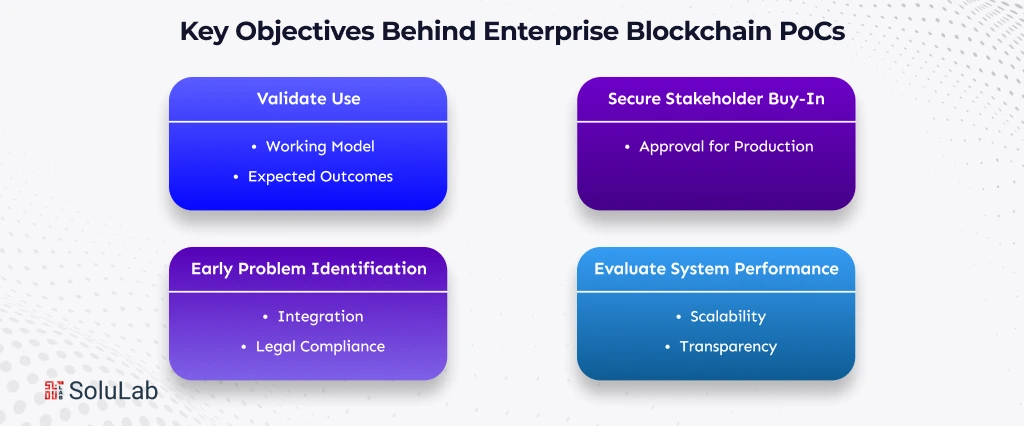
The primary goal of blockchain PoC is to validate a use case through a working model. It checks for feasibility and expected outcomes. Startup businesses generally use PoC to evaluate their system scalability, transparency, and immunity. Not only do these PoC also identify potential problems early, including integration challenges or legal compliance issues. At last, it aids in securing buy-in from makers, and the transparency decides the approval of production.
Key Objectives Behind Enterprise Blockchain PoCs

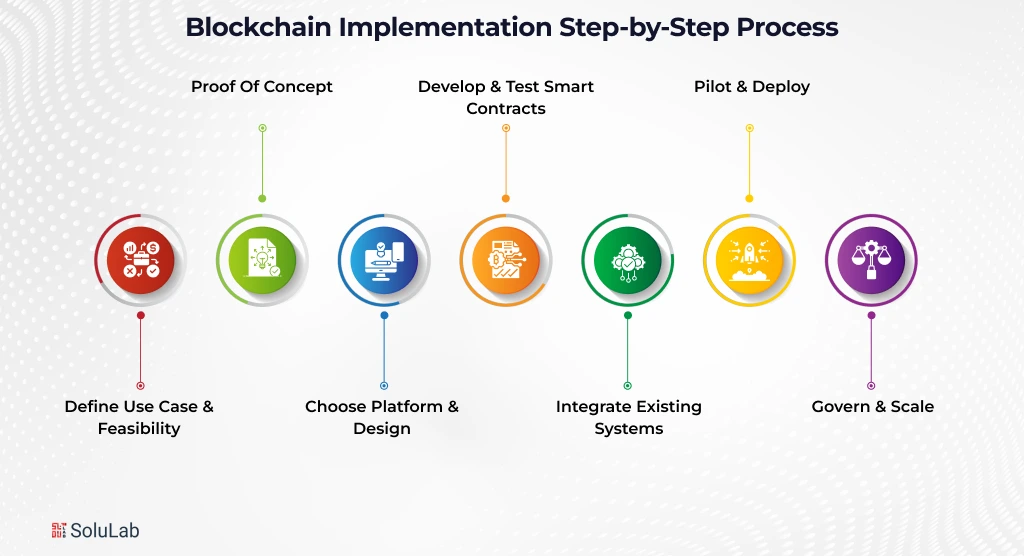
Step-by-Step Process of Blockchain Implementation

Implementing blockchain in an enterprise isn’t just about adopting new technology—it’s about transforming processes, enhancing trust, and unlocking new business models. The journey typically moves like this:

1. Defining Business Goals and Technology Requirements

Blockchain PoCs begin with identifying what the enterprise wants to achieve. Is it about tracking supply chain items or automating contracts? Once the goal is clear, teams outline key technical needs. These could include data privacy, smart contract use, or permissioned access.

At this point, clarity is essential. The better defined the requirements, the smoother the development. Proof of Concepts in Blockchains work best when aligned with core business goals and constraints.

  • Aligning Blockchain Use Cases with Enterprise Needs

Not all problems need blockchain. That’s why it’s important to match real use cases with the technology’s strengths. Enterprises must ask if the problem involves trust, transparency, or decentralization.

If the answer is yes, blockchain could help. A use case like cross-border payments or digital identity fits naturally. A blockchain proof of concept development ensures the use case isn’t forced but strategically chosen.

  • Determining Technical, Legal, and Operational Scope

Enterprises must plan for more than just coding. PoC projects also consider legal compliance and regulatory policies. For example, if the project handles personal data, GDPR guidelines may apply.

Technical scope covers API integration, node setup, and blockchain architecture. Operational scope includes team roles, timelines, and internal testing plans. All these pieces must align before development begins.

2. Stages Involved in Blockchain PoC Development

PoC development unfolds in distinct, manageable stages. Each step reduces uncertainty and sharpens the solution.

  • Theoretical Framework and Functional Mapping

This stage defines the problem, solution hypothesis, and expected blockchain behavior. It includes logic flows, data structures, and performance expectations. Teams map out how blockchain will process inputs and deliver outputs. Diagrams help everyone visualize how the concept fits together.

  • Product Planning and Feasibility Validation

Next comes the plan for building the working model. Developers check available resources and validate technical feasibility. Can the system handle transaction speed? Does it need a public or private blockchain? The answers shape the actual development timeline.

3. Blockchain Platform Selection and Integration Assessment

Enterprises choose between platforms like Ethereum, Hyperledger Fabric, or Polygon based on the use case. Each option comes with trade-offs in terms of speed, cost, and flexibility. Integration with legacy systems is also evaluated. Smooth integration reduces friction and future costs.
Blockchain Implementation Step-by-Step Process

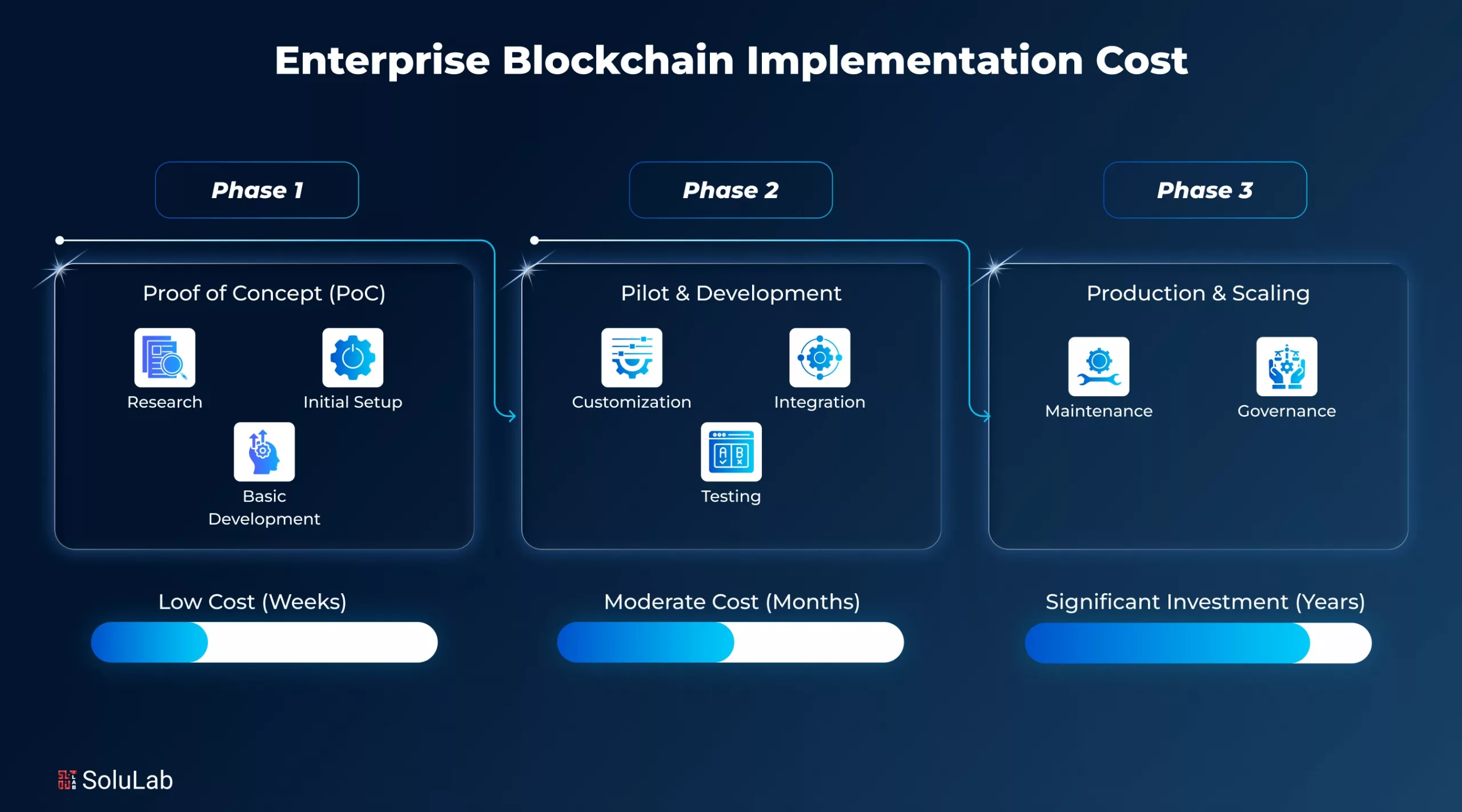
Major Cost-Influencing Factors in PoC Development

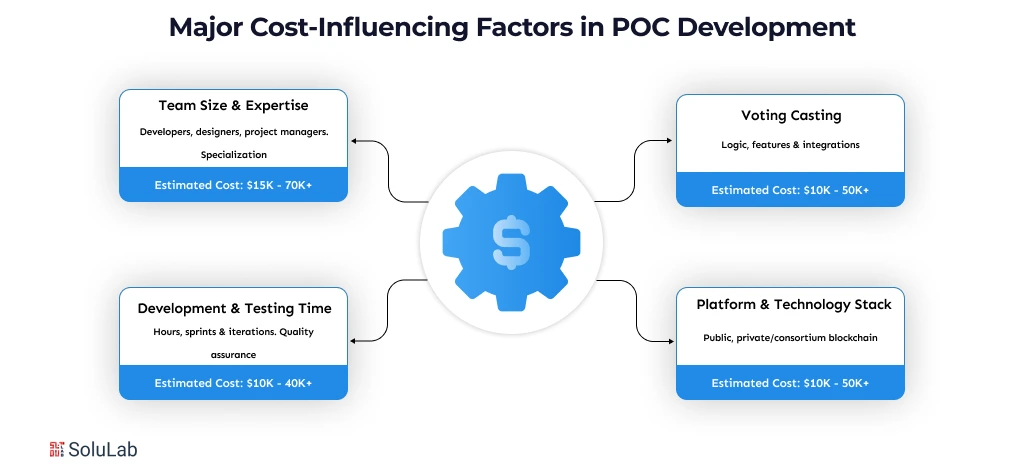
Costs vary based on features, complexity, and team structure. However, a few elements consistently impact total spend.

  • Resource Allocation and Man-Hour Calculations

PoC development requires blockchain architects, backend developers, frontend teams, and QA testers. Depending on the project scope, even a small team may log hundreds of hours. Time spent equals money. Hourly rates vary based on location, experience, and project urgency. A basic blockchain PoC typically requires 2-4 blockchain developers, 1 product manager, and 1 QA tester.

Standard developer rates range from $40 to $150 per hour, depending on the location and expertise. A 3-month PoC project with a lean team may cost between $30,000 and $70,000.

  • Tooling, Infrastructure, and Third-Party Licensing Costs

Tooling includes blockchain SDKs, APIs, and development environments. Infrastructure covers hosting, node deployment, and cloud usage. If third-party tools are used, licensing costs apply. While open-source platforms reduce this burden, enterprises often choose commercial tools for security and reliability. 

  • Cloud infrastructure (AWS, Azure, etc.) and developer tools may cost $1,000 to $5,000 monthly.
  • Third-party APIs, SDKs, or blockchain platform fees can add another $2,000 to $8,000.
  • Expect a typical tooling budget of $5,000 to $15,000 for a PoC stage.
  • Hidden Costs and Risk Buffer Estimations

Unexpected costs arise from system bugs, scope changes, or legal hurdles. Smart enterprises build a 10-20% risk buffer in budgets $5,000 to $10,000. Also, stakeholder coordination, documentation, and internal approvals consume time. These must be included in total PoC cost estimates.
Major Cost-Influencing Factors in POC Development

Evaluating PoC Results Before Scaling Further

Once the PoC is done, it’s time to analyze the outcomes. Did it perform as expected? Were all test cases successful?

  • Technical Validation and Use Case Suitability

Teams evaluate if the blockchain model handled data as expected. If it failed under load or missed conditions, the use case might need revision. Scalability tests are run, especially for enterprise-level applications. Security audits are also conducted.

  • Stakeholder Feedback and Data-Driven Insights

Results are shared with business and technical leadership. Stakeholders check if KPIs were met. They assess the business value created by the PoC. Feedback shapes the final decision—whether to move ahead, revise, or stop entirely.

Transitioning from Blockchain PoC to Production

Moving from PoC to production requires scaling the architecture and tightening the workflows. This is not a copy-paste job. Real-world traffic, regulations, and risks make it more complex.

  • Designing Scalable Architecture and Network Setup

Developers design an architecture that supports production-scale usage. This includes selecting between public, private, or hybrid blockchains. Network design includes nodes, consensus methods, and API access layers. Scalability becomes a key concern, especially for global or high-traffic applications.

  • Governance, Compliance, and Performance Monitoring

Enterprises implement governance models defining who controls nodes, permissions, and updates. Compliance frameworks ensure that the production blockchain meets legal standards. Real-time monitoring tools are integrated to catch performance issues early. This includes alerts, analytics dashboards, and incident reports.

Full-Scale Production Cost Considerations for Enterprises

Production deployment is a long-term investment. It involves both fixed and recurring costs. These need planning and periodic review.

1. Maintenance, Support, and Upgradation Requirements: Blockchain systems require regular updates. Smart contracts may need patches. Network components may need scaling. Dedicated support teams are formed. Maintenance contracts with vendors or consulting teams add to recurring costs. These services ensure uninterrupted operations.

2. Long-Term ROI and Cost-to-Value Optimization: Enterprises must compare long-term returns against initial investments. Metrics like reduced fraud, improved transparency, or automated workflows show value. ROI may take months to years. But well-implemented solutions often reduce operational costs and improve efficiency. 

Enterprise Blockchain Development Company

Conclusion

Adopting blockchain isn’t just a technology upgrade—it’s a strategic move that can redefine how your enterprise operates. The journey from PoC to full-scale production demands the right expertise, tailored strategies, and seamless integration with existing systems.

As a trusted blockchain development company, SoluLab empowers enterprises to navigate every stage of their blockchain journey—right from identifying high-impact use cases to building scalable, secure, and cost-effective production-grade solutions. With proven expertise across platforms like Hyperledger, Ethereum, Polygon, Avalanche, and Solana, we ensure your blockchain implementation is future-ready, compliant, and delivers measurable ROI.

Contact us today to transform your business with leading-edge blockchain solutions!

FAQs

1. How much does it cost to develop a blockchain PoC?

Blockchain proof of concept development usually costs $5,000 to $10,000 for basic. And specific charges depending on team size, tech stack, and timeline. Proof of Concepts in Blockchains help avoid larger future costs.

2. Why do enterprises need a blockchain PoC before full production? 

PoCs help test technical feasibility and business value. Proof of concept development gives clarity before large investments, reducing risk and aligning use cases with enterprise goals.

3. What services are included in blockchain consulting and PoC development? 

They include use case validation, tech stack selection, development planning, and stakeholder alignment. Blockchain consulting and proof of concept development services guide early stages with expert insights.

4. Can you skip PoC and go straight to production? 

Skipping PoC is risky. Without it, you might miss key integration issues or cost surprises. Proof of Concepts in Blockchains ensure you build smarter, not just faster.

5. Is blockchain PoC really worth it… or just trendy tech theater? 

That’s a fair question. But real-world PoCs uncover flaws early. They’re not just buzzwords; they offer honest validation, especially when backed by strong blockchain consulting and proof of concept development services.
Why Businesses Prefer White-Label Tokenization Platform Over Custom Blockchain?

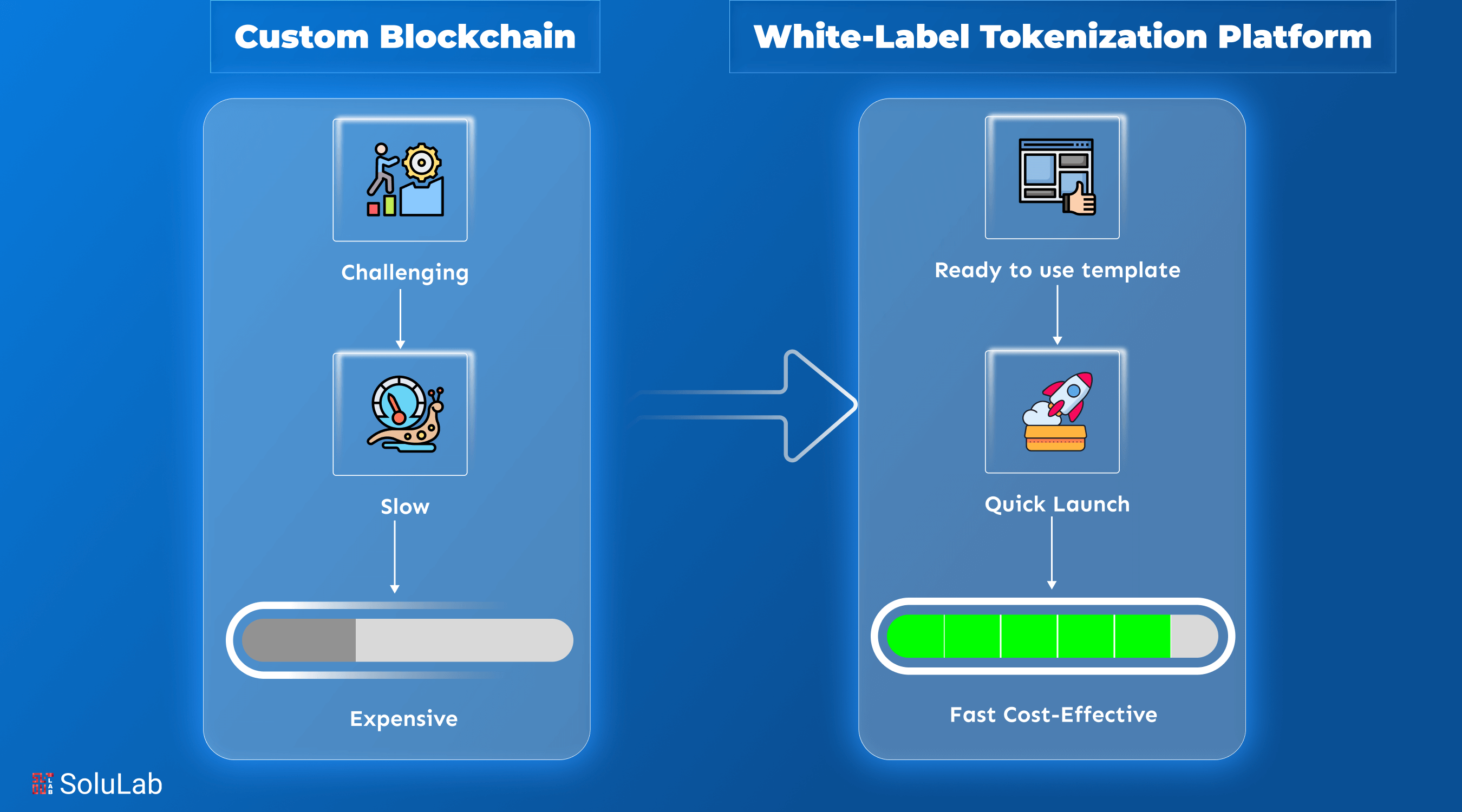
Custom Blockchain Vs. White-Label Tokenization Platform

Did you know that the average custom blockchain project can take more than a year to build and cost millions of dollars? For many businesses, that’s simply too much time and money to lock away while competitors are already going live. That’s why a growing number of companies are saying goodbye to expensive, complex custom builds—and embracing white-label tokenization platforms instead.

These ready-to-deploy solutions offer the perfect balance: enterprise-grade security, built-in compliance, and rapid launch capabilities—all without the headaches of building from scratch. 

In this blog, we’ll explore why businesses are making the switch, the real benefits they’re gaining, and how white-label platforms are shaping the future of tokenized assets.

What is a White-Label Tokenization Platform?

A white-label tokenization platform is a pre-built, customizable blockchain solution that enables businesses to launch tokenized services under their own brand without having to build blockchain infrastructure from scratch.

Unlike custom blockchain solutions, white-label platforms come equipped with:

  • Smart contract development for automation
  • RWA tokenization to digitize real-world assets like real estate, equities, and commodities
  • Multi-chain compatibility for seamless interoperability
  • Integrated blockchain solutions such as wallets, payment gateways, and compliance modules

In short, a white-label blockchain solution offers speed, cost efficiency, scalability, and compliance, making it the go-to option for businesses entering the blockchain ecosystem.

Custom Blockchain Solutions v/s White-Label Blockchain Solutions

Businesses are leaning toward white-label tokenization platform development. It provides the perfect balance of speed, cost-effectiveness, and scalability, without compromising on quality or compliance.

Aspect Custom Blockchain Solutions White-Label Solutions
Development Time 4–8 months 2–8 weeks
Cost High  Depending on customization
Maintenance Requires a dedicated in-house team Managed by the provider
Flexibility Fully customized Pre-built but customizable
Scalability Depends on architecture Designed to scale
Compliance Must be integrated manually Comes with compliance-ready modules

Why Businesses Are Choosing White-Label Tokenization Platforms?

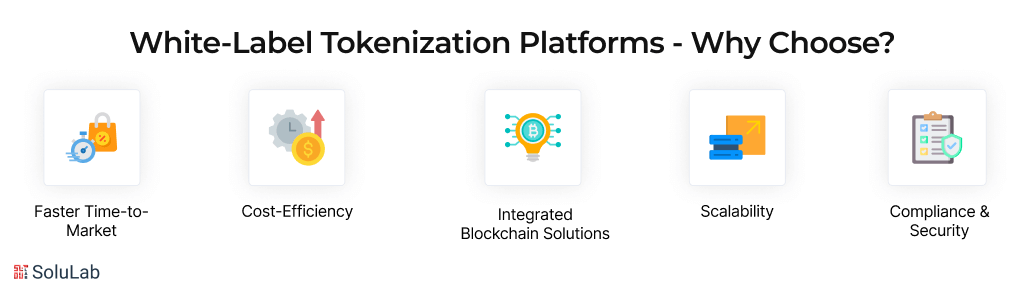
Why Choose White-Label Tokenization Platforms

In today’s fast-moving digital economy, businesses don’t have the luxury of spending years and millions building custom blockchain solutions. They need secure, scalable, and compliant tokenization platforms that can launch quickly—and that’s exactly why white-label tokenization platforms are becoming the go-to choice.

1. Faster Time-to-Market

Time is money in today’s competitive era. Custom blockchain development services can take months or even years, whereas white-label blockchain solutions are ready to deploy in weeks.

This allows businesses to:

  • Capitalize on emerging market opportunities
  • Beat competitors to launch
  • Reduce time lost in technical development

2. Cost-Efficiency

Building a blockchain platform from scratch requires a significant investment, including developers, security audits, testing, and maintenance. White-label tokenization platforms are pre-built and tested, drastically reducing costs.

Instead of spending millions, businesses only invest in customization and branding.

3. Integrated Blockchain Solutions

White-label platforms come with end-to-end blockchain integration, including:

  • Secure wallets
  • Smart contracts
  • Token issuance modules
  • RWA tokenization capabilities
  • KYC/AML compliance

This eliminates the need to purchase multiple third-party solutions, saving both money and effort.

4. Scalability

A major drawback of custom blockchain solutions is that they often struggle to scale when user demand increases. White-label blockchain solutions are designed to handle high transaction volumes, making them future-ready.

5. Compliance & Security

White-label providers ensure compliance with global regulations such as GDPR, FATF, and SEC standards. They also integrate multi-layered security protocols like encryption, multi-signature wallets, and fraud detection.

This gives businesses confidence to operate securely and legally in the tokenized economy.

CTA1

Must Have Features of White-Label Tokenization Platforms

Not all white-label solutions are created equal. To truly deliver value, a tokenization platform must combine security, scalability, and compliance with flexibility for business needs. Below are the essential features every white-label tokenization platform should include:

1. Smart Contract Development

Smart contracts are self-executing agreements coded into blockchain. White-label solutions come with pre-built, customizable smart contracts that automate transactions, reduce human error, and cut operational costs.

2. RWA Tokenization

One of the hottest trends in blockchain is RWA tokenization (Real-World Asset tokenization). With white-label platforms, businesses can digitize assets like:

  • Real estate
  • Precious metals like Gold, Silver
  • Commodities
  • Bonds and Securities

This makes illiquid assets tradeable and accessible, meanwhile unlocking new investment opportunities for the users.

3. Multi-Chain Compatibility

The platform allows users to operate seamlessly across multiple blockchain networks like Ethereum, Polygon, Binance Smart Chain, and more. Businesses are no longer locked into a single blockchain.

4. Customizable UI/UX

They give businesses the flexibility to personalize the look and feel of their platform. From logos and color themes to tailored user journeys, companies can create a branded experience for investors while leveraging the platform’s robust blockchain infrastructure.

5. Integrated Wallets

These allow users to store, send, and receive digital tokens seamlessly within the platform. These wallets can be custodial or non-custodial, depending on the business model, and often include multi-signature support, encryption, and compatibility with popular external wallets.

6. Analytics & Reporting

Advanced analytics dashboards provide businesses with real-time insights into token transactions, user engagement, and revenue performance. With detailed reporting tools, enterprises can monitor compliance, evaluate market trends, and make data-driven decisions to improve investor experience and optimize returns.

7. Fractional Ownership

Fractional ownership allows large, high-value assets to be divided into smaller digital units. This lowers the investment barrier for retail investors, expands the potential investor base, and increases liquidity for traditionally illiquid markets. 

How Businesses Benefit from White-Label Tokenization Platforms?

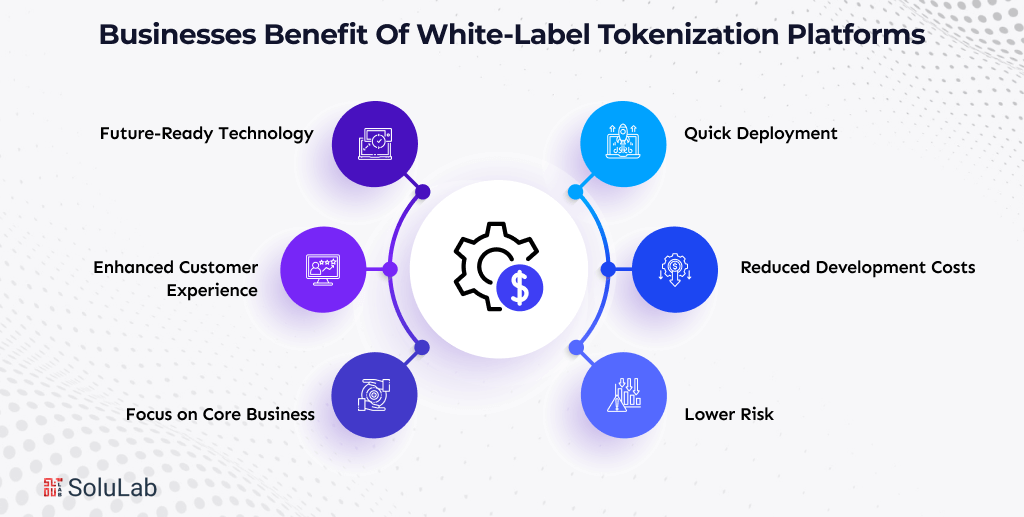
Businesses Benefit Of White-Label Tokenization Platforms

  • Quick Deployment: Pre-built infrastructure allows businesses to launch their platforms within weeks, gaining a competitive advantage.
  • Reduced Development Costs: Only pay for customization instead of full-scale development, saving both time and money.
  • Lower Risk: Pre-tested systems minimize bugs, vulnerabilities, and security risks.
  • Focus on Core Business: Leave blockchain complexities to the platform provider while concentrating on marketing, growth, and customer engagement.
  • Enhanced Customer Experience: Smooth, secure, and transparent transactions improve user trust and engagement.
  • Future-Ready Technology: White-label platforms are designed to scale and adapt to technological advancements and market trends.

Real-World Applications of White-Label Tokenization Platforms

White-label tokenization platforms are not just a trend; they are powering real innovation across industries by making assets more liquid, accessible, and globally tradable. Here are some of the most impactful use cases:

1. Real Estate Tokenization: Convert properties into fractional digital tokens, allowing multiple investors to own shares of high-value assets while enabling developers to raise capital faster.

2. Equity & Security Tokens: Businesses can tokenize shares or debt instruments, giving investors secure, transparent, and compliant access to equity markets.

3. Commodities & Precious Metals: Gold, silver, oil, and other tangible assets can be tokenized, offering investors a more efficient way to trade traditionally illiquid commodities.

4. NFTs & Digital Collectibles: From art and music to gaming assets, tokenization enables creators and brands to monetize digital ownership with transparency and authenticity.

5. Supply Chain & Trade Finance: Tokenization helps track goods, verify authenticity, and provide investors with access to trade financing opportunities.

6. Crowdfunding & Investment Platforms: Startups can raise capital by issuing tokens, giving global investors fractional stakes while maintaining compliance with securities regulations.

7. Healthcare & Intellectual Property: Patents, medical research data, and IP rights can be tokenized, creating new opportunities for funding and secure rights management.

8. Green Energy & Carbon Credits: Renewable energy projects and carbon credits can be tokenized, allowing businesses and individuals to invest in sustainability initiatives.

All in all, tokenization is breaking down barriers in sectors once limited by geography, regulation, or capital requirements. With white-label platforms, businesses can tap into these opportunities without reinventing the wheel, launching quickly, and scaling.

CTA2

Conclusion

As tokenization moves from concept to mainstream adoption, businesses are realizing that building custom blockchain solutions is often too costly, time-consuming, and complex. White-label tokenization platforms provide a faster, safer, and more scalable way to bring assets onto the blockchain.

But choosing the right technology partner is just as important as choosing the right platform. SoluLab, a leading asset tokenization development company, holds expertise in blockchain, solutions, and cross-industry integrations. We help businesses design and launch tokenization platforms that are secure, fully compliant, and tailored to specific business goals.

Whether you’re a startup aiming to fractionalize assets or an enterprise exploring secondary markets, SoluLab provides the end-to-end development, customization, and ongoing support you need to succeed. Contact us today for more information!

FAQs

1. Who can benefit from white-label tokenization platforms?

Startups, enterprises, investment firms, real estate developers, digital marketplaces, and anyone looking to tokenize assets efficiently and compliantly.

2. How quickly can a white-label platform be launched?

Deployment times vary, but most platforms can launch in weeks rather than months, compared to custom blockchain development, which can take 12–18 months.

3. Are white-label platforms secure and compliant?

Yes. Leading platforms include audited smart contracts, integrated KYC/AML checks, GDPR compliance, and enterprise-grade security features such as multi-signature wallets and encrypted storage.

4. What are the cost advantages of white-label platforms?

They significantly reduce development costs, maintenance overheads, and infrastructure expenses, compared to building a custom blockchain from scratch.

5. What role does SoluLab play in white-label tokenization?

SoluLab provides end-to-end development, customization, compliance integration, and ongoing support, enabling businesses to launch secure, scalable, and market-ready tokenization platforms.


Top Ethereum Blockchain Development Companies in the USA

With hundreds of companies claiming to be “the best,” it’s easy to get lost in the noise. Many promise the moon but fail to deliver scalable, secure, and efficient Ethereum solutions, wasting your time and budget.

Choosing the wrong development team can set your project back by months. Whether you’re building DeFi platforms, dApps, or smart contracts, you need a partner with proven expertise in Ethereum’s evolving ecosystem.

In this blog, we’ve handpicked the top Ethereum blockchain development companies in the USA based on experience, client reviews, technical skills, and pricing. Whether you’re a startup, enterprise, or investor, this list will help you find the right partner to bring your blockchain technology vision to life faster, safer, and smarter. Let’s dive in!

What to Look for in an Ethereum Blockchain Development Company

The U.S. blockchain market reached approximately USD 8.7 billion in 2024, expected to grow to USD  619 billion by 2034 (CAGR ~53%).

The following list is a brief checklist to follow so that you do not make a blunder in picking the correct Ethereum blockchain development company, particularly when your project (assuming it is a long-term project) requires innovation and stability:

  • Technical expertise

Find firms that are well familiar with the architecture, programming, and Layer 2 in Ethereum. They must be able to scale and run efficient blockchain applications using their technical stack to support your business.

  • Smart contract and dApp experience

A team will understand how to construct, audit, and launch secure smart contracts. The development of real-world decentralized applications (dApps) support is invaluable when it comes to providing viable and user-friendly solutions.

  • Security practices

Make sure that the company is security-focused by conducting regular audits, threat modeling, and secure coding. They are expected to adhere to the industry best practices to avoid being weak to risks like reentrancy and flash loan attacks.

  • Case studies and client reviews

Read client testimonials, ratings, and case studies to determine reliability. Real-life experiences of projects attended in the past are bound to give you an insight as to their process, success percentage, and knowledge base.

Top 10 Ethereum Blockchain Development Companies in the USA

Blockchain is gaining acceptance and the appeal process, as indicated by the rise of fintech businesses attempting to make blockchain purchasing and trading more accessible to the general public, as well as blockchain investigation and compliance tools. Here are top 10 Ethereum development companies in the USA:

solulab

1. SoluLab

SoluLab is a leading Ethereum blockchain development company based in the USA, known for delivering robust and scalable decentralized solutions. They specialize in smart contract development, dApp creation, tokenization, and blockchain consulting. With a client-centric approach, SoluLab offers end-to-end services tailored to startups and enterprises alike.

Their team blends technical expertise with industry experience to build secure, cost-effective blockchain applications. Notable features include agile development, transparent communication, and a strong focus on product scalability. Ideal for businesses seeking reliable and innovative Ethereum-based solutions.


$35 – $55/ hr


200 – 249


2014


Los Angeles, California

Tech Alchemy

2. Tech Alchemy

Tech Alchemy is a leading Ethereum blockchain development company based in the USA, known for building scalable, secure, and user-friendly decentralized solutions. They specialize in developing dApps, DeFi platforms, NFT marketplaces, and custom smart contracts. With a strong focus on UI/UX and product strategy, they help startups and enterprises turn ideas into real-world blockchain products.

Their services also include blockchain consulting, token development, and end-to-end product design. Tech Alchemy stands out for its transparent development process, fast go-to-market timelines, and experience across fintech, gaming, and supply chain industries.


$25 – $49/ hr


50 – 249


2014


London, England

ConsenSys

3. ConsenSys

ConsenSys is a leading Ethereum blockchain development company based in the USA, known for shaping the future of Web3 technologies. They offer a wide range of services, including blockchain consulting, smart contract development, DeFi solutions, and enterprise-grade dApp development. As the creators of MetaMask and Infura, they provide tools that power millions of users and developers worldwide.

ConsenSys is ideal for businesses seeking scalable, secure, and developer-friendly Ethereum-based solutions. With a strong focus on decentralization, security, and interoperability, they continue to lead innovation in the Ethereum ecosystem.


$191/ hr


900 – 1200


2014


Fort Worth, Texas

Suffescom Solutions

4. Suffescom Solutions

Suffescom Solutions Inc. is a leading Ethereum blockchain development company based in the USA, known for delivering robust and scalable blockchain solutions. They specialize in building smart contracts, dApps, DeFi platforms, NFT marketplaces, and token development.

With over 13 years of industry experience, they combine technology with user-friendly design to offer end-to-end blockchain services. Suffescom is praised for its transparent communication, agile methodology, and strong focus on security. Ideal for startups and enterprises alike, they help businesses change ideas into decentralized, future-ready solutions.


$25-$49/ hr


500+


2013


Los Angeles, California

Unicsoft

5. Unicsoft

Unicsoft is a trusted Ethereum blockchain development company based in the USA, known for delivering high-quality custom blockchain solutions. They specialize in building secure smart contracts, decentralized applications (dApps), and tokenization platforms. With a strong focus on Ethereum, Unicsoft helps businesses operate, enhance transparency, and create scalable blockchain ecosystems.

Their services also include DeFi development, NFT platforms, and enterprise blockchain integration. Clients appreciate their agile approach, technical depth, and clear communication, making them ideal for startups and enterprises looking for reliable blockchain expertise.


$50-$99/ hr


50-250


2005


Soquel, California

ChromaWay

6. ChromaWay

ChromaWay is a leading blockchain development company based in the USA, known for its innovative work in relational blockchain technology. They specialize in building decentralized applications, smart contracts, and enterprise-grade blockchain solutions. Their flagship product, Postchain, combines the power of SQL databases with blockchain’s immutability, making it ideal for complex, data-driven use cases.

ChromaWay provides services across sectors like real estate, finance, and government. With a focus on security, scalability, and transparency, they’re a top choice for businesses looking to leverage Ethereum and hybrid blockchain infrastructures.


$25-$49/ hr


200


2014


Stockholm, Connecticut

PixelPlex

7. PixelPlex

PixelPlex is a leading Ethereum blockchain development company based in the USA, known for delivering custom blockchain solutions across industries. They specialize in Ethereum-based smart contracts, dApp development, DeFi platforms, and NFT marketplaces. With over a decade of experience, PixelPlex combines deep technical expertise with a client-first approach.

Their services include end-to-end blockchain consulting, audit services, and full-stack development. Key features include cross-platform compatibility, robust security protocols, and scalable architecture. Ideal for enterprises and startups looking to build reliable and future-ready Ethereum solutions.


$75/ hr


100 – 249


2007


NY, USA

Quytech

8. Quytech

Quytech is a leading Ethereum blockchain development company based in the USA, known for delivering innovative and secure blockchain solutions. They specialize in building smart contracts, decentralized applications (dApps), and custom Ethereum-based platforms for various industries, including finance, supply chain, and healthcare.

Quytech offers end-to-end blockchain services—from ideation and consulting to deployment and maintenance. Their key strengths include a skilled development team, a client-centric approach, and a strong focus on security and scalability. With a track record of successful projects, Quytech is ideal for businesses seeking reliable and future-ready Ethereum solutions.


$25 – $49/ hr


50 – 250


2010


CA & New York

Aalpha

9. Aalpha

Aalpha Information Systems is an Ethereum blockchain development company based in the USA, known for delivering scalable and secure blockchain solutions. They specialize in smart contract development, dApp creation, and Ethereum-based enterprise applications.

Aalpha offers end-to-end blockchain consulting, development, and deployment services tailored to various industries like finance, healthcare, and supply chain. Their team is skilled in Solidity, Web3.js, and other Ethereum tools, ensuring future-ready solutions. Known for timely delivery and cost-effectiveness.


$12-$25/ hr


50-250


2008


Wilmington, DE

Dev Technosys

10. Dev Technosys

Dev Technosys is a leading Ethereum blockchain development company based in the USA, known for delivering robust, scalable, and secure decentralized solutions. They specialize in smart contract development, dApp creation, Ethereum token development, and blockchain consulting.

With a strong team of blockchain developers, Dev Technosys offers solutions for industries like finance, healthcare, supply chain, and gaming. They offer agile development, transparent communication, and end-to-end project support.


$20-$70/ hr


100-250


2010


San Francisco

Blockhin Development Company in USA

Conclusion

Choosing the right Ethereum blockchain development company is crucial for businesses looking to build secure, scalable, and future-ready applications. The companies listed in this blog offer deep expertise in Ethereum and provide a range of custom blockchain solutions tailored to meet diverse industry needs. 

From smart contract development to full-scale dApp deployment, these firms combine innovation with technical excellence. Whether you’re a startup exploring Web3 or an enterprise streamlining operations through decentralization, partnering with the right development team can accelerate your blockchain journey. Explore your options, check portfolios, and choose a partner that aligns with your goals and growth vision.

SoluLab, a blockchain development company can help you build secure, cost effective blockchain applications. Contact us today to discuss further. 

FAQs

1. What is the average hourly rate for Ethereum developers in the USA?

Hourly rates typically range from $20 to $150, depending on the company’s size, expertise, project complexity, and whether the team is in-house or outsourced.

2. Can Ethereum development companies also build NFT platforms?

Yes, most Ethereum development firms offer NFT development services, including token creation (ERC-721/ERC-1155), NFT marketplaces, and wallet integration.

3. How long does it take to build an Ethereum-based application?

It depends on project scope but typically ranges from 2 to 6 months, including planning, development, testing, and deployment phases.

4. Can I upgrade my existing system using Ethereum?

Yes, Ethereum can be integrated with existing systems via APIs or used to rebuild parts of your infrastructure with decentralized features.

5. What makes US-based Ethereum firms reliable?

US blockchain consulting companies often follow strict regulatory standards, offer strong legal protection, transparent communication, and provide access to high-quality development talent.