Talk to an Expert

Diving Into the Power of Intelligent Agents for Finance

AI Agents in Finance

Welcome to the future of finance where artificial intelligence is constantly working on transforming the way you manage money and invest for a brighter future. Understand the dynamic world of AI Agents for finance by exploring how are they reshaping the industry from algorithmic trading to personalized customer service, AI agents in finance are driving unprecedented efficiency and creativity in financial decision-making.

Explore the technologies that are propelling the finance industry into a new era of intelligent automation and data-driven insights. 

Understanding AI Agents

The agents of artificial intelligence represent cleverly designed computer programs to perceive the environment, carry out free-decision analyses, and act for themselves, achieving the desirable goal. Unlike the usual software, AI agents are developed to have the property of learning, adaptation, and, with time, improvement, unlike the conventional software, which is bound by stringent constraints.

Think of AI agents as a supercharged virtual assistant that understands your demands, secure data, and accomplish tasks on your behalf. An AI agent could schedule meetings, draft emails, or even conduct research. But their talents reach far beyond being just helpful. AI agents find applications in many areas. They can be used to effectively look after customer service experience because they can respond to questions and resolve problems. In the financial industry, they study market trends and can offer investment advice. Businesses extract critical insights from data to optimize their operations or for automating tasks.  The basic components of AI agents are as follows:

  • Perception: The agent should have the ability to receive information from the environment, which can be obtained through sensors or other types of data inputs.
  • Reasoning: It involves gathering information, examining the data, and arriving at conclusions. 
  • Action: Performing the actions in a virtual or physical environment. 
  • Learning: Gradually improving performance based on feedback and experiences.

It is expected with the advancement of AI technology, the capability of agent artificial intelligence will increase constantly, and so with time novelties are expected to be employed increasingly, therefore evolving ways the human is related to technology. AI agents are tremendous automation that helps improve productivity, efficiency, innovation, and other related fields of people and companies.

AI Agent Services

Role of AI Agents in Finance

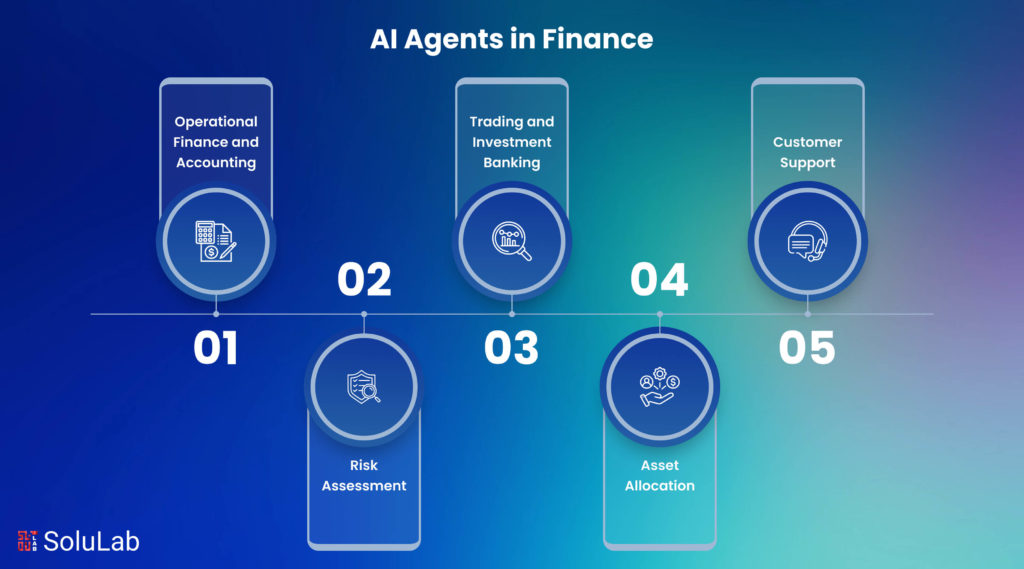
Through process automation, better decision-making, and improved consumer experience, AI Agents in Accounting are pacing up tremendous changes in the way finance industries do business. In operations, their uses span immensely across the financial industry, ranging from wealth management and investment banking to accounting and risk management.

1. Operational Finance and Accounting

Financial operations management is changing with Accounting AI agents intervening and turning around the systems. They accomplish this by taking over human resources for use in other more significant projects, relieving them of repetitive processes of inputting data, processing invoices, and reporting expenses. The efficiency and accuracy of financial data analysis can further be enhanced by AI-driven systems, which can also identify trends, abnormalities, and even fraud in financial reporting.

2. Risk Assessment

AI Agents powered finance is necessary for the reduction of financial risk. They can analyze current market situations and past data to detect potential risks that may cause an upset to the stability of the financial system. These agents can develop prediction models that will help to predict a change in markets, hence guiding the risk management techniques using complex algorithms. AI-driven systems can help keep an eye on cases related to identity theft and money laundering so that financial institutions are always safeguarded against any sort of negative activities, ensuring their customers’ interests are protected.

3. Trading and Investment Banking

Finance AI agents are used to make the decision-making process in investment more enhanced. They can forecast asset values and find investment opportunities, besides improving trading techniques, by analyzing enormous volumes of market data. In that aspect, artificial intelligence agents could get the advantage of extracting insightful data regarding web information, social media, financial reports, and newspaper articles using the mechanisms provided by natural language processing. Even further, by employing AI agents-powered finance systems, trade automation is made easy to free human errors.

4. Asset Allocation

AI financial advisors are going to make a massive difference in the wealth management sector due to the delivery of personalized financial advice. To provide personalized investment portfolios, they may consider their client’s risk tolerance, investing preference, and financial goals. The agent in artificial intelligence can provide suggestions, answer to customer queries, and provide live financial advice. The AI bots monitor the market trends as well, for the best performance of portfolios.

5. Customer Support

AI chatbots and virtual assistants better client experiences across the banking industry. The representatives are capable of answering consumer requests instantly, solving problems, and developing tailor-made advice. AI use cases can offer more engaging and more rewarding consumer experiences by learning what makes their clients tick.

Considerations of AI for Finance
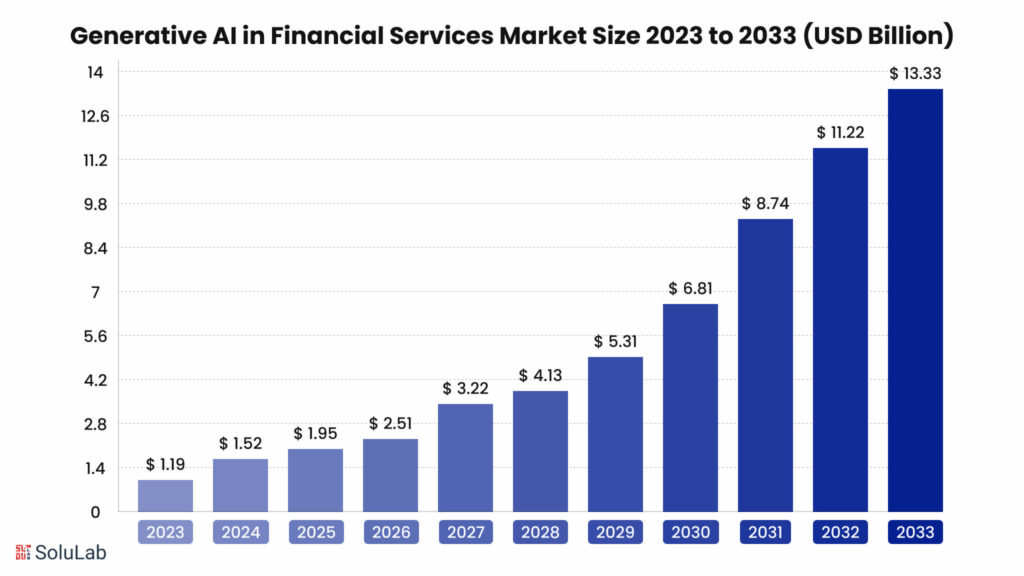
GenAI in Financial Service Market Size

Although AI agents hold a great deal of promise for the financial sector, there are a few things that need to be taken into careful consideration before their adaptation.

  • Privacy and Data Quality

AI agents in hr are based on high-quality data. Consistency, correctness, and completeness should be ensured in their data by a financial institution if it wants to come up with trustworthy AI agents. Sensitive financial data must be kept safe. Relevant security measures, together with adequate data privacy legislation, should guarantee the protection of client information and thus help to maintain trust.

  • Moral Considerations 

These biases can be directly transferred to the AI algorithm from the training datasets and thus lead to discriminating results. AI in finance decision-making needs to be ensured, and bias needs to be reduced by financial institutions. It needs to be explainable, and transparent. On themes as far-reaching as credit scoring or investment advice, for example, users have to be positioned to know how an AI bot derives its conclusions.

  • Compliance with Regulations

The financial sector is heavily regulated. Applications of Generative AI in Banking and Finance need to meet existing legal obligations and keep pace with evolving regulatory landscapes. Financial institutions have to put investments in compliance programs, conduct regular audits, and remain current with the law as it changes.

  • Common Control of Risks

AI in accounting models are complex, supersensitive systems that can surprise users. To that end, financial organizations must incorporate robust processes for model risk management. This would involve prolonged testing, validation, and monitoring for AI models to detect and repair such issues. The retraining of the models at required intervals to maintain performance and frequent model updates also become essential.

  • Human-AI Collaboration

Though many tasks can now be automated by AI agents, human skill is in no way less important. For best results, AI in bfsi shall have to work with humans, and humans with AI. Until humans can still make decisions and exercise oversight, AI agents may support human talents through the provision of insight and advice.

Although AI agents bring a lot of potential value to the financial sector, their successful deployment will require elaborate testing of data quality, ethical considerations, regulatory compliance, model risk, and human-AI collaboration. If taken into consideration, these things can help financial institutions realize the power of AI while minimizing the risks associated with this technology.

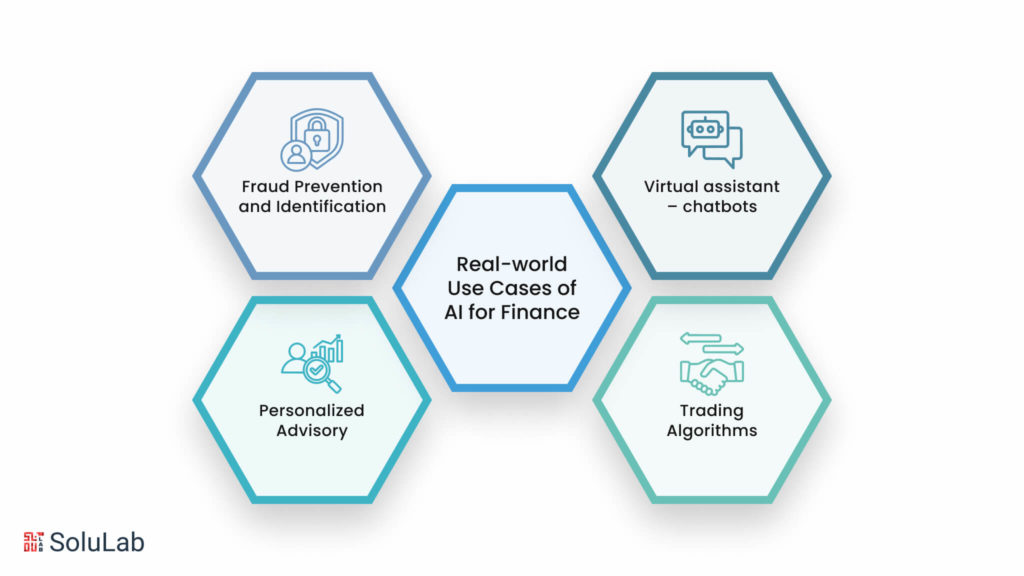
Real-world Use Cases of AI for Finance
Use Cases of AI for Finance

The financial industry is changing very fast with AI agents automating procedures, improving decision-making, and improving the experience for consumers. A few of the AI agent use cases:

1. Fraud Prevention and Identification

Fraud detection and prevention are among the most important and useful AI applications in banking. AI Agents in Accounting can instantaneously analyze enormous transaction data, thereby identifying trends and anomalies indicative of potential fraud. An AI system in this regard may enable the detection of unusual spending patterns, identify probable identity theft cases, or put up red flags on suspicious activity over an account. Such a proactive approach will therefore help financial institutions reduce potential financial losses and protect their customers.

2. Personalized Advisory

It is due to Finance AI agents that financial advisory itself is changing. AI systems can make customized recommendations based on analyzing consumer data to determine investment preferences, tolerance towards risk, and financial goals. AI-driven robo-advisors offer automated investment management and financial planning. These platforms construct diversified portfolios in keeping with the specific investor profile and rebalance them as and when appropriate.

3. Virtual assistant – chatbots

AI agents-powered finance chatbots and virtual assistants work wonders for customer experience across the financial sector. The representatives respond to consumer queries within a second, provide personalized suggestions, and work on account management tasks. For example, a chatbot can walk an end-user through resetting passwords, transferring funds, and checking an account balance. This enhances client satisfaction and relieves human representatives to focus on more complex issues.

4. Trading Algorithms

AI-driven algorithms are making a revolution in the trading industry. Agent in artificial intelligence play their role in HFT, assessing market data, recognizing trade opportunities, and providing swift transaction execution. Such algorithms allow for snap judgments on trade to be made from huge volumes of data, ranging from market data through social media sentiment and news feeds. Although this forms a niche in its entirety, it is a sophisticated realm of HFT, foreshadowing the very powerful role AI can play within the trading industry.

Benefits of AI Agents for Finance

AI agents are ushering in an age of effectiveness, precision, and creativity within the financial sector. Here are some of the Benefits of AI Agents in Finance:

1. Increased Productivity and Efficiency

AI Agents in Accounting are good at the automation of repetitive jobs, hence freeing human resources to work on higher-valued jobs. Such agents increase overall productivity, reduce errors, and smoothen operations from data entry and reconciliation to fraud detection and compliance checks. AI-powered chatbots can also nicely handle the queries of consumers by providing quick answers and freeing human agents to concentrate on more complex problems. 

2. Bigger Ability in Decision Making

AI Agents in finance can process large volumes of data quickly, thereby noticing patterns and trends pretty hard for a human to notice. With this in mind, financial professionals are more placed to make educated and data-driven decisions. AI agents provide insightful analyses of consumer behavior, market trends, and risk factors that help in investment and strategic planning. 

3. Risk Mitigation

AI agents for finance perform two of their most critical functions for the identification and mitigation of financial risk. These agents reduce financial crime, such as money laundering and fraud, by recognizing trends and anomalies in data. For managing portfolios and making better loan decisions, AI-based systems aid in assessing creditworthiness and market volatility.

Read Blog: AI in Fintech: Top 4 Use Cases and Case Study

4. Personalized Experience of Clients

Finance AI agents can analyze consumer data to determine preferences, wants, and behaviors, and, hence, financial institutions can provide very personalized products and services. Chatbots and virtual assistants improve customer happiness and loyalty through the provision of personalized financial advice, customer question answering, and the speedy redressal of grievances. 

5. Lower Costs

The benefits of AI Agents in Finance can drastically bring down costs for any financial organization through process automation and efficiency enhancement. In addition, the AI-driven solution discovers opportunities for cost savings and is involved in the optimization of resource allocation, further boosting profitability.

From the perspective of efficiency, judgment, risk management, customer experience, and saving money, AI Agents in Accounting will never stop remodeling the face of financial sectors with provable benefits. We may well foresee even more innovative applications of AI technology and a greater impact on the financial industry as it matures.

Future Outlook with AI for Finance

AI is about to make a huge difference in the financial industry. One can only expect that AI will be at the core of deciding the way forward for finance with progressing technology. One such most promising area of all is that of hyper-personalized financial services. Generative AI for Data Analysis and Modeling will be empowered to offer highly personalized products and services that meet the needs, preferences, and financial goals of every individual customer. Customer loyalty and satisfaction, given this level of personalization, will skyrocket.

Investment management will also see dramatic changes with the advent of AI. Advanced algorithms will dig through terabytes of data—much of which comes from non-traditional sources—to analyze for investment opportunities and better ways of portfolio management. This could give rise to a greater number of AI agents-powered finance robo-advisors concerning investment management and holistic financial planning services. Artificial intelligence will also play a key role when it comes to fraud prevention. The role of artificial intelligence-driven solutions would be imperative in fraud detection and prevention, given the sophistication cyber threats are prone to take. Financial organizations will be able to identify suspicious patterns from transaction data analyzed in real-time, thereby preventing customers’ financial losses if they hire an AI developer.

Even with the huge potential of AI Agents in finance for the field of finance, the challenges it poses to data privacy, ethical considerations, and regulatory compliance need to be sorted out. Against the backdrop of such challenges, which the sector is bargaining with, we can certainly look ahead and visualize AI playing a very important role in innovation thus leading to superior financial outcomes for both individuals and corporations.

Contact Us

SoluLab Transforms Banking and Finance with Gen AI

Challenge

The banking industry struggles with meeting rising customer expectations, streamlining manual processes, managing risks, adapting to evolving regulations, and protecting data from increasing cyber threats.

Solution

SoluLab used Gen AI to automate tasks, deliver personalized customer experiences, and improve cybersecurity, helping banks operate more efficiently.

Impact

  • 3x increase in customer satisfaction with personalized services.
  • 70% faster processes, cutting operational costs.
  • 98% fewer cyber threats, ensuring data safety.

The Final Word

The financial sector is changing at an unprecedented rate just because of artificial intelligence. The benefits of AI Agents in Finance from automation of all kinds of functions to improved decision-making and reduced risks, including improved consumer experiences. We can only expect more revolutionary applications of AI technology as it grows and evolves.

What the organizations need is an AI agent development company to support the full promise that AI holds for finance. SoluLab brings deep expertise in both financial services and artificial intelligence to help in overseeing the challenges in the use of AI. Our experts can help you design custom AI solutions to foster the productivity and growth of our clients’ businesses.

Are you ready for it? Want to start harnessing AI’s potential for your finance company? Reach out to SoluLab now.

FAQs

1. What are some of the major benefits that AI agents can bring to the financial sector? 

Among others, the following are the benefits AI agents can offer: offering a personalized experience for clients, risk management, increased efficiency, better decision-making, and reduced costs.

2. What do you think is the role that AI can play in avoiding financial fraud?

AI-driven systems can analyze massive transaction data for trends and odd behaviors that might indicate fraud. Since this will be a proactive stance, it makes it easier for FIs to protect their assets and clientele.

3. What are some of the challenges of implementing AI in finance?

Although AI is vastly promising, it comes with a host of challenges regarding qualified people who can design and govern AI systems, privacy issues, ethical dilemmas, and compliance issues. 

4. How can AI improve client experience for the financial sector?

The AI-driven chatbot and virtual assistant may, in their interactions with customers, offer them personalized financial advice, answer their queries related to account management, and thus raise customer satisfaction and loyalty.

5. How can Solulab leverage AI to help my bank?

Since SoluLab is experienced in both AI and financial services, we can develop customized solutions concerning the needs of your case. We will be glad to help you achieve your business goals, develop robust models, and look for practical implementation of AI initiatives.

 

15 Best AI Agent Use Cases for Enterprises & Real-World Applications

Use Cases Of AI Agents

AI agents are improving enterprise workflows by operating as a coordinated crew, with each agent specializing in different business functions. Just like a well-structured team, they collaborate to understand employee intents, route requests, retrieve information, and resolve issues. Whether it’s resetting passwords, processing time-off requests, or managing software access, these AI agents work together to deliver smooth and efficient support experiences.

According to Statista AI agents are poised to become the next step in the evolution of AI for businesses in our increasingly digital society, whether they are used to automate mundane tasks or optimize complex workflows. Their learning capacity, adapting, and making smart choices create novel possibilities for innovation and applications in various fields. 

If you are planning to adopt AI agents for your enterprise, this article is for you as it explores their key use cases across various business functions, including IT support, HR, finance, sales and marketing, and more.

Future of AI Agents in Business

1. Innovations and trends

AI agents in business have a bright future due to various trends and advancements. AI agents—AI-powered virtual assistants—are becoming smarter with advances in natural language processing, machine learning, and cognitive computing. AI agents can better comprehend and forecast consumer demands with these technologies, improving customer service and operational efficiency.

Integration of AI agents across corporate functions is a major trend. In addition to customer support, AI agents are employed in sales, marketing, and HR. This wide range of applications helps firms automate activities, analyze big data, and make quick decisions.  These platforms simplify the creation of sophisticated AI bots that can have complex conversations and do complex jobs. 

2. Estimates for the Next Decade

Technology is likely to impact healthcare and transportation in the coming decade. AI agents in the healthcare industry are improving and automating tasks assisting in diagnosis, and personalizing treatment plans, ultimately improving efficiency and patient outcomes. In artificial intelligence (AI), tremendous advancement is expected. Experts expect AI to improve its natural language processing and problem-solving skills, making human-machine interactions more natural. The adoption of driverless vehicles is a significant AI prediction over the next decade. 

Real-World Examples of AI Agents

Take a look at some AI agent applications in different industries:

1. E-Commerce AI Agents

AI agents are being used by e-commerce platforms to improve the buying experience. These agents can Place orders automatically. Even they can track and send out shipment updates and make image-based product searches easier. This AI agent can remind people about carts that are left behind. For example, 35 percent of Amazon’s revenue comes from its AI-powered recommendation system. 

2. Sales and Marketing AI Agents

Sales and marketing procedures are being improved by AI sales agents by creating lists of leads. They can customize messages. Plan and carry out advertising campaigns and analyze competitors.

One excellent illustration of an AI agent enhancing lead creation is Find AI. Find AI’s agents can identify and qualify leads with remarkable accuracy by letting users define extremely specific search parameters. By using AI, users can give more targeted results by understanding the user intent and going beyond basic keyword searches. 

3. Customer Support AI Agents

AI-driven customer service is progressing beyond basic chatbots. Chatbase and other contemporary AI customer service representatives perform tasks on behalf of users, such as processing refunds and changing passwords. Customers support AI agents can make product recommendations and address complicated technical support concerns.

Top AI Agents Use Cases in 2025

AI agents, with their ability to process vast amounts of data and make decisions, are transforming various industries. Here are 15 detailed use cases of AI agents across different sectors:

1. AI Agents in Healthcare

AI agents are revolutionizing the healthcare industry by enhancing patient care, streamlining administrative tasks, and aiding in medical research. Here are some specific use cases:

a. Patient Diagnosis and Treatment

AI healthcare agents analyze medical records, lab results, and imaging data to assist doctors in diagnosing diseases. For instance, IBM’s Watson can read millions of pages of medical literature and compare patient data to suggest potential diagnoses and treatment plans.

b. Predictive Analytics

AI agents in healthcare use predictive analytics to foresee patient outcomes. By examining historical data, these agents can predict the likelihood of readmissions, complications, or the progression of diseases, allowing for proactive intervention.

c. Virtual Health Assistants

Virtual health assistants, powered by AI, interact with patients through chatbots or voice assistants. They provide medical advice, answer health-related queries, and remind patients to take their medications, improving adherence and health outcomes.

d. Administrative Efficiency

AI agents streamline administrative tasks such as scheduling appointments, managing patient records, and handling billing. This reduces the workload on healthcare staff, allowing them to focus more on patient care.

e. Drug Discovery and Development

AI agents accelerate drug discovery by analyzing biological data and predicting the efficacy of new drugs. They identify potential drug candidates, optimize clinical trial designs, and reduce the time and cost involved in bringing new medications to market.

Read Also: Vertical AI Agents

2. AI Agents in Finance

The finance industry is leveraging AI agents to enhance security, improve customer service, and optimize investment strategies. Here are some prominent use cases:

a. Fraud Detection

AI agents detect fraudulent activities by analyzing transaction patterns and identifying anomalies. They can flag suspicious transactions in real time, helping financial institutions prevent fraud and protect customers.

b. Customer Service

AI-powered chatbots and virtual assistants provide 24/7 customer service, answering queries, resolving issues, and guiding customers through financial products and services. This agent in AI improves customer satisfaction and reduces operational costs.

c. Investment Management

AI agents analyze market trends, financial news, and economic indicators to provide personalized investment advice. Robo-advisors like Betterment and Wealthfront use AI to create and manage investment portfolios tailored to individual risk profiles and financial goals.

d. Risk Management

AI agents assess risk by analyzing vast amounts of financial data. They predict market fluctuations, identify potential risks, and suggest strategies to mitigate them, helping financial institutions make informed decisions.

e. Compliance and Regulation

AI helps financial institutions comply with regulatory requirements by monitoring transactions, ensuring adherence to rules, and generating compliance reports. This reduces the risk of non-compliance and associated penalties.

3. AI Agents in Retail

AI Agents in Retail: Retailers are using AI agents to enhance customer experiences, optimize supply chains, and increase sales. Here are some specific use cases:

a. Personalized Shopping Experiences

AI agents in retail industry analyze customer behavior, preferences, and purchase history to recommend products tailored to individual tastes. This personalization increases customer satisfaction and drives sales.

b. Inventory Management

AI agents predict demand for products by analyzing sales data, market trends, and seasonal patterns. This helps retailers manage inventory more effectively, reducing overstock and stockouts.

c. Pricing Optimization

AI agents dynamically adjust prices based on factors such as demand, competition, and market conditions. This ensures competitive pricing while maximizing profits.

d. Visual Search

AI-powered visual search allows customers to upload images of products they are interested in. The AI agent then finds similar products in the retailer’s catalog, enhancing the shopping experience.

Related: Generative AI In Retail Industry

e. Customer Support

AI chatbots provide instant customer support, answering queries, handling returns, and assisting with purchases. This reduces the workload on human staff and improves customer satisfaction.

CTA1

4. AI Agents in Insurance

 The insurance industry is harnessing the power of AI agents in insurance to improve processes, customer service, and risk assessment. Here are some key use cases:

a. Claims Processing

AI agents automate the claims processing workflow by verifying documents, assessing damages, and determining claim validity. This speeds up the process and reduces errors, leading to faster payouts and improved customer satisfaction.

b. Risk Assessment

AI agents analyze data from various sources, such as social media, sensors, and historical claims data, to assess risk more accurately. This helps insurers price policies appropriately and reduce fraudulent claims.

c. Underwriting

AI agents assist underwriters by analyzing applicant data and predicting the likelihood of claims. This enables more accurate risk evaluation and policy pricing, leading to better decision-making.

Read Also: Impact of AI on the Insurance Sector

d. Customer Service

AI chatbots and virtual assistants handle customer queries, provide policy information, and assist with claims. This AI agent use cases improve customer experience by providing quick and accurate responses.

e. Fraud Detection

AI agents detect fraudulent activities by analyzing patterns and anomalies in claims data. They identify suspicious claims and flag them for further investigation, reducing the incidence of fraud.

5. AI Agents in Hospitality

The hospitality industry is leveraging AI agents in hospitality to enhance guest experiences, streamline operations, and improve efficiency. Here are some notable use cases:

a. Personalized Guest Experiences

AI agents analyze guest preferences and behavior to offer personalized recommendations and services. This includes room preferences, dining options, and activity suggestions, enhancing the overall guest experience.

b. Automated Check-In and Check-Out

AI-powered kiosks and mobile apps allow guests to check in and check out seamlessly without human intervention. This reduces wait times and improves operational efficiency.

c. Virtual Concierges

AI virtual concierges provide guests with information about the hotel, local attractions, and services. They can also handle requests such as room service, reservations, and transportation, improving guest satisfaction.

d. Predictive Maintenance

AI agents monitor equipment and systems within the hotel to predict maintenance needs. This prevents breakdowns, reduces downtime, and ensures a smooth operation.

e. Revenue Management

AI agents analyze market trends, demand patterns, and competitor pricing to optimize room rates and maximize revenue. This helps hotels achieve higher occupancy and profitability.

6. AI Agents in Supply Chain Management

AI agents are changing supply chain management by enhancing visibility, optimizing logistics, and improving decision-making. AI agents for supply chain are used for demand forecasting, inventory management, and route optimization, helping businesses streamline operations and reduce costs. Here are some specific use cases:

a. Demand Forecasting

Artificial intelligence agents analyze historical sales data, market trends, and external factors to predict demand for products. This helps businesses plan their inventory and production more accurately.

b. Inventory Optimization

AI agents optimize inventory levels by predicting demand, monitoring stock levels, and suggesting replenishment orders. This reduces carrying costs and minimizes stockouts.

c. Route Optimization

AI agents optimize delivery routes by considering factors such as traffic conditions, weather, and delivery windows. This reduces transportation costs and improves delivery efficiency.

d. Supplier Management

AI agents evaluate supplier performance by analyzing data on delivery times, quality, and costs. This helps businesses choose the best suppliers and negotiate better terms.

Related: Generative AI for Supply Chain

e. Risk Management

AI agents identify potential risks in the supply chain, such as disruptions, delays, or quality issues. They suggest mitigation strategies to ensure smooth operations and minimize impact.

7. AI Agents in Legal Services

The logistics industry is making use of AI agent logistics to optimize supply chains, enhance efficiency, and improve decision-making. Here are some key use cases:

a. Legal Research

AI agents assist lawyers in legal research by analyzing vast amounts of legal documents, case law, and statutes. They provide relevant information and precedents, saving time and improving accuracy.

b. Contract Analysis

AI agent for law firms analyzes contracts to identify key terms, potential risks, and compliance issues. They can also automate contract generation, review, and management, improving efficiency and reducing errors.

c. Document Review

AI agents for the legal industry streamline document review processes by identifying relevant documents, categorizing information, and highlighting key points. This speeds up the review process and reduces the workload on legal professionals.

d. Predictive Analytics

AI agents predict case outcomes by analyzing historical data, case law, and judge rulings. This helps lawyers assess the strength of their cases and make informed decisions.

e. Client Management

AI agents enhance client management by automating tasks such as scheduling, billing, and communication. This improves client service and allows lawyers to focus on legal work.

Read Also: AI Agent in Legal Document Management

8. AI Agents in Automotive

The automotive industry is leveraging AI agents to improve vehicle safety, enhance user experiences, and optimize manufacturing processes. Here are some key use cases for AI agents in the automotive industry:

a. Autonomous Driving

AI agents power autonomous vehicles by processing data from sensors, cameras, and LIDAR systems to navigate and make driving decisions. This enhances safety and reduces the need for human intervention.

b. Predictive Maintenance

AI agents monitor vehicle performance and predict maintenance needs by analyzing data from sensors and onboard diagnostics. This prevents breakdowns, reduces downtime, and extends the lifespan of vehicles.

c. In-Vehicle Assistants

AI-powered in-vehicle assistants provide drivers with real-time information, navigation, and entertainment. They can also monitor driver behavior and suggest breaks or adjustments to improve safety.

Read Also: Future of Generative AI in Automotive Industry

d. Manufacturing Optimization

AI agents optimize manufacturing processes by analyzing production data, identifying inefficiencies, and suggesting improvements. This increases productivity and reduces costs.

e. Supply Chain Management

AI agents enhance supply chain management by predicting demand, optimizing inventory levels, and managing supplier relationships. This ensures timely delivery of parts and materials, reducing production delays.

9. AI Agents in Social Media

Social media platforms are utilizing AI agents to enhance user experiences, manage content, and improve security. Here are some notable use cases:

a. Content Moderation

AI agent in media monitor and moderate content to ensure it adheres to community guidelines. They detect and remove inappropriate, harmful, or spam content, creating a safer and more enjoyable user environment.

b. Personalized Recommendations

AI agents analyze user behavior, preferences, and interactions to provide personalized content recommendations. This includes suggesting friends, groups, pages, and posts that align with individual interests, increasing user engagement.

c. Sentiment Analysis

AI agents perform sentiment analysis on user posts and comments to gauge public opinion and sentiment toward brands, products, or topics. This helps companies understand their audience and tailor their marketing strategies accordingly.

d. Social Media Advertising

Social media AI agents optimize social media advertising campaigns by targeting specific demographics, analyzing ad performance, and suggesting adjustments. This maximizes ad effectiveness and return on investment.

e. Trend Analysis

AI agents analyze social media data to identify emerging trends, hashtags, and viral content. This provides valuable insights for businesses and marketers to stay ahead of the curve and engage with trending topics.

10. AI Agents in Telecommunications

The telecommunications industry is leveraging AI agents to enhance network management, improve customer service, and optimize operations. Here are some key use cases:

a. Network Optimization

AI agents monitor network performance and predict potential issues, such as congestion or outages. They optimize network traffic and resources to ensure smooth and reliable connectivity.

Related: Generative AI in Telecom

b. Customer Support

AI-powered virtual assistants handle customer inquiries, troubleshoot issues, and provide technical support. This reduces wait times and improves customer satisfaction by offering prompt and accurate assistance.

c. Fraud Detection

Agent in AI detects fraudulent activities, such as unauthorized access or identity theft, by analyzing patterns and anomalies in network usage. They help prevent fraud and protect customer data.

d. Predictive Maintenance

AI agents predict maintenance needs for network infrastructure by analyzing data from sensors and equipment. This prevents downtime, reduces maintenance costs, and extends the lifespan of network components.

e. Personalized Services

AI agents analyze customer data to offer personalized services and recommendations, such as tailored subscription plans or value-added services. This enhances customer loyalty and increases revenue.

11. AI Agents in Education

The education sector is utilizing AI agents to enhance learning experiences, personalize education, and streamline administrative tasks. Here are some key use cases:

a. Personalized Learning

AI agents analyze student performance and learning styles to create personalized learning plans. They provide tailored recommendations, resources, and exercises to help students learn more effectively.

b. Intelligent Tutoring Systems

AI-powered tutoring systems offer real-time feedback and support to students. They can explain complex concepts, provide additional practice, and adapt to the learner’s pace, enhancing understanding and retention.

c. Automated Grading

AI agents automate the grading process by assessing assignments, quizzes, and exams. This reduces the workload on educators, ensures consistent evaluation, and provides students with timely feedback.

d. Student Support

AI chatbots provide students with 24/7 support, answering questions about course material, deadlines, and administrative processes. This enhances student engagement and satisfaction.

e. Administrative Efficiency

AI agents streamline administrative tasks such as enrollment, scheduling, and record-keeping. This reduces the administrative burden on staff and ensures accurate and efficient operations.

12. AI Agents in Agriculture

The agricultural industry is leveraging AI agents to improve crop management, optimize resource use, and enhance productivity. Here are some notable use cases:

a. Precision Farming

AI agents analyze data from sensors, drones, and satellite imagery to monitor crop health, soil conditions, and weather patterns. This enables precise application of water, fertilizers, and pesticides, improving crop yields and reducing waste.

b. Predictive Analytics

AI agents predict crop yields and identify potential issues such as pest infestations or disease outbreaks. This allows farmers to take proactive measures and optimize their farming practices.

c. Autonomous Machinery

AI-powered autonomous machinery, such as tractors and harvesters, perform tasks such as planting, weeding, and harvesting with high precision and efficiency. This reduces labor costs and increases productivity.

d. Supply Chain Optimization

AI agents optimize the agricultural supply chain by predicting demand, managing inventory, and coordinating logistics. This ensures timely delivery of produce and reduces post-harvest losses.

e. Sustainable Farming

AI agents promote sustainable farming practices by analyzing environmental data and suggesting eco-friendly farming techniques. This helps farmers minimize their environmental impact and conserve resources.

13. AI Agents in Energy

The energy sector is adopting AI agents to optimize energy production, enhance grid management, and promote sustainability. Here are some key use cases:

a. Predictive Maintenance

AI agents monitor energy infrastructure, such as power plants and transmission lines, to predict maintenance needs and prevent failures. This ensures a reliable energy supply and reduces maintenance costs.

b. Energy Management

AI agents optimize energy consumption by analyzing usage patterns and adjusting settings in real time. This helps businesses and households reduce energy costs and improve efficiency.

c. Renewable Energy Optimization

AI agents manage renewable energy sources, such as solar and wind, by predicting energy production and optimizing integration with the grid. This maximizes the use of renewable energy and reduces reliance on fossil fuels.

d. Demand Response

AI agents enable demand response programs by predicting energy demand and adjusting supply accordingly. This helps balance the grid, reduce peak load, and prevent blackouts.

e. Smart Grids

AI agents enhance the operation of smart grids by analyzing data from sensors and meters to optimize energy distribution and detect issues. This improves grid reliability and efficiency.

Read Also: x402 Protocol for Building Next-Gen AI Agents

14. AI Agents in Real Estate

The real estate industry is adopting AI agents to enhance property management, improve customer service, and optimize transactions. Here are some key use cases:

a. Property Valuation

AI agents analyze market trends, property features, and historical data to provide accurate property valuations. This helps buyers, sellers, and investors make informed decisions.

b. Virtual Property Tours

AI-powered virtual assistants offer virtual property tours, providing potential buyers or renters with detailed information and answering questions in real time. This enhances the property viewing experience and saves time.

c. Tenant Screening

AI agents assist property managers in screening tenants by analyzing application data, credit scores, and rental history. This ensures a thorough and efficient screening process.

d. Predictive Maintenance

AI agents monitor building systems and infrastructure to predict maintenance needs and prevent issues. This ensures well-maintained properties and reduces maintenance costs.

e. Market Analysis

AI agents perform market analysis by analyzing data on property sales, rental rates, and market trends. This provides valuable insights for real estate professionals and investors to make strategic decisions.

15. AI Agents in Logistics

The logistics industry is harnessing AI agents to optimize supply chains, enhance efficiency, and improve decision-making. Here are some key use cases:

a. Route Optimization

AI agents optimize delivery routes by considering factors such as traffic conditions, weather, and delivery windows. This reduces transportation costs and improves delivery efficiency.

b. Warehouse Management

AI agents manage warehouse operations by analyzing inventory levels, predicting demand, and optimizing storage space. This reduces operational costs and improves efficiency.

c. Predictive Maintenance

AI agents monitor equipment and vehicles to predict maintenance needs and prevent breakdowns. This reduces downtime and maintenance costs, ensuring smooth operations.

d. Demand Forecasting

AI agents analyze historical sales data, market trends, and external factors to predict demand for products. This helps businesses plan their inventory and production more accurately.

e. Risk Management

AI agents identify potential risks in the supply chain, such as disruptions, delays, or quality issues. They suggest mitigation strategies to ensure smooth operations and minimize impact.

CTA2

Conclusion

From handling simple password resets to organizing complex workflows, AI agents are improving how enterprise teams operate. Whether you’re troubleshooting IT issues, processing leave requests, or preparing for customer calls, there’s an AI agent ready to streamline your workday.

As teams continue to explore new ways to leverage AI agents like Atom, the possibilities are limitless. The best part? This is only the beginning of how these intelligent assistants will improve workplace interactions and eliminate time-consuming tasks.

If you’re ready to identify the top AI agent use cases for your organization and start implementing them, keep reading. Sight Machine, a leading AI company in the digital manufacturing space, partnered with SoluLab to overcome resource constraints and enhance its product capabilities. SoluLab designed a scalable technical architecture, integrated generative AI models, and developed advanced analytics. Their collaboration improved Sight Machine’s digital twins’ platform, boosting performance, scalability, and user experience. SoluLab An AI agent development company has a team of experts to help you build AI agents across industries. Reach out to us today.

FAQs

1. What are the types of agents used in development?

There are 5 types of AI agents used– simple reflex agents, model-based reflex agents, goal-based agents, utility-based agents, and learning agents. Each type varies in complexity, from basic condition-response actions to advanced learning and decision-making capabilities.

2. What are the major use cases where AI is used?

AI is used in healthcare for diagnosis and drug discovery, finance for fraud detection and algorithmic trading, logistics for route optimization and inventory management, customer service for chatbots and virtual assistants, and marketing for personalized recommendations and ad targeting.

3. What is an example of a good AI agent?

A good AI agent is Google Assistant, which uses natural language processing (NLP) and machine learning to execute tasks, answer queries, and interact with users effectively, providing personalized and context-familiar assistance.

4. Are AI agents secure for business applications?

Yes, the majority of AI agents follow strict security protocols with data encryption and access controls. However, it is suggested that businesses must regularly update and monitor them to prevent any sort of vulnerabilities.

5. How do AI agents improve customer service?

AI agents automate responses, handle queries, and provide personalized support through chatbots and virtual assistants. They enhance customer experience by reducing wait times and offering 24/7 assistance.