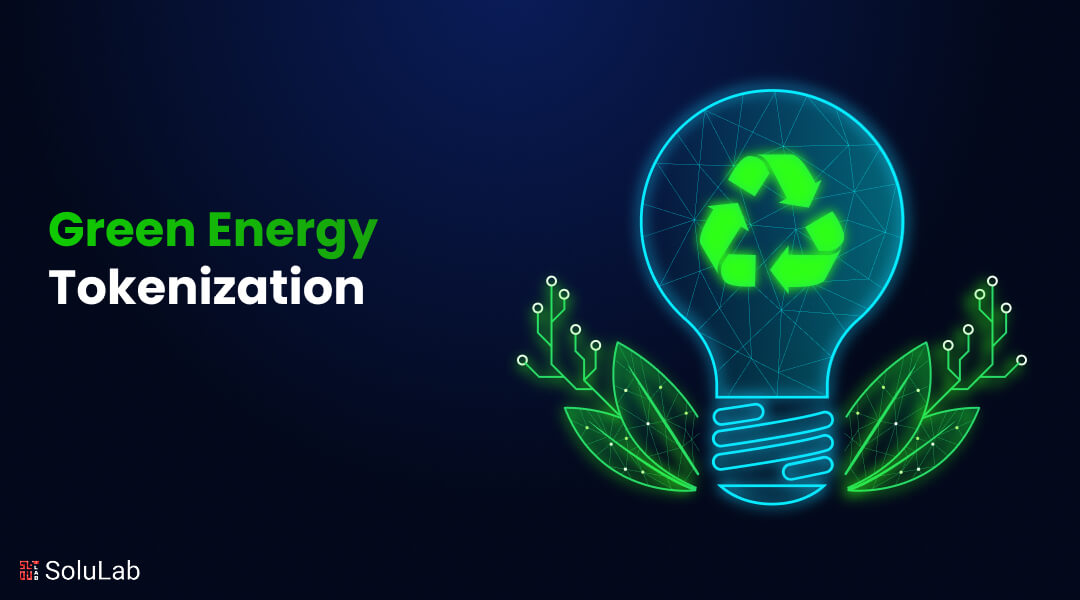
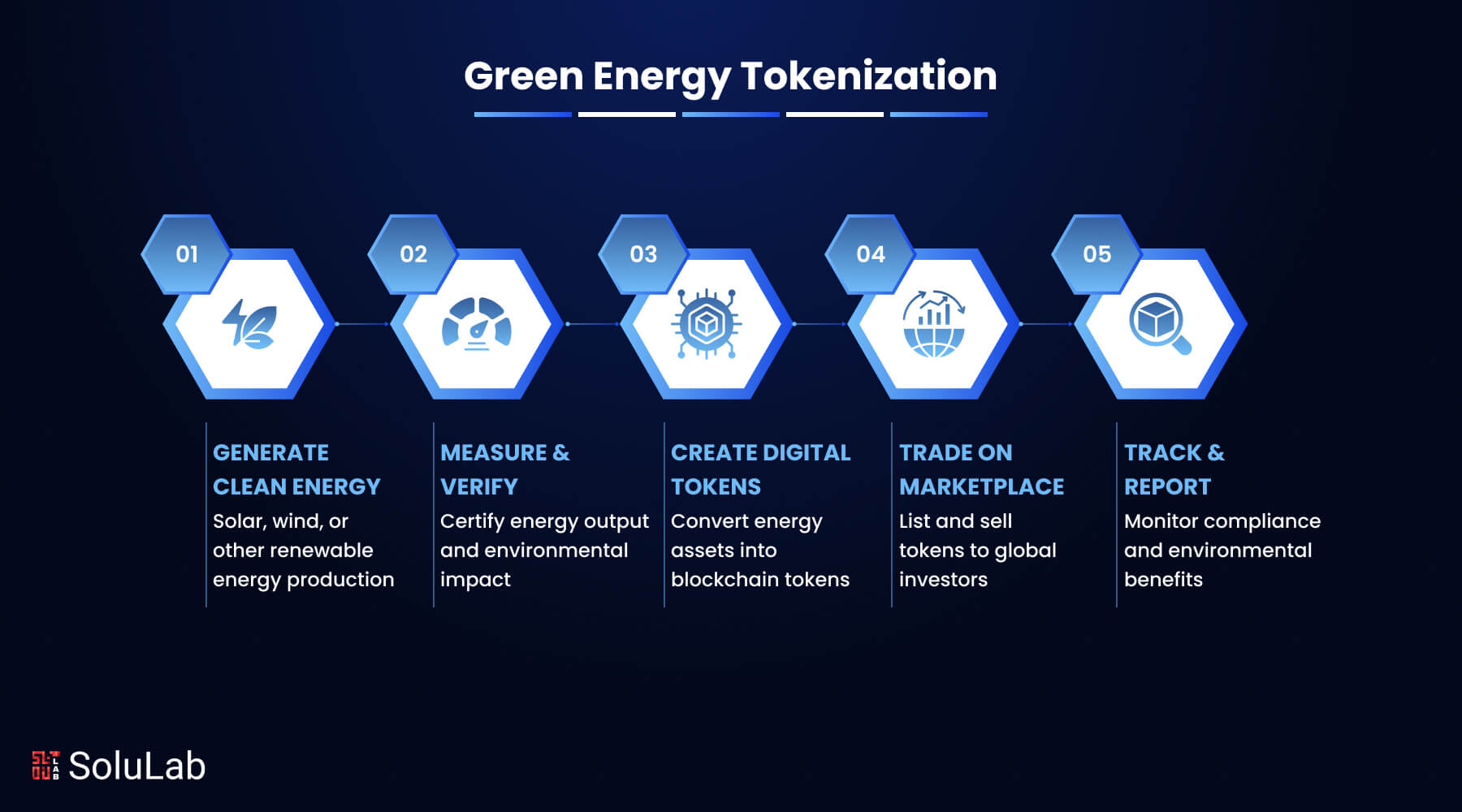
 The clean energy market is growing fast, with over $2 trillion expected to be invested by 2030 (IEA). But many renewable projects still face funding challenges. That’s where green energy tokenization and tokenizing clean energy come in.
Tokenization of renewable energy means turning energy assets like solar and wind farms into digital tokens on the blockchain. These energy tokens make it easy for investors worldwide to fund and trade clean energy projects, especially in forward-thinking markets like the UAE where RWA tokenization is on the rise.
For companies ready to grow in the green economy, renewable energy tokenization is a smart way to fund projects and meet ESG goals. Partnering with a tokenization platform development company or a blockchain development company can make this easier.
What is Tokenization of Renewable Energy Assets?
Green energy tokenization means turning real renewable energy assets, such as solar panels, wind farms, or bioenergy plants, into digital tokens using blockchain technology. These tokens act like shares, giving investors partial ownership and clear, secure records of the assets.
As companies push to meet environmental goals and net-zero targets, tokenized renewable energy is becoming a powerful way to open up green investments. It allows businesses and investors worldwide to easily buy, sell, and trade parts of renewable energy projects transparently and efficiently.
For example, a big solar project in Arizona or an offshore wind farm in the UK & UAE can be divided into many tokens. These tokens represent a share of the project and can be bought or sold on digital platforms. This is already being implemented in Real World Asset Tokenization in the UAE, where innovation in blockchain in the energy market is accelerating.
This tokenization of renewable energy supports a fairer, more accessible market for clean energy investments, helping industries grow sustainably while meeting ESG standards.
How Blockchain Powers Renewable Energy Markets?
Blockchain-powered solar asset tokenization creates a secure and transparent way to manage energy assets. Using smart contracts, ownership and energy trading happen automatically without middlemen.
For businesses, working with a blockchain development company or a smart contract development company is key. These experts build the trusted systems that handle these transactions smoothly and safely.
Also, blockchain solutions to tokenize renewable energy assets improve traceability and ensure compliance, two major challenges in traditional energy financing. This makes green energy tokenization investments in the USA and other regions more reliable and attractive.
Benefits of Green Energy Tokenization
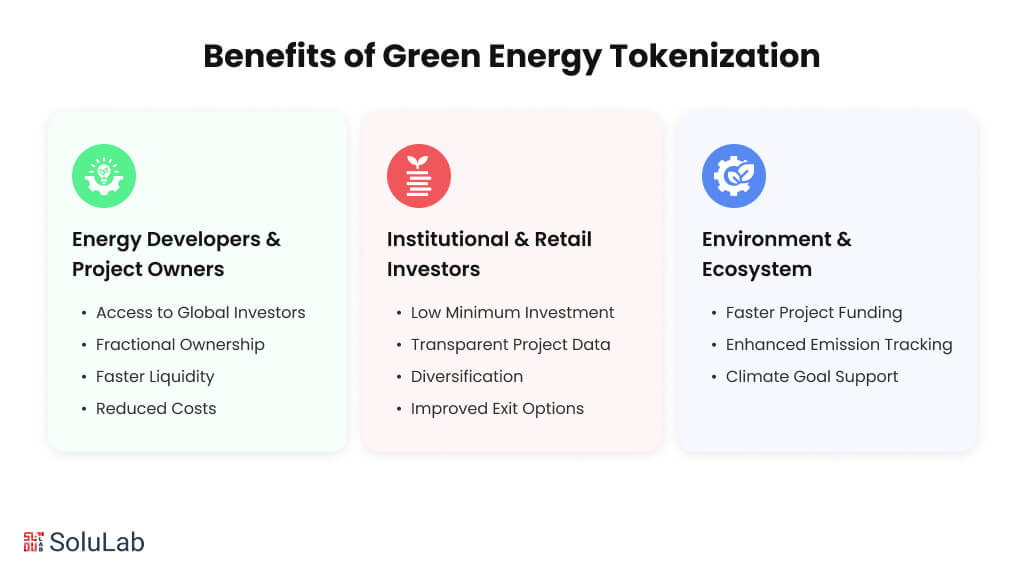
For Energy Developers & Project Owners
- Access to a larger global pool of investors
- Easier project financing through tokenizing clean energy
- Faster liquidity by offering tradable energy tokens on trusted platforms
- Reduced delays and costs through blockchain-powered solar asset tokenization
For Institutional & Retail Investors
- Low minimum investment in tokenized clean energy
- Transparent, real-time project data via smart contracts
- Ability to diversify into tokenized renewable energy in the UAE and ESG-aligned assets
- Improved exit options due to secondary market liquidity
For the Environment & Ecosystem
- More clean energy projects get funded faster, and emerging regions like the Middle East
- Enhanced emission tracking and tokenized carbon credits
- Supports climate goals through traceable renewable energy tokenization
In short, tokenization of renewable energy solves the funding gap, invites broader participation, and creates a smarter, scalable path to clean energy deployment. Businesses using blockchain solutions to tokenize renewable energy assets also benefit from faster time-to-market and reduced operational risks.
This approach also fits well with emerging decentralized Web3 ecosystem models, opening doors to cross-sector collaboration and digital transformation across the energy landscape.
Use Cases and Real-World Examples
Green energy tokenization is not just a future concept; it’s happening now, with measurable impact.
- In California, a solar energy project raised $5 million by tokenizing 10% of its infrastructure, enabling over 2,000 micro-investors to participate. This shows how tokenized renewable energy allows access to capital that was previously out of reach for smaller projects. This success shows the power of green energy tokenization investments in USA.
- In Germany, local energy cooperatives are using green energy tokens to fund wind power projects. By offering fractional ownership, they allow communities to invest directly in their own clean energy sources.
- In the Middle East, especially the UAE and Singapore, governments are launching regulatory sandboxes to explore how the tokenization of renewable energy can safely grow within legal frameworks. These regions are becoming hubs for innovation in blockchain in the energy market to tokenize renewable energy assets.
Leading real-world asset tokenization companies in the UAE are already delivering results. They’re helping businesses transform physical renewable energy assets into investable digital tokens, backed by trusted blockchain development companies.
These examples prove that renewable energy tokenization is more than hype; it’s a practical tool for companies to raise capital, build faster, and involve more stakeholders.
Key Technologies behind Green Energy Tokenization
Smart contracts govern how tokenized clean energy assets are managed on the blockchain. In green energy tokenization, they manage how energy tokens are created, transferred, and settled. These contracts:
- Automatically handle payments and revenue distribution
- Track real-time energy production or usage
- Ensure compliance with local and global energy regulations
An energy token represents a unit of renewable energy, like 1 kWh of solar or wind power. These tokens are issued on the blockchain and are tied directly to renewable energy assets. Businesses use them to sell or trade energy output digitally.
Advanced projects also connect these tokens with AI agents for energy and utilities to manage energy supply, forecast demand, or optimize grid load automatically.
This is critical in markets like the UAE, where Real World Asset Tokenization is supporting solar and hydrogen projects aligned with ESG mandates.
For example, a wind farm can tokenize its energy production, use smart contracts to send earnings to investors, and use AI to forecast demand in high-consumption areas.
Read More: Why Is Real-World Asset Tokenization Gaining Global Popularity?
How Is Green Energy Tokenization Used Globally?
Many countries are now using green energy tokenization to make clean energy investments more accessible, transparent, and scalable. Governments and companies around the world are testing and adopting the tokenization of renewable energy to meet climate goals and attract investors.
Here are some of the top countries leading the way:
USA
Launching community solar and wind projects using energy tokenization platforms. These allow small investors to fund local renewable energy assets, supporting green energy tokenization investments in USA.
UAE
Backed by strong government support, the country is pushing blockchain technology in tokenizing renewable energy to attract foreign investors in solar farms and green hydrogen projects, helping RWA tokenization UAE.
UK
Cooperatives and energy companies are issuing green energy tokens to fund wind and hydropower installations.
Germany
Known for energy innovation, Germany is enabling local communities to invest through tokenized renewable energy shares, creating tokenized carbon credits.
Singapore
A regulatory sandbox is testing tokenization platform development company offerings for green energy credits.
India
Several pilot programs are working on solar energy token sales and smart meter tokenization.
Australia
Energy marketplaces are using blockchain development to tokenize and trade clean energy.
Canada
Asset managers are developing tokenized clean energy ETFs, bringing more traditional investors into renewable energy tokenization.
Netherlands
Blockchain is being used to manage energy tokenization and peer-to-peer energy trading.
Japan
Exploring blockchain solutions to tokenize renewable energy assets as part of its decarbonization strategy.
These global trends show that the tokenization of renewable energy is no longer a future concept. It’s already being used to finance renewable energy assets in real time. Countries are tapping into asset tokenization to improve liquidity, traceability, and stakeholder participation in energy infrastructure. Even crypto assets are becoming part of these projects as new ways to fund and trade energy.
Read Also: Key Green Finance Trends
Top Green Energy Tokenization Platforms
If your business is planning to enter the green energy token space, here are three leading platforms that are shaping the market:
1. DAMREV
DAMREV is a global leader in tokenized clean energy built specifically for renewable energy assets. It allows businesses to tokenize solar, wind, and hydro projects with benefits like fractional ownership, improved liquidity, and wider investor reach. By using blockchain technology in tokenizing renewable energy, DAMREV makes these assets easy to trade and invest in globally. It’s a great example of how green energy tokenization is transforming traditional finance into digital investment channels.
2. Powerledger
Powerledger is a well-known player in peer-to-peer energy tokenization. It enables real-time trading of green energy tokens between producers and consumers. Businesses can benefit from its decentralized energy market model that reduces costs and increases transparency. Powerledger’s platform is already used in countries like Australia, India, and the USA, proving that tokenized renewable energy is not just a concept but a working reality supporting green energy tokenization investments in USA.
3. Stobox
Stobox offers a secure, regulation-compliant system for the tokenization of renewable energy projects. Their STV3 framework supports legal enforceability, KYC/AML compliance, and governance automation, crucial for any B2B entity looking to issue energy tokens. For companies wanting a structured entry into asset tokenization, Stobox bridges the gap between traditional finance and modern Web3 tools. It’s Legal-compliant systems supporting blockchain-powered solar asset tokenization in regulated markets like the Middle East.
If you’re considering launching your own tokenization platform, it’s smart to collaborate with a trusted company or hire blockchain developers to ensure your architecture is enterprise-ready and compliant from day one or Reach out to us, and we can build it for you in less than 45 days.
How Your Business Can Get Started?
Getting into green energy tokenization is easier than you might think. Here’s a simple step-by-step guide to help your business begin:
- Identify your renewable energy assets – This could be a solar farm, wind turbine, or hydro plant.
- Partner with a reliable blockchain development company – They will help you digitize your renewable energy assets.
- Build smart contracts – Choose a smart contract development company to create digital rules that govern how your tokenized carbon credits behave.
- Issue your tokens securely – Work with a tokenization platform development company to launch your tokenized renewable energy assets.
- Enable investments and trading – Use regulated platforms to let others invest in your project. You can also explore a DeFi lending platform for financial flexibility.
By combining the expertise of a top blockchain development company, your green project can scale efficiently with features like automated investor dashboards, real-time analytics, and compliance reporting.

Conclusion
Green energy tokenization is more than a tech trend; it’s a new model for building, funding, and scaling clean energy. It empowers businesses to unlock capital, reach global investors, and meet ESG goals faster.
With growing interest in RWA tokenization UAE, Blockchain in the energy market, and tokenized carbon credits, your business has a real chance to lead this shift.
As a leading real-world asset tokenization company in the USA, we help businesses like yours turn complex renewable projects into investable digital assets. From fractional ownership to automated smart contracts, we offer full support to navigate this transition.
The future of energy is clean, digital, and borderless. The question is: Are you ready to lead this change?
FAQs
1. What is the main benefit of tokenizing renewable energy assets?
It allows businesses to raise capital more easily, while giving investors flexible access to sustainable projects.
2. Is green energy tokenization legal?
Yes, in most countries. But it’s important to follow local financial regulations. A trusted blockchain development company can guide you.
3. How much does it cost to tokenize a solar project?
Costs vary by project size. Working with a tokenization platform development company can offer custom, scalable options.
4. Can small businesses tokenize their renewable energy projects?
Absolutely. Energy tokenization allows even small solar or wind projects to raise funds from a global pool of investors.
5. What are the best countries to launch a green energy tokenization project?
Today’s leaders include the USA, UK, UAE, Germany, Singapore, and Australia, thanks to clear regulations and strong demand.
6. What’s needed to manage investors after launching tokens?
You’ll need a platform for dashboards, reporting, and payouts. This can be automated with the help of an AI development company.