Talk to an Expert

Why are Startups, Businesses, and Governments Looking for DePIN Development?

DePIN Development For Startups

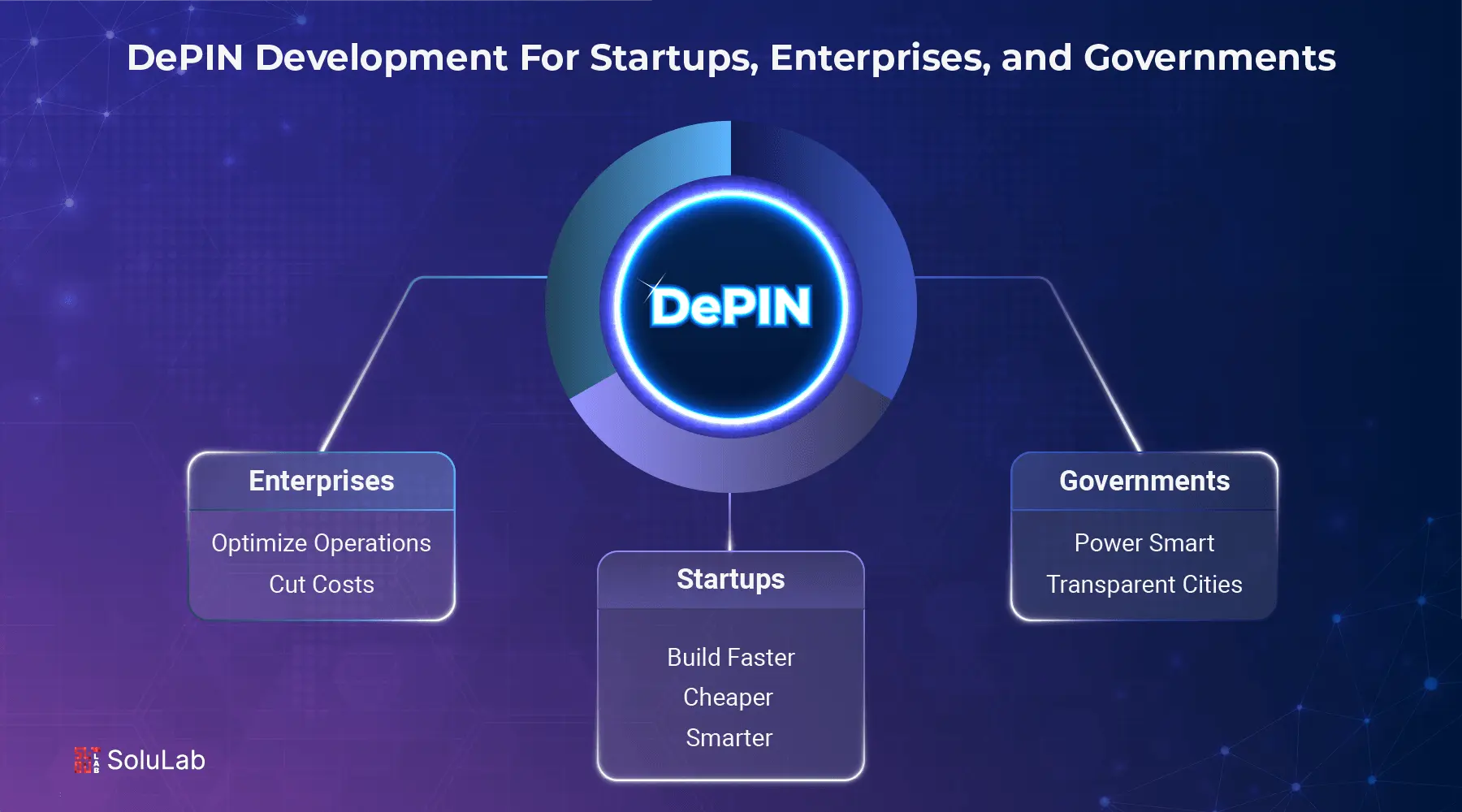
Decentralized infrastructure is opening up new possibilities in a number of industries, and companies are starting to take notice. Startups, businesses, and governments are increasingly exploring DePIN (Decentralized Physical Infrastructure Networks) to build more scalable, transparent, and efficient solutions. 

The DePIN industry is projected to attain $3.5 trillion by 2028, indicating that decentralized models are vital to future-oriented plans.

This transition is propelled by the increasing benefits that DePIN provides – enhanced cost-effectiveness, augmented autonomy, and heightened community involvement. A new McKinsey survey indicates that 45% of company executives choose decentralized solutions to enhance smarter, more sustainable operations. Emerging opportunities are arising to construct infrastructure that is both dynamic and robust, ranging from decentralized wireless networks to shared energy systems.

Governments are also adopting the potential of decentralized systems to enhance contemporary infrastructure projects. The World Economic Forum indicates that 70% of smart city initiatives initiated post-2023 have used decentralized frameworks to augment innovation and community engagement. The ongoing DePIN development is fostering a future characterized by cooperation, transparency, and collective advancement.

In this blog, we take a closer look at how DePIN is reshaping opportunities for startups, businesses, and governments. As DePIN for startups continues to gain momentum, it’s opening new paths for innovation, growth, and collaboration.

Why Startups are Embracing DePIN?

Startups are now turning more and more towards DePIN (Decentralized Physical Infrastructure Networks) since it empowers them to build, grow, and innovate without the old constraints of centralized infrastructure. With speed, trust, and adaptability being the success drivers in a market, DePIN presents a new ground for startups to develop more robust and community-based solutions. Partnering with an experienced DePIN development company often becomes a strategic move, allowing these startups to tap into decentralized models efficiently and future-proof their growth.

Here are some reasons why startups are using DePIN technology:

  • Lower Barriers to Entry: DePIN allows startups to access and build infrastructure without the heavy upfront costs typically associated with physical assets. Instead of owning everything, they can tap into decentralized networks, making it easier and faster to launch new services or platforms.
  • Faster Market Expansion: By taking advantage of decentralized infrastructure, companies can scale their operations to new markets without the need to establish conventional facilities. This ease makes it easy to pilot markets, reach worldwide audiences, and fine-tune services according to real-world needs.
  • Enhanced Transparency and Trust: Today’s users are more aware of how their data and resources are managed. DePIN models offer visible, verifiable systems where ownership and participation are clear, helping startups earn early trust and stand out in competitive markets.
  • Community-Driven Growth: Startups using DePIN frameworks can invite users to become stakeholders. Not only does this method ease funding and sharing resources, but it also creates greater loyalty and commitment, making users organically brand champions.
  • Access to Alternative Funding Models: Aside from conventional venture capital, startups are able to raise money through tokenized incentives, crowdsourcing, and decentralized governance systems. This makes it easier to align financial interests with community growth from the very beginning.
  • Built-In Resilience: Decentralized networks minimize the risk of single points of failure. For startups, this translates to fewer interruptions, improved uptime, and more resilient operational continuity, even as they scale fast and encounter volatile challenges.
  • Opportunities for Innovation: DePIN doesn’t just replicate traditional systems — it creates entirely new models. Startups working with decentralized networks often find new ways to deliver value, whether through token economies, shared resource marketplaces, or peer-to-peer infrastructure systems.

CTA1

Why Enterprises and Traditional Businesses are Adopting DePIN?

For decades, large businesses and traditional enterprises have relied on centralized systems to manage everything from supply chains to customer operations. It worked — for a time. But today, things are shifting. The pace of technology, rising security risks, and changing customer expectations are pushing companies to rethink how they build and run their infrastructure. That’s where DePIN, or Decentralized Physical Infrastructure Networks, is starting to make a real difference. It’s not just another tech buzzword; it’s becoming a serious strategy for companies that want to stay competitive, scale smarter, and build systems that last.

Here’s a closer look at why DePIN is becoming part of enterprise playbooks:

1. Reducing Operational Costs

Running large centralized systems isn’t cheap — maintaining servers, managing security, scaling data centers — the costs stack up fast. With DePIN, businesses can tap into shared, decentralized networks. It means spreading the load, reducing upfront investments, and trimming ongoing operational costs without losing control.

2. Stronger Security and More Resilience

Centralized setups often have a weak spot — one breach, one outage, and everything can grind to a halt. DePIN changes that. By distributing infrastructure across many nodes, businesses build systems that can survive attacks, hardware failures, or even localized disasters without skipping a beat.

3. Boosting Transparency and Customer Trust

Trust is harder to earn and easier to lose than ever before. DePIN frameworks create transparent, tamper-proof records that customers, partners, and regulators can verify independently. For sectors like finance, healthcare, or supply chain, that kind of trust isn’t just nice to have — it’s critical.

4. Faster and Easier Market Expansion

Traditionally, expanding into a new market meant massive infrastructure investment. DePIN makes it easier. Companies can plug into decentralized infrastructure already operating locally, roll out services faster, and adjust on the fly, without the long timelines and heavy costs they used to face.

5. New Ways to Deliver Value

DePIN doesn’t just optimize old systems, it opens the door to completely new business models. We’re seeing enterprises launch decentralized identity services, loyalty programs powered by token economies, and peer-to-peer marketplaces that wouldn’t have been practical before.

6. Better, More Dynamic Partnerships

In a decentralized model, partnerships aren’t limited to two companies signing a contract. DePIN ecosystems allow multiple stakeholders, vendors, customers, and even competitors to participate, share value, and innovate together. It’s collaboration at a different level.

7. Positioning for Long-Term Success

Enterprises that move early on DePIN aren’t just fixing today’s problems, they’re setting themselves up for a more adaptable, future-proof foundation. Whether it’s scaling faster, handling future tech shifts, or responding to regulatory changes, a decentralized backbone puts them ahead of the curve.

Government and Public Sector Involvement in DePIN

Across the world, governments and public sector organizations are beginning to take decentralized infrastructure seriously. They are no longer just watching from the sidelines — many are now actively piloting or adopting DePIN to make their systems more resilient, cost-effective, and citizen-friendly. With growing interest around DePIN use cases, public bodies are seeing that decentralized models offer practical solutions to challenges that centralized infrastructure simply can’t solve anymore.

Here’s how the public sector is starting to put DePIN into action:

  • Building Smarter Cities: Urban centers are under constant pressure to deliver better services with fewer resources. Governments are turning to DePIN to create decentralized energy grids, public Wi-Fi networks, and smarter transport systems, giving communities more direct access to essential services without depending on a few centralized providers.
  • Modernizing Identity Systems: A number of governments are experimenting with decentralized digital identity frameworks. Instead of relying on central databases vulnerable to breaches, DePIN models give individuals more control over their information while still meeting national security and compliance standards.
  • Redesigning Energy Networks: Energy independence has become a major focus. Through custom DePIN solutions, local and regional authorities are working on decentralized renewable energy grids, where citizens can generate, trade, and consume clean energy within their own neighborhoods.
  • Strengthening Disaster Response: When natural disasters strike, centralized infrastructure often fails. Some governments are testing decentralized communication systems and emergency service networks that can stay functional even when parts of a city lose power or internet access.
  • Increasing Transparency in Procurement: Corruption and inefficiency in government procurement are long-standing problems. With decentralized ledgers and smart contracts, agencies are finding new ways to make bidding, contracting, and public spending more transparent and accountable.
  • Promoting Citizen Participation: Instead of being passive recipients, citizens are becoming active stakeholders in infrastructure projects. DePIN models allow for shared ownership, more community-driven innovation, and a greater sense of participation in public service delivery.
  • Protecting Critical Systems: Cybersecurity threats are pushing governments to rethink how they secure vital systems. Decentralized models are offering a stronger, more resilient approach by spreading risk across nodes rather than concentrating it in one place.

Business Benefits of DePIN Development
Business Benefits of DePIN Development

Decentralized Physical Infrastructure Network is no longer just a concept discussed by blockchain enthusiasts. It’s becoming a serious tool for businesses looking to rethink how they manage operations, engage users, and scale infrastructure without the traditional bottlenecks. Companies that invest early in decentralized physical infrastructure network solutions are positioning themselves for a future where transparency, resilience, and flexibility are essential, not optional.

Here’s why businesses of all sizes are starting to look seriously at DePIN:

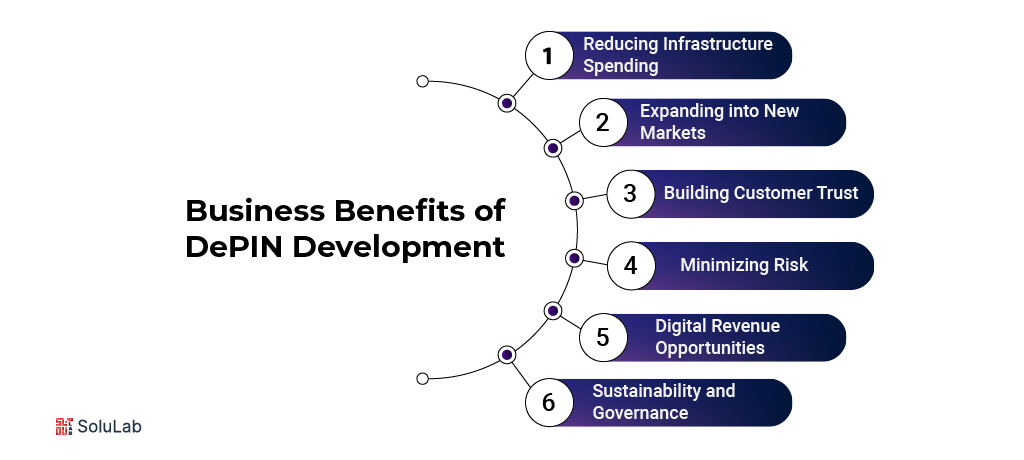
  • Reducing Infrastructure Spending Without Compromising Growth
    Traditional infrastructure demands huge capital for building, maintaining, and upgrading, and those costs only rise as companies scale. DePIN offers a way to share resources across a distributed network, helping businesses control costs without sacrificing performance or reach.
  • Expanding into New Markets with Greater Agility
    Because DePIN solutions are decentralized, businesses aren’t tied to fixed locations or rigid rollout schedules. They can enter new markets quickly, adapt offerings to local needs, and scale operations on demand, something traditional models struggle to support.
  • Building Customer Trust Through Verifiable Systems
    In decentralized environments, service records and transactions can be independently verified. This transparency strengthens trust with customers, partners, and regulators, a competitive edge in industries where credibility is everything.
  • Minimizing Risk Through Distributed Infrastructure
    Rather than concentrating systems in one vulnerable location, DePIN spreads operations across many nodes. That structure helps businesses stay operational even in the face of technical failures, cyberattacks, or localized disruptions.
  • Unlocking New Digital Revenue Opportunities
    DePIN models create space for new services like shared asset platforms, decentralized marketplaces, and token-based incentive systems. Companies can innovate faster and capture value in emerging digital economies.
  • Meeting Sustainability and Governance Expectations
    As ESG initiatives become more central to business strategy, decentralized infrastructure offers meaningful advantages. Shared networks can reduce environmental impact, promote digital inclusion, and support more ethical technology deployment.

That’s why working with a trusted DePIN development company in the USA can make a real difference. The right partner doesn’t just deliver technical solutions; they help build infrastructure that grows with the business, adapts to the market, and stands the test of time.

Read Also: DePIN In the Telecom Industry

Future Trends in DePIN Development

The world of DePIN (Decentralized Physical Infrastructure Networks) is still taking shape, but one thing is clear: it’s evolving fast. What started as a niche idea is now becoming a serious foundation for how industries might build and operate in the coming years. As adoption grows, both startups and enterprises are finding new ways to unlock the value of decentralized systems. Whether it’s about reducing costs, creating more resilient infrastructure, or building communities around shared ownership, the next wave of DePIN development will look very different from what we see today. The role of DePIN for startups is expected to be especially important, as early movers continue to drive innovation and reshape industries from the ground up.

Here are some of the key trends shaping the future of DePIN:

1. Specialized Networks Focused on Specific Industries

Instead of broad, generalized platforms, we’ll see DePIN networks designed to meet the unique needs of industries like supply chain, healthcare, energy, and transportation. Focused networks will allow for faster innovation and better performance by addressing very specific challenges.

2. Cross-Network Interoperability

As more decentralized systems launch, the need for them to communicate and share resources will grow. Future DePIN platforms will focus on interoperability, making it easier for businesses and users to move assets and data across different decentralized environments without friction.

Read Also: Blockchain Interoperability for Enterprise Adoption

3. Community-Owned Infrastructure Models

Ownership is shifting away from corporations and moving toward communities. Many future DePIN projects will be built around shared ownership models, where users contribute resources and help govern the network, gaining real economic incentives for their participation.

4. DePIN as a Backbone for Startups

Early-stage companies are already seeing the benefits of building on decentralized networks. Going forward, DePIN models will offer startups faster routes to market, lower operational costs, and the ability to create entirely new service categories that weren’t possible with traditional centralized models.

5. More Clarity Around Regulation

Governments and regulatory bodies are starting to pay closer attention to DePIN. We’ll likely see the creation of regulatory frameworks designed to support secure, resilient decentralized infrastructure without stifling innovation or community ownership.

6. Integration of AI and Machine Learning

Intelligent DePIN networks are coming. AI-driven management and optimization of decentralized infrastructure will make these systems more efficient, self-healing, and capable of making real-time adjustments based on network conditions.

CTA2

The Bottom Line

The rise of DePIN marks a major shift in how businesses, governments, and communities approach infrastructure. Instead of relying solely on centralized systems, organizations are embracing decentralized models that offer greater flexibility, transparency, and resilience. From startups to enterprises, the movement toward DePIN is opening new pathways for growth, innovation, and collaboration across industries.

At SoluLab, we have been at the forefront of delivering real-world decentralized solutions. Our work with Morpheus.Network, a blockchain-powered SaaS platform designed to streamline and secure global logistics, is a strong example of how DePIN models are already reshaping traditional industries. Morpheus.Network brings together blockchain, IoT, SMS notifications, and legacy technologies to create smarter, more secure supply chains. Through projects like this, SoluLab continues to build DePIN solutions that bridge the gap between emerging tech and existing business ecosystems, helping our clients lead confidently into a decentralized future.

If you’re exploring how DePIN could transform your business, now is the time to act. Connect with SoluLab today to learn how we can help you build decentralized systems that are practical, scalable, and ready for what’s next.

FAQs

1. What industries can benefit the most from DePIN solutions?

DePIN solutions aren’t limited to any one sector. Industries like supply chain management, energy distribution, telecommunications, healthcare, and even agriculture are already seeing value. Anywhere that infrastructure needs to be more resilient, transparent, or distributed, DePIN can create opportunities to rethink the way services are delivered and managed.

2. How is DePIN different from traditional blockchain networks?

While traditional blockchain networks often focus on financial transactions or digital assets, DePIN is about connecting physical infrastructure — things like data centers, wireless networks, or energy grids — through decentralized coordination. It’s about linking the physical and digital worlds in a way that removes centralized control and distributes both responsibility and benefit more evenly across participants.

3. Is DePIN development only suitable for startups and tech companies?

Not at all. While startups are quick to adopt DePIN because of its flexibility, larger enterprises and even public sector organizations are exploring DePIN to modernize infrastructure, reduce operational costs, and offer new services. It’s not about company size — it’s about how willing an organization is to adapt to more open, decentralized models.

4. What skills and technologies are needed to build a DePIN network?

Developing a strong DePIN network typically requires expertise in blockchain architecture, IoT integration, cybersecurity, and decentralized governance models. It’s not just about coding; it’s about designing systems that can function independently, stay secure, and scale over time without relying on central points of control.

5. How can companies future-proof their investment in DePIN technology?

The smartest approach is to design systems that are flexible and adaptable from day one. Rather than locking into a single platform or standard, businesses should focus on open architectures, interoperability, and community-driven governance models. It’s also critical to stay engaged with the evolving DePIN ecosystem, as the technology, standards, and best practices will continue to mature over the next few years.

 

How is DePIN Reshaping the Telecom Industry?

DePIN in Telecom Industry

The telecom industry has high infrastructure costs and patchy services, especially in rural or underserved areas. Traditional telecom models are expensive to build, slow to scale, and often fail to serve the needs of the entire population. Many regions still suffer from poor connectivity and a lack of transparency in data handling. 

According to predictions, the global telecom services market is expected to grow from its 2023 valuation of $1.7 trillion to $3.5 trillion by 2028

Offering decentralized, community-driven solutions, especially in poor regions, is how DePIN projects want to take a piece of this market. DePIN is reducing costs, increasing coverage, and introducing unprecedented flexibility to telecom by crowd-powering infrastructure and compensating individuals for their involvement. 

It’s a brand-new, community-focused approach to network development and management that has already changed how we communicate. As demand grows, DePIN development services are playing a crucial role in building and scaling these decentralized networks. Let’s explore how DePIN’s role in telecommunication is changing the game for all of us.

Benefits of DePIN in Telecommunications

Benefits of DePIN in Telecommunications

DePIN (Decentralized Physical Infrastructure Networks) is causing a change. Here are some benefits of DePIN in telecommunications:

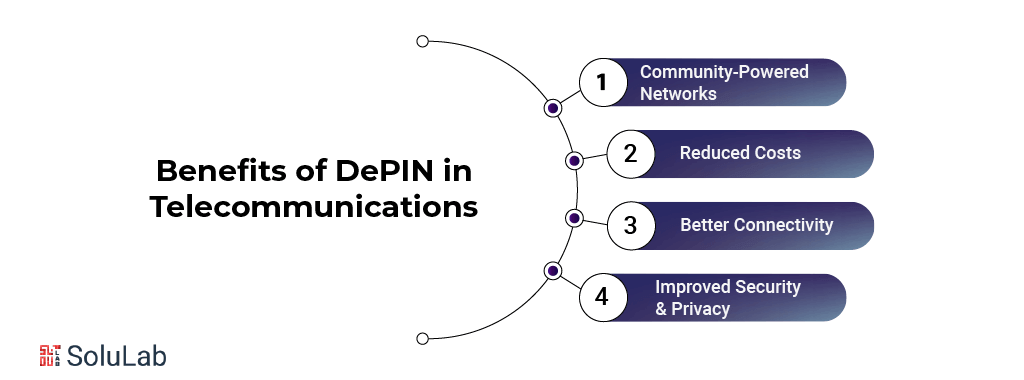
  • Community-Powered Networks: Individuals and companies can install and manage network equipment (such as cell towers and Wi-Fi hotspots) and receive incentives for offering coverage, eliminating the need to rely on big telecom companies.
  • Reduced Costs: Large capital expenditures are necessary for traditional communication networks. By sharing expenses among participants, DePIN reduces this burden and makes network expansion more feasible.
  • Better Connectivity: By offering coverage in underdeveloped or isolated locations where traditional carriers have little financial incentive, DePIN can aid in closing the digital divide.
  • Improved Security & Privacy: DePIN networks can provide more secure communication by lowering the dangers of centralized data breaches using blockchain-based authentication and encryption. 

How is DePIN Transforming Telecom?

Decentralized Telecom Physical Infrastructure Networks have caused an uproar in the telecom industry. It utilizes the power of the community rather than relying on large telecom companies. One hotspot at a time, let’s see how it is altering the game.

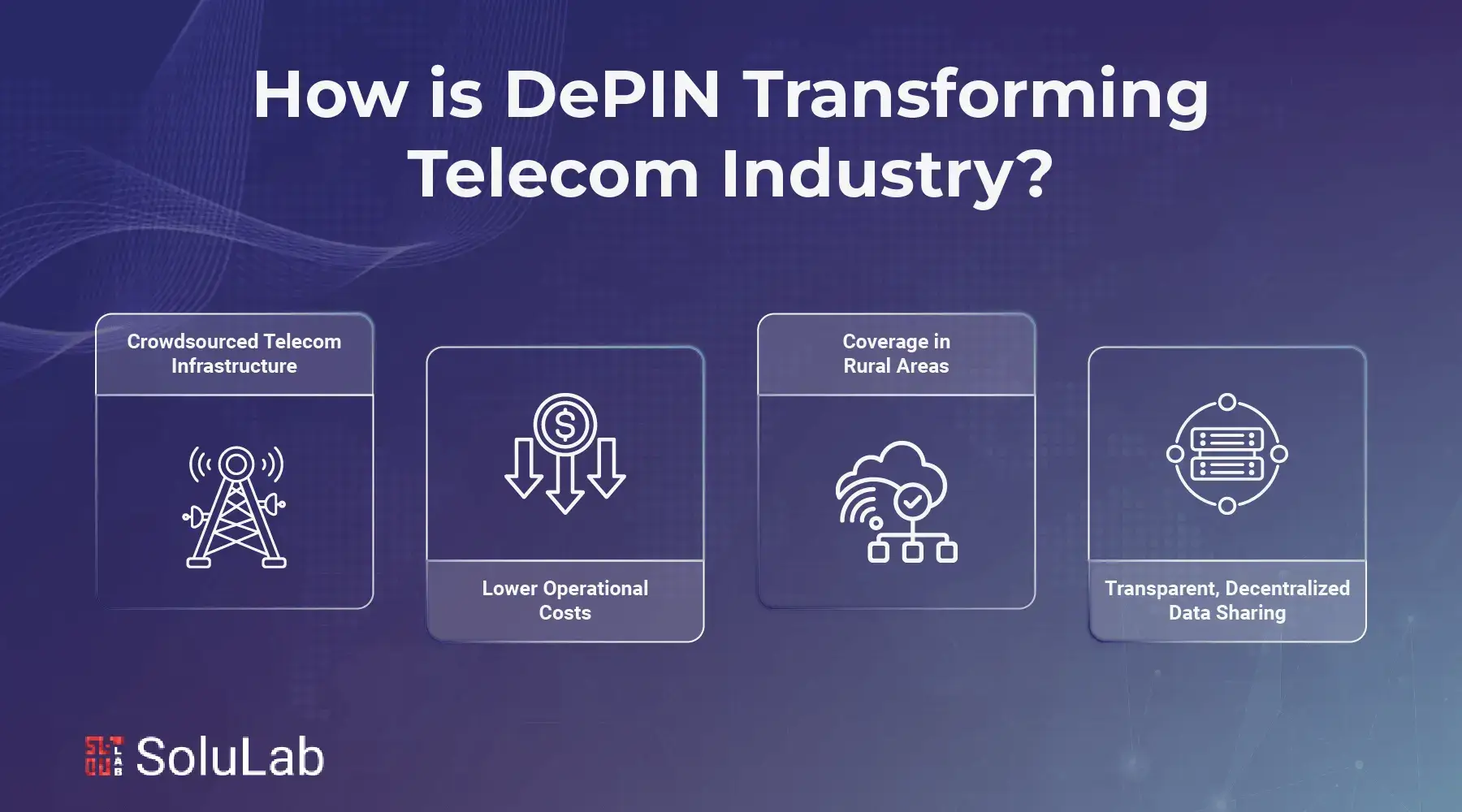
1. Crowdsourced Telecom Infrastructure

With DePIN, individuals can contribute their nodes or hotspots to the network. This allows everyday users to become mini telecom providers, reducing the need for massive infrastructure. It’s like turning your WiFi router into a building block for global connectivity!

Read Also: DePin In Web3

2. Lower Operational Costs

Because decentralized network solutions run on user-contributed hardware, companies don’t need to spend crores on cell towers or cables. Plus, pay-per-use pricing makes things more efficient for users. You only pay for what you use, no inflated monthly bills!

3. Coverage in Rural Areas

DePIN’s role in telecommunications empowers locals in remote areas to set up network nodes, filling gaps where traditional telecom skips out. Token rewards motivate participation, making connectivity both accessible and community-driven. Villages can now get online without waiting for big providers.

4. Transparent, Decentralized Data Sharing

All network data, like usage and performance, is openly accessible on the blockchain networks. This keeps things honest, helps track efficiency, and limits shady practices. Everyone can see what’s going on, which builds more trust across the board.

CTA1

Real-World Examples of DePIN in Telecom

DePIN is improving telecom with community-driven networks. Explore how DePIN development services power innovations like Helium, Pollen Mobile & Nodle.

1. Helium Network

Helium is a decentralized wireless network designed for low-power IoT devices. Individuals deploy Helium Hotspots, creating a global network that provides long-range connectivity. Participants earn HNT tokens for contributing to network coverage. This model reduces reliance on traditional telecom infrastructure and supports applications like smart city sensors and asset tracking.

2. Pollen Mobile

Pollen Mobile offers user-owned, decentralized mobile network solutions focusing on privacy and affordability. Users deploy “Flowers” (small cell radios) to provide coverage, and devices connect via eSIMs. Contributors earn PollenCoin for their participation. This approach enables customizable coverage, especially in areas underserved by traditional carriers. 

3. Nodle Network

Nodle Network utilizes smartphones as nodes to create a decentralized IoT network. By leveraging Bluetooth connectivity, it provides low-cost, secure connections for IoT devices. Participants earn Nodle Cash for contributing to the network, which is particularly beneficial for applications like asset tracking and smart city infrastructure. ​

Related: Top DePIN Development Companies in USA

The Future of Telecom with DePIN 

Decentralized Physical Infrastructure Networks (DePIN) are changing the telecom industry. Traditional telecom models, which depend on centralized infrastructure, are having trouble being accessible, scalable, and cost-effective. Utilizing the blockchain and decentralized technology to build distributed, community-driven networks, DePIN provides an innovative solution.

With the help of tokenized telecom infrastructure rewards, people and organizations can participate in the development and maintenance of network infrastructure. DePIN makes it possible for affordable, scalable, and inclusive connectivity solutions, as shown by the Helium Network, Pollen Mobile, and Nodle Network. This strategy not only decreases dependency on big businesses but also gives communities and users the authority to take charge of their connection requirements.

DePIN development company solutions are changing telecom by boosting connectivity, cutting costs, and driving sustainable, transparent network innovation.

Conclusion

The telecom industry has long struggled with high infrastructure costs, limited rural reach, and a lack of transparency. These challenges have slowed progress and kept many communities offline. DePIN, however, is changing the course. It is increasing the efficiency and inclusivity of telecom by extending connectivity to underdeveloped places, lowering operating costs, and crowdsourcing infrastructure.

It’s all powered by communities, not corporations. If we want a future where everyone, regardless of location, can access reliable and affordable connectivity, DePIN is a step in the right direction. It’s not just an upgrade; it’s a whole new way of thinking about telecom.

SoluLab, a top DePIN development company, has its team of experts to solve your queries related to DePIN telecom. Contact us today to discuss this further!

FAQs

1. What is DePIN in telecom?

DePIN stands for Decentralized Physical Infrastructure Networks. In telecom, it refers to community-powered networks where individuals contribute hardware like hotspots to improve connectivity.

2. How does DePIN reduce telecom costs?

Since users contribute to the infrastructure, a DePIN telecom solutions provider doesn’t need to invest in expensive towers or hardware. This cuts down operational costs and enables more flexible pricing models.

3. Can DePIN work in rural areas?

Yes! Locals can set up nodes and earn rewards, helping extend coverage to regions that traditional telecom companies often ignore.

4. What are the benefits of crowdsourced telecom infrastructure?

It boosts network reach, reduces dependency on centralized providers, and opens income opportunities through tokenized telecom infrastructure for individuals who participate in building the network.

5. Is DePIN secure and reliable?

Yes. Many DePIN networks use blockchain for transparency and security. Real-time data sharing helps detect and prevent misuse or fraud.


Top 10 DePIN Development Companies in USA to Watch in 2025

Have you ever thought about who really powers your Wi-Fi, your ride-sharing app, or your cloud storage? Most of us use these services daily without thinking about the massive infrastructure behind them. 

What if, instead of relying on a few tech giants, these everyday services were run by people, like you, through decentralized networks? That’s the vision behind Decentralized Physical Infrastructure Networks (DePIN) . This groundbreaking concept is changing how we build and manage critical infrastructure like energy grids, wireless networks, data storage, and even transportation systems. 

This article will reveal the top DePIN development companies in USA that are leading the charge in transforming everyday digital services into decentralized ecosystems. Whether you’re a tech enthusiast, an investor, or someone curious about trends in infrastructure, these are the names you need to know.

Let’s begin!

Top 10 DePIN Development Companies to Consider in 2025

solulab

1. SoluLab

SoluLab is a leading name as a blockchain development company recognized for its innovative DePIN solutions across sectors like healthcare, logistics, IoT and more. With a strong focus on integrating blockchain with real-world infrastructure, the company helps businesses create decentralized networks that are secure, scalable, and efficient.

SoluLab is known for combining AI and blockchain to enhance physical infrastructure systems. Their ability to deliver full-cycle development, from consulting to deployment, makes them a go-to DePIN development company in USA and all other parts of the world, for enterprises seeking advanced Web3 solutions.


$25 – $49


250+


2014


USA

BlockchainX

2. BlockchainX

BlockchainX offers comprehensive DePIN development services, specializing in decentralized infrastructure protocols, device integration, and secure APIs. They support projects across decentralized storage, edge computing, and IoT.

BlockchainX is praised for its speed, customization capabilities, and deep understanding of DePIN architecture. Their hands-on experience with tokenomics and real-time infrastructure systems positions them as a trusted player in the Web3 ecosystem.


$25 – $49 / hr


101 – 250


2017


USA

Rapid Innovation

3. Rapid Innovation

Rapid Innovation is one of the leading DePIN Development Companies 2025 due to its agile development processes and tailored solutions for DePIN and decentralized app ecosystems. They focus on building Web3 infrastructure that’s scalable, interoperable, and user-centric.

Their team brings a startup-friendly approach, which enables rapid prototyping and deployment of DePIN applications. Rapid Innovation is also active in open-source collaborations, helping shape the broader decentralized infrastructure space.


$25 – $49 / hr


10 – 49


2019


USA

Antier Solutions

4. Antier Solutions

Antier is a full-service blockchain consulting and development firm with expertise in DePIN-powered sectors such as energy, supply chain, and smart mobility. They deliver enterprise-grade solutions with built-in compliance and robust token models.

Antier’s strong consulting foundation ensures the strategic implementation of DePIN systems. Their in-house R&D on token-based incentives and decentralized governance adds long-term value to infrastructure networks.


$25 – $49 / hr


50 – 249


2005


USA

Blockchain App Factory

5. Blockchain App Factory

Blockchain App Factory has established itself in building scalable DePIN systems for decentralized storage, smart transportation, and urban infrastructure, hence is on the top DePIN development companies list. Their enterprise clients value their ability to integrate blockchain with existing physical networks.

With a focus on future-forward technologies, Blockchain App Factory offers powerful DePIN platforms designed for high-volume, real-world usage. Their blockchain infrastructure is particularly suited for large-scale deployments.


$25-$49


50 – 200


2016


USA

RisingMax

6. RisingMax

RisingMax builds DePIN-based platforms for smart cities, urban mobility, and connected infrastructure. Their projects aim to enhance data transparency and citizen engagement through decentralized networks.

Their user-first design philosophy sets them apart, as they prioritize usability and intuitive interfaces in DePIN apps. RisingMax is also known for its strong post-launch support and upgrade services.


$25/ hr


50 – 199


2011


USA

Suffescom Solutions

7. Suffescom Solutions

Suffescom Solutions delivers high-end DePIN solutions customized for industries like telecom, energy, and retail. Their platforms support decentralized operations, device-to-device communication, and blockchain governance.

Their strength lies in offering both consulting and technical execution under one roof. Suffescom’s DePIN projects stand out for being strategically planned, performance-optimized, and future-ready.


$50 – $99 / hr


200 – 300


2013


USA

Prolitus

8. Prolitus

Prolitus brings expertise in both blockchain and AI to develop enterprise-ready DePIN applications. They focus on creating smart infrastructure solutions for industries like manufacturing, transportation, and public services.

Their strength lies in integrating advanced technologies like predictive analytics and IoT with blockchain, which gives their DePIN systems added intelligence and automation capabilities.


$75 – $99 / hr


150 – 250


2005


India

Technoloader

9. Technoloader

Technoloader, a well-known DePIN development company, develops lightweight, cost-effective DePIN platforms tailored for startups and mid-sized businesses. They offer modular frameworks for decentralized energy, IoT device communication, and autonomous networks.

Technoloader excels in delivering budget-friendly yet robust decentralized solutions. Their team emphasizes speed-to-market, making them ideal for MVPs and small businesses entering the DePIN space.


$25 – $49 / hr


50 – 249


2018


India

Nadcab Labs

10. Nadcab Labs

Nadcab offers complete DePIN development services, from smart contract creation to full platform deployment. Their projects often focus on logistics, supply chain, and decentralized tracking systems.

Nadcab is known for its affordability and flexibility, making it a preferred partner for startups and entrepreneurs. Their blockchain solutions are designed with simplicity and scalability in mind.


$100 – $150 / hr


100 – 150


2015


India

How We Chose These Top 10 DePIN Development Companies?

With the growing buzz around DePIN (Decentralized Physical Infrastructure Networks), dozens of companies are entering the space—but not all of them bring the innovation, reliability, or vision needed to lead in 2025 and beyond. That’s why we carefully curated this top 10 DePIN Development Companies list using a set of key evaluation criteria.

1. Expertise in DePIN Development

We prioritized companies with deep technical expertise in decentralized technologies, especially those that have already built or contributed to real-world DePIN use cases and applications, ranging from decentralized wireless and IoT integrations to token-powered infrastructure platforms.

2. Proven Track Record 

We looked at companies with a solid history of delivering successful blockchain projects, especially for clients in sectors like telecom, logistics, energy, and smart cities, where DePIN models are gaining momentum.

3. Custom Solutions

A top DePIN development company must go beyond templates—they must offer customized, forward-thinking solutions that align with each client’s physical infrastructure goals. We favored firms that offer tailored services in areas like:

4. Scalability and Security Focus

DePIN projects often require scalable network design and robust security frameworks to handle thousands—or even millions—of connected devices and users. Companies that emphasize scalability, resilience, and DevOps readiness made our shortlist.

5. Thought Leadership

We also considered how actively the companies contribute to the Web3 and DePIN ecosystem, whether through R&D, partnerships, open-source contributions, or participation in global innovation programs.

6. Growth Potential 

Finally, we evaluated each company’s vision for the future. 

Are they building long-term solutions? 

Are they aligning with the latest trends like GenAI integration, decentralized cloud, and green infrastructure? 

Those who gave positive outcomes were added here. So, these are the firms likely to shape the DePIN space in 2025 and beyond.

DePIN Development Company

Wrap Up

As we look ahead to the future of infrastructure in 2025, Decentralized Physical Infrastructure Networks (DePIN) are emerging as a foundational pillar for innovation. From startups seeking innovation to governments aiming for transparent public services, DePIN offers a smarter, more collaborative infrastructure model.

As we move through 2025, the Decentralized physical infrastructure network firms on this list are leading the charge, but one name continues to stand out for its vision, reliability, and technical excellence: SoluLab.

As a top DePIN development company, SoluLab is helping businesses across industries transform their ideas into decentralized, future-ready platforms. Whether you’re planning a smart city solution, a decentralized wireless network, or a blockchain-powered logistics system, we have the expertise to make it real.

Talk to the experts at SoluLab and bring your decentralized infrastructure vision to life. Let’s shape the future—one node at a time!

FAQs

1. What is DePIN?

DePIN (Decentralized Physical Infrastructure Network) refers to a decentralized system where physical infrastructure, like wireless networks, energy grids, or sensor systems, is owned, operated, and maintained by a distributed network of participants, often incentivized through blockchain-based tokens.

2. How are DePIN development companies different from regular blockchain firms?

While general blockchain firms focus on digital solutions like smart contracts or dApps, DePIN development companies specialize in combining blockchain with physical infrastructure. They work on real-world use cases such as decentralized wireless (DeWi), mapping, energy distribution, and IoT systems.

3. Are DePIN solutions only for large enterprises and governments?

No, startups and mid-sized businesses can also benefit from DePIN development solutions. Many companies are using decentralized models to launch innovative services with lower upfront infrastructure costs and improved user trust.

4. How does DePIN differ from traditional infrastructure?

Traditional infrastructure relies on centralized authorities for management and control. DePIN, on the other hand, uses blockchain technology and decentralized nodes, allowing multiple stakeholders to contribute, validate, and manage infrastructure without a central authority.

5. Why is SoluLab considered a top DePIN development company?

SoluLab is known for its strong foundation in blockchain and IoT, a proven track record across industries, and its ability to deliver customized yet scalable DePIN solutions. Their work with decentralized networks, token integration, and smart contract development positions them as a leader in this space.