Talk to an Expert

What is White Label NFT Marketplace, and How Does it Work?

What is White Label NFT Marketplace, and How Does it Work

White Label NFT Marketplace

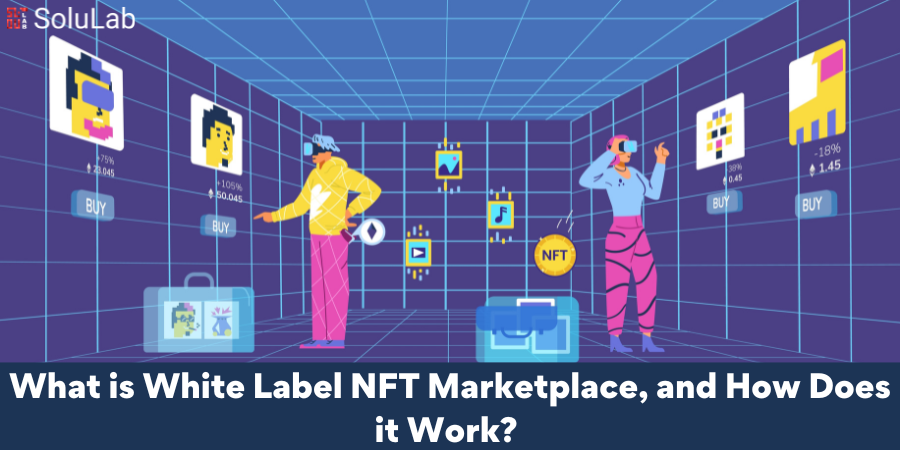
An exclusive, customizable NFT marketplace called “white label” was created to list & exchange digital assets in the shape of NFTs. Any digital asset, including artwork, films, photos, metaverse, and other digital collectibles, may be one of the NFTs listed. In other words, the Whitelabel NFT marketplace serves as a ready-to-use NFT marketplace for the exchange of goods and services. The platform could be modified to meet the specific needs of each client’s business. Users swap NFTs for cryptocurrencies in the marketplace after creators offer their NFTs in an auction as well as open bids based on their demands. To increase traffic and establish a name for their marketplace, clients can develop a white label NFT marketplace based on their business needs.

In the cryptocurrency industry, white-label NFT Marketplace Development has emerged as the go-to method for making millions of dollars. Because there are financial advantages to developing a white label NFT Marketplace, entrepreneurs choose to opt for its creation.

White Label NFT Marketplace Development

NFT market for white labels Most development can be obtained in two ways:

(i) NFT Marketplace development from scratch.

(ii) Opt for a multi-tested White-label NFT marketplace.

To deliver a fully functional white-label NFT marketplace, developers can work on the developed NFT marketplace platform in accordance with the needs of their clients. The majority of the White Label NFT marketplaces are constructed on well-known blockchain networks, including Ethereum, Binance Smart Chain, Solana, Cardano, Polygon, as well as other blockchain networks that are currently popular.

Investors favor the white-label NFT marketplace since it is completely customizable and offers advantages like minimal development costs and short development times:

  • UI development
  • Smart Contract development
  • Storage Setup
  • Integrating backend & frontend
  • On Testnet
  • Deployment

UI development: The developers create the greatest user interface for the Marketplace with the most appealing theme to highlight its features. By creating an appealing user interface that offers the finest platform information, they will initially increase traffic to the marketplace.

Read more: How to Create your own NFT Marketplace: Step-by-Step Guide

Smart Contract development: 

Since the NFT marketplaces are decentralized platforms, no admin or third party is in charge of keeping an eye on them. But these markets must be watched over to prevent spam and deceptive transactions, to ensure that smart contracts are implemented and that all market operations are controlled by these smart contracts.

Storage Setup: 

Additionally, the NFTs offered on the marketplace must be stored along with the platform’s transaction information, user information, and user data. To store the NFTs, developers create IPFS storage, and to store user data, they create DB.

Integrating backend & frontend: 

Developers link the frontend UI with the backend functionalities by setting up buttons as well as other elements when the frontend and backend development processes are complete. Once clients approve the UI design, developers begin the integration phase.

On Testnet: 

When the platform is finished being constructed, the developers launch the entire white-label NFT marketplace on the testnet to find any flaws and fix them. Experts work on the testnet till the market is flawless.

Deployment: 

When the platform is completely functional, developers install the white-label NFT marketplace on the client’s server, which is then made live so that anyone in the world may access it and trade NFTs for cryptocurrencies.

Highlighted Features of White Label NFT Marketplace Development
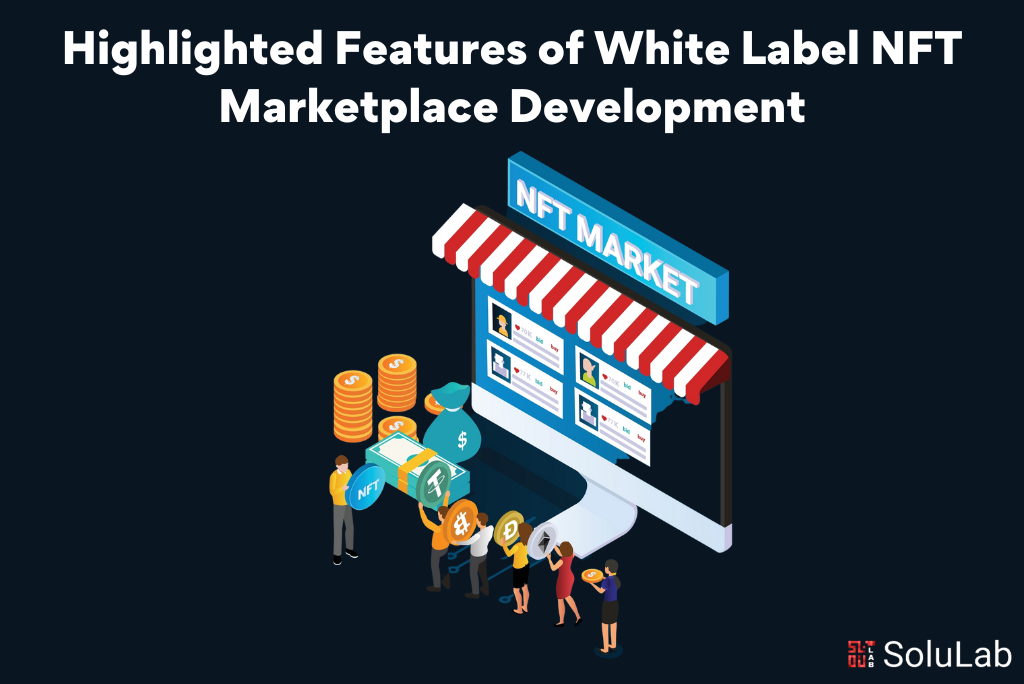
Highlighted Features of White Label NFT Marketplace Development

Storefront 

With the initial impression of your marketplace, the passing users turn into active users. Creating the most user-friendly, eye-catching storefront with all the features would increase traffic to your marketplace.

Auction 

Putting the NFT up for auction & selling it for the highest bid is the key feature that most users prefer. This would keep your current users for a very long time and bring in new users for NFTs up for sale.

Security 

The most important one is when the market needs to win users’ faith. Building a safe market using DDOS, CSRF, SSRF, as well as other features to stop intrusive hack assaults will win your trust and ensure that the market is free from cyberattacks.

Dashboard 

A very informative dashboard for both administrators and users. Users will be able to access all of the NFTs’ details, including their transaction history, via the listings and transactions for each individual NFT.

Benefits of White Label NFT Marketplace Development

Effective data 

You would gain from creating a white-label NFT marketplace if you had access to user history and data on each NFT.

Smart contract audited 

The marketplace’s smart contracts are audited, and all of the problems and weaknesses are resolved there.

Quick deployment 

Because developing and correcting issues takes less time, the marketplace could be launched faster.

Scalability 

Even with 50,000+ active users, the created white-label NFT marketplace can function properly and without any interruptions.

Why should someone launch a White Label NFT Marketplace?

Entrepreneurs and businessmen thinking to start a business in the crypto sphere can think of launching a white-label NFT marketplace. As the youngsters show interest in cryptos and NFTs, all the digital assets will be as NFTs in the future. Most prefer NFT marketplace to develop an NFT Marketplace from scratch because of the time and cost involved in developing an NFT marketplace.

Conclusion

You only need to select the best provider because everything is handled by the white label NFT market. This suggests that you must search for them if you want a trustworthy and high-quality NFT marketplace. You must select the top seller out of the many that are offered. If you find the perfect partner, launching your white-label NFT marketplace will open the door to a new chapter in your professional life.

Future predictions indicate that the whitelabel NFT marketplace proposition will prosper and become a hegemonic force in the digital sphere. It has become a profitable business opportunity for everyone to launch their own white-label NFT marketplace. There are many development companies dedicated to providing white-label solutions, but some development companies provide superior white-label services that are intended to generate substantial economic momentum.
 

How to Create your own NFT Marketplace: Step-by-Step Guide

How to Create your own NFT Marketplace Step-by-Step Guide (1)

Almost nobody left in the world hasn’t heard of the non-fungible tokens by this point. In a wide range of businesses & domains, such as digital art, entertainment, fashion, sports, gaming, journalism, and real estate, this blockchain-powered phenomenon has reinvented what is possible. The DappRadar Market Report says that in 2021, trading volume for non-fungible tokens increased dramatically and reached roughly $23 billion. Additionally, the term NFT marketplace was chosen by Collins Dictionary as its word of the year for 2021, beating out other terms associated with the digital revolution and pandemics.

However, it’s not only NFTs that are taking center stage. Additionally, NFT marketplaces are becoming more and more well-known every day. If you begin researching the fundamentals of NFT marketplace development once you’ve chosen to ride the NFT wave, you will have an advantage over others. In this post, we’ll explain why you should create an NFT marketplace, how to do it, the steps involved in the development process, and the qualities that a good NFT marketplace should have. Let’s start work!

What is an NFT marketplace?

A marketplace where users can store, display, trade, and even manufacture (mint) non-fungible tokens is known as an NFT marketplace. In order to confirm the provenance and legitimacy of the digital assets displayed on the NFT marketplace website, these platforms typically use blockchain technology.

The coolest thing about NFT marketplaces is that they make it possible for buyers and sellers to engage and work together practically. A buyer or investor receives a token when a transaction has been completed; this distinctive identifier serves as proof of ownership & contains information about the token’s origin, transaction history, creator, and legitimacy.

A vast range of digital goods, such as works of art, in-game purchases, memes, video clips, virtual land plots, etc, are currently available for purchase or sale. Opportunities are numerous and varied, and it’s probable that there will be additional opportunities in the future.

What types of NFT marketplace are out there?

The two main categories of the NFT marketplace are augmented and streamlined.

Streamlined NFT marketplaces support a variety of NFTs and give more basic, generic services to retailers. In essence, this kind of NFT platform allows users the choice to select the most practical form of payment, be it fiat or cryptocurrency.

Augmented NFT marketplaces, on the other hand, focus on providing specialized services to a particular type of non-fungible tokens and cater to the needs and expectations of specific, smaller niches. They are regarded as exclusive and typically levie transaction costs that are greater than those of more efficient NFT marketplaces.

Read more: What are the Key Features of the White-Label NFT Marketplace?

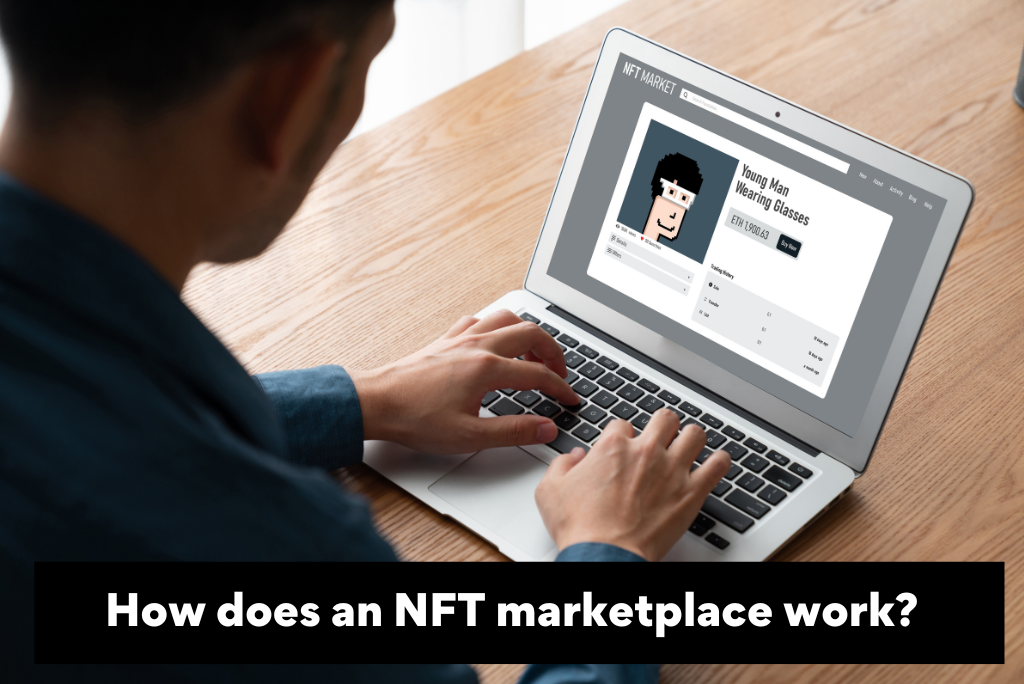
How does an NFT marketplace work?

How does an NFT marketplace work

Although there are many NFT marketplace websites, each one has a distinct algorithm and set of steps that enable users to generate and sell NFTs. However, the guiding ideas are essentially the same:

  1. Individuals register on an NFT platform, set up an account, & link their cryptocurrency wallet.
  2. Digital items are uploaded by sellers, who then put them for sale while they wait for moderation to complete.
  3. These NFTs are available for sale to buyers at a predetermined price or through an auction.
  4. The seller determines whether to accept the bid if an NFT is sold via an auction. If so, an NFT transfer between buyer and seller is made by the NFT marketplace.

How to create an NFT marketplace

After thoroughly examining each component of an NFT platform, it is essential to focus on the development process in particular and learn what processes are involved. Let’s outline the major phases and gain further details about each of them below.

Step one:

You must identify your target market before building an NFT marketplace. In order to do this, you must choose which market your NFT network will serve, such as music, video clips, artwork, sports collectibles & memorabilia, etc.

Keep in mind that your trading platform should be distinct from others and appealing to the particular audience that will utilize it. If you need assistance conceptualizing your NFT marketplace, consult a qualified team who can guide you toward the optimal course of action.

Step two:

The UI/UX component of your platform will surely affect both the first and, metaphorically speaking, second impression on your users, even if it is important to adhere to the “don’t judge a book by its cover” maxim.

An NFT marketplace must be simple to use and visually appealing. Make sure that everyone can easily comprehend how to utilize your platform by making sure that it is designed in an understandable manner.

Step three: 

You can begin development after you’ve accepted the design concept. You need to provide the tech stack & frameworks at this point. The choice of the blockchain on which your product will be built is a crucial step in this process.

There are several different blockchain platforms available today that can be used as the foundation for an NFT market. Determine which would be the most viable alternative by estimating the capabilities of each.

You will also have to take proper care of smart contract development at this time. Hiring skilled smart contract developers that can assist you in deploying flawless, high-quality smart contracts which will contribute to the smooth operation of your NFT marketplace is highly advised.

Step four: 

This step’s goal is to quickly identify any defects and emerging problems that could impair the platform’s performance. All platform components will need to be thoroughly tested with regard to their software in order to guarantee that everything functions as intended. Your NFT platform can be made available after the quality assurance procedure is finished.

Step five: 

Don’t overlook post-launch assistance after your project has been launched. As often as you can, try to enhance and refresh your NFT platform with fresh, cutting-edge features. Importantly, fix any problems and inefficiencies right away. You’ll assure consumer loyalty and satisfaction by doing this.

Conclusion

Today, there is a growing acceptance of the possibilities of non-fungible tokens. They have shown themselves to be adaptable and effective, able to inspire and determine the future of practically any business. We haven’t even begun to scratch the surface of NFTs’ remarkable superpowers, therefore it is reasonable to say that they will be with us for a very long time, possibly forever.

The necessity for as well as interest in the creation of more NFT marketplace to expedite transactions and unite NFT evangelists will also be sparked by the NFTs’ increasing popularity. Numerous factors need to be considered while developing an NFT platform, including the target market, key features, development stages, marketplace security, the details and potential of the underlying blockchain technology, etc.