Talk to an Expert

How much would it cost to create a Crypto wallet on Solana?

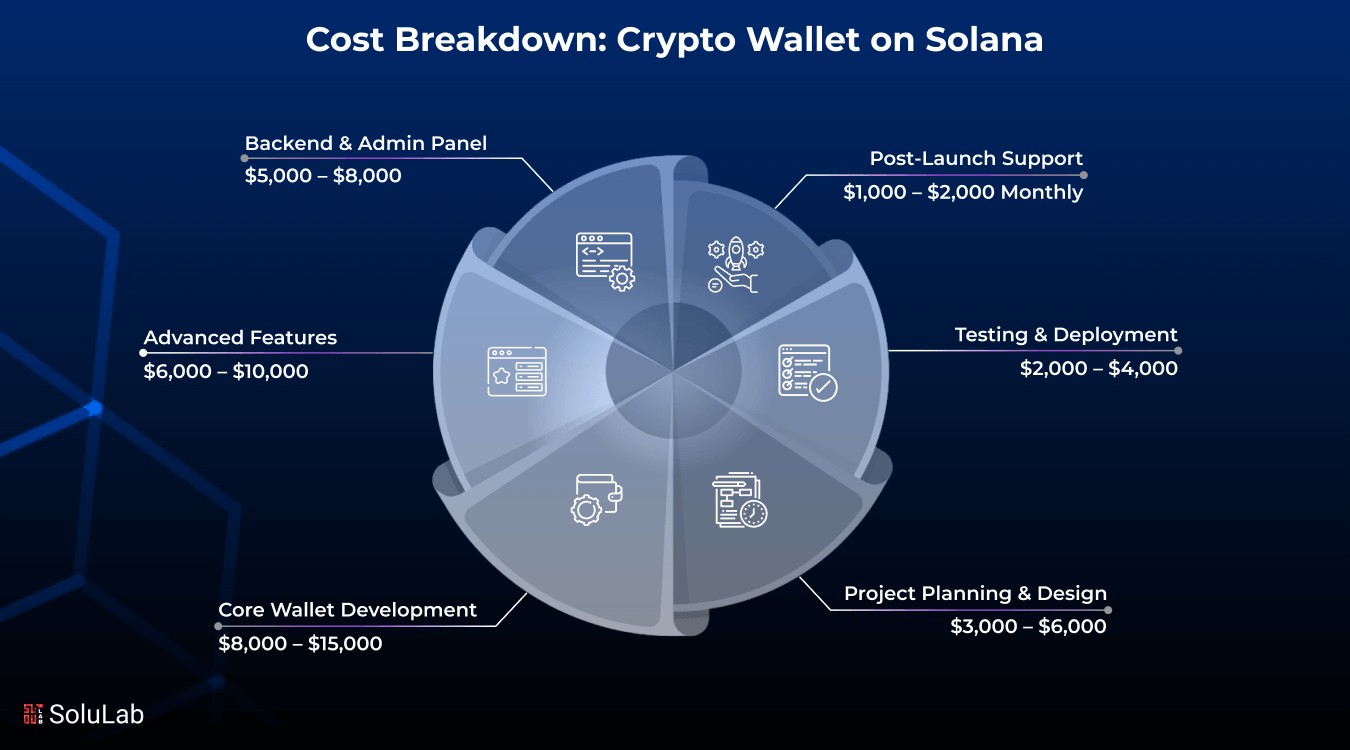
Cost Breakdown - Crypto Wallet on Solana

A crypto wallet on Solana is one of the fastest and scalable blockchains. Solana is a popular choice for developers and startups looking to launch secure, high-performance wallets. But before you start development, you should know how much it will cost. 

It depends on several factors, including the type of wallet (custodial or non-custodial), the features you want to include, the complexity of the design, and your choice of tech stack and development team. Whether you’re planning a simple wallet for basic transactions or a feature-rich app that supports NFTs, staking, and cross-chain compatibility, your budget needs to align with your goals. 

In this blog, we break down all the key cost components and help you understand what goes into building a crypto wallet on Solana from start to finish.

Crypto Wallet on Solana— A Quick Overview

A Solana crypto wallet allows you to store, send, and receive SPL tokens and SOL. It’s quick, affordable, and scalable. Solana wallets such as Solflare and Phantom wallet on Solana are user-friendly. You can link them to dApps, stake tokens, and even purchase NFTs. Installing is rapid. Just download, save your phrase, and you’re set. 

Solana’s market cap is projected to reach $250 billion by the end of 2025, driven by its high-speed transactions and increasing adoption in decentralized applications (dApps).

The Solana network supports more than 65,000 transactions per second. That’s why it’s perfect for users who demand speed and minimal fees. Whatever your level, Solana wallets make it go smoothly and safely.
Crypto Wallet Services

Unique Features of Crypto Wallets on Solana

Solana-based crypto wallets are making waves thanks to their speed, security, and user-friendly features. Let’s quickly break down what makes them stand out:

1. Transaction: The Solana wallets app offers lightning-fast transactions with minimal fees, making it perfect for users who don’t want to wait or overpay. Whether it’s sending tokens or interacting with decentralized applications (dApps), everything feels instant.

2. Security: Top-notch encryption, seed phrase protection, and biometric logins keep your assets safe. Plus, Solana’s secure blockchain adds an extra layer of trust to every transaction you make.

3. Multi-crypto Support: While Solana is the focus, most wallets now support multiple tokens like USDC, SRM, and even NFTs. This gives users flexibility to manage different digital assets all in one place.

4. Real-time Conversion Rates: You can track token values live within the wallet. This helps you make smart, timely decisions without switching apps or manually checking prices elsewhere.

5. Cross-platform Compatibility: Solana wallets usually work across Android, iOS, and even browser extensions. So whether you’re on mobile or desktop, your crypto is always within reach.

6. Push Notifications: Stay updated with real-time alerts for transactions, price changes, and app updates. It’s like having a mini crypto assistant in your pocket.

Read Our Blog Post: Custodial vs. Non-Custodial Wallets

Factors Influencing Solana Crypto Wallet Development Cost

Developing a crypto wallet on the Solana blockchain involves various factors that influence the overall cost. Understanding these elements is crucial for budgeting and planning. Here’s a breakdown of the primary factors:
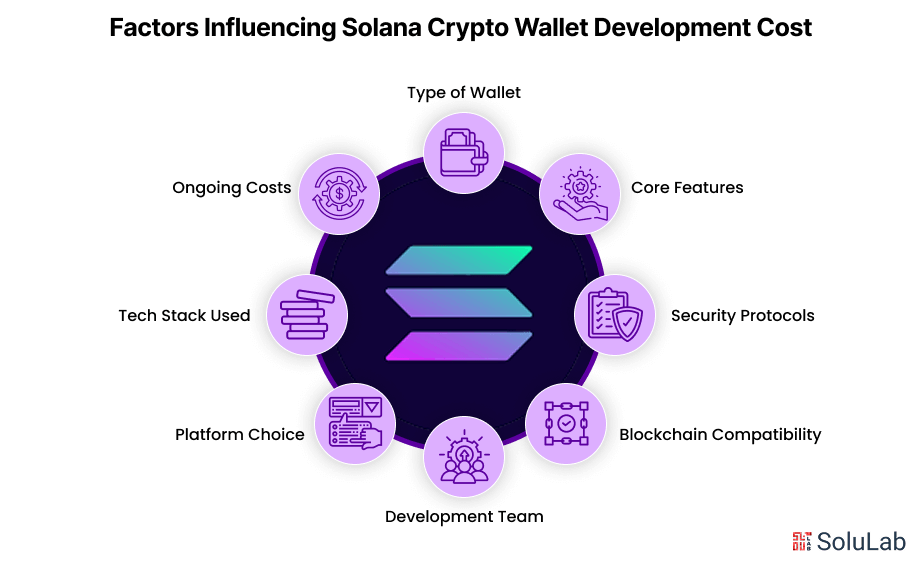
Factors Influencing Solana Crypto Wallet Development Cost

  • Type of Wallet

The choice between custodial and non-custodial wallets significantly affects development costs. Custodial wallets, where a third party manages user keys, are generally simpler and less expensive to develop. In contrast, non-custodial wallets, which give users full control over their keys, require advanced security features, increasing complexity and cost.

  • Core Features

The functionalities you wish to include—such as token swaps, NFT support, staking, and dApp integration—directly impact development time and expenses. Each added feature necessitates additional coding, testing, and potential third-party integrations, thereby elevating the overall cost. 

  • Security Protocols

Implementing robust security measures is non-negotiable in crypto wallet development. Features like two-factor authentication (2FA), biometric verification, and encryption protocols are essential to safeguard user assets. These security enhancements require specialized development efforts, contributing to higher costs.

Read Also: Why Every Business Should Integrate POS Crypto Wallets?

  • Blockchain Compatibility

While focusing on Solana, ensuring compatibility with other blockchains can broaden your wallet’s utility, but also adds complexity. Cross-chain compatibility demands additional development resources to handle different protocols and standards, thus increasing the development budget.

  • Development Team

The expertise and location of your development team play a pivotal role in cost determination. Hiring seasoned developers with proficiency in Rust and Solana’s architecture may command higher rates, but ensures quality and efficiency. Alternatively, outsourcing to regions with lower labor costs can be economical but may require more oversight.

  • Platform Choice

Deciding whether to develop for iOS, Android, web, or multiple platforms influences the scope and cost. Each platform has its development nuances, and supporting multiple platforms necessitates additional resources for coding, testing, and maintenance.

  • Tech Stack Used

The selection of technologies—such as programming languages, frameworks, and tools—affects both the development process and cost. For Solana wallet development, using Rust for Solana smart contracts and frameworks like React or Flutter for the frontend are common choices. The complexity and familiarity of these technologies with your team can influence development time and expenses.

  • Ongoing Costs

Post-launch, wallets incur ongoing expenses including server hosting, regular updates, security audits, and customer support. For instance, maintaining a Solana validator node can cost between $2,000 to $5,000 per month, and annual maintenance may range from $2,000 to $10,000, depending on the application’s complexity.

How much does it cost to create a Crypto wallet on Solana?

Developing a crypto wallet on the Solana blockchain in 2025 involves various factors that influence the overall cost. The total expense can range from $15,000 to over $200,000, depending on the wallet’s complexity, features, and development approach. Here’s a breakdown of the cost estimates based on wallet complexity:

Development Phase Estimated Cost (USD) Details
UI/UX Design $500 – $1,500 Designing intuitive and user-friendly interfaces.
Security Implementation $600 – $2,500 Integrating security protocols like multi-factor authentication and encryption.
Backend Development $1,000 – $5,000 Developing core functionalities and handling transactions.
API Integration $500 – $1,500 Implementing third-party services and payment gateways.
Quality Assurance & Testing $400 – $1,000 Conducting thorough testing to ensure functionality and security.

Note: These costs can vary based on the complexity and specific requirements of the wallet.

Solana Blockchain Development Services

Conclusion

Creating a crypto wallet on Solana can cost anywhere from $15,000 to over $200,000, depending on the wallet’s complexity, features, and security requirements. 

Basic wallets are more affordable and quicker to build, while advanced versions with multi-chain support, DeFi integration, and top-notch security need higher investment and longer timelines. 

Factors like the development team’s expertise, tech stack, and ongoing maintenance also play a major role in the final budget. Whether you’re a startup or an enterprise, it’s essential to define your goals clearly and work with an experienced team to ensure a secure, scalable, and user-friendly wallet solution.

SoluLab got a chance to work on Mobyii, a secure and powerful digital wallet app designed for cashless payments. With features like P2P encryption, biometric access, and utility bill payments, it ensures security and convenience. The app’s minimalistic design and wallet management system simplify depositing and withdrawing funds. Mobyii is a success, offering users an easy, secure, and rewarding payment experience.

SoluLab, a crypto wallet development company, can help you create a wallet on Solana. Get in touch with us today!

FAQs

1. What is a Solana-based crypto wallet?

A Solana crypto wallet is a digital wallet designed to store, send, and receive SOL and other Solana-based tokens. It also allows interaction with Solana dApps and supports staking or NFTs, making it a key factor when estimating overall crypto wallet development cost.

2. Can Solana wallets support multiple cryptocurrencies?

Yes, Solana wallets can be built with multi-token support, allowing users to manage both SOL and tokens from other blockchains via cross-chain integrations.

3. How long does it take to develop a crypto wallet on Solana?

Depending on features and complexity, development can take anywhere from 2 to 6+ months.

4. Do Solana wallets need KYC/AML integration?

Only if you’re offering custodial services or want regulatory compliance. Non-custodial wallets typically don’t require KYC.

5. Do I need ongoing maintenance after launch?

Absolutely. Updates, security patches, performance improvements, and user support are essential to keep the wallet reliable and secure.
How to Create a Wallet like Phantom?

Create a Wallet like Phantom

Developing a high-quality wallet that meets security standards, offers a great user experience, and provides robust features is not easy. Many entrepreneurs and developers face the challenge of building a wallet that supports multiple cryptocurrencies while ensuring integration with blockchain networks. 

However, with the right approach, it’s possible to build a wallet that rivals the best in the market. By focusing on blockchain integration, encryption methods, and cross-platform compatibility, developers can create a wallet that users trust and love. Recently, Phantom Wallet is gained much traction.

In 2025, Phantom Wallet will have surpassed 15 million active users monthly, reflecting significant adoption and growth in the crypto space.

In this guide, we’ll explore the essential steps to help you build a wallet like Phantom, from concept to launch, things to consider when creating a wallet like Phantom, and more. Let’s get started!

What Makes Phantom Wallet Unique?

The main characteristic of Phantom Wallet is that it is non-custodial, and this implies that users maintain full control over their digital assets and keys but do not hold them on file in Phantom. It is a user-friendly platform that provides browser extensions and a mobile app for managing multiple cryptocurrencies and NFTs, particularly within the Solana blockchain environment. Phantom also provides a means for interacting with decentralized finance (DeFi) marketplaces and apps.

 Here is a more thorough explanation of what makes Phantom Wallet unique:

  • Non-custodial: Users are completely in charge of their funds and can interact with multiple blockchains since Phantom Wallet Solana does not hold their seed phrase or private keys.
  • Multi-support of blockchains: While Phantom was originally developed for the Solana blockchain, the app now supports Ethereum, Base, Polygon, and Bitcoin so that users can handle assets in different networks.
  • Easy-to-use interface: The Phantom Wallet app boasts a contemporary design, and an easy-to-use interface, which makes it accessible for both beginners and experienced users of cryptocurrencies and NFTs.
  • Browser extension and mobile app: Users can access Phantom Wallet through a mobile app (iOS and Android) or a browser extension (for popular browsers such as Chrome, Firefox, Brave, and Edge), providing ease and convenience.
  • NFT Administration and DeFi Integration: Phantom is a link for NFT administration and enables communication between users and their dApps or DeFi platforms.

CTA1

How To Develop a Wallet Like Phantom?

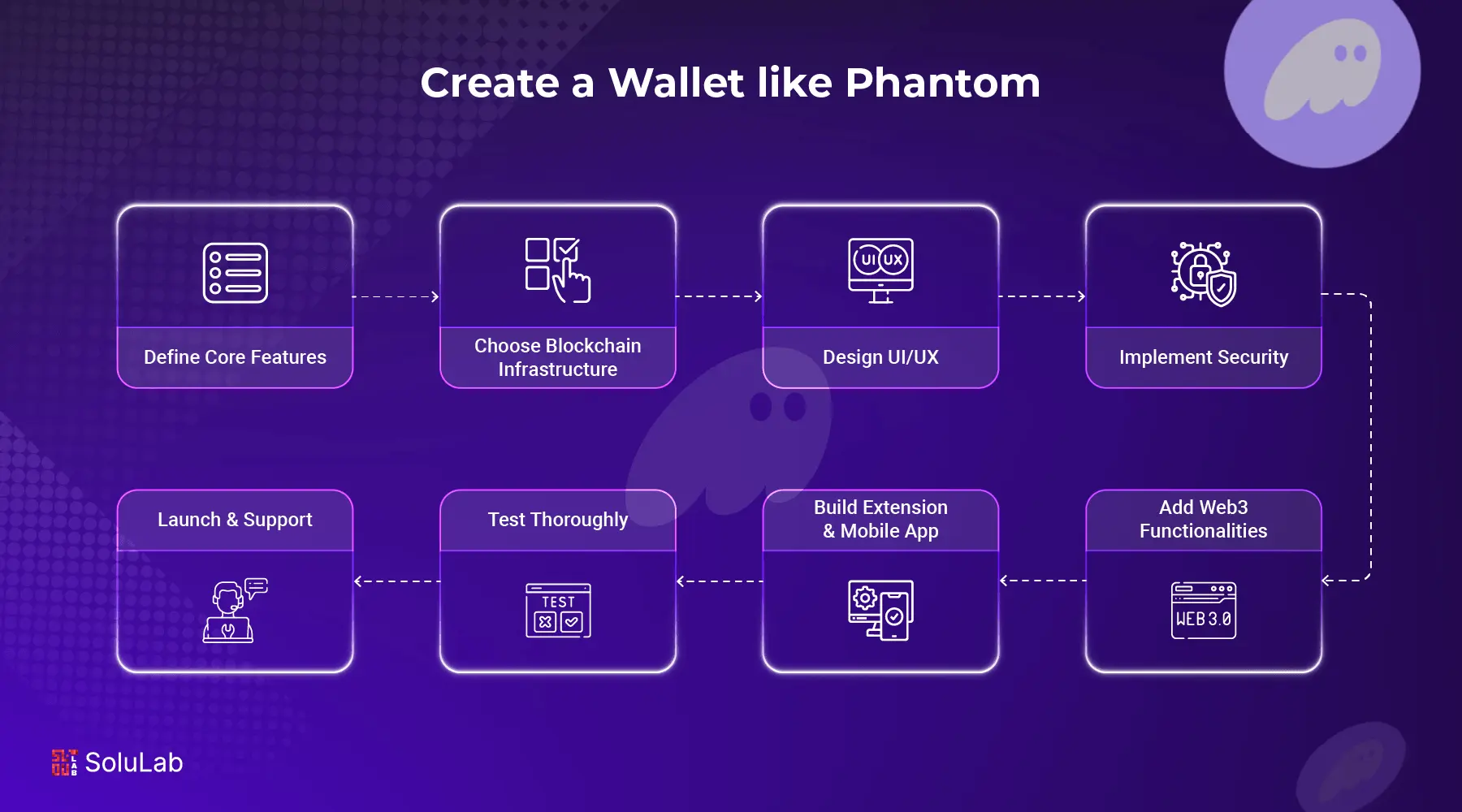
Developing a wallet like Phantom involves building a secure, user-friendly crypto wallet tailored for Solana blockchain users. Follow this step-by-step guide to start a wallet like Phantom on your own:

1. Define Core Features

Identifying the essential features your wallet must support to meet user expectations and match industry standards. Likewise, features of Phantom Wallet include:

  • Secure key management
  • Send/receive Solana and SPL tokens
  • Token swapping
  • NFT storage and management
  • Staking functionality

Read Also: AI-Integrated Smart Crypto Wallet

2. Choose the Right Blockchain Infrastructure

Select the appropriate blockchain tools and protocols to ensure smooth functionality—when building for Solana, this includes working with its JSON RPC API, SPL token standards, and key developer libraries like Solana Web3.js and SDKs.

  • Work with SPL token standards
  • Utilize the Solana SDK and Web3.js libraries

3. Design UI/UX for Accessibility

Design a wallet interface that’s visually clean, easy to navigate, and optimized for both beginners and pros:

  • Easy onboarding (create/import wallet)
  • QR code functionality for sending/receiving
  • Clear transaction history and wallet activity

4. Implement Security Protocols

Security must be built into every layer of your wallet, from generating and backing up seed phrases to encrypting private keys. 

  • Biometric login and password protection
  • Secure transaction signing and verification

5. Integrate Web3 Functionalities

Allow users to interact directly with decentralized apps (dApps), stake tokens, and perform in-app swaps to ensure:

  • Add support for Web3 dApp connections via injected wallet providers
  • Enable token swaps using Serum or Jupiter Aggregator on Solana
  • Integrate staking features directly within the wallet interface

6. Develop Browser Extension and Mobile App

Offer users a consistent and responsive wallet experience across devices by building a browser extension using :

  • Frameworks like React or Svelte for the browser extension
  • Build native or hybrid apps for iOS and Android using Flutter, React Native, or Swift/Kotlin

7. Test Thoroughly Before Launch

Ensure your wallet functions reliably in all scenarios by conducting detailed UI testing and blockchain interaction checks, like:

  • Smart contract interactions
  • UI responsiveness
  • Security audits
  • Stress and load tests
  • Beta testing with real users

8. Launch & Offer Continuous Support

After going live, maintain momentum by monitoring performance, releasing regular updates, and patching bugs:

  • Monitor performance and usage analytics
  • Identify vulnerabilities promptly
  • Offer user support and documentation

Read Also: Hot vs Cold Crypto Wallets

Why Build a Wallet like Phantom? 

Why Build a Wallet like Phantom

Opening a wallet such as Phantom can be a strategic move if you wish to take advantage of the explosive universe of crypto and Web3. Phantom is well-liked because it provides an easy, secure method for users to hold, send, and exchange cryptocurrencies, particularly on the Solana blockchain, which is renowned for low costs and speedy transactions. 

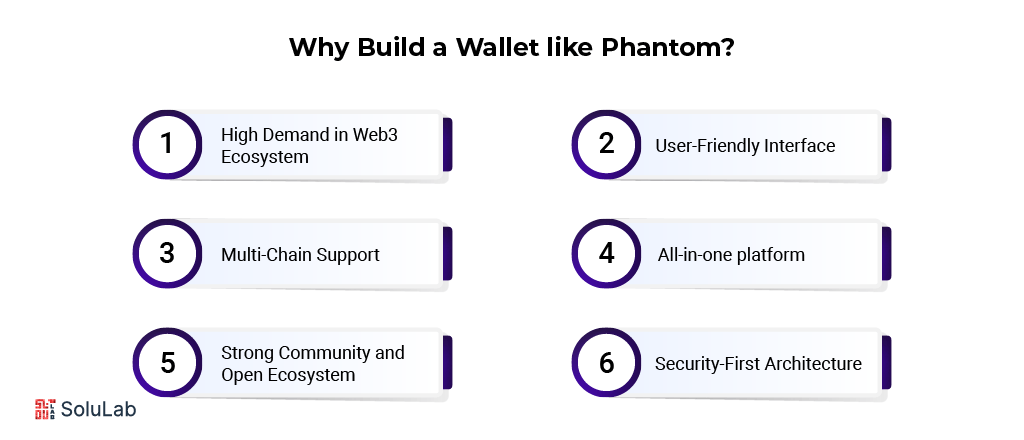
With the growth of decentralized applications (dApps), NFTs, and DeFi platforms, users require wallets that are not only secure but also user-friendly. Here are some benefits of a phantom wallet, which is why users should build a wallet like Phantom:

1. High Demand in Web3 Ecosystem: Phantom has millions of users and is growing, proving the market need for smooth crypto wallets.

2. User-Friendly Interface: Simple, sleek, and intuitive UX attracts both beginners and pros in the crypto space.

3. Multi-Chain Support: Phantom now supports Solana, Ethereum, and Polygon—users want flexibility.

4. All-in-one platform: Multiple features like DeFi, NFTs, and staking can all be performed and managed in one place, which boosts user engagement and retention.

5. Strong Community and Open Ecosystem: Wallets like Phantom become central to the Web3 experience (e.g., DeFi apps, games, NFT platforms).

6. Security-First Architecture: Phantom security with private key control and phishing protection—a must-have for any wallet.

Read Also: Build a dApps on Solana

Things To Consider When Creating A Wallet Like Phantom

When creating a wallet like Phantom, it’s important to focus on several key aspects to ensure it meets user expectations, stands out in a competitive market, and prioritizes security.

  • Security: Ensure robust encryption and multi-factor authentication to protect users’ assets. Wallets like Phantom use features such as seed phrases and password protection to prevent hacks.
  • User Experience (UX): A user-friendly and intuitive interface is crucial. Phantom’s simple design makes it easy for both beginners and experienced crypto users to navigate.
  • Blockchain Integration: Support for popular blockchains like Solana, Ethereum, or others helps expand the wallet’s usability. Make sure it’s multi-chain compatible for a larger user base.
  • Cross-platform Support: Phantom is available on both desktop and mobile, making it accessible for users wherever they are. Expanding to different platforms increases user adoption.
  • Speed and Efficiency: Low transaction fees and fast transaction processing are essential features that users expect from a wallet. Phantom excels by utilizing the Solana blockchain for speed. 

How Much Does It Cost to Build a Wallet Like Phantom?

Building a wallet like Phantom (a popular Solana-based crypto wallet) involves several factors, including design, development, security, and marketing. Partnering with a crypto wallet development company can help improve the process. 

The cost typically ranges from $50,000 to $150,000, depending on the complexity of the features, the development team’s location, and the timeline.

  • User Interface (UI) and User Experience (UX) Design
  • Blockchain Integration for Solana, Ethereum, or other networks
  • Security Features like encryption, backup, and two-factor authentication
  • Cross-Platform Support for iOS, Android, and web extensions

You’ll also need to consider ongoing maintenance, updates, and compliance with regulatory standards.

CTA2

Conclusion

Creating a wallet like Phantom requires a deep understanding of blockchain technology, security protocols, and a user-friendly design. 

You’ll need a skilled development team to integrate multiple networks, ensure top-notch security, and offer cross-platform support. The development process is complex but achievable with the right resources. 

As the demand for crypto wallets grows, focusing on a user experience will be key to success. Whether you’re building for Solana or another blockchain, attention to detail in both functionality and design will set your wallet apart.

SoluLab, a crypto wallet development company, can help you create a wallet like Phantom and solve all the queries you’ve about the same. Contact us today to discuss further. 

FAQs

1. What are the best tools for developing a wallet like Phantom?

Popular tools include React for the front end, Solana Web3.js for blockchain interaction, and Web3.js for Ethereum-based integrations. You’ll also need Metamask for wallet connection and Node.js for backend development.

2. How do I ensure my wallet is safe?

To assure top-level security, implement end-to-end encryption, multi-signature features, and secure key management practices while using the wallet. Regular security audits are also essential.

3. Do you offer white-label wallet solutions?

Yes! We provide white-label wallet development for businesses looking to launch fast with custom branding. These solutions are fully secure, scalable, and ready to integrate with various tokens, dApps, and DeFi protocols.

4. How do I integrate wallet functionalities with blockchain?

Use blockchain-specific libraries like Solana Web3.js or Web3.js for Ethereum, allowing interaction with blockchain networks for transactions, account creation, and balances. Consider partnering with a crypto wallet development company to ensure integration and professional development for your wallet project.

5. How long does it take to develop a crypto wallet like Phantom?

Typically, wallet development takes 3 to 6 months, but the actual time depends on the complexity, features, and other business requirements for your custom wallet platform.