

- AI Development
- AI App Development
- AI Consulting
- AI Software Development
- ChatBot Development
- Enterprise AI ChatBot
- AI Chatbot Development
- LLM Development
- Machine Learning Development
- AI Copilot Development
- MLOps Consulting Services
- AI Agent Development
- Deep Learning Development
- AI Deployment Services
- Deep Learning Consulting
- AI Token Development
- AI Development Company
- AI Development Company in Saudi Arabia
- AI Integration Services
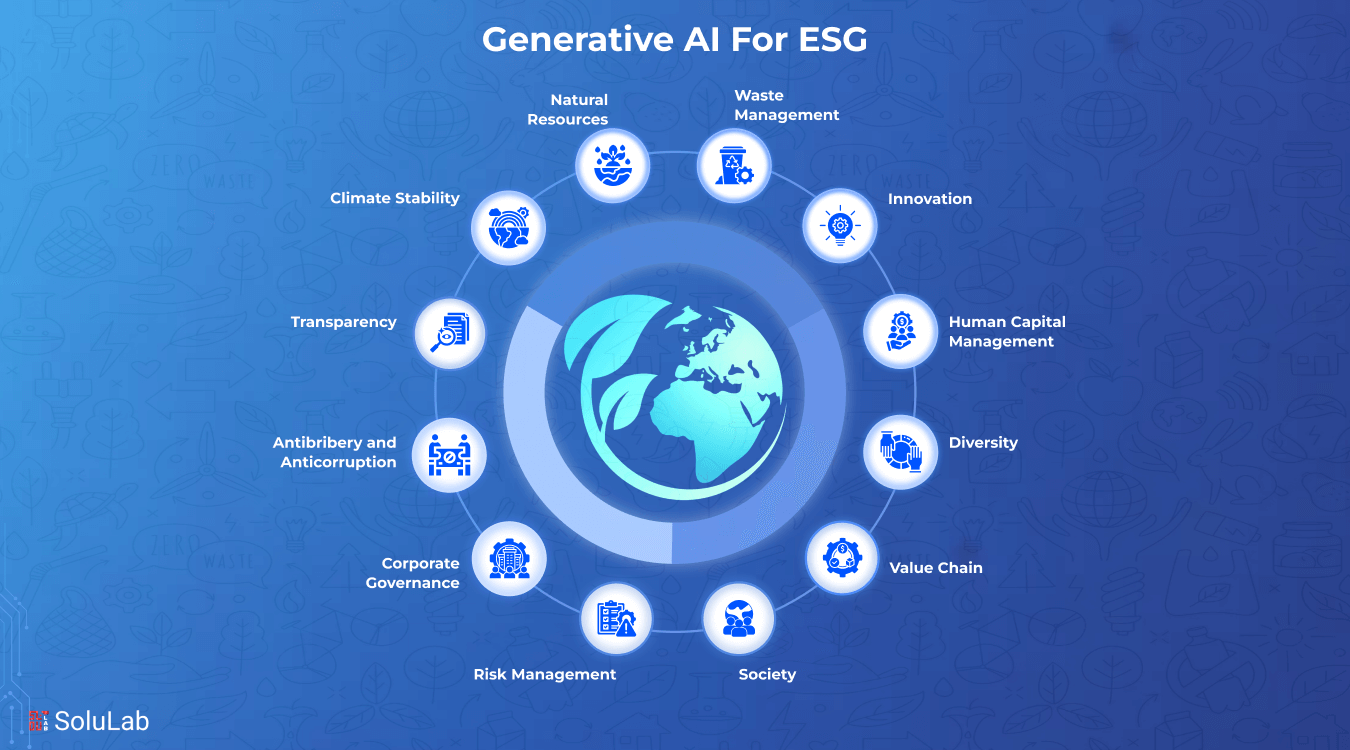
Environmental, social, and governance (ESG) considerations are increasingly important to how firms define value and impact. From climate promises to ethical labor practices, businesses are under increasing pressure to back up their words with open, data-driven action. However, the true problem is to convert massive amounts of unstructured ESG data into usable insights. That’s where generative AI in ESG comes in as a real game changer.
Generative AI streamlines sustainability reporting, analyzes climate risk scenarios, and generates predictive frameworks for supply chain ethics, activities that formerly required weeks of human effort. McKinsey’s 2024 study indicates that 78% of firms have used AI in at least one business function, a significant rise from 72% earlier in the year. The increasing usage highlights AI’s ability to augment ESG programs by delivering profound insights and enhancing operational efficiency.
As generative AI technologies become more available and optimized for ESG tasks, early adopters gain a competitive advantage. In this blog, we will look at how generative AI is transforming ESG strategy, reporting, and innovation across sectors.
How Generative AI Aligns with ESG Goals?
When corporations discuss being “sustainable” or “responsible,” it may appear as just buzzwords until verified by tangible actions. But in reality, creating a strong Environmental, Social, and Governance (ESG) plan isn’t always easy. There is frequently an excess of data, insufficient clarity, and a continual challenge to adhere to changing standards. The relationship between ESG and AI is quite advantageous.
Technologies such as generative AI chatbots are facilitating the simplification of ESG reporting, fostering more informed decision-making, and enhancing stakeholder involvement, so rendering ESG objectives more attainable, quantifiable, and transparent. The technology not only streamlines ESG compliance but also fosters innovation and proactive change. Here is the method:
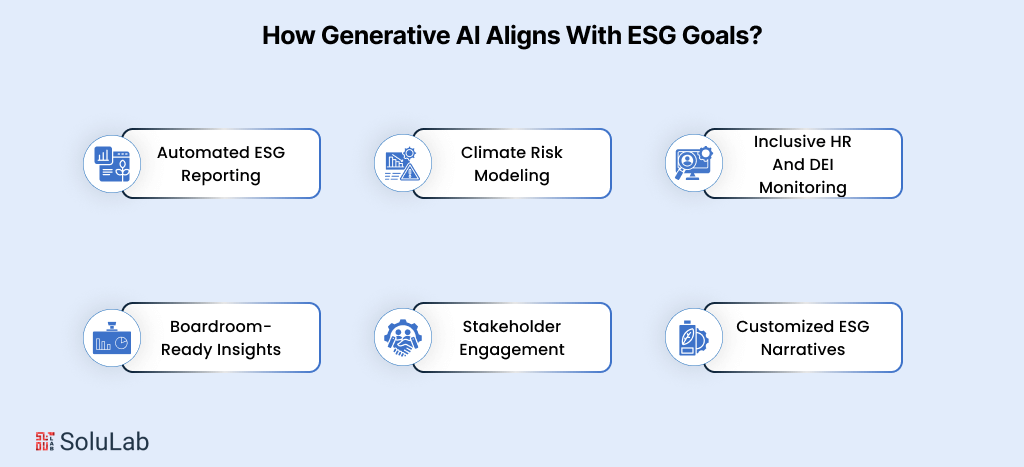
- Automated Environmental, Social, and Governance Reporting: Generative AI can extract data from many sources, including energy logs, HR systems, and supplier chains, to produce precise, compliance-ready ESG reports that adhere to standards such as GRI, SASB, or CSRD, thereby saving weeks of manual labor.
- Climate Risk Modeling: Artificial intelligence models replicate environmental situations, assisting firms in predicting the enduring effects of climate-related risks on assets, operations, and investments, so facilitating more informed, proactive decision-making.
- Ethical Supply Chain Mapping: Through the examination of supplier data, contracts, and shipment records, generative AI may identify unethical behaviors, track carbon footprints, and facilitate transparent, sustainable procurement methods.
- Inclusive HR and DEI Monitoring: Utilizing anonymised employee input and equity-oriented policy simulations, generative AI assists HR teams in pinpointing deficiencies in diversity, equality, and inclusion activities while proposing impartial enhancements.
- Stakeholder Engagement: Utilizing generative AI chatbots or automated systems, organizations may effectively include shareholders, workers, or community members in reciprocal discussions around ESG goals, therefore gathering actionable feedback on a large scale.
- Personalized ESG Narratives: Whether for a sustainability webpage or an investor presentation, generative AI can provide customized, comprehensible ESG narratives that embody corporate ideals and accomplishments, while adhering to compliance standards.
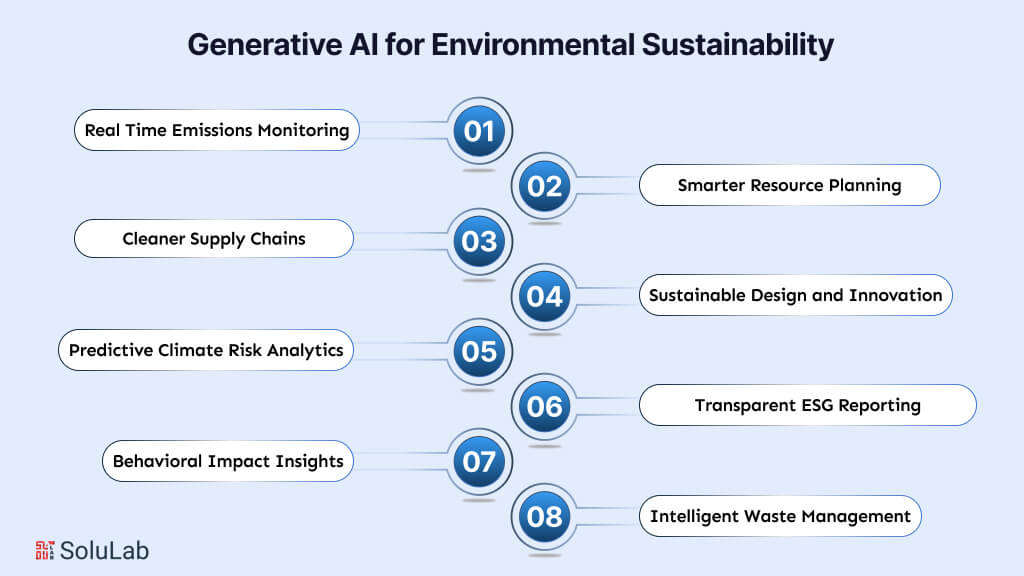
Generative AI for Environmental Sustainability
Companies around the world are under growing pressure to make their operations more environmentally responsible. But measuring environmental impact isn’t easy, it involves complex datasets, moving regulations, and decisions that need to be both fast and accurate. That’s where generative AI is starting to make a quiet but meaningful impact.
It’s not just about crunching numbers; it’s helping teams visualize long-term sustainability outcomes, anticipate environmental risks, and make climate-smart decisions without being buried in spreadsheets or reports.
1. Real-Time Emissions Monitoring: Generative AI tools can process large-scale industrial data to detect carbon emission hotspots in real-time, allowing companies to respond quickly and reduce their footprint where it matters most.
2. Smarter Resource Planning: With the help of an AI assistant, teams can simulate different production models or supply chain adjustments to see which ones lead to better energy efficiency or lower water usage, before making costly changes on the ground.
3. Sustainable Design and Innovation: Generative AI can support product teams by suggesting eco-friendly materials or more efficient design options based on previous performance data, helping companies reduce waste from the very beginning.
4. Predictive Climate Risk Analytics: By simulating various environmental scenarios, such as floods, droughts, or heatwaves, AI models help businesses prepare ahead of time, minimizing operational disruptions.
5. Transparent ESG Reporting: How can AI help with ESG? By turning scattered environmental data into structured, clear, and audit-ready reports that align with global frameworks like GRI, SASB, or CSRD, without weeks of manual work.
6. Behavioral Impact Insights: AI can assess how customers or employees respond to sustainability initiatives, offering feedback that helps refine campaigns or green practices with real behavioral data.
7. Intelligent Waste Management: From manufacturing leftovers to office waste, AI can monitor and forecast waste levels, improve recycling efforts, and reduce landfill dependency by spotting inefficiencies early.
Social Impact of Generative AI in ESG Strategies
When we talk about ESG, the “Social” part often gets less attention than the environmental side, but it’s just as important. It’s about how companies treat people, support communities, and make decisions that reflect fairness and inclusion.
Generative AI is quietly transforming this space by helping organizations connect better with their workforce. Rather than replacing human touch, it amplifies it, making social goals more achievable, measurable, and responsive to real-world needs.
- Better Employee Feedback Loops: Top AI development companies can use generative AI tools to process employee surveys, chat logs, and HR reports to identify underlying morale issues, gaps in inclusion, or hidden workplace challenges. It helps HR teams see the bigger picture instead of focusing on isolated complaints.
- Smarter Hiring with Fewer Biases: AI tools can help recruiters scan resumes and applications with neutral, skills-based logic, reducing unconscious bias and promoting a more diverse, inclusive hiring process.
- Empathetic, Scalable Support: Businesses nowadays struggle to keep up with customer concerns in real time. That’s where generative AI for customer service becomes a practical tool—it handles common questions instantly while flagging complex or emotional cases for a human touch.
- Stronger Community Engagement: Whether it’s public feedback on new policies or social sentiment around a brand, AI helps collect and make sense of opinions at scale. This allows companies to respond more thoughtfully and act in alignment with public interest.
- Improved Transparency in Impact Reporting: Generative AI for sustainability also plays a social role; it helps craft reports and updates that are easier to understand, more inclusive in tone, and tailored to what matters most to employees, communities, and customers.
The Use of Ethical AI in ESG
Ethical AI means using technology in a way that respects people, protects data, and avoids reinforcing existing biases. In ESG, where trust and accountability are everything, this kind of thoughtful approach makes a real difference.
For example, if a company is using AI to analyze workplace diversity or monitor supplier behavior, it needs to make sure the system is trained on fair, inclusive data. It also needs to be transparent about what data is being collected, how it’s used, and who has access to it.
Many organizations are now using generative AI for ESG data collection and reporting, pulling together everything from emissions numbers to community impact metrics across different departments. But doing this ethically means going beyond the numbers, making sure the data isn’t taken out of context or used in ways that could mislead. That’s the kind of foundation ESG work really depends on.
Real-World Applications of Gen AI in ESG Reporting and Compliance
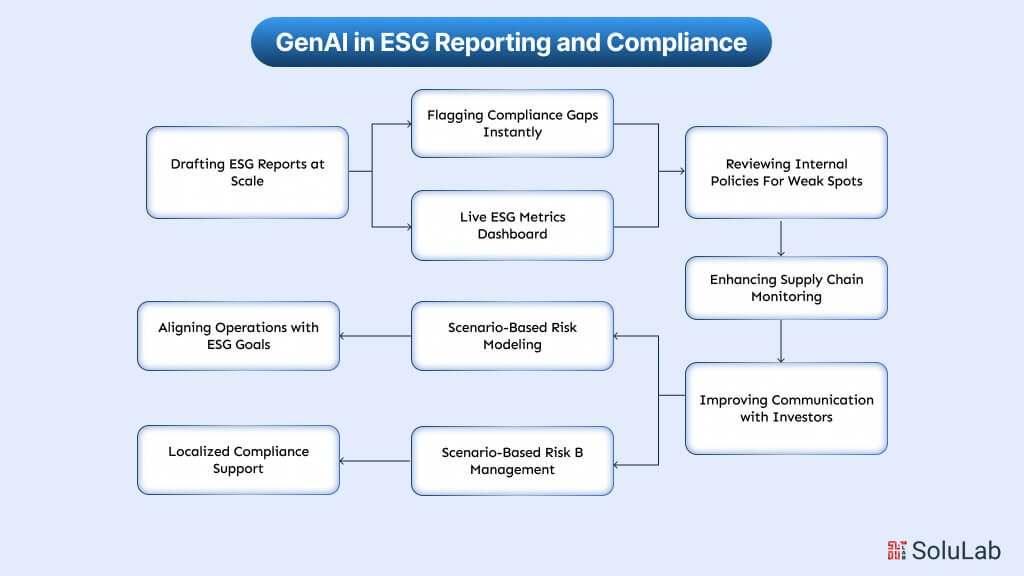
For companies serious about meeting ESG standards, accurate and timely reporting is no longer a nice-to-have; it’s a necessity. Generative AI steps in here not as a shortcut, but as a smart assistant that can handle heavy lifting, sifting through scattered datasets, identifying patterns, and drafting reports that align with global standards. It’s not just about efficiency; it’s about turning ESG compliance into something smarter, clearer, and far more proactive.
Here are some real-world ways generative AI is making ESG reporting easier and more reliable:
1. Drafting ESG Reports at Scale: AI can transform raw data into well-structured, regulation-aligned reports that meet global frameworks like GRI or SASB, saving time without compromising quality.
2. Flagging Compliance Gaps Instantly: It can scan documents, metrics, and even vendor data to identify inconsistencies or compliance gaps long before audits happen.
3. Live ESG Metrics Dashboards: Companies are using AI to power dashboards that update ESG performance indicators in real time, making it easier for leadership to track progress and act quickly.
4. Reviewing Internal Policies for Weak Spots: AI tools review existing ESG policies against evolving global standards to highlight outdated or incomplete sections.
5. Enhancing Supply Chain Monitoring: Using generative AI for data analysis and modeling, companies can assess sustainability risks within complex supply chains, from emissions tracking to labor practices.
6. Improving Communication with Investors: AI helps generate stakeholder-specific ESG updates, translating complex data into visual summaries or simplified briefs depending on audience needs.
7. Scenario-Based Risk Modeling: AI simulations help companies understand how changing regulations or climate policies might impact operations, enabling smarter planning, not just compliance.
8. Aligning Operations with ESG Goals: In real business settings, AI helps translate ESG ambitions into daily actions, like optimizing transportation routes or identifying energy-saving opportunities. These are the kinds of real-world generative AI sustainability use cases making a measurable difference.
9. Localized Compliance Support: Generative AI can reframe ESG documentation into legally accurate formats for different countries, bridging language and regulation gaps with precision.
10. Turning Feedback into Strategy: By analyzing employee surveys, customer reviews, or public sentiment, AI helps integrate meaningful insights into ESG narratives and decision-making.
The Future of ESG with Generative AI Integration
As ESG evolves from a regulatory checkbox into a core business priority, the way companies handle data, strategy, and communication is starting to change. Technology—especially generative AI- is slowly but surely becoming part of that shift. It’s no longer about “if” businesses will use AI for ESG, it’s about how.
What makes this exciting is that we’re heading into a space where AI won’t just simplify reporting, it’ll actually shape better decisions. The future of genAI in ESG isn’t about replacing people—it’s about giving them better tools to lead with purpose and precision.
Here’s what that might look like in the coming years:
- Custom ESG Reports: Instead of generic summaries, AI will help teams craft tailored ESG insights for each stakeholder group—whether that’s board members, customers, or regulatory bodies.
- Clearer ESG Goals, Backed by Real Data: AI will help organizations set achievable, trackable targets, especially around environmental metrics like emissions or water usage.
- Predictive Social Impact Modeling: Imagine being able to test how a policy change might affect employees, local communities, or brand perception—before rolling it out. AI will make that possible.
- Smarter Decision Support Tools: Dashboards powered by AI will help leadership teams visualize risks, track progress, and make ESG-related decisions faster, with greater confidence.
- More Responsive Sustainability Planning: As climate conditions shift, businesses will need to adapt their sustainability efforts quickly. AI will help run simulations, explore trade-offs, and plan accordingly.
- The Role of a Trusted Tech Partner: As tools become more advanced, companies will increasingly lean on a generative AI development company not just for software but for guidance on using AI responsibly and sustainably.

Conclusion
As ESG continues to gain ground as a defining factor in how businesses operate and are evaluated, the integration of generative AI offers a fresh path forward. It’s not just about automation, it’s about creating smarter, fairer, and more responsive systems that actually reflect the values companies claim to stand for.
At SoluLab, we’re not just builders, we’re long-term partners in helping organizations shape their ESG journey with the right technology. As a trusted Generative AI development company, we’ve supported clients like Amanbank in Libya, one of the country’s most established banks with over 18 years of experience, 35% market share, and a capital base of 300 million Libyan Dinars.
If you’re exploring how generative AI can support your ESG strategy or need a team that understands both the technical and ethical side of development, let’s talk!
FAQs
1. What makes generative AI useful for ESG, beyond just automation?
Generative AI isn’t just about speeding up tasks—it helps uncover patterns, trends, and risks that often go unnoticed in large sets of ESG data. It also assists in building better, more personalized communication around ESG efforts, something that’s been hard to achieve with traditional tools.
2. Can small or mid-sized companies benefit from using AI in their ESG strategy?
Absolutely. You don’t need to be a giant corporation to take advantage of AI. Even mid-sized businesses can use it to manage sustainability reports, monitor supply chain issues, or keep track of compliance updates, without needing a full in-house data team.
3. How do you make sure the use of AI in ESG stays ethical?
It starts with transparency, knowing what data is being used, how decisions are made, and who’s accountable. Ethical AI in ESG also involves clear guidelines, frequent audits, and human oversight, especially when it comes to social or community-related data.
4. What industries are seeing the biggest shift in ESG performance due to AI?
Sectors like manufacturing, finance, and energy are leading the charge. But we’re also seeing retail, healthcare, and logistics companies using AI to cut emissions, reduce waste, and track fair labor practices more effectively.
5. Where can I find a trusted partner to build ESG-focused AI tools for my business?
You’ll want to work with a generative AI development company that understands not just the technology but the nuances of ESG frameworks and compliance. Look for teams with experience in building solutions that balance transparency, scalability, and data ethics.

