Talk to an Expert

Why Businesses Prefer White-Label Tokenization Platform Over Custom Blockchain?

Custom Blockchain Vs. White-Label Tokenization Platform

Did you know that the average custom blockchain project can take more than a year to build and cost millions of dollars? For many businesses, that’s simply too much time and money to lock away while competitors are already going live. That’s why a growing number of companies are saying goodbye to expensive, complex custom builds—and embracing white-label tokenization platforms instead.

These ready-to-deploy solutions offer the perfect balance: enterprise-grade security, built-in compliance, and rapid launch capabilities—all without the headaches of building from scratch. 

In this blog, we’ll explore why businesses are making the switch, the real benefits they’re gaining, and how white-label platforms are shaping the future of tokenized assets.

What is a White-Label Tokenization Platform?

A white-label tokenization platform is a pre-built, customizable blockchain solution that enables businesses to launch tokenized services under their own brand without having to build blockchain infrastructure from scratch.

Unlike custom blockchain solutions, white-label platforms come equipped with:

  • Smart contract development for automation
  • RWA tokenization to digitize real-world assets like real estate, equities, and commodities
  • Multi-chain compatibility for seamless interoperability
  • Integrated blockchain solutions such as wallets, payment gateways, and compliance modules

In short, a white-label blockchain solution offers speed, cost efficiency, scalability, and compliance, making it the go-to option for businesses entering the blockchain ecosystem.

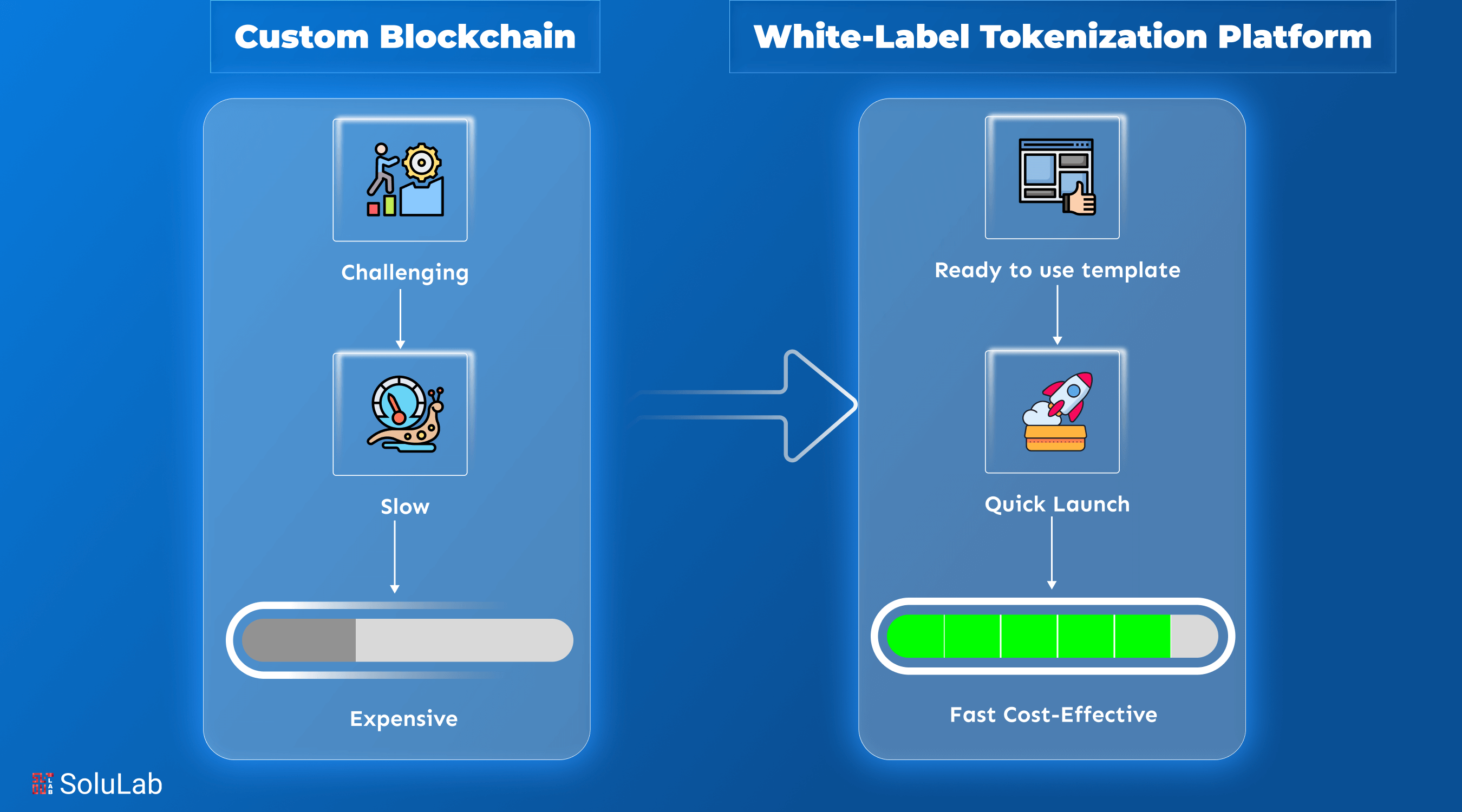
Custom Blockchain Solutions v/s White-Label Blockchain Solutions

Businesses are leaning toward white-label tokenization platform development. It provides the perfect balance of speed, cost-effectiveness, and scalability, without compromising on quality or compliance.

Aspect Custom Blockchain Solutions White-Label Solutions
Development Time 4–8 months 2–8 weeks
Cost High  Depending on customization
Maintenance Requires a dedicated in-house team Managed by the provider
Flexibility Fully customized Pre-built but customizable
Scalability Depends on architecture Designed to scale
Compliance Must be integrated manually Comes with compliance-ready modules

Why Businesses Are Choosing White-Label Tokenization Platforms?
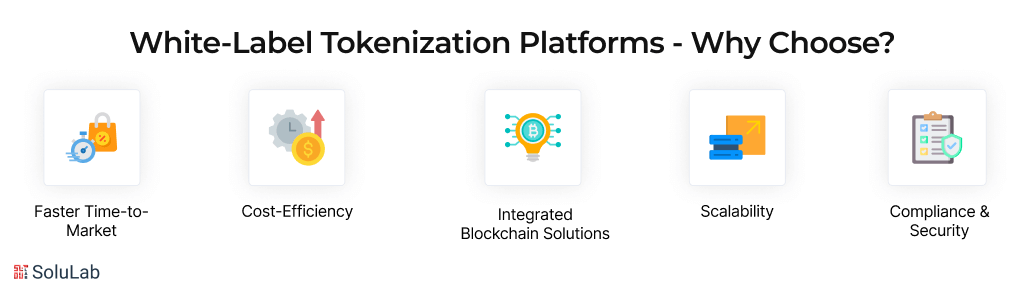
Why Choose White-Label Tokenization Platforms

In today’s fast-moving digital economy, businesses don’t have the luxury of spending years and millions building custom blockchain solutions. They need secure, scalable, and compliant tokenization platforms that can launch quickly—and that’s exactly why white-label tokenization platforms are becoming the go-to choice.

1. Faster Time-to-Market

Time is money in today’s competitive era. Custom blockchain development services can take months or even years, whereas white-label blockchain solutions are ready to deploy in weeks.

This allows businesses to:

  • Capitalize on emerging market opportunities
  • Beat competitors to launch
  • Reduce time lost in technical development

2. Cost-Efficiency

Building a blockchain platform from scratch requires a significant investment, including developers, security audits, testing, and maintenance. White-label tokenization platforms are pre-built and tested, drastically reducing costs.

Instead of spending millions, businesses only invest in customization and branding.

3. Integrated Blockchain Solutions

White-label platforms come with end-to-end blockchain integration, including:

  • Secure wallets
  • Smart contracts
  • Token issuance modules
  • RWA tokenization capabilities
  • KYC/AML compliance

This eliminates the need to purchase multiple third-party solutions, saving both money and effort.

4. Scalability

A major drawback of custom blockchain solutions is that they often struggle to scale when user demand increases. White-label blockchain solutions are designed to handle high transaction volumes, making them future-ready.

5. Compliance & Security

White-label providers ensure compliance with global regulations such as GDPR, FATF, and SEC standards. They also integrate multi-layered security protocols like encryption, multi-signature wallets, and fraud detection.

This gives businesses confidence to operate securely and legally in the tokenized economy.
CTA1

Must Have Features of White-Label Tokenization Platforms

Not all white-label solutions are created equal. To truly deliver value, a tokenization platform must combine security, scalability, and compliance with flexibility for business needs. Below are the essential features every white-label tokenization platform should include:

1. Smart Contract Development

Smart contracts are self-executing agreements coded into blockchain. White-label solutions come with pre-built, customizable smart contracts that automate transactions, reduce human error, and cut operational costs.

2. RWA Tokenization

One of the hottest trends in blockchain is RWA tokenization (Real-World Asset tokenization). With white-label platforms, businesses can digitize assets like:

  • Real estate
  • Precious metals like Gold, Silver
  • Commodities
  • Bonds and Securities

This makes illiquid assets tradeable and accessible, meanwhile unlocking new investment opportunities for the users.

3. Multi-Chain Compatibility

The platform allows users to operate seamlessly across multiple blockchain networks like Ethereum, Polygon, Binance Smart Chain, and more. Businesses are no longer locked into a single blockchain.

4. Customizable UI/UX

They give businesses the flexibility to personalize the look and feel of their platform. From logos and color themes to tailored user journeys, companies can create a branded experience for investors while leveraging the platform’s robust blockchain infrastructure.

5. Integrated Wallets

These allow users to store, send, and receive digital tokens seamlessly within the platform. These wallets can be custodial or non-custodial, depending on the business model, and often include multi-signature support, encryption, and compatibility with popular external wallets.

6. Analytics & Reporting

Advanced analytics dashboards provide businesses with real-time insights into token transactions, user engagement, and revenue performance. With detailed reporting tools, enterprises can monitor compliance, evaluate market trends, and make data-driven decisions to improve investor experience and optimize returns.

7. Fractional Ownership

Fractional ownership allows large, high-value assets to be divided into smaller digital units. This lowers the investment barrier for retail investors, expands the potential investor base, and increases liquidity for traditionally illiquid markets. 

How Businesses Benefit from White-Label Tokenization Platforms?
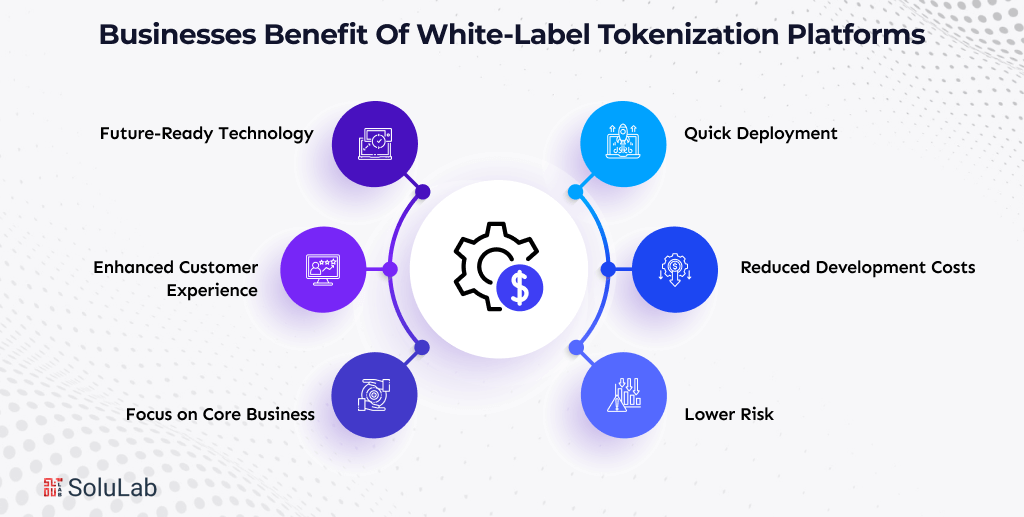
Businesses Benefit Of White-Label Tokenization Platforms

  • Quick Deployment: Pre-built infrastructure allows businesses to launch their platforms within weeks, gaining a competitive advantage.
  • Reduced Development Costs: Only pay for customization instead of full-scale development, saving both time and money.
  • Lower Risk: Pre-tested systems minimize bugs, vulnerabilities, and security risks.
  • Focus on Core Business: Leave blockchain complexities to the platform provider while concentrating on marketing, growth, and customer engagement.
  • Enhanced Customer Experience: Smooth, secure, and transparent transactions improve user trust and engagement.
  • Future-Ready Technology: White-label platforms are designed to scale and adapt to technological advancements and market trends.

Real-World Applications of White-Label Tokenization Platforms

White-label tokenization platforms are not just a trend; they are powering real innovation across industries by making assets more liquid, accessible, and globally tradable. Here are some of the most impactful use cases:

1. Real Estate Tokenization: Convert properties into fractional digital tokens, allowing multiple investors to own shares of high-value assets while enabling developers to raise capital faster.

2. Equity & Security Tokens: Businesses can tokenize shares or debt instruments, giving investors secure, transparent, and compliant access to equity markets.

3. Commodities & Precious Metals: Gold, silver, oil, and other tangible assets can be tokenized, offering investors a more efficient way to trade traditionally illiquid commodities.

4. NFTs & Digital Collectibles: From art and music to gaming assets, tokenization enables creators and brands to monetize digital ownership with transparency and authenticity.

5. Supply Chain & Trade Finance: Tokenization helps track goods, verify authenticity, and provide investors with access to trade financing opportunities.

6. Crowdfunding & Investment Platforms: Startups can raise capital by issuing tokens, giving global investors fractional stakes while maintaining compliance with securities regulations.

7. Healthcare & Intellectual Property: Patents, medical research data, and IP rights can be tokenized, creating new opportunities for funding and secure rights management.

8. Green Energy & Carbon Credits: Renewable energy projects and carbon credits can be tokenized, allowing businesses and individuals to invest in sustainability initiatives.

All in all, tokenization is breaking down barriers in sectors once limited by geography, regulation, or capital requirements. With white-label platforms, businesses can tap into these opportunities without reinventing the wheel, launching quickly, and scaling.

CTA2

Conclusion

As tokenization moves from concept to mainstream adoption, businesses are realizing that building custom blockchain solutions is often too costly, time-consuming, and complex. White-label tokenization platforms provide a faster, safer, and more scalable way to bring assets onto the blockchain.

But choosing the right technology partner is just as important as choosing the right platform. SoluLab, a leading asset tokenization development company, holds expertise in blockchain, solutions, and cross-industry integrations. We help businesses design and launch tokenization platforms that are secure, fully compliant, and tailored to specific business goals.

Whether you’re a startup aiming to fractionalize assets or an enterprise exploring secondary markets, SoluLab provides the end-to-end development, customization, and ongoing support you need to succeed. Contact us today for more information!

FAQs

1. Who can benefit from white-label tokenization platforms?

Startups, enterprises, investment firms, real estate developers, digital marketplaces, and anyone looking to tokenize assets efficiently and compliantly.

2. How quickly can a white-label platform be launched?

Deployment times vary, but most platforms can launch in weeks rather than months, compared to custom blockchain development, which can take 12–18 months.

3. Are white-label platforms secure and compliant?

Yes. Leading platforms include audited smart contracts, integrated KYC/AML checks, GDPR compliance, and enterprise-grade security features such as multi-signature wallets and encrypted storage.

4. What are the cost advantages of white-label platforms?

They significantly reduce development costs, maintenance overheads, and infrastructure expenses, compared to building a custom blockchain from scratch.

5. What role does SoluLab play in white-label tokenization?

SoluLab provides end-to-end development, customization, compliance integration, and ongoing support, enabling businesses to launch secure, scalable, and market-ready tokenization platforms.
 

How Are Governments Using Blockchain to Build Trust in Voting?

Blockchain for Electronic-Voting System

Free and fair elections are the backbone of democracy. Yet, traditional voting methods—whether paper ballots or electronic voting machines—are increasingly criticized for being vulnerable to fraud, delays, and inefficiencies. Voter turnout often suffers, logistical challenges pile up, and the cost of running secure elections keeps rising.

To address these issues, governments are now exploring blockchain technology. With its decentralization, immutability, and transparency, blockchain offers a way to ensure every vote is recorded securely, verifiably, and without tampering. It has the potential to make elections more efficient, trustworthy, and inclusive, particularly for remote or marginalized voters.

This blog covers the concept of blockchain integration in e-voting systems while considering its benefits and reasons to do so. Let’s get started!

What Is Blockchain Voting?

A blockchain voting system records votes in a secure, distributed ledger instead of a centralized database. Unlike traditional digital platforms that can be hacked or manipulated, a blockchain-based system ensures:

  • Each vote is encrypted and anonymized
  • Votes are stored immutably and cannot be altered
  • Results are fully auditable without compromising privacy
  • Votes cannot be duplicated, lost, or tampered with

This approach aims to improve trust, security, and accessibility in the voting process while reducing the risks of fraud, tampering, or miscounting.

How Does Blockchain Voting Work?

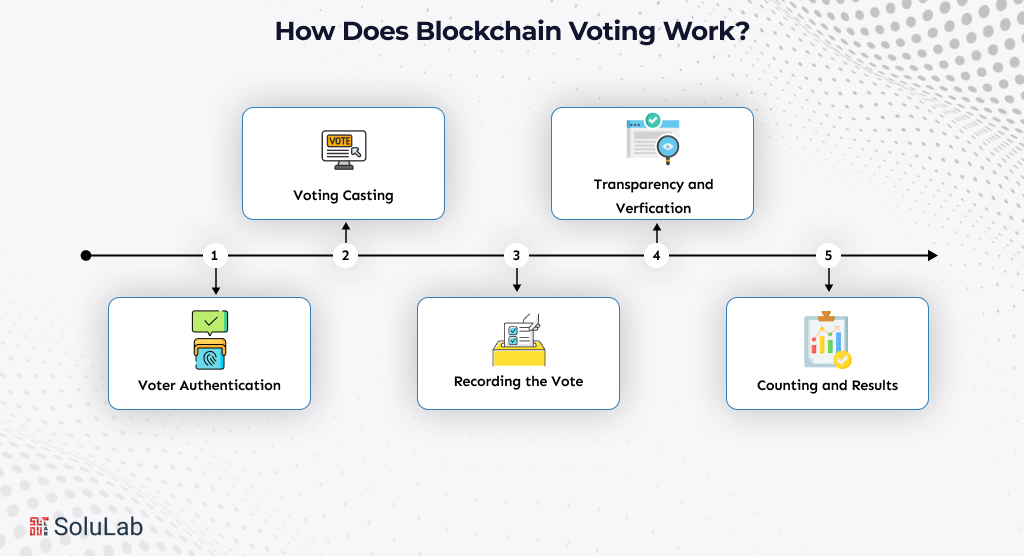
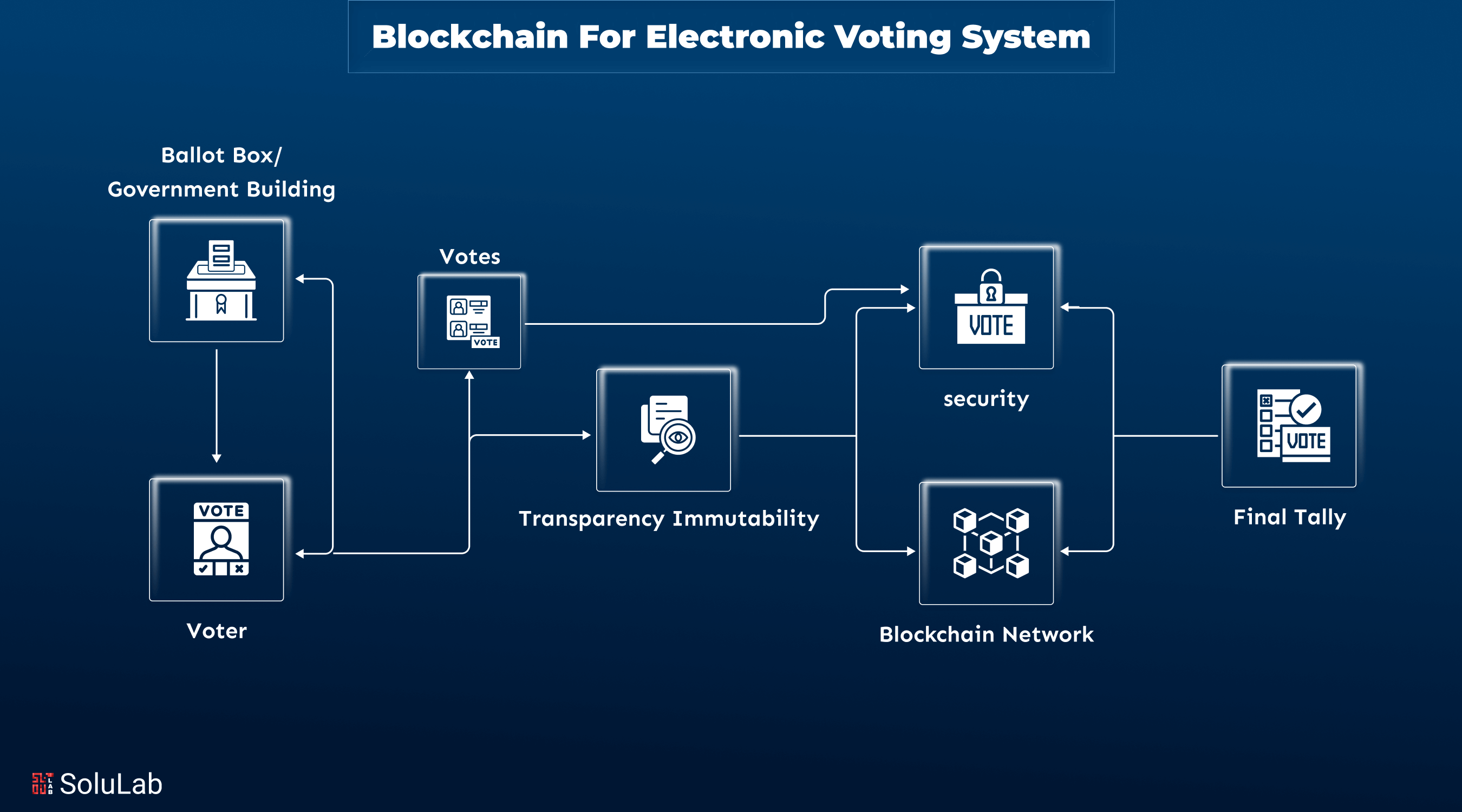
Blockchain voting combines the security of cryptography with the transparency of decentralized ledgers to create a trustworthy election process. Instead of relying on a single central authority, the system distributes and verifies votes across a secure network. Here’s how it works step by step:

How Does Blockchain Voting Work

1. Voter Authentication

  • Every voter is verified using secure digital IDs, biometrics, or government-issued credentials.
  • This step ensures only eligible voters can participate.

2. Vote Casting

  • Voters log into a blockchain-based voting platform (via mobile app or web portal).
  • Each vote is encrypted and turned into a digital transaction.

3. Recording the Vote

  • The encrypted vote is added to a new block on the blockchain.
  • Once validated by the network, it becomes part of the immutable ledger.
  • This prevents tampering, double voting, or deletion.

4. Transparency and Verification

  • All transactions (votes) are time-stamped and visible on the blockchain without revealing voter identity.
  • Voters can verify that their vote was recorded correctly without compromising anonymity.

5. Counting and Results

  • Votes are tallied automatically and securely from the blockchain ledger.
  • Since all data is public and immutable, election results can be independently audited by authorities, watchdogs, or even citizens.

So, blockchain voting creates a tamper-proof, transparent, and verifiable process that strengthens voter confidence while reducing fraud and administrative costs.

Traditional vs Blockchain Voting

Aspect Traditional Voting Blockchain Voting
Process Manual processes with paper ballots or voting machines Automated, digital, and decentralized ledger recording
Voter Verification In-person checks, prone to errors or duplication Secure digital IDs and cryptographic authentication
Transparency Limited, often controlled by central authorities Real-time, publicly verifiable without revealing identities
Security Vulnerable to fraud, ballot stuffing, and tampering Immutable and tamper-proof blockchain transactions
Cost & Resources High costs due to staff, booths, and logistics Lower operational costs through digital automation
Speed of Results Slow counting and delayed announcements Instant tallying with auditable results
Accessibility Requires physical presence at polling stations Remote and global participation via secure digital platforms

How Blockchain Enhances Voter Trust?

Trust is the most important currency in democratic forms. This is how a blockchain voting system facilitates and maintains it:

1. Transparency: Anyone can check the process without accessing private data.

2. Immutability: Voters know their votes can’t be altered once cast.

3. Traceability: Every vote includes a cryptographic timestamp and record, providing accountability.

4. Smart Contracts: Automate verification and counting, reducing human error or bias.

5. Anonymity with Auditability: Maintains voter anonymity but still allows for complete audits.

Why Are Governments Considering Blockchain for Voting Systems?

In today’s political world, voter trust has become one of the most fragile elements of democracy. Traditional voting systems—whether paper-based or electronic—struggle with concerns over fraud, inefficiency, and lack of transparency. This is why many governments around the world are exploring blockchain technology as a way to modernize elections and rebuild public confidence.

1. Fighting Electoral Fraud

Traditional voting systems are susceptible to ballot tampering, impersonation, and duplication of votes. Blockchain prevents these weaknesses by locking votes as unalterable blockchain records, rendering fraud highly improbable.

2. Boosting Voter Participation

Low turnout is a universal problem, particularly among youth, mobile, and dispersed populations. By providing a blockchain-enabled voting platform available through smartphones, governments can facilitate more participation among digitally engaged citizens.

3. Improving Transparency and Accountability

Blockchain provides a public, transparent record of votes—preserving transparency while keeping voters anonymous. Third-party monitors and governments can verify election outcomes independently.

4. Cost Saving and Increased Efficiency

Running national elections entails enormous costs in printing ballots, dispatching personnel, transporting supplies, and security. Blockchain-based e-voting systems significantly lower these logistical expenses and provide quicker, more precise results.

5. Digital Identity and Authentication Security

Blockchain can be easily integrated into digital identity verification systems that perform biometric or document-based authentication that is tamper-evident.

Benefits Governments Aim to Achieve

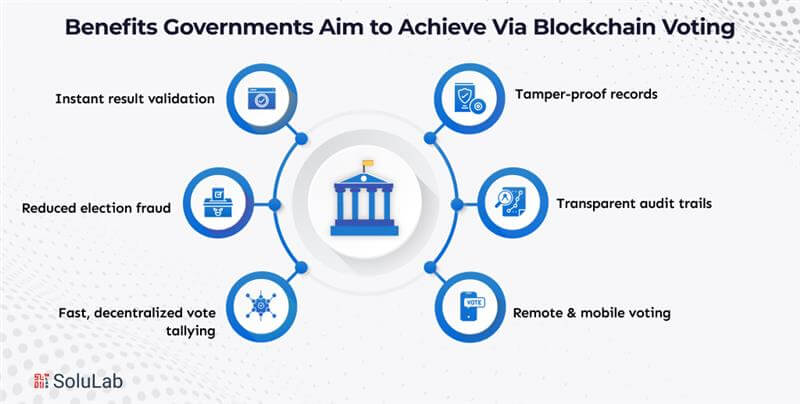
By integrating blockchain into voting systems, governments are not just adopting a new technology—they are addressing some of the most persistent issues in democratic processes. Key benefits include:

Benefits Governments Aim to Achieve Via Blockchain Voting

1. Increased Voter Turnout: Digital and remote blockchain voting makes the process more accessible for citizens who cannot reach polling stations, such as expatriates, people with disabilities, or those living in rural areas. Convenience often translates into higher participation rates and a stronger democratic mandate.

2. Greater Trust in Results: Every vote recorded on blockchain is immutable and transparent, meaning results can be independently verified by citizens, auditors, and watchdogs. This reduces skepticism about manipulation and strengthens public confidence in the fairness of elections.

3. Reduced Costs: Traditional elections involve enormous expenses for printing ballots, staffing polling booths, and transporting materials. Blockchain-based digital voting can significantly cut these operational costs while ensuring the same—or even higher—levels of accuracy and efficiency.

4. Stronger Protection Against Electoral Fraud: With blockchain’s cryptographic security, altering or tampering with votes becomes virtually impossible. From voter impersonation to ballot stuffing, many common fraud risks are drastically minimized, creating a more secure electoral environment.

Real-World Government Use Cases

Several governments have already taken significant steps to test or implement blockchain-backed voting systems, each offering valuable insights into the potential and challenges of this technology.

  • Estonia

A global pioneer in digital governance, Estonia has integrated blockchain into its e-voting system, which works alongside its robust national ID infrastructure. Citizens can vote securely online during elections, and blockchain ensures that votes remain immutable and verifiable. Estonia’s approach demonstrates how blockchain can support nationwide adoption when combined with strong digital identity systems.

  • United States

In 2018, West Virginia piloted blockchain-based voting for overseas military personnel during the midterm elections. While limited in scope, this experiment showed how blockchain could extend voting access to remote citizens, though it also raised debates around security and scalability for larger elections.

  • India

India’s Election Commission has tested hybrid blockchain technology in Telangana to explore secure digital voting for internal migrants and rural populations. The trials focus on creating accessibility without compromising integrity, highlighting blockchain’s role in addressing the unique challenges of large, diverse electorates.

  • Switzerland

Several Swiss cantons, including Zug (often called “Crypto Valley”), have experimented with blockchain-based voting for local referendums. These initiatives emphasized transparency, citizen trust, and accessibility, particularly for younger, tech-savvy voters.

  • Sierra Leone

In 2018, Sierra Leone became one of the first countries to use blockchain for election observation and verification. While the system did not cover the entire election process, it demonstrated blockchain’s potential to improve transparency and independent verification in developing democracies.

Key Learnings from Early Adoption:

  • Blockchain can enhance trust when paired with strong digital ID systems.
  • Small-scale pilots prove the concept but highlight challenges in scalability.
  • Security, voter privacy, and regulatory frameworks remain critical hurdles.
  • Transparency and accessibility benefits resonate strongly with citizens, encouraging broader participation.

Blockchain Development Company

Conclusion

Blockchain is quickly becoming a revolutionary power in modernizing electoral processes, providing unparalleled transparency, tamper-resistance, and accessibility. As governments all over the globe investigate blockchain voting as a means to rebuild trust and facilitate secure distant participation, demand for trustworthy, enterprise-class solutions is on the rise.

At SoluLab, a top blockchain development company, we deliver customized mission-critical applications such as digital voting. From secure integration of digital identity to vote counting with smart contracts and real-time audit trails, our experts implement scalable, regulation-compliant blockchain voting solutions. As public bodies and private organizations embark on the future of democratic innovation, we are a go-to blockchain development partner in bringing secure, transparent voting systems to reality.

Contact us for more information!

FAQs

1. Will blockchain voting completely replace traditional systems?

Not immediately. Most governments are considering hybrid approaches—combining traditional voting with blockchain—to test scalability and build public trust before full adoption.

2. How quickly can results be declared in blockchain-based voting?

Blockchain voting enables real-time vote counting. Since each transaction (vote) is recorded instantly, results can be tallied faster, reducing the delays and errors common in manual systems.

3. Is blockchain voting cost-effective for governments?

Over time, yes. While initial implementation costs may be high, blockchain eliminates recurring expenses on paper ballots, printing, storage, and manual counting, significantly lowering overall election costs.

4. Can blockchain voting be used for local or organizational elections?

Absolutely. Many universities, corporations, and local governments are already testing blockchain voting for smaller-scale elections, where adoption is faster and risks are lower.

5. How are watchdogs and auditors involved in blockchain voting?

Since every vote is visible on the ledger, independent observers can audit results in real time. This reduces disputes, ensures fairness, and enhances democratic credibility.