Talk to an Expert

Top 10 Blockchain Ecosystem Protocols of 2026

In the era of blockchain technology, the development of strong ecosystem protocols is increasingly important. These protocols serve as the foundation for a variety of decentralized apps (dApps), providing developers and users with a safe, transparent, and fast way to connect with blockchain networks. In this blog, we look at the Top 10 Blockchain Ecosystem Protocols that are influencing the development of decentralized finance (DeFi), non-fungible tokens (NFTs), gaming, and more.

The significance of choosing the best crypto ecosystem cannot be emphasized, as blockchain technology continues to upend established markets and open the door for creative solutions. Every protocol has its own distinct collection of characteristics and capabilities, ranging from sustainability and governance to scalability and interoperability. Regardless of your level of experience with blockchain technology or your interest in decentralized platforms, this curated blockchain ecosystem list will provide you with valuable information on the top protocols propelling the subsequent stage of blockchain development and advancement.

So, without any further ado, let’s get started!

What is the Role of Blockchain Platforms and Protocols in Fostering Innovation?

Blockchain platforms and protocols play a dual role in fostering innovation within the blockchain ecosystem.

1. Enabling Diverse Applications

By offering a standardized infrastructure, these platforms and protocols empower developers to focus on creating innovative applications and services without having to reinvent the underlying blockchain technology. This encourages experimentation and creativity in various sectors, ranging from finance and supply chain to healthcare and gaming.

2. Cross-Platform Collaboration

Interoperability between different blockchains is vital for achieving the full potential of blockchain technology. Blockchain platforms and protocols that prioritize interoperability allow data and assets to move seamlessly between distinct blockchain networks. This opens doors for collaborative efforts and the creation of complex, decentralized ecosystems that span multiple platforms.

3. Efficiency and Scalability

Innovative blockchain protocols are continuously working to address scalability and efficiency challenges that have been associated with earlier blockchain versions. By implementing novel consensus mechanisms, sharding techniques, and off-chain solutions, these protocols are paving the way for blockchain systems that can handle a higher volume of transactions without compromising speed or security.

Why Do Top Blockchain Protocols Hold Immense Significance in the Year 2026?

In 2026, top blockchain protocols hold immense significance for the industry due to their transformative impact on various sectors. These protocols not only facilitate efficient and secure transactions but also enable the development of complex decentralized applications, fostering innovation in industries such as finance, supply chain, healthcare, and more. Top blockchain protocols provide:

  • Security: Leading protocols integrate advanced cryptographic techniques to ensure data integrity and protect against unauthorized access. This level of security is crucial for applications that deal with sensitive data or valuable digital assets.
  • Scalability: Many contemporary protocols focus on scalability solutions to address the bottleneck issues that early blockchain networks faced. By optimizing consensus mechanisms and introducing techniques like sharding and layer-2 solutions, these protocols aim to accommodate a high volume of transactions without sacrificing speed or security.
  • Interoperability: Recognizing the importance of collaboration between different blockchain networks, top protocols emphasize interoperability. They enable seamless data and asset transfer between diverse platforms, contributing to the development of cross-chain applications and services.
  • Decentralization: Blockchain protocols prioritize decentralization, ensuring that no single entity has excessive control over the network. This democratic nature enhances trust, transparency, and resilience in the ecosystem.

Top 10 Blockchain Ecosystem Protocols of 2026

1. Stellar

In the era of blockchain ecosystem protocols, Stellar has emerged as a formidable player, offering groundbreaking solutions that revolutionize cross-border transactions and financial services. Recognized as one of the best crypto ecosystems of 2026, Stellar’s significance is underscored by its remarkable features and substantial contributions to the field.

Stellar stands as an open-source blockchain protocol meticulously crafted to streamline cross-border transactions and asset issuance with unparalleled speed, security, and affordability. Rooted in the ethos of inclusivity and financial accessibility, Stellar seeks to bridge the gap between conventional financial frameworks and the realm of blockchain innovation. Its unique ability to facilitate instant transactions across various currencies and networks distinguishes it from traditional approaches, which often involve protracted processes and intermediary entities.
2. Ethereum

Ethereum has long been hailed in blockchain technology, primarily celebrated for its innovative smart contract capabilities. Now, with the transition to Ethereum 2.0, the platform has honed its focus on bolstering scalability and energy efficiency, effectively tackling previous scalability challenges. This upgrade positions Ethereum as a frontrunner in the crypto ecosystem list, poised to offer enhanced performance and sustainability, thus attracting both developers and users seeking advanced blockchain solutions.

Moreover, Ethereum’s ecosystem stands out for its versatility and support for a vast array of decentralized applications (dApps). Notably, Ethereum has emerged as a leader in the burgeoning non-fungible token (NFT) space, providing a robust infrastructure for the creation, exchange, and management of digital assets. This solid foundation cements Ethereum’s position as one of the top crypto ecosystems, offering unparalleled opportunities for innovation and development across various sectors. As Ethereum continues to evolve and innovate, its ecosystem remains a cornerstone of the blockchain industry, driving forward the adoption and integration of decentralized technologies.
3. Tezos

Tezos distinguishes itself with its modular architecture and unique self-amendment protocol, setting it apart from other contenders in the list of top blockchain ecosystem protocols. This innovative approach enables Tezos to implement protocol upgrades seamlessly, eliminating the need for contentious hard forks that can disrupt the network. Moreover, Tezos’s commitment to formal verification methods ensures the utmost security and accuracy of smart contracts, providing developers with a reliable and trustworthy platform to build upon.

Another key aspect that elevates Tezos within the blockchain ecosystems is its governance model. Tezos embraces a democratic approach to network upgrades and changes, empowering stakeholders to participate in decision-making processes. This inclusive governance structure fosters community engagement and consensus-building, further solidifying Tezos’s position as one of the top blockchain ecosystem protocols. Through its modular architecture, self-amendment protocol, and democratic governance model, Tezos continues to pave the way for innovation and advancement in the blockchain space, offering a robust foundation for developers and users alike.

4. Polkadot

A key player in the blockchain ecosystem, Polkadot stands out for its unique scalability and interoperability strategies. Founded on the premise of a heterogeneous multi-chain framework, Polkadot enables seamless communication and data sharing between diverse blockchains. This interoperability empowers developers to create specialized parachains tailored to specific use cases while maintaining compatibility with the broader Polkadot network, fostering a cohesive and interconnected ecosystem of decentralized applications (dApps).

Moreover, Polkadot’s innovative consensus mechanism, known as Nominated Proof-of-Stake (NPoS), ensures a secure and efficient network operation. Through NPoS, token holders can nominate validators to secure the network, enhancing decentralization and resilience against potential attacks. With its focus on interoperability, scalability, and robust security, Polkadot continues to shape the blockchain landscape, offering a platform that facilitates the development of scalable and interoperable decentralized applications across various industries.

5. Hedera Hashgraph

Hedera Hashgraph takes security to a new level with its innovative use of asynchronous Byzantine fault tolerance (aBFT). This means that it can maintain network integrity even in the presence of malicious actors or network partitions. By creating a system where consensus is reached based on the order of events, Hedera Hashgraph achieves an unprecedented level of fairness and tamper resistance, making it highly attractive for applications requiring the utmost security and trust.

Hedera Hashgraph’s design emphasizes interoperability, allowing it to seamlessly integrate with existing systems and platforms. This makes it an attractive option for businesses and developers looking to leverage blockchain technology without disrupting their current operations. Its ability to support smart contracts and decentralized applications (DApps) further extends its utility across diverse industries, including finance, supply chain, healthcare, and more.

6. Klaytn

Klaytn is a blockchain protocol that combines the strengths of both public and private blockchains, offering a hybrid design that optimizes for both transparency and scalability. Developed by Ground X, a subsidiary of South Korea’s internet giant Kakao, Klaytn aims to streamline blockchain adoption by providing an accessible platform for businesses and developers to create and deploy applications.

Klaytn is designed for high throughput and low latency, enabling it to handle a significant number of transactions per second. This scalability is a crucial factor for applications that require fast and efficient processing of data and transactions. Klaytn’s strategic partnerships with various real-world businesses have helped bridge the gap between traditional industries and the blockchain ecosystem. These partnerships provide practical use cases and foster innovation in sectors such as finance, gaming, and more.
7. Tron

Tron has made a significant mark in the entertainment sector by offering a decentralized ecosystem for content creators and consumers. Its blockchain-based infrastructure facilitates direct connections between content producers and their audiences, bypassing intermediaries and empowering creators with a fairer revenue distribution model.

Recognizing the scalability challenges faced by many blockchain protocols, Tron has invested in innovative solutions. Its delegated proof-of-stake (DPoS) consensus mechanism and dynamic bandwidth allocation allow for higher throughput and faster transactions, making it more practical for real-time applications like gaming and streaming. Tron’s support for smart contracts has enabled the creation of decentralized applications, expanding its utility beyond financial transactions. DApps built on Tron’s platform span domains such as finance, entertainment, and social networking, enhancing user experiences and driving broader adoption of blockchain technology.

8. Dogetti

Dogetti’s innovative decentralization strategy makes it stand out in the world of crypto ecosystems. In contrast to conventional distributed ledgers, Dogetti employs a multifaceted approach that prioritizes governance and decision-making in addition to data decentralization. This all-encompassing strategy fosters inclusion and transparency by creating a fully democratic blockchain environment in which users actively participate in protocol updates and modifications.

Dogetti’s Adaptive Proof-of-Cooperation (APoC) consensus mechanism is the heart of its invention and the main factor of its success. To match the demands of the network, APoC dynamically modifies the consensus process, improving scalability during periods of high transaction volume and bolstering security during crucial processes. Applauded for its capacity to achieve a nuanced equilibrium between robustness and speed, APoC confirms Dogetti’s position as a blockchain pioneer.

9. Cardano

Cardano’s journey began with a vision to address the limitations of existing blockchain protocols, particularly in terms of scalability, interoperability, and governance. This vision has translated into tangible achievements, propelling Cardano into the ranks of the top 10 blockchain ecosystem protocols of 2026.

Unlike many blockchain projects that emphasize speed to market, Cardano took a meticulous approach by involving a global network of researchers and experts. This rigorous academic input has led to peer-reviewed research and a solid foundation for technological advancements. Cardano utilizes the Ouroboros consensus algorithm, which is a proof-of-stake (PoS) protocol designed for scalability and security. Cardano has been designed to facilitate seamless communication between different blockchains. This feature enables the creation of multi-chain applications and opens avenues for collaborative development across blockchain networks.

10. EOS

In the top blockchain ecosystem protocols, EOS stands out as a dynamic and influential platform that continues to shape the landscape in 2026. EOS, short for “Enterprise Operating System,” has established itself as a prominent player in the blockchain space, offering a range of innovative features and capabilities that contribute to its status as a top 10 blockchain ecosystem protocol.

EOS is characterized by its commitment to scalability, speed, and usability, all of which are critical factors in driving the adoption of blockchain technology across industries. Its unique approach to consensus and governance has garnered attention and admiration from developers and businesses alike. One of the standout features of EOS is its Delegated Proof of Stake (DPoS) consensus mechanism. Unlike traditional Proof of Work (PoW) mechanisms that consume substantial energy, EOS’s DPoS enhances energy efficiency while maintaining security and decentralization. Through DPoS, EOS achieves remarkable transaction speeds, making it suitable for applications that require high throughput.

Conclusion

In the ever-evolving landscape of blockchain technology, the significance of robust blockchain ecosystem protocols cannot be overstated. As 2026 unfolds, it becomes evident that these protocols form the backbone of innovation, driving the development of groundbreaking blockchain platforms.

Solulab has positioned itself at the forefront of this transformative era, solidifying its reputation as a premier blockchain development company. With an array of top blockchain ecosystem protocols under its belt, Solulab continues to redefine the parameters of possibility. Their team of adept blockchain developers handpicked to harness the potential of these protocols, is a testament to their commitment to excellence.

In a realm where staying ahead of the curve is imperative, Solulab’s proficiency in crafting bespoke blockchain solutions sets them apart. Organizations seeking to harness the power of blockchain can confidently turn to Solulab to access cutting-edge blockchain development services. The option to hire blockchain developers through Solulab ensures a journey guided by expertise and innovation. For unparalleled blockchain solutions, contact SoluLab today.

FAQs

1. What are blockchain ecosystem protocols?

Blockchain ecosystem protocols refer to a set of rules, standards, and technologies governing the functioning and development of blockchain platforms. These protocols determine how transactions are verified, data is stored, and consensus is reached within a blockchain network.

2. How do blockchain ecosystem protocols contribute to blockchain development?

Blockchain ecosystem protocols provide a foundation for developers to build and deploy decentralized applications (DApps) on various top blockchain platforms. They offer predefined structures that developers can leverage to create innovative solutions while ensuring compatibility with the underlying blockchain technology.

3. Can you name some of the top blockchain ecosystem protocols in 2026?

Certainly! Some of the top blockchain ecosystem protocols of 2026 include Ethereum 2.0, Binance Smart Chain, Solana, Cardano, Polkadot, Avalanche, Tezos, Cosmos, Algorand, and Flow.

4. How can businesses benefit from these top blockchain ecosystem protocols?

Businesses can leverage these protocols to build decentralized applications, streamline processes, enhance transparency, and create new revenue streams. They can tap into the capabilities of these protocols to develop solutions that cater to their specific industry needs.

5. Are there specialized blockchain development services for these protocols?

Yes, many blockchain development companies offer specialized services tailored to each of these protocols. They provide expertise in developing DApps, smart contracts, and other solutions that utilize the unique features of the chosen protocol.
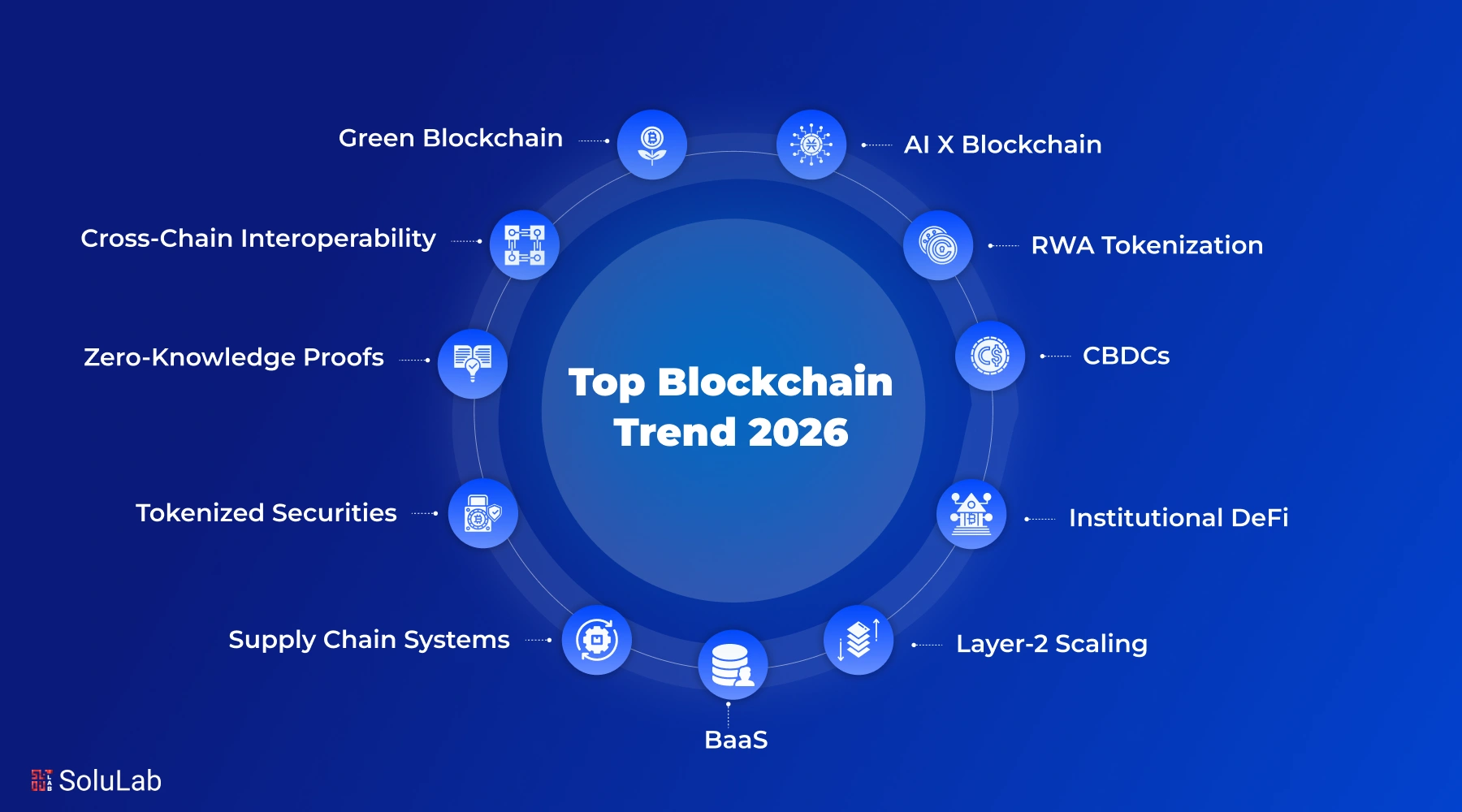
Top 11 Blockchain Trends to Follow in 2026

Blockchain Trend 2026

2026 is becoming a major turning point for digital money and enterprise blockchain. Big businesses, banks, global payment networks, and even governments are no longer testing blockchain. They are now using it for real financial operations, tokenized assets, and on-chain finance. The change is fast and happening across every major industry.

The global blockchain market size is estimated at $33 billion in 2026 and expected to grow at a compound annual growth rate (CAGR) of over 43% to reach nearly $393 billion by 2030. Meanwhile, over 137 countries are exploring CBDC, with 49 currently in pilot or launch stages.

If you are a founder, investor, or decision-maker, these trends matter. They tell you where the market is moving, what customers will expect, and how companies will use blockchain solutions to cut costs, move money faster, and unlock new business models. This guide gives you a clear view of the biggest Blockchain Trends for 2026 and shows how they will impact global finance, technology, and business growth.

How the Blockchain World Will Change from 2026 to 2030?

Before we talk about specific blockchain technology trends, it helps to zoom out and understand the size and direction of the market you are building for.

Analyst reports place the global blockchain market in the mid-tens of billions of dollars. By 2030, many expect it to reach hundreds of billions, or even low trillions, depending on what is counted, like crypto assets, tokenization, DeFi, and core infrastructure, but a few signals matter more than the big headline number:

  • Institutional finance is moving fast. Tokenized Treasuries, tokenized funds, and regulated institutional DeFi pilots are no longer small tests. They are becoming part of real financial systems.
  • The number of countries testing or exploring CBDCs has now crossed into triple digits. These pilots are also shifting from small local tests to real cross-border payment corridors.
  • Real-world asset tokenization (RWA) has grown from an idea into a multi-billion-dollar segment. Many now project it to reach double-digit trillions by 2030.

For you, this means the blockchain projects you build in 2026 are not side projects. They should be connected to where global liquidity, regulation, and infrastructure are heading over the next 5–10 years.

11 Big Blockchain Trends That Will Change 2026

Here are the 11 most important blockchain trends you should watch in 2026. These trends matter if you are building real products, raising money, or upgrading your tech systems. In all, these blockchain future trends will shape how money, data, and digital ownership move in 2026 and the years ahead.

1. Real-World Asset (RWA) Tokenization

If you follow only one blockchain trend in 2026, let it be this one. Real-world asset tokenization is already moving tens of billions of dollars of real estate, private credit, Treasuries, and other assets on-chain. RWA platforms let you break a building, a fund, or invoices into digital units that trade 24/7 with instant settlement and built-in compliance. Here is why you should care:

  • You can unlock liquidity from assets that were stuck in files and manual paperwork.
  • You can offer smaller ticket sizes to more investors without changing your whole system.
  • You can test new revenue ideas like streaming yields or auto-rebalancing that old banking systems can’t support.

From a business point of view, if something on your balance sheet is big, slow, and hard to move, tokenization will enter that market in the next 3–5 years. For example 

  • By late 2025, BlackRock’s BUIDL alone crossed $500M in tokenized Treasuries, becoming the world’s largest on-chain fund. 
  • Franklin Templeton and Ondo Finance together manage billions in tokenized real estate and private credit. Even JPMorgan is running tokenized private credit pilots on-chain.

This is one of the clearest blockchain predictions for 2026, and it’s already live in real products.

2. AI x Blockchain Convergence  

AI x Blockchain Convergence

From 2023 to 2025, everyone was busy with AI, but in 2026, founders finally started asking, that How do I make my AI safer, more transparent, and easier to monetize. That is where AI with blockchain becomes one of the biggest blockchain trends for real businesses. Blockchain for AI helps with:

  • data provenance (proving where training data came from)
  • on-chain audit logs for AI models
  • clear royalty and attribution flows

AI for blockchain helps with smarter risk engines, better fraud detection, automated governance, and dynamic settings for on-chain systems.

For example, Projects like SingularityNET, Fetch.ai, and Ocean Protocol have already proven working AI × Blockchain models. Enterprises now integrate these systems for regulated AI deployments where audits and traceability are required.

If you run any AI product today, adding even a small on-chain layer for provenance or billing can move you closer to the latest blockchain development trends, instead of looking like another black-box AI tool with a Stripe payment link.

3. Central Bank Digital Currencies (CBDCs)

Central Bank Digital Currencies (CBDCs)

Central Bank Digital Currencies (CBDCs) are no longer ideas on paper. In 2026, many countries will have strong pilots or small-scale launches, and some will run CBDCs at a large scale. CBDCs matter for businesses because they change how you:

  • Settle cross-border payments
  • Handle compliance and reporting
  • Build your wallet, treasury, or payment systems

CBDCs sit at the middle of blockchain technology trends, digital identity, and regulated finance.  For example – 

  • China’s e-CNY surpassed $986B in transactions, making it the largest CBDC pilot in the world.
  • Countries like the Bahamas, Jamaica, and Nigeria have already launched retail CBDCs.
  • The EU Digital Euro pilot is underway with a 2027 launch window.

If you ignore CBDCs while building any payment, banking, or treasury product for 2026, it will be like ignoring mobile apps in 2010.

4. Institutional DeFi

Institutional DeFi didn’t die after the early hype; it simply grew up. Now, large banks, asset managers, and regulated companies are testing on-chain finance with KYC, verified identities, and permissioned pools. They are running pilots in tokenized repo, tokenized collateral, on-chain FX, and even digital syndicated loans.

For a founder, institutional DeFi is not about yield farms anymore. It is about:

  • Cutting back-office costs with faster, automated systems
  • Building new on-chain product lines with transparent and programmable rules
  • Opening access to new markets, new users, and new capital flows

This is where enterprise blockchain trends start to matter. For example – 

  • JPMorgan’s Onyx and MAS’s Project Guardian have run institutional pools with verified identities since 2023.
  • Aave Arc and Syndicate Protocol provide institutional lending rails.
  • BlackRock and Securitize are issuing tokenized funds accessible through DeFi.

If your industry begins settling transactions on public blockchains with permissioned layers, then the tech stack, vendors, and architecture you choose in 2026 will shape your business for years.

5. Layer-2 Scaling Solutions

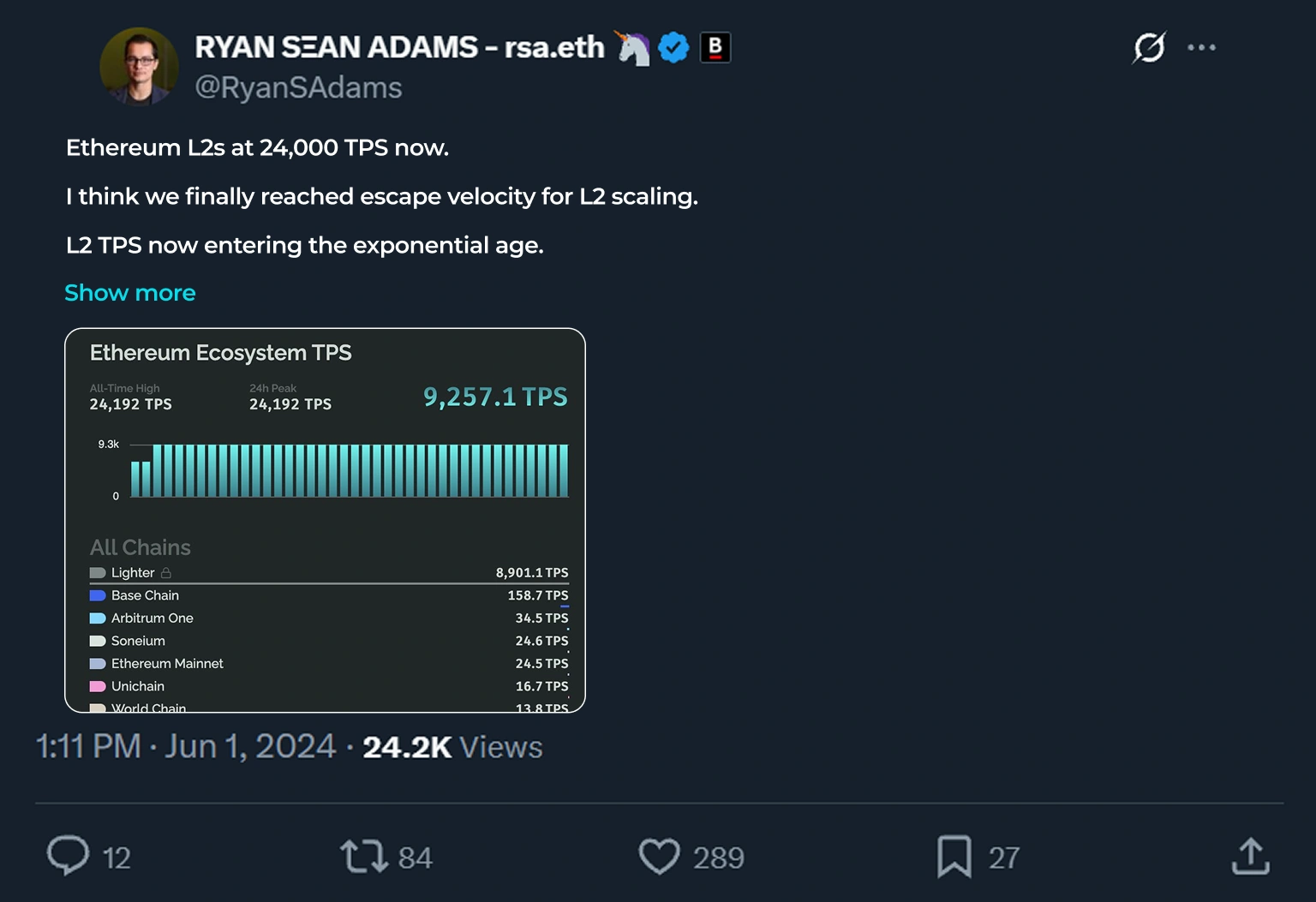
You can’t talk about blockchain future trends without talking about scaling. Layer-2 networks (L2s) on Ethereum and Bitcoin are now handling most real transactions. These include rollups, optimistic systems, zero-knowledge L2s, and payment channels.

  • Fees drop from dollars to a few cents
  • Speed goes from a few transactions per second to thousands
  • You still keep the security of a major Layer-1 chain

If you are building in payments, gaming apps, micro-transactions, IoT systems, or AI-powered agents space, you will almost always use an L2 instead of an L1. Here are the Real adoption numbers:

  • Arbitrum: $15B+ TVL, largest L2 ecosystem
  • Optimism: Backed by Coinbase integrations
  • Base: Fastest-growing consumer L2
  • StarkNet: Enterprise-trusted zkRollup

This is one of the most important blockchain development trends for founders, architects, and CTOs today.

6. Blockchain-as-a-Service (BaaS)

Blockchain-as-a-Service (BaaS)

Most teams today don’t want to run their own nodes, build custom explorers, or manage security systems. They want simple tools, managed hosting, and ready-made blockchain infrastructure.

That’s why Blockchain-as-a-Service (BaaS) is becoming one of the most important blockchain industry trends. Big cloud companies and Web3 infra providers now offer hosted nodes, fast indexers, strong APIs, monitoring dashboards, testing tools, and full turnkey setups. 

With BaaS, businesses can build blockchain apps without worrying about servers, uptime, or heavy DevOps work. Here are a few enterprises like AWS, Azure, IBM, and Oracle that now dominate BaaS, and over 90% of enterprise blockchain deployments use BaaS to reduce cost and ship faster.

BaaS also helps with scaling, multi-chain support, security audits, RPC load balancing, and easy upgrades. Teams can focus on their product while the BaaS platform handles all the hard technical work in the background. For many companies, this means faster launches, fewer risks, better performance, and lower long-term costs.

7. Supply Chain & Provenance Systems

Supply chain and provenance tools were hyped early, but today they are becoming one of the strongest enterprise blockchain use cases. Real value is now clear in:

  • Lot-level tracking for food and pharma
  • Anti-counterfeit checks for luxury goods and key components
  • Carbon and ESG reporting linked to real product movement

It’s no longer about putting everything on a blockchain; it’s about adding just enough cryptographic proof in the right places so regulators, partners, and customers can trust what a company claims. For example – 

  • Walmart reduced traceability time from 7 DAYS to 2.2 SECONDS using blockchain.
  • De Beers tracks diamonds end-to-end to eliminate counterfeiting.

For many mid-market manufacturers, logistics teams, and retailers, this will be their first real step into blockchain development and supply chain blockchain systems in 2026.

8. Tokenized Securities & Treasury Bills

Tokenized Securities & Treasury Bills

In 2026, tokenized Treasuries quietly crossed several billion dollars in AUM. In 2026, this entire category will grow even more and expand into new asset classes. Today, you already see:

  • Tokenized government bonds
  • On-chain money market funds
  • Tokenized private credit and real estate portfolios

These tokenized assets are now used for yield products, treasury operations, and daily cash-management tools. The biggest shift is how tokenized securities bring faster settlements, better liquidity, transparent audits, and easy global access. Here are a few live examples:

  • BlackRock BUIDL & Franklin Templeton Utilize Securities and created $7.3B+ AUM
  • Ondo Finance is running corporate repo and credit products
  • JPMorgan is testing tokenized money market workflows

Banks, asset managers, and fintechs are now exploring on-chain versions of T-Bills, corporate bonds, repo markets, and credit products because tokenization cuts costs, reduces errors, and speeds up the entire workflow.

9. Zero-Knowledge Proofs (ZK-Tech)

Zero-Knowledge Proofs (ZK-Tech)

Zero-knowledge proofs are no longer just research. Today, ZK-tech is used in privacy Layer 2s, digital identity tools, and even compliance systems. ZK-tech is important because it lets you:

  • Prove something about your data, like age, KYC, or solvency, without sharing the data
  • Follow privacy rules while still giving partners or regulators verified proof
  • Build safer finance apps, health systems, public tools, and consumer products

As global rules around data get tighter, zero-knowledge proofs are becoming one of the most important blockchain innovations for businesses to understand. zkSync, Polygon ID, and Aztec Network are already used globally by banks, fintechs, and enterprises. 

CTA1

10. Cross-Chain Interoperability

Cross-Chain Interoperability

By 2026, no serious company can depend on only one blockchain. The market moves too fast, and users expect smoother, bigger networks. That’s why bridges, messaging layers, and interoperability protocols are becoming core parts of Web3, and Chainlink CCIP, LayerZero, Wormhole, and Cosmos IBCare are now the base layer for real products. For founders and teams, this means:

  • Build with multi-chain support from day one
  • Make the chain invisible to users
  • Plan for future liquidity, rules, and ecosystems, not just today’s trends

11. Green & Sustainable Blockchain 

Green & Sustainable Blockchain

This is one of the key blockchain technology trends that will decide if your app feels stuck on one chain or works smoothly across the full Web3 world. It’s a major factor in long-term product success and user trust.

Today, regulators, investors, and large companies want clear answers about energy use, carbon impact, and sustainability. This is pushing people to think in a more serious way about how blockchain platforms affect the environment.

You will see:

  • More chains sharing audited energy reports
  • More companies are asking for proof-of-stake or other low-energy systems
  • More use of on-chain carbon tracking and digital carbon offset tools

If you sell blockchain solutions to enterprises, staying aligned with these sustainability-focused blockchain trends will help you close deals faster. Big companies now ask clear questions about energy use, carbon footprint, and long-term environmental impact, and they are already using Ethereum, Polygon, Deso, and Solana to publish verified energy usage reports.

They prefer green blockchain systems that run on proof-of-stake, use low-power nodes, and offer real data on how much energy the network uses. You will also see more interest in on-chain carbon tracking, digital carbon credits, and blockchain-based offset tools. These help companies meet ESG targets and report their climate numbers with confidence. 

How Enterprises Will Actually Use Web3 in 2026?

2026 is the year Web3 becomes a real enterprise tool, not just a crypto space. Because companies will start using it only where it truly helps their business. Here’s what you’ll see:

  • Finance: RWA tokenization, DeFi payment rails, CBDCs, and on-chain KYC
  • Supply chain: provenance tracking, real-time compliance, and ESG reporting
  • Healthcare: secure data, medical record integrity, and drug tracking
  • Media & gaming: digital ownership, loyalty systems, and assets that work across platforms

Most people won’t even call it Web3. They’ll just feel the benefits like faster settlement, better rewards, and smoother digital experiences. But behind the scenes, these are real blockchain future trends finally being used in day-to-day business operations.

How SoluLab Can Build Any of These 11 Use Cases in Just 4 Weeks?

If you want to turn your idea into a real Web3 product, SoluLab can help you build any of these 11 use cases in only 4 weeks. Our team works with blockchain, smart contracts, CBDC solutions, tokenization platforms, DeFi apps, and enterprise blockchain development. We follow a fast, reliable, and transparent system:

1. Week 1 — Plan & Architect

We map your idea, pick the right tech, and prepare the full flow for your crypto, tokenization, or CBDC-based system.

2. Week 2 — Smart Contracts & Backend Development

We develop secure smart contracts, set up all backend logic, and integrate major chains like Ethereum, Polygon, BNB Chain, or a private blockchain.

3. Week 3 — Frontend & Dashboard

We design a clean UI and link your user dashboard to the on-chain with backend logic.

4. Week 4 – 5 — Test & Launch

We run audits, QA, security checks, and prepare your product for launch.

CTA2

Conclusion  

The real value of learning about blockchain development trends is using them to make smarter business decisions. The biggest opportunities now sit in real assets, compliance, and efficiency. As a founder or leader, your edge comes from choosing one or two clear bets and executing well. 

Let’s turn your 2026 blockchain vision into a real MVP. Book a discovery call and get feedback in days, not months. A strong blockchain development company like SoluLab, should guide you with solid business outcomes, not noise. 2026 can be the year you watch these trends or the year you build with them.

FAQs

1. How do I decide which blockchain use case is right for my startup or company?

Start by looking at your biggest pain points around data trust, asset liquidity, and operational delays. Then check if tokenization, supply chain tracking, or compliant DeFi systems can solve them. Working with a skilled blockchain development company helps you map your real needs to the right solution, ensuring measurable ROI without guesswork.

2. Why should I consider working with a blockchain development agency instead of building in-house?

Agencies bring deep expertise, faster execution, and tried-and-tested frameworks that prevent costly mistakes. They help you pick the right architecture, meet compliance standards, and scale safely. For founders focused on growth and product-market fit, a blockchain development agency makes adoption smoother without adding extra internal load.

3. What are the typical timelines and costs involved in building blockchain-based solutions like tokenization or DeFi?

Timelines depend on complexity, but an MVP usually takes 4–6 weeks, costing around $75K–$250K. Full enterprise builds for tokenization or institutional DeFi take 6–10 months and can cross $500K. A reliable agency will give clear estimates that match your goals, scope, and compliance needs.

4. How can I ensure compliance and security when integrating blockchain into my product?

You need to align your solution with rules like MiCA, OFAC, and strong KYC/AML checks. Security means smart contract audits, safe key management, and penetration testing. Agencies with regulated-industry experience build these controls into the product from day one, lowering risk and supporting innovation in areas like asset tokenization services or compliant DeFi.

5. What ongoing support do blockchain development agencies provide after product launch?

A good agency offers continuous monitoring, updates, smart contract improvements, and help adjusting to new regulations. They support scaling, infrastructure upgrades, and new feature rollouts. With ongoing partnership, your solution stays secure, compliant, and ready for future trends like RWA tokenization and advanced payment systems.


How Does the Blockchain Work?

How does Blockchain Work

Blockchain technology has transformed the way we handle digital transactions and data storage. It serves as a secure and decentralized platform that records and verifies information without intermediaries. 

Imagine a digital ledger that’s shared among a network of computers, where each transaction is securely recorded, transparently visible, and impossible to alter. That’s the core idea behind blockchain—a revolutionary concept with the potential to reshape how we interact online. In this blog, we’re here to break down the basics of blockchain in simple terms. We will learn about how does blockchain work and the intricacies involved in blockchain technology! But first, let’s get to know what blockchain is all about!

What is Blockchain Technology?

Blockchain is a technique for storing data that makes it difficult or impossible for outside parties to alter, hack, or manipulate the system. A distributed ledger, or blockchain, is a network of computers that replicates and disperses transactions between itself.

Blockchain technology is a framework that uses many databases, referred to as the “chain,” connected by peer-to-peer nodes, to store public transactional records or blocks. This type of storage is commonly known as a “digital ledger.”

The digital signature of the owner authorizes each transaction in this ledger, ensuring its authenticity and preventing any manipulation. Because of this, the data in the digital ledger is extremely safe.

To put it another way, the digital ledger is essentially a network of several computers sharing a Google spreadsheet where transactional data are kept according to real purchases. The intriguing aspect is that while everyone may view the data, it cannot be altered.

How Does the Blockchain Technology Work?

You may have seen that a growing number of companies worldwide have been utilizing Blockchain technology in recent years. But how does the blockchain work specifically? Is this a little addition or a big change? Let’s start by dispelling some of the myths surrounding Blockchain technology, as these developments are still in their infancy and might become revolutionary in the future.

Blockchain combines three innovative technologies:

  • Cryptographic keys
  • A distributed ledger on a peer-to-peer network
  • A kind of computation that stores the network’s records and transactions

The two keys used in cryptography are the public key and the private key. These keys facilitate the effective completion of transactions between two parties. These two keys belong to each person, and they are used to create a safe digital identity reference. Perhaps the most significant feature of Blockchain technology is this encrypted identification. This identification, known as a “digital signature” in the context of cryptocurrencies, is used to authorize and manage transactions.

The peer-to-peer network and the digital signature are combined, and a lot of people who function as authorities use the digital signature to agree on transactions and other matters. A mathematical verification confirms their approval of a contract, leading to a successful safe transaction between the two network-connected parties.

Types of Blockchain

Types of Blockchain

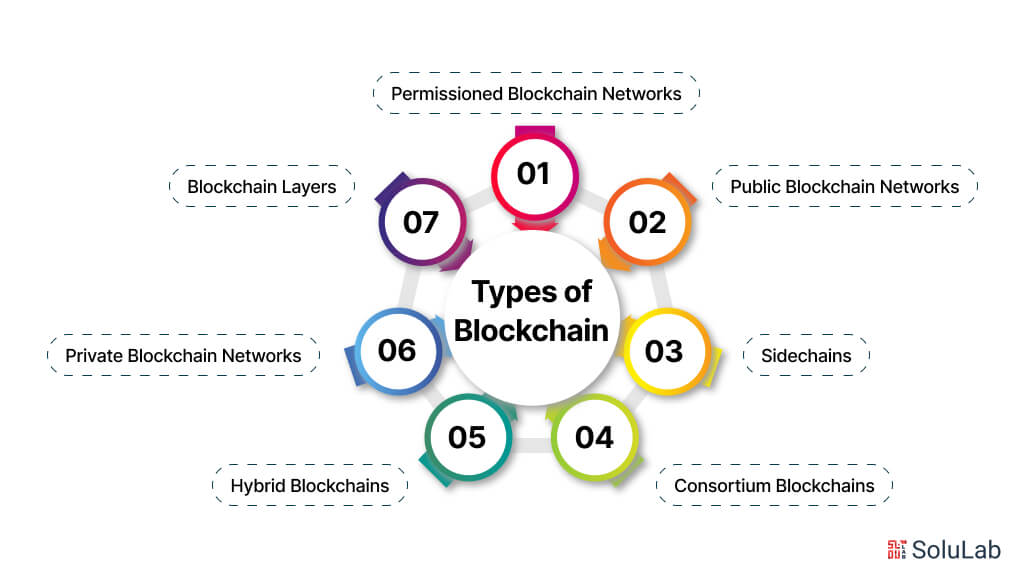
There are different types of blockchain. They are as follows.

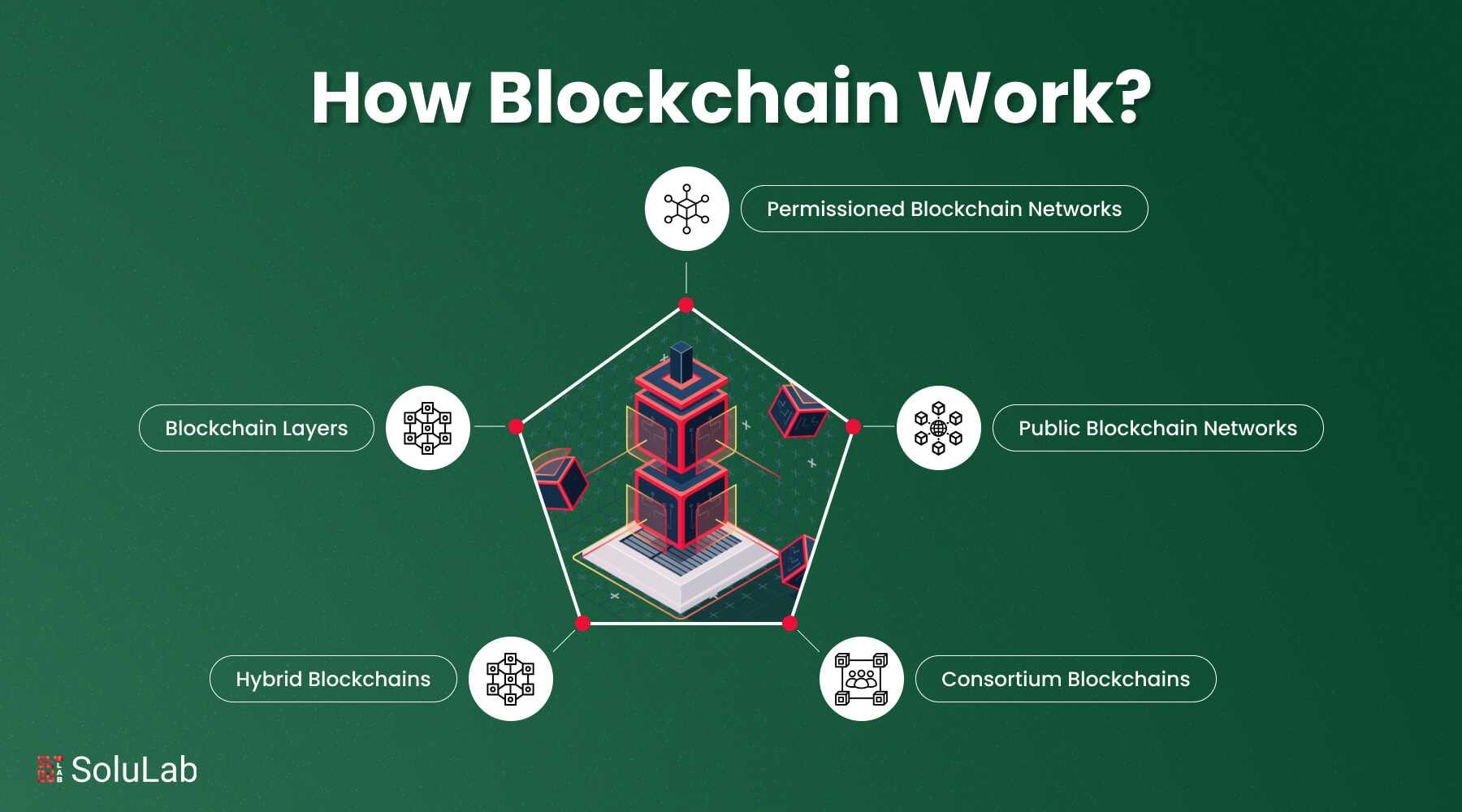
  • Private Blockchain Networks

Private blockchains run on closed networks and are best suited for private corporations and organizations. Companies may utilize private blockchains to tailor their access and permission preferences, network characteristics, and other critical security features. A private blockchain network is managed by just one authority.

  • Public Blockchain Networks

Bitcoin and other cryptocurrencies evolved from public blockchains, which also helped popularize distributed ledger technology (DLT). Public blockchains also assist to avoid some obstacles and issues, such as security weaknesses and centralized control. DLT distributes data throughout a peer-to-peer network rather than storing it in a single location. A consensus technique is used to verify information validity; proof of stake (PoS) and proof of work (PoW) are two popular consensus approaches. 

  • Permissioned Blockchain Networks

Permissioned blockchain networks, also known as hybrid blockchains, are private blockchains that provide unique access to approved persons. Organizations generally build up these sorts of blockchains to obtain the greatest of both worlds, as it allows for better organization when determining who may join the network and in which transactions.

Read Blog: Permissionless Blockchain: An Overview

  • Consortium Blockchains

Consortium blockchains, like permissioned blockchains, feature both public and private components, but they are managed by numerous organizations. Although these sorts of blockchains are initially more difficult to set up, once operational, they can provide superior security. Furthermore, consortium blockchains are ideal for collaboration across various enterprises.

  • Hybrid Blockchains

Hybrid blockchains combine both public and private blockchains. In a hybrid blockchain, certain sections of the blockchain are public and transparent, but others are private and only available to authorized members. This makes hybrid blockchains excellent for applications that demand a mix of openness and secrecy. For example, in supply chain management, numerous parties can view some information but sensitive data is kept secret.

  • Sidechains

Sidechains are parallel blockchains that provide extra features and scalability. Sidechains allow developers to get creative with new features and apps without compromising the main blockchain’s integrity. Sidechains can also be utilized to manage transactions of the main blockchain, reducing congestion and enhancing scalability.

  • Blockchain Layers

Building several blockchain layers on top of one another is referred to as “blockchain layers.” Every layer can have its own rules, functionality, and consensus mechanism that can communicate with other levels. Due to the capacity to handle transactions concurrently across many levels, this guarantees increased scalability. As an illustration, the Lightning Network is a second-layer solution that facilitates quicker and less expensive transactions by opening up payment channels between users and is built on top of the Bitcoin blockchain.

Read Our Blog: Layer-1 Vs. Layer-2: The Blockchain Scaling Solutions

What is Blockchain as a Service? 

Blockchain as a Service (BaaS) is a cloud-based service that allows users to develop, host, and deploy blockchain applications without the complexity of building and maintaining the underlying infrastructure typically associated with blockchain technology.

Similar to other “as a Service” models like Software as a Service (SaaS) or Platform as a Service (PaaS), BaaS provides users with access to blockchain capabilities on a pay-as-you-go or subscription basis. This means that users can leverage the benefits of blockchain technology, such as decentralization, transparency, and immutability, without needing to invest in hardware, software, or specialized expertise.

Blockchain Development Company

Here’s how it works:

1. Cloud-Based Infrastructure: Blockchain as a Service (BaaS) providers offer blockchain infrastructure hosted on their cloud platforms. This infrastructure typically includes all the necessary components for deploying, managing, and scaling blockchain networks.

2. Pre-Built Solutions: BaaS platforms often provide pre-built blockchain solutions and templates tailored for specific use cases, such as supply chain management, identity verification, or financial transactions. These solutions come with predefined smart contracts, consensus mechanisms, and other necessary features.

3. Development Tools: BaaS platforms offer a range of development tools, APIs, and SDKs that enable developers to easily build, test, and deploy blockchain applications. These tools abstract away much of the complexity associated with blockchain development.

4. Scalability and Flexibility: BaaS platforms typically offer scalability features, allowing customers to easily scale their blockchain networks based on demand. They also provide flexibility in terms of choosing the underlying blockchain protocol, consensus mechanism, and other configuration options.

5. Managed Services: BaaS providers handle various operational aspects of the blockchain infrastructure, such as security, maintenance, and upgrades. This allows customers to focus on developing and deploying their applications without worrying about the underlying infrastructure.

How is Blockchain Used?

Blockchain technology has found applications across various industries, revolutionizing processes and enhancing security and transparency. Let’s explore how blockchain is utilized in different sectors:

1. Finance

In the financial industry, blockchain is widely used for secure and transparent transactions. It has facilitated faster cross-border payments, reduced transaction costs, and minimized the need for intermediaries. Smart contracts powered by blockchain technology automate processes such as loan approvals and trade settlements, streamlining operations and reducing the risk of fraud.

2. Healthcare

Blockchain is transforming the healthcare sector by improving data management and patient care. Electronic health records stored on blockchain platforms ensure data integrity and confidentiality, enabling secure sharing of information among healthcare providers. Additionally, blockchain in healthcare facilitates drug traceability, ensuring the authenticity of pharmaceutical products and combating counterfeit drugs in the market.

3. Supply Chain Management

Blockchain technology is reshaping supply chain management by enhancing transparency and traceability. By recording every step of a product’s journey on a of transparency builds trust among stakeholders and improves overall supply chain efficiency.

4. Real Estate

In the real estate industry, blockchain is revolutionizing property transactions and ownership records. Smart contracts on blockchain platforms enable secure and transparent real estate transactions, eliminating the need for intermediaries such as brokers and lawyers. Blockchain-based property registries ensure accurate and tamper-proof records of ownership, reducing the risk of fraud and disputes in real estate transactions.

Read Blog: Revolutionizing Real Estate With Blockchain Technology

5. Energy

Blockchain technology is being leveraged in the energy sector to enable peer-to-peer energy trading and enhance grid management. Through blockchain-based platforms, energy producers can sell excess energy directly to consumers, creating a decentralized energy market. Smart meters integrated with blockchain technology enable real-time monitoring of energy consumption and transactions, promoting energy efficiency and sustainability.

These examples showcase the diverse applications of blockchain technology across industries, highlighting its potential to revolutionize processes, enhance security, and drive innovation in various sectors.

Features of Blockchain Technology

Features of Blockchain Technology

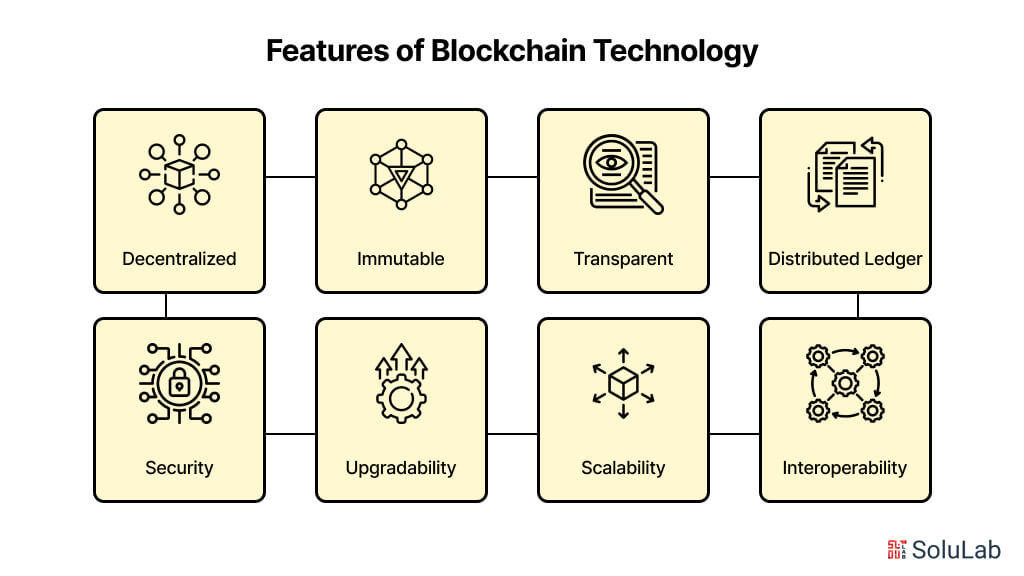
Here are the key features of blockchain technology:

1. Decentralized: Blockchain is a decentralized system, meaning that there is no single central authority controlling the network. Instead, it is maintained by a network of nodes (computers) that work together to validate transactions.

2. Immutable: Once a transaction is recorded on the blockchain, it cannot be altered or deleted. This is because each block is linked to the previous block through a unique code, making it impossible to change or manipulate the data.

3. Transparent: All transactions on the blockchain are transparent, meaning that anyone can view the entire history of transactions on the network.

4. Distributed Ledger: Blockchain is a distributed ledger technology, meaning that multiple nodes on the network maintain a copy of the entire blockchain, ensuring that all parties have access to the same information.

5. Security: Blockchain technology uses advanced cryptography and encryption techniques to ensure that all transactions are secure and tamper-proof.

6. Upgradability: Many blockchain networks are designed to be upgradable, allowing for changes to be made to the protocol or underlying code without disrupting the network.

7. Scalability: While blockchain technology has made significant progress in terms of scalability, some networks still face limitations in terms of transaction speed and capacity.

8. Interoperability: Blockchain technology is being developed to enable interoperability between different networks, allowing for seamless communication and data exchange between different ecosystems.

Bitcoin vs. Blockchain

Since its first release in 2009, Bitcoin has grown to become the most well-known and prosperous virtual currency to date. Due to its decentralized nature—that is, the lack of a central bank or body overseeing its supply—Bitcoin has become extremely popular. This implies that utilizing Bitcoin entails no transaction costs and anonymous transactions.

Blockchain is a database of past transactions between two parties. As new transactions occur, blocks of data containing details about them are added to the chain in chronological order. The amount of blocks generated following a record makes it harder to modify over time, therefore the Blockchain is always expanding as new blocks are added to it.

Applications of Blockchain

Blockchain technology has the potential to revolutionize various industries and sectors beyond its original use case in cryptocurrency. The decentralized and secure nature of blockchain makes it an attractive solution for a wide range of applications, including:

  • Financial Services: Blockchain can be used to create secure and transparent financial instruments, such as smart contracts, digital identities, and decentralized exchanges. Banks and financial institutions are exploring blockchain technology to improve efficiency and reduce costs.
  • Voting Systems: Blockchain-based voting systems can increase transparency and security in elections. Countries such as Australia and Switzerland are exploring blockchain-based voting systems.
  • Cybersecurity: Blockchain can be used to create secure and decentralized cybersecurity solutions, such as decentralized blockchain identity management and encrypted data storage.
  • Intellectual Property: Blockchain can help protect intellectual property rights by creating a tamper-proof record of ownership and provenance.
  • Gaming: Blockchain can be used to create decentralized gaming platforms, allowing for secure and transparent transactions, and enabling players to own their digital assets.
  • Identity Verification: Blockchain-based identity verification solutions can help create secure and decentralized digital identities, reducing the risk of identity theft and improving security.
  • Food Safety: Blockchain can help track the origin and movement of food products, reducing the risk of food contamination and improving transparency.
  • Education: Blockchain-based education platforms can help create secure and transparent digital credentials, reducing the risk of degree fraud and improving accessibility.
  • Government Services: Blockchain can be used to create secure and transparent government services, such as voting systems, taxation systems, and identity verification.

Benefits of Blockchain Technology

Blockchain technology has numerous benefits that make it an attractive solution for various industries and sectors. Some of the key benefits of blockchain technology include:

1. Increased Transparency: Blockchain technology provides a transparent and tamper-proof record of transactions, making it easier to track and verify the authenticity of data.

2. Improved Security: Blockchain technology uses advanced cryptography and encryption techniques to ensure that data is secure and tamper-proof, making it difficult for hackers to access or manipulate data.

3. Reduced Costs: Blockchain technology can reduce costs by automating processes, eliminating intermediaries, and increasing efficiency.

4. Enhanced Efficiency: Blockchain technology can automate processes, reduce the need for manual intervention, and increase speed and accuracy, making it an attractive solution for industries that require fast and efficient processing.

5. Increased Trust: Blockchain technology can increase trust between parties by providing a secure and transparent record of transactions, making it easier to establish trust in digital transactions.

6. Decentralized Control: Blockchain technology allows for decentralized control, giving individuals and organizations more control over their data and transactions.

7. Improved Data Accuracy: Blockchain technology can improve data accuracy by providing a single source of truth, reducing the risk of errors and inconsistencies.

8. Reduced Risk of Fraud: Blockchain technology can reduce the risk of fraud by providing a secure and transparent record of transactions, making it difficult for fraudsters to manipulate data.

9. Increased Accessibility: Blockchain technology can increase accessibility by providing a secure and transparent way for individuals and organizations to access and share data.

10. Scalability: Blockchain technology can scale to meet the needs of growing industries and sectors, providing a secure and transparent way to manage large amounts of data.

11. Improved Compliance: Blockchain technology can improve compliance by providing a secure and transparent record of transactions, making it easier to meet regulatory requirements.

12. Reduced Counterfeiting: Blockchain technology can reduce counterfeiting by providing a secure and transparent way to track the origin and movement of goods.

13. Improved Supply Chain Management: Blockchain technology can improve supply chain management by providing a secure and transparent way to track the movement of goods.

14. Enhanced Customer Experience: Blockchain technology can enhance customer experience by providing a secure and transparent way to manage customer data and transactions.

15. Increased Value: Blockchain technology can increase value by providing a secure and transparent way to manage digital assets, such as cryptocurrencies.

Overall, blockchain technology has the potential to bring significant benefits to various industries and sectors, from improved security and transparency to increased efficiency and accessibility. As the technology continues to evolve, we can expect to see even more innovative applications of blockchain emerge.

Leading Blockchain Platforms

There are a lot of blockchain platforms out there. The Ethereum blockchain, Hyperledger Fabric, and OpenChain are the three most well-known.

1. Ethereum: Ethereum stands as one of the most widely utilized and respected blockchain platforms in the industry. It is celebrated for its open-source nature and adaptability, making it a preferred choice for various enterprise applications. One of Ethereum’s groundbreaking contributions to the blockchain space is the introduction of smart contracts and decentralized applications (dApps). These innovations have significantly expanded the potential use cases of blockchain technology beyond simple transactions. Ethereum boasts a robust and expansive developer community, fostering continuous innovation and development within its ecosystem. Its native cryptocurrency, Ether, serves as the fuel for executing operations on the platform.

2. Hyperledger Fabric: Hyperledger Fabric caters to specific industry needs, particularly in the finance and manufacturing sectors. It is an open-source blockchain platform designed primarily for permissioned networks. However, it can also support decentralized hosting and storage of applications leveraging smart contracts. Hyperledger Fabric offers a modular framework that empowers organizations to build private blockchains customized to their unique business requirements. This flexibility, combined with its support for smart contracts, enables diverse applications across various industries.

3. OpenChain: OpenChain addresses the requirements of organizations looking to efficiently manage and safeguard digital assets. As an open-source blockchain platform, it allows administrators to establish the rules governing the ledger. Users can then engage in value exchange on the ledger while adhering to these predefined rules. OpenChain’s focus on providing a customizable and scalable solution makes it suitable for a wide range of use cases, from supply chain management to digital asset issuance and tracking.

Hire Blockchain Developers

Conclusion

In conclusion, the blockchain represents a revolutionary technology with the potential to transform numerous industries by providing secure, transparent, and decentralized solutions for various applications. Its underlying principles of immutability, decentralization, and cryptographic security make it a robust and reliable platform for storing and exchanging digital assets and information. From financial transactions and supply chain management to identity verification and decentralized applications, the blockchain offers endless possibilities for innovation and disruption.

As businesses and organizations continue to explore the benefits of blockchain technology, partnering with an experienced blockchain development company becomes crucial. SoluLab stands out as a leading provider of blockchain solutions, offering expertise in developing custom blockchain applications tailored to specific business requirements. With a team of skilled developers and blockchain specialists, SoluLab empowers businesses to harness the full potential of blockchain technology. Whether it’s creating decentralized finance (DeFi) platforms, supply chain tracking systems, or secure digital identity solutions, SoluLab delivers reliable, scalable, and innovative blockchain solutions. Contact us today to embark on your blockchain journey and unlock new opportunities for growth and innovation.

FAQs

1. What exactly is blockchain technology?

Blockchain technology is a decentralized digital ledger that records transactions across a network of computers in a secure and transparent manner. Each block in the chain contains a cryptographic hash of the previous block, creating a chronological and immutable record of transactions.

2. How does blockchain ensure security and trust?

Blockchain ensures security and trust through its decentralized nature and cryptographic mechanisms. Transactions on the blockchain are verified and recorded by multiple participants in the network, making it extremely difficult for any single entity to tamper with the data. Additionally, cryptographic techniques like hashing and digital signatures provide further security by encrypting and authenticating transactions.

3. What are smart contracts, and how do they work on the blockchain?

Smart contracts are self-executing contracts with the terms of the agreement directly written into code. These contracts automatically execute and enforce themselves when predetermined conditions are met, eliminating the need for intermediaries. Smart contracts run on blockchain platforms like Ethereum, leveraging the platform’s decentralized infrastructure to ensure transparency and security.

4. Is blockchain only useful for cryptocurrencies like Bitcoin?

While blockchain technology gained prominence with the rise of cryptocurrencies like Bitcoin, its utility extends far beyond digital currencies. Blockchain can be applied to various industries and use cases, including supply chain management, healthcare, finance, voting systems, and identity verification. Its decentralized and immutable nature makes it suitable for any scenario requiring secure and transparent record-keeping.

5. How can businesses leverage blockchain technology?

Businesses can leverage blockchain technology in numerous ways to streamline operations, enhance security, and drive innovation. Some common applications include supply chain tracking to improve transparency and traceability, digital identity management to securely verify user identities, and decentralized finance (DeFi) platforms for efficient and transparent financial transactions. By incorporating blockchain into their operations, businesses can gain a competitive edge and unlock new opportunities for growth and efficiency.