Talk to an Expert

How Artificial Intelligence In the Fashion Industry is Personalizing Your Wardrobe?

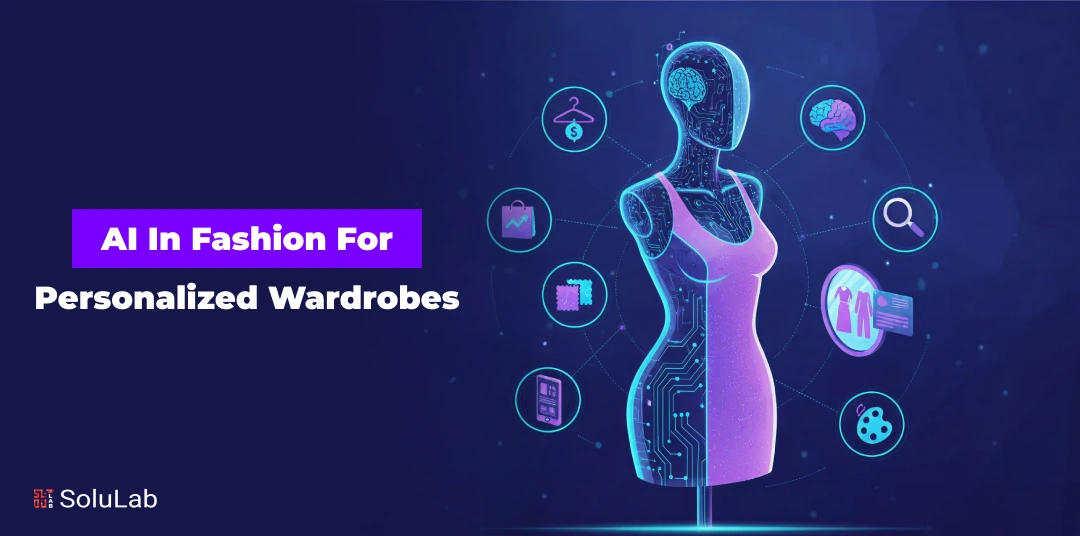
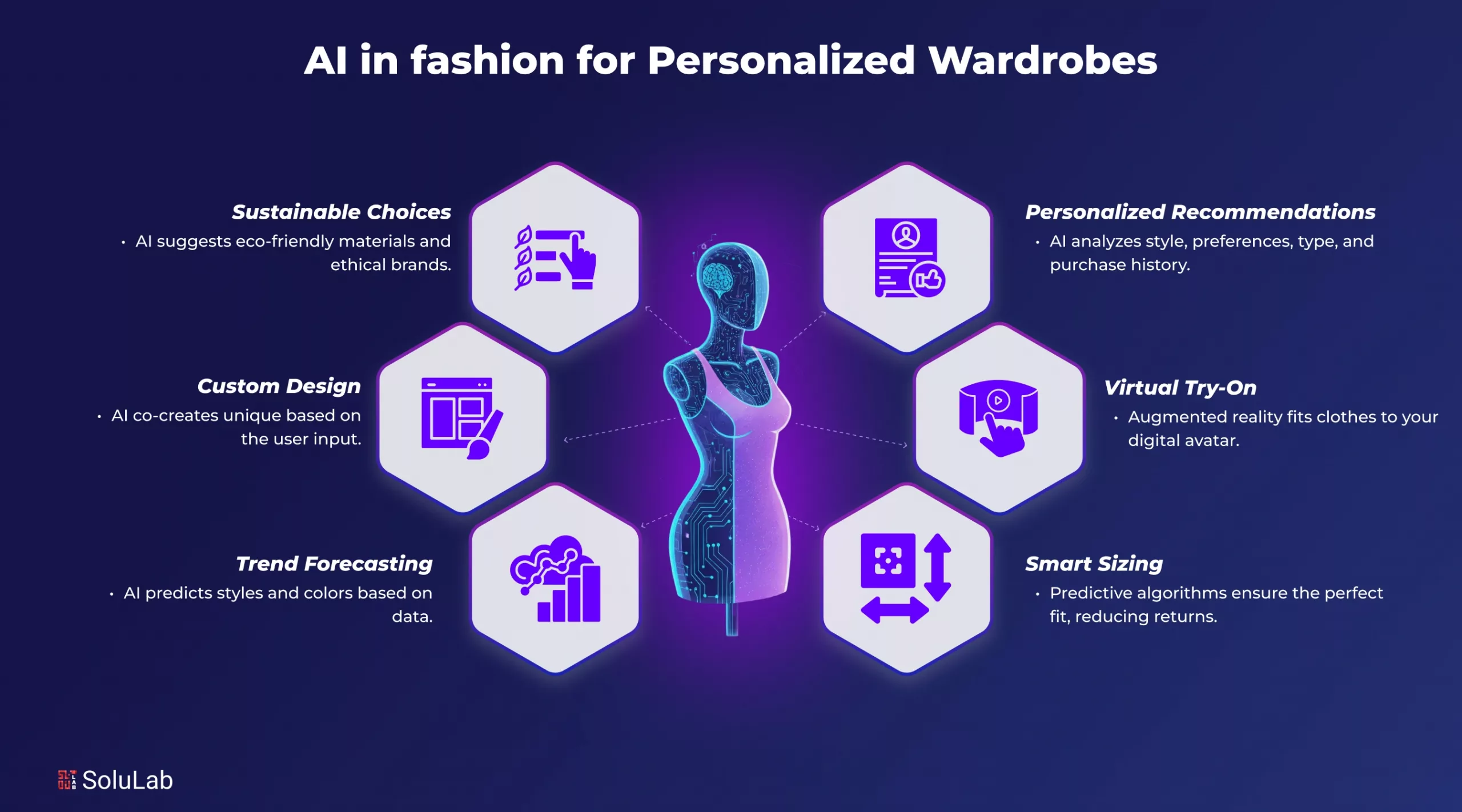
AI in fashion for Personalized Wardrobes

Fashion brands are now tapping into AI to fix one of the biggest problems in online shopping high return rates. When users can visualise how an outfit looks on them, including fit, colour, and style, they make more confident purchase decisions. This not only reduces returns but also boosts conversion rates by 22–35%.

AI-powered tools like virtual try-ons, smart size recommendations, and intelligent styling engines are helping fashion companies cut operational inefficiencies and deliver hyper-personalised shopping experiences at scale.

In this blog, you’ll learn:

  • How AI personalisation tools are changing online fashion experiences
  • The real business benefits from higher conversions to fewer returns
  • What the future of AI-driven styling, shopping, and fashion retail looks like

Let’s get started!

The Role of AI in Personalizing Fashion

Artificial Intelligence is no longer just improving shopper experience, it’s directly impacting profitability, efficiency, and retention for fashion brands.
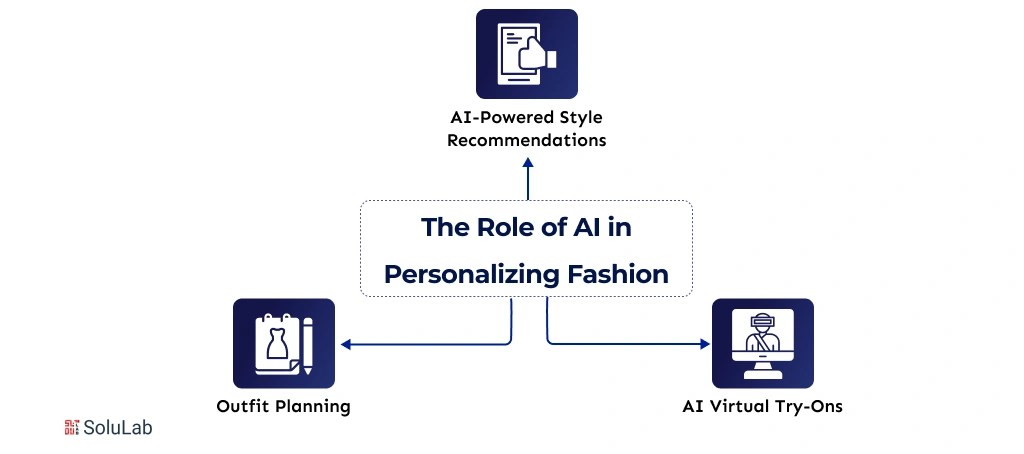
The Role of AI in Personalizing Fashion

  • AI-Powered Style Recommendations

AI recommendation engines analyze customer behaviour, past purchases, fabric preferences, body characteristics, and browsing patterns to deliver product suggestions that increase conversions (20–40%), average order value (AOV) and customer lifetime value (CLV). For brands, this means fewer irrelevant recommendations and more targeted, high-precision personalisation.

  • AI Virtual Try-Ons 

Virtual try-ons help brands reduce size-related returns (by 30–50%), improve fit accuracy, increase buyer confidence and boost online conversion rates. By enabling shoppers to “try” clothes digitally using AR and computer vision, brands cut operational costs linked to returns and logistics.

  • AI for Outfit Planning & Styling

AI-driven styling engines help brands automate personalized outfit bundles, cross-sell recommendations, seasonal styling based on weather, events, or trends and smart lookbooks for digital commerce. This drives higher engagement and stronger brand loyalty.

Benefits of AI-Powered Wardrobe Personalization

The global AI in fashion market is expected to reach USD 1.6 billion by 2034 (CAGR ~12.7%).

AI-powered wardrobe personalisation is improving how people shop and dress by offering smart, data-driven fashion experiences that ensure comfort, convenience, and sustainability for every individual’s style and body type.

1. Lower Return Rates & Operational Cost Reduction: AI-driven sizing accuracy reduces returns and increases average order value, saving brands massive costs linked to shipping, restocking, and reverse logistics.

2. Higher Conversion Rates & Revenue Growth: Personalized recommendations lead to better product discovery and faster decision-making.

3. Improved Sustainability & Inventory Efficiency: AI predicts demand, optimizes stock, and reduces overproduction, addressing both environmental and financial goals.

How AI is Personalizing Your Shopping Experience?

Artificial Intelligence solutions provide personalized experiences from outfit recommendations to perfect fitsmaking shopping smarter, more interactive, and as per your style preferences.
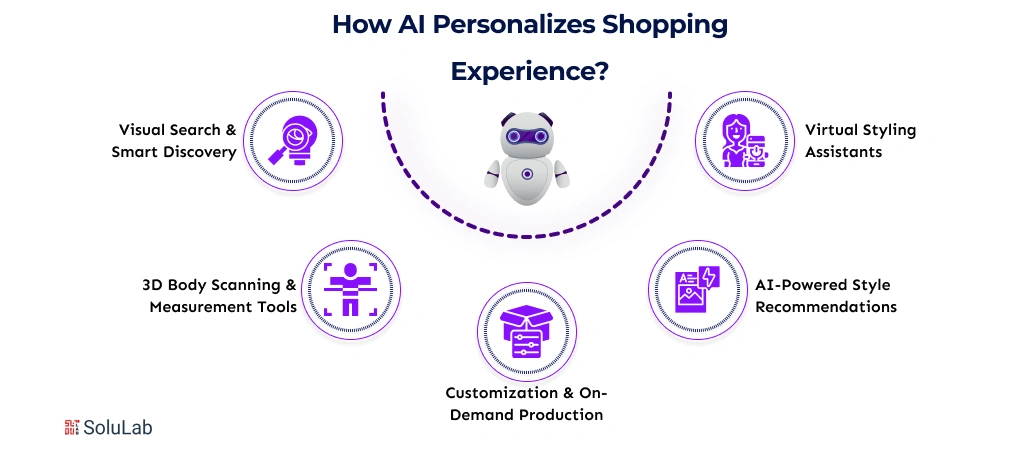
How AI Personalizes Shopping Experience_

1. Virtual Styling Assistants

AI stylists use smart algorithms to curate outfits based on your taste, weather, and upcoming occasions. Chat-based assistants and AI virtual try-on clothes apps let you preview looks instantly, no need for fitting rooms!

2. AI-Powered Style Recommendations

AI studies your past choices, body type, and favorite brands to deliver spot-on outfit suggestions. Platforms like Stitch Fix, Zalando, and Amazon Personal Shopper use AI-powered virtual try-on tech to refine your unique style.

3. Customization & On-Demand Production

From choosing colors to altering designs, AI allows you to co-create fashion pieces. Brands like TexSPACE Today use on-demand manufacturing to reduce waste, ensuring every piece feels made just for you.

4. 3D Body Scanning & Measurement Tools

Using computer vision, AI takes accurate body measurements and suggests the right size for every brand, minimizing returns and making sure you always get the perfect fit.

5. Visual Search & Smart Discovery

AI lets you upload an image to find similar outfits or accessories online instantly. This feature simplifies discovery and helps you explore fashion that matches your exact visual inspiration.

Real World Examples of Brands Using AI in 2025

In 2025, the most popular fashion brands are redefining personalization with AI integration into their design, styling, and fitting processes, changing the customer experience of shopping, dressing, and enjoying fashion.

1. Stitch Fix

Stitch Fix has AI algorithms that can suggest personalized outfits based on customer preferences, style history, and body type. Stitch Fix uses AI to support stylists by automating personalization at scale. This reduces manual workload, improves product-match accuracy, and significantly lowers return rates.

2. Nike Fit

Nike Fit’s AI sizing scans help brands avoid incorrect size recommendations, reducing inventory mismatches, logistics costs, and boosting customer satisfaction with fewer product returns. Its data-driven strategy enables stylists to send customized clothing boxes that best suit every user in terms of taste and lifestyle.

3. H&M

H&M leverages AI for trend prediction and inventory planning, helping the brand cut excess stock, reduce waste, and maintain better product availability across global markets. H&M uses AI to forecast trends in fashion and to control stock.

4. Zalando

Zalando AI-driven outfit recommendations create full-look styling suggestions, increasing personalization, boosting customer engagement, and driving higher average order value for the platform. Zalando uses machine learning to provide AI-based outfit recommendations.

Future of AI in Fashion Trends

AI analyzes shopping patterns, social media activity, and customer feedback to craft clothing suggestions that match individual styles. With Computer vision and AI, brands can predict preferences, personalize experiences, and deliver fashion that feels tailor-made for every shopper.

1. Sustainable fashion: AI enables designers to discover eco-friendly materials, optimize fabric use, and reduce waste in production. Through AI development solutions, fashion brands can make sustainability scalable, creating ethical designs without compromising on quality, style, or creativity.

2. Trend Forecasting: AI systems scan global fashion data from runway shows to influencer posts to anticipate upcoming trends with remarkable accuracy. This advanced Trend Forecasting helps designers and retailers stay ahead of customer demands and shape collections that truly resonate with the market.

3. Design new styles based on individual taste: With AI analyzing body types, colors, and past purchase behavior, brands can create designs that perfectly fit each consumer’s personality. This fusion of Computer vision and AI ensures style recommendations that are both data-driven and emotionally appealing.

AI development company

Conclusion

Artificial Intelligence is changing the fashion industry far beyond personalisation. For brands, AI is a strategic move that cuts costs, enhances customer satisfaction, improves accuracy, and gets new revenue streams. As virtual try-ons, recommendation engines, and predictive modelling evolve, the brands that invest early will gain a competitive advantage.

If you’re looking to implement AI styling tools, virtual fitting technology, or predictive retail systems, our team can help you build scalable, high-performance AI solutions that deliver measurable business outcomes.

Digital Quest, a travel business, partnered with SoluLab to develop an AI-powered chatbot using Generative AI. The chatbot enhanced customer engagement by offering real-time, personalized travel recommendations and hassle-free reservations. It also integrated user feedback and multi-language support, resulting in improved user experience and high ROI.

SoluLab, an AI development company can help you build smart styling tools, virtual fitting solutions that your customers will love. Contact us today to discuss further!

FAQs

1. How is computer vision used in the fashion industry?

Computer vision in the fashion industry allows systems to identify colors, patterns, and fabrics, enabling virtual try-ons, size detection, and visual search for similar clothing styles online.

2. Is AI helping make fashion more sustainable?

Absolutely. AI helps brands optimize production, reduce waste, and use eco-friendly materials by predicting demand and avoiding overproduction.

3. What are some common AI use cases in fashion?

Popular AI in fashion use cases include personalized styling, virtual try-ons, visual search, predictive analytics for trends, and sustainable material design.

4. What technologies power AI-driven fashion?

Technologies like machine learning, computer vision in the fashion industry, and natural language processing work together to personalize AI wardrobes and enhance shopping experiences.

5. Can AI help online shoppers choose the right size?

Yes, AI uses virtual fitting algorithms and body scanning data to recommend accurate sizes, minimizing fitting errors in online purchases.
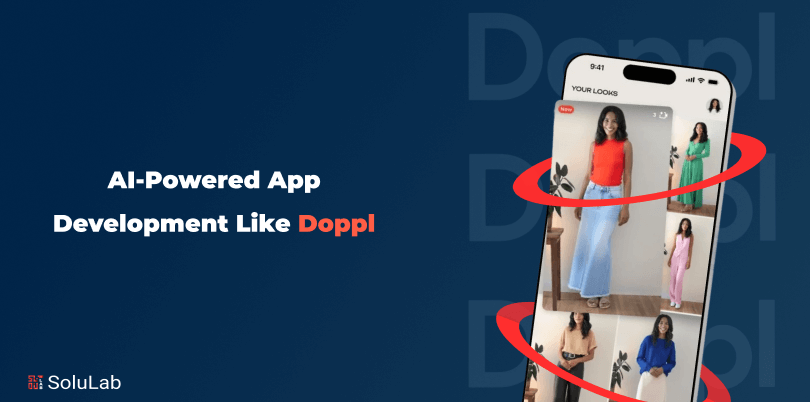
How to Create an AI-Powered App like Doppl in 2025?

AI-Powered App Development like Doppl

The use of AI in fashion is changing the way we shop, style, and express ourselves. One of the most exciting innovations in this space is the AI Virtual Try-On App, which enables users to try on clothes virtually. 

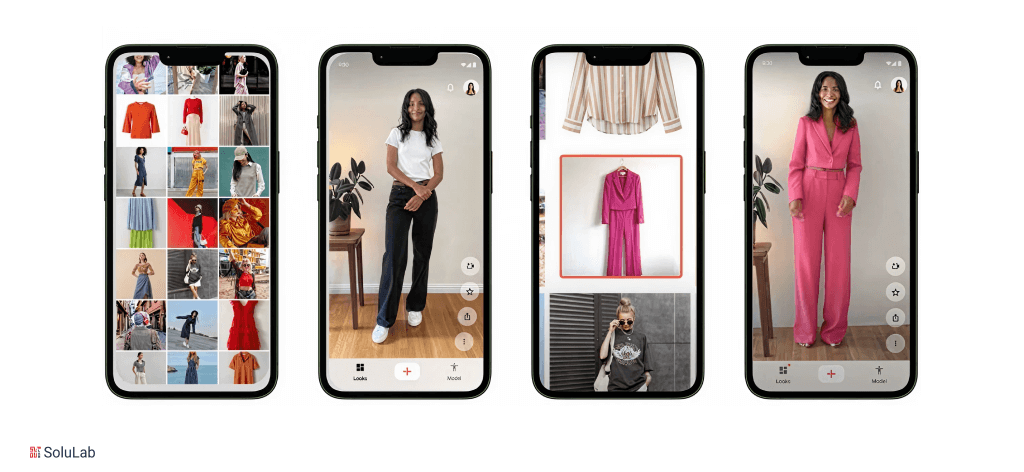
No fitting room needed. A great example of this is the Doppl app, which creates hyper-realistic 3D avatars using AI and allows users to virtually try on outfits from their phone. With Doppl, users no longer have to worry about how a dress or outfit will look on them in real life. They can simply scan themselves, try it virtually, and make confident decisions before purchasing. 

As more people prefer online shopping, this technology reduces the hassle of returns and exchanges for both customers and retailers. In this blog, we’ll break down how to create an AI app like Doppl, the estimated cost, and more! So, without any further ado, let’s get started!

What is Doppl: A Virtual Try-On App?

Doppl AI

Doppl is a virtual try-on app that generates lifelike digital avatars through the use of AI and 3D modeling. Users can create a personalized avatar, scan their face and body, and virtually test clothing and even digital accessories.

The Doppl app’s realistic graphics and real-time animation, driven by AI, are what make it unique. Through the creation of a try-on experience, consumers may see how clothing or cosmetics would look on them without having to visit a physical store or try them on.

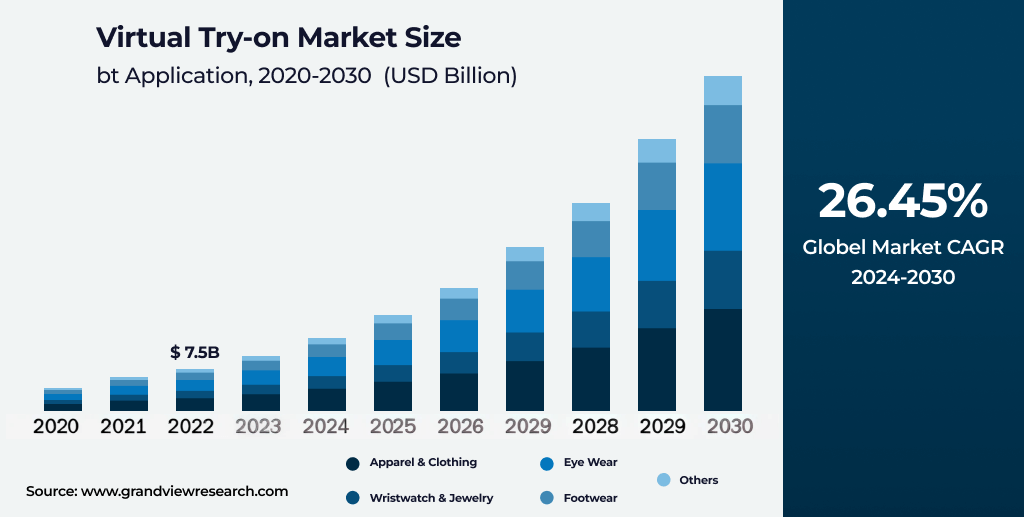
The global virtual try-on market was valued at US$9.17 billion in 2023 and is expected to reach $46.42 billion by 2030, growing at a CAGR of 26.4% from 2024 to 2030.

Virtual Try-on Market Size

Many companies and developers are aiming to create a Doppl-like app due to the growing interest in AI personalization and the Doppl AI Google trend. These applications have the power to change fields like gaming, fitness, and fashion. They can potentially close the gap between real and virtual identities.

How to Develop a Doppl-Like AI Virtual Try-On App?

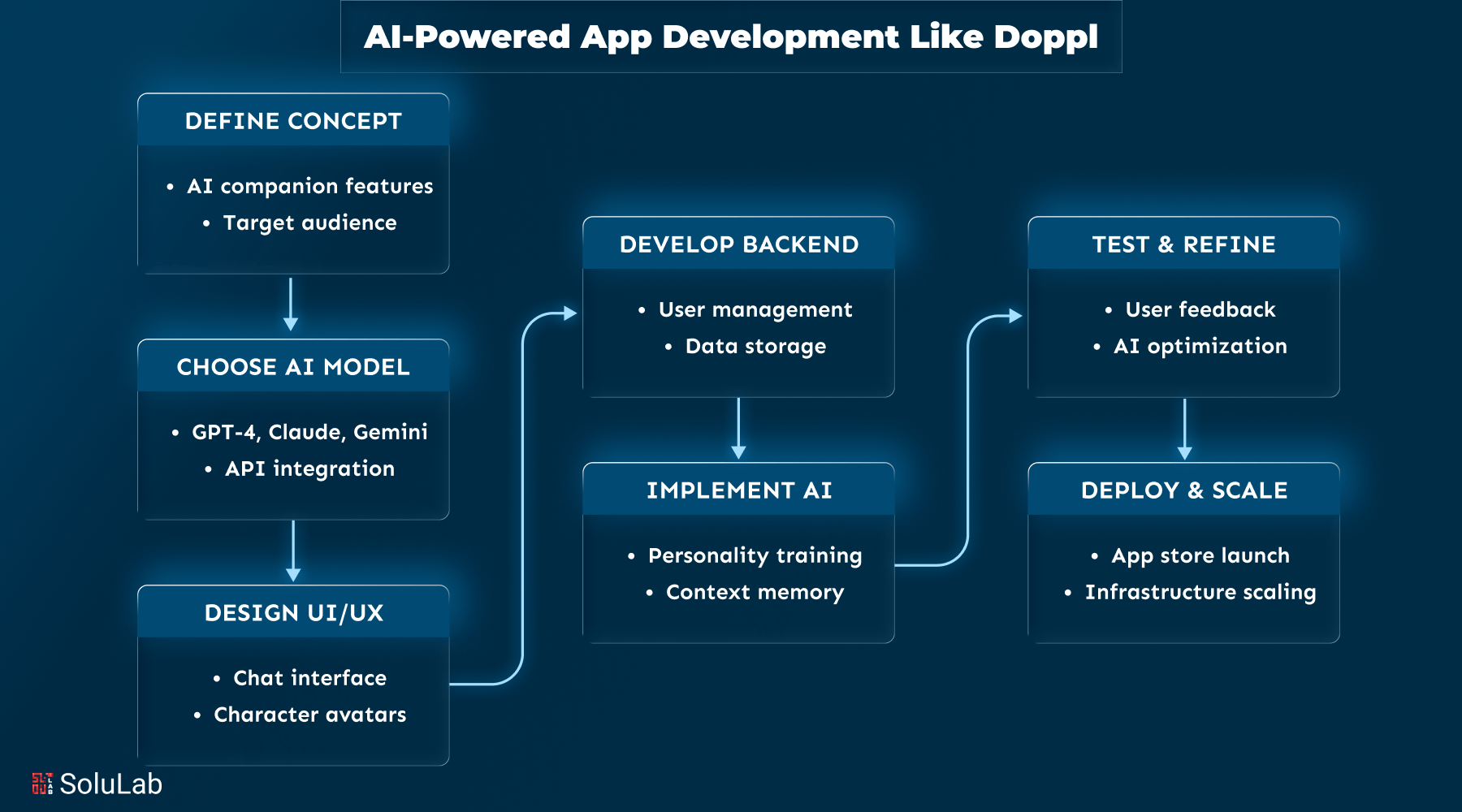
Creating a virtual try-on clothes app like Doppl requires a mix of AI expertise, user-centric design, and smart tech decisions. Here’s a step-by-step breakdown to help you build your virtual clothing try-on app:

1. Research AI Models and Use Cases

Start by studying how AI is used in Doppl and similar apps. Understand common use cases—3D body scanning, facial recognition, and clothing overlay. This helps you define what features your app to try on clothes virtually must include.

2. Decide Your Tech Stack

Choose technologies based on your app’s complexity and platform (iOS/Android). For the frontend, consider Flutter or React Native. For backend, go with Python or Node.js. Use Unity or ARKit/ARCore for rendering clothing try-ons.

3. Integrate AI APIs or Train a Custom Model

Use pre-trained AI APIs for faster development or build a custom model if you need precision. Focus on pose estimation, 3D fitting, and body segmentation—crucial elements for any app to virtually try on clothes.

4. Build the User Interface

Design an intuitive UI with easy onboarding, scanning, and try-on options. Keep the visuals sleek and loading fast. A clean design ensures users stick around and explore your try-on clothes virtually app.

5. Focus on User Experience (UX)

Add features like saved avatars, side-by-side comparisons, and social sharing. Smooth transitions and fast processing are key. Good UX turns casual users into loyal fans of your virtual clothing try-on app.

6. Launch & Market Your App

Beta test with real users, gather feedback, and improve. Use ASO, influencer partnerships, and demo videos to drive downloads. Highlight your app’s unique value in the crowded virtual try-on clothes app market.

Read Also: How Much Does It Cost to Build an AI App?

Core Features of an AI App Like Doppl

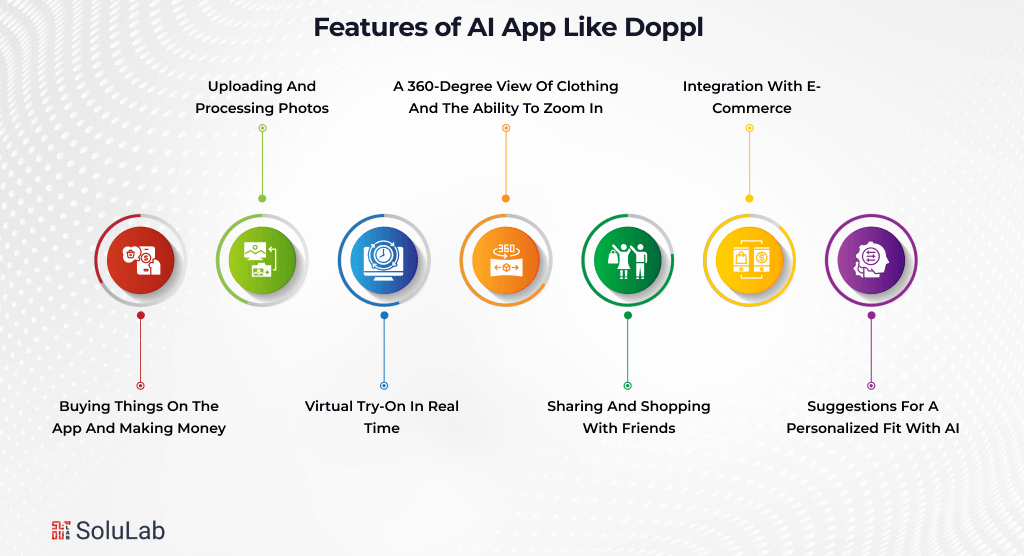
Features of AI App Like Doppl

Doppl is an AI app that combines virtual try-on, customisation, and e-commerce into one smooth experience. It lets individuals virtually try on garments, see trends from all angles, and get AI-driven fit suggestions. This changes how people shop for clothes online.

The main features of an AI app like Doppl:

  • Buying things on the app and making money: The app lets you buy extras like special costumes, avatar accessories, or premium AI filters. Freemium access, subscription tiers, or branded in-app purchases are all ways that developers can make money while also improving the user experience.
  • Uploading and processing photos: People may upload selfies or full-body photographs, and the app uses AI to evaluate them and find things like posture, size, and facial features. This makes sure that the avatar or virtual model looks just like the person in real life.
  • Virtual Try-On in Real Time: With this AI cloth changer app, customers may see clothes right away via augmented reality or AI-generated overlays. It’s the most important part of any virtual try-on clothes app since it makes buying more fun and intimate, which cuts down on returns.
  • A 360-degree view of clothing and the ability to zoom in: Users can turn garments around and see materials or designs from all sides. The zoom-in feature makes everything clearer and more detailed, which is important for a high-end virtual clothes try-on app that wants to mimic the experience of shopping in person.
  • Sharing and shopping with friends: Users can share pictures of their avatars or try-ons on social media through the app. Friends can vote or propose styles, which makes buying more fun and perfect for promoting products through influencers and getting users involved.

Read Also: AI In Mobile App Development Industry

  • Integration with e-commerce: It works with internet retailers, so people may buy what they sample right away. This functionality makes the journey from finding something to checking out easier, which is great for stores looking to use AI in the fashion industry.
  • Suggestions for a personalized fit with AI: The app advises the best sizes and cuts based on your body type and past decisions. It works like a smart stylist, using machine learning to make users happier, which is important for any scalable AI clothes changer software.

CTA1

Estimated Cost to Build an AI App Like Doppl

Building a virtual try-on clothes app like Doppl involves multiple components, from AI integration to sleek UI design. Here’s a cost breakdown to help you plan your budget:

Component Estimated Cost (USD)
MVP App Build $8,000 – $15,000
Full Feature App $20,000 – $50,000+
AI Model Training $5,000 – $25,000 (one-time)
Cloud GPU Hosting $300 – $1,000/month
Third-party AI APIs $0.01 – $0.10 per image
UI/UX Design $2,000 – $5,000
QA & Testing $1,000 – $3,000

Tech Stack for Building a Doppl-like App

Building a virtual try-on clothing app like Doppl requires the proper combination of 3D technology, frontend tools, backend frameworks, and AI engines. The key technologies are broken down as follows:

  • Front-end programming: Utilize frameworks such as Flutter or React Native to design a user experience that is both aesthetically pleasing and responsive. Cross-platform app development is made easier by these technologies, which make it simpler to run your app on iOS and Android to virtually try on clothing.
  • Infrastructure of the Backend: A safe and scalable backend is essential. Real-time data processing, cloud integration, and user authentication can be handled by technologies like Node.js, Django, or Firebase, enabling the try-on garments virtual app capabilities to operate smoothly.
  • Frameworks for AI and ML: You can utilize programs like TensorFlow, PyTorch, or OpenCV to create customized body mapping and avatars. These aid in identifying facial features, body measurements, and facial expressions—essential elements of any program that allows users to try on virtual clothes.
  • Integration of AR & 3D: Use ARKit (iOS), ARCore (Android), Unity, and Unreal Engine to create realistic representations. With features like virtual mirrors and gesture-based controls, these engines enable your app to virtually put on clothing realistically and engagingly.
  • Solutions for Cloud and Storage: Store user avatars, custom assets, and high-resolution 3D models on AWS, Google Cloud, or Azure. These platforms provide a growing virtual try-on clothing app with the speed and scalability it needs.

CTA2

Conclusion

Doppl is a great example of how AI is transforming online fashion shopping through virtual try-ons and personalized experiences. If you’re planning to build a similar AI-powered app, focus on providing an intuitive user experience, identifying gaps in existing platforms, choosing the right tech stack, and prioritizing sleek design. 

Most importantly, keep it simple and easy to use for your target audience. Want to bring your app idea to life? SoluLab, an AI app development company, can help you build a feature-rich, scalable solution. Recently, we got a chance to render an AI-powered recruitment platform, which did wonders for the client’s business. 

Contact us today to turn your vision into a powerful digital product!

FAQs

1. How long does it take to build an AI-powered app like Doppl?

Depending on features and complexity, development can take 4 to 8 months, including AI model training, app design, testing, and deployment.

2. What data is required for training an AI Virtual Try-On App?

You need large datasets of body types, clothing styles, and fitting behavior to train AI models for accurate virtual try-ons.

3. How does AI improve the customer experience in fashion apps?

AI personalizes product suggestions, provides virtual fittings, and helps reduce returns, enhancing user satisfaction and loyalty in the fashion industry.

4. How can I make my AI-powered app stand out from competitors?

Focus on solving real user problems, like accurate fitting or styling suggestions, while ensuring an intuitive user interface and user journey.

5. Are there ready-made APIs for AI virtual try-ons?

Yes, APIs like Vue.ai, Zyler, and Fits. I offer AI tools in the fashion industry that can be integrated into apps for virtual try-on capabilities.