Key Takeaways
- Multi Asset Tokenization requires legal, compliance, liquidity, and blockchain infrastructure working together.
- SPV orchestration and ERC-3643 standards are becoming critical for institutional adoption.
- ZK-KYC and Proof of Reserve systems solve institutional privacy and valuation challenges.
- Secondary liquidity infrastructure directly impacts investor participation and trading activity.
- Institutional tokenization ecosystems now prioritize compliance automation and real-time settlement rails.
The enterprise race for Real-World Asset (RWA) market share is exposing a fatal flaw in traditional finance: scalability. Managing fragmented portfolios across real estate, commodities, and private credit requires massive administrative friction and a constant battle against multi-jurisdictional compliance traps. Forward-thinking institutions are solving this with Multi-Asset tokenization platforms development. By embedding regulatory logic directly into smart contracts, market leaders are slashing processing costs by up to 60%, removing counterparty risk, and capturing global institutional capital.
What is Multi Asset Tokenization, and How Can it Boost Your ROI?
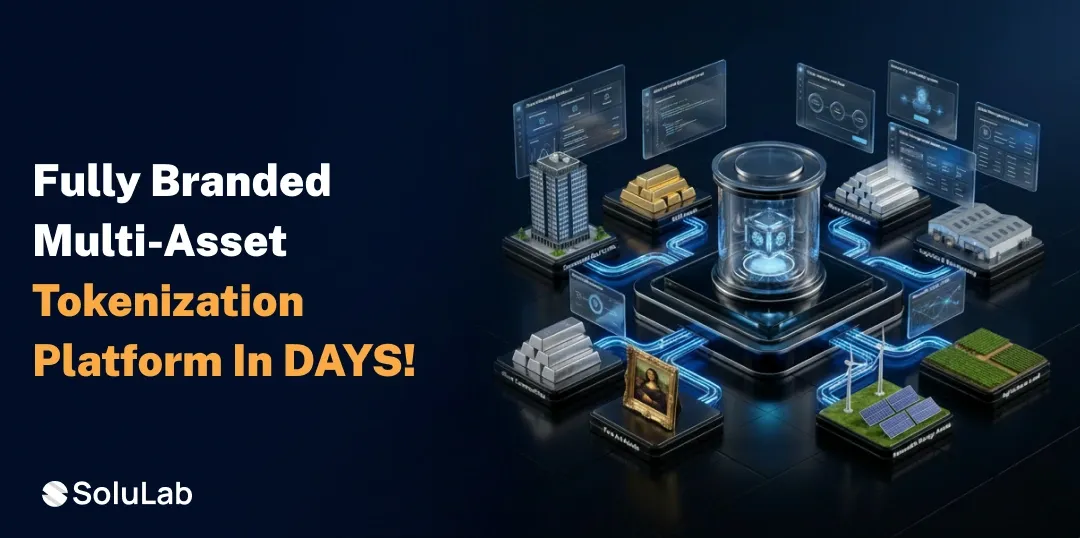
The word Multi asset itself is deriving that various physical and digital (Real estate, metals, equity, bonds, supply chain, etc.) are tokenized to convert ownership rights into tradable, blockchain-based tokens.
Unified Multi-Asset Tokenization Platform Architecture: Deploying comprehensive multi-asset tokenization software allows enterprises to consolidate real estate, precious metals, and private credit onto a single ledger. This eliminates fragmented systems, collapses administrative silos, and optimizes infrastructure costs.
- Fractional Capital Influx via Diverse Issuance: By breaking down commercial real estate or institutional diamond reserves into compliant digital tokens, you aggressively lower the entry barrier. This attracts a broader pool of global fractional investors to accelerate capital raising.
- End-to-End Multi-Asset Tokenization Services: These development services replace manual workflows with programmatic execution. Smart contracts automate distribution and asset servicing, reclaiming up to 40% of standard transactional costs directly back into your net margins.
- Continuous Secondary Market Liquidity: Moving historically illiquid assets onto a multi-asset tokenization in a blockchain framework completely removes the traditional valuation discount. Operating on a 24/7 global secondary market introduces a liquidity premium that instantly enhances underlying asset value.
- Cross-Asset Collateralization and DeFi Velocity: A single, unified software ecosystem allows users to instantly leverage tokenized silver, real estate, or private credit as collateral. This cross-utility drives higher transaction volumes, unlocks trapped equity, and boosts overall ecosystem fees.
- Automated Regulatory Governance: Embedding compliance parameters directly into the token’s smart contracts ensures absolute adherence to global frameworks like MiCA, SEC, or ASIC. Automated KYC/AML verification eliminates the threat of regulatory penalties and costly legal rollbacks.
Therefore, customizing or integrating particular asset tokenization solutions into your system is inevitable to stand in the current market and enhance your customer reach.
How to Build a Multi Asset Tokenization Platform Step by Step?
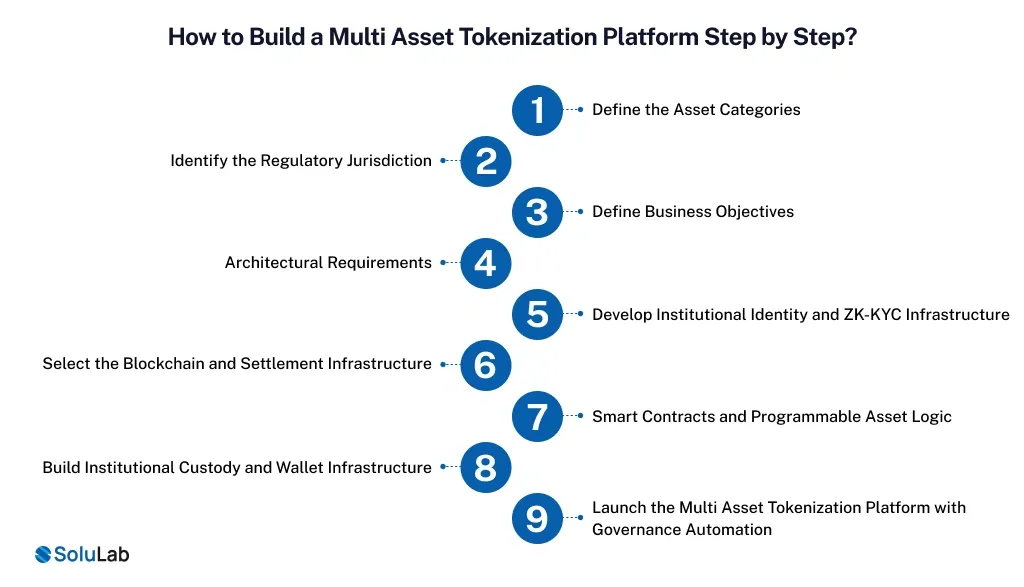
Building an asset tokenization platform requires legal planning, blockchain engineering, compliance architecture, and enterprise-grade security systems. Actually, enterprises that skip infrastructure planning generally face scalability and compliance issues later.
The first stage focuses on identifying the asset ecosystem and regulatory structure.
1. Define the Asset Categories
A Custom Multi Asset Tokenization Platform may support:
- Real Estate Tokenization
- Commodity Tokenization
- Gold Tokenization
- Silver Tokenization
- Bond & Equity Tokenization
- Intellectual Property Tokenization
- Private Credit Tokenization
- Art Tokenization
- US Treasury Tokenization
Each asset class requires different compliance frameworks, liquidity mechanisms, valuation systems, and smart contract logic.
2. Identify the Regulatory Jurisdiction
Compliance architecture is now one of the most important requirements in Multi Asset Tokenization Development.
Enterprises must evaluate:
- SEC compliance requirements in the US
- MiCA regulations across Europe
- VARA digital asset frameworks in Dubai
- MAS licensing structures in Singapore
- FATF Travel Rule implementation globally
Meanwhile, regulations now demand stronger investor verification, transaction monitoring, custody systems, and reporting frameworks.
3. Define Business Objectives
Enterprises generally build a Multi Asset Tokenization Platform for:
- Fractional ownership
- Global investor participation
- Automated settlements
- AI-integrated services
- Improved liquidity
- Faster fundraising
- Cross-border investment access
- Reduced intermediary dependency
Similarly, enterprises using Asset Tokenization Services often reduce operational processing costs by 30% to 60% through workflow automation.
4. Architectural Requirements
Tokenizing real-world assets without a legally enforceable ownership structure creates direct institutional liability. Enterprise-grade Multi Asset Tokenization Development therefore, requires automated legal orchestration layers instead of isolated smart contract deployment.
The SPV Framework Behind Institutional Asset Tokenization
Institutional Asset Tokenization generally operates through Special Purpose Vehicles (SPVs). Instead of directly tokenizing a building, treasury instrument, or commodity reserve, the platform creates a legally compliant SPV that owns the underlying asset while blockchain tokens represent economic rights tied to the SPV.
For example:
- A commercial property in London may sit under a regulated SPV entity.
- A Gold Tokenization platform may use insured vault-backed SPVs.
- The diamond token market requires insured custody entities alongside certification registries.
Actually, without SPV integration, token holders may not possess enforceable ownership claims during litigation, bankruptcy, or regulatory intervention.
5. Develop Institutional Identity and ZK-KYC Infrastructure
Institutional investors cannot expose treasury activity, liquidity movement, or portfolio allocation publicly on blockchain networks.
To solve this, enterprise-grade Multi Asset Tokenization Solutions increasingly deploy:
- Zero-Knowledge Proofs (ZKPs)
- Decentralized identity systems
- Permissioned investor onboarding
- ZK-KYC frameworks
- Encrypted compliance verification
ZK-KYC infrastructure allows institutions to verify:
- Investor accreditation
- AML compliance
- Jurisdiction eligibility
- Wallet legitimacy
without revealing sensitive identity information publicly.
Meanwhile, institutional onboarding speed improves significantly because compliance verification becomes programmable.
6. Select the Blockchain and Settlement Infrastructure
Blockchain layers and architecture directly affect scalability, compliance, flexibility, settlement speed, and transaction costs. Actually, institutions increasingly prefer hybrid blockchain environments combining private execution layers with public settlement infrastructure.
The settlement architecture should also integrate:
- Stablecoin rails
- Banking APIs
- Treasury management systems
- Real-time payment infrastructure
- Fiat on-ramp systems
This helps enterprises reduce settlement timelines from multiple business days to near real-time execution.
7. Smart Contracts and Programmable Asset Logic
Smart contract development automates operational workflows traditionally handled by banks, custodians, registrars, brokers, and intermediaries.
The smart contract layer generally handles:
- Asset issuance
- Ownership transfers
- Yield distribution
- Dividend payouts
- Governance voting
- Secondary market restrictions
- Automated settlements
Similarly, programmable compliance enforcement is becoming mandatory because regulators increasingly expect transfer restrictions directly at the smart contract level.
8. Build Institutional Custody and Wallet Infrastructure
Institutional capital markets require hardened custody systems capable of supporting large-scale digital asset management.
The platform should integrate:
- MPC wallet infrastructure
- Institutional cold storage
- Hardware security modules
- Multi-signature governance
- Insured custody providers
- Segregated commodity vault systems
Similarly, enterprise custody systems increasingly integrate AI-driven anomaly monitoring to detect suspicious wallet activity and liquidity manipulation patterns in real time.
9. Launch the Multi Asset Tokenization Platform with Governance Automation
Post-launch governance is now critical for regulated digital asset ecosystems.
The platform should support:
- Governance voting
- Investor communication systems
- Automated reporting
- Compliance monitoring
- Treasury analytics
- Yield distribution automation
- Regulator-facing audit exports
Similarly, enterprises increasingly deploy AI-powered compliance monitoring systems capable of detecting suspicious transaction patterns and cross-border settlement risks automatically.
How Does Blockchain Selection Impact Multi-Asset Tokenization in Blockchain?
Selecting top blockchain platforms directly affects scalability, transaction cost, security, and interoperability.
1. Most Common Blockchain Networks
- Ethereum: Used heavily for institutional tokenization because of ecosystem maturity and liquidity access.
- Polygon: Preferred for lower transaction fees and enterprise scalability.
- Avalanche: Suitable for permissioned enterprise environments and subnet deployment.
- Stellar: Commonly used for payment-focused tokenization systems.
- Hyperledger Fabric: Ideal for private enterprise blockchain deployments.
Actually, enterprises increasingly prefer hybrid blockchain architecture because it balances privacy, compliance, and interoperability.
2. Smart Contract Standards Used
A scalable Multi Asset Tokenization Software generally supports:
- ERC-20
- ERC-721
- ERC-1155
- ERC-1400 security tokens
- ERC-3643 compliance-focused tokens
ERC-3643 is becoming popular because it supports identity-aware token management and regulated asset transfers.
How are Assets Digitized During Multi-Asset Tokenization Platform Development?
Asset digitization converts ownership rights into blockchain-based digital representations.
1. Asset Verification Process
Enterprises generally complete:
- Ownership verification
- Legal documentation audits
- Asset valuation reports
- Custodian agreements
- Financial due diligence
- Regulatory approvals
For example, a commercial property valued at $100 million can be divided into 1 million blockchain tokens, allowing fractional investment participation globally.
2. Token Economics Design
Blockchain Developers define:
- Token supply
- Ownership percentage
- Dividend distribution logic
- Governance permissions
- Buyback mechanisms
- Revenue-sharing structures
Meanwhile, Bond & Equity Tokenization systems often integrate automated yield distribution frameworks through smart contracts.
How Can Smart Contracts Improve Multi-Asset Tokenization Solutions?
Smart contracts automate operational workflows that traditionally require banks, brokers, and intermediaries.
1. Solving the Institutional RWA Infrastructure Dilemma
Institutional adoption of Multi Asset Tokenization in Blockchain depends heavily on two critical requirements:
- Transactional privacy
- Real-time asset verification
Public blockchain infrastructure alone cannot satisfy institutional capital market requirements without additional cryptographic and oracle-based infrastructure layers.
2. Why Zero-Knowledge Architecture is Becoming Essential
Institutional investors cannot expose:
- Portfolio allocations
- Trade sizes
- Treasury movements
- Liquidity positions
- Counterparty exposure
on public blockchain networks.
To solve this, enterprise-grade Multi Asset Tokenization Solutions now integrate Zero-Knowledge Proofs (ZKPs).
ZK-KYC Infrastructure Benefits
ZK-based infrastructure allows institutions to:
- Verify accredited investor status
- Confirm AML compliance
- Validate jurisdiction eligibility
- Pass compliance checks
without exposing sensitive investor identity data publicly.
Meanwhile, ZK-KYC significantly reduces institutional onboarding friction while protecting proprietary trading activity from competitors.
3. Decentralized Oracles and Proof of Reserve Systems
Real-world assets constantly fluctuate in valuation.
Examples include:
- Precious metal spot prices
- Commercial property appraisals
- Treasury yield fluctuations
- Diamond market valuations
- Private credit collateral ratios
Without real-time valuation infrastructure, tokenized ecosystems can face collateralization failures and liquidity instability.
4. Chainlink Proof of Reserve Integration
Enterprise tokenization systems increasingly integrate Chainlink Proof of Reserve (PoR) infrastructure to:
- Pull real-time pricing feeds
- Verify custody balances
- Validate insured reserves
- Sync external valuation systems
- Trigger automated collateral updates
Similarly, the diamond tokenization market requires continuous verification of:
- GIA certification data
- Vault custody records
- Insurance coverage
- Asset authenticity tracking
This infrastructure ensures tokenized commodity reserves maintain verifiable collateral backing at all times.
What Technologies are Essential for Multi Asset Tokenization Platform Development?
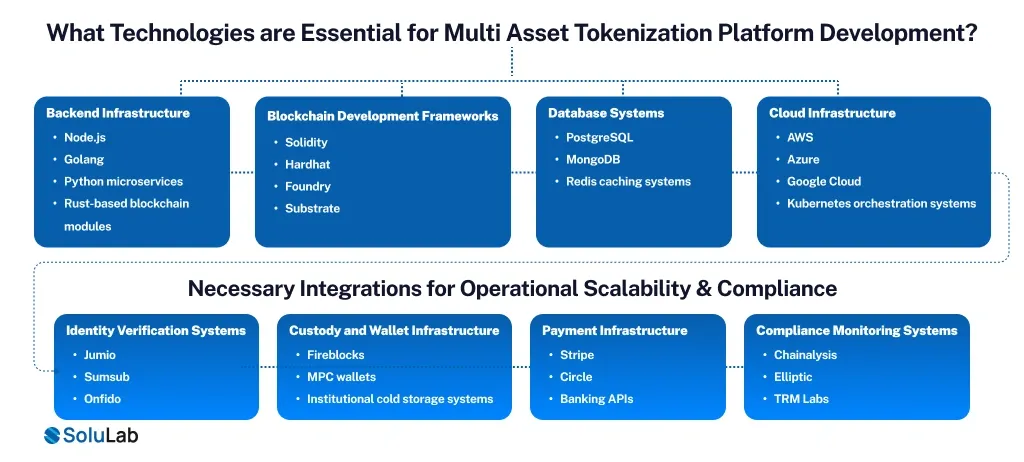
Technology infrastructure determines scalability, performance, interoperability, and long-term maintainability.
Backend Infrastructure
Most enterprise platforms use:
- Node.js
- Golang
- Python microservices
- Rust-based blockchain modules
Blockchain Development Frameworks
Common frameworks include:
- Solidity
- Hardhat
- Foundry
- Substrate
Database Systems
Enterprises generally use:
- PostgreSQL
- MongoDB
- Redis caching systems
Actually, PostgreSQL is becoming a preferred enterprise database because it supports scalable transactional processing and structured compliance logging.
Cloud Infrastructure
Modern Multi Asset Tokenization Services commonly use:
- AWS
- Azure
- Google Cloud
- Kubernetes orchestration systems
Meanwhile, institutional platforms often target uptime reliability above 99.95%.
Which Integrations are Necessary for a Multi Asset Tokenization Platform Development?
Integrations play a major role in operational scalability and compliance automation.
Identity Verification Systems
- Jumio
- Sumsub
- Onfido
Custody and Wallet Infrastructure
- Fireblocks
- MPC wallets
- Institutional cold storage systems
Payment Infrastructure
- Stripe
- Circle
- Banking APIs
- Stablecoin settlement rails
Compliance Monitoring Systems
- Chainalysis
- Elliptic
- TRM Labs
Similarly, FATF Travel Rule monitoring is becoming mandatory for regulated digital asset ecosystems globally.
How are Enterprises Managing Compliance, Liquidity, and Institutional Security?
Institutional participation depends heavily on security, reliability and legal compliance. Global regulators are increasing oversight because tokenized securities and digital assets now involve institutional capital markets.
Major Regulatory Developments
- MiCA implementation across Europe
- SEC digital asset enforcement expansion
- UAE VARA licensing frameworks
- Singapore MAS compliance supervision
- FATF anti-money laundering requirements
Actually, enterprises that integrate compliance early reduce future legal restructuring costs significantly. For early compliance integration, connecting with legal consulting experts is the best option.
Enterprise Compliance Best Practices
- Built-in KYC/AML systems
- Jurisdiction-aware smart contracts
- Audit-ready transaction logs
- Permissioned trading systems
- Continuous blockchain monitoring
Similarly, enterprises increasingly deploy AI-powered fraud detection systems to identify suspicious wallet activity in real time.
How are Real World Companies Improving Liquidity for Tokenized Assets?
Liquidity fragmentation remains a major issue in Asset Tokenization ecosystems.
Enterprise Liquidity Strategies
- Secondary marketplace integration
- Institutional liquidity pools
- Cross-chain interoperability
- OTC settlement systems
- Automated market maker integration
For example, US Treasury Tokenization ecosystems are reducing settlement delays while improving operational transparency for institutional participants.
Meanwhile, Real Estate Tokenization platforms are expanding investor participation through fractional ownership systems and lower capital entry barriers.
Why Does Institutional Security Architecture Matter in Multi Asset Tokenization in Blockchain?
Security failures can result in financial losses, regulatory action, and reputational damage.
Enterprise Security Frameworks
- SOC 2 compliance
- ISO 27001 certification
- Penetration testing
- Smart contract audits
- MPC wallet infrastructure
- Disaster recovery systems
Actually, institutional investors now require audited smart contracts and custody infrastructure before participating in tokenized investment ecosystems.
What is the Cost and Timeline to Launch a Multi-Asset Tokenization Platform?
Tokenization platform development costs depend on compliance scope, blockchain integrations, supported assets, and infrastructure complexity.
| Platform Scope | Estimated Timeline | Estimated Cost |
| MVP Multi Asset Tokenization Platform | 3–5 Months | $40,000–$80,000 |
| Mid-Scale Enterprise Platform | 6–9 Months | $90,000–$250,000 |
| Institutional Grade Platform | 10–18 Months | $300,000–$1M+ |
Cost Factors Include
- Smart contract audits
- Compliance integrations
- Wallet infrastructure
- Marketplace development
- Cross-chain compatibility
- AI monitoring systems
- Institutional custody integrations
Similarly, enterprises using automated tokenization workflows often improve operational efficiency while reducing manual administrative overhead.
What Should Enterprises Consider Before Choosing a Multi Asset Tokenization Company?
Choosing the right Multi Asset Tokenization Company directly affects scalability, compliance readiness, and platform security.
What Technical Capabilities Should Enterprises Evaluate?
Enterprises should assess:
- Cross-chain blockchain expertise
- Smart contract audit experience
- Compliance implementation knowledge
- Institutional wallet integration capability
- Marketplace development expertise
- Security infrastructure experience
Important Questions Enterprises Should Ask
- Has the company developed regulated tokenization systems?
- Can they support multiple asset classes?
- Do they understand MiCA and SEC frameworks?
- Can they integrate institutional custody systems?
- Do they provide post-launch maintenance support?
Actually, many enterprises fail because vendors focus only on token issuance while ignoring liquidity systems and compliance infrastructure. So, it’s better to have your tokenization platform development checklist handy for quick decision-making on what is your priority.
Why Do Enterprises Choose SoluLab for Multi Asset Tokenization Platform Development?
SoluLab provides enterprise-grade Multi Asset Tokenization Development services with scalable blockchain infrastructure and institutional security practices.
SoluLab Development Strengths
- Cross-chain blockchain architecture
- Smart contract engineering
- Compliance-focused development
- Institutional wallet integration
- AI-powered monitoring systems
- Marketplace development expertise
- Scalable backend infrastructure
Similarly, SoluLab supports Asset Tokenization across Real Estate Tokenization, Commodity Tokenization, treasury assets, private credit ecosystems, and enterprise financial systems.
Conclusion
As we can see, a secure Multi Asset Tokenization Platform helps organizations improve liquidity, automate compliance, reduce operational overhead, and support institutional-grade investor participation across multiple asset categories.
Meanwhile, regulatory frameworks are evolving rapidly, making security architecture and compliance automation critical for long-term scalability.
Choosing an experienced #1 AI-led Tokenization Platform Development Company helps enterprises avoid operational risks while building scalable and legally compliant digital asset ecosystems.
SoluLab supports enterprises with secure blockchain engineering, compliance-ready infrastructure, smart contract development, and institutional-grade tokenization solutions. Contact us to discuss your tokenization platform requirements.
FAQs
Deepika is a content writer who blends storytelling with strategic thinking. She explores topics across digital innovation, emerging tech, and the evolving blockchain industry. She enjoys breaking down complex ideas into simple, engaging narratives in the growing global markets.