Key Takeaways
- IoT in 2026 is a strategic growth driver, not just a connectivity upgrade, helping enterprises improve efficiency and decision-making.
- The success of IoT initiatives depends on choosing use cases aligned with business goals, not just deploying more devices.
- Real-time data from connected devices enables proactive operations, reducing downtime, waste, and operational risk.
- Enterprises that integrate IoT with AI, analytics, and cloud platforms gain long-term scalability and competitive advantage.
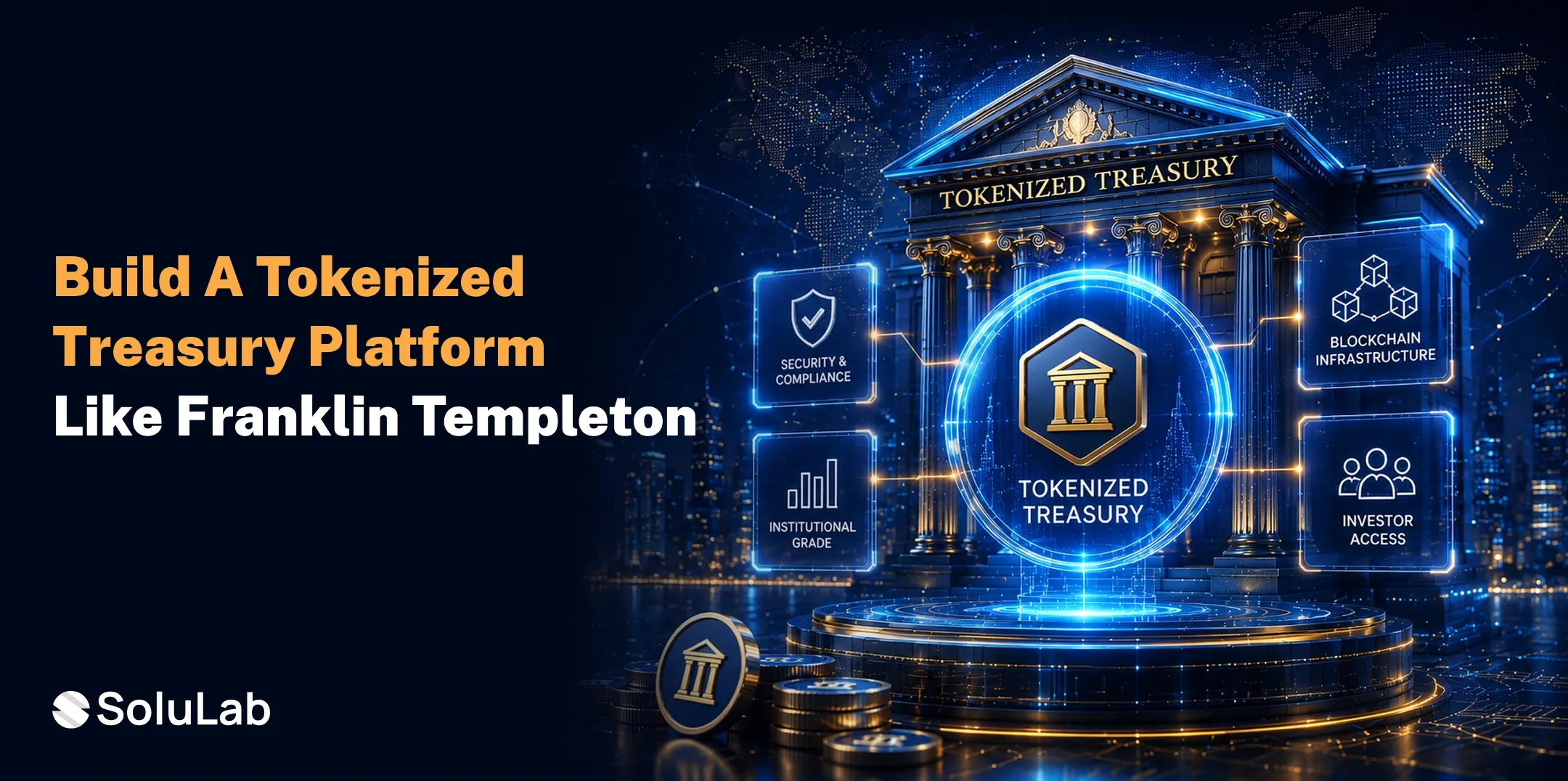
The Franklin Templeton BENJI fund has crossed the $2.5 billion mark with on-chain assets under management. This model has modernized fund management with the amalgamation of regulated financial products with distributed ledger technology. It enables investors to access treasury-backed assets using digital infrastructure. By building a tokenization platform like Franklin Templeton, businesses can execute transactions more efficiently with a simplified process and onboarding.
Now, financial institutions and investment firms around the world are exploring tokenization treasury development across Franklin Templeton to capitalize on this growing opportunity.
If you are also planning to build a tokenized treasury platform like Franklin Templeton, this guide can help. Get insights on step-by-step instructions for tokenized treasury platform development, including the Franklin Templeton model. Explore features, architecture, and key considerations for a successful launch in 2026.
Understanding the Franklin Templeton Model
Franklin OnChain U.S. Government Money Fund, commonly linked with the BENJI token, uses blockchain-based infrastructure to support transaction processing and share ownership records.
One share of the fund is represented by one BENJI token, while the fund’s transfer agent maintains the official record of share ownership through a proprietary blockchain-integrated system.
Rather than replacing conventional treasury funds, the Tokenized Treasury Platform, based on the Franklin Templeton model, enhances them by making investment processes faster, more transparent, and more accessible to modern investors.
Key characteristics of the Franklin Templeton approach include:
- Blockchain-based recordkeeping without changing the underlying investment strategy.
- Regulated fund management and compliance processes.
- Digital investor onboarding and transaction workflows.
- Improved operational transparency.
- Seamless integration with traditional financial infrastructure.
Why the Franklin Templeton Model Matters?
The Franklin Templeton Model matters because it shows how blockchain technology can improve regulated fund operations. Here are key characteristics.
- The Franklin Templeton US Government Money Fund invests in assets backed by government securities or cash.
- The Franklin Templeton BENJI fund provides modern investors with digital access within a regulated structure.
- The Franklin Templeton fund uses public blockchain technology to process transactions and record share ownership, while the transfer agent maintains official ownership records.
- The model keeps fund management, compliance, custody, and investor protection at the center. Businesses can build clusters around MAS Tokenized Treasury Bills, and blockchain improves operations with financial discipline.
- The model also supports digital investor access. This makes treasury-backed products easier to manage through wallets, apps, portals, and blockchain-connected investment infrastructure.
What Makes a Tokenized Treasury Platform Like Franklin Templeton Different?
A Tokenized Treasury Platform Like Franklin Templeton, connects traditional treasury fund management with blockchain-based ownership and transaction infrastructure.
With this, businesses can create digital representations of treasury-backed assets for smooth investment workflows. It unlocks easy onboarding for investors and distributes regulated investment products through modern digital channels.
Why Do Businesses Want Tokenized Treasury Funds?
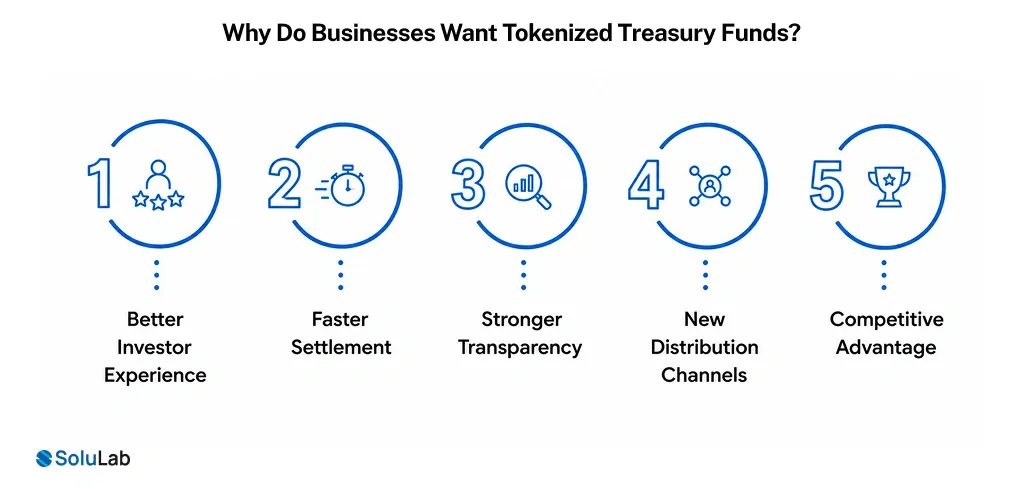
Tokenized treasury funds attract businesses because they combine regulated investment products with digital asset infrastructure. This creates better access, faster operations, and more transparent fund management.
- Better Investor Experience
Investors want simple dashboards, faster onboarding, transparent holdings, and easier redemption workflows. Tokenized Treasury Funds can deliver this experience through digital-first investment platforms.
- Faster Settlement
Traditional fund processes often involve multiple intermediaries and delays. Treasury Tokenization can reduce settlement friction by automating ownership updates and transaction workflows.
- Stronger Transparency
Blockchain records create a clear audit trail. This helps investors, administrators, and compliance teams track transactions, ownership changes, and fund activity with better visibility.
- New Distribution Channels
Asset managers can distribute tokenized treasury funds through apps, wallets, fintech platforms, institutional portals, and wealth management ecosystems instead of relying only on traditional channels.
- Competitive Advantage
Businesses that invest in Treasury tokenization platform development services early can position themselves for the next phase of digital investment infrastructure and real-world asset adoption.
How to Build a Tokenized Treasury Platform Like Franklin Templeton?
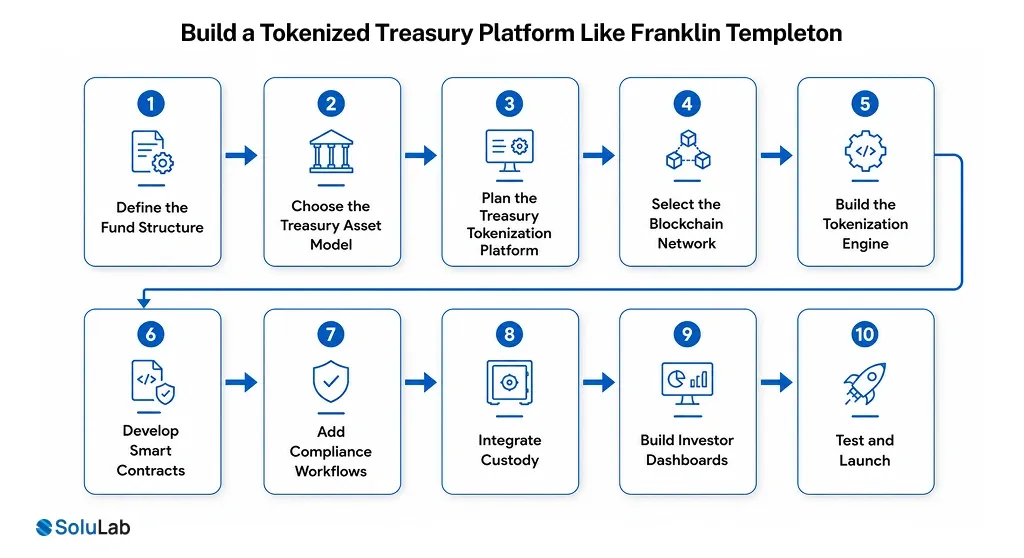
Building a Tokenized Treasury Platform Like Franklin Templeton requires more than token creation. Here are the steps to follow:
Step 1: Define the Fund Structure
Start by defining the assets, investor type, yield method, redemption rules, compliance needs, and minimum investment requirements.
Step 2: Choose the Treasury Asset Model
The asset model shapes compliance and technology decisions. Businesses can choose T-bill tokenization or create the Tokenized Treasury Funds backed by government securities, cash, or repurchase agreements.
Step 3: Plan the Treasury Tokenization Platform
Treasury Tokenization Platform should connect investors, administrators, custodians, smart contracts, wallets, and reporting tools in one secure operational framework.
Step 4: Select the Blockchain Network
Choose the right blockchain model for the Tokenized Treasury Platform, like Franklin, depending on cost, scalability, compliance, and investor access.
Step 5: Build the Tokenization Engine
Create a tokenization engine to transfer and track digital tokens. This helps to keep the on-chain token records aligned with off-chain treasury assets and fund administration records.
Step 6: Develop Smart Contracts
Automate subscriptions, redemptions, transfers, yield distribution, compliance checks, and permission rules with smart contract development. Audit them before launch to reduce security risk.
Step 7: Add Compliance Workflows
Compliance is non-negotiable to launch a Tokenization Platform in the USA. Include KYC, AML, sanctions screening, investor accreditation, jurisdiction checks, wallet whitelisting, and document verification.
Step 8: Integrate Custody
The Treasury management platform must connect with qualified custodians, fund administrators, payment providers, transfer agents, and digital wallet infrastructure.
Step 9: Build Investor Dashboards
Provides investors with access to holdings, NAV, yield, statements, transaction history, redemption status, and wallet activity from one simple and secure dashboard.
Step 10: Test and Launch
Before launch, have all the testing and performance checks under real transaction conditions.
Core Architecture Required for a Blockchain Treasury Platform Like Franklin Templeton
A reliable Blockchain Treasury Platform like Franklin Templeton needs multiple layers. Each layer supports a different function, from investor onboarding to smart contracts and fund administration.
Investor Layer
The investor layer includes registration, KYC, wallet connection, subscription forms, portfolio dashboard, redemption requests, statements, and support access.
Compliance Layer
The compliance layer manages KYC, AML, sanctions screening, investor eligibility, wallet approvals, transfer restrictions, risk monitoring, and jurisdiction-based controls.
Tokenization Layer
The tokenization layer handles token minting, burning, transfers, supply management, ownership records, smart contract rules, and investor allocation logic.
Fund Operations Layer
The fund operations layer manages NAV updates, treasury holdings, yield calculations, fund accounting, reconciliation, administrator approvals, and reporting workflows.
Custody Layer
The custody layer secures underlying treasury assets and digital tokens. It may include qualified custodians, MPC wallets, multi-signature controls, and banking integrations.
Reporting Layer
The reporting layer generates investor statements, audit logs, tax documents, compliance reports, fund performance data, and administrator dashboards.
Essential Features of a Tokenized Treasury Platform
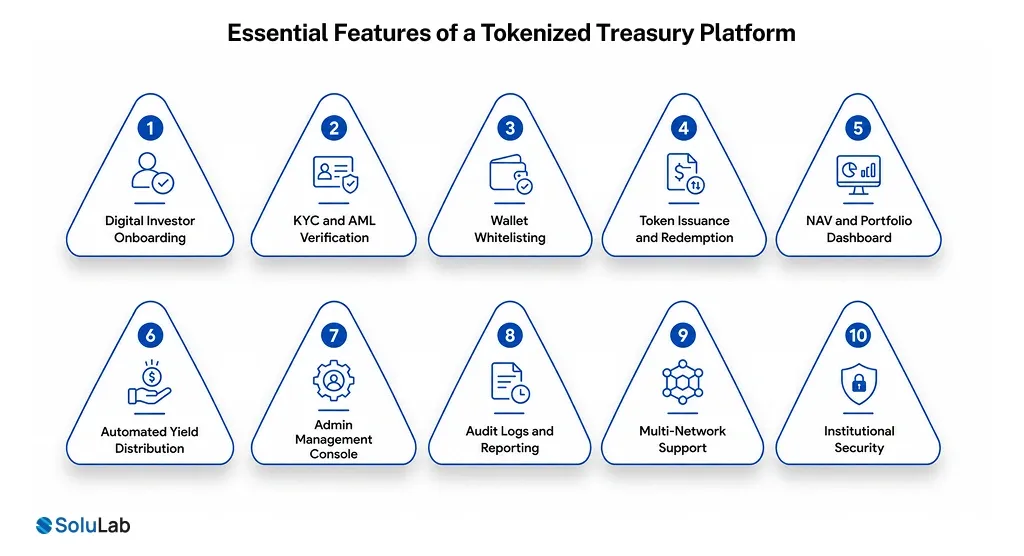
A strong tokenized treasury platform should be simple for investors and powerful for administrators. The following features improve adoption, trust, and operational performance.
Digital Investor Onboarding
Digital onboarding allows investors to register, verify identity, upload documents, complete KYC, and connect wallets without dealing with slow manual processes.
KYC and AML Verification
Built-in compliance checks help the platform verify investors, screen risks, meet regulatory expectations, and prevent unauthorized access to treasury-backed products.
Wallet Whitelisting
Wallet whitelisting ensures only approved investor wallets can receive, hold, or transfer tokens. This protects the platform from unauthorized secondary transfers.
Token Issuance and Redemption
The system should automate subscriptions, mint tokens after approval, burn tokens during redemption, and update investor balances accurately across all records.
NAV and Portfolio Dashboard
Investors should see portfolio value, NAV, yield, accrued income, transaction history, and redemption status through one clean and easy-to-use dashboard.
Automated Yield Distribution
Smart contracts and fund systems can support daily accruals, periodic payouts, or reinvestment depending on the fund’s structure and investor agreement.
Admin Management Console
Administrators need tools to approve investors, monitor transactions, manage redemptions, review compliance alerts, issue reports, and control operational workflows.
Audit Logs and Reporting
Audit logs help administrators track every activity. This supports compliance, regulator review, internal controls, investor trust, and operational transparency.
Multi-Network Support
Multi-network support helps the platform reach more investors, reduce transaction costs, and improve interoperability across blockchain ecosystems.
Institutional Security
Security should include encryption, role-based permissions, multi-signature approvals, MPC custody, smart contract audits, penetration testing, and continuous monitoring.
Technology Stack for Tokenized Fund Platform Development
Tokenized Fund Platform Development requires a secure and scalable technology stack. The right stack improves performance, compliance, user experience, and long-term maintainability.
Frontend Technologies
React, Next.js, or Angular can support responsive investor portals, admin dashboards, mobile-friendly interfaces, and real-time portfolio experiences.
Backend Technologies
Node.js, Python, Java, or Go can manage APIs, user workflows, fund logic, compliance integrations, transaction processing, and reporting systems.
Smart Contract Technologies
Solidity, Rust, and network-specific frameworks can support token issuance, transfer restrictions, compliance rules, redemption logic, and yield automation.
Blockchain Networks
Ethereum, Polygon, Stellar, Avalanche, Arbitrum, Base, Solana, Aptos, and permissioned networks can support different treasury tokenization business models.
Database Layer
PostgreSQL, MongoDB, or cloud-native databases can store investor profiles, compliance documents, fund records, reports, transaction metadata, and administrator actions.
Cloud Infrastructure
AWS, Azure, or Google Cloud can support secure hosting, monitoring, disaster recovery, scalability, backups, and enterprise-level availability.
Oracle Integrations
Oracles can connect smart contracts with NAV data, treasury pricing, interest rates, yield updates, exchange rates, and external financial information.
Cost of Tokenized Treasury Platform Development Like Franklin Templeton
The cost of Tokenized Treasury Platform Development, like Franklin Templeton’s, depends on features, compliance scope, blockchain network, smart contract complexity, custody integrations, audits, and enterprise security requirements.
MVP Platform
An MVP may include investor onboarding, wallet connection, token issuance, a basic dashboard, an admin panel, and limited compliance workflows for early market validation.
Growth-Stage Platform
A growth-stage platform may include advanced KYC, NAV integrations, custody connections, redemption automation, reporting tools, audited smart contracts, and multi-network support.
Enterprise Platform
An enterprise platform needs institutional custody, transfer agent workflows, banking integrations, advanced permissions, disaster recovery, security audits, multi-asset support, and scalable infrastructure.
Compliance Cost
Compliance features increase tokenization development cost but protect the business. KYC, AML, investor eligibility, reporting, and transfer restrictions are essential for regulated treasury products.
Smart Contract Cost
Smart contract cost depends on token logic, transfer rules, redemption workflows, yield distribution, role permissions, upgradeability, and audit requirements.
Integration Cost
Custody, banking, payment, identity, fund administration, Oracle, and reporting integrations increase cost but make the platform ready for institutional use.
Final Words
A Tokenized Treasury Platform gives financial businesses a powerful way to modernize treasury-backed investment products. The Franklin Templeton Model proves that blockchain can support financial products when compliance, custody, reporting, and investor protection remain central.
Businesses planning to build a tokenized money market fund like Franklin Templeton should focus on fund structure, smart contracts, compliance, custody, investor experience, and long-term scalability.
With the right blockchain development partner, Treasury Asset Tokenization can help banks, asset managers, fintech companies, and wealth platforms create secure digital assets.
Why Choose SoluLab for Tokenized Treasury Platform Development?
SoluLab helps financial institutions, fintech firms, and asset managers build a secure tokenized treasury platform like Franklin Templeton, with a compliance-ready architecture. Our experts can help you shape the multi-asset tokenization platform strategy, design secure smart contracts, set up investor onboarding, integrate custody, and build dashboards that simplify fund operations.
We keep compliance, scalability, and user experience at the center from day one. Whether you want to launch treasury-backed funds or expand into RWA tokenization, our RWA Tokenization Development Company can help turn your idea into a market-ready solution.