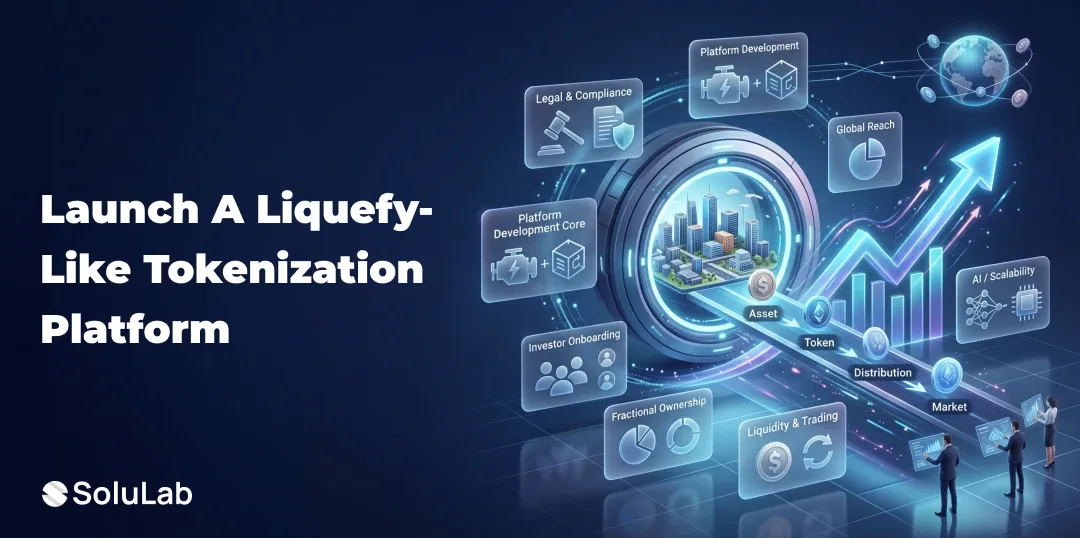
Capital markets are moving toward programmable ownership. Real-world asset (RWA) tokenization platforms now allow institutions to digitize assets, automate compliance, and enable fractional ownership with transparent settlement.
Platforms such as the Liquefy tokenization platform have demonstrated how private markets can unlock liquidity using blockchain infrastructure.
According to Boston Consulting Group: Tokenized assets could reach $16 trillion by 2030, representing nearly 10% of global GDP.
Financial institutions, asset managers, and investment platforms are therefore exploring how to build a tokenization platform like Liquefy to digitize securities, funds, real estate, and private equity assets.
However, launching an institutional-grade real world asset tokenization platform requires more than smart contracts. It demands legal structuring, compliance frameworks, secondary trading infrastructure, and enterprise-grade security.
Key Takeaways
- A tokenization platform like Liquefy is a combination of legal structuring, compliance automation, and financial infrastructure.
- SPV-based structuring is the backbone of any real world asset tokenization platform.
- Smart contracts must embed compliance logic, not just ownership logic.
- Secondary liquidity via bulletin boards is critical for investor retention and platform success.
- Enterprise-grade security and integrations define credibility in tokenization platform development.
- SoluLab, with 10+ years of proven expertise, helps enterprises design and develop robust tokenization platforms like Liquefy.
Why Are Institutions Abandoning Legacy Systems for Liquefy-Style Tokenization Platforms?
Legacy capital markets infrastructure was built for centralized record-keeping, manual compliance workflows, and slow settlement cycles. In contrast, an RWA tokenization platform enables programmable ownership, instant settlement, and automated compliance enforcement.
Institutions adopting tokenization platform development services are primarily motivated by operational efficiency, liquidity creation, and investor accessibility.
1. Faster Settlement and Reduced Counterparty Risk
Traditional private market transactions often require T+2 or T+5 settlement cycles. Tokenized infrastructure enables near-instant settlement, eliminating reconciliation delays between custodians, brokers, and clearinghouses.
Key benefits include:
- Smart contracts automate transaction execution.
- Blockchain provides a single source of truth ledger.
- Settlement can occur within minutes instead of days.
According to Deloitte’s 2025 digital assets report, tokenization could reduce post-trade processing costs by up to 40% for financial institutions.
2. Fractional Ownership Unlocks New Investor Pools
One of the core benefits of a real world asset tokenization platform is fractionalization.
Example use cases include:
- Tokenized commercial real estate
- Infrastructure funds
- Private credit instruments
- Venture capital portfolios
Instead of minimum investment thresholds of $100,000 or more, tokenization allows assets to be divided into smaller digital units, dramatically expanding investor access.
This model enables asset managers to raise capital faster while increasing portfolio diversification for investors.
3. Compliance Automation with Smart Contracts
Regulatory compliance is one of the biggest operational burdens in traditional capital markets.
A modern asset tokenization platform development framework embeds compliance rules directly into smart contracts. This ensures:
- Investor eligibility verification
- Jurisdiction restrictions
- Automated KYC/AML validation
- Transfer restrictions for regulated securities
This programmable compliance layer reduces manual regulatory oversight while maintaining strict legal enforcement.
4. Transparent Asset Ownership and Auditability
Blockchain-based infrastructure ensures every transaction is recorded on an immutable ledger.
This improves:
- Investor transparency
- Asset ownership verification
- Regulatory audit trails
- Risk monitoring
For institutions managing billions in assets, this transparency significantly improves governance standards.
Read more – Launch a Tokenization Platform in the USA
How to Architect the Legal Layer of a Liquefy Clone: Mapping SPVs to Programmable Smart Contracts
A Liquefy platform development architecture relies on a legal structure that links real-world ownership to blockchain tokens.
The most common structure used by a tokenization platform like Liquefy is the Special Purpose Vehicle (SPV) model.
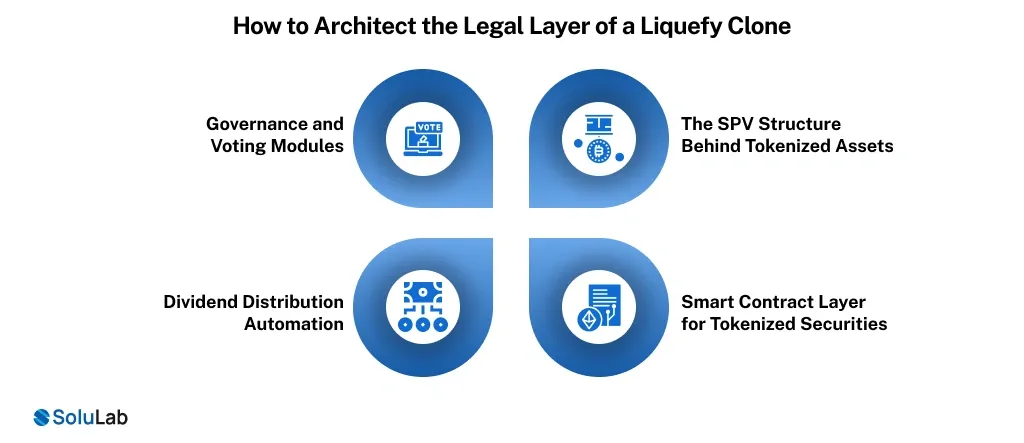
1. The SPV Structure Behind Tokenized Assets
Instead of directly tokenizing an asset, the asset is held within a legally registered SPV entity.
Ownership of the SPV is then represented by blockchain tokens.
Example structure:
Asset → Held by SPV → Tokenized Shares Issued → Investors Hold Tokens
Benefits of the SPV model include:
- Legal clarity for asset ownership
- Investor protection
- Regulatory compliance
- Simplified distribution of profits
This model is widely used in RWA tokenization platforms for real estate, funds, and infrastructure assets.
2. Smart Contract Layer for Tokenized Securities
A smart contract development company builds contracts that represent investor ownership and enforce compliance rules.
These contracts typically include:
Transfer Restriction Contracts
These contracts ensure that token transfers comply with regulatory frameworks.
Rules can include:
- Accredited investor requirements
- Geographic restrictions
- Lock-up periods
- Secondary trading eligibility
3. Dividend Distribution Automation
Smart contracts automatically distribute returns to investors.
Examples include:
- Real estate rental income
- Private equity dividends
- Infrastructure project revenues
Automated distribution reduces administrative costs and eliminates payment delays.
4. Governance and Voting Modules
Investors can participate in governance decisions through tokenized voting mechanisms.
Typical governance functions include:
- Asset management votes
- Fund restructuring approvals
- Major asset sales
Tokenized governance improves transparency and investor participation.
Secondary Market Infrastructure: How a Liquefy-Style Bulletin Board Enables Compliant Asset Trading
Liquidity is the biggest limitation of traditional private markets. Most private equity and real estate platform investments remain locked for 5 to 10 years.
A Liquefy tokenization platform solves this challenge through a compliant secondary trading bulletin board.
1. What Is a Tokenized Asset Bulletin Board?
A bulletin board allows verified investors to list tokenized assets for sale while remaining compliant with securities regulations.
Unlike public exchanges, bulletin boards typically provide:
- Investor discovery
- Price indication
- Negotiated transactions
- Compliance verification
This model allows asset holders to access partial liquidity without violating securities regulations.
2. Compliance Layers for Secondary Trading
A tokenization platform like Liquefy integrates several regulatory controls before allowing secondary trading.
Key mechanisms include:
3. Investor Verification
Before participating in the marketplace, users must pass:
- KYC verification
- AML screening
- Accreditation checks
This ensures only eligible investors can trade regulated securities.
4. Smart Contract Transfer Rules
Smart contracts enforce restrictions such as:
- Minimum holding periods
- Jurisdiction compliance
- Investor qualification
If a transaction violates compliance rules, the smart contract automatically blocks it.
5. Custody and Asset Registry Integration
Institutional tokenization platforms integrate with:
- digital asset custodians
- regulated transfer agents
- asset registries
This ensures legal ownership records remain synchronized with blockchain tokens.
How to Build a Tokenization Platform Like Liquefy?
Building a platform like Liquefy goes beyond basic token issuance. It requires a compliance-first architecture, private market access, and structured asset onboarding. Here’s a practical step-by-step approach:
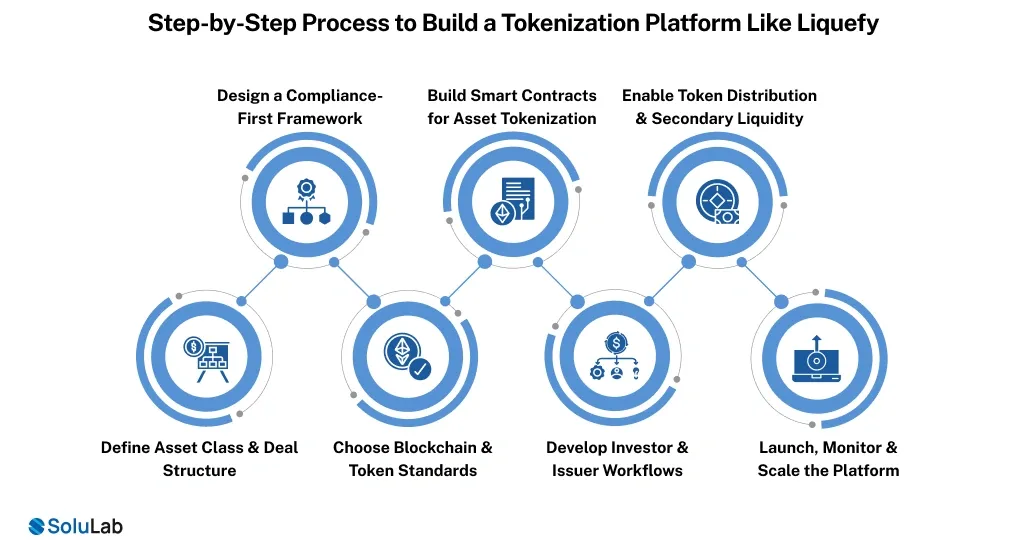
Step 1: Define Asset Class & Deal Structure
Start by identifying the type of assets your platform will tokenize, such as:
- private equity
- venture funds
- real estate
- structured financial products
Liquefy focuses heavily on private market assets, so defining the legal and financial structure of these assets is critical before development begins.
Step 2: Design a Compliance-First Framework
Unlike generic token platforms, Liquefy-like solutions require strong compliance layers.
This includes:
- KYC/AML verification
- investor accreditation checks
- jurisdiction-based restrictions
- regulatory reporting
Compliance should be built into the system from day one, not added later.
Step 3: Choose Blockchain & Token Standards
Select the right blockchain for tokenization based on scalability and compliance needs.
Common choices include:
- Ethereum
- Polygon
- permissioned blockchain networks
For Liquefy-style platforms, security token standards like ERC-1400 or ERC-3643 are often used to enable controlled transfers and compliance enforcement.
Step 4: Build Smart Contracts for Asset Tokenization
Develop smart contracts that handle:
- token issuance
- ownership representation
- transfer restrictions
- dividend or yield distribution
These contracts should reflect real-world asset ownership and enforce compliance rules automatically.
Step 5: Develop Investor & Issuer Workflows
Liquefy differentiates itself through structured workflows.
Your platform should include:
- asset onboarding dashboards for issuers
- investor dashboards for portfolio tracking
- document management (legal, financial reports)
- subscription and allocation flows
This ensures a seamless experience for both asset issuers and investors.
Step 6: Enable Token Distribution & Secondary Liquidity
Once assets are tokenized, enable distribution through:
- private placements
- investor onboarding flows
- controlled secondary trading (if permitted)
Liquidity mechanisms, such as internal marketplaces or integrations, are key to platform success.
Step 7: Launch, Monitor & Scale the Platform
After deployment:
- conduct smart contract audits
- ensure compliance monitoring
- track user activity and transactions
- scale infrastructure for more assets and users
Liquefy-style platforms evolve continuously with new asset classes, regulatory updates, and investor demand.
Many businesses partner with a tokenization platform development company to build secure, compliant, and scalable platforms similar to Liquefy.
Why Custom-Built Infrastructure like Liquefy Is Mandatory for Enterprise Credibility?
Institutional investors cannot rely on generic blockchain applications. They require secure, compliant, and scalable infrastructure.
This is why organizations increasingly work with a tokenization platform development company to build enterprise-grade systems.
1. Institutional Security Requirements
A secure build asset tokenization platform architecture must include:
- multi-signature wallets
- hardware security module (HSM) integration
- smart contract auditing
- penetration testing
Financial institutions demand security standards similar to those used in traditional banking infrastructure.
2. Enterprise Compliance Stack
An institutional RWA tokenization platform requires multiple compliance modules.
Typical integrations include:
- identity verification APIs
- AML screening engines
- sanctions monitoring
- regulatory reporting tools
This ensures the platform meets global financial regulations.
3. Interoperability with Financial Infrastructure
Institutional platforms must integrate with existing financial systems such as:
- custodians
- fund administrators
- accounting platforms
- banking networks
This hybrid architecture allows blockchain infrastructure to coexist with traditional financial systems.
The 2026 Cost Breakdown: What Does It Actually Take to Launch a Liquefy-Grade Platform?
Launching an institutional tokenization platform like Liquefy requires significant engineering, legal structuring, and infrastructure development.
The overall cost varies depending on platform complexity, regulatory jurisdiction, and feature scope.
1. Core Development Costs
Building the core platform infrastructure typically includes:
- smart contract development
- blockchain architecture
- asset issuance modules
- investor dashboard
- compliance engine
Estimated development cost: $15000 to $100000+ [depends on customization]
This cost range reflects the complexity of tokenization platform development services for institutional clients.
2. Legal and Compliance Framework
Legal structuring is often one of the largest investments when building a real-world asset tokenization platform.
Costs typically include:
- SPV structuring
- securities compliance
- regulatory licensing
- investor documentation
Estimated legal cost: $20,000 – $30,000
This depends heavily on jurisdiction and regulatory requirements.
3. Security and Smart Contract Audits
Institutional platforms require third-party smart contract audits before launch.
Typical expenses include:
- contract security audits
- penetration testing
- infrastructure security validation
Estimated smart contract audits cost: $20,000 – $30,000
4. Infrastructure and Cloud Deployment
Enterprise tokenization platforms often deploy on scalable cloud infrastructure.
Typical components include:
- node hosting
- blockchain indexers
- data analytics pipelines
- investor dashboards
Estimated infrastructure cost: $5,000 – $15,000 per month.

Conclusion
As we can see from the above discussion, institutions are actively replacing fragmented legacy systems with unified, programmable infrastructure. A Liquefy tokenization platform represents this shift by combining legal ownership, compliance enforcement, and liquidity into a single ecosystem.
However, success in this space depends on execution. Building a tokenization platform like Liquefy requires aligning three layers. And we at SoluLab help you build them.
- Legal ownership (SPVs and regulatory frameworks)
- Technical infrastructure (smart contracts and blockchain systems)
- Market access (secondary trading and investor onboarding)
Organizations that invest in full-stack asset tokenization platform development today are not just launching products. They are building financial infrastructure for the next decade. Contact us today to discuss tokenization solutions and futuristic services.
FAQs
Deepika is a content writer who blends storytelling with strategic thinking. She explores topics across digital innovation, emerging tech, and the evolving blockchain industry. She enjoys breaking down complex ideas into simple, engaging narratives in the growing global markets.