Key Takeaways
- Traditional diamond ownership limits liquidity, transparency, and accessibility, making resale, valuation, and global participation unnecessarily difficult.
- Diamond tokenization solves these issues through blockchain-backed ownership, secure custody, and transparent digital asset records.
- Fractional ownership and smart contracts help businesses unlock new revenue streams, liquidity, and investor participation.
- Successful implementation requires certified valuation, legal structuring, secure token infrastructure, and trusted marketplace access.
What if you could treat a rare 10-carat diamond with the same liquidity as a tech stock?
For decades, diamonds were the ultimate “frozen” asset: opaque, difficult to value, and even harder to trade. That’s shifting fast. With the global diamond market projected to reach $140.1 billion by 2032, enterprises are no longer treating diamonds purely as jewelry. They’re looking at them as Real-World Assets (RWAs).
Institutional gold tokenization has set the bar. Diamonds are the next asset class to clear it. Blockchain protocols and AI-driven valuation are together converting static gemstones into high-velocity digital instruments, and the window to get ahead of this is open right now.

What is Enterprise Diamond Asset Tokenization?
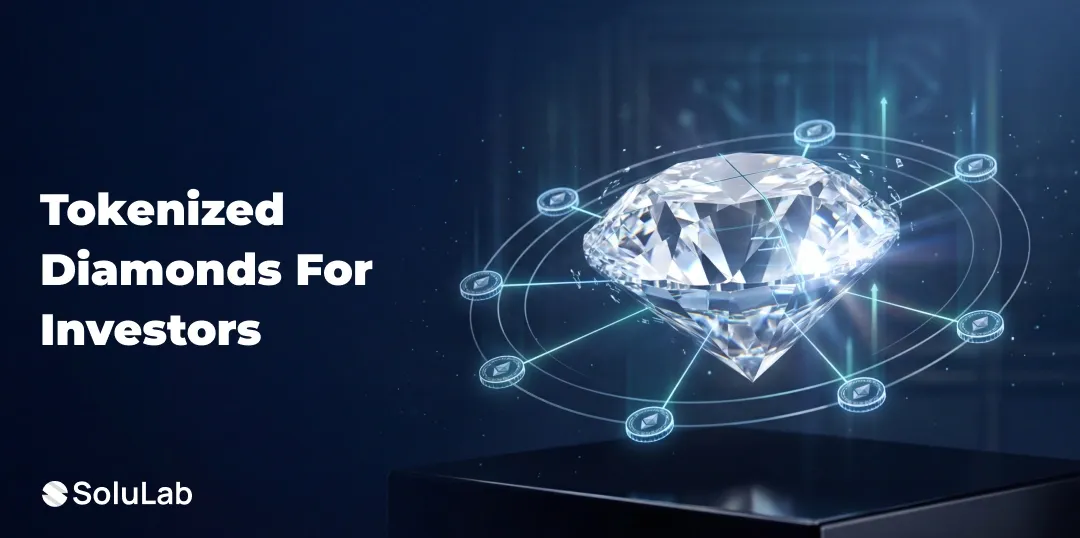
Diamond asset tokenization converts ownership rights of a physical diamond, or a full diamond portfolio, into blockchain-based digital tokens.
Each token represents a share of the asset’s value. Behind it sits a real, authenticated diamond in secure custody. The model is comparable to crypto tokens, where investors can buy, sell, transfer, or deploy shares inside digital financial systems.
At the enterprise level, this goes well beyond issuing a digital certificate. It builds a complete ownership framework supported by four pillars:
1. Verified Asset Authentication
Every diamond gets assessed and graded by recognized bodies such as the Gemological Institute of America or the International Gemological Institute.
The grading covers:
- Cut
- Clarity
- Carat
- Color
- Origin traceability
2. Blockchain-Based Ownership Records
Once verified, the diamond’s data goes on-chain. That’s where blockchain development plays a key role. The result:
- Tamper-proof proof of ownership
- Transparent transfer history
- Real-time audit trails
3. Fractional Ownership Structure
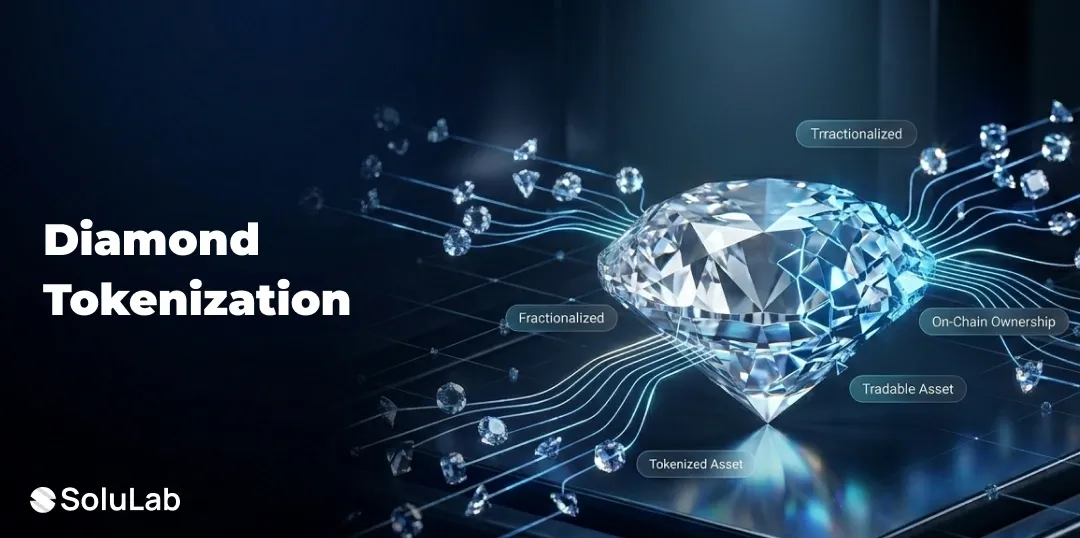
High-value diamonds can be split into digital fractions. That opens things up considerably:
- Lower entry barriers for investors
- Shared ownership models
- Better liquidity for enterprises
4. Smart Contract Automation
Smart contracts handle:
- Ownership transfer
- Investor onboarding
- Revenue sharing
- Compliance workflows
Less paperwork, fewer delays, and significantly lower operational risk.
Why Diamond Tokenization Is Becoming a Major Trend in 2026
Market demand, maturing infrastructure, and institutional appetite for alternative assets are all converging at once. That’s the simplest explanation for why diamond tokenization is accelerating now.
1. Luxury Assets Are Entering the RWA Economy
Real-world asset tokenization has moved well past real estate and treasury products. Luxury assets like diamonds are getting serious attention because they offer:
- Strong long-term value retention
- Global recognition
- High value in compact form
- Portfolio diversification
For enterprises, that translates into real new revenue models:
- Digital investment products
- asset-backed lending
- secondary trading
2. Demand for Liquidity Is Increasing
Traditional diamond transactions are slow. Relationship-driven. Selling or refinancing a stone can take weeks and depends heavily on the right intermediaries being available and cooperative.
Tokenization cuts through that by enabling:
- Faster settlement
- 24/7 trading possibilities
- easier ownership transfer
Diamonds become useful as financial assets rather than dormant inventory sitting in a vault.
3. Transparency Is Now a Business Requirement
Luxury buyers and institutional investors alike now expect:
- sourcing transparency
- authenticity proof
- ethical supply chain records
Blockchain delivers exactly that:
- mine-to-market traceability
- immutable provenance
- reduced fraud risk
4. Better Valuation Infrastructure
Modern valuation tools now combine:
- grading reports
- market benchmarks
- AI-based price intelligence
Better pricing intelligence means less uncertainty at issuance. That matters a lot when you’re asking investors to trust a token backed by a stone they haven’t physically touched.
Key Features You Must Have in Your Diamond Asset Tokenization
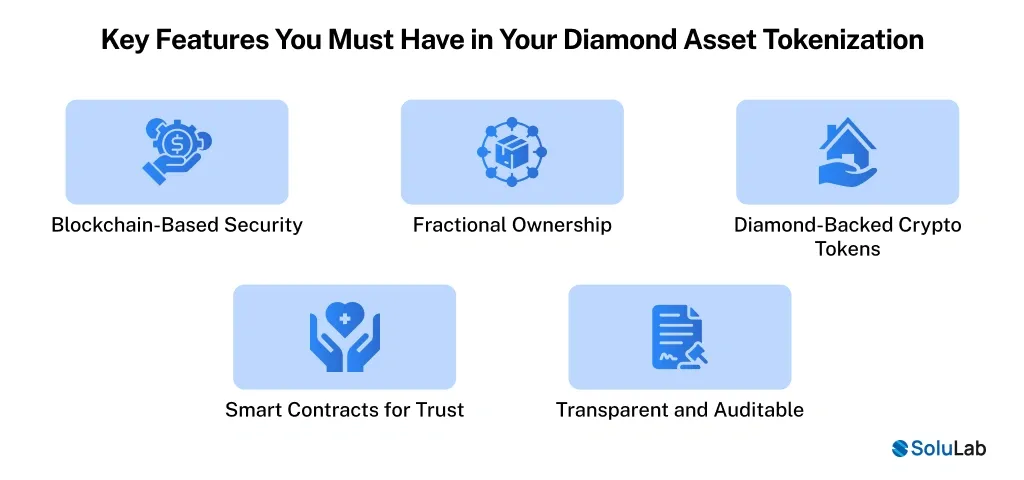
Turning real diamonds into blockchain tokens brings transparency, liquidity, and fractional ownership to a market that historically ran on handshakes and private networks. Here’s what a properly structured diamond token actually includes:
- Blockchain-Based Security: Each token is recorded on a blockchain, ensuring transparency, immutability, and tamper-proof ownership records. It reduces fraud and verifies the authenticity and origin of the diamond.
- Fractional Ownership: Instead of an entire diamond, investors can buy tokenized diamonds in portions, and they own a fraction of it through tokens. This makes luxury assets more affordable and accessible to the average investor.
- Diamond-Backed Crypto Tokens: These tokens precisely correspond to a particular diamond or a collection of diamonds stored in secure vaults, often verified by trusted third-party grading agencies like GIA.
- Smart Contracts for Trust: Smart contracts handle things like ownership transfers, royalty payments, or investment returns, reducing the need for intermediaries. This results in faster, cheaper, and trustless transactions.
- Transparent and Auditable: All data, containing ownership and evaluation, is immutably kept on the blockchain, providing complete transparency to both buyers and sellers.
Together, these features convert a conventional luxury asset into something that actually functions as a digital financial instrument: tradable, verifiable, and open to a far wider pool of participants.
How to Tokenize Diamond Assets in 2026?
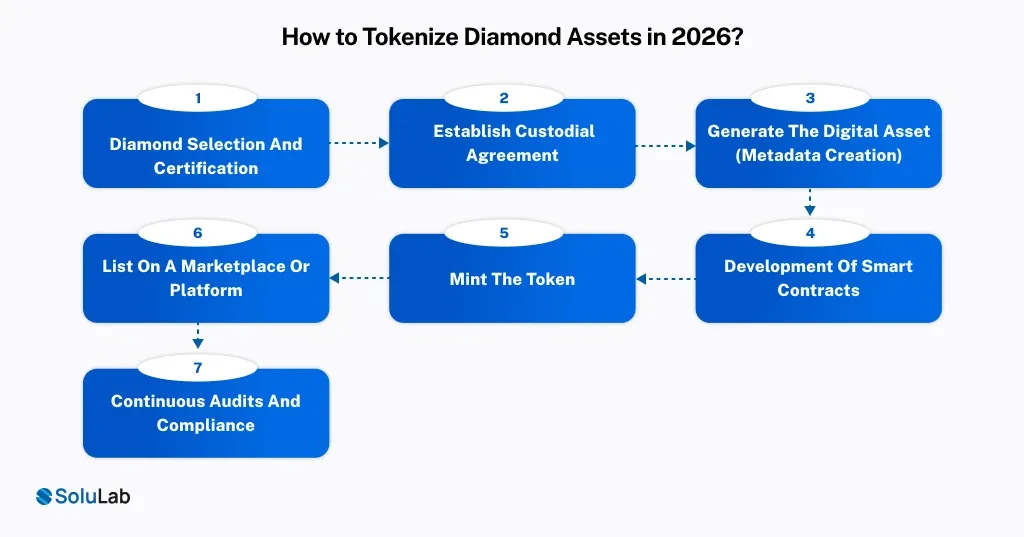
Tokenizing a diamond isn’t reserved for specialists. It follows a defined sequence that bridges physical asset management with blockchain technology. Whether you’re a diamond owner, an investor, or a company exploring diamond asset-backed tokens, understanding each step tells you exactly what you’re getting into: what’s required, where things can go wrong, and what good execution looks like.
Here is a step-by-step process on how to tokenize diamond assets:
Step 1: Diamond Selection and Certification
Start with the stone itself. The diamond, or collection of diamonds, should be authenticated by a recognized body: GIA, IGI, or HRD are the standard choices. Certification locks in the grading attributes, carat, cut, clarity, and color, all of it authenticated and recorded. That certified data becomes the foundation of the token’s information layer. No certification means no credible token.
Step 2: Establish Custodial Agreement
Once certified, the physical diamond moves to a secure, insured vault managed by a reputable third-party custodian. This step is non-negotiable. Investors need to know that what they’re buying is backed, one-to-one, by a real stone sitting in a verified location. The custodial agreement is what makes that guarantee binding.
Step 3: Generate the Digital Asset (Metadata Creation)
A digital profile is built for each diamond. This includes:
- Details of certification
- Images of high resolution
- Distinctive identifiers (e.g., laser-engraved identification or tracking code)
- Origin, grading laboratory, and timestamp information
This metadata gets linked to the blockchain token. That linkage is what gives buyers a verifiable chain of evidence rather than just a promise.
Step 4: Development of Smart Contracts
A smart contract is written to govern how the diamond token behaves. It spells out:
- Regulations on Ownership Transferability
- Authorization for trading
- Fractional ownership arrangements (if applicable)
Smart contracts automate and enforce the rules, cutting out middlemen and making transactions faster and less prone to disputes.
Step 5: Mint the Token
With the smart contract ready, a token is minted on the chosen blockchain, Ethereum, Polygon, or Solana are common choices. The token represents ownership of the diamond. The exact structure depends on the model:
- A non-fungible token (NFT) represents one individual, unique diamond.
- A fractional or fungible token represents collective ownership of a diamond or a diamond pool.
Step 6: List on a Marketplace or Platform
After minting, the token can be listed on a digital asset marketplace where investors buy, sell, or trade tokenized diamonds. Some tokenization platforms come with built-in liquidity pools or DeFi lending features, giving token holders additional ways to put their holdings to work.
Step 7: Continuous Audits and Compliance
Periodic audits verify that the physical diamonds in custody match the digital records. That ongoing verification is what sustains investor confidence over time. Many platforms also layer in KYC/AML checks and regulatory compliance structures, particularly when targeting institutional investors.
Follow these steps and you have a diamond that is borderless, liquid, and accessible to investors who would never have had entry before. Working with a professional diamond tokenization service reduces execution risk and speeds up the process considerably.
Read Also: Gemstone Tokenization
Use Cases of Diamond Tokenization
Tokenizing diamonds isn’t just about going digital. It’s about changing how you invest, borrow, buy, and engage with high-value goods entirely. From retail luxury to institutional finance, diamond-backed crypto tokens are finding traction across sectors. Here are the most active use cases right now:
1. Trading and Investing
This is the most immediate use case. Tokenized diamonds let individuals invest in high-value gemstones the same way they would with stocks or crypto. On digital platforms, investors can buy tokenized diamonds, hold them, or sell fractionally or in full, without dealing with logistics, appraisal delays, or illiquid exit routes. It’s a real opening for younger or tech-forward investors who want tangible luxury assets in their portfolios without the traditional friction.
2. Retail Luxuries & Goods
Picture buying a diamond ring and receiving a tokenized certificate on the blockchain alongside the physical item. Brands can use tokenization to prove product authenticity, origin, and quality, which builds genuine trust in resale markets. Some premium retailers are even exploring digital twins so buyers can verify or redeem an item digitally before it arrives physically.
3. Collateralized Lending
Especially in DeFi systems, tokenized diamonds can serve as collateral for loans. Like crypto-backed loans, diamond tokens can be locked into smart contracts to secure borrowing without selling the underlying asset. For collectors or investors managing liquidity without wanting to part with their stones, this is a genuinely useful mechanism.
4. Cross-Border Asset Transfers
Moving high-value assets across borders typically means complicated paperwork, tax implications, and legal hurdles. Tokenized diamonds make worldwide ownership transfer digital and near-instant, without physically transporting the gem. That matters for inheritance planning, wealth transfers, and international gifting.
5. Transparent Supply Chain Management
In a market increasingly focused on conflict-free sourcing, blockchain-powered tokenization delivers end-to-end traceability. Every touchpoint from mine to market gets recorded. Customers and regulators can independently verify sourcing claims without taking anyone’s word for it.
6. NFTs, Digital Art & Collectibles
Tokenized diamonds are also showing up in the digital collectibles space. Think of owning a rare, investment-grade diamond not just as a physical stone but as a digital asset inside a luxury NFT vault. Some platforms are connecting these tokens to virtual exhibitions, digital art, or augmented reality experiences tied directly to the token.
Final Words
Tokenizing diamond assets is a practical way to modernize an established investment class. More transparent, more accessible, and no longer restricted to a small network of insiders. By 2026, the tools and infrastructure to do this properly exist. The question is whether you move now or wait for someone else to capture that ground.
SoluLab, a leading asset tokenization development company, handles tokenization end to end, converting static assets into liquid digital investments.
One recent example: our work debuted on Token World, a top-tier cryptocurrency launchpad connecting promising blockchain projects with investors globally.
The platform gives project creators clear oversight of their work and gives investors transparent access to tokenized opportunities.
Diamond tokenization is accelerating. SoluLab is ready to help you build, launch, and grow. Contact us now to start tokenizing your assets.
FAQs
Deepika is a content writer who blends storytelling with strategic thinking. She explores topics across digital innovation, emerging tech, and the evolving blockchain industry. She enjoys breaking down complex ideas into simple, engaging narratives in the growing global markets.