Talk to an Expert

How to Build a dApp on Avalanche Blockchain?

Build a dApp on Avalanche Blockchain

Within the Avalanche platform, developers can create and launch decentralized applications known as dApps, enabling them to leverage the Blockchain’s capabilities to unlock their earning potential. The platform has experienced significant growth, with statistics indicating that 20,952,045 transactions were processed, and this number continues to increase. As a result, more investors have adopted Avalanche Blockchain Dapp development to improve users’ financial experiences.

Avalanche stands out as a unique platform, often referred to as “Blockchains of Blockchains.” Unlike traditional Blockchain networks like Solana or Ethereum, which operate as single chains, Avalanche consists of three interconnected blockchains, each handling specific use cases. This interoperable, open-source, and scalable platform allows for seamless business Blockchain deployments and dApp development.

What is Avalanche?

Avalanche, a blockchain protocol, stands out in the realm of DeFi dApps and corporate blockchain deployments by prioritizing their needs. It sets itself apart as a scalable, interoperable, and open-source solution. Rather than being a single blockchain like Ethereum or Solana, Avalanche is aptly dubbed the “blockchain of blockchains.” Its unique architecture consists of three distinct blockchains, each with its specialized function, delivering a robust and adaptable platform.

The Avalanche ecosystem comprises three interconnected blockchains:

1. Exchange (X) Chain: Responsible for asset creation, management, and transaction processing.

2. Platform (P) Chain: Handles subnet creation, validator coordination, and network governance.

3. Contract (C) Chain: An instance of the Ethereum Virtual Machine (EVM), allowing for seamless integration and execution of smart contracts.

This insight focuses on the Contract (C) Chain, which is crucial for smart contract development on the Avalanche network and particularly relevant for developers building dApps on Avalanche. This chain is fundamental for building and deploying applications on the Avalanche blockchain.

Transaction Data

The Architecture Of Avalanche Blockchain

The Avalanche Blockchain stands out as a unique platform, facilitating smooth deployments of business-focused blockchain solutions and the development of decentralized applications. This exploration will delve into “The Architecture of Avalanche Blockchain.” Understanding this framework is crucial for building robust applications and deploying them effectively on the Avalanche blockchain.

  • Avalanche Network

At the core of the Avalanche ecosystem, the Avalanche Network stands as a central hub, guiding and securing its operations. It serves as the backbone, ensuring seamless functioning and compatibility among all components within the Avalanche platform. Developing decentralized applications on Avalanche (Avalanche dApp development) is essential for harnessing these components to create a scalable, secure, and decentralized platform for building and deploying applications. 

  • Subnets

Avalanche subnets are distinct blockchains designed for specific applications. Developers can leverage the Subnet Builder to craft and personalize these subnets. Among the available options are contract chains, and specialized subnets optimized for executing smart contracts. These contract chains excel in providing quick transactions and security, positioning them as optimal choices for constructing decentralized applications (dApps) and diverse blockchain development solutions.

  • Validator Nodes

In the Avalanche Network, validators are responsible for maintaining transaction validity, preserving network integrity, and facilitating consensus through proof of stake (PoS). They contribute to network security by staking AVAX tokens, earning rewards for their efforts. As part of their role, validators verify transactions before adding them to the blockchain. Factors influencing the selection of validators include the amount of staked AVAX, performance metrics, and uptime duration.

What is the Avalanche Contract (C) Chain?

The C-Chain acts as an Ethereum Virtual Machine (EVM) replica, enabling developers to effortlessly create smart contracts. Avalanche emphasizes that the C-Chain excels by providing superior throughput, increased speeds, rapid transaction confirmation time, and lower fees. This difference occurs from the C-Chain utilizing a Proof-of-Stake (PoS) consensus mechanism based on the Snowman Consensus Protocol, unlike Ethereum’s Proof-of-Work (PoW) consensus mechanism. Importantly, since the C-Chain runs the EVM, developers have unfettered access to the comprehensive Ethereum developer toolset.

Key Features of Avalanche Contract Chain 

Features of Avalanche Contract Chain

Within the Avalanche blockchain ecosystem, the C-Chain stands as an outstanding platform designed specifically for businesses. It provides the tools and infrastructure necessary for enterprises to construct and launch decentralized applications (dApps) that surpass conventional limitations. The C-Chain’s distinctive characteristics address the stringent demands of contemporary organizations seeking to leverage blockchain technology’s potential within their operations.

  • EVM Compatibility

The C-Chain’s seamless compatibility with the Ethereum Virtual Machine (EVM) gives developers access to a vast array of opportunities. Solidity, the predominant smart contract programming language, is natively supported on the C-Chain, enabling developers to utilize their existing knowledge and tools. This compatibility eliminates the requirement for additional learning or separate development environments, reducing the learning curve significantly. As a result, migrating existing Avalanche smart contract dApps from Ethereum to Avalanche becomes effortless, ensuring a smooth transition.

Within the C-Chain, developers have the advantage of utilizing the widely recognized Solidity programming language and its associated development tools. This seamless integration not only facilitates quick dApp creation and deployment but also provides developers with access to an extensive range of existing Ethereum resources. This includes comprehensive tutorials, detailed documentation, and a supportive community, all of which contribute to an accelerated and efficient development process.

  • High Throughput

With the Snowman Consensus Protocol, Avalanche’s C-Chain can process up to 4,500 transactions per second (TPS), upgrading enterprise applications’ ability to handle large transaction volumes efficiently. 

The C-Chain’s high throughput is ideal for use cases requiring real-time tracking like supply chain management. It can also meet the demanding requirements of payment processing systems, ensuring seamless and instant transactions.

  • Low Latency

On the C-Chain, transaction finality is accomplished in seconds, offering real-time performance that is important for enterprise applications. The C-Chain’s low latency is especially advantageous for industries like financial services and decentralized exchanges, where time-sensitive decisions are made. It ensures that transactions are processed and executed rapidly, minimizing delays and enhancing operational efficiency.

Furthermore, the C-Chain’s low latency enables businesses to develop dApps that provide real-time updates, instant settlements, and seamless user experiences. This can revolutionize industries that require fast and reliable transactions, allowing for streamlined operations, improved decision-making, and enhanced customer satisfaction.

  • Low Transaction Costs

Compared to Ethereum’s fluctuating and potentially exorbitant gas fees, the C-Chain provides considerably lower transaction costs. This cost-effectiveness enables businesses to operate their dApps on Avalanche more affordably, minimizing operational expenses and promoting long-term sustainability.

Moreover, the C-Chain’s low fees open up new opportunities for micro-transactions and micro-services. These small or frequent payments would be impractical on networks with high fees.

  • Interoperability

The C-Chain facilitates seamless asset transfer between Avalanche and Ethereum, enabling developers to access the benefits of both blockchain ecosystems. This interoperability allows for the creation of innovative decentralized applications (dApps) with enhanced functionalities.

For example, dApps developed on the C-Chain can take advantage of the substantial liquidity of Ethereum’s decentralized finance (DeFi) ecosystem while simultaneously taking advantage of Avalanche’s scalability and cost-effectiveness. This facilitates the development of sophisticated dApps that combine the strengths of both platforms, unlocking new possibilities for decentralized applications.

  • Subnets for Customization

Within the C-Chain’s remarkable features lies the ability for businesses to create and operate customized blockchain networks known as subnets. These subnets are independent and sovereign blockchain networks designed to cater to specific requirements related to governance, compliance, and performance.

The flexibility offered by subnets allows businesses to craft and deploy decentralized applications (dApps) that seamlessly align with their unique requirements. For instance, a financial institution might leverage a subnet to ensure regulatory compliance, while a supply chain consortium could utilize a subnet to securely exchange sensitive data among its members.

Steps to Build dApps on Avalanche Blockchain

Avalanche Blockchain offers several compelling features that make it an attractive platform for enterprise dApp development. These include EVM compatibility, high throughput, low latency, low transaction costs, interoperability, and customizable subnets. To build dApps on Avalanche, follow these steps:

Step 1: Set Up Your Development Environment

  • Download and Install Avalanche Node Software:

To deploy decentralized applications (dApps) on Avalanche, start by visiting the official Avalanche website. On the downloads page, choose the appropriate installer for your operating system: Windows, macOS, or Linux. For Windows users, download the AvalancheGo executable file. After downloading, follow the setup process to complete the installation. For macOS and Linux users, download the provided installation scripts. To finish the installation process, adhere to the on-screen instructions.

  • Verify Installation:

To verify the successful installation of avalanche-go, launch your terminal or command prompt and input the command “avalanche-go“. Upon successful installation, a list of accessible commands and options will be displayed.

  • Generate a Wallet Address:

To interact with the Avalanche network securely, you’ll need a wallet address. You can use the official Avalanche Wallet or any other compatible wallet to create a wallet. Follow the instructions provided by the wallet provider to set up your wallet and generate a unique wallet address.

  • Purchase AVAX Tokens:

AVAX tokens are the native cryptocurrency of Avalanche and are used to pay transaction fees and stakes for validator nodes. To purchase AVAX tokens, you can use cryptocurrency exchanges such as Binance, Kraken, or Coinbase. Create an account on one of these exchanges and follow the instructions to buy AVAX tokens using your preferred payment method.

dApp Services

Step 2: Establish a Subnet to Enhance Your Dapp’s Functionality

  • Define Subnet Parameters:

Name: Choose a unique name for your subnet. The name should be descriptive of your Dapp’s functionality and easily identifiable; Purpose: Specify the purpose of your subnet. This could include the specific use case or application your Dapp will serve.; Rules: Define the permissions and restrictions for validators on your subnet. These rules determine who can participate as a validator and the actions they can perform.

  • Stake AVAX:

Determine the minimum amount of AVAX required to create your subnet. This amount depends on the subnet’s configuration and the number of validators you plan to have. Stake the required amount of AVAX to the subnet creation contract. This AVAX will be used to secure the subnet and reward validators for their participation.

  • Select Validators:

Choose validators to secure and operate your subnet. Validators are responsible for validating transactions, maintaining the subnet’s security, and ensuring its smooth functioning. You can either run your own validator nodes or delegate your stake to existing validators. Running your own nodes provides greater control and flexibility while delegating your stake allows you to participate in the subnet without managing infrastructure.

  • Receive Subnet ID:

Once your subnet is created, you will receive a unique subnet ID. This ID identifies your subnet on the Avalanche network and is used to distinguish it from other subnets. The subnet ID is essential for configuring your Dapp to interact with the subnet and for managing its resources.

Step 3: Develop Your Dapp

  • Choose a Programming Language:

Avalanche supports various programming languages, including Solidity, Go, Rust, and Python. Research each language’s strengths and weaknesses to determine which one aligns best with your Dapp’s requirements. Consider factors like the language’s popularity, tool support, and the availability of resources and developers. If you’re familiar with Solidity, you can leverage its widespread adoption and large community. If you prefer a language known for its performance, Rust might be a suitable choice. For beginners, Python and Go are appealing alternatives due to their simplicity, straightforwardness, and ease of use.

  • Create Smart Contracts:

Smart contracts are the foundational elements of your Dapp, defining its logic and rules. Use a text editor or an integrated development environment (IDE) to write your smart contracts. Familiarize yourself with the syntax and semantics of the chosen programming language. Clearly define the functions, variables, and data structures used in your smart contracts. Test your smart contracts thoroughly to ensure they behave as expected under various conditions.

  • Deploy Smart Contracts:

Use the Avalanche SDK to deploy your smart contracts to a subnet. Avalanche DeFi dApp developers can benefit from a subnet, which is a private network within the Avalanche network, providing a dedicated environment for your Dapp. Follow the documentation and tutorials provided by Ava Labs to set up and manage your subnet. Use the Avalanche CLI or web interface to interact with your smart contracts and perform transactions.

  • Develop a User Interface:

The user interface is the part of your Dapp that users interact with. Choose a front-end framework that suits your needs and preferences. Popular options include React, Angular, and Vue.js, known for their rich features and ease of use. Avalanche dApp development services can assist in creating a user-friendly and intuitive interface that aligns with your Dapp’s functionality. Incorporate interactive elements, such as buttons, forms, and charts, to enhance the user experience. Implement responsive design principles to ensure your Dapp works well on different devices and screen sizes.

Step 4: Testing and Debugging

  • Leverage Avalanche’s Testnets for Risk-Free Testing:

Utilize Avalanche’s test networks to test your Dapp without jeopardizing real funds. These testnets offer a simulated environment with AVAX tokens dedicated to testing purposes. Avalanche offers multiple testnets, each with its unique features and benefits. Select the testnet that best aligns with your testing requirements. Take advantage of Avalanche’s vibrant community of developers and contributors who often share tips, resources, and insights related to testing on the testnets.

  • Identify and Resolve Smart Contract Issues:

Employ debugging tools and techniques to identify and rectify any problems within your smart contracts. Avalanche blockchain dApps benefit from tools such as the Avalanche CLI and the Avalanche Web3 Console to assist in this process. Understand the concept of gas optimization and how it can impact the performance and cost of your smart contracts. 

  • Measure Performance and Scalability:

Evaluate your Dapp’s performance and scalability to ensure it meets your expectations. Use tools like Avalanche Bench and Apache JMeter to measure these aspects under varying loads. Understand the relationship between transaction volume, block size, and network congestion. Identify bottlenecks in your Dapp’s architecture and implement optimizations to improve performance. Consider the impact of smart contract complexity on scalability. Optimize your smart contracts for efficiency to handle increased transaction volume without compromising security.

Step 5: Deploy to the Mainnet

  • Prepare Your Dapp for Mainnet Deployment:

Ensure your smart contracts are audited by a reputable security firm to identify and fix any vulnerabilities. Avalanche dApp marketplace developers should implement gas optimization techniques, such as batching transactions and using efficient algorithms, to minimize transaction fees. Update your Dapp’s documentation and user interface to reflect the transition to the mainnet. Include clear instructions on how users can interact with your Dapp on the mainnet. Test your Dapp extensively on a staging environment that closely resembles the mainnet. This will help identify and resolve any potential issues before deploying to the mainnet.

  • Transfer Assets to the Mainnet:

Choose a reputable bridge or cross-chain solution that is secure and has a proven track record. Carefully review the bridge’s documentation and follow the instructions to transfer your smart contracts and assets from the testnet to the mainnet. Double-check that all assets and contract addresses are correct before initiating the transfer. Consider using a multi-sig wallet for added security. Monitor the transfer process closely and ensure that all assets are successfully transferred to the mainnet.

  • Update Dapp Configuration:

Update your Dapp’s configuration files to point to the mainnet nodes and smart contract addresses. Ensure that your Dapp connects to the correct endpoints and networks. Test your Dapp thoroughly on the mainnet to verify that it functions as expected. Pay special attention to gas costs and transaction speeds. Monitor your Dapp’s performance and usage metrics to identify any areas for improvement.

  • Market Your Dapp:

Develop a comprehensive marketing strategy that targets your ideal users and aligns with your overall business goals. Create high-quality content, such as blog posts, tutorials, videos, and infographics, to educate potential users about the benefits and features of your Dapp. Utilize social media platforms, online forums, and developer communities to build a community around your Dapp and engage with potential users. To increase the visibility and trustworthiness of your Dapp, partner with influencers and thought leaders in the blockchain community. Additionally, attend industry conferences and events to establish connections with potential users and partners, expanding your network within the blockchain ecosystem.

  • Monitor and Maintain Your Dapp:

Continuously monitor your Dapp’s performance and security using analytics tools and monitoring services. Implement robust security measures, such as access control, encryption, and regular security audits, to protect your Dapp from attacks. How to build dApps on Avalanche involves not only development but also ensuring that you respond to any issues or vulnerabilities reported by users or security researchers. Regularly update your Dapp to incorporate new features, fix bugs, and address security vulnerabilities. Maintain open communication with your community to keep users informed about updates and improvements. Consider establishing a support channel where users can ask questions and report issues.

Blockchain Development Solutions

Conclusion

Building a decentralized application (dApp) on the Avalanche blockchain opens up numerous opportunities for developers, providing them with a scalable, efficient, and highly secure platform to create solutions. By leveraging the Avalanche network’s low fees, high throughput, and customizable subnets, developers can ensure that their dApp meets the needs of a modern, decentralized economy. The process, though technical, is made easier with the support of blockchain development companies that provide expert guidance throughout each phase of development. Additionally, utilizing DePIN Blockchain as a Service further simplifies infrastructure management, allowing creators to focus on innovation without worrying about the backend setup.

We recently published a case study on OBORTECH, where SoluLab helped the company integrate a Blockchain as a Service platform for its SmartHub. OBORTECH’s SmartHub, which seamlessly integrates blockchain with IoT devices, provides real-time data collection and interaction, ensuring transparency and data security for supply chain management. SoluLab developed key features like a staking platform for OBOT tokens and a cryptocurrency payment gateway, both of which enhanced user engagement and streamlined financial transactions. These solutions demonstrate how partnering with an experienced company like SoluLab can enable businesses to overcome complex blockchain challenges, including interoperability and scalability, while also simplifying user interfaces for non-technical users.

SoluLab, one of the leading blockchain development companies, specializes in providing Blockchain as a Service and custom dApp solutions for various industries. Whether you’re looking to launch a dApp on the Avalanche blockchain or explore DePIN Blockchain as a Service, SoluLab can help you accelerate your project’s success. If you’re ready to scale your blockchain solution, Hire a Blockchain Developer from SoluLab and start building the future today.

FAQs

1. What are the key steps to build dApps on Avalanche?

To build dApps on Avalanche, developers follow steps like setting up a development environment, coding the smart contracts using Solidity, deploying them on the Avalanche C-Chain, and creating a user interface that interacts with the smart contracts.

2. Why is Avalanche a good choice for dApp development?

Avalanche dApp development offers high throughput, low transaction fees, and customizable subnets. These features make it ideal for building scalable and fast decentralized applications.

3. How can I deploy dApps on Avalanche?

Developers can deploy dApps on Avalanche using the C-Chain, which supports Ethereum-compatible smart contracts. Tools like Remix and Avalanche’s APIs simplify the deployment process for developers.

4. What services do Avalanche dApp development companies offer?

Avalanche dApp development services include smart contract development, UI/UX design, integration with DeFi protocols, security audits, and dApp deployment on Avalanche’s blockchain network.

5. What industries can benefit from Avalanche blockchain dApps?

Avalanche blockchain dApps are used across finance, supply chain, gaming, and healthcare industries, especially due to the network’s speed, scalability, and low costs.

6. What are Avalanche DeFi dApps, and why are they popular?

Avalanche DeFi dApps are decentralized applications in the finance sector that enable lending, borrowing, staking, and trading without intermediaries. They are popular because of Avalanche’s low fees and high speed, making financial transactions faster and cheaper.

7. How does the Avalanche dApp marketplace function?

The Avalanche dApp marketplace allows developers and users to interact with various dApps built on the network. It acts as a hub for decentralized applications across various sectors like DeFi, NFTs, and more.

The Role of Blockchain Technology in dApp Development

Blockchain Technology in dApp Development

Businesses everywhere are continuously looking for innovative methods to remain ahead of the constantly evolving technology market. The advent of decentralized apps and blockchain technology in recent years has given organizations new opportunities to modernize their processes, enhance security, and look into new revenue sources. 

In this blog, we will explore the pivotal role that blockchain technology plays in the development of dApps. From the fundamental principles that underpin blockchain to the unique attributes that make dApps a revolutionary concept, we delve into the symbiotic relationship between these two technological marvels. As we unravel the layers of this intricate alliance, we will witness how blockchain empowers dApp developers to create secure, transparent, and tamper-proof applications that have the potential to redefine industries.

What is dApps in Blockchain?

Decentralized Applications, or dApps, stand at the forefront of the blockchain revolution, embodying the ethos of decentralization and reshaping the traditional landscape of application development. Unlike conventional applications that rely on centralized servers, dApps leverage the power of blockchain networks to operate in a trustless, transparent, and distributed manner.

Core Characteristics of dApps

  • Decentralization

At the heart of every dApp is the principle of decentralization. These applications operate on a peer-to-peer network of computers, eliminating the need for a central authority or intermediary. This not only enhances security by removing single points of failure but also fosters a more democratic and inclusive ecosystem.

  • Open Source Code

dApps are built on open-source code, making their underlying logic and functionalities accessible to the public. This transparency not only ensures community involvement in development but also allows users to verify the integrity of the application and understand how it operates.

  • Blockchain Integration

Integral to the concept of dApps is their integration with blockchain technology. The blockchain serves as a tamper-resistant and immutable ledger, recording every transaction and action within the application. This not only enhances security but also instills a high level of trust among users.

  • Tokenization

Tokens based on blockchain technology are widely used in dApps to facilitate exchanges of value within the application. These tokens can represent various assets or functionalities and are often used to incentivize users and developers. Smart contracts, self-executing code on the blockchain, facilitate the creation and management of these tokens.

How dApps Differ from Traditional Applications?

  • Elimination of Intermediaries

Unlike traditional applications that rely on central servers and intermediaries to facilitate transactions or data storage, dApps operate directly between users on a peer-to-peer network. By doing away with the necessity for middlemen, expenses are cut and efficiency is increased.

  • Immutable Record Keeping

The use of blockchain ensures that all transactions and data within a dApp are recorded in an immutable and transparent manner. This not only enhances accountability but also provides a verifiable history of all interactions within the application.

  • Enhanced Security

Decentralization and blockchain technology contribute to the robust security architecture of dApps. The distributed nature of the network makes them resistant to single points of failure or hacking, providing users with a higher level of confidence in the security of their data and assets.

CTA

Synopsis of Business Prospects with Blockchain DApp Development Company

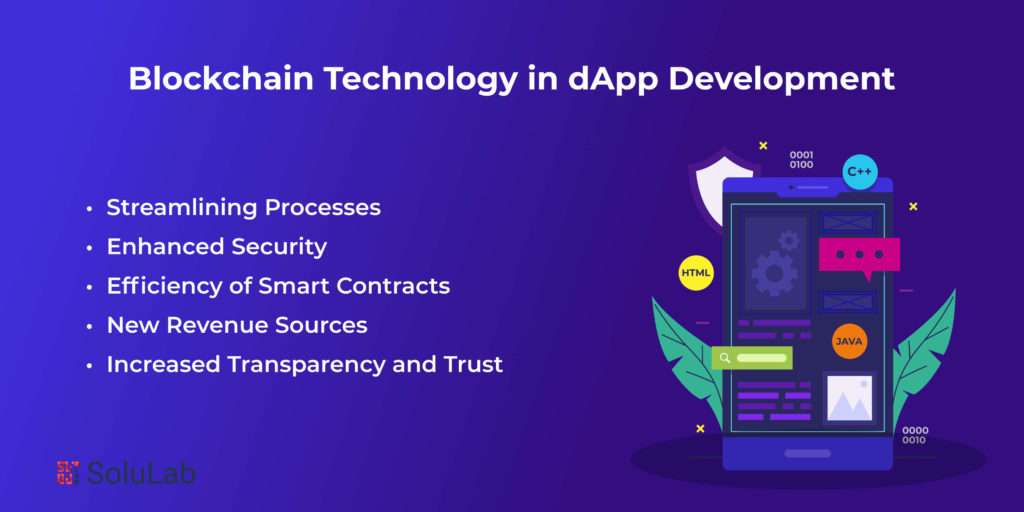
Initially, the basic architecture of cryptocurrencies was intended to be supported by blockchain technology. But nowadays, it’s developed into a versatile tool used in many other sectors. DApps, or decentralized apps, are at the center of this transformation. Businesses benefit from dApps in blockchain through some unparalleled benefits in terms of efficiency, security, and transparency as they function on a decentralized network.

  • Streamlining Processes: Developing blockchain-based DApps offers several business options, one of which is the capacity to streamline processes. Diverse business processes can be improved and automated using DApps, eliminating the need for middlemen and lowering the possibility of mistakes.
  • Enhanced Security: Organizations are placing a higher priority on security as a result of the rise in data breaches and cyber threats. Because blockchain technology is decentralized, there is less chance of unwanted access or manipulation because data is maintained in a tamper-resistant way.
  • Efficiency of Smart Contracts: Smart contracts do away with the necessity for middlemen in contractual procedures since they are self-executing programs that have the contents of the agreement directly encoded into their code. The creation of smart contracts speeds up transactions and lowers expenses for companies.
  • New Revenue Sources: Businesses may investigate new revenue sources using blockchain-based decentralized application development, especially by issuing tokens or establishing decentralized marketplaces. These changes may present fresh approaches to revenue generation and company growth.
  • Increased Transparency and Trust: Successful business relationships are built on trust. Blockchain-based DApps build an unchangeable, transparent ledger that promotes confidence among users and stakeholders. Increased brand reputation and consumer loyalty may result from this improved openness.

Benefits of Blockchain in dApp Development

Benefits of Blockchain in dApp Development

The development of Ethereum DApps is changing how decentralized apps will be used in the future. The following advantages are driving the growing popularity of blockchain-based DApps:

  • Transparency and Immutability: Every transaction on a blockchain is publicly recorded, ensuring transparency. Since data cannot be altered or withdrawn after it has been collected, security and trust are increased.
  • Security: Since DApps are decentralized, fraud and hackers cannot affect them. There isn’t a single location where dishonest people can go.
  • Reduced Costs: DApps may significantly reduce running costs by doing away with middlemen and using smart contracts to automate processes. 
  • Global Accessibility: From any place with an internet connection, DApps offer limitless utilization of financial systems and services.

The Business Power of Decentralization

Keeping up with transformational technology is critical to maintaining competitiveness in the fast-paced world of business. Decentralization has emerged as a key factor influencing how businesses will operate in the future, particularly when it comes to the creation of blockchain-based DApps. This section will examine how companies might profit from decentralization, with an emphasis on the growth prospects and advantages of developing blockchain applications for companies and daily operations.

Opening Up New Growth Paths

Adopting decentralized solutions through the appropriate blockchain DApp development firm is a strategic requirement for organizations looking to grow and diversify. Blockchain technology’s decentralization opens up new development opportunities for companies that were previously limited by conventional centralized systems.

  • International Market Access: Companies may easily grow internationally with decentralized application development. A blockchain DApp development company makes it easier to create systems that are efficient, safe, and cross-border, giving companies the confidence to enter undiscovered areas.
  • Tokenization for Capital Generation: Businesses have a special chance to tokenize assets thanks to the tokenization idea. This improves liquidity and creates opportunities for creative fundraising techniques. A DApp development firm specializes in building blockchain applications that easily include tokenization, enabling companies to investigate various forms of finance.
  • Community Involvement and Loyalty: Long-term company success depends on cultivating a devoted clientele. DApps in blockchain provide a feeling of community participation by introducing features like token-based rewards and decentralized governance. This strengthens consumer advocacy and loyalty in turn, laying the groundwork for long-term company expansion.

How DApps on Blockchain Can Change Businesses Operations?

Traditional corporate procedures have been revolutionized by blockchain DApps, increasing operational efficiency. Reputable blockchain DApp development firms understand how important decentralized apps are to changing how businesses operate.

  • Decentralized Data Management: Sensitive data is handled by businesses in enormous quantities. Decentralized data management solutions are provided by blockchain DApps, guaranteeing that data is easily auditable, safely kept, and impervious to manipulation. This simplifies compliance procedures while simultaneously improving data security.
  • Smart Contracts for Smooth Transactions: Transaction processes may be sped up and automated by incorporating smart contracts into corporate operations. A blockchain DApp development company focuses on creating smart contracts that are suited to certain business requirements and enable transactions that are quicker, more dependable, and more affordable.
  • Supply Chain Transparency: Companies in a variety of sectors are realizing the value of supply chain openness. The proficiency of a blockchain DApp development company guarantees businesses may utilize decentralized solutions to get complete visibility in their supply chains, thus boosting confidence among interested parties.

Innovations in Technology Creating Business Opportunities

To ensure ongoing success in the fast-paced world of blockchain DApp development and company today, it is imperative to stay ahead of the curve. Technological developments, especially in the area of blockchain DApp development, create new commercial prospects.

  • Blockchain Integration: The smooth integration of blockchain technology is the cornerstone of the strategy used by a strong blockchain DApp development business. This fundamental technology guarantees the development of transparent, safe, and decentralized networks. The company’s specialty is utilizing blockchain technology to its fullest extent, providing companies with a strong platform for expansion.
  • Decentralized Storage Solutions: A blockchain DApp development business incorporates modern decentralized storage solutions into DApp development, realizing the value of data security and accessibility. In addition to guaranteeing data integrity, this offers companies with great scalable storage alternatives.
  • Interoperability: In an interconnected digital ecosystem, interoperability is essential. A blockchain DApp development business gives top priority to developing DApps that are compatible with current platforms and systems. This promotes a unified IT landscape, enabling companies to profit from blockchain without interference.
  • Consensus Mechanisms: Selecting the right consensus mechanisms is essential to guaranteeing blockchain networks’ dependability and efficiency. An advanced consensus mechanism is assessed and put into practice by a blockchain in DApp development, which customizes it to meet the unique requirements of each DApp. This tactical approach improves the general robustness and usefulness of blockchain technologies.

DApps for Banking and Finance

DApps built on blockchain technology are revolutionizing the financial sector. One of the most notable use cases is in decentralized finance (DeFi).

DeFi DApps provide a variety of financial services, such as lending, borrowing, trading, and yield farming, without the need for traditional banks or intermediaries. Users can interact directly with DeFi protocols, which are managed by smart contracts.

Furthermore, the stability and reliability of the market have been enhanced by smart contract-governed stablecoins like USDC and DAI, which are based on blockchain technology. This might offer a more inclusive and effective financial system, especially in places where traditional banks are not easily accessible.

DApps for Healthcare

Healthcare is another sector that might benefit from DApps. Electronic health records (EHRs), which provide secure, interoperable, and immutable medical data, may be stored using blockchain technology. In order to improve privacy and trust, patients have authority over their health data and can provide access to medical personnel, researchers, and insurance companies.

The supply chain for pharmaceuticals and medical equipment may operate more efficiently thanks to DApps. Transparent, unchanging data eventually improves patient safety by guaranteeing the quality and legitimacy of prescriptions and prohibiting the sale of counterfeit items.

DApps for Supply Chain Management

Distributed ledger apps (DApps) built on the blockchain offer a robust traceability and transparency approach for supply chain management. All supply chain participants may track an item’s progress in real-time from manufacture to delivery by using a shared ledger.

In industries like food and luxury goods, where authenticity and quality are vital, this technology is quite beneficial.

The billion-dollar annual expenditures that businesses incur due to counterfeit goods may be significantly reduced. By scanning a product’s QR code, customers may verify its validity and feel more at ease about their purchases.

Challenges and Limitations of DApps in Blockchain Challenges and Limitations

DApps provide a number of advantages, but they also present certain challenges and disadvantages.

  • Scalability: In certain blockchain networks, like Ethereum, scalability issues lead to high gas prices and slow transaction processing times.
  • User Experience: Due to their complexity, DApps might not be widely adopted. User interfaces are being improved on a continuous basis.
  • Regulatory Concerns: It may be challenging to comply with regulations because DApps occasionally operate in legal limbo.
  • Interoperability: The inability of different blockchain networks to readily join may hinder the efficient flow of assets and data.
  • Environmental Concerns: Proof-of-work-based blockchains, like Ethereum and Bitcoin, need a lot of energy. It is essential to transition to consensus approaches that are more ecologically friendly.

The Development of DApps in the Future

The future of DApp development is really bright. Hire Dapp Developers who are committed to removing present barriers and enhancing DApp usability and accessibility.

Future developments and trends affecting DApps include the following:

  • Layer 2 Solutions: Layer 2 solutions aim to reduce transaction costs and handle scalability issues. Examples of these are sidechains and Ethereum’s Optimistic Rollups.
  • Cross-Chain Compatibility: Developers are searching for ways to improve interoperability in order to facilitate the seamless transfer of assets and data between different blockchain networks.
  • Non-Fungible Tokens, or NFTs: As NFTs gain popularity, more possibilities become available to artists, collectors, and producers. DApps are an essential part of the NFT ecosystem.
  • Decentralized Identity: By giving users control over their data, DApps may be crucial to decentralized identity solutions.
  • Governance and DAOs: In a variety of DApps and organizations, Decentralized Autonomous Organizations (DAOs) are gaining popularity as a mechanism for community-driven governance.

How to Pick a Trusted Blockchain App Development Company?

Selecting the top blockchain DApp development company requires avoiding common blunders and carefully weighing a number of important considerations:

  • Experience and Expertise: Seek out businesses that have a strong grasp of developing DApps and a track record of developing blockchain systems. Look through their portfolio to see the technologies and projects that are relevant to you.
  • Technical Proficiency: Verify that the business is knowledgeable about the blockchain systems and technology that you find appealing. Check their knowledge of consensus methods, the creation of smart contracts, and other crucial blockchain elements.
  • Historical Projects and Case Studies: Examine the organization’s past projects and case studies to evaluate the caliber of their output, punctuality, and customer contentment. This will shed light on their reliability as well as capabilities.
  • Team Competency: Assess the development team’s abilities and background. A competent and experienced staff is essential to the creation of a successful DApp. Seek out a group of people who are knowledgeable with decentralized technologies, blockchain, and pertinent programming languages.
  • Scalability: Take into account the company’s capacity to expand your DApp as your enterprise expands. In order to ensure that your DApp can meet future needs, scalability is essential for handling more users and data.
  • Security Measures: When developing a blockchain, security is crucial. Make sure that the business adheres to security best practices, carries out extensive testing, and security audits, and puts safeguards in place to keep your DApp safe from hacker attacks and vulnerabilities.
  • Budget and Cost: Although it’s important, value should take precedence over the cheapest price. Make sure the pricing structure fits inside your budget by understanding it. You can prevent unforeseen costs by using a pricing plan that is clear and open.
  • Client References and Reviews: Request references and reviews from prior customers. This will offer information on the company’s standing, ability to communicate, and general level of client happiness.
  • Support and Maintenance: Find out what post-development support and maintenance services the organization provides for blockchain development. A reputable business should offer continuing assistance to resolve any problems and maintain your DApp current with emerging technologies.

CTA

Concluding Thoughts

DApps built on the blockchain are unquestionably creating new opportunities. They offer cost-effectiveness, security, and transparency in several businesses. DApps should be utilized more extensively as layer 2 solutions, interoperability, and user-friendly interfaces continue to progress, even though there are still challenges.

DApps have the potential to completely transform current procedures and provide people, businesses, and industries with a more open, effective, and inclusive future thanks to their expanding popularity and capabilities. With the power of blockchain technology and the inventiveness of DApp developers working together, we seem to be heading toward a decentralized, promising, and exciting future.

The most effective option is to go with SoluLab as your blockchain DApp development company. Our skilled group has a proven track record of developing advanced decentralized apps. To guarantee the reliability of your DApp, we place a high priority on security, scalability, and regulatory compliance. Our commitment to your pleasure is evidenced by our transparent pricing policy, customer-focused methodology, and stellar client testimonials. More than just a development service, SoluLab is a dApp development company. It is a reliable partner dedicated to brilliantly and creatively realizing your blockchain idea. For a smooth and fruitful DApp development experience with an emphasis on ongoing support and maintenance, hire blockchain developers from SoluLab today! Contact us now!

FAQs

1. What is the significance of blockchain technology in dApp development?

Blockchain technology provides the foundational infrastructure for developing decentralized applications (dApps). Its core features such as decentralization, transparency, and immutability enable dApps to operate autonomously without the need for intermediaries. Smart contracts, decentralized storage, and tokenization are key blockchain components that empower dApp development by automating processes, securing data, and facilitating monetization.

2. What are the main advantages of decentralized applications (dApps)?

Decentralized applications offer several advantages, including enhanced security due to their distributed nature, transparent governance mechanisms, and increased user autonomy. Unlike traditional applications, dApps are not controlled by a single entity, reducing the risk of censorship and manipulation. Additionally, dApps enable users to interact directly with one another, fostering a more peer-to-peer ecosystem.

3. How do smart contracts contribute to dApp development?

Smart contracts are self-executing contracts with the terms of the agreement directly written into code. In dApp development, smart contracts automate various processes, eliminating the need for intermediaries and reducing the risk of fraud or manipulation. They enable secure and transparent execution of transactions, ranging from simple payments to complex financial agreements, within the decentralized ecosystem of dApp.

4. What are the challenges associated with blockchain-based dApp development?

Despite its potential, blockchain-based dApp development faces several challenges. Scalability remains a significant issue, with current blockchain networks struggling to handle large-scale transactions efficiently. Moreover, regulatory uncertainty and compliance requirements vary across jurisdictions, posing legal hurdles for dApp developers. Additionally, achieving widespread user adoption and overcoming the learning curve associated with decentralized technologies are ongoing challenges.

5. How Does SoluLab Assist in Blockchain and dApp Development?

SoluLab offers comprehensive blockchain development services, specializing in decentralized application (dApp) creation. With seasoned developers proficient in Ethereum, Hyperledger, and EOSIO, SoluLab ensures tailored solutions aligned with clients’ needs. From ideation to deployment, SoluLab provides end-to-end support, incorporating modern technologies and offering post-deployment maintenance. Trusted for its expertise and commitment to client success, SoluLab stands as a reliable partner in navigating the complexities of blockchain-based dApp development.

Creating the Next Decentralized Application: A Step-by-Step Blockchain Development Guide

Creating the Next Decentralized Application: A Step-by-Step Blockchain Development Guide

The technological landscape has witnessed a paradigm shift in the way applications are developed and deployed, thanks to the rise of decentralized applications (DApps) and blockchain technology. This transformative fusion has paved the way for innovative solutions that challenge the conventional models of centralized systems. 

In this blog, we embark on a comprehensive exploration of decentralized applications and the underlying blockchain technology, delving into the key steps involved in the blockchain/dapp development processes and highlighting their potential to reshape the technological landscape across various sectors.

Understanding Decentralized Applications (DApps)

At its core, a decentralized application, commonly referred to as a DApp, is a software application that operates on a decentralized network, utilizing the principles of blockchain technology. Unlike traditional applications, which rely on a central authority to manage data and processes, DApps operate on a distributed network of computers, providing enhanced transparency, security, and autonomy. DApps are characterized by their open-source nature, cryptographic security, and peer-to-peer interactions, making them a formidable alternative to centralized counterparts.

Read Blog Post: Top 10 dApp Development Companies

DApps can encompass a wide array of functionalities, ranging from finance and supply chain management to social networking and gaming. What sets them apart is their ability to function autonomously, free from the control of any single entity. Users of DApps become participants in a collective network, contributing to consensus mechanisms that validate transactions and ensure the integrity of the application. This unique architecture not only empowers users but also reduces the risk of data breaches and censorship.

Understanding Blockchain Technology

Central to the development and operation of DApps is the revolutionary concept of blockchain technology. At its core, a blockchain is a distributed, immutable ledger that records transactions across a network of computers in chronological order. This ledger is secured through advanced cryptographic techniques, ensuring that once data is recorded, it cannot be altered or tampered with, bolstering the authenticity and integrity of the information.

The blockchain’s structure comprises a series of blocks, each containing a batch of transactions. These blocks are linked together in a chain, forming an unbroken record of historical transactions. Decentralization is achieved by the network of participants, often referred to as nodes, who maintain copies of the entire blockchain. To reach a consensus on the validity of transactions, various consensus mechanisms, such as Proof of Work (PoW) and Proof of Stake (PoS), are employed, ensuring a trustworthy and transparent environment.

Blockchain technology serves as the backbone of DApps, providing the infrastructure for secure and efficient transaction processing, data storage, and execution of smart contracts. Smart contracts, self-executing agreements with predefined conditions, automate processes within DApps, eliminating the need for intermediaries and streamlining operations.

Step-by-Step Guide to Creating a Decentralized Application (DApp)

The process of creating a decentralized application involves a meticulous and multifaceted journey. Each step, from idea conceptualization to continuous improvement, plays a crucial role in shaping the success and impact of your DApp. By immersing yourself in the intricacies of each phase, collaborating with experts, and maintaining a user-centric approach, you can navigate the complexities of DApp development and contribute to the transformative potential of blockchain technology.

Step-by-Step Guide to Creating a Decentralized Application (DApp)

  •  Idea and Conceptualization

In the initial phase of developing a decentralized application (DApp), it’s crucial to lay a solid foundation through comprehensive idea conceptualization. This involves identifying a real-world challenge or inefficiency that can be effectively addressed through the unique capabilities of blockchain technology. Engage in thorough market research to pinpoint existing gaps and shortcomings in the target industry. By conducting a detailed analysis of current solutions and their limitations, you can craft a DApp concept that not only stands out but also delivers substantial value.

Outline the purpose and core functionalities of your DApp, aligning them with the identified problem. Consider creating a detailed project scope that encompasses various use cases and user personas. This scope will serve as a guiding document throughout the development process, ensuring that your DApp remains focused on its intended objectives.

  • Choosing the Right Blockchain Platform

Selecting the most suitable blockchain platform for your DApp is a pivotal decision that can significantly impact its success. Delve into a comprehensive assessment of various blockchain platforms, considering aspects such as consensus mechanisms, scalability, transaction speeds, interoperability, and developer community support.

Ethereum, for instance, is renowned for its robust smart contract capabilities, making it an ideal choice for complex decentralized applications. Conversely, Binance Smart Chain offers lower transaction fees, making it more suitable for applications that require frequent microtransactions. By thoroughly evaluating the pros and cons of each platform, you can make an informed decision that aligns with your DApp’s technical requirements and long-term vision.

CTA1

  • Designing Smart Contracts

Smart contracts are the backbone of any DApp, as they define the rules and logic governing interactions within the application. This step involves detailed planning and designing of these self-executing agreements, ensuring that they accurately reflect the intended functionalities of your DApp.

Detail the specific functions and interactions that each smart contract will facilitate. Consider outlining conditions that trigger these contracts, specifying the data they need to process and store. To expedite this process, leverage the capabilities of programming languages like Solidity (for Ethereum) that offer libraries and frameworks designed to simplify smart contract development. Thorough documentation of these contracts is essential to ensure transparency and effective collaboration among developers.

  • User Interface (UI) and User Experience (UX) Design

User experience (UX) design takes center stage as you embark on designing the user interface (UI) of your DApp. The goal here is to craft an intuitive and visually appealing interface that resonates with your target audience. This phase involves meticulous attention to detail to ensure seamless user interactions and navigation.

Lay out user flows and navigation paths that guide users through the various features of the DApp. Consider the placement of buttons, menus, and interactive elements to minimize user friction. Responsive design is paramount, ensuring that the DApp functions seamlessly across different devices and screen sizes. Collaborate with designers and UI/UX experts to create prototypes and wireframes that provide a tangible visualization of the DApp’s design and functionality.

Check Blog Post: Top Blockchain Technology Companies

  • Development and Testing

With a well-defined design in place, it’s time to roll up your sleeves and delve into the actual development of the DApp. This step encompasses both backend and frontend development, requiring proficiency in programming languages, frameworks, and development tools.

Write clean and efficient code for the backend, implementing the smart contract interactions and business logic. Simultaneously, I worked on the front end, bringing the design elements to life. Adhere to Software Development best practices, version control systems, and coding standards to ensure code quality, readability, and maintainability.

Testing plays a critical role in this phase. Set up testing environments, such as testes (sandbox environments), to simulate real-world interactions with the DApp. Perform rigorous testing, including unit tests that examine individual components, and integration tests that validate the interactions between different parts of the DApp. Security audits and vulnerability assessments are paramount to identify potential threats and weaknesses that could compromise the integrity of the DApp.

  • Deployment and Launch

The deployment of your DApp marks a significant milestone in the development process. Deploying smart contracts involves interacting with deployment tools provided by the chosen blockchain platform. This step requires meticulous attention to detail to ensure the accurate and secure uploading of your code onto the blockchain network.

Craft a comprehensive deployment plan that outlines the steps, tools, and configurations required for a successful deployment. After deployment, your DApp becomes accessible to users through their Crypto Wallets. Plan a comprehensive launch strategy that includes promotional activities, press releases, and user onboarding materials. Effectively communicate how users can access and interact with your DApp, providing them with a seamless entry point into the decentralized world you’ve created.

  • Security Measures

Security considerations are paramount in DApp development due to the sensitive nature of blockchain-based applications. Ensuring the integrity of your DApp involves a combination of proactive measures, audits, and continuous vigilance.

Conduct thorough code audits to identify vulnerabilities and potential attack vectors. Implement security best practices such as input validation, secure coding patterns, and access controls. As blockchain technology evolves, so do potential security threats. Stay updated on the latest security advisories and patches for your chosen blockchain platform, implementing updates promptly to mitigate risks.

Consider engaging third-party security auditing services to provide an independent assessment of your DApp’s security posture. This external review can offer valuable insights and help identify potential blind spots that may have been overlooked during development.

  • User Adoption and Marketing

The success of your DApp hinges on its adoption by users. Crafting a robust marketing strategy is essential to generate awareness, attract users, and foster engagement within the DApp’s ecosystem.

Utilize social media platforms, content creation, and influencer collaborations to spread the word about your DApp. Develop informative and engaging content that showcases the features and benefits of your DApp. Consider creating a dedicated website or landing page that serves as a central hub for information and user resources.

Community engagement is key in the blockchain space. Host webinars, Ask Me Anything (AMA) sessions, and online forums to interact with potential users, address their queries, and gather feedback. By actively participating in conversations and demonstrating your commitment to user satisfaction, you can build a loyal user base that becomes an integral part of your DApp’s growth journey.

Read Our Blog Post: 4 Big Problems to Solve in Crypto

  • Continuous Improvement and Updates

Even after the successful launch of your DApp, the journey is far from over. The landscape of blockchain technology is dynamic and ever-evolving, requiring constant vigilance and adaptation to remain competitive and relevant.

Monitor user engagement and gather feedback to identify areas for improvement. Regularly release updates that address bug fixes, enhance features, and incorporate user-requested changes. Stay informed about emerging trends and advancements in blockchain technology, considering how these developments can be integrated into your DApp’s roadmap.

Exploring partnerships and collaborations within the blockchain community can open up new avenues for growth and innovation. By staying proactive and receptive to user needs and technological advancements, you can position your DApp as a leading solution within its niche.

CTA2

Concluding Remarks

In conclusion, the amalgamation of decentralized applications and blockchain technology has ushered in a new era of innovation and disruption. DApps offer a novel approach to application development, leveraging blockchain’s inherent characteristics to provide trust, security, and empowerment to users. By embracing these advancements, industries stand to reshape their operations, unlocking unprecedented opportunities while addressing long-standing challenges.

SoluLab excels in decentralized application (DApp) development services, aligning seamlessly with the guide’s steps. Their strengths lie in ideation, blockchain selection, user-centric design, security, user engagement, and technological innovation. As pioneers in blockchain solutions, SoluLab exemplifies the transformative potential of DApps.

In the fast-paced world of blockchain development solutions, innovation knows no bounds. With dedication, creativity, and a commitment to the principles of decentralization, your dApp could be the next groundbreaking solution that changes the way we interact with the digital world. So, go forth, dream big, and build the future of decentralized applications! For expert guidance and support, contact SoluLab today.

FAQs

1. What is a DApp and how does it differ from a traditional app?

 A decentralized application (DApp) is a software application that operates on a decentralized network of computers, utilizing blockchain technology. Unlike traditional apps, DApps eliminate the need for intermediaries and offer greater transparency, security, and autonomy.

2. How does blockchain technology ensure the security of DApps?

Blockchain technology secures DApps through its decentralized and immutable ledger. Transactions are recorded in blocks, cryptographically linked to form a chain. This prevents unauthorized alterations, ensuring data integrity. Additionally, the consensus mechanism ensures that transactions are validated by a network of participants, reducing the risk of fraudulent activities.

3. What role do smart contracts play in DApps?

Smart contracts are self-executing agreements that automate processes within DApps. They facilitate, verify, or enforce the negotiation or performance of a contract, eliminating the need for intermediaries. Smart contracts enhance transparency, efficiency, and accuracy in various applications, from financial transactions to supply chain management.

4. How does the cost of developing a DApp compare to traditional application development?

The cost of developing a DApp can vary widely depending on factors like the complexity of the project, the blockchain platform chosen, and the desired features. While the initial investment in blockchain technology can be higher, DApps can lead to long-term cost savings by reducing intermediary fees and enhancing operational efficiency.

5. Can DApps be integrated with existing systems or applications?

Yes, DApps can be integrated with existing systems or applications through APIs (Application Programming Interfaces) or other interoperability solutions. This allows organizations to harness the benefits of blockchain technology without completely overhauling their infrastructure, making adoption more seamless and efficient.

What Are NFT dApps and How To Launch A Full-Stack NFT Marketplace dApp?

NFT Marketplace dApp

The emergence of Non-Fungible Tokens (NFTs) has revolutionized the digital world, enabling the ownership and trading of unique digital assets. NFT decentralized applications (dApps) have further propelled this trend, providing platforms where users can create, buy, sell, and interact with NFTs in a decentralized manner. In this blog, we will explore what NFT dApps are and delve into the process of launching a full-stack NFT marketplace dApp.

NFT dApps are decentralized applications built on blockchain networks that facilitate the creation, ownership, and exchange of non-fungible tokens. These dApps typically consist of a front-end user interface, smart contracts governing the token standards and marketplace functionalities, and a back-end infrastructure for data management and communication with the blockchain network. NFT dApps offer a decentralized and transparent environment where users can create, showcase, and trade NFTs.

Launching a full-stack NFT marketplace dApp involves several key steps. Firstly, you need to choose a blockchain network that supports NFT functionality and smart contracts, such as Ethereum or Cardano. Next, you’ll develop the smart contracts that define the NFT standard, including the characteristics and functionalities of the tokens. These smart contracts serve as the backbone of the NFT marketplace dApp, handling the creation, ownership, and trading of NFTs.

What are the Advantages of Developing an NFT dApps

What are the Advantages of Developing an NFT Dapps?

Developing NFT dApps (Non-Fungible Token decentralized applications) brings forth many advantages that contribute to the growth and innovation of the blockchain ecosystem. These applications harness the unique features of NFTs, allowing developers to create platforms that revolutionize various industries. Here are some key advantages of developing NFT dApps:

  • Ownership and Authenticity

NFT dApps enable users to establish ownership and verify the authenticity of digital assets. By leveraging blockchain technology, each NFT possesses a unique identifier, guaranteeing its uniqueness and preventing duplication or counterfeiting. This feature is precious in industries such as art, collectibles, and virtual real estate, where provenance and ownership verification are paramount.

  • Decentralization and Transparency

NFT dApps operate on decentralized networks, ensuring transparency and eliminating the need for intermediaries. With smart contracts governing NFT transactions, the entire process becomes automated and executed according to predefined rules. This transparency fosters trust among users, as all transaction details are immutably recorded on the blockchain, creating a secure and auditable environment.

Related: Top 10 dApp Development Companies

  • Enhanced Market Access

Developing NFT dApps opens up opportunities for creators and collectors to access global markets. Traditional barriers, such as geographical limitations or exclusive gatekeepers, are overcome as anyone with an internet connection can participate in NFT transactions. This democratization of markets allows creators to reach a wider audience, while collectors have access to a diverse range of digital assets from around the world.

  • Monetization and Royalties

NFT dApps empower creators by providing avenues for monetizing their work. Artists, musicians, game developers, and content creators can tokenize their creations as NFTs and earn royalties whenever their assets are sold or used within the dApp ecosystem. This creates sustainable revenue streams and eliminates the reliance on traditional distribution models, giving creators more control over their intellectual property and fostering a direct relationship with their audience.

  • Interoperability and Cross-platform Functionality

NFT dApps can be designed to be interoperable across different blockchain networks, enhancing flexibility and user experience. By utilizing cross-chain protocols, NFTs can be seamlessly transferred and used across multiple platforms and ecosystems, allowing for broader adoption and utilization of digital assets. Interoperability expands the potential user base and unlocks the value of NFTs beyond a single blockchain network.

  • Community Engagement and Participation

NFT dApps foster vibrant communities where users can connect, collaborate, and engage with like-minded individuals. These communities create a sense of belonging and provide opportunities for social interactions, discussions, and collaborations. NFT dApps often incorporate features such as forums, chat functionalities, and social profiles, enhancing the overall user experience and encouraging community participation.

CTA 1

What is the NFT marketplace dApp Development Cost?

The cost of developing an NFT marketplace dApp can vary significantly depending on several factors. These factors include the complexity of the platform, the desired features and functionalities, the technology stack used, the development team’s rates and location, and the timeline for development. While it is challenging to provide an exact cost estimate without specific project details, we can provide a general overview of the factors that influence the development cost.

  • Design and User Interface (UI/UX)

The design and user interface of the NFT marketplace dApp plays a crucial role in attracting and retaining users. The complexity and customization requirements of the design can impact the development cost.

  • Smart Contract Development

NFT dApps rely on smart contract development to manage the creation, ownership, and transactions of NFTs. The complexity of smart contracts, including functionalities like minting, transferring, and royalties, will influence the development cost.

  • Backend Development

Backend development involves setting up the infrastructure, integrating with the chosen blockchain network, implementing APIs, and building the necessary databases and servers. The complexity and scalability requirements of the backend will impact the development cost.

  • Frontend Development

The frontend development of the dApp marketplace involves creating the user interface and implementing functionalities like search, filtering, user authentication, and wallet integration. The complexity and customization of the front end will affect the development cost.

Related: Solana NFT Marketplace: How to build your own NFT Marketplace on Solana

  • Integration with Blockchain

Integrating the NFT marketplace dApp with the chosen blockchain network involves interacting with the blockchain’s smart contracts, handling transactions, and integrating wallet functionalities. The complexity of the integration and the chosen blockchain network can influence the development cost.

  • Testing and Quality Assurance

thorough testing and quality assurance are essential to ensure the security and functionality of the NFT marketplace dApp. The extent of testing required and the complexity of the functionalities will impact the development cost.

  • Deployment and Maintenance

Deploying the dApp marketplace to a live environment and ongoing maintenance and updates will also incur costs. Consider the server infrastructure, security measures, and ongoing support required for the marketplace.

How Does a dApps NFT Work?

DApps (decentralized applications) that incorporate NFTs (Non-Fungible Tokens) work by leveraging blockchain technology to enable the creation, ownership, and trading of unique digital assets. Here’s a simplified explanation of how a dApp NFT ecosystem operates:

1. NFT Creation and Minting

The dApp allows creators to mint NFTs, which involves tokenizing a digital asset and associating it with a unique identifier on the blockchain. This process establishes the ownership and authenticity of the asset. Creators can mint NFTs representing various digital items such as artwork, music, videos, virtual real estate, collectibles, and more.

2. Smart Contracts and Token Standards

The NFTs within the dApp ecosystem are governed by smart contracts, self-executing agreements stored on the blockchain. These smart contracts define the rules and functionalities associated with NFTs. For instance, the contract may include details on the transferability, royalties, and other attributes of the NFTs. Token standards like ERC-721 or ERC-1155 (on Ethereum) or specific standards on other blockchain networks facilitate the interoperability and standardization of NFTs.

3. Ownership and Verification

The blockchain acts as a decentralized ledger that records all NFT transactions, establishing a transparent and immutable history of ownership. Each NFT has a unique identifier that verifies its authenticity and ownership. This verification process allows collectors to confirm the provenance of an NFT and verify that it is an original creation.

4. Trading and Marketplace

NFTs within the dApp ecosystem can be bought, sold, and traded in a decentralized marketplace. The marketplace provides a platform for creators and collectors to interact and engage in transactions. Sellers can list their NFTs for sale, set prices or auction formats, and receive payment in cryptocurrencies. Buyers can browse through the marketplace, discover NFTs, and make purchases using their digital wallets.

Related: Delve into the Concept of NFTs and Their Use Cases

5. Wallet Integration and Storage

To participate in the dApp NFT ecosystem, users need a digital wallet that is compatible with the blockchain network supporting the dApp. The wallet allows users to securely store and manage their NFTs. It also enables users to interact with the dApp, initiate transactions, and showcase their NFT collections.

6. Interoperability and Integration

NFTs created within a dApp ecosystem can be interoperable, allowing for seamless integration with other dApps or platforms. This interoperability enables users to transfer their NFTs between different applications or marketplaces, expanding the potential use cases and value of the NFTs.

7. Community and Engagement

DApp NFT ecosystems foster vibrant communities where creators, collectors, and enthusiasts can connect, collaborate, and participate. Users can engage in discussions, share insights, showcase their collections, and participate in events and auctions. The community aspect adds depth and social interaction to the NFT ecosystem.

How to Hire the Best NFT Marketplace dApp Development Company?

How to Hire the Best NFT Marketplace dApp Development Company?

When looking to hire the best NFT (Non-Fungible Token) marketplace dApp development company, it’s essential to consider several factors to ensure a successful and high-quality outcome. Here are some steps to guide you in the hiring process:

1. Define Your Requirements

Before initiating the hiring process, clearly define your project requirements and objectives. Determine the scope, desired features, timeline, and budget for your NFT marketplace dApp. This will help you communicate effectively with potential development companies and evaluate their suitability for your project.

2. Research and Shortlist

Conduct thorough research to identify reputable NFT marketplace development companies. Explore their websites, portfolios, case studies, and client testimonials to assess their expertise and track record. Shortlist companies that have experience in blockchain development, NFTs, and dApp creation.

3. Evaluate Expertise and Experience

Assess the expertise and experience of the shortlisted companies. Look for teams that have extensive knowledge of blockchain technologies, smart contract development, and decentralized application development. Consider their experience with NFT marketplace dApps, including successful projects they have completed in the past.

4. Check Technical Proficiency

Evaluate the technical proficiency of the development companies. Look for teams that have experience working with the top blockchain platforms of your choice, whether it’s Ethereum, Cardano, or another platform. Ensure they have a solid understanding of smart contract development, blockchain integration, and frontend and backend technologies.

5. Review Work Processes and Methodologies

Inquire about the company’s work process and methodologies. Look for teams that follow agile methodologies, as they provide flexibility and adaptability throughout the development lifecycle. Ask about their communication channels, project management tools, and transparency in reporting progress and updates.

6. Assess Security Measures

Security is paramount in blockchain development. Inquire about the company’s approach to security and its experience in implementing robust security measures. Discuss how they ensure the integrity of smart contracts, protect user data, and handle vulnerabilities and potential threats.

7. Consider Team Size and Collaboration

Evaluate the size of the development team and their ability to handle your project effectively. Consider their availability and willingness to collaborate closely with you throughout the development process. A dedicated and communicative team is essential for successful project execution.

8. Communication and Support

Strong communication is crucial for a smooth collaboration. Assess the company’s responsiveness, clarity in communication, and willingness to understand your requirements. Inquire about their post-development support, including bug fixes, updates, and maintenance.

9. Request Quotes and Proposals

Request detailed quotes and proposals from the shortlisted companies. Evaluate the cost estimates, project timelines, and deliverables provided in each proposal. Consider the overall value offered by each company about their expertise and experience.

10. Conduct Interviews and Due Diligence

Narrow down your options and conduct interviews with the top contenders. Use this opportunity to ask in-depth questions, assess their cultural fit, and gain a better understanding of their capabilities. Conduct due diligence by checking references and reaching out to their previous clients for feedback.

CTA 2

Conclusion

In exploring NFT dApps and the process of launching a full-stack NFT marketplace dApp, it’s clear that these decentralized applications represent a revolutionary force in digital ownership and asset trading. Leveraging blockchain technology, dApp NFT solutions offer unprecedented transparency, security, and decentralized control over digital assets like art, collectibles, and virtual real estate. As a leading dApp development company, SoluLab stands at the forefront of this transformative technology, providing comprehensive services from ideation to deployment. Their expertise ensures that businesses and entrepreneurs can navigate the complexities of NFT marketplace development with confidence, tapping into the burgeoning market of digital collectibles and enhancing user engagement through innovative blockchain solutions.

For those looking to capitalize on the NFT boom or integrate blockchain-based solutions into their business models, partnering with a trusted dApp NFT development firm like SoluLab is essential. By harnessing their specialized knowledge and industry experience, organizations can not only launch successful NFT marketplace dApps but also position themselves at the forefront of the digital economy, driving innovation and unlocking new avenues of growth in the decentralized future.

FAQs

1. What are NFTs (Non-Fungible Tokens) and how do they work?

Non-Fungible Tokens (NFTs) are unique digital assets that represent ownership or proof of authenticity of a specific item or piece of content, such as art, music, videos, or virtual real estate. Unlike cryptocurrencies like Bitcoin, each NFT is distinct and cannot be exchanged on a one-to-one basis due to its unique properties recorded on a blockchain.

2. Why hire NFT developers for my project?

Hiring NFT developers ensures expertise in blockchain technology, smart contract development, and NFT standards like ERC-721 and ERC-1155. These developers can create custom NFT solutions tailored to your business needs, ensuring secure and efficient management of digital assets on decentralized platforms.

3. What services do NFT development companies offer?

NFT development companies provide a range of services including NFT marketplace development, smart contract creation, token minting, digital wallet integration, decentralized app (dApp) development, and blockchain consulting. These services facilitate the creation, trading, and management of NFTs across various industries.

4. How do I choose the right NFT service provider?

When selecting an NFT service provider, consider their experience in blockchain development, portfolio of previous projects, adherence to security standards, understanding of NFT marketplace dynamics, and ability to scale solutions. Ensure they align with your project requirements and can provide ongoing support post-deployment.

5. What are the benefits of integrating NFTs into my business?

Integrating NFTs into your business can unlock new revenue streams through digital asset sales and royalties. It enhances customer engagement by offering unique and collectible digital content, establishes authenticity and ownership verification, and expands market reach in the growing NFT ecosystem.

Top 10 dApp Development Companies 2026

Struggling to find the right dApp development company for your blockchain project? With hundreds of agencies claiming to be the best, it’s overwhelming to figure out who truly delivers secure, scalable, and user-friendly decentralized applications.

The wrong choice can lead to security breaches, wasted time, and money. And in the fast-paced world of Web3, even a small delay can cost you your competitive edge.

The global dApp market was valued at US $13.2 billion in 2023, expected to grow at a CAGR of 21.8%, reaching ≈US $81.9 billion by 2033.

In this blog, we’ll explore the Top 10 dApp Development Companies for 2026, based on technical expertise, innovation, security standards, and client satisfaction. Whether you’re building a DeFi platform, NFT marketplace, or DAO-based solution, these companies have a proven track record of excellence.

Key Criteria to Shortlist Top dApp Development Companies

Choosing the right dApp development company can make or break your project. Here’s a quick guide to the key criteria you should consider before finalizing your tech partner:

1. Technical Expertise: Look for companies with a strong command of blockchain development platforms like Ethereum, Solana, or Polygon. A technically sound team ensures your dApp functions smoothly, scales efficiently, and integrates with smart contracts and DeFi systems.

2. Security & Auditing Standards: A reliable dApp company follows best practices in security protocols and conducts rigorous audits. This helps prevent hacks, vulnerabilities, and data breaches, crucial for maintaining user trust and safeguarding transactions.

3. Portfolio & Case Studies: A well-documented portfolio with successful case studies shows the team’s capabilities. It reflects their experience in handling similar projects, their approach to solving problems, and the tangible impact they’ve delivered.

4. Innovation & Customization: Top companies go beyond cookie-cutter solutions. They understand your unique business goals and offer custom features that give your dApp a competitive edge through creative UX, gamification, or interoperable modules.

5. Client Reviews & Reputation: Online reviews, testimonials, and third-party ratings offer real-world insights into the company’s reliability, delivery timelines, and overall professionalism. A strong reputation usually reflects consistent client satisfaction.

6. Post-Development Support: After launch, your dApp may need updates, patches, or scaling. A good development partner provides reliable maintenance, bug fixing, and technical support to keep your platform running smoothly.

7. Cost-Efficiency: While you shouldn’t compromise on quality, a transparent pricing model and the ability to deliver value within budget are essential. The right company offers a balance between affordability and premium service.

8. Expertise and Experience: Years of hands-on blockchain development, especially in building decentralized applications, add credibility. Experienced teams are better equipped to handle unexpected challenges and guide you with strategic insights.

Top 10 dApp Development Companies to Consider in 2026

As the world of decentralized applications (dApps) continues to expand, keeping up with all the different companies can be challenging. However, with a little guidance, navigating the space can become much more manageable. Below is the list of top dapp development companies in 2026.

1. SoluLab

SoluLab is a software development company specialising in creating decentralised applications (dApps). With their extensive service offerings, which include frontend design, backend integration, and smart contract implementation.

By prioritising user-centric design and scalable architecture, SoluLab can produce outstanding dApps. Their proficiency in blockchain technology and zeal for providing solutions make them a top option for companies wishing to create dApps. Solulab has the knowledge to support you in achieving your objectives, whether you want a custom-built dApp or want to incorporate blockchain technology into an already-existing application.


$25-$49


50-249


2014


Los Angeles, CA, USA


Disney, Mercedes Benz, Goldman Sachs

2. ConsenSys

ConsenSys is a global leader in Ethereum-based dApp development, known for powering some of the most widely used Web3 tools like MetaMask and Infura. With deep expertise in smart contract development, DeFi solutions, and blockchain infrastructure, ConsenSys helps enterprises and startups build scalable, secure dApps.

Its suite of tools supports seamless development, testing, and deployment. Ideal for businesses seeking enterprise-grade Ethereum solutions, ConsenSys is trusted for its innovation, security, and strong contribution to the blockchain ecosystem.


$99


250


2014


Brooklyn, NY


JPMorgan Chase, ING, Microsoft, EY

3. EOSIO

EOSIO, developed by Block. One is a high-performance blockchain platform designed for rapid dApp development. Known for its fast transaction speeds, low latency, and scalable architecture, EOSIO supports a wide range of use cases from gaming to enterprise apps.

They offer comprehensive blockchain consulting, development, and integration services, empowering businesses to leverage the benefits of decentralized applications. It’s ideal for businesses that require high throughput, cost-effective operations, and customizable smart contract capabilities without sacrificing performance.


$150


100


2018


Maryland, USA


Block.one, Bitfinex, Tether

4. ChromaWay

ChromaWay has developed dApps that are tailored to meet the varied requirements of different industries, including finance, gaming, and supply chain management. Their extensive understanding and proficiency in blockchain technology enable them to create decentralized, transparent, and highly secure dApps.

Through ChromaWay’s exceptional support, businesses can change their operations and create innovative DApps that provide tangible benefits to their customers.


$50


100


2014


Stockholm, Sweden


Tezos, Ergo, IDB

Nadcab Labs

5. Nadcab Labs

Nadcab Labs is a well-known blockchain development company specializing in dApp development, token creation, DeFi solutions, and NFT platforms. With a technical team and a focus on customized blockchain solutions, Nadcab Labs delivers secure and scalable decentralized applications tailored to business needs.

They bring expertise in Ethereum, Hyperledger, Binance Smart Chain, and other leading blockchain platforms. Known for their affordable pricing and fast turnaround time, they’re ideal for startups, enterprises, and entrepreneurs looking to build dApps with practical use cases and real-world impact.


$50-99/hr


200


2017


Uttar Pradesh, India

6. Altoros

Altoros is a global software development company specializing in blockchain technology and dApps. They offer a range of services, from consulting to deployment, and cater to various industries.

Altoros stands out from competitors by using open-source technologies and adhering to industry best practices. Their team of skilled professionals provides innovative solutions tailored to clients’ needs. With exceptional services and expertise, Altoros is a top choice for blockchain technology and DApp development.


$60


150


2001


CA, United States


Allstate, Siemens, Huawei

BCG X

7. BCG X

BCG X, the tech build and design arm of Boston Consulting Group, combines deep strategy with tech execution. They specialize in building enterprise-grade decentralized apps that align with complex business needs.

With a focus on innovation, UX, and scalability, BCG X is perfect for large enterprises and legacy firms aiming to lead digital transformation through blockchain technology.


$200-$400


3000


2022


Boston, Massachusetts, USA

8. OpenXcell

OpenXcell is a software development company that provides dApp development solutions for businesses across various industries. Their team of blockchain experts utilizes advanced technologies to create secure and scalable dApp.

OpenXcell prioritizes innovation and follows an agile development approach, making them an ideal partner for any upcoming project. Their service offerings include smart contract development, frontend design, and backend integration.


$35


100


2008


NY, USA


Motorola, Dupont, Ubisoft

9. Intellectsoft

Intellectsoft is a software development company that offers a wide range of services, specializing in blockchain and dApp development. They provide complete solutions for creating decentralized applications for startups and enterprises.

They focus on delivering user-friendly, secure, and scalable DApps that enable businesses to adopt blockchain technology. With its blockchain and dApp development expertise, Intellectsoft is committed to providing innovative and reliable solutions that help companies to stay ahead of the competition.


$55


150


2007


Miami, FL


Mitsubishi, Fleet Nurse, Eurostar

10. Belitsoft

Belitsoft is a recognized company that specializes in creating unique DApp solutions for businesses. Their extensive offerings include dApp implementation, smart contract development, and blockchain consultancy.

Belitsoft has extensive experience and skill in developing decentralized apps, prioritizes security, and adapts to meet the unique needs across different industries. Through creative dApps that improve productivity and efficiency, their committed team of experts is dedicated to advancing digital transformation.


$40


50


2004


Warsaw, Poland


ElearningForce, Insly, Crimson

dApp development Compnany

Conclusion

Choosing the right blockchain dApp development company is crucial for building secure, scalable, and future-ready decentralized applications. Whether you’re a startup exploring Web3 or an enterprise seeking blockchain integration, these companies offer tailored solutions to meet your needs. Before finalizing a partner, evaluate them based on key factors like security standards, portfolio, client feedback, and cost-efficiency.

DLCC partnered with SoluLab to build two innovative platforms—Prime Product and Tokenet—designed to change traditional finance. With features like dual-custody onboarding, real-time collateral management, live crypto charts, and secure trading, DLCC now enables seamless crypto lending, borrowing, and trading worldwide. The result? A user-friendly, transparent, and secure DeFi ecosystem that captured a wide user base and simplified capital access from credible lenders.

SoluLab, a top dApp development company in the USA, can help you turn your blockchain vision into reality with customized, scalable solutions. Contact us today to discuss further.

FAQs

1. How is DApp different from a traditional app?

A decentralised network, usually a blockchain, is used to host a form of programme known as a Dapp, or decentralised application. Dapps are more secure and censorship-resistant than regular apps because they employ a distributed network of nodes to execute processing and storage instead of centralised servers.

2. What programming languages are commonly used for Dapp development?

Solidity, which is used for Dapps based on Ethereum, and JavaScript, which is used for Dapps based on other blockchain platforms, are the two programming languages that are most frequently used for Dapp development.

3. How do smart contracts work in Dapps?

Smart contracts are self-executing agreements that are designed to carry out certain activities automatically when predetermined criteria are satisfied. Smart contracts are used in Dapps to enforce the network’s rules and regulations and guarantee the security and transparency of all transactions.

A smart contract may be set up, for instance, to automatically transfer money from one account to another when a specific need is satisfied, such as when a product is delivered.

4. What are some popular Dapp platforms and frameworks?

Some popular Dapp platforms and frameworks include Ethereum, EOS, TRON, and Hyperledger Fabric. These platforms provide developers with the tools and infrastructure needed to build and deploy Dapps on their respective networks.

Top Blockchain dApps in 2026

As cryptocurrency aficionados get more familiar with DApps, the number of DApps increases constantly. Decentralized applications are programs that operate on a blockchain or a peer-to-peer network. These platforms are not managed by a central authority, but rather by a broad network of users, who control them themselves. DApps are not only simpler to build, but they also appeal to users who are worried about privacy in the future.

Smart contracts represent the fundamental logic of a decentralized application. Smart contracts work as blockchain building blocks that receive information from externally available sensors events. Moreover, they assist the blockchain in managing the status of every participant.

Decentralized apps do not have to run on top of a blockchain network. Tor, Popcorn Time, BitTorrent, and BitMessage are examples of decentralized apps that operate on a P2P network but not on a blockchain — which is a kind of P2P network in and of itself. In this blog, we will look into the top blockchain dApps in 2026.

What are Blockchain dApps?

Blockchain dApps are decentralized applications that utilize blockchain technology as their underlying infrastructure. These applications operate on a distributed network of computers (nodes) that maintain a shared, tamper-resistant ledger of transactions or data.

Blockchain dApps typically have the following characteristics:

1. Decentralization: They run on a network of nodes rather than a centralized server, meaning no single entity has control over the entire network.

2. Transparency: Transactions and data on the blockchain are transparent and publicly accessible, providing users with visibility into the history of the application.

Related: Blockchain Development in DeFi Ecosystem

3. Immutability: Once recorded on the blockchain, data cannot be easily altered or deleted, ensuring the integrity and security of the application.

4. Smart Contracts: Many blockchain dApps utilize smart contracts, which are self-executing contracts with the terms of the agreement directly written into code. Smart contracts automatically execute when predefined conditions are met, enabling trustless and automated transactions.

5. Tokenization: Some blockchain dApps involve the use of tokens, which represent digital assets or utility within the application. These tokens can be used for various purposes, such as payments, voting, governance, or accessing specific features.

Benefits of Using Blockchain dApps

Benefits of Blockchain dApps

There are several benefits of using blockchain dApps. Some of them include:

  • Decentralization: Blockchain dApps operate on decentralized networks, ensuring that no single entity has control over the entire system. This decentralization fosters trust among users by reducing the risk of censorship, manipulation, or single points of failure.
  • Transparency: Transactions and data recorded on the blockchain are transparent and immutable, meaning they can be verified by anyone at any time. This transparency enhances trust and accountability within the ecosystem, as users can independently verify the integrity of the data.
  • Security: The cryptographic principles underlying blockchain technology provide robust security features. Data stored on the blockchain is cryptographically hashed and distributed across multiple nodes, making it highly resistant to tampering, fraud, and cyberattacks.
  • Elimination of Intermediaries: By leveraging smart contracts and decentralized networks, blockchain dApps eliminate the need for intermediaries, such as banks or clearinghouses, in various transactions. This not only reduces costs but also accelerates transaction processing and enhances efficiency.
  • Global Accessibility: Blockchain dApps are accessible to anyone with an internet connection, regardless of geographic location or socio-economic status. This global accessibility democratizes access to financial services, digital assets, and decentralized applications, fostering financial inclusion and economic empowerment.
  • Incentive Mechanisms: Many blockchain platforms incorporate incentive mechanisms, such as token rewards or staking, to incentivize network participants to contribute resources and maintain the integrity of the network. These mechanisms align the interests of participants and help ensure the sustainability and security of the ecosystem.

CTA1

The Current State of Blockchain dApps

Due to the increasing desire for decentralized solutions and the rapid expansion and variety of technology, the current state of blockchain dApps is remarkable. Among the top blockchain platforms to build dApps, Ethereum stands out for its robust smart contract functionality and extensive developer community. However, issues with scalability and expensive transaction fees have prompted the rise of substitute platforms that provide quicker and more affordable dApp development alternatives, such as Binance Smart Chain, Polygon, Cardano, and Solana.

With its decentralized options for lending, borrowing, and trading, decentralized finance, or DeFi, has become a major factor in the transformation of traditional financial services. Comparably, the emergence of non-fungible tokens (NFTs) has drawn a lot of interest. Platforms built on the Ethereum platform, such as OpenSea and Rarible, have developed into hubs for the exchange of digital collectibles and artwork. Even while scalability problems still exist, approaches like layer 2 scaling and interoperability protocols are opening the door for a more connected and scalable blockchain dApp environment that will likely see more innovation and use in the years to come.

How Do Blockchain dApps Work?

Decentralized applications (dApps) operate on a decentralized network infrastructure, which distinguishes them from traditional centralized applications. Instead of relying on a central server, dApps utilize a network of computers, or nodes, distributed across the globe. These nodes work collaboratively to validate and record transactions on a blockchain, a distributed ledger that serves as the backbone of the dApp ecosystem. By decentralizing control and data storage, top decentralized apps or dApps eliminate single points of failure and reduce the risk of censorship or manipulation.

Smart contracts play a crucial role in the functionality of dApps. These self-executing contracts are written in code and deployed on the blockchain. They automatically execute predefined actions when specific conditions are met, without the need for intermediaries or third-party oversight. Smart contracts enable trustless interactions between users, facilitating secure and transparent transactions within the dApp ecosystem. Users interact with dApps through user-friendly interfaces, such as web or mobile applications, which connect to the underlying blockchain network. Through these interfaces, users can access the functionalities offered by the dApp, interact with smart contracts, and submit transactions. Overall, the most popular dApps use decentralization, smart contracts, blockchain technology, and user interfaces to provide transparent, secure, and trustless applications across various domains, empowering users with greater control over their data and assets.

How Did We Compile the List of Top Blockchain dApps in 2026?

As we explore the domain of blockchain technology in 2026, the importance of decentralized applications (dApps) remains paramount. These digital advancements are transforming various sectors by providing unmatched transparency, security, and effectiveness. To identify the best blockchain dApps, several critical factors are at play. From user engagement and security protocols to innovation and adherence to regulations, let’s examine the essential criteria for recognizing the most promising dApps in the upcoming year.

  • User Adoption and Activity: Look for top decentralized apps with a high number of active users and consistent usage over time. User adoption is a strong indicator of the dApp’s popularity and relevance in the market.
  • Transaction Volume and Scalability: Evaluate the dApp’s transaction volume and its ability to handle scalability. A top dApp should have a robust infrastructure capable of processing a high volume of transactions efficiently.
  • Security and Transparency: Prioritize dApps that prioritize security measures and offer transparent operations. Blockchain’s inherent security features should be effectively implemented to protect user data and assets.
  • Innovative Features and Functionality: Choose dApps that offer innovative features and functionalities, setting them apart from competitors. Look for unique selling points that enhance user experience and provide added value.
  • Community Engagement and Support: Assess the level of community engagement and support surrounding the dApp. Active communities can contribute to the development, promotion, and improvement of the dApp, ensuring its long-term success.
  • Partnerships and Collaborations: Consider dApps that have formed strategic partnerships and collaborations with reputable organizations. Partnerships can enhance credibility, provide access to resources, and open up new opportunities for growth.
  • Regulatory Compliance: Ensure that the dApp complies with relevant regulations and legal requirements. Regulatory compliance is crucial for maintaining trust among users and avoiding potential legal issues in the future.
  • Track Record and Reputation: Research the dApp’s track record and reputation in the blockchain community. Choose dApps with a proven history of reliability, transparency, and ethical conduct.
  • Tokenomics and Economic Model: Analyze the tokenomics and economic model of the dApp, including token distribution, utility, and governance mechanisms. A well-designed economic model can incentivize user participation and contribute to the dApp’s sustainability.
  • Market Trends and Adoption: Stay informed about market trends and the adoption of blockchain technology. Monitor the most popular dApps and emerging trends to identify opportunities and make informed decisions.

Interested? Here are the most popular dApps to check out in 2026!

  • Uniswap

Uniswap’s impact on decentralized finance (DeFi) goes beyond its user-friendly interface. It is known as one of the top crypto dApps known for automated liquidity protocol, based on constant product market-making, which ensures that trading pairs always have sufficient liquidity, even for lesser-known tokens. Uniswap’s decentralized nature also means that anyone can contribute liquidity to the platform and earn fees, fostering a community-driven ecosystem. Additionally, Uniswap’s V3 introduced concentrated liquidity, allowing liquidity providers to concentrate their funds within a price range, further optimizing capital efficiency.

  • Compound

Compound’s protocol dynamically adjusts interest rates based on supply and demand, ensuring efficient allocation of assets across borrowing and lending markets. Its transparent governance process enables token holders to propose and vote on changes to the protocol, ensuring its adaptability and resilience. Moreover, the Compound’s interest-earning tokens (cTokens) represent users’ share of the underlying pool and accrue interest in real time, providing a seamless and passive income stream for participants.

Read Also: Build a dApps on Solana

  • Chainlink

Chainlink’s decentralized oracle network utilizes a robust security model, including multiple independent node operators, to provide tamper-proof data feeds to smart contracts. Its modular architecture allows developers to customize Oracle solutions to their specific use cases, ensuring flexibility and scalability. Furthermore, Chainlink is known as the best blockchain for dApps due to the extensive network of data providers and aggregators that ensures high-quality and reliable data across various industries, including finance, insurance, gaming, and supply chain management.

  • MakerDAO

MakerDAO’s stablecoin Dai maintains its peg to the US dollar through a system of over-collateralization and automated liquidation mechanisms, ensuring its stability even in volatile market conditions. The decentralized governance process, facilitated by MKR token holders, enables continuous improvements to the protocol and ensures its security and integrity. Additionally, MakerDAO’s integration with other DeFi protocols and platforms expands Dai’s utility and adoption within the broader ecosystem.

  • CryptoKitties

CryptoKitties introduced the concept of non-fungible tokens (NFTs) to a mainstream audience, sparking a craze for digital collectibles and paving the way for the NFT market’s explosive growth. Each CryptoKitty is unique and owned by the user as an ERC-721 token on the Ethereum blockchain, providing immutable ownership and provenance. The breeding mechanism, based on genetic algorithms, allows users to create new and rare CryptoKitties, driving engagement and value within the platform.

  • Aave

Aave’s flash loan feature enables users to borrow assets without collateral as long as the borrowed amount is repaid within the same transaction, opening up new possibilities for arbitrage, collateral swaps, and protocol interactions. Its transparent and user-centric approach to governance ensures community participation and consensus in protocol upgrades and parameter adjustments. Furthermore, Aave’s integration with other DeFi platforms through its open-source codebase enhances interoperability and liquidity within the ecosystem.

  • Synthetix

Synthetix’s synthetic asset issuance protocol allows users to mint and trade synthetic assets, known as Synths, that track the value of real-world assets, including fiat currencies, commodities, and cryptocurrencies. Its unique staking mechanism, based on SNX tokens, collateralizes Synths and incentivizes network participants to maintain the protocol’s stability and security. Moreover, Synthetix’s decentralized exchange (Synthetix.Exchange) facilitates seamless and permissionless trading of Synths, enabling users to access a diverse range of assets without liquidity constraints.

  • Balancer

Balancer’s customizable liquidity pools and automated portfolio management strategies provide users with flexibility and control over their assets. Its smart order routing mechanism ensures optimal prices and slippage for traders across various liquidity pools, enhancing liquidity and efficiency in decentralized exchanges. Additionally, Balancer’s integration with other DeFi protocols and platforms through its open-source codebase enables composability and interoperability within the broader DeFi ecosystem.

  • Yearn.finance

Yearn.finance’s yield aggregation strategies automate the process of optimizing yield farming opportunities across various DeFi protocols, maximizing returns for users’ crypto assets. Its suite of products, including Vaults and Earn, offers different risk-reward profiles and strategies to cater to diverse investor preferences. Furthermore, Yearn.finance’s community-driven governance model empowers token holders to propose and vote on changes to the protocol, ensuring its responsiveness to market dynamics and user needs.

  • Decentraland

Decentraland’s virtual reality platform enables users to own, develop, and monetize virtual real estate, known as LAND, within a decentralized metaverse. Its scripting language, based on HTML, CSS, and JavaScript, allows developers to create interactive and immersive experiences, ranging from virtual art galleries to multiplayer games. Moreover, Decentraland’s DAO governance model enables community members to propose and vote on decisions regarding the platform’s development and evolution, fostering a vibrant and collaborative ecosystem.

Conclusion

In 2026, the world of blockchain dApps is buzzing with excitement as these decentralized applications redefine how we interact with digital assets and virtual spaces. From swapping tokens on Uniswap to immersing ourselves in virtual realms like Decentraland, these dApps aren’t just about finance—they’re about unlocking new possibilities and experiences in our digital lives. As we look ahead, the growth of these dApps will depend on factors like how user-friendly they are and how regulations shape their development. But one thing’s for sure: blockchain dApps are here to stay, offering us a glimpse into a future where decentralization and community-driven innovation reign supreme.

FAQs

1. What are blockchain dApps?

Blockchain dApps, short for decentralized applications, are software applications built on blockchain technology. They operate on a decentralized network of computers, offering various functionalities without relying on a central authority.

2. How do blockchain dApps differ from traditional apps?

Unlike traditional apps, blockchain dApps don’t rely on a centralized server. Instead, they leverage blockchain technology for decentralized consensus and data storage, providing greater security, transparency, and censorship resistance.

3. What are some popular use cases for blockchain dApps?

Popular use cases for blockchain dApps include decentralized finance (DeFi), digital collectibles (NFTs), decentralized exchanges (DEXs), gaming, supply chain management, identity verification, and decentralized social networks.

4. Are blockchain dApps safe to use?

While blockchain dApps offer enhanced security through decentralization and cryptographic principles, users should exercise caution and conduct due diligence before interacting with any dApp. It’s essential to verify the smart contract code, review community feedback, and use reputable platforms.

5. How can I get started with blockchain dApps?

To get started with blockchain dApps, you’ll need a compatible cryptocurrency wallet and access to a blockchain network such as Ethereum. From there, you can explore popular dApps through platforms like DappRadar or directly access them through their respective websites or interfaces. Remember to start with small transactions and familiarize yourself with the dApp’s features and functionality.

Why it’s Not Easy to Become a dApp Developer?

With every new technology invention and innovation, the world is progressing towards operating and handling all transactions digitally. It is good in numerous ways in terms of saving time and cost. One such technology changing the world right now, as you may already know is blockchain and dApp development. The decentralized features of blockchain have reached an extent where mobile app developers once dream of using the decentralized platform to develop mobile applications. Is it easy to become a dApp developer?

Today, it is no more a dream. A dApps development company uses the decentralized technology to develop mobile apps that function without the requirement of any centralized server. Some of the famous dApps out there in the world are Augur, Hashbaby, Tronext, etc.

dApp development experts, such as Tony Tran, state that though the world realizes the importance and opportunities of dApps, there are various unforeseen challenges.

These challenges obstruct dApp developers from developing a completely decentralized application without any security issue. This article will give you an idea of why it is hard to become a dApp developer.

dApps developer

Why You Should Become A dApp Developer?

Before you get to know the hurdles in becoming a dApp developer, you should first know the major benefits of why you may prefer to become a dApp developer.

Has a good pay

The excitement caused by extremely high pay would motivate any developer to stay committed and work more than needed. dApp is a new industry of its own and the number of developers out in the market is low as of today. If you know Solidity and Ethereum Virtual Machine (EVM), your pay package increases even more as a developer.

Industries are looking for smart talent

Every single industry in the business market is facing various problems due to centralized functionality and dApps operates completely opposite of a centralized system. Industries, especially financial institutions are looking for smart developers who can integrate features and functions to enhance the interoperability via dApps.

Unique within the crowd

Today, standing out within a crowd plays a major role. The world has become an amphitheater to witness developers arrive at a do or die situation. In the game of digital world, you either become a dApp developer and move forward or stay the same.

Difficulties in Becoming A dApp Developer

Blockchain-based dApps developer

(Image Credit: Netsolutions.com)

Understanding blockchain, cryptocurrency and decentralized technology

The terminologies such as nodes, smart contracts, mining, hashing, public/private network, consortium networks, blocks, etc. are still new. New blockchain developers or trainees may  find it hard initially to understand what blockchain is and how they function. This requires investment in time and cost. Also, you need to identify a person who already knows it, and to learn from him makes the job even harder.

The expert of a dApp developers knowledge depends upon where they learn from. As a dApp developer you should be relate concepts you learn with real-time scenarios. Without understanding the practical purpose, there is no meaning in even trying to learn the concepts of dApps.

Requires constant innovation

The world is ever changing, nothing is ever permanent. Every industry has to innovate and keep updating themselves along with the changing technology. dApps, an innovative technology invented for innovation by itself disrupts innovation. That is the irony of it. This is because with every new innovation, there is resistance towards is acceptance due to the above stated problem in understanding the innovation.

Even if you successfully become a dApp developer, you still need to work harder and think harder to come up with practical scenarios. Think about scenarios where dApps can innovatively bring better solutions to existing problems.  

Explore unforeseen challenges

The concept of blockchain is new and the concept of dApps has not yet reached the ears of the complete world. People who know blockchain know about TRON, Ethereum and dApps or at least may have heard about it. Since the technology is new, the challenges in developing and implementing is still new. Even if the dApp has been successfully implemented, maintaining and controlling them with environmental technology changes is still a million-dollar question.

It is similar to letting a sailor, sail uncharted waters.

Creating a structure for smart contracts

Even centralized systems have problems with following regulations. A decentralized system has problems following regulations too but because regulation have not yet been standardized on a global scale. Since dApps are decentralized, the administrator has the power to set their own rules and regulations for it. Such a kind of system may or may not be biased on the personal views of the administrator depending on their requirement. Thus, the trust in the system becomes a question. However, with time, dApps will be accepted globally. But how long will that take? We can’t keep breaking fortune cookies to know that, can we?

Iteration of dApp designs

The important feature of any mobile application is ergonomically designing the UI/UX of the application. Similarly, dApp also requires a design that makes users understand features without much difficulty because the functionality of a dApp is a hurdle a user first has to cross. Once a user understands the functionality of a dApp, next hurdle is the design of it. If that is complex too, then as a dApp development company, you will lose users even before you make an acquittance.

Conclusion

Every technology has its drawbacks but do not forget to look at it perks too.

With new technologies being invented everyday, the perks of blockchain and dApps overthrow the drawbacks that come along with it. You will start cultivating self-perseverance to become a dApp developer. However, do not forget to look out for the different tools and platform of blockchain you will have to use to develop a dApp. This is because they are another hurdle you will have to cross as a dApp developer. Each tool and platform of blockchain has its own boon and bane. But, hey nothing worth having comes easy, right?

If you want to be a part of tomorrow’s future, start learning blockchain development and dApp development today. Contact us for more details to understand blockchain and dApps.