Talk to an Expert

How Is AI Changing the Way Businesses Handle Customer Service?

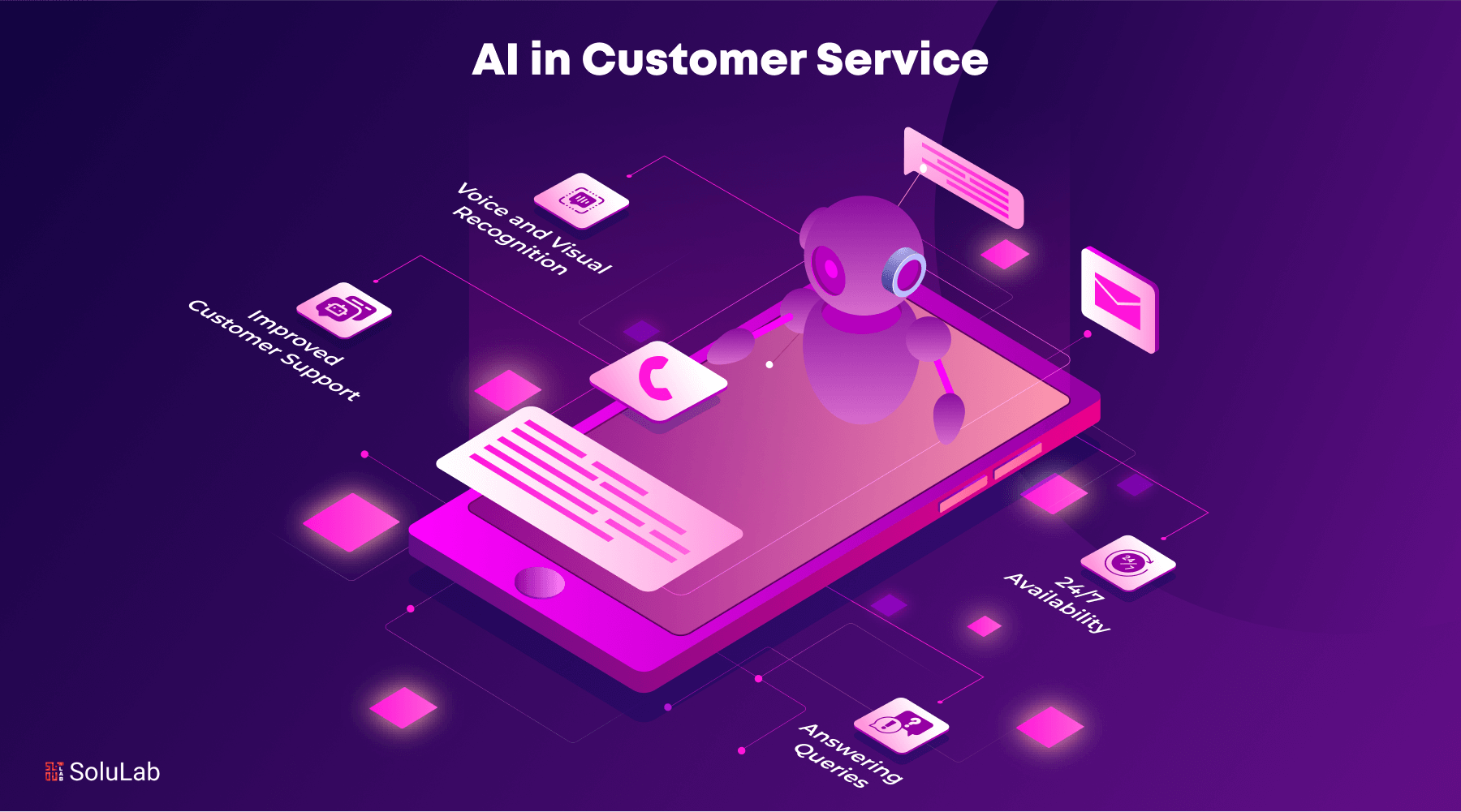
AI in Customer Service

As customers, we all expect instant responses and 24/7 support. Don’t you? 

For most businesses, delivering that level of service with limited human resources is a constant struggle. When customer experience suffers, so does the brand reputation. Delayed replies, missed queries, and inconsistent support can lead to frustration and lost leads. No business wants that.

This is why modern businesses are leveraging AI to analyze large volumes of customer data. This helps them anticipate customer needs, personalize services, and run targeted marketing campaigns. With AI-driven insights, companies can make smarter decisions and deliver more meaningful customer experiences.

According to Business Insider, companies like AT&T have implemented open-source AI solutions, achieving 91% of ChatGPT’s accuracy while reducing processing time from 15 hours to under 5 hours daily. 

In this blog, we’ll explore the role of AI in customer service and how you can use it to boost efficiency, improve satisfaction, and stay ahead of the competition.

What is AI in Customer Service?

AI in Customer Service uses artificial intelligence technologies like machine learning, natural language processing (NLP), and automation to improve customer interactions, improve support, and enhance user experience. It helps businesses handle large volumes of customer inquiries efficiently and offers faster, 24/7 support. Key applications of AI and customer service are:

  • Chatbots and Virtual Assistants: Tools like Zendesk AI, Intercom, and Freshchat can handle common queries instantly.
  • Sentiment Analysis: AI detects emotions in customer messages and routes them to the right agent.
  • Predictive Analytics: Artificial intelligence identifies trends in customer behavior to offer proactive support.
  • Voice Assistants: Platforms like Google Dialogflow or Amazon Lex support conversational IVRs.
  • Auto-tagging and Ticket Routing: AI classifies and assigns tickets automatically to reduce response time.

DO YOU KNOW?
AI chatbots can handle up to 80% of routine customer service tasks, freeing up human agents to focus on more complex issues.

How Does AI in Customer Service Benefit Customers?
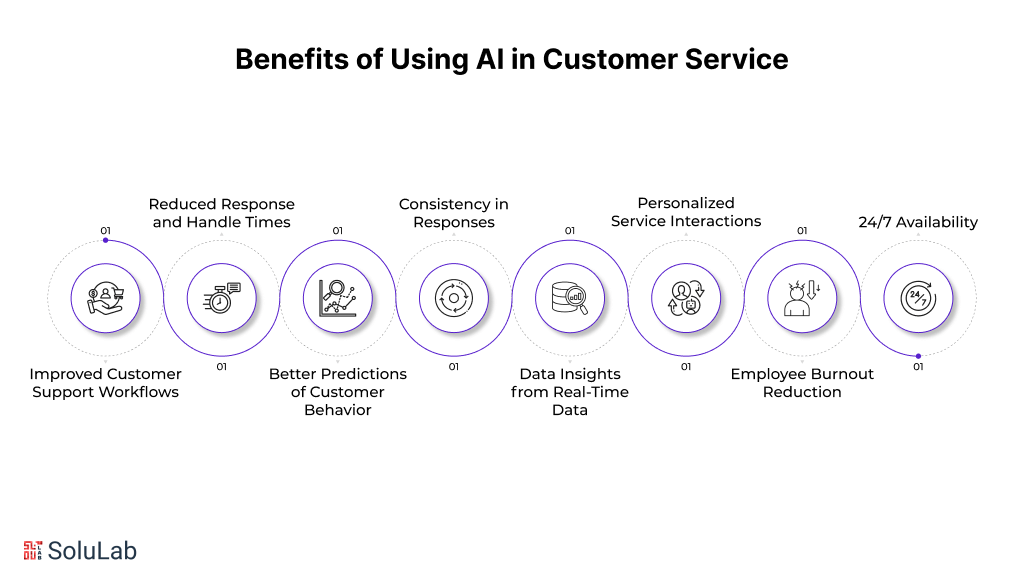
Benefits of Using AI in Customer Service

AI customer service is changing how businesses engage with their customers, providing faster, more efficient, and personalized interactions. From enhancing productivity to improving customer experience, AI offers significant advantages that benefit both companies and customers. Here are some of the key benefits of artificial intelligence in customer service:

  • Improved Customer Support Workflows

AI technology can minimize friction at almost any stage of the customer journey. Chatbots allow you to quickly answer routine queries from new customers, while AI optimizes internal workflows to enhance customer service interactions. For instance, a large percentage of incoming work can be automatically completed and then effortlessly transferred to a human representative as needed. This highlights how is AI used in customer service to improve efficiency.

  • Reduced Response and Handle Times

AI-powered customer service improves response times by streamlining workflows. According to research, 64% of service leaders say that the use of AI in customer support reduces the time reps spend resolving tickets. Chatbots, for instance, can instantly respond to live chat messages, significantly reducing your support team’s first response time. This efficiency lowers your average handle time, allowing for quicker resolutions.

  • Better Predictions of Customer Behavior

Understanding customer expectations and addressing issues proactively are top challenges for service leaders. AI can predict customer behavior using real-time data on purchase history, buying habits, and preferences. Predictive AI identifies patterns, helping you address potential issues before they arise and enhancing the overall customer experience. This is a prime example of AI in customer service operations improving service quality.

  • Consistency in Responses

Providing consistent and accurate responses throughout the customer journey is critical. AI ensures that responses remain uniform and standardized, no matter the time or context of the interaction. This consistency showcases how AI is used in customer service to maintain a seamless experience.

  • Data Insights from Real-Time Data

AI tools can analyze customer service interactions to uncover trends, common issues, and areas for improvement. These insights help companies refine their products, services, and strategies based on real-time data. For instance, HubSpot’s Breeze Intelligence, powered by advanced AI and LLMs, uses real-time data to enhance CRM by improving form conversion rates and identifying buyer intent. Pairing these insights with GPU inference infrastructure ensures models process live interactions at scale—without over-provisioning compute.

  • Personalized Service Interactions

Breeze Intelligence offers data enrichment that helps personalize customer service interactions. By adding more detailed information to records, such as company details and recent news, marketing and sales teams can create more personalized and relevant email content. This personalization improves response rates and helps teams provide tailored interactions before and after a purchase, ensuring customers receive the attention they deserve.

  • Employee Burnout Reduction

Artificial Intelligence is a technology meant to make jobs easier, not harder. By automating manual tasks like gathering information and managing repetitive customer service requests, AI can reduce the mental strain on employees. This allows teams to focus on complex problem-solving and strategic tasks without sacrificing quality or efficiency. The use of artificial intelligence in customer service thus plays a key role in reducing burnout.

  • 24/7 Availability

One of the significant benefits of AI is its ability to operate beyond your company’s time zone. Customers no longer need to wait for human support when chatbots can gather basic information and begin addressing issues before they are transferred to a representative. This ensures round-the-clock availability, which is crucial for customer satisfaction and exemplifies the strength of AI in customer service automation operations.

💡Pro Tip:
To enhance your customer’s experience, use omnichannel chatbots that remember customer details from all touchpoints along their journey. This eliminates the need for customers to repeat themselves, leading to a more seamless and personalized brand interaction.

Examples of AI For Customer Service

Whether you’re in a contact center or working in the field, applications offering a blend of AI and customer service have the potential to enhance the customer experience significantly. Here are some examples:

1. Content Generation: AI for content creation can analyze customer interactions, extract key information, and create human-like responses to customer queries. This speeds up response times and boosts customer satisfaction, especially when AI utilizes CRM data and knowledge.

2. Chatbots: AI-powered chatbots manage routine customer inquiries, provide instant responses, and assist with tasks such as tracking orders, recommending products, and troubleshooting. Available 24/7, they reduce response times and improve the accessibility of customer service.

3. Sentiment Analysis: AI-driven sentiment analysis tools assess customer feedback, reviews, and social media interactions to gauge sentiment. This helps businesses identify improvement areas, address concerns, and personalize experiences based on customer preferences, showcasing AI use cases in customer service.

4. Recommendation Systems: AI-powered recommendation systems analyze behavior, purchase history, and preferences to deliver personalized product or content recommendations. This helps businesses enhance cross-selling and upselling opportunities by understanding customer needs.

5. Predictive Analytics: AI-based predictive analytics leverage customer data to predict needs, behavior patterns, and potential problems. This proactive approach helps optimize resource allocation and personalize interactions, demonstrating how AI can be used in customer service.

Contact Us

How AI in Customer Service Enhances Business Operations?

Here are several ways that AI and ML in customer service can enhance the overall experience for both organizations and their customers:

  • Increase Productivity: With generative AI tools, agents can quickly generate personalized replies to customer inquiries. These responses are not one-size-fits-all; AI crafts trusted, natural language responses by pulling from customer data, knowledge articles, or third-party data sources across any channel. This highlights the use of AI in customer support to improve efficiency and personalization.
  • Create Work Summaries: AI can significantly boost agent productivity by automating the creation of wrap-up summaries based on case history and data. This feature is particularly useful in the field, allowing workers to receive summarized, relevant data before starting tasks, saving time and improving service quality.
  • Share Knowledge: By integrating AI into your service console, it can draft knowledge base articles based on customer conversations and CRM data for agents to review. This not only speeds up article creation but also empowers customers to find their solutions through self-service portals, further underlining the role of AI in customer service automation.
  • Search for Answers: As customers or agents seek answers, AI surfaces relevant responses from the knowledge base directly onto the search page, saving time and improving efficiency for both parties.

Read Also: AI In Marketing

Use Cases of AI in Customer Service for Businesses

1. AI-Supported Human Customer Service

AI, when combined with human agents, can optimize customer service by taking care of simpler tasks like case management and call routing. This allows human agents to focus on more complex queries, enhancing the overall experience. AI plays a vital role by:

  • Maintaining Context: AI quickly retrieves customer data from CRM, sales, and marketing records, enabling agents to continue conversations seamlessly. This feature is especially useful with omnichannel AI chatbots in customer service, which allow for a smooth flow of customer interactions across different platforms, ensuring customers don’t need to repeat themselves.
  • Answering Routine Queries Independently: By diverting simple questions to AI-powered FAQ chatbots, businesses can reduce call volume and help agents prioritize more complex tasks. This use of AI chatbots in customer service improves resolution time and reduces workload.
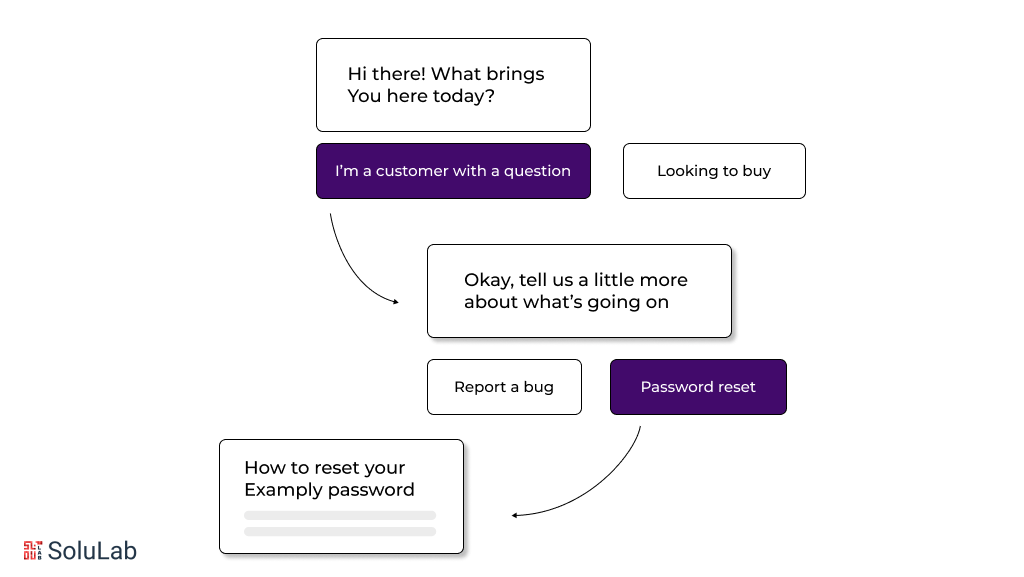
AI Answering Routine Queries

  • Intelligent Routing: AI can filter and direct customer inquiries to agents with the necessary expertise, taking into account agent availability and workload. This makes addressing problems quicker and more precise.
  • Timely Recommendations: AI provides agents with real-time access to relevant content and product recommendations during calls, helping them deliver more efficient and personalized support.

💡Pro Tip
To maximize effectiveness, implement omnichannel chatbots capable of accessing and retrieving customer details from every touchpoint in their brand journey. This eliminates the need for customers to repeat their information, significantly improving the overall experience and fostering a more seamless, personalized interaction.

2. AI-Organized Email Inquiries

Handling emails can be overwhelming, but AI can streamline this process by:

  • Scanning and tagging emails to ensure they are routed to the correct department for swift resolutions.
  • Auto-suggesting responses based on previous successful interactions.
  • Clearing out spam and promotional emails, freeing up time for agents to focus on critical messages.

By utilizing AI in email management, companies can improve response times and provide customers with more personalized and timely support.

3. AI-Enhanced Call Management

Although challenging, AI has been integrated into call centers through speech analytics and AI-based voice technologies. This is crucial as customers still prefer phone support for complex issues. By integrating AI with a modern business phone system, companies can streamline call handling and provide faster, more accurate responses. The MightyCall enhances call management by enabling intelligent call routing, scalable inbound and outbound calling, and seamless support operations, helping teams deliver real-time customer service excellence.

AI enhances call management by:

  • Capturing spoken input, using neural networks to filter out background noise.
  • Using NLP and NLU models to understand the intent behind customer queries.
  • Delivering accurate responses through text-to-speech technology, allows the AI to communicate solutions audibly.

This AI-driven process enhances the customer experience in voice communications, a key AI use cases in customer service.
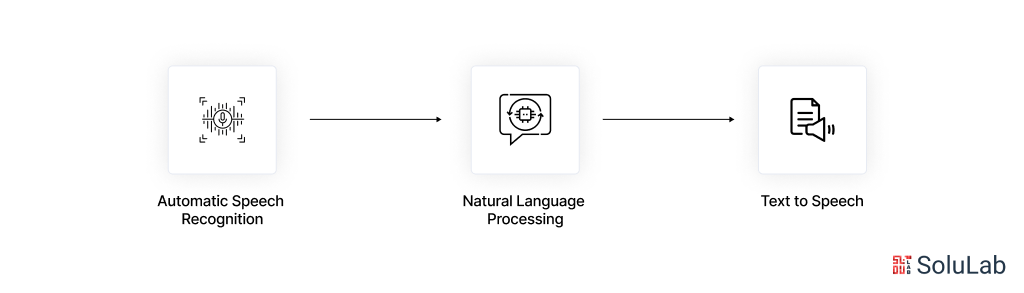
AI Enhances Call Management

4. Visual Recognition for Product Support

AI-powered visual recognition allows customers to share images or videos of product issues, helping AI systems identify and diagnose problems more intuitively. Through recognition algorithms, AI provides visual instructions, empowering customers to resolve issues independently. This reduces reliance on text-based support and improves accessibility for a more streamlined support process.

Read Also: Generative AI In CRM & ERP

How to Integrate Artificial Intelligence and Customer Service?

Integrating generative AI in customer service using technologies like Machine Learning (ML) and Computer Vision can significantly boost both efficiency and customer satisfaction. Follow this seven-step process for a successful integration:

1. Understand Data Types

Data in customer service is derived from interactions, transactions, and feedback. It includes text, images, videos, and numerical data, categorized as:

  • Structured data: Data like customer satisfaction scores (CSAT) and analytics that can be efficiently processed for decision-making.
  • Unstructured data: This includes audio, video, and free-form responses that do not follow a predefined format, making them harder to analyze.
  • Semi-structured data: Examples include CRM messages, which mix both structured and unstructured elements, requiring specialized analysis techniques.

2. Perform Data Structuring and Labeling

Before inputting data into an AI model, ensure it’s structured properly. Use tools to clean, format, and categorize data based on factors like customer demographics and purchase history. This helps train the AI model effectively.

3. Best Practices for Data Collection

High-quality data is critical for AI training. Here are the key do’s and don’ts:

Do’s:

  • Focus on accurate, relevant data, prioritizing quality over quantity to ensure model precision.
  • To protect client information, make sure that data privacy standards are followed.

Don’ts:

  • Avoid biased data collection to prevent inaccurate or skewed results.
  • Refrain from over-collecting data, which can lead to increased storage costs and misuse of sensitive information.

4. Build Support-Specific Intents

To make AI effective, analyze customer queries for common themes. Build intents aligned with recurring issues and customer journeys.

💡Pro Tip:
Platforms like Sprinklr AI+ offer pre-built intents across over 150 industries, accelerating AI deployment for customer service.

5. Train the AI Model on Proprietary Data

Training the AI on proprietary data ensures it aligns with your business needs.

  • Focus on feature engineering, selecting relevant data features for optimal customer service outcomes.
  • Use transfer learning techniques to fine-tune a pre-trained model based on your proprietary data.
  • Employ human review during training to assess and improve the model’s predictions.

6. Integrate the AI Model with Workflows

Once the AI model is trained, integrate it into existing customer service workflows. Implement a data management system to organize and process customer queries efficiently. Incorporate technologies like AI chatbots in customer service to deliver quick, automated responses.

7. Test and Update AI Models Regularly

Continuously test both the agent-facing and customer-facing AI interfaces:

  • Agent-side Testing: Evaluate how well the AI assists agents with query handling and data access. Gather feedback on usability to improve the interface.
  • Customer-side Testing: Assess how users interact with the AI, focusing on ease of query submission and clarity of responses. Regularly update the AI model based on customer feedback to improve performance and satisfaction.

By following these steps, you can effectively leverage AI use cases in customer service and improve overall business operations through efficient, automated processes.

What Are The Latest Trends In AI For Customer Service?

The integration of AI in customer service is poised to redefine how businesses interact with their customers. With rapid advancements in technologies like Generative AI, Natural Language Processing (NLP), and Machine Learning (ML), the future of customer service is set to become more efficient, personalized, and scalable.

1. Hyper-Personalization

As AI systems become more advanced, they will be able to deliver hyper-personalized experiences. Future AI-powered platforms will analyze massive amounts of customer data in real time to predict preferences and tailor interactions. This means that each customer query will be addressed not just based on immediate input, but with a deeper understanding of the customer’s entire history with the brand, enabling companies to deliver tailored recommendations, personalized offers, and proactive support.

2. AI-Driven Omnichannel Support

The future will see AI systems managing customer queries across multiple channels seamlessly. AI will continue to evolve to understand and manage communication across platforms, from social media to voice calls, live chat, and even augmented reality (AR). This omnichannel support will be backed by intelligent systems that offer consistent service across every touchpoint, allowing customers to transition between channels without repeating information.

3. AI-Powered Emotional Intelligence

One of the critical challenges AI currently faces is understanding emotional context. However, future AI systems, enhanced by sentiment analysis and emotional AI, will be able to assess customer emotions more accurately, adjusting their responses based on mood and urgency. This emotional intelligence will lead to improved interactions where AI responds empathetically, further narrowing the gap between human and machine customer support.

4. Autonomous Support Systems

With Generative AI for customer service advancements, the future of this service will lean more towards autonomous support, where AI systems can handle increasingly complex queries without human intervention. These systems will use deep learning algorithms to not only resolve issues but also anticipate and prevent potential customer problems before they arise. This will lead to fewer escalations to human agents, allowing them to focus on high-value tasks and critical cases.

5. Augmented Human Agents

AI powered customer service will continue to support human agents, enhancing their capabilities. Future AI-driven systems will provide agents with real-time insights, knowledge-based suggestions, and even live translations. As these systems like AI and ML in data integration improve, they will empower agents with the tools to handle complex cases more efficiently and reduce the cognitive load during interactions.

6. Voice and Visual Recognition

The future of AI for customer support will expand beyond text-based communication. Innovations in voice and visual recognition technologies will enable AI to offer support through new formats. Customers will be able to receive support via video, where AI will assist with product tutorials or troubleshooting based on image and voice inputs.

AI Solutions

Conclusion

AI is changing customer service by making it faster, smarter, and more efficient. From handling routine queries through chatbots to analyzing customer sentiment and providing personalized support, AI helps businesses enhance customer experience while reducing operational costs. 

With AI for Customer Service, teams can focus on complex issues, improve response time, and ensure 24/7 availability. As AI continues to grow, companies that adopt these technologies early will gain a competitive edge in building stronger customer relationships.

AI-Build, a construction technology company, collaborated with SoluLab to enhance CAD product development using generative AI and machine learning. By automating design processes, AI-Build achieved optimized, intelligent designs and improved productivity. SoluLab implemented a modular, scalable architecture, improving workflows and accuracy while focusing on users with customizable, intuitive features.

SoluLab, an AI development company, can help you achieve your business goals using AI. Contact us today to discuss further.  

FAQs

1. How is AI applied in customer service?

AI is commonly used in customer service through chatbots, virtual assistants, and automated ticketing systems. It helps companies respond to inquiries, automate routine tasks, route queries to the appropriate departments, and even offer personalized recommendations based on customer data. AI tools also assist in analyzing large volumes of data for better decision-making.

2. Which industries benefit the most from AI in customer service?

Industries like retail, banking, healthcare, telecommunications, and e-commerce see significant benefits from artificial intelligence customer care. AI-powered tools streamline customer interactions, providing faster responses and personalized support. These sectors, where customer satisfaction is crucial, need to improve efficiency, reduce response time, and offer a better overall experience. By leveraging AI, businesses can enhance their customer service operations and build stronger relationships with their clients.

3. Will AI replace customer service?

AI is unlikely to fully replace human customer service but will act as a powerful tool to complement it. While AI excels in handling routine inquiries and automating processes, human agents are still needed for complex issues that require empathy, creativity, and problem-solving. Together, they create a more efficient and balanced customer service experience.

4. How can AI help businesses better understand their customers?

AI engages customers by offering personalized experiences, like recommending products based on past purchases or predicting their needs before they even ask. Through AI chatbots, natural language processing, and predictive analytics, businesses can interact with customers in real time, providing relevant responses and support across multiple channels.

5. What is the future of AI in customer service?

The future of AI in customer service involves more advanced personalization, predictive support, and omnichannel experiences. With technologies like generative AI, companies will be able to automate more complex tasks and offer proactive service. AI will continue to assist in understanding customer behavior and preferences, driving seamless, intuitive support systems.

6. How can companies secure data when using AI for customer service?

To keep data secure, businesses should implement encryption, strict access controls, and regular security audits. Ensuring compliance with data privacy regulations, such as GDPR, and using AI systems that follow best practices for handling sensitive information can help safeguard customer data while benefiting from AI’s capabilities.

7. What factor is critical in designing an effective role for AI in customer interactions?

Balancing automation with human empathy is key. AI should handle routine tasks while humans manage complex, emotional interactions to ensure a seamless experience.

8. How does AI improve customer service?

AI speeds up responses, personalizes interactions, and predicts customer needs. It ensures consistent, 24/7 support and enhances overall satisfaction.

9. How does Customer Service AI automation improves efficiency?

AI automation reduces manual work, speeds up query handling, and routes requests smartly. This cuts response times and boosts team productivity.

How Generative AI is Changing the Customer Service Experience?

Generative AI in Customer Service Experience

Customer service has suddenly risen up the corporate ladder and is now a major management focus, due to generative AI. In fact, according to 85% of executives, in the next two years, generative AI will be used for direct customer communication. As a result, 63% anticipate investing in generative AI use cases for their agents by the end of 2023.

According to a Gartner research study, genAI’s capacity to give timely, accurate, and personalized responses increases customer satisfaction by 33% when compared to traditional customer support approaches.

If you want to know how generative AI for customer support can help and deliver the ROI that leadership seeks, this blog will help you with all that you need to know! Let’s start with the basics first.

What is Generative AI?

Generative AI is a branch of artificial intelligence that produces new outputs, data, or content. Generative AI systems employ data that already exists to identify patterns, evaluate those patterns, and generate outputs that mimic material created by humans. These outputs can include writing, images, music creation, and more.

Although generative AI may appear like a dazzling new technology given the recent excitement around it, its roots may be found in the 1950s and 1960s. Nevertheless, generative AI applications weren’t genuinely able to produce original content outputs until 2014, when generative adversarial networks (GANs), a particular kind of machine learning, were introduced.

Artificial Intelligence vs Generative Artificial Intelligence

AI is a general word that is frequently used to refer to a variety of advanced computer systems. Although they are linked, artificial intelligence and generative AI are two different things within the larger subject of artificial intelligence. Large language models (LLMs), generative AI, machine learning, and artificial intelligence (AI) are sometimes used interchangeably, therefore it’s critical to understand the distinctions. Let’s first clarify what AI and generative AI are not.

The term artificial intelligence (AI) refers to the larger field of computer sciences that aims to create intelligent machines capable of carrying out tasks that would normally be completed by humans. Artificial intelligence is capable of recognizing speech, solving problems, perceiving, and comprehending language. Artificial Intelligence in customer services encompasses a vast array of methodologies, such as machine learning, natural language processing, and expert systems. AI can recognize data and reply to what it sees. However, this is limited to its function.

However, generative AI goes one step further by using data to produce wholly original content in a variety of formats. Generative AI creates fresh material by using machine learning models to identify patterns in preexisting data.

Both AI and generative AI in customer service continue to grow and change. Let’s now discuss a few more terminology related to generative AI that you have probably seen used.

Machine learning is a subject or methodology within AI research. In order to help computer systems gain insight into data and make predictions or judgments, algorithms, and models must be developed. Without being specifically programmed to do so, machine learning systems can improve their performance over time by learning from examples and making adjustments in response to the data they are exposed to.

Large language models (LLMs) are the newest and least-defined idea. A machine learning model that is trained on a vast volume of text that focuses on text generation and understanding to produce responses that sound realistic is called a large language model, such as OpenAI’s GPT-3. 

How is Generative AI Implemented?

How is Generative AI Implemented

Generative AI creates new content that is comparable to the old data it has been educated on by using machine learning to identify typical trends and arrangements in massive amounts of data. Generative AI gets more complex the more examples or data it has to work with.

A brief synopsis of the generative AI technique is provided below:

  • Data Gathering and Preprocessing: Text, pictures, or any other kind of data that the model is supposed to produce is gathered into a dataset. Preprocessing is done on this data to guarantee correctness and consistency.
  • Model Training: There are numerous models used in generative AI, selected according to the characteristics of the data and the intended kind of content development. The most frequent models include:
  • Generative Adversarial Networks (GANs): These are a type of machine learning model in which two neural networks receive training concurrently to learn from and interact with one another in order to improve prediction accuracy.
  • Variational Autoencoders, or VAEs: These are artificial intelligence (AI) algorithms that can both encode and decode data. It divides up big data sets into smaller groups or representations in order to accomplish this. The term “latent space” refers to these smaller representations. The original data is concealed in the latent space’s compressed representation, enabling the VAE to decode—that is, rebuild an image, for example—by seeing the latent space.
  • Autoregressive Model: Based on historical behavior data, autoregressive models are utilized in machine learning to forecast future behavior.
  • Sampling From the Model: You can use the model to create new content as soon as it has been trained. When you give the model a random input or seed, it will apply the patterns it has learned to create new data with features similar to the training set.
  • Fine-Tuning and Exploration: You may want to modify the model’s parameters to alter the generated content’s quality or style, depending on the application. By playing with different inputs, changing parameters, and examining the resultant outputs, you can investigate the capabilities of the model.
  • Assessment: Consider a range of factors while evaluating the produced material, including realism, coherence, relevancy, and aesthetics. Iteratively refine the model in light of user input and assessment outcomes.
  • Ethical and Bias Considerations: Recognize the possibility of ethical issues with bias, false information, and possible abuse of the produced content. Take action to allay these worries and make sure generative AI is used responsibly.

Why is Generative AI Important for Customer Service?

Generative AI for customer service has become a significant technological advancement with wide-ranging implications across various industries. One area where it is particularly impactful is in customer service. The integration of generative AI models in customer service is transforming how businesses interact with their customers, offering numerous benefits that enhance efficiency, personalization, and overall customer satisfaction.

1. Enhancing Customer Service

Customer Service AI tools leverage advanced machine learning algorithms to understand and respond to customer queries. These tools can handle a variety of tasks, from answering frequently asked questions to managing complex support tickets. The ability of AI to process and analyze vast amounts of data quickly allows for immediate, accurate responses, reducing wait times and improving the customer experience.

Related: Customer Service Automation: Benefits & Use Cases

2. Personalization and Efficiency

AI in customer service can tailor interactions based on individual customer preferences and past interactions. By analyzing previous queries and behavior, generative AI models can predict customer needs and provide personalized recommendations. This level of personalization fosters a stronger connection between the business and the customer, leading to increased satisfaction and loyalty. Moreover, AI for customer services automates routine tasks, freeing up human agents to focus on more complex and nuanced issues. This not only improves the efficiency of the support team but also ensures that customers receive prompt and effective assistance.

3. Cost Reduction and Scalability

Implementing artificial intelligence in customer services significantly reduces operational costs. Automated systems can handle a large volume of inquiries simultaneously, eliminating the need for a proportionate increase in staff as the customer base grows. This scalability is particularly beneficial for businesses experiencing rapid growth or those with fluctuating demand.

4. Continuous Improvement and Adaptation

Generative AI models are designed to learn and improve over time. As they interact with customers, they gather data and refine their algorithms, becoming more adept at understanding and addressing various issues. This continuous improvement ensures that customer service AI tools remain effective and relevant, adapting to new trends and customer expectations.

5. Multilingual and 24/7 Support

Another crucial advantage of artificial intelligence and customer service is the ability to provide support in multiple languages and around the clock. This capability is essential for global businesses that need to cater to customers in different time zones and languages. Generative AI models can seamlessly switch between languages and provide consistent support, ensuring that all customers receive high-quality service regardless of their location or language.

Generative AI Solutions

What Effects Does Generative AI Have on Customer Support?

There are speculations that artificial intelligence (AI) is going to drastically alter how we conduct business. It already has in terms of customer service. The global chatbot industry is anticipated to grow to $994 million by 2024.

Like earlier incarnations of AI, generative AI will undoubtedly replace certain customer support responsibilities, but it’s also creating new opportunities. Generative AI will increase the value of human input rather than lessen it, according to customer service experts.

Most customer service concerns are automatically resolved with the smallest amount of human effort whenever generative AI and customer service teams collaborate well. Additionally, it’s providing customer support workers with the chance to advance in their careers—from customer support champion to bot manager, or from customer service agent to conversational AI specialist.

Here’s how to make the switch to AI-first and make sure AI develops over time in tandem with the resources and staff reorganization of your customer support department:

Phase 1: Deploy

Generative AI Using pre-existing information and support documentation scraping, it may generate and provide solutions to client inquiries without the need for human training. As a result, staff members can now concentrate on finding more automation opportunities, creating action flows, optimizing, and inspecting transcripts, rather than spending weeks developing conversational AI systems for customer support teams. This implies that anyone can construct automation or bots without having any technological experience. As an alternative, decide which agent is performing the best and promote them to Bot Specialist. Give the Bot Specialist the resources they need to advance in their career by setting Automated Customer Experience (ACX) benchmarks and KPIs, as well as training and deploying the AI chatbot across service channels.

Make sure you have your plan, people, and technology in place to assure success in this initial period. This appears to be:

People: Develop and deploy the chatbot, as well as gain knowledge from the partner’s suggestions for optimal practices and generative AI experience. Hire the Bot Specialists and present them to the larger customer service business as the AI chatbot partner. 

  • A customer service manager, to whom they will provide reports regarding the deployment of AI chatbots and content management
  • One of the main stakeholders in the database of content management is the education team.
  • The engineering and product teams for the website’s integrations and chatbot embedding

Technology: Link an agent system and an educational tool to the generative AI chatbot.

Strategy: The application of generative AI requires a solid, well-defined plan. The following actions should be taken by a bot specialist:

  • Verify that the documentation in the knowledge base is correct, current, and tailored for generative AI.
  • Establish weekly check-ins with the team of educators to identify any possibilities or content gaps in the transcripts of chatbots.
  • Establish quarterly objectives for customer service. OKRs
  • Report on a regular basis regarding the objectives to their manager.

Phase 2: Learn

After completing the basic setup and getting the AI chatbot operational, it’s critical to begin monitoring the bot’s metrics and insights. Put more effort into developing deeper integrations that enable more automated resolutions and powerful actions.

In addition, a worker in a Bot Specialist position may be promoted to a Bot Manager position or collaborate with one as generative AI not only writes material but also helps refine and produce variations of it. The AI chatbot and content optimization will remain the Bot Manager’s primary priorities. Their time will be better spent creating more valuable automation flows and making sure all content is branded consistently.

Together with reporting customer issues and trends, bot managers should collaborate with the product, engineering, and education teams to suggest ways to make improvements. Additionally, they will manage the CRM connectors and use API endpoints to link the generative AI chatbot to any required software.

The Bot Manager’s objective is to set up chat as the main support channel. To help achieve this, they must disseminate AI insights throughout the organization to encourage other teams to consider how they can use this data and become AI-first as well.

Phase 3: Improve

The Director of ACX will be spearheading the third phase, coordinating with executives throughout the organization and advocating for the client to have an impact on crucial business choices. They will go further into the AI chatbot approach, making sure that it makes use of machine learning, and that the group is incorporating AI guidance and extending AI capabilities in the context of customer care.

The Director of ACX will collaborate across functional lines to provide business development teams with customer insights, manage the design and execution of new support program projects, and create a long-term mechanization roadmap. However, AI is automating difficult use cases and dynamically exploiting customer data to make decisions, all the while they’re boosting the role of the customer service department within the company and concentrating on high-level KPIs.

Benefits of Generative AI in Customer Support

Benefits of Generative AI in Customer Support

Generative AI has revolutionized customer support by offering numerous advantages that enhance both the efficiency of support teams and the overall customer experience. Here are some key benefits of implementing generative AI in customer support:

1. Improved Response Times

One of the most significant benefits of generative AI in customer support is its ability to provide instant responses to customer queries. Unlike human agents, AI-powered systems can handle multiple inquiries simultaneously without delays. This leads to significantly reduced response times, ensuring that customers receive the help they need promptly.

2. 24/7 Availability

Generative AI enables round-the-clock customer support, making it possible for businesses to assist customers at any time of day or night. This 24/7 availability is particularly beneficial for global businesses with customers in different time zones, ensuring that support is always accessible.

3. Cost Efficiency

Automating customer support with AI reduces the need for large support teams, leading to significant cost savings. Businesses can handle a higher volume of inquiries without a corresponding increase in staffing costs. Additionally, AI systems can scale effortlessly to meet increased demand during peak times without incurring additional expenses.

4. Consistency and Accuracy

Generative AI ensures consistent and accurate responses to customer inquiries. Unlike human agents, who may vary in their responses and make occasional errors, AI systems provide standardized and precise answers based on extensive data and pre-defined protocols. This consistency improves the reliability and quality of customer support.

5. Personalization

Generative AI can analyze customer data to deliver personalized responses and recommendations. By understanding customer preferences, history, and behavior, AI systems can tailor interactions to meet individual needs. This personalization enhances the customer experience, fostering stronger relationships and increasing satisfaction.

6. Handling Repetitive Tasks

AI systems excel at managing repetitive and mundane tasks, such as answering frequently asked questions or processing standard requests. By automating these tasks, human agents are freed up to focus on more complex and nuanced issues that require human judgment and empathy. This improves the overall efficiency and effectiveness of the support team.

7. Multilingual Support

Generative AI can provide support in multiple languages, breaking down language barriers and ensuring that customers worldwide receive high-quality service. AI models can seamlessly switch between languages, offering accurate and consistent support to non-native speakers, which is crucial for global businesses.

8. Continuous Learning and Improvement

Generative AI systems continually learn and improve from interactions with customers. They use machine learning algorithms to refine their responses and adapt to new situations over time. This continuous improvement ensures that the AI remains up-to-date with evolving customer needs and industry trends, enhancing its effectiveness.

9. Enhanced Data Insights

AI-powered customer support systems generate valuable data insights. By analyzing interactions, businesses can gain a deeper understanding of customer behavior, preferences, and pain points. These insights can inform strategic decisions, improve products and services, and drive overall business growth.

Generative AI Customer Services Use Cases 

Generative AI is being adopted across various sectors to enhance customer service operations, streamline processes, and improve customer satisfaction. Here are some prominent generative AI use cases in customer service:

1. Automated Customer Support: Generative AI use cases in automated customer support involve deploying AI-powered chatbots and virtual assistants to handle routine inquiries. These AI systems can instantly provide accurate answers to frequently asked questions, process orders, and troubleshoot common issues, reducing the workload on human agents and ensuring customers receive prompt responses.

2. Personalized Recommendations: Generative AI can analyze customer data to offer personalized product or service recommendations. By understanding individual preferences, purchase history, and browsing behavior, AI systems can suggest relevant products or services, enhancing the customer experience and boosting sales. This level of personalization builds stronger customer relationships and increases loyalty.

3. Dynamic Content Generation: Generative AI can create dynamic content tailored to specific customer needs. For example, in e-commerce, AI can generate personalized marketing emails, product descriptions, and promotional messages. This ensures that the content resonates with the target audience, leading to higher engagement rates and improved conversion rates.

Related: AI Use Cases and Applications in Key Industries

4. Proactive Customer Engagement: AI systems can monitor customer interactions and identify patterns that indicate potential issues. By proactively reaching out to customers experiencing problems or delays, businesses can address concerns before they escalate. This proactive approach improves customer satisfaction and reduces churn rates.

5. Sentiment Analysis and Feedback Management: Generative AI can analyze customer feedback from various channels, including social media, reviews, and surveys. By understanding the sentiment behind customer comments, businesses can gain insights into customer satisfaction and identify areas for improvement. AI can also generate responses to feedback, demonstrating that the company values customer opinions.

6. Virtual Agents for Complex Queries: While AI excels at handling routine tasks, it can also assist with more complex customer inquiries. Virtual agents powered by generative AI can guide customers through intricate processes, such as troubleshooting technical issues or navigating financial transactions. These agents can escalate queries to human agents when necessary, ensuring seamless support.

7. Fraud Detection and Prevention: In industries like banking and e-commerce, generative AI can detect fraudulent activities by analyzing transaction patterns and identifying anomalies. By flagging suspicious behavior in real time, AI systems help prevent fraud and protect both the business and its customers.

8. Supply Chain Optimization: Generative AI supply chain applications can significantly enhance customer service by optimizing inventory management, forecasting demand, and streamlining logistics. AI can predict product demand trends, ensuring that popular items are always in stock and reducing the likelihood of delays. This leads to more efficient operations and higher customer satisfaction.

Generative AI Solutions

Conclusion

In conclusion, the transformative power of generative AI is revolutionizing customer service technology. By using advanced natural language processing and machine learning algorithms, businesses can provide more personalized, efficient, and accurate support to their customers. This shift not only enhances customer satisfaction but also optimizes operational efficiency, reducing response times and freeing up human agents for more complex tasks. As generative AI continues to evolve, its integration into customer service promises to further refine and elevate the customer experience, setting a new standard for what customers can expect from service interactions.

However, the journey to seamless generative AI implementation in customer service is not without challenges. Issues such as ensuring data privacy, managing the complexity of AI training, and integrating AI solutions with existing systems can pose significant hurdles. Additionally, there are concerns about maintaining the human touch in customer interactions and preventing AI from producing inaccurate or biased responses. SoluLab, with its expertise in developing and deploying AI solutions, is poised to address these challenges effectively. By providing tailored, secure, and scalable AI solutions, SoluLab can help businesses navigate the complexities of AI adoption, ensuring a smooth and successful integration that enhances customer service. To learn more about how SoluLab can transform your customer service with innovative AI technology, contact us today.

FAQs

1. How does generative AI improve the customer service experience?

Generative AI enhances customer service by providing more personalized and efficient interactions. It uses advanced natural language processing to understand and respond to customer queries accurately and quickly. This technology can handle a wide range of customer requests, reducing response times and freeing human agents to focus on more complex issues, ultimately leading to higher customer satisfaction and more streamlined service operations.

2. What are the main benefits of using generative AI in customer service?

The main benefits include improved response times, enhanced personalization, increased operational efficiency, and consistent service quality. Generative AI can handle large volumes of queries simultaneously, ensuring customers receive prompt assistance. It also learns from interactions to provide more accurate and tailored responses, which helps in building stronger customer relationships.

3. What challenges do businesses face when implementing generative AI in customer service?

Businesses often encounter challenges such as ensuring data privacy, managing the complexity of AI training, integrating AI with existing systems, and maintaining the human touch in customer interactions. Additionally, there’s a need to mitigate the risk of AI generating inaccurate or biased responses. Overcoming these challenges requires careful planning, robust AI frameworks, and ongoing monitoring and adjustment of AI systems.

4. How can businesses address the challenge of maintaining the human touch with generative AI?

To maintain the human touch, businesses can use generative AI to handle routine and repetitive tasks, allowing human agents to focus on more nuanced and empathetic interactions. AI systems can also be designed to escalate more complex or sensitive issues to human agents. Training AI to understand and respect the boundaries of automated assistance versus human intervention is crucial for preserving the quality of customer relationships.

5. How can SoluLab help businesses overcome the challenges associated with generative AI in customer service?

SoluLab offers expertise in developing and deploying Generative AI solutions tailored to the specific needs of businesses. They provide secure, scalable AI systems that ensure data privacy and seamless integration with existing infrastructure. SoluLab’s solutions are designed to be user-friendly and efficient, helping businesses navigate the complexities of AI adoption. By partnering with SoluLab, businesses can effectively harness the power of generative AI to enhance their customer service experience.